Tag: #phone

  • Mastercard Unveils Phone. Passport. Mastercard Campaign: Revolutionizing Travel in Southeast Asia with Seamless Digital Payments

    Mastercard Unveils Phone. Passport. Mastercard Campaign: Revolutionizing Travel in Southeast Asia with Seamless Digital Payments

    Mastercard has launched a new campaign aimed at making travel across Southeast Asia more seamless and rewarding for consumers. The initiative, named “Phone. Passport. Mastercard”, primarily focuses on improving the payment experience for travelers journeying through Indonesia, Malaysia, Singapore, Thailand, the Philippines, and Vietnam. Developed in conjunction with issuing banks and merchant partners, the program provides access to over 300 promotions that cover dining, shopping, accommodation, transport, and leisure activities throughout the region.

    Enhancing Travel with Seamless Payments

    At the heart of the campaign is Mastercard’s effort to streamline the travel experience with digital payment solutions. The company is positioning its payment network as an essential tool for travelers along with their smartphones and passports. Whether it’s for transport, accommodation, or dining, travelers can access offers while depending on Mastercard’s secure payment infrastructure, which leverages technologies such as tokenisation, multi-factor authentication, and fraud monitoring for secure cross-border transactions. The initiative is aimed at reducing friction during travel and allowing consumers to focus on their experiences rather than worrying about payment logistics.

    Boosting Regional Businesses

    The campaign also seeks to aid regional merchants and tourism-related businesses by connecting them with consumers traveling along Southeast Asia’s busiest routes. According to Dheeraj Raina, Senior Vice President and Head of Integrated Marketing and Communications for Southeast Asia at Mastercard, “Southeast Asia is one of the most rewarding regions in the world to explore today – rich in culture, nature, food, and unforgettable experiences, often just a short trip away.” The campaign aspires to make travel across the region more accessible while encouraging consumers to discover local businesses and experiences.

    As Southeast Asia continues to reap the benefits of robust tourism flows, improved air connectivity, and growing demand for regional leisure travel, Mastercard’s campaign aims to position itself at the heart of the travel payment journey. The initiative will run until December 2026, reinforcing Mastercard’s strategy of integrating payment services more closely with consumer lifestyle and travel experiences.

    Questions & Answers

    What is the goal of Mastercard’s new campaign?
    The goal is to make travel across Southeast Asia more seamless and rewarding by streamlining the payment experience for travelers and providing them access to various promotions.

    How does the campaign benefit regional businesses?
    The campaign aims to aid regional merchants and tourism-related businesses by connecting them with consumers traveling along Southeast Asia’s busiest routes, potentially driving more business to these establishments.

    Until when is the campaign expected to run?
    The campaign is expected to run until December 2026.

  • Revolutionizing Photo Editing: Google Photos Unveils Voice-commanded Tool

    Revolutionizing Photo Editing: Google Photos Unveils Voice-commanded Tool

    Google has unveiled a new tool within its Google Photos application, allowing users to alter and enhance their photos with simple voice or typed commands. Equipped with the ability to understand conversational English, the feature offers users a user-friendly and innovative way to edit their photos.

    Using Google Photos’ New Feature

    To access this new tool, Android users can open the Google Photos app and select the image they wish to modify. Once the photo is chosen, tapping on the “Help me edit” option in the editor will prompt the user to either speak or type their desired changes. No need for complicated photo editing terms or jargon; the feature responds to plain English instructions.

    Google provided several examples showcasing the potential of this new tool. In one instance, a photo was marred by an unwanted window reflection. By simply telling the app to “Remove the reflection on the window,” the user could effortlessly rectify this issue, resulting in an improved image.

    Transforming Photos Using Conversational English

    In another scenario, a photo depicted a child standing before an unsightly fence. To remedy this, the user could instruct the app to “Erase the text and the fence in bottom, zoom out, and sharpen.” The outcome was a vastly improved photo where the child, not the fence, took center stage.

    The feature is not limited to landscape or portrait photography and can be applied to selfies as well. If a user desires to brighten a shadowy selfie, they can instruct the app to “Add studio lighting to make me stand out.”

    Expanding the Frame with Imagination

    Users can also manipulate the composition of their photos using this feature. By saying, “Expand the composition and make it better,” the tool can effectively broaden the photo’s borders, enhancing the overall aesthetic. If a user wishes to add elements to an otherwise empty background, they can instruct the tool to “Reimagine this room with a bookshelf and lights.”

    Google’s new feature demonstrates how the use of conversational English can significantly alter an image. A simple command such as “Fill the grass with beautiful sunflowers” can completely transform a photo, adding an entirely new dimension to the image.

    Questions & Answers

    Does the Google Photos feature work on selfies?
    Yes, the tool can be used to enhance any type of photo, including selfies.

    Can the tool add elements to a photo’s background?
    Yes, the tool can add elements to a photo’s background. For example, a user can instruct the tool to add a bookshelf and lights to an empty room.

    Is it possible to remove unwanted elements from a photo using this tool?
    Yes, the tool allows users to remove unwanted elements. For instance, a reflection on a window or an unsightly fence can be removed with a simple instruction.

  • Blend business and pleasure on the same phone with Verizon’s dirt-cheap new Second Number feature

    Blend business and pleasure on the same phone with Verizon’s dirt-cheap new Second Number feature

    Have you ever felt the need to use two different phone numbers for various business or, well, personal reasons? Instead of carrying two mobile devices with you all the time, which can be a bit of a hassle, Verizon will let you activate an aptly named Second Number feature on your account for just $10 a month until June 5.

    That sounds far more convenient than the traditional alternative and it also looks way less suspicious to anyone who might want to pry into your secret… business. Of course, you don’t have to be a double agent or a Tinder addict to find this new service useful, as Big Red points out a second phone number can greatly help folks operating side gigs as well as frequent sellers on online marketplaces keep their primary and secondary activities separate with little effort and minimal costs.

    Speaking of costs, it’s important to point out that the aforementioned June 5 cutoff date refers to how long you have to “lock in” the promotional $10 a month price, which should then go unchanged in perpetuity (or until Verizon changes its mind). If you don’t sign up by that date, you can obviously still do so at a later time, but only at a raised monthly cost of $15.

    Either way, this looks like a pretty affordable method to get an extra wireless service line with unlimited talk and text. There will be no data on it, however, which is what allows the plan to be so extremely cheap. You’ll need to take care of all data-related business on your primary line, mind you, which presents a series of… challenges you can only overcome using good old fashioned text messaging.

    To get started, you’ll have to be an existing Verizon customer (well, duh!) with a dual SIM smartphone in your possession. While the nation-leading carrier has an extensive support webpage dedicated to explaining how you can use two numbers on a compatible handset, there doesn’t seem to be a list anywhere containing all such devices (or at least some of them), which makes today’s launch feel a little incomplete and confusing.

  • Foxconn workers earn more building the Mate 60 Pro than the iPhone 15 line

    Foxconn workers earn more building the Mate 60 Pro than the iPhone 15 line

    The Huawei Mate 60 Pro is getting a serious look from U.S. government officials who are trying to figure out how Huawei and SMIC (China’s largest foundry) created 7nm Kirin 9000S 5G chipsets in the face of U.S. sanctions. Huawei is not allowed to be shipped any cutting-edge chips made by any chip foundry that uses American technology to produce chips.

    As a result, Huawei’s flagship Mate 50 series and P60 series used Qualcomm’s Snapdragon 8+ Gen 1 application processor after the company obtained a license to import the components. However, Qualcomm was forced to tweak these chips so that they would not work with 5G networks. But out of nowhere, the Mate 60 Pro uses chips produced by SMIC using its second-gen 7nm process node and these chips support 5G.

    The other phone under intense scrutiny, but for a different reason, is the iPhone 15. Apple just unveiled the four new models in the series and worldwide phone buyers are taking a hard look at the new handsets to see which models they want to buy. They also want to see the new USB-C port on the devices.

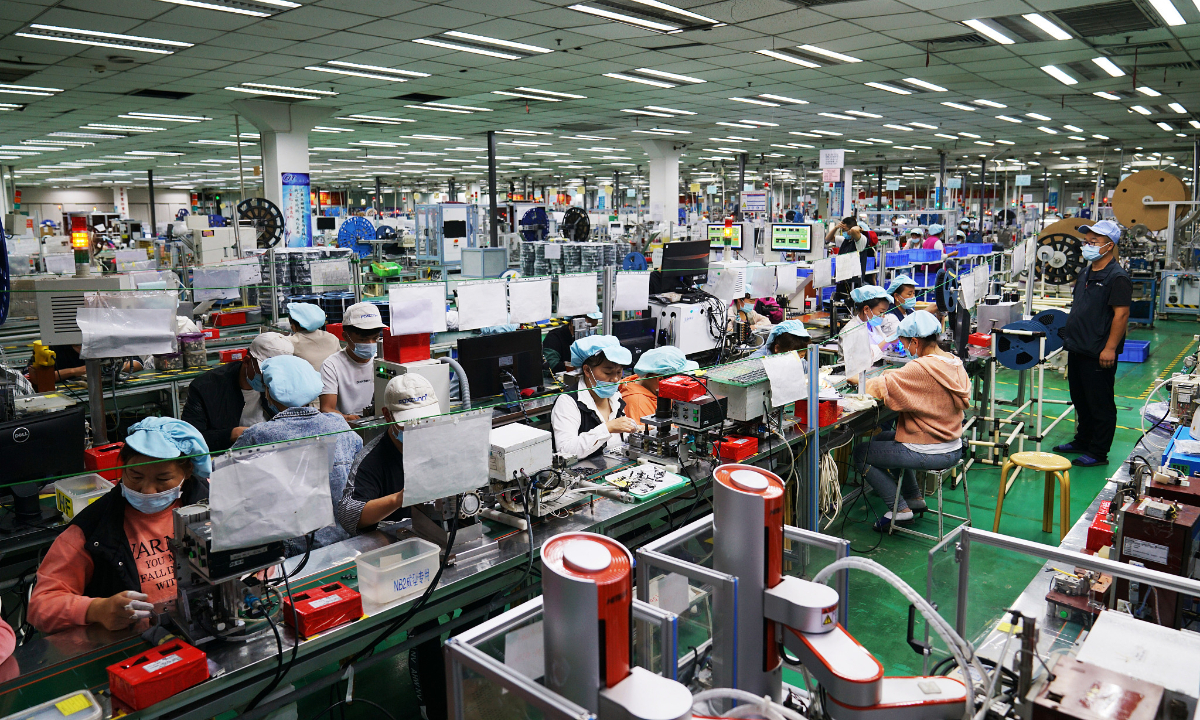
    Interestingly, in China, both the Mate 60 Pro and iPhone are assembled by the same contract manufacturer, Foxconn. And the Foxconn unit that assembles Huawei phones is paying its workers more than the unit that assembles the iPhone.

    Two recruitment agents told SCMP that Foxconn’s FIH division, a subsidiary that used to be known as Foxconn International Holdings, was offering new workers last week 26 yuan an hour ($3.60) to help assemble the Mate 60 Pro at the Foxconn factory in Shenzhen’s Longhua district. Meanwhile, workers helping to assemble the iPhone at Foxconn’s integrated Digital Product Business Group (iDPBG) are making 21 yuan an hour ($2.88), or 19.2% less than those building the Mate 60 Pro.

    A recruitment agent with the surname Xu in Shenzhen said, “The new hires will know what phone they are making after the factory allocates them to different teams based on current demand, but these days they have a higher chance of making handsets for Huawei.” The agent went on to say that those making the iPhone make less than those working for Foxconn’s FIH unit because the iPhone production unit offers more welfare benefits for workers.

    In Zhengzhou, home to the largest iPhone factory in the world, Foxconn is offering workers a peak signing bonus of 6,480 yuan ($888.35). Meanwhile, this year could be one of the toughest launches for the iPhone in China. Not only did the introduction of the Huawei Mate 60 Pro unleash a wave of nationalistic pride in the country, but the CCP banned the iPhone from being used in government offices citing security issues with the phone.

    Just the other day, reliable analyst Ming-Chi Kuo pointed out that Apple doesn’t market the iPhone to those working in government offices and stated that people in China who buy Huawei phones do not buy the iPhone. As a result, he didn’t change his estimate of iPhone shipments for the rest of this year.

  • Microsoft finally brings Phone Link to iOS users

    Microsoft finally brings Phone Link to iOS users

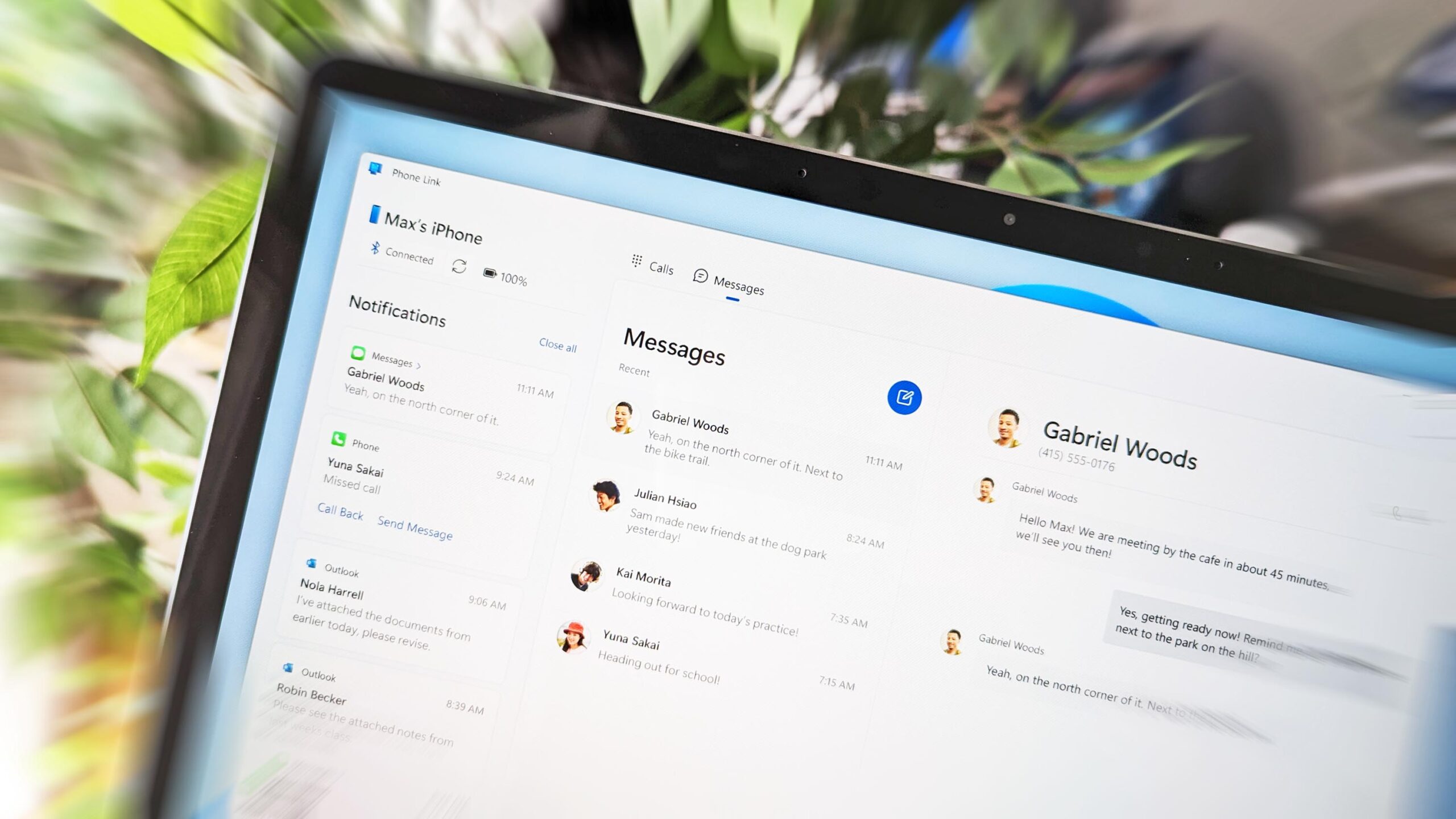
    It’s been years since Microsoft supported Android users with Phone Link, the app that allows them to connect smartphones to their PCs. Starting today, the same app is available for iPhone users, Microsoft revealed in a blog post. However, the experience is quite limited and pales in comparison with the features Phone Link for Android provides users.

    Announced back in February, the expansion of the Phone Link app to iOS is finally happening, as Microsoft announced the app is now rolling out globally in 39 languages across 85 markets.

    As per the company’s statement, once Phone Link is enabled on a Windows 11 PC, the app should provide some basic iOS support for calls, messages and access to contacts. iOS users can also access their iPhone photos on their PC thanks to Microsoft’s iCloud integration with Photos. Basically, you’ll be able to see your iPhone photos in the Photos app in Windows 11.

    While the rollout of the app has already begun, it may take a few weeks to be visible on all PCs. To start using Phone Link for iOS, use the Search box on the Windows taskbar to find Phone Link, and then follow the step-by-step guide to set it up.

    Regarding requirements, Microsoft confirmed that Phone Link for iOS is compatible with iPhones running iOS 14 or higher. The app will only work on Windows 11 devices and requires Bluetooth connection. Keep in mind that iPads and macOS are not compatible with this version of Phone Link.

    It’s also worth mentioning that iOS limit the messaging feature, and image/video sharing, as well as group messaging will not be supported. Microsoft notes that all messages are sessions based and will only be received when the phone is connected to PC.

  • Gmail interface gets optimized for foldable phones like Galaxy Z Fold 4

    Gmail interface gets optimized for foldable phones like Galaxy Z Fold 4

    Foldable phones are supposed to be more than just glorified tablets and big-screened mobile phones. They are getting better each year with new software tricks. The latest improvement is a new interface for Gmail.
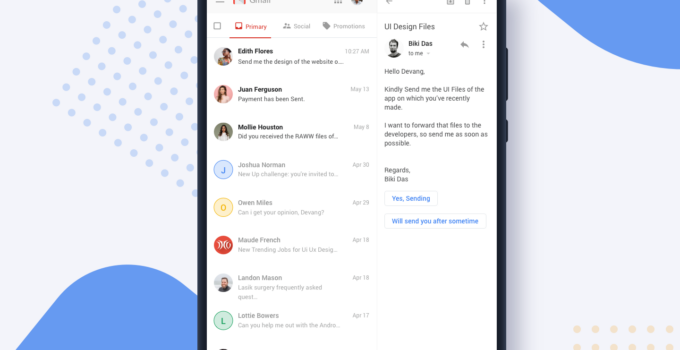
    Up until now, foldable phones displayed a stretched-out version of the Gmail app that you see on conventional phones. Google has given the interface a makeover and now, foldable phone users with book-style phones like the Samsung Galaxy Z Fold 4 will see a 2-pane layout for Gmail. The 2-pane view is also available for Meet and Chat.
    What this means is that the left part of the foldable screen will show the inbox and the right half will show an opened email. This makes sense from a multitasking perspective and will save a lot of back and forth when browsing emails.
    The search bar is above the inbox and the Compose button can also be seen on the first half of the screen. The bottom bar spans the width of the entire screen. In contrast, you see a vertical navigation rail on tablets. Little touches like these help create a distinct identity for foldable handsets.
    Google has increased its focus on foldable phones and tablets in recent times. The company announced its tablet-first OS Android 12L in late 2021 to make the software experience better on devices with large screens.
    It includes little tweaks and optimizations that make better use of larger screens, such as a vertically split notification shade and a taskbar to allow users to launch apps quickly.
    Google didn’t really care about tablets for the longest time. That’s changing now, and one of the major reasons behind this renewed interest is that the company has a tablet and probably a foldable phone on the way.
  • Huawei reportedly testing HarmonyOS 3.1 before it is pre-installed on P60 line

    Huawei reportedly testing HarmonyOS 3.1 before it is pre-installed on P60 line

    The last Huawei phone to feature the Google Mobile Services version of Android was the P30 Pro released in March 2019. Banned from using Google software and apps by the U.S. Commerce Department due to security issues, Huawei developed its own operating system called HarmonyOS. It was first used on a Huawei smartphone with the Mate 40 series and the Mate X2 foldable. Eventually, Huawei Mobile Services was also released in 2019 and includes the company’s AppGallery app storefront.

    Gizchina reports that according to an unnamed tech blogger, Huawei is currently in the process of testing HarmonyOS 3.1 internally. Version 3.0 of the operating system was pre-installed on the Mate 50 line that was released to a warm reception domestically last year. The latest rumor says that the new build kills off some bugs while improving system stability. The report also says that Huawei doesn’t have plans in place to update recently released handsets over the air with HarmonyOS 3.0.

    And it isn’t too soon to be thinking about version 4.0 of HarmonyOS. The report says the operating system’s next major build will include some new designs (we assume that the UI of the operating system is what will be changed) along with some new functionality. Now here’s the deal folks, while HarmonyOS-powered handsets make up only 2% of the world’s smartphones, that is good enough to make Huawei’s in-house operating system the third largest smartphone platform in the world after Android and iOS.
    In talking with our readers throughout the years, some believe that Huawei deserves all of the punishments placed on it by the U.S. because the company is truly a national security threat. And there are others who believe that the U.S. started punishing Huawei only to make sure that it didn’t negatively impact Apple’s businesses. No matter what you believe, the Chinese manufacturer may not have thrived as it did in the past, but it didn’t roll over and die either.

    And Huawei’s Mate 50 featured some innovations including the Emergency Battery Mode that even with 1% battery life remaining allowed users to make calls for 12 minutes, send messages, and stay on standby for up to three hours. The Mate 50 Pro became only the second handset to feature a camera with a variable aperture.

    One of the most interesting apps available from AppGallery is called Petal Search. The app allows users to obtain, “daily weather forecasts and top news; live sports scores and schedules; video, image, and music searches; and financial news and stock market updates.” If you’re about to travel, Petal Search will “search millions of hotels worldwide and book rooms; and check flights and travel info for top global destinations.” Petal Search will also “look up local services and businesses with comprehensive directories.” But there is even more functionality to this app.
    If you’re looking for a particular app that isn’t listed on AppGallery for one reason or another, search for it on Petal Search and even apps developed by Americans will show up if they are available to be sideloaded from a third-party app store. If an alternative source for such an app is found, you can install it directly from the Petal Search app. When we first wrote about the app three years ago, it allowed Huawei device owners to install American-developed apps such as Amazon, Snapchat, Speedtest.net, and AccuWeather.
    Now that the U.S. has banned Huawei from receiving the 4G-only Snapdragon chipsets from Qualcomm, the company’s continued existence in the smartphone industry will depend on whether Huawei receives a patent for a new light source it created for the extreme ultraviolet (EUV) lithography machines that are used to etch extremely thin circuitry patterns on silicon wafers. It is crucial to the production of cutting-edge chips. One Ditch company, ASML, makes these machines and is banned from shipping them to China.
  • Musk hints that a Tesla phone could be made to punish Apple and Google

    Musk hints that a Tesla phone could be made to punish Apple and Google

    You might wonder how Elon Musk got where he is today based on his uneven performance as Twitter’s new owner. His confusing and illogical changes to the verification checkmarks and his inability to make a decision and stick to it without changing his mind a few times does not inspire confidence in the guy as someone who can run a company like Twitter.
    And when former T-Mobile president and CEO John Legere said that he would be interested in working his magic on Twitter (albeit at a superstar executive salary of course), Musk flat-out rejected him without even hearing him out. Considering what Legere did for T-Mobile, taking it from its position as last among the four major wireless providers to second, the guy should get at least a personal meeting. After all, he does have a stunning track record and helped T-Mobile become the most innovative company in the industry.
    The latest news involving Musk and Twitter is that the multi-billionaire has posted a tweet in which he says that should Apple and Google bounce Twitter from their respective app storefronts, Musk will make what he calls an “alternative phone.”
    Let’s run through the whole thing. A conservative commentator Liz Wheeler tweeted, “If Apple & Google boot Twitter from their app stores, @elonmusk should produce his own smartphone. Half the country would happily ditch the biased, snooping iPhone & Android. The man builds rockets to Mars, a silly little smartphone should be easy, right?” Elon responded by writing, “I certainly hope it does not come to that, but, yes, if there is no other choice, I will make an alternative phone.”

    This reminds us of another billionaire who thought that building a competitive smartphone might be right up his alley. Jeff Bezos and Amazon released the Fire Phone in June 2014. To put it mildly, this phone was a flop, as reportedly only 26,000 units were sold.

    But we digress. Right now there are no signs that Apple or Google is considering the removal of Twitter from the App Store and Google Play Store, respectively. But you never know when something Musk does will go afoul of App Store and Play Store rules. If Google were to banish Twitter from the Android app storefront, Twitter could always end up in a third-party app store like Amazon’s where Android users could sideload it.
    Sideloading an app on Android means downloading it from an app store other than the Play Store. Losing the App Store wouldn’t even be a blow even if sideloading is not an option on iOS. That’s because without an Android or iOS app, Twitter still would be accessible through the mobile browser on iPhone and Android handsets; in other words, the lack of a native iOS and/or Android app would not spell the end for Twitter.

    We’d imagine that if a Tesla phone is developed, Musk would create a mobile/wireless business unit for Tesla. But Elon is going to have to be careful how he approaches such a project. Keep in mind that his holdings in Tesla stock have cratered by 54% so far this year. Tesla stockholders might not take too kindly to Elon using Tesla’s cash and name to prop up Twitter which is one of Musk’s personal holdings.

    Again, this is all conjecture at this point, especially since Twitter remains a listing in good standing in the App Store and the Play Store. Unless development plans for an alternative phone have already started, the process of building a new smartphone using a brand-new platform will take several years. So hopefully Mr. Musk doesn’t expect to snap his fingers and see a new phone instantly become an iOS and Android competitor.
  • UK carrier Vodafone launches new refurbished phone range

    UK carrier Vodafone launches new refurbished phone range

    As many of us know, premium smartphones are powerful and, at least in theory, last longer. But one huge downside is that they also come with a premium price tag, which not everyone can afford. So, if you want an expensive phone but don’t want to spend a lot of money on a handset, and you live in the UK, you can now buy a phone from Vodafone’s latest refurbished range, which the carrier just recently launched. As the mobile operator stated in its announcement, its new offerings can help “price-conscious customers get the phone they want for less.”

    For example, clients can get a refurbished iPhone SE (2022) 64GB for £261 on a 36-month payment contract. The regular price of the phone is £451, so by buying a refurbished model, you are saving £190.

    As for the other phones that Vodafone is currently offering, you can buy a refurbished model of the iPhone 13, the iPhone 12, the iPhone XR, the iPhone 11, the Samsung Galaxy S21, and the Samsung Galaxy S20 FE. Furthermore, the carrier is offering a two-year warranty on every Pay Monthly refurbished phone. According to the announcement, Vodafone is the only major UK mobile operator to offer such a warranty.

    If you hesitate whether to buy a renewed phone or not, Vodafone assures that its refurbished handsets are in “Great” or “Pristine” condition. Also, every phone has passed a visual and diagnostic check, which ensures that all devices work without issue. Vodafone also stated that these phones have been deep cleaned and securely data wiped, and if there is any problem, you can take advantage of Vodafone’s 14-day no-quibble money-back guarantee.

    However, if you want to get a brand new phone with a great discount, you should check out our best Vodafone phone deals. Or, if you are rolling with another carrier, you can visit our top Virgin Media phone deals, best O2 phone deals, three phone deals, and EE phone deals.

  • Microsoft files patent for a phone that folds both ways

    Microsoft files patent for a phone that folds both ways

    When we are talking book-type foldable phones, the market has gone two separate ways. There’s the Samsung Galaxy Z Fold 3 way, where the big display folds in and stays inside the phone’s shell, with a secondary screen on the outside, which you can use for quick operations, a-la “regular smartphone”. Then, there’s the Huawei Mate Xs 2 way, where the display folds on the outward side of the device — so, when folded, you are still using that big screen as your main source for viewing and use.

    Both concepts have their pros and cons, and many find themselves wondering “Do I want an inwards-folding or outwards-folding phone?”. Well, Microsoft would like to ask “Why not both?”.
    A patent was recently filed by the team at Redmond, which outlines a foldable phone with a flap that can go 360 degrees around its hinge — so, it can both fold in and fold out. Yes, the Microsoft Surface Duo 2 can absolutely do this, however, the Duo phones are very obviously 2-screen devices that are bolted together by a hinge in the middle. The patent that was discovered here shows a phone with a seamless screen, from one side to the other.
    That sounds pretty tough — a screen that can fold in and out straight through its middle, and still withstand all that physical strain. Is it even possible?
    Well, as Android Headlines kindly points out, LG recently demonstrated one such display panel. Yes, the same LG that quit the smartphone game is still going strong in other areas, display manufacturing being one of them.
    LG Display was at SID 2022 (Society for Information Display expo) and showed its vision for the future of OLED. A few concept devices were on the show floor — both smartphone- and laptop-shaped ones — with flaps that were able to fold all the way in and out to a 360-degree angle.
    The screens are made with ultra-thin glass technology and have special oleophobic coating that should be at least a bit better at keeping fingerprints away from the glossy screen. So, in theory, this could be the exact tech Microsoft might be planning to use for its outwards-folding phone.
    Will this be the Surface Duo 3? That’s possible. The rumor mill is quite mum on another Surface Duo right now, and it seems Microsoft may be skipping this year in order to refine its foldable concept. So, it’s very possible that we are going to see a high tech Surface Duo 3… a year or two from now.
  • Oppo is reportedly prepping a clamshell foldable

    Oppo is reportedly prepping a clamshell foldable

    Earlier this year Oppo released the Find N foldable handset with a 7.1-inch internal display and a crease that isn’t as easy to spot as the one on other foldables. The 5.45-inch cover screen has a shorter and wider 18:9 aspect ratio than the taller and thinner 25:9 aspect ratio found on the Galaxy Z Fold 3’s cover screen.

    Oppo and Samsung are the only two phone manufacturers that use ultrathin glass (UTG) for their foldable phones. The UTG weighs in at just 0.03mm thick which allowed it to bend more than 200,000 times without any issues in pre-production testing.

    Back in January, a secret file found in the Android 12L Beta revealed that the measurements of the Google Pixel Fold’s internal display won’t be as large as the size of the Samsung Galaxy Z Fold 3’s internal screen as originally thought. And a report from DSCC display analyst Ross Young that we told you about on Tuesday uses rumored measurements to conclude that that the foldable Pixel’s internal display could be shorter but wider than the Galaxy Z Fold 4’s internal screen.
    Once again, this would seem to indicate that the Pixel Fold’s display will be similar to the tablet-sized screen belonging to the Oppo Find N. Almost exactly a year ago to the day, we told you that Oppo was reportedly working on a Galaxy Z Flip challenger with a clamshell design. Today, we have some more information about this phone, which would also take on the Huawei P50 Pocket.
    The rumor mill has Oppo’s foldable clamshell coming in at the equivalent of $756 compared to price tags of approximately $1,000 for the  Huwaei P50 Pocket and a rumored $1,000 for the Galaxy Z Flip 4.
    One of the smartphone brands under the BBK Electronics corporate umbrella along with OnePlus, Realme, Vivo, and iOOO, Oppo’s strategy is to differentiate its foldables from Sammy’s models by giving them a smaller footprint and a smaller price tag.
    While we don’t have any leaked specs for Oppo’s rumored flipper to pass along, we can refresh your memory to remind you that the Galaxy Z Flip 3 opens to reveal a 6.7-inch display with a 1080 x 2636 resolution and features a 120Hz refresh rate. There is a small 1.9-inch external display for notifications, messages, and alerts.
    Unlike the Oppo Find N, which turns from a smartphone into a tablet, the clamshell starts out as a pocketable device that flips open to become a large-screened handset. Plus, whenever you end a call with someone you’re not fond of, you can give your phone a satisfying slam that indicates the end of that connection (telephonically and otherwise).
  • Google now lets you remove your address and phone from Search results

    Google now lets you remove your address and phone from Search results

    Google Search can be a curse as much as it is a blessing. You can use it to find more information on various topics, such as Elon Musk’s $44 billion Twitter acquisition, or leaks about the upcoming iPhone 14, but at the same time, someone can use the same search service to find out where you live, your phone number, and other sensitive data about you. This is why Google allows users to request the removal of their personal data that appears in Search.

    In a blog post, Google announced that, from now on, in addition to bank account and credit card numbers, users will be able to request the removal of other types of information, such as phone numbers, email addresses, or physical addresses, from its search results. But Google doesn’t stop there. To protect you from identity theft, the company also enables you to remove information, such as confidential log-in credentials, if they appear in Search.

    However, don’t expect Google to erase all the data straight away. When you send a removal request, the company will first assess all the content on the web page that displays your credentials to ensure that it is not limiting the availability of other broadly useful information, such as news articles.

    Google will also check if the content you want to delete isn’t part of the public record on government or official sites. If it is, it won’t make the removal.

    It should be noted that removing content from Google’s search results doesn’t mean that it is gone from the Internet. As the company pointed out, if you want something completely gone, you should speak with the hosting site directly.

  • Apple to further enhance Face ID with iOS 15.4 update

    Apple to further enhance Face ID with iOS 15.4 update

    Following the release of iOS 15.3 update, Apple has kicked off a new set of beta trials for the next version of its operating system – iOS 15.4. The first beta is now rolling out to developers via an over-the-air update, but without a changelog, it’s impossible to say what’s included without spending several hours with 15.4 beta 1.

    Apple to further enhance Face ID with iOS 15.4 update, here’s what to expect
    Luckily, YouTuber Brandon Butch has already found a couple of interesting improvements that are now being tested by Apple via the iOS 15.4 beta 1 build. The most important one is Face ID support while wearing a mask, a feature that makes perfect sense in these troubled times.

    According to the screenshot above, “Face ID is most accurate when it’s set up for full-face recognition only. To use Face ID while wearing a mask, iPhone can recognize the unique features around the eye to authenticate.” There’s also a new toggle in iOS 15.4 that lets iPhone users enable “Face ID With a Mask” via the Settings / Face ID menu.

    But that’s not all the interesting stuff people using iOS 15.4 beta 1 have found. 9to5mac reports that Apple added even more improvements to Face ID recognition by allowing iPhone users to wear glasses and a mask at the same time.

    Using Face ID while wearing a mask works best when it’s set up to recognize each pair of glasses you wear regularly. Face ID with a mask doesn’t support sunglasses.

    While the feature still doesn’t work with sunglasses, it remains incredibly useful for those who wear regular glasses and a mask at the same time.

  • Samsung reports record third quarter revenue despite global chip shortage

    Samsung reports record third quarter revenue despite global chip shortage

    Samsung had a record third-quarter revenue as it reported the U.S. Dollar equivalent of $63.1 billion for the period. That works out to a 10% increase for the top line while operating profit for the quarter came to $13.5 billion (or 26% higher than the operating profit reported during the previous quarter). $22.6 billion in revenue during the quarter came from Sammy’s semiconductor business.

    Samsung was able to navigate its chip business through the global chip shortage “by flexibly operating its product mix.” Samsung’s mobile business also played a huge role in the company’s record-breaking third-quarter. Thanks to strong sales of its flagship phones including foldable like the Galaxy Z Fold 3 and the Galaxy Z Flip 3, Samsung generated $24.2 billion in revenue during the period from July through September.

    Demand for semiconductors improved thanks to strong sales of computers; the latter benefited from the increased number of people working at home because of the pandemic.

    The company’s profits were impacted by the larger marketing outlays it made for its foldable line. Strong demand for Samsung’s phones also led its display business to deliver $7.5 billion in revenue. Earnings for the display segment were helped by strong demand for small to medium OLED panels. Demand for larger-sized displays was sluggish.

    Samsung is optimistic about Q4 and 2022 results, but cannot estimate results for the chip business because of the supply issues in that market. For the fourth quarter, the company expects to report higher earnings “due to expanded supply of SoCs and related products for launches of new 5G smartphones in 2022.”

    The company expects that the Galaxy S22 series will be its first flagship series of the new year with the Galaxy S22, Galaxy S22+, and the Galaxy S22 Ultra kicking off 2022 in January. Meanwhile, investors were happy with the report as the shares soared 2.28% on Wednesday (or $1.45 USD) to $61.22.

  • Microsoft optimizes all Office mobile apps for Samsung’s new foldable phones

    Microsoft optimizes all Office mobile apps for Samsung’s new foldable phones

    The announcement of the new Galaxy Z Fold 3 and Galaxy Z Flip 3 marked a few premiers for Samsung’s flagships. For example, there are the first smartphones that allow users to seamlessly transfer all their WhatsApp chat history when they switch from an Apple iPhone to an Android phone.

    This WhatsApp feature only works on the Galaxy Z Fold 3 and Galaxy Z Flip 3, but its availability will soon be expanded to most Android and iOS devices. Another interesting premiere revealed this week focuses on Microsoft’s Office mobile apps, which have been fully optimized to work on Samsung’s new foldable phones.

    The Redmond-based giant announced a new partnership with Samsung to perfect the way its Office mobile apps work on the Galaxy Z Fold 3 and Galaxy Z Flip 3. Also, the partnership between the two companies has expanded to further integrate Teams and Outlook into the foldable smartphone experience.

    Starting with these two foldable phones, you’ll be able to run multiple apps at the same time via the Multi-Active window. For example, running Microsoft Excel and PowerPoint dragging and dropping a table right into your presentation will be a breeze now. Even running two instances of the same app will be possible.

    Samsung Galaxy Z Fold 3 and Galaxy Z Flip 3 are now available for pre-order for $1,800 and $1,000, respectively, with availability expected August 27 starting from the United States and Europe. You can pre-order either of the two flagships via the widgets below.