Tag: pizza hut

  • Pizza Hut parent eyes French Connection sale

    Pizza Hut parent eyes French Connection sale

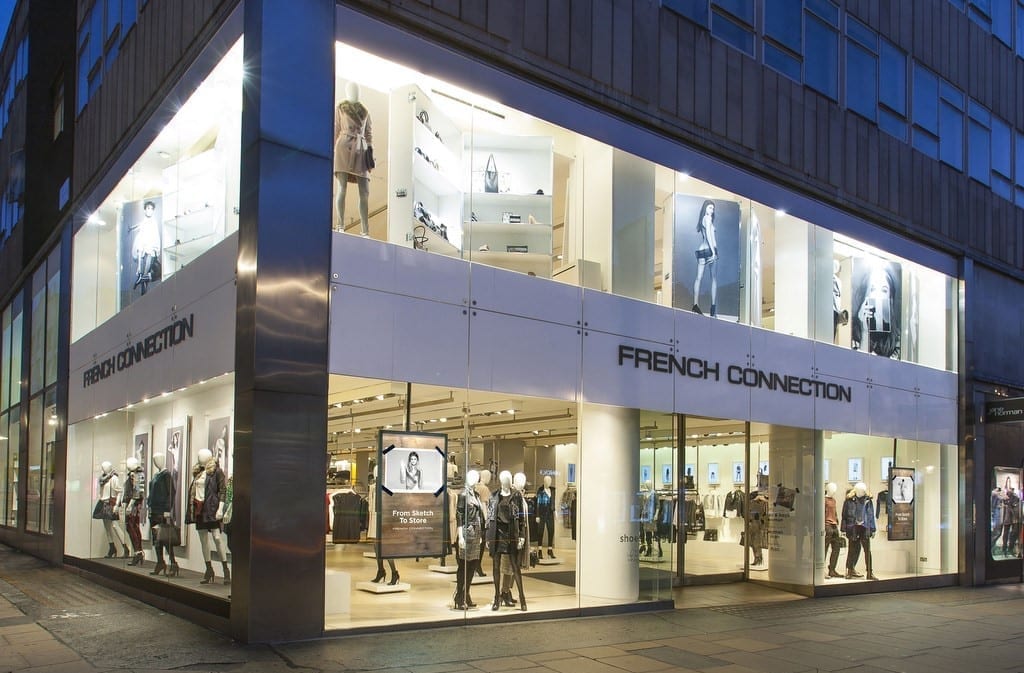
    The parent of the Pizza Hut business in the UK appears to be an unlikely bidder in the French Connection sale.

    Private equity company Rutland Partners is reported by the Sunday Times to have been in talks to buy the troubled UK fashion brand since early this year.

    French Connection, a decade ago infamous for its branding FCUK, has struggled for the last several years as its designers failed to capture consumers imagination with its offer. The brand seems caught in a rapidly shrinking middle market between fast fashion brands and the European-led luxury sector, its pricing aligned with neither end of the spectrum.

    The company is thought to have been unofficially on the market for more than a year, although Rutland is thought to be offering as little as £40 million

    A source told the Sunday Times it could not justify paying more than 40p a share for the business, which extended its losses five-fold last year on sales down 9 per cent to £164.2 million.

    Besides Pizza Hut, Rutland also owns electronics chain Maplin and the Bernard Mathews turkey brand.

    French Connection dates back to 1992 when it was founded as a womenswear brand by Stephen Marks, a year after the cult film of the same name was released. Menswear was added in 1976 and Marks grew the business to the point where its float in 1984 made him Great Britain’s 15th richest man. By the late 1980s it was in trouble and he bought back control of the business in 1991, launching the controversial FCUK brand and advertising campaign. That drove it back into a new era of success before consumers grew tired of the joke and it reverted to French Connection in 2005. By 2014 the retailer had 131 stores in the UK and Europe and it wholesales stock and supplies franchises internationally.

    Ten years ago the company’s shares traded at £2.40 each, and Gatemore Capital Management, which holds 8 per cent, values the stock at £1.50.

    Robert Stockdill
  • Pizza Hut develops diet pizza range

    Pizza Hut develops diet pizza range

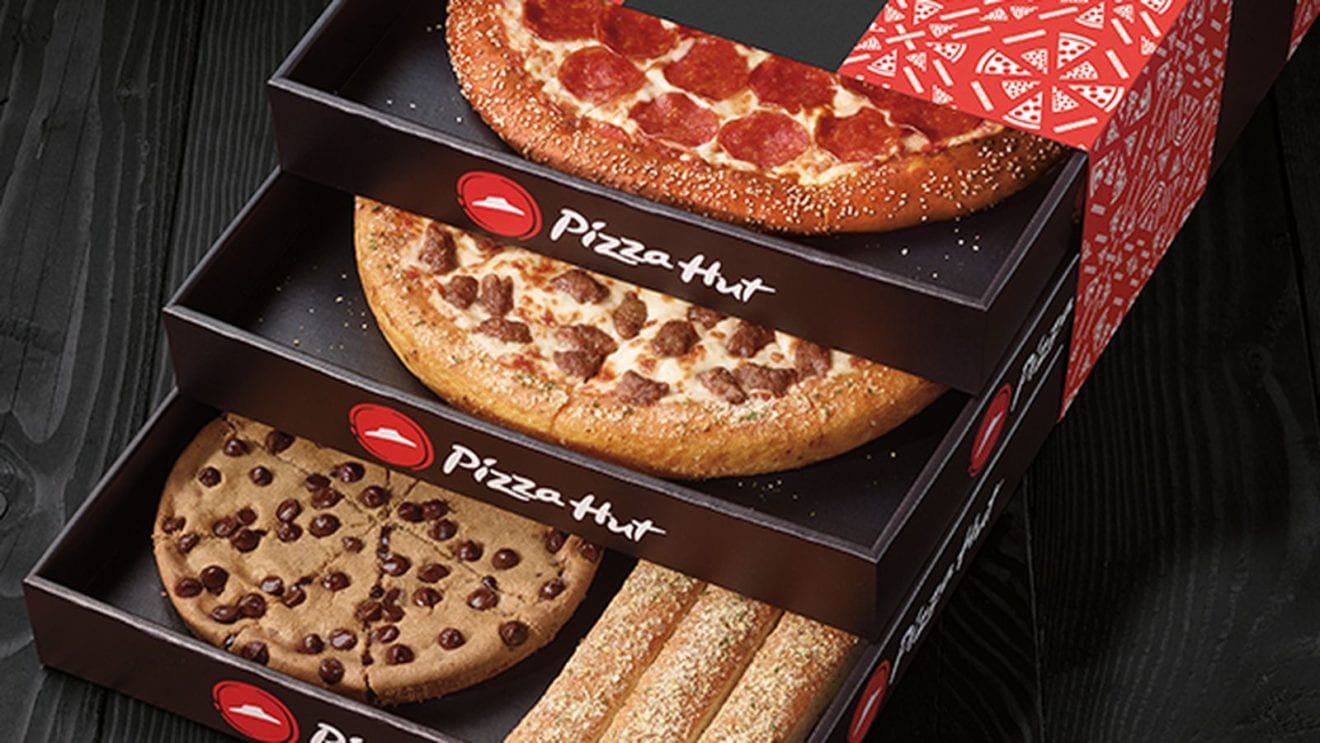
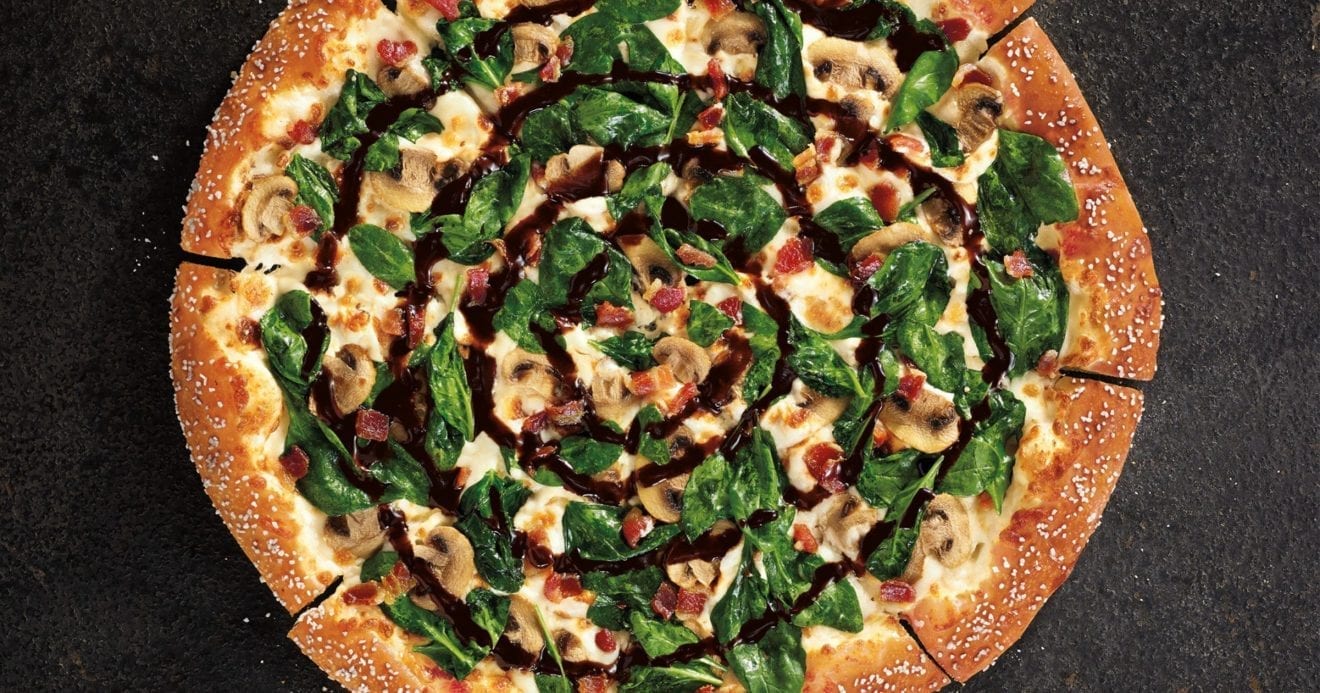
    Pizza Hut Japan has teamed with Rizap, a Japanese company promoting nutrition and exercise, to create a ‘diet pizza’.

    The two companies aim to make the fast-food favourite more healthy, and have released three sugar-reduced varieties with Pizza Hut Japan.

    Six stores around Tokyo’s Kanto area are offering the healthier options, including thick-cut bacon and grilled vegetables, savory bulgogi and teriyaki egg. They come baked fresh in a personal pan size.

    As well as take-out, deliveries are available, each of the pizzas costing 1000 yen (US$9.99).

    Each pizza crust has had its sugar content halved, while overall the new pies contain less than 30g of sugar (regular pizzas contain 55.2g).

    Unfortunately, the healthy-style pizzas will be offered only until October 23.

  • Apple Pay Launched in Hong Kong With American Express, Mastercard Support

    Apple Pay Launched in Hong Kong With American Express, Mastercard Support

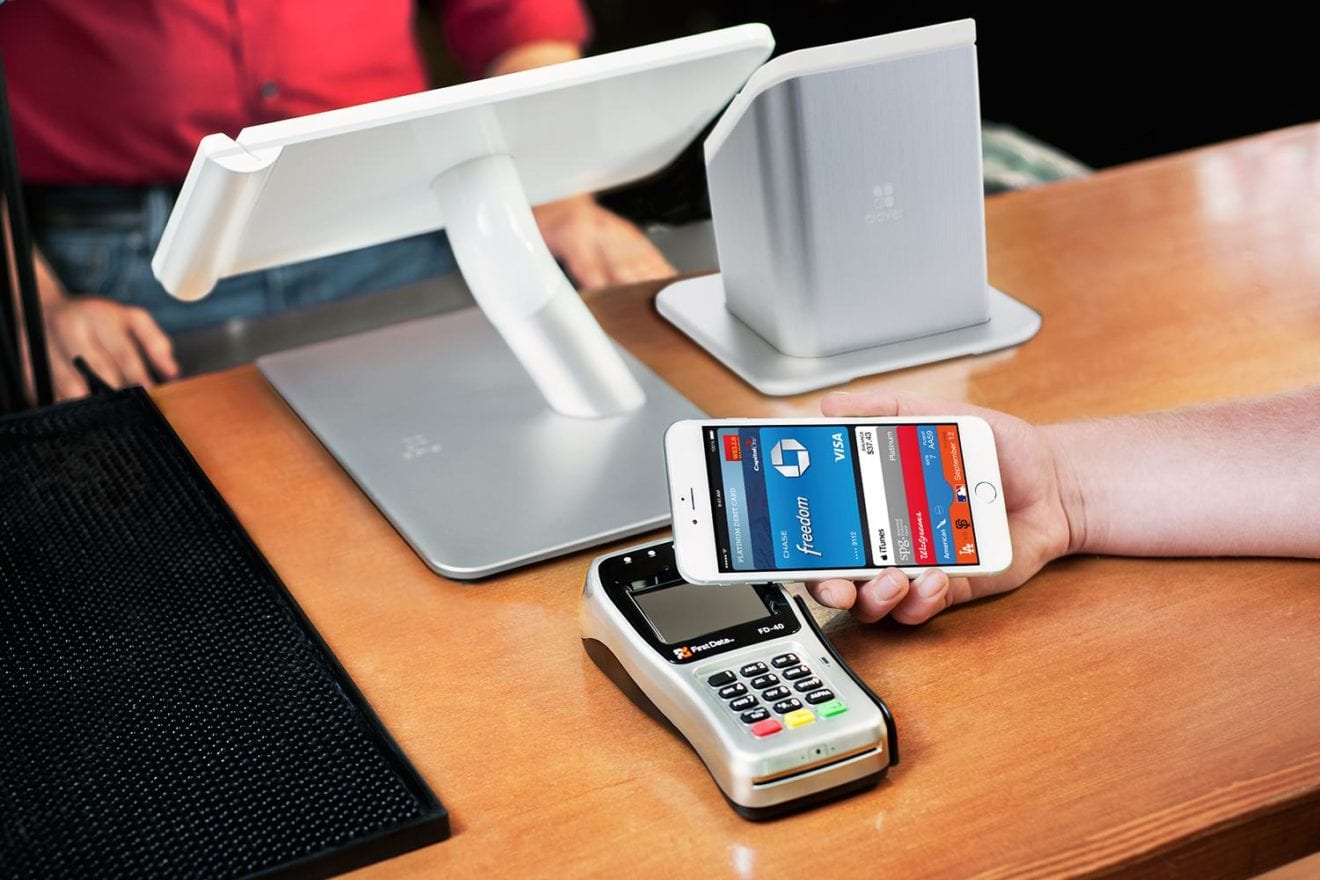
    Apple Pay has arrived in Hong Kong, allowing the Apple users to use the company’s mobile payment system.

    Apple’s payment system has been rolled out to American Express, Visa and MasterCard cardholders in Hong Kong. Other participating banks are Standard Chartered, DBS, Hang Seng Bank, HSBC, Bank of East Asia, and BOC Credit Card, a subsidiary of Bank of China (Hong Kong). Apple’s website notes that the system would be compatibile with BEA and HKT touchless payment network Tap & Go in the future, as reported.

    Apple users can add their cards to Apple Pay by just tapping “Add Credit or Debit Card” option in the Wallet app on devices running the iOS 8.1 or higher. Hong Kong’s Apple Pay works fine with the iPhone 6, iPhone 6s, iPhone 6 Plus, iPhone 6s Plus, and iPhone SE. It is also available on the iPad Air 2, iPad mini 3, iPad mini 4, and both iPad Pro models. However, iPhone 5, 5c, and 5s users need an Apple Watch to make Apple Pay work.

    Greg Hingston, the head of retail banking and wealth management at HSBC in Hong Kong, said the number of HSBC’s active mobile banking customers has increased by almost 50 percent over the past three years, according to the South China Morning Post.

    “We expect this to rise as customers continue to migrate to digital banking and as we roll out innovative offerings such as Apple Pay. Digital is an integral part of our strategy as technology and mobility are changing the way our customers access information, products and services,” Hingston said.

    In Hong Kong, Apple Pay can be used where contactless payment is accepted and at a wide range of retail partners, including 7-Eleven, KFC, McDonald’s, Pizza Hut, Pacific Coffee, Su-Pa-De-Pa, Taste, ThreeSixty, Uny, and more.

    The Cupertino-based company’s payment system has also debuted in France, which is compatible with Mastercard and Visa credit and debit cards issued by Carrefour Banque and Ticket Restaurant as well as Banque Populaire and Caisse d’Epargne, an assemblage that includes France’s second largest banking group.

    Apple Pay is now available in nine countries including the United States, the United Kingdom, China, Australia, Canada, Switzerland, and Singapore. In addition, Apple plans to launch Apple Pay to Spain through a partnership with American Express later this year.

  • Yum China divestment on track

    Yum China divestment on track

    The Yum China divestment is expected to be completed by October 31.

    The US fast food giant released the target date along with second quarter figures showing solid sales growth across most Asian markets, especially within the KFC division.

    CEO Greg Creed said he was particularly pleased with “the continued sales momentum at KFC China,” which delivered better-than-expected same-store sales growth of 3 per cent.

    “Yum! Brands delivered second-quarter (global) core operating profit growth of 7 per cent and earnings-per-share growth, excluding special items, of 9 per cent. Given our strong first-half results and current trends in China, I’m pleased to raise our full-year core operating profit growth forecast to at least 14 per cent.”

    Creed said the China result represented its fourth-consecutive quarter of positive same-store sales growth at KFC China.

    “Importantly, our China Division is off to a good start in the third quarter for both KFC and Pizza Hut Casual Dining, including a return to positive same-store sales at Pizza Hut in recent weeks.”

    Outside of China, challenging industry conditions in the US contributed to soft sales results.

    The separation of the China business would create “two powerful, independent, focused growth companies,” said Creed.

    “Our capital structure is fully in place and we plan to return a significant amount of capital to shareholders both prior to and after the spin.”

    Creed promised further information at an investor briefing on October 11.

    Yum China same-store sales were even, with an increase of 3 per cent at KFC, offset by a decline of 11 per cent at Pizza Hut. The China division opened 72 new stores during the quarter, taking its network there to 7246

    Meanwhile, in developing Asian markets – including Malaysia, Indonesia and the Philippines – which account for 7 per cent of KFC’s global turnover, sales rose 11 per cent in the quarter and are running 10 per cent ahead of last year for the first half.

    In Thailand, which accounts for 3 per cent of KFC’s global turnover, sales rose 17 per cent in both the second quarter and the first half.

    And in developed Asian markets – such as Japan, Korea and Taiwan – which accounts for 9 per cent of turnover, sales rose 6 per cent by quarter and half.

    Pizza Hut sales in developing Asian markets rose 5 per cent in the second quarter and 3 per cent in the first half. In developed Asian markets, sales fell 7 per cent this year.

  • Yum! Brands China sale falters

    Yum! Brands China sale falters

    Following a missed deadline by potential investors, the sale of a minor stake in Yum! Brands China business has been delayed.

    Yum runs KFC and Pizza Hut outlets in China, while the potential bidders include Singapore state investment company Temasek Holdings and Chinese private equity firm Primavera Capital.

    One report says the suitors held off submitting bids after Yum tried to impose new terms on the investments. The investors have also indicated they disagree with Yum’s proposed valuation of $10 billion for the China unit.

    After a prolonged sales slump caused by food-safety scandals, Yum last year decided to spin off its China business into a separate publicly traded company. Since this was announced in October, Yum has had stronger same-store sales results from KFC in China.

    With the terms change, Yum would not be obliged to pay royalties to the China business for any products it developed, plus it would not share the burden for some of the Chinese unit’s advertising spend.

    Yum told potential investors of the new conditions just days before the bid deadline, and the company has yet to set a revised deadline.

    Meanwhile, Yum spokeswoman Virginia Ferguson says the company is making “great progress” toward the separation of the China business.

    At an investor conference this month, CEO Greg Creed said he expects the China separation to occur around the end of October.

    A group backed by sovereign wealth fund China Investment Corp withdrew a bid for control of the China business after failing to agree on a price. It claimed that initial due diligence showed Yum’s profit margins were under pressure in an increasingly competitive market.

    Yum’s market share in China fell to 24 per cent last year from 39 per cent in 2010, data from Euromonitor International shows.

    According to its website, the company plans to add 600 outlets this year to its more than 7200 restaurants across China.

  • Bidding starts for McDonald’s China business

    Bidding starts for McDonald’s China business

    Beijing Tourism Group, ChemChina and Sanpower are among bidders for McDonald’s China restaurants and the 20-year master franchise covering China and Hong Kong.

    The deal is said to be worth about US$3 billion, and bids close on Monday.

    Restrictions on the franchise agreement have discouraged such buyers as private equity firms, but others have entered the auction, reports CNBC.

    McDonald’s China partner Beijing Capital Agribusiness Group has been reported to be among companies preparing first-round bids ahead of the deadline, but an official has said the company is not participating in the bidding.

    Illinois-based McDonald’s has hired Morgan Stanley to run the sale of about 2800 restaurants in China, Hong Kong and South Korea. The South Korea sale is being run separately.

    McDonald’s announced in March that it was reorganising in Asia by bringing in partners to own restaurants within the franchise business. Competitor Yum Brands, which has the KFC and Pizza Hut chains, is also restructuring in China.

    Domestic rivals are becoming more competitive, and the two international fast-food giants have had food-safety scares.

    “Given the difficulties Western chains have had recently with public perception, local players have become a serious competitive threat,” says Euromonitor International foodservice analyst Elizabeth Friend.

    Meanwhile, McDonald’s will draw up a shortlist of bidders for the next round in the coming weeks.

    McDonald’s China and Hong Kong business posted about $200 million in earnings in its latest financial year.

  • Chains top China restaurant rankings

    Chains top China restaurant rankings

    Chains outperform independent eateries in China restaurant rankings, new research shows.

    A survey by global consulting firm OC&C Strategy Consultants shows that Chinese consumers dine out on average two or three times a week, with Hai Di Lao, Pizza Hut and Little Sheep ranking as their favourite brands.

    Western brands ranking in the top 10 are: McDonald’s (7), TGI Friday’s (8) and KFC (9). Others on the list are South Beauty (4), Shanghai Min (5), Waipojia (6) and Tairyo (10).

    Food quality, wide choice and service quality shows as the three critical factors in restaurant choice, while serving speed, convenience and pricing are rated as less important Chinese consumers actively seek out new restaurants and are receptive to new formats and concepts such as theming, healthy lifestyle menus and organic produce, as well as innovative, fusion cuisine.

    According to the report, Serving up a Winner – Establishing a Winning Proposition in China’s Restaurant Landscape, China’s restaurant market is more vibrant than ever, with growth outstripping other major markets despite higher volatility.

    “While other retail segments struggle in the face of ‘the new normal’, restaurants are becoming more innovative and reaping the benefits of the growing middle class,” says OC&C greater China partner Jack Chuang. “The arrival and rapid expansion of international chains in the past few years has increased the competitiveness of the market.”

    He says getting diners through the door of a restaurant is still challenging. “Restaurant staff need to ensure that service is authentic and make creative, personalised decisions to delight guests.”

    Chuang says restaurants should also offer a wide menu range with local flavour.

    The study canvassed 2600 respondents in 21 cities across China, with consumer surveys and restaurant audits in February.

    Founded in 1987, OC&C provides corporate and business strategy, channel, marketing, organisational and change strategy, as well as transactional support services. It has more than 400 consultants in 14 offices globally, including China and India. The greater China practice has offices in Hong Kong and Shanghai.

  • Pizza Hut Asia to test Pepper the robot

    Pizza Hut Asia to test Pepper the robot

    Pizza Hut Asia and MasterCard have partnered to bring Pepper, SoftBank Robotic’s humanoid robot, to restaurants by the end of this year to enhance in-store customer service.

    Pizza Hut Asia will be piloting Pepper for order-taking and what MasterCard describes as “personalised engagement”. This marks the first commercial application for Pepper, according to MasterCard.

    Pepper, which was unveiled on Tuesday, will be powered by MasterPass, the global digital payment service from MasterCard that connects consumers with merchants, enabling them to make digital payments across channels and devices.

    MasterPass extends the robot’s ability to integrate customer service, access to information and sales into a seamless and consistent user experience.

    “Consumers have come to expect personalised service, customised offers and simple and seamless processes both in-store and online,” said Tobias Puehse, vice president, Innovation Management, Digital Payments and Labs, Asia/Pacific, MasterCard. “The app’s goal is to provide consumers with more memorable and personalised shopping experience beyond today’s self-serve machines and kiosks, by combining Pepper’s intelligence with a secure digital payment experience via MasterPass,” Puehse said.

    Pepper robot Pizza Hut

    A consumer will be able to initiate an engagement by simply greeting Pepper and pairing the consumer’s MasterPass account by either tapping the Pepper icon within the wallet or by scanning a QR code on the tablet that the robot holds. After pairing with MasterPass, Pepper will be able to assist cardholders by providing personalised recommendations and offers, additional information on products, and assistance in checking out and paying for items. Pepper will be able to initiate, approve and complete a transaction by connecting to MasterPass via a Wi-Fi connection and the entire transaction happens within the wallet.

    “We are excited to welcome Pepper to the Pizza Hut family,” said Vipul Chawla, managing director of Pizza Hut Restaurants Asia. “Core to our digital transformation journey is the ability to make it easier for customers to engage, connect and transact with Pizza Hut. With an order-and-payment-enabled Pepper, customers can now come to expect personalized ordering at our stores, reduce wait time for carryout, and have a fun, frictionless user experience,” Chawla said.

    The app was built by the MasterCard Labs team in Singapore, one of the company’s eight research and development centers across the globe. The Pepper application adds to ongoing MasterCard programs that bring payments to any consumer gadget, accessory or wearable – from fitness bands to refrigerators and now robots. The integration with Pepper, MasterCard stated, has the potential to open up opportunities in the world of retail such as personalised shopping and concierge services, in-aisle checkout and the ability to buy in store but get the goods delivered at home. The same capability would also be applicable to other consumer engagement locations such as hotels, banks, airports, and other customer service industries.

    The app is being showcased at the Pepper Partners Europe event hosted by SoftBank Robotics Europe (a SoftBank Robotics Holdings group company) in Paris until May 26.

  • KFC owner Yum profits boosted by China sales

    KFC owner Yum profits boosted by China sales

    Yum Brands, the parent company behind fast-food chains KFC, Pizza Hut and Taco Bell, has reported a surprise 8% rise in first-quarter net operating profit. One-time gains in the quarter from a Chinese New Year chicken bucket promotion helped boost sales in China and bring in profits of $391m (£273m; €346m) in the January to March period.

    Adjusted earnings per share came in at 95 cents, beating analyst forecasts for earnings per share of 83 cents. Sales at restaurants that have been open for at least a year in China — the company’s biggest profit-driving region — were up 6% from the same period a year ago, helped by a 12% sales jump at KFC China.

    Yum chief executive Greg Creed said 2016 was a “transformational year” for the company and announced that the China division would split into a separate business by the end of the year.

    The firm also upped its core operating profit growth forecast for the year to 12% from 10%. Yum shares jumped nearly 4% in after-hours trading in New York following the earnings release.

    Global sales up

    Worldwide same-store sales were up 2% in the quarter, with sales at KFC and Pizza Hut up 1% and 3% respectively. Same-store sales at the US Pizza Hut division were up 5%.

    “KFC China had an outstanding Chinese New Year bucket promotion,” Creed said in a statement. “While it’s early in the year and there may be bumps in the road, we’re confident in raising core operating profit growth guidance to 12% from 10% previously.

    Pizza Hut

    “This is a transformational year for our company as we remain on track to finalise the separation of our China business by year end. We look forward to establishing two powerful, independent, focused growth companies dedicated to building on our brand strengths and rewarding our shareholders.”

    Yum opened 68 new restaurants in China during the quarter, bringing the total number of its outlets in the country to nearly 7,000. It is the largest western restaurant brand in China and plans to spin-off the division into a separate publicly-traded company by year end to modernise services and streamline operations in other markets.

  • Taco Bell China on the way

    Taco Bell China on the way

    Mexican-inspired fast food is about to tickle Asian palettes, with the first Taco Bell China restaurant scheduled to open this year.

    Yum Brands! CEO Greg Creed, speaking at a consumer and retail conference in New York, says the first taco Bell China outlet will open in Shanghai.

    US-headquartered Yum! Is in the process of separating its China business into an independent, publicly traded company this year. It has about 7000 KFC and Pizza Hut restaurants in China and believes the spin-off will boost returns and increased asset value for shareholders of both companies post-split.

    Yum! plans to franchise 96 per cent of its outlets by the end of next year, and believes that model will enable it to nearly treble the store network from the present 6900 stores to 20,000.
    A subsidiary of Yum, Taco Bell is an American chain of fast-food restaurants based in Irvine, California. Founded in 1962 by Glen Bell, it has more than 6600 stores across mainland US with 175,000-plus employees.

  • Yum! China fortunes rebound

    Yum! China fortunes rebound

    Yum! China has showed progress with a system wide sales increase of 3 per cent in the latest quarter – or 7 per cent on a constant currency basis.

    Same restaurant sales are now in positive growth, although by a fairly meagre 2 per cent given the 16 per cent decline in the same quarter last year. Nevertheless, the strong pace of 743 new restaurant openings, combined with some good productivity gains, helped to swell operating profit by 200 per cent.

    Given the big differential in growth prospects and the fact that China faces a very different set of problems and opportunities, it is hardly surprising that Yum! is looking to split its business into two separate companies. This is a sensible step that will allow Yum! and Yum! China to focus on their respective priorities. However, without the boost to growth provided by China, the legacy business will need to work much harder to reestablish its relevance if it is to grow in a much more competitive market.

    Globally, Yum! produced a set of results that exactly mirrors those of last quarter.

    KFC has ended its fiscal year with a fairly solid set of numbers. That said, the growth figures are expressed on a constant currency basis and so exclude the negative impact of the strong US dollar. When this is factored in the outcome is a little less rosy with total revenue for the quarter falling by 1.2 per cent over the prior year.

    Behind the numbers, both KFC and Pizza Hut continue to struggle with system wide sales, including the impact of exchange rates, falling by 5 per cent and 2 per cent respectively. Fortunately this has been somewhat offset by the rebuilding of restaurant margins, but not by sufficient enough a degree to prevent profits at KFC dipping and profits at Pizza Hut virtually flatlining. Across the quarter, these two traditional engines of growth simply failed to propel the company forward.

    One of the key issues for both brands is the relatively slim growth within the US, which in the case of KFC is the division’s single largest market, and in the case of Pizza Hut accounts for the majority of the division’s sales. In our view both suffer from the challenge of maturity and, while they remain popular, the rather tired nature of the brands and a lack of meaningful menu innovation means they struggle to compete against rivals like Chick-Fil-A which are seen as more interesting by consumers. In many ways, both brands need to take a leaf out of the McDonald’s playbook in terms of reinventing themselves to become more relevant to diners.

    In contrast the Taco Bell division saw a strong rise in sales on at both total and same restaurant level. Restaurant margins also increased thanks to some favorable cost changes for commodities. While the combination of these things should have resulted in a good uplift in operating profit, a number of one-off costs – which included investment spending, legal fees, and the creation of a scholarship program – put pay to that. For the quarter Taco Bell operating profit declined by 7 per cent.

  • Super retail network adds speed for Pizza Hut Hong Kong

    Super retail network adds speed for Pizza Hut Hong Kong

    Pizza Hut Hong Kong has is implementing a super retail network solution from Hutchison Global Communications to connect more than 100 outlets to the company’s data centers.

    Pizza Hut says the solution – a next generation metro Ethernet data capability characterised by bandwidth of up to 10Gbps and super-low latency of less than one millisecond – has enabled it to accelerate online ordering via mobile apps, the website and phone calls.

    The orders are sent to HQ which then tasks outlets closest to delivery locations.

    Super retail network (SRN) runs over a dedicated optical private network, eliminating bandwidth bottleneck issues.

    MPLS and VLAN technology and automatic network-level failover, provide high level security.

    Based on a dual-core network design, SRN delivers full core network resilience and allows quick access to company applications such as those for point of sale and online catalogue functionality.

    Howard Wong, Pizza Hut information technology director, says deployment of HGC’s SRN enabled the company to shorten the time it takes to process online ordering and boosts the restaurant’s overall operational efficiency.

    The offering also provides the capacity to expand the company’s armoury of in-store applications.

    Hutchison Telecommunications Hong Kong Holdings, of which Hutchison Global Communications is the fixed line division, says it is creating vertical retail solutions based on the next generation network’s capabilities.

  • JV plans 20 Pizza Hut Myanmar stores

    JV plans 20 Pizza Hut Myanmar stores

    Hong Kong’s Jardine Group says its Myanmar joint venture will open up to 20 Pizza Hut restaurants across the new market within five years.

    With the first outlet just opened in Yangon, the Jardine CM Restaurant Group plans a second in early 2016 with a gradual expansion thereafter as it tests the market. If sales are high, the rollout may be sped up, according to a company spokesman.

    Jardine CM Restaurant Group is a joint venture between Jardine Restaurant Group Myanmar and City Mart Holding, which owns the Pizza Hut Myanmar franchise.

    Simon Arnold (left), Daw Win Win Tint, UMFCCI chair U Win Aung, Henry Yip and Vipul Chawla (right) hold up pizzas at the launch of Pizza Hut Myanmar.

    Vipul Chawla, MD of Pizza Hut, Asia for parent Yum! Brands, says the company sees huge potential across Asia.

    “Pizza Hut has 25 restaurants for every million people in the US. In Asia we have 11 restaurants per million people. Myanmar has huge potential with a population of more than 50 million,” he said during the opening ceremony for the first restaurant.

    Jardine Restaurant Group operates more than 680 Pizza Hut and KFC restaurants across Vietnam, Taiwan, Hong Kong and Macau.

    Henry Yip, Jardine Restaurant Group CEO, says 97 per cent of the first store’s staff are local and a majority of its ingredients are sourced locally.

    “We are also investing heavily in training and career development to ensure global best practices.”

    Recipes in the restaurant have been tailored to the local palate without removing options which those who have dined in Pizza Huts elsewhere in the world will find familiar.

    “We have researched the tastes preferred by local customers, and tailored our recipes accordingly,” said Simon Arnold, Pizza Hut Myanmar GM.

    Jardine will not be taking KFC into Myanmar – that franchise partnership was secured by Yoma Strategic Holdings, chaired by Serge Pun.

  • KFC China sales bounce back

    KFC China sales bounce back

    Yum! Brands has revealed same store sales figures for its KFC China and Pizza Hut China networks.

    The US company, which last month revealed plans to spin off its Chinese operations into a separate company, said total Chinese October same-store sales grew an estimated five per cent, compared to same-store sales growth of six per cent in September.

    In October, KFC China sales rose 10 per cent but Pizza Hut China sales declined nine per cent.

    “We are reiterating our guidance for the fourth quarter of China Division same-store sales growth of zero to four per cent, with positive same-store sales growth at KFC and negative same-store sales at Pizza Hut Casual Dining,”the company said in a statement.

    “As previously stated, same-store sales remain difficult to forecast in China, and our overlaps become more difficult for the balance of the year.”

    Yum China has 6900 KFC and Pizza Hut restaurants, but has struggled for more than two years after high profile food safety scares involving suppliers.

    Mid last year, a Chinese TV network screened footage of a supplier mixing allegedly expired meat with fresh meat. The company, a subsidiary of OSI Group, was a minor supplier to Yum! and its contract was cancelled immediately. But the TV news footage was sufficient to spook Chinese customers, many of whom stopped eating at KFC China outlets.

  • Yum China to split from parent

    Yum China to split from parent

    US fast food giant Yum! Brands is to spin off its troubled Chinese operation into a separate business.

    The new company will be called Yum China.

    The move will strengthen the parent company which will retain 41,000 restaurants trading under the KFC, Pizza Hut and Taco Bell brands in 125 countries – and which will no loger be saddled with the ongoing losses from the Chinese operations. Nearly all of its restaurants will be operated by franchisees.

    “Following the separation, each standalone company will be able to intensify focus on its distinct commercial priorities, allocate its own resources to meet the needs of its business, and pursue distinct capital structures and capital allocation strategies,” said Yum CEO, Greg Creed in a statement.

    “This will provide a clear investment thesis and visibility to attract a long-term investor base suited to each business.”

    The likely interpretation of that statement is that Yum China will seek local investors or possibly a joint venture partner to help bring the business back on track.

    Yum China has 6900 KFC and Pizza Hut restaurants, but has struggled for more than two years after high profile food safety scares involving suppliers.

    Mid last year, a Chinese TV network screened footage of a supplier mixing allegedly expired meat with fresh meat. The company, a subsidiary of OSI Group, was a minor supplier to Yum! and its contract was cancelled immediately. But the TV news footage was sufficient to spook Chinese customers, many of whom stopped eating at KFC China outlets.