Tag: pizza hut

  • Pizza Hut China debuts robot waiters

    Pizza Hut China debuts robot waiters

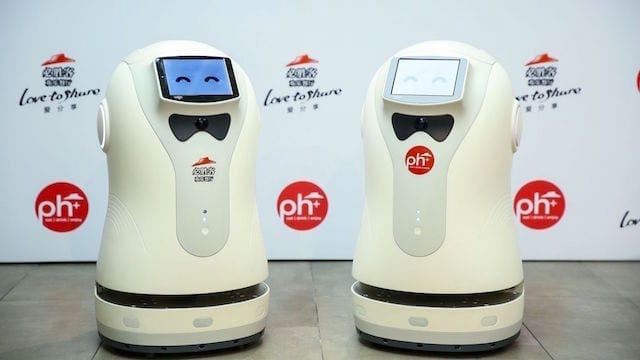
    Pizza Hut China has jumped on the robot restaurant bandwagon with its latest Shanghai outlet featuring two robot waiters.

    On the basement floor of the new Shanghai Tower, which as yet only has its observatory open, it is Pizza Hut’s first concept store, PH+.

    Guests are greeted by the two 80cm robots (both named Casper) at the door. The guest’s table number appears on their screen and one of them will lead the diner to their seat.


    Diners can place their orders via a display screen. Signature dishes include steaks and soft-shell crab pizza, and there are also special cocktails.

    In May, KFC introduced a high-tech outlet at Shanghai’s National Exhibition and Convention Center, where robots take the orders.


  • Mobile marketing cuts printing cost for Pizza Hut

    Mobile marketing cuts printing cost for Pizza Hut

    With over 70 restaurants in the city, half of Pizza Hut’s business in Hong Kong is dine-in. This gives the diner a great incentive, but at the same time, huge pressure to improve its customer experience.

    In 2014, Pizza Hut started its mobile marketing campaign project. The primary objective was to better serve its customers. Additionally, it wanted to cut out a huge portion of its printing costs on direct marketing materials.

    Pizza Hut has been a customer of Salesforce. “When we started the mobile marketing campaign project in 2014, however, we didn’t know that Salesforce Marketing Cloud could help us to manage marketing campaigns,” said Ravel Lai, group IT director at Jardine Restaurant Group Hong Kong and Macau, in an interview with Computerworld Hong Kong. Jardine Restaurant Group operates Pizza Hut and the KFC restaurants throughout the city.

    Lai’s team studied different marketing solutions and decided to adopt Salesforce Marketing Cloud. “We considered other marketing tools such as those from Oracle and Adobe. We had even approached IBM, but they didn’t have a marketing solution,” he recalled.

    Evaluating a marketing solution was different from that of an IT solution. “This was not a traditional ERP solution, but something new to the IT team. We invited the marketing people and bosses at Pizza Hut and KFC to view the solution demo, and then we let everybody vote,” Lai said.

    Extra 7-10% revenue

    “We were not trying to solve a particular technology problem, but to improve on our marketing campaign management,” said Lai.

    In the past, Pizza Hut used to mail cash coupons to its customers. This involved different stages of production, which were all time-consuming, such as graphic design and printing, before it can finally distribute and mail out the coupons.

    With the new solution, conducting mobile marketing campaigns has become much easier. Now, Pizza Hut would only need to involve an in-house graphic designer to design the digital marketing material, which could be ready for distribution in just two hours.

    “Last year on one rainy morning, I asked my team to send a mobile message along with a coupon to our customers. After preparing the customer segmentation, we decided to send the message to 15,000 housewives and office workers at around 11:00 am to catch up with lunchtime at noon,” said Lai. “The results were good, as we generated an extra 7-10% in revenue for the day.”

    90% printing cost savings

    In the past, Pizza Hut used to distribute paper coupons to customers. The printing and mailing costs involved had been 10 times higher than if the marketing campaigns were conducted on Salesforce Marketing Cloud.

    “This is a very good tool for us to do the job. Instead of sending physical leaflets, we now use the mobile marketing platform, which incurs just 10% of the original printing cost,” said Lai.

    “Besides, the replacement of physical leaflets with mobile marketing messages makes Pizza Hut more environmentally friendly, too.”

    Express ticket

    According to Lai, many restaurant groups have developed their own mobile applications, but their primary function is largely limited to remote ticketing. “When everybody does the same thing, we ask ourselves, ‘How should we do it differently?’”

    To distinguish its restaurant mobile app from the competition, Lai borrowed the idea of “Fast Pass” from Disneyland theme park. A Disneyland Fast Pass allows a visitor to shorten his or her waiting time by getting a pass in advance for selected attractions, and return within specific timeframes.

    Using Pizza Hut HK’s mobile app, a user can obtain a queue number before they even reach the restaurant. This cut down the time and money required for us to issue queue numbers.

    By doing proper customer segmentation on Salesforce Marketing Cloud, Pizza Hut can send messages to customers whose last visit was over one month. The typical message would read: “Dear customer, you visited us one month ago and purchased a meal in our restaurant. We are so sorry that you had to wait for 15 mins. Here is an express ticket for you so you can jump queue upon your next visit. The express ticket is good for two weeks,” Lai suggested.

    Loyalty points reward system

    Pizza Hut HK’s mobile app also provides a points rewarding system. With every HK$5 of purchase at the restaurant, a customer gets one point. “With 50 points, our customers can redeem four pieces of chicken wings,” Lai said.

    Pizza Hut’s loyalty points are transferrable. “When you come to the restaurant with your friends, you and your friends can combine the points together to redeem the reward, for example, 50 points for a pizza,” said Lai.

    Social CRM

    With Salesforce Marketing Cloud, Pizza Hut’s mobile marketing campaign platform has enabled the restaurant group to tap on social CRM. “When I sold the idea of social CRM to the management, I emphasized not just on the benefits, but the improvement on the customer journey,” Lai said.

    Regarding Pizza Hut’s implementation of mobile marketing campaign project, Lai summed up, “If I do it now, I am the pioneer. If I do it later, I would just be a follower.”
  • Internet Retailing Expo Indonesia Gears Up to Connect Indonesia’s Stakeholders

    Internet Retailing Expo Indonesia Gears Up to Connect Indonesia’s Stakeholders

    The Internet Retailing Expo (IRX) Indonesia, is gearing up to return with a loud bang. The 2ndedition of IRX Indonesia, to be held from 18 to 19 January next year at the Pullman Jakarta Central Park, will once again become the meeting place for marketplaces, multi-channel retailers and online retailers to meet their key suppliers and learn through peer knowledge sharing and best practice implementation case studies.

    IRX Indonesia was launched due to the huge potential of the internet retailing market, as it has started to grow significantly within Indonesia in the recent years.

    In 2017, IRX Indonesia is expected to attract 2000 visitors to an even more diverse exhibition with plenty of value-packed on-floor sessions and 75 leading solution providers in the areas of digital infrastructure and innovation, digital payments, last mile fulfilment and many others. More than 80 multichannel and ecommerce retailers will be sharing knowledge and experience during the six conferences sessions, workshops and clinics at IRX Indonesia 2017. All these under the themes of Connected Store of the Future, Payments & Security, Insight & Experience, Digital Sales & Marketing, Digital Merchandising, Multichannel Operations & Fulfilment.

    “IRX is the leading multichannel event in the retail calendar and takes place every March at the NEC Birmingham, United Kingdom. The UK is the most sophisticated internet retailing market globally. With over 200 exhibitors and 5000 visitors to the show, IRX welcomes retailers and technology providers from across the multichannel landscape,” said Richard Ireland, Managing Director, Asia, Clarion Events Pte Ltd. “Following its great success in 2016, IRX will be running its second show in Jakarta, Indonesia in January 2017 and plans to bring some of the expertise gained from the UK to Indonesia. Our event plans to help retailers looking to establish, along their journey to grow their online retail strategies.”

    Visitors to the event can expect industry tracks featuring a distinguished speaker panel of local and international industry who’s who, including, among others, Roy N. Mandey, Chairman, APRINDO; Ravi Kumar, COO, PT. MAP; Catherine Sutjahyo, CEO, Alfacart.com; Adrian Suherman, CEO, Lippo Digital Group; Aruni Therese Abeyesundere, Chief Marketing Officer, Pizza Hut;; Simon Torring, Regional Head of Merchandising (Digital), Sephora Digital SEA, Ankit Porwal, Business Director, L’Oreal Paris Indonesia; Ashley Amanna, Head of ECommerce, L’Oreal Indonesia; Pankaj Khushani, Head of Media Technology Solutions – SEA, India & Korea, Google; Rizkie Maulana Putra, Head of ECommerce Development, Samsung Electronics Indonesia; Tabah Yudhananto, Marketing Technologist, Digital Marketing, CRM Senior Manager, Blibli.com; and Cam Walker, CEO Indonesia, iflix.

    The conference will feature 6 streams alongside e-Commerce clinics and workshops on the exhibition floor. Special highlights for the event include SME Forum: “Building capabilities in a digital age”; CMO Forum: “The way marketers engage customers”; CEO Panel Discussion: “Omni Channel retailing: Digital Transformation, Customer First”; E-Commerce University; E-Commerce Clinics; Start-up & Innovation Zone: “Enabling Business value with Digital Transformation”; Indonesia – China Cross-Border Ecommerce Pavilion; and 3D VR Shopping Experience.

    IRX Indonesia will feature 50+ exhibitors including 8Commerce, Asian Delker Logistics, ATEX, Cashlez, Detrack, E2Pay, Egentic, ICUBE, Innovecto, Midtrans, MooCommerce, PaketID, Priceza, PT Kam and Kam, PT Kioson Komersial Indonesia, and SAP, and sponsors including BCA, Accenture, Telkom Indonesia, PT Pos Logistics Indonesia, Akamai, Anchanto, Go-Jek, Magento, Manhattan Associates, At Internet, aCommerce, Alto, FedEx, Gift Card Indonesia, Intramega Global, netCORE, Sprooki, and JNE.

  • KFC Malaysia parent plans IPO

    KFC Malaysia parent plans IPO

    KFC Malaysia parent QSR Brands (M) Holdings, is arranging an IPO next year expected to raise about US$500 million.

    The company, which has both KFC and Pizza Hut restaurant concessions in Southeast Asia,

    Citigroup, Credit Suisse Group and Malayan Banking will lead the offering. QSR has also chosen CIMB Group Holdings and RHB Bank to work on the share sale, reports the Business Times.

    The Kuala Lumpur-based company is seeking a listing after first-time share sales raised US$270 million this year.

    CVC, Employees Provident Fund and Johor Corp took QSR Brands private in 2013. It manages more than 730 KFC restaurants in Brunei, Cambodia, India, Malaysia and Singapore, as well as more than 450 Pizza Hut outlets in Malaysia and Singapore.

  • Yum China aims to triple outlets

    Yum China aims to triple outlets

    Yum China, being spun off at the end of this month by Yum Brands Inc, says it can triple its number of restaurants.

    Yum Brands opened its foray into China with a KFC restaurant in Beijing in 1987. There are now more than 7300 KFC and Pizza Hut outlets.

    “I really don’t see any reason why we cannot have 20,000 restaurants in China,” says Yum China division CEO Micky Pant.

    However, Yum China has had challenges in recent years including marketing blunders, rising competition, bird flu outbreaks, food-safety problems and slowing economic growth. Just this month, executives blamed anti-US protests sparked by political tensions in the South China Sea for a surprise 1 per cent drop in China sales during the latest quarter.

    Pant says those sales are recovering and “the fundamentals of the brands in China are very strong”.

    He says Yum China will have 15 per cent earnings expansion in the world’s fastest-growing economy with plans to  open restaurants in burgeoning mega-cities, major transportation hubs and new shopping malls.

    There are also plans to open Little Sheep and Taco Bell restaurants.

    Partners Primavera Capital and Alibaba Group Holding affiliate Ant Financial, which will buy a US$460 million stake in Yum China, bring competitive advantages such as real-estate market knowledge and digital leadership, Pant says.

    Yum China already is the biggest user of Ant’s Alipay service, and the restaurant group is investing in making its mobile ordering system and loyalty programs even more robust.

    After the separation, Yum China Holdings will become a licensee of Yum! Brands in mainland China with exclusive rights to quick-service restaurant KFC, casual dining brand Pizza Hut and Taco Bell, which is expanding globally but is not yet in China. It will also own the Little Sheep Mongolian hot pot and East Dawning Chinese cuisine concepts. Yum China has more than 400,000 employees in more than 1100 cities, generating more than $8 billion in system sales last year.

    The standalone Yum China is expected to start trading on the New York Stock Exchange on November 1.

  • McDonald’s Malaysia, Singapore ‘buyer found’

    McDonald’s Malaysia, Singapore ‘buyer found’

    Twenty-year franchise rights for McDonald’s Malaysia and Singapore outlets have been conditionally sold to a Saudi Arabian group for up to US$400 million.

    Reza Food Services, which owns McDonald’s restaurants in Saudi Arabia, is seeking finance from Malaysian bank CIMB to finance the transaction, insiders say.

    McDonald’s is moving to bring in partners as it switches to a less capital-intensive franchise model in Asia, and has said it wants regional family-owned groups and local tycoons as long-term partners.

    Insiders say the basic terms of the agreement with Reza have been finalised, with the deal expected to be completed by the end of the year.

    McDonald’s, which has about 260 restaurants in Malaysia and about 120 in Singapore, is also selling its China and Hong Kong outlets, and has received final bids from at least three groups.

  • Yum China has ‘huge potential’

    Yum China has ‘huge potential’

    Yum China is set to exploit “huge potential” after its spin-off from its US parent, says Neil Saunders, CEO of Conlumino.

    Commenting on the parent company’s latest results, the US-based retail commentator said  while the China division once again delivered “an anemic performance” with total system sales declining by 3 per cent over the prior year, the best is yet to come.

    Revenue at both Pizza Hut and KFC fell on a same-restaurant basis.

    “This means that in the year to date, in real terms the China operation has posted no real sales growth. Fortunately, changes to value-added tax in the country allowed Yum! to ease up operating profits across the quarter,” said Saunders.

    “The position of China as a business which has huge potential once it gets through the current patch of slow growth, largely justifies its imminent spin-off into a completely separate operation. The divorce from the rest of the Yum! operation will allow both sides to focus more on their respective priorities and opportunities.”

    He said the overall global result for Yum! Brands suggest the company is making good headway in an increasingly challenging market.

    “However, the reality is far more mixed – mostly because Yum!’s growth figures are flattered by the fact the company strips out exchange rate fluctuations. When these are put back in, total revenue experienced a shrink of 3 per cent over the prior year – a far less impressive outcome.

    “In terms of the core business, the main focus needs to be Pizza Hut which has become something of a problem child for Yum! Over the quarter system sales shrank by 2 per cent in real terms, underpinned by a 1 per cent decline in same-restaurant sales. While there are some markets in which the brand is performing well, these continues to be overshadowed by the US which accounts for the majority of Pizza Hut’s revenue.”

    Saunders said that while admittedly the overall casual dining market, in which Pizza Hut loosely falls, saw customer traffic and spend decline over the third quarter.

    “However, our data also show that Pizza Hut is losing customer share to delivery services like Papa John’s and Domino’s. A defection to cheaper fast-food alternatives, especially among younger families, has also been unhelpful. This is an uncomfortable position and underlines the fact that Pizza Hut still has much work to do in terms of reinvigorating its brand.”

    Taco Bell, meanwhile, had a better quarter with a 5 per cent system-sales growth and 3 per cent same-restaurant growth.

    “While Taco Bell has benefitted from challenges at Chipotle, in our view most of the success is down to a change in marketing which is now more relevant to the younger millennial audience. Menu simplification and focus on popular lines has also helped to drive growth. We think these steps should be seen as part of a longer term upswing in the brand’s fortune.”

    Saunders said that while KFC had a much better quarter than the previous one, especially in the US, Conlumino still harbors concerns about the brand’s longer term growth prospects as younger upstarts like Chick-Fil-A or Popeyes Louisiana Kitchen continue to gain traction.

    “As such, we see KFC’s latest upswing as part of a more turbulent longer term picture.”

  • McDonald’s China Stores Could Fetch $2 Billion

    McDonald’s China Stores Could Fetch $2 Billion

    McDonald’s Corp. Chief Executive Steve Easterbrook, aiming to slim down the Golden Arches and boost profit, has turned to the market where he can do something big, fast: China.

    The Oak Brook, Ill., chain is looking to cut a deal to turn its 2,200-store empire in China—65% of which it owns and operates—into a cash machine through all-out franchising. The move, for which a partner could be determined before the end of the year, is expected to fetch between $1.5 billion and $2 billion up front from investors, people familiar with the matter said.

    McDonald’s would also rake in an estimated 5% to 7% of sales for the 20-year life of the deal. It would keep a minority stake in these far-flung stores, while slashing its operational costs and preserving capital.

    The timing of the initiative also reflects the maturing of the fast-food business in China, where McDonald’s and Yum Brands Inc.—owner of Kentucky Fried Chicken and Pizza Hut—have operated for a quarter-century.

    As big consumer chains move from the familiar streets of Beijing, Shanghai, Guangzhou and other metropolises to smaller cities, they need Chinese partners with knowledge of the country’s real estate and market demographics to know where to put new stores and how to supply them.

    “In the lower-tier cities, we want to accelerate, and a local partner would have more local wisdom and more local resources,” Phyllis Cheung, chief executive of McDonald’s China, said in an interview. “The whole idea of franchising is that you have more flexibility and speed to market—and are more able to answer to consumer needs.”

    There appears to be a healthy appetite for the deal. A clutch of at least six bidders has shown interest in a McDonald’s China franchising deal, including U.S. private-equity giantsCarlyle Group LP, TPG and Bain Capital LLC, according to people familiar with the situation.

    The three private-equity firms have teamed up with local Chinese partners, such as CiticLtd. and Wumart Stores Inc., who know local market conditions. McDonald’s is also looking to cut a similar deal with outside investors for its South Korea stores.

    In China and Hong Kong, McDonald’s is asking its potential partner to take over its more than 1,400 company-owned restaurants and build 1,300 new stores. It still has room to grow in China, the only major market where the number of Kentucky Fried Chicken stores—5,000 and counting—outstrips the number of McDonald’s stores.

    The winner will operate in a country where the novelty of burgers, fries and shakes has long since faded. It will need to find new ways to satisfy Chinese consumers demanding healthier, more upscale and personalized alternatives.

    Bessie Wang, 33 years old, began eating at McDonald’s in grade school soon after the fast-food chain entered China 26 years ago, becoming a fan of the company’s fried-chicken sandwiches.

    On a recent weekday, Ms. Wang was dining on a spicy chicken sandwich at the McDonald’s on Beijing’s Wangfujing shopping street. But her visits have declined.

    “Taste isn’t the issue; it’s health reasons,” said Ms. Wang, an office administrator. “I don’t need to go as often anymore because other restaurants offer fried-chicken dishes.”

    Sales from established McDonald’s stores in China have bounced back from a supplier issue that led to shortages of hamburgers and chicken at some restaurants in 2014. Same-store McDonald’s sales in the country shrank for four consecutive quarters before they began recovering in the middle of last year, according to figures provided on the company’s earnings calls.

    And competition is rising. Dicos, a Taiwanese-owned chain, for example, offers chicken sandwiches at more than 2,000 restaurants in China, matching the scale of McDonald’s. Another growing Chinese fast-food chain, known as Real Kung Fu, sports a Bruce Lee logo, offering bowls of Chinese noodles with beef and pork.

    The growing competition, Ms. Cheung said, is one reason McDonald’s is looking for a Chinese partner with a “deep understanding” of China’s market, rather than one that can simply bankroll new stores.

    Yum announced a similar move last year to spin off its KFC and Pizza Hut operations in China and maintain a foothold in the country through royalty payments.

    For companies such as McDonald’s and Yum, moving toward a franchise-only model in China makes sense now because the market has matured to the point where there are more people with experience running fast-food chains and fast-casual restaurants, according to Ben Cavender, director at China Market Research Group.

    “There’s a stronger talent pool, and they have the capability to operate a franchise and operate it well,” he said. “Brands are also clamoring to try to grow into new markets, and they might not be able to do it quickly by themselves, and they need help.”

  • McDonald’s Follows Yum Brands, Prepares China Exit

    McDonald’s Follows Yum Brands, Prepares China Exit

    McDonald’s is finalizing a sale of the right to operate its China and Hong Kong restaurants. Prompted by stagnating market share and an increasingly challenging operating environment, the move allows McDonald’s to keep a presence in China without the burden of ownership.

    The world’s biggest fast-food chain is considering final offers from three leading groups, believed to be U.S. private equity firm Carlyle Group and Chinese investment firm CITIC Group, U.S. private equity firm TPG Capital and Chinese retailer Wumart Stores, and a group led by Beijing Tourism Group and Chinese retail giant Sanpower Group, according to Reuters.

    With the sale, McDonald’s Corp. joins fast-food rival Yum Brands Inc. in making the decision to sell its China business. Yum, which owns China’s biggest food chain KFC, and McDonald’s are currently the No. 1 and No. 2 fast-food chains in China. Both arrived on the scene in the 1980s—KFC opened its first outlet in Beijing’s Tiananmen Square in 1987, and McDonald’s opened its first store a few years later in the southern city of Shenzhen.

    Their decision to abandon one of the world’s biggest fast-food markets marks a dramatic about-face for the two fast-food giants, once hailed as prime examples of how American companies can succeed in the communist country.

    But the companies diverge in their methods of exiting China.

    Yum chose to spin off Yum China as a separately listed company on the New York Stock Exchange. Yum China recently secured prominent Chinese investors Primavera Capital and Ant Financial Services Group as anchor investors ahead of the listing in November. Primavera was founded by the former head of Goldman Sachs Group Inc.’s Greater China business, and Ant is a subsidiary of internet giant Alibaba Group. Well-known anchor investors are common in Chinese IPOs, and their presence can help drum up interest from retail investors ahead of the listing.

    McDonald’s, meanwhile, chose a different path. Instead of selling the business altogether, McDonald’s is converting its corporate-owned outlets to the franchise model by selling a 20-year franchise operating agreement to run all of the stores to potential bidders. This ensures that McDonald’s will hold branding and product development rights over existing and new restaurants, similar to its relationship with franchisees in the United States.

    The 20-year operating license for McDonald’s Chinese outlets could fetch as much as $3 billion, analysts predict.

    Declining Market Share

    Both McDonald’s and Yum have lost their early luster and are facing declining market share in China.

    MDC_market

    China market share of McDonald’s and KFC. Data source: Euromonitor. (Epoch Times)

    Since 2010, Yum’s share of China’s fast-food market has declined from 39 percent to 23.9 percent in 2015. During the same period, McDonald’s market share dropped form 15.1 percent to 13.8 percent, according to market research firm Euromonitor.

    Yum has about 8,000 outlets in China, mostly consisting of KFCs and Pizza Huts, contributing to half of its global revenues and profit. McDonald’s has 2,200 locations in China. While both companies opened new locations last year, their market shares have dropped.

    Unfriendly Operating Environment

    Employees work at a McDonald's in in Beijing in 2007.  (FREDERIC J. BROWN/AFP/Getty Images)

    Employees work at a McDonald’s in Beijing in 2007.

    McDonald’s and Yum are two of the world’s most successful fast-food chains and have around 30 years of experience in China. So what’s causing the market share decline in recent years?

    The main challenge is shifting consumer taste. During McDonald’s and Yum’s early years in China, Western cuisine was scarce, and unlike in the United States where fast food is cheap and low-quality, McDonald’s hamburgers and KFC fried chicken were considered gourmet fare. Chinese consumers visited these restaurants during special occasions, and their prices were comparatively high.

    In recent years as median Chinese income has risen, consumers have also developed more selective tastes and are increasingly moving upmarket in their restaurant preferences. American fast-food brands now operate in the price segment of the casual-dining restaurants. On the lower end of the market, however, the fast-food segment is increasingly being occupied by a new wave of local competitors selling Chinese food, Japanese food, and fried chicken at lower prices than American fast food.

    Another significant hurdle facing McDonald’s is the Chinese Communist Party’s economic and competition policy, which in recent years has favored domestic businesses while marginalizing foreign competitors.

    In 2014, an undercover reporter for state mouthpiece CCTV reported that meat supplier Shanghai Husi Foods allegedly sold expired meats to several American restaurant brands, including McDonald’s, KFC, Papa John’s, and Burger King.

    Restaurants owned directly by foreign companies also face challenges in finding suitable real estate for new stores. Negotiations are often done face-to-face with local powerbrokers, and U.S. listed companies operating under the Foreign Corrupt Practices Act often cannot compete with local competitors.

    For McDonald’s and other foreign companies, outsourcing the operational aspect of running the business resolves most of these issues inherent in China. The same factors are also major drivers behind Wal-Mart’s sale of its Chinese e-commerce business Yihaodian to JD.com, and Hewlett-Packard’s sale of a majority stake of its Chinese networking business to local state-owned H3C Technologies.

    Given this backdrop, McDonald’s is wise to cede ownership of its Chinese stores to local partners. The move could bring stable income from royalties, higher growth potential, and better treatment than it would otherwise be able to manage on its own, while the company still enjoys prominent brand presence.

  • Alibaba-KFC partnership more than a shareholding

    Alibaba-KFC partnership more than a shareholding

    Why did Alibaba decide to take a stake in Yum China, buying into the Chinese fast food market?

    The Alibaba-KFC partnership was growing strongly long before the tech paid $50 million for a stake in Yum China.

    Last week, the fast food company opened a KFC flagship store on Tmall, the eCommerce giant’s B2C marketplace, to cultivate deeper ties with more customers, chief among them China’s internet-savvy youth.

    The KFC Tmall store isn’t selling chicken outright, but it is selling the sizzle of the KFC brand by encouraging consumers to join its membership program through the sale of e-coupons and gift cards that can be redeemed at its restaurants by using the Tmall or Mobile Taobao apps. KFC has more than 5000 restaurants in over 1100 cities in China, and the company is hoping to “build a new O2O [online-to-offline] model” that uses digital marketing to boost traffic at its brick-and-mortar stores, said Guan Bin, digital manager at Yum Brands.

    Connecting with China’s mobile-happy youth market can be an important strategy for any fast-food chain, but it’s particularly key for Yum China, which has seen its once-dominant position in the mainland fast-food market eroded by growing competition and food-safety scares. KFC’s market share in China has dropped from close to 40 per cent in 2012 to 23.9 per cent last year, according to Euromonitor International. Same-store sales in China outlets declined 4 per cent in 2015, Yum Brands disclosed in its 2015 financial annual report.

    Against this backdrop, KFC is making what Guan says is the company’s first foray into eCommerce (Yum’s Pizza Hut restaurant chain already has a Tmall presence). The goal is to boost KFC brand awareness and customer base by leveraging Tmall’s “massive traffic” as well as Alibaba Group’s marketing ecosystem and wealth of online consumer data, he said.

    “By opening a shop on Tmall, we want to convert more customers to members, and understand their consumer behavior both online and offline so we can come up with tailored discounts and awards for them,” Guan said. KFCs in China last year adopted Ant Financial’s Alipay cashless payment solution, which includes app-based food ordering and home delivery.

    For its September 6 debut, KFC’s Tmall shop offered bulk purchases of top-selling meals at discounted prices, such as 30 breakfast meals for RMB 199 ($30) and five family meals at RMB 320 ($48). The debut included KFC’s participation in one of Tmall’s Super Brand Day marketing campaigns as well as an augmented reality game: Sept. 2-6, users armed with smartphones and the Tmall app were able to “capture” images of Tmall’s cat mascot in physical KFC shops, which entitled them to buy products from KFC’s Tmall shop for just one yuan.

    On September 6 alone, some 3 million users visited KFC’s Tmall page, according to Tmall. Coupons for the purchase of more than 80,000 30-piece chicken nugget packs–totaling some 2.4 million nuggets–were sold on the day. The results were “beyond our expectations,” Guan said.

  • Yum China board lineup revealed

    Yum China board lineup revealed

    Yum China has revealed the likely composition of its board post-spin-off from its US parent, Yum! Brands.

    The new company to be formed after the sell-off to Primavera Capital Group and a subsidiary of Alibaba Group, will be called Yum China Holdings and is expected to be formally formed on October 31.

    The nine new directors announced, seven of whom are independent, will join the board chaired by Dr Fred Hu, chairman and founder of Primavera Capital Group.

    The other members are:

    • Micky Pant, CEO of Yum China.
    • Peter A Bassi, former chairman and president of Yum! Restaurants International and current lead director for BJ’s Restaurant and Potbelly Sandwich Works.
    • Christian L Campbell, owner of Christian L Campbell Consulting LLC and former senior VP, general counsel, secretary and chief franchise policy officer of Yum! Brands.
    • Ed Chan Yiu-Cheong, vice chairman of Charoen Pokphand Group.
    • Edouard Ettedgui, non-executive chairman of Alliance Francaise, Hong Kong and non-executive director of Mandarin Oriental International.
    • Louis T Hsieh, director and senior advisor to the CEO, and former CFO and president of New Oriental Education & Technology Group.
    • Jonathan S Linen, director for Yum! Brands and Modern Bank, former adviser to the chairman of American Express, and former vice chairman of American Express.
    • Zili Shao, co-chairman of King & Wood Mallesons, China.

    Yum China also expects to name one additional independent board member in connection with the spin-off.

    Yum! Brands CEO Greg Creed said the company was pleased to have announced the composition of the Yum China board, as it nears the completion of the separation.

    “We are confident that these business leaders will offer the market insights and strategic vision required to enable Yum China to reach its full potential.”

    Yum China will become the licensee of Yum! Brands in Mainland China. It will have exclusive rights to KFC, Pizza Hut and Taco Bell, the latter of which is expanding globally but is not yet in China. It will also own the Little Sheep and East Dawning concepts outright.

    Yum China has more than 7200 restaurants in over 1100 cities in China and generated over US$8 billion in system sales in 2015.

  • Paradigm Mall Petaling Jaya eyes 100pc occupancy

    Paradigm Mall Petaling Jaya eyes 100pc occupancy

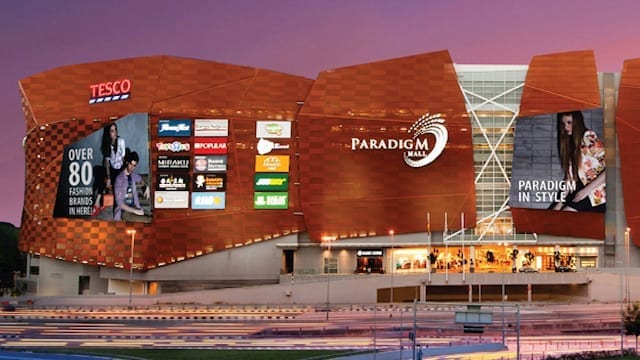
    WCT Holdings’ Paradigm Mall Petaling Jaya hopes to achieve 100 per cent occupancy soon following the opening of 22 outlets.

    It has welcomed new brands such as JDF, MC Vogue, Nathan’s Famous, Vareo and F&B offerings including Hong Kong Sheng Kee Dessert, MyeongDong Topokki, Pho Street, Pizza Hut Restaurant, Seaweed Club & Hot Wings and Taiwan Spicy Noodle House.

    New merchandise and service outlets include Dunlopillo, Majestic Leather Restore, Okashi World, Sunday’s, TMPoint and Wax Zone.

    “Our mall has an occupancy rate of 93 per cent, out of which 8 per cent are new tenants,” says WCT Malls Management GM Vincent Chong. “With the encouraging response, we hope to hit 100 per cent occupancy in the very near future.”

    paradigm-mall-outside
    Paradigm Mall from the outside

    More brands will be coming aboard in the fourth quarter, including DJI, FOS, Hokkaido Baked Cheese Tart, Mammamia Gelato Italiano and Sensuous Lingerie.

    Chong says Paradigm Mall PJ is part of WCT’s Paradigm Integrated Commercial Development which also comprises The Ascent Paradigm, The Azure serviced residences and the soon-to-open New World Petaling Jaya Hotel.

  • Alibaba to take stake in Yum China

    Alibaba to take stake in Yum China

    Yum! Brands has agreed with two partners to invest $460 million into Yum China, following its spinoff from the American fast-food giant.

    Also involved are China-based global private equity firm Primavera Capital Group and online and Alibaba subsidiary, mobile financial services provider Ant Financial Services Group, which runs the Alipay mobile payments platform.

    The spinoff and concurrent finalisation of the investment are expected to occur on October 31, with Yum China to start trading on the New York Stock Exchange the next day as an independent company.

    Under the terms of the agreements, Primavera and Ant Financial will invest $410 million and $50 million respectively in Yum China.

    Primavera founder Dr Fred Hu, former greater China chairman at Goldman Sachs, will be non-executive chairman of the board of Yum China.

    “Yum China is an established leader in the retail and restaurant industry, which we believe is poised for continued strong growth and unit expansion as cities across China invest in new transportation hubs, shopping malls and other physical and electronic infrastructure,” says Dr Hu, describing the Yum China moves as a “new and exciting chapter”.

    Membership services

    “Through this collaboration, we aim to help Yum China provide world-class mobile payment services for tens of millions of customers across its brands,” says Ant Financial Service Group president Eric Jing. “These services include hassle-free Alipay for customers to help shorten queues at the cashier, as well as membership services for Yum China designed to help manage its customer relations and promotions.”

    He says Yum brands KFC and Pizza Hut have seen promising marketing results through promotions on multiple Ant Financial platforms.

    “Primavera and Ant Financial both have deep insights into the rapid urbanisation and digital transformation that is driving the evolution of China’s economy,” says Yum China CEO Micky Pant.

    “The investments from Primavera and Ant Financial in Yum China mark another important milestone in our plans to separate the China business and create a solid foundation for Yum China as it prepares to become an independent restaurant powerhouse,” says Yum! Brands CEO Greg Creed.

    As a licensee of Yum! Brands in China, Yum China Holdings will have exclusive rights to KFC, Pizza Hut and Taco Bell, which has yet to expand to China. KFC and Pizza Hut have more than 7200 restaurants in more than 1000 cities in China.

  • Pizza Hut Malaysia parent to relist

    Pizza Hut Malaysia parent to relist

    QSR Brands, parent of Pizza Hut Malaysia, plans to relist, raising more than US$400 million.

    The company is Malaysia’s largest fast food operator with more than 450 Pizza Hut restaurants in Singapore and Malaysia. It has the sole KFC franchise rights for Malaysia, Singapore, Cambodia, and Brunei.

    The Wall Street Journal reports the company will prepare to accept bids this month (September), but the exact size of the offer has yet to be finalised. Majority shareholder, state government-owned Johor Corp, with a 51 per cent slice of the business, may hold onto its investment for the time being.

    ASR Brands was taken private for $1.3 billion by a consortium led by private equity firm CVC Capital Partners in 2012. The other significant investor is Malaysia’s Employees Provident Fund.

    The most recent major Malaysian IPO in the consumer sector was 7-Eleven Malaysia Holdings, which raised $225 million in 2014.

  • Pizza Hut, Japanese franchise used expired ingredients in Indonesia

    Pizza Hut, Japanese franchise used expired ingredients in Indonesia

    A joint investigation by Tempo, a weekly news magazine, and BBC Indonesia has reportedly revealed the use of expired ingredients by fast food chain Pizza Hut, its delivery arm Pizza Hut Delivery (PHD), and Japanese franchise Marugame Udon.

    The investigation, according to the reports, show evidence of Indonesian firms Sarimelati Kencana and Sriboga Marugame Indonesia – both subsidiaries of major flour producer Sriboga Raturaya – extending the expiry date on their ingredients, and using them in the food. This practice, according to reports, happened systematically, involved top management, and carried on for years.

    Some of these ingredients include: “Veggie Chicken Sausage”, a “Carbonara Sauce Mix”, “Citrus Marinade”, and “Satay Sauce”, among several others. Photographic evidence reportedly shows a sticker on a packet of “Bonito powder” with instructions to use it for up to a period of three months after expiry. The instructions were said to be relayed via email by the purchasing department.

    Both Sarimelati Kencana – which manages Pizza Hut and PHD in Indonesia – and Sriboga Marugame Indonesia – which manages Marugame Udon – issued statements on Sunday (Sep 4) denying the allegations, saying they only used food ingredients “of high quality” which were “suitable for consumption.”

    Meanwhile, Stephen McCartney, president director of Sarimelati Kencana, told local media in a press conference that the company that the company never made a profit “by compromising on food safety.” Alwin Arifin, president director of Siboga Raturaya, said the allegations were defamatory.

    The matter is currently under investigation by police. Besides Yum! Brands and Japan’s Toridoll Corporation which owns Marugame Udon, Sriboga Raturaya is also a local partner for Nissin and Mitsubishi.