Retail News CRM

Tag: pizza

  • Domino’s Poised for Global Expansion, Opens 14000th Store

    Domino’s Poised for Global Expansion, Opens 14000th Store

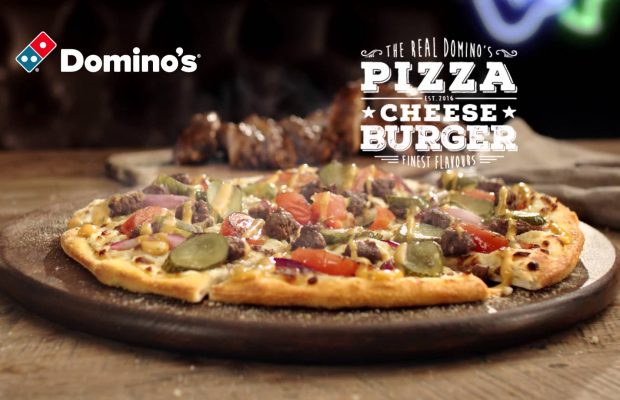
    Domino’s Pizza, the recognized world leader in pizza delivery, is celebrating the grand opening of its 14,000th store in in Cyberjaya, Malaysia, outside of the nation’s capital of Kuala Lumpur.

    “It was just eight months ago that we cut the ribbon on our 13,000th store and here we are already celebrating another milestone – our 14,000th store,” said Patrick Doyle, Domino’s president and CEO. “Last year we were opening, on average, a new Domino’s store every seven hours. Our global growth has been tremendous. The story of our brand is clearly one of incredible momentum and brand resonance worldwide.”

    The new store is also a milestone for the Malaysian market, as it marks their 200th store opening. It is also the 3,500th Domino’s store in the Asia-Pacific region. The master franchisee for the market, Dommal Food Services Sdn. Bhd., opened the first store in Malaysia in 1997 and has successfully made Domino’s one of the most recognized brands in the country.

    Domino’s 14,000th store features the pizza theater store design, which is open concept and brings the art and fun of pizza making to the forefront. It features indoor seating and allows customers to watch their pizzas being made, each step of the way. The milestone store is in the innovation hub of Malaysia, Cyberjaya, as technology is a central focus of the brand in Malaysia.

    “We have been building beautiful new stores around world at an impressive pace, thanks to the hard work, commitment and passion of our franchisees worldwide,” said Richard Allison, president of Domino’s International. “Our goal to become the No. 1 pizza company in the world – with the best customer service, serving high quality food, with inviting stores and leading technology – is being executed every day in countries like Malaysia and around world.”

    Domino’s operates in over 85 markets worldwide. Domino’s had global retail sales of nearly $10.9 billion in 2016, with more than $5.3 billion in the U.S. and more than $5.5 billion internationally.

  • Mobile marketing cuts printing cost for Pizza Hut

    Mobile marketing cuts printing cost for Pizza Hut

    With over 70 restaurants in the city, half of Pizza Hut’s business in Hong Kong is dine-in. This gives the diner a great incentive, but at the same time, huge pressure to improve its customer experience.

    In 2014, Pizza Hut started its mobile marketing campaign project. The primary objective was to better serve its customers. Additionally, it wanted to cut out a huge portion of its printing costs on direct marketing materials.

    Pizza Hut has been a customer of Salesforce. “When we started the mobile marketing campaign project in 2014, however, we didn’t know that Salesforce Marketing Cloud could help us to manage marketing campaigns,” said Ravel Lai, group IT director at Jardine Restaurant Group Hong Kong and Macau, in an interview with Computerworld Hong Kong. Jardine Restaurant Group operates Pizza Hut and the KFC restaurants throughout the city.

    Lai’s team studied different marketing solutions and decided to adopt Salesforce Marketing Cloud. “We considered other marketing tools such as those from Oracle and Adobe. We had even approached IBM, but they didn’t have a marketing solution,” he recalled.

    Evaluating a marketing solution was different from that of an IT solution. “This was not a traditional ERP solution, but something new to the IT team. We invited the marketing people and bosses at Pizza Hut and KFC to view the solution demo, and then we let everybody vote,” Lai said.

    Extra 7-10% revenue

    “We were not trying to solve a particular technology problem, but to improve on our marketing campaign management,” said Lai.

    In the past, Pizza Hut used to mail cash coupons to its customers. This involved different stages of production, which were all time-consuming, such as graphic design and printing, before it can finally distribute and mail out the coupons.

    With the new solution, conducting mobile marketing campaigns has become much easier. Now, Pizza Hut would only need to involve an in-house graphic designer to design the digital marketing material, which could be ready for distribution in just two hours.

    “Last year on one rainy morning, I asked my team to send a mobile message along with a coupon to our customers. After preparing the customer segmentation, we decided to send the message to 15,000 housewives and office workers at around 11:00 am to catch up with lunchtime at noon,” said Lai. “The results were good, as we generated an extra 7-10% in revenue for the day.”

    90% printing cost savings

    In the past, Pizza Hut used to distribute paper coupons to customers. The printing and mailing costs involved had been 10 times higher than if the marketing campaigns were conducted on Salesforce Marketing Cloud.

    “This is a very good tool for us to do the job. Instead of sending physical leaflets, we now use the mobile marketing platform, which incurs just 10% of the original printing cost,” said Lai.

    “Besides, the replacement of physical leaflets with mobile marketing messages makes Pizza Hut more environmentally friendly, too.”

    Express ticket

    According to Lai, many restaurant groups have developed their own mobile applications, but their primary function is largely limited to remote ticketing. “When everybody does the same thing, we ask ourselves, ‘How should we do it differently?’”

    To distinguish its restaurant mobile app from the competition, Lai borrowed the idea of “Fast Pass” from Disneyland theme park. A Disneyland Fast Pass allows a visitor to shorten his or her waiting time by getting a pass in advance for selected attractions, and return within specific timeframes.

    Using Pizza Hut HK’s mobile app, a user can obtain a queue number before they even reach the restaurant. This cut down the time and money required for us to issue queue numbers.

    By doing proper customer segmentation on Salesforce Marketing Cloud, Pizza Hut can send messages to customers whose last visit was over one month. The typical message would read: “Dear customer, you visited us one month ago and purchased a meal in our restaurant. We are so sorry that you had to wait for 15 mins. Here is an express ticket for you so you can jump queue upon your next visit. The express ticket is good for two weeks,” Lai suggested.

    Loyalty points reward system

    Pizza Hut HK’s mobile app also provides a points rewarding system. With every HK$5 of purchase at the restaurant, a customer gets one point. “With 50 points, our customers can redeem four pieces of chicken wings,” Lai said.

    Pizza Hut’s loyalty points are transferrable. “When you come to the restaurant with your friends, you and your friends can combine the points together to redeem the reward, for example, 50 points for a pizza,” said Lai.

    Social CRM

    With Salesforce Marketing Cloud, Pizza Hut’s mobile marketing campaign platform has enabled the restaurant group to tap on social CRM. “When I sold the idea of social CRM to the management, I emphasized not just on the benefits, but the improvement on the customer journey,” Lai said.

    Regarding Pizza Hut’s implementation of mobile marketing campaign project, Lai summed up, “If I do it now, I am the pioneer. If I do it later, I would just be a follower.”
  • ‘World’s saddest bear’ reflects sorry state of China malls sector

    ‘World’s saddest bear’ reflects sorry state of China malls sector

    Pizza, a polar bear notorious in China as being the “world’s saddest”, has been removed from his cramped enclosure and placed in an animal reserve after months of controversy that have highlighted the sorry state of Chinese shopping malls.

    Pizza’s plight was the result of a trend for using animals, entertainment and children’s playgrounds to pull customers into China’s giant shopping centres and department stores, which have been built in their thousands despite the nation’s growing preference for buying online.

    Bricks-and-mortar stores are grappling not just with ever-greater competition from online retailers such as Alibaba and JD.com, they must also contend with an underlying slowdown in the retail sector. Sales growth, which in 2008 reached an annual rate well above 20 per cent, has been falling steadily in recent years and hit 10 per cent in October, according to National Bureau of Statistics data released on Monday.

    Pizza became an internet celebrity in July when a shopper uploaded a photo of the three-year-old bear in an enclosure at the Grandview Mall in the southern city of Guangzhou. The country’s nascent animal rights community launched a rescue campaign and cheered when the Grandview said over the weekend that it would “temporarily” return him to the ocean park in northern China where he was born.

    Other Chinese netizens have outed an elephant used to attract mobile phone buyers to a Suning electronics outlet in Beijing and a “sad tortoise” housed alongside reptiles in grimy tanks in a mall in the northwestern city of Xi’an.

    The use of animals and other attractions comes as malls combat overcapacity, a problem immediately apparent to anyone who has turned up at a dusty, half-vacant shopping centre in China’s provincial cities. The country has an estimated 4,000 malls, more than the US, and plans to reach 7,000 by 2025, according to Mall China, an industry organisation.

    “Foot traffic is dropping dramatically,” said Shaun Rein, founder of Shanghai-based China Market Research Group, describing “a lot of panic” as e-commerce decimates mall sales. “Shops are becoming more choosy. Before, they said: ‘Who cares which mall?’ Now they are looking at the mall’s business and its other attractions.”

    “Malls are starting to bring in a lot more entertainment and a lot more food,” he added. “There is also a big focus on children — playgrounds, learning centres, even museums.”

    Last year 83 shopping malls gave up the fight and closed, according to a blue book on the commercial sector by the Chinese Academy of Social Sciences. They will be joined this year by Marks and Spencer, which announced last week it would close several stores in China in an effort to boost its flagging fortunes.

  • Pizza Hut, Japanese franchise used expired ingredients in Indonesia

    Pizza Hut, Japanese franchise used expired ingredients in Indonesia

    A joint investigation by Tempo, a weekly news magazine, and BBC Indonesia has reportedly revealed the use of expired ingredients by fast food chain Pizza Hut, its delivery arm Pizza Hut Delivery (PHD), and Japanese franchise Marugame Udon.

    The investigation, according to the reports, show evidence of Indonesian firms Sarimelati Kencana and Sriboga Marugame Indonesia – both subsidiaries of major flour producer Sriboga Raturaya – extending the expiry date on their ingredients, and using them in the food. This practice, according to reports, happened systematically, involved top management, and carried on for years.

    Some of these ingredients include: “Veggie Chicken Sausage”, a “Carbonara Sauce Mix”, “Citrus Marinade”, and “Satay Sauce”, among several others. Photographic evidence reportedly shows a sticker on a packet of “Bonito powder” with instructions to use it for up to a period of three months after expiry. The instructions were said to be relayed via email by the purchasing department.

    Both Sarimelati Kencana – which manages Pizza Hut and PHD in Indonesia – and Sriboga Marugame Indonesia – which manages Marugame Udon – issued statements on Sunday (Sep 4) denying the allegations, saying they only used food ingredients “of high quality” which were “suitable for consumption.”

    Meanwhile, Stephen McCartney, president director of Sarimelati Kencana, told local media in a press conference that the company that the company never made a profit “by compromising on food safety.” Alwin Arifin, president director of Siboga Raturaya, said the allegations were defamatory.

    The matter is currently under investigation by police. Besides Yum! Brands and Japan’s Toridoll Corporation which owns Marugame Udon, Sriboga Raturaya is also a local partner for Nissin and Mitsubishi.

  • You can now order pizza from a robot in Singapore

    You can now order pizza from a robot in Singapore

    If your Pizza Hut clerk seems like a robot, you may have stumbled into Singapore and a near future in retail commerce.

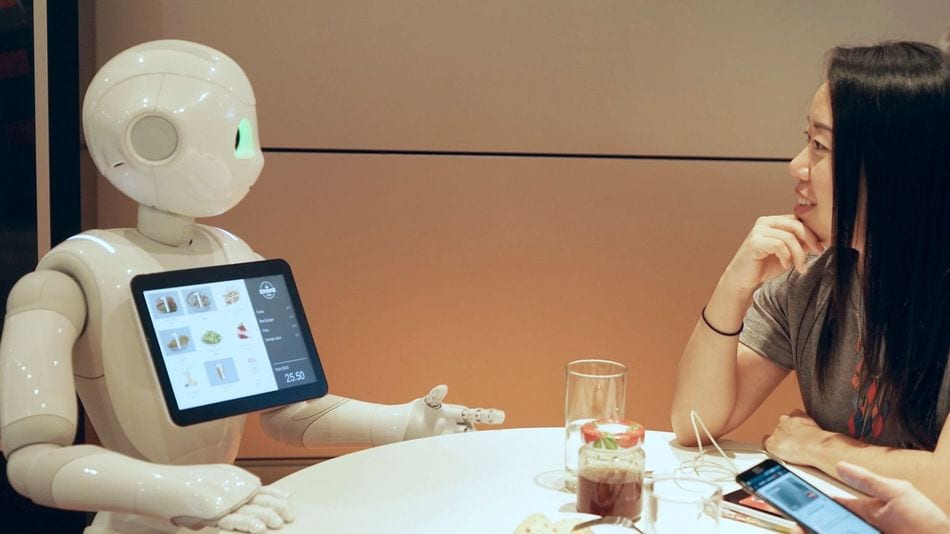
    Before the end of this year, credit card giant MasterCard will deploy an actual robot in one lucky Pizza Hut location in Singapore that will not only engage with customers, but help them fulfill their pizza cravings by guiding them through a purchase and assisting them in completing a mobile transaction.

    MasterCard announced on Tuesday that, by the end of this year, it will launch a personalized shopping and concierge experience that will also serve as the very first commerce application for Softbank Robotic’s Pepper robot.

    The experiment “follows our own philosophy that every device is a commerce device,” Tobias Puehse, VP Innovation Management, MasterCard Labs, told Mashable.

    Pepper’s new job comes on the heels of news that Softbank Robotics’ (formerly Aldebaran) adorable and emotive 4-foot-tall robot is finally getting an Android SDK and would soon be coming to America.
    The best robot
    MasterCard chose Pepper because of “its early success in Japan, in terms of being active in a retail environment with various partners,” Puehse said.

    The credit card company spent months programming the commerce experience and had to overcome some challenges, like the fact that Pepper doesn’t come equipped with Low Energy Bluetooth or NFC communication abilities. Eventually they settled on placing a Bluetooth LE beacon near Pepper, which connects to the store’s Wi-Fi network — the same one the Pepper robot will be on — and lets the customer connect via Bluetooth.

    In practice, Pepper will greet would-be pizza hounds using natural language and cognition, as opposed to interface requests. If you have MasterCard’s MasterPass Wallet application on your phone (Android or iOS), a little Pepper icon will appear in it. If you don’t, Pepper asks you to scan a QR code. Once you’re connected, Pepper will be able to glean your name, as well as your shopping preferences, and might ask you, “Would you like to have your favorite drink again?”

    Pepper will guide you through the product selection process, but, according to Puehse, can also handle random questions about, say, the calorie count in pizza. (But, do you really want to know the answer to that?)

    One thing Pepper does not do, though, is complete the transaction for you. For the sake of security, MasterCard chose to keep the transaction on your mobile device. Pepper will only know that you are ready to buy that slice, send your phone the order details and, once you’ve bought it, get the transaction-complete notification. Pepper will then tell you where to go pick up your pizza.
    Pizza takes time
    Because Pepper is a conversational robot and MasterCard designed the interaction to be “human-like,” Puehse said, there won’t necessarily be any efficiency gains from shopping with a robot. The benefit is that, when using Pepper to get that slice of buffalo pizza, there’s no learning curve. Pepper will, in essence, communicate with you just as a highly skilled pizza retail clerk might. It will know the product, respond to questions about it and, perhaps, be a bit more knowledgeable about your pizza desires and needs.

    Puehse told Mashable that he can envision a store full of Pepper robotics, each one helping a different customer, but the near-term goal is to “make sure it has all the value that we anticipate it will.” If all goes well, yes, MasterCard wants pizza-selling robots to “proliferate in Asia Pacific and beyond,” Puehse said.

    Unfortunately, there’s no timeline for Pepper coming to U.S.-based Pizza Huts. Still, Pepper’s new commerce chops might almost make it worth taking the longest pizza-run in history.

    Have something to add to this story? Share it in the comments.

  • 800 Degrees pizza outlet for Tokyo

    800 Degrees pizza outlet for Tokyo

    Customised pizza has arrived in Japan, thanks to American chain 800 Degrees Neapolitan Pizzeria.

    Its first outlet for the nation is at the south exit of Tokyo’s Shinjuku Station in the new Newomanbuilding complex, which features fashion boutiques and fancy eateries.

    800 Degrees Pizza res

    With an open-plan kitchen set-up, 800 Degrees features quick-baked pizzas that can be customised when ordering, including the style of base, cheese and sauce selection, and protein and vegetable toppings, even including renkon (lotus root). Side salads can also be customised, and specialty pizzas are also available.

    800 Degrees Pizza inside

    After assembly, the pizzas go into a wood-burning oven and are ready within a minute.

    Already there are queues at the outlet, with customers sometimes having to wait about 30 minutes to be served. However, after ordering customers will be given a pizza number if the restaurant is busy.

    Japan is the second international destination for 800 Degrees, which has four outlets in Dubai.

  • Super retail network adds speed for Pizza Hut Hong Kong

    Super retail network adds speed for Pizza Hut Hong Kong

    Pizza Hut Hong Kong has is implementing a super retail network solution from Hutchison Global Communications to connect more than 100 outlets to the company’s data centers.

    Pizza Hut says the solution – a next generation metro Ethernet data capability characterised by bandwidth of up to 10Gbps and super-low latency of less than one millisecond – has enabled it to accelerate online ordering via mobile apps, the website and phone calls.

    The orders are sent to HQ which then tasks outlets closest to delivery locations.

    Super retail network (SRN) runs over a dedicated optical private network, eliminating bandwidth bottleneck issues.

    MPLS and VLAN technology and automatic network-level failover, provide high level security.

    Based on a dual-core network design, SRN delivers full core network resilience and allows quick access to company applications such as those for point of sale and online catalogue functionality.

    Howard Wong, Pizza Hut information technology director, says deployment of HGC’s SRN enabled the company to shorten the time it takes to process online ordering and boosts the restaurant’s overall operational efficiency.

    The offering also provides the capacity to expand the company’s armoury of in-store applications.

    Hutchison Telecommunications Hong Kong Holdings, of which Hutchison Global Communications is the fixed line division, says it is creating vertical retail solutions based on the next generation network’s capabilities.

  • Figaro ’s Pizza eyes Asia

    Figaro ’s Pizza eyes Asia

    A US-based pizza chain which has already expanded into the Middle East is now seeking franchisees across most of Asia.

    Figaro’s is a casual dining concept offering a variety of proprietary pizzas, as well as traditional pizza combinations and related Italian items, such as calzones.

    The company started in Oregon on the US West Coast in 1981 and today has outlets in 60 cities around the world, including in Mexico, Cyprus and much of the Middle East.

    In Asia, it is particularly interested in China, India, Indonesia, Japan, Malaysia, the Philippines, Singapore, South Korea, Taiwan, Thailand, Australia and New Zealand, along with countries in Europe and Africa.

    Figaro’s says its pizza dough, sauces and cheese are proprietary, made from unique recipes developed by the company. Outlets make pizzas for consumption on premises, takeaway or delivery as well as in a ‘take-and-bake’ unbaked version consumers can bake at home.

    Figaro’s says its brand appeals to locals, expats and tourists seeking a high-food value, American-style pizza. It caters to the mid to high income customer demographic. The company has restaurant models ranging from 1000 to 1200 sqft delco format (delivery and take-out only) to 3000 sqft units which seat 100.

    The franchise fee starts at US$100,000, with a total starting investment of US$500,000.

  • Quiznos China plans 1500 stores

    Quiznos China plans 1500 stores

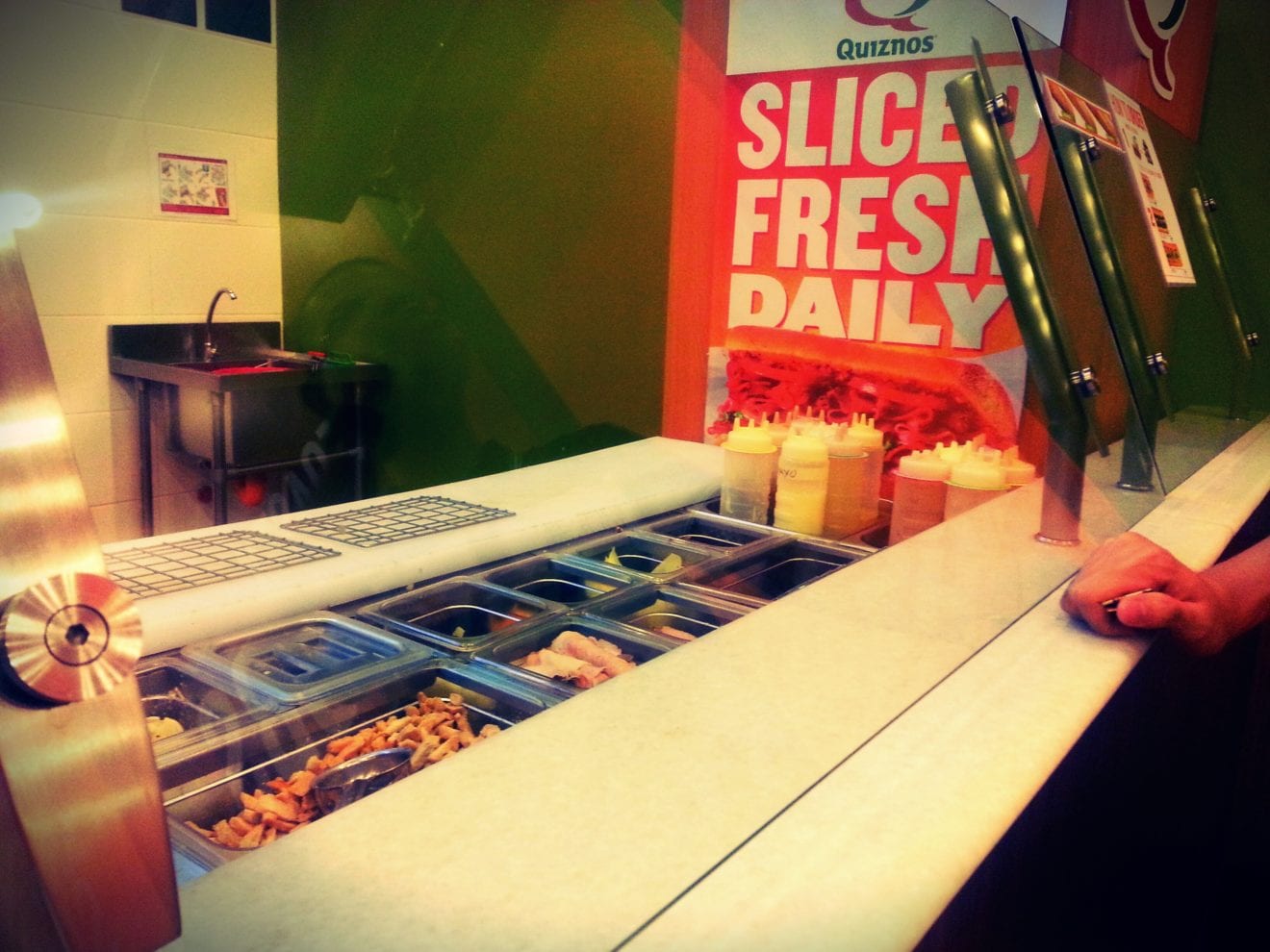
    US fast food chain Quiznos has revealed more details of its plan to roll out a massive 1500 strong network across China.

    Last October, Quiznos signed a deal with a subsidiary of Lion Group’s Parkson Retail Group to roll out 1500 stores across China.

    In the US the deal has been described as possibly the largest franchise deal in history, but the planned roll out does span a lengthy 15 year timeline – now a four year longer timeline than originally announced last year.

    The deal was originally launched with Malaysian company AUMH, which Parkson bought a stake in last year.

    “We are looking forward to paving the way for Quiznos in China,” said AUMH director Tham Lih Chung last year. “The brand’s long standing history of international accomplishments, combined with our knowledge of the region and culture, is sure to be met with success in China.”

    But this month, Quiznos International president Ken Cutshaw has revealed further details of the plan in an email interview with QSR magazine online.

    “To be the foundation of a China [food and beverage] group that has already established its successful roots in the China retail sector‎ is exciting for the Quiznos brand,” he said.

    Three Quiznos will open in Shanghai this year, then a further 100 in 2016. Parkson will then focus on the Shanghai market before expanding into other parts of China. With about 60 department stores in China, it shouldn’t find it too hard establishing an early foothold there.

    Cutshaw said he believes the scale of the Parkson partnership marks the most ambitious ever of a franchised food network, eclipsing the 1400-strong Dunkin’ Donuts deal of last year.

    Tham Lih Chung, a spokesman for The Lion Group, told QSR magazine Quiznos will do well in China because western brands are widely accepted there.

    Meanwhile, Cutshaw said Quiznos will continue its aggressive international expansion while its US operation restores its balance sheet (the US parent company was placed in Bankruptcy Protection a year ago).

    New stores are opening in Malaysia, Taiwan, Indonesia, Iraq, Pakistan and the United Arab Emirates.

    “Every successful global restaurant chain begins with a successful US foundation,” he said. “Quiznos is no exception. And Quiznos will continue to expand its presence both domestically and internationally with strong franchisees like The Lion Group of China.”