Retail News CRM

Tag: pizza

  • Pizza Maru opens at Northpoint City

    Pizza Maru opens at Northpoint City

    Korean chain Pizza Maru soft launches in Singapore today with its debut store at Northpoint City in Yishun.

    Pizza Maru is known for its patented green-tea wellbeing pizza dough, which is fermented for more than 48 hours with micro-algae chlorella as well as natural grains such as barley and flaxseed.

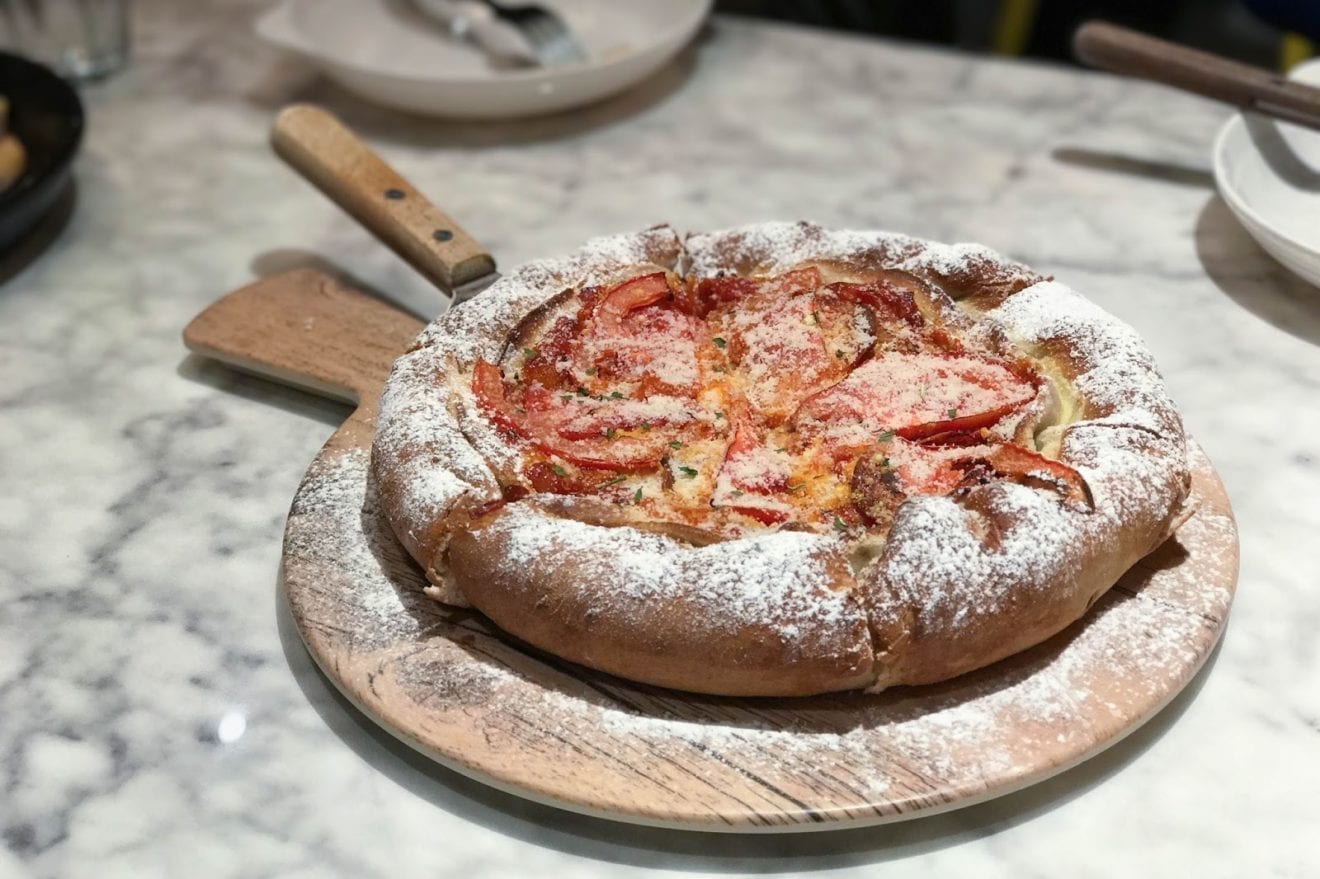
    One of its feature dishes is Real BBQ Chicago, a deep-dish pizza combining chicken leg pieces, potato cubes, roasted onions, tomatoes, mushrooms and cheeses blended with honey and barbecue sauce. The puffy crust is made from fibre-rich, antioxidant-packed black-rice dough.

    Korean fried chicken is also a staple of Pizza Maru, the star dish being the Supa Hot Tak Gangjeong with a choice of two levels of spiciness.

    Seating 80 diners, the restaurant will have its official grand opening on January 15.

  • Fair Work terminates Domino’s Pizza worker agreements

    Fair Work terminates Domino’s Pizza worker agreements

    Shares in Domino’s Pizza have dropped sharply after the Fair Work Commission terminated deals with workers under which they were paid less than minimum award rates.

    The ruling by the Fair Work Commission to terminate 27 expired, existing enterprise agreements by January 24 could add significantly to Domino’s labour costs.

    Domino’s shares dropped $1.36, or 2.9 per cent, to $45.23.

    The company in August forecast a 20 per cent rise in annual profit in 2017/18, its weakest pace in four years, due to the impact of higher wages and slowing sales growth.

    The Shop, Distributive and Allied Employees Association (SDA) said it had long held concerns about the pay and conditions of Domino’s workers, especially Sunday penalty rates.

    Domino’s said it had not opposed the termination of the enterprise agreements, and had requested and been granted time to transition to a new agreement that is currently being negotiated.

    “Negotiations with the relevant parties for a new EBA are well advanced, and the intention is for it to take effect before the termination of the existing EBAs,” Domino’s said in a statement yesterday.

    Over the past 18 months, Domino’s has already increased our team members’ take-home pay in good faith in anticipation of the new EBA.

    “Domino’s will communicate the Commission’s decision to its franchisee network today, so that employees continue to receive their correct entitlements in this transitional period and beyond.”

    The new enterprise agreement will apply to more than 20,000 employees in 660 Domino’s stores across Australia, and the company intends for it to take effect before the termination of the existing agreements.

    “Over the past 18 months, Domino’s has already increased our team members’ take-home pay in good faith in anticipation of the new EBA,” Domino’s said in a statement.

    The company has been auditing its franchise stores for three years and recovered $5.4 million worth of unpaid wages and superannuation since 2014.

    The Retail and Fast Food Workers Union said the Fair Work decision will return tens of millions of dollars to Domino’s workers every year.

    According to the union’s analysis, an average casual delivery driver working 10 hours per week was being underpaid by more than $2,000 per year under the old agreements.

  • Domino’s pays $42m to buy out Japan stake

    Domino’s pays $42m to buy out Japan stake

    Domino’s Pizza is taking full ownership of its Japanese joint venture by buying out partner Bain Capital’s minority stake for $42 million.

    Domino’s, which in May announced Bain’s intention to exit, on Monday said it would pay less than the $46.4 million it set aside for the deal in its full-year accounts.

    The purchase will be funded by a combination of cash and existing debt facilities, and is expected to be completed by Friday.

    Domino’s said the transaction will be earnings per share accretive in the current financial year, which started on July 3.

    The deal is the second in less than a week for Domino’s.

    Last week, the company continued its European expansion with the 32 million euro (A$48.1 million) acquisition of German chain Hallo Pizza.

    The cost of integrating the 170 stores into Domino’s Pizza Deutschland, which is majority owned by Domino’s Pizza, will bring the ASX-listed company’s net spend on the deal to between $A52.6 million and $A63.1 million.

    That transaction will only have a small positive contribution to Domino’s FY18 underlying earnings because it won’t complete until early in the 2018 calendar year.

    Earlier this month, the pizza chain said it had returned $5.4 million in underpaid wages and superannuation to its employees over the past four years under a national audit of its stores that is due to wrap up in December.

  • Pizza chain’s customers complain of data breach

    Pizza chain’s customers complain of data breach

    Customers of pizza chain Domino’s Australia are complaining their personal data has been leaked, prompting eerie personalised emails from scammers.

    Many took to social media to complain about phishing emails addressing them by their first names and mentioning where they live.

    But Domino’s insists there’s been no “unauthorised access” to its systems, although it is investigating a potential issue with a former supplier.

    “It was a bit eery (sic) getting all these spam emails that somehow knew my name and suburb and initially were making it past the spam filter,” Mitchell Dale posted on Domino’s Facebook page.

    “The decision to try to keep me in the dark and not announce what had happened is why I will not be ordering Dominos again.”

    “Nothing better than waking up finding out your data has been breached,” Dylan James posted on Facebook.

    “Why haven’t you informed anyone yet?”

    In an undated statement on its website, Domino’s Australia said there was no evidence to suggest there had been unauthorised access to its systems.

    “We are investigating a potential issue with a former supplier’s systems that may have led to a number of customer email addresses, names and store suburbs (related to pizza orders) being accessed,” it said.

    “Domino’s acted quickly to contain the information when it became aware of the issue and has commenced a detailed review process.”

    The company did not say when it first became aware of the issue and insists no financial information has been accessed.

  • Sbarro Bangladesh opens eight restaurants in one hit

    Sbarro Bangladesh opens eight restaurants in one hit

    Sbarro Bangladesh franchise partner Khan Bahadur Foods has opened eight restaurants in Dhaka.

    It was the first time the US fast-food chain has opened eight locations simultaneously in one city. Sbarro is the first New York-style pizzeria in Bangladesh. With its franchise partner, the brand has opened several locations in Bangladesh over the past two years. Khan Bahadur MD Mayeen Chowdhury says more stores are planned.

    “Mayeen and his team are excellent ambassadors of Sbarro in Bangladesh, as shown by their proven success over the past few years,” says Sbarro CEO David Karam.

    Since opening as an Italian salumeria in Columbus, Ohio, in 1956, Sbarro now has more than 600 restaurants in 26 countries.

  • Domino’s pays back employees, launches new tech initiatives

    Domino’s pays back employees, launches new tech initiatives

    Domino’s Pizza says it has returned $5.4 million in underpaid wages and superannuation to its employees over the past four years under a national audit of its stores that is due to wrap up in December.

    Chief executive Don Meij, speaking after a Domino’s investor day update, said only one of the pizza chain’s stores had been referred for further examination after evidence of wage underpayments discovered during a Deloitte-led audit.

    “The fact that we found only one person out of the last 322 stores audited is very encouraging to us, its certainly looking very good at the moment compared to where we were in the first three years,” Meij said.

    Domino’s has been auditing its stores for three years and in March extended the probe across its national network after the Fair Work Ombudsman joined investigations following media reports of underpayments to staff.

    Meij said that since 2014, a total of $5.4 million worth of unpaid wages and superannuation had been recovered and paid to Domino’s franchisee staff,.

    Domino’s had originally planned to complete the audit by June but Meij said he expects to finalise the program across Australia’s 666 stores by the end of December.

    “The media was talking as if this was all Domino’s – that’s very unfair – the fact that only a single store has been referred for further audit illustrates that its not the majority, it’s the minority of the franchisees,” Meij said.

    As part of Monday’s investor update, Meij highlighted improvements to the company’s “360 degree” performance measurement software used for Domino’s franchisees, along with a suite of new technology initiatives including an expansion of its New Zealand drone delivery trials.

    Meij said a new iteration of Domino’s Operations 360 monitors, improves and benchmarks individual franchisee performance – offering head office and a franchise owner a rounded view of the business.

    “This is not an auditing program, its a self-assessment tool which allows franchisees to view their business as part of their peer group and on top of that we also get to look at the business and encourage people to chase better performances,” Meij said.

    Domino’s will also roll out its GPS-based Anywhere delivery service, which enables deliveries to locations such as parks and beaches without specific addresses.

    Heated lockers that keep food hot at a store until picked up by a customer, who can unlock the device using their smartphone, were also unveiled to be in use in Australia by Christmas.

    Domino’s faced some of its own heated customer blowback last week when social media fumed over Domino’s six-and-a-half year exclusive distribution deal with Schweppes – ensuring Coca-Cola remains out of the Domino’s picture until 2024.

    Meij said sales of Schweppes drinks were now higher than sales of Coca-Cola brands had been.

    Domino’s shares closed 11 cents lower at $45.50 on Monday.

    Meij said the enhancements across the business would use new and existing technologies to enhance customer service, improve productivity and enhance franchisee standards.

    “At Domino’s we use technology to solve problems and to make things easier for our customers, our franchisees and for our business,” he said.

    “Technology and data is of value only if you use it to improve, and that is something we have done from our first use of online ordering, through to using GPS Driver Tracker to reduce our delivery times – this is no different,” he added.

  • Pizza delivery by robot cars has arrived with big questions

    Pizza delivery by robot cars has arrived with big questions

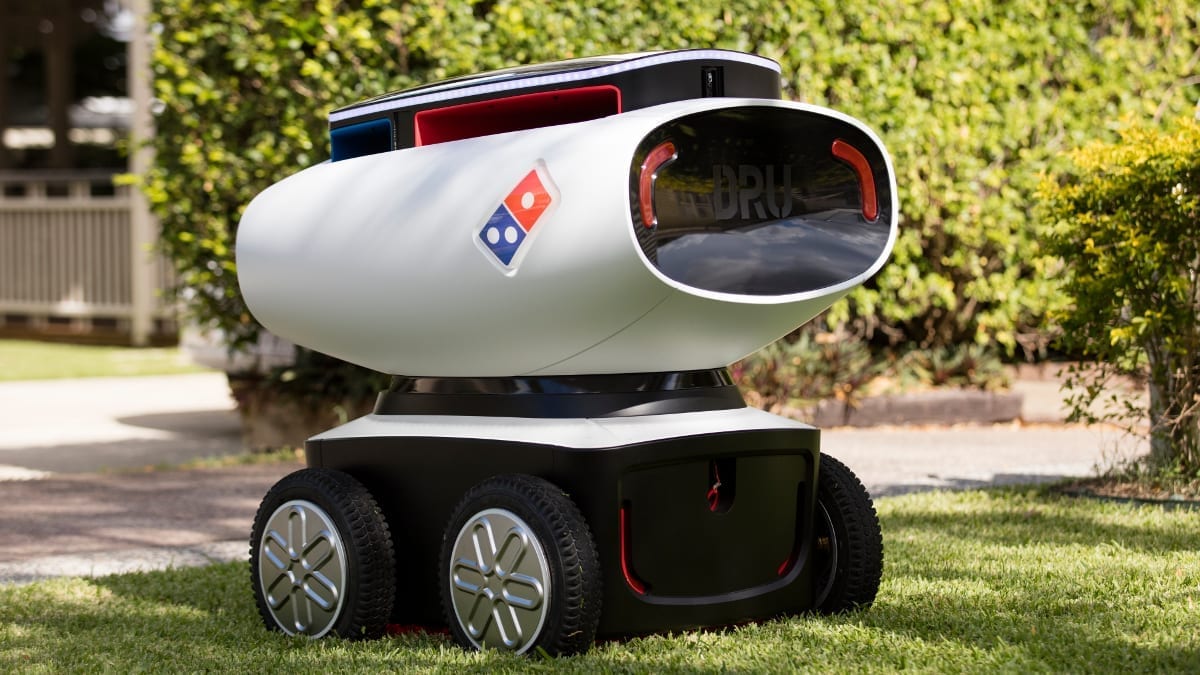
    Domino’s Pizza and Ford have paired up in a pilot project that will look at how humans interact with driverless food-delivery cars. Ann Arbor is home to thousands of students, an age group not likely to view this new technology with suspicion. But it could turn into a fascinating social experiment for the food industry.

    Customers ordering through Domino’s will be able to track their delivery in real time by using a downloadable app on their smartphones. They receive a text message that gives them a four-digit code to use once the car arrives.

    But it’s the final portion of the drive that could prove unpredictable for Domino’s. The driverless delivery vehicle could end up in the driveway, or near the curb. Customers may not want to go out to the car if it’s raining or snowing. Domino’s USA president Russell Weiner says these challenges are a major part of the experiment.

    “We’re interested to learn what people think about this type of delivery,” he said in a recent statement. “The majority of our questions are about the last 50 feet of the delivery experience.”

    No tipping attractive to students

    Human behaviour can be difficult to predict at the best of times, especially when dealing with food. This will be the first time a food service or retail company has used driverless cars to interact with actual consumers.

    The experience will certainly offer convenience for customers in a variety of ways. With the app, expectations will be managed, and quality of service — Domino’s key strategic focus — will be more consistent.

    That’s because delivery times will be streamlined, fewer pizzas will be damaged in handling mishaps and the customer won’t have to deal with tips — at least not for now. No tipping will reduce price points, making delivered pizzas more affordable. For cash-strapped students, that’s key.

    For Domino’s, the business case for a driverless fleet is unquestionably strong. Lower insurance costs, lower fuel consumption, consistent delivery times, no thefts, controllable temperatures to keep food safe for customers so therefore less waste — the list goes on.

    Domino’s delivers more than a billion pizzas annually, and has more than 100,000 drivers. Running a driverless fleet could save the company millions.

    Embracing the concept of home food deliveries without having to hire drivers cannot come soon enough for the food service industry, which is looking for ways to increase revenue beyond their regular foot traffic.

    Restaurant operators won’t need to deal with the headache of hiring the right people for delivery, and delivery is an important means of expanding the brand outside their facilities.

    Home delivery can be dicey

    Most of us who have ordered home-delivered food have had mixed experiences.

    Some drivers make convicted felons look like choir boys, causing customers to be hesitant about the food. But home delivery is no walk in the park for the drivers, either.

    Drivers in the U.S. have told of finding themselves in unbelievably awkward situations,including being tipped with weed, being asked to eat with the customer to offer company, showing up during domestic disputes and being greeted by a naked customer as the front door opens.

    There’s an endless list of unpleasant scenarios that would discourage anyone from contemplating home food delivery as a full-time job or even part-time job.

    A humanless home food delivery experience, on the other hand, also offers a unique perspective on the market currency of convenience.

    For years, price has been king. In study after study, price has trumped any other feature consumers were looking for in food service.

    Consumers crave convenience and privacy

    Younger generations, however, have a different take on convenience. Price remains a significant factor for higher revenues of course, but the constant quest for more convenience on both sides of the food continuum is now reaching the point of obsession.

    Getting rid of delivery personnel is now a realistic approach. With driverless home food delivery, one could potentially get food delivered without seeing a single human being — a frightening thought for some, a reassuring one for others.

    In the future, consumers could binge on their favourite junk food several times a week without the embarrassment of seeing the same delivery person.

    No matter how you look at it, Domino’s and Ford are onto something. After all, driverless technologies are consistent with what Domino’s is all about.

    The company has been successful over the years with its mastery of home delivery. Joining forces with Ford could make the company even more efficient.

    Nonetheless not all of us needs Domino’s to get our food fix. Divorcing the human aspect from food is simply impossible for many food service companies — thousands of them, in fact. And thank goodness for that.
  • Project Pie slices all but one store

    Project Pie slices all but one store

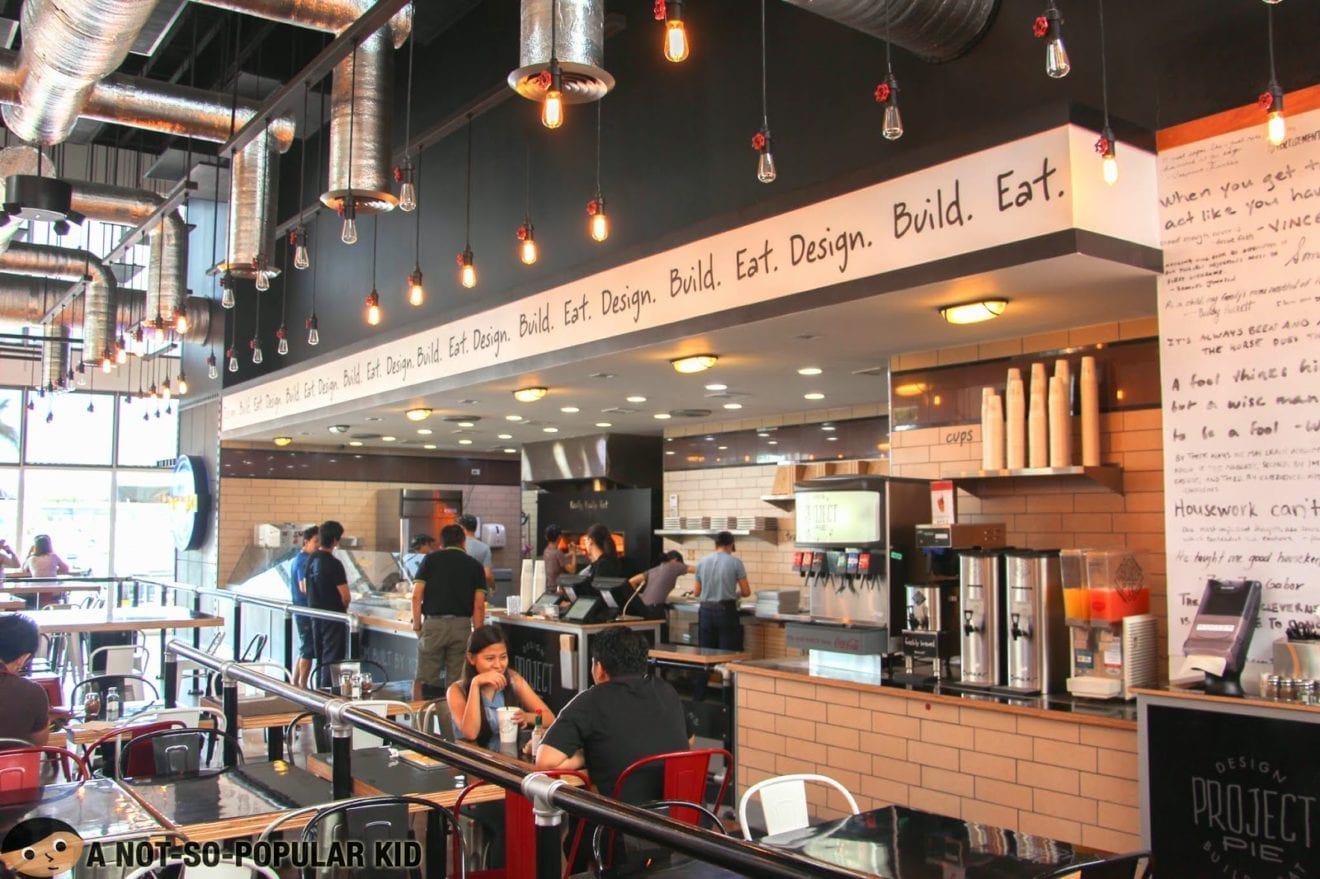
    Project Pie, the pizza outlet that lets customers devise their own toppings, has closed all but one of its stores in the Philippines.

    After “four years of pizza awesomeness”, the US-based pizza chain has announced on social media it will be “graduating” its stores from the Philippine market. However, its Project Pie Block 28 in Alabang will stay open “as our last hoorah”.

    After establishing itself in the US, Project Pie moved into Manila in 2013, allowing diners to order nine-inch customisable pizzas. It expanded to eight branches, both in malls and stand-alone locations.

    Fans said their farewells in the chain’s social-media comments section … “Don’t do this to me,” wrote one fan. “I am speechless,” wrote another. “My number-one favorite pizza left me.”

  • Pizza Hut Philippines serves up fresh concept

    Pizza Hut Philippines serves up fresh concept

    A fresh concept has been introduced by Pizza Hut Philippines with its new 175-seater flagship store in SM Mall of Asia in Manila.

    As well as offering more space for fast casual dining, the upgrade introduces an open kitchen plus decor with a rustic flavour. New services include a coffee and dessert bar plus a merchandising section offering limited-edition shirts and caps.

    Pizza Hut arrived in the Philippines in 1984, serving Metro Manila and provinces outside Luzon, as well as in Mindanao and Visayas.

    Its Manila flagship signals a move away from its formal dining concept. “We’re offering a more immediate and less tedious dining concept,” says Philippine Pizza chief marketing officer Lorent Adrias.

    The store’s ribbon-cutting was attended by Pizza Hut executives and its brand ambassadors – Binibining Pilipinas winners led by Rachel Peters.

  • Domino’s Pizza misses profit guidance

    Domino’s Pizza misses profit guidance

    Fast food retailer, Domino’s Pizza, has missed full-year profit expectations due to weak sales in Japan and France. The pizza giant, however, posted a lift in full year net profit by 24.8 per cent to $102.9 million, helped by double-digit sales growth in Australia, New Zealand and Europe.

    CEO, Don Meij, said the forecast miss was mostly caused by underperformance in France.

    “I acknowledge our results, while strong, did not reach the guidance we set. This was largely due to the delay in rectifying some issues with our online platform in France, and the initial response in H2 to our value range offering in France,” Meij said.

    “Both have now been addressed.”

    Domino’s, which lifted its full-year earnings forecast in February after a strong first-half performance, had anticipated net profit and underlying earnings would rise 32.5 per cent.

    The company said underlying net profit for the 12 months to July 2 grew 28.8 per cent to $118.5 million, while earnings before interest, tax, depreciation and amortisation rose 28.3 per cent on the prior year to $230.9 million.

    Revenue for the year to July 2 has risen 15.4 per cent to $1.07 billion.

    Domino’s said FY18 had started well, but indicated that same stores sales in the Australian and New Zealand market would likely be lower in the first half.

    The group plans to open between 180 and 200 new stores and expects net profit to increase by around 20 per cent in FY18.

    It also has announced a share buyback of up to $300 million, which will be funded through new and existing debt facilities.

    The company will pay a partially-franked final dividend of 44.9 cents per share, taking the full-year payout to 93.3 cents per share, up from the 73.5 cents for the 2016 financial year.

  • Pizza chain secures franchise rights to enter India

    Pizza chain secures franchise rights to enter India

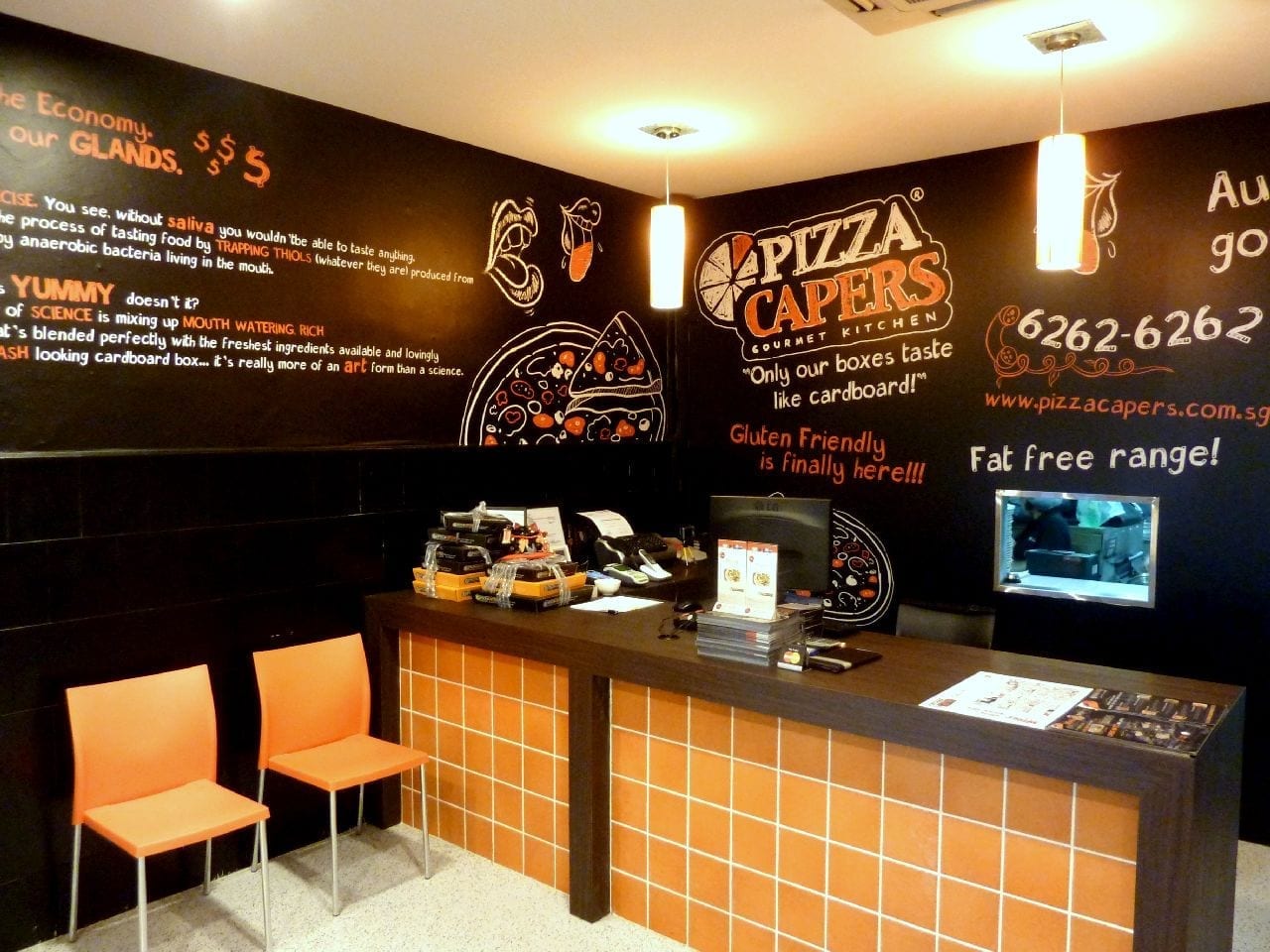
    Retail Food Group owned Pizza Capers, has today announced it’s entering the Indian market via a master franchise license in favour of local firm Krsna Foods (India) Pvt Limited.

    RFG chief executive – international, Mike Gilbert, said the grant of master franchise rights for India represented a watershed event for the brand, which also set the platform for further international growth.

    “Pizza Capers has enjoyed considerable success in the Australian market, and we are excited to be partnering with local experts who share our vision for introducing high quality gourmet pizzas to Indian consumers,” he said.

    “A surge in consumerism coupled with increasing incomes and changes to lifestyle and eating patterns within India has meant that entry into the territory has long been on our radar. We expect these factors to provide a huge platform upon which the Pizza Capers brand can prosper”, he said.

    Pizza Capers’ international expansion model is based on recruiting franchise partners, with Gilbert asserting the company was conscious of finding a franchisee capable of applying sufficient resources, expertise and resolve to ensuring success in the Indian market.

    “Krsna Foods (India) Pvt Limited satisfies each of these pre-requisites and we have every confidence of the Brand’s success in the territory,” he said.

  • Shakey’s Pizza Asia Ventures moving into UAE

    Shakey’s Pizza Asia Ventures moving into UAE

    Philippine pizza-parlor chain Shakey’s Pizza Asia Ventures (SPAVI) is expanding its overseas footprint with a move into the United Arab Emirates next year.

    Through subsidiary Shakey’s Pizza Regional Foods, SPAVI has signed an area development agreement with Dubai-based Al Jeel Capital to build at least 10 Shakey’s Pizza outlets in the UAE over five years.

    In Dubai, the first store is scheduled to open in the first half of next year.

    It is the second international franchise granted by SPAVI, which owns perpetual rights to the Shakey’s brand for Asia (excluding Japan and Malaysia), Australia, China, the Middle East and Oceania. The new deal brings to 20 the number of outlets scheduled to open over the next few years. SPAVI last year signed an agreement to open at least 10 Shakey’s stores in Kuwait.

    “Dubai, UAE and the rest of the Middle East are great markets for us – not only are there strong Filipino communities but also tremendous growth opportunities within the mainstream markets,” says SPAVI president Vic Gregorio.

    Founded in California in 1954 and the first franchise pizza chain in the US, Shakey’s Pizza launched in the Philippines in 1975. As at the end of March, the group had 189 stores in the Philippines.

    Shakey’s Asia Food Holdings, a company owned by the Po family’s Century Pacific Group, Arran Investments Private and the Prieto family, acquired 100 per cent interest in SPAVI in April last year. In October, SPAVI acquired 100 per cent ownership of Bakemasters, Shakey’s International and Golden Gourmet.

  • How Pizza Hut and payments are fueling China’s retail revolution

    How Pizza Hut and payments are fueling China’s retail revolution

    Part of the huge shadow Ant Financial casts is its appetite for global investment, but at the same time it’s making moves that are kicking off major changes to how payments are handled in its local market in China.

    While the world waits to see how the company’s attempt to acquire U.S.-based MoneyGram will play out, one of Ant’s existing stakes in Yum China — a 2016 spinoff of Yum Brands, which owns Pizza Hut, Taco Bell and KFC — has drawn the attention of an investor who sees the potential to reshape quick serve restaurants, mobile technology and even the middle class in emerging economies.

  • Upgrade for Pizza Hut Malaysia’s restaurants

    Upgrade for Pizza Hut Malaysia’s restaurants

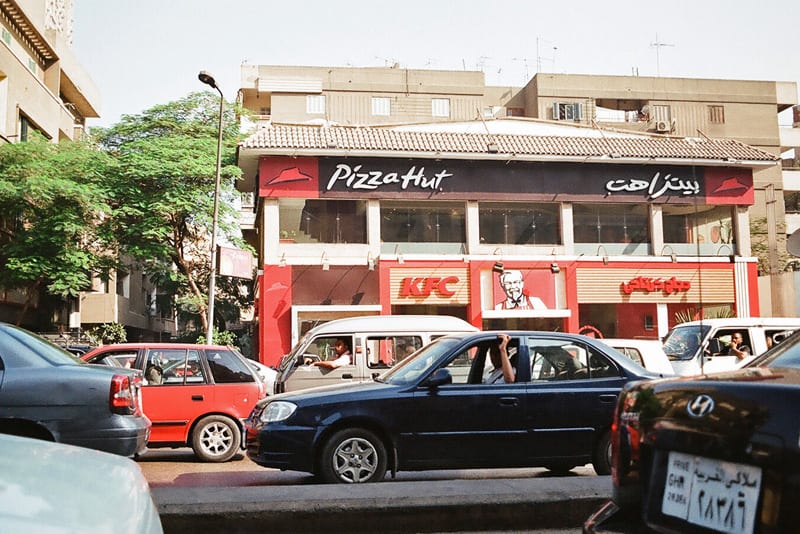
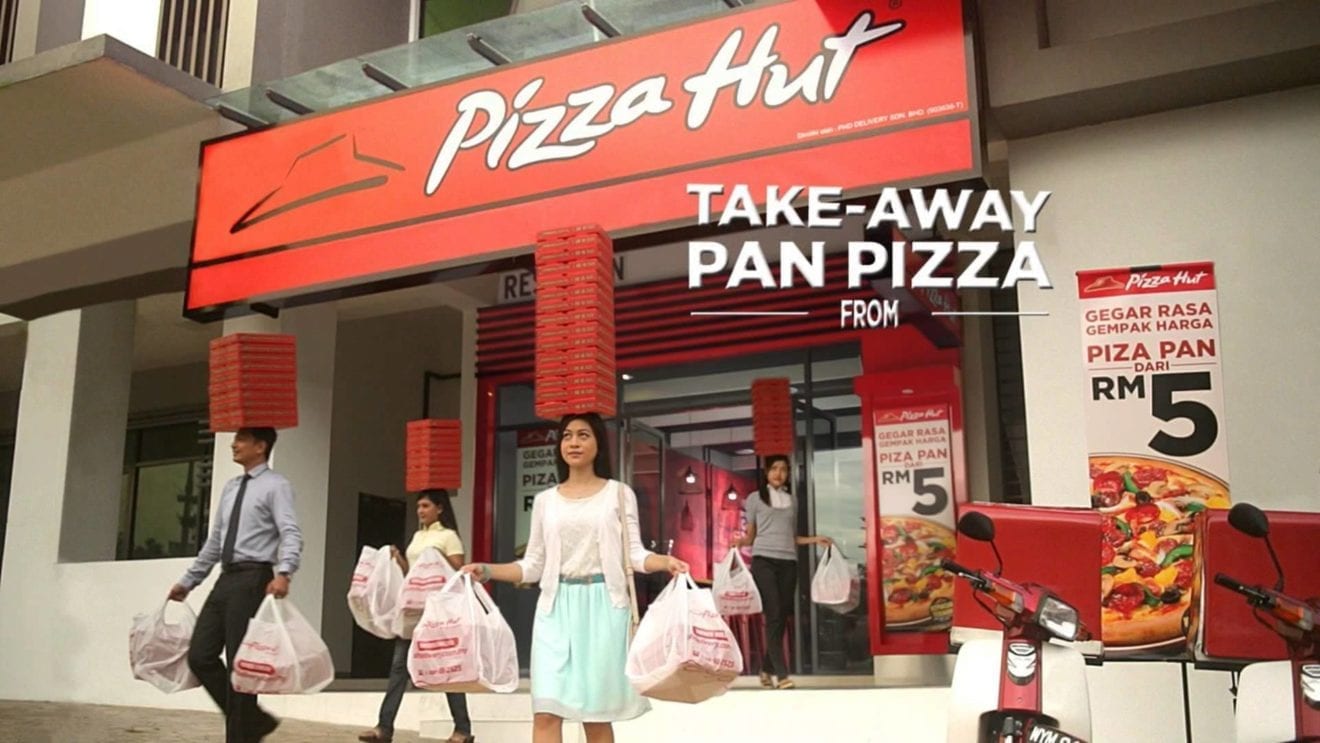
    The operator of Pizza Hut, QSR Brands (M) Holdings Bhd, plans to upgrade its 221 dine-in restaurants over the next two years, as part of its re-branding activity in conjunction with Pizza Hut’s 35th anniversary.

    QSR Brands chief executive officer Merrill Pereyra said Pizza Hut currently had close to 400 outlets, nationwide.

    “So far, we have upgraded more than 50 restaurants and we will also conduct 100 per cent asset enhancement in all 221 restaurants,” he told a press conference after Pizza Hut’s 35th anniversary celebrations in Kuala Lumpur on Thursday.

    Pereyra said the company planned to enhance dining experience at its restaurants as the segment was not only its core business but also made Pizza Hut stand out from its competitors.

    He, however, declined to elaborate on the capital expenditure for the upgrading exercise but said the company had allocated enough for the purpose.

    When asked on possibilities of new openings for this year, Pereyra said the company planned to spend the next couple of years to re-brand Pizza Hut and the exercise would include a new logo, website and also a new mobile application.

    The website was launched on May 5 and we are already seeing nearly 100 per cent increase in visits and 150% increase in new users.

    Order placement with the newly developed website and mobile application would reflect Pizza Hut’s refreshed brand mission of “easy and better”, he added.

    Pereyra said the mobile application will be launched in three months.

    Pizza Hut, in conjunction with its anniversary celebrations, on Thursday launched the 35 Bites Challenge where consumers can attempt to finish a large pizza in 35 bites, within five minutes.

  • Pizza Hut CMO Pankaj Batra moves on to new role after 11 years in Asia

    Pizza Hut CMO Pankaj Batra moves on to new role after 11 years in Asia

    Pankaj Batra, chief marketing officer at Pizza Hut Asia Pacific, has taken on a new role as chief brand officer at Pizza Hut, Middle East, Turkey and Africa (META). This was confirmed by him to Marketing.

    According to his LinkedIn, he will be responsible for sales and brand metrics, digital marketing and food innovation for the region. Prior to the appointment he held the CMO role since 2014, where he was responsible for brand equity and sales growth of Pizza Hut across over 2,600 restaurants in 13 countries.

    He was also responsible for marketing and sales for Home Service and Express channels. He also partnered with seasoned franchisees and a team of over 50 marketing professionals to develop regional and local programs to achieve targets and grow market share.

    Before that he was director of marketing and PR in Asia, where he handled brand marketing and sales leader for Pizza Hut Delivery across nine countries in Asia, including Japan, Hong Kong, Taiwan, Indonesia, Philippines, Malaysia, Singapore, Vietnam & Brunei.

    Last year, Pizza Hut Singapore appointed See Seow Ying as senior marketing director, who was previously head of marketing at Burger King Singapore since 2013. She replaced Michelle Lee, who moved on to take on the role as head of marketing for SEA and Korea at Subway Systems Singapore.

    During her tenure, Lee was responsible for overall brand direction, brand sales, P&L and marketing strategies. She also drove product and service innovations along with menu development with food innovation, operations and supply chains.