Retail News CRM

Tag: platform

  • JD exceeds Show Fantastic Growth Numbers

    JD exceeds Show Fantastic Growth Numbers

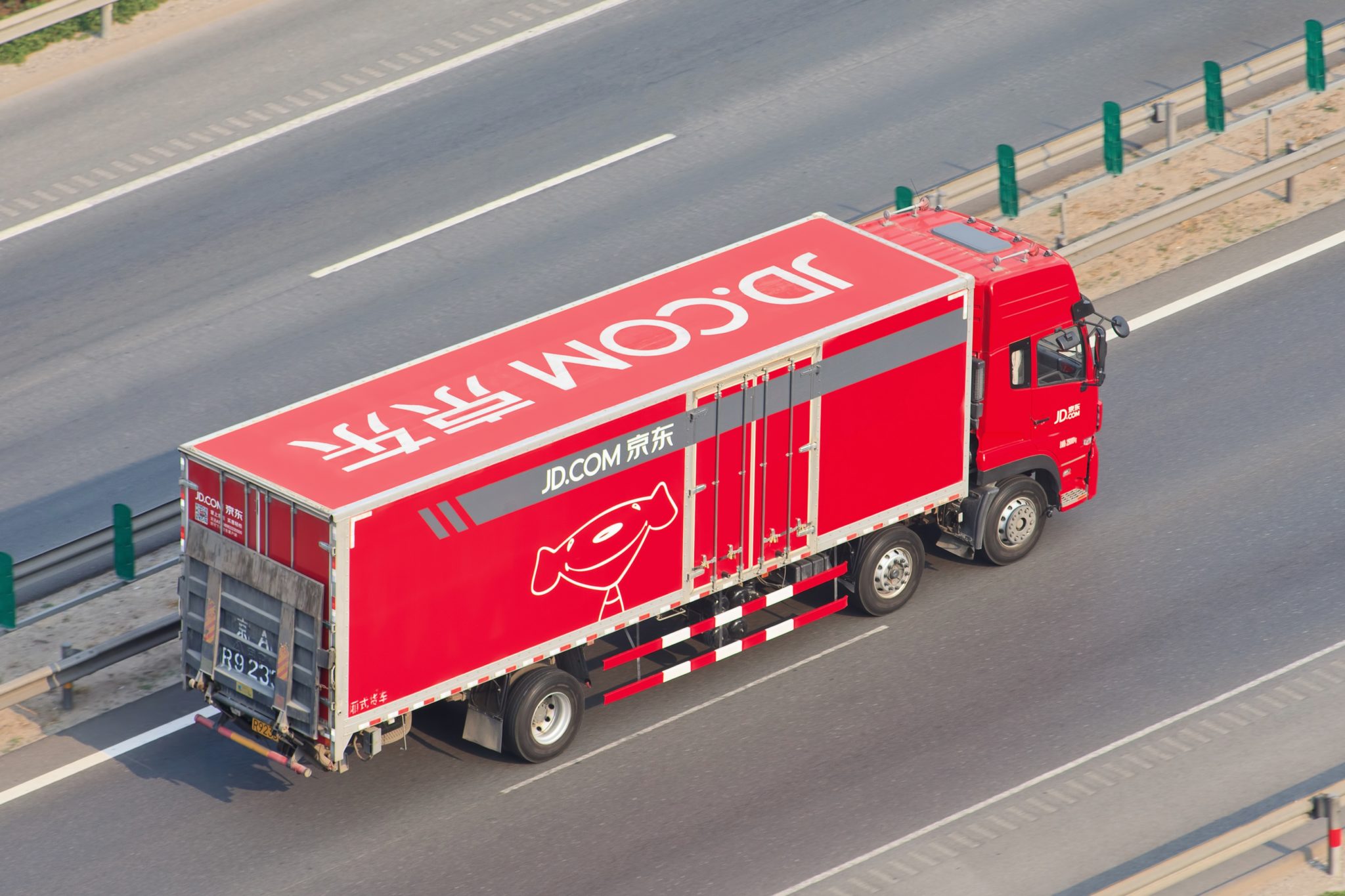
    Chinese e-commerce giant JD exceeded revenue expectations in the June quarter, net sales up by 23 per cent to 50.28 billion yuan (US$21.28 billion).

    The company has cited forays into the convenience-store sector and supermarkets, as well as the harnessing of artificial intelligence in its advertising and logistics operations for the improved result, as it tries to be less reliant on its core online retail platform for growth.

    Net income for JD reached 618.8 million yuan ($90.1 million), a significant turnaround from the 212.4 million yuan net loss of the same period last year.

    Significantly, the company’s logistics business broke even during the quarter.

    Discussing the results during an analyst briefing, a senior executive said the company was now turning its attention to lower tier Mainland China cities for growth, hoping to broaden its customer base. That strategy has been working for JD’s archrival Alibaba to date.

    Other plans afoot include developing more private-label products and improving its WeChat interface to increase customer engagement there.

  • Lexus’ Safety System+ To Be Standard In All Cars In The US From 2020

    Lexus’ Safety System+ To Be Standard In All Cars In The US From 2020

    Collisions that result in injury can often be caused by a delay in a driver’s recognition of the situation and his or her ability to react accordingly. In a move to help prevent such accidents before they happen, the Lexus Safety System+ will be a standard feature in all US Lexus vehicles starting with the 2020 model year. Designed to help protect drivers, passengers and pedestrians, the Lexus Safety System+ is an integrated suite of four advanced active safety packages anchored by automated pre-collision warning and braking.

    David Christ, group vice president and general manager, Lexus Division said, “We are working toward preventing crashes before they happen. That’s why we have developed some of the most advanced safety features on the road today, and now those systems will be standard equipment on every model we sell.”

    The Safety System+ will come with Pre-Collison System with Pedestrian Detection, a system which is engineered to help detect a preceding vehicle or a pedestrian in front of the Lexus under certain conditions. Should the system detect a pedestrian or a potential frontal collision, it’s designed to activate an audible and visual alert while automatically preparing Brake Assist for an increased braking response. If the driver does not break in time, the system is designed to automatically begin braking before impact and, in some cases, can even bring the vehicle to a stop.

    There will also be Lane departure alert which will utilize a high-resolution camera to monitor visible lane markings and determine the vehicle’s position within a lane. If an inadvertent lane departure or potential departure due to swaying is detected at speeds above 51 kmph, the system attempts to alert the driver with audio and visual warnings and steering wheel vibrations. Then there are the Intelligent High Beams which provide added visibility for the Lexus driver as well as other motorists, Intelligent High Beams offer added illumination to help keep the driver focused on the road. When the road ahead is clear, the system defaults to high-beam mode, then temporarily switches to low beams when it detects the headlamps or taillamps of vehicles ahead.

    And finally, there’s the dynamic radar cruise control which uses radar and camera technology to help maintain a preset speed and following distance from the vehicle ahead. If driving at highway speeds and the road ahead clears, the vehicle returns to its preset speed.

  • Shopeline, Asia’s Biggest Smart Commerce Platform, Strengthens Foothold in Southeast Asia

    Shopeline, Asia’s Biggest Smart Commerce Platform, Strengthens Foothold in Southeast Asia

    Shopline, the global smart commerce platform, has today announced the official expansion of its operations to Malaysia. The news follows the closure of a successful US$2 million funding round earlier this year, led by CDIB Capital Group and Alibaba Hong Kong Entrepreneurs Fund, and reaffirms SHOPLINE’s confidence in the Southeast Asia market.

    The start-up, originally founded in Hong Kong, enables merchants to easily set-up online stores, and offers a wide selection of shop designs, payment gateways, and shipping carriers tailored to the needs of local and cross-border merchants. It has grown over the last six years to become the market leader in Asia, helping more than 150,000 entrepreneurs, SMEs and large enterprises such as Durex, Bee Cheng Hiang and Hiwalk go digital. In 2018, SHOPLINE’s merchants reached over 200 million customers.

    The Southeast Asian Digital Opportunity

    Figures from the latest annual Global State of Digital report by Hootsuite and We Are Social revealed an explosion in online engagement across the region, with the Philippines, Thailand, Indonesia and Malaysia all ranking in the top 10 countries on the world’s internet usage index.

    Meanwhile, a recent study by Google and Singapore’s Temasek Holdings predict that Southeast Asia’s internet economy will be worth in excess of US$240 billion by 2025, with e-commerce accounting for 40 percent (US$102 billion), up from 2018’s US$23 billion spend.

    Against this backdrop, the opportunities presented by the booming Southeast Asian digital economy are immense. However, in order to successfully leverage its potential, businesses need to not only ensure they’re in the mix, but that they also provide a seamless and integrated online to offline experience.

    With a strong following in its native Hong Kong, along with offices in Taiwan, Ho Chi Minh City and Shenzhen, SHOPLINE now adds Kuala Lampur to its network, and has plans to further expand its footprint across the region.

    Empowering businesses and merchants in Southeast Asia with smart, omni-channel tools

    Having already supported several launch partners in beginning their online ventures, SHOPLINE will expand its Malaysia offering in the coming months to include its range of online to offline (O2O) solutions, which enable merchants to connect across channels and optimise the customer’s shopping experience.

    Services will include the SHOPLINE Kiosk, a CRM tool that allows users to sign up for membership with a mobile number or email in seconds; the SHOPLINE Broadcast Center, a marketing automation tool enabling merchants to reach customers via Facebook’s chatbot, SMS and email; and Shoplytics, a proprietary smart analytics dashboard that allows merchants to visualise and analyse data related to their store’s web traffic, revenue, product performance, customers, marketing and promotion campaign performance.

    Later this year, SHOPLINE will further look to introduce its cloud-based point-of-sale (POS) system tailored for retailers, enabling them: to keep an accurate record of store transactions; track and manage store inventories; generate real-time sales performance reports; track staff performance and manage payroll; manage membership and more–creating a unified omni-channel solution over multiple store locations.

    Tony Wong, Co-founder and CEO of SHOPLINE said: “We’re delighted to be setting up camp in Kuala Lumpur. Underpinned by strong governmental support and a huge jump in mobile and internet penetration, we see incredible potential in Malaysia, and indeed the wider Southeast Asian digital economy. SHOPLINE is committed to helping our partners – our merchants – grow with us. By introducing our comprehensive range of O2O and POS solutions to new markets, we hope to equip more merchants with the tools they need to go digital and go global, creating a smooth and holistic shopping experience across offline and online channels.”

    He added: “This is an exciting time for the SHOPLINE team. We have grown from a three person team to a company with over 200 employees across the globe. Each office recruits local team members with deep insight into their respective markets, allowing us to provide tailor-made solutions to satisfy our merchants’ individual needs and Malaysia is no exception.”

  • Reebonz launches buy-back guarantee Program in Thailand

    Reebonz launches buy-back guarantee Program in Thailand

    Online luxury marketplace Reebonz has launched a guaranteed buy-back program in Thailand.

    The service, which applies to leather goods and jewellery, gives customers a guaranteed price that the company will pay to buy back products initially sold on its platform.

    Customers will be offered currency, called Reebonz Credits, that can be used for future purchases on the platform.

    Pre-owned jewellery from selected brands such as Chanel, Harry Winston, Hermes, and Christian Dior, among others, will be eligible.

    Daniel Lim, Reebonz co-founder and CPO, said the company hopes to further expand its services across new geographies and categories, giving customers even more ways to engage with the brand. “We truly believe we can be a one-stop ecosystem for everyone’s luxury needs.”

    The guarantee is now available in Singapore, Hong Kong, Taiwan, Malaysia, Australia, Indonesia, and the US.

    Headquartered in Singapore, Reebonz is a C2C platform that allows customers to buy and sell their pre-owned items to a community of more than 5.5 million members.

  • Altran, Wind River developing end-to-end NFV platform

    Altran, Wind River developing end-to-end NFV platform

    Engineering and R&D services provider Altran has announced a partnership with critical infrastructure software provider Wind River to develop an end-to-end networks functions virtualization (NFV) platform.

    Under the agreement, Altran is using Wind River Titanium Cloud, an NFV infrastructure software platform for telecom operators, to develop a platform that incorporates NFV in the data center and at the network edge.

    Altran has designed its VNF Management and Orchestration Platform to help operators lower costs, accelerate service delivery and meet customer demands for high availability.

    The platform will provide an environment for vendors to deploy virtual network functions (VNFs) on Wind River infrastructure software.

    The platform will take advantage of Altran’s programmable VNF Lifecycle Management solution – which can integrate with any VNF as well as with third-party orchestrators – and its integrated policy engine.

    “The Wind River Titanium Cloud ecosystem provides outstanding infrastructure for highly available, robust and agile virtualization platforms needed in telecommunications networks and industrial control,” said Altran North America group SVP and chief engineering officer N. Mohan Rangan said.

    “We are delighted to be a part of Wind River’s initiative. Service provider customers will benefit greatly from a comprehensive NFV platform that handles a wide variety of sophisticated VNFs.”

  • Homestay startup raises $4.5 million

    Homestay startup raises $4.5 million

    Luxstay has raised $4.5 million from South Korean retailer GS Shop and venture capitalist Bon Angels in its bridge round. A Luxstay representative said Wednesday that receiving funding from reputable international investors in this round is an important stepping stone for the enterprise to expand to other areas in the future.

    GS Shop is a South Korean multimedia retailer as well as a global leader in TV home shopping. It also established a retail chain called GS25 in Vietnam in 2018.

    Bon Angels Venture Partners is a South Korean venture capital firm investing in early-stage startups. It has invested in well known South Korean startups like Woowa Brothers, Daily Hotels, and My Real Trip.

    Luxstay has targeted an annual turnover of over $300 million and 30 percent of Vietnam’s home-rental market share by 2023, the representative said.

    It is also working with financial investors and strategic partners for the next funding round, a Series A round, which is expected to close in 2019, aiming to raise $15-20 million.

    Prior to this investment, Luxstay had raised a total of around $6 million from CyberAgent Ventures (Japan), Genesia Ventures (Japan), ESP Capital (Vietnam), Founders Capital (Vietnam) and Nextrans (South Korea).

    Launched in late 2016, Luxstay has a network of nearly 10,000 properties across the country. This is a short-term rental booking platform for apartments, villas and other homestay accommodations positioned in the mid and high-end segments of Vietnam’s real estate market.

    It also offers property management and maintenance solutions to assist and save time for homeowners who want to participate in the home-sharing market through its system.

    “In developed countries, home-sharing accounts for 10-20 percent of the home-rental market. This shows a huge opportunity for this industry in Vietnam, which is expected to reach $2-4 billion in 2025,” Luxstay said.

  • Meituan launches global delivery platform

    Meituan launches global delivery platform

    Chinese e-commerce platform Meituan has officially launched its “Meituan Delivery” global-delivery platform in order to extend service to more industries and more customers.

    Meituan Delivery will open its technology platform, delivery network and value chains to ecosystem partners, enabling them to improve operating efficiency, reduce logistics cost and drive the growth of the real economy.

    “Meituan will open its delivery network to more customers and extend the network to various industries,” said Meituan senior VP and president of the company’s at-home business group Wang Puzhong. “The extension and opening of Meituan’s delivery network will help establish a more flexible delivery platform by customizing services for different industries, upgrading our delivery dispatch system, and improving delivery infrastructure.”

    Meituan’s global on-demand delivery platform is serving more than 3.6 million merchants and 400 million consumers nationwide, covering more than 2800 cities and counties with nearly 10,000 delivery stations and warehouses and more than 600,000 daily active riders. Meituan’s daily food delivery orders exceeded 25 million on April 20.

    “With the opening of our delivery platform, Meituan will leverage our delivery resources to better fulfill diversified needs of users and merchants, while integrating delivery resources to improve the overall urban logistics efficiency,” said Meituan Delivery GM Wei Wei.

    Meituan started to build its own delivery network in 2015 and launched its Premium Delivery service to meet the surging needs for efficient on-demand food delivery. In 2016, Speedy Delivery service was introduced to diversify its delivery services. Meituan launched its first autonomous delivery vehicle “Xiaodai” in 2018.

    Meituan’s delivery platform relies on its “Super Brain” – the real-time intelligent dispatch system that enables Meituan to complete a delivery within 30 minutes on average. The dispatch system can perform about 2.9 billion route planning algorithm operations per hour during daily peak times, and calculate optimized delivery routes in an average of 0.55 milliseconds, according to Sun Zhizhao, CTO of Meituan Delivery.

    In addition, Meituan has developed four delivery models – point-to-point shuttle delivery, galaxy network delivery, integrated warehouse inventory delivery, and smart terminal delivery – to serve convenience stores, super markets, retail stores, and office buildings, which can meet the different needs of merchants, improve delivery efficiency and reduce logistics costs.

  • Mahindra XUV300 Receives Over 26,000 Bookings

    Mahindra XUV300 Receives Over 26,000 Bookings

    Mahindra and Mahindra announced that the XUV300 has crossed the 26,000 bookings mark since its launch in February this year. In fact, the XUV300 also became the second-highest selling subcompact SUV in India. Among its 3 variants, the top end variant has seen the maximum demand and accounts for 70 percent of the overall bookings. The petrol variant, equipped with a 1.2-liter turbo-petrol continues to gain traction and now accounts for a substantial share of XUV300 sales and we were the first to drive the petrol powered XUV300.

    Veejay Nakra, Chief of Sales & Marketing, Automotive Division, Mahindra said, “We are thrilled with the XUV300 receiving over 26,000 bookings in just over two months since its launch. Consumers are finding the XUV300 to be an exciting and comprehensive package that offers thrilling performance, first-in-segment safety features and head-turning design, which is reflected in these impressive booking numbers. It is also encouraging to see that a substantial number of bookings are for the petrol variant. As a customer-centric organization, we are constantly working to keep the waiting period at a minimum and to get our customers their XUV300s as soon as possible. I am sure that the XUV300 brand will grow from strength to strength in the years to come.”

    The all-new Mahindra XUV300 is built on SsangYong’s X100 platform which also spawns the SsangYong Tivoli which in-turn means that the XUV300 inherits some of the characters of the Tivoli. However, both are not exactly the same models as Mahindra has made changes to other underpinnings of the XUV300. For instance, it gets a new suspension set-up along with an entirely new steering mechanism.

    The XUV300 is loaded with features in typical Mahindra fashion and gets features like auto-climate control 7-inch touchscreen infotainment system with smartphone connectivity options (Apple CarPlay and Android Auto), cooled armrest box, cruise control, steering mounted audio controls, engine start-stop button, rearview camera and more. Interestingly, this one is also equipped with some first-in-segment features as well which are the dual-zone climate control, a sunroof, front parking sensors along with rear ones and an auto-dimming inner rear view mirror. Moreover, it also gets driving modes to change the weight of the steering. However, the center armrest at the front does not slide and there is no A.C. vent at the rear which would have been an added novelty.

  • ZTE, China Telecom launch 5G industrial service platform

    ZTE, China Telecom launch 5G industrial service platform

    ZTEChina Telecom and industrial equipment company Zhejiang Supcon have jointly developed a 5G-enabled industrial service platform designed to allow specialists to remotely assist on-site maintenance personnel.

    The Plantmate service platform allows on-site maintenance personnel to use augmented reality glasses equipped with high definition cameras to send real-time high definition images back to specialists over 5G.

    These specialists can then diagnose and troubleshoot problems remotely, communicating with on-site personnel over voice and video as well as a shared digital whiteboard.

    Users will also be able to access the maintenance specialist team at Zhejiang Supcon’s Hangzhou headquarters to obtain remote consultation and technical guidance for the company’s equipment and instruments.

    The three companies have announced plans to deepen their 5G cooperation in the industrial feed in the future to help jointly promote the implementation of a 5G industrial internet.

  • Airasia keen to buy digital platforms to boost digital business

    Airasia keen to buy digital platforms to boost digital business

    Airasia Group Bhd is keen to acquire digital platforms abroad to boost its digital business segment.

    AirAsia Group chief executive officer Tan Sri Tony Fernandes said: “For sure…some will be M&A (merger and acquisition), some will be joint-ventures.”

    Asked which country the group was eyeing, he said: “Wait and see.”

    Fernandes was speaking to reporters after launching a brand new rooftop at AirAsia RedQ here, tonight. Also present was AirAsia executive chairman Datuk Kamarudin Meranun.

    Going forward, Fernandes said digital business would become a large part of the group’s revenue.

    “But I don’t want to make any prediction but many years ago I said ancillary income will be a big part of our business, and it became 25 percent. I believe digital will be much bigger,” he added.

    Commenting on the new rooftop, Fernandes said the idea was to drive integration between the staff from different departments toward an exciting digital future.

    “Digital is more about department working closely together. We are on a very exciting journey turning Airasia into more than just an airline,” he added.

  • Singapore Fintech Firm Heading into Indonesia

    Singapore Fintech Firm Heading into Indonesia

    Following a successful Series B funding round, SME lending platform Validus Capital is launching in Indonesia. SME lending platform Validus Capital has launched in Indonesia, its first Southeast Asian market outside its home country of Singapore, the firm announced in a media release on Thursday.

    Launched in partnership with Indonesia’s Triputra Group under the name Batumbu, the financing platform connects domestic SMEs from sectors as diverse as food and beverage (F&B), services, engineering, to construction industries with accredited, institutional and high net worth investors.

    Leading the local management team is Sonny Christian Joseph, who has over 23 years in SME banking in Indonesia and was previously head of SME banking at Indonesian business bank BTPN.

    P2P lending platforms have gained popularity and have grown rapidly in Indonesia. In 2018, P2P lending platforms disbursed a total of US$1.4 billion (S$1.9 billion) in loans, representing a 681.25 per cent year-on-year growth, according to data from Indonesian financial services authority Otoritas Jasa Keuangan.

    «Our expansion into Indonesia serves as a significant milestone for us. Sharing our insights and applying key learnings from Singapore allows us to take a proven and sustainable business model and apply this to a larger market – a market where I have personally spent a few years helping SMEs to grow,» Ajit Raikar, Validus CEO and co-founder, said.

    Unlike traditional financing options and P2P lenders, Butumbu uses proprietary technology and credit scoring systems adapted and tailored to cater to the needs of SMEs in Indonesia. The firm said that  it will develop strategic partnerships with large corporations to ensure an extremely robust and scalable financing ecosystem.

    In February 2019 Validus recently raised US$15.2 million (S$20.5 million) in an oversubscribed Series B funding round led by Dutch public-private development bank FMO.

    Validus was founded in 2015 and is backed by the likes of Netherlands development bank FMO and Temasek Holdings’ Vertex Ventures. According to the company, it is Singapore’s largest peer-to-business lending platform, facilitating over US$147 million (S$200 million) in business financing to local SMEs in less than 18 months.

  • Ebay Buying in India’s Paytm Mall

    Ebay Buying in India’s Paytm Mall

    International e-commerce platform Ebay is preparing to head a US$160–170 million investment in e-tailer Paytm Mall.

    In a report last Monday, the move was interpreted as a grab at O2O commerce and payments opportunities in India. It will be the third major e-commerce investment in the territory for the firm following its minors stakes in Flipkart and Snapdeal.

    Paytm Mall raised about US$215 million from Japan’s SoftBank and existing investor Alibaba mid last year, at a valuation of $1.6–2 billion. It has raised roughly $645 million in funding to date.

    The firm has a minority segment of the Indian market, which is largely dominated by its two biggest competitors Amazon and Flipkart.

  • Online sales not sufficient to save Oxfam

    Online sales not sufficient to save Oxfam

    Oxfam Australia will start the process of shutting down its retail, wholesale and e-commerce operations in June due to commercial pressures and the difficult retail environment in Australia.

    The decision affects nearly 100 staff, made up of approximately 40 permanent and 60 casual positions.

    “We know this will be very difficult news for our staff and volunteers – and our customers,” Tony McKimmie, Oxfam Australia chief operating officer, said in a statement.

    “We sincerely thank them all for their dedication and significant contribution to our core mission of tackling poverty.”

    The closure will see eight physical stores around Australia shuttered, as well as Oxfam’s online store and wholesale division, which supplies coffee, tea and chocolate products to supermarkets.

    “The business shifted last year to placing a stronger emphasis on its online trading business and reduced emphasis on its shops, with an assessment of each store’s financial viability as shop leases became due for renewal,” McKimmie explained.

    “This resulted in the closure of five stores, howeverdeclining revenue and profitability – including flat online sales growth – meant the financially responsible decision was to close all of Oxfam Australia Trading oper ations.”

    Goods sold through these stores are sourced from a global community of ethical artisans and farmers, which helps “communities to learn and living and lift themselves out of poverty”.

    “Oxfam Australia will continue its work empowering communities to tackle poverty through long-term development programs, emergency response and advocacy,” McKimmie said.

  • M1 taps UOB for QR code payment

    M1 taps UOB for QR code payment

    Singapore operator M1 has partnered with the nation’s United Overseas Bank (UOB) to offer PayNow as a payment mode for M1 customers.

    Under the agreement, M1 customers can now make mobile payments for purchases via PayNow at all M1 Shop outlets, as well as make monthly bill payments via PayNow by scanning the QR Code on the bill.

    M1 is the first communications provider in Singapore to enable retail customers to make e-payments via PayNow, providing customers with an additional payment option, in addition to existing payment modes. UOB is the key provider of PayNow Corporate services to M1, and will help enable the safe and hassle-free scan-and-pay experience for M1’s customers.

    To pay for in-store purchases, customers need to scan a dynamic QR Code that is generated at the counter using the mobile banking application of any PayNow participating banks with QR scanning functionality. Customers can also use PayNow to pay for their monthly bills by scanning the dynamic QR code on their bill statement. Customers can complete the payment by confirming the transaction details that have been automatically filled in, such as the payment amount and recipient.

    “Today, about eight in 10 consumers in Singapore have adopted e-payments and PayNow is a very convenient e-payment platform which will enhance our customers’ payment experience. This new initiative is one of many, as part of our digitalization journey to deliver a seamless digital experience for our customers,” M1 CMO  P. Subramaniam said.

  • Google Maps update brings Nokia’s classic Snake Game

    Google Maps update brings Nokia’s classic Snake Game

    The classic Snake game that made its debut on Nokia phones back in 2007 and achieved popularity not long after, is now available to all Google Map users. Well, let’s say that a very improved version of that game can now be played by Android and iOS users directly in Google Maps.

    Apparently, Google continues the tradition of celebrating April Fools with a long-lasting gag that will be available to those using some of its services on mobile and desktop. This year Google has decided to make Maps the main platform of its gag.

    All Android and iOS users will be able to play Snake on their phones and achieve high scores by picking up as many passengers and visiting as many iconic locations as possible. You’ll be able to play in different locations across the world, such as Cairo, London, San Francisco, Sao Paolo, Sydney, and Tokyo, or simply choose to play in the World.

    In order to start playing Snake, you’ll have to open the Google Maps app, tap on the menu icon on the top left corner, then select “Play Snake” to start playing directly in the app.

    Depending on what city you chose to play in, you’ll have to gather passengers with your ever-growing train and visit important locations around the world, including Big Ben, the Great Sphinx of Giza, and the Eiffel Tower.

    The Snake game is now rolling out worldwide on Android and iOS and will be available from within the Google Maps app for about a week.