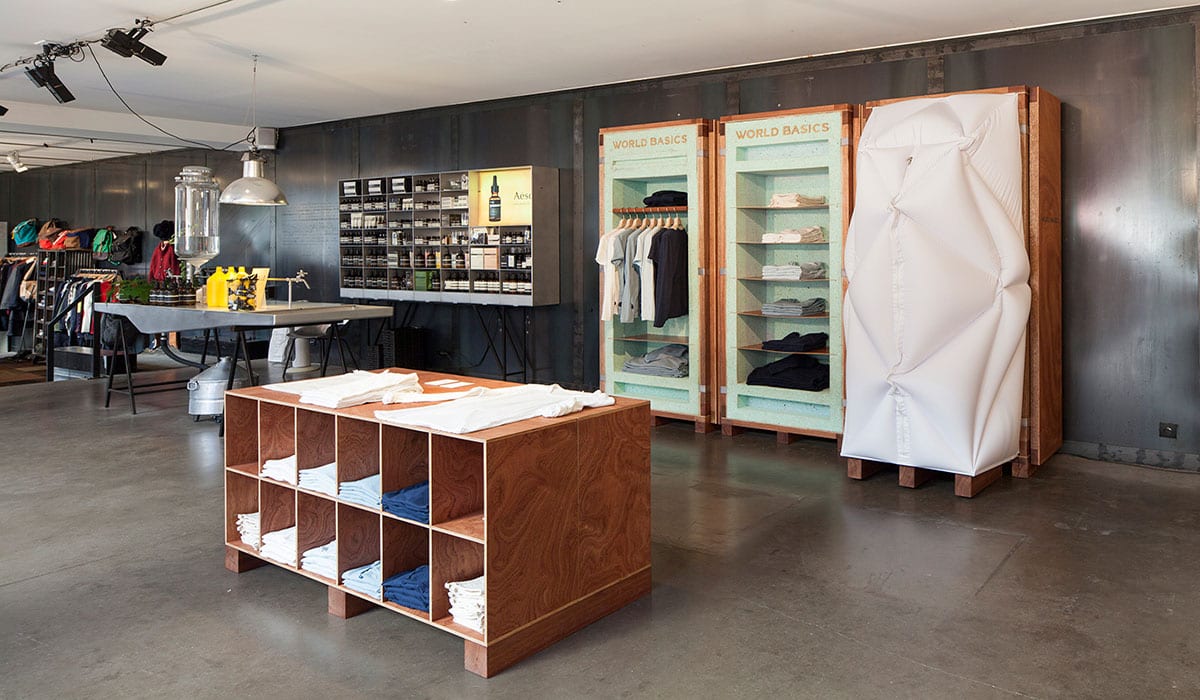
Ikea India is launching its pop-up store format Hej Homes in cities where it plans to open brand stores.
The local branch of the Swedish home furnishings and furniture retailer plans to have 50 of the outlets by 2025, with a typical Hej House store being between 4000 and 7000 sqft (650 sqm), housing a cafe and usually in malls.
The idea of the stores is to give consumers a taste of the Ikea brand, says country marketing manager Ulf Smedberg.
The first pop-up will be unveiled in Hyderabad, where construction has started on the brand’s first store. Its second store is expected to be in Navi Mumbai, with plans to start 25 Ikea stores by 2025. Also launching in the first phase will be stores in Bengaluru, Delhi and Mumbai.
Smedberg says the retailer will be introducing catalogues as part of its branding strategy.
A pop-up Stella Artois Toasting Lounge has been opened by the Belgian brewer in Pacific Place, Hong Kong.
Until the end of the month, beer lovers and Christmas shoppers can sample a Stella Artois brew and buy the brand’s special Christmas set, exclusive to the lounge. The Christmas set features a limited-edition Stella Artois holiday chalice, which can be engraved on-site with the recipient’s name or a short Christmas greeting. There is also a limited-edition 750ml holiday bottle, which can also be engraved.
Both the chalice and bottle incorporate a star in their design, which pays homage to the brand’s origins. The Stella Artois brew was originally created by The Artois Brewery as a Christmas gift for the people of Leuven in Belgium, with “stella” being added to its title as it is Latin for “star”.
Fun and social social activities are also being offered at the lounge, plus a “happy hour” every day. There will also be surprise happy hours, signalled by the ringing of a bell.
Free half-pints are offered for certain social-media activity by guests, plus there are competitions with the limited-edition Christmas Set as a prize.
There is a special chalice installation where visitors can take selfies including a 360deg. “Moment with the Stars” photo to share on Facebook.
Open from 11.30am daily until 8.30pm but with specific hours for bar service, the lounge is on Level 1 at Pacific Place.
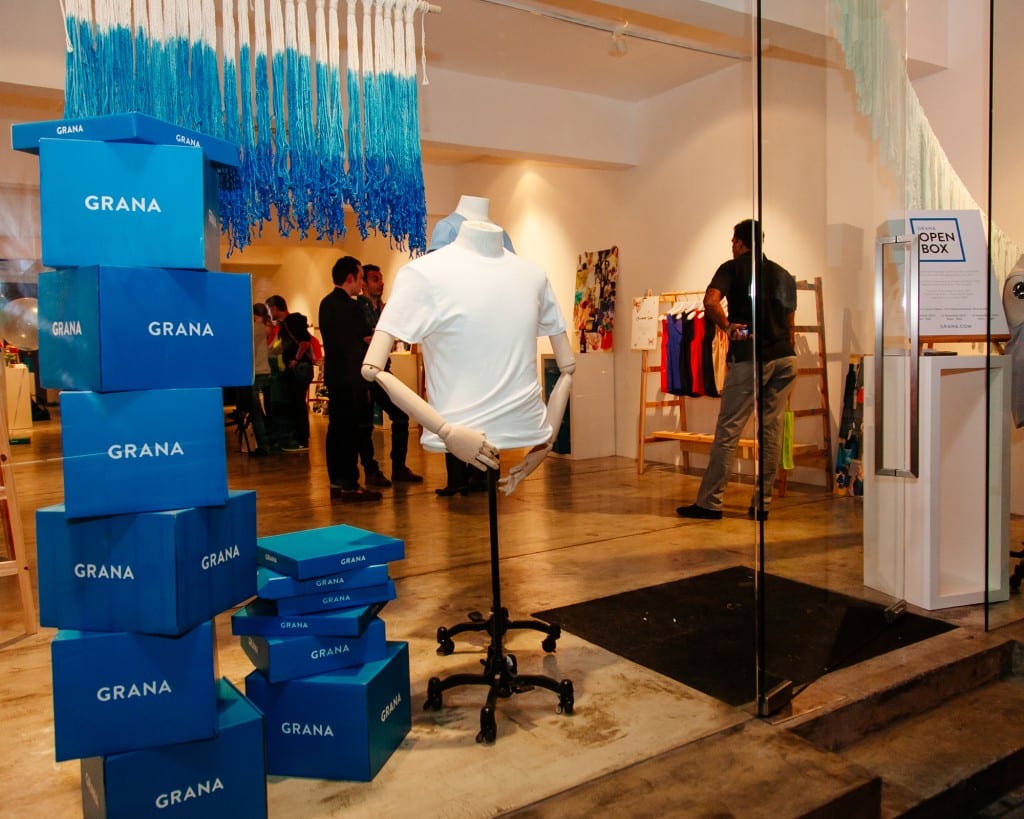
Online fashion disruptor Grana will open a new pop-up store at Fashion Walk on December 9.
The new Grana pop-up will be different to its Fitting Room by Grana store in Sheung Wan. The Causeway Bay store will target millennials with what founder Luke Grana describes as a “more personal brand experience” enticing customers to ‘see, feel and try’ before making their purchases in-store for later delivery.
Described as “The Soft Spot – #granaworld experience”, the three key elements to the store are:
The See Wall, a gallery displaying how Grana’s luxury garments are made straight from the original source to the final construction of its Winter Collection & #ShowMeWhere images.
A Feel Bar, a sensory experience with different types of soft fabrics and textures;
A Try Space where shoppers can find the right fit and fabric offline before buying online.
The eCommerce retailer has partnered with design and architecture brand Alt-254, to renovate its new 1668 sqft showroom to build the Grana experience and bring the online-to-offline concept to Fashion Walk. Grana will use the showroom space to introduce new fabric origin stories as a creative way to engage fashion conscious consumers on the story behind its new collections over the next four months.
The new Grana pop-up on Paterson Street, is the brand’s sixth in Hong Kong.
“With the increasing demand from consumers for quality basics in Hong Kong, the new showroom space is an opportunity for us to create a different retail experience for shoppers to have the Grana experience, learn about our minimalist collection, unique fabric stories and honest pricing model,” said Luke Grana
“I’m very grateful for the support from Hang Lung Properties to pop-up in such an iconic location”, he said.
Grana is a direct-to-consumer eCommerce fashion brand designing wardrobe essentials in-house, using the finest fabrics from around the world. Grana offers global shipping directly to 12 countries within two days.
Headquartered in Hong Kong, Grana was founded by Luke Grana and Pieter Paul Wittgen in October 2014. To date, the startup has raised US$16 million in funding from 500 Startups, Alibaba’s Hong Kong Entrepreneurs Fund, Golden Gate Ventures and MindWorks Ventures.
The new pop up store at Tangs Orchard is unlike any you’ve ever seen before in Singapore.
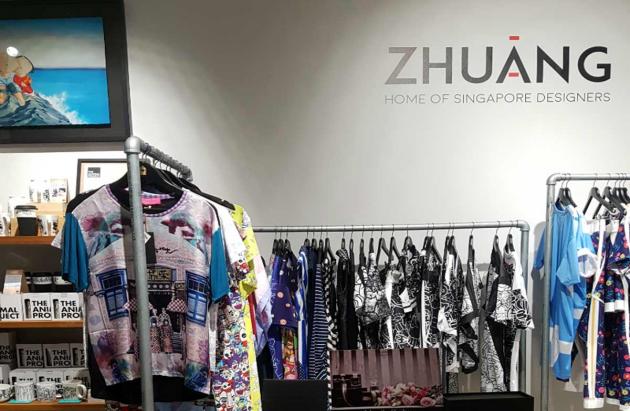
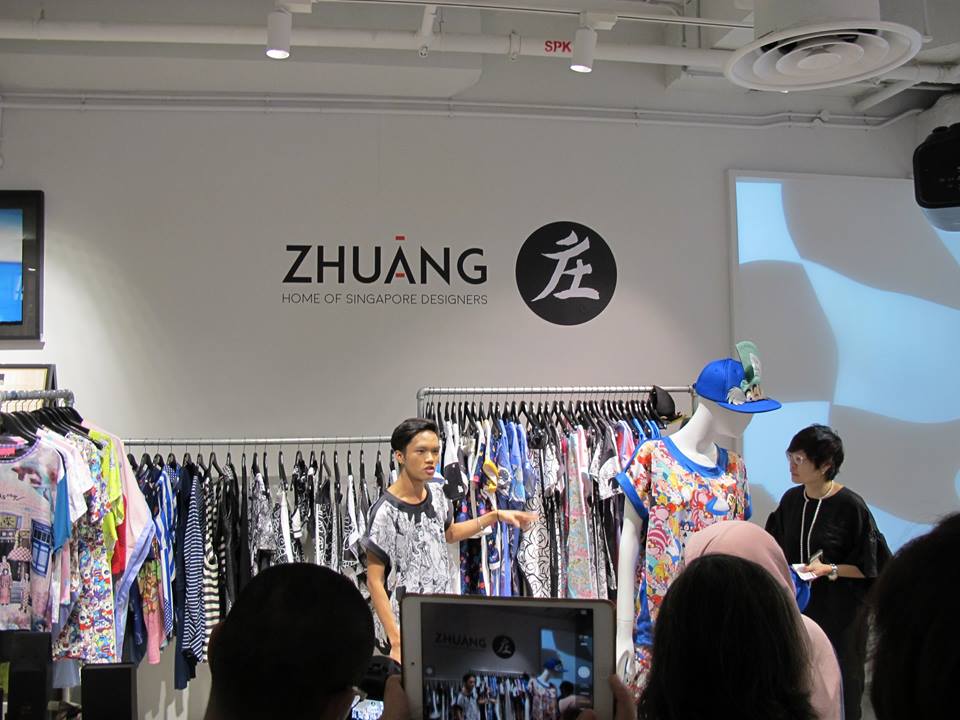
A combination of fashion, art and technology, 庄 Zhuang – Home for Singapore Designers is an art installation that is also a retail experience featuring Singapore local designers and brands
.庄 Zhuang is the result of a collaboration between the of Textile and Fashion Federation of Singapore (Taff) and local retailer Tangs.
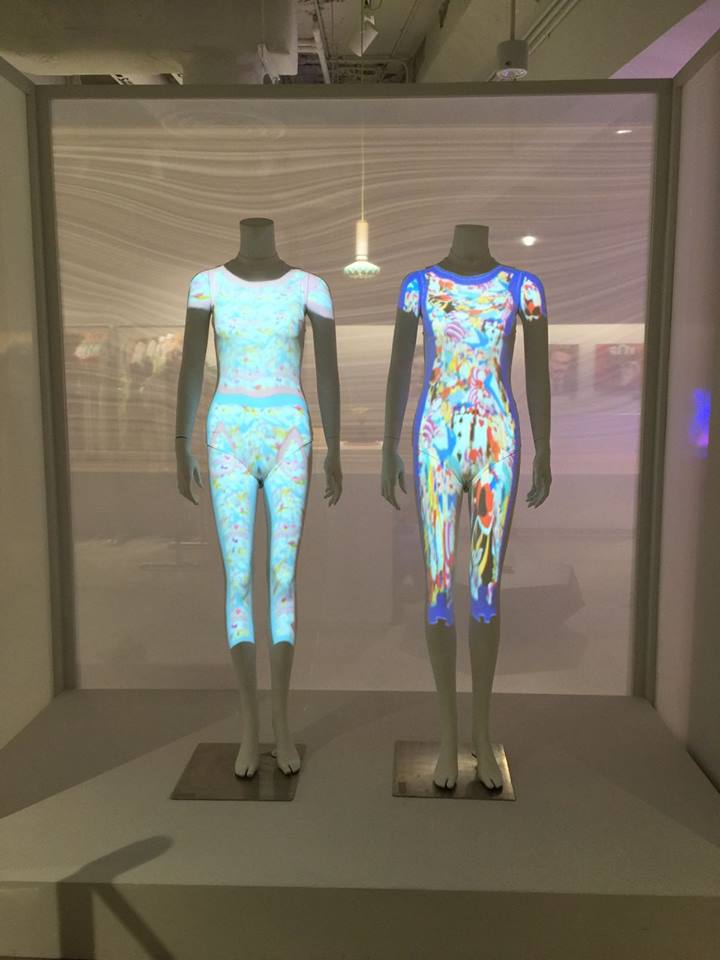
Multi-disciplinary artist, Daryl Goh was commissioned to create Installation Lucid, an art installation that uses light and colours alongside 3D projection mapping technology.
A cool rotating collection of outfits designed by local designers will also be projected onto a mannequin showcase – perfect for a Snap or Instagram Story!
Some big Singapore fashion brands to keep an eye out for include Frontrow by Klarra, Mash-up, Revasseur, Ying the label, plus beautiful accessories from CN Collectiv and Desti Saint.
Award-winning lifestyle brands like Hinika by Jarrod Lim, Desinere and Love SG will be present too.
New brands will be introduced throughout the seven months, so each time you go to the shop it will mean a new retail experience with treasures just waiting to be bought.
庄 Zhuang – Home for Singapore Designers is located at Tangs at Tangs Plaza, Level 4 to Level 6, from September 2016 to mid-April, 2017.
American brand Elizabeth Arden, one of the oldest names in the beauty industry, is embarking on an ambitious repositioning plan and its president is counting on her Singapore roots to steer the beauty behemoth ahead of the competition.
“Being a Singaporean, what you learn since young is to always stay ahead of the game,” said Ms JuE Wong, who took the helm at the more than century-old brand slightly more than a year ago, becoming the highest-ranked Singaporean in a multinational beauty company.
“When I was growing up, there was only one university. If you (didn’t) make it to the National University of Singapore (NUS), you basically (had) to think of somewhere else to go,” said the 49-year-old, who eventually opted to pursue her undergraduate studies in Australia after missing out on her first choice to read law at NUS.
“That’s why I think I’ve always been conditioned and trained to be an outside-the-box thinker,” she added.
This sense of fast-thinking adaptability is what Ms Wong wants to inject into Elizabeth Arden, as the iconic brand seeks to win over consumers from the younger generation amid the constant emergence of newer brands and a changing retail world in a digital age.
While the brand’s 106 years of heritage underscores “trust and credibility that can only be earned over time”, Ms Wong admitted that it can also, at times, work as an obstacle when it comes to attracting younger consumers, especially those between the ages of 28 and 40. Hence, the company is turning its target to even-younger millennials who have shown a greater willingness to give the brand a try.
“When we did our consumer insights, we found that people from the age group of 28 to 40 know who we are and know enough to often think ‘This is my mother’s brand’. On the other hand, those younger than 25 have not heard that much about us. They do not have any perceived baggage and so (are) willing to give us a chance.”
To appeal to this group of digital-savvy millennials, Elizabeth Arden stepped up its digital strategy with a social media campaign called “From the desk of #LizArden” and partnered beauty app YouCam Makeup. According to Ms Wong, both initiatives have been a success, especially the latter, which delivered a sizeable boost to its e-commerce sales.
Available in the US and China, the app is equipped with facial recognition technology that allows users to virtually try on various makeup products and provides direct links for shoppers to make purchases on Elizabeth Arden’s online platform.
“We met the developers in September, had a soft launch in October and by the time we rolled out officially in December, we already had 58 million downloads and 22.9 per cent of these reposted a selfie marked with our name. I had almost a million dollar in sales (within) 30 days,” Ms Wong told Channel NewsAsia.
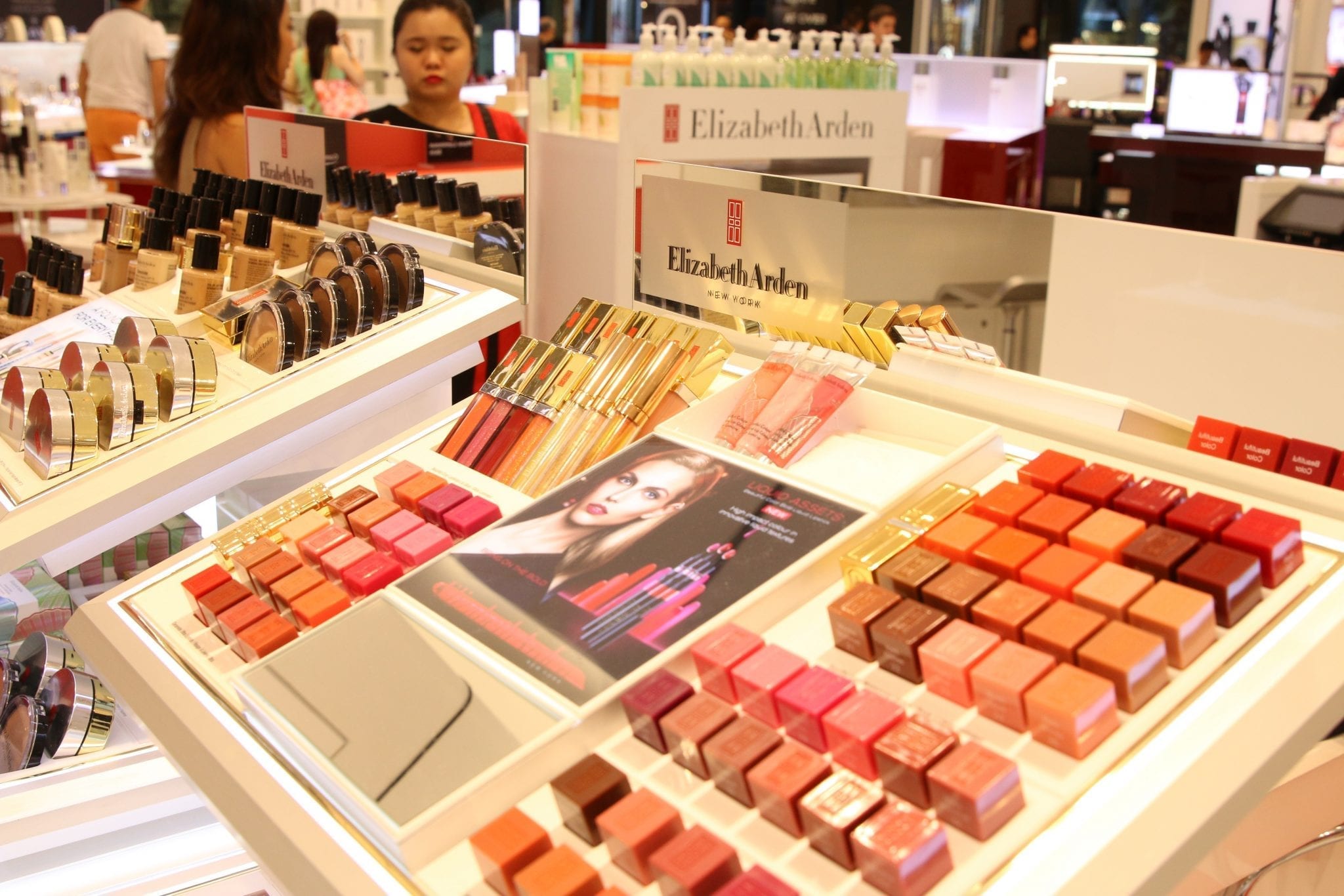
In Singapore, the company launched a pop-up store, featuring a smart mirror and an interactive wall that tells the history of Elizabeth Arden, outside Robinsons at The Heeren to mark the roll-out of its latest product earlier this week.
“By making ourselves more cutting-edge and more engaging for the younger audiences, I think we make ourselves relevant,” said Ms Wong.
Even in a downbeat brick-and-mortar retail market, Ms Wong remains confident that the beauty giant can turn around the situation by identifying pockets of growth in areas such as the colour cosmetics and spa categories.
For instance, the company started introducing services from its Red Door Spa brand at selected retail counters in the US. Sales at these counters have since posted “double-digit growth”, according to Ms Wong. “We are offering a point of differentiation … and I think that’s how you cultivate a new generation to experience what the brand is all about.”
Nonetheless, the businesswoman acknowledged that the brand’s digital ventures are no walk in the park. Coupled with the fact that it would be the first time she is taking on a leadership position at a giant such as Elizabeth Arden, Ms Wong admitted that it has been “a bit of a leap” but she was not daunted.
Elizabeth Arden Pop-op Store at Orchard Road
Prior to becoming president of the Elizabeth Arden brand, the Singaporean was the chief executive of venture-backed cosmeceutical company StriVectin as well as Astral Health and Beauty, and held senior positions at then-emerging brands including Murad and N.V Perricone MD.
“Compared to the smaller brands, there’s enough resources at Elizabeth Arden and I was able to push a lot of my ideas. Of course, if I made a mistake, it would be amplified but does that make me less of a risk taker? No … and the Singaporean in me, ‘kiasu’ as we call it, means that I’m not going to lose,” she added with a chuckle.
“Even though I’ve been away longer than I lived in Singapore, but once a Singaporean, always a Singaporean.”
DARING TO GO: SWITCHING FROM COMMODITY TRADING TO SKINCARE
This huge appetite for risks is also observable from Ms Wong’s resume. After graduating from the Australian National University with a degree in political science, she decided to take a plunge into the trading world and later spent seven years on the trading floor at Cargill Commodities.
“I wanted something out of my comfort zone and it was very challenging,” Ms Wong recalled. “We had a daily scorecard of the books that were closed … it was like playing chess and at the end of every day, you either checkmate or you get checkmated.”
A “self-driven reason of wanting to know better ways of skincare” led Ms Wong into the beauty industry in the US during the 2000s, and for the Singaporean, there was no mountain that was too high to conquer.
“After leaving Murad to join private equity-owned Perricone, it was since that time (that) I never had to look for a job because every time I take a brand and turn it around, another private equity firm would come to me or the same private equity firm would offer me another brand,” said Ms Wong, who was nominated as the Top 50 women to watch by Wall Street Journal in 2004.
“It was very validating because I realised that at the end of the day, you can get so much recognition if you had a real scorecard. And in that regard, I think my days in commodity trading really prepared me for today.”
While her fast-talking persona and dare-to-go attitude has resulted in “some hindrances” at the start of her career, Ms Wong does not regret the career switches that she has made, and hailing from the little red dot on the world map definitely has not stopped her from climbing up the corporate ladder in the Big Apple.
Ms Wong said: “My mother would tell you this story … when I was 12, I told her that one day I was going to work in the Big Apple and she replied to me saying, ‘Don’t be silly’. I don’t remember this … but if I did, a part of me perhaps realised that Singapore may be a small country but it had a very good reputation.
“Literally everybody has heard of us and we never really had to explain where we come from. And because I came from a country that’s so well respected, it gave me the courage to dare to dream.”
With vacancy at less than 1% in Hong Kong’s prime shopping malls, is it any wonder why brands, particularly those new to the market, are opting to grab a slice of the action by entering the market by doing a pop-up store. So what is a pop-up?
Pop-up retail, also known as pop-up store or flash retailing, is a trend of opening short-term sales spaces.
A pop-up retail space is a venue that is temporary — the space could be a sample sale one day and host a private cocktail party the next evening.
The trend involves “popping-up” one day, then disappearing anywhere from one day to several months later.
These shops, while small and temporary, can build up interest by consumer exposure.
Pop-up retail allows a company to create a unique environment that engages their customers, as well as generates a feeling of relevance and interactivity.
Pop-up retail also provides retailers to “prove” themselves in certain locations before the landlord decides whether they will provide them a shop on a long-term basis.
Many brands are entering Hong Kong using the pop-up store model as a way to showcase their products. Although the stores are on a small scale and in a confined space, when done correctly, they allow customers to get a taste and a feel for the brand.
Advantages for the landlord
Limited risk. It is allows the brand to occupy a small area that would otherwise be an open void space, a vacant shop or a shop that is undergoing some alteration work. This allowsthe landlord to maximise occupancy levels and revenues in what would otherwise be deemed as “dead space”.
Allows the brand to showcase their products and for the landlord to assess whether the brand is potentially worthy of securing a longer term store within the mall.
Allows the landlord to assess how the brand operates, how the staff interact with the customers and assess how good their customer service is.
Keeps the mall interesting and competitive.
Advantages to the brands
With competition for space in Hong Kong being extremely fierce, many brands are left to wait and wait for a prime location to be made available to them. A pop-up store allows them to enter the market more quickly.
Build rapport with the landlords.
Showcase their products and designs to the landlord and use this as a platform to test their merchandise with the discerning Asian customer. In particular, mainland Chinese consumers, whose attention many brands are eager to capture.
Allows the brand to be uber creative in their design in a small space.
Pop-up stores are usually located in areas with high footfalls which provide maximum exposure and opportunity to the brand.
Relatively low costs involved.
Take an example such as Penhaligon’s, a new-tomarket brand that set up a lovely pop-up store in Harbour City and was able to parlay the success of the store to be offered permanent stores in prime locations in Hong Kong and Macau. Goes to show there are advantages to this approach.
Disadvantages
Large amount of investment is often required for what is a small and temporary space.
Limited time to recoup initial investment, produce impactful marketing and moreover showcase the brand and its DNA.
Sometimes the tenant mix may not be ideal for the brand.
Locations are often isolated which means the brand has to work harder on the design, customer service and marketing to entice people into the pop-up store.
Will the pop-up phenomenon remain? From what we can see in terms of market fundamentals and the success many popup concepts are enjoying, the answer is an overwhelming yes. With no let up on demand from brands seeking to expand, space availability being extremely limited and rentals not looking to subside any time soon, pop-up stores will become a more and more enticing option. However it is not all good news, many pop-ups, due to their limited time period and inability for the brand to showcase a sufficient range of products, can sometimes be detrimental to a brand. Take a fashion brand for example. They have hundreds of Stock Keeping Units (SKU’s) in their normal stores but this is often limited to a 10th of that in a pop-up. This could potentially damage the brand’s reputation, perception, sales and ultimately the brand’s ability to expand in Hong Kong. Overall, however, we believe that the positives outweigh the negatives but brands still need to be conscious of what they are doing. They need to have a strategy in place and ultimately know exactly what they are trying to achieve by having a pop-up.
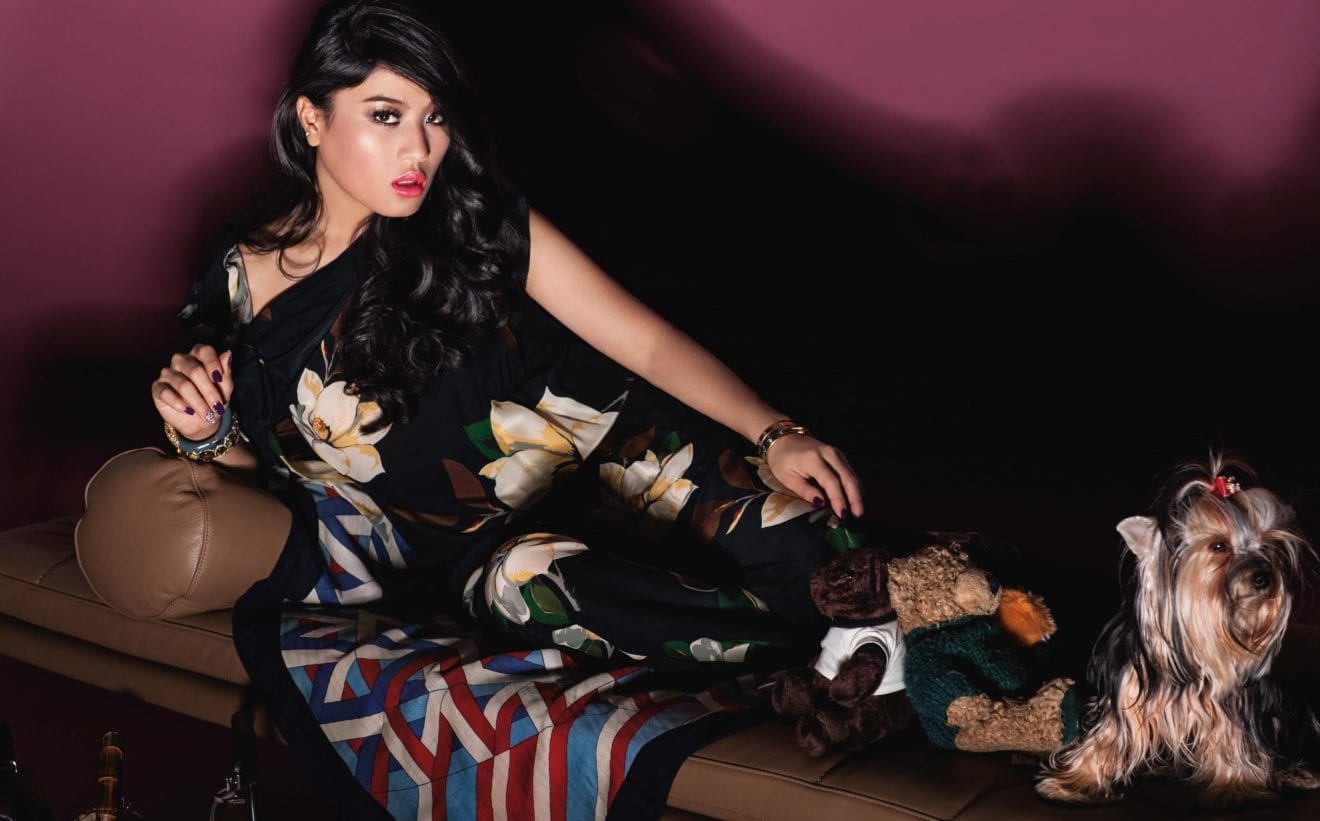
Sirivannavari, the women’s label founded by Sirivannavari Nariratana, the Princess of Thailand, is debuting a pop-up shop at Milanese department store La Rinascente.
Opening from May 18 to June 14, this will be located on the store’s fourth floor dedicated to women’s wear.
The pop-up shop will carry the latest collection of the luxury Thai label, which was founded in 2005. For spring, Nariratana, who studied fashion at Paris’ École de la Chambre Syndicale de la Couture Parisienne, was inspired by the Versailles Castle to design a lineup incorporating a range of art references from the Romantic and Impressionistic periods. The collection is focused on the combination of rich graphics and details with sculptural shapes. It includes a tulip dress; a blazer with rounded shoulders; a gown with a bodice embroidered with 3-D flowers, as well as a bolero jacket showing gooseberry-like embellishments.
Sirivannavari operates a flagship at Bangkok’s Siam Paragon shopping mall.
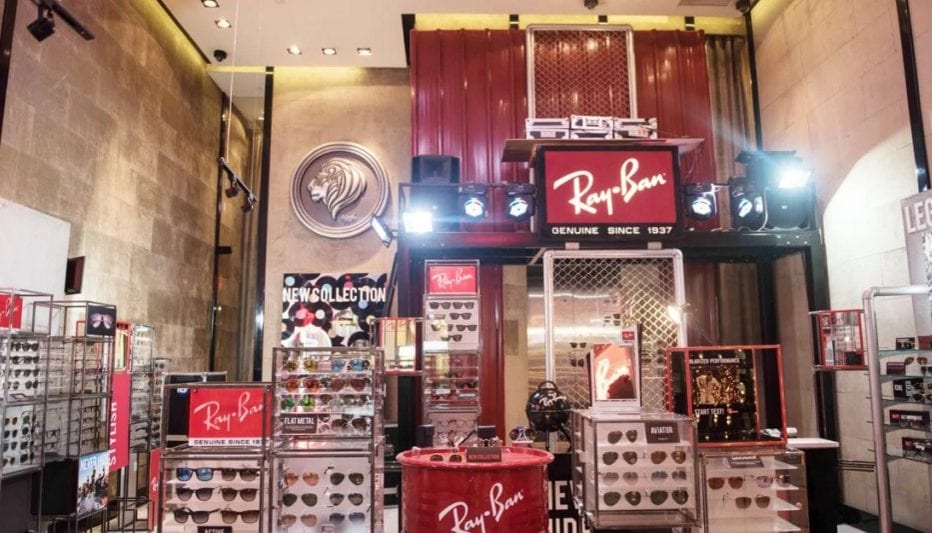
A new Ray-Ban Manila pop-up store is the eyewear brand’s first in Asia.
The pop-up, at the Greenbelt shopping centre in Makati, will showcase the Ray-Ban Aviators range.
Originally designed for US military pilots in 1937, Ray-Ban Aviators is one of the leading global brands in the premium eyewear category.
“We’re trying to recreate everything here in the Philippines. We’re the first (in Asia) from Ray-Ban,” Vincent Teotico, Ray-Ban’s assistant marketing manager, told Manila Bulletin.
The Ray-Ban Hub – the first flagship store in New York City inspired the Pop-Up Concept Store, both having an urban feel, with neon lights and fun activities inside.
Asked about setting up a permanent store in the Philippines, Teotico said this would be possible depending on the turnout of their latest move in the Philippine market.
Ray-Ban’s Pop-Up Concept Store will only be around until July on the ground floor of Greenbelt 5 in Ayala Center, Makati City. Ray-Ban products are also available at optical stores such as Eye Society outlets in Jupiter St and SM Aura in BGC.
Habstore Korea is to open a pop up in New York City to help build its reputation as the go-to point for fashion created by young Korean designers.
Habstore already features more than 100 Korean fashion designers – whose reputation and popularity are expanding rapidly thanks to the Korean Wave which is now spreading beyond Asia into urban US as well.
CEO Hong Seong-jo says the company’s mission is to introduce products from new designers known for their unique design in South Korea to fashion-sensitive customers. “Some customers rejoice at finding new view on life through brands that they had not known before,” said Hong, 34, who founded the mall three years ago.
“We are concentrating on finding various designer’s brands in order to make them happy at all times.
“We are focusing on introducing more South Korean designer’s brands globally as we better our business”, said Hong. “We will open a pop-up store in New York introducing a variety of brand name products to expand our sales channel.”
Hong first saw the viability of an online mall after successfully introducing a fashion watch brand in Korea. He went on to expand items to clothing and fashion accessories.
Habstore gives special priority on brands with definite character and competitive strength, yet without attention from the public. For example, when introducing a new brand to the rest of the world, CEO Hong chooses more Eastern style or K-Style designs that Korean Wave stars have used.
Habstore is also engaged in the production of its own fashion items. Following the launch of the fashion watch brand, ‘Paul Vice’, it also launched the watch strap brand, ‘Straps’.
The Habstore mall,which was developed by South Korea’s largest eCommerce solution brand, cafe24, features interfaces in both Korean and English.
Buro 24/7 has popped up in Scotts Square…. for six months.
The Buro 24/7 Singapore pop up store is the second in the city for the international brand, opening five months after an earlier one at Clifford Pier.
Whether a store with a life span of six months qualifies for being termed a ‘pop up’ might be a moot point for some, but Inside Retail Singapore is prepared to accept the brand’s own definition!
Buro 24/7 Singapore is essentially a news website promising “unparalleled coverage and access to the world of fashion and contemporary culture told through an Asian lens”. It has a contemporary feel, heavily influenced by the needs of the modern social media driven generation and a concept with similarities to the successful Monocle concept which also merges publishing with curated product collections, retail stores and pop ups.
Founded by ‘style maven and digital powerhouse Miroslava Duma’, Singapore was the first country in Asia to join the Buro 24/7 family and the eighth edition of the site internationally, which now numbers 10. The others are in Russia, Croatia, Ukraine, Kazakhstan, Azerbaijan, Middle East, Australia, Malaysia and Mongolia.
Buro 27/7 describes its new pop up as “a retail space, office and production studio” right in the heart of Orchard Rd.
“For the next six months, our pop up store will couple online content with retail exposure and play host to upcoming designers, private previews, as well as photo shoots and workshops.”
The concept is currently hosting a Boss fashion installation, featuring Boss Womenswear outfits as featured in a Buro 24/7 photo shoot with Anita Kapoor.
Guests at the recent opening party were given a $50 Boss voucher when they took an Instagram photo with the BossS Bespoke bag and tagged it with #BuroLovesBoss.
The Buro 24/7 pop up store is open daily from 10am to 10pm.