Tag: prices

  • Global Gold Prices Take a Tumble: A Weekly Analysis of Bullion Rates Amid Mild Inflation

    Global Gold Prices Take a Tumble: A Weekly Analysis of Bullion Rates Amid Mild Inflation

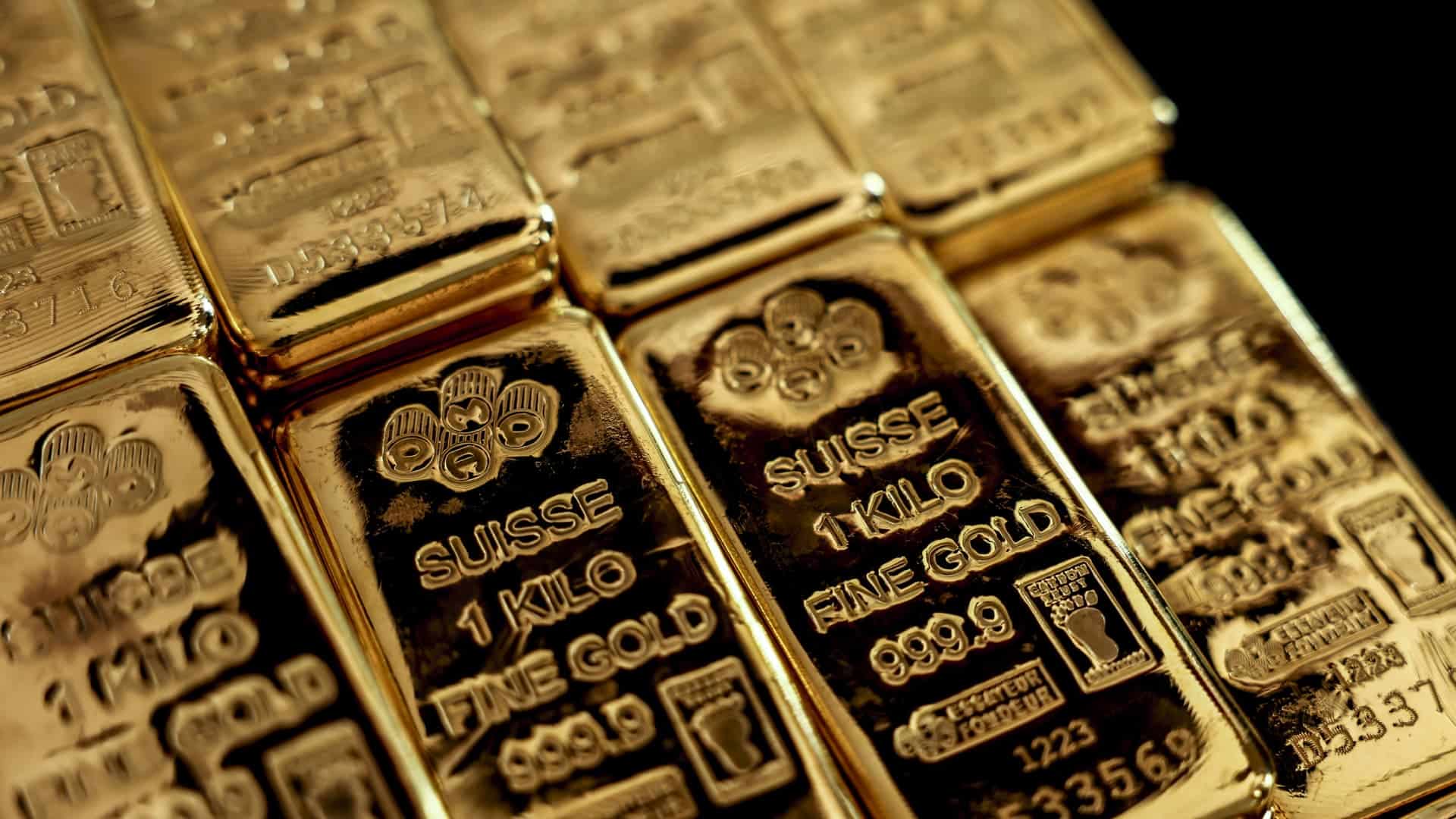
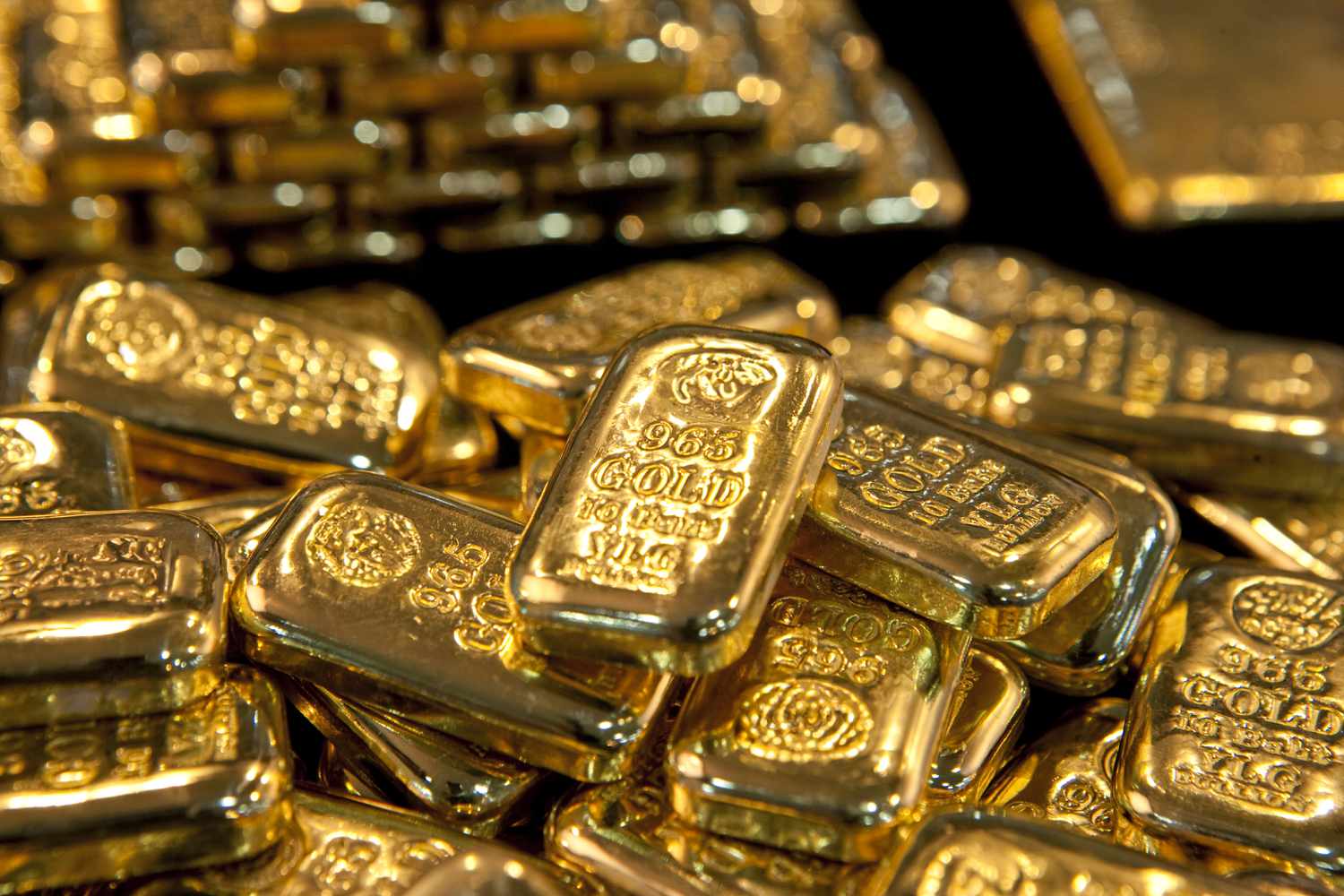
    The price of Vietnam’s gold bars saw a dip on Friday morning, mirroring the global trend of falling bullion rates. Saigon Jewelry Company, a significant player in the local gold market, recorded a 0.69% drop in its gold bar prices, slipping to VND143.3 million (US$5,490.21) per tael. The decline reflects a 0.49% decrease for the week.

    Despite the dip, local gold prices in Vietnam remain approximately VND6.3 million per tael higher than the global rates. The price of gold rings also fell on Friday, with a decrease of 0.7% to VND142.8 million per tael. For reference, a tael is equivalent to 37.5 grams or 1.2 ounces.

    Global Gold Market Trends

    Global gold prices experienced a slight decrease on Friday, indicating an overall weekly loss. This follows recent profit-taking by investors after U.S. inflation data spurred bullion to reach its highest level in over two months, subsequently weakening the argument for an imminent Federal Reserve rate hike.

    Spot gold saw a decrease of 0.5%, standing at $4,326.75 per ounce. Despite reaching its highest point since June 5 on Thursday, gold ended the day 1.3% lower, putting it on track for a weekly loss.

    U.S. gold futures due for delivery in December slid nearly 1% to $4,382.50. The non-yielding metal received a boost following an unexpected drop in U.S. July nonfarm payrolls last week, which, coupled with softer inflation data this week, significantly reduced the expectations of a rate hike in the coming month.

    The Future of Gold Trading

    Market observers believe that the profit-taking phase in the gold market is likely the result of episodic and speculative capital at play. Despite the recent dips, some suggest that gold may be setting up for a significant rally.

    The potential catalyst for this rally is not immediately apparent, but it could occur if gold prices breach the $4,400 barrier. If that happens, reaching $5,000 by the end of the year is seen as a feasible expectation, signalling potential profitability for gold investors and traders alike.

    Questions & Answers

    Why did gold bar prices in Vietnam fall this week?
    The prices fell due to a combination of global trends and local market dynamics. Gold prices globally have been on a downward trend, and this has influenced the Vietnamese market.

    How does the U.S. inflation data impact the global gold prices?
    U.S. inflation data is a significant indicator of economic health and can impact Federal Reserve’s decisions on interest rates. This, in turn, influences gold prices, as higher interest rates usually decrease the demand for gold, leading to lower prices.

    What could be the potential catalyst for a significant rally in gold prices?
    A potential catalyst for a major rally in gold prices could be the breach of the $4,400 per ounce mark. If this level is surpassed, it could trigger increased buying activity, pushing prices towards the $5,000 mark by the year’s end.


  • Vietnam Gasoline Prices Drop as Global Oil Market Reacts to Strait of Hormuz Developments

    Vietnam Gasoline Prices Drop as Global Oil Market Reacts to Strait of Hormuz Developments

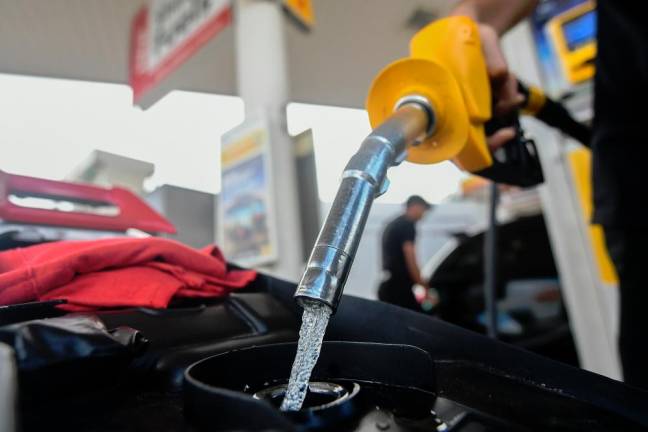
    On Thursday, gasoline prices in Vietnam experienced a modest decline compared to the previous week. The widely used E10 RON95 gasoline dipped by 0.94%, bringing the price down to VND22,110 (approximately US$0.85) per liter. There was a slightly larger drop in E5 RON92 prices, which fell by 2.26% to VND21,230. Similarly, the cost of diesel also decreased, albeit by a smaller margin of 1.13%, to VND27,230.

    Global Influence on Fuel Prices

    The Ministries of Industry and Trade and Finance in Vietnam have commented that this fluctuation in fuel prices aligns with global petroleum market trends. These markets have been recently impacted by events such as negotiations over the reopening of the Strait of Hormuz and lower demand growth forecasts for oil, released by OPEC and the International Energy Agency. The global price of RON95 gasoline decreased almost 2% to $111.7 per barrel, while diesel prices fell 1.1% to $151 per barrel.

    The Ministries also highlighted that following this latest adjustment, the cost of gasoline in Vietnam remains significantly lower than in neighboring countries, with prices ranging from VND4,600-VND22,000 per liter less.

    Comparative Fuel Prices in the Region

    When compared to the gasoline prices in nearby countries, the lower costs in Vietnam become evident. Cambodia and Thailand have gasoline prices ranging from VND26,800-VND28,400 per liter, significantly higher than in Vietnam. The disparity widens further when looking at China, where the prices exceed VND32,000 per liter, and Laos where prices surpass VND44,000 per liter.

    Questions & Answers

    What is the new price of E10 RON95 gasoline in Vietnam?
    The new price of E10 RON95 in Vietnam is VND22,110 (US$0.85) per liter.

    How have global events influenced the recent fuel price changes in Vietnam?
    Negotiations over the reopening of the Strait of Hormuz and lower oil demand growth forecasts from OPEC and the International Energy Agency have influenced the recent decrease in fuel prices in Vietnam.

    How do fuel prices in Vietnam compare to those in neighboring countries?
    Fuel prices in Vietnam are significantly lower than in neighboring countries, with gasoline prices ranging from VND4,600-VND22,000 per liter less than in countries like Cambodia, Thailand, China, and Laos.

  • McDonalds Bags Premium Prices for Half of Its Hong Kong Properties Amidst Retail Downturn

    McDonalds Bags Premium Prices for Half of Its Hong Kong Properties Amidst Retail Downturn

    Despite the overall downturn in Hong Kong’s retail market, fast-food conglomerate McDonald’s has successfully managed to sell close to half of its 23 retail properties in the city at premium rates. The selling spree initiated in July of the previous year, in collaboration with property consulting firm JLL, has seen the fast-food giant yield approximately HKD 900 million (US$703 million) from the sale of 11 properties.

    Investor Interest in Prime Retail Real Estate

    Eunice Tang, JLL’s executive director of capital markets, has been overseeing the sale of six McDonald’s outlets. Tang elaborated that while the overall retail real estate market, particularly for properties valued above HKD 50 million, has been sluggish, these prime-located assets backed by a blue-chip tenant like McDonald’s have managed to pique the interest of high-net-worth buyers.

    As a part of its strategy, McDonald’s plans to sell all its 23 retail spaces, cumulatively valued at HKD 3 billion. However, the company intends to continue operations in these locations as tenants post their sale, ensuring no disruption to its citywide operations. Remarkably, McDonald’s has a network of 256 outlets in Hong Kong, many of which operate from rented spaces.

    The pace of sales, given the prevailing recession in Hong Kong’s retail real estate sector, is noteworthy. While McDonald’s continues to amass substantial gains over its historical purchase costs, other shops are being sold at rates 30% lower than their peak valuations or original asking prices.

    McDonald’s Sale & Lease-Back Agreements

    The McDonald’s outlets have been sold via sale-and-lease-back agreements, enabling the fast-food giant to continue operations under leases of up to 20 years. Most properties offer rental yields of over 6%, providing investors with steady income even as rents and capital values remain under pressure in the wider market.

    High-net-worth individuals, family offices, and seasoned private investors, including local investor Ng Yin and veteran investor Chang Yen-hsu (known as “Taiwan’s Chang”), have been among the buyers. Other purchasers include the Malaysian developer MB World Group and private investors from mainland China.

    The properties sold were initially owned by MCD Real Properties, a company associated with McDonald’s U.S. parent, and were retained post the local operating business’s sale to a Citic Capital-led consortium in 2017. Importantly, McDonald’s strategic approach of releasing its portfolio in phases rather than inundating the market has been commended by industry insiders for achieving these sales in this challenging market environment.

    However, the upcoming phase could present more difficulties, with several properties, including the flagship Star House shop in Tsim Sha Tsui, remaining unsold. Challenges in selling these remaining properties are not just related to their location but also to the larger ticket size and unconventional property specifications, which limit the pool of potential buyers.

    Questions & Answers

    What is the overall retail property market situation in Hong Kong?
    Given the ongoing recession, the retail property market in Hong Kong is experiencing a downturn. Many shops are trading at prices 30% lower than peak valuations or original asking prices.

    How has McDonald’s managed to sell its properties amid the market downturn?
    McDonald’s has strategically released its portfolio in phases rather than flooding the market all at once. The prime locations of its properties, the company’s reputation as a reliable blue-chip tenant, and the sale-and-lease-back agreement that allows for continued operations have attracted high-net-worth investors.

    What are some challenges in selling the remaining McDonald’s properties?
    The remaining properties, including the flagship Star House shop in Tsim Sha Tsui, have larger ticket sizes and unconventional specifications, which limit the potential pool of buyers. These factors, combined with the current market conditions, may pose challenges in the upcoming sales phase.

  • Rain-Soaked Dragon Fruit Yields Spike Prices Amid Diminished Supply

    Rain-Soaked Dragon Fruit Yields Spike Prices Amid Diminished Supply

    Extended periods of rainfall have negatively impacted dragon fruit production, resulting in a doubling of farm-gate prices since May to VND15,000 (US$0.57) per kilogram. The price of the red-fleshed variety has seen an increase to VND20,000 in the Central Highlands province of Lam Dong, the current harvesting location for this fruit.

    Impact on Farmers and Retailers

    Back in May, farmers were selling at a loss, but they now report profits of VND3,000-4,000 per kilogram. Retail prices have followed a similar trend, doubling since May. The standard dragon fruit is now retailing at VND25,000 per kilogram while the red-fleshed variety is priced at VND40,000.

    One trader in Lam Dong province, Xuan, mentioned that yields have decreased 10% compared to the previous year due to heavy rains, although demand remains steady. Meanwhile, Canh, the president of the Binh Thuan Dragon Fruit Association in Lam Dong, reported that output has been on the decline in recent years as many farmers have turned to different crops following a long period of low dragon fruit prices.

    Impact on Export and Overall Output

    Canh also stated that weather conditions have decreased the supply available for export. Customs data indicates a 3% year-on-year fall in dragon fruit exports, amounting to $280 million in the first half of the year. Vietnam currently cultivates dragon fruit on 55,000-60,000 hectares, with an annual output of around 1.4 million tons.

    Questions & Answers

    What has been the impact of prolonged rainfall on dragon fruit production?
    The extended rainfall has led to a decrease in the production of dragon fruit, causing farm-gate prices to double and yields to decrease by 10% compared to the previous year.

    How have the changing prices affected farmers and retailers?
    In May, farmers were selling at a loss but they are now seeing profits of VND3,000-4,000 per kilogram. Retail prices have also doubled since May.

    What has been the impact on the export of dragon fruit?
    Due to weather conditions affecting supply, there has been a 3% year-on-year decrease in dragon fruit exports in the first half of the year.

  • Vietnam’s Fuel Prices Skyrocket to Two-Month Peak amid US-Iran Tensions

    Vietnam’s Fuel Prices Skyrocket to Two-Month Peak amid US-Iran Tensions

    In Vietnam, gasoline and diesel prices soared to their highest levels since May 28 on Thursday afternoon. The popular fuel E10 RON95 rose by 6.6%, reaching VND22,850 (US$0.87) per liter, while Biofuel E5 RON92 experienced an increase of 7.2%, costing VND22,380 per liter. Diesel prices also jumped by 7.2%, coming in at VND27,620 per liter.

    Global Fuel Prices and Local Shortages

    This surge in fuel prices aligns with a global trend observed over the past week, primarily driven by the escalating conflict between the U.S. and Iran. The Ministries of Industry and Trade and Finance note that RON95 has increased by 5%, costing $121.3 per barrel, and diesel has followed suit with a 5.4% hike, amounting to $159 per barrel.

    Alongside these rising costs, Vietnam has been contending with fuel shortages, particularly of diesel. Fuel retailers across Hanoi, HCMC, and other areas have reported difficulties in stocking enough supplies. Some tanker trucks have had to wait up to four days to collect supplies. Meanwhile, certain gas stations have either limited their sales or temporarily halted operations due to lack of inventory.

    Fuel Procurement and Market Dynamics

    Tran Huu Linh, the director general of the Agency for Domestic Market Management and Development under the Ministry of Industry and Trade, attributes these issues to the Middle East conflict disrupting fuel procurement by petroleum wholesalers. Additionally, amplified demand in certain areas has put a strain on supply, leading wholesalers to ration the volume of fuel distributed to the market temporarily.

    However, Linh maintains that the nationwide fuel supply remains stable, although localized shortages, especially of diesel, may occur. Linh also suggests that some businesses might be withholding inventory, anticipating a potential increase in prices.

    Questions & Answers

    What caused the recent rise in fuel prices in Vietnam?
    The escalating conflict between the U.S. and Iran has driven up global fuel prices, directly impacting prices in Vietnam.

    How has the conflict in the Middle East affected the fuel market?
    The conflict has disrupted fuel procurement by petroleum wholesalers, leading to delays in supply and temporary restrictions on the volume of fuel released to the market.

    What measures are being taken to manage fuel supply shortages?
    Despite localized shortages, the nationwide fuel supply remains stable. Wholesalers are temporarily rationing fuel distribution to the market to manage demand and maintain supply levels.

  • Global Tensions Fuel Surge in Vietnam’s Gasoline Prices

    Global Tensions Fuel Surge in Vietnam’s Gasoline Prices

    On Thursday, petrol prices in Vietnam saw a significant hike due to a surge in global fuel prices. The country’s most widely consumed fuel, E10 RON95, experienced a 4.28% price rise, bringing its cost to VND21,430 (US$0.81) per litre.

    There were similar increases across other types of fuel. Biofuel E5 RON92 saw a 5.35% increase, raising its price to VND20,880. Diesel prices saw the most substantial jump, with a 10.5% increase taking the cost to VND25,760 per litre.

    Global Market Trends

    These price hikes have been attributed to the shifting conditions of global fuel markets, which have been trending higher in recent times. The surge in global fuel prices has been exacerbated due to escalating political tensions and conflicts, including those between the U.S. and Iran. In addition, the maritime blockade declared by the Houthi movement in the Red Sea has also contributed to the upward price trends.

    The rise in international fuel prices has had a global impact. For instance, RON95 gasoline prices rose by 11.4% to $115.5 per barrel, while diesel saw a 10.8% increase, taking its price to $150.9 per barrel. Fuel oil, also known as mazut, also experienced a significant increase, climbing by 12.3% to a staggering $546.3 per ton.

    Questions & Answers

    What led to the increase in Vietnam’s fuel prices?
    The increase in fuel prices in Vietnam was a direct result of the surge in global fuel prices, which has been driven by escalating political tensions and conflicts.

    How much did the price of the most popular fuel in Vietnam increase?
    The price of E10 RON95, the most popular fuel in Vietnam, increased by 4.28% to VND21,430 (US$0.81) per litre.

    What are the current global market trends for fuel prices?
    Fuel prices are currently trending higher globally, mainly due to escalating political tensions and conflicts, including the U.S. and Iran conflict, and the maritime blockade declared by the Houthi movement in the Red Sea.

  • Gold Prices Plunge to 6-Week Low Amid Rising Oil Prices and Anticipated Federal Rate Hikes

    Gold Prices Plunge to 6-Week Low Amid Rising Oil Prices and Anticipated Federal Rate Hikes

    Gold prices in Vietnam experienced a notable decline on Thursday, marking their lowest level since the 11th of June. The downturn continued from the morning into the afternoon session, reflecting a trending decrease in gold prices throughout the year.

    Trends in Gold Prices

    The Saigon Jewelry Company reported a drop of 1.41% in the price of their gold bars, bringing the price to VND140 million, or US$5,321.37, per tael. This decrease marks a total decline of 4.11% since Wednesday’s close. Additionally, the cost of a gold ring plummeted by 1.85%, settling at VND143.3 million per tael. Overall, gold prices in Vietnam have fallen by 8.4% this year.

    Internationally, the value of gold also fell on Thursday, drifting down from a two-week peak reached earlier. This worldwide decrease was caused by various factors, including a growing conflict in the Middle East, which has led to a surge in oil prices. Traders are also awaiting the outcomes of the Federal Reserve policy meeting next week for indications regarding the possible timing of interest rate hikes.

    Spot gold fell by 0.6%, bringing the price to $4,103.39 per ounce. This shift comes after spot gold reached its highest value since July 7th at $4,165.87 on Wednesday. Concurrently, August delivery for U.S. gold futures dropped by 1.1% to $4,106.40.

    Market Influences and Future Predictions

    These changes in the gold market can be attributed to various causes, as explained by Jigar Trivedi, a senior research analyst at IndusInd Securities. According to him, “Rising oil prices have contributed to escalating inflation and the anticipation of Fed rate hikes. Consequently, these factors have limited the positive momentum in the gold market as the dollar weakens.”

    Questions & Answers

    What factors are causing the drop in gold prices?
    A combination of escalating inflation, expected Fed rate hikes, and a weakening dollar have influenced the gold market negatively, resulting in a price drop.

    What is the current trend in Vietnam’s gold market?
    The gold market in Vietnam has been experiencing a downward trend, with an 8.4% decrease in prices so far this year.

    How has the conflict in the Middle East affected global gold prices?
    The escalating conflict in the Middle East has driven up oil prices. As a result, inflation has increased and gold prices have fallen globally.

  • Vietnam’s Gold Prices Tumble: Global Market Trends and Implications Explored

    Vietnam’s Gold Prices Tumble: Global Market Trends and Implications Explored

    Gold prices in Vietnam witnessed another slump on Monday afternoon, following an earlier decrease of 0.2% in the same session. Saigon Jewelry Company reported a fall in the price of gold bars by 0.82% from the morning rate, settling at VND146 million (US$5,552.39) per tael. This resulted in an overall loss of approximately 1% for the day.

    Additionally, the price of gold rings also declined by 1%, reaching VND145 million per tael. It should be noted that a tael is equivalent to 37.5 grams or 1.2 ounces.

    Global Gold Price Trend

    Internationally, gold prices remained stable on Monday. Investors worldwide were assessing the influence of the escalating tensions between the U.S. and Iran on oil prices. Concurrently, U.S. Federal Reserve policymakers hinted at potential interest rate hikes to alleviate inflationary pressure.

    The spot price of gold lingered at $4,018.75 per ounce. Meanwhile, U.S. gold futures for August delivery slightly advanced by 0.1%, reaching $4,023.20.

    UBS analyst Giovanni Staunovo noted the negative correlation between gold and oil prices. He stated that market players are vigilantly monitoring the developments in the Middle East. Staunovo predicted a weaker dollar would bolster gold prices in the next 6 to 12 months, with expectations of the precious metal surpassing the $5,000 per ounce mark.

    Questions & Answers

    How much did gold prices in Vietnam fall on Monday?
    Gold prices in Vietnam fell by approximately 1% on Monday.

    What is the recent global trend in gold prices?
    Globally, gold prices have remained steady. However, the impact of the U.S.-Iran conflict on oil prices and possible interest rate hikes by the U.S. Federal Reserve are being closely observed by investors.

    What are the predictions for gold prices in the future?
    According to Giovanni Staunovo, a UBS analyst, a weaker dollar is expected to support an increase in gold prices over the next 6 to 12 months, potentially moving above the $5,000 per ounce mark.

  • Vietnam Gold Prices Hit Two-Week Downtrend Amidst Global Market Shifts

    Vietnam Gold Prices Hit Two-Week Downtrend Amidst Global Market Shifts

    On Tuesday, Vietnam witnessed its lowest gold prices since the start of July, resulting from a decline in worldwide prices due to escalating tensions in the Middle East. The price of a gold bar from the Saigon Jewelry Company fell 0.88%, to VND147.1 million (equivalent to US$5,604.76) per tael. In Vietnam, a tael is a unit of weight equivalent to 37.5 grams or 1.2 ounces.

    Gold Market Trends

    The price of gold rings also saw a decrease, falling by 0.54% to VND146 million per tael. The drop in gold prices this year has amounted to a 3.7% decrease overall.

    On the worldwide stage, after experiencing a 3% drop on Monday, gold prices made a minor recovery. This was following an announcement by U.S. President Donald Trump that he was re-establishing a naval blockade on Iran. This action led to a rise in oil markets, renewed fears about inflation, and the potential for the longevity of higher U.S. interest rates. As a result, spot gold increased by 0.28% to $4,011.10 per ounce.

    Expert Insights

    Market analyst at Forex.com, Fawad Razaqzada, commented on the situation, explaining that the rally in oil prices was a result of the conflict in the Middle East and suggested policy tightening by the Federal Reserve. He also noted that these developments spelled bad news for assets like gold, which yield no interest.

    Razaqzada further speculated, “If oil prices continue to surge, gold prices might experience a downfall, potentially dropping to the $3,800 level initially. There is also a chance they could drop to $3,500 over time if the selling pressure intensifies.”

    Questions & Answers

    What caused the drop in Vietnam’s gold prices?
    The decrease was primarily due to a dip in global gold prices, spurred by increased tensions in the Middle East.

    How has the global gold market reacted to recent events?
    After a 3% plunge on Monday, global gold prices have slightly recovered following the US President’s decision to reinstate a naval blockade on Iran.

    What impact could rising oil prices have on the gold market?
    According to market analysts, if oil prices continue to surge, gold prices could potentially drop significantly, possibly down to $3,500 over time if the selling pressure increases.

  • Vietnam’s Gold Prices Soar Amid Global Bullion Rally and Softened US Jobs Data

    Vietnam’s Gold Prices Soar Amid Global Bullion Rally and Softened US Jobs Data

    On Friday morning, gold prices in Vietnam saw a significant rise, in sync with the worldwide increase in gold rates, marking the first weekly gain in the past five weeks. The key driver behind this surge was the gold bar price offered by Saigon Jewelry Company, which saw a leap of 2.02%, equating to VND151.4 million (US$5,756.11) per tael. For context, a tael is equivalent to either 37.5 grams or 1.2 ounces.

    Over the course of the week, local gold rates have climbed by 1.9%, putting them roughly VND18 million per tael above global rates. This trend was mirrored by the price of gold rings, which increased by 2.02%, bringing it to VND151.3 million per tael on Friday.

    Global Gold Prices on the Rise

    On the global stage, Friday saw an increase of more than 1% in gold prices, setting the stage for the first weekly gain in the past five weeks. This shift has been attributed to a recalibration of investor expectations in light of less than anticipated U.S. employment figures, leading to a decrease in anticipations of Federal Reserve interest rate hikes.

    Spot gold saw an increase of 1.4%, taking it to $4,179.94 per ounce, its highest value since June 23. Additionally, U.S. gold futures for August delivery saw a rise of 1.6%, bringing it to $4,193.20.

    According to Kelvin Wong, a senior market analyst at OANDA, despite this uptick in gold prices, there has not been a complete revocation of rate hike pricing. He predicts that by the end of the year, there may still be another phase of potential gold weakness, with prices possibly reaching the $3,500/oz level.

    Central Banks Resume Gold Purchases

    The World Gold Council has reported that there has been a resumption of gold purchases by central banks. As per the most recent data, official gold reserves saw a net increase of 41 tons in May.

    Questions & Answers

    What factors led to the rise in gold prices in Vietnam?
    The rise in gold prices in Vietnam was driven by the gold bar price offered by the Saigon Jewelry Company and the increase in the global gold rate.

    What is the anticipated impact of the U.S. employment figures on gold rates?
    The less than expected U.S. employment figures have led to a reduction in expectations of Federal Reserve interest rate hikes, contributing to the rise in gold prices.

    What is the projected future trend for gold prices as per the senior market analyst at OANDA?
    Despite the recent increase in gold prices, Kelvin Wong predicts a potential phase of gold weakness towards the end of the year, with prices potentially reaching the $3,500/oz level.

  • Vietnam’s Gold Prices Soar Despite Global Market Decline: A Week of Ups and Downs

    Vietnam’s Gold Prices Soar Despite Global Market Decline: A Week of Ups and Downs

    Vietnam’s gold market saw a modest rise in prices on Saturday, ending the week on a slightly high note. The day observed a 0.34% increase in the prices of gold bars from Saigon Jewelry Company, which closed at VND147.2 million (US$5,594.85) per tael. This showed a 0.14% increase over the week.

    Similarly, the prices of gold rings also rose, marking a 0.4% increase to VND147.2 million per tael. For context, a tael is a traditional Asian unit of weight, which is equivalent to 37.5 grams or 1.2 ounces.

    Global Gold Prices

    In contrast to Vietnam, global gold prices experienced a downward trend on Friday. The decline marked the third consecutive weekly fall for the yellow metal. The decrease in prices was influenced by the strengthening of the U.S. dollar and a hawkish stance of the Federal Reserve.

    Spot gold decreased by 0.9%, settling at $4,169.44 per ounce. This was after hitting its lowest level since June 11 at $4,119.78. Also, U.S. gold futures contracted by 1.4% to $4,186.50.

    Senior market analyst at Jefferies-owned Tradu.com, Nikos Tzabouras, commented on the situation. He noted that gold is at risk of sinking further into bear market territory, potentially falling below the $4,000/oz mark. He attributed this to the challenging market environment and the unfavorable effects of prolonged higher Federal Reserve expectations on non-yielding assets, which, however, is beneficial to the dollar.

    With regards to gold price projections, Goldman Sachs revised its forecast, lowering its December prediction to $4,900 per ounce from its earlier estimate of $5,400. The firm reasoned that while its price outlook remains generally positive, it is exercising caution due to potential near-term downside risk and medium-term upside risk.

    Questions & Answers

    What caused the rise in Vietnam’s gold prices?
    The increase in Vietnam’s gold prices is not attributed to a specific cause in the article. However, gold prices can rise due to various factors such as fluctuations in currency values, inflation, and geopolitical instability.

    What is causing the downturn in global gold prices?
    The global decline in gold prices is attributed to the strengthening of the U.S. dollar and the hawkish stance of the Federal Reserve, which has increased expectations for higher interest rates.

    What is Goldman Sachs’ revised forecast for gold prices by December?
    Goldman Sachs has revised its forecast for gold prices by December to $4,900 per ounce, a decrease from its previous estimate of $5,400 per ounce.

  • Fuel Frenzy: Indonesia Suffers Sudden 32% Surge in Popular Gasoline Prices Amidst Middle East conflict

    Fuel Frenzy: Indonesia Suffers Sudden 32% Surge in Popular Gasoline Prices Amidst Middle East conflict

    In response to the ongoing conflict in the Middle East, Indonesian public corporation Pertamina has substantially elevated its fuel prices, marking the first rise since hostilities commenced. The price of 92-octane gasoline, popularly referred to as Pertamax and frequently used by Indonesia’s middle class, rose from Rp12,300 per liter to Rp16,250. This represents a substantial 32.1% increase.

    Pertamax Green, a 95-octane fuel variant mixed with ethanol, underwent a similar increase, with the price rising from Rp12,900 to Rp17,000 per liter, registering a 31.8% increment. It’s noteworthy that Pertamax fuels typically do not receive subsidies, and it remained unclear if Pertamina would receive compensation for managing to keep the prices constant since the conflict erupted.

    Financial Implications and Public Reaction

    The decision to implement these price increases was made following Bank Indonesia’s surprising move to increase interest rates for the second time within a month. This move was intended to bolster the nation’s economic health, especially considering that budget data from last week revealed a 208% surge in fuel, power, and fertilizer subsidies from the previous year.

    Finance Minister Purbaya Yudhi Sadewa opined that the inflationary impact of these price hikes would probably be minimal, given that these fuels are not typically used for public transportation. However, the annual headline inflation rate had already spiked to a record eight-month high of 3.08% in May.

    Radhika Rao, a senior economist at DBS Bank, stated that the fuels impacted by these changes represent approximately 7% of domestic fuel sales and 7.5% of energy usage in the transportation sector in 2023. She suggested that due to these changes, both monetary and fiscal policies should adopt a defensive approach to bolster the economy.

    The sudden increase in fuel prices came as a shock to many, with Masgal Carta, a resident of Bandung, West Java, expressing his concern over the financial strain that this could impose. He noted, “My earnings have remained static, but the prices of basic commodities have begun to rise, and now the cost of fuel, our primary mode of transportation to work, has also increased unexpectedly.”

    However, the price of the subsidized 90-octane fuel, known as Pertalite, remained unchanged, as confirmed by Pertamina.

    Questions & Answers

    What are the new prices for Pertamax and Pertamax Green fuels?
    The price of Pertamax fuel has risen to Rp16,250 per liter, while Pertamax Green now costs Rp17,000 per liter.

    What is the projected inflationary impact of these price increases?
    Finance Minister Purbaya Yudhi Sadewa believes that the inflationary impact of these price increases will be kept in check as these fuels are not typically used in public transportation.

    How have the price hikes affected everyday consumers?
    The sudden price increase has contributed to the financial pressure on consumers, with some expressing shock and concern over the possible tightening of their personal budgets.

  • Vietnam’s Gold Prices Tumble to 8-Month Low Amid Rising Dollar and US-Iran Tensions

    Vietnam’s Gold Prices Tumble to 8-Month Low Amid Rising Dollar and US-Iran Tensions

    Gold prices in Vietnam continued on a downward trend on Wednesday morning, reaching the lowest point since October 5. The Saigon Jewelry Company reported that gold bars fell by 2.64%, now valued at VND140 million (US$5,318.74) per tael. In Vietnam, a tael is equivalent to 37.5 grams or 1.2 ounces.

    The price of gold rings also experienced the same decline, priced at VND140 million per tael. So far this year, gold prices in Vietnam have decreased by 8%.

    Global Gold Market Trends

    On a global scale, gold fell by over 1% on Wednesday, plunging to an 11-week low. This drop in value could be attributed to the rising dollar and oil prices, amid renewed tensions between the United States and Iran. These factors fueled concerns about potential inflation and possible interest rate hikes.

    Spot gold suffered a 1.8% loss, falling to $4,187.59 per ounce, the lowest it has been since March 23. Meanwhile, U.S. gold futures for August delivery were down 1.7% at $4,213.40.

    The rise of the dollar has made bullion priced in the greenback more costly for holders of other currencies. Additionally, the 1% increase in oil prices stoked inflation worries, solidifying the expectation that interest rates would remain high for an extended period.

    Ilya Spivak, head of global macro at Tastylive, noted that the shift in Federal Reserve policy expectations, the rise in yields, and the increase in the dollar have all contributed to the decline in gold prices.

    Questions & Answers

    Why have gold prices in Vietnam decreased?
    The decline in gold prices in Vietnam is part of a global trend, influenced by factors such as the rising dollar and oil prices, as well as geopolitical tensions.

    What factors are influencing global gold prices?
    Global gold prices are being affected by policy expectations from the Federal Reserve, rising yields, and the strengthening of the dollar. Inflation worries and anticipated interest rate hikes also play a significant role.

    How is the rise in oil prices related to gold prices?
    The increase in oil prices can stoke inflation concerns. When inflation is expected to rise, interest rates typically follow suit. Higher interest rates can negatively impact gold prices because they increase the opportunity cost of holding non-yielding bullion.

  • Singapore’s Retail Boom: Surging Petrol Prices Fuel Accelerated Growth in April

    Singapore’s Retail Boom: Surging Petrol Prices Fuel Accelerated Growth in April

    In April, Singapore’s retail sales growth accelerated, with most sectors, especially petrol service stations, experiencing significant advancements.

    The Department of Statistics reported a 4.5% rise in retail sales, excluding motor vehicles, parts, and accessories. This increase builds upon the revised 3% growth seen in March. The estimated total value of retail sales touched SG$3.6 billion (US$2.8 billion), with online sales accounting for 18.2% of this figure. On a seasonally adjusted basis, retail sales in April increased by 0.4% compared to the previous month.

    Strong Sector Performances Drive Growth

    The surge in April’s retail sales was fueled by robust performances across most sectors. Petrol service stations observed a substantial year-on-year growth of 14.4%, primarily attributable to increased fuel prices resulting from the Middle East conflict. The recreational goods sector followed closely, registering a sales growth of 12.3%.

    Several other sectors, including apparel and footwear, cosmetics and toiletries, supermarkets and hypermarkets, and optical goods and books, also posted robust improvements, with growth figures ranging between 5% and 8%.

    Conversely, department stores and food and alcohol retailers experienced a slight dip in sales, recording declines of 1.1% and 0.1% respectively.

    Moderate Increase in Food and Beverage Services

    In the food and beverage services sector, sales marginally increased by 0.4% in April, showing a slowdown from the 2.3% growth observed in March. The total sales value of food and beverage services was estimated at SG$1.5 billion, with nearly one-fifth of this amount generated from online sales.

    Questions & Answers

    Which sector experienced the most significant growth in retail sales in Singapore in April?
    The petrol service stations sector saw the most substantial growth, with a year-on-year increase of 14.4%.

    What were the total estimated retail sales in Singapore in April?
    The total estimated retail sales value in Singapore in April was SG$3.6 billion (US$2.8 billion).

    How did the food and beverage services sector perform in Singapore in April?
    The food and beverage services sector saw a moderate increase in sales of 0.4% in April.

  • Vietnam Fuel Prices Plunge Amid Global Rate Fall: Transition to Green Energy in Focus

    Vietnam Fuel Prices Plunge Amid Global Rate Fall: Transition to Green Energy in Focus

    In response to decreasing global rates, Vietnam has adjusted its fuel prices downwards as of Thursday afternoon. RON95 gasoline, the country’s most commonly used fuel, decreased by 5.4%, taking it from its price last week to VND24,150 (US$0.54) per liter. Other fuels have also seen a reduction in their prices: Biofuel E5 RON92 has dropped 4.5% to VND23,250, while Diesel has witnessed a 3.9% decline to VND27,650.

    Global Fuel Market Influences

    The global fuel market has experienced substantial changes recently due to a variety of factors. These include the ongoing negotiations between the U.S. and Iran and the increased U.S. inflation, which is driven by significant fluctuations in energy prices. This information is based on reports from the Ministry of Industry and Trade and the Ministry of Finance. For instance, RON95 gasoline saw a decrease of 9.2%, bringing it to $127 per barrel, diesel dropped 5.5% to $146.70, and mazut decreased by 9.2%, making it US$655.20 per ton.

    New Fuel Sales and Implementation

    Starting June 1, E10 RON95 gasoline will be available for sale on a larger scale, replacing the mineral-based RON 95. E5 RON92 gasoline will remain available until the end of 2030. The Deputy Minister of Industry and Trade, Nguyen Sinh Nhat Tan, stated that the decision to sell mineral-based gasoline and biofuel simultaneously over the past few years was intended to assist the market in adjusting gradually and to support businesses in enhancing their distribution infrastructure.

    However, Tan also mentioned that based on international experience, maintaining a large variety of fuel types over an extended period could lead to higher logistics, storage, and distribution costs, difficulties for retailers, and a reduction in the effectiveness of transitioning to green energy. He reassured that the switch to E10 gasoline has been well assessed by regulators and does not impose restrictions or limit consumers’ choices. According to compatibility assessments, most cars and motorcycles in Vietnam can use E10 gasoline, as per manufacturers’ recommendations.

    Questions & Answers

    What are the new prices of various fuels in Vietnam?
    The price of RON95 gasoline has dropped 5.4% to VND24,150 per liter, Biofuel E5 RON92 has fallen 4.5% to VND23,250, while Diesel has declined 3.9% to VND27,650.

    What will replace mineral-based RON 95, and when will this happen?
    E10 RON95 gasoline will replace mineral-based RON 95 starting June 1. E5 RON92 gasoline will continue to be sold until the end of 2030.

    What potential problems could arise from maintaining a variety of fuel types for a long period?
    According to Deputy Minister of Industry and Trade Nguyen Sinh Nhat Tan, maintaining a variety of fuel types for an extended period could lead to issues such as increased logistics, storage, and distribution costs, difficulties for retailers, and reduced effectiveness in transitioning to green energy.