Tag: Products

  • The Garnered comes to ground at Landmark Hong Kong

    The Garnered comes to ground at Landmark Hong Kong

    Online retailer The Garnered, which offers mainly handmade fashion, craft and design products, is showcasing its wares at a pop-up in Landmark in Central.

    In a first for Hong Kong, the London-based venture will have its creations on show until November 12.

    Former Selfridges head of fashion Anna Gardner launched the e-commerce site last year to offer designers a more flexible, supportive platform through which to express their vision and highlight their creative processes.

    Garner started in the fashion industry at the Paris office of American Vogue and Vanity Fair, as an assistant to André Leon Talley. It was the springboard for an international career that has encompassed being head of communications for London retailer Joseph Ettedgui, and fashion director for Henri Bendel.

  • Chinese market no longer land of opportunity for Korean products

    Chinese market no longer land of opportunity for Korean products

    China’s consumer market that once offered vast opportunities for South Korean exporters has become less penetrable as Chinese firms make goods that compete with imports, industry data showed on July 14th.

    Samsung Electronics, which in 2012 ousted Apple Inc. to hold the top market share for smartphones in China, fell to eighth place in the first quarter of this year. Samsung’s market share in handsets hit 17.7 percent in 2012. It dropped to 4.9 percent in 2016. In the first quarter this year, its market share was a marginal 3.1 percent.

    China’s own brand Huawei raised its market portion from 9.9 percent to 18.9 percent over the past five years. Another local firm OPPO, who had no presence in 2012, soared to grab 18.7 percent during the period. Together with Vivo, the three are dominating the Chinese smartphone market.

    Industry officials say that data indicates THAAD may not be the only cause of falling South Korean exports to China as firms there are quickly catching up in technology and no longer relying on foreign products.

    South Korea’s auto exporters have also been nudged out by Chinese companies, data showed. Hyundai Motor and its sister firm Kia Motors reported their market share in China had been cut in half compared with five years ago.

    The carmakers said their numbers fell from 8.6 percent to 3.8 percent. They were routed by Chinese local labels, which claimed 46.1 percent of the market, followed by European (21.4 percent) and Japanese (17.6 percent) automakers.

  • Vietnam launches new agency to ‘rescue’ farm products

    Vietnam launches new agency to ‘rescue’ farm products

    Farmers are growing more food than the population can eat due to a breakdown in communication. Vietnam’s Ministry of Agriculture and Rural Development (MARD) launched a new department on Wednesday aiming to “rescue” the country’s farm products.

    Despite its agricultural strengths, Vietnam simply isn’t consuming its own agro-products. Weak connections between farmers and traders and an inability to forecast the market have led to overproduction, leaving farmers and producers on the brink of bankruptcy.

    Local people have even been asked to step in and buy up excess supplies of bananas, watermelons and pork since the beginning of the year.

    The department will offer market forecasts and monitor the consumption of domestic farm products, then coordinate with relevant agencies to balance supply and demand as well as work with the trade ministry to control imports and exports, said MARD on its website.

    According to MARD chief Nguyen Xuan Cuong, Vietnam has managed to shift from a hungry country to a major food exporter in the past 30 years.

    Last year, Vietnam raked in $32 billion from agro-forestry-fishery exports. Of that figure, 10 items enjoyed export revenue of over $1 billion.

    However, the Southeast Asian country is facing three main challenges. Firstly, Vietnam has over 10 million farming households whose productivity remains lower than that of the region and the world. Secondly, Vietnam is among the world’s top five nations hardest hit by climate change, especially in agriculture. Thirdly, in the age of integration, the country faces fierce competition from overseas.

    To address these challenges, Cuong said the sector needs to restructure and focus more on processing and marketing.

    “Currently, processing and marketing remain weak in Vietnam as production and marketing are not linked, which results in the overproduction of many agricultural products,” said Cuong.

    The new department is expected to work closely with ministries, associations and businesses to connect production and marketing with the aim of tapping the world’s 7 billion population and the 92 million people in the domestic market, Cuong said.

  • Vietnam moves ceiling price mechanism for dairy products

    Vietnam moves ceiling price mechanism for dairy products

    The Government removed price ceilings on dairy products for children under six from April 1, 2017 according to the Ministry of Industry and Trade’s proposal.

    The Government has direct the ministry, other ministries and related agencies to manage prices of dairy products for children under six according to the Law on Price and other legal documents. They were also told to enhance State management in price control, anti-speculation and monopoly controls.

    After three years of use, the mechanism had many limitations so abolishing the mechanism was necessary and suitable with price management measures in a market economy.

    Experts said after removing the ceiling price mechanism, the State should encourage competition and a healthy business environment. They also suggested the State regulate the price if a firm gains a monopoly of dairy products or if dairy firms violate the Law on Competition.

    The most important task of the price management agency should be to follow the development of factors used to calculate the selling price. The agency should manage the prices of dairy products according to market rules, the experts said.

    Price ceilings were put in place in May 2014 by the Ministry of Finance. At the end of the second quarter of 2015, the ministry extended the price ceiling to March 1, 2017.

    The Ministry of Finance’s Pricing Management Department said after stabilising milk prices, the prices dropped by between 0.1 per cent and 34 per cent for milk products for under six year-olds.

    Experts said in the short term, buyers have enjoyed lower prices thanks to the price ceiling. But in the mid and long term, the mechanism would hinder the development of milk firms and reduce competition.

    They said the price ceiling for dairy products of children under six would not be for the long term because Việt Nam signed free trade agreements that forbade it from using price ceilings to manage the market.

    At present, 877 milk products for children under six have their prices listed on the websites of the Finance Ministry and local finance departments across the nation.

  • Yakult Indonesia still relies on imported milk for dairy drinks

    Yakult Indonesia still relies on imported milk for dairy drinks

    Yakult Indonesia Persada, one of the major producers of fermented milk products, still relies on imported raw materials for its production in Indonesia.

    Yakult Indonesia vice president and director Hiroyuki Kawada said the company had to import ingredients because local milk had yet to meet the standards for the company’s fermented milk |production.

    “We mostly import the skimmed milk from Australia, and the rest is from Belgium,” he said.

    Yakult Indonesia Persada, a subsidiary of Japan-based Yakult Honsha, was established in1990. The company operates a factory in Sukabumi, West Java, and another in Mojokerto, East Java.

    The factories can produce 6.6 million 65-millilitre bottles of cultured dairy drink a day. The company sells its fermented milk through supermarkets and through “Yakult Lady”, a sales force of women who sell the product door-to-door in many parts of the country.

    “There are 7,600 Yakult Ladies now, and they can reach 30 houses per day each,” said Antonius Nababan, the companies marketing communication and commercial (MCC) director. Zulkarnain, the MCC’s senior assistant manager, said sales averaged 5 million bottles a day.

    Indonesia was the second-biggest market for Yakult products after Japan, which has 10.18 million consumers.

  • Burberry cuts product lines to focus on newest fashions

    Burberry cuts product lines to focus on newest fashions

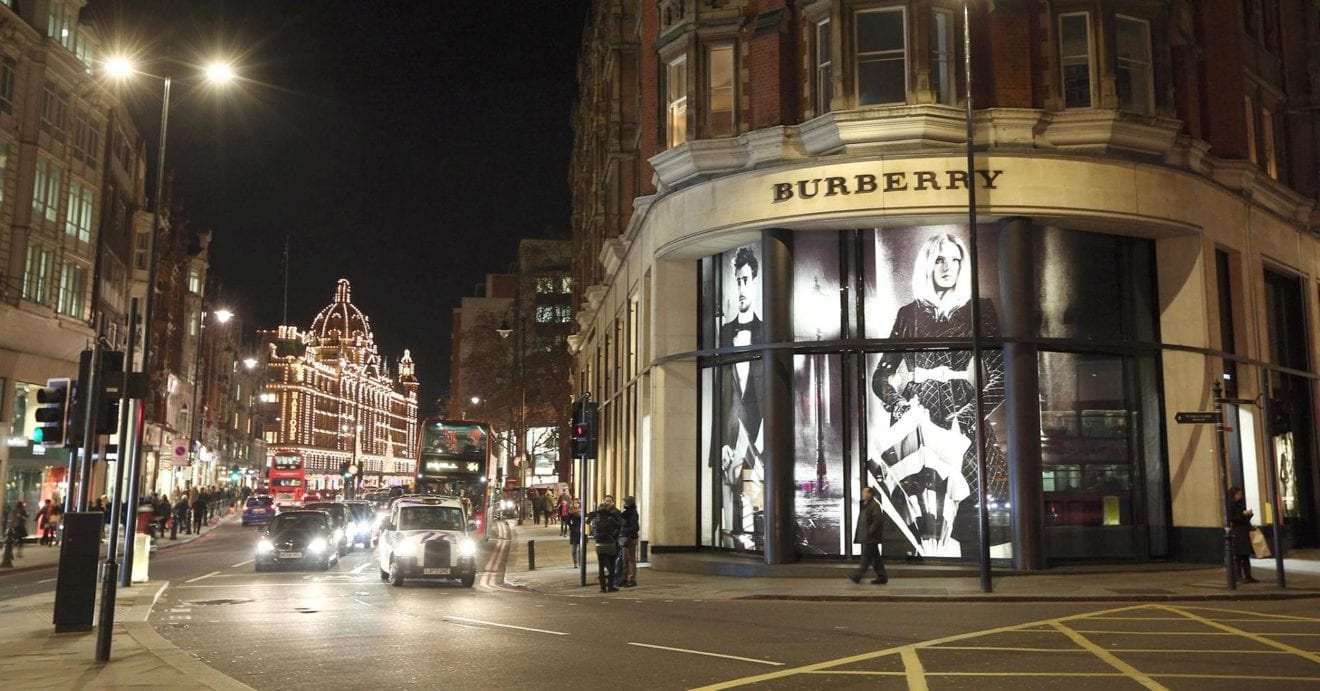
    Burberry is cutting between 15 and 20 percent of its product lines in a quest to focus on its newest ranges as it battles to attract shoppers in a volatile luxury goods market. The U.K. luxury-goods maker reported a 24 percent drop in first-half profit that met analysts’ estimates, but failed to match rivals that reported better-than-expected results.

    While luxury brands have been struggling with slowing growth in Asia, a drop in tourist spending in Europe following a series of deadly attacks and competition from fast-fashion chains, Burberry has been hit particularly hard. Its adjusted pretax profit fell 4 percent to 146 million pounds ($182 million) in the six months through September, in stark contrast with contrast with those of LVMH, Kering SA and Hermes International SCA, which all beat estimates in their latest reporting periods.

    The company had already announced a 4 percent drop in half-year sales to 1.16 billion pounds last month as weak demand in some overseas markets offset a surge in sales in its British home as tourists took advantage of a lower pound.

    The brand, which recently removed longstanding  creative director Christopher Bailey from his additional role of chief executive offer, bringing in Marco Gobbetti, the former CEO of Céline to hand the business/operational side of the brand. Additionally, Burberry announced in February that it plans move away from the traditional model of presenting seasonal ranges months ahead of their appearance in store, in favor of two collections a year that would be available in shops immediately.

    Finance chief Carol Fairweather said on Wednesday the company was cutting back on product lines ahead of the key Christmas trading period and would give greater prominence to its newest products, such as the bridle bag that was a top seller from its September runway show. “We are delighted with everything we have in place for (the) festive (season),” she said in a statement.

    Shares in Burberry, along with other luxury groups such as LVMH, fell on Wednesday after Donald Trump’s victory in the U.S. presidential election added to uncertainty over prospects for the global economy, analysts said. Burberry makes about 20 percent of its sales in the United States.

  • Trade Expo lures visitors with prime Indonesian products

    Trade Expo lures visitors with prime Indonesian products

    Visitors to the 31st Indonesia Trade Expo are sounding out the possibility of buying Indonesian products they consider to be of good quality.

    Visiting the Trade Expo on Wednesday, Syrian Mohammed Khair Hadiaf said he was looking for Indonesia-manufactured pharmaceuticals.

    “I work in the medical sector and my specialty is cancer. I came here to seek more information about Indonesia’s medical technology and products,” he told us through a translator application on Wednesday when he visited a booth at the expo, held at the Jakarta International Expo (JIExpo) venue in Kemayoran, Central Jakarta, from Oct.12 to Oct.16 . It was the first time Hadiaf had come to Indonesia.

    In another booth, Palestinian Shokri Zahedah and an Iranian calling himself only Amir were looking for snacks and sweets they could sell in their respective countries. Shokri and Amir frequently visit Southeast Asia to buy products from countries in the region, including Malaysia, but it was the first time they had looked at Indonesian products.

    “You have good products. In Iran, snacks mainly come from Malaysia. Indonesian products need more promotion,” Amir said. He said if he found interesting products he would return on Thursday to make a deal.

    The Foreign Ministry through its diplomatic missions invited 1,200 potential buyers from 70 countries to the expo, including those from small countries.

    Foreign Minister Retno LP Marsudi said 225 buyers from Middle Eastern countries attended the expo, followed by African and South Asian countries, which sent 49 buyers each, Eastern Europe ( 48 ), Afghanistan ( 42 ), Palestine ( 42 ), Latin America ( 35 ) and Fiji ( 22 ).

    Poor communication skills appeared to be the biggest obstacle for buyers from small countries to make deals at the Trade Expo. Most of them could not speak English well while the expo lacked liaison officers who can speak foreign languages besides English, especially Arabic.

  • Pertamina to launch new oil fuel products Turbo

    Pertamina to launch new oil fuel products Turbo

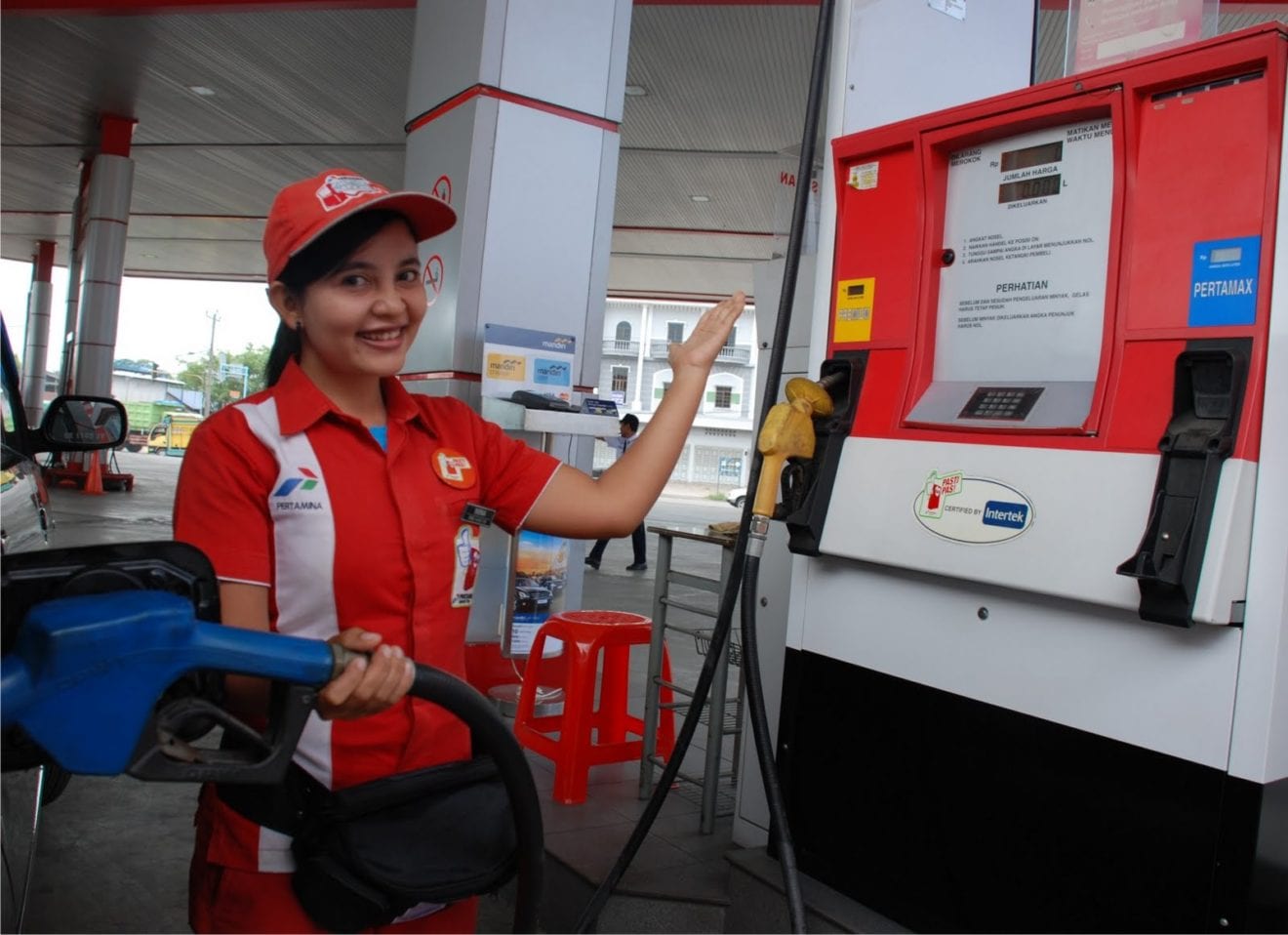
    Pertamina will soon launch a new oil fuel product Turbo with Research Octane Number (RON) 98 to expand the market of its non subsidized oil fuels.

    General Manager of Pertaminas southern Sumatra Regional Marketing Operation Herman M. Zaini said the production of Turbo is part of the companys bid for survival amid the shrinking prices of oil now diving to as low as US$35 per barrel.

    “After the success in launching Pertalite Pertamina will soon come up with Pertamax Turbo to give more choices for the consumers of non-subsidized oil fuels, and to reduce the consumption of subsidized oil fuel,” Herman said here on Tuesday.

    He said currently Pertamina is focused more on business in the downstream sector as business in the upstream sector which normally contributes 70 percent to its income, has suffered badly with deficit as a result of oil price fall.

    The decline in business in the upstream sector, however, has positive effect as it forced Pertamina to innovate and turn out new marketable products in the country and abroad, he said.

    Previously Pertamina had only gasoline products of Premium with RON 88, Pertamax RON 92, Pertamax Plus 95, and Pertamax Racing RON 100, but now it also has Pertalite RON 90 and soon there would be Pertamax Turbo, he said.

    “Currently Pertamina exports lubricant oil to 26 countries including Middle east countries. And now Pertamina is seeking contract for supplying oil fuels for fuel filling stations in Myanmar. Tender is being in the process,” he said.

    If Pertamian won the tender, it will build 1,360 public fuel filling stations in cooperation with Myanmar state company Myanmar Petroleum Products Enterprise, he said.

  • Pfizer doubles its web sales of its health products in China

    Pfizer doubles its web sales of its health products in China

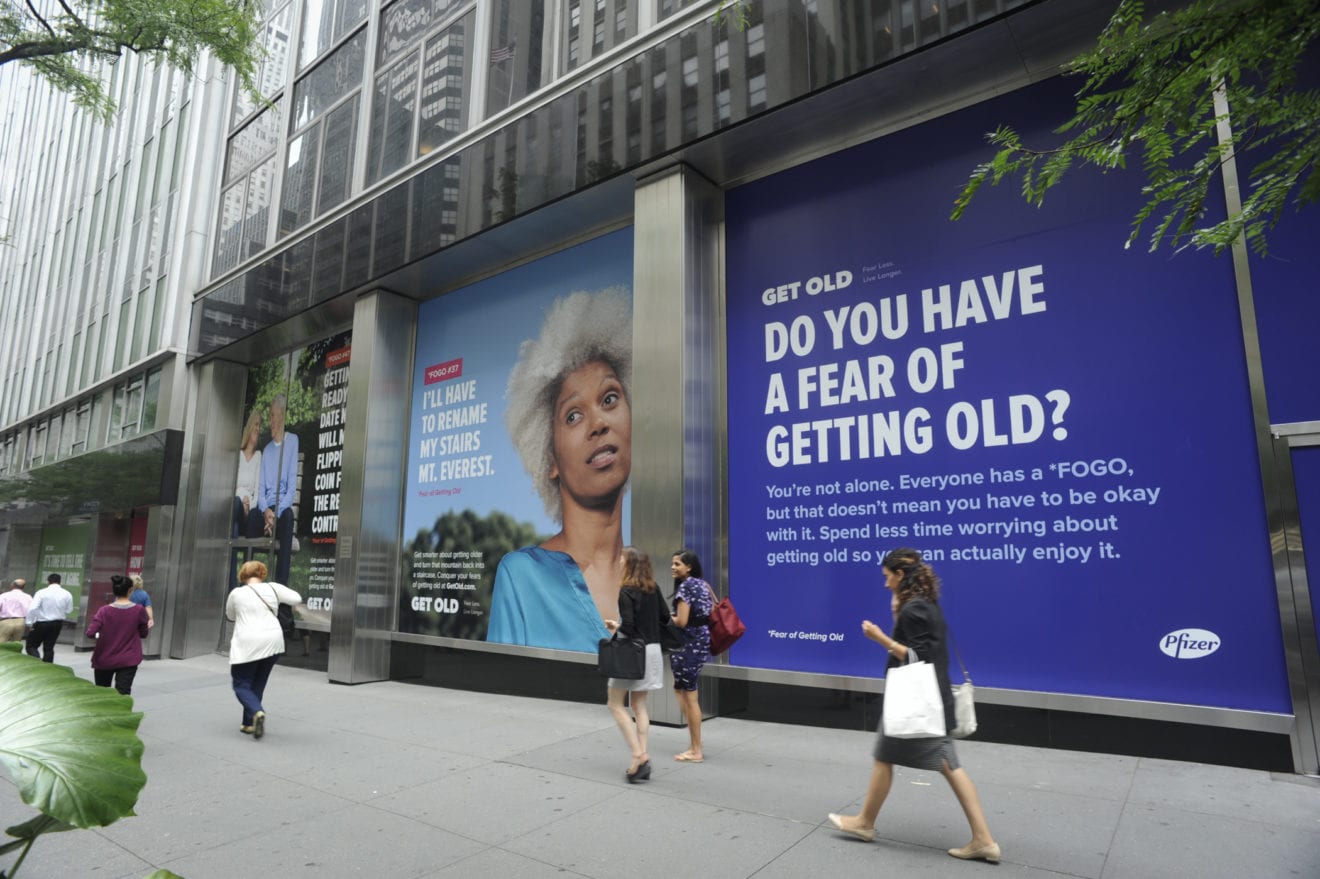
    Online shoppers in China are steadily increasing their purchases of health products, and that offers an opportunity for popular U.S. brands of nutrition supplements. E-commerce sales of Pfizer’s health products, including popular supplements like Caltrate and Centrum, are growing at a more than 100% every year in China, according to Don Kerrigan, Pfizer’s vice president of Global Commercial Excellence & Activation.

    In fact, China has become Pfizer’s second-largest market for health products, exceeded only by the U.S. More than 200 million Chinese consumers have purchased health products from Pfizer, Kerrigan says.

    Many of those consumers purchase Pfizer products online, even though Pfizer does not operate its own e-commerce site in China. Instead, it has been selling since 2012 through an official storefront Tmall in 2012, one of the two giant online shopping portals operated by China’s leading e-commerce company, Alibaba Group Holding Ltd. Pfizer also sells on JD.com, Alibaba’s leading competitor, and other marketplaces in China, including Yhd.com, which is owned by Wal-Mart Stores Inc.

    Leveraging marketplaces enabled Pfizer to quickly begin selling online in China, Kerrigan says.

    The massive traffic to Alibaba’s online marketplaces in China—those marketplaces, mainly Taobao and Tmall, generated $449 billion in sales in 2015, Alibaba says—means companies like Pfizer can gather a tremendous amount of information quickly about what Chinese consumers like, Kerrigan says. That lets relatively new players like Pfizer test the market and respond quickly.

    “An e-commerce platform like Tmall can provide data on what consumers are buying in different categories,” Kerrigan says. “You can gain insight into what else they’re buying, and how consumers are managing their health or their wellness. That is helpful to us in how we build out broader solutions for consumers.”

    While many overseas brands employ e-commerce service providers to manage their web sales in China, Pfizer relies on its own 17-person team in China.

    The explosive growth of online shopping in China can make it difficult for brands like Pfizer to anticipate demand. Kerrigan says his business ran out of stock within hours of the beginning of the annual Singles’ Day online sale last Nov. 11.Alibaba says its Singles’ Day 2015 sales grew 60% over the 2014 event to $14.3 billion.

    Pricing is another issue as some merchants or individuals sell a brand’s products at low prices on China’s big web marketplaces. To differentiate itself from these sellers, Pfizer has developed specific products to sell only through e-commerce channels in China.


  • South Korea’s Cosmax beauty products granted halal certification

    South Korea’s Cosmax beauty products granted halal certification

    South Korea’s original development manufacturing (ODM) cosmetics company Cosmax Inc. said its Indonesian subsidiary PT Cosmax Indonesia was granted halal certification, a move that is expected to help pave the way for the company to make forays into the global halal beauty product market.

    The company said on Tuesday that PT Cosmax Indonesia received the halal certification from Majelis Ulama Indonesia (MUI) to sell its cosmetics. MUI is one of the top three halal certification authorities in the world along with Jabatan Kemajuan Islam Malaysia (JAKIM) and Majlis Ugama Islam Singapura (MUIS), and it is acknowledged across about 40 different countries.

    The Korean beauty products maker PT Cosmax Indonesia succeeded in meeting the strict guides of halal certification by producing cosmetics in hygienic conditions and containing zero harmful ingredients, and it became the first halal certified ODM cosmetics company among all Korean ODM beauty brands. The company expects to secure Islamic female consumers who have difficulties using general beauty products as its stable customer base.

    “PT Cosmax Indonesia, with its international halal certification, will do its best as an export base for the company making inroads into global halal market to meet consumer demands on halal products in the world including South East Asia and Middle East,” said Lee Kun-il, head of PT Cosmax Indonesia.

    Halal, an Arabic word meaning “lawful or permissible” in Islam, refers to products that Muslims are allowed to eat and use, and it is applied to various sectors ranging from food, medications and household goods to cosmetics. The halal cosmetics market is estimated at 100 trillion won ($84.2 billion), and it is expected to grow even bigger as more consumers are looking for products conforming to Islamic laws regardless of cost, said an unnamed official at Cosmax.


  • MPG shifts focus to beauty products

    MPG shifts focus to beauty products

    Nalaanlat Nunnonl, chief marketing officer, said the company’s vision was now to become one of the leading players for beauty products in Asean by 2020.

    The company next month will launch its own house brands – Clouda for makeup and Keira for skincare – with about 100 products altogether.

    The ranges will be distributed via a number of channels, both online and offline.

    “We will next year explore selling our house-brand cosmetics beyond Thailand, primarily to the CLMV markets [Cambodia, Laos, Myanmar and Vietnam]. We will appoint local distributors in each of those territories. Under the 2020 vision, we will shift the way we do business from business-to-consumer to be more business-to-business,” she said.

    “We want to stand behind the beauty of women in Asean. Our house-brand cosmetics will be distributed to all potential markets throughout the region.”

    MPG wants to grow its annual revenue from around Bt400 million posted last year to about Bt5 billion in 2020, of which 80 per cent will be contributed by its own house-brand beauty products and the rest from its existing retail businesses.

    The revenue contribution from overseas markets will be about 40 per cent by 2020, Nalaanlat said.

    The business revamp is in line with the arrival of digital technology, which allows individuals to download and enjoy movies and music in front of a computer screen, she explained. Digital tech had affected traditional retailers of home-entertainment products, including Mangpong, which were burdened with huge stocks of music and movies as a result.

    Mangpong is among the longest-established entertainment retailers in Thailand, merchandising a wide range of products, including Blu-ray discs, DVDs, compact discs, vinyl records and other formats.

    Mangpong was established by Montri Mitsatha and Kityajai Triekvijit, who were both initially movie and music enthusiasts rather than businesspeople.

    They opened their first store as a small movie and music retailer in 1981, before developing the business into Mangpong, a full-size retailer, in 1989.

    The first Mangpong shop was located at The Mall Ratchaprasong, offering movies and music in the form of laser disc, VHS and cassette tape, as well as other entertainment-related products such as movie posters and T-shirts. Nalaanlat, a second-generation member of the Nunnonl family, said Mangpong had spent the years through to 1994 as the “beginning-to-stand era” for a business that was raised via her parents’ love for home-entertainment products. At that time, cassette recordings of Harajuku music became the most popular products sold by the company.

    From 1995 to 2006, the company entered the “growing era” by acquiring the rights for blockbuster movies, such as “The Terminator” and “Lord of the Rings”, and retailing them as home-entertainment products.

    Mangpong was a pioneering business in terms of bringing licensed Hollywood blockbusters into Thai homes, she said.

    “In 2000, which was the peak year for Mangpong, the company operated about 300 Mangpong outlets, of which 200 were kiosks and the remainder were shops. The number of movie titles stocked in our library was as high as 100,000 at the time,” the chief marketing officer said.

    The company then entered an “adjustment period” between 2007 and 2012, shaped by the transformation of media technology from cassette tape to digital format, which allowed movies on Blu-ray discs and DVDs to spread easily via a large number of players in the market.

    “At that time, we adjusted ourselves by bringing in documentaries and edutainment content created by the BBC, such as ‘Planet Earth’ and ‘Blue Planet’, to sell exclusively at our Mangpong stores, in order to offer different products to the market,” Nalaanlat said.

    However, with the rapid development of the Internet and digital technology in recent years, today’s consumers can download and enjoy movies at home, she added.

    “We have gradually reduced the number of Mangpong stores to about 24 today. The number of movie titles in our library has also declined gradually, to between 3,000 and 4,000,” she said.

    Diversifying risk

    In a move aimed at diversifying its business risk, MPG launched the Gizman chain in 2013 as a “house of lifestyle gadgets”. The flagship Gizman store was opened at the company’s headquarters on Lat Phrao Road Soi 90, while the first official outlet was opened at CentralPlaza Rama 3.

    MPG now operates a chain of 30 Gizman stores.Inspired by Nalaanlat and her mother, MPG last year launched Stardust, a chain of multi-brand beauty stores, with its first outlet at Future Park Rangsit.

    There are now seven stores in the Stardust chain. “We will this year convert full or partial space in 10 to 15 of our Mangpong stores to Stardust. We expect that by 2020, there will be about five Mangpong stores left in the marketplace, located only at prime locations in Bangkok,” MPG’s marketing chief said.