Tag: PUMA

  • “Tiger Triumphs over Puma: Singapore Regulators Dismiss Trademark Dispute Over ‘Big Cat’ Logos”

    “Tiger Triumphs over Puma: Singapore Regulators Dismiss Trademark Dispute Over ‘Big Cat’ Logos”

    In a recent trademark dispute involving two sportswear brands, Puma and Sun Day Red by Tiger Woods, both known for their “big cat” logos, Singapore regulators have concluded that there is no risk of causing confusion among consumers. The controversy was brought to an end by the Intellectual Property Office of Singapore (Ipos).

    Trademark Dispute Settlement

    The dispute was sparked by Sun Day Red’s trademark application, which was met with opposition from Puma. The trademarks, both featuring “big cat” designs, were scrutinized following an application submitted by Sun Day Red on January 18, 2024. Puma declared its opposition to the application just 11 days later.

    According to Ipos, the onus was on Puma to prove the likelihood of confusion between the two marks. To successfully oppose the trademark application, Puma needed to show similarities in the design of the logos, as well as in the goods and services associated with each logo.

    Brand Backgrounds

    The brand Sun Day Red was founded in 2024, with golf legend Tiger Woods and TaylorMade Golf as its creators. The brand name was inspired by Woods’ tradition of wearing red during the final rounds of golf tournaments. Puma, however, has been a staple in Singapore since 2007, when it set up its Southeast Asia hub in the city-state.

    In its defense, Sun Day Red argued that the animals depicted in the competing trademarks were distinct, highlighting that its logo features a tiger, indicated by a stripe pattern, whereas Puma’s logo is based on the animal of the same name.

    Regulator’s Ruling

    Upon reviewing the evidence presented by both parties, Ipos determined that the competing marks had significant visual differences. “The competing marks differ in terms of composition, shape, features, and movement, and these differences influence the consumer’s overall impression of the marks,” Ipos stated.

    In relation to the potential confusion among consumers, Ipos clarified that, due to the visual dissimilarities and the level of attention typically given during the purchasing process, consumers were unlikely to mistake one brand for the other.

    Questions & Answers

    What was the basis of the trademark dispute between Puma and Sun Day Red?
    The dispute centered around the “big cat” logos used by both brands, with Puma opposing Sun Day Red’s trademark application.

    Which factors did Ipos consider in resolving the trademark dispute?
    Ipos evaluated the visual similarities between the logos, the goods and services associated with each logo, and the potential for consumer confusion.

    What were the final conclusions of Ipos regarding the trademark dispute?
    Ipos concluded that the logos were visually different and that consumers would not likely confuse one brand for the other due to these differences and the degree of attention involved in the purchasing process.

  • Anta Sports Clinches $1.8 Billion Puma Stake, Emerges as Largest Shareholder in German Sports Giant

    Anta Sports Clinches $1.8 Billion Puma Stake, Emerges as Largest Shareholder in German Sports Giant

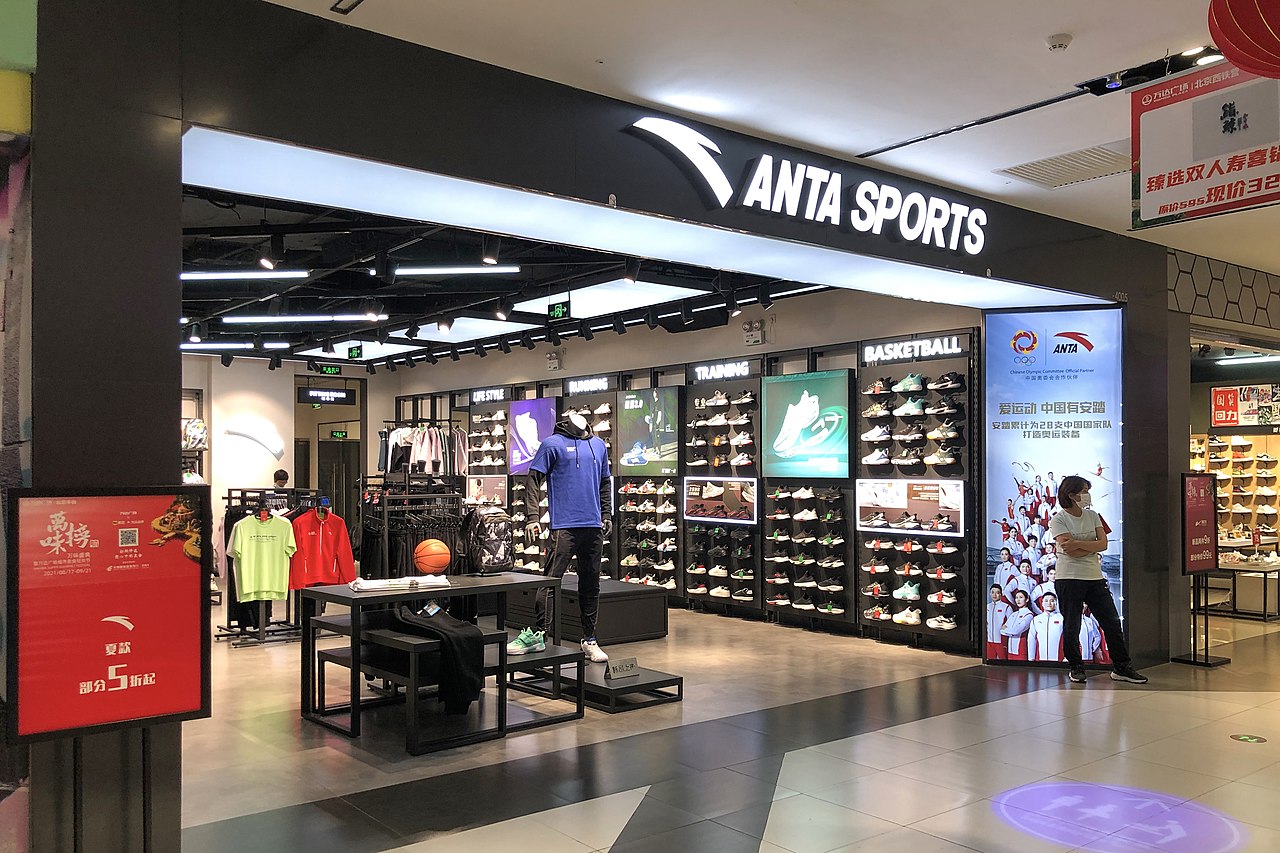
    Anta Sports Products, a leading sports company based in China, announced on Tuesday that it plans to acquire a 29.06 percent share in Puma from the Pinault family. The deal, worth 1.5 billion euros (approximately US$1.8 billion), will make Anta the largest shareholder in the German sports apparel manufacturer.

    In the agreement, which was outlined in a stock exchange filing, Anta will pay 35 euros per share in cash for 43 million Puma shares. This represents a considerable 62 percent premium on Puma’s closing share price of 21.63 euros on Monday. Following this announcement, Anta’s shares saw an early trading increase of 3.4 percent on Tuesday.

    The Strategic Sale

    This strategic move comes at a time when Puma is striving to regain its market position after losing ground to rivals Nike and Adidas. The brand is also currently dealing with increasing competition from rapidly expanding brands such as New Balance and Hoka.

    Anta expressed its confidence in Puma’s potential to enhance its global competitiveness and brand awareness with Anta as its primary investor. It was also stated that, upon finalizing the deal, Anta would pursue seats on Puma’s board.

    “Puma’s global business footprint and focused positioning in sports categories are highly complementary to our existing multi-brand and specialized business,” Anta expressed in a public statement.

    Expanding Market Reach

    The acquisition is likely to boost Puma’s sales in the highly profitable mainland Chinese market, while also promoting Anta’s multi-brand strategy. Anta has a successful history of acquiring and revitalizing Western sports and lifestyle brands. In 2019, for instance, Anta led a consortium to purchase Amer Sports, a company that owns brands such as racquet manufacturer Wilson and mountain sports specialist Salomon.

    The transaction follows a challenging period for Puma, as the company strives to boost sales and investor confidence under new CEO, Arthur Hoeld. In an effort to ignite a company turnaround, Puma announced in October that it would increase discounts, enhance marketing, and reduce its product range. This strategic shift also includes the reduction of 900 jobs.

    Previously, Artemis, headed by Francois-Henri Pinault, the chairman of luxury group Kering, characterized its Puma stake as non-strategic. The Pinault family received the holding from Kering in 2018 when the group refocused its operations exclusively on luxury goods.

    Puma has been grappling with weakened demand and lackluster sneaker launches, such as the Speedcat. Hoeld, who took the helm last year, has proposed a turnaround strategy focused on “brand heat,” performance products, and cost discipline.

    The deal is still conditional on antitrust clearances, shareholder approval at Anta, and regulatory approvals in China and other jurisdictions. Anta plans to organize an extraordinary general meeting, with the deal’s closure expected following the fulfillment of these conditions.

    Questions & Answers

    What percentage share in Puma does Anta Sports Products plan to acquire?
    Anta Sports Products is planning to acquire a 29.06 percent share in Puma.

    How does Anta Sports Products plan to pay for the Puma shares?
    Anta will pay 35 euros per share in cash for 43 million Puma shares.

    What is the expected impact of this acquisition on Puma’s sales?
    The acquisition is expected to increase Puma’s sales in the profitable mainland Chinese market.

  • Anta Sports Eyes Major Puma Stake: A Turnaround Hope for the Struggling German Sportswear Brand?

    Anta Sports Eyes Major Puma Stake: A Turnaround Hope for the Struggling German Sportswear Brand?

    China-based sporting goods company, Anta Sports Products, has proposed to purchase a 29% stake in Puma, the struggling German sportswear manufacturer, from the French Pinault family, according to insiders familiar with the negotiations.

    Anta Sports submitted their bid several weeks ago and has already arranged financing for the prospective acquisition, two of the sources disclosed. However, one source noted that negotiations have reached a stalemate.

    The Pinault family’s firm, Artemis, managed by François-Henri Pinault, Chairman of Kering, had been expecting bids for its Puma shares to surpass 40 euros each, said a fourth insider. The Pinault family originally obtained their shares in Puma from Kering as part of a conversion of the conglomerate into a luxury-focused entity in 2018.

    When approached for comments, both Artemis and Puma declined. A response from Anta is still pending.

    Following this news, Puma’s shares increased by up to 9%, reaching their highest value since May 2025, trading at 24.6 euros. Despite this, Puma’s market cap was 3.3 billion euros (US$3.85 billion) at the close of trading on Wednesday, a drastic 50% decrease from the same time the previous year due to a severe drop in sales.

    Arthur Hoeld, Puma’s newly-appointed CEO, revealed his recovery strategy in October following disappointing sales of releases like the Speedcat and a general decrease in revenue as customers favoured competitors such as Adidas, On, and Hoka.

    Anta, a Hong Kong-listed company with a history of acquiring and rejuvenating Western sports and lifestyle brands, has been considering a bid for Puma, a source revealed in November. In 2019, Anta led a consortium to buy Amer Sports, the owner of iconic brands like Wilson and Salomon.

    Analysts at RBC have stated that the potential sale of Artemis’ 29% stake in Puma could prove beneficial for Puma’s equity story. New ownership might increase investments in the brand, provide fresh insights, and support the early stages of Arthur Hoeld’s turnaround strategy.

    Artemis controls Kering as well as auction house Christie’s and Hollywood talent agency CAA. It has faced investor scrutiny due to the debt it accumulated as Pinault sought to diversify away from Gucci during a dip in luxury sales. A senior source close to Artemis noted in September that the Pinault family would not sell their Puma stake at the then-current market valuation but admitted the stake was “non-strategic”. Since then, Puma’s shares have increased by 15%.

    Questions & Answers

    Who has proposed to purchase a stake in Puma?
    Anta Sports Products, a China-based sporting goods company, has offered to buy a 29% stake in Puma.

    What is the estimated value of the Puma shares?
    Artemis, the Pinault family’s firm, had expected bids for its Puma shares to surpass 40 euros each.

    What has been the recent performance of Puma in the market?
    Puma’s market capitalization was 3.3 billion euros (US$3.85 billion) at the close of trading on Wednesday, which is a 50% decrease from the same time last year due to a severe drop in sales.

  • Chinese Giant Anta Sports Eyes Takeover Bid for Struggling German Brand Puma

    Chinese Giant Anta Sports Eyes Takeover Bid for Struggling German Brand Puma

    Anta Sports Products, a prominent Chinese sportswear manufacturer, is reportedly considering the acquisition of German sportswear brand, Puma. It’s understood that Anta, listed on the Hong Kong stock exchange, is currently working with an adviser to examine the feasibility of a bid for Puma. If the proposition proves profitable, Anta may collaborate with a private equity firm to proceed with an offer.

    Potential Competitors in the Bid

    Alongside Anta, other possible contenders for the acquisition include the Chinese sportswear group Li Ning and the Japanese sportswear company Asics. Li Ning has reportedly been engaging with banks to discuss financing for a potential bid, giving an early indication of the company’s interest in Puma. As for Asics, there’s speculation that it could also show interest in the German sportswear brand.

    When approached for comments on the acquisition, Anta Sports, Puma, and Asics didn’t offer immediate responses. On the other hand, Li-Ning provided a statement indicating that the company had not yet participated in any significant discussions or assessments relating to the transaction mentioned. The company further stated that its main focus remains on the expansion and evolution of its brand.

    Shareholder’s Stand

    Artemis, the private holding firm that has the biggest share in Puma and also controls Kering, the owner of Gucci, has stated that it’s exploring all options for its 29% stake. Information from a source previously revealed that Artemis had no intentions of selling their shares at the market value as of September.

    Puma’s current market valuation stands at 2.52 billion euros, equivalent to $2.92 billion. The Pinault family that manages Artemis obtained its stake in Puma in 2018 from Kering when the luxury conglomerate transitioned into a pure luxury player focusing on brands like Gucci and Saint Laurent.

    Strategy Shift

    In October, Puma’s new CEO, Arthur Hoeld, announced that the brand would decrease discounts, enhance marketing, and trim its product range. This strategy change was part of Puma’s turnaround plan following a dip in demand for its products and the impact of US tariffs on imports. The plan also included cutting 900 corporate jobs.

    The competitive sportswear market has seen Puma’s share price fall by half since the beginning of this year, losing ground to its competitors.

    Questions & Answers

    Who are the potential bidders for the acquisition of Puma?
    Anta Sports Products, Li Ning, and Asics are the potential contenders for the acquisition of Puma.

    What is Puma’s current market valuation?
    Puma’s current market valuation is approximately 2.52 billion euros or $2.92 billion.

    What is Puma’s new strategy under CEO Arthur Hoeld?
    Puma’s new strategy involves decreasing discounts, enhancing marketing, reducing its product range, and eliminating 900 corporate jobs as part of its turnaround plan.

  • Puma’s Data-driven Approach Boosts Customer Loyalty In Southeast Asia

    Puma’s Data-driven Approach Boosts Customer Loyalty In Southeast Asia

    In the retail and branding sector, data reigns supreme. It provides valuable insights that can be employed to boost personalisation and foster customer loyalty. Sportswear retailer Puma provides a case study for this, as it navigates customer relationship management (CRM) and lifecycle marketing in Southeast Asia.

    Understanding the Data Challenge

    A one-size-fits-all CRM strategy won’t suffice, especially in Southeast Asia’s diverse market. The key to any successful CRM strategy is the development of a robust database. Ankit Madhogaria, Puma’s director of e-commerce Southeast Asia, emphasizes the importance of gathering accurate consumer data both online and in physical stores. This data can then be integrated into software platforms to provide a comprehensive view of all customer interactions, transactions, and touchpoints.

    However, Puma has experienced difficulty in procuring data from its offline customers, with Madhogaria noting that customers are less inclined to share information unless they are given a compelling reason to do so. The data required can be categorized into three types: communication data (like phone numbers or emails), personal data (such as birthdays or purchase anniversaries), and behavioral data, which includes the channels customers use to make purchases. Madhogaria suggests that capturing these data types can present robust opportunities for future campaign creation and customer engagement.

    The Power of Personalisation

    Puma has been redefining personalisation at scale with the assistance of SAP Emarsys’ customer engagement platform. The platform has enabled Puma to execute smart lifecycle strategies customized to suit each market within the region, resulting in impactful omnichannel engagement.

    Madhogaria believes that successful personalisation is achievable with the right tools and an effective data capturing strategy. Using these tools, Puma can generate product recommendations that can be integrated into emails, thus driving increased click-through and conversion rates.

    Successful Campaigns and Strategies

    Madhogaria highlighted several successful campaigns driven by their data-driven approach. Puma has implemented cross-sell promotions in transaction-related emails, which generally have a higher open rate. For instance, if a customer purchased running shoes, Puma recommended complementary items such as a t-shirt or shorts. This strategy resulted in a 3% increase in returning customers within a month, translating to a near 20% rise in efficiency and a substantial boost in revenue.

    Puma’s Birthday Bash campaign was another major success, particularly in Southeast Asia. The campaign, celebrating Puma’s birthday with significant discounts, resulted in a nearly 60% uplift in offline revenue and nearly triple the online revenue. Notably, almost 60% of the campaign’s revenue came from repeat customers.

    Building Loyalty in Southeast Asia

    Understanding the nuances of different markets and consumers’ preferred communication channels is crucial for building loyalty. For instance, Viber is significant in the Philippines, Line in Thailand, and Zalo in Vietnam.

    Madhogaria stresses the importance of continuous experimentation to understand what strategies work best in each market. Puma’s approach demonstrates that successful CRM in Southeast Asia involves more than just data collection; it requires testing, learning, and delivering campaigns that resonate with local consumers.

    Questions & Answers

    What are the three types of data Puma gathers from customers?
    Puma gathers three types of data: communication data (like phone numbers or emails), personal data (such as birthdays or purchase anniversaries), and behavioral data, which includes the channels customers use to make purchases.

    How has Puma personalized its marketing strategy?
    Puma uses SAP Emarsys’ customer engagement platform to implement personalized lifecycle strategies tailored to each market. The tool also generates product recommendations that can be integrated into emails to customers.

    What successful campaigns have Puma executed in their CRM journey?
    Puma has executed several successful campaigns, including the Birthday Bash campaign that resulted in a nearly 60% uplift in offline revenue and nearly triple the online revenue. Another strategy involved integrating cross-sell promotions into transaction-related emails, which led to a 3% increase in returning customers within a month.

  • Puma and Adyen Showcase the Speed and Flexibility of Unified Commerce

    Puma and Adyen Showcase the Speed and Flexibility of Unified Commerce

    Retail’s Big Show APAC (NRF 2025 APAC), world’s leading sports brand Puma and global financial technology platform Adyen shared how their strategic partnership is transforming retail operations and customer experiences across Asia Pacific and beyond.

    From flagship stores to high-pressure, high-volume environments like Formula 1 events, Puma is leveraging Adyen’s unified commerce platform to deliver fast, frictionless, and flexible customer experiences—online, offline, and everywhere in between.

    Since 2020, Puma has partnered with Adyen to consolidate its previously fragmented payment systems. Before that, multiple providers across different markets led to issues with fraud, reconciliation delays, and inconsistent customer experiences. By migrating to Adyen’s single platform, Puma has streamlined backend operations, improved reporting accuracy, and accelerated store and event rollouts in Singapore, Hong Kong, Malaysia, Australia and New Zealand, the UK, and other European markets.

    This partnership underscores a growing trend among global retailers to consolidate fragmented payment systems into unified platforms—streamlining operations and enhancing the customer journey across every channel.

    Key Highlights:

    • From Fragmented to Unified: Before 2020, Puma operated with a mix of payment providers across different markets, resulting in operational inefficiencies and inconsistent customer experiences as a multinational business when scaling. Adyen’s unified platform now powers both online and in-store payments in a single ecosystem.
    • Accelerated Rollouts: In Australia, Puma deployed Adyen’s POS terminals across 26 stores in under a month—fully remotely, effectively eliminating the cost of in-person deployment in a vast geographic market. Singapore and other markets have since adopted the same agile deployment model.
    • Omnichannel Innovation: Puma is enhancing its omnichannel model to drive conversion rates and ensure seamless transactions, preventing missed sales opportunities by helping customers complete purchases in the moment. Customers can buy online and return in-store, or purchase in-store and receive goods from other store locations or warehouses—eliminating friction and keeping the buying process convenient.
    • Customer-Led Payment Strategy: Puma adapts to local consumer preferences, whether that’s credit cards, e-wallets, or Buy Now, Pay Later (BNPL), Puma can quickly activate local payment methods via Adyen’s platform—meeting regional preferences without technical complexity.
    • F1-Ready Payments: At high-volume events like Formula 1, Puma leverages Adyen’s mobile and scalable solution to process thousands of transactions efficiently—supporting seamless customer journeys in high-pressure environments. This enables high-speed setups and smooth customer flows during major global events.

    “With Adyen, Puma is not only simplifying operations but also enhancing customer experiences on a global scale,” said Ben Wong, General Manager, Southeast Asia & Hong Kong at Adyen. “Retail today is about agility, speed, and personalization. From F1 events to everyday store operations, our partnership with Puma is a clear example of how unified commerce can empower retailers to operate smarter, move faster, and adapt to rapidly changing market conditions. Whether it’s enabling remote rollouts, supporting local payment preferences, or handling massive event transactions, we’re proud to help Puma deliver a seamless experience that puts the customer first.”

  • Puma Spotlights Dynamic Athlete Collaborations in Exciting New Ad Campaign Across Sports

    Puma Spotlights Dynamic Athlete Collaborations in Exciting New Ad Campaign Across Sports

    Puma is stepping into the spotlight with its latest advertising campaigns, designed to showcase not just athletic prowess, but also the essence of team spirit and individual determination. According to GlobalData’s Global Ads Platform, these vibrant promotions are fueled by strong partnerships with renowned athletes, significantly amplifying Puma’s multi-sport narrative.

    A Dynamic Athletic Showcase

    Between February and April 2025, Puma launched a captivating series of YouTube ads that delve into various sports, including football, running, cricket, and motorsport. Each advertisement weaves narratives of perseverance and excellence, celebrating both individual journeys and the power of teamwork.

    Star Power Behind the Brand

    Sagar Kishor, an ads analyst at GlobalData, points to Puma’s strategic focus on athlete collaborations, particularly in football, where endorsements from superstars like Neymar Jr. and Christian Pulisic take center stage. But that’s just the tip of the iceberg; the brand has also embraced fans of running and cricket, introducing eye-catching products that blend performance with style. From the striking Ultra Ultimate boots to sleek F1 racewear and collaborations with AC Milan and Aston Martin, Puma is making waves across multiple arenas.

    Celebrating Resilience and Creativity

    The campaigns shine a spotlight on resilience, featuring athletes such as Diogo Dalot and Sandy Baltimore while promoting a culture of creativity and self-expression in sports. With apparel like the Aston Martin F1 overalls, Puma reinforces team identity and fosters a sense of community among fans. It’s not just about competition; it’s about belonging.

    Where Sport Meets Lifestyle

    Taking a step beyond traditional sport, Puma has seamlessly blended athleticism with lifestyle. Their offerings appeal to athletes who prioritize both function and fashion, exemplified by the stylish AC Milan x Off-White kit. It seems Puma understands that looking good while performing at your best is the ultimate goal.

    A New Approach to Running

    With campaigns such as “PUMA. GO WILD,” Puma is linking its brand gear to the mental and physical benefits of running. This initiative champions well-being and personal growth, inviting runners not just to hit the pavement, but to reconnect with their adventurous spirit.

    In the world of retail, when it comes to innovative campaigns, Puma is undeniably pushing the envelope. Who knows, perhaps their next big idea will involve shooting a commercial in zero gravity!

    Questions & Answers

    What themes does Puma’s latest advertising campaign focus on?
    The campaign highlights athletic achievement, team spirit, individual perseverance, and the pursuit of excellence.

    Which athletes are prominently featured in Puma’s ads?
    Key figures include Neymar Jr. and Christian Pulisic in football, as well as Diogo Dalot and Sandy Baltimore, showcasing the brand’s diverse athletic partnerships.

    What unique approach does Puma take in its advertising?
    Puma cleverly blends sports with lifestyle, promoting not only performance gear but also fashionable items, thus catering to athletes who appreciate style alongside function.

  • Puma plans job cuts as US demand weakens, outlook dims

    Puma plans job cuts as US demand weakens, outlook dims

    Puma on Wednesday announced job cuts and warned of uncertain US consumer demand. The German sportswear group’s shares slumped 23 percent in the wake of disappointing quarterly and annual forecasts issued a day earlier.

    The grim outlook, which follows weak quarterly sales and annual profit announced in January, has raised concerns over Puma’s ability to compete with bigger rivals Adidas and Nike while fending off newer, fast-growing brands such as On Running and Hoka.

    Chief executive Arne Freundt said Puma’s target consumers in the United States were not spending due to economic uncertainty.

    “February was bad. March has started off a bit better,” he said at a press conference.

    Chief financial officer Markus Neubrand announced plans to cut 500 jobs worldwide and close some unprofitable stores as part of a cost-cutting plan.

    When asked about the potential impact of US import tariffs, Puma’s management confirmed that Chinese production made up about 10 percent of shoe imports into the United States, down from 30 percent in the past.

    The company was urging suppliers to diversify production away from China to countries including Indonesia, they said.

    Late on Tuesday, Puma forecast currency-adjusted sales for the current quarter to grow in a low single-digit percentage, below last year’s level, with “significantly” lower operating earnings for the same period.

    It said its annual currency-adjusted sales would grow in a low– to mid-single-digit percentage rate, compared with 4.4 per cent growth to 8.82 billion euros (US$9.62 billion) in 2024.

    It had previously expected 2025 growth to be stronger than in 2024.

    The group forecast adjusted earnings before interest and taxes (EBIT) of $566.5 million to $653.7 million euros for 2025, before a one-time charge of up to 75 million related to its cost-cutting programme.

    “While expectations have lowered recently, we still think this guidance is below the most conservative estimates and raises more questions,” Barclays analysts wrote in a note to investors.

    Puma shares slumped 23 percent to $23.86 at 1246 GMT, a level not seen since November 2016.

    Puma’s larger peer Adidas, meanwhile, recorded a solid performance in 2024 and adopted a cautious stance for 2025.

    “The stark contrast in regional performance and sell-through versus Adidas, in our view, underscores the importance of brand momentum in driving demand, but also orchestrating operational leverage amid a volatile retail environment,” said Felix Dennl, an analyst at Metzler in Frankfurt.

    Sales of popular retro shoe models helped boost sales of brands including Puma and Adidas last year.

    Puma said it still aims to sell 4 million to 6 million pairs of its relaunched motor racing-inspired “Speedcat” sneaker, though Freundt said an expected uptick in sales was taking longer than expected to materialise.

  • Puma opens its first flagship in Vietnam

    Puma opens its first flagship in Vietnam

    Sportwear retailer Puma has launched its first flagship in Vietnam, following the opening of its largest Southeast Asian store in Malaysia.

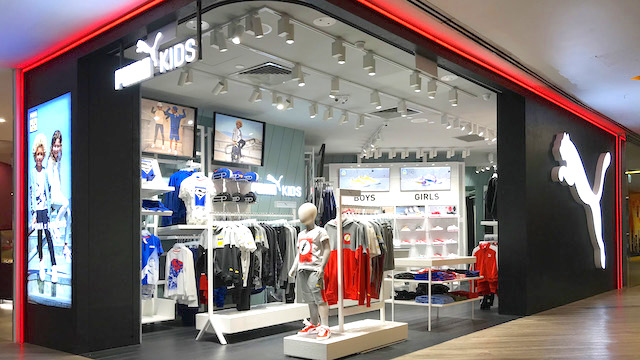
    The store is located in the centre of Ho Chi Minh City, in the Vincom Dong Khoi shopping mall, and offers a broad selection of Puma items for men and women.

    The launch is part of Puma’s Southeast Asian development strategy.

    Puma debuted in Vietnam in the 2000s and is distributed exclusively by Maison through around 14 physical stores in Vietnam.

    In June, Puma named K-pop girl band member, Blackpink’s Rose, as its global brand ambassador, joining Rihanna, A$AP Rocky, Dua Lipa, and Skepta.

  • Puma to launch compostable shoes after a two-year pilot project

    Puma to launch compostable shoes after a two-year pilot project

    After two years of testing, sports giant Puma is ready to launch its compostable shoes dubbed Re:suede 2.0.

    Puma will create 500 pairs of the commercial version of the sneaker, which went online available for purchase on puma.com/eu and Zalando Plus this week. The commercial version was created to reflect the experiment’s findings and the volunteers’ feedback.

    Puma produced 500 special pairs of its Suede trainers using materials such as Zeology-tanned Suede – chosen for their propensity to degrade – as part of the project, which was completed late last year.

    Volunteers wore the Re:suede trainers for six months before returning them to Puma, where they were transformed into compost at Puma’s composting partner’s specially equipped industrial composting facility.

    “Re:suede 2.0 is an important step towards finding viable end-of-life solutions for our footwear,” said Anne-Laure Descours, Puma’s chief sourcing officer.

    “While we are excited about this progress, we will continue to innovate with our partners to determine the infrastructure needed for a scalable long-term solution, essential for achieving meaningful impact in waste reduction.”

    The Re:suede project and the polyester recycling programme Re:fibre were developed as part of Puma’s “Circular Lab,” an innovation hub directed by the company’s innovation and design professionals that aims to shape the company’s circularity programs for the future.

  • Puma says it has successfully converted sneakers into compost in pilot trial

    Puma says it has successfully converted sneakers into compost in pilot trial

    Sportswear company Puma has successfully produced compost from an experimental version of its classic suede sneaker, according to the results of its two-year-long Re:suede experiment.

    The experiment was the first program to launch as part of the company’s “Circular Lab”, an innovation hub led by innovation and design experts to create the future of the its circularity programs.

    The company created 500 pairs of experimental Re:suedes in 2021 using Zeology tanned suede, a TPE outsole, and hemp fibres during the experiment.

    Volunteers from Germany wore the shoes for six months to test their comfort and durability before being sent to a specially equipped industrial composting area operated by the Ortessa Group in the Netherlands.

    After being mixed with household waste and placed into a composting tunnel, the shoes were sprayed with leaching water from earlier composting that contained nutrients and naturally heated from the biological activity and controlled air circulation in the tunnel.

    The composting process took approximately 3.5 months, and the materials that were small enough (<10mm) to pass through a sieve were sold as Grade A compost for agricultural use in the Netherlands. The remaining materials were returned to the composting tunnel until they, too, had broken down to the desired level <10mm).

    “While the Re:suede could not be processed under the standard operating procedures for industrial composting, the shoes eventually turned into compost,” said Anne-Laure Descours, chief sourcing officer at Puma.

    “We will continue to innovate with our partners to determine the infrastructure and technologies needed to make the process viable for a commercial version of the Re: suede, including a takeback scheme, in 2024.”

    The company plans to share its insights in a detailed report so its peers and other interested stakeholders can learn from the experiment and apply the learnings to their initiatives.

    “We learned a lot during the Re:suede trial and how to streamline our industrial composting process to include items that need longer to turn into compost,” added Marthien van Eersel, manager of materials and innovations at Ortessa.

    As a result of feedback from volunteers who wore the Re:suedes for half a year, the company plans to enhance the overall fit of future versions of the shoes by using a new material pattern for the upper and the sock liner.

  • Puma raises revenue outlook, handling China woes better than Adidas

    Puma raises revenue outlook, handling China woes better than Adidas

    German sportswear maker Puma reported stronger-than-expected second-quarter earnings on Wednesday and raised its full-year revenue outlook, coping with headwinds in China better than rival Adidas.

    Puma said its earnings before interest and taxes (EBIT) rose 34.4% on the year to 146 million euros ($148 million), compared with analysts’ average forecast for 128.94 million euros.

    It raised its full-year sales forecast to a mid-teens percentage rise in currency-adjusted terms, from at least 10% – with upside potential – previously, and maintained its full-year EBIT guidance.

    Adidas on Tuesday cut its 2022 earnings target, citing a slower-than-expected recovery in China from pandemic restrictions.

    “It’s not easy for everyone,” Puma Chief Executive Bjorn Gulden said, adding his company “cannot expect growth in China in 2022”.

    But he said: “We feel that the increased investments into R&D, innovation and product development over the past years are starting to pay off.”

    Second-quarter sales rose 18.4% in currency adjusted terms to 2.002 billion euros. The company said it saw strong growth in all its performance categories, such as running, training, team sports, golf and basketball.

    Adidas blamed COVID-19 restrictions in China for a sales slump there. Puma’s Gulden saw the main reason as calls for boycotts against Western textile firms, which have been targeted on social media, in response to Western criticism of China’s treatment of the Uighur minority in the Xinjiang region.

    In late June, Puma rival Nike forecast first-quarter revenue below estimates as it expected to discount more and wrestled with pandemic-related disruptions in China, its most profitable market.

    “We do see an increased level of uncertainty around the world,” Gulden said, but added: “I remain optimistic for our sector in general and the PUMA brand in particular”.

  • Puma South Korea names new CEO

    Puma South Korea names new CEO

    Puma Korea announced on the 12th that it has appointed Lee Na-young as its new CEO. The new CEO is said to be a sales and marketing expert with more than 20 years of experience in the distribution industry related to sporting goods and food and beverages. She has been working as a sports brand expert for domestic and global offices of Reebok and Adidas for the last 10 years or so. She joined Puma Korea in 2020 and oversaw sales and marketing operations.

    Puma Korea expects that the new CEO Lee will actively and quickly respond to the rapidly changing market conditions in line with the brand slogan ‘FOREVER FASTER’ based on his rich experience in sports goods and distribution and marketing. In particular, Puma reflected an active and quick response strategy not only in its products, but also in its organization and management culture. In the rapidly changing era after the COVID-19 pandemic (global pandemic), we have organized an organization with an optimized brand and introduced a quick decision-making system. Product production has been promoted localization.

    New CEO Lee said, “While the overall growth of the sports goods and sportswear industry has been stagnant due to the recent COVID-19 impact, Puma has continued to innovate to target changing consumer tastes. We will develop an aggressive business centering on marketing,” he said.

  • Puma celebrates women’s diversity with Mayu Girls campaign

    Puma celebrates women’s diversity with Mayu Girls campaign

    Look around you. Each and every woman you see has a story to tell — an inspiring one, a tickling anecdote or one that is hard to chew. These stories of everyday women represent their values and fighting spirit, as well as their goals and adventures that they carry with them all the time.

    PUMA Southeast Asia’s “We Are #MayuGirls” campaign celebrates the authenticity and diversity of everyday women. She embodies the Mayu Girl attitude of being confident, inspiring and passionate. She is a role model to her peers and those around her. She breaks free from societal limitations and pursues her passion and goals with grit.

    This is what she is and what she does. The Mayu Girl defines her own norms.Although the Mayu Girl is the go-to aspiration for most, she can’t always be expected to be the flawless, hard-pressed superhero. She is independent and strong, but stumbles and is vulnerable a times. But the Mayu Girl never gives in and always looks for the brighter side of things. She picks herself up, dusts herself off, and continues onward to get what she wants.

    “We Are #MayuGirls” doesn’t just celebrate the crowning glories of these individual women but changes the narrative through collective inspiration. Across all domains, PUMA strongly believes that women have the collective power to move the needle and to propel those around them forward through their own unique achievements. And that is the essence of the campaign — to be the zeitgeist of empowerment through real stories of diverse individuals with the common thread of a confident, inspiring and passionate Mayu Girl,” shares Eleanor Wang, PUMA Southeast Asia’s Head of Marketing.

    “We want women to know that no matter the background or profession, anyone can be Mayu Girl too, with the right attitude,” she adds.

    So, look around you. Look to your mother, wife, sister, daughter, colleague, and best friend. The spirit of the Mayu Girl is everywhere and can be found right beside you at your dinner table. Or, you can check out these trailblazing Mayu Girls below if you’re in need of some immediate inspiration!

    The Mayu Girl is the embodiment of a fighting spirit who struggles but forces her way forward to get what she wants. And that is quite literally why Nur Amisha Azrilrizal makes the perfect Mayu Girl specimen. She joins PUMA’s call as a professional Muay Thai fighter and to her, the Mayu Girl spirit is all about staying true to your passion and reaching for your goal with a never-give-up attitude.

    “Muay Thai has never just been a sport for me, nor has it ever been about medals. Since young, Muay Thai has been my pillar of strength and a torch to guide me through my darker days when bullying from peers was something I faced,” recalls Nur Amisha of her journey. “Staying true to who I am and persevering has allowed me to thrive despite the environment. Now I am standing tall and proud to be a part of PUMA’s “We Are #MayuGirls” campaign to inspire those who are facing similar challenges.”

    While Nur Amisha is an exemplary example, the Mayu Girl isn’t limited to one style of role model. The spirit of a Mayu Girl can be shown more subtly, but definitely does not burn any less intensely.

    Dentist and content creator, Dr. Kayla Teh addresses the importance of pursuing your goals with passion.

    Here is another excellent example of the quintessential Mayu Girl. Dr Kayla Teh, a Malaysian dentist, shares that the spirit of the Mayu Girl is not about pursuing the most illustrious career, but having the right attitude towards the everyday task.

    “As a content creator who’s also a full-time dentist, I often get asked on how do I do it all. Truth is, it’s not easy. But I am a firm believer in hard work and a positive attitude. Challenges to me are not hardships, but opportunities for growth. That’s the Mayu Girl spirit that truly resonates with me — that no matter what challenges we face, embrace it with the right attitude. Don’t be afraid to pursue our goals with passion and inspire those around us,” she shares.
  • Puma’s China sales slowly up

    Puma’s China sales slowly up

    After a pandemic-served beatdown last year, Puma has clawed its way to recovery. On February 24, the German sportswear giant reported that sales jumped 9 percent to 1.52 billion euros in the last three months of 2020 — a promising upswing from the 55-percent plummet in its second quarter. Overall, sales were down 1.4 percent to 5.23 billion euros for the financial year.

    This rebound was led by strong performance in the Asia Pacific, which surged 11.8 percent in the fourth quarter to 480.5 million euros, driven by mainland China. But the country alone was not enough to stop the region’s full-year sales from falling 3.2 percent compared to 2019 levels, down to 1.48 billion euros.

    Given the importance of these global markets, Puma doubled down on establishing local relevance, particularly through sports, influencers, and communication platforms. This was not only reflected in the brand’s return to basketball and collaboration with grammy-winning artist J. Cole, but also its increasing partnerships with popular Chinese talents, including actors Yang Yang, Li Xian, and Liu Haoran as well as supermodel Liu Wen.

    The brand further grew its China footprint by leveraging the country’s biggest shopping holiday, Singles’ Day, logging 2.8 million orders and 80 million euros in revenue over the week. And already, Puma is making good on its goal to design more products specific to the market, partnering with Hong Kong-based artist Michael Lau, “The Godfather of Toy Figures,” to ring in the new year.

    That said, all Puma products did well in the fourth quarter, with apparel growing 15.7 percent, accessories up 7.3 percent, and footwear increasing 3.8 percent.

    “We clearly see a running boom in the whole world,” CEO Bjorn Gulden told journalists, adding that orders for 2021 are up almost 30 percent compared to last year, especially for running products.

    This tracks with Puma’s Q3 results, which showed strong demand for performance-related products, especially for individual sports like running or hiking. With the healthy living trend expected to persist after the pandemic, the sporting goods sector is positioned to weather the crisis better than most.

    But Puma isn’t out of the storm just yet. With almost half of its retail stores in Europe still closed and other markets operating under significant restrictions, the apparel maker is bracing for impact in the first half of 2021. However, the brand is also confident that its quick Q4 recovery and strong order book — along with global efforts to combat the virus — will lead to a moderate sales bump later this year.

    “I am convinced that 2021 will be a better year for us than 2020,” Gulden said. Knock on wood.