Retail News CRM

Tag: PUMA

  • Puma Energy Asia Sun Aims to Distribute Petroleum in Myanmar

    Puma Energy Asia Sun Aims to Distribute Petroleum in Myanmar

    The terminal, which cost $92 million, is designed to hold mostly middle distillates, with 29,000 cubic meters of space for gasoil and 21,000 cubic meters for jet fuel.

    Another 17,000 cubic meters is dedicated to store gasoline and the remaining for bitumen and fuel oil.

    Puma Energy Asia Sun only provides storage services, but intends to apply for a license to distribute oil products, said David Holden, general manager of the firm, although it was unclear when that will be granted.

    “With the change in Myanmar’s investment law on April 1, Puma Energy Asia Sun is investigating eligibility to broaden its business scope to include all aspects of the supply chain,” he added.

    “We believe that Puma Energy is one of three foreign firms in the final round of bidding for the Myanmar Petroleum Products Enterprise (MPPE) network tender to run part of Myanmar’s petroleum downstream business.”

    Myanmar, which has three small refineries with a total capacity of below 80,000 bpd, last month reformed its rules governing foreign investments in order to attract more overseas capital.

    Under the MPPE tender, the winning company will take a minority stake in MPPE and contribute to upgrading the 28 terminals and depots it owns along with 13 retail sites, said Holden.

    Myanmar is projected to consume 93,000 barrels per day (bpd) of gasoline this year and 111,000 bpd next year, up 24 percent and 48 percent respectively when compared to 2016, said Nevyn Nah of consultants Energy Aspects.

    In comparison, gasoline consumption in Vietnam, Asia’s second-largest gasoline importer after Indonesia, is expected to reach 142,000 bpd in 2017 and 154,000 bpd in 2018, up 6.8 percent and 15.8 percent respectively versus 2016, said Nah.

    “Consumption is certainly higher in Vietnam but imports are more comparable (between the two countries),” added Nah.

    Puma Energy, owned by European commodity trader Trafigura and Angola’s state oil company Sonangol, operates in 47 countries and has more than 90 storage terminals globally with over 7 million cubic meters in combined capacity.

    It also owns a refinery and retail sites in Papua New Guinea.

  • If You Think Sports Retail in Singapore is Dead, Read This.

    If You Think Sports Retail in Singapore is Dead, Read This.

    The great debate — about whether or not eCommerce will nail the coffin on bricks and mortar retail shops — has droned on for as long as the Internet began cannibalizing sales.

    So asking a pertinent question — If retail stores are disappearing from the Singapore scene, why do new sports stores keep popping up? — is a logical one, particularly from the perspective of runners on ever-present searches for the latest gear and fashion.

    Can history unravel the mystery?

    The evolution of retail stores began when markets sprung up thousands of years ago across Asia, Europe and Africa. Ultimately open-stall, outside markets morphed into enclosed shops.

    As competition exerted influence, stores carrying a wide range of merchandise replaced speciality stores, though today, innovative small boutiques have managed to survive, and no niche is healthier than sporting goods stores kept alive by Singaporeans who are deeply invested in the nation’s fitness movement.

    Then, along came the Internet. Even chain and big-box stores suffered as eCommerce gobbled up shoppers. Even “Store-within-a-store” concepts, pioneered by Asian retailers could not stop the steady, ever-present incursion of online retail marketing, and nothing has prompted consumer dependency more than an ability to shop using smartphones and devices.

    Forrester Research reports that 56-percent of consumers use smartphones to shop.
    If You Think Sports Retail in Singapore is Dead, Read This.

    Specialty stores remain viable

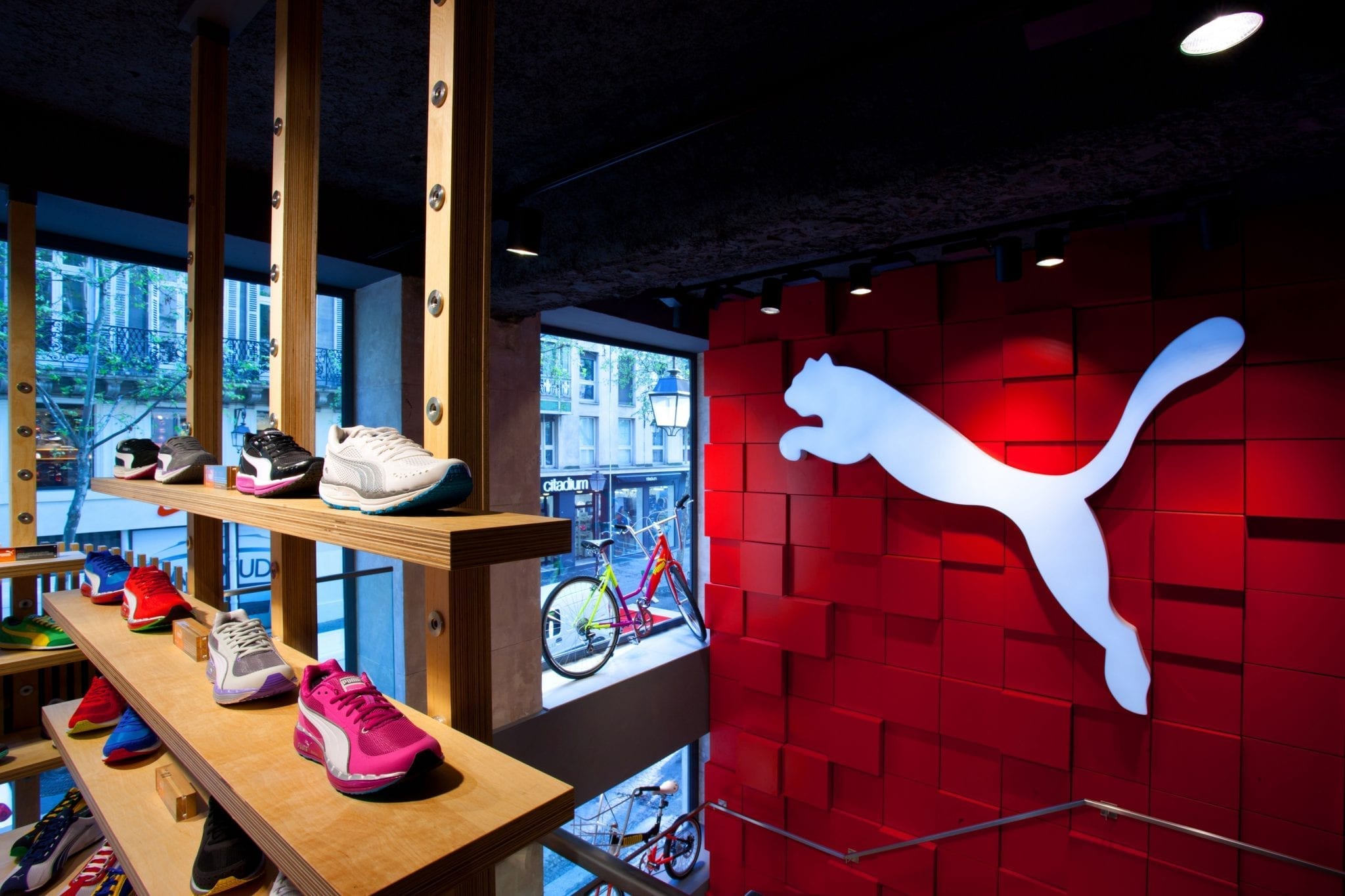
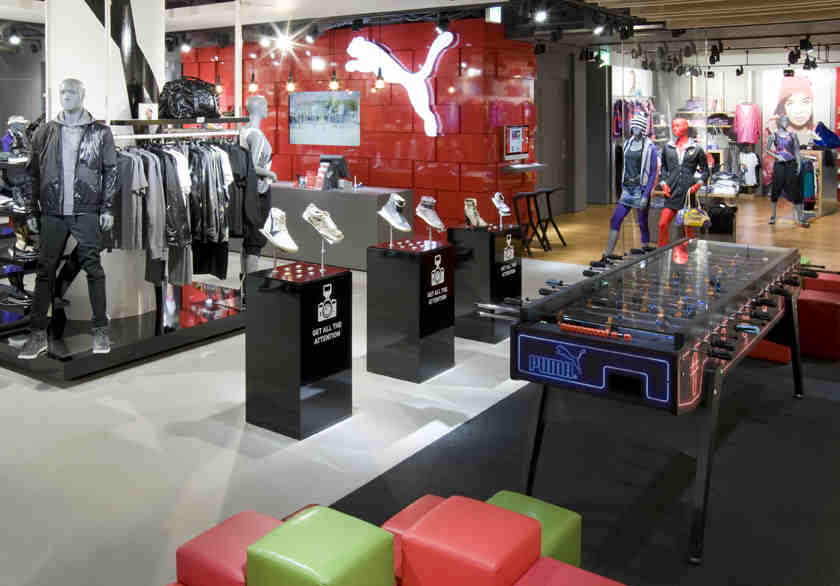
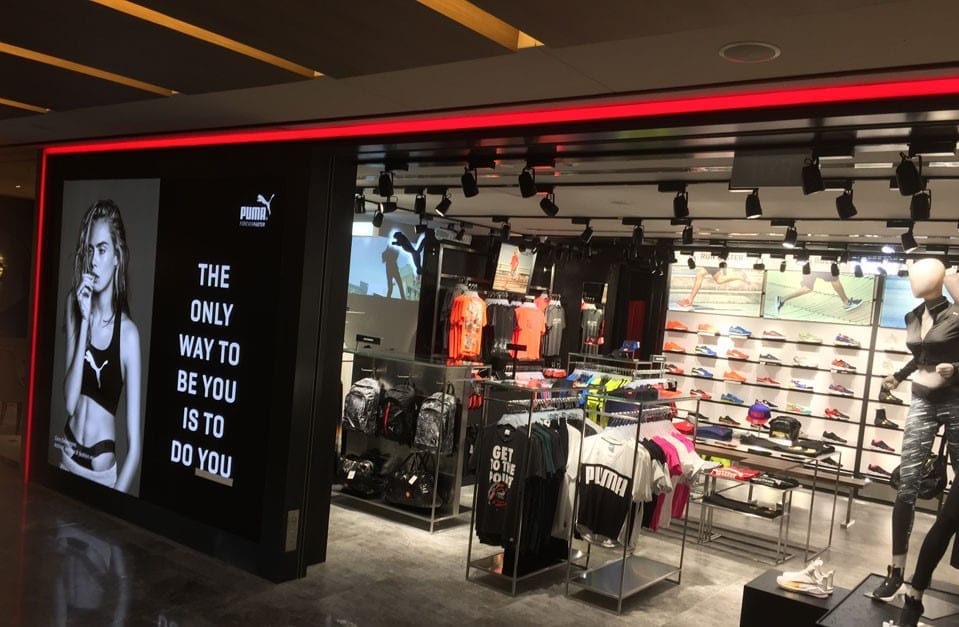
    PUMA recently opened two concept stores at Paragon and Bugis+, hoping to lure runners and sports enthusiasts away from their mobiles and computers.

    PUMA believes that dedicated store sections have the power to bring shoppers to these new locations because they’re strategically located within concentrated shopping areas that attract a youth market eager to find deals and promotions.

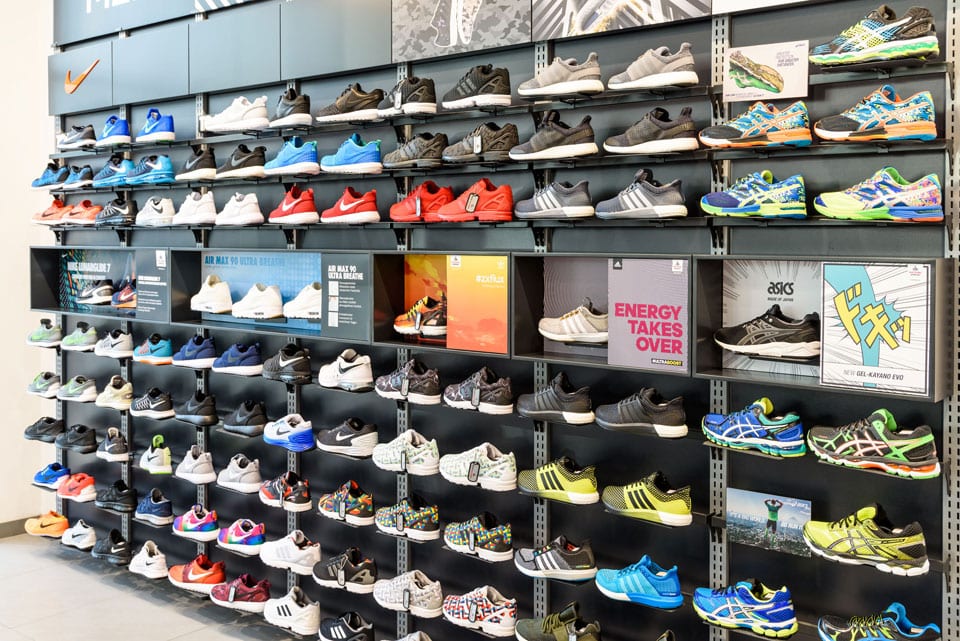
    Not to be outdone, ASICS saw an untapped market in northeastern Singapore and launched a stand-alone shop at the NEX shopping mall recently.

    ASICS believes that identifying an under-served populace is the key to in-person shopping. Their spacious new location is thoughtfully merchandised to encourage avid runners to browse the latest in ASICS innovations.

    Further, the new Under Armour presence at Vivo City Brings UA’s Singapore stores to five, including their new retail presence sprawling across 1,980 square feet of product display area and trendy décor touches.

    Under Armour has become an expansive presence throughout Southeast Asia and it’s considered by many athletes to be the coolest brand on the planet, even when measured against big dogs like Nike and adidas.

    Why is UA so cool? Because everything about their products is superior, starting with the brand’s quirky tagline: “It’s what you do in the dark that puts you in the light.”

    That light, of course, is a spotlight shining on the impeccable taste of runners who prefer to be seen wearing the UA logo on everything they own!

    Non-branded stores continue to open, too

    The space-age design of Running Lab’s two new locations — Marina Square and Tampines Mall — is reason enough for passionate runners to browse the retailer’s unique enclaves which are sorted by brand and gender, and there is no shortage of signature brands on display that are beloved by running enthusiasts and athletes.

    To drive traffic, Running Lab organises free runs throughout Singapore on Tuesdays and Thursdays, but they’re not the only show in town.

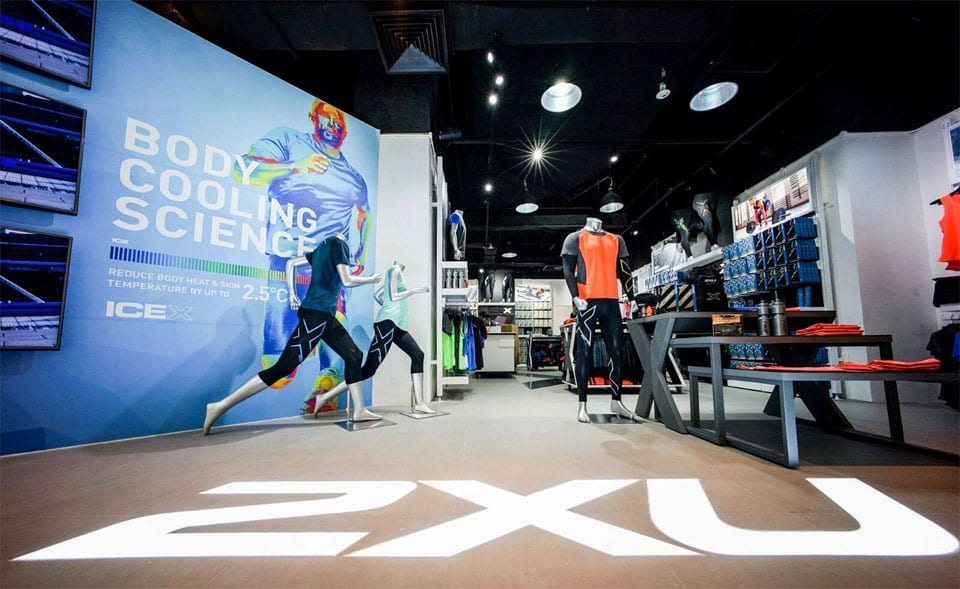
    The first 2XU Performance Centre opened just weeks ago at Suntec City Tower Three. Their ambitious marketing plan — to become the epicentre of performance compression wear — sets it apart from competitors because the niche alone has the potential to drive traffic into the store.
    If You Think Sports Retail in Singapore is Dead, Read This.

    Always a trendsetter, we toss the iconic Uniqlo into the mix. Uniqlo’s Orchard Central grand opening recently introduced Singapore to what can only be described as a sensory playground filled with wall-to-wall digital displays and rotating mannequins, while there’s a nice balance of innovative activity-related products, ideas and wares and the prestigious brands to which runners remain loyal.

    For Uniqlo, size matters. This 29,000-foot retail spot has become a destination unto itself, catering to sports-minded Singaporeans of every age group.

    It’s not all good news

    Common sense would lead one to believe that the opening of new sporting goods stores in Singapore portends good news for the future of retail, but business writers warn that, “what you see isn’t necessarily what you can believe.”

    In fact, a steady stream of popular stores continue to close because they have become unprofitable.

    Singapore economics played some part in this exodus, but not all blame-placing can be ascribed to fiscal decline due to online shopping and tech-savvy consumers continuing to find favour with cyber shopping.

    But the reality is this: retailers start every day in the red, supporting rental space, salaries, power bills, taxes and marketing expenses. Further, brands and stores refusing to track changing shopper behaviours aren’t likely to survive.

    What are solutions to this mystery?

    Absent a crystal ball, it’s obvious that Singapore retailers won’t survive without retooling their business models and no niche is worthier of emulation that the nation’s sports boutiques because the folks that run and manage them keep a pulse on Singapore’s vibrant fitness movement and watch trends like hawks.

    Further, a mindful balance of retail and online business practices keep shops afloat in addition to taking advantage of trend-tracking.

    Here’s why we think sporting goods stores have an advantage over other retailers:

    1. A shared retail/online presence has been the secret that has helped many sporting goods stores stay afloat.
    2. Management understands that athletes aren’t particularly crazy about the idea of having to return merchandise bought online and aren’t shy about using promotions and specials to a bring them in.
    3. More runners frequent sports stores for social reasons than analysts report. In-person shopping beats scrolling through screens of merchandise says TANGS Assistant Vice President of Communications Ms. Jocelyn Teo.
    4. Sporting goods shoppers are a different breed. Their performance depends upon the right shoe fit and gear choices, and while time-crunched athletes may turn to online shops for some purchases, retailers give athletes more reasons to show up in person, including incentives, promotions and deals.
    5. A CBRE Asia Pacific research study asked 11,000 Singapore consumers (ages 18 to 64) to weigh in on the online/in-person shopping debate, concluding: “… consumers are more comfortable with the traditional shopping format where they can touch and feel the products before purchasing.”
    6. Integrated shopping patterns are the wave of the future and savvy sporting goods retailers know this. The ability to switch back and forth between store and website drives traffic since returns, purchases, exchanges apply equally.
    7. Look for a more dynamic retailer consortium to cooperate on shared functions like integrated warehousing, shipping and order-fulfillment that can lower overheads resulting in merchandise price reductions.
    8. Common-sense changes — staying open more hours, sponsoring in-store events, offering a fully-integrated online/in-store experience and making sure employees behave more like concierges and less like clerks are but a few of the ways sporting goods stores will not only survive, but thrive.

    If you were forced to choose between online and in-store shopping and were required to pick just one, which would it be and why?
  • Kering sales soar – even in China

    Kering sales soar – even in China

    Luxury goods and apparel giant Kering has reported a 10.5 per cent global rise in revenues in the latest quarter, with luxury sales up 11.3 per cent and sports and lifestyle brands up 9.3 per cent.

    Most significantly, at a time its peers are battling falling sales in Hong Kong, Macau and some brands even in Mainland China, Kering seems to have experienced respectable results in those core markets.

    Paris-based Kering’s brands range from luxury labels Gucci, Bottega Veneta and Yves Saint Laurent through to lifestyle brand Puma. The company says sales in directly operated luxury stores enjoyed double-digit growth across all geographic regions excluding Japan, with strong growth of 24 per cent in Asia-Pacific, a very steady 17 per cent increase in North America and an “extremely good performance” in Western Europe, which expanded by 12 per cent.

    “In a complex environment, we stepped up the pace of revenue growth and continued to gain market share,” said Francois-Henri Pinault, chairman and CEO. “Thanks to the creativity of our brands and the outstanding customer experience they offer, we achieved double-digit increases across all geographic regions excluding Japan.

    “We have laid the foundations for steady, sustainable growth, and are highly confident about the full year.”

    Kering’s headline brand Gucci achieved a sales increase of 17 per cent, while Yves Saint Laurent sales soared 33.9 per cent, both gaining market share from rivals. Sales were up sharply across all product categories and regions, excluding Japan, where market conditions were lacklustre for the sector as a whole. Gucci sales in directly operated stores rose by 19 per cent. Sales from Gucci’s e-commerce website increased by more than 50 per cent during the quarter.

    Overall, Kering’s luxury activities generated €2.115 billion in revenue during the period, the 11.3 per cent same-store growth its fastest quarterly figure in three years.

    But at Bottega Veneta, third-quarter sales were again impacted by slower tourism, particularly in the mature markets of Western Europe and Japan. Revenue was down 10.9 per cent on a comparable basis.

    Here, Hong Kong’s luxury retail decline impacted on the brand, the company said, without divulging figures: “While sales in directly operated stores were lower in the quarter, they delivered a slight improvement compared to the second-quarter trend thanks to resilient sales to local customers in Europe and growth across all main markets in Asia Pacific, with the exception of Hong Kong.”

    Puma’s leap

    Puma’s 10.8 per cent same-store sales leap was the result of the brand building on innovative products and renewed appeal, Kering said. Shoes performed particularly well, posting 17 per cent growth, fuelled by the success of new models such as Ignite, Fierce and Fenty. Revenue from apparel was up a solid 10 per cent.

    “With the exception of Japan, Puma achieved double-digit growth across all geographic regions, enjoying strong performances in Europe and the Americas, and sustained expansion in Mainland China.”

    Kering has an ensemble of luxury fashion, leather goods, jewellery and watch brands: Gucci, Bottega Veneta, Saint Laurent, Alexander McQueen, Balenciaga, Brioni, Christopher Kane, McQ, Stella McCartney, Tomas Maier, Boucheron, Dodo, Girard-Perregaux, Pomellato, Qeelin and Ulysse Nardin.

    Kering also has the sports & lifestyle brands Puma, Volcom and Cobra. The group generated revenues of more than €11.5 billion in 2015 and had more than 38,000 employees at year end.

  • New Balance India return

    New Balance India return

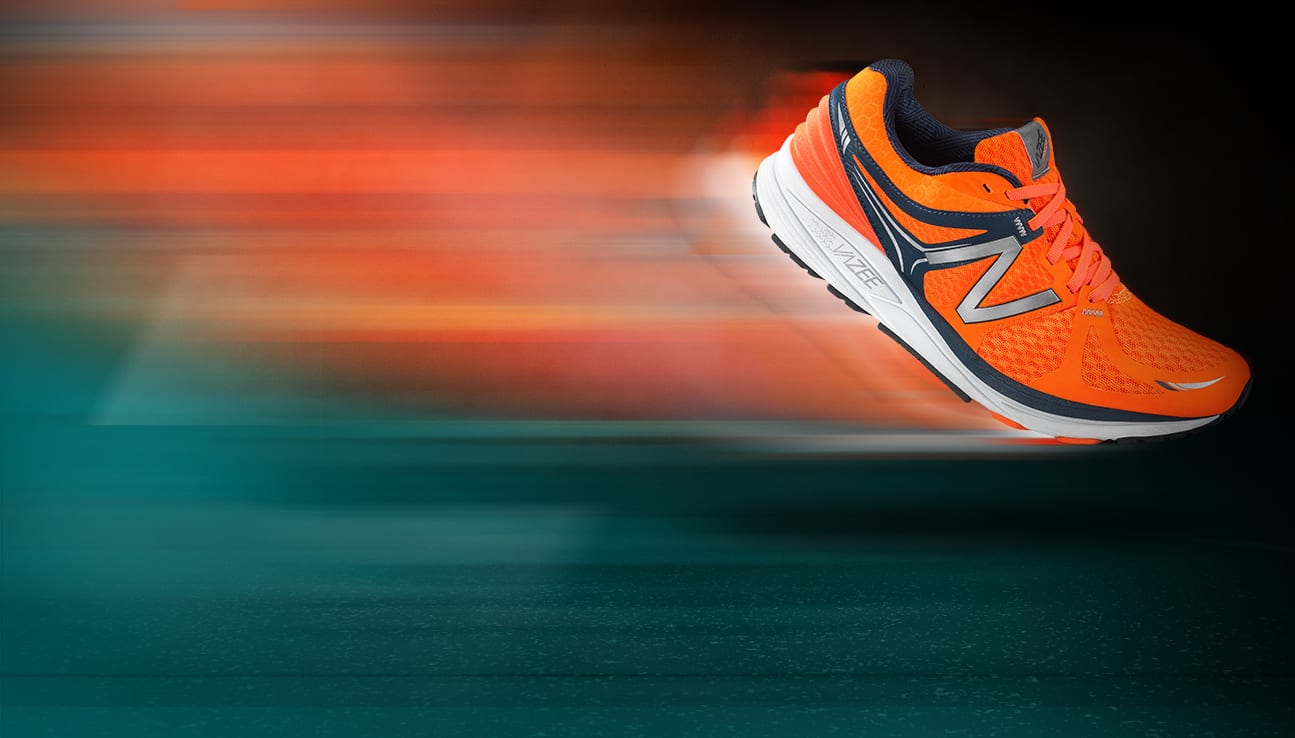
    New Balance India is to make a comeback – and says it aims to open about 50 stores within the next few years.

    The US sports shoes brand’s first foray into India was in the early 2000s, but it shut its shops after a few years. Now its VP for Asia Pacific Darren Tucker says it plans outlets across shopping malls and high streets in Delhi, National Capital Region (NCR), Mumbai and Bengaluru.

    “We were ahead of time,” says Tucker. “We did not have such a wide brand presence globally then, and the retailing experience was poor. Now, the market looks more mature.”

    Its first store this time around opened yesterday – an 1100 sqft (102 sqm) New Balance Athletic Shoes standalone outlet at DLF Mall of India in Noida, near New Delhi. The company has a distribution agreement with The Major Brands Group in Mumbai for retailing New Balance products in India.

    “It’s not about the number of stores,” says Tucker. “We would prefer to have a profitable retail presence and grow at a relatively slower pace this time.

    “All our global competitors are here. The market is built. We know our competitors, and that’s an advantage.”

    With an average selling price of Rs.7000 (US$105) for shoes, New Balance will be a premium offering. Tucker says apparel is a promising segment, so lifestyle will be a focus area. The company has also tied up with online retailer Jabong for e-etailing, and is negotiating with global partner Amazon for the Indian market.

    “Considering the growth of eCommerce in India, that’s a must,” says Tucker. The company will continue to leverage its global marketing properties across sports and athletics, and plans to develop local properties. “For India, it’s going to be cricket first.”

    At the moment, the sports shoe and apparel market in India is dominated by Adidas, Nike, Puma and Reebok. Japan’s Asics Corp. opened its first standalone store in Delhi last July.

    A report by Images F&R Research estimates India’s active sportswear market at Rs.6000 crore, growing at 13 per cent a year.

    New Balance, which reported $3.3 billion in sales worldwide in 2014, was founded in 1906 by British immigrant William J. Riley to sell arch supports to police officers and waiters. The company was bought by Jim Davis, the son of a Greek immigrant, in 1972 and from its base in Boston now sells athletic shoes, apparel and accessories for men, women and children across 5000 outlets worldwide under brands such as Aravon, Brine, Dunham, PF Flyers and Warrior Sports.

  • Yue Yuen sales rise on retail rollout

    Yue Yuen sales rise on retail rollout

    The world’s largest branded athletic and casual footwear manufacturer and retailer Yue Yuen Industrial says retail and wholesale sales of sportswear in Greater China rose 19.6 per cent in the first nine months of this year, due to an expanding store network.

    Yue Yuen operates more than 6000 retail stores and concessions across Greater China under its own name as well as the international brands it manufactures for.

    Total sportswear sales reached US$1.7 billion compared to US$1.456 billion in the same period last year. Other factors in the growth were the company’s efforts to increase efficiency and a better merchandise selection.

    Sales of athletic shoes were up by 3.4 per cent and sales of casual shoes were down by 5.6 per cent. The total volume of shoes sold increased by just 1.1 per cent to 231.4 million pairs for the period.

    Hong Kong listed Yue Yuen designs and makes shoes for brands including Nike, Crocs, Adidas, Reebok, Asics, New Balance, Puma, Timberland and Rockport as well as operating its own network of retail stores under the YY Sports brand, through subsidiary Pou Shen.

    The increased athletic shoes and sportswear sales helped boost Yue Yuen’s overall revenue by 5.8 per cent to US$6.3 billion and gross profit by 9.1 per cent to $1.422 billion. Total net profit attributable to owners of the company was $285.6 million, up 36.6 per cent year on year, according to figures filed with the stock exchange.

    Pou Shen, which opened 771 new points of sale during the nine months, increased its gross profit by 32.5 per cent to $566.5 million due to management’s strategy to concentrate on the retail business, improved operating efficiency, and better procurement of inventory.

    YY Sport instore wide

  • Puma eyes top spot in India through store expansion, new brands

    Puma eyes top spot in India through store expansion, new brands

    Puma, the global brand known for its lifestyle sports apparel and shoes, is looking to strengthen its position in India. It is eyeing the top slot in the segment via a nationwide network expansion as well as the launch of its global brands pitched at the Indian sports enthusiast. Abhishek Ganguly, the new managing director of PUMA India, is looking to reposition the brand in the country. Puma is currently in the second spot behind Adidas in India’s INR5000-crore (INR50 billion, USD785.3 million) sportswear market, followed by Nike.

    “We are in process of creating a strong brand awareness through various marketing and product launch initiative,” Ganguly said. “We are bullish on India and we have seen a major shift to high end products by Indian consumers. Hence, we want to bring our global sports assets to India shortly.”

    From its global kitty, Puma has already launched two leading shoe brands, Mobium and Faas, in India. The Mobium Ride, priced at about INR9,000, is built for the more traditional heel striker looking for an everyday running shoe. The company also launched the Nightcat Powered edition under Mobium brand. The Faas 600 S is priced in the INR8,000 range in India.