Tag: rakuten

  • Rakuten Japan Testing autonomous delivery robots

    Rakuten Japan Testing autonomous delivery robots

    A Japanese collective including Yamato Transport and Rakuten will partner with the Japanese government in a road test of autonomous delivery robots.

    A government-appointed team will monitor the testing to identify potential issues, with a special focus on safety concerns, as well as considering new operating rules for inclusion in the Road Traffic Act. The team includes representatives from Mitsubishi Estate, Japan Post, Panasonic and self-driving tech firm ZMP, as well as officials from the National Police Agency, Ministry of Land, Infrastructure, Transport and Tourism, Ministry of Economy, Trade and Industry and local governments.

    Japan’s logistics sector, under pressure from burgeoning online sales, is currently experiencing a shortage in labour that could be answered with robot delivery units equipped with cameras and GPS capabilities, giving rise to industrial opportunities for robotic systems developers.

    The tests are expected to be wound up by March next year.

  • Cisco expects 5G windfalls in the future

    Cisco expects 5G windfalls in the future

    Cisco is primarily known for its switches and routers for service providers and enterprises. It has not been a big competitor in the radio access networking space against vendors such as Ericsson and Nokia. But on its fiscal third-quarter 2019 earnings call this week, Cisco CEO Chuck Robbins mentioned “wired and wireless” networking a few times.

    “We are moving into an era of truly immersive and pervasive wireless connectivity, which generates demand for high density, low latency performance, for real-time experiences over both wired and wireless networks,” said Robbins, according to a Seeking Alpha transcript. “Our guys like to say behind every great wireless network is a great wired network,”

    In fact, the company has been hired by Rakuten to help it build its new greenfield mobile network in Japan. Cisco is building Rakuten’s network functions virtualization infrastructure (NFVi) with 4,000 edge nodes. In addition to software, Cisco is delivering routing and switching hardware. And Cisco is also the primary systems integrator for Rakuten’s virtualized telco cloud.

    On its earnings call, Robbins said, “With our newest Catalyst 9000 family additions, we have completed the most comprehensive enterprise networking portfolio refresh in our history. We have rebuilt our entire access portfolio with intent-based networking across wired and wireless.”

    Robbins also mentioned 5G, saying Cisco is helping telcos build out their core networks ahead of large-scale 5G rollouts. Although Cisco is already selling packet core technology to carriers for their new 5G networks, “the big play for us is when they begin to evolve their networks to accommodate the traffic,” he said. “And we’ve always said we felt like that would be sometime in calendar 2020.”

    Carriers are leveraging their existing core networks to run the early trials on 5G. “We believe that sometime in the future when the number of connections increases and the capacity gets to a point, then they’re obviously going to begin to build out these new backbones dedicated to the 5G infrastructure, where we will generally come into play,” he said.

    Although Robbins focused on telcos’ core networks in the earnings call, the company has investments in Altiostar, a startup that has developed RAN virtualization technology. Altiostar is also working with Rakuten.

    Finally, Robbins talked a bit on the earnings call about Wi-Fi 6. Cisco recently announced new Wi-Fi 6 access points across its Catalyst and Meraki portfolios, as well as the Catalyst 9600 core switch family.

    “Wi-Fi 6 is effectively what used to be called 802.11ax,” said Robbins. “And, what’s happening now is when you get these high-performance access points into the organizations and you get the low latency immersive experience possibilities, then it’s also going to drive the need to upgrade the backbones.”

  • Japanese telcos assigned 5G spectrum

    Japanese telcos assigned 5G spectrum

    Japan’s telecom ministry has allocated 5G mobile spectrum to incumbent operators NTT Docomo, KDDI, and Softbank, as well as local e-commerce giant Rakuten.

    The Ministry of Internal Affairs and Communications has approved the allocation of spectrum after determining that the companies’ applications met the conditions of the allocation.

    The four companies plan to invest heavily in 5G, spending a combined 1.6 trillion yen ($14.4 billion) over the next five years. Docomo is planning the largest spend, with goals to invest at least 795 billion yen in 5G over this time.

    The four plan to commence commercial 5G services in 2020, with KDDI and SoftBank planning to commence advertising for its services in March.

    Rakuten Mobile, Japan’s upcoming newest market entrant, meanwhile plans to commence 4G services in October 2019 and 5G services in June 2020.

    The conditions for the allocation of spectrum included commitments to commence services in every prefecture of the nation within two years, and set up 5G base stations in at least half the country within five years.

    According to the report, Docomo and KDDI are each targeting more than 90% 5G population coverage by the end of the five years, while SoftBank is targeting 64% coverage while Rakuten is aiming for 56%.

  • Rakuten using Red Hat technologies in mobile rollout

    Rakuten using Red Hat technologies in mobile rollout

    Japan’s Rakuten announced it has arranged to use open source technologies provided by Red Hat in its upcoming end-to-end cloud native mobile network.

    The network, which is scheduled to launch in October, will use Red Hat’s open hybrid cloud technologies, Rakuten announced at this week’s Mobile World Congress in Barcelona.

    Rakuten Mobile Network has built an NFV based network supported by Red Hat Enterprise Linux, the Red Hat OpenStack Platform and Red Hat Ceph Storage software-defined storage solution.

    The deployment will support the planned launch of 4G mobile services, and leave Rakuten Mobile Network well placed to roll out 5G services subject to government licensing approval.

    “Our vision is to build a network that innovates at the speed of software and scales at the speed of cloud, and with a culture founded in technical and operational innovation, we are uniquely positioned to achieve that. We are excited to work with leading partners from around the world such as Red Hat as we work to create the world’s first end-to-end fully virtualized cloud-native network,” Rakuten Mobile Network CTO Tareq Amin said.

    “End-to-end automation for both network and services is a pillar of our systems building strategy, and by using Red Hat’s open source technology we can achieve automation and auto-scaling, enabling more productive operations and allowing us to provide cost-effective services to our customers.”

  • ViSenze AI technology helps people shop on Samsung phones

    ViSenze AI technology helps people shop on Samsung phones

    Visual commerce AI firm ViSenze has partnered with Samsung to help users easily discover and purchase products using the Shopping by Bixby Vision app on the electronics firm’s mobile devices. The partnership employs ViSenze’s automated visual-commerce technology and visual-search capabilities customised to consumers’ personalised shopping demands.

    “Consumers are exposed to countless products in their everyday lives that inspire and empower them to explore new trends,” said ViSenze CEO Oliver Tan. “Samsung is one of the first major companies to capitalise on this, recognising how essential it is to ensure the path from discovery to purchase is effortless.

    “At ViSenze, we work globally with some of the largest brands and retailers. Coupling this knowledge with our market-leading visual commerce technology, we are able to provide our partners with the insights and capabilities they need to find success with visual search and the commerce it’s driving each day.”

    According to material released by the brand, “Visual commerce solutions enable mobile shoppers to seize inspirational moments instantaneously by enabling them to find the same or visually similar products directly on their devices from top retailers such as Rakuten, Urban Outfitters and Zalora.”

    “Thanks to ViSenze, customers in this region can now take mobile shopping to new heights via Shopping by Bixby Vision, which makes shopping easier than ever, via your camera,” said head of mobile services & partnerships for Samsung Southeast Asia & Oceania Christopher Tarr.

    “From inspiration to instant gratification – it is that simple.”

  • JD.com and Rakuten to collaborate on drone delivery

    JD.com and Rakuten to collaborate on drone delivery

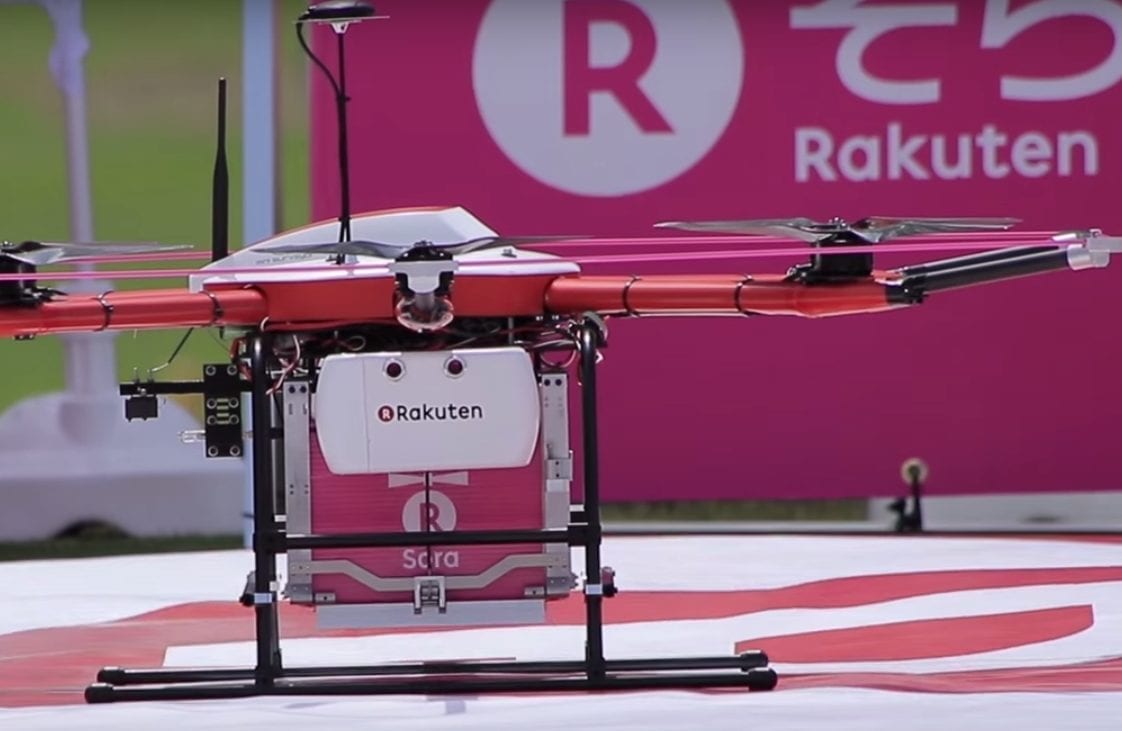
    Chinese online retailer JD and Rakuten, the Japanese e-commerce firm, will collaborate on developing unmanned delivery solutions in Japan. According to a new agreement signed between JD and Rakuten, JD’s drones and autonomous delivery robots will be used in Rakuten’s unmanned delivery services, which the firm launched in 2016. The two companies will collaborate on Rakuten’s lineup of unmanned delivery services to suit a wide range of applications and situations.

    Rakuten has already gained experience through providing delivery services and trials in collaboration with corporate partners and local governments. In 2018, its first delivery trial was conducted using a combination of drones and autonomous delivery robots, a step toward solving the last mile challenge for the logistics sector in Japan.

    “We are delighted to begin this collaboration with JD, which boasts the most cutting-edge proprietary delivery network in China as well as a track record and knowhow in delivery with drones and UGVs,” said Koji Ando, group managing executive officer of Rakuten. “By using JD’s drones and UGVs with the unmanned delivery solutions created by Rakuten, we hope to accelerate innovation in the Japanese logistics sector and contribute to building a society that can offer greater convenience to all citizens.”

    JD began developing its drone program in 2015, and launched the world’s first commercial drone deliveries in 2016 in rural China. It currently operates drones in Jiangsu, Shaanxi and other provinces.

    Since then, JD’s drones have logged more than 400,000 minutes of flight time. In January this year, the company announced the success of Indonesia’s first government-approved drone test flight, opening the door for future commercial drone use in Indonesia and Southeast Asia.

    On the ground in China, its autonomous delivery robots are being used in urban areas in several cities and are becoming frequent sights on a number of university campuses and in office parks. JD has also launched two smart delivery stations in the cities of Changsha and Hohhot, transforming last-mile logistics and further increasing delivery speed for customers.

    “We have been using drones and autonomous delivery robots for real deliveries in China for more than two years,” said Jun Xiao, president of JD-X, JD’s logistics innovation lab. “This is one way we are innovating to make logistics more accessible, reliable and cost-effective.

    “In Japan, there are many opportunities for drones to make deliveries in mountainous areas, remote islands and in emergency situations. As we push the bounds of what our autonomous delivery technology can do, and explore its use in a wide range of applications from e-commerce to humanitarian support, we believe it will continue to bring significant benefit to people around the world.”

  • Poor customer experience costs retailers in Asia

    Poor customer experience costs retailers in Asia

    Nearly two-thirds (63 per cent) of consumers in Asia will no longer shop with a retailer after just one poor customer experience. That is one of the conclusions of a research study conducted by unified commerce provider Tofugear in partnership with Rakuten Insight. Based on a survey of 6000 shoppers across 12 countries in Asia, the research underlines the importance of delivering on experience for retailers.

    Top frustrations with stores included products being out of stock, long checkout queues and poor service from staff. When it comes to online shopping, consumers were turned off by high shipping costs, inaccurate product information and slow fulfilment speeds.

    Philip Wiggenraad, head of research at Tofugear, says: “The connected consumer in Asia is empowered and not afraid to look elsewhere when their needs are not being met. Retailers need to understand that they often only have one chance to get it right.”

    E-commerce is popular with consumers in the region: 59 per cent prefer to shop online rather than in stores.

    However, there were considerable variations depending on the country. China led the way (88 per cent), while markets such as Hong Kong and Singapore (both 51 per cent) were more evenly split in their preferences between online or stores.

    While millennials are the most prolific online shoppers, with more than half (55 per cent) doing so at least once a week, Gen Z also has a definite lean towards the online channel.

    “Physical retailers expecting a resurgence of the store driven by Gen Z should think twice and continue to look at ways to make their stores relevant in the digital age,” says Wiggenraad.

    Respondents to the survey showed a strong willingness to engage with store technologies in order to make their shopping journey more frictionless. Two-thirds (65 per cent) would use their mobile phone for self-checkout, while 62 per cent were open to using apps in stores as part of a connected retail experience.

    Access the full findings of the Digital Consumer in Asia 2018 report by downloading the PDF here.

  • Rakuten  and Seiyu to partner in online grocery service

    Rakuten and Seiyu to partner in online grocery service

    Japanese online retail company Rakuten is partnering with Walmart-owned supermarket Seiyu to launch an online grocery service. Spokespeople from the companies say about 20,000 products will be available on the site, drawn from the Seiyu range, including fresh food. Orders will be fulfilled from stores, restricting the service – for now – to about 16 Japanese suburbs, however a warehouse has been opened near Tokyo to serve the capital.

    “We can tap into Rakuten’s 99 million-strong membership base,” said Seiyu executive officer Tamae Takeda. “[Rakuten’s] advantage is in technology, so we can combine our strengths.”

    The new online grocery service will compete with one launched by Amazon in April last year, as well as those offered by larger Japanese supermarket chains.

    Seiyu and Rakuten plan to offer free delivery on orders over a set threshold, or $4 for those under it.

  • Rakuten completes 5G trials in 28-GHz with Nokia

    Rakuten completes 5G trials in 28-GHz with Nokia

    Japan’s Rakuten Mobile Network said it has completed over-the-air 5G trials in the 28-GHz frequency band using equipment provided by Nokia and Intel.

    The trials were carried out from June in a shielded room at the Nokia Kawasaki Technology Center located in Kanagawa Prefecture in Japan, using Nokia AirScale base station and the Intel 5G Mobile Trial Platform.

    During the trials, Rakuten Mobile Network and Nokia verified a number of 5G applications including 4K video and 3D 360-degree VR live streaming, the Japanese mobile carrier said in a company statement.

    Rakuten Mobile Network, which is the newly created mobile subsidiary of Japanese e-commerce giant, secured government approval to deploy 4G mobile services in the 1.7-GHz frequency band in April 2018. The company aims to launch its first mobile services as a mobile network operator in October 2019.

    Rakuten Mobile Network is teaming with a number of vendors including Nokia on the design and construction of its nationwide mobile network. The two companies will also work closely together on 5G technology testing and evaluation, Rakuten said.

    “The next generation of mobile broadband and the Internet of Things, enabled by 5G, will transform virtually all sectors of society and industry, and further accelerate the opportunities to advance in healthcare, education, energy services and agriculture, and within new industry applications,” Rakuten Mobile Network CTO Tareq Amin said.

    “The results of our trials highlight the importance of realistic 5G OTA testing and reinforce the potential of 5G networks, taking us a step closer towards actual deployment,” he added.

  • Rakuten to buy mobile commerce startup Curbside

    Rakuten to buy mobile commerce startup Curbside

    Japanese e-commerce company Rakuten is to buy Curbside, an app which offers shoppers mobile ordering from brick-and-mortar stores for outside pickup.

    Curbside says after the acquisition it will continue to operate as an independent company, with its products, services and team unchanged.

    Rakuten’s investment heralds a shared “common vision around connecting consumers to easy, convenient mobile commerce at stores in the communities where they work and live,” said Curbside’s announcement.

    The purchase of Curbside is Rakuten’s 36th acquisition in 11 years, but its first for two years.

    Curbside, founded in 2013, was an early pioneer of mobile technology that can help brick-and-mortar retailers and restaurants provide an additional way to compete with e-commerce companies and food delivery services. They take the in-store pickup concept a step further by delivering purchases to shoppers without them having to get out of their cars.

    Website Mobile Marketer says the deal comes at a time that mobile ordering and pick up are gaining steam. But that means the company faces more competition than it did several years ago.

    “Having a big corporate parent like Rakuten is likely to provide Curbside with an opportunity to work with a wider group of retailers worldwide. At the same time, the deal suggests that, as mobile ordering and pickup become more popular, the supporting technology is becoming a must-have for digital retail platforms like Rakuten while underscoring the importance of location data for digital marketing services.”

  • Carousell raises 85$ Million in funding

    Carousell raises 85$ Million in funding

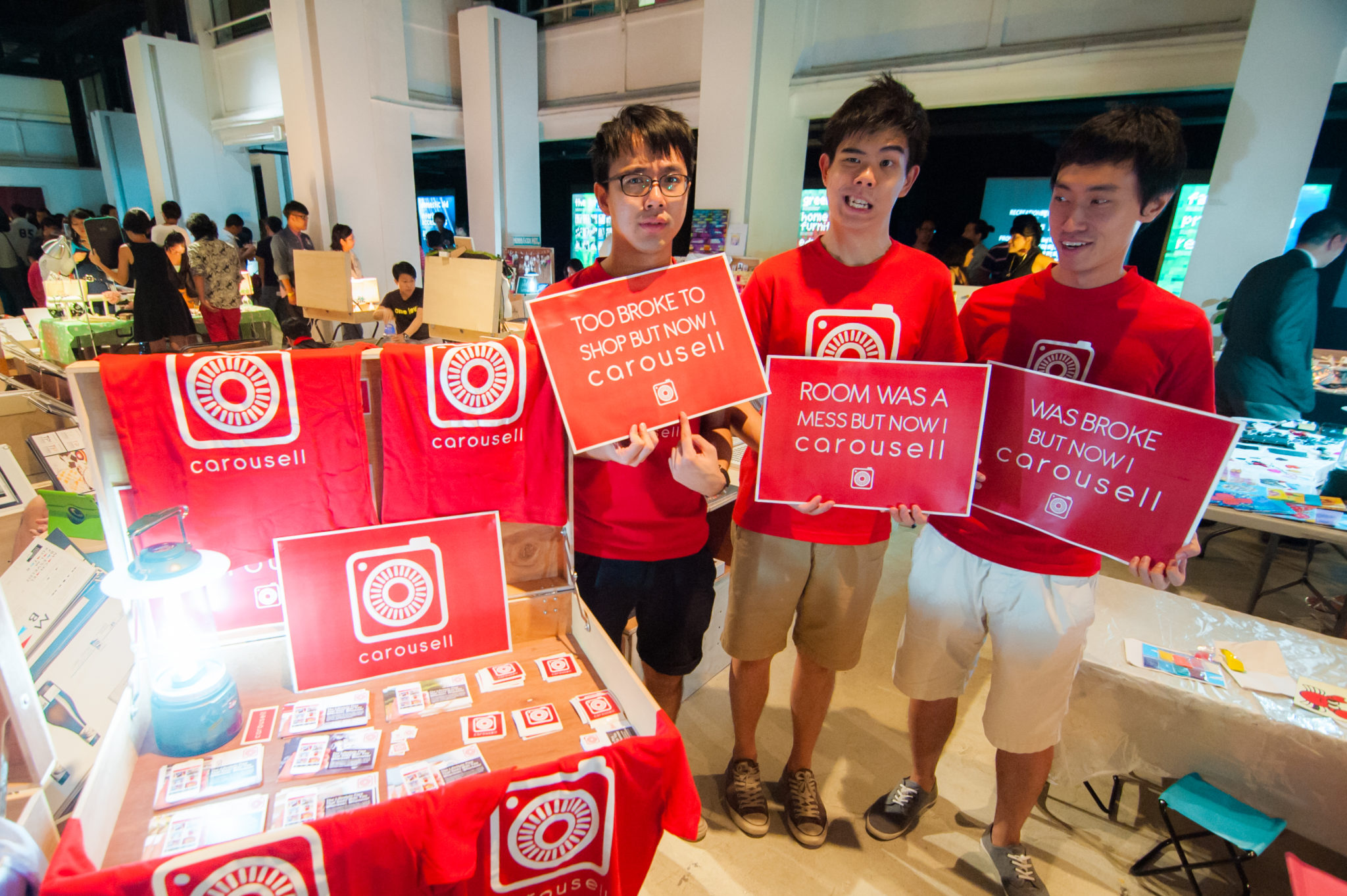
    Singapore classifieds marketplace Carousell has raised US$85 million in series-C funding. The round was co-led by Rakuten Ventures and EDBI, with participation from existing investors 500 Startups, Golden Gate Ventures and Sequoia India, as well as new investor DBS.

    A pioneer of mobile classifieds in 2012, Carousell will use the capital injection to accelerate its product innovation to reimagine classifieds. A key component will be investment into talent and deep technology capabilities.

    “In the past six years, we’ve gathered a lot more data, feedback and learnings about the problems and friction people face when buying and selling online. We are laser-focused on solving these problems with technology and catering to local cultural norms and behaviours in Southeast Asia while ultimately serving our core mission of inspiring everyone in the world to start selling,” says co-founder/CEO Siu Rui Quek.

    “The investment will enable us to continue building up our teams with top-tier talent to accelerate our development of highly anticipated features, and more AI and machine learning capabilities.”

    In the two years following its last round of funding, Carousell’s seven-country marketplace has quadrupled in volume globally, featuring more than 144 million listings and 50 million items sold. Carousell began to realise its AI vision last year with the launch of predictive features like Smart Listings, personalised browsing and chatting.

    In the past year, Carousell has also expanded its marketplace offerings in Singapore with high-value categories such as cars, property, jobs, services and finance. In conjunction with the investment, DBS and Carousell will be collaborating to offer financial products and payment services on Carousell’s platforms.

  • Rakuten receives confirmation for MNO launch

    Rakuten receives confirmation for MNO launch

    Japanese e-commerce giant Rakuten has secured government approval to deploy 4G mobile services in the 1.7-GHz frequency band, and now plans to launch as the nation’s fourth mobile operator in October.

    New subsidiary Rakuten Mobile Network plans to raise up to 600 billion yen ($5.6 billion) to pursue its mobile business, including through an up to 200 billion yen investment by its parent company.

    Rakuten announced its intention of entering the mobile market in December last year. Last month, the company signed agreements  with Chubu Electric Power, TEPCO Group and Kansai Electric Power Co to use the utility companies’ telecoms and transmissions towers and other infrastructure for the planned 4G deployment.

    The company is considering similar tie-ups with other electric utilities to support its goal of achieving nationwide service coverage.

    When announcing its intention to enter the mobile market, Rakuten said household spending on telecoms services in Japan is rising every year and reducing telecoms expenses is considered a major social issue.

    The current mobile market – which is dominated by NTT Docomo, KDDI and SoftBank – is also often criticized as a “coordinated oligopoly”, and the government is in the middle of a thorough industry review aimed at ensuring fair competition, the company added.

    Rakuten has been providing MVNO services under the Rakuten Mobile brand since October 2014, using NTT Docomo’s mobile network, and has racked up around 1.5 million customers.

    The company is targeting at least 15 million subscribers with its mobile operations, which compares to 39 million for third-ranked SoftBank. Rakuten’s foray into the mobile market was contingent on it securing 4G spectrum from the ministry of internal affairs and communications (MIC), which has now granted approval for Rakuten’s plan.

  • Japan’s Rakuten teams with electric utilities for MNO business

    Japan’s Rakuten teams with electric utilities for MNO business

    As part of its plan to become the country’s fourth mobile carrier, Japanese e-commerce giant Rakuten is teaming up with a handful of local electric utilities to leverage the latter’s infrastructure and facilities to build its own 4G mobile network in Japan.

    The e-commerce firm signed an agreement last week with Kansai Electric Power Co that enable Rakuten to utilize the utility firm’s transmission towers, utility poles, telecoms towers and other facilities and equipment for its planned 4G network.

    At present, Rakuten operates as a mobile virtual network operator (MVNO) leasing network capacity from market leader NTT Docomo. The company announced last December its intention to enter the mobile network operator (MNO) business and has applied to Japan’s Ministry of Internal Affairs and Communications for a mobile license to build its own 4G network operating on the 1.7-GHz and 3.4-GHz bands.

    If the frequency band allocation is granted, Rakuten said, it plans to make use of Kansai Electric Power’s transmission towers, utility poles, telecoms towers and other infrastructure in and around Japan’s Kansai region for its base station locations.

    As well as Kansai Electric Power, Rakuten also signed similar agreements with Chubu Electric Power Co and TEPCO Group in March, in a bid to build its mobile network in the most efficient way.

    Rakuten, which plan to invest up to ¥600 billion ($5.6 billion) to build the mobile network, said it will also consider similar tie-ups with other electricity utilities to achieve nationwide service coverage, as it prepares for entry into the MNO business.

    Rakuten launched its MVNO business under the Rakuten Mobile brand in October 2014.  As of January 2018, Rakuten Mobile has over 1.5 million MVNO subscribers.

  • Walmart and Rakuten Announced New Strategic Alliance

    Walmart and Rakuten Announced New Strategic Alliance

    In Tokyo today, Walmart president/CEO Doug McMillon and Rakuten chairman/president/CEO Hiroshi “Mickey” Mikitani announced a strategic alliance aimed at expanding consumer reach and enhancing customer service.

    Included in the collaboration is the launch of an online grocery delivery service in Japan as well as an exclusive retail alliance between the US retail giant and e-reading service Rakuten Kobo. This will enable Walmart to sell e-books and audiobooks, as well as offer Rakuten Kobo e-readers in stores and online in the US.

    “We’re excited to collaborate with the top online shopping destination in Japan,” says McMillon.

    “We look forward to expanding our grocery footprint in Japan and launching eBooks and audiobooks for our customers in the US.”

    Rakuten and Seiyu GK, a Walmart subsidiary, have reached a basic agreement to establish a JV to launch a delivery service for online grocery shoppers in Japan, to be known as Rakuten Seiyu Netsuper and planned to start late this year. With the aim of increasing fulfillment capacity, enriching the merchandise offering and improving customer convenience, the service will establish a fulfilment centre this year as well as offering deliveries from Seiyu stores.

    The service’s merchandise offering will showcase Seiyu’s twin strengths of “quality” and
    “low prices”. It will include not only fresh produce and daily consumables, but also convenience items such as cut vegetables, partially prepared foods and ready-meal kits, as well as local gourmet products from Rakuten Ichiba marketplace merchants.

    An optimised user experience will be offered, with more personalisation enabled by big data and AI. Customers will be able to earn and use Rakuten Super Points on more than 70 services.

    Meanwhile, Walmart will become Rakuten Kobo’s exclusive mass retail partner in the US, offering nearly 6 million titles from thousands of publishers and hundreds of thousands of authors. Walmart will also sell digital book cards in more than 4000 stores.

    All e-book content will be accessible through a Walmart/Kobo co-branded app for Android and iOS devices, a desktop app and Kobo e-Readers, which will also be sold at
    Walmart.

  • Bic Camera, Rakuten looking at JV

    Bic Camera, Rakuten looking at JV

    Japanese e-commerce site Rakuten and consumer electronics retailer Bic Camera are considering a JV that will marry virtual and real stores.

    They expect to sign a basic agreement soon with a view to setting up their partnership early next year to work toward launching their e-commerce site in April.

    Bic Camera already has an online store on Rakuten Ichiba virtual mall. Through integrating their systems, Bic Camera will upgrade its online store into a joint site that will offer improved services, such as easy booking for delivery and installation.

    Buyers will also be able to search for brick-and-mortar Bic Camera locations that carry the product that interests them. Eventually, the scope of their cooperation will be expanded to cover in-store pickups of online orders, common shopping points and joint delivery services.

    While online sales account for nearly 30 per cent of consumer electronics  and appliance sales in Japan, shoppers say they want to touch and see products before buying. They also criticise the lack of attentive delivery and installation services they can find at physical stores.

    For Bic Camera, 9.2 per cent of its sales, at ¥72.9 billion (US$643 million), were online for the year to the end of August. While the company has its own e-commerce site, it does not anticipate much negative impact from launching the store with Rakuten.

    “Most of the Rakuten Ichiba shoppers will be new customers for us, because people who buy in the ‘Rakuten economic zone’ are different from those who buy from our website,” says a Bic Camera official.