Tag: rakuten

  • Rakuten Opens “Rakuten SPORTS ZONE” with NBA Merchandise

    Rakuten Opens “Rakuten SPORTS ZONE” with NBA Merchandise

    Rakuten, Inc., a global marketing partner of the National Basketball Association (NBA), today opened its pro sports merchandise store Rakuten SPORTS ZONE to further build excitement around the NBA in Japan. The store is launching with sales of limited-edition items including autographed items from NBA Legends.

    In October 2017, Rakuten launched a multiyear partnership with the NBA, making it a global marketing partner of the organization. With this partnership, Rakuten is now operating the “NBA ZONE” in its internet shopping mall Rakuten Ichiba as a special page gathering NBA merchandise from Rakuten Ichiba stores. With the opening of the new Rakuten SPORTS ZONE, offering products that can rarely be obtained in Japan such as premium goods of former NBA stars, we will be able to further expand the product lineup offered in the NBA ZONE.

    Offerings include limited-edition autographed memorabilia (with serial number) offered by the Upper Deck Company, and reproductions of the jerseys of 80s and 90s NBA stars offered by the American sports apparel-maker Mitchell & Ness Nostalgia Co. New products will be added going forward.

    Rakuten will leverage its diverse range of services to further promote the NBA and basketball in Japan, and contribute to the further development of sports and culture.

  • Japan’s Rakuten retail site bans ivory sales

    Japan’s Rakuten retail site bans ivory sales

    One of Japan’s largest online retailers has banned the sale of ivory, closing a major marketplace for the controversial trade. Rakuten is accused of being the world’s largest online retailer for elephant ivory, but will now phase out its sale. The trade is legal in Japan for items imported before 1989 – but no new stock can be brought into the country. Many other countries have banned the trade outright over concerns that it contributes to elephant poaching.

    Rakuten also banned the sale of sea turtle products on its site, telling it was responding to “growing international concern”.

    “We expect it will take 1-2 months for all listings of these prohibited products to be removed,” it said.

    On the day of the announcement, a large number of ivory items were still listed for sale, including many carved personal seals known as “hanko”. Sellers of such items are expected to maintain careful records of their origin, and use only government-regulated ivory stockpiles. But activists believe the rules are often circumvented and the precious material is often smuggled across borders.

    Yahoo Japan, another site which allows the sale of ivory, has previously come under fire for the practice.

    However, a spokesman told Reuters it did not plan to halt the trade, saying: “We don’t think that the legal ivory trade in Japan has any impact on African elephant numbers.”

    “It is important to recognise there are cultural differences between different countries,” he added.

    African elephant numbers have plummeted in the last century, and there are an estimated 500,000 remaining on the continent.

    China, a traditional powerhouse in the ivory trade, announced in December that it would ban all ivory activities and trade by the end of 2017.

    Conservation groups hailed the decision as “historic” and a “game-changer” – but ivory artists have lamented the loss of a traditional craft.

  • Rakuten first-quarter profits surge on sales promotions, new tech investments

    Rakuten first-quarter profits surge on sales promotions, new tech investments

    Japanese e-commerce giant Rakuten said net income for the first-quarter of fiscal 2017 more than doubled for the three months ending March 31, on the back of a positive customer response to sales promotions and new technologies.

    Japan’s largest e-tailer said total quarterly net income reached 25.06 billion yen (US$220.3 million), up from 12.09 billion yen (US$104.7 million) for the same period a year earlier.

    The Tokyo-based company said its operating income rose 73.2% to 40.4 billion yen (US$355.3 million), while first-quarter sales jumped 17.6%, for a total of 212.08 billion yen (US$1.86 billion).

    The e-tailer currently offers customers up to seven times the typical rewards points, a bid to poach business from rivals Amazon.com and Yahoo.

    According to a press release, Rakuten said it has “cultivated loyal customers and conducted sales activities in order to win new users, as well as initiatives targeting greater customer satisfaction, strengthening services for smart devices and opening up the Rakuten ecosystem,” the company said.

    This incentive has increased membership in Rakuten-brand credit cards and the use of revolving balances, boosting the company’s financial business.

    “Results are on track for improvement in overseas internet services, due to contributions from the steady growth in U.S. subsidiary Ebates Inc. and other factors,” it added.

    In February, Rakuten invested $26 million in AirMap, a company working on a global airspace management platform for drones. Meanwhile, in September 2016, the company acquired Fablic, provider of the C2C marketplace app Fril.

    In the past year, it has also invested in American bot developer Run Dexter, digital content provider getAbstract AG, cross-border payment platform Currencycloud, and Japanese fintech company Folio – investments, which look to boost revenues further in the coming fiscal year.

    The firm said that for the twelve months ended December 31 it is targeting double-digit growth over the previous year.

    According to a recent report produced by JapanConsuming, e-commerce will be Japan’s largest single retail channel by 2022. In 2015, Japan generated roughly $80 billion in e-commerce sales. This compares to some $350 billion of e-commerce sales in the U.S. and China’s whopping e-commerce sales result, which exceeded $650 billion in 2015.

  • Japanese retailers to accept bitcoin payments

    Japanese retailers to accept bitcoin payments

    Two Japanese retail groups are about to start accepting bitcoin payments, a move that is likely to promote wider use of the virtual currency by domestic consumers.

    Electronics chain Bic Camera has teamed up with Tokyo-based BitFlyer, which runs the largest Japanese bitcoin exchange, for a trial run of the payment system at Bic Camera’s flagship shop in Tokyo’s Yurakucho district, and at Bicqlo Bic Camera, the hybrid outlet with Uniqlo in Shinjuku.

    Customers can pay up to ¥100,000 (US$900) using the cryptocurrency, as well as earn reward points at the same rate as for cash payments. Bic Camera may roll out the payment system to other locations depending on its support.

    Meanwhile, Recruit Lifestyle, the retail support arm of human resources conglomerate Recruit Holdings, is partnering with another Tokyo bitcoin exchange company, Coincheck. The virtual currency will become a payment option at shops with the AirRegi POS app developed by Recruit Lifestyle.

    By using tablets or other devices provided by the store, or their own smartphone, customers can deduct the amount on the bill from the designated bitcoin account. Coincheck will convert the bitcoins into yen and transfer the funds to the store.

    AirRegi is used at 260,000 eateries and other retail locations throughout Japan. Businesses can choose to install the bitcoin payment system alone.

    The app is also compatible with Alipay, the payment platform developed by Alibaba Group and used by many Chinese tourists visiting Japan.

    Only about 4500 stores in Japan accept bitcoin payments. Rakuten’s Edy and Suica are leading electronic payment methods in Japan. The addition of AirRegi and Bic Camera outlets will multiply the number of bitcoin-compatible stores to around 260,000, nearing the 380,000 outlets that accept Suica and the 470,000 locations where Edy can be used.

    More than 20 million people worldwide use bitcoin, with the monthly trading volume reaching ¥12 trillion. But more than 80 per cent of users are in North America and Europe. Bitcoin has mainly been traded for investment purposes because its value fluctuates, but it is also increasingly used by overseas travellers as it saves them the need to exchange currencies.

    Japan has just started classifying virtual currency as a payment method, and cryptocurrency exchanges must register with the government. From July, purchases of virtual currency will be exempt from consumption tax.

  • Amazon Japan is second biggest foreign market after Germany

    Amazon Japan is second biggest foreign market after Germany

    Online retail giant Amazon has revealed Germany was its biggest market outside the U.S. in 2016. However, Japan, coming in second for total country sales, experienced the most percentage growth last year, up double-digits on the back of heavy investment in distribution and the increase of China-focused tactics.

    On a US dollar basis, Amazon Japan sales leapt 30% in 2016 to US$10.7 billion (¥1.16 trillion). Amazon Germany gained just under 20% and the UK by 5.6%. US sales rose 28%. As a result Japan has moved ahead of the UK to become the U.S. giant’s second biggest overseas market.

    It’s also the first time a foreign firm has surpassed ¥1 trillion in Japan, making Amazon the most successful international retailer to operate in the archipelago nation.

    While Yahoo and Rakuten serve as rival platforms in the local market, Amazon Japan’s strong investment in its own distribution centre network is paying off. Amazon Japan has 12 centres and four Prime Now centres, making it easy for the e-tailer to sell directly via its marketplace vendors.

    Amazon Japan has also managed to poach talent from other consumer goods businesses, since its debut in 2000.

    On a consumer level globally, the Amazon brand sits favourably. Some 67% of Amazon’s sales came from direct sourcing last year and 17% from third party vendors on Amazon Marketplace, according to a recent survey.

    And Amazon is winning across lifestyle and fashion categories.

    “The biggest-selling categories have been books, health and beauty, baby products and kitchen appliances,” Jasper Cheung, president of Amazon Japan, told Bloomberg.

    Cheung was speaking to media as Amazon revealed this week its website in Japan will start accepting UnionPay cards, in an effort to sell more merchandise to Chinese shoppers across Asia. In 2016, Amazon Japan launched a Simplified Chinese-language version of its website, as the volume of mainland Chinese shoppers continues to rise in Japan, up 500%, according to Cheung.

    Meanwhile, e-commerce demand from China to Japan alone is projected to almost triple to 2.34 trillion yen ($22.5 billion) in 2019, according to Japan’s Ministry of Economy, Trade and Industry.

  • Rakuten drone network under development

    Rakuten drone network under development

    US company AirMap is helping develop technology to manage a Rakuten drone network in Japan.

    Rakuten, Japan’s giant online retail platform, and AirMap hope drones will be allowed to be used at low altitude.

    Rakuten set a world record early this year for the longest drone delivery, flying a container of hot soup 12 km to surfers on a beach.

    CEO Hiroshi “Mickey” Mikitani expects drones to revolutionise the delivery sector. “The capacity in the skies above us is far greater than in the roads beneath our feet,” he has written in a blog post.

    Global rival Amazon is also making a push into drone deliveries.

    With more than 14,000 employees and revenue last year of more than ¥781.9 billion (US$6.8 billion), it is pushing to become a tech giant on the scale of Alibaba or Google.

    So committed is Mikitani to going global that he made English the official company language in 2010. This helped the company dispense with the honorifics and deference of Japanese, and also made it easier to hire foreigners, reports CNN Tech.

    Rakuten takes Japan’s “high-quality, really customer-oriented service mind” and mixes it “with the Silicon Valley, little bit techie, dynamic culture,” says Mikitani.

    A household name in Japan, Rakuten spent $900 million to buy messaging app Viber in 2014, and has also invested in startups such as US transportation company Lyft and Pinterest.

  • Rakuten expands in-store payment system

    Rakuten expands in-store payment system

    Japanese e-commerce giant Rakuten is expanding its Rakuten Pay in-store payment system to support 14 major digital money brands and Android Pay.

    Rakuten Pay provides affiliated stores with a single payments service that supports a variety of payment methods, including credit cards, electronic money, and a smartphone app.

    It now accepts payments made through Rakuten Edy, the digital payment service provided by Rakuten Group, nine electronic money brands affiliated to transport organizations, including Suica, PASMO, and nanaco which can be used at Seven & i Holdings retailers across Japan; WAON,  the electronic money brand provided by the AEON Group (planned service launch in 2018), as well as QUICPay+TM  and iD*1.

    As the system supports Rakuten Edy, it is also compatible with Android Pay.

    In the future, Rakuten said it plans to make the service compatible with NFV payment services, such as Visa payWave, Mastercard Contactless, and J/Speedy, making it possible for affiliated stores to process payments made by foreign tourists visiting Japan as well.

    Moreover, the Rakuten Card & NFC Reader Elan will become available for purchase from March 6, 2017. This device is equipped with functions that enable payment through both credit cards and electronic money.

    For participating stores that already carry the older device and stores that wish to accept only major electronic money brands, the Rakuten NFC Reader Piu, an electronic money reader that is equipped with NFC functions, is scheduled to go on sale in the summer of 2017.

    Rakuten launched the Rakuten Pay in-store payment system, originally a settlement service for credit cards, in December 2012 to the Rakuten Ecosystem to brick-and-mortar stores. In October 2016, Rakuten began providing a smartphone app service through Rakuten Pay which utilizes the Rakuten Member ID.

  • Cross-border eCommerce ‘set to skyrocket’ in China

    Cross-border eCommerce ‘set to skyrocket’ in China

    Cross-border eCommerce (CBEC) is set to skyrocket in China according to a new report from international think tank Fung Global Retail & Technology.

    To capitalise on this, international retailers need to complement their existing expansion strategy with online sales platforms, says Fung Global MD Deborah Weinswig.

    Cross-border eCommerce is the most efficient platform to reach increasingly affluent and sophisticated Chinese shoppers seeking products from overseas, says the report, The International Retailers’ Guide to Cross-Border E-Commerce in China.

    With Chinese authorities relaxing the rules, online purchases of overseas products are expected to increase to US$285 billion in value in 2018, up from US$136 billion last year.

    As well as authenticity being less of a concern, eCommerce purchases attract less taxes so are cheaper for consumers, writes Weinswig. As a result, it is projected that a quarter of the population will shop on foreign sites or through third parties in 2020, up from 15 per cent this year.

    “We expect CBEC will drive the next leg of eCommerce growth as Chinese eCommerce companies and international retailers launch globalised versions of their portals. By selling through CBEC, international retailers can reach Chinese shoppers regardless of whether or not they have a physical presence in China.”

    China is already the largest eCommerce market in the world, with the use of CBEC via such marketplaces as JD Worldwide and Tmall Global being attributed to the continuing rise of the upper middle class with its growing use of the internet and belief that international brands are of higher quality.

    Regulations formalised

    Most shoppers seek items related to wellbeing such as cosmetics and organic foods, expensive or hard to find domestically, says the report. Many foreign eCommerce companies have launched Chinese websites, and since late 2014 authorities have been formalising regulations including tax reforms and expediting customs clearances.

    Japanese companies in particular are targeting Chinese CBEC shoppers, using mobile apps such as Rakuten and China’s Wandou.

    Choosing the right platform is crucial, writes Weinswig. Options include…

    • Online marketplaces such as Alibaba’s Tmall Global, a third-party eCommerce platform that lets brands open a storefront. International distributors using this platform include Macy’s, Metro, Shiseido and Uniqlo.
    • Online direct sales such as Amazon.cn, Jumei Global Store, Kaola.com (for smaller brands) and Vipshop. Distributors buy from the retailers to resell to consumers.
    • Hybrid eCommerce platforms such as JD Worldwide that combine elements of an online marketplace and online direct sales. JD Worldwide partners include eBay, Lotte, Rakuten and Unilever.
    • Overseas shopping platforms.

    “To succeed in the Chinese market, international retailers are advised to have a strategic plan for CBEC that complements their China strategy,” writes Weinswig. “International retailers will need to decide which cross-border channels to sell on, driven by considerations of each platform’s targeted clientele and product category, costs, track record and suite of value-added services.”

    Fung Global Retail & Technology is based in Hong Kong, London and New York.

  • Rakuten drone delivery system launched

    Rakuten drone delivery system launched

    Japanese eCommerce giant Rakuten and its two partners – Docomo and Autonomous Control Laboratory – have trialled a drone-based delivery system.

    The Rakuten drone delivery system uses Docomo’s LTE mobile network when a customer places an order via a smartphone.

    The last experiment in the National Strategic Special Zone of Chiba city saw the cargo carried from the Inage Seaside Park to the adjacent seaside area.

    The new version is upgraded with an ordering app for users and the drone dashboard for drone controlling.

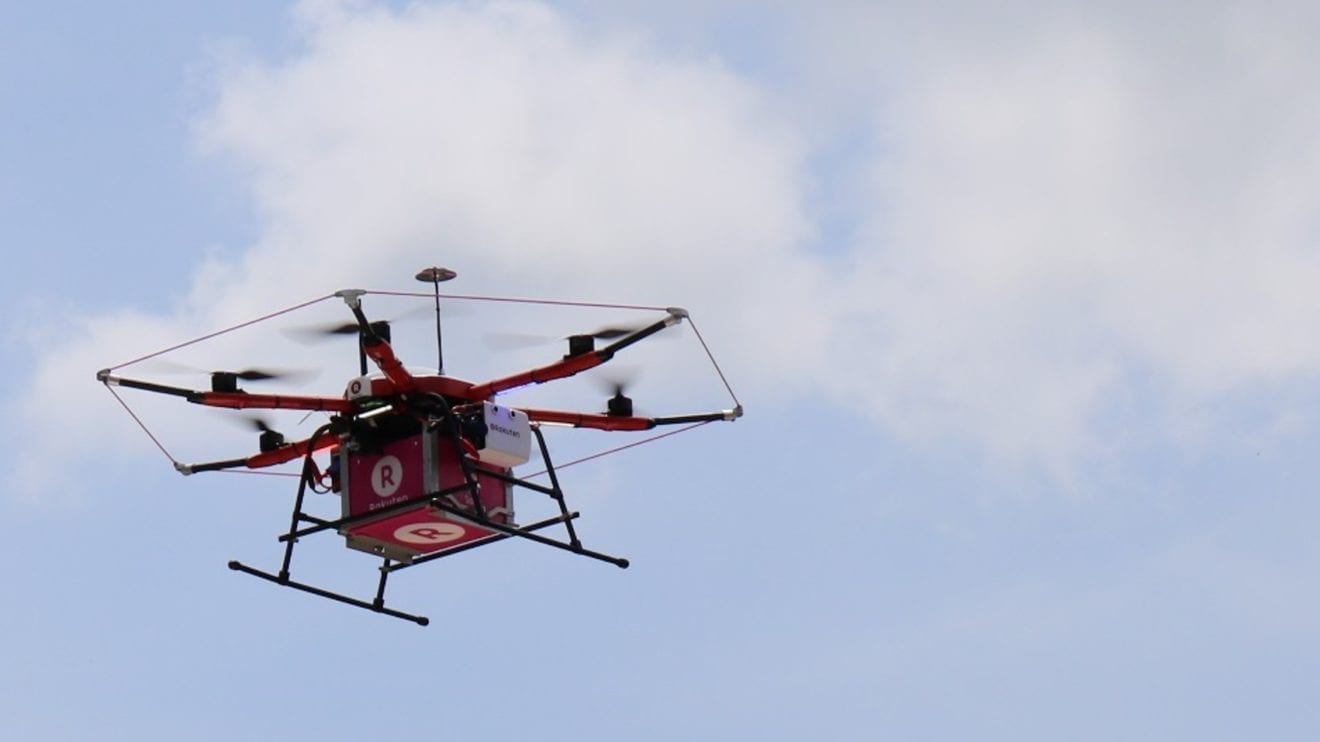
    Rakuten says the new “Tenku” delivery drone features a number of performance enhancements such as water-resistant. Tenku’s base is an airframe called “PF1”, developed by Autonomous Control Laboratory. The airframe helps the drone go long-distance and over the sea as well as over populated areas. A parachute is also equipped to slow the speed in case of emergency fall.

    With its technologies, the operator also maps out flight routes with stable communication, and also monitors the connectivity of airborne cell phones with the mobile network at the ground level.

    The new Rakuten drone-based delivery system is set to be used in urban areas after talks with the Chiba City Drone Delivery Subcommittee.

  • Rakuten opens flagship store on South Korea’s e-marketplace 11STREET

    Rakuten opens flagship store on South Korea’s e-marketplace 11STREET

    Japan’s e-commerce giant Rakuten Inc. has opened an online flagship store on 11STREET, one of South Korea’s leading online marketplaces.

    It said store aims to provide South Korean consumers with popular Japanese merchandise and
    will feature a variety of fashion goods, beauty, and sports products.

    “11STREET is a vibrant and innovative online marketplace and we’re excited to be partnering with them on this new cross-border initiative,” said Ryoji Yasutome, Vice Senior Manager Cross Border Trading at Rakuten.

    The South Korean e-marketplace has a global network of 260,000 sellers, small merchants, brand names, department stores and supermarket chains serving 23 million registered members in the home market and abroad.

    Shoppers reportedly spend $6 billion annually on its sites.

    “Korean consumer demand for high quality Japanese and international goods continues to grow at a double figure rate,” said Joon Young Park, Senior VP at 11STREET. “Through our partnership with Rakuten, we are able to offer our customers a more exciting cross-border shopping experience with a larger selection of popular products from Japan.”

    Moving forward, Rakuten will introduce products to 11STREET customers from categories such as health, living, kitchen, and hobby items and will continue to expand the product line-up over the coming months.

    The two companies said they will also jointly provide support services to participating merchants such as translation, listings, merchandising advice, shipping and customer support.

  • Restructure for Rakuten Europe

    Restructure for Rakuten Europe

    A restructure of Rakuten Europe will see the Japanese eCommerce company exit two countries to focus on France and Germany.

    Following a strategic review of its operations in Europe, Rakuten has decided to close its operations in the UK and Spain, due to the high capital cost of growth relative to the size of the businesses. The company says the move will “ensure it is fit to capitalise on future opportunities in the region”.

    “Rakuten will focus its eCommerce marketplace investment in France and Germany as the businesses there have the scale and potential for sustainable growth,” it said in a statement.

    Rakuten has started to talk with employees around the its plans to close the Rakuten UK marketplaceand its Cambridge operations and the Rakuten Spain marketplace and its Barcelona operations.

    The company will also start serving Austrian merchants from its German operations base after closing its dedicated Austria portal, currently managed out of Vienna.

    Rakuten says the marketplaces will close by the end of August, subject to completion of the consultation process with impacted employees in relevant jurisdictions, as well as other legal processes.

    “Rakuten will continue to evolve the eCommerce business model in countries across Europe, including initiatives such as the launch of a new Price Club to enhance membership loyalty in France and Rakuten Pro in Germany, a low-commission model for merchants aimed at enhancing service quality,” the statement said.

    “Rakuten will also continue to grow its presence in Europe across its diverse business portfolio, from eCommerce to digital content businesses such as Wuaki and Kobo, to the Viber messaging platform and the adtech business Rakuten Marketing.

    Headquartered in Tokyo, Rakuten Inc is one of the world’s leading internet services companies, offering a wide variety of services for consumers and businesses with a focus on eCommerce, finance, and digital content. It is Japan’s largest online retail portal, long referred to as “Japan’s Amazon”.

  • Rakuten drones to deliver from May 9

    Rakuten drones to deliver from May 9

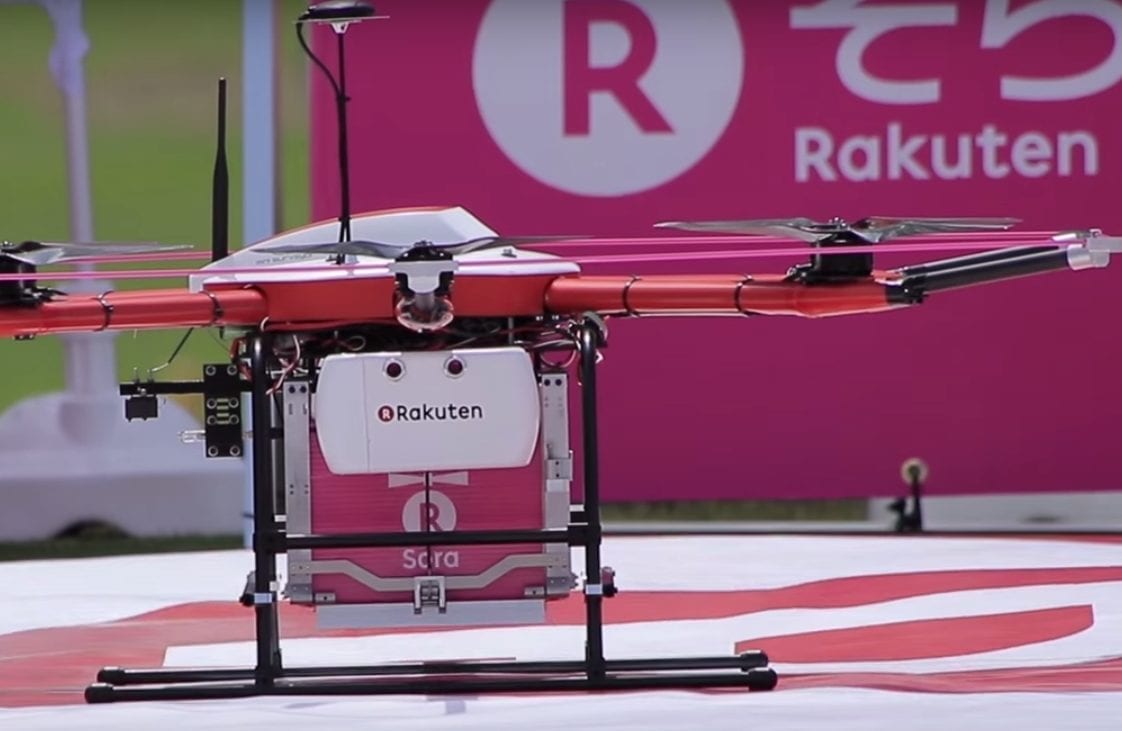
    Japanese eCommerce giant Rakuten will launch the Sora Raku drone delivery service for general consumers on May 9.

    The  Rakuten drones will make their debut on a golf course, where they will deliver golf equipment, snacks, beverages and other items to players at pickup points.

    Using the service, players can use the dedicated Android app to place orders, confirm the total possible order quantity, and receive push notifications when preparations begin for dispatch and when the drone commences its journey. To use the service players will need to log in using their Rakuten Member IDs, and can choose to pay by either credit card or with Rakuten Super Points.

    Drone rakuten


    On the operator’s side, once an order has been received, staff waiting at a dedicated depot pack the goods into a delivery box and load it onto the drone. The staff then initiate the delivery process from the control screen on a dedicated tablet, and the drone flies to the pickup point autonomously. After landing, the drone automatically releases the load and returns automatically to the takeoff point.

    The drone to be used in the service is the “Tenku,” a dedicated drone developed specifically for Sora Raku by Rakuten and Autonomous Control Systems Laboratory Ltd. (ACSL), which Rakuten invested in in March this year, based on an existing ACSL drone. In addition to the new load-release feature, the drone also uses image recognition technology from the Rakuten Institute of Technology for landing. Tenku is equipped with an autopilot system developed domestically by ACSL and boasts highly stable flight performance, even in strong winds. The drone also employs a design that makes it highly visible even on a golf course.

    Drone rakuten 1

    Initially, the service will be offered for a period of one month at the Camel Golf Resort, a golf course in Chiba Prefecture. Based on user feedback and analysis of the operation, Rakuten will look into the continuation and expansion of the service, as well as its implementation at other golf courses.

    By offering the Sora Raku drone delivery service at golf courses,  Rakuten hopes to provide a new shopping experience and make drones more widely accepted among consumers. In addition, Rakuten is looking into the use of drones for deliveries in sparsely populated areas and mountainous regions, in transporting supplies during disasters and in its eCommerce businesses, including Rakuten Ichiba, and aims to accumulate technical and operational expertise through running the service and put it to use in developing further innovative drone delivery services.

  • Rakuten launches mobile e-commerce app in Taiwan

    Rakuten launches mobile e-commerce app in Taiwan

    Japanese e-commerce giant Rakuten has launched  consumer-to-consumer mobile e-commerce app Rakuma in Taiwan.

    The app, first launched in late 2014 in Japan, enables the sale of goods between individual consumers via smart devices. It allows quick product listing and direct communication among users.

    Rakuten said the app will target Taiwanese consumers interested in easy mobile access to e-commerce and is available for free download on Google Play and the iTunes Store.

    “We are excited about Rakuma making the leap from Japan to Taiwan with this popular mobile app and providing Taiwanese users with the opportunity to ‘sell and buy’ their personal, home and fashion goods seamlessly on their smart devices,” said Rakuma Business Manager, Takafumi Inoue.

    Taiwan is a priority market for Rakuten’s global growth strategy as Taiwan Rakuten Ichiba is already a leading e-commerce company in Taiwan and other newer Rakuten services, such as the Rakuten Card credit card and Rakuten Travel, continue to experience rapid growth.

    Rakuten is building its ecosystem of services that offers Taiwan users valuable membership benefits.

  • China $1.1T eCommerce Market On Horizon

    China $1.1T eCommerce Market On Horizon

    According to a recent report from Forrester, total eCommerce revenue for China, Japan, South Korea, India and Australia is projected to nearly double in the next five years, from $733 billion in 2014 to $1.4 trillion by 2020. That same report goes on to detail how these five Asian online economies have already outpaced the combined online retail markets in the U.S. and all of Western Europe, with China and India ranking as the two largest and fastest-growing markets worldwide.

    It goes on to point out that the Chinese market already surpassed that of the U.S. in 2015, and China remains the world’s largest eCommerce market, despite seeing its overall economic growth dip below 7 percent for the first time since 2009.

    “While the days of staggering year-over-year eCommerce growth in China are gone,” wrote Lily Varon, lead author of the Forrester report and analyst for eBusiness and channel strategy, “current growth rates are solid and more consistent with other mature markets in the region, like Japan and South Korea.”

    Varon also went on to project that China would continue to lead the region’s market growth, expanding to be nine times larger than Japan’s $122 billion market in 2020 and 17 times larger than South Korea’s $65 billion.

    India is also projected to see online sales expand by five times, fueled by a rapidly increasing number of online shoppers entering the market and per capita online spend continuing to increase. However, in the case of India, Varon noted that the country’s underdeveloped logistics, “challenging” connectivity, as well as a traditionally cash-based culture, would pose significant challenges to online retailers looking to grow the online India market.

    The Forrester report goes on to note an important and defining trend across the region: the dominance of Web-only retailers, such as Rakuten and Amazon in Japan; Taobao, Tmall and Jingdon in China; and Flipkart and Snapdeal in India.

    “Consumers have flocked to online pure-plays rather than their traditional retail counterparts,” Varon wrote. “In very few markets in the region do traditional retailers hold any dominant position or even come close to competing with the Web-only giants.”

    Having noted the significance of Web-only players, Varon shared that omnichannel functionality had not been as robust in Asian markets as it had in the U.S. or U.K. This, though, was starting to shift, as more traditional retailers start to make the move towards eCommerce in Asia. Australian retailers have been forced to play catch-up, with omnichannel offerings, such as click-and-collect, being adopted by global players, like TopShop and Zara, and helping to bring omnichannel services to the local market.

  • Rakuten quits Thailand

    Rakuten quits Thailand

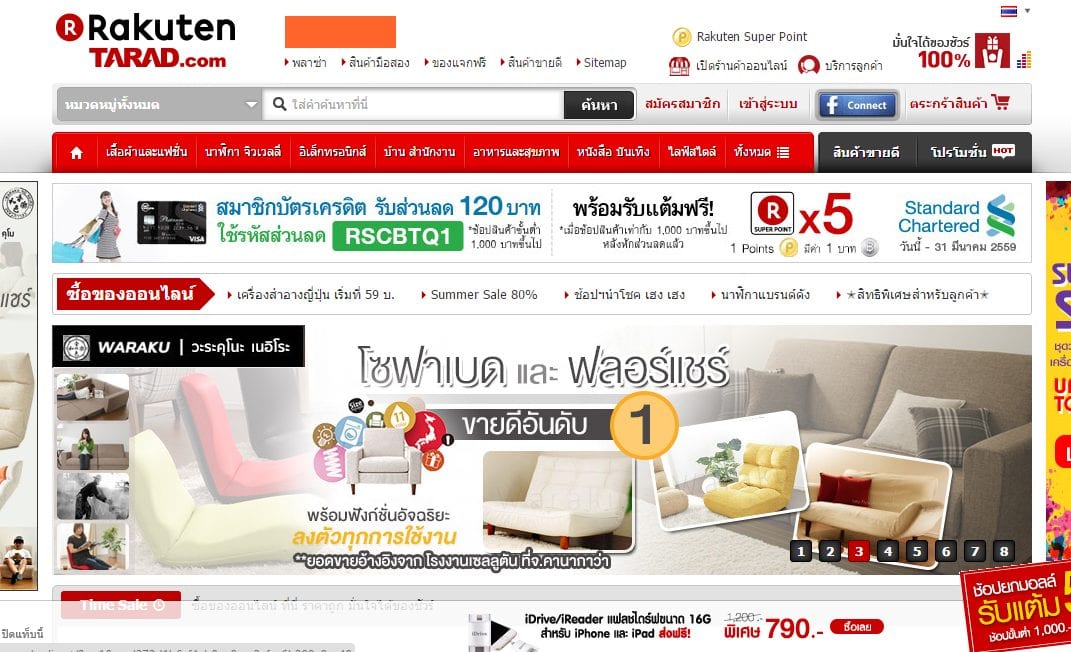
    Japanese eCommerce giant Rakuten is negotiating to sell its stake in Thailand’s largest eCommerce company Tarad.com to an undisclosed Thai company.

    Rakuten Tarad.com founder and MD Pawoot Pongvitayapanu has told the Bangkok Post the deal is expected to be sealed within a few days. Rakuten has a 67 per cent stake in Tarad.com since acquiring it in 2009 for US$35 million, and Pongvitayapanu holds the balance.
    Rakuten’s move follows a strategic overhaul of its business in Southeast Asia, Deal Street Asiareports. It had previously focused on business-to-business and business-to-consumer models, but now plans a shift to consumer-to-consumer (C2C) by launching a mobile app, Rakuma.
    Shopee, which already has a foothold in Thailand, is one of the main competitors for C2C apps in the region, along with Carousell.
    Tarad.com had an accumulated loss of 117 million baht ($3.2 million) in 2013, rising from losses of 35 million baht in 2010 and 5.6 million baht in 2009. Pongvitayapanu says business will continue business as usual as it prepares to implement a strategic shift following the new shareholding structure.
    Rakuten earlier announced it is shutting down its eCommerce marketplaces in Indonesia, Malaysia and Singapore from March 1, laying off about 150 employees. It plans to focus on eCommerce in Japan, where it is a market leader. It will also keep a presence in east Asia, Taiwan and the US.