Tag: Ralph Lauren

  • Ralph Lauren Unveils First ‘World of Ralph Lauren’ Concept Store in Bangkok, A Unique Fusion of Fashion and Hospitality

    Ralph Lauren Unveils First ‘World of Ralph Lauren’ Concept Store in Bangkok, A Unique Fusion of Fashion and Hospitality

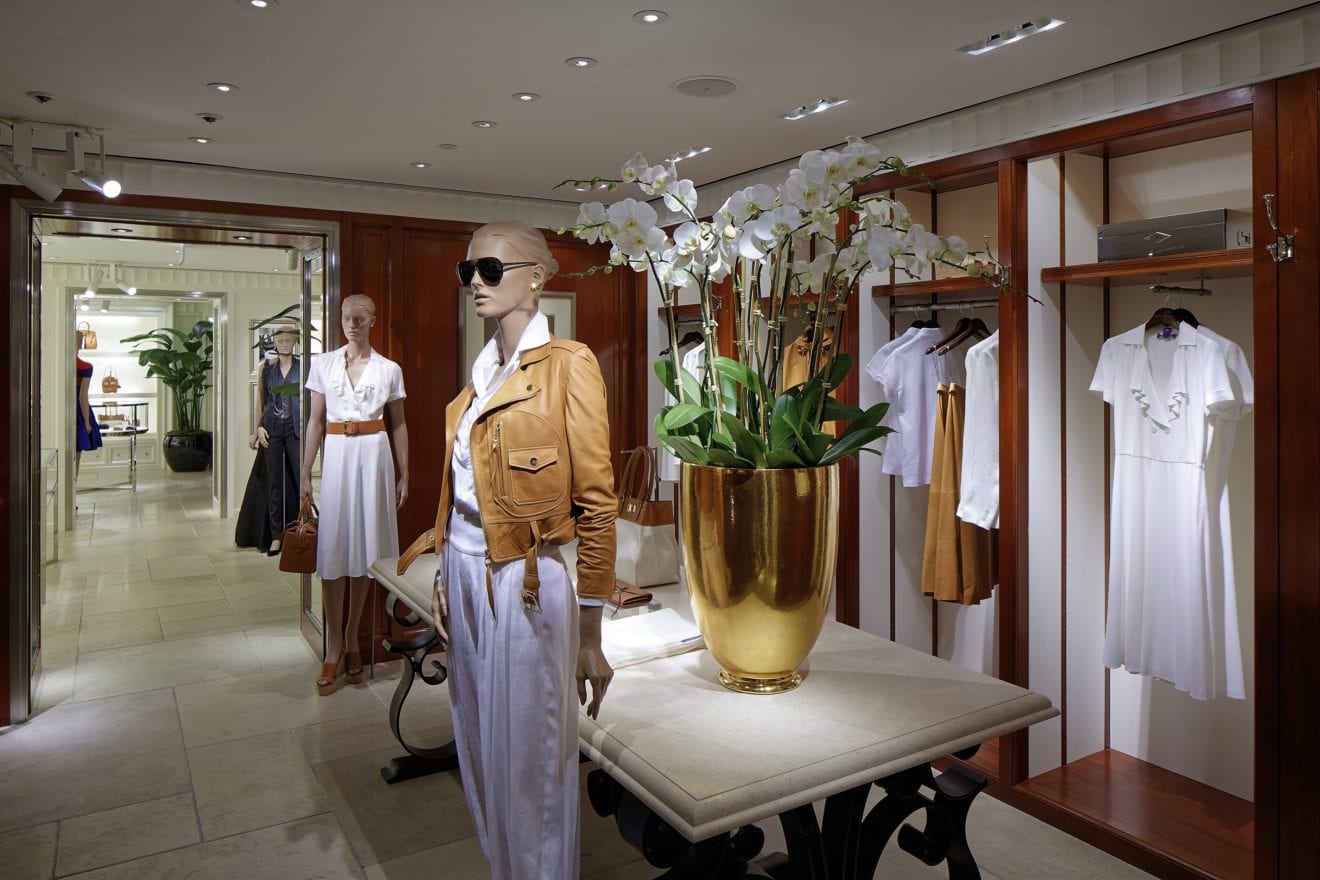
    Ralph Lauren, the renowned American fashion brand, has debuted its innovative concept store in Thailand. The World of Ralph Lauren, the brand’s pioneering retail venture, has found its home at the Central Embassy in Bangkok.

    Developing a New Retail Experience

    This establishment marks Ralph Lauren’s collaborative effort with Central Marketing Group (CMG) and introduces a novel retail model for the brand. The fusion of fashion, lifestyle, and hospitality into one unique space serves to elevate the shopping experience for customers.

    The retail location, spanning 11,000 square feet on the first level of Central Embassy, hosts an extensive variety of merchandise. It offers men’s and women’s apparel, accessories, footwear, and timepieces.

    Signature Collections on Display

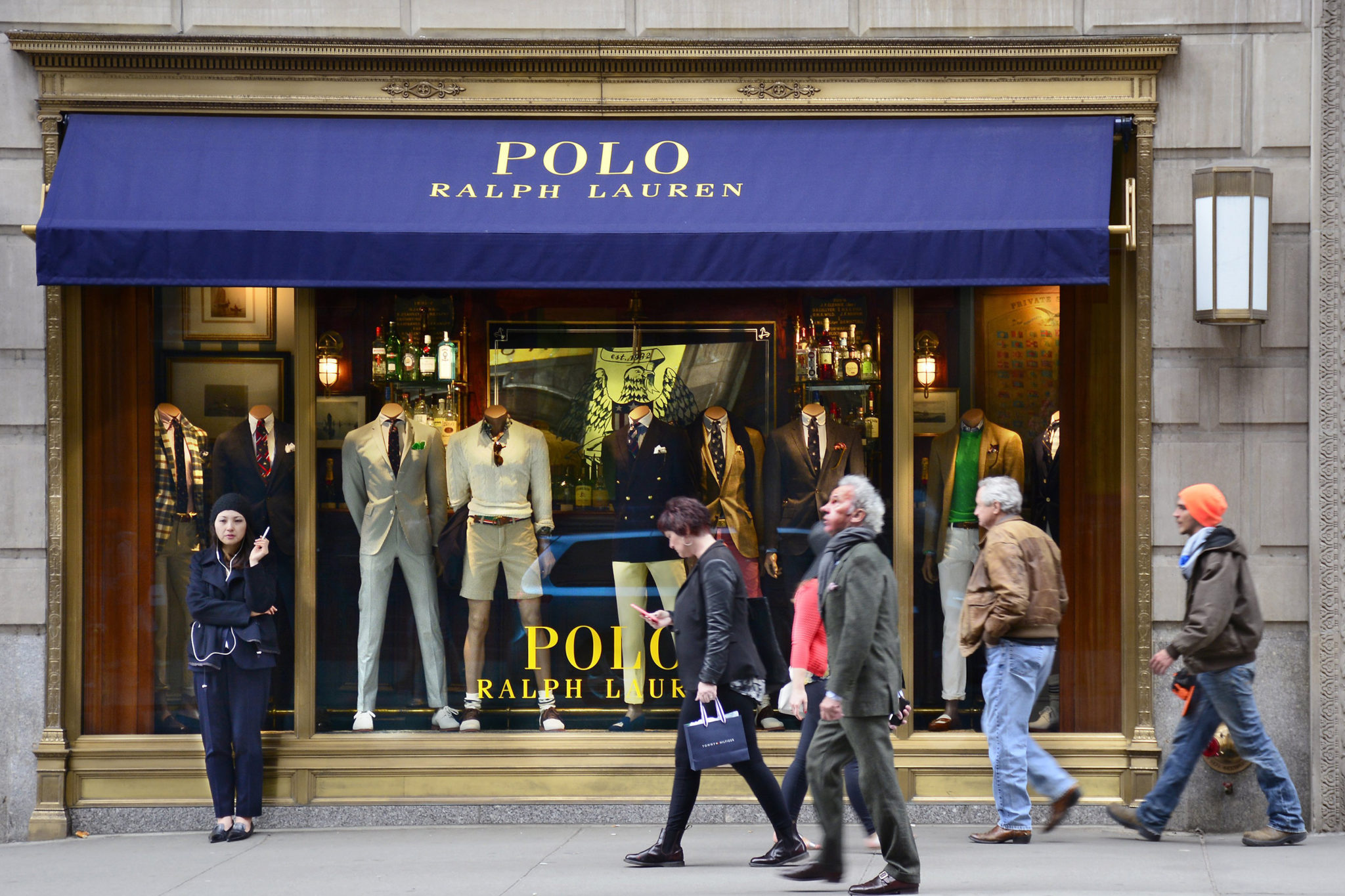
    In addition to its generous retail offerings, the store will showcase signature collections like Ralph Lauren Purple Label, Ralph Lauren Collection, Black Label, and Polo Ralph Lauren. Patrons can also explore a specially dedicated timepiece salon.

    Introducing Ralph’s Coffee

    Ralph Lauren’s concept store extends beyond retail, featuring Ralph’s Coffee. This coffee shop will serve a variety of food and beverages, including a tea set exclusive to Thailand.

    Central Marketing Group expressed their pride and excitement over the concept store’s opening, viewing it as an indication of global confidence in Thailand as a strategic access point to Southeast Asia. It further emphasizes CMG’s role, leveraging over 75 years of expertise, in promoting and expanding iconic global brands across Thailand and the region.

    Questions & Answers

    What is the new retail concept introduced by Ralph Lauren?
    The brand’s new retail concept integrates fashion, lifestyle, and hospitality into a unique shopping experience.

    What products does the new Ralph Lauren store in Bangkok offer?
    The store houses a range of Ralph Lauren’s men’s and women’s apparel, accessories, footwear, and timepieces, including their signature collections.

    What additional feature does the Ralph Lauren concept store offer beyond retail?
    Beyond retail, the store offers Ralph’s Coffee, which serves a variety of food and beverages, including an exclusive tea set for Thailand.

  • Ralph Lauren bucks subdued luxury market with higher sales

    Ralph Lauren bucks subdued luxury market with higher sales

    Ralph Lauren has posted a modest increase in sales and a surge in profit for the first quarter despite a challenging luxury market.

    The company’s revenue for the quarter ended June 29 was $1.5 billion, up 1 percent on a reported basis and 3 percent in constant currency.

    According to GlobalData MD Neil Saunders, the slight increase was delivered against a very difficult environment for luxury and consumer spending. This shows the company has “bucked the performance of many other high-end brands”, setting it apart as one of the few players still driving growth in a more subdued market.

    The sales growth was led by Europe with a 6 percent increase on a reported basis, followed by Asia with 4 percent improvement. Sales in North America, however, declined 4 percent as stronger direct-to-consumer performance was more than offset by planned declines in wholesale.

    While Ralph Lauren will need to wait for the NA market to bounce back, Saunders believes the Europe and Asia regions will continue to drive some good numbers. The company has more control over distribution and the brand is less mature in these markets, he added.

    Comparable store sales rose 5 percent, reflecting a strong performance in a muted market. The brand is benefitting from attracting more younger consumers, while its focus on classic, quiet luxury is favorable to current trends, according to the analyst.

    The results were even more robust on the bottom line, with net income jumping 27.6 percent to  $169 million. “Lower cotton costs, some better margins from a shift to retail, and general cost savings all helped to produce the outsized performance,” Saunders explained.

    For FY25, the company expects revenue to increase 2-3 percent given the current geopolitical and macroeconomic environment.

    “The powerful combination of our brand strength and diverse growth drivers — together with our culture of agility and operating discipline — gives us confidence that our long-term strategy will continue to deliver even through these dynamic times,” commented Patrice Louvet, president and CEO of Ralph Lauren.

  • Canada probes Ralph Lauren on alleged use of forced labor in China

    Canada probes Ralph Lauren on alleged use of forced labor in China

    Canada’s corporate ethics watchdog said on Tuesday it was investigating Ralph Lauren’s Canada unit to probe allegations the apparel retailer’s supply chain and operations in China used or benefited from the use of Uyghur forced labor.

    The Canadian Ombudsperson for Responsible Enterprise (CORE) said it had published an initial assessment report after complaints filed by a coalition of 28 civil society organizations in June 2022 against the Polo shirts maker.

    CORE said the report published detailed allegations the company had supply relationships with Chinese companies that use or benefit from the use of Uyghur forced labor.

    The watchdog said it was also looking into similar allegations for Canada-based mining and property investment firm GobiMin.

    Ralph Lauren and GobiMin did not immediately respond to Reuters’ requests for comment.

    A similar investigation was launched by CORE into Nike Canada and Dynasty Gold in July over allegations they have or had supply chains or operations in China identified as using or benefiting from the use of Uyghur forced labor.

    In the last couple of years, several large US and Canadian multinational companies have been accused of using Uyghur forced labor either directly or in their supply chains.

    CORE monitors and investigates human rights abuses mainly by Canadian garment, mining and oil and gas companies operating abroad.

  • Ralph Lauren launches cafe in Pavilion KL

    Ralph Lauren launches cafe in Pavilion KL

    US luxury fashion label Ralph Lauren has launched a cafe in Malaysia, part of its plan to strengthen its presence in the Southeast Asia market.  The new coffee shop is located at Pavilion Kuala Lumpur, right next to its fashion retail space. It provides both on-site and takeaway services and is adorned in Ralph Lauren’s signature white and green. Customers can purchase the brand’s exclusive blends, including Ralph’s Roast, Decaf, and Espresso, which are roasted and packaged in Phil

    The new coffee shop is located at Pavilion Kuala Lumpur, right next to its fashion retail space. It provides both on-site and takeaway services and is adorned in Ralph Lauren’s signature white and green.

    Customers can purchase the brand’s exclusive blends, including Ralph’s Roast, Decaf, and Espresso, which are roasted and packaged in Philadelphia by La Colombe and use ethically cultivated beans from Central America, South America, and Africa.

    Ralph Lauren was established in 1967 and specializes in the creation, promotion, and sale of high-end lifestyle goods across five different categories, including clothing, home goods, fragrances, and hospitality.

    In 2014, Ralph Lauren launched its first coffee shop in New York City. Since then, it has expanded its network of coffee shops and Ralph’s Coffee trucks.

    Opening its first Asia outlet in Hong Kong in 2018, the company just opened a new store in the region in July, expanding its portfolio in Mainland China. Ralph Lauren also has operations in Japan and France.

  • China sales rebounds for Ralph Lauren, after Covid-19

    China sales rebounds for Ralph Lauren, after Covid-19

    Luxury retailer Ralph Lauren says sales growth on the Chinese mainland returned to pre-Covid-19 rates in the second quarter, increasing by more than 30 percent year on year.

    However sales across greater Asia decreased 7 percent to US$237 million on a reported basis, with same-store sales down by 11 percent, and a 12-per-cent decline in brick-and-mortar store sales partly offset by a 32-per-cent increase in digital commerce.

    Globally, net revenue fell by 30 percent to $1.2 billion, with declines in all regions due to the impact of Covid-19 on consumer shopping behavior.

    But the company achieved a net income of $107 million, down from $182 million in the same period last year.

    Ralph Lauren, executive chairman, and chief creative officer said despite the tough time the world is experiencing he is optimistic the company can “take the great learnings and creativity that have emerged from this time to become even stronger”.

    He said the results reflected the strength of Ralph Lauren’s timeless brand “and the values that have always been our touchstone” are continuing to anchor the business through a time of change and uncertainty”.

    “Looking across the first half of the fiscal year, we continued our elevation journey while fast-tracking connected retail and our company-wide digital transformation,” said president and CEO Patrice Louvet. “We also began the hard but necessary work of simplifying our organizational and cost structures to position the company for future growth.

    “Looking ahead, we will continue to work proactively to deliver an elevated experience that inspires consumers around the world and creates value for all of our stakeholders,” concluded Louvet.

  • Ralph Lauren revenue deep in red

    Ralph Lauren revenue deep in red

    Ralph Lauren Corp said on Tuesday its quarterly revenue plunged by nearly US$1 billion, as it struggled with coronavirus-led store closures and a slowdown in demand for luxury goods across the world.

    The big drop in revenue and a larger-than-expected loss pushed shares of the New York-based fashion house down nearly 7 percent in trading before the bell.

    The company’s revenue slumped 77 percent in North America, with analysts saying demand for high-end handbags, apparel and accessories is not expected to rebound quickly as the global economy enters a recession.

    Ralph Lauren is more exposed to the health crisis than other apparel companies as its jackets, coats and dresses are designed for social or formal occasions, said Neil Saunders, managing director of research firm GlobalData Retail.

    “While some customers have been prepared to pay premium dollars for luxury apparel, many middle-income shoppers have de-prioritized their spending on clothing in favor of spending on the home – an area where Ralph Lauren does play, but not nearly as strong as it should,” Saunders said.

    Ralph Lauren’s net revenue fell 66 percent to $487.5 million, missing analysts’ average estimate of $615 million, according to IBES data from Refinitiv.

    Sales at European luxury goods giants LVMH , Kering and Hermes fell between 38 percent and 44 percent – much slower than those posted by the company.

    Ralph Lauren also reported a mere 3-per-cent rise in North American online sales, a far cry from triple-digit sales increases recorded by a number of US retailers.

    The company reported a net loss of $127.7 million in the quarter to June 27, compared with a profit of $117.1 million, or $1.47 per share, a year earlier.

  • Asia a bright spot for cashed-up Ralph Lauren

    Asia a bright spot for cashed-up Ralph Lauren

    Luxury retailer Ralph Lauren saw online sales in Asia surge by 15 percent during the peak of Covid-19 lockdowns.  But the company’s early decision to close stores around the world saw overall sales drop by 15.4 percent, resulting in an operating loss of $284 million and a net loss of $249 million for the March quarter.

    Neil Saunders, MD of GlobalData Retail, says while the quarter ended before the peak of the pandemic in the US, the European market was hit hard with revenue down by 19.3 percent year on year and trade in North America down by 11.2 percent.

    “Unfortunately, digital channels did not completely pick up the slack from stores as Ralph Lauren temporarily suspended online operations in late March to enhance health and safety protocols. On a comparable basis, this pushed down sales by 7 percent in North America and 2 percent in Europe.”

    Saunders says that while Ralph Lauren’s loss may widen in the second quarter, the company has liquidity of more than $2 billion and a very strong balance sheet with minimal debt. “On top of this, actions to reduce expenditure in the near-term will help to minimize losses and preserve cash.”

    Saunders says the crisis came at an unfortunate time for the brand. “This quarter should have been one which capped a year of recovery for the group, which has been trying to improve its brand image and connect with new customers. In our view, while progress was patchy – especially in North America – there were signs that things were going in the right direction with steady growth in comparable sales and some stronger results from Asia and Europe.

    “Sadly, the severe downtick in trade has undone this advancement and for the full fiscal year the company will end up with a comparable sales decrease of 2 percent.”

    He believes that many Asian markets will see a reasonable bounce back in retail sales for the brand in the current quarter, but doubts the same will be true of Europe and especially not in the US.

    “The first issue in the US is that, even before the pandemic hit, the improvement in Ralph Lauren’s business was only partial. The company was moving in the right direction, but enhancements in marketing and assortments had not fully taken root and brand perception was only inching up by small increments.

    “For this reason, we do not believe that there will be a mass of customers clambering to get back to the brand once things fully reopen. This is even more so as some of what Ralph Lauren sells will, at least in the near-term, be much less relevant to consumers who are staying at home more and going out less.”

    Saunders says Ralph Lauren also faces challenges in its wholesale division, exposed to “some very unfavorable channels, especially department stores”.

    “The recovery in these locations will be weak and protracted so, although Ralph Lauren has been reducing its reliance on third-parties, it will be unduly affected. Some of the flagship stores will also suffer from a reduction in tourist numbers, which are an important component of their success. Both these structural challenges to the business will not abate before 2021.”

  • Burberry trench-coat factory to make coronavirus protection gear

    Burberry trench-coat factory to make coronavirus protection gear

    Luxury fashion label Burberry is retooling its Yorkshire trench-coat factory to produce non-surgical gowns and masks in response to the coronavirus outbreak.

    The supplies will be produced for patients and will be subject to approval from the Medicines and Healthcare Products Regulatory Agency (MHRA).

    Burberry is also working to leverage its existing supply chain to help deliver surgical masks, non-surgical masks and gowns for use by medical staff and patients in the UK.

    The firm’s other contributions include funding research into a single-dose vaccine for Covid-19 developed by the University of Oxford with human trials scheduled to begin next month, as well as donations to charities tackling food poverty across the UK.

    “The whole team at Burberry is very proud to be able to support those who are working tirelessly to combat Covid-19, whether by treating patients, working to find a vaccine solution or helping provide food supplies to those in need at this time,” said Burberry CEO Marco Gobbetti. “Covid-19 has fundamentally changed our everyday lives, but we hope that the support we provide will go some way towards saving more lives, bringing the virus under control and helping our world recover from this devastating pandemic.”

    The contributions reflect luxury fashion house Ralph Lauren’s commitment to making face masks and medical gowns in the US via its Ralph Lauren Corporate Foundation charity. The firm intends to produce 250,000 masks and 25,000 isolation medical gowns.

  • Ralph Lauren fears coronavirus will cut sales by $70 million

    Ralph Lauren fears coronavirus will cut sales by $70 million

    Luxury group Ralph Lauren Corp fears the coronavirus will reduce its March-quarter sales by between US$55 million and $70 million, due to falling store footfalls in Mainland China, South Korea and Japan.

    The company says it expects “broader impact across its businesses in China and parts of Asia due to significantly reduced travel and retail traffic.” It also warned there may be some disruption to its supply chain due to the virus.

    In a bleak outlook, the company said the sales decline would reduce its operating income for Asia by between $35 million and $45 million, potentially resulting in a loss given the company reported a $38 million surplus in the same quarter a year ago.

    Asia drove $273 million in revenue this time last year

    Ralph Lauren has closed about two-thirds of its stores in Mainland China since the coronavirus broke out.

    “Our dedicated teams are operating with agility in a highly dynamic situation, and we will continue to assess the implications for our business across retail, corporate and our supply base,” said Patrice Louvet, president and CEO, in a statement.

    “While the health crisis creates near-term uncertainties, the fundamentals of our business are strong, and we continue to see significant long-term opportunities for growth in China and across Asia.”

    The company’s founder Ralph Lauren expressed sympathy for those affected by the outbreak.

    “Our hearts are with the many impacted by this virus. Our number one priority is keeping our teams, partners and consumers safe.”

  • Ralph Lauren opening five new stores this year

    Ralph Lauren opening five new stores this year

    US fashion brand Ralph Lauren is ramping up its presence in Australia with the launch of its first standalone women’s store in Sydney’s CBD last month.

    The store, located in the iconic Queen Victoria Building, is part of the transformation over the last five years of the brand’s previously known ‘Blue Label’ into ‘Polo Ralph Lauren for Women’.

    “Polo Ralph Lauren for Men is well-established in the Australian market and we see an opportunity for our women’s business to grow as we further expand our offering across different channels,” the brand said.

    Four more stores carrying both womenswear and menswear collections are slated to open across the country in September and October. The stores will be located in Indooroopilly and Sunshine Plaza in Queensland, Melbourne Emporium in Victoria and Canberra Centre in the ACT.

    “The store openings build on Ralph Lauren’s targeted expansion across Australia and around the world as part of its Next Great Chapter strategy to deliver sustainable, long-term growth and value creation,” the brand said.

    The brand said it is committed to the expansion of the Polo Ralph Lauren business in Australia, where it is distributed through owned, standalone stores, as well as through David Jones, Myer and Glue, and online through The Iconic.

    The business has a 25-year history in Australia. Initially operating as a licenced brand, Polo Ralph Lauren took back control of the local business in 2013.

  • Ralph Lauren showing good progress

    Ralph Lauren showing good progress

    After a long run of fairly mediocre performance, Ralph Lauren has finally delivered a solid set of numbers. The 5 per cent net revenue growth announced last week is pleasing as are the various regional outcomes. These were supported by a respectable increase in underlying comparable sales. It would be remiss not to note that the good figures have been delivered off the back of a very weak prior year performance, but this should not take away from the fact that the brand is now headed in the right direction.

    Away from the top line, the bottom line has also strengthened with operating income up by 12.9 per cent over last year. Much of this is down to far lower rates of discounting, especially in the wholesale channel. We also see this as a sign that Ralph Lauren’s more disciplined and focused approach to producing collections is allowing more product to be sold through at a fuller price. All of this suggests that the company is doing a much better job at connecting with consumers.

    Our own data backs this up. Brand affinity to Ralph Lauren was the strongest in over five years this holiday season; brand recall and awareness were also higher, including among younger consumers. Some of this is the result of increased marketing spend but a lot of it also comes down to a more targeted approach. Initiatives like the launch of the Palace label have provided the brand with greater visibility among consumers looking for edgier, contemporary designs. There is clearly more work to be done, but this progress represents a good platform on which to build.

    That said, Ralph Lauren needs to remain disciplined; it should not revert to past form by launching rafts of sub-brands and spin-off labels which create confusion.

    Digital was the star channel this quarter with sales up by 20 per cent over the prior year. Some of this is a consequence of the investment in online platforms which are now much improved and delivering higher conversion. However, traffic to websites has also risen as Ralph Lauren has created more visibility around its products and brands. In North America, the slight downside is the imbalance in growth. Online comparable sales rose by 21 per cent, but store comparables were flat. While this is not necessarily surprising, it underlines that Ralph Lauren has more work to do in persuading customers to visit its shops – something that should, in theory, become easier as it pulls back from the wholesale channel.

    For all of this positivity, we are still cautious about the trajectory of the brand. While there is no doubt that Ralph Lauren is now in a much stronger position, a lot of work remains to be done on carefully defining the various parts of the offer and ensuring they remain targeted.

    Because of the vast array of brand elements, this is a challenging task that could easily falter – especially as the economy tightens and the company laps some tougher comparatives.

    Overall, however, Ralph Lauren is on the right track, it just needs to stay on course as it accelerates.

  • Where will Apple retail chief go after resigning?

    Where will Apple retail chief go after resigning?

    Within hours of the announcement that Apple retail chief Angela Ahrendts was to leave the role in April, speculation was rife as to where she is headed. Ahrendts, who led the fine-tuning of Apple’s retail business for five years after turning around British fashion house Burberry, has a stellar career in the luxury business. Several fashion industry sources have speculated she may be headed to take the helm of Ralph Lauren.

    In a statement announcing the Apple retail chief’s departure, the company said she is leaving the company “for new personal and professional pursuits”. CEO Tim Cook described her departure as “bittersweet”.

    During her time with Apple, Ahrendts – who was once tipped to take over Cook’s role in the future – has subtly redefined the Apple stores from high-end tech shops into community hubs. She took the renowned Apple Store concept created by predecessor Ron Johnson, dropped the “store” from its title and expanded the network to 506 physical stores and another 35 online.

    “Her vision includes stores as gathering spaces and hubs for creativity,” observed Daphne Howard of Retail Dive.

    “While Johnson is credited with initiating the brick-and-mortar strategy that has been the backbone of Apple’s hardware sales, including minimalist spaces conducive to product demos and customer education, Ahrendts has taken that [a step further].”

    Apple’s retail business will now be overseen by Deirdre O’Brien, the company’s senior VP of people, who will add retail to an already long list of responsibilities including talent development, Apple University, recruiting, employee relations, business partnerships, benefits, compensation and inclusion, and diversity.

    Some might see that as a sign Apple is reducing its focus on its retail business, although O’Brien might be considered something of an Apple acolyte, having been with the company for 30 years.

  • Ralph Lauren continues momentum in Asia

    Ralph Lauren continues momentum in Asia

    Premium lifestyle brand Ralph Lauren increased gross profit across its third quarter period by 6 per cent to  $1.46 billion (US$1.05 billion), compared to $1.37 billion (US$996 million) the year prior. The growth was driven by a 90 bps increase in gross margin to 61.6 per cent, as a result of reduced promotional activity and improved pricing.

    “Solid execution on our key initiatives, especially during the important holiday period, delivered better-than-expected results for the third quarter as we drove higher average unit retail and continued to improve quality of sales overall,” Ralph Lauren president and chief executive Patrice Louvet said.

    “These results give us confidence that our strategic investments in brand-building, product, digital, and global expansion are on the right track, while the strength of our balance sheet will continue to be a competitive advantage as we manage through an increasingly volatile global environment.”

    The business saw momentum in Asia continue, with 11 per cent revenue growth to $379.65 million (US$275 million) led by 19 per cent constant currency growth in Greater China, and strength across Japan, South Korea and Australia.

    North American sales increased by 3 per cent to $1.25 billion (US$909 million), and enjoyed flat comparable bricks-and-mortar sales and a 21 per cent increase in digital sales for the region.

    Global revenue for the brand’s digital offering improved 20 per cent over the last year, with growth in the brand’s directly-operated digital flagships exceeding expectations.

    Net income for the period grew to $165.67 million (US$120 million), or $2.04 per diluted share (US$1.48).

    Looking toward the final quarter of fiscal 2019, Ralph Lauren expects net revenue to drop slightly due to a planned reduction in off-price sales, though predicts net revenue for the fiscal year will be up slightly, though didn’t provide concrete figures.

  • One new store a week for Ralph Lauren China

    One new store a week for Ralph Lauren China

    Ralph Lauren CEO Patrice Louvet has promised to open a store a week in China. Speaking at The New York Times Luxury Conference in Hong Kong last week, Louvet said stores “are crucial for projecting the company as aspirational” which is why Ralph Lauren China is committed to expanding its network despite widespread concerns over an economic slowdown.

    “We concluded that we are in the dream business,” Louvet told the conference. “So to some extent, we think we are closer to a company like Disney than we are to other apparel brands … we don’t believe we are just selling stuff, we are selling a dream, a lifestyle, we are offering worlds that customers can be a part of.

    “[So] for us to provide those experiences, we need both the digital world and the brick-and-mortar world.”

    That is part of the philosophy behind the launch of the Ralph cafe, the brand’s first coffee shop, which opened recently in Hong Kong.

    In the latest quarter, Ralph Lauren’s sales in Greater China rose more than 20 per cent, with the mainland growth rate double that.

    Ralph Lauren is targeting $500 million in revenue from Greater China within five years.

  • Ralph Lauren results concerning even after its anniversary celebration

    Ralph Lauren results concerning even after its anniversary celebration

    As Ralph Lauren pulls out all the stops to celebrate its 50th anniversary, its second-quarter results do not reflect the upbeat note of the festivities. Indeed, if anything the Ralph Lauren results are rather anemic and are characteristic of a brand that is still not entirely confident about its place in the fashion world or its future direction.

    While growth of 1.6 per cent in overall revenue and a 1.4 per cent uplift in North America are positive, the decline of 0.8 per cent in Europe is disappointing as is the flat comparable-sales result. This mixed bag shows that the brand is only firing gently on some cylinders rather than powering ahead.

    While in growth, Ralph Lauren’s North American division is still underperforming. The relatively flat revenue result, which is underpinned by an anemic 1 per cent increase in comparable sales, comes against the backdrop of a robust consumer economy where spend on luxury and higher-end goods is increasing. It has also been delivered at a time of elevated marketing spend. That Ralph Lauren could not engineer a better performance underlines the fact that the brand has a lot more work to do to connect and resonate with consumers.

    One of the unresolved issues at Ralph Lauren is in having a clear brand proposition that is carefully targeted at customers. While numbers show that general brand perception of Ralph Lauren has improved over the past year, the number of people agreeing that it, or its sub-brands, are ‘made for people like them’ has remained flat. This is worrying and underlines that there is still a lot of repositioning and redefining required before Ralph Lauren can deliver better numbers.

    None of this should suggest the company has been inactive or passive; it has not. With the Polo brand, for example, a lot of new items have been introduced and products have been enhanced with embellishments such as embroidery and added functionality. These have helped to drive some better numbers and suggest that the company is innovating, but the improvements are hampered by a lack of progress on overall brand perception, especially among younger shoppers. It will clearly take time for the various changes to drive overall perception.

    One area of progress is on the digital side of the business, where comparable sales in North America rose by 9 per cent. While this is below the overall rate of growth for online luxury, it is a sign of progress and is a reflection of the various investments Ralph Lauren has made in its digital channels – including the marketing efforts on social media. Ralph Lauren now needs to apply this thinking to driving traffic in stores, where North American sales fell by 1 per cent on a comparable basis.

    Outside of North America, performance in Europe was poor. While total revenue fell by 0.8 per cent, comparable sales slipped by 4 per cent. Part of this is down to inventory issues at outlet stores and part is the result of lower consumer confidence in key markets like the UK. Even so, it is disappointing given the various investments, including in digital, that Ralph Lauren has made in the region.

    Overall, Ralph Lauren is gently moving in the right direction. However, the brand vision remains rather murky. It needs to be simplified and retooled so that it is clear and compelling. A young brand like Maine’s Kiel James Patrick is the perfect example of a well-curated and authentic lifestyle label that Ralph Lauren needs to emulate. Ralph Lauren has yet to prove it is up to this task.