Retail News CRM

Tag: record

  • China’s SMCP tops 1 billion euros revenue for first time

    China’s SMCP tops 1 billion euros revenue for first time

    Chinese-owned SMCP Group said that total company sales exceeded 1 billion euros in 2018, marking a revenue-first for the French fashion group. “With double-digit sales growth in 2018, SMCP posted a remarkable performance and continued to deliver on its strategic roadmap,” said Daniel Lalonde, SMCP’s Chief Executive Officer. For the year ending December 31, SMCP recorded sales increasing 13%, in line with its previously upgraded full-year 2018 guidance.

    Lalonde said the achievement signalled rapid sales increase was fuelled by online and digital, with the company working hard to fight market headwinds, which have taken out other European retailers in 2018.

    “Our performance throughout the year, and more particularly over the last quarter, demonstrates that SMCP is built on strong foundations and further illustrates the resilience of our business model in the midst of unprecedented market headwinds,” said Lalonde, in a press release.

    “I would also like to place a special emphasis on our significant progress in digital: it has been growing consistently and strongly over the past years and now represents nearly 15% of our total sales,” he added.

    The sales growth included a solid like-for-like sales growth of 3.7% for the twelve-month period “despite challenging market conditions in the fourth quarter,” which saw sales climb less, up 8%.

    Full-year reported sales were up 11.5%, including a negative currency impact of -1.6% reflecting the appreciation of the euro.
    Over the last twelve months, SMCP net openings reached 134 points of sale, including 102 directly operated stores, surpassing its annual target. By region, 59 stores were opened in APAC alone, the zone receiving the most new outlets compared to the Americas and Europe.

    In APAC, the group posted a strong double-digit sales growth of 18.2% at constant currency, driven by mainland China which generated over 20% of sales growth.

    The operator of French fashion brands Sandro, Maje and Claudie Pierlot said Sandro sales grew 6% in 2018, while Claudie Pierlot recorded a 7% increase. Maje was the biggest grower, up 10% for the year.

    For 2018, SMCP confirmed its adjusted EBITDA margin guidance at around 17%.

    Evelyne Chetrite and Judith Milgrom founded Sandro and Maje in Paris, in 1984 and 1998 respectively, and continue to provide creative direction for the brands. Claudie Pierlot was founded in 1984 by Claudie Pierlot and acquired by SMCP in 2009.

    SMCP was acquired China’s Shandong Ruyi in 2016.

  • LVMH’s 2018 sales revenue hits record high

    LVMH’s 2018 sales revenue hits record high

    Following a record-breaking year of sales in 2017, LVMH recently announced that it has surpassed its earnings record in 2018. The French multinational luxury goods conglomerate revealed that it made an incredible €46.8 billion EUR (approximately $53.4 billion USD) last year. Additionally, the impressive feat comes with a record net profit growth of 18 percent.

    LVMH is noting that it was the profitability of Louis Vuitton and Dior that lead to its strong 2018 earnings. The fashion and leather offerings from the two labels has been credited with driving the double-digit increase in both revenue and profit.

    Moving into 2019, it is expected that Virgil Abloh and Kim Jones will be amplifying the popularity of the two houses.

    LVMH also noted a state of reorganization of the Marc Jacobs label, and looked back on the global response to Hedi Slimane‘s inaugural collections for CELINE.

    Aside from a mixed critical reception, LVMH is ambitiously looking towards Slimane’s place at CELINE.

    The results were roughly in line with analysts’ forecasts.

    Bernard Arnault, chairman and chief executive, said LVMH expected its brands and companies, which include Louis Vuitton, Christian Dior and Moët & Chandon champagne, to deliver continued progress in 2019 in spite of “an environment that remains uncertain at the start of the year”.

    Sales growth was steady in all regions in the fourth quarter except the US — similar to the performance earlier in the year, according to Jean-Jacques Guiony, finance director.

    Organic growth in Asia, excluding Japan, was 15 per cent compared with last year. Sales in Europe were up 7 per cent on the same measure, while in the US they climbed 8 per cent.

    “We see no particular sign of a slowdown in the China market,” he said, although purchases by Chinese customers had shifted slightly to the mainland from Hong Kong and other east Asian markets, perhaps because of a weaker renminbi. “The market sees the glass as half empty. We see it as half full.”

    Luxury goods companies and other exporters dependent on sales to China are bracing for the impact of the country’s economic slowdown and for possible fallout from any worsening of the US-China trade conflict.

    In recent days, companies including US chipmaker Nvidia and Caterpillar, which sells earthmoving equipment, have blamed China’s slowing growth for disappointing profit predictions.

    Mr Guiony said luxury goods consumers tended to be affected more by sudden shocks than by gradual changes in economic conditions. “If there was to be real trade war between the US and China — and we’re not there yet — that would have an effect,” he said.

    The company also performed well in Europe, Mr Guiony said. Although LVMH had to close early on several Saturdays because of the gilets jaunes protests in France, many customers had switched to Sunday shopping and there was no obvious impact on LVMH’s numbers in the latest quarter.

    LVMH said it was stockpiling champagne and cognac in the UK in case of severe disruption from a “no-deal” Brexit.

    “We’ve added four months of stock in the UK,” said Philippe Schaus, head of Moët Hennessy, the wines and spirits part of the group.

    Profit from recurring operations in fashion and leather goods, the core of LVMH’s business, rose 21 per cent last year, accounting for €5.94bn of the total. The highest growth in profit from recurring operations came from watches and jewellery, at 37 per cent, and the slowest from wines and spirits, at 5 per cent.

    The company said it planned to lift the total dividend by 20 per cent for the year to €6.

  • Gold scales 8-month peak on Fed rate pause hopes, trade woes

    Gold scales 8-month peak on Fed rate pause hopes, trade woes

    Gold prices edged up on Wednesday to hit their highest since May, supported by uncertainty over U.S.-China trade relations and expectations the U.S. Federal Reserve will keep rates on hold later in the day. Spot gold was up 0.2 percent at $1,313.91 per ounce by 0245 GMT, after touching its highest since May 15 at $1,314.10 early in the session. U.S. gold futures rose 0.3 percent to $1,312.30 per ounce.

    “For the short-term gold is going to move higher as the Federal Reserve will have a dovish tone, which should weaken the dollar and give gold a bit of a move up,” said INTL FCStone analyst Edward Meir.

    The absence of an agreement in U.S-China trade talks should also benefit gold, he said.

    Investors are waiting on the Federal Reserve’s policy decision later in the day, with expectations officials will reinforce their recent dovish stance given a stalemate on global trade, signs of a slowdown in the U.S. economy, and waning business and consumer confidence.

    The Fed raised interest rates four times last year.

    Investors are also concerned that criminal charges against China’s Huawei Technologies Co. Ltd. for violating U.S. sanctions against Iran could complicate U.S.-China trade talks.

    China’s Vice Premier Liu is due to meet with U.S. Trade Representative Robert Lighthizer later in the day.

    “Gold also looks good on the charts … Physical demand seems to be improving in some markets and ETF buying has been increasing. In general the path of least resistance is probably higher from here,” Meir said.

    Underscoring investor interest in the bullion, holdings of SPDR Gold Trust, the world’s largest gold-backed exchange-traded fund, rose 1 percent to 823.87 tonnes on Tuesday, to their highest since June.

    SPDR gold holdings have risen 4.6 percent so far this month, their best since September 2017.

    “A combination of falling treasury yields, anxiety over Brexit and Venezuela is all helping gold,” said Nicholas Frappell, global general manager at ABC Bullion.

    British lawmakers rejected most amendments that aimed to keep Britain from leaving the European Union without a deal, reviving worries of a chaotic withdrawal from the trading bloc that would damage the UK economy.

    Silver rose 0.3 percent to $15.88 per ounce, having hit its highest since July 2018 at $15.92 in the prior session.

    Palladium fell 0.2 percent to $1,343.50, while platinum was up 0.4 percent at $813.

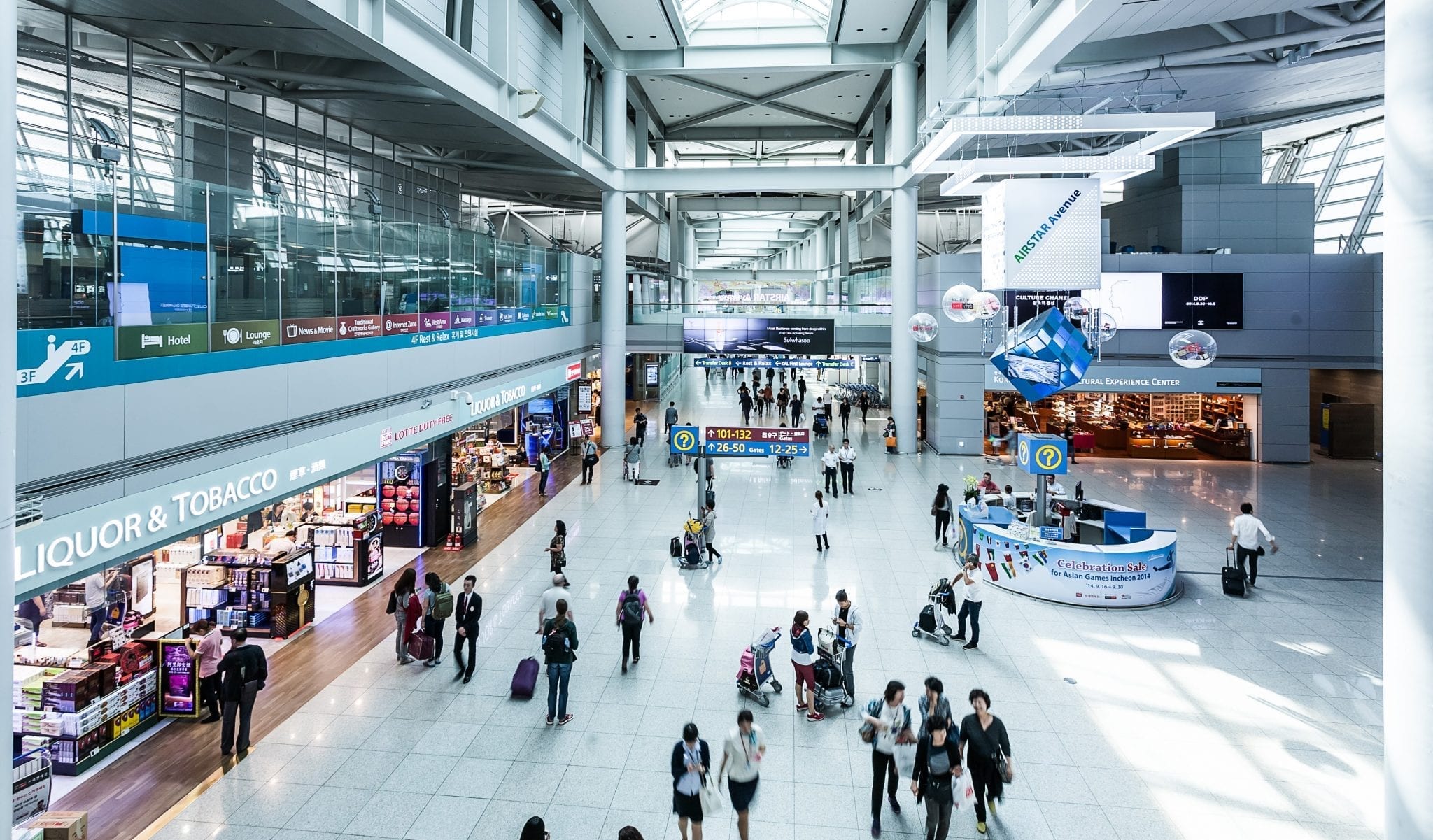
  • Incheon Airport breaks record with 2018 sales

    Incheon Airport breaks record with 2018 sales

    Incheon International Airport announced record annual sales of US$2.4 billion for 2018, beating the previous record set in 2017. The performance ranks Incheon as the world’s number one airport for duty free sales in 2018, ahead of Dubai International. The latter’s anchor retailer, Dubai Duty Free, posted 2018 sales of US$2.015 billion. Sales rose 14.8% year-on-year, driven by the successful opening of Terminal 2 in 2018 and increased passenger traffic from the 2018 PyeongChang Winter Olympics. Departing passenger traffic rose 9.9% in the year, Incheon International Airport Corporation told The Moodie Davitt Report. A total of 67.7 million passengers used the airport in 2018, including 33.9 million arriving and 33.8 million departing.

    Cosmetics & perfumes continued as the leading product category with a 40% share of the mix and US$953 million in sales. Liquor and tobacco combined took second place with US$540 million (23%).

    Incheon International Airport Corporation (IIAC) said that the 2019 introduction of arrivals duty free shopping will boost the shopping offer.

    “With the introduction of the first arrival duty free in Korea, Incheon Airport will strengthen its competitiveness as the leading airport of the industry, satisfying customers through an advanced shopping environment,” IAAC commented.

    IIAC noted the retail performance of T2, which opened in January 2018. The terminal boasts outstanding beauty, liquor and tobacco flagship stores that feature exceptional design and digital and experiential components, the corporation said. Luxury boutiques such as Chanel and Valentino also played a role in the record-breaking performance.

    T1 performance was boosted by the addition of new retailers, Shinsegae Duty Free and Grand Duty Free. Both had minimised store closure periods during their respective handovers, IIAC said.

    Despite the collapse in Chinese tourism to South Korea from March 2017 driven by the THAAD row with China, duty free sales have maintained their upward curve throughout the ensuing period. Even in 2017, the nadir of the crisis, Incheon posted a 4.1% rise in duty free sales (admittedly well behind a 7.6% passenger increase).

    While Chinese tourism numbers are still well short of 2016 levels (-41.6% for the first 11 months of 2018), spending by daigou traders spurred the Korean duty free market to new heights last year. Incheon, while having a more balanced passenger spending profile than the overwhelmingly Chinese-dominated downtown stores, still benefited from that trend.

    What happens in 2019 following China’s introduction this month of a new e-commerce designed to crack down on daigou imports? That’s the question on everyone’s lips in Korean (and Asian) travel retail. Incheon International Airport Corporation will hope that a combination of a steady recovery in traditional Chinese tourism, daigou ingenuity in getting around the rules, and strong Japanese and Korean business will maintain the upward trajectory. The imminent introduction of the country’s first arrivals shops will help too.

    Higher sales in 2018 did not, of course, equate to higher profitability for the country’s duty free retailers, hurt by the high costs of attracting daigou shoppers. For Incheon International Airport, however, safely wrapped up in the safe haven of steep minimum annual guarantees, 2018 will go down as a stellar year.

  • John Jacobs India aims to bag Rs 500 cr revenue by March 2021

    John Jacobs India aims to bag Rs 500 cr revenue by March 2021

    Lenskart’s eyewear brand John Jacobs is looking to garner Rs 500 crore in revenue in two years as it strengthens its retail presence and expands the product portfolio. The brand, which has eight stores currently in Delhi, Pune and Bengaluru, will add six more in the next two months and aims to set up about 50 stores by March 2021. “John Jacobs has been witnessing strong growth, we expect to close this fiscal with a topline of Rs 180 crore. By March 2021, we expect our revenues to touch Rs 500 crore,” Manan Duggal, Business Head, John Jacobs said.

    According to a report, about 40 percent of the sales is driven by online channels, with the rest coming from offline stores.

    Last year, Lenskart had said it will invest US$ 4 million in John Jacobs to fuel the brand’s expansion plans.

    “We are aggressively growing our presence both in online and offline. The brand is already retailing through Lenksart outlets (over 450 in more than 100 cities). The aim is to take the number of our own stores from 8 now to 50, by March 2021, covering all major metro cities,” he said, adding that the store expansion will entail investment of about Rs 10-15 crore.

    John Jacobs is also in discussions with fashion retail chains for distribution of its products.

    “In terms of online reach, we are already there on Lenskart and Amazon.in and will soon be available on Flipkart as well,” Duggal said, adding that the brand is aggressively expanding its product portfolio as well.

    John Jacobs recently introduced a new eyewear delivery model where the brand delivers eyeglasses, fitted with powered lenses, in a 20-minute timeframe.

    The service, currently available in select stores in Bengaluru, will be expanded to Delhi and Pune as well, Duggal said.

    He further said that with the new service, the brand expects to “see 30-40 percent upside in orders”.

  • 2018 a record-breaking year for Mercedes Malaysia

    2018 a record-breaking year for Mercedes Malaysia

    Mercedes-Benz Malaysia (MBM), the distributor of Mercedes-Benz marque in Malaysia, posted a record-breaking performance in 2018 spurred by the consumption tax holiday and customer-centric strategy. President and CEO Dr Claus Weidner said vehicle sales grew 9% to 13,079 units from 12,045 units recorded in the previous year, lifting the company’s market share to 2.4% from 2.3%, previously.

    “Our efforts to invigorate the brand experience for our increasingly diverse fans have been fruitful and we are happy to retain our position as the number one premium brand in Malaysia,“ he said at the company’s briefing on the 2018 full-year performance and outlook for 2019.

    In June last year, the first month of the tax holiday period following the government’s move to abolish the goods and services tax, MBM posted the highest monthly sales in the company’s history at 1,750 units.

    Weidner said other areas of business also showed improvement with total vehicles serviced last year growing by 16% from the previous year to 148,800 units and in-house financing increasing by 23% year-on-year to RM2.7 billion.

    “Four out of every 10 cars sold were financed by our in-house financing,“ he said.

    Five out of every 10 cars sold, meanwhile, were insured by its in-house service.

    A total of 20 new and facelift models were launched last year to further complement the company’s extensive product line-up, he said.

    Going forward, Weidner said MBM was confident of surpassing last year’s performance driven by demand for compact and premium sport utility vehicles as well as the company’s holistic approach and customer-centric strategy.

    “We will also continue to rejuvenate our models portfolio to continue making it desirable to customers,“ he said.

    On the number of launches for this year, he said it would be around last year’s figure.

    Weidner disclosed that the company planned to restructure its plant in Pekan, Pahang to increase the localisation of components and upgrade the technology to improve efficiency and quality.

    However, he did not disclose the amount of investment for the plant restructuring.

  • Lotte Duty Free sales hit all-time high of US$6.7 billion in 2018

    Lotte Duty Free sales hit all-time high of US$6.7 billion in 2018

    South Korea’s top travel retailer Lotte Duty Free reported best-ever sales of 7.5 trillion won (US$6.7 billion) last year on a surge in online sales and mass purchases by Chinese merchants seeking trade in shuttling goods to China. Lotte Duty Free said its annual sales last year hit a record high of 7.5 trillion won, up 25 percent from a year-ago period. In particular, sales from the online business soared 50 percent on year to 2 trillion won, contributing 25 percent to its total domestic sales thanks to successful upgrades of its online and mobile platforms and various promotional perks like online-only products and discount options.

    Lotte Duty Free’s main store in the bustling shopping district of Myeongdong in downtown Seoul remained the world’s single-largest revenue earner for three years in a row last year with annual sales up 35 percent at 4 trillion won and daily revenue at about 11 billion won as of Dec. 14.

    The Myeongdong store that opened in 1980 has kept on growth with sales reaching over 1 trillion won in 2011, 2 trillion won in 2015 and 3 trillion won in 2016 on increasing demand from individual merchants from the mainland who buy popular Korean duty-free goods in bulk to profit from reselling them in China.

    Lotte Duty Free has expanded its investment in domestic stores to draw more consumers. Its Myeongdong store was expanded in August 2016, and spent 10 billion won to add the Star Lounge for VIP customers in April 2018. The World-Tower store in the affluent Gangnam area of southern Seoul also posted 1 trillion won in sales last year, becoming the largest earner to reach the threshold in the district.

    Meanwhile, Lotte Duty Free World Tower also posted sales of more than 1 trillion won (US$895.4 million), joining what the retailer dubbed the “One Trillion Club” on 23 December.

    That represents an 80 percent increase year-on-year for the Jamsil, Seoul store, which reopened on 5 January 2017, 193 days after it was forced to close on 26 June 2016 due to the loss of its licence in an open tender.

    “Even in the midst of rapid market changes, Lotte Duty Free has been able to achieve a record-breaking year, reflecting 38 years of operational expertise,” said newly appointed Lotte Duty Free CEO Lee Kap. “As a leader in the industry, we will endeavour constantly to improve our performance.”

    Lotte Duty Free said that the World Tower store’s excellent tourist services and differentiated luxury brand offer had generated “remarkable achievements” in 2018. This was despite the proliferation of new duty free stores in the Gangnam area [notably the new Shinsegae Duty Free store opened on 18 July], the retailer commented.

    Despite industry difficulties posed by the THAAD dispute between South Korea and China, sales of small and medium enterprise SME Korean brands at the World Tower store increased by 300 percent year-on-year. This contributed to a “win-win relationship” with SMEs, Lotte said.

    Increased demand by daigou shoppers “greatly influenced” sales said Lotte. The retailer noted that such travellers had compensated for the “stagnation” of conventional Chinese tourism since the THAAD dispute erupted in March 2017. However, Korean travel retail executives and observers are closely monitoring the impact of China’s new e-commerce law, introduced on 1 January 2019, which is expected to hit the daigou business hard

  • Korea e-commerce hits high of 10.62 trillion won in November

    Korea e-commerce hits high of 10.62 trillion won in November

    The total value of online shopping in Korea reached a record high in November, government data showed Wednesday, in the latest sign that a growing number of Koreans are using computers or mobile devices to buy things ranging from clothes to electronic goods. Total online transactions reached 10.62 trillion won ($9.5 billion) in November, up 22.1 percent from a year earlier, according to the data compiled by Statistics Korea.

    The reading marked the highest amount since January 2001 when the statistics office started collecting data on online shopping.

    Sales of electronic goods and computers rose 22.7 percent on year to 1.68 trillion won, and demand for clothes jumped 10.4 percent to 1.45 trillion won in November, while online sales of food and beverages surged 32.3 percent to 911.4 billion won.

    Purchases made through smartphones, tablets and other mobile gadgets soared 28 percent on year to a record 6.59 trillion won, accounting for 62.1 percent of all online sales in November.

    Korea is one of the most wired countries in the world, with one of the highest smartphone penetration rates.

    The number of smartphones in Korea came to 50.5 million as of October, compared with 48.3 million a year earlier, according to separate government data.

  • US Cyber Monday online sales to reach record US$7 billion

    US Cyber Monday online sales to reach record US$7 billion

    American consumers were on track to spend US$ 7.8 billion in online shopping on Cyber Monday, up 18.3 percent from last year, according to Adobe Analytics, which tracks 80 percent of online transactions at 100 of the largest retailers in the US. Cyber Monday, which falls on the first Monday after Thanksgiving Day and Black Friday, is considered the biggest online shopping day of the year.

    Last year, it hit a record US$ 6.6 billion in online sales.

    With growing online sales, Black Friday might be stealing Cyber Monday’s thunder. Online sales for Black Friday reached US$ 6.22 billion, up 23 percent compared with last year.

    Smartphone-enabled purchases amounted to US$ 2.1 billion, accounting for one third of the overall sales.

    Figures from Internet Retailer, a publisher of e-commerce news and analysis, predicted that the total amount to be spent over the period between Thanksgiving Day and Cyber Monday will reach US$ 21.6 billion.

    For the whole holiday season, which will last until end of December, online sales could hit a record US$ 124 billion, up by 15 percent from last year, Adobe Analytics said.

    Figures from market research firm eMarketer put overall US holiday online sales at around US$ 123 billion, which accounts for 12 percent of the estimated 1 trillion retail sales for this holiday shopping season.

    According to an annual survey, US consumers will spend an average of US$ 1,007 dollars during this holiday shopping season, up 4.1 percent from last year, the National Retail Federation said earlier.

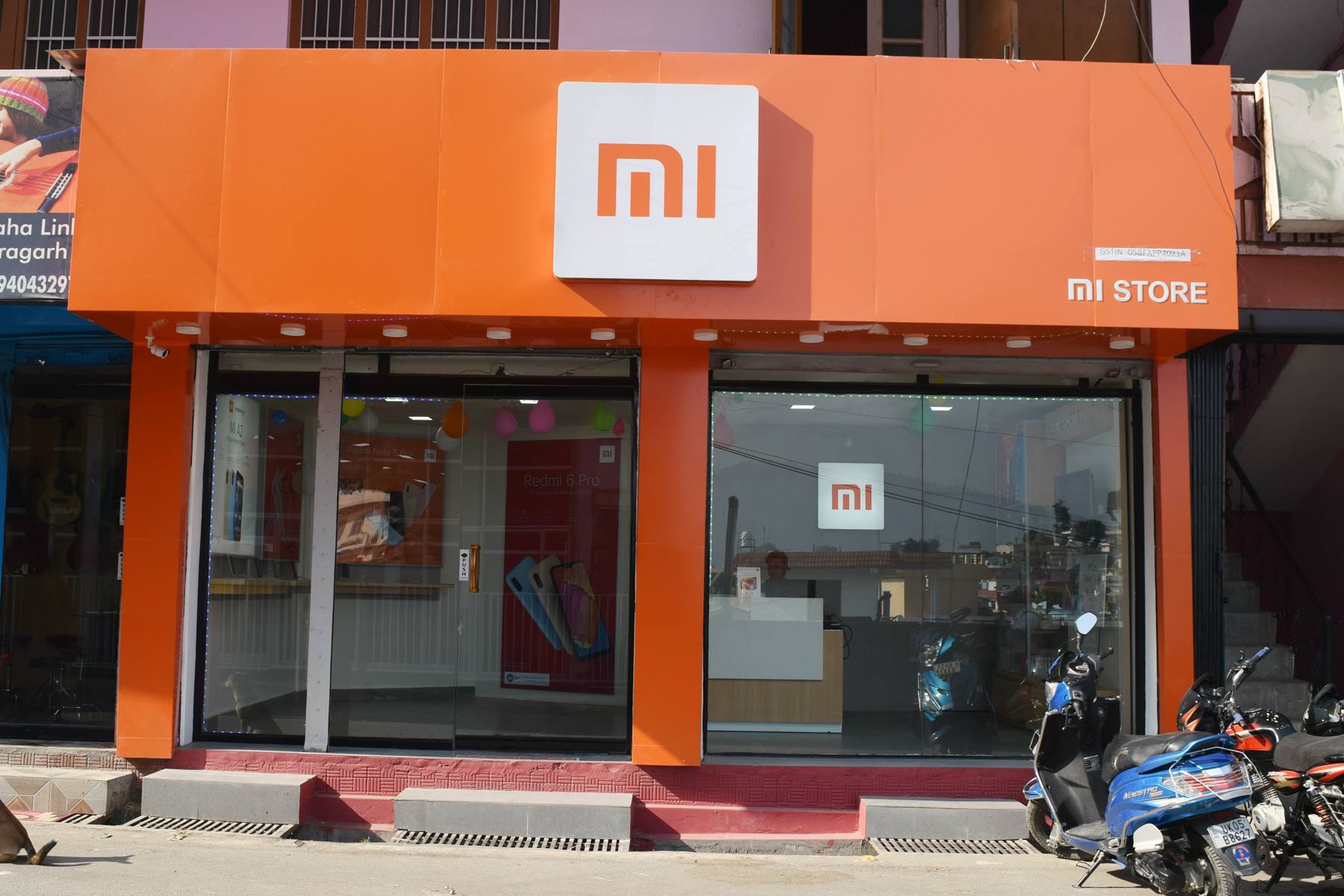
  • Xiaomi Opens Over 500 Stores in Rural India

    Xiaomi Opens Over 500 Stores in Rural India

    Xiaomi India says it opened 500 retail stores in one day in India late last month. The Chinese electronics retailer has bannered the network Mi Stores – smaller, compact versions of the Mi Home stores, developed for mainly rural parts of India.

    “The company created a Guinness record for opening the maximum number of stores in one single day,” said Manu Kumar Jain, VP of Xiaomi Global and MD of Xiaomi India.


    “Xiaomi plans to open 5000 Mi Stores by the end of next year. This new business will forever change rural retail in India.”

    As well as the Mi Home stores, the company is continuing to roll out its larger flagships, the fourth of which opened in Bengaluru in September.

    Xiaomi India has been growing rapidly since it launched online, initially focusing on mobile phones. Since then it has expanded into other home electronics and is now moving into other retail categories such as luggage and apparel.

  • Trump’s inauguration sets live streaming record

    Trump’s inauguration sets live streaming record

    Video streaming coverage of the 2017 presidential inauguration in the United States is the largest single live news event that Akamai Technologies has delivered, the company said.

    Live video streaming of the inauguration peaked at 8.7Tbps on the Akamai Platform at 12:04pm Eastern Time on Friday, January 20, during the opening of the President Donald Trump’s speech.

    This exceeded the previous record of 7.5Tbps set during Election Day coverage on the evening of November 8, 2016.

    Akamai supported 4.6 million concurrent viewers of the inauguration at peak on behalf of its broadcaster customers.

    “The presidential inauguration is the latest in a series of record-breaking live, online video streaming events that we have supported over the last year,” said Bill Wheaton, EVP and GM of Media at Akamai.

    “More people than ever are watching video online, and it’s being done across more devices at increasingly higher levels of quality.”

    On a historical note, the 2009 US presidential inauguration reached 1.1Tbps on Akamai and the British Royal Wedding in 2011 hit 1.3Tbps.

    More recently, the 2016 Euro soccer tournament final peaked at 7.3Tbps and the Rio women’s team gymnastics final hit 4.5Tbps.

  • Ford posted record sales in Philippines in 2016

    Ford posted record sales in Philippines in 2016

    Ford Philippines said it posted new record sales in 2016, the fourth in a row, with sales rising 33 percent to 33,688 vehicles, driven by continued strong demand for EcoSport, Everest and Ranger.

    The company said it also had the best-ever December performance in the Philippines with sales increasing 13 percent year-on-year to 3,198 vehicles.

    “Our big three nameplates – Ranger, Everest and EcoSport – continued to lead the charge throughout the year and further solidify the Ford brand as a top choice among Filipinos,” said Ford Philippines managing director Lance Mosley.

    The Everest became Ford’s best-seller in the Philippines in 2016 with full-year sales rising 152 percent year-on-year to a record 12,453 vehicles, finishing the year with a 6-percent rise in December sales to 1,066 vehicles.

    The EcoSport compact SUV also turned in its best-ever full-year performance with retail sales rising 15 percent to 10,010 vehicles, capping the year with December sales rising 40 percent to an all-time monthly record of 1,123 vehicles.  The Ranger, on the other hand, finished 2016 as the second best-selling pickup truck in the Philippines with total retail sales of 8,158 vehicles.

  • ASN, Bell Labs set 65Tbps subsea cable speed record

    ASN, Bell Labs set 65Tbps subsea cable speed record

    Alcatel-Lucent Submarine Networks and Nokia Bell Labs have set a new transmission record over a 6,600km single mode fiber for transoceanic cable systems.

    The lab trial achieved a total transmission speed of 65Tbps using submarine grade dual band erbium doped fiber amplifiers.

    The trial used Bell Labs’ new probabilistic constellation shaping (PCS) modulation technology. PCS is designed to maximize the distance and capacity of high-speed transmission in optical networks, by using non-uniform transmission of constellation symbols to increase resilience to noise and other impairments.

    “The future digital existence where everyone, everything and every system and process is connected will require a massive increase in network capacity and the ability to dynamically optimize this capacity,” Nokia CTO and Bell Labs president Marcus Weldon said.

    “Probabilistic constellation shaping extends the limits of current optical transmission by utilizing novel modulation techniques to dramatically improve the performance and capacity needed for the new digital era that will be enabled by the Future X Network.”

    The same technology was used in September to achieve speeds of 1Tbps per channel https://www.telecomasia.net/content/bell-labs-achieves-1tbps-over-fiberover Deutsche Telekom’s terrestrial optical network during trials with the operator’s T-Labs and the Technical University of Munich.

    A capacity of 65Tbps is 13,000 times the capacity of the first subsea amplified transatlantic system in 1995.

  • Ford Philippines delivers record sales in 2015

    Ford Philippines delivers record sales in 2015

    Ford Philippines sales last year jumped a record 25 percent to 25,372 units, firmly establishing Ford as the number three-selling automotive brand in the country.

    EcoSport, Everest and Ranger each deliver record full-year sales in the Philippines.

    Record December sales soar 48 percent to 2,824 units, capping record quarterly performance with jumping 50 percent to 8,691 units.

    The record sales year and continuing momentum helped Ford jump one spot to become the number three-selling automotive brand in the Philippines in 2015.

    “It’s been a breakthrough year for Ford in the Philippines. We launched more global Ford vehicles that showcased the very best of Ford, and expanded our retail presence across the country to make the Ford brand closer to our customers through a strong dealer network,” said Lance Mosley, managing director, Ford Philippines. “We’re truly proud of how the Ford brand is being embraced by our Filipino customers.”

    The EcoSport compact urban SUV’s continuing impressive run made it Ford’s best-selling nameplate in the Philippines in 2015. December retail sales of EcoSport rose 49 percent to 799 units, helping drive full-year sales up 67 percent to 8,702 units – the highest full-year total for a single Ford nameplate.

    The highly capable and versatile Ranger finished 2015 as the second best-selling pickup truck in the Philippines with total retail sales that increased six percent year-over-year to 8,445 units.

    “We launched the new Ranger here in August, and it really helped to build on an already strong reputation as the most capable, powerful and smartest pickup in the market,” explained Mosley.