Tag: regulation

  • Indonesia Revises E-Commerce Regulation

    Indonesia Revises E-Commerce Regulation

    Indonesia has one of the biggest economies in the Asia-Pacific region and its rate of internet adoption is one of the fastest in the world. So naturally, e-commerce in the region is starting to boom.

    According to Alibaba Group Executive Vice Chairman Joseph Tsai, Indonesia’s per capita GDP is about the same as China’s was in 2009, when Alibaba’s marketplaces really began to take off. Alibaba has taken steps to get a stake in the region, investing US$1 billion in Southeast Asia e-commerce platform Lazada, a Singapore-based company with extensive operations in Indonesia.

    To help help drive e-commerce growth in Indonesia, the government has made moves to open the country up to foreign e-commerce investment and expertise.

    Indonesia’s Investment Coordinating Board (BKPM) is finalising guidelines for foreign e-commerce investment. The new BKPM regulations will allow 100 percent foreign ownership for e-commerce businesses with a minimum investment of Rp100 billion (about AU$10.3 million) or businesses that create 1,000 jobs.

    The guidelines, however, limit foreign ownership to 49 percent for businesses investing below the Rp100 billion mark. The moves are designed to encourage big e-commerce investment from major players, while offering some protection to Indonesia’s local SMB e-commerce players.

    The removal of e-commerce businesses from Indonesia’s ‘negative investment list’ (which outlines business activities that are either entirely closed or conditionally open to foreign investment) provides a significant opportunity for foreign investment into one of South-East Asia’s fastest growing e-commerce markets.

    “I think this is the right time for Indonesia to aim to become the largest digital nation in Asia,” said Rosan Roeslani, Chairman of Indonesian Chamber of Commerce and Industry.

    “What this country needs is not only money but also know-how, which is why we invited incubators to come to Indonesia,” he said.

    “We have also talked about how we can get more start-ups to go through seed stage. One of the possibilities is to encourage big e-commerce players to spin their people off their company… We have not come out with the conclusion yet, but the government is very open for solutions,” he said.

    Indonesian President Joko Widodo is looking to make the country South-East Asia’s largest digital economy by 2020. The lifting of foreign ownership restrictions has been praised by those in the industry who welcome the injection of foreign capital and expertise.

    The removal of e-commerce from the negative list is part of Indonesia’s e-commerce roadmap, which was released earlier this year. The roadmap includes a list or proposals aimed at making it easier for e-commerce firms to operate in the country. Key elements of the roadmap include:

    • Government financied developments of logistics facilities and improvements to communication infrastructure
    • Government financing for start-ups in the form of grants and funds, as well as regulation for crowdfunding
    • Streamlining business licensing processesand increasing consumer protection regulationE-Commerce Regulation
    • Tax breaks for tech start-ups
    • Increased cyber security
  • China changes the tax rules on purchases from overseas e-retailers

    China changes the tax rules on purchases from overseas e-retailers

    In some cases consumers will owe more tax, and in other cases less.

    Foreign online retailers and brands have benefited in recent years from China’s relaxed rules on purchases by Chinese consumers on overseas websites. China’s new rules on import duties and taxes will hurt some of those overseas online sellers, while helping others.

    The new rules, to take effect in April, provide an exemption from import duties for purchases from foreign websites of up to 2,000 yuan ($306) but add a sales tax of 11.9% that consumers don’t pay today. That sales tax is still less than the 17% value-added tax consumers pay when shopping in stores in China.

    The existing rules, which mirror the regulations for consumers bringing in purchases from abroad or receiving them by mail from friends overseas, allows a consumer to import up to 1,000 yuan ($153) worth of products at a time for personal use, up to 20,000 yuan in a year. Those purchases are subject to import duty—which generally vary from 10% to 50% of the purchase price, depending on the type of product—but the tax is waived if it’s under 50 yuan ($7.65.) That 50-yuan exemption will be eliminated in the new rules.

    The new policy will benefit sellers of products for which the duty is high, such as cosmetics, which are hit with a 50% duty tax, says Li Pengbo, CEO of China Cross-border E-commerce Research Center, a consulting company. But other items for which the duty is low, such as children’s products, the new rules will make it more expensive for Chinese consumers to buy from overseas websites, Li says.

    Here are some major product categories, with the duty tax percentage:

    • Food, 10%
    • Alcohol, 50%
    • Apparel, 20%
    • Cosmetics, 50%
    • Electronics, 20%

    Thus, under existing rules a Chinese consumer who buys a shirt for $50 on a foreign e-commerce site pays a fee of $10 (20% duty on a $50 purchase), whereas under the new rules he would pay only $5.95 (no duty, but a sales tax of 11.9%.) However, a consumer buying $30 of powdered milk today would pay no duty or sales tax (the duty would be $3, 10% of $30, but that is waived because no fee is charged if the duty is below 50 yuan ($7.65)), whereas under the new rules she would pay $3.57 (no duty, but a sales tax of 11.9%.)

    Both the new rules and the old ones also apply to foreign companies that sell on Chinese marketplaces under the relaxed cross-border e-commerce rules that China has adopted in recent years. Such major Chinese e-commerce operators as Alibaba Group Holding Ltd., JD.com Inc. and the Amazon China subsidiary of Amazon.com Inc. have created special sections of their online shopping sites featuring imported goods sold under the special cross-border rules. Those rules allow foreign companies to store items in 10 free-trade zones without clearing customs, and then send them through an expedited customs process when a Chinese shopper places an order.

    They also allow the sale, up to the limit for personal use—1,000 yuan today and 2,000 yuan when the new rules take effect in April—of goods that have not been authorized for sale in China, as long as they have been found safe in their home country. That’s a big deal for sellers of products like cosmetics and food that can take years to gain approval from the Chinese government for domestic sale.

    Chinese consumers have taken advantage of the cross-border e-commerce rules to buy significant quantities from foreign web merchants. China’s customs authority reported this month that the first seven of the free-trade zones established in China since late 2013 handled 100 million inbound parcels purchased from foreign e-retailers with a total value of $2 billion.

    The relaxed rules on purchases from foreign websites have drawn protests from domestic retailers who say they have to pay import duties on all goods they bring into the country and charge consumers the national 17% value-added tax.

    Gong Dingyu, founder and chief operating officer of Chinese children’s product retail chain Leyou, tells Internet Retailer, that the new rules represent of a different way to tax goods purchased from overseas e-retailers.

    “The old policy is unfair because traditional trading companies and physical stores don’t have the same favorable policy as cross-border e-commerce,” Gong says. “Also, without products being monitored and inspected by the Chinese government, online consumers could buy imported products with quality issues.”

    JD.com is No. 1 in the Internet Retailer 2015 China 500 and Amazon China No. 5. While Alibaba’s big online marketplaces Taobao and Tmall account for about three-quarters of online purchases in China, Alibaba is not ranked because it is a marketplace operator and not the merchant of record for any sales on its sites.

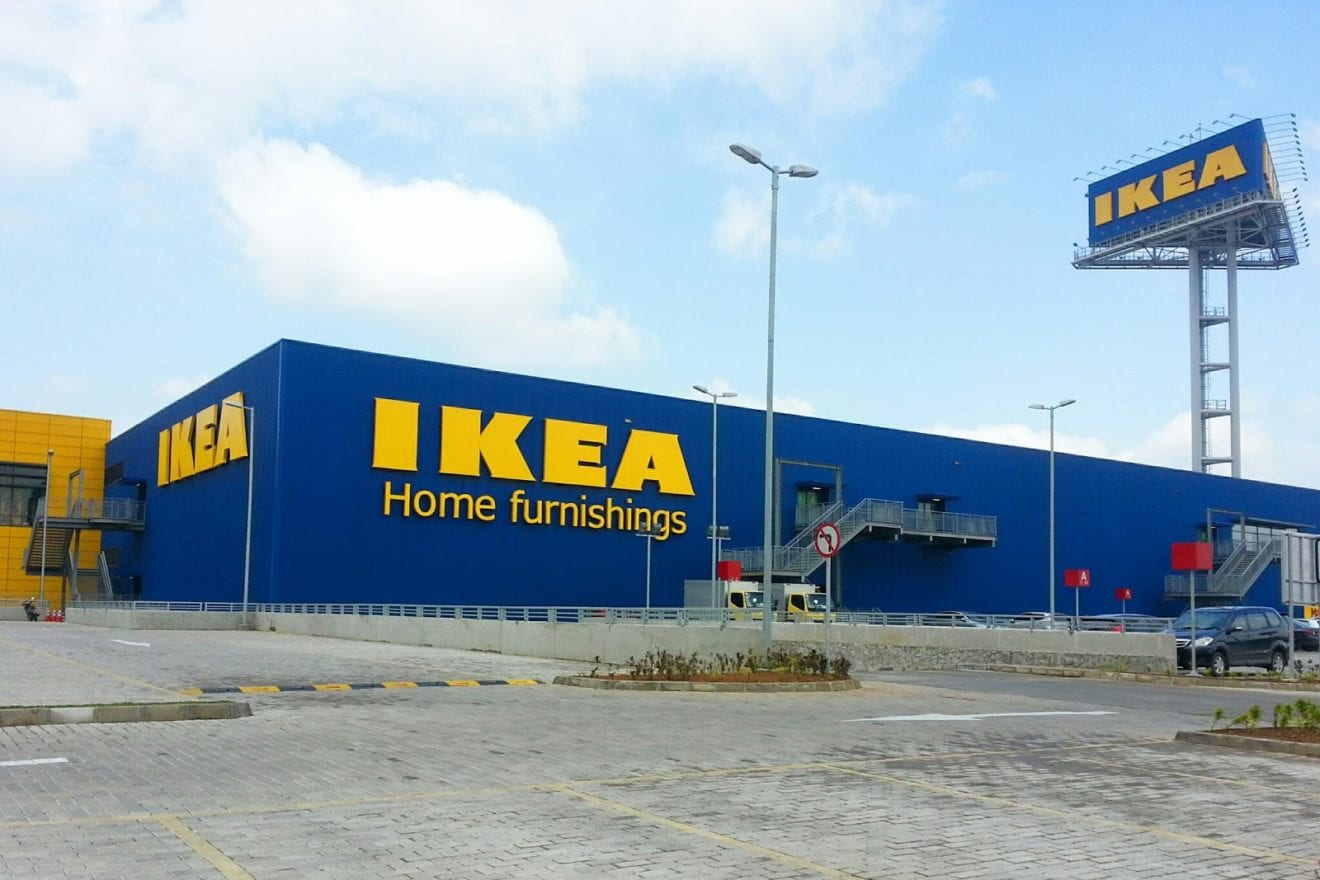
  • Ikea Indonesia loses right to its own name

    Ikea Indonesia loses right to its own name

    Ikea Indonesia has suffered a rude shock: Indonesian trademark laws have left the Swedish furniture giant without the right to its own name in the Southeast Asian nation.

    A decision of the Central Jakarta Court granting Indonesian ownership of the Ikea brand name to a local business back in September 2014, has been upheld in a majority decision by the Supreme Court.

    Commentators and critics of the Indonesian government and the country’s legal system say the court decision should be a warning of “the dangers facing foreign companies” who go to Indonesia.

    The Supreme Court says the name Ikea is legally owned by PT Ratania Equator, a Surabaya company which registered the Ikea trademark as an acronym for ‘Intan Khatulistiwa Esa Abadi’.

    The real Ikea trademarked its name in Indonesia on october 9, 2006 and again on October 27, 2010. But Ratania lodged claim to the name arguing that Ikea had not actively used its trademark in three consecutive years for commercial purposes. Under Indonesian trademark laws, this means its rights to the brand expire.

    That’s why Ratania registered the Ikea trademark on December 20, 2013, and then sued IKEA of Sweden in the Central Jakarta District Court to get it to give up its claims to the trademark.

    The September 2014 ruling ordered Ikea Sweden to stop using its own name. Ikea appealed, which led to the Supreme Court ruling this week in Ratania’s favour.

    Ikea has yet to announce its next step. It seems likely it will have to either buy its name back or begin trading under another name in Indonesia, neither easily palatable options for a company of its international standing.

  • Korea scraps perfume tax

    Korea scraps perfume tax

    Korea’s government has removed some items from the Individual Consumption Taxes list, making them exempt from what is often referred to as a ‘luxury tax’.

    Perfume, cameras and deer antlers were removed from the list, but tax will still be imposed on purchases of Royal Jelly.

    Authorities reported that the ruling party and opposition party have agreed on the revision of the Individual Consumption Tax Act.

    The government announced that it would be eliminating the seven per cent tax that was imposed on deer antlers, Royal Jelly and perfume, when it revealed the revised bill in August.

    However, during debate at the national assembly, Royal Jelly was excluded from the exempted items, and cameras, which used to face a 20 per cent tax, were added.

    The bill proposed by governor Jung Eui-hwa suggested that cameras be excluded from the items facing individual consumption taxes. She explained that ‘owning a camera is no longer a symbol of wealth’, and instead it is seen as a matter of ‘consumer preference and choice’.

    Though it was not included in the revised bill that both parties agreed to, the five per cent tax which was imposed on air conditioners, refrigerators, washers and TVs consuming more than the standard amount of electricity is expected to be abolished as the revised act is enforced.

    The revision was undertaken to follow international trends, and recognise the changes that have occurred with the passing of time. It was concluded that the items exempt from taxes were no longer thought of as ‘luxury’ goods in the current society, in which personal income and standard of living are both higher than in the past.

    With the abolishment of individual consumption taxes, the factory prices of deer antlers, cameras and perfume will be lowered. However, some have pointed out that it remains to be seen whether the revision of the bill will lead to lower consumer prices, like the prices of high-fashion brand bags.