Retail News CRM

Tag: Renault

  • Renault Rolls Out Offers For Women’s Day In India

    Renault Rolls Out Offers For Women’s Day In India

    Renault India has announced special offers for women customers this week starting on March 2, leading up to International Women’s Day on March 8, 2020. The offers extend to all women car owners and include a free vehicle check-up, 10 percent discount on labor, spare parts and several value-added services. Those opting for Renault Secure or extended warranty, as well as roadside assistance this week, can also avail of a 10 percent discount. The offers can be availed at any of the company’s dealerships across the country.

    Renault is offering a free car pick-up and drop facility during this period. In addition, the automaker has also planned engagement activities at the dealers for its female customers and assured gifts as well. Renault says the week-long celebration is to acknowledge women and their contribution to society. The initiative will also hold special training sessions on vehicle maintenance and necessary checks with the objective of making women more self-reliant and independent.

    Renault India has over 370 sales outlets across the country with 450 service touchpoints that include 257 service workshops and 215 workshop-on-wheels. With respect to new launches, the automaker has the Renault Duster 1.3-litre TCe turbo petrol version lined-up for launch by around April this year, while the Triber AMT is scheduled to arrive in the second half of 2020. As part of its new strategy for the Indian market, the French automaker has dropped the diesel engines from its line-up.

  • Renault Files Civil Claim Against Carlos Ghosn

    Renault Files Civil Claim Against Carlos Ghosn

    French car giant Renault said Monday it was filing a civil claim for damages against former CEO Carlos Ghosn over alleged financial misconduct.

    “Renault has filed a legal action to assert its rights” the company said in a statement, adding that it reserved the right “to solicit damages with interest” from an investigation into numerous claims of financial misconduct in France.

    On December 29, former Nissan, Renault boss Carlos Ghosn, who was under house arrest facing charges of diverting millions in company funds for his personal use, walked out of his house in Tokyo wearing a hat and a surgical mask.

    Lawyers for Brazilian-born Ghosn, who jumped Japanese bail in December and is now in his native Lebanon, on Friday delayed a lawsuit seeking a hefty retirement payout for their client from Renault, saying the company had not given them enough time to prepare arguments.

    Ghosn is seeking a 250,000 ($270,000) retirement payout, which Renault refuses to pay because it says he was forced to quit after his shock November 2018 arrest in Japan on multiple charges of financial wrongdoing.

    The former industry titan claims he retired in due form of his own accord.

    He faces a French inquiry into two parties he threw at the Palace of Versailles, including his opulent 2016 wedding, allegedly financed in part by Renault funds.

    A party for his 60th birthday two years earlier, replete with musicians, a top chef, period costumes for attendees and a firework display ostensibly to mark 15 years of the Reault-Nissan alliance allegedly cost 530,000 euros.

    Ghosn is also under investigation by France’s tax fraud office over suspicious financial transactions between Renault and its distributor in the Gulf state of Oman, and over contracts signed by Renault and Nissan’s Dutch subsidiary RNBV, the public prosecutor said last week.

    In Japan, he still faces multiple charges including a claim he under-reported millions of dollars in salary as chairman of Nissan.

    He has denied all the charges but fled while on bail before he could face trial.

  • Renault-Nissan Can Overhaul Alliance Without Ownership Change

    Renault-Nissan Can Overhaul Alliance Without Ownership Change

    he comments from Jean-Dominique Senard point to an emphasis on more cooperation and operational efficiency as the automakers and junior partner Mitsubishi Motors Corp strive to rebuild profits, which have slumped in the wake of former chairman Carlos Ghosn’s arrest in 2018.

    Renault and Nissan have struggled to repair a relationship badly strained after the arrest of Ghosn, who fled Japan to his childhood home of Lebanon at the end of last year. He has been charged with financial misconduct, which he denies.

    “We all share a sense of urgency,” Senard told reporters in Yokohama, after he and the heads of the three automakers met. He said there was “no other option” but to change, but added reforms could be made without a shift in the capital structure. “The priority as clearly stated was to increase significantly the efficiency of the alliance,” he said.

    Renault SA, which is part-owned by the French state, owns 43% of Nissan Motor Co, while the Japanese firm has 15% of the French carmaker, with no voting rights – a structure that has caused friction in Japan, given Nissan is the larger of the two.

    Renault has previously indicated a desire to move towards a full merger, something Ghosn is said to have championed and which Nissan has strongly opposed.

    Nissan CEO Makoto Uchida told reporters that in order to leverage their respective strengths, Nissan would take an operational lead in China, where it leads its partners in sales, Renault on its home turf in Europe and Mitsubishi in southeast Asia, an area it dominates.

    A similar model will be taken for engineering, where one company will lead in developing a key technology that would then be shared among the partners, the companies said in a statement.

    Fuel economy credits would be pooled by the three in Europe, they added.

    The three companies, which together sold nearly 11 million vehicles in 2018, will announce revised mid-term plans by May, Uchida said.

    The automakers need to improve profitability to compete with global rivals, which are investing heavily to develop electric vehicles, self-driving cars and other new technologies that are transforming the industry.

    Reuters reported this week that Nissan was set to eliminate at least 4,300 white-collar jobs and shut two manufacturing sites as part of broader plans to add at least 480 billion yen ($4.4 billion) to its bottom line by 2023.

  • Renault Cars To Cost More In India From January 2020

    Renault Cars To Cost More In India From January 2020

    Renault cars are set to get more expensive in India from next month. The French carmaker has announced a substantial price hike across its range which will be effective from January 2020. The company has cited rising input and material cost as the core reason for the price hike and has said that the price increase will vary for different models. The price increase will also include new models like the Renault Triber and Kwid Facelift.

    The increase in prices at the end of every year is a common practice among automakers in India. It’s part of the cyclical price revision in the industry and before Renault, other carmakers like Maruti Suzuki and Hyundai have already announced to increase prices across their product range. Moreover, BS6 and safety norms will be kicking-in as well in 2020 and all the products are expected to get more expensive around that time as well which may moderately affect the sales as well.

    The price increase will also include new models like the Renault Triber and Kwid Facelift.

    Speaking of sales, Renault had witnessed a sales increase of 77 per cent in November 2019 in the domestic market selling 10,882 units, as against the 6134 vehicles which were sold in November 2018. October 2019 also was a growth month for the carmaker, with Renault recording a growth of 63 per cent selling 11, 516 units during the Diwali month as compared to the 7,066 units sold during the same month last year. Renault India’s Year-To-Date (YTD) from April 2019 to November 2019 stands at 76,905 units at present.

  • Renault Partners With Nino Robotics For Its Future Electric Transporter

    Renault Partners With Nino Robotics For Its Future Electric Transporter

    Groupe Renault has signed a partnership with Nino Robotics, designer of a new type of ‘seated, personal transporters’ which provide transport solutions adapted to people with disabilities or of reduced mobility. As part of this partnership, Groupe Renault will provide financial support to Nino Robotics via Mobilize Invest. The objective of this support is to contribute to the development of Nino Robotics and in particular of NINO4, its future electric transporter.

    With NINO4, Pierre Bardina, founder of Nino Robotics, intends to offer a solution far removed from those usually offered to people with reduced mobility. In addition to its highly recognizable, sleek and colorful design, as well as its minimal space requirement, this “seated personal transporter” will also be connected to provide users with data, such as battery charge level, speed and mileage. A “Follow Me” function will allow a third party to guide NINO4 and its user by auto-follow. To date, Nino Robotics has developed and markets two products: Nino, a self-balanced personal carrier and One, a scooter designed for wheelchairs.

    Pierrick Cornet, Alliance Project Director and mentor of Nino Robotics, said, “We deeply appreciate this opportunity to promote exchanges between our teams and Nino Robotics: this meets to the ambition of many employees of the Group, including myself, to get involved in actions with a societal objective.”

  • New Nissan CEO Rules Out Closer Capital Ties With Renault

    New Nissan CEO Rules Out Closer Capital Ties With Renault

    Nissan Motor Co is committed to its automaking alliance with Renault SA but will not look to deepen its capital ties with the French automaker any time soon, its new CEO said on Monday.

    On his first day in the new position, chief executive Makoto Uchida also pledged to repair profitability at Japan’s No. 2 automaker and said setting realistic targets would be key towards that goal, as it tries to make a clean break from the leadership of former chairman Carlos Ghosn.

    “Closer capital ties with Renault are not a focus in the short term,” he told reporters.

    Uchida became CEO of Nissan on Dec. 1, as the car maker tries to recover from a profit slump and draw a line under a year of turmoil after the Ghosn scandal. The ousted chairman is fighting financial misconduct charges in Japan.

    One of the new CEO’s big tasks is to salvage ties with Renault, which have deteriorated since Ghosn’s ouster as chairman of both companies.

    Renault holds a 43.4% stake in Nissan after it saved the Japanese automaker from financial ruin two decades ago, and has pushed for the two companies to merge.

    In rejecting a notion of a merger with Renault, Uchida, 53, echoes his predecessor Hiroto Saikawa, who stepped down in September.

    He added that the alliance must re-think how it can serve all of its three members, which also includes Mitsubishi Motors.

    “The alliance has to benefit each of its partners in terms of revenue and profit,” he said.

    “We need to re-evaluate what has worked and what hasn’t worked in the alliance in the past few years.”

    The CEO called for Nissan to set “challenging but achievable” targets, adding that this and the launch of more new car models and vehicle technologies would be key to its financial recovery.

    Nissan is bracing for its lowest annual profit in 11 years and has slashed its dividend by 65%. Its struggles come at a time when car companies desperately need scale to keep up with sweeping technological changes like electric vehicles and ride-hailing.

    “Somewhere along the way we created a culture of setting targets which could not be achieved,” Uchida said, adding that this had resulted in a focus on short-term results.

    “Years of this had led Nissan to its current “difficult situation,” he said, using heavy vehicle discounting in the U.S. market as an example of how aggressive sales targets to grow market share had deteriorated the company’s brand.

  • Renault’s Delbos Vies For CEO Post As Hunt Narrows

    Renault’s Delbos Vies For CEO Post As Hunt Narrows

    Renault’s interim chief executive Clotilde Delbos has applied to take the job on a permanent basis, two sources familiar with the matter said, as the French carmaker edges towards a shortlist likely to also feature several external candidates.Financial chief Delbos was propelled to the job on a temporary basis after CEO Thierry Bollore’s ousting in mid-October, as Renault and its Japanese partner Nissan clear the decks of managers closely associated with the Carlos Ghosn era.

    Ghosn, who chaired the alliance between the two companies, was arrested in Japan a year ago on financial misconduct charges he denies, and Renault and Nissan have been striving to repair their strained ties since.

    Delbos, who joined Renault in 2012, had put herself forward for the CEO job but was not certain to feature on the shortlist of frontrunners, despite being one of the few likely internal candidates, one of the sources said.

    That selection, which would comprise around three names, is expected to be turned over to the group’s nominations committee in the coming days, the source added.

    Delbos declined to comment when asked by Reuters earlier this week whether she had applied. Renault also declined to comment on Friday.The French carmaker, chaired by Jean-Dominique Senard, a former executive at tire maker Michelin parachuted in following the Ghosn scandal, is expected to choose a new CEO by year-end so that the group can try and fully refocus on its operations.

    Like many peers, both Nissan and Renault are struggling with falling sales in a faltering global auto market.

    Several heavyweight external candidates have been cited as good fits for Renault, and the French government, which has a 15% stake in the carmaker, has already made clear it was not opposed to a non-French national getting the job.

    Didier Leroy, a senior Toyota executive who was already seen as a potential replacement for Ghosn when the latter was close to departing last year, has once again been cited in the recruitment process, two other sources close to the situation said.

    “I do not pay attention to these rumors and remain 100%focused on my job at Toyota, where I enjoy a very trustful relationship with Akio Toyoda,” Leroy said, referring to Toyota’s president in a statement sent to Reuters through the Japanese carmaker.

    One of the sources said that Patrick Koller, the Franco-German CEO of car parts maker Faurecia, and Luca de Meo, the Italian boss of Volkswagen-owned SEAT, also ticked many of the boxes for recruiters, namely as both spoke French.

  • Fiat Chrysler Open To Re-Start Merger Negotiations With Renault

    Fiat Chrysler Open To Re-Start Merger Negotiations With Renault

    Fiat Chrysler Automobiles Chief Executive has a message for Renault SA and other would-be partners: We are happy to talk, but we can go it alone.

    “Strategically, we have a solid future and clear plans that are being invested in and are underway now,” Mike Manley said during a session with reporters the day after the company released better than expected second-quarter results.

    “That isn’t to say if there is a better future through an alliance or partnership or merger we wouldn’t be open and interested to it.”

    Fiat Chrysler is open to re-starting merger negotiations with French automaker Renault, Manley said, but added the French carmaker is not the only potential partner to gain scale or plug gaps in Fiat Chrysler’s technology or vehicle lineup.

    “To say are they the only opportunity, the answer to that question would be a definitive ‘No,’” Manley said.

    Fiat Chrysler in June withdrew a $35 billion merger proposal with Renault after French government officials intervened in the talks and sought to delay a decision on the deal.

    The Wall Street Journal reported on Friday that Renault and Nissan are trying again to reshape their alliance and resolve disagreements that helped to derail the merger talks with Fiat Chrysler.

    Fiat Chrysler has a commercial vehicle partnership with French rival Peugeot SA, and the two companies discussed a broader combination before Fiat Chrysler made its offer to Renault, people familiar with the situation have said.

    Manley said automakers are not the only potential partners.

    “There are cooperations that can help in specific technologies. There are cooperations as we think about the consumer-car interface,” he said. “You could see collaborations that never would be there in the past.”

    Fiat Chrysler’s North American business is strong thanks to Ram trucks and Jeep SUVs, but in other markets, the automaker faces continued challenges.

    The company is overhauling its mass-market business in Europe, which is anchored by the Fiat brand. Fiat Chrysler’s Europe, Middle East and Africa operations were marginally profitable in the second quarter and achieved 1.8% profit margin in 2018. Manley has set a goal of 3% operating margins, well short of the 10% margins the company forecast for North America.

    Fiat Chrysler can improve profitability in Europe by expanding the Jeep sport utility vehicle lineup, launching a redesigned Fiat 500 line, including electric and hybrid models, and adding larger vehicles to the Fiat brand, Manley said.

    “We have the oldest fleet in Europe,” in the Fiat brand, Manley said.

    Increasing the number of cars produced per worker in Italy and reducing the ranks of Italian hourly workers, Manley said. But in the short term, Manley said he is prepared to sacrifice sales volume to increase margins.

    “Margins in Europe are absolutely critical as we go through the next three to five years,” he said.

    A deal to pool emissions credits with Silicon Valley electric-car maker Tesla Inc (TSLA.O) gives Fiat Chrysler strategic options for managing rising emissions compliance costs, Manley said.

    In China, Manley said the restructuring of Fiat Chrysler’s alliance with joint venture partner GAC Group is reducing costs. The venture needs to add more Jeep models, he said. “We only have three vehicles localized,” Manley said.

    The third challenge for Fiat Chrysler is reviving the Maserati premium brand, which lost money through the first half of 2019, in part because of writedowns related to underperforming leases. The company has said it plans to sell down inventories of Maseratis during the remainder of this year.

    An overhaul of Maserati’s product line will begin with the debut of a new model at the 2020 Geneva auto show, Manley said.

  • Zoomcar Partners With Renault To Offer Kwid Hatchback

    Zoomcar Partners With Renault To Offer Kwid Hatchback

    Self-driving car rental platform Zoomcar has partnered with Renault India to offer the Kwid hatchback via its leasing program. Zoomcar users can now subscribe to the Renault Kwid at a monthly subscription of ₹ 14,999, and the company plans to add 1000 Renault cars to its fleet across India by next year for its 15 million users. Under Zoomcar’s leasing program – ZAP – subscribers ca share the car back on Zoomcar’s self-drive platform which can be used for self-drive bookings by its registered customers for short-term rentals.

    Speaking on the announcement, Greg Moran, Co-founder, and CEO, Zoomcar said, “We are a dedicated marketplace that is addressing a sizeable market void. Our constant endeavor is to keep on widening the automotive options available to our subscribers and Zoomcar users, might it be SUVs, Hatchbacks or sedans. To accomplish this overarching objective, we are getting into deep strategic partnerships with leading OEMs in India. We are grateful to Team Renault for joining hands with Zoomcar and cultivating a futuristic and dynamic business relationship.”

    As part of the partnership with Renault, Zoomcar will offer some of the company’s most popular models to its customers. While the association has kick-started with the Kwid, the firm will soon add the automaker’s range of SUVs and crossovers to its fleet, according to the statement. Zoomcar has a total of 25 car variants of different brands available under its regular rental model as well as its shared subscription mobility model.

    Zoomcar has partnered with a number OEMs recently including Volkswagen and Nissan, and is expected to announce a number of associations in the future. The leasing option helps customers reduce capital expense on purchasing a vehicle, while manufacturers also find volumes at one go. Zoomcar says the shared mobility segment promises limited liability and superior flexibility including the minimized cost of ownership that is making it attractive for the new-age car buyers.

  • Renault Duster Facelift Launch Date Announced

    Renault Duster Facelift Launch Date Announced

    The much-awaited 2019 Renault Duster facelift finally has a launch date, and the updated model will officially go on sale in India on July 8. In fact, Renault India recently also put out a teaser image for the facelifted Duster SUV, announcing the launch date. While globally, the Duster is already in its second generation, the India-bound model is still a few years away, and this new facelift is meant to keep the SUV relevant until the new-gen model arrives. Upon launch, the 2019 Renault Duster will continue to rival the likes of Hyundai Creta and Nissan Terrano.

    Visually, the facelifted Renault Duster borrows its styling cues from the new, Euro-spec Dacia Duster, mainly the front grille. The headlamps, however, are all-new and now feature both projector lights and LED daytime running lamps. The SUV also gets new bumper with a wider central air dam with a bull-bar like element, with black housings on either end with new round foglamps and additional lighting inserts.

    The updated Duster will also get a set of interesting-looking alloy wheels, however, the rest of the profile remains unchanged. At the rear, the SUV appears to get a flatter tailgate with matte black applique with the Duster branding and similar inserts on either end. The updated Renault Duster also comes with a redesigned rear bumper, while the taillamps remain unchanged. The updated Duster will meet the new crash norms and is likely to get a lot of safety equipment as standard like – dual airbags and ESC or an electronic stability control program.

    Under the hood the 2019 Renault Duster is likely to remain unchanged, offering the same 105 bhp 1.5-litre petrol and 1.5-litre diesel engine offered in two tunes 84 bhp and 108 bhp. The transmission duties will continue to be taken care of by a 5-speed and 6-speed manual gearbox with optional CVT automatic for the petrol and an AMT unit for the diesel model. However, both are likely to be Bharat Stage VI (BS6) ready.

  • Renault India To Double Sales In India By 2021

    Renault India To Double Sales In India By 2021

    Renault India found success with the Duster and even the Kwid in India and now it’s readying to bring in its compact MPV – the Triber – into India. The Triber too, like the Kwid is based on the CMF-A platform and comes with a heavy dose of local content, so prices will be competitive for sure. But Renault India has grand plans for the Triber and it’s made its intention to export the compact MPV to other markets too and with it help the company improve its sales in India too. In fact, the company is looking to double its sales in the country by 2021 and the Triber will play a big role in making this happen. Thierry Bolloré, CEO, Groupe Renault said, “It’s (The Triber) a significant contributor to the progress we want to make in order to double the sales of Renault in India for sure.”

    The Triber is actually a seven-seater tucked under the four-meter mark. At that size, the new Renault Triber is a direct rival to the Datsun GO+ and also the upcoming compact seven-seater from Maruti Suzuki. It gets a completely different design language from its rivals that help make for a roomier cabin. In fact, Renault is comparing the Triber to a number of B-segment hatchbacks, with the French model offering the additional third-row seating that is more practical. Renault also says the new offering will be 20 percent more affordable in terms of ownership than a conventional B-segment hatch.

    But it’s not just the sales in India that will help Renault achieve this target. The company is banking on exports as well, something it has been doing with the Kwid too. Bolloré said, “Export is key because this is a car made in India, for India and having the genes for a great exporter to other markets.”

    Not everything has worked for Renault in India though. Cars like the Lodgy and the Capture have failed to pick up in terms of sales and establish themselves as strong contenders in their respective categories and Renault isn’t shying away from that reality. Bolloré explains, “The mistakes we have done sometimes, well, we have learned from that. We are quite humble you know, and we know it’s necessary, step-by-step, to understand, and to be better and better for sure, Triber is one key contributor.”

    There will be some other contributors, coming fast after the Triber which will help Renault achieve its set target for 2021.

  • Renault Kwid Sales Cross The 3 Lakh Mark

    Renault Kwid Sales Cross The 3 Lakh Mark

    Renaut India has achieved a new milestone with its best-seller – the Kwid – crossing the three lakh sales mark. The entry-level hatchback was first launched in 2015 and was game-changing offering from the French automaker, taking on the market leader Maruti Suzuki’s Alto in the segment. Over the years, the Renault Kwid has been appreciated for its novel design, segment-first features and roomy cabin, while the automaker time and again introduced updates to keep the model fresh amidst competition.

    The Renault Kwid’s three lakh sales milestone is certainly impressive and translates to an average of about 10,000 units every month. It also helps that the hatchback is completely localised in India with 98 per cent local content going in, which makes for a highly competitive price tag. With respect to features, the Kwid was the first model in its space to get a 7-inch touchscreen infotainment system and was later updated with Apple CarPlay and Android Auto. It also gets a segment-first all-digital instrument console, speed-sensitive volume control, one touch lane indicators and more.

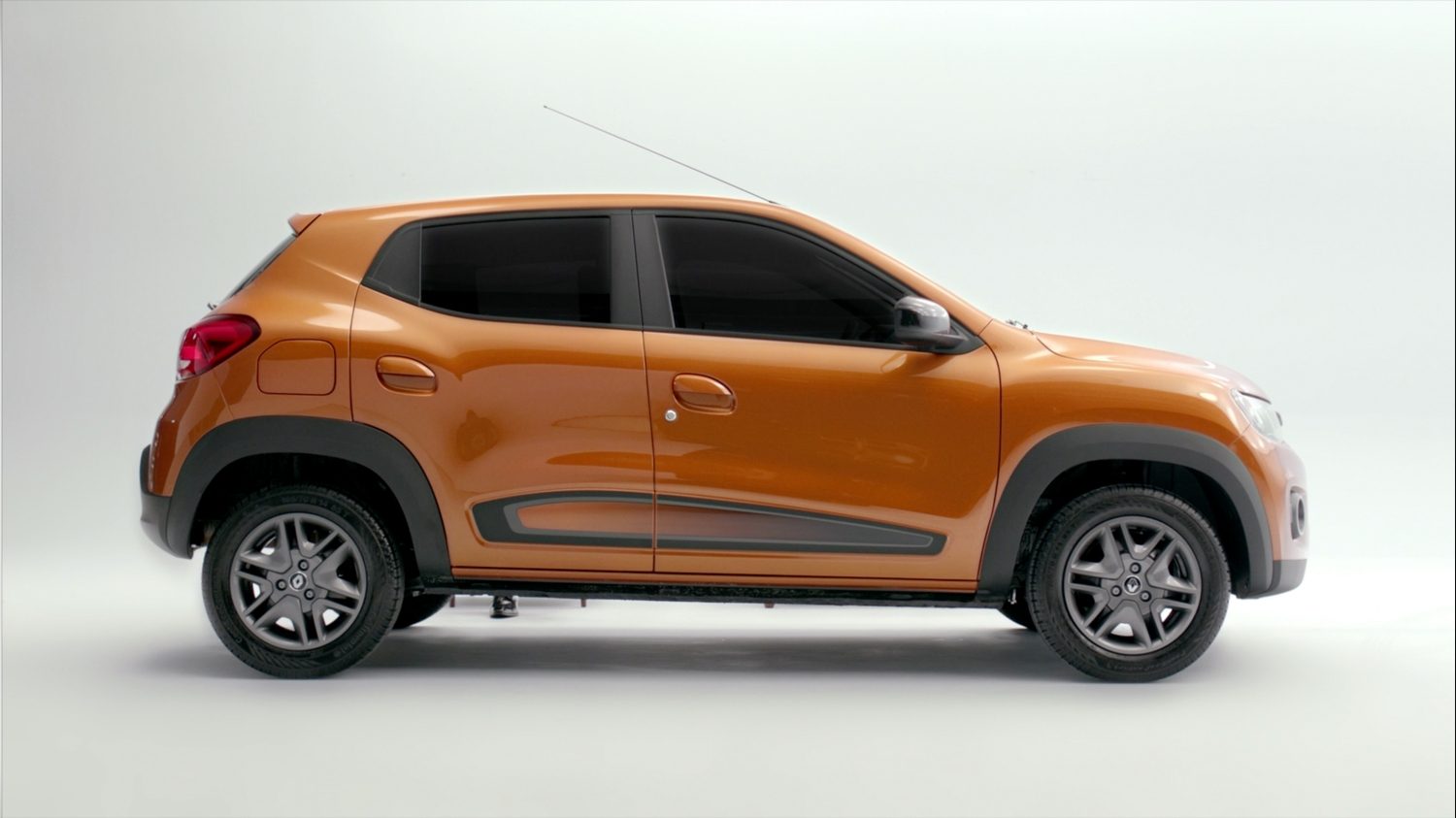
    The Renault Kwid though has been widely appreciated for its SUV-inspired design that makes it look like an apt sibling to the Duster in the company’s stable. The tall riding stance not only offers better road presence to the driver but also opened more space in the cabin. With respect to engine options, the car uses 0.8-litre motor with 53 bhp and 1.0-litre motor with 67 bhp under the hood, paired with a 5-speed manual or AMT unit.

    In addition, the Kwid is now compliant with the new safety norms and comes with a driver’s side airbag, ABS with EBD, speed alert system, passenger seatbelt reminder and ISOFIX for child seats as part of the standard kit. A comprehensive facelift to the Kwid is also expected to arrive later in the year.

    The Renault Kwid is based on the CMF-A platform and the automaker will be introducing a new seven-seater offering based on the platform. The Renault Triber has been teased already and is set for an unveil later this month. The launch slated for July this year. In addition, the Renault line-up will be getting the BS6 upgrades ahead of the April 2020 deadline.

  • Renault Fiat Case ‘Not Closed’

    Renault Fiat Case ‘Not Closed’

    Plans to merge carmakers Renault and Fiat Chrysler could re-emerge despite the breakdown of negotiations last week, France’s transport minister said on Tuesday, joining a chorus of French officials hoping the deal could be revived. Asked if talks between the two companies were over, Elisabeth Borne said: “I think it is not closed.”

    Borne’s comments follow similar remarks by French Finance Minister Bruno Le Maire, who also said he felt a merger between France’s Renault and Italian-American Fiat Chrysler Automobiles (FCA) remained a “good opportunity.”

    French budget minister Gerald Darmanin said last week as well that he hoped the door had not closed on a deal. Last week, FCA pulled out of $35 billion merger talks with Renault, with both companies blaming the French government.

    France has a 15% stake in Renault and the collapse of the talks deprived the companies of an opportunity to create the world’s third-biggest carmaker with 5 billion euros ($5.6 billion) in promised annual synergies.

    FCA and Renault are still looking for ways to resuscitate their merger plan and win the approval of Renault’s alliance partner Nissan, sources close to the companies have told Reuters.

  • France Ready To Cut Renault Stake To Shore Up Nissan Partnership

    France Ready To Cut Renault Stake To Shore Up Nissan Partnership

    France is ready to consider cutting its stake in Renault in the interests of consolidating the automaker’s alliance with Nissan, Finance Minister Bruno Le Maire said Saturday. He was speaking in Japan after Italian-US carmaker Fiat Chrysler pulled the plug on its proposed merger with Renault, saying negotiations had become “unreasonable” due to political resistance in Paris.

    In an interview with AFP on the sidelines of the G20 finance ministers meeting in Japan, Le Maire said Paris might consider reducing the state’s 15-percent stake in Renault if it led to a “more solid” alliance between the Japanese and French firms.

    “We can reduce the state’s stake in Renault’s capital. This is not a problem as long as, at the end of the process, we have a more solid auto sector and a more solid alliance between the two great car manufacturers Nissan and Renault,” he told AFP.

    Last week, FCA stunned the auto world with a proposed “merger of equals” with Renault that would — together with Renault’s Japanese partners Nissan and Mitsubishi Motors — create a car giant spanning the globe.

    The combined group would have been by far the world’s biggest, with total sales of some 15 million vehicles, compared to both Volkswagen and Toyota, which sell around 10.6 million apiece.

    But the deal collapsed suddenly on Thursday, with FCA laying the blame at the door of Paris.

    “It has become clear that the political conditions in France do not currently exist for such a combination to proceed successfully,” FCA said in a statement.

    Le Maire said Renault should concentrate on forging closer ties with its Japanese partner Nissan before seeking other alliances.

    Things need to be done “in the right order…. First the alliance (between Nissan and Renault) should be consolidated and then consolidation (more generally) and not one before the other.”

    “Otherwise, everything risks collapsing like a house of cards,” he warned.

    The minister said it would be up to the bosses of Renault and Nissan to decide how to push the alliance forward as ties between the two firms have been strained after the shock arrest of former boss Carlos Ghosn.

    Renault is pushing for a full merger between the pair but there is deep scepticism of the plan at Nissan.

  • Nissan’s Position In Alliance Might Be Weakened

    Nissan’s Position In Alliance Might Be Weakened

    Nissan found out about Renault’s merger talks with Fiat Chrysler just days before they became public, four sources told Reuters, stoking fears at the Japanese carmaker that a deal could further weaken its position in a 20-year alliance with Renault. Nissan Motor Co Chief Executive Hiroto Saikawa likely first caught wind of the merger plan through his own chief operating officer, Yasuhiro Yamauchi, who also serves on Renault’s board, one of the sources said, speaking on condition of anonymity due to the sensitivity of the matter.

    Saikawa’s actual notification from Renault most likely came a day ahead of a report over the weekend that the French company was in tie-up talks with Italian-American rival Fiat Chrysler Automobiles (FCA), the source said.

    The plan, which would create the world’s third-largest automaker, raises difficult questions about how Nissan would fit into a radically changed alliance. Renault Chairman Jean-Dominique Senard arrived in Japan on Tuesday to discuss the proposed tie-up – and presumably to try to smooth over ties.

    But the deal poses an additional challenge for Saikawa, already grappling with poor financial performance and an uneasy relationship with Renault after Nissan led the ousting last year of long-standing alliance chairman Carlos Ghosn.

    “All this put Saikawa under massive pressure,” a second source said, referring to the fact that negotiations caught the CEO and senior management off guard.

    Renault, which owns a 43.4% stake in Nissan, had previously angled for a merger with Nissan, but Saikawa has long opposed a full integration. New vehicle and powertrain platforms developed by FCA-Renault could also pose a dilemma to Nissan, challenging its jealously guarded independence in some areas of engineering, research and development.

    Nissan could find itself forced to choose between technology developed elsewhere or going it alone – between scale without autonomy and autonomy without scale, a source close to the Renault board said.

    FCA has said a deal would embrace Nissan and another alliance member, Mitsubishi Motors, as “valued and respected partners”. “I have huge respect for Nissan and Mitsubishi, and their products and businesses,” FCA Chairman John Elkann told the Nikkei. Still, there is awareness of friction between Renault and Nissan, which is perhaps why the Japanese company was not involved in talks at an earlier stage.

    “The relationship between Renault and its Japanese partners is not as constructive as probably anybody wishes,” said a source familiar with the FCA-Renault talks. “The FCA view is that Nissan has a lot on its plate … So the time is not right to consider anything other than enhanced cooperation.”

    The French government, which owns shares in Renault, said on Tuesday it wanted Nissan to be on board with the deal. But there have long been tensions between Paris and Tokyo over the imbalance of power in the carmaking alliance, with Nissan holding only a 15% non-voting stake in Renault.

    The Japanese automaker’s clear advantage is in its technology, including vehicles that meet China’s tougher emissions regulations. Renault and FCA, therefore, would need Nissan to help them meet increasingly tough fuel economy, emissions and electric vehicle (EV) quotas around the world.

    An FCA-Renault tie-up would also raise questions about how to extract synergies in some markets where Nissan and FCA compete, such as in North American trucks and SUVs.

    The Japanese firm’s line-up of Nissan and Infiniti brand SUVs competes with FCA’s Jeep models such as the Cherokee. Nissan’s Titan pickup is also competitor, albeit a weak one, to FCA’s Ram pickup line.

    The fact Renault is prepared to consider creating such challenges may be a sign of its frustration with Nissan’s reluctance over a full merger. “It sends a strong signal that Renault does not necessarily have to tie its fate to Nissan,” said Chris Richter, senior research analyst at brokerage CLSA, about the proposed FCA-Renault tie-up.

    Saikawa told reporters on Tuesday that “strengthening the alliance and constructive discussions are forward-looking, and we are open to constructive discussions,” according to Japanese broadcasters. But unless Nissan can regain the initiative, it risks being marginalized even more. “If the Renault-Fiat merger happens and the status quo continues at Nissan-Renault, Nissan’s position and influence within the alliance will fall behind Fiat,” said Takeshi Miyao, managing director of consultancy Carnorama.

    Bernstein analyst Max Warburton said there were theoretically stronger synergies for Renault with FCA than with Nissan, and a better cultural fit too. “It may be inevitable that Renault eventually exits Nissan,” he said, adding the French company’s stake in its Japanese partner was currently worth about 11 billion euros – “plenty of capital to spend on EVs and new technology.”