Retail News CRM

Tag: Renault

  • ‘Robo-taxis’ hold promise, and perils, for automakers

    ‘Robo-taxis’ hold promise, and perils, for automakers

    Are ‘Robo-taxis’ the future of public traffic?

    It’s November 22, 2028 and Sarah, a young mother, gives her two children a kiss goodbye before buckling them into the driverless car that will bring them to school.

    Sarah doesn’t have a car and has no plans to buy one. Living in a suburb, she has run the numbers and the result is clear: It’s much cheaper to order a car only when she needs one.

    The “robo-taxi” has also made her life easier, but only after such vehicles upended the business models which carmakers had relied on for decades.

    The revolution is already underway, with every major brand racing to create autonomous electric cars and trucks that will always be just a few clicks of a smartphone away.

    Fully electric cars are expected to make up 12 percent of the global market in 2025, before jumping to 34 percent in 2030 and 90 percent by 2050, analysts at Bank of America Merrill Lynch forecast last month.

    Adapt or perish

    The motivations are clear: Smog is becoming a serious menace in cities around the world, with China in particular demanding cleaner vehicles for its rapidly growing market.

    Traffic jams are also eating up hours of commuters’ time, meaning car ownership is already no longer a given for many city dwellers.

    And carmakers have nimble new rivals: Apple, Google and Tesla — which last week unveiled an all-electric semi truck — see a chance to dominate a market that will soon depend as much on software as on engineering.

    Industry chiefs aren’t waiting: France’s PSA is betting on car-sharing and other “services” with its Free2Move division, which it hopes will let it get back into the huge US market.

    In Germany, Daimler is working with Bosch to develop self-driving electric cars that could be on the road by the early 2020s, and has already launched its own car-sharing service, Car2Go, in some two dozen cities worldwide.

    Its German rival Volkswagen has created Moia, a “social movement” unit exploring e-shuttles, ride pooling and car hailing.

    “Even if in the future not everyone is going to own a car, with Moia we’re trying to make sure everyone will be a client of ours one way or another,” VW’s chief Matthias Mueller said.

    Robo-taxis could generate 40 percent of auto industry profits by 2030, according to German consulting firm Roland Berger, which expects demand for private vehicles to drop 30 percent in the period.

    And industry experts warn that the automakers which fail to adapt to the shift risk might not survive.

    Lagging behind Asia

    But that means investing billions in batteries, charging infrastructure and autonomous driving technologies with little prospect of seeing a payoff anytime soon.

    VW announced Friday a plan to spend 34 billion euros ($40 billion) over the next five years on hybrid and electric cars and services in a bid to “reinvent” the automobile.

    But for now, so-called “zero emission” vehicles remain a tough sell: Renault’s Zoe range of electric cars, which is has offered since 2012, made up just 1 percent of its sales last year.

    Its chief, Carlos Ghosn, is hoping that figure will reach 5 percent by 2022.

    The contest will be costly for all automakers, with PriceWaterhouseCoopers estimating that production costs for the next generation of electric cars will be 20 percent higher than traditional models, while warning of “serious problems” for returns on investment.

    “The speed” of the shift toward an electric future “will have to be taken on by all automotive companies,” PSA’s chief executive Carlos Tavares said at the Frankfurt auto show in September.

    Yet Western carmakers and government officials already fear they are lagging behind Asian rivals, with China in particular making headway on electric motors and batteries.

    That led the EU Commission to urge the creation of an “Airbus for batteries”, with European companies joining forces for large-scale battery production.

    “This technology is too important to import it from overseas,” the commission’s vice president charge of energy, Maros Sefcovic, warned.
  • Renault expects electric cars and emerging markets to boost sales

    Renault expects electric cars and emerging markets to boost sales

    French carmaker Renault expects a first-mover advantage in electric cars and a wider range of vehicles for emerging markets to help it deliver a 44 percent sales increase by 2022.

    Electric cars are “turning into a significant contributor to our performance while other automakers are just starting the journey”, Chief Executive Carlos Ghosn said on Friday.

    Renault’s mid-term plan shows it growing faster than alliance partner Nissan (7201.T), which it trails in China, due to recent investments in Iran and India and a Russian rebound.

    While taking a lead in electric vehicles had come at the expense of profitability, Ghosn expects to turn this around with the launch of eight new battery-powered models and 12 hybrids.

    “Our vision now is a profitable core business,” he said. Renault and Daimler’s (DAIGn.DE) Smart are likely to extend their small-car cooperation into electric models, he added.

    Renault plans to increase annual sales to 5 million vehicles by 2022 from 3.47 million last year while also aiming for a 7 percent operating profit margin and 70 billion euros ($82 billion) in revenue, goals that were announced in February.

    Renault said on Friday that its margin would remain above 5 percent in the intervening years, as it pursues 4.2 billion euros in cumulative productivity gains and invests 18 billion euros in research and development.

    The company also outlined a new dividend policy, promising to increase shareholder payouts to 15 percent of earnings by 2022, from 7 percent last year.

    In addition, it will continue to pass through its own Nissan and Daimler dividends to Renault shareholders. Renault owns 43.4 percent of its Japanese alliance partner and 3.1 percent of the Mercedes-Benz maker.

    Renault’s share price was up 1.5 percent at 86.86 euros at 1100 GMT and the price might be supported in the coming weeks by “management’s increased confidence” over its mid-term goals, Evercore ISI analyst Arndt Ellinghorst said.

    “This is good news in a world where most people fear earnings, cash flow and profitability will fall due to disruption,” Ellinghorst said.

    LOW-COST RANGE

    The market in China, where Renault only began manufacturing last year, is expected to account for half a million sales by 2022.

    Renault’s budget car line-up, starting with the Dacia Logan in 2004, has underpinned the push into emerging markets and spawned a second car platform underpinning the Kwid mini-SUV, which has more than doubled the group’s sales in India.

    Combined sales of the “Global Access” low-cost cars are seen expanding 54 percent to reach 2 million vehicles, or 40 percent of the group total. An expanded utility van range is also expected to contribute to the emerging-markets surge.

    Europe’s share of Renault vehicle deliveries would shrink to 36 percent from 52 percent under the plan, with sales in the home region remaining broadly flat.

    Pure electric cars may rise to about 5 percent of global sales, Ghosn said, adding that the forecast was “probably conservative” and almost certainly wrong.

    Renault has been transformed since 2005 when he took over from a carmaker dependent on French sales of Megane compacts into a “resilient, multi-polar global company”, Ghosn said.

    Ghosn, who also heads the Renault-Nissan-Mitsubishi alliance, has not yet indicated whether he will seek to renew his contract as Renault’s CEO, which expires next year.

  • Renault-Nissan to set up new China JV with Dongfeng Motor for electric cars

    Renault-Nissan to set up new China JV with Dongfeng Motor for electric cars

    Nissan Motor and its alliance partner Renault are setting up a new joint venture in China with Dongfeng Motor Group to design and build electric cars, joining a list of global automakers aiming to make such vehicles in China.

    The automakers are attempting to tap into a boom for such cleaner “new energy” vehicles in the world’s biggest auto market and gearing up to meet its anticipated stringent plug-in car quotas.

    Ford Motor Co announced earlier this month it was exploring setting up a joint venture with car maker Anhui Zotye Automobile Co to build electric vehicles in China under a new brand.

    Tesla, Daimler AG and General Motors have already announced plans for making electric vehicles in China, which wants electric and plug-in hybrid cars to make up at least a fifth of the country’s auto sales by 2025.

    The new joint venture, called eGT New Energy Automotive Co, will be owned 25 percent each by Nissan and Renault with Dongfeng owning 50 percent, Nissan and Renault said in a statement on Tuesday.

    They said eGT will design a new electric vehicle on a subcompact crossover SUV platform of the Renault-Nissan alliance.

    “The establishment of the new joint venture with Dongfeng confirms our common commitment to develop competitive electric vehicles for the Chinese market,” Carlos Ghosn, chairman and chief executive officer of the Renault-Nissan alliance, said in the statement.

    The statement did not give details of financial commitments of the joint venture partners or say by when the vehicles will be launched. Dongfeng already partners Nissan in China.

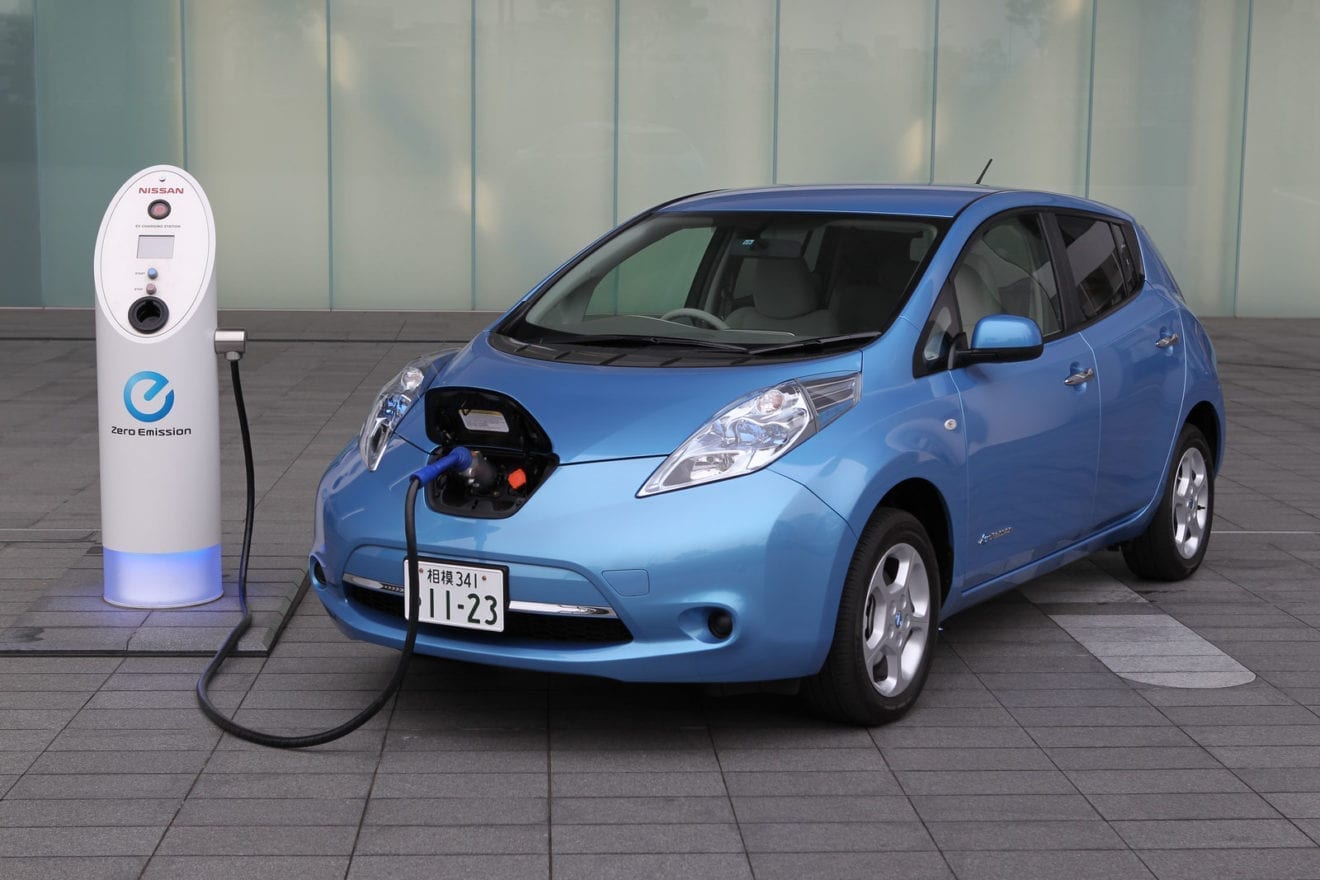
    Both Nissan and Renault already market electric cars. Nissan’s Leaf compact hatchback has become the world’s top-selling electric car since its launch in 2010, while Renault began selling its Zoe model in 2012.

    The game changer for global automakers, many of whom until recently have resisted an industry shift to heavily electrified vehicles, is China – an auto market with strong potential for growth where stringent policies favoring cleaner energy cars are being aggressively pursued.

    Under China’s latest proposals, electric vehicle sales quotas, which are expected to take effect as early as 2018, are due to require 8 percent of automakers’ sales to be battery electric or plug-in hybrid vehicles by next year, rising to 10 percent in 2019 and 12 percent in 2020.

  • Renault-Nissan Alliance annual synergies rise 16% to €5bn

    Renault-Nissan Alliance annual synergies rise 16% to €5bn

    The Renault-Nissan Alliance reported a 16 percent increase in synergies for 2016 compared to 2015.

    The Alliance members secured savings, generated incremental revenues and implemented cost-avoidance measures through the world’s leading automotive partnership.

    The value of annualized synergies realized by the Alliance rose to €5 billion last year, up from €4.3 billion in 2015. Converged operations in purchasing, engineering and manufacturing contributed most of the €700 million synergy improvement.

    “The growing cooperation across the Alliance is delivering strong benefits for the members of the Alliance, reflected by the economies of scale, technological breakthroughs and innovations that are being shared between Renault and Nissan,” said Carlos Ghosn, chairman and chief executive officer of the Renault-Nissan Alliance. “We are on track to realize synergies of €5.5 billion in 2018, even before taking into account the contributions from Mitsubishi Motors, our new Alliance partner.”

    With the addition of Mitsubishi Motors, which became the third full member of the Alliance at the end of 2016, annual sales have reached 10 million units. The addition of Mitsubishi Motors comes two years after Renault and Nissan deepened their partnership by converging four key functions: Engineering, Manufacturing & Supply Chain Management, Purchasing and Human Resources. Each such functions is led by a common Alliance Executive Vice President.

    “We continue seeing tangible results of this major convergence,” added Ghosn. “Our growing synergies are helping Renault, Nissan and now Mitsubishi Motors meet their financial objectives and deliver higher-value vehicles to customers in the new era of mobility.”

    In the current year, the Alliance members are expected to introduce more next-generation technologies in electric vehicles, autonomous driving and connected cars and will increase commonalities in platforms, powertrain and parts to boost competitiveness and identify new synergies.

    In April 2017, the Alliance created a light commercial vehicle business unit that will deliver additional synergies in vans and light trucks. The new unit will maximize shared product development and cross-manufacturing, technology sharing and cost-reduction, while preserving brand differentiation among Alliance members.

  • Renault plans foray into energy market with mega battery

    Renault plans foray into energy market with mega battery

    Renault-Nissan is drawing up plans to build a 100 megawatt power storage plant in Europe, sources told Reuters, hoping to give electric car batteries a second life in a project that could eventually compete with utility companies.

    Like rival Tesla’s energy storage business, the Renault-Nissan move underscores its desire to cultivate a second-hand battery market while encouraging the development of energy infrastructure that works for electric cars.

    The Renault-Nissan alliance plant, which has yet to be built, would be big enough to power 120,000 homes, or supplant the role of a gas- or coal-fired power station in meeting peak electricity demand on the grid, the sources said.

    Rather than generating power, a storage plant charges up in times of excess supply and sells electricity back to the grid when needed. Proponents say such plants can play a key role in smoothing out unpredictable wind and solar power generation.

    Renault-Nissan is working in partnership with energy storage specialist The Mobility House on the mega battery which would be assembled from new or used electric car batteries, one of the sources said.

    “We’re working with The Mobility House on several programs including a major energy storage project that is currently still in the study phase,” Renault spokeswoman Celine Farissier said, declining to give further details.

    Makers of electric cars stand to benefit from the creation of a market for used lithium-ion batteries that can no longer power vehicles to drive far enough. Higher second-hand battery values could help bring down the cost of electric cars and mega batteries are one avenue for recycling the power cells.

    Nissan, 44 percent-owned by French alliance partner Renault, has already built a back-up power storage system for the Amsterdam Arena, which is home to soccer club Ajax, in a first partnership with the German start-up.

    Marcus Fendt, its managing director, said the Munich-based company was working on a 100 MW plant with partners he declined to identify, citing confidentiality agreements. He said the studies were aimed at determining where to build the plant.

    Locations and end markets under consideration for the Renault-Nissan plant include Germany, which is suitable because of its high energy prices and its shift from nuclear to renewable energy, as well as the Netherlands, sources said.

    CARMAKING UTILITIES

    Renault-Nissan studied an existing power storage project in the United States before embarking on its own plan to recycle electric car batteries.

    California’s Public Utilities commission selected a 100 MW battery storage system to replace a natural-gas power plant providing electricity for Southern California Edison in the Los Angeles area.

    Large batteries can help stabilize the primary reserve electricity market, which is responsible for ensuring the grid has at least 50 Hertz. Carmakers can also earn money competing with conventional power stations to guarantee the provision of electricity during periods of high demand or volatility.

    “We forecast the combined market for electric passenger vehicles, electric buses and battery storage to increase eight-fold to over $200 billion by 2020, a five-year compound annual growth rate of more than 50 percent,” Berenberg analysts said.

    With about 4 million electric cars expected to be on the roads by 2020, vehicle manufacturers looking at ways to recycle batteries, including Tesla, which already sells everything from solar panels to batteries and electric cars.

    Daimler, BMW, Volkswagen and China’s BYD Co Ltd are also exploring so-called second-life storage projects with batteries.

    That includes partnerships such as the recent collaboration between BMW and Vattenfall, in which the luxury automaker will deliver up to 1,000 lithium-ion batteries to the Swedish utility for storage projects this year.

    “What will end up happening is that BMW and Daimler will become utilities themselves,” said Gerard Reid, founder of Alexa Capital LLP, a corporate advisor in the energy, power infrastructure and technology sectors.

    “They use Vattenfall now because they need to learn but I think the amount of batteries coming back will be so big that I think they’ll end up engaging directly with the end customer themselves. And they’ve got the brand name to do that.”

  • Renault, Peugeot commit to raise orders from troubled parts maker

    Renault, Peugeot commit to raise orders from troubled parts maker

    French car makers Renault and Peugeot have committed to increasing their orders from ailing components-maker GM&S Industry after their chief executives spoke with Economy Minister Bruno Le Maire, his ministry said on Sunday.

    The future of the company, which employs 277 people in central France and is facing liquidation, was a priority of President Emmanuel Macron’s new administration, a government spokesman said on Wednesday.

    Renault agreed to raise its orders by 5 million euros to 10 million while PSA committed to lifting its purchases by 2 million euros to 12 million, the ministry said in a statement.

    “These commitments will allow the firm in 2017 to reach a turnover close to 25 million euros, and make it possible for it to continue operations and pursue takeover discussions,” it said.

  • Mitsubishi open to helping Renault in Southeast Asia

    Mitsubishi open to helping Renault in Southeast Asia

    Mitsubishi is open to rebadging and selling models from alliance partner Renault in Southeast Asia. It’s one way the newest member of the Renault-Nissan alliance could create synergies with its partners, Mitsubishi Chief Operating Officer Trevor Mann told Automotive News Europe.

    “Renault is almost non-existent in Southeast Asia,” Mann said at the auto show here this month. “If it made sense for Mitsubishi to cross badge a Renault product in Southeast Asia that could be an interesting discussion.”

    Mitsubishi also has a more dominant presence than Nissan in much of Southeast Asia. Mann said the company’s strength in places such as Thailand, where it has three factories that have produced more than 3 million vehicles, could be used to help boost Nissan’s market share and its bottom line.

    For instance, Mann told Reuters the two companies are studying joint production of pickup trucks in Southeast Asia. Mitsubishi, which builds the Triton pickup in Thailand, could supply Nissan with its next-generation Navara pickup. Nissan currently builds the Navara for local sales in Thailand.

    “If you look at our cost performance in that region, we are the benchmark within the alliance,” Mann said. “Our cost-base on pickups is better than Nissan’s.”

    Mitsubishi’s pickup architectures are likely to become the basis for future alliance models, added Mann, who was formerly Nissan’s chief performance officer but was dispatched by CEO Carlos Ghosn to help turn around Mitsubishi after Nissan paid $2.3 billion for a 34 percent controlling stake in the scandal-hit company last October.

    Mitsubishi’s admission that it cheated on fuel-economy ratings for several nameplates sold in Japan opened the door for Nissan to make the move. The two companies expect the deal to lead to combined savings of 49 billion yen ($473.2 million) in the 2017 fiscal year that ends in March 2018.

  • Renault denies report of emissions cheating software

    Renault denies report of emissions cheating software

    Renault is denying a report that its vehicles are equipped with software that allowed its vehicles to cheat on emissions testing.

    The statement Wednesday from the French carmaker followed a report in the newspaper Liberation, which claimed to have obtained an investigative document from the Economy Ministry indicating that emissions from two models – the Renault Captur and the Clio IV – spewed emissions more than 300 percent higher than the legal limit in real-life conditions.
    The ministry’s fraud department handed its findings to prosecutors in November.

    French authorities raided Renault premises after Volkswagen was found to have used software to cheat on U.S. diesel emissions tests. Renault recalled 15,000 cars last year over excessive levels of harmful gases, but the company insisted there was no intentional wrongdoing.

  • Renault launches two new cars in Indonesia

    Renault launches two new cars in Indonesia

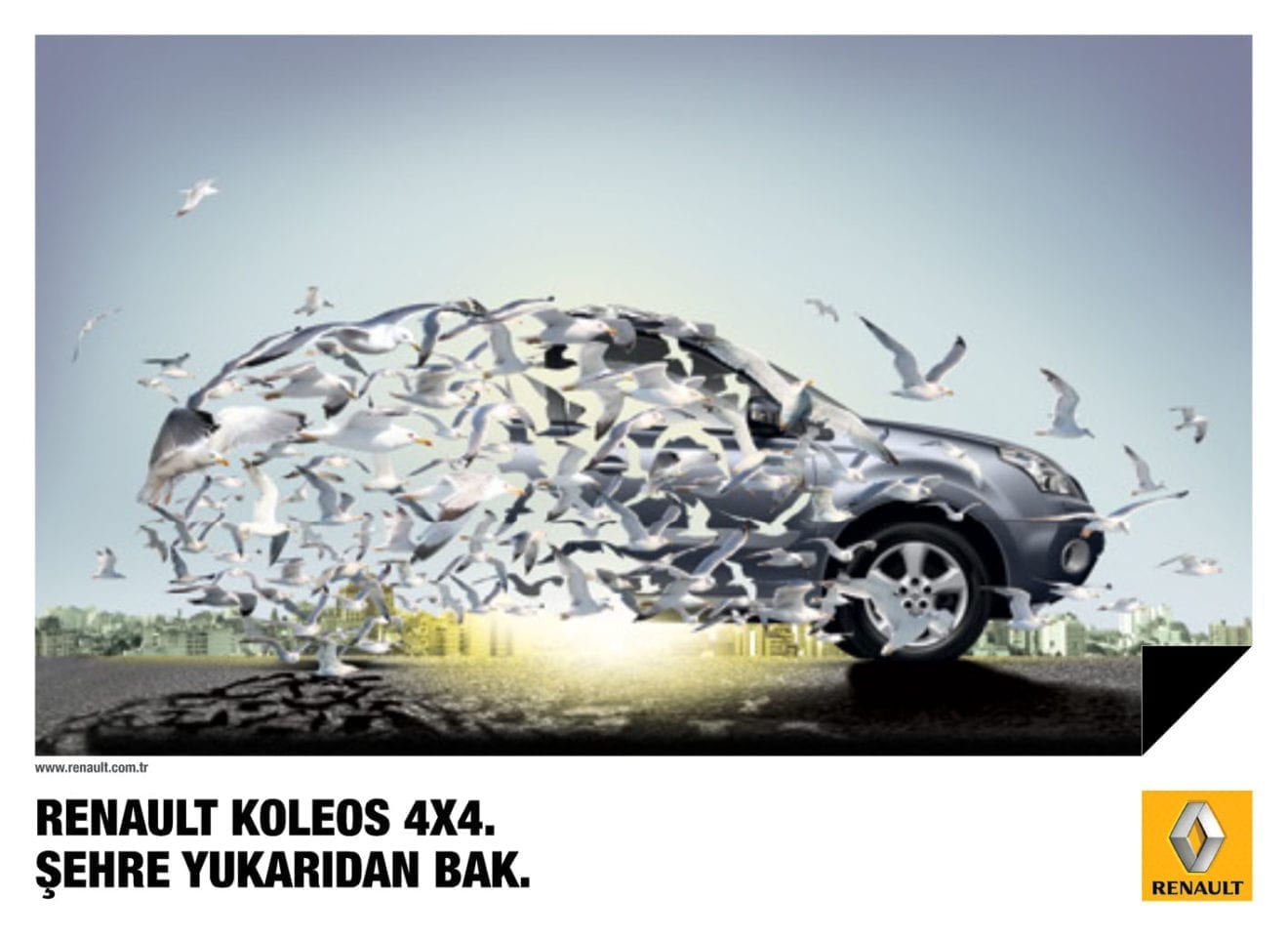
    Despite a bleak forecast for the automotive market in Indonesia, French carmaker Renault and its local partner PT Auto Euro Indonesia launched two new products in Jakarta on Wednesday: the KOLEOS and KWID.

    Serge Yoccoz, Renault ASEAN director of operations, said Indonesia was one of only a few countries to see the launch of the KOLEOS, a medium sport utility vehicle (SUV), ahead of Europe.

    “The new KOLEOS will be [Renault’s] flagship for the Indonesian market,” he said. “It has been redesigned to have unique features and has the ability of an SUV.”

    As for the KWID, Yoccoz added, the mini crossover would be offered for consumers eyeing high fuel efficiency and low maintenance costs. “The KWID will be able to address Indonesian customers’ [demand] for a stylish car,” he said.

    The KOLEOS is offered at Rp 460 million for its standard version and Rp 495 million for the panoramic sunroof version. Meanwhile, the KWID is tagged at Rp 117.7 million and is expected to be able to compete in the compact car segment, which accounts for 16.3 percent of the whole automotive market, according to 2015 data from the Association of Indonesian Automotive Manufacturers (Gaikindo).

    Bambang Subijanto, director of Indomobil Sukses International–an umbrella company of Auto Euro Indonesia, said the Renault-Nissan and Indomobil partnership would create good business synergy and respond to customers’ demands, especially in after-sales services.

    The sales target for both models is set at 1,000 units, until 2017.

  • European Markets Dropped On Renewed China Worries

    European Markets Dropped On Renewed China Worries

    The European markets ended Monday’s session in negative territory, as renewed concerns over China weighed on investor sentiment. Concerns over the upcoming snap elections in Greece and the likelihood of a near-term U.S. interest rate hike also contributed to the negative mood at the start of the new trading week.

    The Financial Times reported that the Chinese government has decided to abandon attempts to boost the stock market through large-scale share purchases. Senior regulatory officials told the Financial Times China’s leaders feel they mishandled their efforts to rescue the stock market.

    The Chinese government resumed large-scale stock buying late in the trading day last Thursday to help the Shanghai Composite Index finish sharply higher, but officials said the government will refrain from further large-scale buying of equities.

    The Euro Stoxx 50 index of eurozone bluechip stocks decreased by 0.52 percent, while the Stoxx Europe 50 index, which includes some major U.K. companies, lost 0.30 percent.

    The DAX of Germany dropped by 0.38 percent and the CAC 40 of France fell by 0.47 percent. The SMI of Switzerland finished higher by 0.45 percent, but the FTSE of the U.K. was closed for a banking holiday.

    In Frankfurt, Volkswagen decreased by 1.14 percent. Japan’s Suzuki Motor Corp said that it would buy back the 19.9 percent stake it sold to the German automaker after an international court settled a dispute between the automakers over their soured partnership.

    BMW fell by 0.90 percent and Daimler lost 0.97 percent.

    Insurer Allianz rose by 0.18 percent, on reported that its infrastructure arm is weighing bids for London City Airport.

    RWE sank by 4.25 percent and E.ON dropped by 1.60 percent.

    In Paris, Renault surrendered 2.28 percent and Peugeot weakened by 1.19 percent. Car parts maker Valeo also decreased by 1.45 percent.

    Total tumbled by 0.91 percent and Technip lost 0.99 percent.

    Givaudan gained 0.73 percent in Zurich, after it agreed to acquire Induchem Holding, a cosmetic ingredient producer.

    Shares of NeuroVive Pharmaceutical AB plunged by 39.13 percent in Stockholm after the mitochondrial medicine company announced that it would not pursue development of CicloMulsion in the indication of acute myocardial infarction.

    Eni SpA climbed by 1.53 percent in Milan. The company announced over the weekend that it has discovered a massive natural gas discovery off the coast of Egypt.

    Eurozone inflation remained unchanged at a very low level in August as further fall in oil prices curbed its ability to move upward. Inflation came in at 0.2 percent in August, the same rate as seen in July and June, preliminary data from Eurostat showed Monday. It was forecast to ease to 0.1 percent.

    Germany’s retail sales rebounded in July to grow at the fastest pace in nine months, signaling that consumer spending boosted economic growth at the start of the third quarter. Retail sales advanced 1.4 percent on a monthly basis in July, Destatis reported Monday. This was the fastest growth since October 2014, when sales climbed 1.8 percent.

    Italy’s retail sales dropped for the second straight month in June, figures from the statistical office Istat showed Monday. Retail sales fell a seasonally adjusted 0.3 percent month-over-month in June, following a 0.2 percent decrease in the previous month. In April, sales had risen 0.7 percent.

    Greece’s retail sales declined in June after rising in the previous month, preliminary figures from the Hellenic Statistical Authority showed Monday. The volume of retail sales decreased 0.4 percent year-over-year in June, in contrast to a 4.1 percent sharp gain in May, which was revised down from 4.2 percent. In April sales had fallen 1.8 percent.

    China’s trade deficit in services widened in July, the State Administration of Foreign Exchange said Monday. The deficit on trade in services increased to $17.6 billion in July from $14.9 billion in June. At the same time, the merchandise trade showed a surplus of $46 billion in July.

    Business activity in the Chicago area unexpectedly grew at a slower rate in the month of August, according to a report released by MNI Indicators on Monday. MNI Indicators said its Chicago business barometer dipped to 54.4 in August from 54.7 in July. While a reading above 50 indicates growth, economists had expected the index to inch up to 54.9.