Tag: rent

  • Hong Kong retail rents about to rise again

    Hong Kong retail rents about to rise again

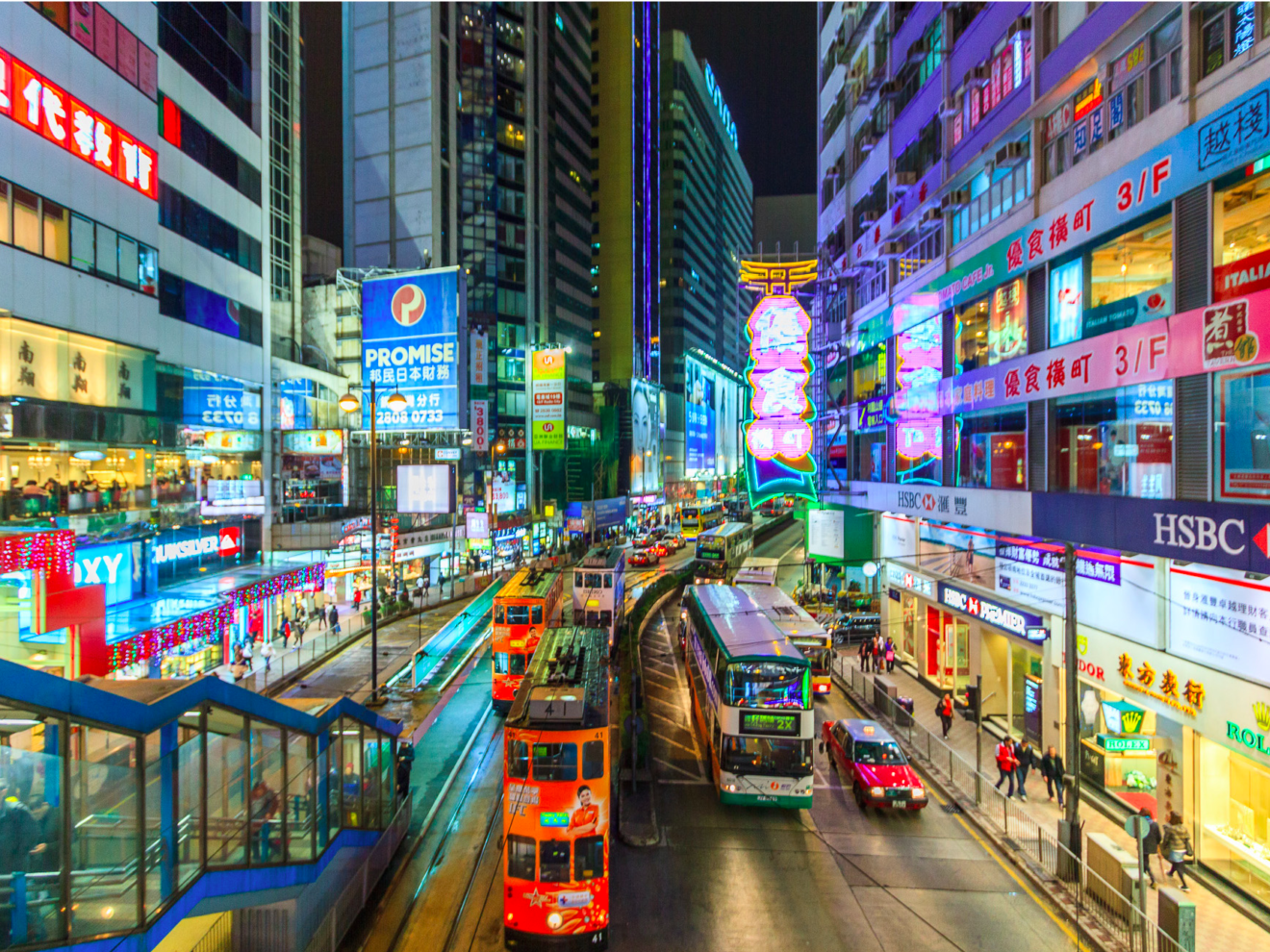
    Hong Kong retail rents will recover more quickly in Kowloon than on Hong Kong Island according to projections by Colliers analyst Melanie Kotschenreuther.

    Kotschenreuther predicts high-street Kowloon retail rents will rise 5 per cent in Mong Kok this year and 3 per cent in Tsim Sha Tsui, while across the harbour, high-street rents will rise by 2 per cent in both Causeway Bay and Central.

    “Rising retail sales and robust demand for prime locations should contribute to a slight recovery of overall high-street rents this year,” she writes in Collier’s First Quarter Hong Kong Retail analysis.

    “Second- and third-tier high-streets will likely remain under pressure in the first half year.” Next year, however, Colliers expects overall high-street rents to rise by 3 to 5 per cent.

    Kotschenreuther says the decline in high-street retail rents in major districts continued to slow, with average rents edging down 0.3 per cent quarter-on-quarter in the first three months of this year.

    “While some first-tier high-street retail rents, except in Central, have started to regain momentum due to robust demand for prime spots, rents outside first-tier high-streets in popular shopping areas have remained soft. Mong Kok, led by further rental improvements on first-tier Sai Yeung Choi Street South, could continue its positive direction, with overall high-street rents growing 0.9 per cent quarter-on-quarter. In contrast, overall high-street retail rents in Central dropped by another 1.4 per cent quarter-on-quarter in the first three months of this year as rental adjustments, particularly on second and third-tier high streets, continue.”

    She says one of the reasons for this is the large size shop configurations common within the area.

    Malls recovering

    Territory-wide, improved market conditions and rapidly recovering retail sales (up by 15.7 per cent during the first two months of this year) combined with proactive strategies by shopping centre owners will help drive further improvements in mall rents in the year ahead.

    “Malls are being transformed into lifestyle hubs, driven by new demand for excitement. We expect continuing tenant-mix refreshments and extended new dining experiences, paired with a comprehensive entertainment program. Mall operators are stepping up digital customer engagement and launching mobile apps to attract new visitors.”

    She says the financial results of operators of prime malls in major retail districts show a positive development of their tenant sales last year. Wharf’s flagship mall Harbour City in Tsim Sha Tsui and Champion’s Langham Place Mall located in Mong Kok announced year-on-year growth of 9.1 percent and 5.3 per cent, respectively – above Hong Kong’s overall retail sales growth last year of 2.2 per cent.

    “The upturn has extended into this year, with shopping malls enjoying a positive start into the Year of the Dog. Sun Hung Kai Properties announced that foot traffic in 12 of its malls was up 13 per cent and retail sales jumped 16 per cent during the Lunar New Year.”

    She says the appetite for international affordable luxury and lifestyle brands, medicines and cosmetics and new F&B concepts is increasing, which will help strengthen rents.

    Meanwhile, Colliers predicts 1.41 million sqft (131,200sqm) of new retail space to come on stream in core retail districts this year and a further 339,700sqft (31,560sqm) next year, led by Victoria Dockside in Tsim Sha Tsui and H Code in Central this year and at 15 Middle Road in Tsim Sha Tsui next year.

  • Hooters Hong Kong to face legal action from unpaid rent

    Hooters Hong Kong to face legal action from unpaid rent

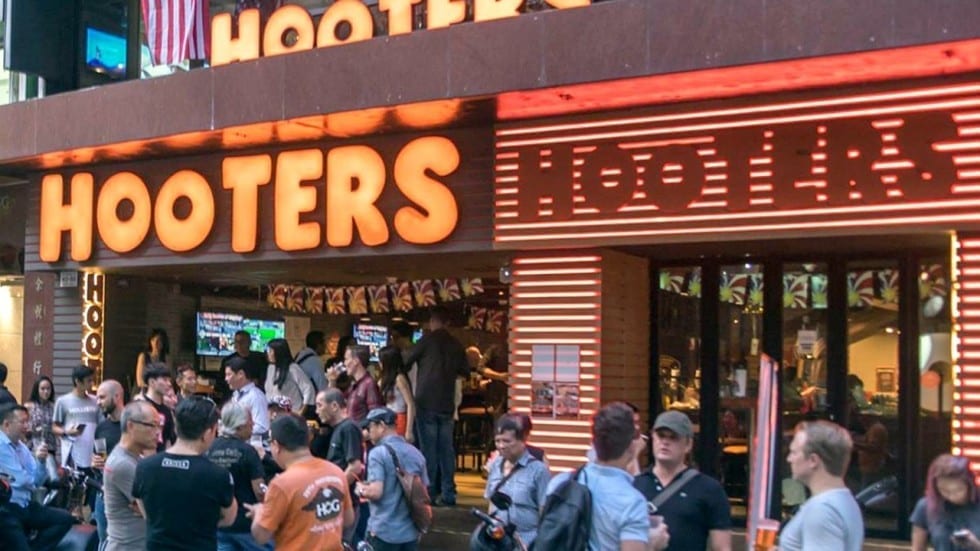
    Again accused of failing to keep abreast of rent payments, Hooters Hong Kong is facing legal action and eviction from its Wyndham Street premises in Central.

    A writ filed by landlord Dor Fook last week says the American restaurant chain has failed to pay nearly HK$1.52 million (US$194,300) in rent since October.

    The document says Hooters Restaurants signed a 10-year lease in March 2016 for its ground-floor venue, agreeing to pay $330,000 a month for the first year. It also signed a five-year lease for a room above the shop, agreeing to a monthly rent of $24,000 for the first year.

    Known for its buxom female servers in skimpy outfits, the restaurant is accused of not paying its rent and rates for the two spaces, constituting a repudiation of the lease.

    Seeking to repossess the premises, the landlord will also claim $371,700 for every month the restaurant stays put, starting from this month, and $17,932 a month for rates.

    This follows a previous threat of eviction in September, when Dor Fook lodged a legal bid for $1.13 million, about three months’ rent. Hooters Asia president Daniel Yong then said the company had paid off all its outstanding debt the day before the bid.

    However, it is reported this week that Yong has left the company.

  • Singapore office rents under pressure

    Singapore office rents under pressure

    Office rents in Singapore’s central business district eased 1.2 per cent to S$8.90 (Bt220) per square foot a month in the first quarter of this year, while retail rents show signs of stabilising despite challenges, a property consultancy says.

    Research by Edmund Tie & Co shows the decline in CBD office rents last quarter abated from the 2.1 per cent drop in the fourth quarter of last year.

    While the uncertain external environment continued to pressure rents, higher pre-commitment levels at upcoming completions and the filling up of newer buildings helped support rent levels.

    Office rents in Marina Bay eased 0.5 per cent in the first quarter of this year, less than the 2 per cent seen in the fourth quarter of last year.

    This was supported by the higher occupancy rate of 96.8 per cent in the first quarter of this year compared with the 94.6 per cent in the fourth quarter of last year.

    Shadow space in Marina Bay, as of the first quarter of this year, declined from nearly 150,000 square feet (14,000 square metres) to 45,650 square feet. “While the market showed signs of stabilising, it is premature to conclude the office market is bottoming out due to the uncertain external environment.

    “Geopolitics in the region remain volatile, although the summit talks between US President Donald Trump and Chinese President Xi Jinping went well,” said Lee Nai Jia, head of research.

    Retail rents are exhibiting signs of stabilisation, with gross rents of first-storey retail space in Orchard Road and Scotts Road staying flat at S$37.20 per sq ft per month in the first quarter of 2017. This was in contrast to the corresponding period of last year, when rents declined by 1 per cent

    Rents in Orchard Road and Scotts Road remained resilient, supported by limited supply. The fall in first-storey retail rents in other city areas, including Raffles Place, City Hall, Tanjong Pagar, Shenton Way and Bugis, also moderated – to 0.6 per cent quarter on quarter in the first quarter.

    In the fourth quarter of last year, the quarterly decline was 1 per cent.

    The stabilisation of rents comes on the back of higher visitor arrivals and stronger retail sales last year.

    According to preliminary estimates from the Singapore Tourism Board in February, arrivals grew by 7.7 per cent to 16.4 million and tourism receipts by 13.9 per cent to S$24.8 billion.

    Retail occupancy across the island also improved towards the end of 2016, reaching 91.5 per cent in the fourth quarter from 90.6 per cent in the third quarter.

    “E-commerce is an enabler that allows the products of local retailers to reach to a wider audience, without paying the high rents at prime shopping malls,” Lee said.

    More Singapore residents are drawn to cities like Bangkok and those in Taiwan, Malaysia and South Korea for shopping.

    Lee cited Bangkok’s Chatuchak market as  being a popular destination for Singapore shoppers.

  • Retail rents in central region to slump 8% later this year

    Retail rents in central region to slump 8% later this year

    Landlords and retailers are off to another bumpy ride. The retail outlook for this year seemed to still be on the cloudy side for both retailers and landlords.

    According to Knight Frank’s latest Singapore Retail Bulletin, average rents in the Central Region are envisaged to fall by 5.0% to 8.0% by Q4 2017, while the more resilient prime rents to moderate downwards by up to 3.0% YoY in the same period.

    “Landlords are likely to take on a more proactive role to initiate more advertisement and promotion activities in a bid to attract shoppers into the mall. On the same note, retailers are also expected to explore innovative concepts that integrate both offline and online retailing platforms to enhance consumer engagement,” the research house said.

    Meanwhile, the occupancy performance is expected to hover between 90% and 92% this year, after maintaining an average of 92.2% over the first three-quarters in 2016. This is in consideration of the close to 2m sq ft. gross floor area of retail space slated for completion in 2017 amidst the heightened level of caution among retailers towards their business strategies due to the uncertain global economic outlook.

  • MManila 53rd most expensive retail property location in the world

    MManila 53rd most expensive retail property location in the world

    The Philippines has slipped by a notch on the list of most expensive retail property locations this world due to lower-than-expected sales volume so far in the year, a global real estate services firm said.

    In a report, Cushman and Wakefield said in Metro Manila dropped from the 52nd spot last year. It cited a slowdown in the sales of luxury properties.

    “The luxury segment experienced a slowdown as lower-than-expected sales volumes in existing stores led to upscale brands re-evaluating expansion plans,” the report said.

    In spite of the slowdown, Cushman and Wakefield noted the Philippine market continues to enjoy the support of international brands.

    “International brands continue to drive the Philippine retail sector, supported by the rising disposable income of a growing middle class population,” the report noted.

    Global mid-tier brands accounted for a significant volume of leasing activity in recent quarters.

    “In particular, fast fashion retailers and F&B operators are leading the growth of the segment as brands such as Uniqlo and H&M continue to aggressively expand their footprints within and outside Metro Manila,” Cushman and Wakefield said.

    Growing competition among mall developers has led to the formation of new retail concepts as a way of expanding market share.

    “There is also a shift in the tenant mix, where mall operators are increasing the share of F&B in their retail developments,” the report said.

    By region, the Asia Pacific retail market has been seeing a cautious 2016.

    “Overall, retailers continued to be cautious in their store expansion across the region due to a number of concerns including continued global economic instability, and we see this trend continuing well into 2017, said Cushman and Wakefield Asia Pacific Head of Retail Theodore Knipfing.

    Once retailers start expanding, the focus would be on high-performing malls and high streets with strong pedestrian traffic, Knipfing noted.

    “All in all, despite the cautious outlook across the region, major international and regional retailers will have to eye overseas growth, as their respective domestic markets reach saturation point and investors demand results,” Knipfing said.

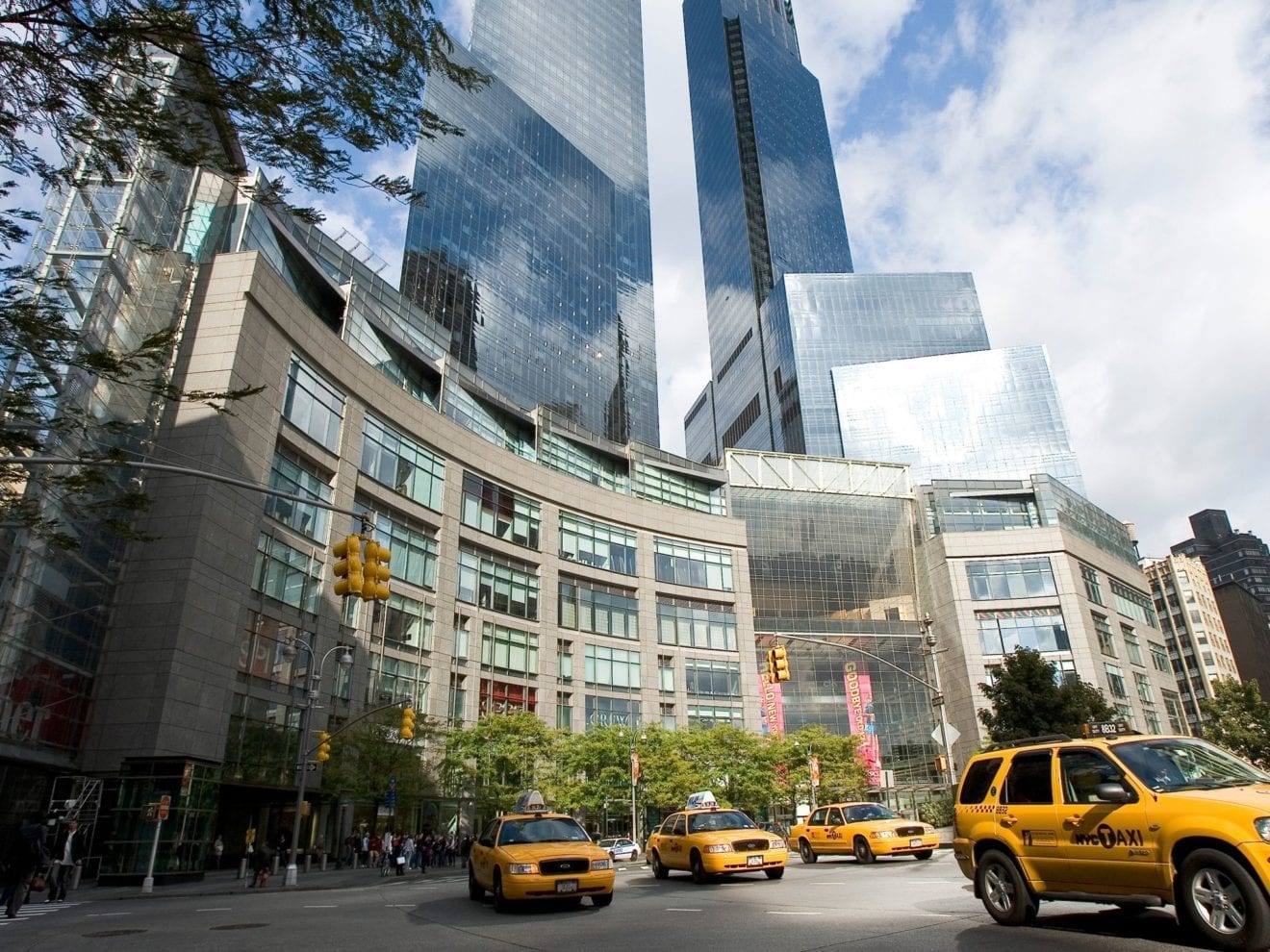
    Moreover, Upper 5th Avenue encompassing 49th—60th Streets in New York, USA remains number one on the list of most expensive shopping locations in the world at $3,000 per square feet.

    This is followed by Causeway Bay in Hong Kong at $2,878 per square feet and Avenue des Champs Élysée in Paris France at $1,368.

    Retail rent in Philippines, particularly Rockwell and Century City in Makati, is at $57 dollars per square feet.

  • Indonesian Housing market showing positive signs in 2016

    Indonesian Housing market showing positive signs in 2016

    The increase in housing sales in several regions of Indonesia is a positive sign of growth in the countrys property sector, according to Indonesia Property Watch (IPW).

    “Research conducted by the IPW on the housing sector in the fourth quarter of 2015 revealed a 16.6 percent growth compared to that in the previous quarter,” Ali Tranghanda, the executive director of IPW, stated here on Wednesday.

    He admitted that the growth in sales could not yet be taken for granted as a consistent upward trend in sales, but at least it is a positive signal for the housing market.

    This is because the growth rate in annual sales is still 10.87 percent lower than that in the previous year, he reminded.

    However, based on its research, the IPW found that the sales of houses in the potential areas in Bekasi, a Jakarta buffer town in West Java, had increased significantly by 72.01 percent in the fourth quarter compared to that in the previous quarter.

    The sales in other areas of Jakartas satellite towns, such as Bogor, recorded a growth increase of 15.44 percent but dropped by 8.52 percent in Tangerang, which is another Jakarta buffer city in Banten.

    “The satellite towns of Bekasi, Bogor, and Depok in West Java are expected to contribute positively to the increase in housing sales in Jakartas areas and Tangerang,” noted Ali.

    He reminded that the ongoing construction of public mass transportation projects such as the Mass Rapit Transit (MRT) and the Light Rail Transit (LRT) would increase the added value of houses in the areas.

    It was forecast that 2016 would be the year of rising optimism in the property sector in Indonesia, but property businesses should also continue to maintain high vigil, international property consultant Jones LaSalle (JLL) had announced earlier.

    “The interest of our investors and residential clients remains high, and we look at 2016 with consistent optimism and vigilance,” Country Head of JLL Indonesia Todd Lauchlan remarked.

    Todd noted that 2015 could be viewed as a year full of challenges for the property sector in Indonesia as the economy grew below the predicted target, among other factors.

    Moreover, he pointed out that the other factor was the fluctuations in the rupiah and other currencies, which weakened significantly against the US dollar. The drop in the prices of commodities had triggered concerns in Jakarta.

    “This year, however, there will be an increasing market demand for offices and residences, while the production sector is also expected to remain stable,” he added.

  • Hong Kong bets on Chinese demand to drive property market

    Hong Kong bets on Chinese demand to drive property market

    Mainland China’s influence continues to grow across the four core sectors of the Hong Kong property market, according to the latest research from JLL.

    Demand for office space is increasingly being underpinned by mainland corporates, while a persistent slowdown in inbound tourism from China has put a large dent in retail sales growth of late.

    Cross-border trade remains the lynchpin of the city’s warehouse sector, while mainland participation in the residential market is slowly transitioning from a buyer to that of a developer.

    Office market

    New mainland policy initiatives, including the development of the offshore renminbi market, the expansion of CEPA and the roll-out of the Stock-Connect Pilot Programme, have played a leading role in driving demand for Hong Kong office space.

    In 2015, mainland Chinese firms were among the most active in the market, accounting for about 36 per cent of all new leasing transactions in Central. Their share of new lettings in the Grade A office market has doubled over the past five years and today accounts for about 21 per cent of all floor space leased in Central.

    Denis Ma, Head of Research at JLL, said, “With China’s economy starting to slow and its financial markets showing increased volatility, there is growing concern whether demand from the mainland will be sustained. But looking ahead we remain confident that mainland companies will continue to play a pivotal role in the short- and long-term growth of the city’s office market.

    “Government policies will play a large part in growth and help to attract more foreign companies to establish or grow operations in Hong Kong. We estimate that up to 28 per cent or 7 million sq ft of the tenant base in the Central Grade A office market will be mainland corporates by 2021.”

    Retail market

    Hong Kong’s retail sector flourished at the same time mainland tourist arrivals increased three-fold between 2006 and 2015, accounting for more than three quarters of all tourist arrivals last year.

    Latest figures show mainland tourists spent an estimated HKD 178 billion on shopping in Hong Kong last year, accounting for about a third of all retail sales and spending an average of HKD 3,900 per visit. Despite the growth of mainland arrivals slowing since their peak in 2014, some of the causes that have led to a retail sales slump of late can be reversed through policy changes.

    “If the restrictions placed on multi-entry visas were eased and the Individual Visit Scheme (IVS) programme was expanded as proposed in 2012, up to HKD 21 billion in sales could be added to Hong Kong’s retail market. But the type of tourists would likely be more focused on mass market goods rather than luxury items,” said Mr Ma.

    Industrial market

    Since China’s economy has slowed, Hong Kong’s logistics market has shown signs of vulnerability. In 2015, trade with China retreated for the first time since the Global Financial Crisis, dropping 1 per cent y-o-y through the first 11 months. With external trade accounting for about 70 per cent of all warehousing demand in the city, the slowdown has led to an easing of new warehousing demand.

    But as Pearl River Delta (PRD) industries move up the value chain, they have increasingly turned to Hong Kong’s logistics market to move their goods, taking advantage of the higher quality provisions and security offered by warehouse in the city.

    Other positives for the sector include the completion of new infrastructure that will bring the Western PRD within a 3-hour commute of Hong Kong and permit cargo flowing from the Western PRD to be moved through export facilities at Hong Kong International Airport (HKIA) and the Kwai Chung Container Port.

    Mr Ma said, “According to HKIA Master Plan 2030, cargo handled by HKIA will increase at an average of 4.2 per cent per year, with the bulk of growth being driven by the movement of goods in and out of mainland China.

    “Based on our estimates, the increase in cargo volumes at HKIA translates to about 300,000 sq ft of additional warehousing demand per year. Hong Kong’s status as a key logistics and trading hub will further be cemented by the ‘One Belt, One Road’ policy initiative, while the demand for warehouse will increase.”

    Residential market

    Mainland homebuyers had accounted for as much as 40 per cent of all sales in individual projects in the primary market before retreating to 10 per cent in 2015, largely as a result of the government’s stiff Buyer’s Stamp Duty introduced in 2012.

    Today, attention has shifted to the growing participation of mainland developers. Mainland developers have bid on over half of all residential land sales tendered by the government in 2015, winning about a quarter of awarded tenders and elbowing aside local developers that had long enjoyed an entrenched position.

    They are also setting new benchmarks for the market. The bid prices of mainland developers exceeded market expectations in 73 out of 100 instances between 2013 and 2015, compared with 59 out of 100 for local developers.

    Mr Ma said, “We expect mainland developers will continue to expand in the city. Hong Kong’s traditional developers are still expected to dominate the market but will face increasing competition in acquiring residential plots from a larger pool of bidders.

    “Based on JLL’s supply forecasts, residential units built by mainland developers will account for up to 8 per cent of the overall private housing supply between 2016 and 2019, with the majority delivered in the New Territories (56 per cent) and Kowloon (35 per cent).

    “With around 119,000 new households expected to be formed between 2016 and 2019, about one in ten new families opting for primary homes in the private market could end up living in properties developed by mainland developers.

    “Whether mainland developers are able to grow their business in the city to a point where they can influence market direction remains to be seen and will be dependent on the response to the first wave of their units that come to the market.”

  • Hong Kong Retail Rents Remain Sky-High Despite Slowdown

    Hong Kong Retail Rents Remain Sky-High Despite Slowdown

    Even as slumping sales force luxury brands renegotiate retail rent prices and close stores in Hong Kong, a new report finds that it’s still the second-priciest place in the world to open up shop.

    According to Cushman & Wakefield’s newly published “Main Streets Across the World” report, Hong Kong’s Causeway Bay area retained its second-place rank after New York’s 5th Avenue as the most expensive retail location globally this year. Causeway Bay retail rent cost an average of US$2,399 per square foot a year, an amount far above the next-highest cost on Paris’ Avenue des Champs Élysées, which came in at US$1,372 per square foot. However, a continued retail sales slump driven by fewer mainland tourists could drop its ranking next year as top luxury brands rethink their Hong Kong strategies.

    The listing comes in spite of several Hong Kong store closings by luxury retailers over the past year that include Coach’s Queens Road Central flagship and TAG Heuer’s Causeway Bay store. Many companies such as Burberry—which is reducing the size of its largest store in Hong Kong—have said they are attempting to renegotiate their rent prices. These include Kering, Prada, and Chow Tai Fook, and more store closings may follow depending on negotiations.

    The report notes that “downward pressure on rents is becoming increasingly evident on the back of weaker retail sales and the slowing in tourist arrivals.” As a result, rents in Causeway Bay fell by 12 percent year-on-year for the period ending in June 2015, while Central, Tsim Sha Tsui, and Mongkok fell by between 11.9 and 13.9 percent.

    Shanghai was the only other location in Greater China to make the list of 65 locations, with West Nanjing Road moving up to 11th place from 12th place last year. Tokyo’s Ginza district and Seoul’s Myeongdong area—both top destinations for Chinese tourists—also ranked high on the list at 7th and 8th, respectively.

    Mainland China is on course to become the world’s largest retail market by 2018, although brick-and-mortar growth is slowing as e-commerce becomes more popular. The report notes that retailers in both Shanghai and Beijing are testing out ways to become “lifestyle destinations” through strategies such as the introduction of food and beverage options. They’re also embracing O2O marketing with special mobile shopping apps and free in-store WiFi. Retail growth is expected to be especially strong for retailers geared toward the middle class as the luxury market remains in slowdown mode, according to the report.

    Because of Tokyo’s success from the influx of Chinese tourists, the report predicts that rents are likely to go up for luxury retailers in the coming year as brands like Burberry, Moncler, and Brunello Cucinelli have pursued store expansion in key shopping districts. In addition to the posh Ginza district, retail rent went up by 20 percent in the Omotesando area over the past year.

    There is a silver lining to the Hong Kong slump, according to the report. It states that Hong Kong’s retail scene is now becoming a “more tenant-friendly environment,” and lower rent levels “will create opportunities for luxury brands and high street retailers to enter the market such as Monica Vinader, Sotheby’s Wine, Claudie Pierlot, Rebecca Minkoff, Perrin Paris, and Filson.”

  • Burberry Hong Kong downsizes flagship

    Burberry Hong Kong downsizes flagship

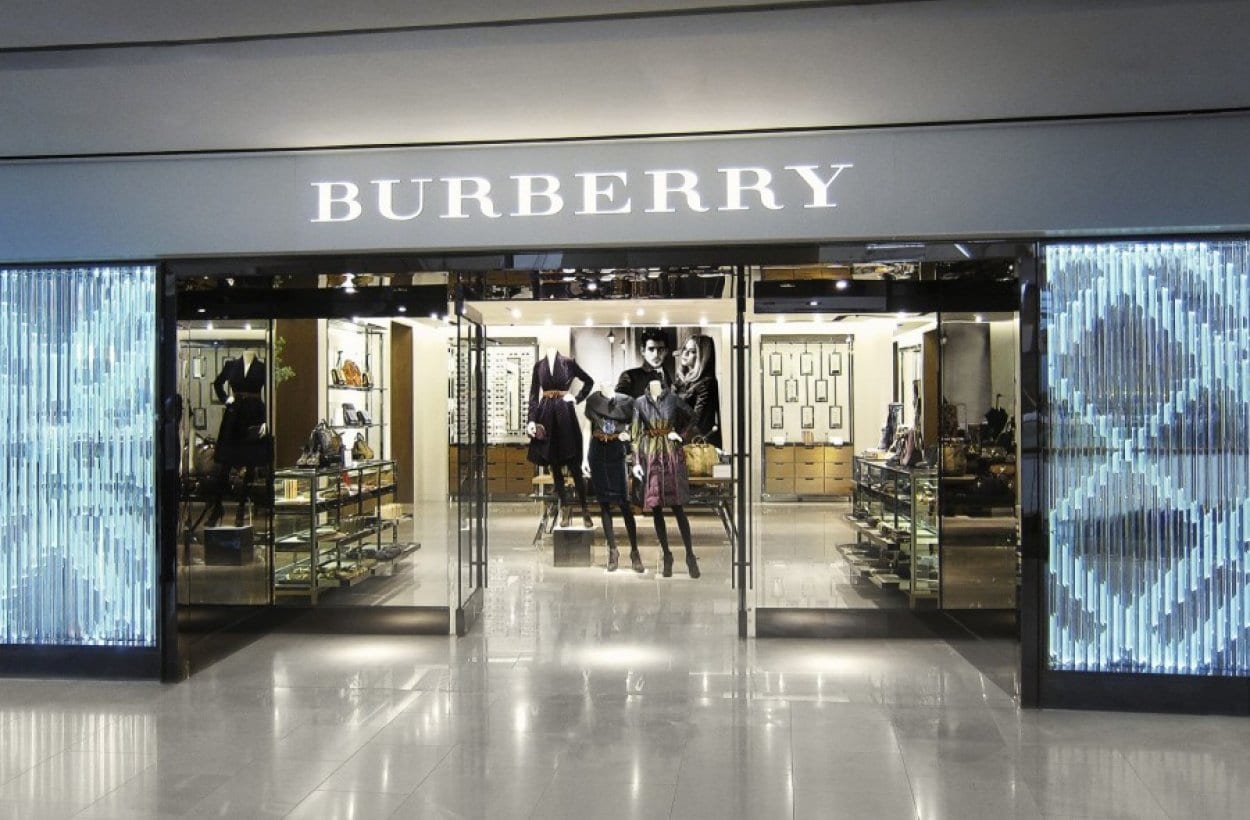
    Burberry Hong Kong is giving up a whole floor of its Pacific Place flagship as part of a range of initiatives to respond to the declining luxury market in the territory.

    Burberry CFO Carol Fairweather said in a conference call the company had reached an agreement with landlord Swire to give up the second floor part of the flagship, saying it “will enable us to drive increased sales per square foot and profitability in that store”.

    The luxury brand has 17 stores in Hong Kong, all impacted by the declining number of big spending Mainland China tourists shopping in the territory this year. Fairweather said rents had been renegotiated in a number of those stores but stressed all of them were profitable.

    “We are committed to being in Hong Kong,” Fairweather said, adding that sales have improved in recent months.

    The news coincides with the company’s release of its profit for the first half year, which beat analysts forecasts.

    Adjusted combined retail/wholesale profit was up five per cent on a same stores basis, with a planned decrease in licensing profit from Japan resulting in adjusted profit before tax of £153 million, up three per cent underlying from last year.

    “In the context of flat revenues, this result is better than expected,” commented Anusha Couttigane, senior consultant at Conlumino.

    She says Burberry is fully aware of its heavy reliance on interest from the Chinese consumer. The economic slowdown and the impact on Chinese demand is now cited as Burberry’s biggest risk.

    “In the light of these challenges, it is clear that, while Burberry continues to invest in elements that are essential for growth, it also has to make significant savings and it will take a combination of drastic measures to do so. On the one hand, this means aligning its brands under one label and its manufacturing staff under one roof. On the other, it means stripping back the privileges of a generous travel and expenses account.”

    Those cost savings are expected to deliver some £20 million to the business’ bottom line over the next 12 months.

  • Restaurateurs see opportunities in Hong Kong as retail rents slip

    Restaurateurs see opportunities in Hong Kong as retail rents slip

    After waving goodbye to the boom in mainland Chinese arrivals, Hong Kong’s retail leasing market is refocusing on broad-based, local consumption, including food and drink.

    Hong Kong shopping streets are changing as luxury shops, including watch, handbag and jewellery retailers, close stores, and restaurateurs see opportunities.

    “New dining brands entering Hong Kong in the past year were pretty successful,” said Helen Mak, retail services group head at Colliers International. “Celebrity chefs like Gordon Ramsay and Jamie Oliver have just opened their second restaurants in Hong Kong recently.”

    Hong Kong retail sales fell for six straight months to the end of August as mainland tourists spent less. Luxury retailers have been scaling back their operations as a result. New dining brands entering Hong Kong in the past year were pretty successful.

    According to data from DTZ, in the first eight months of this year high street rents declined by 29 per cent year on year in Causeway Bay and by 34 per cent in Tsim Sha Tsui.

    In September, cosmetics retailer Colourmix paid 60 per cent less than the former tenant, luxury Swiss watch brand Jaeger-LeCoultre, to take its space in Causeway Bay’s Russell Street, one of the most expensive shopping strips in the world.

    High street rent in Hong Kong’s four top shopping districts, including Causeway Bay and Tsim Sha Tsui, surged as much as 213 per cent from 2003 to 2014.

    “Restaurant rents are much more stable than storefront luxury shop rents,” said Kevin Lam, DTZ’s head of business space. He said restaurant rents in the four top shopping districts had grown by an average of about 10 per cent a year since 2010.

    “Dining out is already an integral part of Hong Kong culture and Hong Kong people love to welcome food from different countries,” Mak said. “Even for mainland visitors, they may shop less but they won’t give up the food experience in Hong Kong. The future of dining business is promising here.”

    She said many dining brands outside Hong Kong, including some from Europe, the United States, South Korea and mainland China, wanted to expand here and were looking for places to rent. Popular mainland hotpot brand HaiDiLao is among them.

    “Shop owners used to be too reliant on luxury shops,” Mak said. “Now we finally have a supply of spaces for other business.”

  • Hong Kong retail rents will continue to fall in next year

    Hong Kong retail rents will continue to fall in next year

    In more than three decades in Hong Kong’s real estate industry, Sheraton Valuers’ Michael Chik Pa-fai has seen a number of up and down cycles. With retail sales falling, the managing director of the retail property-focused brokerage expects the slump in retail rents to last for at least a year before the market finds its bottom.

    Q: We saw street shop rents falling sharply in Causeway Bay and Central in the last quarter. Will the falls stop?

    A: I do not think so. The falling trend began when luxury brand Coach terminated the leasing contract of its Central shop due to slow sales of luxury goods. Adidas will now move into the three-storey shop for lower rent. The fall led to a domino effect and extended the pressure to Causeway Bay in the third quarter, and it will spread to Tsim Sha Tsui soon.

    There are still a number of shops vacant in Causeway Bay, such as those in the second-tier street Percival Street. One landlord of a Percival Street shop wanted to rent out his shop with a monthly asking rent of HK$450,000 in May this year, but no one showed interested. The shop was recently sold and the new owner cut the asking rent to HK$300,000 a month but so far it has not found a tenant.

    In Central’s China Building at 29 Queen’s Road Central, landlord Cheung Kong Property Holdings is still looking for a tenant to fill the vacant space after Italian brand Baldinini left by the end of July. Baldinini rented shops three to five on the ground floor as its Hong Kong flagship store at the beginning of this year. It moved in after Asia Commercial Holdings’ shop that traded Rolex luxury watches moved out.

    Q: Are there any tenants still planning to leave before leases expire?

    A: There are quite a lot. When retail sales were good and mainland tourists rushed to visit Hong Kong, retailers opened more than one shop on one street. Now they are considering closing the worst-performing ones. The lease of Puyi Optical’s shop at 116-120 Canton Road will expire next month. It is understood that it won’t renew the lease because it has another shop on the same street.

    Q: When will the market stabilise?

    A: The pace of rent correction in Causeway Bay is slowing after the recent decline. Rents will start to fall on Canton Road when a number of leases expire at the end of this year and next year. One example is that Asia Commercial Holdings moved into three shops in Manley House at 86-89 Canton Road in 2013 for a monthly rent of about HK$6.3 million. The retailer has been planning to sublet one shop with an asking rent of HK$1.3 million with the aim of reducing rental pressure. But it has yet to find a taker.

    When there is vacant shop, landlords of shops on the street will feel the pressure. New leases for some shops on Canton Road will be 30 per cent below old leases.

    It will take a year to let the market finds its bottom. It will go back to the rental level in 2011. Rents have jumped too fast over the years. Before Asia Commercial moved into the three shops in Manley House, Sa Sa International occupied the shops at a monthly rent of HK$1.59 million. Rents jumped more than fourfold.

    The recent downturn will pull rents down. Rents for this kind of shop will be less than HK$1 million.

    Q: Is it the worst time you have seen?

    A: Definitely not. The worst times were the years between October 1997, when Asia suffered a financial crisis, and 2003, when Hong Kong was hit by the severe acute respiratory syndrome (Sars) outbreak. The whole market picked up in 2004, bolstered by the introduction of the Individual Visit Scheme, announced in 2003, and rents kept rising since then.

    The good news is mid-range brands , which had been forced to move to secondary or tertiary locations to make way for luxury-market retailers, are taking advantage of the current market slowdown for opportunities to return to prime shopping districts. For example, Hong Kong-based cosmetics retailer Bonjour has returned to Russell Street, one of the world’s most expensive shopping streets.

    Q: What is Sheraton Valuers’ background?

    A: Chairman Yam Wing-Yin found the company in 1985. We specialise in the sale and leasing of shops and commercial premises. Our retailer clients include well-known brand names such as Emperor Watch & Jewellery, Chow Tai Fook Jewellery, Prince Jewellery & Watch, Sa Sa and Bonjour.

  • ‘Weak’ Hong Kong and Macau hits Prada

    ‘Weak’ Hong Kong and Macau hits Prada

    Continuing volatility in the market and the exchange rate landscape in Hong Kong, Macau and the Asia Pacific region (excluding Japan) has been blamed for Prada’s overall net profit fall of -23% to €188.6m ($212.7m) in the first half of 2015.

    Despite the big challenges in the Asia Pacific region which is Prada’s biggest market, the Milan-based fashion company first half-year revenue growth of +4.2%, thanks to more positive market performances in Europe, The Americas, The Middle East and Japan.

    Consolidated net current exchange rates on the corresponding period in 2014.

    The luxurygoods company says the increase is entirely attributable to the retail channel, as a result of its selective strategy aimed at further enhancing the of its Directly Operated Stores.

    All other regions reported good growth, although the company adds that the Asia Pacific market (excluding Japan) showed the same negative trend as it did in the first quarter of the year, offset by a positive effect.

    Patrizio Bertelli, COO said: “The luxury goods market is undergoing a period of significant change which must be met with a far-reaching, long-term strategy.

    “Our commitment remains centered on creative dynamics and the spirit of innovation, so that we can constantly increase the levels of excellence of our products.

    “In operational terms, we will continue with our thorough review of business processes in order to make them more efficient.”

    While its wholesale business declined by 13%, sales of the group’s retail network grew by 7.6% at current to €1,552.4m ($1,750.7m). The company reported that its 605 Directly Operated Stores (DOS) also benefited from a general improvement in sales performance.

    The European market grew by +12.4% thanks to a steady flow of tourists, together with a recovery in consumption by domestic customers, while the Japanese market outshone the rest of Asia with a +11.7% constant result. Sales in the Americas and the Middle East also improved considerably (both plus +15%).

    In terms of retail channel by brand, Prada recorded a 5.4% rise in sales thanks entirely to the effect, but was badly impacted by the negative economic situation in the Asian market.

    Miu Miu grew with revenues up at both current (+18.7%) and constant (+6%), enjoying a sales boost in the second quarter. The Church’s shoe business also grew by +18.6% and Car Shoe’s result was in line with the same period last year.

    EBITDA for the first half of the year was €440.1m ($496.3m) or 24.1% of net revenues, while EBIT came in at €293.2m ($330.7m) or 16.1% of consolidated net revenues.

    As mentioned, was reported down -23% at €188.6m ($212.7m) or 10.3% of consolidated net revenues.

  • Singapore’s Changi seeks retail tenants

    Singapore’s Changi seeks retail tenants

    Changi Airport is seeking new retailers for concessions in Terminals 2 and 3, along with food and beverage operators.

    The airport has a fashion concession available in Terminal 2 within the departure/transit lounge area for which it says it is seeking a multi-brand boutique from a retailer capable of delivering “a luxurious shopping experience”.

    The space is 519 sqm with a contract period of three years. Changi says the space can incorporate store-in-store concessions for individual brands.

    In Terminal 3 it has an open category concession, meaning it is open to approaches from retailers in any category. That 25.4 sqm space is on Basement 2 in the northern end of the terminal, and also has a three year term.

    “We are looking for brands with proven track record over the years that will differentiate the retail offering at Terminal 3,” said CAG in its documentation.

    Submissions close on September 21.

    Meanwhile, the airport is seeking a range of food and beverage operators – including Chinese restaurant, a food court solution and a canteen.

    The deadline for submissions for these spaces range from September 28 to October 15.

  • Retail building oversupply reaches alarming level in HCM City

    Retail building oversupply reaches alarming level in HCM City

    A Cushman & Wakefield’s report shows that the retail rent in the second quarter fell by 5 percent compared with the same period last year. Meanwhile, the supply is forecast to soar to 1.5 million square meters by 2020, 200 percent higher than today.

    According to Savills Vietnam, the total retail premises area which has been put into operation by August, had reached 940,000 square meters. It is expected that the market would have an additional 200,000 square meters from 10 projects.

    In the eastern part of HCM City, which is considered the ‘hottest spot’, at least 300,000 square meters of trading floor – a basement of apartment blocks – would become operational in 2015-2018.

    The retail supply boom in the eastern part of the city is attributed to the city’s policy on increasing infrastructure investment in the area. However, the existing shopping malls in the area remain poorly patronized.

    Viet An Hoa’s CEO Tran Khanh Quang warned that 300,000 square meters of retail premises was too high and may lead to an oversupply.

    The retail premises area in the southern part of HCM City has also been increasing. According to Savills Vietnam, there are about 151,000 square meters of modern retail premises under exploitation, including 60,000 square meters, or 40 percent, in Phu My Hung new urban area.

    It is expected that 80,000 more square meters of retail premises will hit the market by 2016.

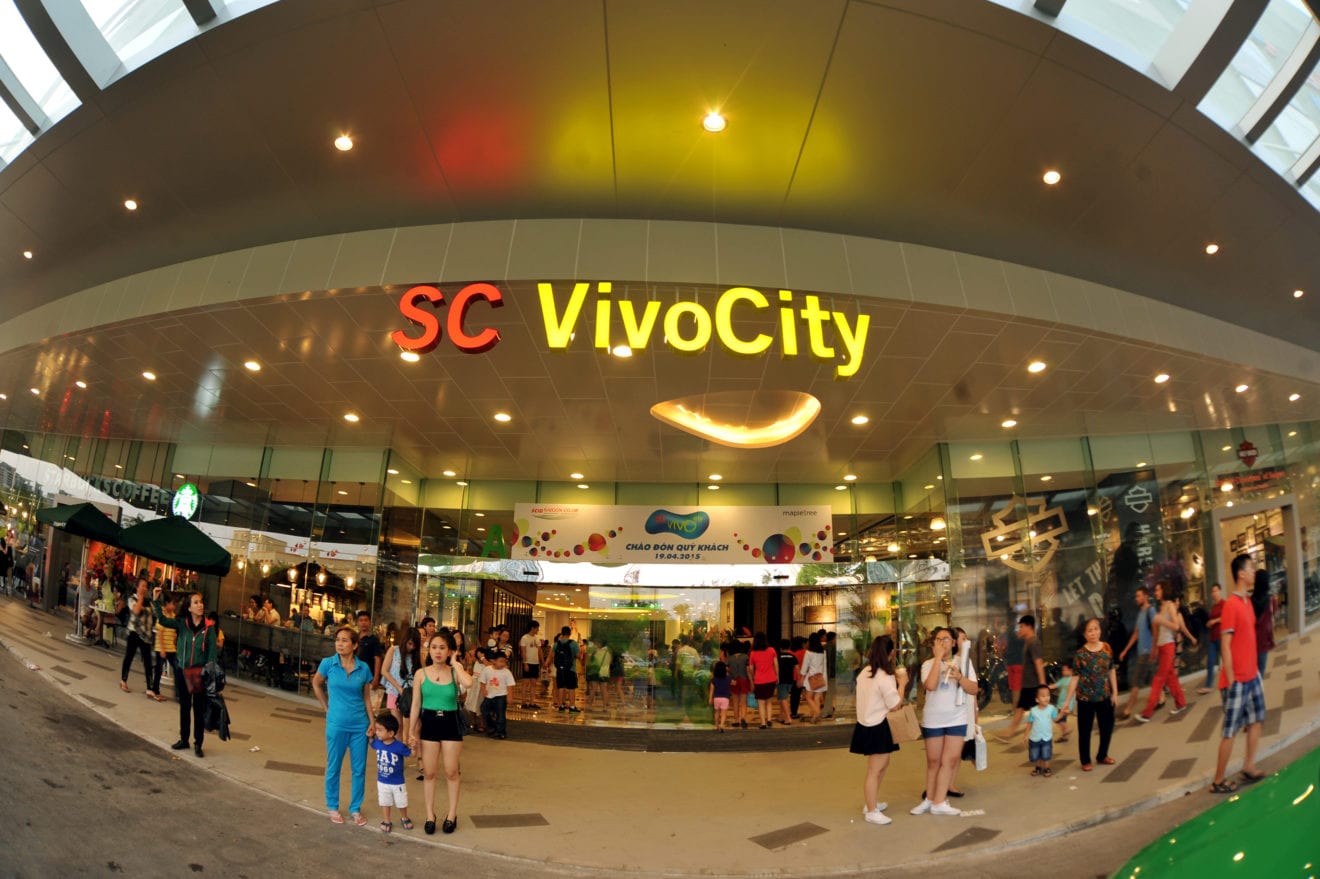
    SC Vivo City (41,000 square meters), Crescent Mall (45,000) and Parkson Paragon (12,800) are the three largest shopping malls in the southern area of the city. But they are not crowded on week days.

    “The retail premises are in oversupply,” said Nguyen Van Duc, Deputy Director of Dat Lanh Real Estate.

    “Even the shopping malls in advantageous areas are deserted these days,” he said, adding that investors should not ‘be overly excited with retail building projects’.

    He went on to say that it was a ‘blunder’ for project developers to set up shopping areas in the basement of buildings.

    The shopping malls at apartment buildings, together with separate shopping malls above ground, will lead to an oversupply of retail premises.

    However, Le Thi Kim Hoa from Cushman & Wakefield is optimistic about the market, saying that the supply would force rental prices of retail premises down, which will benefit customers.

    Savills Vietnam’s Nguyen Thi Van Khanh noted that, compared with Bangkok, which has 8 million square meters of retail premises, and Singapore with 4 million, the retail premises total area of less than 1 million was ‘modest’.


  • Hong Kong Luxury Goods Stores Want Cheaper Rents

    Hong Kong Luxury Goods Stores Want Cheaper Rents

    Rents for retail space on the island of O‘ahu rose to a record earlier this year.  Colliers International says commercial rents here have been rising for the past several years, a trend that’s expected to continue. Commercial rents have also risen in Hong Kong, but some luxury retailers are fighting back.  HPR’s Bill Dorman has more in today’s Asia Minute.

    Selling luxury goods in Hong Kong is not the business it used to be.  Part of that reflects a slowing Chinese economy.  But those who follow the sales say an even bigger impact has been the crackdown on extravagant spending by Chinese government officials.

    This week, the chief financial officer of Gucci’s parent company threatened to close some stores in Hong Kong unless rents are reduced.  He told a conference call of analysts that “many landlords have not necessarily understood that the markets have changed.”

    Bloomberg reports Burberry may also try to lower its rent after its sales in the city fell to a two-year low.  Commercial rents have come down in some parts of Hong Kong, but they remain among the most expensive in the world.  Reuters reports a 500-square foot store space in the neighborhood of Causeway Bay can cost the equivalent of 64-thousand US dollars a month.

    Commercial real estate firm Cushman and Wakefield says annual rent for retailers tops two-thousand dollars a square foot in three different Hong Kong neighborhoods.  Many Chinese shoppers are now traveling beyond Hong Kong to buy luxury goods.  In a report last month, Bain and Company said the world’s luxury goods market is continuing to grow, and its major driver is tourism.