Tag: report

  • Australia retail sales miss in September

    Australia retail sales miss in September

    Australian retail sales rose slightly in September 2018, missing industry expectations that the nation’s retail revenues would register a bigger increase for the first month of spring. Domestic retail turnover saw a 0.2 % gain in September, according to the latest Australian Bureau of Statistics (ABS) Retail Trade figures.

    While the growth remains positive, analysts were predicting a stronger result and forecast retail sales to climb 0.3%, on August’s 0.3% gain in the prior month.

    Year-on-year, September witnessed a rise of 3.67%.

    “Although September’s month-on-month figure isn’t as positive as we would have liked, we need to understand the year-on-year retail growth figure represents a better overview of the current state of Australian retail,” Russell Zimmerman, Executive Director of the Australian Retail Association said.

    “The ARA know personal tax cuts play a big role in discretionary spend, and believe a second round of personal tax cuts before the next election would certainly boost consumer confidence, and see an increase in retail sales in the new year.”

    For the month, café, restaurant and takeaway spending registered the highest growth in September, up 0.5%. This was followed by food retailing, up 0.4%, said the ABS.

    But the month of September was weighed down by lower sales across the clothing, footwear and personal accessories category, with three industries falling 1.2%. Household goods and department stores remained relatively flat from previous months.

    By state, sales were strongest in the state of Victoria and Tasmania, leading by 0.7%. New South wales fell 0.4%, while Western Australia and The Australian Capital Territory were relatively unchanged in September 2018.

    Online retail sales made up 5.6 % of total retail turnover in original terms in September 2018, an unchanged result from August, said the ABS.

    The ABS also released quarterly data that showed seasonally-adjusted retail sales rose 0.2%, a massive drop from the 1 per cent increase in the second quarter.

  • New iPhones sell slowly in Korea

    New iPhones sell slowly in Korea

    A week after Apple introduced its latest iPhone series at stores in Korea, sales are only about 60 percent of those reported for the previous lineup over the same period of time. According to estimates compiled by local mobile carriers, a total of 170,000 iPhone XS, XS Max and XR models were purchased between Nov. 2 and Nov. 7. A total of 280,000 iPhones 8 and X models were sold in the first week of their release in November 2017. Sales of the two models began three weeks apart.

    Industry watchers assumed that Apple’s simultaneous release of the three models was designed to garner greater attention and boost sales in the early days.

    However, figures so far show that the latest iPhones are selling more slowly than earlier models.

    “It’s not doing that great,” said an employee at a brick-and-mortar phone shop in central Seoul on Friday when asked if the new iPhones are popular.

    “There’s the expensive price tag, but it also has to do with the fact that there aren’t dramatic function upgrades. To be honest, even I can’t really notice a big difference between the iPhone X and XS. Maybe the next series will come with more innovative features – we’ll see.”

    Price became an issue as soon as Apple introduced the new models. In Korea, the 512-gigabyte iPhone XS Max sells for nearly 1.97 million won ($1,745), while the 256-gigabyte XS retails at 1.56 million won.

    Even the budget XR model is priced slightly below one million won.

    Despite the price concerns, presales have been reasonably strong. SK Telecom, KT and LG U+ took orders between Oct. 26 and Nov. 1.

    Presales results for the three new models differed per company, but the general assessment was that demand was similar or stronger than for previous generation iPhones.

    Presale results don’t necessarily indicate success. Customers who preorder iPhones in Korea, even before actually touching the product, are likely to be loyal Apple fans.

    “The thing about Apple maniacs is that they will get their hands on the next iPhone no matter what,” said a source from one of the mobile carriers.

    “But success doesn’t just come from them. The general public, especially those switching between smartphone brands, should be attracted to buying it, too. The new iPhone seems to be failing in that respect this time.”

    Up until a few years ago, a few manufacturers like Apple and Samsung dominated the smartphone market. Customers nowadays have a much wider ranges of options in terms of price and style.

    Over the last decade, smartphone technology has advanced so much that even budget models priced at half that of the latest iPhones come with high-tech functions, such as face unlock.

    From Apple’s side, there are signs that the company is well aware of the slower demand.

    Japan’s Nikkei Asian Review reported on Monday that Apple told smartphone assemblers Foxconn and Pegatron to halt plans to bring on additional lines for iPhone XR production. All companies involved declined to comment.

  • Malaysia’s September trade surplus climbs to 10-year high

    Malaysia’s September trade surplus climbs to 10-year high

    Malaysia’s exports rebounded by 6.7% year on year (yoy) in September 2018 to RM83 billion after a dip of 0.3% in the previous month, boosting the trade surplus to a 10-year high of RM15.3 billion, the Statistics Department said. The surplus represents an 85.9% jump compared with the same month last year.

    Imports, however, registered a decrease of 2.7% yoy to RM67.8 billion. This was the second lowest import value in 2018.

    Total trade, which was valued at RM150.8 billion, increased RM3.3 billion or 2.3% in September 2018.

    The export growth was contributed by expansion in exports to Hong Kong, Taiwan, Singapore, Australia and South Korea. Lower imports were mainly from India, South Korea, Vietnam, the United Arab Emirates and the European Union.

    The main products which contributed to the expansion in exports were electrical & electronic products (+6.5%); refined petroleum products (+20.5%); crude petroleum (+54.5%) and liquefied natural gas (+1.8%).

    However, declines were recorded for palm oil and palm oil-based products (-11.5%); timber and timber-based products (-0.4%) and natural rubber (-1.9%).

    The lower imports by “end-use” were mainly attributed to intermediate goods, capital goods, and consumption goods.

    MIDF Research said export growth for Q3 averaged 5.3% yoy, moderated from 8.4%yoy in Q2. It was the lowest gain in seven quarters.

    Looking at the final quarter of 2018, it expects exports to perform better than in the earlier three quarters.

    “Amid higher base effects and signs of easing key global indicators, we foresee exports to expand by 7.3% this year (18.9% in 2017). This is supported by lower exports growth for the first nine months which registered at 6.5% compared to double-digit growth of 21.6% in the same period last year.

    “The moderating pace is consistent with gradual rise in global commodity prices, expectation of slight slowdown in overall business performance on top of the heating Sino-US trade conflict.”

  • Japan’s retail sales lift for 11th consecutive month

    Japan’s retail sales lift for 11th consecutive month

    Japanese retail sales continued to grow in September with the archipelago nation recording its 11th consecutive month of revenue growth in retail. For the four weeks to September 30, retail sales increased 2.1% on the same period last year, according to data by the Japanese trade ministry.

    However, the growth was slower compared to August’s 2.7% expansion in the prior month, signalling a potential slow down in retail spend ahead of the busy Holiday period.

    Last month’s gains were led by rising gasoline prices and high sales of machine tools, as well as food and beverage purchases and clothing.

    In September, car sales slipped and online retailers suffered a decline, said the report.

    On a month-on-month basis, retail sales fell 0.2% in September from the previous month, following August’s 0.9% increase.

    The dropped was the first in four months, adding to fears that consumer spending fell yet again in the third quarter.

    Meanwhile, Japan’s annual core consumer inflation gained 1% in September, the fastest in seven months. However, the inflation was boosted mostly by higher oil prices.

    The retail growth follows a survey from Criteo that states Japanese consumers lead the world in mobile transactions, with customers shopping more while commuting.

    In the latest survey, mobile devices accounted for 55% of all EC transactions, up 4 points on the year. Transactions through smartphones increased 9%, and tablets 3%, but purchases by PC were down 9%.

  • Insufficient measures to boost retail spending : RGM

    Insufficient measures to boost retail spending : RGM

    The latest budget announcement is not expected to stimulate consumer spending in the near term, as there is insufficient economic policies aimed at increasing retail spending, opined retail consulting firm Retail Group Malaysia.

    Managing director Tan Hai Hsin said that Budget 2019 is focusing more on managing government deficit and social programmes for the B40 group.

    “We hope the economic activities will improve significantly in the immediate future. Higher economic activities will lead to higher take-home pays (and higher retail spending subsequently),” Tan said.

    Prior to the Budget announcement, he said Malaysian consumers were told that they should not expect monetary incentives from the government in 2019. Malaysians were also informed that more taxes could be expected next year.

    “Based on the latest announcement, it should improve consumer confidence. At least in the next six months,” said Tan.

    For next year, the government continues to distribute one-off monetary incentives to Malaysians (including civil servants) to reduce their financial burden. About 4.1 million households are expected to benefit from it.

    Increment of minimum wage by RM50.00 will also lessen the financial burden of B40 group.

    “On the other hand, higher minimum wage will lead to higher cost of goods for retailers. It will lead to higher retail prices eventually.”

    He said the soda tax will not have major impact on retail spending, while noting that it is still early to comment on the impact of RON95 until more announcements have been made.

    “Same as previous budgets for many years, there were no direct incentive and new government policies related to retail industry.”

    Sunway Malls & Theme Parks Chan Hoi Choy said the 2019 Budget balances fiscal discipline while emphasising development in the right sectors.

    “Initiatives announced particularly with the emphasis on B40 group is lauded while efforts to grow Industry 4.0 especially knowledge transfer, artificial intelligence development, matching grants will drive higher productivity and cost rationalisation in mall & retail industries.”

    Similarly, it is encouraged by the government’s focus in housing, public transportation and education initiatives to form the bedrock for Malaysia’s economy into the future. The drive for greener adoption and women representation also signifies a greater sustainable and inclusive approach.

    “We take note of the significance of Malaysia’s economy projected GDP growth rate of 4.8% for 2018 and 4.9% for 2019, against IMF’s projected slowdown of global growth of 3.7% in 2019. This underscores the relative resilience of the Malaysian economy in face of global headwinds and protracted trade war. In the light of this and the current country’s fiscal position, the overall Budget 2019 is targeted while exercising prudence,” said Chan.

  • Alibaba’s second-quarter revenue jumps high

    Alibaba’s second-quarter revenue jumps high

    Alibaba’s second-quarter revenue grew 54 per cent year on year, reaching RMB 85.1 billion ($US12.3 billion). Net income attributable to shareholders was RMB 20 billion ($2.9 billion), a 13 per cent year-on-year increase. “Alibaba had another strong quarter of rapid growth,” said Alibaba Group CEO Daniel Zhang.

    “Annual active customers increased by 25 million to reach 601 million in the year ended September 30.”

    “Annual active customers increased by 25 million to reach 601 million in the year ended September 30.”

    Alibaba’s cloud-computing arm saw 90 per cent year-on-year growth to RMB 5.6 billion, launching more than 600 products and features during the quarter ranging from big data analytics, AI application innovation, security and internet-of-things enhancements.

    The business’s online Tmall operations saw a 30 per cent increase in gross merchandise value, driven by improved conversion rates and increased traffic in the fast-moving consumer goods, home furnishings and apparel categories.

    Alibaba’s New Retail strategy has continued to pay off across its Hema supermarkets network, with stores that have been in operation for at least 1.5 years seeing online sales account for 60 per cent of turnover for the September quarter. By the end of the quarter, 77 Hema stores had been opened in China.

    The group has dropped its forecast revenue guidance for the full year by 4 to 6 per cent to between RMB 375 billion and RMB 383 billion. As it stands, the group expects revenue to grow by 54 to 56 per cent.

  • Parkson Retail Asia continues drowning

    Parkson Retail Asia continues drowning

    Struggling department store operator Parkson Retail Asia has hinted it may close further stores as it posted yet another loss. For the first quarter of the new trading year, the Singapore headquartered company lost S$11.1 million, a slight improvement on the $12.9 million of a year ago.

    Last full trading year, the company lost $40.1 million for the full year.

    In a statement, the company said it would will continue to prioritise on enhancing product offerings “as well as on optimising both our operational efficiency and network of stores,” suggesting further exits, most likely in Vietnam where it has just five stores remaining from a peak of 10 and continues to lose money.

    Parkson credited the reduced loss on an improved performance of the Malaysian and Indonesian store networks, together with the effect of the closure of seven loss-making stores last financial year.

    Group sales rose 1.7 per cent to $92.6 million.

    On Friday the company announced the immediate resignation of its CFO Chia Cang Yang, with immediate effect. CEO Michael Remsen will oversee financial matters until a replacement is recruited.

  • Vietnam’s per capita GDP up 17.3 pct in 3 years: PM

    Vietnam’s per capita GDP up 17.3 pct in 3 years: PM

    This year’s estimated per capita GDP of $2,540 marks a $440 increase over 2015, PM Nguyen Xuan Phuc informed the National Assembly Monday. In term of purchasing power parity (PPP), the per capita income in 2018 is estimated at $7,640, and expected to rise annually by six percent to reach $8,580 in 2020, the prime minister said.

    “Many international organizations said that Vietnam has good prospects, and is one of the fastest growing economies in the region and in the world,” Phuc noted.

    Vietnam is likely to achieve GDP growth of 6.7 percent in 2018, he said, adding that despite complex fluctuations in the domestic and global economies, caused in particular by the US-China trade war, as well as financial and currency market risks, Vietnam has managed to pull through 2018 with several positive economic signs.

    GDP growth reached 6.98 percent between January and September, and foreign direct investment inflows into Vietnam this year will likely reach a record $18 billion, Phuc said.

    It is expected that inflation will be kept at below 4 percent for the year, the third year in a row that the government has maintained this level, he added.

    Vietnam is aiming to post economic growth of between 6.6-6.8 percent in 2019, the PM said, adding that the target of keeping inflation below 4 percent will also be applied.

    However, he conceded that there was pressure on Vietnam’s inflation rate due to higher crude and electricity prices as well as costlier education and healthcare services.

    To speed up economic development, the Government plans to push ahead with the state-owned enterprise restructuring plan, Phuc said.

    “We want to restructure public investment more effectively and improve the efficiency of capital use. Furthermore, the privatization and divestment of state-owned enterprises will ensure publicity, transparency and maximization of the State’s interests,” the PM said.

    He emphasized the need for strong development of the private sector and the creation of a favourable and competitive environment that maximizes resources and improves all economic sectors.

    The Government will also focus on public investment, speeding up implementation of projects like the North-South expressway and the Long Thanh International Airport in southern Dong Nai Province, the PM said.

  • Asia-Pacific telcos to face slower revenue growth: Moody’s

    Asia-Pacific telcos to face slower revenue growth: Moody’s

    Moody’s Investors Service expects stronger competition for the Asia Pacific (APAC) telecommunications sector and stronger commoditisation, and slower revenue growth for companies across 11 markets in the region, including Malaysia. The other markets are Hong Kong, India, Indonesia, Japan, Korea, the Philippines and Singapore.

    The rating agency’s report entitled “Telecommunications – APAC: 2019 Outlook” noted that while slower overall revenue growth will be evident in all 11 markets, the emerging market is expected to see a more pronounced slowdown with revenue growth to fall to 3-3.5% in 2019 versus the 3.9% in 2017.

    “Comparing overall revenue growth across APAC with GDP (gross domestic product) growth, Moody’s says that companies as a whole will show modest revenue growth of 2-2.2%, with such growth lagging average GDP growth of about 4.6% for the region,” said Moody’s vice-president and senior analyst Nidhi Dhruv.

    Meanwhile, new entrants are expected to intensify competition in Singapore, Japan and Australia.

    High shareholder returns and capital expenditure levels will continue to temper free cash flow generation, which will consequently make companies to look into diversifying revenue as traditional telecommunications revenues contract. This will eventually lead to more cross-industry partnerships.

    Additionally, while 4G will remain the dominant technology used by telecommunications companies in APAC, 5G will gain some traction in 2019-20.

    Japan, Korea and Australia are expected to lead the region in rolling out 5G services in 2019.

    Nevertheless, Moody has given a stable outlook for the sector in APAC 2019, with companies in the region likely to show relatively stable leverage and debt levels over the next 12-18 months.
    Moreover, while liquidity is weakening, it remains supported by the companies’ access to the banks and bond market at current levels.

  • Jubilant FoodWorks Limited Q2FY19 standalone net profit rises yoy

    Jubilant FoodWorks Limited Q2FY19 standalone net profit rises yoy

    Jubilant FoodWorks Limited (JFL) has reported its financial results for the quarter and half year ended September 30, 2018. Operating revenues for Q2 FY19 were Rs 8,814 million, a growth of 21.3 percent over Q2 FY18 and a sequential growth of 3.1 percent over the previous quarter, driven by a strong same store growth (SSG) of 20.5 percent in Domino’s Pizza.

    EBITDA for Q2 FY19 came in at Rs.1,475 million at 16.7 percent of revenue, a growth of 44.4 percent over Q2 FY18. Profit after Tax in Q2 FY19 was at Rs 777 million at 8.8 percent of revenue and a growth of 60.2 percent over Q2 FY18.

    The strong performance in Q2 FY19 was a result of continued momentum driven by strategic initiatives taken during the recent past such as the product upgrade All New Domino’s, Every Day Value (EDV) extension to regular pizza and the continued momentum of online sales driven by the new Domino’s app.

    In particular, the new Domino’s app introduced during Q1 FY19 has been liked and received strong user ratings. Features like Easy Location Selection, Automatic Re-ordering, Train Ordering, Advance Ordering and hassle free payments have been well received. Online sales were up to 68 percent of delivery sales in the quarter, with 1.7 million downloads of the new app, the highest ever.

    The company stepped up the store opening momentum during the quarter, with 24 new Domino’s stores being opened, the highest in the last seven quarters.

    Dunkin’ Donuts too did well with strong growth driven by donuts and beverages; its losses more than halved over last year.

    Commenting on the performance for Q2 FY19, Shyam S. Bhartia, Chairman and Hari S. Bhartia, Co-Chairman, Jubilant FoodWorks Limited said, “We are pleased with our Q2 FY 19 performance. Strong growth momentum continues to be driven by successful execution of growth strategy outlined at the beginning of FY 2018. ”

    Commenting on the performance for Q2 FY19, Pratik Pota, CEO and Whole time Director, Jubilant FoodWorks Limited said, “Despite significantly increased competitive intensity, Q2FY19 was yet another strong quarter delivered by our continued focus on the basics. Growth was driven by a strong and sustained momentum in delivery orders. In particular, our digital focus showed good results with strong online sales growth, enabled by the new Domino’s app garnering strong user ratings and having a slew of innovative and user friendly features. Dunkin’ Donuts too delivered healthy growth and is moving towards profitability.”

  • Furla growth report slowing down

    Furla growth report slowing down

    Italian handbag label Furla has posted a 5.8 per cent rise in sales for the first half of the year, down from 23.5 per cent growth during the same period last year.

    Furla sales growth in Asia has similarly slowed, showing a 27 per cent growth in the Asia-Pacific region as opposed to last year’s 63 per cent increase. Furla recently assumed direct control of retail distribution in the greater China region.

    Furla generates 23 per cent of its sales in Japan against 7 per cent in the US. Revenue growth for Japan was 9.5 per cent, while growth for the US market was 24.2 per cent. E-commerce sales are up 24.1 per cent.

    Furla’s GM Alberto Camerlengo said: “For us, 2018 is a year of consolidation.” He described the firm’s plans to strengthen its delivery organisation via the adoption of a more advanced IT system as better suited to the company’s increased size.

  • Sales, profit soar for Levi Strauss & Co in Asia

    Sales, profit soar for Levi Strauss & Co in Asia

    Levi Strauss & Co Asia boosted operating income by 30 per cent in the latest quarter as sales rose 10 per cent and margins improved.

    Asia proved to be the US-headquartered denim retailer’s best-performing of three geographical regions, even after excluding a $4 million unfavourable change in currency year on year.

    In Europe, operating profit rose 25 per cent on sales up 17 per cent and in the US income rose just 4 per cent on sales up 9 per cent in the three months to August 26.

    Levi Strauss & Co Asia sales increased across all channels – wholesale, retail and online – and the strong operating profit performance came despite increased direct-to-consumer investments across key markets.

    Chip Bergh, president and CEO at Levi Strauss & Co, said the result marked the fourth consecutive quarter of double-digit sales growth, at 11 per cent worldwide, after adjusting for unfavourable currency movement.

    “This growth was broad-based across virtually every part of our business, including all four brands, men’s, women’s, tops and bottoms, and all regions and channels, with results that put us among the top performers in the industry.”

    The company had 65 more company-operated stores at the end of the third quarter of this year than it did a year ago. Wholesale revenues grew 8 per cent, reflecting improved sales in all regions.

    Globally, Levi Strauss & Co’s gross margin for the quarter was 53.2 per cent of net revenues compared with 51.8 per cent in the same quarter of last year, reflecting the benefit from achieving more direct-to-consumer sales.

    Operating income for the third quarter of US$159 million was up 8 per cent year on year.

  • Nike’s China sales booms in latest report

    Nike’s China sales booms in latest report

    Booming sales by Nike China helped the sportswear giant record a 10 per cent rise in global revenues in the first quarter.

    Footwear sales in greater China soared 26 per cent, apparel sales by 23 per cent and equipment sales by 8 per cent. Combined sales growth for the region was 24 per cent, from US$1.11 billion last year to $1.38 billion this year.

    Nike China profit rose 27 per cent to $502 million, while combined Asia Pacific and Latin America sales rose 7 per cent to $1.27 billion.

    “Nike’s consumer direct offense [program], combined with our deep line up of innovation, is driving strong momentum and balanced growth across our entire business,” said Mark Parker, chairman, president and CEO at Nike.

    “Our expanded digital capabilities are accelerating our complete portfolio and creating value across all dimensions as we connect with and serve consumers.”

    Revenues for the company’s Converse division rose 7 per cent to $527 million, mainly driven by growth in Europe and Asia.

    Net income increased 15 per cent to $1.1 billion driven primarily by strong revenue growth and improved gross margin.

  • Esprit confirms to experience heavy loss

    Esprit confirms to experience heavy loss

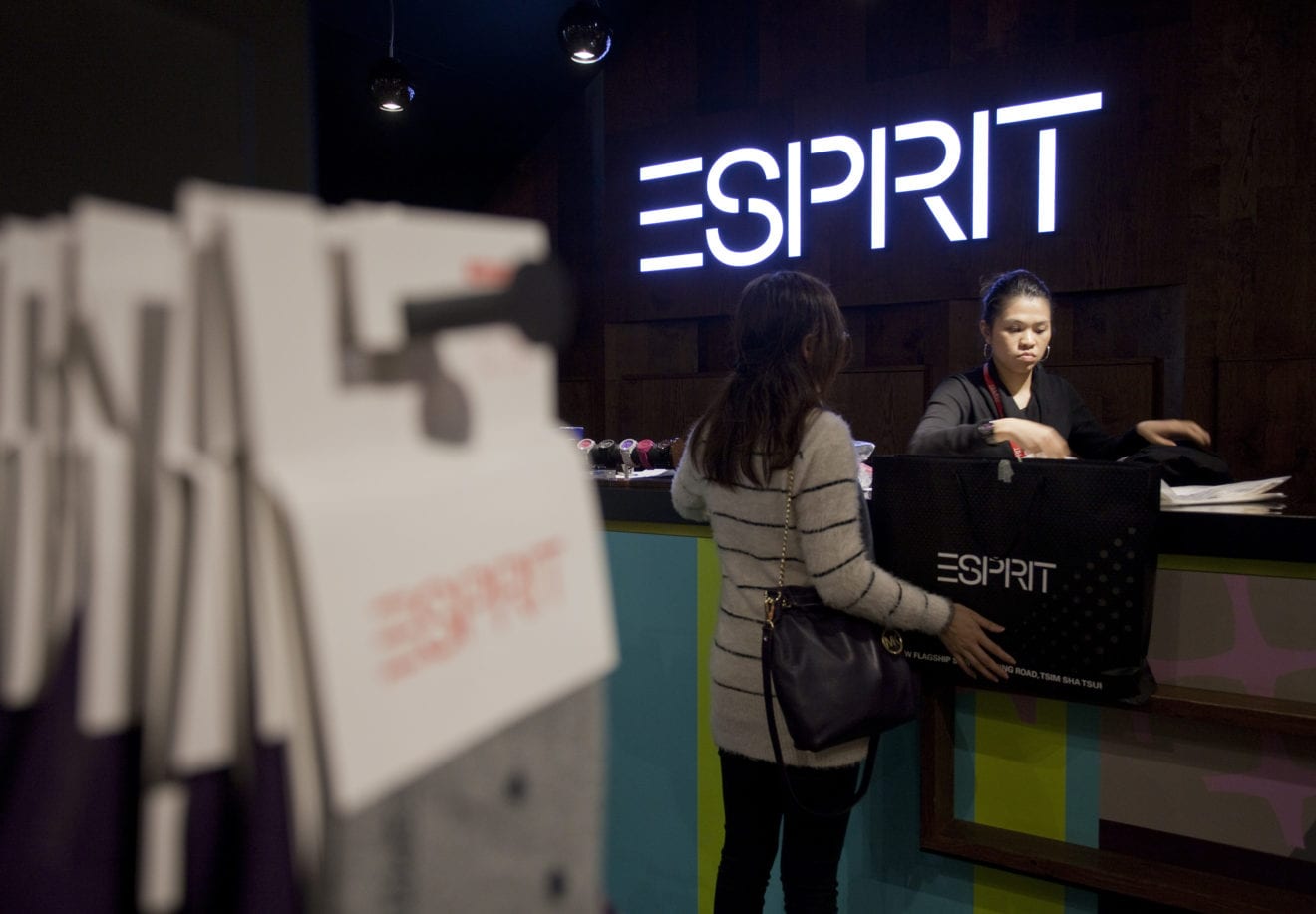
    Struggling fashion label Esprit is looking to a new CEO and incoming chairman to turn the business around after a horror year.

    The Hong Kong-listed company posted a loss of HK$2.554 billion (US$325.5 million) for the year to June 30, pretty much in line with a profit warning issued early last month.

    On the plus side, the result included a raft of write-downs, including costs of exiting the Australia and New Zealand markets, cancelling leases for non-performing stores and many other one-offs, leaving the new management team with a clean slate to commence a turnaround.

    With widespread store closures, total group revenue fell 11.1 per cent to $15.455 billion, yet overheads were trimmed just 3.3 per cent, widening the business’ operating loss. New executive chairman Dr Raymond Or Ching Fai, said in a stock exchange filing the sales decline was higher than expected with falling customer traffic at both online and offline stores.

    He said Esprit had been affected during the year by “the rapidly evolving retail industry, fueled by the continuous growth of e-commerce leading to changes in consumer consumption patterns, and the intensification of price competition driven by both pure digital players and fully vertical retailers”. To be fair, the same factors are affecting every fast-fashion and mid-tier fashion brand, yet few of them are performing as badly as Esprit.

    By region, in Germany, Esprit’s largest market accounting for about half of total sales, revenue of $7.79 billion was down 10.9 per cent on last year.

    For the rest of Europe, America and the Middle East, sales fell 9.8 per cent and in Asia Pacific, which accounts for just 12.3 per cent of total revenue, sales fell 15.2 per cent. Offline sales in Asia-Pacific fell 17.1 per cent and online sales fell 5.3 per cent.

    ‘Far from satisfactory’

    Or said the company recognises the results are “far from satisfactory” and the situation has challenged both the board and the management team.

    “We believe the fundamentals of the strategic initiatives as presented in our last annual report (namely brand rejuvenation, product elevation, channels next generation, markets rightsizing and expansion, and cost reduction) remain sound and are necessary to recharge the potential of the group. However, we concede that the progress to date has yet to reignite sales momentum or translate into a positive financial performance.”

    He said that despite the operating loss, the company remained in a healthy financial position, debt-free and with a net cash balance of $4.5 billion, $700,000 less than at the end of the previous year. Some of that cash – $237 million – was used to repurchase about 2.9 per cent of the company’s shares.

    New group CEO Anders Kristiansen, who took the helm on June 1, Is leading what Or describes as a “vigorous” update of the strategic plan, scheduled to be finalised within three months.

    “In our drive to support growth, we must sharpen the brand identity, create an inspiring omnichannel shopping experience for our customers, and launch stylish and geographically adapted collections to improve sales per square meter productivity. We will continue to leverage on the newly installed dual product engines organisation, whereby the main line focuses on catering to existing customers in our core markets, and the fast-to-market line aims to introduce trendier products for the online and Asia markets, particularly China,” he said.

    “These efforts will work in tandem with data generated from extensive consumer research to ensure that our brand, products and channels properly resonate with Esprit’s target customers. We will bring our customers and what Esprit stands for as a brand to the centre of everything we do in order to become more relevant to our customers again and provide them with a strong brand experience.

    “While we certainly have a lot of work in front of us, I am convinced that by aligning the execution of our Plan, the better days of Esprit are ahead of us.”

    However the company has warned shareholders of a further drop in sales for the current financial year in the “low double-digit percentage” range year on year, mainly due to the continuing rationalisation of its distribution footprint and further decline in customer traffic amid Esprit’s execution of a plan to rebuild store visitor numbers.

    This year marks the 50th anniversary of Esprit, and its 25th anniversary of listing on the Hong Kong stock exchange.


  • SmarTone 1H17 profit falls 17%

    SmarTone 1H17 profit falls 17%

    Hong Kong’s SmarTone has reported a 17% year-on-year decline in net profit for the last six months of 2017, due largely to intense competition, increased spectrum expenses and lower handset sales.

    Profit for the six-month period fell to HK$328 million ($41.9 million), with revenue declining 23.5% to HK$4.1 billion.

    Service revenue fell 6% year-on-year but improved 1% sequentially to HK$2.52 billion, as a result of ongoing migration to SIM only plans.

    This and lengthening handset replacement cycles led to a steep 41% year-on-year decline in handset and accessory sales to HK$1.58 billion, although this was an 85% improvement on the previous half-year period.

    Net of handset subsidy amortisation, postpaid service revenue was flat year on year and increased 3% from 1H17.

    SmarTone increased its Hong Kong customer base by 7% over the course of the six-month period to 2.2 million, while postpaid customer churn fell to a low of 0.8%. But mobile postpaid ARPU fell 13% year-on-year to HK$262.

    During a presentation announcing the company’s results, SmarTone CEO Anna Yip detailed plans to roll out licensed assisted access (LAA) five component carrier aggregation (5CC CA) and improve its network speed to over 1Gbps in mid-2018, and deploy FDD Massive MIMO in 2H18.

    But she warned that the challenges facing Hong Kong’s mobile industry are expected to continue, including ongoing price pressure from the intense competitive environment and ongoing declines in voice roaming revenues.