Tag: report

  • Mobile contributed 6.2% to Bangladesh GDP in 2015

    Mobile contributed 6.2% to Bangladesh GDP in 2015

    Mobile technologies and services generated 6.2% of the GDP of Bangladesh in 2015, a contribution that amounted to around $13 billion of economic value, according to GSMA Intelligence.

    In the same year, mobile operators and the ecosystem provided employment to more than 760,000 people across Bangladesh, the report further stated. One-third of this was created directly in the ecosystem, while the rest is generated indirectly in other sectors as a result of the demand for production inputs generated by the mobile sector.

    “GSMA Intelligence findings clearly demonstrate the substantial contribution that mobile makes to the Bangladeshi economy,” GSMA head of spectrum Brett Tarnutzer said.

    “By systematically pursuing a policy framework that increases certainty, acknowledges market realities and removes regulatory barriers to investment and innovation, the Bangladeshi government and its citizens stand to achieve so much in the coming years.”

    In terms of public contribution, the mobile ecosystem generated about 10% of the government’s revenue in 2015, valued at $2.42 billion through general taxation, mobile-specific taxes, and spectrum licenses.

    Mobile’s overall impact includes the direct impact of the mobile ecosystem as well as the indirect impact and the increase in productivity brought about by the use of mobile technologies.

    GSMA added that Bangladesh performs close to the regional averages across metrics of mobile market development, despite a lower income than neighboring countries. Bangladesh is above the Asian average in terms of unique subscriber market penetration at 53%, while only slightly below with regard to mobile internet penetration at 33% and 3G at 20% of all mobile connections.

    Thus, it sees the potential for further growth if a supportive policy environment is put in place.

    GSMA Intelligence expects that the economic contribution of the mobile industry in Bangladesh will continue to increase. In value-added terms, it is estimated that the ecosystem will generate $17 billion by 2020. This forecast relies on a favorable macroeconomic environment and on a moderate expansion in demand and supply in the mobile market, as the number of mobile internet users and mobile coverage both increase.

    Employment opportunities are also set to expand from 780,000 jobs in 2016 to 850,000 jobs in 2020, an increase of around nine percent during that period.

    The amount of spectrum, and the terms on which it is made available, fundamentally drive the cost, range, and availability of mobile services. To ensure that this mobile vision becomes a reality, it is imperative that the spectrum is allocated in a way that encourages the rapid deployment of mobile broadband infrastructure, resulting in high quality, affordable mobile services for consumers across Bangladesh,” added Tarnutzer.

  • Hong Kong retail sales decline widens

    Hong Kong retail sales decline widens

    The decline in Hong Kong retail sales widened in November, although the market is still performing better than in the previous quarter.

    Official government data shows the value of sales in November 2016, provisionally estimated at HK$36 billion, decreased by 5.5 per cent compared with the same month in 2015.

    However, a government spokesman said that while Hong Kong retail sales saw a somewhat widened year-on-year decrease in November, the decline in sales in October and November combined was still smaller than during the third quarter.

    He attributed the trend to the impact of reduced tourist spending on some big-ticket items during the month.

    The revised estimate of the value of total retail sales in October 2016 decreased by 2.9 per cent year-on-year. For the first 11 months of 2016, it is provisionally estimated total retail sales decreased by 8.6 per cent year-on-year.

    After netting out the effect of price changes over the same period, November sales fell by 5.6 per cent. For the first 11 months of 2016, total retail sales decreased by 7.6 per cent in volume.

    As usual, watches and jewellery drove the value decline, falling 14.4 per cent year-on-year. Sales of electrical goods and cameras fell by 27.3 per cent (but account for a smaller share of the total retail market).

    Supermarket sales fell 1.1 per cent in value, medicines and cosmetics by 3 per cent, books, newspapers, stationery and gifts by 5.8 per cent and eyewear by 1.3 per cent.

    On the other hand, sales in department stores rose by 1.7 per cent, and apparel by 4.1 per cent. Food, alcoholic drinks and tobacco sales rose by 0.9 per cent, footwear and accessories by 1.5 per cent, furniture by 1.9 per cent and Chinese drugs and herbs by 2.7 per cent.

    Based on the seasonally adjusted series, the provisional estimates of the value and volume of total retail sales both increased by 4.7 per cent in the three months ending November 2016 over the preceding three-month period.

    The government spokesman said the future performance of Hong Kong retail sales will depend on whether inbound tourism improves “and whether the various external uncertainties would affect local consumer sentiment”.

  • Singapore retail sales almost back on track

    Singapore retail sales almost back on track

    Real Singapore retail sales rose in October month-on-month – but slipped year-on-year.

    retail-october

    According to official Statistics Singapore data released Thursday, seasonally adjusted retail sales rose 1.5 per cent (excluding motor vehicles) on September’s figures. But while the headline figure showed a 2.2 per cent increase on October 2015, after removing motor vehicles, the real result was a drop of 0.3 per cent.

    Month-on-month, the performing categories were watches & jewellery, medical goods & toiletries, by department stores, food & beverages, apparel, footwear, supermarkets and recreational goods which increased between 0.3 per cent and 7.1 per cent. But sales of furniture & household equipment, and through mini-marts & convenience stores, optical goods and books decreased between 0.1 per cent and 4.6 per cent.

    Compared to October 2015, retail sales of recreational goods, watches & jewellery, food & beverages, by department stores, supermarkets and medical goods & toiletries rose between 0.3 per cent and 5.6 per cent.

    In contrast, retail sales of computer & telecommunications equipment, apparel & footwear, furniture & household equipment and optical goods & books decreased between 1.8 per cent and 8.1 per cent..

    Food & beverage sales

    fb-octoberIn the food and beverage sector, (for consumption outside home), sales of fast food outlets, restaurants and other eating places, such as cafes, decreased by between 3.5 per cent and 5.6 per cent in October 2016 over September. Turnover of food caterers, other eating places and fast food outlets increased between 2.6 per cent and 5.8 per cent year-on-year, while restaurant sales declined 4.9 per cent.


  • Korean online shopping reaches new high

    Korean online shopping reaches new high

    South Korean online shopping reached a new record high in October, aided by a nationwide discount event, according to government sources.

    Total online transactions reached a record 5.6 trillion won (US$4.8 billion) in October, up 17.3 per cent from 4.8 trillion won a year earlier, according to the report compiled by Statistics Korea.

    Purchases made through smartphones, tablets and other mobile gadgets also soared 37.4 per cent on-year to a record 3.2 trillion won to account for 56.1 per cent of all online sales in the month, up from the 54.7 per cent share the previous month.

    In October, the Korea Sale Festa, designed to tie up the retail industry with the tourism and cultural sectors in line with the major Chinese holiday season, encouraged people to go shopping online and offline.

    During the one-month period, some 200 retailers and internet markets offered discounts and promotions to attract local and foreign shoppers.

    Demand for clothes jumped 29.5 per cent on-year to 726.8 billion won and online sales of cosmetics surged 42.1 per cent to 465.1 billion won, while online food delivery vaulted 24.8 per cent to 521.4 billion won.

    According to separate data, the combined sales of department stores, large outlets and internet shops increased 8.4 per cent on-year in October, with those of offline stores gaining 6.3 per cent and those of online retailers jumping 13.2 per cent.

  • Singapore shoppers look to online shopping for good deals

    Singapore shoppers look to online shopping for good deals

    The extended season will lead to an eleven percent ($9.1 billion) increase in online sales to a total of $91.6 billion, according to Adobe’s 2016 Digital Insights Shopping Predictions report. Large retailers expected to account for the bulk of the growth, with an average growth rate of 16.6% compared to smaller retailers at 7%.

    “We expect to see a five percent spike in online shopping in early November and a record 24 percent increase in the last two weeks of December,” said Mickey Mericle, the vice president of marketing and customer insights at Adobe.

    “‘Click and collect,’ faster shipping and retail promotions starting earlier than ever are all contributing to the extended shopping season. Despite the uptick in sales we expect to see slower growth in total online sales this year,” he says.

    Singapore shoppers

    Closer to home, findings specific to the Singapore market show that consumer budgets are tight and the savvy shopper prefers online shopping due to the higher likelihood of finding good deals and bargains this way.

    Marketers can also expect fewer last-minute shopping rushes as respondents are now shopping slightly earlier in November. This suggests that marketers should make the effort to reach out to these early birds accordingly.

    Notably, consumers report visiting an average of 3-5 sites before making a purchase, which offers marketers a critical chance to target these potential customers once more and bringing them back on-site via remarketing

    Almost half of Singaporean millennials (49%) surveyed value experiences more than material goods, with a sizeable 41% echoing this sentiment when all local consumers who are surveyed are factored into the picture.

    Finally, the study shows that mobile shopping is king as consumers praise retailers for better optimizing their sites for mobile browsing, allowing them to shop on the go with their hectic schedules.

  • Real Singapore retail sales ease up in September

    Real Singapore retail sales ease up in September

    Real Singapore retail sales recovered marginally month-on-month in September after a series of declines.

    Real retail sales, are the figures excluding motor vehicles. They rose 0.7 per cent against August but fell 1.9 per cent on September 2015. Sales including motor vehicles, sales fell 0.7 per cent month-on-month and rose 2 per cent.

    Total retail sales value in September 2016 was estimated at $3.5 billion, higher than the $3.4 billion in September 2015.

    Retail sales index September

    Month-on-month, retail sales of motor vehicles, watches & jewellery, medical goods & toiletries, optical goods & books, department stores and supermarkets decreased between 0.1 per cent and 6.3 per cent in September 2016 over August.

    Sales of recreational goods and computer & telecommunications equipment grew by 12.4 per cent and 11.1 per cent respectively. Sales of petrol service stations, furniture & household equipment, mini-marts & convenience stores, food & beverages and wearing apparel & footwear also increased between 1 per cent and 9.7 per cent.

    Compared to September 2015, sales of recreational goods, mini-marts & convenience stores, medical goods & toiletries, petrol service stations and furniture & household equipment increased between 0.1 per cent and 6.7 per cent. Sales of computer & telecommunications equipment, food & beverages, watches & jewellery, department stores, supermarkets, optical goods & books and wearing apparel & footwear declined between 2.9 per cent and 9.6 per cent.

    Food & Beverage results

    Sales of food & beverage services (seasonally adjusted) increased 3.6 per cent in September 2016 over the previous month and 3.5 per cent compared with September 2015.

    The total sales value of food & beverage services in September 2016 was estimated at $687 million, higher than the $664 million in September 2015.

    FB index September

    Turnover of restaurants and other eating places (such as cafes) increased 6.6 per cent and 6.2 per cent respectively in September over August. Sales by food caterers and fast food outlets decreased 6.6 per cent and 2.2 per cent.

    Year-on-year, sales by other eating places, fast food outlets and restaurants increased between 0.9 per cent and 7.9 per cent. Food caterers’ sales fell 1.4 per cent.

  • Global 5G subscribers to reach 500m by 2022

    Global 5G subscribers to reach 500m by 2022

    Global 5G subscriptions will grow rapidly once the technology is available, Ericsson has forecast, with the vendor predicting that subscriptions will reach 500 million by 2022.

    North America is expected to lead the way in 5G uptake, with 5G projected to account for 25% of subscriptions in the region by 2022. But APAC will be the second fastest growing region, with 5G accounting for 10% of subscriptions.

    Ericsson’s latest Mobility Report also projects that global mobile subscriptions will grow to 8.9 million, with 90% of these for mobile broadband, and 6.1 billion unique subscribers in 2022.

    As of the third quarter of this year, there were 84 million new mobile subscriptions being added per quarter, for a total of 7.5 billion. India had the most net additions for the third quarter of 15 million, followed by China’s 14 million, Indonesia’s 6 million and Myanmar and the Philippines’ 4 million each.

    By the end of 2016 there will be 3.9 billion smartphone subscriptions worldwide, Ericsson said, with nearly 90% of these registered on WCDMA/HSPA and LE networks. This is expected to grow to 6.8 billion and 95% of subscriptions by 2022.

    The report also shows that mobile video is projected to grow by 50% annually through to 2022 to account for nearly 75% of all mobile data traffic. Increased use of live video streaming to contact friends, family and followers is meanwhile expected to contribute to a 39% annual growth in social media traffic.

    Finally, the report suggests that IoT will account for around 18 billion of the 29 billion connected devices forecast by 2022.

  • Nearly 30 speakers lined up for Property Report Congress Singapore 2016

    Nearly 30 speakers lined up for Property Report Congress Singapore 2016

    Singapore is the next stop of the Property Report Congress in Singapore, where the acclaimed conference series hosted by Property Report, Asia’s leading luxury real estate, architecture and design media platform, began last year.

    This year’s two-day Property Report Congress Singapore event on 23-24 November 2016 at the Shangri-La Hotel will bring together nearly 30 experts from Singapore and around around the world to discuss the current state of the region’s real estate markets.

    Crucial issues to be discussed include: the cooling measures in Singapore, infrastructure and branded projects in the Philippines, transit-oriented development and property market consolidation in Malaysia, the impact of tax and property law in Indonesia, potential oversupply in Cambodia, Bangkok’s changing urban skyline and land tax policy in Thailand, foreign investment and joint ventures in Vietnam, and affordability issues and the emerging market of Myanmar.

    Among the confirmed speakers at Property Report Congress Singapore 2016 are respected industry leaders from Asia and beyond, such as Kent Wertime, co-CEO of Ogilvy and Mather Asia Pacific, who will give the opening keynote address “Future Markets: Accessing the Next One Billion Middle Class Consumers.”

    Other panel moderators will come from eight countries of the South East Asia Property Awards, including: Simon Griffiths, senior associate director, CBRE Cambodia; Rudolf Hever, executive director, Alternaty Real Estate (Vietnam); Richard Emerson, managing director, Emerson Real Estate (Myanmar); Prem Kumar, executive director, Jones Lang Wootton; Suphin Mechuchep, managing director, Jones Lang LaSalle Thailand; Hendra Hartono, CEO, Leads Property Services Indonesia; Cyndy Tan Jarabata, president, TAJARA Leisure & Hospitality Group Inc (Philippines); and luxury expert Alexander Karolik-Shlaen, managing director, Panache Management (Singapore).

    Conference delegates will have a chance to meet and learn from Asia’s industry leaders who are redefining the property landscape in ASEAN and Asia Pacific. There will also be a dedicated panel session with the Real Estate Personality of the Year winners from Southeast Asia in 2016, including: Cambodia’s Rithy Sear, chairman of Worldbridge Group of Companies; Thailand’s Suriya Poolvaralaks, managing director at Major Development PLC; Indonesia’s Herman Nagaria, director of property and business development at PT Summarecon Agung Tbk; and Singapore’s Francis Koh, managing director and CEO of Koh Brothers Group Limited.

    As always, the opening and closing remarks will be given by Liam Aran Barnes, brand director and editor-in-chief of Property Report, while digital editor Pippa Woodhead will moderate the panel discussion featuring the Real Estate Personality of the Year 2016 winners.

    Since debuting in Singapore in October 2015, five successful Property Report Congress events have been held in Manila, Ho Chi Minh City, Yangon, Kuala Lumpur and most recently in Bangkok, which welcomed the series’ biggest audience in 2016 of about 140 delegates, speakers and media.

    Property Report Congress has been described as “a great networking event and platform for people in the real estate industry to come together and share ideas,” according to Bertil De Kleynen, sector director for Architecture, Interiors & Landscape at Atkins Global, and featured speaker at the Ho Chi Minh City conference.

    Day 1 of Property Report Congress Singapore 2016 will discuss the current state of the region’s key and emerging markets. It will run from 08:00 to 17:30 (including networking lunch and coffee break), followed by the cocktail networking reception in the evening from 17:30 to 19:00.

    Day 2 will run from 08:00 to 13:00 and include activities such as a country break-out sessions, networking lunch and networking session. Discussions on Day 2 will focus on real estate trends in 2017 and the industry’s future.

    Organised by PropertyGuru, Asia’s leading online property group, the conference will followed by the annual South East Asia Property Awards 2016 grand finals on the 24th, where around 600 of the region’s top real estate developers, executives and industry professionals will gather to reward the finest developers and projects in eight ASEAN countries.

    Property Report Congress Singapore 2016 is supported by official property portal PropertyGuru.com.sg, the country’s leading property website, and top media partners such as the Oxford Business Group and Retail Asia. OBG members are entitled to a discount of 30 percent on ticket prices.

    For registration and enquiries, email conference director at Amy@propertyguruinternational.com or visit the official website: AsiaPropertyAwards.com/Congress/

  • Esprit Holdings’ sales decline is no surprise

    Esprit Holdings’ sales decline is no surprise

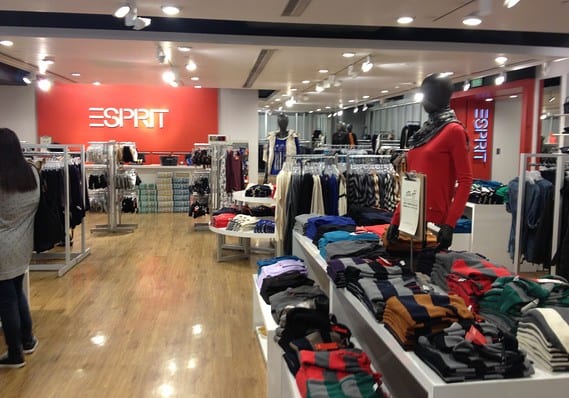
    In line with expectations, a first-quarter decline of 11.8 per cent in sales has been recorded by clothing, footwear, accessories, jewellery and housewares manufacturer Esprit Holdings.

    It says the results for the quarter ended September 30 were as expected following a reduction in operating costs and store footprint. The company reduced total controlled space (retail and wholesale) by 14.5 per cent, closing unprofitable stores. During the quarter it closed 9240 sqm of retail net sales area, (mainly concession counters in China), further reducing the group’s retail net sales area to 282,332 sqm.

    Because of structural pressure in its wholesale channel, its controlled space was also further reduced, by 13,304 sqm in the quarter to 343,448 sqm. Notwithstanding this, the decline in wholesale revenue was 11.4 per cent, reflecting an improvement in space sales productivity, Esprit said.

    While sales productivity continued to improve in July and at the beginning of August, this turned negative in line with general market developments. Since mid-August temperatures in Europe were far higher than during the same period last year, significantly impacting store traffic and initial sales of the autumn collections both offline and online.

    For the Asia Pacific, lower consumer traffic hit sales, as well as a strategic decision to restructure the company’s retail footprint and cut back on promotional activity. “As expected, these measures put short-term pressure on revenue, but they are crucial for Esprit to regain profitability in the mid-term,” said the group.

    “Despite the weak sales development in the first quarter, the group’s results remain on track and management stays focussed on the execution of the strategic plan: developing the vertical and omnichannel models; tackling the challenges in the wholesale channel and in Asia Pacific; and pushing the reduction of structural costs further in order to continue the recovery of the group’s overall profitability.”

  • Big C profit grows despite challenging economy

    Big C profit grows despite challenging economy

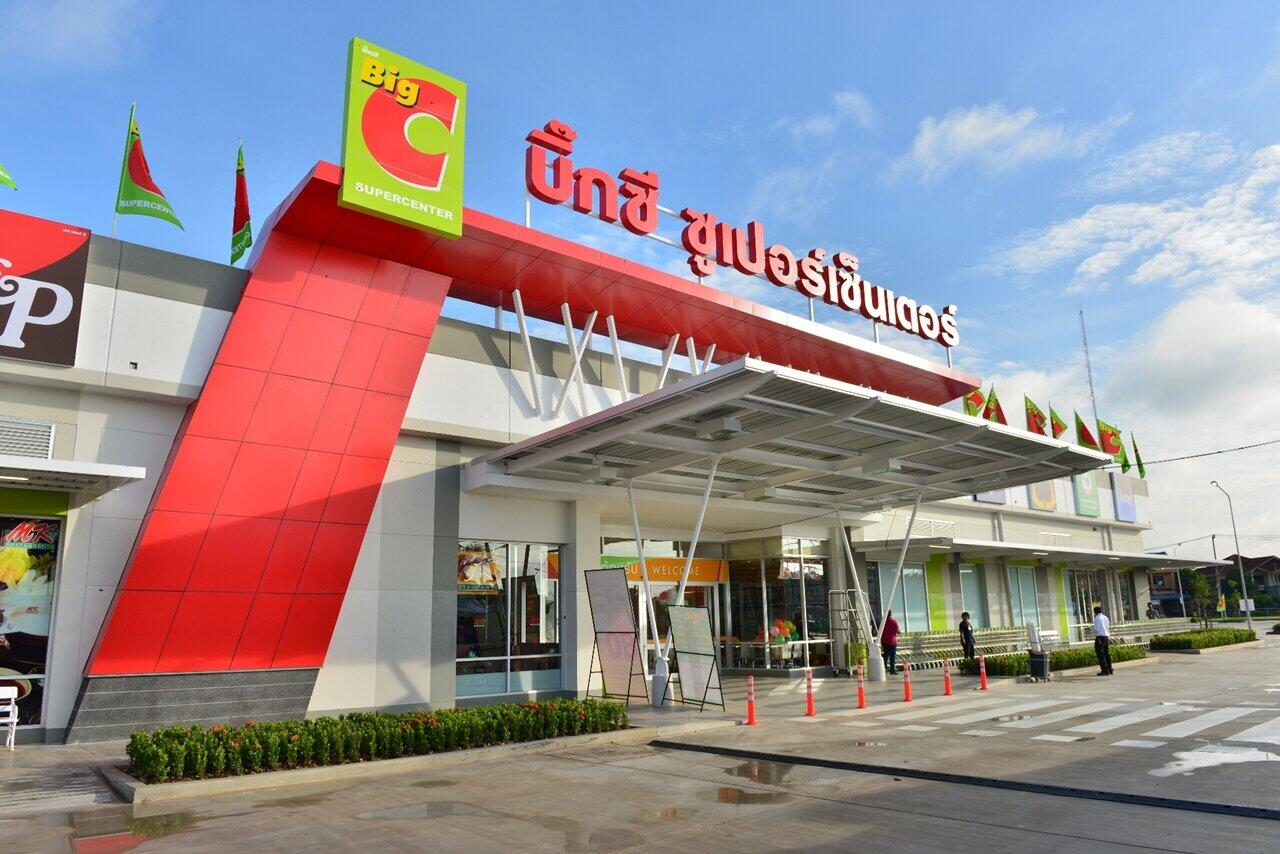
    Thai hypermarket operator Big C Supercenter boosted margins in the latest quarter despite the challenging economic climate.

    The company has reported continued resilient rental and service income growth, margin improvement across the board thanks to a focus on the quality of sales – delivering a “robust” Big C profit boost.

    The third quarter to September 30 was the first full reporting period of its new strategic focus on quality of sales rather than the absolute sales amount.

    “On our operations we continued our push to localise our offer in order to become the ‘Thai retailer with customers in our heart’ as we will be better positioned to serve local communities and their varying tastes,”explained Rumpa Kumhomreun, CFO & VP of accounting and finance, in a filing with the Thai SET. “Our work to capture synergies between BJC and Big C is continuing, and during the quarter we for example moved some of our private label tissue manufacturing to BJC. We also started serving Big C Soft Serve ice cream in pilot hypermarkets and Mini Big C stores. Our access to TCC “land bank” also made it possible for us to open an additional Big C Market store at Pantip Chiang Mai during the quarter.”

    The company also improved its online offer, rebranding its Cdiscount.co.th to Cmart.co.th, with over 70,000 SKUs available.

    Big C’s Total Revenues from retail sales, rental and service income, and other income, for the quarter reached Baht 25.892 billion – a decline of Baht 5.799 billion or 18.3 per cent over the same period last year. This decrease was driven by a retail sales decline of 20 per cent from the same period last year, and a same-store-sales decline of 22.6 per cent.

    “The significantly declining same-store-sales trend was driven by our strategic focus on the quality of sales rather than absolute sales volume,” said Kumhomreun.

    With a similar fall in expenses, however, Big C’s net income attributable to shareholders grew by 14.6 per cent to Baht 1.538 billion for the quarter, up Baht 196 million year-on-year.

    Gross profit margin reached 17.8 per cent for the quarter, representing an increase of 487 basis points from last year.

    Store expansion continued during the quarter in all store formats, with two hypermarkets opening in Phonphisai and Na Thawi, two Big C Market stores in Loei and Chiangmai, 23 Mini Big C stores including 15 franchise stores, and one Pure Drugstore. Those took the store count at the end of September to 128 large format stores (Big C Supercenter, Extra, and Jumbo), 59 Big C Market, 431 Mini Big C (including 21 franchise stores), and 142 Pure Drugstores.

  • How Did China’s Retail Sales Look in September?

    How Did China’s Retail Sales Look in September?

    China’s retail sales

    On a year-over-year basis, China’s retail sales showed a strong recovery in September 2016, according to the National Bureau of Statistics of China. The country’s retail sales rose 10.7% in September 2016 compared to a 10.6% rise in August. This reading was above the market expectations of a 10.6% rise, and it was the highest since January 2016.

    How Did China’s Retail Sales Look in September?

    Sector-by-sector performance

    Building material sales rose 14.2%, furniture sales rose 8.7%, home appliance sales rose 8.6%, telecommunications sales rose 5.1%, personal care sales rose 12.5%, automobiles sales rose 13.1%, and cosmetics sales rose 7.7%.

    Economic impact

    The sales improvements in different sectors signify that consumer sentiment is improving. After the slowdown in economic activity in China, the economy is going through a transitional phase. From a manufacturing hub, it’s transitioning to a consumer-based economy. Consumerism will play a large role in the country’s future economic growth.

    Consumption patterns are changing in China’s economy. Chinese consumers are becoming more selective toward the products and services that they use. As China is one of the world’s most important economies, improvement in its growth drivers could aid the global economy.

    In the next part of this series, we’ll analyze China’s monthly new loans in September 2016.

  • Singapore retail sales decline gains pace

    Singapore retail sales decline gains pace

    Real Singapore retail sales fell 6.5 year-on-year in August – twice the rate of decline of the previous month.

    Retail sales august 2

    While the headline figures were 1.1 per cent over July, and 1 per cent over August 2015, those figures included motor vehicle sales. Excluding motor vehicles, retail sales declined 2.1 per cent from July to August.

    According to Statistics Singapore, the retail sales value in August 2016 was estimated at S$3.6 billion, including vehicles.

    While sales in department stores and of computers and phones increased by up to 3.1 per cent month-on-month, sales of recreational goods, apparel & footwear, furniture & household goods, optical goods and books, medical goods & toiletries, supermarkets, mini-marts & convenience stores, watches & jewellery and food & beverages all decreased between 0.5 per cent and 8.9 per cent month-on-month.

    Year-on-year, sales of computers & phones, watches & jewellery, apparel & footwear and recreational goods decreased by between 11.1 per cent and 19.6 per cent. Similarly, sales at petrol service stations, of food & beverages, furniture & household equipment, optical goods & books, supermarkets, department stores, medical goods & toiletries and mini-marts & convenience stores declined between 0.4 per cent and 9.9 per cent.

    Food & beverage sales

    Retail sales FB

    Meanwhile, sales of food & beverage services decreased 1.6 per cent in August 2016 over July.

    Compared to August last year, sales of food & beverage services declined 2.5 per cent. Fast food retailers grew their sales by 3.9 per cent and caterers by 4.7 per cent, but restaurants were down 5.3 per cent.

    Year-on-year, turnover of restaurants fell 8.8 per cent in August 2016.

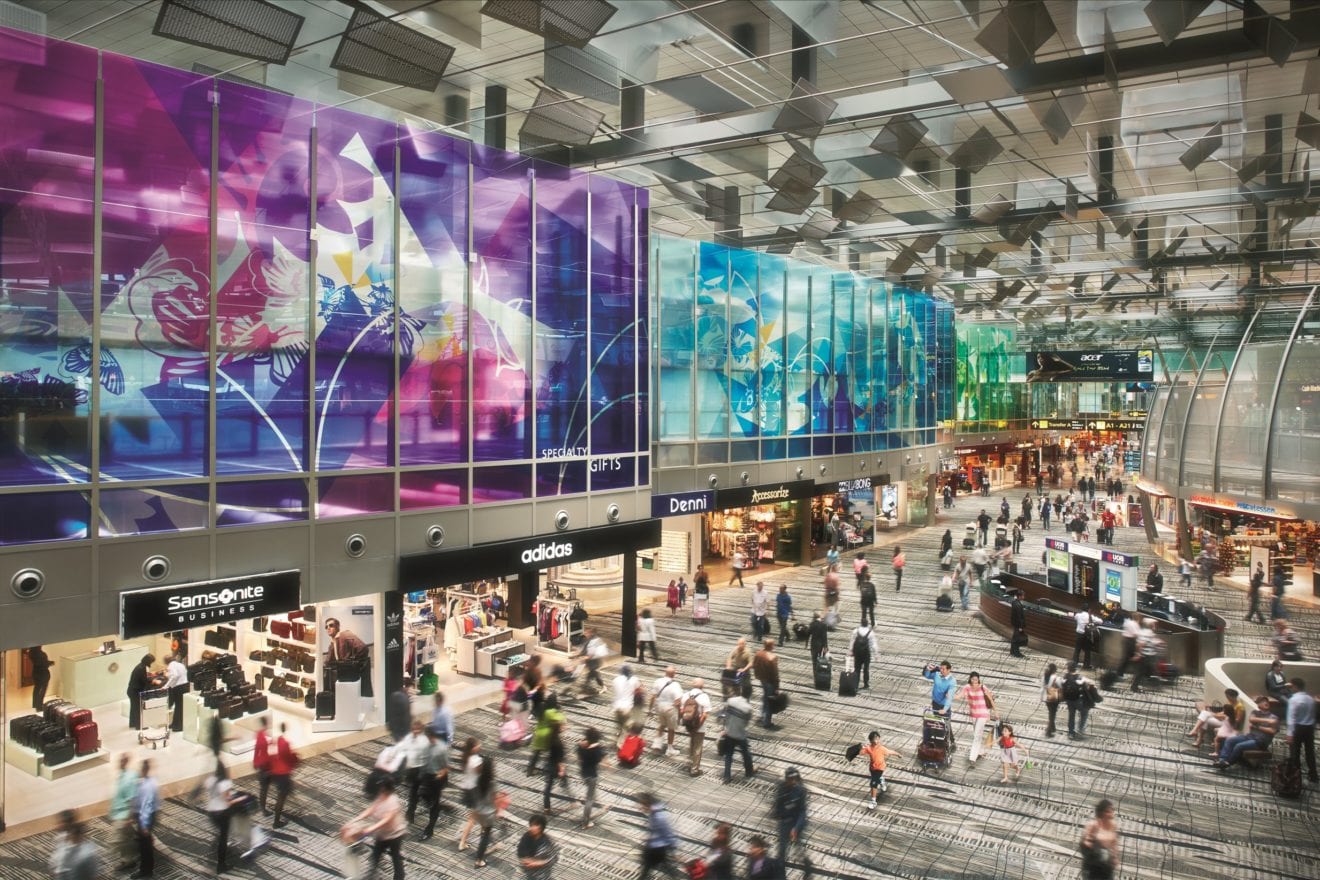
  • Changi Airport registers 0.6% August passenger fall to 4.9m

    Changi Airport registers 0.6% August passenger fall to 4.9m

    The Changi Airport Group (CAG) reports that passenger traffic on Chinese and Korean routes proved to be ‘particularly strong’, with plus-7% in both instances.

    CAG also described traffic numbers more generally as ‘relatively steady’, while pointing out that that this comparison with the same period least year obviously factored in Singapore’s Golden Jubilee celebration and its many activities. This included a four-day extended weekend with a registered traffic increase in August 2015 of +6.6%.

    Meanwhile, CAG reports that August was still the second busiest month for Changi Airport so far this year in second place behind July’s passenger total of 5.18m..

    MORE REPRESENTATIVE INDICATOR?

    Perhaps the more representative traffic figure for the airport, considering the single month August 2015 ‘distortion’ was the first eight month period this year, however. As such, Changi registered 6.5% more passenger movements, with growth underpinned by Southeast Asia (+8.9%) and Northeast Asia (+10.5%) traffic.

    CAG added: “As at 1 September 2016, more than 100 airlines operate at Changi Airport, connecting Singapore to some 330 cities in about 80 countries and territories worldwide. With more than 6,800 weekly scheduled flights, an aircraft takes off or lands at Changi roughly once every 90 seconds.”

    On the retail side, CAG is also still running its Shop and be a Millionaire promotion, offering passengers who spend S$50 ($37) at the airport – or with iShopChang.com a chance to win the S$1,000,000 ($734,000) grand prize. This continues to be the single most successful promotional event ever run by the Changi Airport Group.

  • Global e-commerce grocery market has grown 15% to $48bn North Asia

    Global e-commerce grocery market has grown 15% to $48bn North Asia

    Sales of groceries through e-commerce platforms reached $48 billion in the 12 months to June 2016, according to a new report by Kantar Worldpanel, published today.

    The third annual Future of E-commerce in FMCG study shows that e-commerce now accounts for 4.4% of all FMCG sales. Whilst the e-commerce channel is growing, the FMCG market as a whole is flat, increasing just 1.6% during the same period.

    Stéphane Roger, Global Shopper and Retail Director at Kantar Worldpanel, comments: 

    “FMCG growth is slowing, but our data shows that people are looking for more convenience, which can be met by shopping online. Grocery e-commerce, although currently small, with only one in four people shopping online, is growing fast. We forecast it will grow to 9% of the market and be worth $150bn by 2025. With new entrants such as Amazon expanding rapidly, the industry is facing a shake-up.”


    “Although online sales have the potential to cannibalise in-store sales, it is vital that retailers act quickly to develop a strong e-commerce presence.  The retailer that goes online first in each market can enjoy a far higher market share – this can be a difference of at least 40% in France and up to three times more in the UK. In this report we’ve looked at how retailers and brands are finding ways to work across all channels.” 

    Rank

    Country

    E-commerce share of market 2016 (value)

    1

    South Korea

    16.6%

    2

    Japan

    7.2%

    3

    UK

    6.9%

    4

    France

    5.3%

    5

    Taiwan

    5.2%

    6

    China

    4.2%

    7

    Czech Republic

    2.1%

    8

    Spain

    1.7%

    9

    The Netherlands

    1.7%

    10

    USA

    1.4%

    Key findings from the report include:

    Global hotspots: a puzzle of performance

    E-commerce growth is not equal around the world and is not explained by connectivity.  It might not be surprising that digitally developed South Korea is the world’s largest online FMCG market by value share (16.6%). In the USA however, only 1.4% of groceries are bought online. China is the market which saw the biggest growth in the last 12 months, 47% – to a value share of 4.2%.  Europe has a relatively low adoption of e-commerce in all countries except the UK with 6.9% of the market and France which has 5.3%. France is a relatively unique e-commerce market as their success is with the Drive model whereby the online shop is collected from the store. Adoption across Latin America is currently very low with the exception of Argentina at 1%.

    Online generates more loyalty

    Once shoppers have begun shopping online they are more likely to continue doing so. Among this group in the UK, almost a quarter (23.3%) of all spend is through e-commerce, resulting in fewer trips to physical stores. 

    Impulse needs encouraging

    Comparative research across the UK, France and China has shown that one year after starting to shop online, shoppers in the UK and France spent less overall (-2.4% and -1.4% respectively), this is because there is less impulse shopping.  Brands need to work on driving impulse purchase online – for example by making suggestions for complementary products. In China, 50% of FMCG’s online sales is beauty, it is seen as a prestige occasion and they actually had an increase in sales after one year (+8.1%).

    Online shopping baskets are usually bigger

    Shoppers generally spend more per trip online than they do offline, so potentially this could be a lucrative group to win.  In the UK for example, the average shop online is $59 compared to $15 in-store.

    Brands that make it onto online shopping lists are more likely to stay there

    Kantar Worldpanel data shows that 55% of online shoppers use the same shopping list from one purchase to the next.  Brands need to focus their efforts on getting onto that list.

  • Consumers unaware of the power of smart homes

    Consumers unaware of the power of smart homes

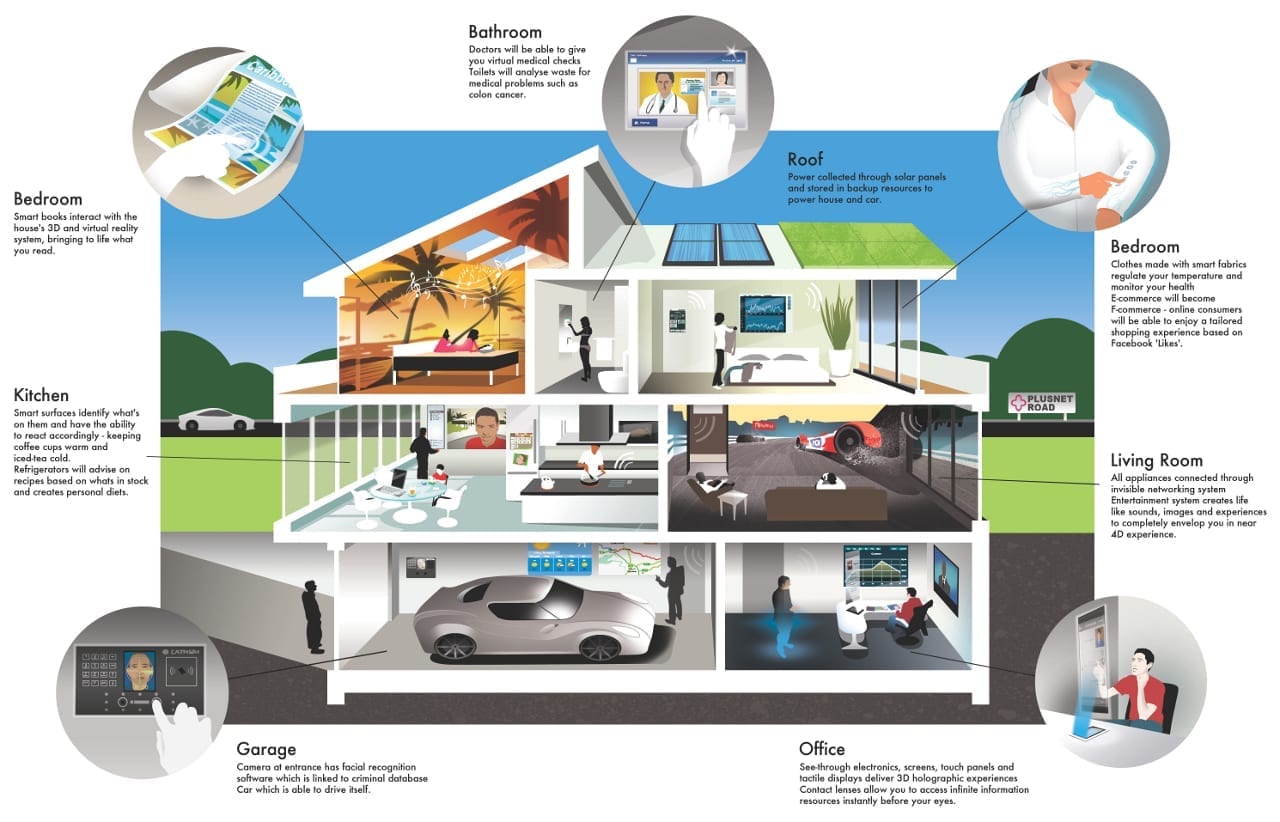
    An intelligently connected home can do more today than most consumers consider possible, according to a survey by Bosch.

    Bosch has conducted a survey on the topic of smart homes together with Twitter in Germany, France, Great Britain, Austria, Spain and the United States.

    While two thirds of the respondents know that the smart home can turn the lights off automatically when they leave the house, only 22% can imagine that the oven can already suggest the perfect recipes.

    By country comparison, Twitter users from France are most confident of what smart home technology can do compared to the British, the Americans and the Austrians, for example. Germans and Spaniards, on the other hand, consider much of what is already possible today to be a vision for the future.

    “It is particularly striking that especially the 25 to 34-year olds come closest to the reality with their assessments,” Bosch said. The fact that awareness of the possibilities decreases with age is not as surprising as the fact that many digital natives do not know what functions are possible today.

    Especially for the 16 to 24 year-olds who don’t even know a world without the internet, networking at home is still surprisingly unknown. The reason for this could be the lack of relevance that home topics have for this age group.

    Furthermore, only 50% of the surveyed are aware that today’s smart home systems are interoperable, meaning that different devices can communicate with each other, even independent of the manufacturers.

    Respondents were even more convinced by the potential for saving energy, when the heating switches off automatically as soon as the windows are opened, for example.

    The Spanish, French and English, in particular, seem to be very interested in saving money. Between 71% and 75% considered saving energy a convincing argument in the survey.

    While this was also the most popular answer the Germans surveyed gave, they come in last place here by country comparison with 59% of the mentions.

    “This is quite surprising because the Germans are normally known for their environmental consciousness,” said Bosch. “Presumably more financial than ecological aspects make energy saving possibilities so interesting in countries like Spain, France and England, however.”