Tag: Restaurant

  • 4Fingers to open first delivery-dedicated outlet

    4Fingers to open first delivery-dedicated outlet

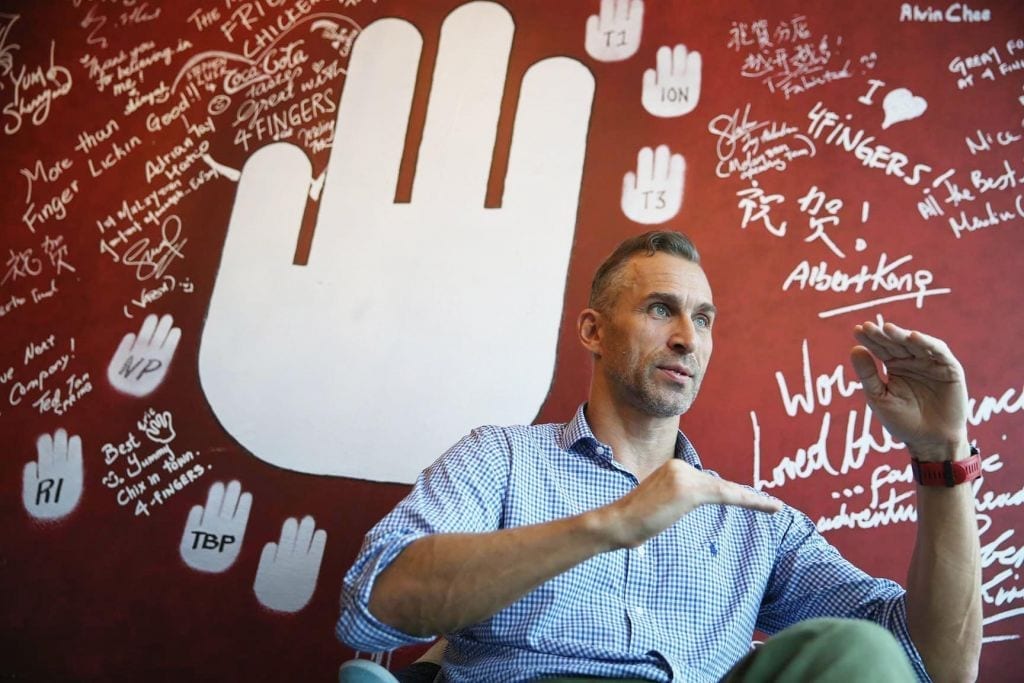
    Seeking to cash in on the rising demand for food delivery, crispy chicken restaurant chain 4Fingers will soon open its first delivery-dedicated outlet in the Clementi area. The Singapore brand also plans to handle some of its deliveries in-house to help mitigate the profit leakage from selling through food delivery companies, its Chief Executive Steen Puggaard said in an interview.

    The new thrust is expected to result in shorter delivery times while reaching out to more customers. The new outlet will be about two-thirds of the size of its current shops, but will also have a small shopfront and some seats for eat-in customers. There are plans to open more of such outlets across Singapore in the next one or two years.

    “We recognise that home delivery is only going to grow, so we need to make sure that we match our business model to the way that people are changing in spending their money,” Mr Puggaard said. “We see that as an important change in our strategy to accommodate the fact that people will be eating more and more food at home.”

    The west side of the island was chosen because it was easier to get a good location and the area has seen strong demand in home deliveries, he said. Home deliveries have helped the business by “a lot” and have been growing “faster than anticipated,” he added.

    4Fingers has seen its delivery segment grow to become a seven-digit business this year after the service was introduced early in 2016. The segment can take up to 30 per cent of a shop’s volume. The service is provided only in about half of the fried chicken chain’s stores, mainly those in the central and western areas of Singapore.

    At present, most of 4Fingers’ home deliveries are carried out by Foodpanda. It has recently joined Deliveroo and is also in talks to sign up with Ubereats. Depending on traffic and weather conditions, orders via the food delivery apps usually to take about 30 to 45 minutes to reach the customer.

    However, selling through these food delivery companies means low or even no profit margin for 4Fingers. “Food delivery comes with an additional cost – the commission for delivery companies. All of a sudden, the revenue we are generating with our food is weighed down by the additional cost,” said Mr Puggaard.

    “Companies like Foodpanda, Deliveroo, Ubereats: they basically deal with the customer, then they will tell us what we need to supply, then they will take care of the rest and send us a cheque once a month. We now say that that model does not really work for us. So we are saying, while we are opening up our first delivery-skewed kitchen in the west of Singapore, we will also test our handling of orders from customers and the payment, then using a third party to deliver food to people’s homes.

    “Right now, the cost structure linked with home deliveries actually doesn’t make us any money. It’s something we do for our customers because they want to eat 4Fingers. As long as we don’t lose money, we have to go along with it. But because it has now grown to seven digits this year, we say now is the time for us to begin to find a way where the cost structure makes more sense for us,” he said.

    Mr Puggaard has more than 20 years’ experience in food and beverage, much of it in Singapore, where he is now a Permanent Resident. The Dane began his F&B career with McDonald’s in 1996 in Eastern Europe before coming to Singapore in 1999 to run the regional marketing for the brand. He then made subsequent moves to Burger King and Les Amis.

    Mr Puggaard joined 4Fingers in February 2013 after the previous owners reached out to him to help expand the brand that made its debut in 2009. However, he left after only seven months because he felt the company was not structured for growth then. He rejoined the company in 2014 after a change in ownership and also took a 3 per cent stake in the venture.

    Since then, 4Fingers has expanded to 12 outlets across Singapore, and several more in Malay-sia and Indonesia. Revenue has grown from about S$2 million to S$30 million from its owned outlets, excluding franchised outlets. A majority of the stores are owned by the company. Besides quality food, what makes the brand stand out for eat-in customers is the dining experience, said Mr Puggaard. 4Fingers focuses on details such as design, lighting and music as well as service to enhance the overall experience.

    Even while the business grows in Singapore and the region, 4Fingers is looking to expand fur-ther afar: It will be launching in Australia in the next few weeks. It is also scouring locations in the US and expects to open one outlet there by the end of the year, said Mr Puggaard. There are also plans to open outlets in the United Kingdom and Germany in the first quarter next year.
  • Paper Moon finds new landing in the Philippines

    Paper Moon finds new landing in the Philippines

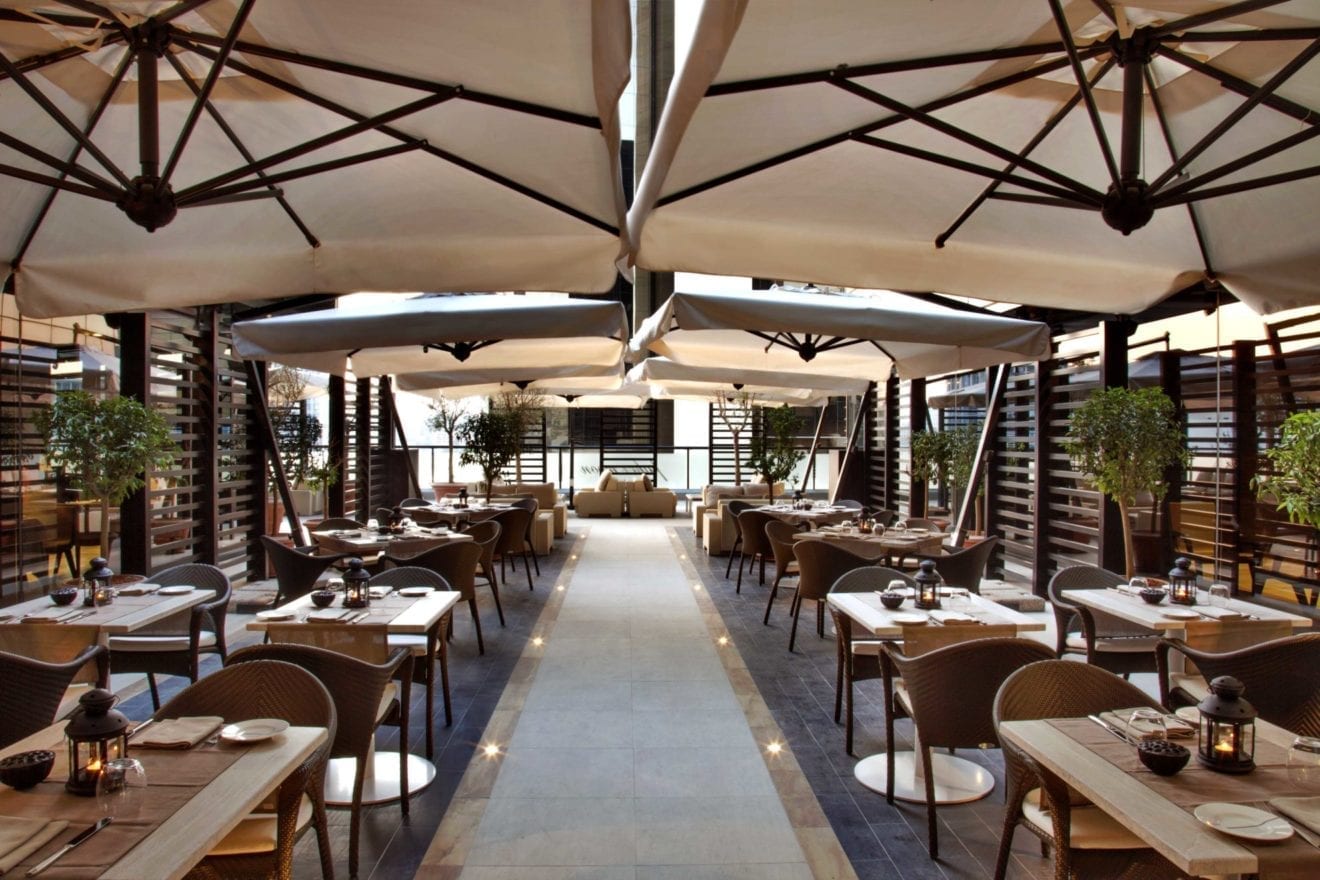
    Milan’s famous ristorante Paper Moon is now in Manila, palangga. The restaurant opened in a gorgeous roof deck setting at the Knightsbridge Residences in Century City, a few steps from Century City Mall, Kalayaan Avenue, Makati City.

    Paper Moon is Edi Tekeli’s newest passion project and marks his return to Manille after many years of living abroad. He opened the restaurant with longtime friend and Century Properties chair, special envoy to the US José E.B. Antonio and Hilda Reyes Antonio.

    After fashion retail, and knowing that Manila’s restaurant scene has become more vibrant, Tekeli felt he had found a gem in Paper Moon. He wanted to bring this rare culinary experience to the Philippines.

    Paper Moon has also opened in Istanbul and Doha.

    The grand opening in Century City coincided with Tekeli’s birthday party. He said the event was his way of expressing gratitude to friends who’ve been supporting his endeavors, such as when he brought retail brands Guess and Mango to the country.

    Among the guests were ambassadors from Italy, Massimmo Roscigno; Britain, Asif Ahmad; Singapore, Kok Li Peng; Canada, John Holmes.

    Also in attendance were Rep. Tonyboy Floirendo, Ambassador Bienvenido Tantoco Sr. and New York-based physician Norman San Agustin.

    Enrica del Rosso, who cofounded Paper Moon in 1977 with husband Pio Galligani, graced the affair and was happy to see the impeccable style touches in the restaurant.

    Tekeli is said to be opening more Paper Moon outlets in Southeast Asia.

    Rustan’s Portugal fest

    Rustan’s, in partnership with the Consulate of Portugal, recently launched “Portugal Divino!”—a celebration of Portuguese arts and crafts. At the opening, Anton Huang of Stores Specialists Inc. welcomed guests of honor led by honorary consul of Portugal to the Philippines Tony Rufino.

    Huang and Rufino later led the toast, along with Rustan’s VP for home merchandising and buying division Marilen Tantoco, Philippine Ambassador to Portugal Celia Anna Feria, award-winning Portuguese artist Arlinda Frota and Portuguese designer Ricardo Preto.

    On exhibit at Rustan’s Makati were Frota’s ceramic paintings. On May 26 to June 6, they will be on display at Rustan’s Shangri-la Plaza.

    Milestone

    Ricky Delgado Jr. of Isla LPG Inc. (ILC), the company behind LPG brand Solane (www.solane.com.ph), led its recent fifth anniversary celebration.

    “Solane has been here only for five years but we’ve already done so much,” Delgado said. “This company is respected for what it does well, and I think that if you look at how far we have come, it’s really because of the same strategy we have kept from the start—reliability safety, and we take what we say seriously.”

    Also toasting Solane’s milestone were Ruben Domingo, ILC chief executive officer; Shoichi Watanabe, Isla Petroleum and Gas (IPG) CEO; Willie Sarmiento, IPG chief finance officer; Tonito Gonzalez, ILC general manager for sales; and Yuji Fukuda and Keisuke Oba.

    Outstanding employees were handed awards: Team Ace Awards were given to the Bulk and Commercial Team. Account Manager of the Year was Haidee Alverne of the Vismin Team. Eagle Awards were given to Gigi Indangan, Regie Reyes, and Ricky Estolas, Jr. from the ILC operations staff.

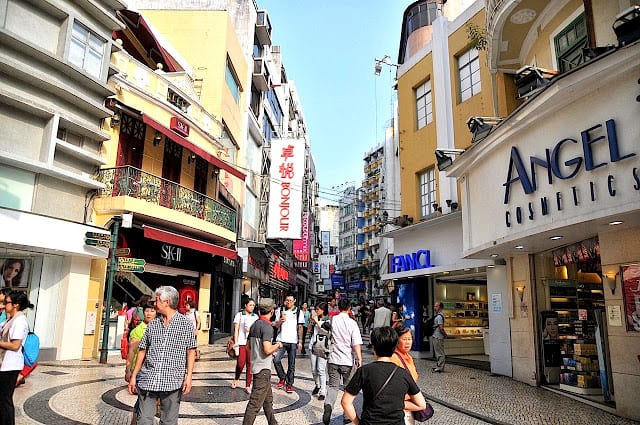
  • Macau retailers and restaurants struggling

    Macau retailers and restaurants struggling

    Most Macau retailers and restaurants have had a difficult October, reporting depressed sales.

    More than half of the city’s dining establishments had strong revenue declines for the month, with just a quarter reporting a slight improvement.

    According to the latest industry climate survey by the Department of Statistics and Census Services (DSEC), the 26 per cent of respondents who had increased turnover say this was driven by an increase in visitors to the city during the one-week National Day holiday.

    Overall, the rise in revenue was 5 per cent compared to September. But for 49 per cent of the Chinese restaurants interviewed and 13 per cent of the Japanese and Korean restaurants, revenue was up by 20 and 6 per cent respectively.

    However, 51 per cent of the respondents reported a decrease in turnover of 12 per cent overall.

    Macau’s retail sector paints a similar picture. About 58 per cent of respondents (1 per cent more than in September) saw their turnover fall, while about 35 per cent (5 per cent more) reported increased sales.

    By sector, leather goods retailers had higher sales, as did 53 per cent of the watches, clocks and jewellery segment, half of adult clothing retailers, 44 per cent of supermarkets and 22 per cent of department stores.

    A 20 per cent or more drop in sales was reported by 78 per cent of department stores and 60 per cent of cosmetics and healthcare retailers.

    Survey respondents do not expect the situation to change soon.

  • McDonald’s trims plans to sell parts of Asian operations

    McDonald’s trims plans to sell parts of Asian operations

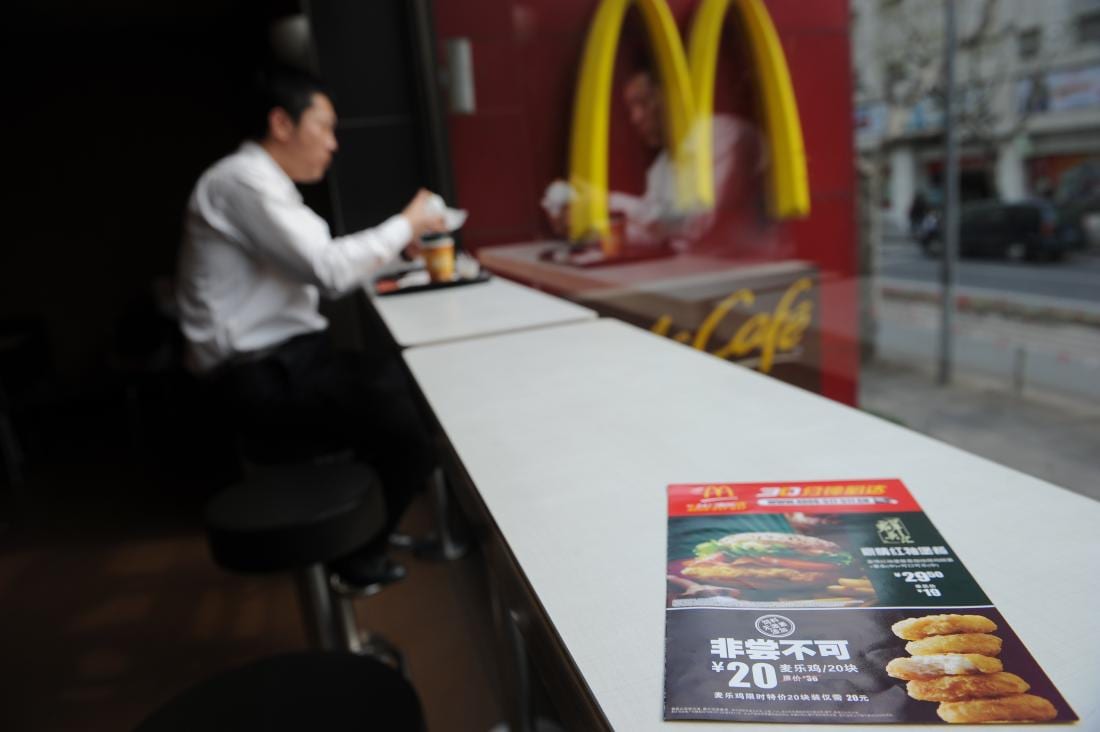
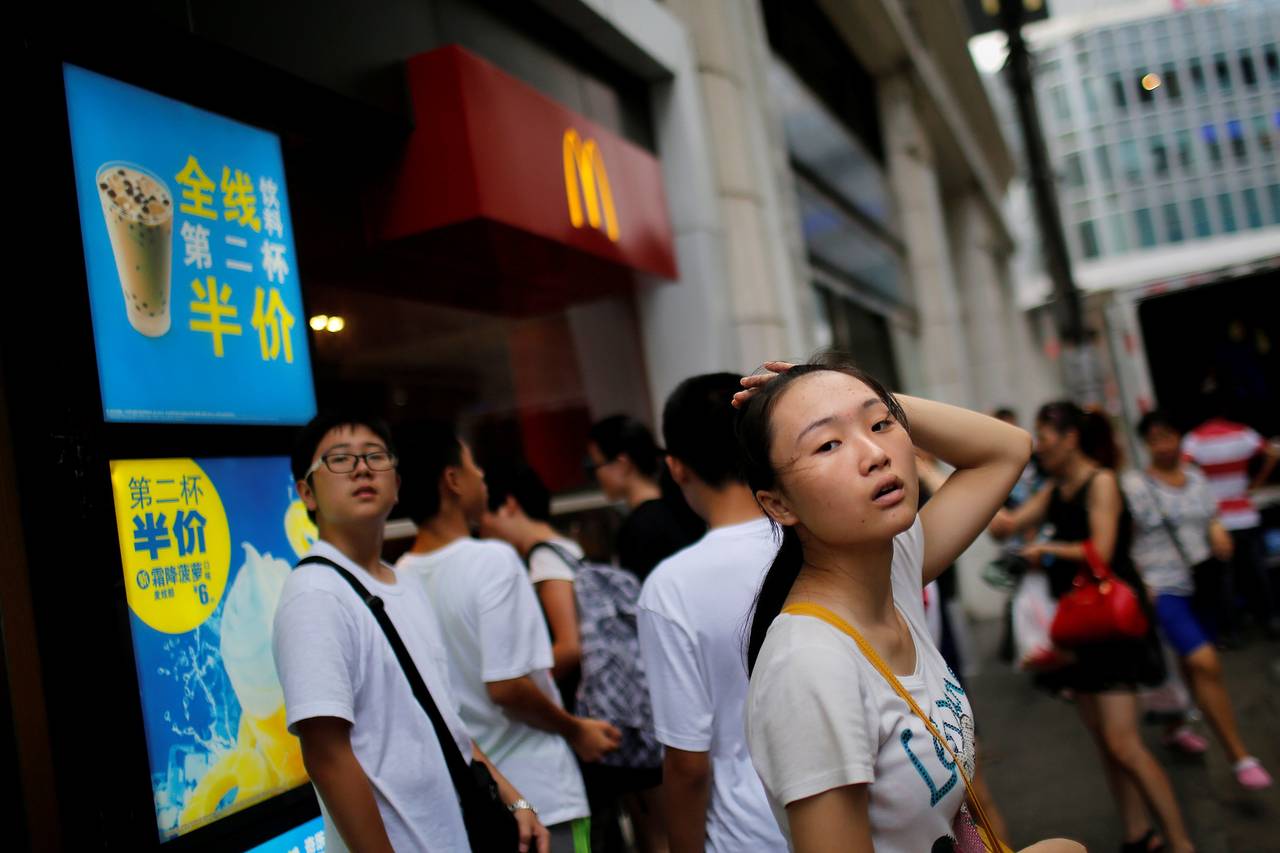
    McDonald’s has downsized plans to sell parts of its Asia franchise after failing to find a suitable buyer in South Korea. The world’s largest fast-food retailer has a stringent list of terms for the deal, including keeping management and existing suppliers in place for a period of time in the hope of protecting the brand.

    Potential buyers balked at those demands, and prompted the decision to cut the country out of the current deal, said two people close to the matter.

    McDonald’s also plans to take a minority stake in the sale of the franchise in China and Hong Kong of up to 25 per cent, in an attempt to exercise greater control over the business that has in the past suffered from food safety scandals.

    The changes to the deal, which is near closing, with China’s Citic Group Corp and US private equity house Carlyle as the buyers, would reduce the size of the transaction to between $1bn and $2bn from what was originally expected to be as much as $3bn.

    The deal could close by the end of the month, said one of the people close to the deal.

    The sale of the 20-year franchise of 2,400 stores in China and Hong Kong has forced McDonald’s to strike a balance between reducing its exposure to China while also protecting its brand in the region.

    The deal attracted several Chinese bidders but people close to the process said the company turned many of them away because they were not deemed suitable to run the operation. The list of bidders included Sanpower Group, the owner of UK retailer House of Fraser, as well as Cinda Asset Management, a state-run bad-debt investor.

    The terms of the deal were unappealing to some of the private equity funds that originally were interested because McDonald’s has insisted the franchise not be publicly listed. Some private equity investors hoping to squeeze value out of the franchise considered terms such as maintaining management and suppliers for two years oppressive.

    US private equity house TPG, which partnered with Chinese retailer Wumart Stores, dropped out of the process at an early stage, followed later by Bain Capital and Shanghai-based partner GreenTree Hospitality.

    Yum Brands, which is nearly double McDonald’s presence in China, struggled with similar problems earlier this year.

    Yum Brands spun off its China business in a New York Stock Exchange listing in October with China-based private equity fund Primavera Capital and Ant Financial Services, an affiliate of Alibaba, taking a $460m stake in the operation.

    One investor has raised concerns about McDonald’s Latin American partner’s performance and whether McDonald’s would face similar issues in Asia by stepping back from operations on the ground.

    CtW Investment Group, which has a 0.2 per cent stake in McDonald’s and is affiliated to a federation of unions representing more than $250bn in assets, wrote to McDonald’s earlier this year citing worries over corporate governance at the fast-food chain’s master franchiser in Latin America, Arcos Dorados, which it says is hampering the chain’s performance in the market.

  • McDonald’s sells Singapore, Malaysian franchise to Saudi group

    McDonald’s sells Singapore, Malaysian franchise to Saudi group

    McDonald’s said on Friday it had sold the franchise rights for its restaurants in Singapore and Malaysia to Saudi Arabia’s Lionhorn Pte Ltd as part of a plan to move away from direct ownership in Asia.

    The fast-food chain said it transferred its ownership interest in 390 restaurants, more than 80 per cent of which were company-owned, on Dec. 1 to Lionhorn.

    Lionhorn is led by Sheik Fahd and Abdulrahman Alireza, who are franchisees for nearly 100 McDonald’s restaurants in the western and southern regions of Saudi Arabia.

    McDonald’s did not disclose the financial terms of the deal.

    Reuters reported in October that McDonald’s was nearing a deal worth up to $400 million to franchise the outlets to Reza group, which also owns and operates McDonald’s outlets in the western and southern regions of Saudi Arabia.

    The Lionhorn deal is in line with McDonald’s plans to bring in partners in Asia as it switches to a less capital-intensive franchise model.

    The company said it has now franchised about 1,300 outlets as a part of its target to become 95 per cent franchised by the end of 2018.

  • McDonald’s near deal to sell China stores

    McDonald’s near deal to sell China stores

    A consortium led by private-equity firm Carlyle Group and Chinese conglomerate Citic Group Corp has neared a deal to buy McDonald’s stores in China and Hong Kong for up to $3 billion, a source with direct knowledge of the matter said.

    The deal is likely to be signed before Christmas, the source said.

    Reuters had reported in October that U.S. buyout firms Carlyle and Bain Capital LLC had been the front runners among the bidders for the fast-food giant’s China assets.

    McDonald’s in March said it was reorganizing operations in Asia, bringing in partners as it switches to a less capital-intensive franchise model.

    The company hired Morgan Stanley to run the sale of about 2,400 restaurants in China and Hong Kong.

    Financial Times reported earlier on Wednesday that Bain Capital had dropped out of the race, and that a group led by Citic Group and Carlyle were the front runners to the deal.

    Carlyle declined to comment, while McDonald’s was not immediately available for a comment.

  • Jamie’s Italian opens its first restaurant in Thailand at the ­renovated Siam Discovery

    Jamie’s Italian opens its first restaurant in Thailand at the ­renovated Siam Discovery

    Jamie’s Italian opens its first restaurant in Thailand at the newly ­renovated Siam Discovery, situated in the heart of Bangkok. This rustic Italian restaurant, serving delicious food at an affordable price, is proudly brought to you by Hotel Properties Limited and Siam Piwat.

    Jamie’s Italian began as a partnership between Jamie Oliver and his mentor, Gennaro Contaldo. The first restaurant opened in 2008 in Oxford and there are now 42 Jamie’s Italian outlets in the UK and over 25 internationally, including Australia, Dubai, Brazil and Singapore.

    As with all Jamie’s Italian outlets, the Siam Discovery restaurant will remain committed to sourcing only the best free-range, higher welfare meat and sustainable and ethically produced ingredients. All the recipes are Italian classics with a Jamie twist, including fresh pasta made on site every day. The restaurant will also work closely with fantastic Thai farmers and suppliers to showcase local produce.

    MENU HIGHLIGHTS

    Menu highlights at Jamie’s Italian Siam Discovery will include the famous antipasti planks, perfect for sharing. Placed on large wooden boards supported by tins of tomatoes, the impressive platter allows guests to pick from a wide selection of meats, cheeses, vegetables and pickles.

    All Jamie’s Italian restaurants serve fresh pasta made in the restaurant, every day. The Siam Discovery restaurant will feature a range of popular pasta dishes, including Gennaro’s Tagliatelle Bolognese, made to his recipe, Silky spaghetti carbonara and Fresh crab spaghetti. The prawn linguine is a Jamie’s Italian classic, loved worldwide.

    Also on offer will be beautiful artisan pizza dough, made by hand, and proved for hours before being hand ­stretched to create an irresistibly crisp base. The simple but classic Margherita, and Funghi, with seasonal mushrooms, are just a few of the pizzas on offer.

    A selection of Italian-inspired main courses is also on offer, including the Tuscan-style Chicken al mattone– chicken is cooked under a brick, ensuring that the chicken is pushed further against the grates of the grill, producing a smoky flavour, with an addictively crisp skin. The Jamie’s Italian burger, a signature main dish, and the Grilled pork chop served with crispy crackling, are also must-try dishes. For those looking for a lighter meal, the Classic super food salad is a super-fresh combination of avocado, roasted beets, mixed pulses & grains, broccolini, fennel, pomegranate & spicy seeds with harissa dressing & artisan ricotta.

    A favourite among families, Jamie’s Italian will also be bringing its award-winning kids’ menu to Thailand. Awarded the best kids’ menu in the UK by The SOIL Association in 2013, there’s a choice of 2 two sizes for different age groups, with all the meals nutritionally balanced. It comes with a viewfinder menu and colouring sheets to keep the kids entertained.

    If you love your Jamie’s Italian experience, don’t forget to take a bit home with you. Jamie’s Italian Siam Discovery will also stock a wide range of Jamie’s cook books and the restaurant’s signature napkins, as well as gifts, allowing you to recreate your Jamie’s Italian experience at home.

    THE INTERIOR

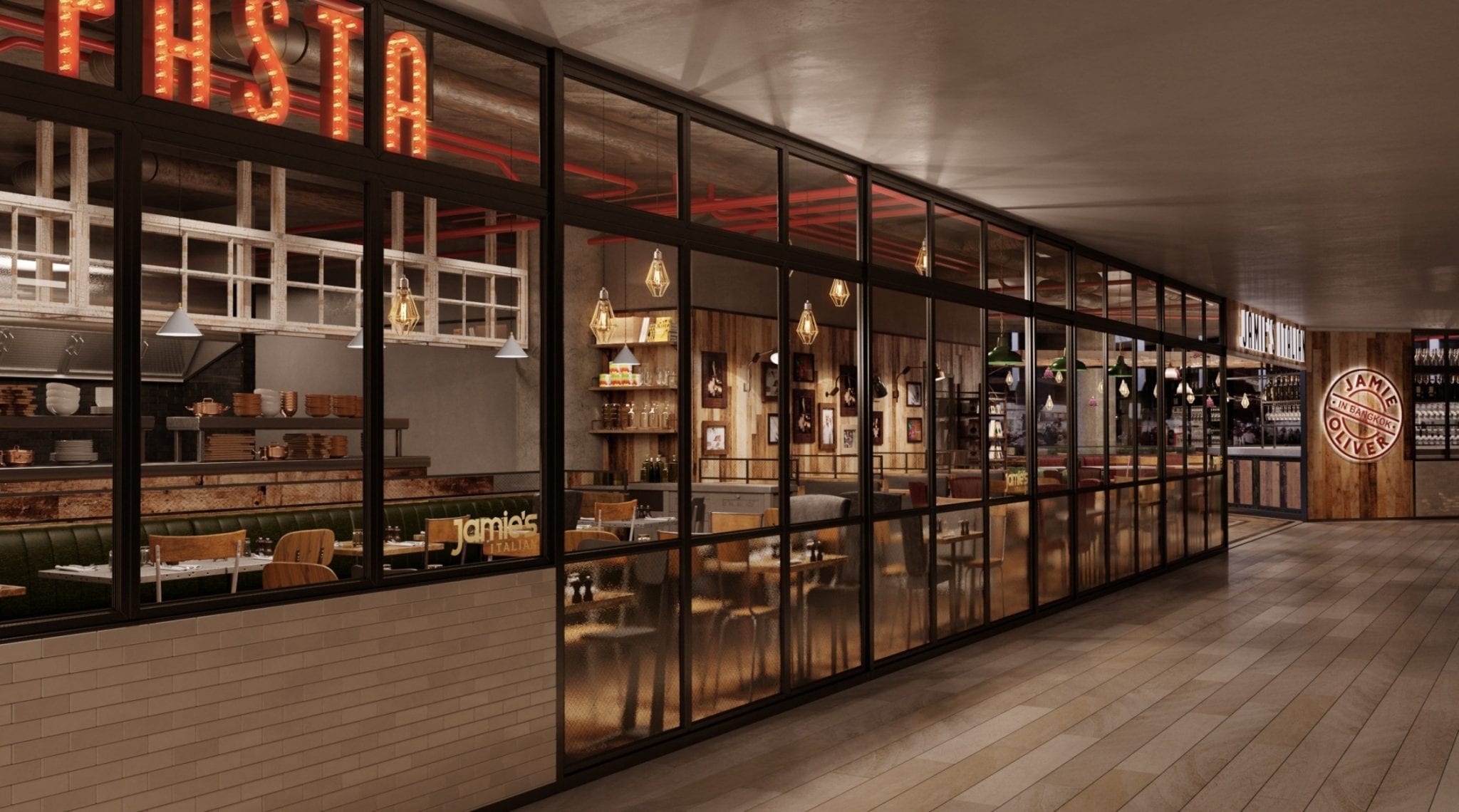
    Every Jamie’s Italian restaurant is designed to be easily accessible with a warm and comfortable feel and incorporates the personality of the city it’s in. Siam Discovery’s design takes inspiration from its location to create a friendly, neighborhood restaurant that the whole family can enjoy.

    With 184 covers, the restaurant will boast a tasteful mix of rustic, reclaimed timber refectory tables, industrial ­chic zinc tables and vintage upholstered lounge chairs, with monochromatic and hand­-painted floral tile flooring. To add warmth, the dining area will be illuminated with brass spotlights, vintage enamel shades and a textured glass chandelier.

    The creative use of space allows guests to view the open kitchen,  watch their antipasti planks being made before their eyes at the antipasti counter in the main dining room, or hang out for a pre or post- meal tipple at Jamie’s Bar.

    READY TO WELCOME YOU

    Welcoming you to the first Jamie’s Italian restaurant in Thailand is General Manager Sarah Smith, winner of the Jamie’s Italian International Rising Star award for 2015/2016. She has worked closely with Head Chef, Alex Barman and local staff to make sure that the new restaurant is ready to receive guests.

    Jamie Oliver said: “Taking Jamie’s Italian to Thailand is incredibly exciting for me. Bangkok is a vibrant and buzzing city with a great food scene and we can’t wait to be a part of it. We’ll be sourcing lots of beautiful, top-quality produce from fantastic local suppliers, and making food that we just know you’re going to love. Come down and visit soon!”

    For more information please visit our website www.jamiesitalian.co.th


  • Jamie Oliver to announce its opening for the first Jamie’s Italian restaurant in Thailand

    Jamie Oliver to announce its opening for the first Jamie’s Italian restaurant in Thailand

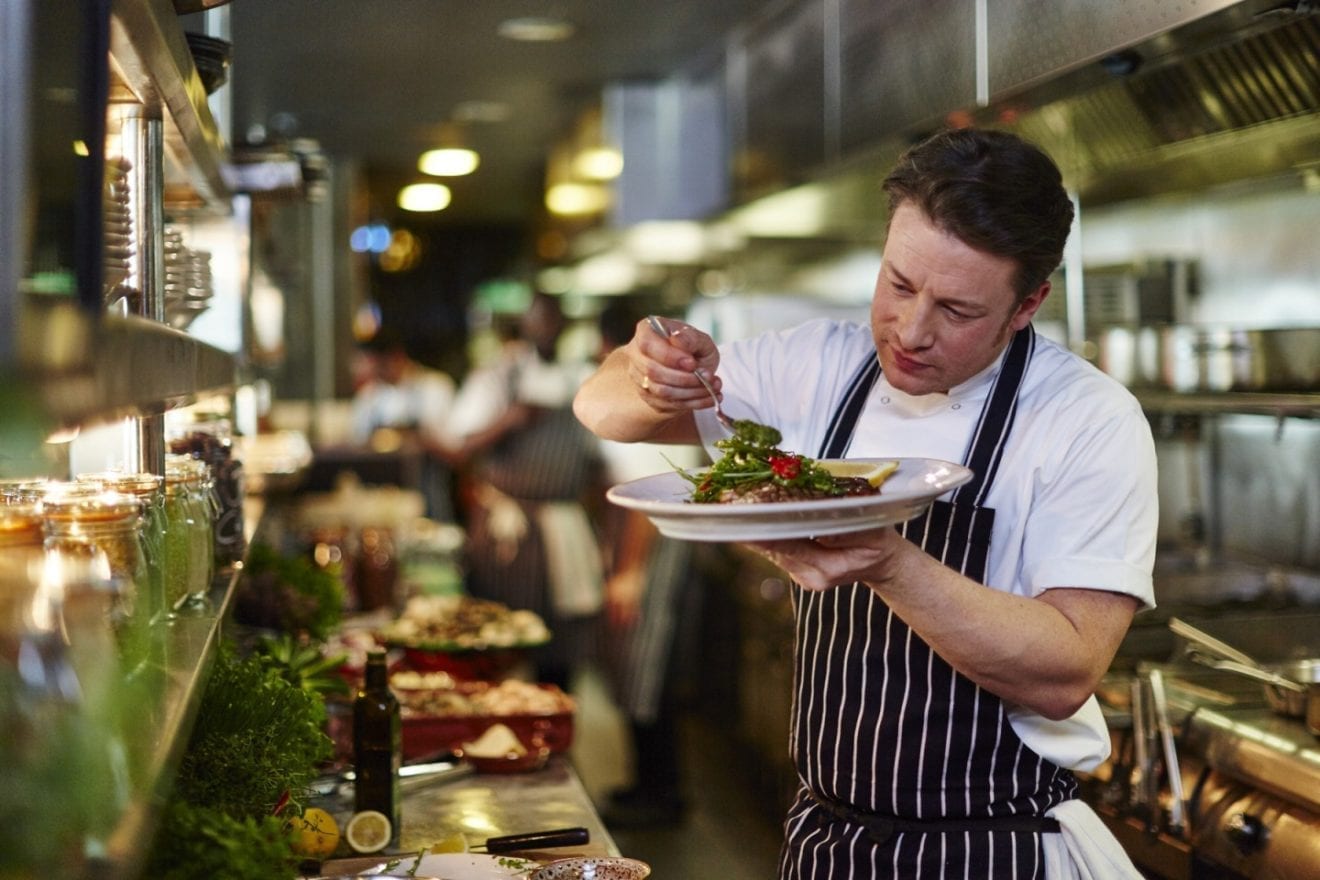
    Jamie’s Italian by Jamie Oliver is pleased to announce its opening head chef for the first Jamie’s Italian restaurant in Thailand, set to open in the fourth quarter of this year. Alex Barman, a dynamic and passionate chef with more than 11 years of culinary experience, will be leading the kitchen team as head chef of Jamie’s Italian Siam Discovery.

    Born in North Wales, UK, Alex started working in restaurants at a young age while still studying, beginning his culinary career as a kitchen assistant in a local hotel restaurant, and then progressing to be a sous chef in a local bistro, and head chef for Whitbread Group in Cardiff. In 2010 he joined the Jamie’s Italian family in Cardiff as a commis chef, moving swiftly through the ranks and taking his first head chef role for Jamie’s Italian in Cheltenham and Birmingham. He was also a member of the training support team for the opening of Jamie’s Italian Westfield, Stratford near the London 2012 Olympic Stadium. Alex moved to Singapore three and a half years ago to open the first Jamie’s Italian in Asia in VivoCity, where he started as the sous chef and was quickly promoted to head chef. In 2015, he moved to Bali as head chef for the new restaurant, Jamie’s Italian Kuta Beach.

    “Everything we serve is made with care,” Alex Barman, the head chef of Jamie’s Italian Siam Discovery said. “Good food is as the heart of everything we do. We are fully committed to supporting Jamie’s fight for better food worldwide, and his mission to make good food accessible for everyone.”

    As with all Jamie’s Italian outlets, the Siam Discovery restaurant will remain committed to sourcing only the best free­range, sustainable and ethically sourced ingredients. The restaurant will also work closely with Thai farmers to showcase local, responsibly grown produce.

    Alex said: “One of the most exciting parts of the job so far has been sourcing ingredients that fit in with Jamie Oliver’s food ethos. It’s not always easy, but it is always enjoyable as I have been able to meet some really amazing people. I am very passionate about sourcing and working with great local suppliers who are as passionate about great ingredients and the food ethos behind them, as I am. I’m really looking forward to seeing these ingredients feature throughout our menu.”

    “Since moving to Asia I’ve always wanted to work in Thailand and experience the culture, people and amazing local food on a regular basis, not just for a holiday, as you never really get to experience the real country and people on short breaks. It’s such a diverse and dynamic country with big differences from one province to another, making it very exciting to travel around and experience all the country has to offer. I love cities and actively seek to work and live in big, bustling, dynamic cities in which Bangkok has to be one of the best so far I’ve lived in.”

    Alex said: “Jamie’s Italian food is simple, rustic and inspired by dishes eaten all over Italy, delivered to the local market at affordable prices, which means it’s great for any occasion. I will also be creating some fantastic daily specials, maximising ingredients I can get at short notice from local markets and suppliers. I’m really looking forward to using some of the interesting products that are available here to create some brilliant dishes, with a new brigade of talented local chefs, and seeing our first guests enjoy our food.”

  • Boeing 737 restaurant opens in China

    Boeing 737 restaurant opens in China

    A decommissioned Boeing 737 aircraft has found new life as an airline-themed restaurant in Wuhan, China.

    Parked in a German-style pedestrian mall and with a covered boarding ramp accessed by an escalator, the Boeing 737 restaurant has 20 tables, and guests can even try out a flight simulation system in the cabin.

    Boeing 737 restaurant Wuhan China 2

    Named Lily Airways, the restaurant is owned by tycoon Li Yang, who says he spent 35 million yuan (about US$5.2 million) to relocate and convert the retired plane.

    Boeing 737 restaurant Wuhan China 1

    While the wait staff wears flight attendant uniforms, diners need not worry about being served such plane fare as packaged nuts – the international chefs in the on-board kitchen offer Western-style fine dining.

    Li Yang says the airliner was bought from the bankrupt Batavia Airways of Indonesia, and took almost four months to transport after being split into several parts.


    Photo courtesy: CFP – Trending in China.

  • Burgers and beers lead Hong Kong restaurant industry growth

    Burgers and beers lead Hong Kong restaurant industry growth

    Restaurant industry analysts remain sceptical about the sector’s growth prospects despite promising year-on-year figures.

    Census and Statistics Department figures show restaurant receipts in Hong Kong increased 3.1 per cent year on year, at the end of the second quarter 2016.

    Fast food and bars did the best while Chinese restaurants saw fewer diners and lower spending, according to the figures.

    Fast food receipts increased 6.4 per cent year on year, bar sales increased 4.3 per cent, other drinking venues’ sales increased 3.9 per cent and Chinese restaurants increased 1.7 per cent.

    But the upwards trend for the local restaurant industry could be short lived, according to Simon Wong Ka Wo from the Federation of Restaurant and Related trades.

    There will be a 2 to 3 per cent “slight decrease” in the restaurant sector in terms of its overall performance for the whole year, Wong forecast. He warned that some Hong Kong restaurants might have to “suffer a little bit” over coming months, but the industry will bounce back in the fourth quarter.

    “The increase seems a little bit surprising to me as the performance of the economy for the past six months does not seem so promising,” Wong said.

    “The major reason is people tend to spend more on some middle to low-end restaurants like McDonald’s instead of high-end ones due to the stagnant economy, contributing to the increase in overall value of total receipts.”

    The optimistic figures come against a backdrop of slowing retail trade, which registered an 8.9 per cent decrease year on year.

    Professor Terence Chong Tai-Leung from the Chinese University of Hong Kong said rising incomes could help the city rebound from the retail slump.

    “As you can see from the low unemployment rate and the increased average income figure recently, Hong Kong people still have large purchasing power,” he reasoned.

  • Hilton hotel chain steadily expanding operations in Indonesia

    Hilton hotel chain steadily expanding operations in Indonesia

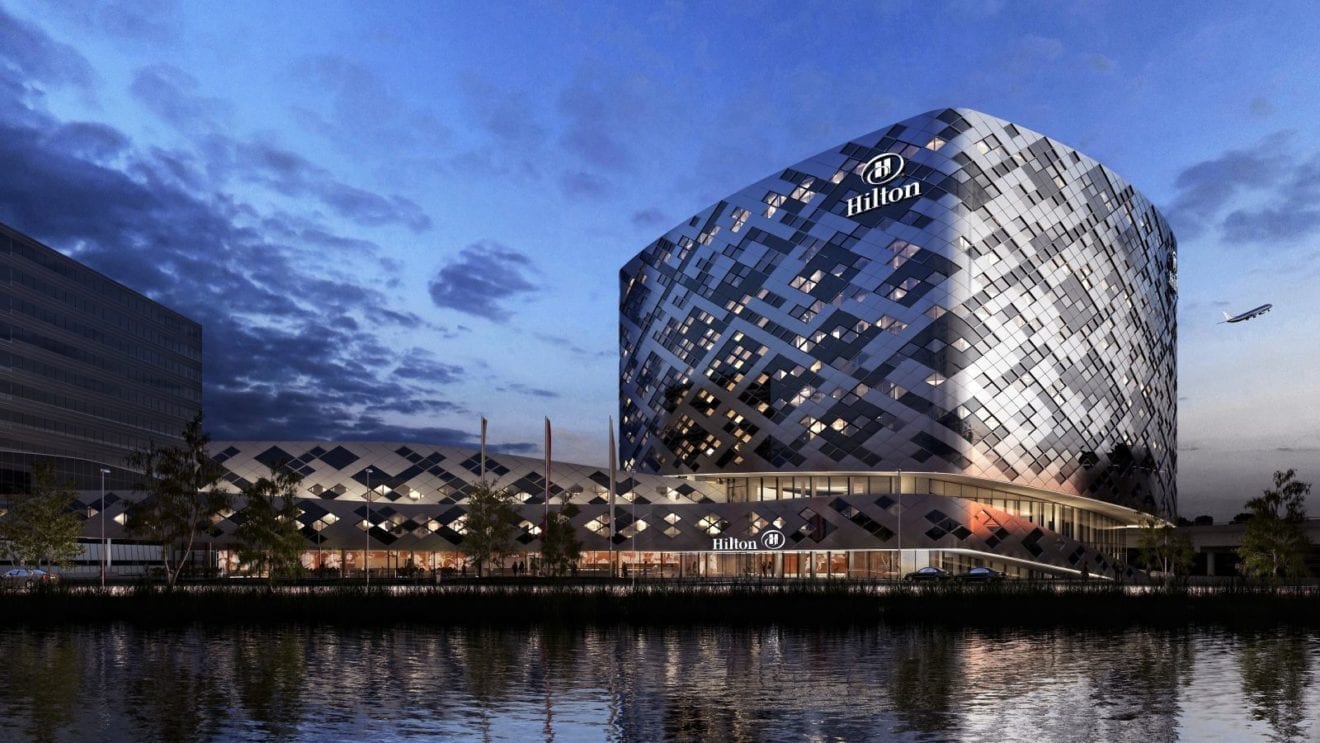
    Hilton Worldwide, a US-based global hotel chain, has steadily been expanding its operations in Indonesia to tap new market opportunities in a hospitality industry that is thriving on the back of steady economic growth and the free visas being offered to the citizens of most of the countries in the world.

    “We already have four properties under our management and eight others, which are under construction in Jakarta, Tangerang, Surabaya and Bali, will open within the next two years”, Hilton’s vice president for Southeast Asia and India William Costley told The Jakarta Post on Wednesday.

    The four properties already in operation are the Double Tree by Hilton in Jakarta, the Hilton in Bandung, the Conrad and the Hilton Garden Inn, both in Bali.

    Hilton, which manages more than 4,600 properties in 103 countries, is also looking for new opportunities in Lombok, Medan in North Sumatra, Balikpapan in East Kalimantan and Palembang in South Sumatra, Costley said.

    It is mostly a matter of finding the right partner for promoting Hilton service standards because Hilton has many brands to fit in with different locations, he said.

    “But we are always directly involved together with the owners in the process of designing and constructing every hotel we will manage and in training its human resources,” he added.

    Costley said the steady growth of Southeast Asia’s largest economy and the ASEAN open skies policy would boost business travel and the whole hospitality industry in many other cities across the vast archipelago.

    “We are quite excited about the prospect of the tourism industry, especially after the launching of the visa-free facility,” he said. “And I think the target of 20 million tourist arrivals in 2020 is not impossible.”

    He sees great potential for developing Indonesia into one of the most favorite tourist destinations and tourism is also the right kind of industry Indonesia needs because of its labor intensive, multiplier impact and, most importantly, this industry is friendly to the environment and earns a lot of foreign currency.

    “Take for example this Double Tree by Hilton hotel here, which has 253 rooms. It employs only two expatriates and the rest of the staff are locals,” Costley pointed out.

    Hilton Worldwide has a portfolio of 13 brands, including the Waldorf Astoria, the Conrad, the Hilton, the Double Tree by Hilton and the Hotel Garden Inn, which are promoted as landmark properties in Indonesia.

    Costley said the Waldorf Astoria, Hilton’s most luxury brand, which will be housed in a 74-story mixed-use building currently under construction on Jl. MH Thamrin in Jakarta, will open in 2018 with 181 rooms.

    Two other properties under construction in Ubud and Seminyak, both in Bali, will operate within the next two years and are also under the Waldorf Astoria brand, while the Hilton Bali (formerly the Grand Nikko) will operate later this year with 408 rooms, he added.

    The other four hotels in Hilton’s management portfolio that will open within the next two years are the Double Tree by Hilton in Surabaya and Karawaci in Tangerang and the Hilton Garden Inn in Kemang, Jakarta, and Karawaci.

    Costley said the Hilton group is strongly committed to strengthening and expanding its growing portfolio of landmark properties in such key destinations as Indonesia.

    Our Hilton Honors loyalty program has 55 million members around the world, and this huge data bank is surely an effective means of promoting Indonesia globally,” Costley added.

  • Chains top China restaurant rankings

    Chains top China restaurant rankings

    Chains outperform independent eateries in China restaurant rankings, new research shows.

    A survey by global consulting firm OC&C Strategy Consultants shows that Chinese consumers dine out on average two or three times a week, with Hai Di Lao, Pizza Hut and Little Sheep ranking as their favourite brands.

    Western brands ranking in the top 10 are: McDonald’s (7), TGI Friday’s (8) and KFC (9). Others on the list are South Beauty (4), Shanghai Min (5), Waipojia (6) and Tairyo (10).

    Food quality, wide choice and service quality shows as the three critical factors in restaurant choice, while serving speed, convenience and pricing are rated as less important Chinese consumers actively seek out new restaurants and are receptive to new formats and concepts such as theming, healthy lifestyle menus and organic produce, as well as innovative, fusion cuisine.

    According to the report, Serving up a Winner – Establishing a Winning Proposition in China’s Restaurant Landscape, China’s restaurant market is more vibrant than ever, with growth outstripping other major markets despite higher volatility.

    “While other retail segments struggle in the face of ‘the new normal’, restaurants are becoming more innovative and reaping the benefits of the growing middle class,” says OC&C greater China partner Jack Chuang. “The arrival and rapid expansion of international chains in the past few years has increased the competitiveness of the market.”

    He says getting diners through the door of a restaurant is still challenging. “Restaurant staff need to ensure that service is authentic and make creative, personalised decisions to delight guests.”

    Chuang says restaurants should also offer a wide menu range with local flavour.

    The study canvassed 2600 respondents in 21 cities across China, with consumer surveys and restaurant audits in February.

    Founded in 1987, OC&C provides corporate and business strategy, channel, marketing, organisational and change strategy, as well as transactional support services. It has more than 400 consultants in 14 offices globally, including China and India. The greater China practice has offices in Hong Kong and Shanghai.

  • Restaurant Review: Downtown Bangkok Cafe

    Restaurant Review: Downtown Bangkok Cafe

    This Phoenixville restaurant delivers Thai cuisine with unexpected elegance and an authentic experience.

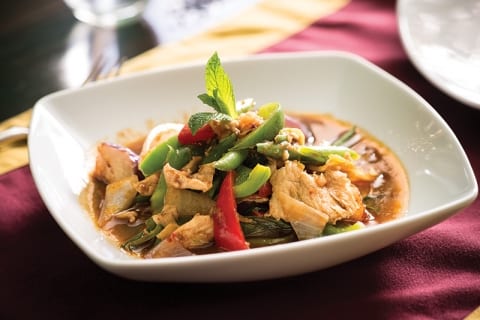
    Spicy Thai Basil Chicken//All photos by Steve Legato

    “A best-kept secret!”

    Online critics are forever clinging to exhausted, simplistic superlatives. And yet, how else to describe Downtown Bangkok Café, other than to peg this Thai yearling as a quaint hidden gem or a surprising off-the-radar find on the outskirts of Phoenixville?

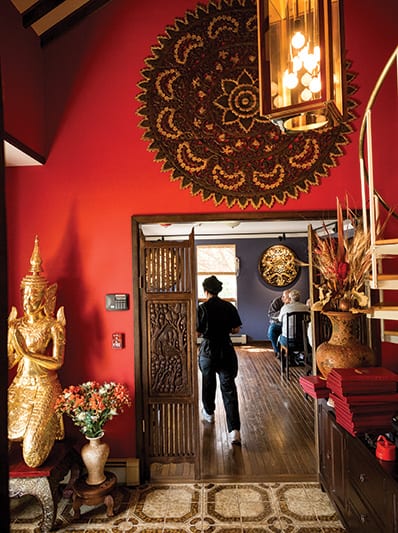
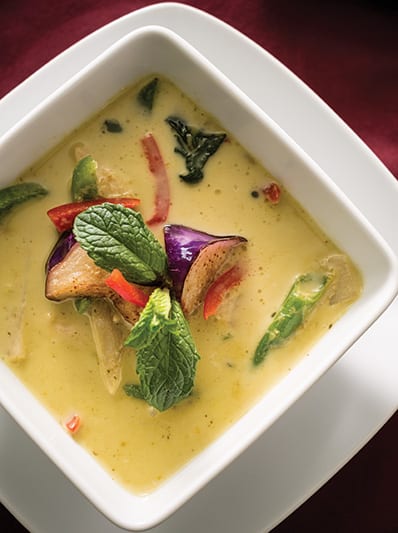
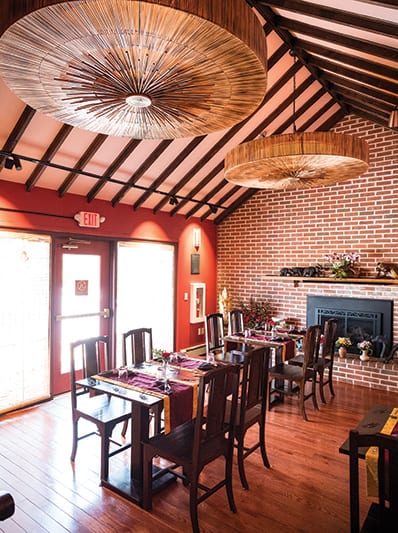
    From Left: Downtown Bangkok Café’s casually elegant interior; green curry

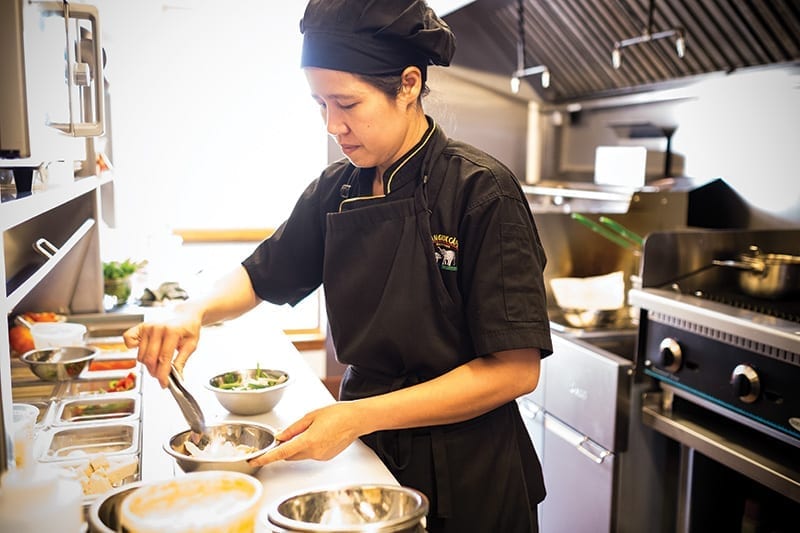
    Owners Yaowapa and Jerry Kowal—the chef and manager, respectively—didn’t set out to become restaurateurs. They first opened Yaowapa Thailand Treasures, a retail gift shop of handmade imports, in 2009. Six years later, they have an artfully decorated 48-seat eatery on the store’s second floor. It was inspired by a passion for cooking rooted in Yaowapa’s  heritage. It became a reality thanks to Jerry’s skill as an engineer and a direct merchants’ pipeline from Thailand.

    Impressive wall mountings and hand-carved statues from the Kowals’ native Chiang Mai region can be found through-out the café’s four tastefully appointed dining spaces and waiting room. That attention to authentic detail continues with the etched wooden tables and chairs, logo embroidered napkins and silverware handles bearing elephants.

    The grilled tofu cubes are the perfect accompaniment to Yaowapa’s fragrant curries. Her onion-pineapple-potato-and- peanut-studded massaman, in particular, is a pungently ruddy lava flow, gushing creamily over fluffy jasmine rice. Hot and crispy coconut shrimp top a chilled Thai salad, providing a unique contrast in flavor and temperature.The cuisine is well prepared and delicious. Our three skewered chicken strips came with an addictive peanut sauce. Another app, the Crying Tiger, combines tender slices of grilled beef and assorted crunchy veggies with a sweet chili-lime sauce. The “medium” spice offers just the right heat. The Pad Thai tastes authentic, as does the Drunken Man—a hearty tangle of flat soba noodles, egg, basil and vegetables, served with a choice of shredded beef, chicken, pork or tofu.

    From Left: Thai tea; the casual elegant interior

    Desserts are simple and sparse. The honeyed banana, rolled into fried wonton skins and served with vanilla ice cream custard is the best of the lot.

    THE SKINNY: Comprised of a series of lavish rooms nestled above Thailand Treasurers, this surprising find goes well beyond run-of-the-mill superlatives. Both the fare and the peaceful aesthetics are emblematic of Thailand.

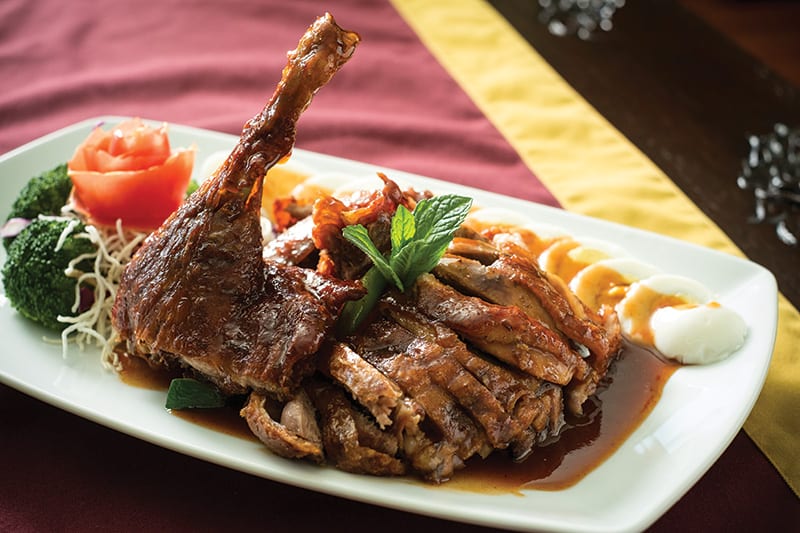
    Crispy duck with tamarind sauce.

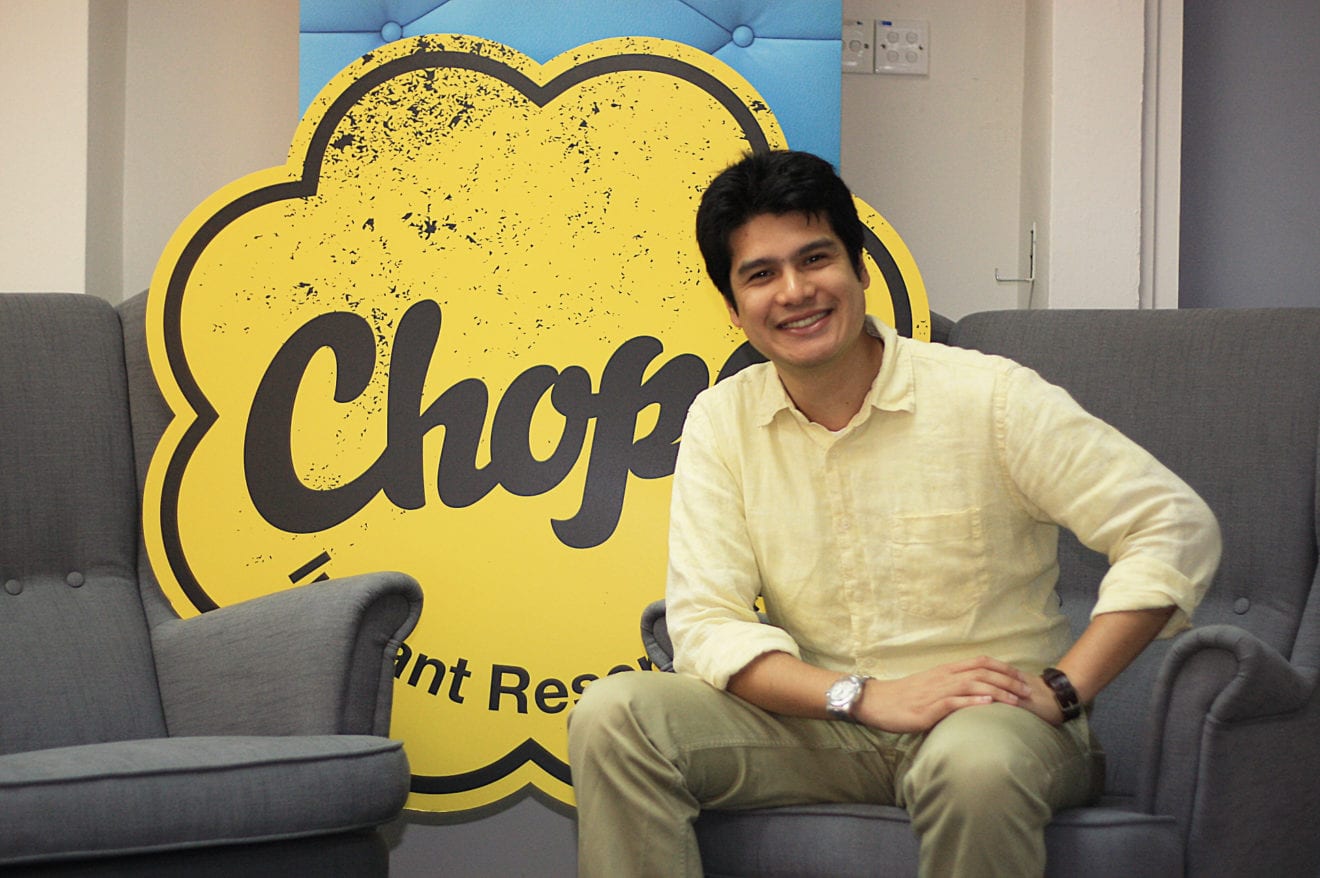
  • Online booking platform Chope enters Indonesia with acquisition of MakanLuar

    Online booking platform Chope enters Indonesia with acquisition of MakanLuar

    Singapore-headquartered restaurant reservation startup Chope has acquired Indonesian counterpart MakanLuar, the company announced today. The value of the deal is undisclosed. The acquisition was made with a mix of cash and shares, although Chope co-founder and CEO Arrif Ziaudeen does not reveal the percentage of each.

    Through the deal, Chope adds Jakarta, Bandung, and Bali to its portfolio, bringing the cities it’s active in to eight. It’s been operating in Singapore, Bangkok, Hong Kong, Shanghai, and Beijing.

    Chope expanded in those territories organically, and every time it found it had to educate early adopters and find a product-market fit, Arrif says. “Jumping in at the stage MakanLuar is at, they’ve already crossed that threshold and are now in a position to hit the accelerator on sales and marketing, so we save valuable time,” he enthuses.

    MakanLuar’s founding team of Kunal Narang and Hiro Mohinani was also a major factor for Chope. “We were inspired by Kunal and Hiro’s drive, and with a proven track record we really feel confident in these safe pairs of hands,” Arrif explains.

    “Oddly enough, before we started MakanLuar, we spoke to Chope to seek ways to work together but we were too new at the time,” Kunal tells Tech in Asia. Once the team had some good traction in Indonesia, it made sense to get back in touch with Chope and become part of a bigger regional play, he adds

  • Alarming fall in holiday restaurant bookings

    Alarming fall in holiday restaurant bookings

    Fewer people are planning to eat out on the eve of the Lunar New Year, a restaurateur said. The bill per table is expected to be about HK$4,800 on the eve of the holiday down from HK$5,300 last year Hong Kong Federation of Restaurants and Related Trades chairman Simon Wong Ka-wo said.

    He also described a drop in reservations as “alarming.”

    Wong added: “We annually see an 8 to 10 percent increase in reservations, but this year we are seeing a drop of around 5 percent.

    “This is due to a drop in consumption, with many consumers opting for cheaper meals.” Wong said owners have adopted a conservative approach in ordering their supplies after noticing that overall consumption has been affected by the mainland’s economic slowdown.

    Association for Catering Services Management chairman Yeung Wai-sing feared that some restaurants may have to close as sales are expected to drop further after the holiday is over.

    “This is likely to happen in April when the spring dinners of companies are over and the so-called off- season begins,” Yeung said. “I will not be surprised if some restaurants close down then.”

    Hong Kong Inbound Tour Operators Association chairman Ricky Tse Kam-ting said the weaker economic outlook is also based on the 60 percent plunge in mainland tour groups for this Lunar New Year.

    “This is the coldest year I have experienced in the industry. The figures might be shocking to you but the estimation is pretty conservative,” Tse said.

    “We had around 400 to 500 groups in the past but only around 100 groups this year.”

    The number of mainland arrivals was 45.62 million last year 2.9 percent lower compared with 2014, according to the Immigration Department. Many mainlanders are now heading for Japan and South Korea due to the exchange rate, while the younger ones prefer Europe, Tse said.

    “Most of the visitors are middle-aged or older they have already visited Hong Kong and are looking for something new,” he said.

    “Social media plays a big role with the younger generation. They see pictures and news about other countries and it is understandable that they want to go beyond [Hong Kong].”

    A jewelry retailer also claimed that this is “the most difficult” year. Government data showed total retail sales in December last year dropped 6.1 percent, and the value of sales of jewelry, watches, clocks and valuable gifts shrunk 17 percent.

    Jimmy Tang Kui-ming, chief of Prince Jewellery and Watch, expects sales in February to drop 20 percent from last year.

    “The devaluation of the yuan, the stock market plunge and decreasing home prices are like a trio hitting the retail sector,” he said.