Tag: retail news

  • Walmart trials new Online Store Format

    Walmart trials new Online Store Format

    Supermarket retailer Walmart has launched a new technology called Intelligent Retail Lab (IRL) that allows it to monitor its physical stores more efficiently and keep costs under control.

    The retail giant is testing this new technology, which includes artificial intelligence-enabled cameras, interactive displays and a massive data centre, in its 50,000-square-foot neighborhood market grocery store in Levittown, New York.

    According to IRL CEO Mike Hanrahan, the location is one of Walmart’s busiest stores and has more than 30,000 items and this allows them to test out the new technology concept in a real-world environment.

    “We’ve got 50,000 square feet of real retail space. The scope of what we can do operationally is so exciting,” Hanrahan said.

    IRL is set up to gather information about what’s happening inside the store through an array of sensors, cameras and processors. It has a combination of cameras and real-time analytics that will automatically trigger out-of-stock notifications to internal apps that alert associates when to re-stock, detect the products on the shelf and compare the quantities, among others.

    Hanrahan said the first thing this equipment will help the team focus on is product inventory and availability. In short, the team will use real-time information to explore efficiencies that will allow associates to know more precisely when to restock products, so items are available on shelves when they’re needed.

    “Customers can be confident about products being there, about the freshness of produce and meat. Those are the types of things that AI can really help with,” Hanrahan said.

    Walmart said with its new IRL technology, customers can trust that the products they need will be available during the times they shop.

  • Vietnam’s exports to Japan increase rapidly in Q1

    Vietnam’s exports to Japan increase rapidly in Q1

    Elimination of many tariff lines for goods under the CPTPP has helped Vietnam’s exports to Japan increase sharply in the first quarter of this year, according to the General Department of Customs.

    Vietnam’s export value to Japan in the first quarter surged 6.7 per cent year on year to US$4.6 billion, the general department said. Việt Nam became one of three markets gaining an export value in the billions of US dollars to Japan, after the US and China.

    In March 2019 alone, the export value to Japan reached $1.7 billion, a sharp increase of 62.3 per cent month on month and a surge of 2.7 per cent year on year.

    The strong growth in Vietnam’s export value to Japan was attributed to the Comprehensive and Progressive Agreement for Trans-Pacific Partnership (CPTPP). According to this agreement, Japan for the first time has pledged to completely eliminate tariffs for the majority of Việt Nam’s agricultural and seafood products exported to this market.

    That meant Japan immediately abolished 86 per cent of tariff lines, equivalent to 93.6 per cent of Việt Nam’s export value to Japan, and then this figure will increase to 90 per cent of tariff lines within five years.

    On the other hand, the Việt Nam-Japan and ASEAN-Japan free trade agreements have created advantages in tariffs for some of Việt Nam’s seafood products exported to Japan.

    About 62.5 per cent of Vietnam’s total goods items exported to Japan in the first quarter gained strong growth compared to the same period last year, according to the general department.

    The major export products to Japan included textiles (export value of about $900 million), means of transport and spare parts ($630 million), machinery and equipment ($450 million) and seafood products ($306 million).

    Especially, the fertiliser exports to this market had a sudden growth in the first quarter of 2019 to 8,126 tonnes, earning $3.7 million. The exports rose up by five times in volume and about 11 times in value year on year.

    In addition, Vietnam saw strong growth in exports of some goods to Japan in the first quarter, including chemical products (up 70 per cent), animal feed and raw materials (up 56.8 per cent), ore and minerals (up 52 per cent), all kinds of steel (up 49 per cent) and plastic materials (up 43 per cent).

    Meanwhile, Japan sharply reduced imports of cassava and cassava products from Vietnam, with a reduction of 99.6 per cent in volume and 98.5 per cent in value over the same period, despite the average export price of cassava surging by 3.3 times to $886 per tonne.

    In 2018, Vietnam’s goods export value to Japan reached more than $18.8 billion. Textiles and garments accounted for the largest proportion with over 20 per cent of the total export value. Meanwhile, seafood, furniture and footwear respectively hold 7.4 per cent, 6.1 per cent and 4.5 per cent.

  • Tmall Reinforces Go-to Platform Status for Product Debuts

    Tmall Reinforces Go-to Platform Status for Product Debuts

    Alibaba Group’s Tmall today announced it will launch a dedicated gateway for customers to discover new products through the Taobao mobile app, looking to cement its position as the “go-to” platform for such launches.

    From Wednesday, customers clicking on the “Tmall” icon in their Taobao app will be directed to the “Tmall New Products” channel, which includes a full array of new features, such as Tmall’s “Most Sought-after New Items,” “The Next New Things,” “Limited Editions” and “New Flagships.” Working with brands and key opinion leaders, the channel will provide customers with in-depth information and recommendations on new products.

    Tmall has long been an effective platform for showcasing new products, a one-stop shop for consumers to find the hottest new items online, and a creative, experiential channel to interact with and learn more about new products.

    The new channel for product launches is powered by Tmall’s already impressive suite of marketing tools, such as “Hey Box” and the Tmall Innovation Center (TMIC). In the past year, 82% of new products tailored by TMIC became a top-three “hot” item in its category within 30 days of launch. TMIC has also reduced the product development cycle by half, to an average of nine months.

  • Retail spend on AI services to Multiply by 2023

    Retail spend on AI services to Multiply by 2023

    Global spending by retailers on AI services will reach US$12 billion by 2023, according to Juniper Research.

    That figure is more than three times the amount expected to be spent this year, of $3.6 billion and represents investment by more than 325,000 retailers expected to adopt the technology during the next four years.

    According to Juniper Research’s report, AI in Retail: Segment Analysis, Vendor Positioning & Market Forecasts 2019-2023, AI use by retailers will unlock efficiencies across back office operations. Advanced analytics employed in functions such as demand forecasting and automated marketing will make retailers more agile and improve margins.

    Juniper forecasts that retailers will face an AI adoption race, where AI-equipped retailers, which have adopted systems as early movers, will displace slower moving retailers, offering superior service at optimised price points.

    Demand forecasting crucial

    The use of machine learning in demand forecasting will prove to be a key market for AI vendors, with associated service revenues reaching $3 billion by 2023, up from $760 million in 2019.

    Juniper Research says demand forecasting will be essential to enable an effective omnichannel experience and drive higher margins.

    “With the rise of collect-in-store and one-off events such as Black Friday, understanding demand and supply chains is more crucial than ever with AI playing the central role,” said research author Nick Maynard.

    The research also found that smart checkouts, largely powered by AI technologies such as computer vision, will have a strong future in the convenience area; leading to annual transaction volumes of more than 1.4 billion by 2023, compared with just 42 million this year.

    While Amazon is currently highly visible with its Go model, China will be the biggest driver of future growth. This reflects the rapidly growing Chinese market, as well as the backlash Amazon has had recently due to its cashless model.

    Juniper Research provides research and analytical services to the global hi-tech communications sector, providing consultancy, analyst reports and industry commentary.

  • Indonesian retail sales growth speeds up

    Indonesian retail sales growth speeds up

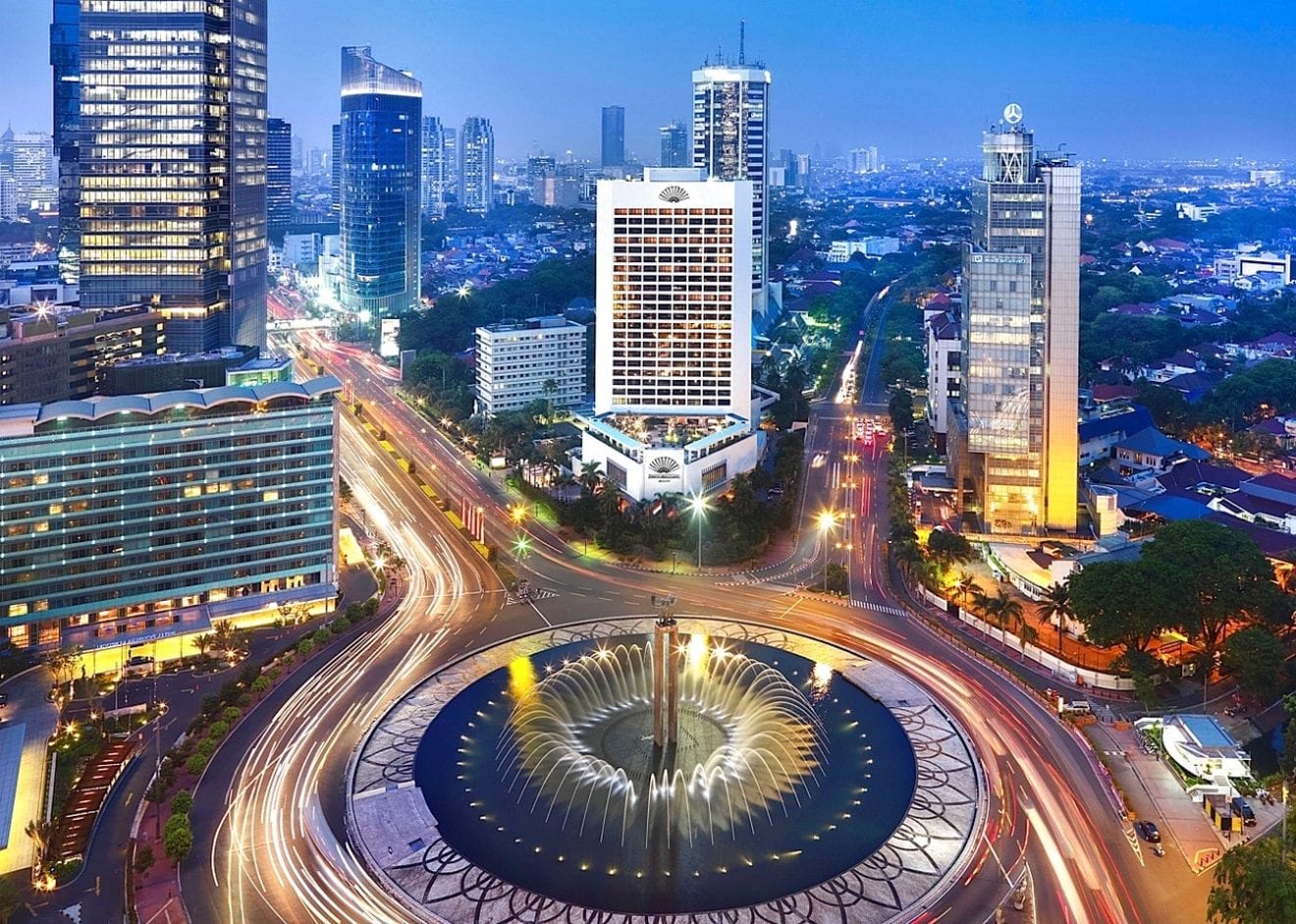
    Indonesian retail sales surged 9.1 per cent in February – a rate higher than anticipated.

    The growth rate appeared to be driven by shoppers splurging on Lunar New Year celebrations as well as an increase in apparel sales during the month.

    February’s rise followed a 7.2 per cent improvement in January and government statisticians have predicted a rise of 8 per cent for March.

  • Security concerns inhibiting m-payment adoption in Hong Kong

    Security concerns inhibiting m-payment adoption in Hong Kong

    More than half (53%) of Hong Kong residents polled during a recent survey conducted by the Hong Kong Internet Registration Corporation (HKIRC) said concerns over cybersecurity and privacy risks are major barriers to greater adoption of mobile payments.

    Other barriers that have been cited in the survey include technical instability and the lack of support for mobile payment from most local merchants in the city

    In speaking about the survey, HKIRC deputy CEO Bonnie Chun allayed the primary fear of using mobile payment, pointing out that the government ‘has already put a lot of regulations in place to ensure the industry strictly follow their guidelines. We suggest the government promote its policies via different channels such as social media among others,” said Chun.

    She added that the government should keep on educating the public about the different ways of maintaining safe online hygiene such as changing one’s passwords regularly, using two-factor authentication, not using public Wi-Fi connections for making payment transaction and downloading mobile apps only from reliable sources.

    “Also, mobile payment providers should increase their transparency on how they handle personal data. They should try not to collect too much personal data during the registration process to increase users’ confidence.”

    Mobile payment gets a foothold in Hong Kong

    The survey polled 1,200 residents in the city between the ages of 18 and 65, who belong to various industry sectors.

    Survey results showed that mobile payment is now gaining a foothold in the city with 23% of respondents using mobile payment and is now in the top three payment methods in Hong Kong after credit cards (37%) and Octopus Card (25%).

    While 93% of respondents between the ages of 18 to 25 have used it before, a high percentage – 77% – of older respondents aged 56 to 67 have also used mobile payments.

    More than a quarter of respondents or 28% have been using mobile payments two to three times a week. About 88% of respondents use their mobile phone for transactions of less than HK$500 ($64).

    The survey showed that respondents want to be able to use mobile payment in three areas: public transport, government bills and clinic,

    “The future of mobile payment in Hong Kong is very positive. When we start using mobile payment in public transport, people will become more familiar with it and the adoption rate will increase,” Chun said

  • Hong Kong retail rents set for ‘early lift’

    Hong Kong retail rents set for ‘early lift’

    Hong Kong retail rents are expected to move into an “early upswing cycle” this year according to a regional real estate market briefing prepared by Savills.

    The report details commercial and residential property leasing trends across major Asian markets and as the accompanying tables show, compares occupancy costs of space as well.

    It groups major cities by upswing and downswing, late and early, showing that Hong Kong is at the end of its downswing in retail rental rates. Cities currently in early upswing are Manila, Guangzhou, Jakarta and Singapore. Hong Kong is grouped with Taipei, Hanoi, Ho Chi Minh City and Seoul, suggesting all those markets are about to turn.

    Savills says regional prime retail rents moved by between a decline of 1.8 per cent in Beijing and an increase of 5.9 per cent in Guangzhou last year.

    “Strong local retail consumption growth of 9.5 per cent year on year in the second half of the year following 10.5 per cent in the first half of the year supported the Guangzhou leasing market, while prime shopping malls began to re-position and upgrade, focusing more on entertainment and food & beverage,” said Savills in a brief commentary.

    “Again, Hong Kong’s prime shopping mall rents are considerably ahead of all other Asia-Pacific markets and are expected to move into an ‘early upswing’ cycle this year.”

    Savills says economic growth across Asia-Pacific continued to picked-up moderately in the second half of last year and the International Monetary Fund estimates that the “Emerging and Developing Asia” economies grew by 6.5 per cent over the year as a whole while China grew by 6.8 per cent and Japan’s economy grew by 1.8 per cent last year, from 0.9 per cent in 2016.

    “The improving global economic outlook and an accommodative monetary policy created momentum for business expansion,” said Savills.

  • Retail News Asia Honoured with the “Best Global Retail News Platform 2018” Award

    Retail News Asia Honoured with the “Best Global Retail News Platform 2018” Award

    Retail News announced today that it has been named the Best Global Retail News Platform 2018 in the AI Business Excellence Awards. Hailed as the “Internet’s highest honor” by KPMG, EY, PwC and Deloitte, The Business Excellence Awards, is the leading international awards organization honoring excellence on the Internet. The judging panel is compromised of the three directors here at AI Global, they have a combined total of 40 years of work within this industry and know it very well.

    The reason why AI uses an in-house judging panel is because they fully understand the process and also know what our standards are in terms of award winners.  They have been judging the award programs for the past 8 years. AI’s judging panel works very closely with a research team which is comprised of 4 researchers who are in charge of gathering information for each case study and presenting each case file to the judges. This is the 6th year of the Business Excellence Awards, hosted by Acquisition International, and you can view all the details of last year’s awards on their homepage.

    Launched over 8 years ago, AI has rapidly risen to and now has a circulation of 108,000 people in over 170 countries and regularly attracts editorial submissions from some of the biggest players on the global corporate landscape.

    AI is a monthly magazine that seeks to inform, entertain, influence, and shape the global corporate conversation through a combination of high quality editorial, rigorous research and an experienced and dedicated worldwide network of advisors, experts and contributors.

    Alongside the monthly issue AI hosts annual award programs which aim to highlight and provide recognition to the companies and individuals who have worked hard to get where they are today. The AI awards are only given 100% based on merit and not based on the judgment of a number of votes received.

    RetailNews is committed to providing both local and global retailers with the latest breaking retail news throughout the Asian market. This on a daily base. We have resources for everyone from the independently owned business owners, online-only retailers, and major chains expanding their reach throughout the Asian market, says Sven – founder of Retail News.

    We Are Stronger Together

    You can quickly and easily search for the latest breaking retail news by country, or come here to keep an eye on the latest local, global and seasonal trends.

    On Retail News you can network, engage, and share invaluable information with other retailers. Our retailers come from a wide range of industries and expertise, meaning that whatever the question may be—we have you covered!

    We are extremely honored with this recognition and my team has been working extremely hard the last 3 years to bring us to a level where we are operating now, Sven added. With nearly 8 million visitors a month, 23 daily retail updates, Retail News is believed to be the Retail industry leader.

  • Retail News Asia makes it to Final with a Selection in the Top Asia Pacific Best News Websites

    Retail News Asia makes it to Final with a Selection in the Top Asia Pacific Best News Websites

    Retail News Asia is selected as one of the winners of the Top Asia-Pacific News websites list! This is the most comprehensive list of best Asia-Pacific News websites on the internet and we’re honoured to be there! Retail News Asia is the leading Retail News portal in Asia Pacific since many years and we show deep respect and bow for being selected as one of the most influencing medias in Asia Pacific.

    RetailNews.asia has always been committed to providing both local and global retailers with the latest breaking retail news throughout the Asian market on a daily base since many years. With over 20 post per day with relevant Retail News, we can proudly say that we’re the leading media in the Retail industry.

    We have resources for everyone from the independently owned business owners, online-only retailers, and major chains expanding their reach throughout the Asian market.

    We Are Stronger Together

    You can quickly and easily search for the latest breaking retail news by country, or come here to keep an eye on the latest local, global and seasonal trends on our portal, watch video’s and/or follow uw with both local and international Retail Events.

    You can network, engage, and share invaluable information with other retailers. Our retailers come from a wide range of industries and expertise, meaning that whatever the question may be—we have you covered!

    We keep you apprised of the upcoming retail events, and even provide coverage and updates during many retail events.

    Thank You

    Retail News Asia wishes to congratulate all the team members, editorial and advertising departments for all hard work, overtime and sweat. We did it together says Sven, Founder of Retail News Asia

  • 2018 retail predictions and impact of technology

    2018 retail predictions and impact of technology

    Globally e-commerce is a low hanging fruit with low teens penetration. E-commerce is a proven channel and is expected to continue to gain marketshare to the chagrin of incumbent retailers in 2018.

    International grocery research firm IGD, noted that both traditional retailers and ecommerce players, lured by the rosy prospects of the thriving e-commerce market, have stepped up their online expansion, reaching out to more customers in Asia via online platforms.

    In many Asian countries, with m-commerce getting more popular among online shoppers, the move towards a cashless society is gaining steam. Some retailers have also partnered with payment service providers to offer electronic payment services and mobile wallets to provide their online customers a frictionless payment experience.

    In 2017 IGD predicted that online grocery will be the greenfield that will drive battleground. The excitement revolves around the anticipated significant potential as far as addressable market is concerned. In China, online grocery penetration is around 4% (compared to mid- to high-tens for e-commerce) compared to 1% in the US.

    “We think that online grocery is going to be the next driver because the cost of customer acquisition cost while helping Internet companies to cross-sell,” said Sundeep Gantori (video top rigth), director, Equity Analyst, UBS AG. In this exclusive video interview with Retail Tech Innovation, he describes the key pressure points facing retailers in 2018.

    The strategy for much of 2018 will likely be further integration of digital with brick-and-mortar operations as retailers further embrace advanced technologies to improve customer engagement with tools such as virtual and augmented reality as well as gamification. One clear strategy is alignment of business with the needs of the evolving customer.

    IGD also noted that “experiential shopping” is gaining traction in Asia as consumer palate for additional value – exceptional service and personalized experiences, or as the research firm refers to it: immersive shopping experiences and services.

    The latest IDC FutureScape: Worldwide Retail Predictions says that by 2019 50% of retailers will have adopted an omni-channel commerce platform. IDC forecasts up to a 30% increase in omni-channel profitability as a result of increased revenue and efforts to drive up TCO while driving down inventory costs and operational costs.

    The analyst also predicts that in the same period, the top 30% of retailers will be actively engaged in digital transformation, driving organization shifts and investment strategies in foundational endeavors.

  • Singapore inflation rises 0.6% in November

    Singapore inflation rises 0.6% in November

    That is the fastest year-on-year increase since July, when headline CPI also rose 0.6 per cent from a year earlier.

    Core inflation, which excludes accommodation and private road transport costs, remained unchanged from the previous month at 1.5 per cent, the Monetary Authority of Singapore (MAS) and the Ministry of Trade and Industry (MTI) said in a joint press release on Tuesday (Dec 26).

    Private road transport costs rose 4.1 per cent in November from a year earlier, data from the Singapore Department of Statistics showed.

    Accommodation costs fell by 3.9 per cent in November, moderating from the 4.2 per cent drop in the previous month. The smaller decline reflected the dissipation of the dampening effect of the disbursement of Service & Conservancy Charges (S&CC) rebates on the year-ago change in accommodation costs in October, the joint release said.

    Services inflation edged up to 1.6 per cent in November from 1.5 per cent in October. This was on account of a rise in airfares, which was a reversal from the decline registered in the previous month, as well as a larger increase in telecommunications services fees and holiday expenses which more than offset the smaller increase in recreational & cultural services fees.

    Food inflation was unchanged from the previous month at 1.5 per cent, as the pace of increase in prices for non-cooked food and food services was similar in both months.

    The overall cost of retail items registered a smaller 0.5 per cent increase in November compared to the 0.9 per cent increase in October. This largely reflected a fall in the prices of personal care products, as well as a smaller rise in the prices of personal effects, the joint release said.

    FUTURE OUTLOOK

    Looking ahead, the MAS expects core inflation to be around 1.5 per cent in 2017 and average between 1 and 2 per cent in 2018. MAS said in a media release that the CPI is projected to come in at around 0.5 per cent this year and stay in the range of between 0 and 1 per cent next year.

    However, Francis Tan, economist at UOB, said he does not expect major risks of a higher inflationary trend, but noted that all eyes could be on MAS’ next policy meeting in April.

    “The market expectation, and our expectation, is that the MAS, in their next policy meeting in April 2018, will start to normalise. I think that goes to show that among all the central banks in the world, they are more or less looking at or already started the monetary policy normalisation and the MAS is likely to continue to likewise,” said Mr Tan.

    “Of course we are not looking at a very steep increase in the S$NEER slope even at the start. We are only looking at a 0.5 per cent per annum at the start, but with more data coming in, the central bank will definitely tweak its policy appreciation stance.”

  • Macau retail sales continue to climb

    Macau retail sales continue to climb

    Macau retail sales are on the rise with businesses reporting increased turnover year-on-year. Data from the Statistics and Census Service (DSEC) shows 68 per cent of interviewed restaurants and similar establishments registered a year-on-year rise in receipts or a stable business performance in October, a six percentage point rise from September.

    And the proportion of interviewed retailers reporting a year-on-year sales increase in October rose by eight percentage points from September to 59 per cent.

    The best performing retail categories were cosmetics, with 78 per cent of retailers reporting an improvement, leather goods, (80 per cent), and apparel, (60 per cent).

    Some 21 per cent of interviewed retailers registered a year-on-year sales decline, down by three percentage points over September. Of department stores, 11 per cent reported a decline and 22 per cent of watch and jewellery vendors.

    Generally, retailers expected their sales to be stable in November, with 77 per cent predicting a year-on-year sales increase or a steady business performance, the same proportion as in October.

    Dining out data

    The proportion of western restaurants (25 per cent) reporting a year-on-year growth in receipts went up by nine percentage points, while that of Japanese & Korean Restaurants (44 per cent) was down by 13 percentage points. On the other hand, the share of establishments recording a year-on-year decline in receipts decreased by six percentage points over September to 32 per cent.

    Restaurants and similar establishments interviewed were cautious about their business prospects, with 68 per cent expecting a year-on-year rise in receipts or a steady performance in November, up by four percentage points from October. Among the various types of establishments, 50 per cent of the western restaurants and 73 per cent of the Chinese restaurants predicted their receipts to increase or to remain stable in November, up by 10 and three percentage points respectively from October.

    The DSEC says the sample of the Business Climate Survey on Restaurants & Similar Establishments and Retail Trade was selected based on the value of receipts of the establishments, comprising 167 restaurants and similar establishments (accounting for 53 per cent of the industry’s receipts) and 135 retailers (accounting for 70 per cent of the industry’s receipts).

  • Singapore retail sales rise 3.7 per cent in August

    Singapore retail sales rise 3.7 per cent in August

    Real Singapore retail sales – those excluding motor vehicles – rose by 3.7 per cent in August, compared with the same month last year.

    Compared with July, they fell by 1.2 per cent.

    Adding motor vehicles into the data, August sales rose by 3.5 per cent year-on-year and eased 0.3 per cent month-on-month.

    Statistics Singapore estimates total retail sales in August at $3.7 billion, higher than the $3.5 billion in August last year.

    Sales by petrol service stations, department stores and supermarkets and of recreational goods, medical goods and toiletries, apparel and footwear, computer and telecommunications equipment and furniture and household equipment rose between 2.8 per cent and 9.5 per cent in August.

    In contrast, retail sales of optical goods and books and watches and jewellery, and sales by food retailers, mini-marts and convenience stores, fell by between 0.4 per cent and 4.1 per cent.

    Sales of food & beverage services increased 3.7 per cent in August 2017, year-on-year, to $729 million.

  • The Australian shopper has never had so much power

    The Australian shopper has never had so much power

    As the retail sector evolves, the average customer’s expectations are changing. To stay ahead of the curve, businesses need to adapt.

    The average Australian has been quick to adopt online shopping. In 2016, online sales exceeded $20 billion for the first time. Key emerging trends signify beyond doubt that the retail landscape is changing rapidly. To avoid being left behind, Australian retailers need to act now.

    The recent Salesforce Empowered Shopper report highlights the challenge: “We’re in the age of the customer. They expect personalised experiences everywhere, not just in marketing communications, and physical stores are just one touch-point in their increasingly dynamic retail interactions.”

    So what does this mean for Australian retailers as they develop their approach to e-commerce over the next few years? Uber has created an expectation that when a traveller finishes a journey they simply need to get out of the car. The same shift in expectations is happening in the online retail world. Local e-commerce stores such as The Iconic and Showpo are continuously making the ways their customers engage with them easier, faster and more relevant. Step by step, they are raising the bar for all digital retailers.

    Australia’s e-commerce revenue is sitting at $9.54 billion USD, but it is expected to hit $14.151 billion USD by 2020. For retailers this means focusing on a connected customer experience where competitive advantage can be created, with 66 per cent of customers expecting consistent experiences across every brand interaction.

    Another key insight from the report is the evolving view of privacy as part of the overall customer experience. Consumers expect businesses they deal with to maintain their personal privacy. This means brands that focus on transparency around what data they have and how it is being used are rapidly gaining consumer trust.

    While the Amazon and Apple global giants will always exist, Australian businesses can compete through adopting established customer-centric technologies and processes to ensure you maintain the right focus for your business:

    1. Don’t think about catching up, focus on leading in one area

    You can’t do everything. Maintaining focus on a core brand experience is where you can build momentum and differentiation. It’s the harder path initially as the work may not impact sales results in the short term, but it can pay off in a big way.

    A great example of this is The Iconic, they’re all about providing consistent, amazing customer experience. They do this by delivering on what they say they will; next day delivery and free returns. They back this up by being available via multiple channels to resolve issues efficiently and with autonomy, should they arise.

    Action: Use design research techniques to map the customer experience, identify one customer problem that will have a major impact and differentiate. Focus on addressing that issue to build capability and velocity within your organisation.

    2. The customer is central

    The customer, as always, is king. Each interaction with your customer is an opportunity to understand them better. Transactional data allows you to build profiles so you get to know what makes them tick.

    But now you can build profiles that allow you to understand them in greater detail. This knowledge also gives you great power. But, at the risk of sounding like a superhero comic, with that power comes great responsibility. Misuse turns customers off fast. Used correctly, this information can help you focus on driving value for your customer firstand foremost.

    Action: Use the data you have, and may be able to access, to build rich views of Customer Lifetime Value. This will ensure your organisation can see the impact of action in a more holistic and long term way.

    3. Create experiences that allow the customer to live your brand

    Consumers no longer want to passively watch brands tell stories. They want to be part of the action. Design experiences, in the real and digital world, that allows the customer to experience your brand promise.

    Take a look at Nike, and you’ll see they’ve become much more than a brand that sells shoes and sportswear. Their invention of Nike+, first as a sensor in a shoe, then as a wristband and now as a suite of apps, allowed them to focus on what their brand is really about: athletic performance. In doing so they gathered vast amounts of information about how their customers were using their products and created a very ‘sticky’ digital ecosystem.

    Action: Create user experience projects, with design researchers, data analysts and interaction designers, with the intent of defining how your brand would be experienced as an interaction or digital product.

    4. Focus on a long term competitive advantage

    Marketing through technology is not like delivering passive media. You now have the opportunity to introduce technology to your strategy that can help you communicate with your customer, empower your customer and allow you to build relationships over time. Spend more time on creating long term connections, and less time on flashes in the pan.

    Don’t rely on gimmicks and promotions to create loyal customers, utilise customer data and insights to build relevant, meaningful conversations, and stay focused on what your customer needs. Everything else will follow.

    Action: Use hypothesis based testing to build knowledge of what customers actually want. Then use this knowledge to design and build online experiences that create a long term brand differentiator, and a unique relationship between the brand and each customer.

    While many commentators will say that traditional forms of advertising still have their place, what recent events have shown us is that place is increasingly at the bottom of the pile. What’s clear is that businesses need to ‘become digital’ – simply doing digital marketing won’t cut it. Now is the time to invest seriously in your customer, digital technologies and data-driven communications.

    To win in today’s environment it’s critical that businesses start to create a balance between digital advertising and customer focused digital innovation. They need to make the shift from just making people want things, to creating things and experiences that people want.


  • Indonesia retail sales down first time in six years

    Indonesia retail sales down first time in six years

    Retail sales in Indonesia declined 3.3% in July 2017, compared to last year, according to a central bank survey released this week, marking the first drop in retail sales in nearly six years.

    Food and beverage sales, as well as home furnishing and electronic appliances were particularly weak in July, Bank Indonesia wrote in the survey report.

    The news follows a strong result in June for the month, were retail sales grew 6.3% on a yearly basis.

    The last month to show a contraction was September 2011, when sales were 5.9% below a year earlier, said BI.

    Compared to previous years, consumption has been weak in Indonesia.

    Typically, strong sales occur ahead of the holidays at the end of the Muslim fasting month, followed by a period of weak consumption. This year, the fasting month ended in late June.

    The same survey – made up of 700 retailers in 10 major cities – went on to project retail sales in August would make a come back for a 5.3% gain on last year.

    Prices are expected to increase in the next three to six months, followed by better sales in January 2018, the survey found.