Tag: Retail

  • Fusionex eyes Philippines, fuelled by 26% jump in revenue

    Fusionex eyes Philippines, fuelled by 26% jump in revenue

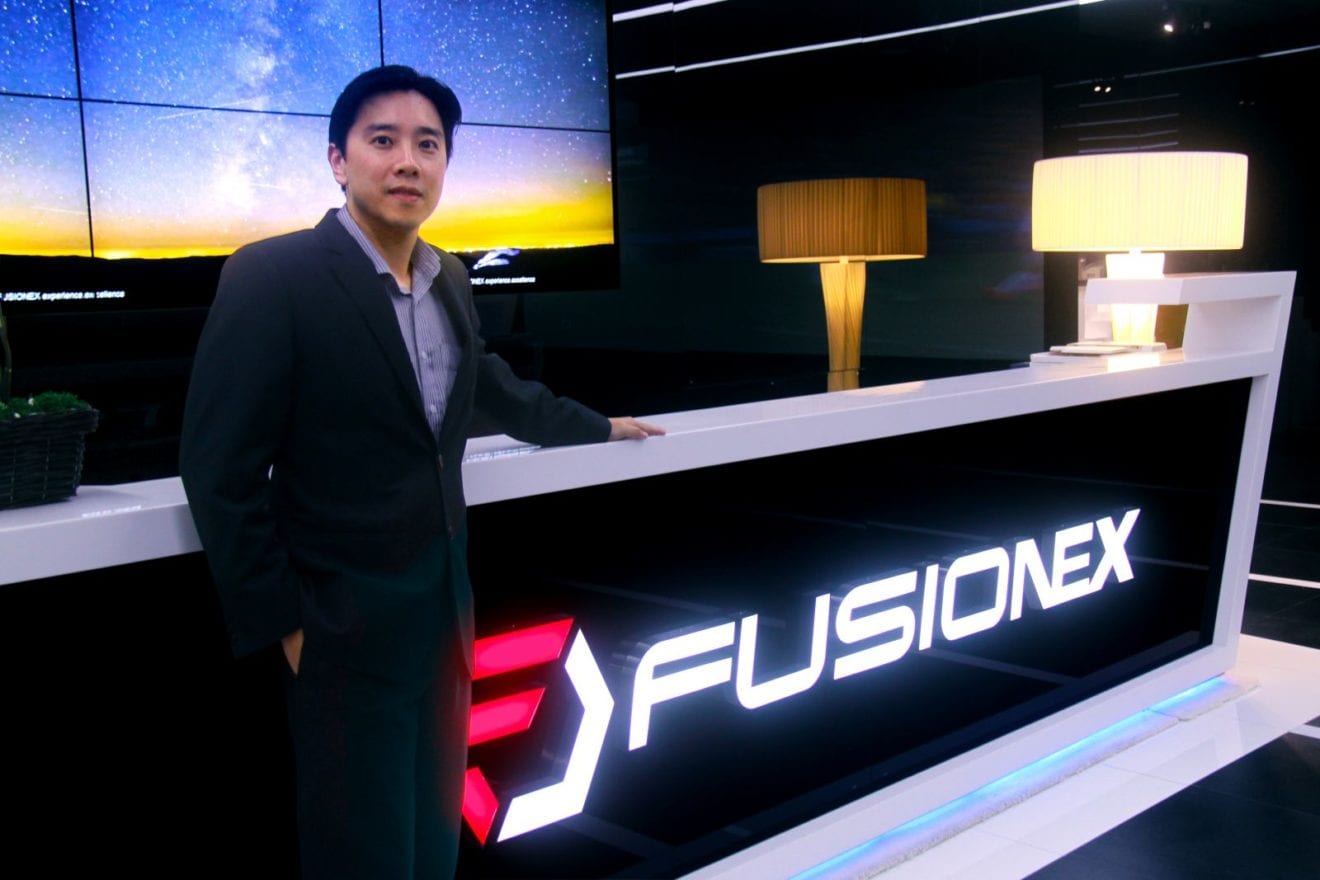
    BIG data and analytics software company Fusionex International Plc will be widening its footprint in South-East Asia by expanding to the Philippines over the next few months, its fourth market in the region.
    The company, listed on the London Stock Exchange’s Alternative Investment Market (AIM), has a presence in Hong Kong, Macau, the United Kingdom and the United States; as well as its home base of Malaysia and South-East Asian neighbours Singapore and Thailand.

    Its expansion strategy is somewhat conservative, but it is already close to securing an anchor customer, Fusionex cofounder and managing director Ivan Teh told Digital News Asia (DNA) in Kuala Lumpur recently.

    “We have been spending time to ensure that we got the right partner, the right place, the right kind of ecosystem, infrastructure and setup.

    “We want to know the market first, so we don’t want to go in and waste two years only to realise the market is not suitable,” he said.

    One may wonder why Fusionex is eyeing the Philippines, where ICT spending is significantly lower than its home market even though its population is triple Malaysia’s.

    According to an IDC report, Philippines’ ICT spending is expected to reach US$6.76 billion this year. In contrast, according to a Gartner report, Malaysia’s ICT spending is estimated to be around RM65.1 billion (US$16.42 billion).

    But Teh, an inaugural DNA Digerati50, said Philippines is a good expansion destination for various reasons.

    “The retail market is booming over there. The shared services and outsourcing markets are exploding too,” he argued.

    According to a Manila Bulletin report, citing the Philippines Retailers Association, the country is expected to see 40 new malls open in 2014 and 2015. The association projected retail sales would reach P1.61 trillion (US$35 billion) by 2016 and P1.78 trillion (US$38 billion) by 2017.

    “Malaysia will remain to be our centre of excellence – a lot of the research and development will be done from Malaysia. Nevertheless, the Philippines is undeniably a booming market,” said Teh.

    For the six months ended March 31, 2015, Fusionex’s revenue increased 26% to RM31.6 million, while gross profit jumped 31% to RM24.9 million. [RM1=US$0.25 at current rates]

    The strong performance was mainly driven by its flagship big data analytics product Fusionex Giant , which has found over 25 customer wins since launch. These companies include the domestic unit Japanese retailer Aeon.

    Fusionex has managed to get other big-name customers this year, including AirAsia; Brother Industries Ltd, a multinational electronics and electrical equipment company headquartered in Nagoya, Japan; and Islamic insurer Syarikat Takaful Malaysia Bhd in Malaysia.

    But for now, all of Teh’s attention will be on ensuring its Philippines expansion goes according to plan, and also that the business runs smoothly post-launch.

    “It’s important for us to set up the right team and to hire the right people. We will also get some of our Malaysian employees to be there for a period of time, just to make sure we have a cultural transition.

    “Then, we want to grow the local talent as well,” he said.
  • Hublot hosts its largest pop-up in the world in Singapore

    Hublot hosts its largest pop-up in the world in Singapore

    Swiss luxury timepiece-maker Hublot may be considered a “young” player in a market where its competitors have storied histories. But it has already made its mark.

    Founded in 1980 by Italian Carlo Crocco (who used to be part of the Binda Group, which makes Breil watches), one of the company’s early successes was a watch that had a natural rubber strap (a first in the history of watch-making back then). Despite a disappointing showing at the renowned timepiece fair in Basel, it soon sold in excess of US$2 million (S$2.79 million) in its first year. To date, Hublot has 50 boutiques all over the world.

    In 2005, Hublot’s then-CEO Jean-Claude Biver created a flagship collection called the Hublot Big Bang chronograph. It was an immediate success and orders increased threefold in one year. By the end of that year, the Big Bang chronograph received the 2005 Design Prize in the Geneva Watchmaking Grand Prix, along with other international awards.

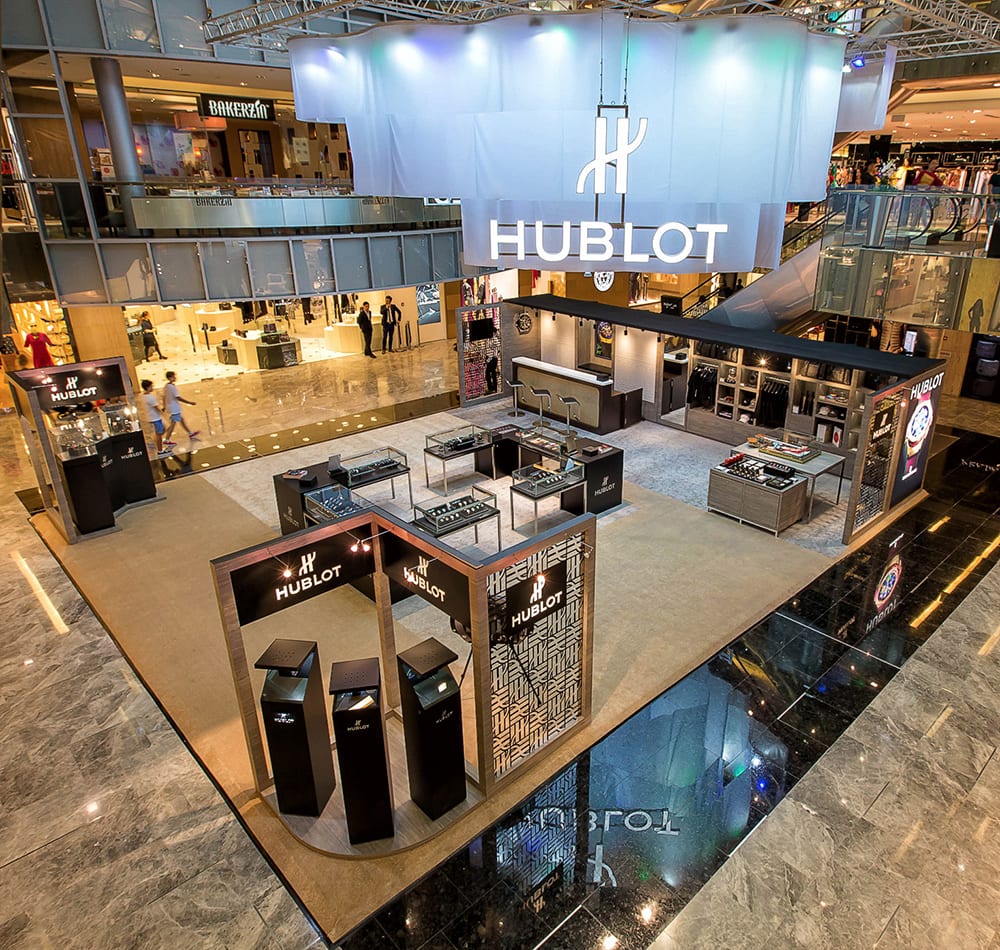
    Now, some 10 years later, Hublot is celebrating the Big Bang in a unique way in Singapore. It will be putting up its largest pop-up store in the heart of Orchard Road at Ngee Ann City Civic Plaza — an idea that Ricardo Guadalupe, the current CEO of Hublot, credited to its long-time retail partner The Hour Glass.

    “With the help of our long-time partner and luxury watch retailer The Hour Glass, Hublot’s presence has stayed strong in Singapore and regionally for the last 30-over years,” he said in an email interview. “This pop-up store is an initiative fronted by The Hour Glass and we cannot be more supportive of this event. It is the largest Hublot pop-up store globally and … visitors can expect to see the world of Hublot on a panoramic scale — from haute horology to craftsmanship and lifestyle gears that Hublot has to offer.”

    “Some of Hublot’s latest collections such as the Big Bang Denim and Big Bang Broderie, showcase Hublot’s story of fusion,” said Wong Mei Ling, managing director of The Hour Glass Limited. “Hublot remains the first luxury watch brand to use real denim material in their timepieces, while the Big Bang Broderie is a nod to traditional artisanal lace craftsmanship while combining technical watchmaking — once again celebrating the story of fusion.”

    A key highlight of this store, said Guadalupe, is the two limited editions that have been specially created for Singapore. “The first is the Red Dot Bang, a timepiece created in two cases — Hublonium and Yellow Bang. It is a nod to not only the iconic Big Bang that made Hublot the success story it is today, it also showcases Hublot’s strength in material engineering,” he elaborated, adding that it was a limited run. There will be 50 pieces of the Hublonium variant in a tribute to Singapore’s 50th birthday and 10 pieces of the yellow-gold variant at the pop-up store.

    “Placing the red ‘10’ index on the dial also holds a dual meaning — it is an homage to Singapore’s national colour and the number (is) to celebrate Big Bang’s 10-year anniversary,” said Guadalupe.

    The other timepiece of note is the one-of-a-kind Hublot Manufacture MP-05 La Ferrari Golden Jubilee, which the company calls the “the super machine of all time machines”, adding that it was “a suitable model to develop … for Singapore”. This edition features a gleaming yellow-gold case set with 440 baguette-cut diamonds worth at least 13 carats.

    Not surprisingly, Guadalupe was effusive about the experience that visitors could take away from its pop-up event. “With every project that Hublot executes, we want our visitors to feel inspired, to draw from the brand’s dynamism and our bold spirit,” he said, adding: “It is a veritable playpen for all Hublot fans! One that truly showcases the spirit of Hublot. Hosting a pop-up store on such a scale is testament to Hublot’s strong presence in Singapore and the strong partnership that we share.”

  • Can Singapore’s fashion brands take on the world?

    Can Singapore’s fashion brands take on the world?

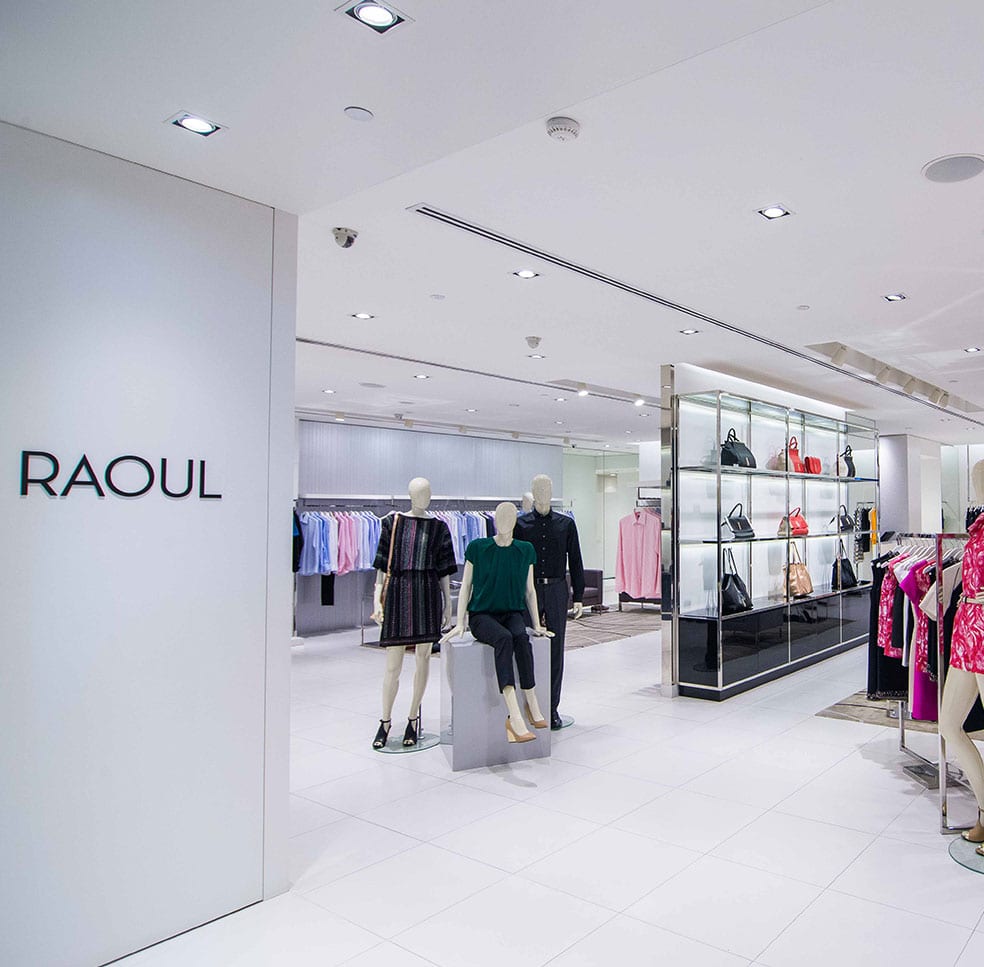
    Labels such as Raoul, Ong Shunmugam and Collate The Label are certainly going to give it a try

    In the heart of an old industrial estate in Toa Payoh North, an immaculately dressed Velda Tan sits in a small office as office workers, aunties wearing tight clothes and construction workers carry on with their lives outside. It’s the home of Tan’s latest fashion venture, Collate The Label, a humble but comfortable space, but with a well-equipped studio for fashion shoots, space for a dozen employees, stacks of sketches, fabric samples and magazines lying on tables and shelves, and even a doggy bowl for furry friends.

    Collate The Label is one of many new fashion brands that have popped up in Singapore over the past few years, but it has been exceptional in its success so far. Although it’s only a few months old, the Singaporean mid-market womenswear brand, which launched in May at Singapore Fashion Week, will soon head to New York to participate in Coterie, a three-day fashion trade-show event, with the Textile and Fashion Federation Singapore (TAFF).

    “I think, for me, (the aim) is really to build Collate as an independent Singapore label,” said the founder and creative director of the brand. “We want to identify ourselves as a local brand, and one of our goals is to make Singaporeans proud of wearing local labels.”

    The local retail scene is certainly more vibrant than a decade ago. Local designers have been given more platforms, such as the annual Singapore Fashion Week and Digital Fashion Week, to showcase their works to an international audience. TAFF also works with government agencies such as SPRING Singapore and International Enterprise (IE) Singapore to organise events such as the Asian Fashion Exchange, a one-stop event for local designers, regional and international buyers and other industry professionals, as well as trips to about a dozen overseas fashion trade shows every year.

    “It’s a wonderful time to be a designer in Singapore at the moment,” said Carolyn Kan, founder and designer of jewelry line Carrie K. and co-organiser of retail outfit KEEPERS: Singapore Designer Collective, which opened its second pop-up store at Changi Airport Terminal One last month. “There is a lot of support by the Government, there is also a growing design community to tap into, and Singaporeans are slowly starting to seek out local brands.”

    Still, the challenges remain. In setting up their labels, designers such as Tan had to learn to overcome numerous obstacles, including the size of Singapore’s market.

    “Because Singapore’s market is quite small, we have to think about crossing borders and going overseas,” she said.

  • Commissary reintroduces cooked poultry products in South Korea by Labor Day

    Commissary reintroduces cooked poultry products in South Korea by Labor Day

    Commissary shoppers in South Korea will begin to see cooked poultry products back on shelves by Labor Day.

    On July 13, the U.S. Department of Agriculture issued a revision to Korea’s embargo to allow heat-treated poultry and poultry products from the U.S. Learning the news, the Defense Commissary Agency quickly placed orders with its U.S. suppliers to restock the shelves of commissaries in South Korea with cooked poultry products.

    “Frozen dinners, pot pies, nuggets, lunch meats, franks, Lunchables and other popular cooked poultry products will begin to arrive by early September,” said Wayne Walk, DeCA’s zone manager in Korea. “With school starting back up, this is great timing for parents packing lunches and for anyone looking for easy-to-prepare meals.”

    South Korea’s embargo had restricted the entry of all poultry products into the country since last December when the U.S. announced the presence of avian influenza in live poultry flocks in Oregon and California, followed by additional outbreaks in other U.S. states.

    Uncooked poultry from the U.S. is still restricted by the embargo, but DeCA has alternate sources for uncooked poultry to replace many of the items it previously received from U.S. suppliers.

    “We offer fresh, uncooked chicken and eggs from Korea,” said Walk. “We have whole chickens, chicken breasts, boneless thighs and drumsticks. These products are not frozen and are ready to take home and cook immediately.”

    Commissaries also began offering chicken from Australia this month.

    “Shoppers will find Steggles of Australia chicken in the freezer section in tray packs,” said Walk. “Steggles is supplying our commissaries here in Korea with chicken products that have historically been popular with our shoppers – skinless, boneless breasts and thighs; tenderloins; wings and drumsticks.”

    “We’re working continuously to provide our customers with the very best service and product assortment,” said Walk. “The embargo has been an opportunity for DeCA to work a little harder to ensure military members and their families stationed in Korea have the products they need when they use their commissary benefit.”

    The USDA advises consumers to always follow proper handling and cooking processes when working with poultry. Food safety and avian influenza information can be found in the USDA Food Safety and Avian Influenza Questions and Answers, April 2015.

  • Hong Kong retail sector to suffer most from yuan devaluation

    Hong Kong retail sector to suffer most from yuan devaluation

    A weaker yuan means these tourists will now be spending in a more expensive Hong Kong dollar, denting the city’s retail sales even further.

    “Shopping in Hong Kong will get more expensive for mainlanders,” said Nicole Wong, regional head of property research at CLSA, “Landlords need to be more realistic [in setting their rents].”

    Wong said retail rents would in any case have to correct in view of the slump in Chinese spending and that the yuan devaluation would only steepen the fall.

    Big spenders from China had already been skipping Hong Kong and flying directly to Europe, taking advantage of a cheaper currency, she said. The euro has lost nearly 18 per cent in the past year.

    The yuan has lost more than 3 per cent against the US dollar since the People’s Bank of China shocked the markets by devaluing the currency by 1.85 per cent on Tuesday, the most in one day in more than 20 years.

    “Any meaningful depreciation of the yuan could further dampen Hong Kong retail sales as mainland visitors’ spending represented 38 per cent of Hong Kong’s total sales in 2014, compared to below 20 per cent prior to 2008,” wrote Bank of America Merrill Lynch analyst Raymond Ngai in a note to clients.

    The devaluation would be another direct headwind for Hong Kong retail landlords, he said, citing the widespread market expectation of a 10 per cent depreciation of the yuan against the US dollar in the next 12 months.

    Shares in Causeway Bay’s largest retail landlord Hysan Development have fallen for three straight days since Tuesday. In all, it lost 1.7 per cent to close at HK$33 on Thursday. Hang Lung Development, which owns Fashion Walk in Causeway Bay, lost nearly 3 per cent to close at HK$19.80.

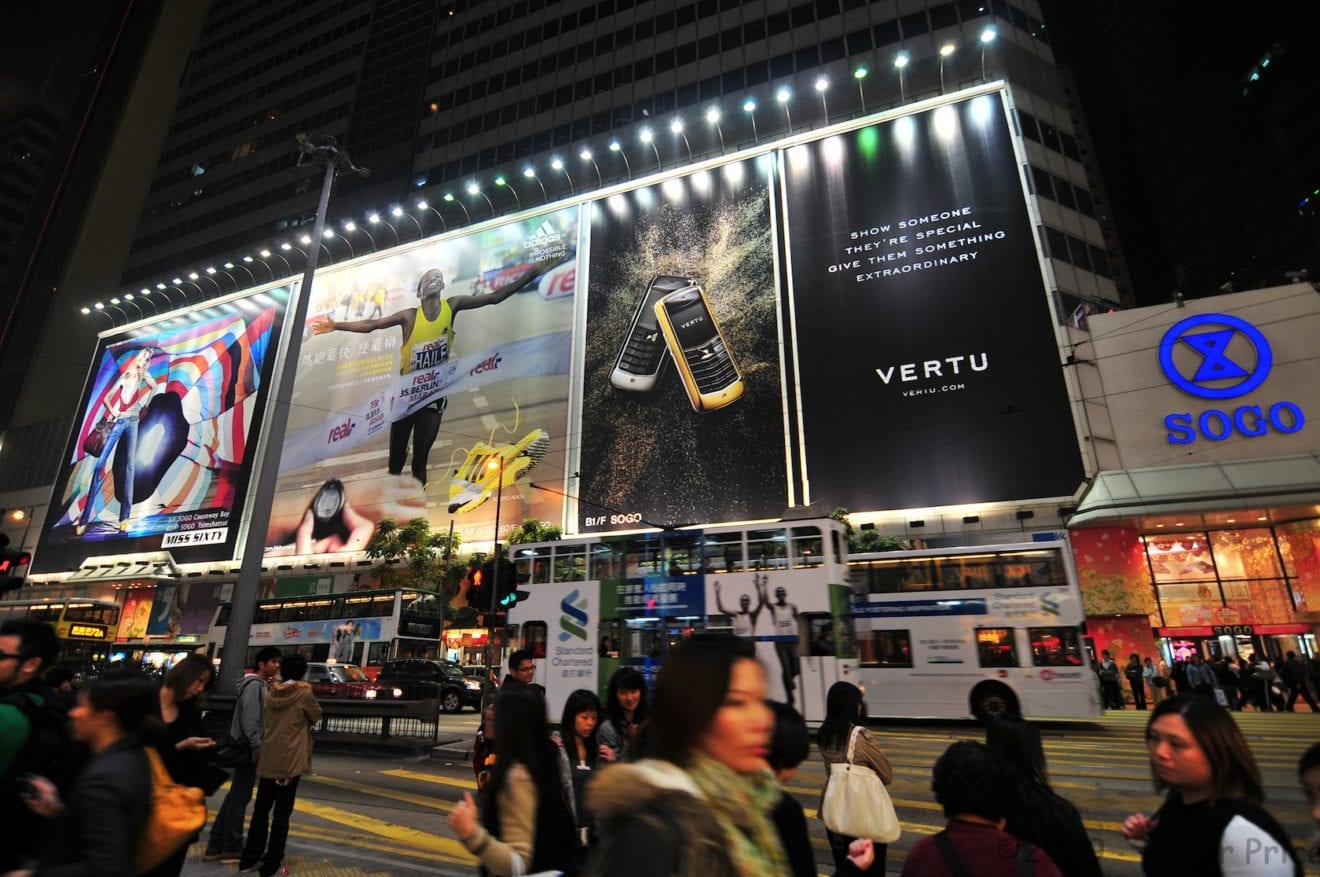
    Sogo department store operator Lifestyle International Holdings fell nearly 1 per cent on Thursday. Only Wharf (Holdings), which owns the city’s largest shopping mall Harbour City, but is diversified into areas other than retail, bucked the trend to edge up nearly 0.5 per cent on Thursday after falling 3.7 per cent the previous day.

    Jefferies downgraded Hysan to “hold” from “buy” for its concentration in retail operations.

    Even before the devaluation, global brands have been pushing landlords to cut rents as mainland footfalls have been dwindling amid an economic slowdown as well as the anti-corruption drive on the mainland that has crimped luxury spending. Swiss watchmaker TAG Heuer last week said it was closing a store in Causeway Bay’s prestigious Russell Street.

    Tom Gaffney, head of retail at property consultancy JLL, said some retail outlets in Central and Causeway Bay had asked for rent reductions of up to a fifth.

    But the yuan depreciation is likely to have a mild impact on Hong Kong’s physical property market.

    Sammy Po, chief executive of Midland Realty’s residential department said mainlanders accounted for 20 to 30 per cent of new luxury homes sales in 2011.

    “Today, mainland buyers have dropped to about 4 per cent due to stamp-duty curbs for non-locals,” he said.

    This article appeared in the South China Morning Post print edition as Devalued yuan to hit retail sector

  • Hong Kong fund sales slide by 50%

    Hong Kong fund sales slide by 50%

    The Hong Kong fund industry saw net sales drop by almost a half in the first six months of 2015, new figures reveal.

    The Hong Kong Investment Funds Association (HKIFA) published data on Wednesday which cited a sharp fall in funds to $3.71bn (£2.38bn, €3.34bn).

    Bruno Lee, the chairman of HKIFA, blamed the decrease in sales on global market uncertainty, particularly around China mainland’s A-Share market, the Greek debt crisis, and the potential US interest rate rise. He said volatility in the global currency market was also to blame.

    “Retail investors should review their investment position regularly to ensure their investment strategy is aligned with their long-term personal financial objective and seek for professional investment advice if needed,” Lee said.

    Though net sales fell dramatically, gross sales saw a rise of 14% to $47bn in the first half of 2015, after hovering at $7bn in the first quarter, soaring up by more than $10bn in April, and then dropping back to $7bn towards the end of the second quarter.

    HKIFA said China-related and European equity funds were the key sectors which contributed to the surge in gross sales in the second quarter of this year.

    “The moderate growth in gross retail fund sales and higher equity fund sales percentage indicate a higher risk appetite amongst retail investors,” said Lee.

    HKIFA members are comprised of 82 fund management companies.  It also has 43 associate members, including lawyers, accountants, trustees and other professionals that are involved in the creation and administration of funds.

  • China Jo-Jo Drugstores Announces First Quarter Financial Results for Fiscal Year 2016

    China Jo-Jo Drugstores Announces First Quarter Financial Results for Fiscal Year 2016

    China Jo-Jo Drugstores, Inc., a leading China-based retail and wholesale distributor of pharmaceutical and health care products through its own online and retail pharmacies, today announced financial results for the first quarter ended June 30, 2015.

    FY 2016 First Quarter Highlights:

    Revenue increase during the first quarter ended June 30, 2015 was mainly due to the expansion of the Company’s retail drugstores and online pharmacy business. Retail drugstores sales, which accounted for approximately 57.0% of total revenue, increased by $1,575,129, of which an 8.2% increase in same-store sales contributed $827,593 while new stores sales contributed approximately $617,453.

    Online pharmacy sales reached $5,965,768, an increase of 131.9% over the same period last year, as we have been actively exploring new ways to grow our online sales. We have expanded cooperation with business-to-consumer online vendors, including Alibaba Group’s Taobao affiliate, JD.com and Amazon, by posting our products on their online platforms. In addition to launching an online payment service (“Alipay Service”) based on a service agreement with Alipay (China) Internet Technology Ltd. (“Alipay”), we launched stores on Tencent’s WeChat platform, China’s dominant mobile messaging app and social network with over 500 million active users.

    Starting from January 2015, we have strengthened our cooperation with certain large insurance companies in China such as the People’s Insurance Company (Group) Of China Limited, to sell online products to their customers who have purchased health insurance through them. In May 2015, we have set up a joint venture, with a leading Pharmacy Benefit Management (“PBM”) provider in China, which owns and operates Yikatong (the “E-Pharmacy-Card”), a popular pharmacy and health insurance benefit program with over 180,000 current users. The joint venture agreement requires the PBM provider to direct the majority of its online E-Pharmacy-Card transactions to our official online pharmacy site. In June 2015, we have organized an operation team to direct the sales from commercial insurance to our own website. We expect that this cooperation will boost our online sales and profit margin in the future.

    Mr. Lei Liu, Chairman and CEO of the Company stated, “We are excited to see a steady growth on our online and retail sales from last year. Revenue of our online pharmacy, www.dada360.com, is about five times the revenue of the same period last year thanks to our strategic partnership with China’s leading Pharmacy Benefit Management (PBM) provider and insurance companies. We are dedicated to further expand our efforts on our online pharmacy, which proves to be a popular business area supported by National Internet Plus Strategy in China. We will continue to devote resources to grow our online pharmacy business with the goal of becoming a national leader in pharmaceutical e-commerce business. Our retail pharmacies have also maintained robust growth both in sales and profitability. The management will strive to capitalize on the growth of health insurance and online sales in China.”

  • Lotte Group head issues apology for feud, vows reform

    Lotte Group head issues apology for feud, vows reform

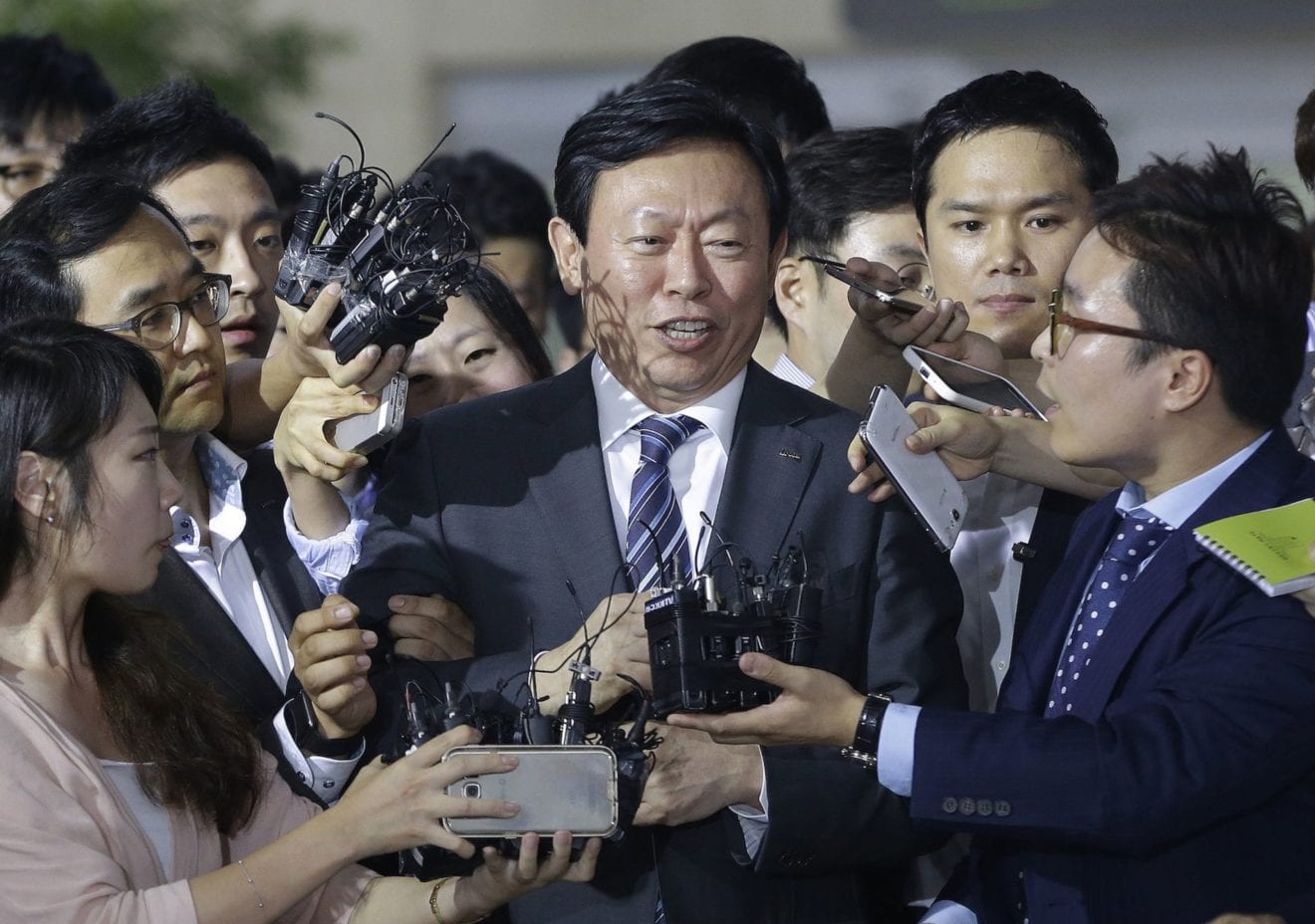
    The head of South Korea’s Lotte Group yesterday vowed a new era of corporate governance and transparency as he apologized for the family feud engulfing the beleaguered retail giant.

    In an address broadcast live on TV, group chairman Shin Dong-bin also sought to deflect growing anti-Japanese sentiment surrounding Lotte, which was founded in Japan, but does 80 percent of its business in South Korea.

    Talking in accented Korean, the native Japanese speaker twice bowed deeply before the cameras in a show of contrition for the bitter and very public battle for corporate control that has pitted him against his father and elder brother.

    “The current dispute has occurred as we have failed to make efforts to improve corporate governance and enhance transparency,” Shin said.

    “We will be bold in reform in order to address concerns held by the people of Korea, our shareholders, contractors and employees,” he added.

    At stake in the Lotte feud is control of a sprawling conglomerate with 80 units across South Korea — spanning retail, amusement parks, hotels and chemicals — and total combined assets of about US$90 billion.

    Among other reforms, Shin said he would push for the public listing of the conglomerate, which effectively controls the South Korean business, while also streamlining the group’s complicated web of cross-holdings to enhance transparency.

    “Lotte belongs to Korea,” the chairman said, stressing that the group’s South Korean interests dwarfed the Japanese-based side of the business in terms of employee numbers and sales.

    “There has been little flight of capital back to Japan,” Shin said, adding that earnings made in South Korea had been plowed back into the domestic business.

    Lotte was founded in Japan in 1948 by Shin Dong-bin’s father — South Korean-born Shin Kyuk-ho, now 92 — and grew from a seller of chewing gum to a confectionary giant. It expanded to South Korea after Tokyo and Seoul normalized relations in 1965.

    The row within the Shin family has fanned the embers of the anti-Japanese public sentiment the group has long contended with in South Korea — largely due to the family members’ awkwardness with the Korean language.

    The battle for control of the conglomerate has pitted Shin Dong-bin against his father and his elder brother, Shin Dong-ju, with accusations of dirty tricks and attempted boardroom coups.

  • Macy’s coming to China via Alibaba

    Macy’s coming to China via Alibaba

    One of America’s most iconic fashion retailers is coming to China.

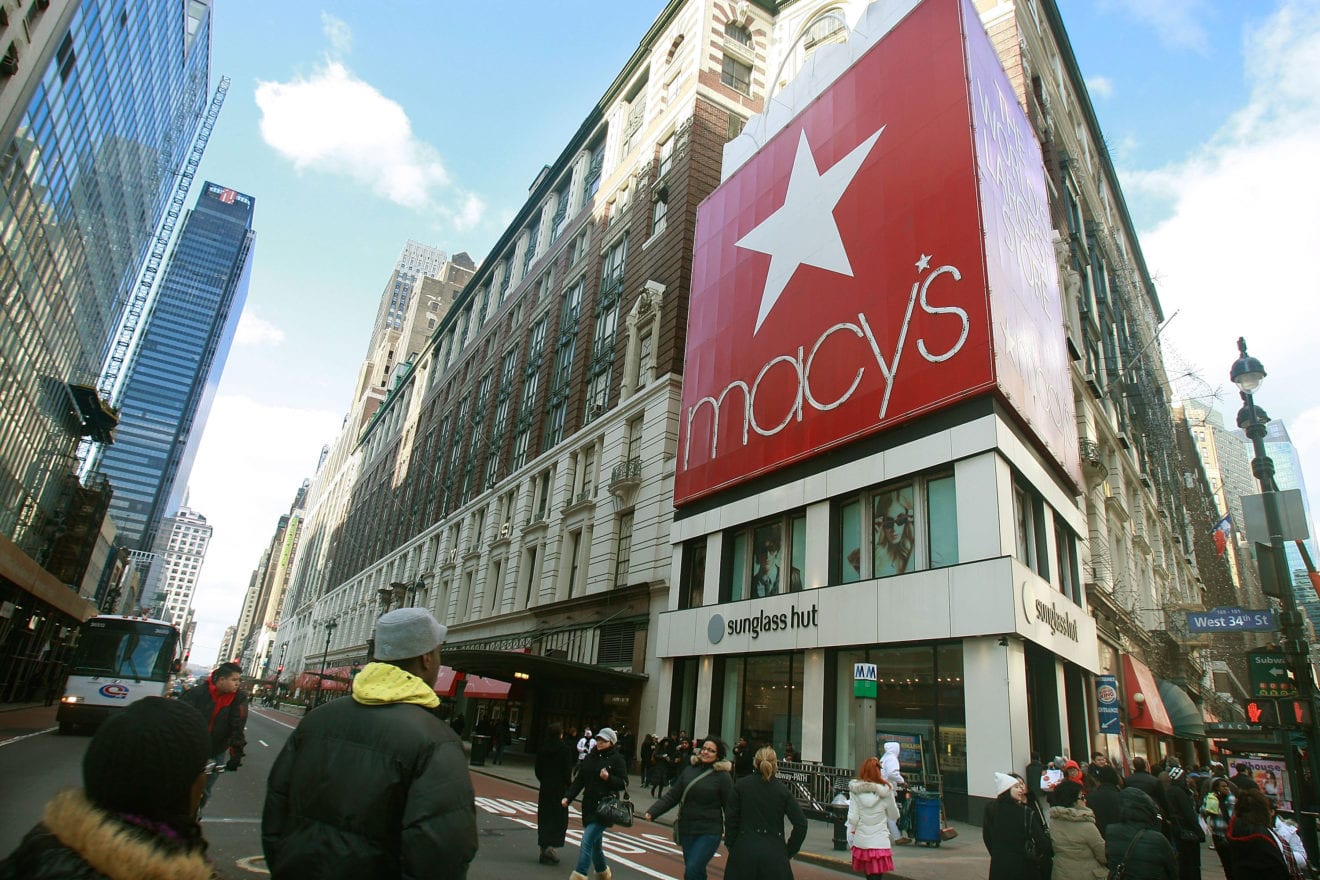
    A new joint venture agreement between Macy’s Inc. and Hong Kong-based Fung Retailing Limited was signed on Tuesday in Hangzhou to form Macy’s China Limited.

    The new company will launch an exclusive online flagship store on Alibaba’s Tmall Global in late 2015., providing authentic, high-quality Macy’s merchandise to shoppers in China. It will be the first US department store to join Alibaba’s Tmall Global.

    Tmall Global, on the other hand, will be the first and only third-party e-commerce platform in China providing apparel, fashion accessories and home products directly from Macy’s to consumers across China.

    “Millions of Chinese tourists have come to know and love Macy’s when they travel to New York, San Francisco, Chicago and other American destinations,” said Terry J. Lundgren, chairman and chief executive officer of Macy’s Inc. “By making Macy’s accessible in China through Alibaba’s Tmall Global, we have an opportunity to deepen our relationship with international customers and to grow sales.”

    Fung Retailing’s chairman, Dr. Victor K. Fung, said that with its affiliates, including LF Logistics, the company will fully support the activities of the Macy’s-Fung Retailing joint venture.

  • M&G makes first retail acquisition in South Korea

    M&G makes first retail acquisition in South Korea

    M&G Real Estate has acquired three retail assets in South Korea at a combined value of US$230 million, representing an average yield of 6.5%. The acquisition was made on behalf of its core Asia real estate strategy, managed by Singapore-based Erle Spratt.

    Under the terms of the deal, M&G Real Estate has acquired two hypermarkets: the first in Daejeon, South Korea’s fifth largest city; the second in Jeju, the capital of the Jeju Province and the nation’s premier tourist destination. The third asset is an outlet mall in Incheon City, the country’s third largest city after Seoul and Busan. All three assets are highly sought after retail outlets in prime locations and are leased to South Korea’s largest retailer, Lotte Shopping.

    Hyesik Ryu, Managing Director, M&G Real Estate Korea, comments: “We were one of the first non-domestic institutional investors to invest in South Korea when we bought into the country’s commercial office sector in 2004. M&G Real Estate has developed a deep understanding of the market, enabling us to make this latest investment in the retail sector, which will strengthen the strategy’s long term income stream.”

    Erle Spratt adds: “We’re seeing strong capital flows, particularly from global pension funds and insurance companies in the UK and Europe. With responsibility for more than US$2 billion in assets, we are well positioned to pursue property investments across the region to further improve our risk adjusted returns and sustain the outperformance of our portfolio.”

    Stefan Cornelissen, M&G’s head of institutional business, Benelux, Nordics and Switzerland, says: “The Asia Pacific real estate market is now the second largest in the world and rivals the US and Europe in terms of its maturity, transparency and liquidity. European investors in search of diversification can now benefit from Asia’s strong economic growth and attractive long term returns without going higher up the risk curve.

    “We have recently had a significant commitment from Dutch investor, Blue Sky Group, which has invested on behalf of its recently launched Core Asia Pacific Fund. We expect further capital to follow from other UK and European investors. Asian real estate has come of age and is earning itself a strategic place in a diversified core real estate portfolio.”

  • HK retailers arrested for $1.68 million in unpaid wages

    HK retailers arrested for $1.68 million in unpaid wages

     The founders of Hong Kong retail chain DSC, Mr Hui Ming-shun and his wife Lin Wai-yin, have been arrested after the closure of all 14 of its stores on 3 August. They are said to owe approximately $1.68 million in unpaid wages to their staff.

    The couple were arrested on 10 August after they returned to Hong Kong from Macau. They had briefly fled there after the sudden closure of their company, a move which left almost 900 staff jobless. Police apprehended the pair on their return, arresting them from conspiracy to defraud. Approximately 350 employees have filed complaints with the Labour Department.

    In addition to its staff, DSC has also angered landlords and suppliers with the Consumer Council receiving more than 500 complaints. It is claimed that DSC owes more than $1.68 million in unpaid rent and undelivered goods.

    Before 3 August, suspicions were raised when DSC held a summer sale with discounts of up to 50%. Allegedly, the firm only accepted cash payments in-store during the week prior and still encouraged customers to place orders in the days leading up to the closure.

    The company informed its employees of the move by attaching printed notices to the front doors of each of its branches. Claiming the need to dismiss its staff because of financial difficulty, the notices told employees to seek assistance from the Labour Department.

    Tired of the delay, employees took this advice and marched in protest to the Central Government Offices on Tuesday demanding the expedited payment of their unpaid wages. The secretary for Labour and Welfare, Matthew Cheung Kin-chung, expressed his desire for DSC’s founder to declare himself insolvent before that could happen.

    “This morning we contacted the lawyer of Mr Hui to demand him to sign a declaration of insolvency and to determine as soon as possible the amount of money he owed to his employees,” Cheung said. “Once we receive Mr Hui’s declaration, the Labour Department will help the employees to apply for legal aid to petition to wind up the company.”

    In a statement to the Labour Department, Hui’s lawyer stated that his client would not be meeting his staff to discuss the outstanding wages.

    Employees have now asked the Labour Department to draw from the Protection of Wages on Insolvency Fund. This can be a maximum of $48,389 per person with the department first having to determine how much each worker is owed.

    Both founders of DSC remain in police custody. A Labour Tribunal has been planned for 21 August.

  • Gucci tangles with Hong Kong landlords

    Gucci tangles with Hong Kong landlords

    Retailers such as Burberry Group Plc, Kering SA and Chow Tai Fook Jewellery Group Ltd. are pushing landlords to lower rents on existing properties as luxury brands scale back on declining traffic.

    Commercial rents have dropped the most this year since 2009 amid plummeting sales.

    Hong Kong’s Russell Street in Causeway Bay used to boast the world’s highest retail rents, but it relinquished the top post to New York’s Fifth Avenue last year, Bloomberg News reported.

    TAG Heuer closed its Russell Street store last week, citing high rents and declining traffic.

    Kering, owner of the Gucci brand, has also warned that it may close some of its shops in Hong Kong if rents don’t come down.

    “Many landlords have not necessarily understood that the markets have changed,” Kering chief financial officer Jean-Marc Duplaix was quoted as saying.

    China’s economic slowdown and President Xi Jinping’s austerity and anti-corruption campaigns are among the reasons for the declining number of mainland shoppers in the city.

    Demand has also plunged because the weaker yen and euro have prompted Chinese tourists to favor Japan and France over the city, the news agency said, citing Helen Mak, senior director of research at Colliers International.

    “Unavoidably rents will trend down,” said Marcos Chan, head of research for Hong Kong, Macau and Taiwan at CBRE Group Inc. “We don’t see any reason why retail will quickly see a rebound any time soon.”

    Sales of jewelry, watches and other high-priced gifts fell 15.9 percent in the year ending June, according to data from the Hong Kong Retail Management Association.

    In a July research report, Jones Lange LaSalle Inc. said high-street rents will drop 15 percent to 20 percent this year, which is far worse than the 5 percent drop it predicted at the end of last year.

    Street-level landlords in Central on Hong Kong Island, and across the harbor in Kowloon neighborhoods that cater to mainland shoppers, are also feeling the pressure.

    Average rents fell 15 percent in Tsim Sha Tsui in the first half, Colliers said.


  • Alibaba spends $4.6-billion on Chinese electronics retailer Suning

    Alibaba spends $4.6-billion on Chinese electronics retailer Suning

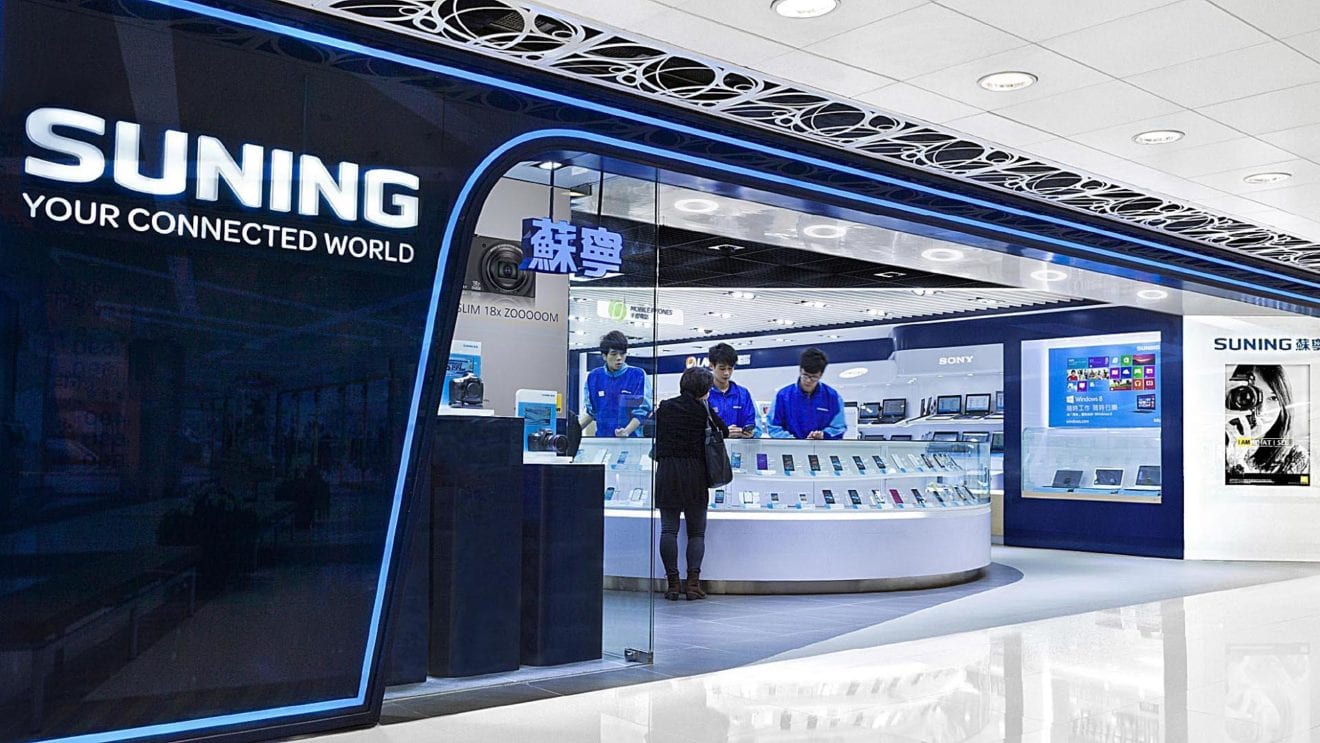
    Alibaba Group Holding Ltd. will spend 28.3 billion yuan ($4.6-billion) for a stake in Suning Commerce Group Ltd. as China’s biggest e-commerce operator adds a network of electronics stores in its biggest deal ever.

    Alibaba will buy a 19.99 per cent stake in Suning, which in turn will spend as much as 14 billion yuan for shares in the e– commerce company, according to a Business Wire statement on Monday. The companies will partner in logistics and online sales to target deliveries as fast as two hours.

    Alibaba Chairman Jack Ma is beefing up his retail presence after a 24 per cent drop in the company’s market value this year, bolstering the appeal of e-commerce operations facing slowing growth in China. Adding Suning to a partnership with department store operator Intime Retail Group Co. helps Alibaba compete with JD.com Inc., which specializes in selling electronics and has surged in New York trading this year.

    “Suning has one of the largest physical networks for selling appliances and that would help Alibaba’s location-based services,” said John Choi, an analyst at Daiwa Securities Group Inc. in Hong Kong. “Alibaba is becoming much more involved in offline retail through investments.”

    Alibaba’s American depositary receipts gained about 1 per cent to $79.62 at 9:45 a.m. in New York on Monday. The stock has declined about 23 per cent this year.

    Suning has more than 1,600 outlets in about 290 cities in China selling appliances, books and baby products. Alibaba will become the second-largest investor in the Nanjing-based retailer, trailing only Chairman Zhang Jindong.

    Logistics Partnership

    Alibaba is paying 15.23 yuan a share for the stake, which is about 10 per cent more than Suning’s closing price on July 31, its last day of trading before being halted. Shares are up 53 per cent this year.

    “We’re going to be able to leverage on Suning’s physical infrastructure,” Alibaba Vice Chairman Joseph Tsai said during a conference call.

    The companies will link their customer databases so they can tailor services such as in-store mobile payments, Chief Executive Officer Daniel Zhang said.

    The acquisition is Alibaba’s biggest-ever, excluding a $7.1-billion share buyback in 2012 from Yahoo! Inc.

    Alibaba has quickened the pace of its deals this year as its share price plummets in New York trading. Since January, Alibaba has announced 22 deals at a total value of $9.1-billion, compared with 25 deals all of last year at a value of $5.9-billion.

    The Suning partnership will help Alibaba expand in an electronics and appliance retail market forecast to grow 23 per cent to 1.1 trillion yuan by 2018, according to researcher Euromonitor.

    Ground Teams

    Suning will partner with Alibaba’s Cainiao logistics affiliate, enabling the companies to cover almost all of the 2,800 counties and districts in China.

    “Retail e-commerce also needs the ground teams to serve its customers, especially for the electronics appliances,” said Ray Zhao, an analyst at Guotai Junan Securities Co. “It’s difficult for e-commerce players to acquire more good logistics land.”

    Suning’s No. 1 rival, Gome Electrical Appliances Holding Ltd., has taken a different direction in its strategy. Two weeks ago, the Beijing-based company signed a deal to buy a company owned by jailed founder Huang Guangyu for HK$11.3-billion ($1.5-billion). That would help it increase the number of outlets by 50 per cent to 1,714 in 436 cities, exceeding those owned by Suning.

    Alibaba is scheduled to report fiscal first-quarter earnings on Wednesday.

  • Singapore economy grows by 1.8% in Q2

    Singapore economy grows by 1.8% in Q2

    Singapore’s Ministry of Trade and Industry (MTI) announced on Tuesday that the Singapore economy grew by 1.8 per cent on a year-on-year basis in the second quarter, slower than the 2.8 per cent growth in the previous quarter.

    On a quarter-on-quarter seasonally-adjusted annualised basis, the economy contracted by 4.0 per cent, a reversal from the 4.1 per cent growth in the preceding quarter.

    The manufacturing sector contracted by 4.9 per cent year-on-year, extending the 2.4 per cent decline in the previous quarter. The sector was primarily weighed down by declines in the output of the biomedical manufacturing and transport engineering clusters.

    The construction sector expanded at a faster pace of 2.5 per cent year-on-year, supported by a pick-up in public sector construction works, compared to the 1.1 per cent in the previous quarter.

    The wholesale & retail trade sector grew by 5.0 per cent year-on-year, slightly slower than the 5.3 per cent expansion in the previous quarter. Growth was driven by both the wholesale trade and retail trade segments, with the latter being supported in turn by robust motor vehicle sales.

    The accommodation & food services sector contracted at a faster pace of 0.6 per cent year-on-year compared to the 0.1 per cent decline in the previous quarter. The slowdown in the sector was largely due to sluggish performance in the food & beverage segment.

    The finance & insurance sector posted growth of 7.1 per cent year-on-year, extending the 7.8 per cent growth in the previous quarter. Growth was largely underpinned by the fund management segment.

    The information & communications sector grew by 4.5 per cent year-on-year, moderating from the 4.9 per cent growth in the previous quarter. Growth was mainly driven by the IT & information services segment.

  • Mood darkens for trade in China

    Mood darkens for trade in China

    The business sentiment of Korean companies in China has worsened in the second quarter – particularly in the automotive and electronics sectors – mainly due to the slowdown in overall consumption in the Chinese market on the heels of a wobbling stock market.

    It was the second straight quarter that the business sentiment index remained below the 100 mark.

    According to a report by the Korea Institute for Industrial Economics and Trade (KIET) on Monday, the companies’ business survey index in the second quarter was 71, lower than 77 in the first quarter this year.

    The index reflects business sentiment, considering different business environments like quarterly profit performance, sales, costs and business regulations. As the index ranges from 0 up to 200, a number smaller than 100 means more survey participants expressed negative answers, while the index larger than 100 means more positive answers.

    The slump in business sentiment was the largest in automotive and electronic devices, two industries in which Chinese rivals are quickly catching up on Korean technologies and in which consumer demands change quickly.The survey was taken for a month from June 15, by the Korea Chamber of Commerce & Industry’s Beijing office and a Korean business association in China, on some 226 Korean companies operating in China. They were doing business in seven different sectors, ranging from electronics and automotive to chemical, textile and retail.

    Korean auto companies in China gave 45 points in the second quarter, a lot lower than the 94 points in the first quarter, during which the Chinese auto taste has quickly moved to favor sports utility vehicles (SUVs) that are more affordable than Korean autos.

    Korean electronics companies gave 54 points in the second quarter, also much more negative than the first quarter’s 88 points, after Samsung smartphones lost market share to Xiaomi and Huawei.

    Only Korean chemical and retail industries expressed positive assessments regarding their businesses in the second quarter, each giving 103 points and 100 points, respectively.

    Survey participants said the slowdown of demand in the Chinese domestic market was the main reason for their business hardships in the second quarter, followed by competition with Chinese rivals and elevated labor cost, which raised overall production costs.

    In the first quarter, a steep increase in labor costs was the main reason Korean companies found it hard to do business in China, reflecting the slowdown in the growth of the domestic economy.

    However, the Korea International Trade Association (KITA) rolled out a positive outlook on Monday that the Chinese economy will maintain its growth rate at the 7 percent range in the latter half of the year and Chinese investment is on its way to recovery thanks to state-led infrastructure building projects, which bring up both imports from other companies as well as local real estate transactions.

    The outlook said Korea’s export to China and local production of Korean companies will stay contracted until the third-quarter due to the unstable Chinese stock market and contracted consumption sentiment.

    The Chinese economy is forecast to rebound to last year’s level by the fourth quarter at the latest, the KITA outlook forecast, as the central government there is pushing policies to boost cash liquidity and the real estate market.

    “The sagging domestic economy made Chinese consumers lean towards frugal consumption, which helps local Chinese companies with advanced product quality gulping up market share against foreign products,” said Lee Bong-geol, a senior researcher at the Institute for International Trade at KITA