Tag: revenue

  • Luxury Giant Lanvin Group Experiences 22% Revenue Drop Amid Global Luxury Demand Downturn

    Luxury Giant Lanvin Group Experiences 22% Revenue Drop Amid Global Luxury Demand Downturn

    Lanvin Group, which houses well-known luxury brands such as Lanvin, Wolford, Sergio Rossi, St John, and Caruso, recorded a decrease in revenue during the first half of the year. The group reported US$155.6 million in revenue, marking a 22% drop in comparison to the previous year. The drop was largely attributed to a global decrease in luxury demand.

    Impact on Sales

    The group’s sales were negatively influenced by a decline in wholesale performance in both EMEA (Europe, the Middle East, and Africa) and Greater China. Market pressures also contributed to the decline. Nevertheless, Lanvin Group expressed optimism, noting the positive impact of disciplined cost management and efficiency measures.

    The group achieved a gross profit of $84.2 million, with a profit margin of 54%. This was supported by efficient inventory management during a period of creative transition. Zhen Huang, chairman of Lanvin Group, stated that the group remained disciplined in cost management and strategic streamlining, despite a challenging luxury market in the first half of the year.

    Individual Brand Performance

    Among the brands under the Lanvin Group, Lanvin experienced the most significant decline, with revenue dropping by 42%. This was primarily due to a lack of enthusiasm from wholesale partners in EMEA. Still, the brand reported resilience in the region’s retail sector and noted progress in the Asia-Pacific region. Lanvin also reported a strong rebound in North American e-commerce, thanks to a new marketplace model.

    Wolford revenue declined by 23%, but wholesale sales rose by 14%. Lower production utilization and inventory clearance impacted the gross margin, but cost-saving measures helped cut general and administrative expenses by 18%.

    Sergio Rossi saw a 25% decrease in sales, with direct-to-consumer revenue and wholesale declining by 21% and 33% respectively. The gross margin narrowed by nine percentage points, but an improved second quarter saw retail sales increase by 17% and e-commerce sales increase by 10% compared to the previous quarter.

    St John maintained steady revenue, with a 4% growth in North America and an 11% increase in wholesale. The brand also managed to maintain a 69% gross margin and an 11% contribution margin.

    Caruso experienced an 11% decline in revenue, primarily due to a temporary slowdown in its Maisons business.

    Strategic Measures for Improvement

    Andy Lew, the executive president of the group, indicated that going forward, they plan to refine their retail footprint, strengthen wholesale partnerships, and invest in new creative leadership to drive growth in the second half of the year.

    Furthermore, the group intends to maintain operational discipline while focusing on future growth. By incorporating fresh creative direction across all their brands, supported by targeted marketing and refined channel strategies, they aim to build brand momentum and increase consumer engagement.

    Questions & Answers

    What was the total revenue reported by Lanvin Group in the first half of the year?
    The group reported a revenue of US$155.6 million.

    Which brand under the Lanvin Group experienced the most significant revenue decline?
    Lanvin brand experienced the sharpest revenue decline at 42%.

    What are some of the strategic measures the group plans to implement in the second half of the year?
    The group plans to refine its retail footprint, strengthen wholesale partnerships, and invest in new creative leadership. In addition, the group aims to maintain operational discipline, introduce fresh creative direction across their brands, and enhance marketing and channel strategies.

  • Alibaba Leverages Ai To Expand Cloud Business, Despite Falling Short Of Revenue Projections

    Alibaba Leverages Ai To Expand Cloud Business, Despite Falling Short Of Revenue Projections

    Alibaba, the Chinese multinational, has highlighted the significance of artificial intelligence (AI) in its plans to broaden its cloud computing business. This comes as the company experienced robust quarterly development in the sector, although its broader operations fell short of revenue projections.

    The Market Reaction

    Alibaba’s shares listed in the U.S. rose by 8% at the opening of the New York market on Friday after the results were announced.

    The revenue for Alibaba’s cloud division experienced a surge of 26% to a total of 33.40 billion yuan (equivalent to US$4.67 billion). This significant increase outpaced the anticipated rise of 18.4%. Yet, the weaker-than-expected progress in its e-commerce business overshadowed this achievement, with the total revenue falling short of estimates by 2%.

    Alibaba’s Position in AI

    Alibaba has emerged as one of the most competitive players in China’s AI sector, frequently introducing updates.

    In the past year, the company has invested over 100 billion yuan in AI infrastructure and product research and development, according to Group CEO, Eddie Wu.

    Wu stated that their investments in AI are beginning to bear fruit. He sees a clear trajectory for AI to power Alibaba’s robust growth in the future.

    Overall Performance and Revenue

    The overall revenue for the company for the quarter ending on June 30 was 247.65 billion yuan. This fell short of the average estimate of 252.92 billion yuan as calculated by LSEG.

    Alibaba reported its revenue from its China E-commerce Group for the first time, which includes platforms like Taobao and Tmall, its new instant commerce business, a food delivery app called Ele.me, and a travel agency called Fliggy. The group reported a revenue growth of 10%.

    On the other hand, Alibaba’s operational income saw a decrease of 3% year on year. The adjusted earnings before interest, tax and amortization dropped 14%, primarily due to investments in the instant commerce sector.

    Response from Rivals and Analysts

    The business rivals of Alibaba, PDD Holdings and Meituan, which are currently vying for market share in the instant retail space, issued warnings that rising investments could impact profits in the upcoming quarters.

    Analysts and executives from both companies have noted that competition has been escalating over the period.

    Analyst Angelo Zino from CFRA commented that while the shift towards quick commerce and AI investments had brought about meaningful operational changes, profitability was affected by growth initiatives such as user acquisition and technology infrastructure expenditure.

    Future Plans for Alibaba

    Alibaba plans to utilize its quick commerce business to broaden its overall e-commerce consumer base. The company aims to target a 30 trillion yuan addressable market. Jiang Fan, the CEO at Alibaba’s e-commerce business group, has projected that the quick commerce segment could contribute 1 trillion yuan in yearly incremental gross merchandise volume over the following three years.

    The revenue from international commerce saw a rise of 19%, propelled by expansion in crucial markets like Europe and the Middle East.

    Alibaba also announced its repurchase of shares in its logistics unit Cainiao from Fosun International. The transaction amounted to $349.8 million.

    Questions & Answers

    What is Alibaba’s recent investment in AI?
    Alibaba has invested over 100 billion yuan in AI infrastructure and product research and development in the past year.

    What is the expected contribution of the quick commerce segment to Alibaba’s revenues?
    The quick commerce segment is projected to contribute 1 trillion yuan in annualized incremental gross merchandise volume over the next three years.

    What was Alibaba’s recent significant transaction?
    Alibaba repurchased shares in its logistics unit Cainiao from Fosun International, amounting to $349.8 million.

  • Lanvin Group Reports 22% Revenue Decline Amid Global Luxury Market Softening

    Lanvin Group Reports 22% Revenue Decline Amid Global Luxury Market Softening

    The luxury fashion conglomerate, Lanvin Group, which houses brands such as Lanvin, Wolford, Sergio Rossi, St John, and Caruso, has reported a decline in first-half revenue to US$155.6 million. This figure represents a 22% decrease compared to the same period last year due to the softening global luxury demand.

    Market Pressures and Cost Management

    The group cited several factors that contributed to the decrease in sales, one of which was weaker wholesale in the EMEA region and Greater China. However, disciplined cost management and efficiency measures have begun to show positive impacts. Despite these challenges, the group’s gross profit stood at $84.2 million, maintaining a margin of 54%, aided by precise inventory management during a challenging period of creative transition.

    Zhen Huang, the chairman of Lanvin Group, stated, “Despite facing a challenging luxury market in the first half, we remained disciplined in cost management and strategic streamlining. With new creative leadership and ongoing investment in product innovation, we are well-positioned to capture opportunities as the market environment improves.”

    Individual Brand Performance

    Lanvin saw the most significant drop in the group, with its revenue down by 42%, as wholesale partners in EMEA were more restrained. The brand noted some resilience in the retail sector in the same region and that its North American e-commerce platform showed strong recovery under a new marketplace model.

    Wolford’s revenue declined by 23%, although its wholesale sales rose by 14%. The brand’s gross margin was affected by lower production utilization and inventory clearance, but the company managed to cut general and administrative expenses by 18% under cost-saving measures.

    Sergio Rossi’s sales fell by 25%, with direct-to-consumer revenue down by 21% and wholesale sliding by 33%. It managed, however, to show some progress in Q2, with retail sales up by 17% and e-commerce climbing 10% from the previous quarter.

    St John maintained a stable performance, with revenues remaining broadly flat. The brand sustained a 69% gross margin and an 11% contribution margin.

    Caruso saw an 11% decline in its revenue, primarily due to a temporary slowdown in its Maisons business.

    Adjusted EBITDA for the period was a negative $60.8 million, reflecting the lower revenue. This figure was less favorable than the negative $49.1 million reported for the previous year.

    Future Plans

    Andy Lew, the group’s executive president, stated that the group plans to refine its retail footprint in the future, strengthen wholesale partnerships, and invest in new creative leadership to drive momentum in the second half of the year. “Our focus in the first half was on operational discipline and laying the foundation for future growth. We expect to build brand momentum and increase consumer engagement in the second half with fresh creative direction across our houses, supported by targeted marketing and refined channel strategies.”

    Questions & Answers

    What factors contributed to Lanvin Group’s decline in revenue?
    Answer: The decline in revenue was primarily due to weaker wholesale in the EMEA region and Greater China, along with general market pressures.

    Which brand in the Lanvin Group saw the most significant drop in revenue?
    Answer: Lanvin reported the most significant drop in revenue, with a decrease of 42%.

    What are Lanvin Group’s plans for the future?
    Answer: The group plans to refine its retail footprint, strengthen wholesale partnerships, and invest in new creative leadership to drive momentum in the second half of the year.

  • Pinduoduo Surpasses Revenue Expectations But Faces Profit Decline Amid Aggressive Market Competition

    Pinduoduo Surpasses Revenue Expectations But Faces Profit Decline Amid Aggressive Market Competition

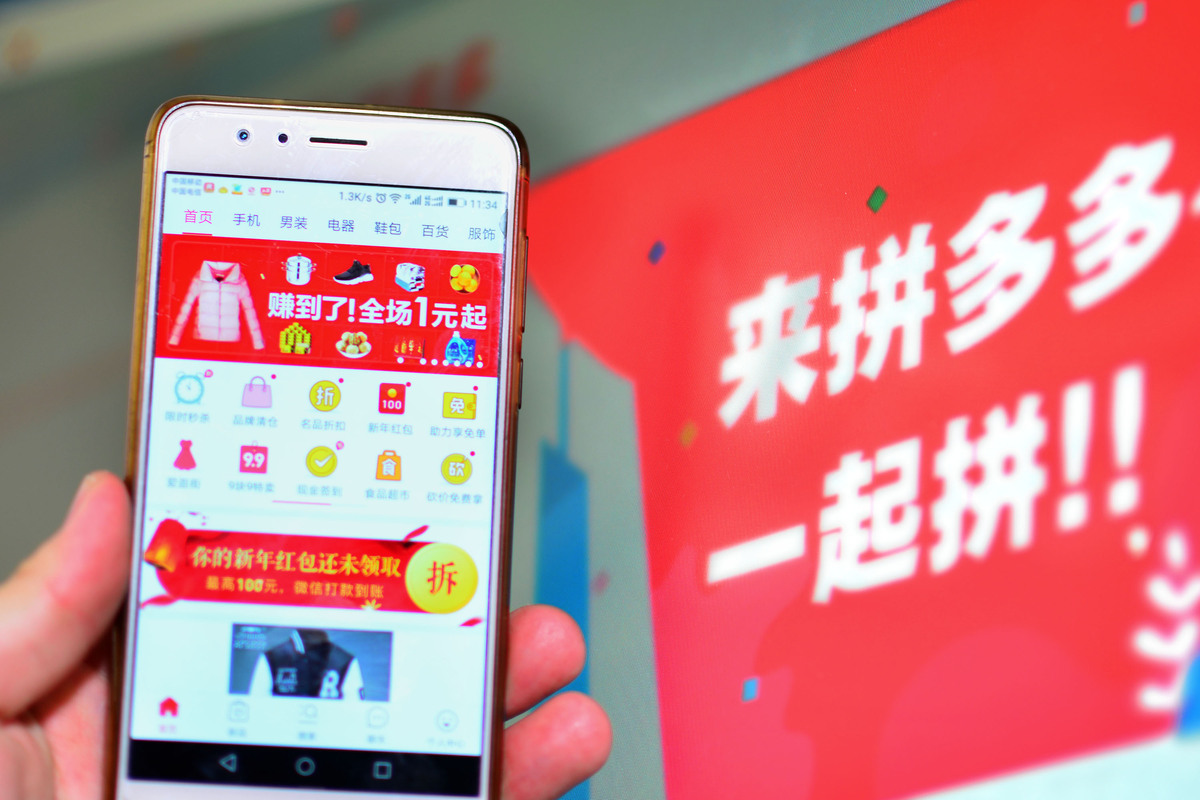
    Pinduoduo (PDD Holdings), a prominent e-commerce firm operating economical platforms in China and internationally, surpassed quarterly revenue expectations. However, its net income plummeted as a result of investments made to compete in an increasingly aggressive market.

    Share Performance and Economic Climate

    Shares of PDD Holdings, listed in the US, rose by 1%, with an 11% surge in premarket trading. This was spurred by the company executives’ remarks about escalated investments leading to fluctuations in its short-term financial performance. Concurrently, the Chinese government is implementing strategies to stimulate domestic consumer spending, aiming to rejuvenate a sluggish economy grappling with multiple challenges. These include a languid property sector and ongoing international trade issues resulting from US policies.

    In an effort to invigorate demand, e-commerce giants such as Pinduoduo, JD.com, and Alibaba have turned to deep discounts and promotional offers, inadvertently triggering a price war. Alongside the obligation to maintain low prices in China, PDD’s profit margins have recently suffered due to a multibillion-dollar investment in merchant support programs and elevated costs related to international shipping driven by US tariffs.

    Increased Spending and Intensified Competition

    PDD’s second-quarter earnings revealed an upsurge in spending on various fronts, from server costs to sales and marketing expenditures. This is part of the firm’s strategy to enhance its ecosystem for both merchants and consumers. Jiazhen Zhao, co-CEO of PDD, noted that the recent spike in industry competition has decelerated their revenue growth and substantially reduced operating profit.

    The company expects profit levels from this quarter to be unsustainable, anticipating irregularities in future quarters’ profits. To ameliorate these pressures, PDD’s international platform, Temu, has been promoting products situated in US warehouses and is striving to engage more local sellers. However, it continues to face stiff competition from Amazon, which leverages its extensive scale to secure advantageous pricing from suppliers.

    Changing Business Model and Consumer Perception

    In response to these challenges, Temu is transitioning to a “fully-managed” model, allowing it to exercise greater control over product selection, pricing, and logistics. The platform aims to utilize its substantial supply-chain network to maintain competitive prices. However, a recent survey by an online marketing firm revealed that 30% of American shoppers have noticed price increases on Temu.

    Despite these obstacles, PDD’s revenue experienced a 7% increase, reaching 103.98 billion yuan ($14.53 billion) for the quarter ending in June, surpassing analysts’ predictions. Meanwhile, its operating profit dropped by 21%. Adjusted earnings per American depository share stood at 22.07 yuan, exceeding the projected 15.74 yuan.

    Questions & Answers

    How did PDD’s shares perform recently?
    PDD’s US-listed shares witnessed a 1% increase, driven by an 11% surge in premarket trading triggered by company executives’ comments on future investments.

    What impacts did increased spending have on PDD’s second-quarter earnings?
    PDD’s second-quarter earnings showcased a rise in expenditures across various areas, leading to a slowdown in revenue growth and a significant reduction in operating profit.

    How is PDD’s international platform, Temu, responding to market pressures?
    Temu is transitioning to a “fully-managed” model to exert more control over product selection, pricing, and logistics. The platform aims to use its large supply-chain network to keep prices low, despite facing competition from global e-commerce giant Amazon.

  • Birkenstock Reports Strong Q3 Growth, Boosted By Rising Demand Across All Primary Markets

    Birkenstock Reports Strong Q3 Growth, Boosted By Rising Demand Across All Primary Markets

    Birkenstock, a well-known footwear brand, has announced strong financial figures for its third fiscal quarter, which ended on June 30. This growth was propelled by increased demand in all primary markets.

    Revenue and Net Income

    Birkenstock’s total revenue for the quarter reached an impressive €635 million, which is equivalent to approximately US$699 million. This represents a 16% increase in constant currency terms, compared to the same timeframe in the previous year. The reported revenue also experienced a 12% uplift, although this was somewhat influenced by currency fluctuations.

    The company also enjoyed a significant increase in its net income, which rocketed to approximately €129 million, or $142 million. This shows a substantial 73% increase compared to the previous year.

    Regional Contributions

    Every major region contributed to this growth. The Asia-Pacific region led the surge with a 24% increase in constant-currency revenue. This was followed by the Americas and the EMEA regions, which saw increases of 16% and 13% respectively.

    Company Performance

    Oliver Reichert, CEO of Birkenstock, stated that the company’s underlying demand remains robust and they are on track to achieve their targeted constant currency growth at the high end of the 15-17% range they anticipated at the start of the year.

    The CEO also mentioned that they saw significant margin improvement in the quarter, fueled by net sales price adjustments after inflation and better absorption. He believes they are well-positioned to handle the impact of the ongoing 15% US/EU tariff agreement through pricing adjustment, cost discipline, and efficient inventory management. This is all in an effort to protect the long-term health and profitability of the Birkenstock brand.

    Sales and Expansion

    The sales momentum for this quarter was widespread, with wholesale revenue growing 18% on a constant currency basis and direct-to-consumer sales increasing by 12%.

    During the quarter, Birkenstock opened 13 new stores, bringing its total number of owned retail locations to 90 globally.

    The company is actively growing its direct-to-consumer footprint in conjunction with its sustained revenue growth. They are also investing to expand production capacity to meet the rising demand.

    Questions & Answers

    What is the total revenue for Birkenstock’s third fiscal quarter?
    The total revenue for Birkenstock’s third fiscal quarter is approximately €635 million, or US$699 million.

    Which region led in terms of revenue growth for Birkenstock?
    The Asia-Pacific region led the way for Birkenstock with a 24% increase in constant-currency revenue.

    What strategies is Birkenstock implementing to manage the impact of the 15% US/EU tariff agreement?
    Birkenstock is managing the impact of the 15% US/EU tariff agreement through pricing adjustment, cost discipline, and efficient inventory management.

  • Sea Ltd Surges Past Market Projections: Shopee Demand And Gaming Division Fuel Growth

    Sea Ltd Surges Past Market Projections: Shopee Demand And Gaming Division Fuel Growth

    Sea Ltd, a formidable player in the digital commerce and gaming industries, exceeded market projections for quarterly revenue. The considerable surge was fueled by high demand for its Shopee e-commerce platform and its gaming division, leading to a near 19 percent increase in the company’s US-listed shares during initial trading hours.

    Phenomenal Growth for Shopee

    Shopee, a favorite among online shoppers in Southeast Asia and Taiwan, has been experiencing a significant increase in consumer demand. This is largely attributed to the company’s commitment to providing competitive prices and enhancing the overall customer experience. The company has focused its efforts to boost user recruitment, traffic, and engagement on the Shopee app, employing innovative strategies such as incorporating social aspects like live-streaming features and mini-games that offer redeemable coins and prizes.

    The revenue from Sea’s e-commerce division, which became profitable last year, saw an impressive 33.7 percent increase, amounting to US$3.8 billion for the second quarter. The gross merchandise value, which reflects the total value of products sold on the platform, increased by 28 percent, reaching $29.8 billion. The company’s executives expressed optimism over Shopee’s annual GMV growth, stating it would surpass the company’s initial forecast of a 20 percent increase.

    Strong Performance across Divisions

    Sea’s CEO, Forrest Li, expressed satisfaction with the company’s performance, stating, “All three of our businesses have delivered robust, healthy growth, giving us greater confidence of delivering another great year.”

    The company’s digital entertainment segment, which includes the popular mobile shooter game “Free Fire” developed and published by Garena, saw a 28.4 percent increase in revenue, reaching $559.1 million. Garena reported a 17.8 percent increase in its paying user base and a 23 percent rise in bookings for the second quarter.

    The company’s third division, the digital financial products arm which includes the Monee app offering services like payment processing and credit products, reported a significant 70 percent rise in revenue, totaling $882.8 million.

    Exceeding Expectations

    Based in Singapore, Sea Ltd recorded a 38.2 percent increase in its overall second-quarter revenue, reaching $5.26 billion, surpassing estimates of $4.98 billion.

    Questions & Answers

    What contributed to the improved performance of Shopee?
    The company’s concerted efforts to offer competitive pricing and improve the customer experience played a significant role in this. Introducing social elements like live-streaming and mini-games also helped enhance user engagement.

    What is the significance of the gross merchandise value?
    The gross merchandise value is a measure of the total value of products sold on the platform. It is an essential metric for e-commerce platforms as it reflects the volume of transactions.

    Which of Sea Ltd’s business segments showed the most significant growth?
    While all segments witnessed considerable growth, the digital financial products arm recorded the most significant rise in revenue at 70 percent.

  • Shopify Projects Robust Quarterly Revenue Amidst Resilient Merchant Base And Steady Consumer Demand

    Shopify Projects Robust Quarterly Revenue Amidst Resilient Merchant Base And Steady Consumer Demand

    Shopify, the renowned Canadian e-commerce platform, has projected a positive outlook for its quarterly revenue. This forecast comes amidst no apparent reduction in consumer demand and the impressive resilience of merchants on the platform despite prevailing tariff pressures. This uplifting news resulted in a significant 20% increase in the company’s share values.

    Throughout early August, Shopify’s merchant base demonstrated remarkable fortitude, maintaining the steady growth observed in the April-June period. This resilience contributed to a 31% boost in the second quarter’s revenue.

    These results help to alleviate some of the anxieties investors have due to the fluctuating trade policies of the current US administration. These policies have left many retailers uncertain about several aspects of their business, including demand, production, sourcing, and operating costs.

    Addressing these concerns, Jeff Hoffmeister, Shopify’s CFO, reassured investors during a post-earnings call. He affirmed that demand from the US, both inbound and outbound, has remained steady. Furthermore, he noted that the platform had experienced growth across all merchant segments during the second quarter.

    Hoffmeister also highlighted the strong performance of sellers with an annual gross merchandise volume (GMV) exceeding US$50 million and those below the $2 million mark. In terms of pricing strategy, Shopify reported that many merchants have increased their prices, although no specific details regarding the extent of these hikes were provided.

    Despite the ongoing disruptive tariff situation, Shopify’s resilience and adaptation seems to be the current narrative. As noted by Third Bridge analyst Charlie Miner, greater clarity is emerging regarding consumer reactions, and Shopify is unlikely to be adversely affected.

    Shopify’s projections for the third quarter anticipate a revenue increase in the mid to high twenties percentage range. This estimate exceeds analyst predictions of a 21.54% rise, as compiled by LSEG.

    Additionally, Shopify’s ongoing investments in artificial intelligence-powered features are proving advantageous. These features aid retailers in various tasks, such as developing store websites, generating images, and collating sales data.

    Questions & Answers

    What is the projected revenue increase for Shopify in the third quarter?
    Shopify projects a mid to high twenties percentage increase in revenue for the third quarter.

    How are Shopify’s merchants responding to the ongoing tariff situation?
    Despite tariff pressures, merchants on Shopify’s platform have shown resilience, with many even increasing their prices.

    What investments has Shopify made to support retailers?
    Shopify has invested in artificial intelligence-powered features that assist retailers with tasks such as creating store websites, producing images, and gathering sales data.

  • Record Q2 Revenue For Luckin Coffee Amid Global Expansion And Increased Customer Engagement

    Record Q2 Revenue For Luckin Coffee Amid Global Expansion And Increased Customer Engagement

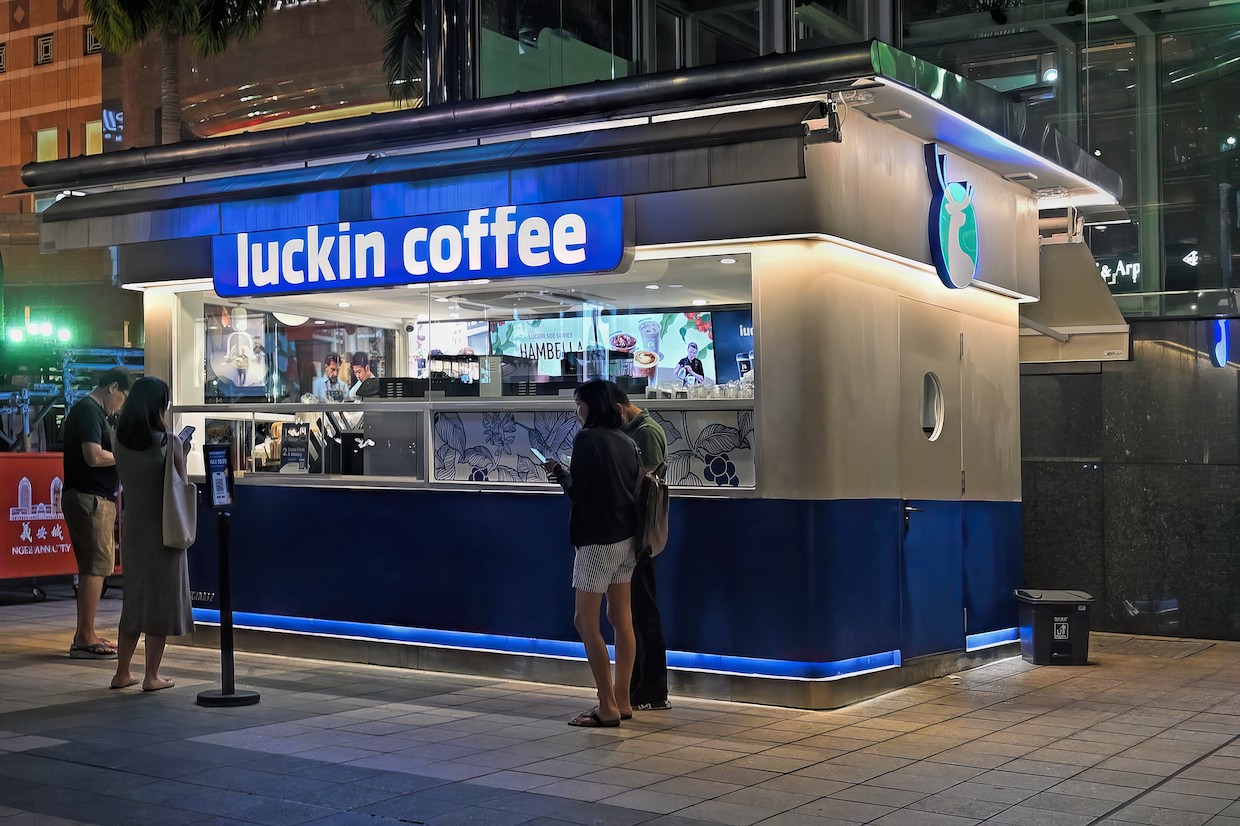
    Luckin Coffee reported an unprecedented revenue of $1.72 billion in the second quarter, representing a 47 percent year-on-year increase. This performance coincides with the expansion of the Chinese coffee chain’s global footprint to 26,206 outlets, including more than 2100 new store openings.

    Global Expansion and Growth in Numbers

    Luckin Coffee expanded its network by adding 2085 stores in mainland China and Hong Kong during the second quarter. Additionally, the company opened six new stores in Singapore, 16 in Malaysia, and two in the United States. Of the total number of stores, 16,968 are directly operated by Luckin Coffee, while 9,238 outlets are run in partnership with other entities.

    The company saw a notable surge in customer engagement, with monthly transaction numbers reaching an all-time high of 91.7 million customers during the quarter, marking a 31.6 percent increase compared to the corresponding period last year.

    Financial Performance and Business Prospects

    Revenue generated from directly operated stores shot up by 45.6 percent to $1.27 billion, propelled by a same-store sales growth of 13.4 percent. This indicates a notable improvement from the 8.1 percent growth recorded in the preceding quarter, and a significant rebound from a 20.9 percent decline experienced a year ago.

    Luckin Coffee’s operating profits at store level surged by 42.3 percent to reach $268 million. Revenue from partnership stores also saw a substantial increase, reaching $399.8 million, which translates to a 55 percent year-on-year increase.

    Jinyi Guo, co-founder and CEO of Luckin Coffee, attributed the robust financial performance to the company’s strategic focus on scalability. He emphasized that by capitalizing on the company’s strengths in areas such as operational efficiency, fulfillment, and supply chain, Luckin Coffee has managed to achieve double-digit same-store sales growth in its directly operated stores.

    As for the future, Guo reaffirms that the company remains resolute in its commitment to expanding its market share.

    Questions & Answers

    What was Luckin Coffee’s recorded revenue for the second quarter?
    The company recorded a revenue of $1.72 billion for the second quarter.

    How many new stores did Luckin Coffee open in the second quarter?
    The coffee chain opened more than 2100 new stores globally in the second quarter.

    What was the growth rate in Luckin Coffee’s same-store sales?
    The company reported a same-store sales growth of 13.4% during the quarter.

  • Armani Group’s Revenues Dip 5% In 2024: Prioritizes Quality Over Profit Amid Market Challenges

    Armani Group’s Revenues Dip 5% In 2024: Prioritizes Quality Over Profit Amid Market Challenges

    The Armani Group, a renowned Italian fashion enterprise, saw a 5% decrease in its revenue for the fiscal year 2024. The company attributes this decline to a dip in customer expenditure and a lackluster performance in the Asia Pacific region.

    Financial Performance Insight

    The fiscal year ended with total sales hitting US$2.65 billion. However, the year saw a decrease in net cash and equivalents, which fell from $1.09 billion to $656 million. The company also reported Earnings Before Interest and Taxes (EBIT) of $77 million, and a pre-tax profit of $86 million.

    The luxury fashion brand maintained a positive outlook despite the dip in revenue. It highlighted the year’s favorable results as evidence of robust and vigilant management, thereby attesting to the strength and stability of the group.

    Regional Performance Analysis

    In terms of geographic performance, Europe maintained its position as the group’s most substantial market, accounting for 49% of the total annual revenue. The Americas followed, contributing 22% to the total revenue. However, the company saw a decrease in revenue from the Asia Pacific region, which accounted for 19% of the total revenue. This decline was primarily attributed to a slump in demand from China.

    Investments and Business Strategy

    Despite experiencing a dip in revenue, the group showed a commitment to growth as it doubled its yearly investment to nearly US$383 million. This figure marked a significant increase from the previous year’s investment of $194 million. The company allocated these funds primarily towards refurbishing stores and bringing e-commerce procedures in-house.

    Giuseppe Marsocci, the Deputy Managing Director and Chief Commercial Officer, stated that the company maintains a conservative pricing strategy, with increases remaining under inflation rates. He emphasized the group’s decision to prioritize product quality and customer experience, even if it meant compromising short-term profit margins. Marsocci expressed confidence that this strategy would enhance the company’s competitiveness when the market rebounds.

    Questions & Answers

    What factors contributed to the Armani Group’s 5% revenue decline in fiscal 2024?
    The company attributes the decline in revenue to a decrease in consumer spending and a weak performance in the Asia Pacific region.

    How did the company respond to this decrease in revenue?
    Despite the decline in revenue, Armani Group chose to double its annual investment to US$383 million, focusing on store renovations and the internalization of e-commerce operations.

    What is Armani Group’s pricing strategy, and how does it plan to stay competitive in the future?
    Armani Group maintains a restrained pricing approach, with increases below inflation levels. The company prioritizes product quality and customer experience over short-term profits, believing this strategy will enhance competitiveness when the market returns to growth.

  • Chagee sees double-digit revenue growth in first quarter

    Chagee sees double-digit revenue growth in first quarter

    Chagee, a renowned Chinese milk tea chain, has reported a significant increase in its net revenues for the first quarter of this year. The figure soared to RMB3.39 billion (US$467.5 million), marking a robust growth of 35.4 per cent compared to the equivalent period last year.

    Financial Highlights of the Quarter

    The first quarter of the fiscal year was marked by strong financial performance for Chagee. The company’s net income also grew considerably, rising 13.8 per cent to RMB677.3 million. Meanwhile, operating income has been notably up from RMB705.9 million to RMB820.2 million, indicating an impressive operating margin of 24.2 per cent.

    Nevertheless, the company had to bear an increase in operating costs, which surged by 42.8 per cent, amounting to RMB2.57 billion year-on-year.

    Expansion Efforts and Product Innovation

    Chagee’s expansion strategy took a leap forward as they inaugurated key stores in Malaysia and Singapore during this quarter. The successful launch was followed by the opening of new outlets in Indonesia and the US in the consecutive months of April and May.

    Staying true to its commitment to product innovation, Chagee continued the introduction of new products. They included a range of low-caffeine beverages, designed to cater to the preference of customers who enjoy their teas later in the day.

    Questions & Answers

    What was the percentage growth in Chagee’s net revenues for the first quarter compared to the same period last year?
    Chagee’s net revenues for the first quarter of this year grew by 35.4 per cent compared to the same period last year.

    What new markets did Chagee enter during this quarter?
    Chagee entered the Malaysian and Singaporean markets this quarter, followed by expansions into Indonesia and the US.

    What new product line did Chagee introduce recently?
    Chagee introduced a new line of low-caffeine beverages, allowing customers to enjoy their teas later in the day.

  • Steady consumer demand helps JD beat quarterly revenue estimates

    Steady consumer demand helps JD beat quarterly revenue estimates

    Chinese e-commerce giant JD exceeded market expectations for its quarterly earnings this Tuesday, reflecting resilient demand despite deteriorating conditions domestically and abroad. This feat indicates steady consumption patterns even amidst the imposition of U.S. tariffs, lingering economic fragility, and a dampened consumer sentiment.

    Over the past few years, consumer demand in China has encountered numerous obstacles. The ongoing crisis in the property sector and high unemployment rates have hindered the country’s full recovery from the Covid-19 pandemic’s impact.

    Nevertheless, e-commerce companies like JD and Alibaba, which is set to report its quarterly results this Thursday, have adopted a proactive approach. They have implemented significant discounts and price reductions on products to attract customers, simultaneously relying on government subsidies to stimulate consumption.

    This strategy has proven beneficial for JD, a leading retailer of home appliances in China, even as consumer sentiment was dented by the trade tensions between the U.S. and China. Additionally, retail sales growth in China accelerated in January and February.

    For the quarter ending on March 31, JD reported a total revenue of 301.08 billion yuan (US$41.82 billion), marking an increase of 15.8% compared to the same period last year. This figure surpassed analysts’ estimate of 289.22 billion yuan.

    Shares of JD listed in the U.S. experienced an approximate 3% upswing in early trading.

    The forthcoming 618 shopping festival, due to take place on June 18, is expected to provide insights into the extent of the country’s consumer demand recovery. This online shopping event, introduced by JD, has been extending in duration over the years. This year, Taobao commenced the 618 pre-sale on Tuesday. Simultaneously, JD, whose official start date for 618 is May 31, launched an event known as the “Heartbeat Shopping Festival.”

    Jacob Cooke, CEO of e-commerce consultancy WPIC Marketing + Technologies, expressed optimism about sales growth during this year’s 618 festival. He cited burgeoning consumer confidence in China, robust retail growth in recent months, and high travel numbers during the May Day and Qingming Festival.

    On Tuesday, the State Administration for Market Regulation, the country’s top market regulator, announced that it has summoned various e-commerce platforms, including JD, Meituan, and Alibaba’s Ele.me. The regulator has urged these platforms to comply with laws and regulations and to maintain fair and orderly competition.

    Although Meituan and Ele.me dominate food delivery services in China, JD’s prominent entry into the sector in February has heightened competition in the industry.

    Questions & Answers

    **What is the significance of JD’s recent quarterly earnings?**
    JD’s recent earnings surpassed market expectations, indicating resilient consumer demand despite various economic challenges. This performance suggests that JD’s strategies to attract customers and stimulate consumption are effective.

    **What is the 618 shopping festival?**
    The 618 shopping festival is an online shopping event in China, initiated by JD. The festival, which takes place on June 18, has increasingly extended in duration over the years. It serves as a barometer to evaluate the recovery of consumer demand in the country.

    **What is the current state of competition in China’s food delivery market?**
    The food delivery market in China is primarily dominated by Meituan and Alibaba’s Ele.me. However, JD’s recent entry into this sector has intensified competition.

  • Vietnam gets set to tax e-commerce revenue

    Vietnam gets set to tax e-commerce revenue

    Vietnam plans to tax 1.5 percent of annual e-commerce revenues of VND100 million ($4,297) and higher as part of leveling the field between traditional and online retail merchants.

    A decree with new regulations is set to take effect on August 1, but authorities have said they might give e-commerce platforms more time to prepare for the taxation regime.

    E-commerce platforms will need to provide authorities with monthly reports on their merchants, revenues, bank accounts, and types of goods.

    Tax officials had said earlier that the current taxation regime is unfair to traditional sellers who have to pay other overheads, while online sellers have been escaping several taxes.

    Taxing sellers through e-commerce platforms would also help prevent the sales of contraband and fake goods, the officials said.

    Vietnam’s e-commerce market expanded by 18 percent last year to $11.8 billion, the only country in Southeast Asia to record double-digit growth amid the pandemic, according to the Vietnam e-Commerce and Digital Economy Agency.

  • Apple revenue accelerates after record iPhone sales, China strength

    Apple revenue accelerates after record iPhone sales, China strength

    Apple delivered its largest quarter by revenue of all time on Wednesday at $111.4 billion in its first-quarter earnings report for fiscal 2021. It’s the first time Apple crossed the symbolic $100 billion mark in a single quarter, and sales were up 21% year over year.

    Apple stock dropped 2% in extended trading. Apple’s results for the quarter ending in December weren’t just driven by 5G iPhone sales. Sales for every product category rose by double-digit percentage points. Apple’s earnings per share and sales handily beat Wall Street expectations.

    Here’s how Apple did versus consensus Refinitiv estimates:

    • EPS: $1.68 vs. $1.41 estimated
    • Revenue: $111.44 billion vs. $103.28 billion estimated, up 21% year over year
    • iPhone revenue: $65.60 billion vs. $59.80 billion estimated, up 17% year over year
    • Services revenue: $15.76 billion vs. $14.80 billion estimated, up 24% year over year
    • Other Products revenue: $12.97 billion vs. $11.96 billion estimated, up 29% year over year
    • Mac revenue: $8.68 billion vs. $8.69 billion estimated, up 21% year over year
    • iPad revenue: $8.44 billion vs. $7.46 billion estimated, up 41% year over year
    • Gross margin: 39.8% vs. 38.0% estimated

    Apple CEO Tim Cook said the results could have been even better if not for the Covid-19 pandemic and lockdowns that forced Apple to temporarily shutter some Apple stores around the world.

    “Taking the stores out of the equation, particularly for iPhones and wearables, there’s a drag on sales,” Cook said.

    Cook said that Apple’s total install base for iPhones is over 1 billion, up from the previous data point of 900 million. The total active install base for all Apple products is 1.65 billion.

    Apple did not provide official guidance for the upcoming quarter. It hasn’t offered investors forecasts since the beginning of the pandemic.

    But even the lack of guidance could not diminish what was a blowout quarter for the iPhone maker. Apple has benefited during the pandemic from increased PC and gadget sales as people who are working or going to school from home because of lockdowns look to upgrade the devices they use.

    Apple released new iPhone models in October. The four iPhone 12 models are the first to include 5G, which investors believed could drive a “supercycle” of users clamoring to upgrade. iPhone revenue was up 17% from the same period last year.

    “They’re full of features that customers love, and they came in at exactly the right time, with where 5G networks were,” Cook said.

    Apple’s other products category, which includes Apple Watch and headphones such as AirPods and Beats, was up 29% from last year to $12.97 billion, even as people are spending less time commuting and traveling. Apple released a high-end set of headphones, AirPods Pro Max, in December, with a steep $549 suggested price.

    Macs and iPads, the Apple devices most likely to be used for remote work and school, were also up this quarter. Apple released new Mac computers powered by its own chips instead of Intel processors in December to positive reviews that said they were superior in terms of power and battery life to the old models.

    Apple’s services business, which the company has highlighted as a growth engine, was up 24% year over year to $15.76 billion. That product category is a catch-all: It includes the money Apple makes from the App Store, subscriptions to digital content such as Apple Music or Apple TV+, licensing fees paid by Google to be the iPhone’s default search engine and AppleCare warranties.

    Apple highlighted in its release that international sales accounted for 64% of the company’s sales, up from 61% in the same quarter last year.

    How new iPhone models fare in China, the company’s third-largest market, is a constant topic of discussion among investors. Sales in what Apple calls greater China, which includes Taiwan and Hong Kong, were up nearly 57% to $21.3 billion.

    “China was strong across the board,” Cook said.

    Apple also declared a cash dividend of $0.205 cents per share and said that it had spent over $30 billion on total shareholder return, which includes share buybacks, during the quarter. Apple’s first fiscal quarter is typically its largest of the year and includes critical holiday sales during December.

    Wednesday’s blowout earnings are also a recovery story for Apple. Two years ago, Apple warned that its projection for its holiday quarter sales was lower than the company expected, a rare warning that raised questions about whether Apple was losing its momentum. On Wednesday, Apple revealed that revenue is up over 32% since that report.

  • AirAsia boosts third-quarter profit 5% amid strong revenue rise

    AirAsia boosts third-quarter profit 5% amid strong revenue rise

    AirAsia Group‘s third-quarter profit rose 4.6% to more than MYR264 million ($63.3 million) as revenue and passenger numbers increased.

    Revenue for the quarter ended 30 September was up 18% at MYR3.07 billion. Group-wide traffic likewise grew 18%, slightly lower than the 19% increase in capacity. This resulted in a two-point load-factor decline, to 84%.

    Expenses related to staff, maintenance and user charges rose amid expansion. Depreciation costs meanwhile grew, reflecting the adoption of a new accounting standard on leases.

    AirAsia made a net loss of MYR67.5 million as it took hits from foreign exchange and fair-value losses on derivatives. The previous year, it had made a MYR804 million net profit in the third quarter.

    On a nine-month basis, AirAsia‘s operating profit halved to MYR707 million, despite a 17% lift in revenue to MYR9.09 billion. Net profit shrunk 96% to MYR99.5 million.

    Across the airline operations, third-quarter EBITDA more than doubled to MYR662 million. The group’s overseas units in Indonesia, Philippines and Thailand all improved their performance, while the one in India narrowed its losses.

    Thai AirAsia‘s EBITDAR rose 20.5% to Bt1.32 billion ($43.7 million), while revenue grew 5.3% to Bt9.42 billion. The airline attributes a Bt761 million loss after tax to exchange-rate effects and notes that unit revenue is under pressure as a result of competitors’ low pricing.

    Indonesia AirAsia‘s third-quarter EBITDA was narrowly positive at Rp415 million ($29,000); revenue swelled 72% to Rp1.83 trillion. Net profit came in at Rp61.2 billion, reversing a Rp214 billion net loss in the same period last year.

    Philippines AirAsia‘s EBITDA came in at nearly Ps1 billion ($19.7 million), reversing a Ps1.32 billion loss in the same quarter of 2018. Revenue jumped 40% to Ps6.23 billion, and the operation’s net loss narrowed to Ps367 million.

    AirAsia India narrowed its EBITDA loss to Rs1.2 billion ($16.8 million), as revenue climbed 58% to Rs7.24 billion. Loss after tax was flat at Rs3.1 billion. AirAsia says the unit’s costs grew in line with capacity increases.

    Meanwhile, AirAsia Japan made a net loss of Y3.71 billion ($33.9 million).

    As of 30 September, the AirAsia Group had MYR2.18 billion in cash and cash equivalents – some MYR4.43 billion less than it had on the same date last year.

    AirAsia Group says newly delivered Airbus A321neos will be deployed on routes with high demand and constrained infrastructure, in an effort to reduce unit cost.

    In 2020, the group will make a net addition of 12 aircraft to its fleet. Malaysia AirAsia will not take any aircraft, while Thai AirAsia will remove three jets. Indonesia AirAsia and AirAsia Japan will each receive three jets, and Philippines AirAsia two. The bulk of the growth will be at AirAsia India, which will add seven aircraft.

    The airline group foresees a “positive… core performance” during the fourth quarter. It says: “As the group repositions the business to adapt to the evolving business environment along with new accounting treatment and restructured aircraft ownership, we look forward to a better year in 2020.”

  • Athleisure trend boosts Yue Yuen sales in 2018

    Athleisure trend boosts Yue Yuen sales in 2018

    Yue Yuen Industrial, the world’s largest manufacturer of athletic, athleisure, casual and outdoor footwear, boosted revenue by 6.3 per cent last year.

    Yue Yuen makes shoes for a raft of brands, including Geox, Levi’s, Rockport, Carters and Pony. Its subsidiary Pou Sheng operates a network of some 5500 directly operated stores and 3000+ sub-distributor stores, predominantly on the mainland.

    For the year to December, the Group recorded revenue of US$9.695 billion, with gross profit up by 4 per cent to $2.446 billion. However, profit attributable to shareholders fell 40.9 per cent to $307.1 million, mainly due to operating deleverage within the manufacturing business, a reduction of the non-recurring gain for the year, and higher finance costs.

    Yue Yuen said revenue attributed to footwear manufacturing (including athletic shoes, casual/outdoor shoes and sports sandals) declined by 1.5 per cent to $5.39 billion, whereas the volume of shoes produced increased by 0.4 per cent to 326 million pairs. The average selling price decreased by 2 per cent to $16.53 per pair, compared with the previous year.

    The group’s athletic footwear category outperformed all other categories as a result of the global athleisure trend, accounting for 79.2 per cent of footwear manufacturing revenue last year. Casual and outdoor shoes accounted for 19.1 per cent of footwear manufacturing revenue.

    The group’s distribution sales are derived primarily from Pou Sheng, involving in retail operations for international sporting goods brands in the Greater China region. Last year, the revenue attributable to Pou Sheng grew by 23.3 per cent to $3.422 billion.