Retail News CRM

Tag: rice

  • Thai farmers receive government loans to stabilize market prices

    Thai farmers receive government loans to stabilize market prices

    Thailand is the world’s second largest rice exporter, and it is confronted by a fall in prices that has mostly affected the rice farmers, with prices hitting a thirteen months low. Now the Thai Government has taken action and has proposed a set of measures with would help alleviate the pressure from the country’s rice farmers.

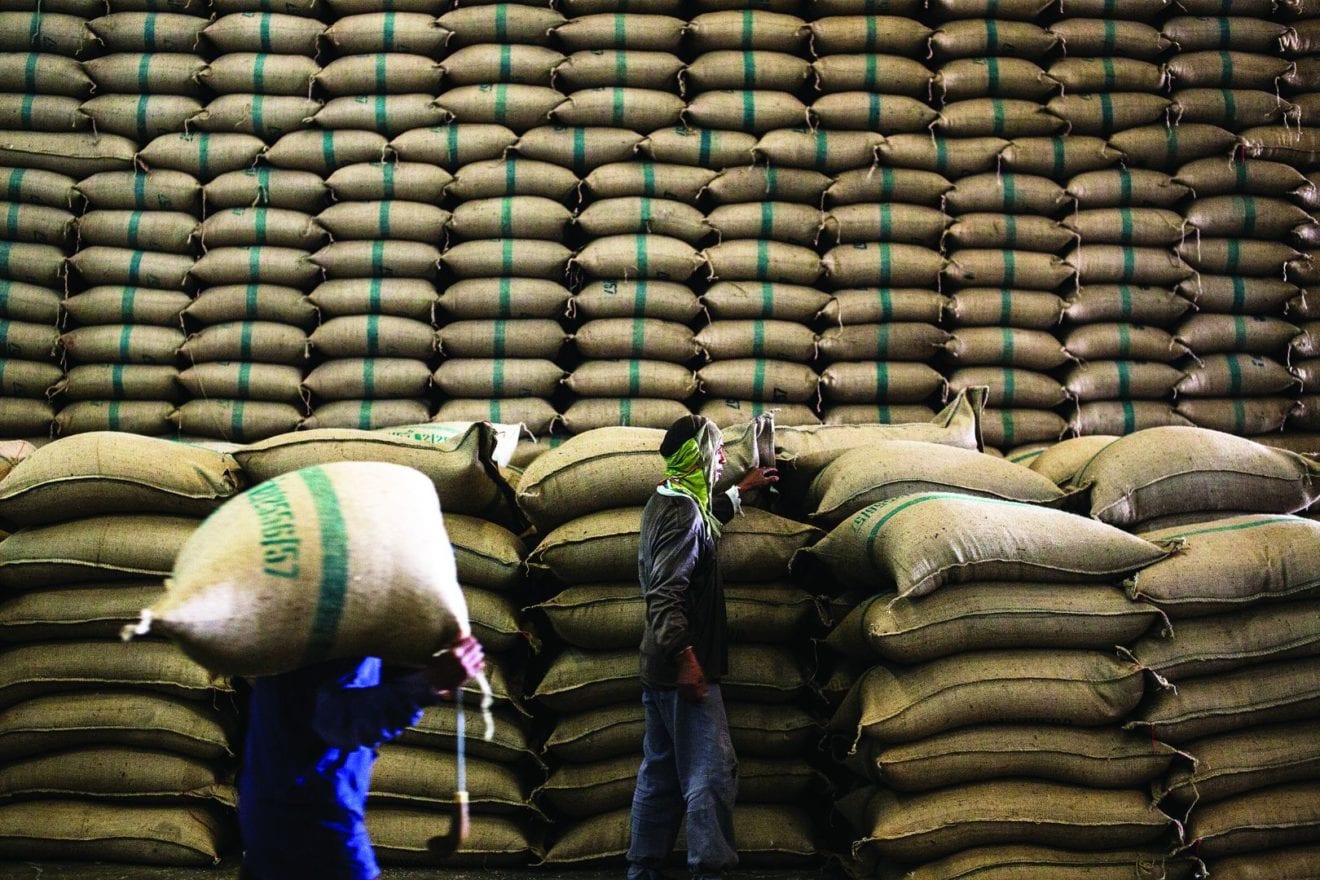
    According to Thailand’s Minister of Commerce Apiradee Tantraporn, rice farmers will receive 10,500 baht, or 299 US dollars, for every tonne of white paddy stored. The measure is aimed at all Thai farmers, with those who store Thai Pathum Thani fragrant rice to receive 11,300 baht, that is 322 US dollars, per tonne.

    “The overall budget is set at 18 billion baht ($514 million). This is to help relieve grievances farmers are facing while the main crop is being harvested,” Mrs. Apiradee Tantraporn told journalists.

    Last week, the government announced it would offer loans worth 1,3 billion US dollars to jasmine rice farmers, if they store the grain for at least six months to slow down market supply.

    Another measure the government has taken is easier access to open rice paddy markets. Mrs. Tantraporn said this is in order to boost competition among rice farmers and for their benefit, in the middle of this period’s price depression. According to state officials, in the province of Udon Thani’s retail centres and PTT gas stations, markets will be opened in the next weeks. Here the farmers will be allowed to sell their rice and negotiate the prices directly with the buyers, circumventing the need for intermediaries.

    Action is also taken in Lopburi and Sukhothai, where the government and other agencies have joined forces in order to promote and allow farmers to sell their rice directly. In Sukhothai, milled rice was on sale at up to 40% discount prices, while in Lopburi, the Si Sa Ket police was put together a market for farmers to sell the rice to their families and police staff.

    In total, there will be no less than  109 open markets organised in 44 provinces, all with the sole purpose to to help farmers sell rice paddy directly to consumers.

  • Program to open new rice fields in East Nusa Tenggara to continue in 2017

    Program to open new rice fields in East Nusa Tenggara to continue in 2017

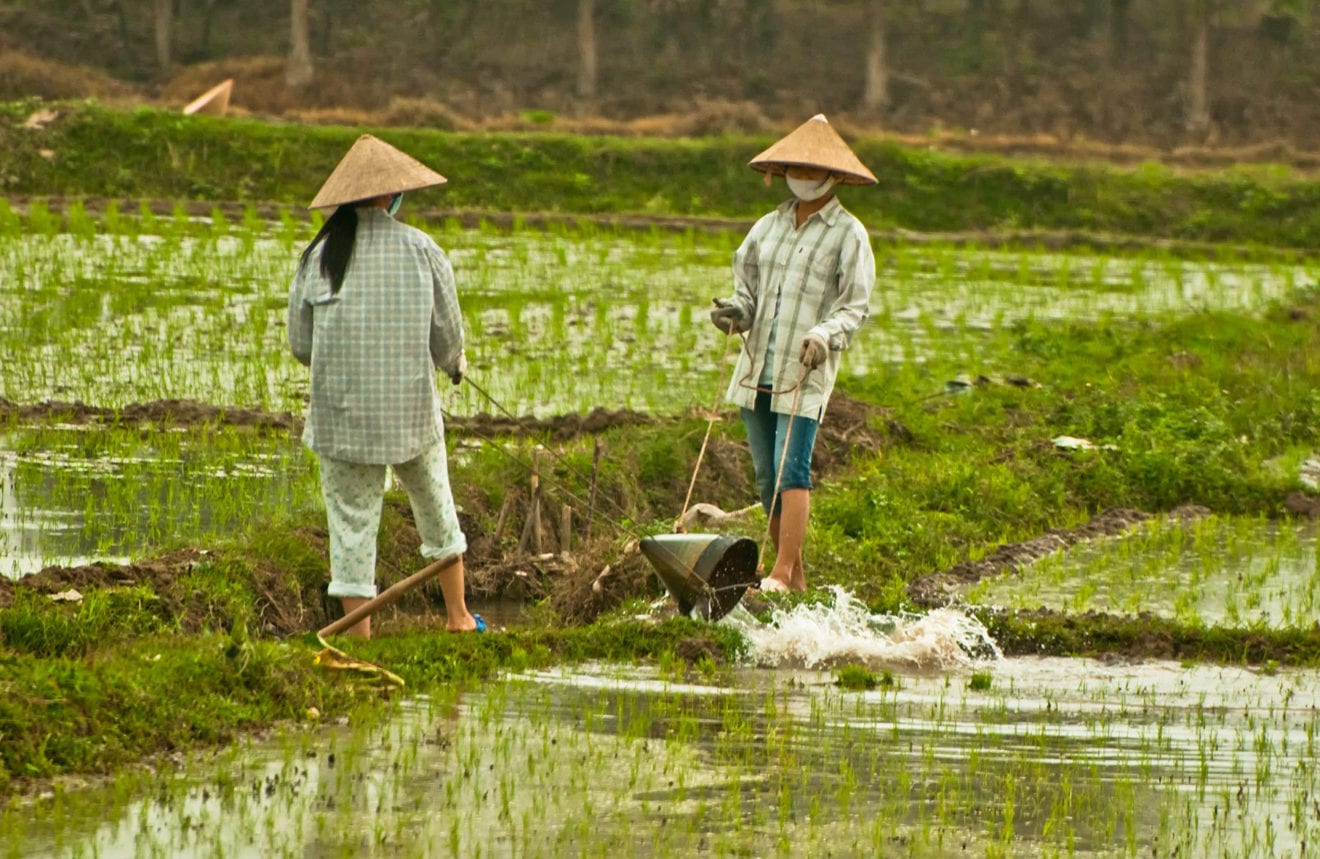
    Head of the East Nusa Tenggara provincial Agriculture and Plantation Service Yohanes Tay Ruba said the province would continue the program of opening of new rice fields in 2017.

    “Currently we are conducting rationalization and preparation of the program for the opening of new rice fields to be implemented in 2017,” Yohanes said here on Saturday.

    He said implementation of the program this year could not be carried out as expected over delay in the disbursement of General Allocation Fund (DAU) from the central government.

    Until now 1,960 hectares of new rice field had been opened or falling short of the target of 2,709 hectares for this year, he said.

    Around 224.22 hectares of the new rice fields have been ready for cultivation, he added.

    “We hope the rest could be carried out with work starting early next year, that farmers could increase their rice production,” he said.

    Yohanes delay in the implementation of the program was recorded in a number of areas including in the regencies of Kupang, Sumba Timur, and Flores such as regencies of Ende and Manggarai Barat.

    The regency of Ende was to have Rp11,538,089,786 in the delayed DAU each month from September to December.

    Kupangs delayed share of the DAU in the same periods was Rp25,466,413,828; and the regency of Sumba Timur was to have Rp11,532,251,253 and the regency of Manggarai Barat was to receive a disbursement of Rp18,071,885,782 each month during the four months period.

    Yohanes said the opening of new rices fields in NTT so far had been carried out through cooperation with the military with solders sent to the fields together with the government elucidation team to encourage the farmers in expanding their rice fields.

    “We appreciate the assistance offered by the military for the farmers to increase their productivity,” he said.

    He said he hoped such cooperation would continue that when the budget fund had been available the program to open more new rice fields could be implemented as expected.

    Earlier this week President Joko Widodo said the country would not import rice in the rest of this year.

    Agriculture Minister Andi Amran Sulaiman has said there would be no scarcity in rice supply in Indonesia as the country is predicted to have a surplus of 400,000 tons in production this year.

    The minister said based on a survey by the Central Bureau of Statistics (BPS) the countrys rice production rose significantly this year.

    The survey said planting areas in July-September, 2016 reached 1 million hectares up significantly from an average of 500,000 hectares in earlier years.

    Based on an assumption that a hectare would turn out 6 tons of unhulled rice, the countrys production of unhulled rice would total 6 million tons or equivalent to 3 million tons of milled rice as against a monthly consumption of 2.6 million tons.

    Therefore, the countrys rice stock is sufficient despite the extreme weather such as foods that damaged rice crops in the country this year.

    “In addition, irrigation systems have been repaired in various areas in Indonesia in cooperation with the Public Works Ministry,” Andi said.

  • No more rice imports this year

    No more rice imports this year

    President Joko Widodo (Jokowi) has assured that Indonesia will not import rice at the end of this year because the countrys rice stock is adequate until May 2017.

    Rice production has increased dramatically from some 1,030,000 tons during September to October 2015, to 1,990,000 tons in October 2016.

    The increase was merely thanks to prime paddy seed utilization and adequate rainfall.

    The government will focus on increasing the rice stocks before deciding to export rice later, he said, after witnessing a grand harvesting of Super Jajaran Legowo-type paddy in Trayu village, Banyudono sub-district, Boyolali.

    Boyolali is also a pilot project for Inpari 32 paddy variety.

    “Later, if it is successful, we will expand it and multiply it in order to significantly increase the national rice production,” the president said.

    At noon, President Jokowi and First Lady Iriana were scheduled to observe the 36th anniversary of World Food Day to be held at the Boyolali square.

    Boyolali is known as a region which has successfully implemented the food production diversification program. The district produces among other things Tongkol 2 Prolific hybrid maize and Jajar Legowo-type paddy.

    Home Affairs Minister Tjahjo Kumolo and Head of the Presidential Staff Teten Masduki joined the presidential entourage.

    FAO celebrates World Food Day each year on October 16 to commemorate the founding of the Organization in 1945.

    Events are organized in over 150 countries across the world, making it one of the most celebrated days of the United Nations (UN) calendar.

    These events promote worldwide awareness and action for those who suffer from hunger and for the need to ensure food security and nutritious diets for all.

    FAOs global message for World Food Day 2016 is “Climate is changing. Food and agriculture must too.”

    It resonates with the crucial time in which the day will be observed, just before the next UN Climate Change Conference, COP 22, from November 7 to 18, 2016 in Marrakech, Morocco.

  • Minister sees off organic rice export to Belgium

    Minister sees off organic rice export to Belgium

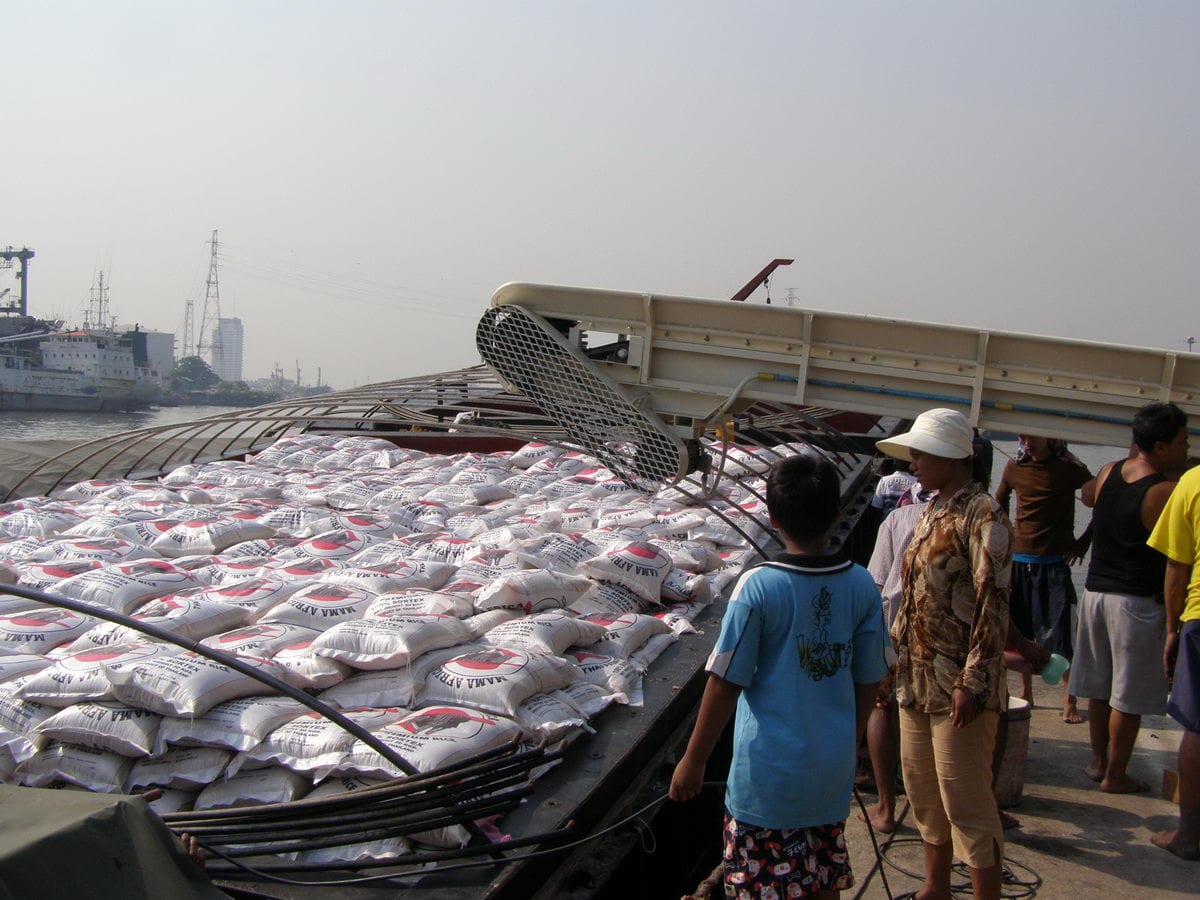
    Agriculture Minister Andi Amran Sulaiman here on Thursday saw of the shipment 40 tons of organic rice produced by a farmer group of Simpatik in Mekar Wangi village, West Java to Belgium.

    The shipment marked eight years of organic rice export from the farmer group to Belgium.

    The exported rice was packed in airtight plastic that can last for months. One pack of rice weighed five kilograms with a label of Indonesia Rice on it.

    In addition to Belgium, the other importer countries are Singapore, Italy, United States, and United Arab Emirates.

    The rice price at the farm level reaches Rp 20 thousand per kilogram, but in Belgium it is Rp90,000 per kilogram.

    At the farmers level, the price of the rice is Rp20,000 per kilogram, while in Belgium it reaches Rp90,000 per kilogram.

    Amran said every year Indonesia is able to export 100 thousand tons of organic rice, so that it will be the future of Indonesian agricultural products.

    “It is a smart agriculture. I have asked the Research Agency to support the organic rice farming. This is the future of rice exports. We just improve the regulation to make this sector competitive,” he said.

    The minister said that in addition to Java, Sumatra and Kalimantan also have potential in the rice organic agriculture.

  • Surplus predicted in Indonesia`s rice supply

    Surplus predicted in Indonesia`s rice supply

    The agriculture ministry said the country is expected to have a surplus of 11.38 million tons in supply of milled rice by the end of this year.

    Chief spokesman of the ministry Agung Hendriadi said rice supply is estimated to reach 43.69 million tons as against requirement of 32.3 million tons this year.

    “A surplus , therefore, is expected to reach 11.38 million tons, even there would be an excess of 20 million tons in supply on stocks including early year stock and Bulog stocks and harvest 8.8 million tons,” Agung said.

    Similarly excesses are also estimated in the supply of other foodstuff including 2.1 million tons of corn grains, 339,400 tons of sugar, 18.5 million tons of cooking oil, 131,800 tons of red onion, 414,400 tons of chili, 1.59 million tons of chicken meat and 1.44 million tons of eggs.

    Meanwhile, deficit is expected in the supply of beef and soybeans.

    Deficit in beef supply is estimated to reach 220,000 tons with supply totaling 441,8000 tons as against consumption of 662,300 tons, and deficit in soybean is around 1.09 million tons with supply totaling only 1.5 million tons as against consumption of 2.59 million tons.

    Agung, however, said in general supply of the 11 strategic commodities is relatively safe until the end of the year.

    “Deficit would be recorded only in the supply of two commodities until the end of the year,” he said.

  • Indonesian government sets rice export target for 10 countries

    Indonesian government sets rice export target for 10 countries

    The Indonesian government has set itself the target of exporting 100 thousand tons of rice to 10 Asian and European countries as part of efforts to increase farm commodity exports this year, an official said.

    The Director General of Agricultural Infrastructure and Facilities of the Agriculture Ministry, Sumarjo Gatot Irianto, said that the 10 destinations to which Indonesian rice would be exported include Malaysia, Singapore and Brunei Darussalam.

    “We plan to export organic rice to Germany,” he said.

    Therefore, the government will make every effort to procure as much rice as possible this year to meet the demand for rice, he said.

    “We have not set any target for procuring rice. What is important is that we must be able to procure as much rice as possible so that we can export the surplus,” he said.

    Above all, the national logistics board (Bulog) must be able to control rice prices at the farmer level by procuring the staple food. This will enable the government-set purchase prices to kick in, he said.

    “If the price of unhusked rice at the farmer level falls, the government will be obliged to buy the rice soon to maintain the rice prices,” he said.

  • Balinese farmers insure 4,000 hectares of rice fields

    Balinese farmers insure 4,000 hectares of rice fields

    As many as 4,000 hectares of rice fields belonging to Balinese farmers are included in the rice farming insurance program for the planting period of October 2015-March 2016, an official has said.

    “Our previous target this year is 11 thousand hectares of rice fields, but only 4,000 hectares can be insured due to limited time,” Head of Bali Provincial Agriculture and Foodstuffs affairs office Ida Bagus Wisnuardhana said here on Sunday.

    Thus, if the crop failure occurs due to floods or pest attacks after the rice fields have been insured, the farmer can get the claim of Rp6 million per hectare, he stated.

    In addition, the farmers should not pay the entire premium because 80 percent of it is subsidized through the state budget. The amount of the premium per hectare is Rp 180 thousand, but 80 percent (Rp144 thousand per hectare) is covered through the state budget.

    “Thus, the farmer concerned only has to pay Rp36 thousand per hectare in every planting season,” Wisnuardhana pointed out.

  • Indonesia to Import 1m Tons of Pakistan Rice in New Deal

    Indonesia to Import 1m Tons of Pakistan Rice in New Deal

    Indonesia to Import 1m Tons of Pakistan Rice in New Deal. Pakistan is the world 11th largest rice producer with annual production of 6.9 million tons milled rice.

    Indonesia will import 1 million metric tons of milled rice over the next four years from Pakistan, in a move to shield the country’s food security against volatile weather patterns.

    The two governments, represented by Indonesia’s Trade Minister Thomas Trikasih Lembong and Pakistan’s Ambassador to Indonesia Mohammad Aqil Nadeem, signed a memorandum of understanding on Tuesday.

    The deal, with an estimated worth of $400 million in imports between 2016 and 2019, will be executed by Indonesia’s procurement agency, Bulog, and Pakistan’s Trading Corporation of Pakistan.

    Indonesia currently has similar MoU with Cambodia, Myanmar, Thailand and Vietnam, though only some of the deals have been realized.

    Pakistan is the world 11th largest rice producer with annual production of 6.9 million tons of milled rice.

    The country saw trade with Indonesia rise 27 percent to $2.2 billion last year following a Preferential Trade Agreement in 2013.

    Indonesia enjoyed $1.8 billion surplus in the trade, thanks to its palm oil exports.

  • Indonesia needs 1 million tonnes of rice from Vietnam

    Indonesia needs 1 million tonnes of rice from Vietnam

    Indonesia plans to import one million tonnes of rice from Vietnam to meet the country’s high demand, according to Indonesian Ambassador to Vietnam Mayerfas.

    He made the statement at a press conference in Hanoi on December 4 to introduce an Indonesia trade fair and an Indonesia-Vietnam business forum slated for the middle of this month at the Hanoi International Centre for Exhibition.

    Indonesia also has great demand for Vietnamese coffee, the ambassador said, adding that the country imported 40-50 million USD worth of the commodity in 2014 and the figure is expected to increase from 2016.

    He affirmed that the trade fair and business forum, as part of the activities to celebrate 60 years of diplomatic ties between Vietnam and Indonesia, will be a valuable opportunity for both nations’ enterprises to bolster cooperation and set up business links.

    Some 100 Indonesian enterprises will showcase their high-quality products at the fair, including automobiles and spare parts, pharmaceutical and medical equipment, food and beverages, among others.

  • Rice prices ease in Vietnam; Thai grain stable

    Rice prices ease in Vietnam; Thai grain stable

    “The price hike has stopped as nobody wants to buy at high prices,” a trader in Ho Chi Minh City said, noting that Thai rice was cheaper. Rice prices in Vietnam, the world’s third-largest exporter after India and Thailand, surged earlier this month on limited supply and news of demand from Indonesia and the Philippines.

    While loading of a combined 67,900 tonnes on five vessels for Indonesia is underway at Saigon Port, Indonesia has not confirmed the purchase. On Tuesday Indonesia’s state food procurement agency Bulog said the country would decide within two weeks whether to ship in rice from Vietnam and other Asian countries. Vietnam’s rice exports in the first 10 months of this year would fall 4.6 percent from a year earlier to an estimated 5.32 million tonnes, the Agriculture Ministry said on Monday. China, the top buyer of Vietnamese rice, has bought 1.39 million tonnes of the grain between January and September, up 37.5 percent from a year earlier, based on China’s customs data. Overall, China’s rice imports jumped 26.7 percent in the same period to 2.31 million tonnes.

    In Thailand, the 5-percent broken grain has been held stable at $360-$365 a tonne, FOB basis, while the Thai government plans to sell 2 million tonnes of rotten rice from huge stockpiles for industrial use in November. Thai traders said the market, which has been quiet due to the absence of Chinese and African buyers, could see prices rising if Thailand secures a deal with Indonesia as part of the latter country’s demand for 1.5 million tonnes.

  • Philippines to import extra rice as El Nino bites – sources

    Philippines to import extra rice as El Nino bites – sources

    President Benigno Aquino has approved a proposal to import more rice this year, government sources said, in a move to avert a potential spike in food price inflation due to forecast El Nino affected dry weather conditions.

    Fresh buying by the Philippines, one of the world’s biggest rice importers, could help support rice export prices in Asia, which have fallen in recent months because of weak demand.

    The final terms of the increased imports, which normally specify the amount and variety, are still subject to approval by the National Food Authority (NFA) Council headed by Food Security Chief Francis Pangilinan, the two sources said.

    The Philippine government last week revised down its estimate of first-half domestic rice production, with dry weather already affecting more than half of the country’s 81 provinces.

    The sources declined to disclose the volume of additional imports, although industry sources have said the Philippines may buy up to 310,000 tonnes more this year, with shipments expected before the lean harvest season starting July.

    The Southeast Asian nation recently bought 500,000 tonnes via government-to-government deals with key sellers Vietnam and Thailand, and regional supplies remain abundant.

    Thailand, the world’s second-biggest rice exporter after India, has said its plans to sell 2 million tonnes of rice over the next two months from stockpiles built up under the previous administration’s failed buying program.

    In Vietnam, the world’s third-largest exporter where prices have weakened this week on a lack of buying demand, a new crop harvest will begin from around late June, traders said.

    FOOD INFLATION IN FOCUS

    A dramatic rise in retail rice prices in the Philippines last year after damage to supply chains from Super Typhoon Haiyan pushed food price inflation to the highest in more than five years.

    Economic Planning Secretary Arsenio Balisacan said in March that the government must guard against future food price spikes, which had driven up the country’s poverty rate.

    The El Nino phenomenon, a warming of sea-surface temperatures in the Pacific, can lead to scorching weather across Asia and east Africa and is almost certain to last through the Northern Hemisphere summer, the U.S. weather forecaster has said.

    A significant El Nino would put the Philippines’ headline inflation well over the 2-4 percent target by 2016, which could put the central bank under pressure to raise interest rates sooner than expected, HSBC economists said this month.

    “We now expect two rate hikes in 1Q and 2Q (next year), but food inflation risks could bring this into late 2015,” HSBC said.