Tag: rice

  • Vietnam’s Rice Exports Surge 5% in Early 2026: Philippines, China Lead Demand

    Vietnam’s Rice Exports Surge 5% in Early 2026: Philippines, China Lead Demand

    In the first two months of 2026, Vietnam saw a 5% increase in rice exports from the previous year, amounting to about 1.3 million tonnes. Despite the increase in quantity, the total value of these shipments experienced a year-on-year decrease of 11.2%, bringing the total value to $599.3 million. This data was reported by the Ministry of Agriculture and Environment.

    Average Export Price

    The average export price for the period was measured at an estimated $464.1 per tonne, which represents a 15.4% decrease from the previous year.

    Major Markets

    The primary market for Vietnam’s rice exports was the Philippines, which accounted for almost half of the total exports (47.6%). China and Ghana were the subsequent importers, contributing 18.3% and 8.9% respectively to the total rice exports.

    In the first two months, exports to the Philippines grew by 17.6% and shipments to China witnessed a surge of 5.8 times. However, exports to Ghana declined by 31%.

    Export Growth and Decline

    Out of the 15 largest export markets, the most substantial export growth was recorded in China, where shipments increased by 5.8 times. On the other hand, exports to Côte d’Ivoire experienced the most significant drop, with a decrease of 90.9%.

    Current Rice Prices and Trading Activity

    Vietnam’s 5% broken rice is reportedly priced at up to $365 per tonne, which is consistent with the price last week. Trading activity has seen a slowdown as buyers anticipate a further decline in prices. Concurrently, domestic supply has been increasing due to the peak harvest of the winter-spring crop.

    Southern Ports and Global Factors

    Preliminary data indicates that southern ports managed over 382,000 tonnes of rice in February, with the majority being shipped to the Philippines and African markets.

    Although the conflict in the Middle East has not directly impacted Vietnam’s rice shipments to Africa, traders have reported a surge in freight costs due to elevated insurance premiums and fuel prices.

    Questions & Answers

    What was the percentage increase in Vietnam’s rice exports in the first two months of 2026?
    There was a 5% increase in rice exports from Vietnam in the first two months of 2026.

    Which country remained the top market for Vietnam’s rice exports?
    The Philippines remained the top market for Vietnam’s rice exports, accounting for 47.6% of total exports.

    How has the conflict in the Middle East affected Vietnam’s rice exports?
    While the conflict in the Middle East has not directly influenced Vietnam’s rice shipments to Africa, it has led to a surge in freight costs because of higher insurance premiums and fuel prices.
  • Indonesia Asserts Rice Self-Sufficiency, Ceases Imports in Boost for National Food Security

    Indonesia Asserts Rice Self-Sufficiency, Ceases Imports in Boost for National Food Security

    Indonesia has announced that it will not be importing rice for any purpose in the coming year, due to ample domestic production capabilities. This announcement was made at a recently held ministerial summit in Jakarta. High-level officials from various government bodies including the Coordinating Ministry for Food Security, the Ministry of Trade, and the Central Statistics Agency were in attendance.

    Domestic Demand to be Met by Local Production

    Tatang Yuliono, who is the Deputy for Trade and Distribution Coordination at the Coordinating Ministry for Food Security, has affirmed that local production will be capable of satisfying all domestic demand. This encompasses both household consumption and industrial processing requirements.

    In line with this, the government has dismissed a proposal made by the Ministry of Industry to import nearly 381,000 tonnes of rice in 2026 for industrial purposes. Authorities believe the domestic supply will suffice. This policy of no imports will be enforced across the nation, inclusive of free trade zones like Sabang in Aceh.

    Yuliono further stated that related ministries will be continually reassessing food import policies in the future through commodity balance meetings.

    Strong Agricultural Performance in 2025

    The Indonesian government’s confidence in their domestic production capabilities stems from their successful agricultural performance in 2025. This was the year in which the country ceased imports of both rice and corn. By mid-2025, the nation’s rice reserves had reached an all-time high of about 4 million tonnes. This significantly stabilized the market and provided support to disaster-stricken regions.

    Official data reveals that rice production in 2025 is anticipated to hit 34.77 million tonnes, marking an increase of 13.54% on a year-on-year basis. This surge is attributed to favorable weather conditions and supportive policies for farmers implemented under President Prabowo Subianto’s administration. Corn production is also set to reach approximately 4 million tonnes by the end of the year, ensuring an adequate supply for both domestic consumption and the poultry sector.

    Questions & Answers

    Why has Indonesia decided not to import rice next year?
    The Indonesian government believes it has sufficient domestic production capabilities to satisfy all local demand for rice, eliminating the need for imports.

    How has the government responded to the Ministry of Industry’s proposal to import rice for industrial use?
    The government has dismissed this proposal, stating that the domestic supply of rice will be adequate for industrial use.

    What factors have contributed to the projected increase in rice production in 2025?
    The expected rise in rice production is attributed to favorable weather conditions and farmer support policies under President Prabowo Subianto’s administration.

  • Table Of Plenty Unveils Nostalgia-infused Miniature Rice Cakes: A Delicious, Nutritious Treat Available Nationwide

    Table Of Plenty Unveils Nostalgia-infused Miniature Rice Cakes: A Delicious, Nutritious Treat Available Nationwide

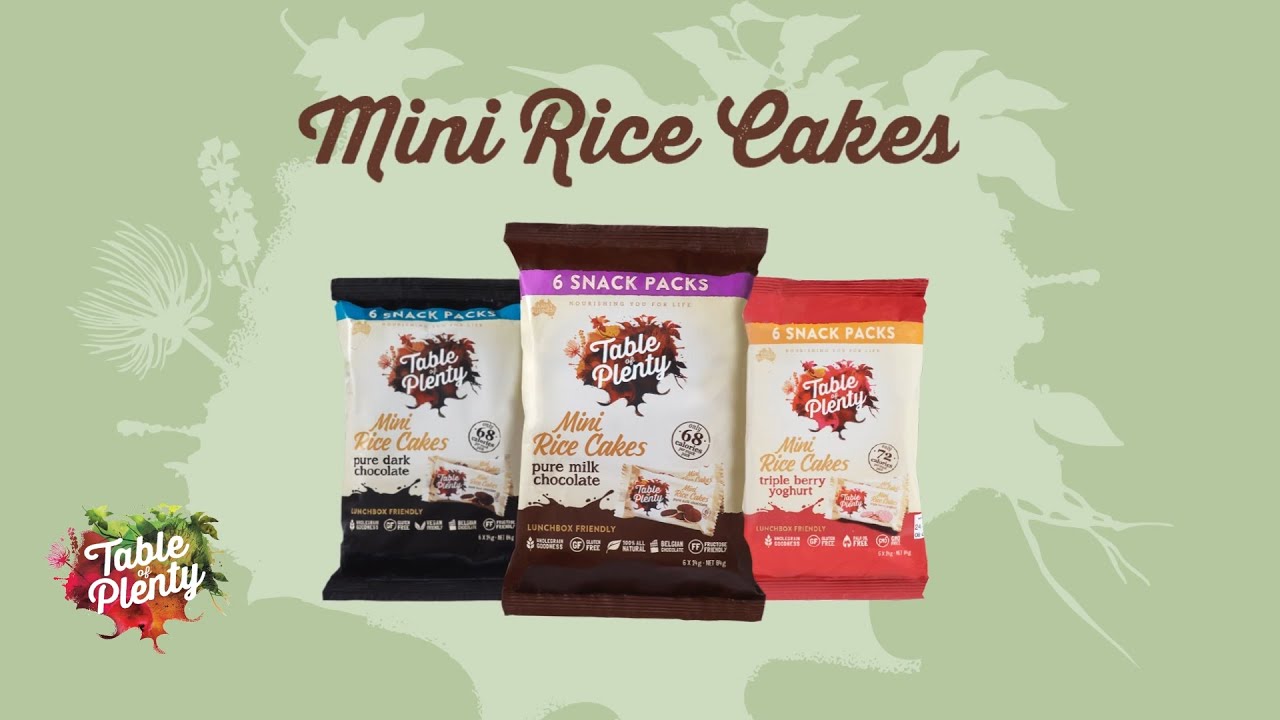
    Table of Plenty, a cherished family food brand based in Australia, has recently unveiled its new product, miniature rice cakes, available in two different packaging options.

    A Nostalgia-Infused Treat

    Taking a trip down memory lane, the new product line melds together the sweet, comforting taste of milk chocolate and the vibrant visual appeal of rainbow sprinkles atop rice cakes. This innovative product promises to serve as a delightful treat for customers, harking back to the simpler times of childhood.

    Two Packaging Sizes

    These bite-sized rice cakes are being offered in two different packaging sizes to cater to varying customer needs. The smaller 102g box contains six pouches, while a larger 200g family pack is also available. These are being sold at Woolworths stores across the nation, priced at $7 and $10.50 respectively.

    Nutritional Content

    Table of Plenty has made sure that while these mini rice cakes bring joy to the taste buds, they also provide nutritional benefits. Each serving is said to contain whole grains and has a low-calorie count, making it a guilt-free indulgence. Additionally, these treats are gluten-free, lending them to a broader range of dietary preferences. They are also fructose-friendly and suitable for vegetarians, further enhancing their appeal to a wide variety of consumers.

    Questions & Answers

    What is the new product that Table of Plenty has introduced?
    Table of Plenty has introduced mini rice cakes, which are milk chocolate-topped and sprinkled with rainbow sprinkles.

    Where can these mini rice cakes be purchased and how much do they cost?
    These mini rice cakes can be bought from Woolworths stores across Australia, with the 102g box priced at $7 and the 200g family pack priced at $10.50.

    What are the dietary benefits of these mini rice cakes?
    The mini rice cakes are made with whole grains and have a low-calorie count. They are also gluten-free, fructose-friendly, and suitable for vegetarians.

  • Despite Shipping 7 Million Tonnes, Vietnam Rice Exports Witness Slump Amid Falling Prices and Weak Global Demand

    Despite Shipping 7 Million Tonnes, Vietnam Rice Exports Witness Slump Amid Falling Prices and Weak Global Demand

    From the start of the year through October 15, Vietnam exported more than 7 million tonnes of rice. Despite this significant export volume, domestic paddy and rice prices have seen a decline due to reduced purchases from exporters.

    Rice Export Data

    The cumulative rice exports from Vietnam for the mentioned period were 7.02 million tonnes. These exports were valued at approximately $3.59 billion. When compared to the same time frame from the previous year, there was a 4.4% decrease in volume and a 21.9% reduction in value, according to data from the Vietnam Food Association (VFA).

    Last week, the cost of 5% broken jasmine rice was between $420 and $435 per tonne, which is close to a two-month low. A trader based in Ho Chi Minh City reported that domestic trading activity has been relatively stagnant. This is primarily due to many exporters slowing their paddy purchases from farmers as a result of weak overseas demand.

    Domestic Market Performance

    In the domestic market, jasmine paddy was trading at approximately $0.20 per kilogram, reflecting a decrease from the previous week. Conversely, the price of ordinary paddy saw an increase to an average of $0.20 per kilogram, as reported by the VFA.

    In Can Tho, a city in the Mekong Delta region, prices for various types of paddy remained steady. For instance, jasmine paddy was priced at $0.36 per kilogram, OM 18 at $0.29, IR 5451 at $0.27, and ST25 at $0.40, as per the data shared by the Institute of Policy and Strategy for Agriculture and Environment.

    In An Giang province, the Department of Agriculture and Environment reported that fresh paddy prices ranged from $0.21 to $0.25 per kilogram, depending on the variety. Retail rice prices within the province were observed to range between $0.52 and $0.95 per kilogram.

    Production Updates

    Regarding production, the Ministry of Agriculture and Environment stated that by October 20, nearly 1.24 million hectares of the 2025 summer-autumn crop were sown across the Mekong Delta provinces. Harvesting has been completed with an average yield of approximately 6.06 tonnes per hectare, or an estimated total of 7.51 million tonnes of paddy.

    For the autumn-winter crop, 763,000 hectares were planted, surpassing the planned area by 102.8%. Of this, 263,000 hectares have been harvested with an average yield of 5.68 tonnes per hectare.

    Questions & Answers

    What is the total volume of rice that Vietnam exported from the beginning of the year through October 15?
    Vietnam exported more than 7 million tonnes of rice during this period.

    How have domestic paddy and rice prices in Vietnam been affected?
    Domestic paddy and rice prices have seen a decline due to reduced purchases by exporters.

    What has been the impact on domestic trading?
    Domestic trading activity has been relatively stagnant due to many exporters slowing their paddy purchases from farmers because of weak overseas demand.

  • Thailand’s Rice Exports Face 10-Month Decline: What It Means for the Global Market

    Thailand’s Rice Exports Face 10-Month Decline: What It Means for the Global Market

    Thailand’s rice exports have plunged 30% year-on-year, reaching just US$3.94 billion in August, marking a grim milestone as the country endures a 10th consecutive month of decline.

    According to the Ministry of Commerce’s Trade Policy and Strategy Office, export volume also slipped, down 16.9% to 739,497 tonnes during the same month. The downturn has impacted major markets, including the U.S., South Africa, Senegal, Iraq, and Mozambique, with few bright spots in shipments to Cameroon, China, Malaysia, Hong Kong, and Canada, where demand surprisingly increased.

    Over the first eight months of the year, Thailand’s total rice exports have exceeded 5 million tonnes, reflecting a significant drop of 24.1% compared to the previous year. This substantial decrease comes at a time when domestic rice prices are also trending downward. As reported by the Thai Rice Millers Association, the price of white rice stood at THB6,500-6,700 (approximately US$201-208) per tonne as of Wednesday, which is a THB200 reduction from just a week earlier. Meanwhile, jasmine rice prices appear to be holding steady at THB15,500-16,000 per tonne.

    Market Forces at Play

    With rice being a staple in many households, these shifts in Thailand’s export landscape are raising eyebrows and prompting discussions about broader agricultural strategies. While exports slump, rice’s domestic pricing trends indicate potential shifts in supply and demand that could reverberate throughout the economy.

    Unexpected Bright Spots

    As Thailand grapples with these export challenges, the uptick in shipments to certain countries could signal changing consumer preferences or emerging markets that are keen to fortify their rice supply chains. Amidst the sea of declines, it’s a little like finding a pearl in an oyster—a rare but valuable indication that opportunities still exist.

    What’s Next for Thai Rice?

    Analysts are now closely monitoring how this continuing export decline could affect local farmers, as agricultural livelihoods hang in the balance. As Thailand strives to maintain its position as one of the world’s top rice exporters, the path forward is uncertain but undoubtedly crucial.

    Questions & Answers

    How significant is the decline in Thailand’s rice exports?
    The decline is quite significant, with a 30% drop year-on-year in August, reflecting continued challenges in Thailand’s rice export market.

    Which markets experienced a decrease in rice imports from Thailand?
    Major markets like the U.S., South Africa, Senegal, Iraq, and Mozambique reported declines in rice imports, demonstrating the broad impact of these export challenges.

    What are the current domestic rice prices in Thailand?
    As of Wednesday, domestic prices for white rice were reported between THB6,500-6,700 (about US$201-208) per tonne, showing a slight decrease, while jasmine rice prices remained stable at THB15,500-16,000 per tonne.

  • Vietnamese Rice Exports Hit a Standstill as Philippines Imposes Import Ban

    Vietnamese Rice Exports Hit a Standstill as Philippines Imposes Import Ban

    In the heart of Vietnam’s Mekong Delta, traders like Hang are feeling the pinch. In a region renowned for its rice production, Hang purchased only a few tons last week, a stark contrast to his usual orders of hundreds. Amid this landscape of caution, rice exporters are navigating a murky market, grappling with decisions that could impact their bottom lines.

    Philippine Market Suspension Sends Shockwaves

    Nguyen Chi Thanh, director of the rice division at export company Angimex, captured the mood succinctly: “Prices remain low, but we dare not buy much.” This hesitancy has been exacerbated by the Philippine government’s recent decision to suspend rice imports for 60 days, a move aimed at shielding local farmers. As the Philippines typically accounts for over 40% of Vietnam’s rice export market, this abrupt halt has cast a shadow over procurement practices in the Mekong region.

    Across the globe, the pricing dynamics are shifting. Vietnam’s 5% broken rice is currently priced at $399 per ton, making it more expensive than similar varieties from Thailand and India. As demand falters internationally, buyers are increasingly hunting for cheaper alternatives, intensifying competitive pressure on Vietnamese exporters.

    Local Authorities Urge Caution and Strategy

    Faced with this volatility, local authorities in the Mekong Delta are advising exporters to exercise prudence amidst global uncertainties. The Department of Industry and Trade in Vinh Long, a province that heavily relies on exports to the Philippines, has issued a timely notice urging companies to remain vigilant and patient as market conditions evolve. Diversifying export markets is also touted as a strategy to mitigate risks.

    Despite these challenges, Vietnam exported 6.3 million tons of rice valued at $3.17 billion in the first eight months of the year. However, while export volumes saw a slight uptick, the value plummeted by nearly 18% due to falling prices. The Philippines remains Vietnam’s largest buyer, importing 2.6 million tons.

    Looking Ahead: Diversification is Key

    On September 1st, the Ministry of Industry and Trade emphasized the importance of keeping a close eye on market trends and warned against overreliance on any single buyer. Leaders are advocating for expanded trade relationships with countries such as China, Indonesia, Malaysia, and nations across Africa and the Middle East.

    Prime Minister Pham Minh Chinh has thrown his weight behind the diversification efforts, calling for improved market strategies to ensure food security in light of the fluctuating rice export landscape. He has also directed the State Bank of Vietnam to enhance credit resources for rice production and trading enterprises while urging the Ministry of Industry and Trade to intensify outreach to countries with whom Vietnam has free trade agreements, including the U.S., South Korea, and the E.U.

    Experts remain optimistic; while higher prices compared to competitors like Thailand and India may appear disadvantageous, they have not diminished Vietnam’s market presence. Major clients continue to place orders, attracted by the country’s reputation for quality and reliability. Additionally, analysts point to potential opportunities in Africa and the Middle East as challenges in supply chains from Thailand and India persist.

    Though the Philippine market poses a setback for now, projections suggest that Vietnam’s rice exports could exceed eight million tons this year, reinforcing its status as the world’s second-largest rice exporter, trailing only India. Exporters remain hopeful that prices will rebound as global demand increases and the Philippines resumes imports, making the situation as ripe with potential as the golden fields of rice in An Giang.

    Questions & Answers

    How are Vietnamese exporters responding to the suspension of rice imports by the Philippines?
    Exporters are adopting a cautious approach, limiting their purchases and exploring strategies to diversify markets in response to the suspension.

    What factors are influencing the current pricing of Vietnamese rice on the global market?
    Vietnam’s rice prices are affected by competitive pressures from lower-priced rice from Thailand and India, combined with a decrease in global demand.

    What are the government’s recommendations for Vietnamese rice exporters moving forward?
    The government urges exporters to diversify their market base, expand their reach to new regions, and stay vigilant to market changes to mitigate risks.

  • Rice Exports Poised for Record-Breaking Surge, Targeting Over 8.2M Tonnes!

    Rice Exports Poised for Record-Breaking Surge, Targeting Over 8.2M Tonnes!

    In a surprising twist for the global rice market, Vietnam’s rice exports are anticipated to exceed 8.2 million tonnes this year, despite a temporary suspension of rice imports from its biggest buyer, the Philippines. This surge is powered by increased shipments to countries like Bangladesh, China, and South Africa.

    The Philippines, recognized as the world’s largest rice importer, purchased 4.8 million tonnes of rice from international markets last year, with Vietnam supplying an impressive 3.6 million tonnes of that total

    In the first half of this year, Vietnam exported 5.5 million tonnes of rice, generating a revenue of US$2.81 billion. Unsurprisingly, the Philippines remained its principal market, though the revenue saw a notable drop of 13.5% year-on-year.

    Though shipments to the Philippines have slowed down, exporters are optimistic, having secured new contracts at higher prices and successfully expanded their clientele across ASEAN and South African markets.

    Earlier this month, in response to falling domestic prices, the Philippine government announced a two-month pause on rice imports starting September 1. Nevertheless, market analysts remain upbeat, predicting strong overall exports for Vietnam, driven by rising demand in other regions.

    The United States Department of Agriculture (USDA) has updated its forecast, now estimating Vietnam’s total rice exports at 8.2 million tonnes for the year, an increase of 300,000 tonnes from previous predictions. As the year wraps up, shipments are expected to rise, propelled by heightened demand from Africa and China. Even with the Philippine import suspension expected to reduce its purchases by 500,000 tonnes, it may still lead the world with total rice imports of around 4.9 million tonnes.

    Do Ha Nam, Chairman of the Vietnam Food Association, expressed strong confidence that with the robust performance recorded in the first seven months, Vietnam’s rice exports will indeed surpass 8 million tonnes this year. He emphasized the country’s unique brand identity and increasing international recognition, solidifying its position as the world’s second-largest rice exporter.

    Questions & Answers

    How has Vietnam managed to maintain high rice export levels despite the Philippines’ import suspension?
    Vietnam has effectively diversified its customer base by expanding shipments to countries in the ASEAN region and South Africa while securing new contracts at improved prices.

    Why has the Philippines suspended rice imports temporarily?
    The Philippine government announced a two-month suspension of rice imports due to falling domestic prices, aiming to stabilize the local market.

    What role does the USDA play in forecasting Vietnam’s rice export numbers?
    The USDA provides crucial projections for agricultural exports, and it recently adjusted its forecast for Vietnam’s rice exports upwards, reflecting growing global demand.

  • Vietnam Rice Prices Plummet as Philippines Suspends Imports: What’s Next for the Market?

    Vietnam Rice Prices Plummet as Philippines Suspends Imports: What’s Next for the Market?

    In Vietnam’s Mekong Delta, often dubbed the nation’s “rice bowl,” traders are becoming increasingly cautious in their purchasing decisions. This hesitation stems mainly from uncertainties regarding rice exports to the Philippines, a key market. “I am only buying cautiously to sell domestically, as export shipments are on hold, awaiting new signals from buyers,” said Huyen, a seasoned trader from An Giang Province.

    Prioritizing Existing Contracts Amid Export Challenges

    Meanwhile, in Dong Thap Province, rice mills are working diligently to fulfill existing contracts with the Philippines, focusing on old agreements as new orders have noticeably dwindled. Recent market shifts have seen prices for popular varieties like Dai Thom 8 and OM18 rice decrease by 4%, landing at VND11,000 (US$0.42) per kilogram.

    An anonymous rice export company in Dong Thap voiced concerns over the impact of the Philippines’ two-month import suspension, a significant disruption for a market that represents almost 45% of Vietnam’s rice export revenue. “The business plans have been thrown into disarray,” the company representative lamented.

    Seasonal Struggles and Rising Costs

    The timing couldn’t be worse, coinciding with peak harvest season. The slowdown in contracts has caused inventory levels to swell while storage expenses have surged. Nguyen Chi Thanh, the rice division director of agriculture exporter Angimex, remarked that prices for the summer-autumn and autumn-winter seasons are likely to decline drastically, making the struggle to find new markets even more daunting. “Other importing countries might seize this opportunity to negotiate lower prices,” he warned.

    Additionally, exporters have faced long-standing challenges in obtaining phytosanitary certificates required by the Philippines, a lengthy process that has complicated the establishment of long-term contracts since 2019. While online licensing began on July 7 of this year, the extensive paperwork and rising costs continue to put pressure on profit margins.

    Impact on Farmers and Future Strategies

    The ripple effects of the Philippines’ import suspension are widespread. According to Do Ha Nam, chairman of the Vietnam Food Association, halted contracts have led to mounting inventories and intensified downward pressure on domestic rice prices. The Ministry of Industry and Trade highlighted that these developments have depressed export prices and narrowed profit margins, severely impacting farmers’ incomes. It urged businesses to maintain reserves and avoid panic selling while fostering collaboration among agencies to explore new markets, particularly in the Middle East, Africa, and Northeast Asia.

    The Philippines justified its decision by aiming to protect its domestic market amid plummeting local rice prices. In response, the Vietnam Food Association has called on the trade ministry to engage in dialogue with the Philippines to clarify which rice types are affected and to resolve procedural hurdles to sustain trade, minimize losses, and safeguard farmers’ interests.

    Seeking Support and New Opportunities

    Both nations are implementing a memorandum on rice trade cooperation that was signed on January 30 last year and remains valid until the end of 2028. The Vietnamese rice sector now seeks assistance from various ministries to ensure seamless production and exports amidst market volatility. The trade ministry has appealed to Prime Minister Pham Minh Chinh to direct financial measures, including expediting value-added tax refunds for exporters, and to plan national rice reserve purchases to mitigate unfavorable market fluctuations.

    Remarkably, in the first seven months of this year, rice exports to the Philippines saw a decline of 13.5% year-on-year, while other markets flourished, including Ghana (53.5%), Ivory Coast (96.6%), and an astonishing increase in exports to Bangladesh by 188 times.

    Questions & Answers

    How has the rice export market been affected by the Philippines’ import suspension?
    The suspension has disrupted contracts, increased inventories, and pressured domestic prices, with exports to the Philippines dropping by 13.5% in the first half of the year.

    What are the primary concerns for Vietnamese rice exporters?
    Concerns center around rising storage costs, reduced profit margins due to decreased prices, and challenges in obtaining necessary export certifications.

    What steps is the Vietnamese government taking to address these market challenges?
    The government is urging companies to maintain reserves while exploring new markets and has called for expedited financial measures to support rice exporters facing losses.

  • China remains Vietnam’s top rice importer

    China remains Vietnam’s top rice importer

    According to the Ministry of Agriculture and Rural Development, Vietnam exported 2.8 million tonnes of rice valued USD1.2bn in the first six months of 2017. Both the volume and value increased by 6.3% and 4.9% respectively compared to last year.

    However, average prices in the first five months decreased by 0.9% to USD445.5 per tonne compared to last year.

    China continues to be Vietnam’s top importer. In the first five months, Vietnam exported 1.1 million tonnes of rice to China for USD488m as demands from China is huge. Chinese traders often buy rice directly from the firms’ storage and then imported into China via border gates or commissioned another importer. They also re-export the rice to other countries.

    Pham Thai Binh, director of Trung An Hi-tech Farming JSC, said requirements from Chinese traders were getting tighter, similar to other markets like the US and Japan. Not only the rice must be safe but their origin could also be tracked. Currently, only 22 out of 150 Vietnamese firms were able to export to China.

    Despite exporting huge volumes of rice to China, Vietnam is still unable to build a recognisable brand name there as most of the rice is repackaged by Chinese traders.

    Loc Troi Group is the only firm that have a contract with Hunan Leading Science and Technology Development Co Ltd to officially distribute rice and other agriculture products in an attempt to build a Vietnamese rice brand in China.

  • Rice exports surge to new record

    Rice exports surge to new record

    According to the Ministry of Agriculture and Rural Development, Vietnam set a new record in rice export revenue in the first nine months of 2023 thanks to price increases.

    The ministry has reported that the country earned US$3.66 billion from exporting rice in the period, up 40.4% year-on-year.

    The result was attributed to the increasing price of Vietnamese export rice, and the decreasing rice supplies in many markets during the reviewed period, it said.

    Vietnam’s average price of exported rice in the first three quarters reached $553 per tonne, a 14% increase over the same period in the previous year.

    The Philippines was the largest buyer of Vietnamese rice products in the first eight months, accounting for 40.3% of the total rice export. China and Indonesia ranked second and third, accounting for 13.5% and 12.4%, respectively.

    According to Vice General Director of the Export-Import Department under the Ministry of Industry and Trade Tran Thanh Hai, the price of exported rice is expected to remain high until the end of this year due to the continued demand for rice imports in major consuming markets such as the Philippines, China, Indonesia, Malaysia, and Africa. This is coupled with the limited supply of rice from leading rice exporters like India and Pakistan.

    President of the Vietnam Food Association (VFA) Nguyen Ngoc Nam stressed that there is ample room for rice exports to grow, especially as the Philippines needs to import an additional 1.1 million tonnes, while Indonesia plans to buy 2.3 million tonnes by the end of the year.

    China’s demand for rice imports is also forecast to increase in the remaining months of the year, Nam said.

    Rice exporters are advised to have appropriate strategies to ensure the ability to meet exports.

  • Philippines Sees Nearly 21% Decline in Rice Imports: A Shift in Agricultural Landscape

    Philippines Sees Nearly 21% Decline in Rice Imports: A Shift in Agricultural Landscape

    The Philippines is witnessing a notable shift in its rice import landscape, as the archipelago’s imports fell sharply to 1.7 million tons within the first five months of 2025. This represents a significant decline of 20.9% compared to the same period last year.

    Domestic Production on the Rise

    A contributing factor to this decrease is a slight improvement in domestic rice production, which reached 4.69 million tons in the first quarter of 2025. This is a modest increase from the 4.68 million tons produced during the same quarter a year prior. Despite this short-term dip in imports, the United States Department of Agriculture (USDA) forecasts that the Philippines will continue to hold its position as the world’s largest rice importer in 2025. The USDA anticipates imports to climb to 5.4 million tons, with a further increase to 5.5 million tons expected in 2026. The driving forces behind this expected rise include a growing population, increased tourism, and the enduring role of rice as a staple in the Filipino diet.

    Government Initiatives to Stabilize Prices

    In light of these trends, the Philippine government is taking proactive measures to stabilize rice prices and ensure they remain accessible to consumers. An executive order signed in June 2024 reduces the tariff on imported rice to 15%, a rate that will remain in effect until 2028, with periodic assessments every four months.

    Agriculture Secretary Francisco Tiu Laurel Jr. has hinted that the Department of Agriculture may propose a gradual hike in import tariffs during the upcoming harvest season. This initiative aims to bolster support for local farmers while managing the influx of imported rice, showcasing the country’s commitment to balancing domestic agricultural productivity with the need for imports to meet national consumption demands.

    In a twist of fate, while the country may be reducing its rice imports, it certainly isn’t skimping on its love for this beloved staple!

    Questions & Answers

    What are the main reasons for the decrease in rice imports in the Philippines?
    The decrease is primarily due to a slight increase in domestic rice production, which rose to 4.69 million tons in early 2025, providing a modest buffer against imports.

    How much rice does the USDA expect the Philippines to import in the coming years?
    The USDA projects that rice imports will reach 5.4 million tons in 2025 and increase to 5.5 million tons in 2026, positioning the Philippines as the leading rice importer globally.

    What measures is the Philippine government taking to stabilize rice prices?
    The government has reduced the tariff on imported rice to 15% under an executive order, effective until 2028, while considering gradual increases in tariffs to support local farmers amidst rising import needs.

  • Thai rice prices hit over three-year low

    Thai rice prices hit over three-year low

    Prices of rice shipped from Thailand declined to an over three-year low this week due to US President Donald Trump’s move to impose import tariffs and an existing market surplus.

    Meanwhile, India’s rice export prices neared a two-year low on subdued demand. The US announced to impose a flat 26% tariff on all goods being exported by India to the US, a 36% tariff on goods from Thailand, and 37% on Bangladeshi products.

    Thailand’s 5% broken rice fell to $395-400 per tonne, its lowest since January 2022.

    Meanwhile, India’s 5% broken parboiled variety was quoted at $392-400 per tonne and fell to its lowest level in nearly 22 months on subdued demand from African buyers amid ample supplies. Indian 5% broken white rice was priced at $380 – 385 per tonne this week.

    Overseas buyers incurred losses due to the sharp drop in prices over the last few weeks, so they are cautious about new purchases, said Himanshu Agrawal, executive director at Satyam Balajee, a leading rice exporter.

    According to traders, Vietnam’s 5% broken rice was offered at $405-410 per tonne.

    A Ho Chi Minh City-based trader said that prices edged up as the major winter-spring harvest is almost over. The Trump administration’s new tariffs will not have any direct impacts on rice exports from Vietnam.

    Traders said domestic prices are also rising, led by prices of fragrant rice.

    Meanwhile, domestic rice prices in Bangladesh stayed elevated despite efforts to import the grain, hitting consumers hard.

  • Rice exports grow by over 23%

    Rice exports grow by over 23%

    Vietnam’s rice exports from Jan. 1-15 reached 268,700 tons worth nearly US$165.7 million, up 38.7% in volume and 23.28% in value year-on-year, according to the Vietnam Food Association.

    However, export prices for 5% broken rice fell to $413 per ton, with 25% broken rice at $387 per ton.

    Despite the positive start, the VFA predicts a challenging year for rice exports, citing global competition and India’s return to the export market. The projected annual export volume for 2025 is 7.5 million tons, down from the record 9.04 million tons in 2024.

    In the domestic market, farmers in the Mekong Delta are facing slower demand and lower prices for rice. Key varieties like IR 50404 and OM 5451 are trading at VND5,500–5,700 (US$0.22-0.23) and VND5,800–6,000 per kilogram, respectively. The decline is attributed to ample global supply, particularly from competitors such as India and Thailand.

    Retail rice prices in An Giang are at VND15,000-22,000 per kg, depending on the variety. Meanwhile, by-products like rice bran and broken rice fetch between VND5,600–7,300 per kg.

    As of January 20, Mekong Delta provinces have sown over 1.46 million hectares of the winter-spring crop, with 85,000 hectares already harvested.

    However, erratic weather, including alternating rain and sunshine, has heightened risks of diseases such as leaf blight and pests like gall midges, particularly in provinces such as Dong Thap and Kien Giang.

    The agriculture sector advises farmers to closely monitor their fields and take preventive measures to minimize potential losses early in the season.

  • Rice export prices drop to 4-year low

    Rice export prices drop to 4-year low

    Vietnam’s 5% broken rice price has fallen to US$434 per ton, the lowest in four years, posing challenges for businesses and farmers.

    The price of the country’s 5% broken rice is now lower than that of its major competitors such as Thailand ($479), India ($440), and Pakistan ($448) per ton, according to the Vietnam Food Association.

    Hoang, a rice farmer in Can Tho City, expressed concerns about the winter-spring rice crop, which will be harvested after Lunar New Year (Tet) that peaks on Jan 29.

    He worries that continued price declines could result in losses for his family due to high input costs.

    “The sharp fall in rice prices has made traders hesitant to sign new contracts with farmers,” Hoang said.

    “Last year, at this time, traders were placing high deposits continuously, but now, no one is asking to buy rice. Many traders have already started their Tet holiday early.”

    A leader of a rice exporting enterprise in An Giang revealed that his company is focusing on fulfilling previously signed contracts. New contracts for the first and second quarters of 2025 have been delayed.

    “Rice prices are fluctuating continuously, and enterprises are wary of potential losses if they buy rice at high prices,” he explained. “We are closely monitoring the market and actual demand to make reasonable purchasing decisions.”

    The sharp decline in Vietnam’s rice export prices is attributed to several factors, including major rice-importing countries adopting policies to reduce imports, avoid high-priced purchases, and, in some cases, even announcing plans to halt rice imports in 2025.

    A representative of the food association, said the Philippines and Indonesia, two of Vietnam’s key rice buyers, increased their imports in 2024 to secure short-term inventories for food security. As a result, they are currently not rushing to buy Vietnam’s rice and are waiting for prices to drop further.

    India’s recent decision to resume rice exports, coupled with its abundant supply and competitive pricing, has also significantly impacted the global market, including Vietnam.

    Reports revealed that the Philippines is negotiating a contract to import more rice from India.

    Private buyers in the Philippines often purchase Vietnamese rice with limited quantities because of financial balance, capital turnover or bank debt repayment, further cooling down the market.

    In the coming time, as the 2024–2025 winter-spring crop reaches its peak harvest, rice prices are expected to face further downward pressure.

    According to the U.S. Department of Agriculture, global rice supply is expected to increase significantly this year, with production projected to hit a record high of over 530 million tons, up 3.1 million tons from the previous forecast.

    The rise in supply is largely attributed to India lifting its ban on non-Basmati white rice exports and expecting to export 21–22 million tons of rice in 2025, an increase of 5 million tons compared to 2024.

    In addition to India, other countries such as Egypt, Guyana, Japan, and Venezuela are also contributing to the increased production. However, the Philippines stands out as an exception, with its output forecast to decline.

    To maintain and expand market share, rice-exporting countries will need to adopt flexible market access strategies, focus on improving product quality, and explore new markets.

  • Thailand’s rice export prices dip to 14-month low

    Thailand’s rice export prices dip to 14-month low

    Thai rice export prices fell to a 14-month low this week due to weak demand and competition from other rice exporting countries.

    Thai 5% broken rice was priced at US$560 per ton, the lowest level since July 20, 2023 and down from $565 last week.

    A Bangkok-based trader said on Thursday that prices could fall further if the Thai baht depreciates. Another trader said the market was waiting to see changes in Indian rice policy in the coming months and that supply was in the harvesting stages.

    Meanwhile, Vietnamese 5% broken rice was exported at $565 per ton on Thursday, according to the Vietnam Food Association, also down from around $580 last week.

    “Prices fell on competition from other suppliers such as Thailand, Cambodia and Myanmar,” a trader based in Ho Chi Minh City said.