Retail News CRM

Tag: rice

  • Vietnam secures title for World’s Best Rice

    Vietnam secures title for World’s Best Rice

    Vietnam has been named the winner of the World’s Best Rice Contest for the second time, with six varieties, including the renowned ST25.

    The six varieties were submitted by two each from three companies: Ho Quang Tri Private Company, Loc Troi and Thaibinh Seed.

    They include the ST25 rice developed by farmer-scientist Ho Quang Tri which won the same contest in 2019.

    The organizer did not give an award for one specific variety this year but instead awarded a country as a whole. Cambodia came second and India third.

    30 rice samples were submitted by more than 10 countries for this contest.

    ST25 rice is the result of 25 years of work by farmer-scientist Ho Quang Cua and his colleagues who cross-bred the premium fragrant rice of Soc Trang Province described as having a sweet taste and a hint of pineapple flavor.

    The World’s Best Rice Contest, hosted by the Philippines this year, is held annually since 2009 by U.S. firm The Rice Trader. Last year, Cambodia claimed the first place.

  • Domestic rice prices reach new peak

    Domestic rice prices reach new peak

    Vietnam’s domestic rice prices have surged to a new record amid rising export demand while authorities ensure there is no supply shortage for consumers.

    Rice seller Thanh in Ho Chi Minh City’s Tan Binh District said that he has recently sourced price the popular Dai Thom rice from manufacturers at VND21,000 ($0.85) per kilogram, up 5% from last month and 16% year-on-year to a new record.

    Other types rose 7% from a month ago, he added.

    In Go Vap District, rice shop owner Hoa said prices had risen 12% from last month for certain brands.

    “Manufacturers say that prices will continue to rise as they have already placed orders at farmers who demanded higher prices,” he said.

    Supermarkets are also selling at prices 5-10% higher year-on-year.

    WinMart has raised prices on most of its rice, while Central Retail said that it has yet to adjust retail prices, to support consumers, even though suppliers have raised prices by 10%. Saigon Co.op is considering raising prices.

    Businesses that use a lot of rice are feeling the heat. Hoang Oanh, owner of a rice noodles manufacturer in HCMC, said that she had to reduce production to minimize risks of losses as rice prices have surged recently.

    Dinh Ngoc Tam, deputy CEO of rice exporter Co May, attributed the price rise to surging global demand.

    As India’s ban on some rice variety exports remains, the world is seeing a 40% drop in supply from the country, while other countries such as Indonesia, China and the Philippines still have high demands.

    Indonesian businesses are willing to buy from Vietnamese exporters at up to $650 per ton, a record high, according to data from exporters.

    There is no concern about domestic supply, but as traders are competing and paying more to ensure they can fulfil export orders, prices are rising, Tam said.

    Other industry insiders say that Chinese importers are buying more to ensure supply for their Lunar New Year holiday next year, which pushed up prices.

    Nguyen Nhu Cuong, head of the Department of Horticulture under the Ministry of Agriculture and Rural Development, said that there was no concern about a shortage in the domestic rice market.

    The rice crop area has increased by 30,000 hectares year-on-year, he added.

    In the first season of next year, yield is set to rise from 2022 to reach 20 million tons of paddy as farmers’ techniques are improved, he said.

  • Vietnam rice export price climbs amid thin supply

    Vietnam rice export price climbs amid thin supply

    Vietnam’s rice price continues to rise as the harvest season ends, creating a shortage of supply.

    Vietnam’s 5% broken rice is now at $623 per ton, 7% higher than that of Thailand and 10.7% higher than that of Pakistan.

    The domestic paddy price has also been rising to unprecedented levels. Japanese paddy J02 is now priced at up to VND14,000 ($0.57) and Khang Dan VND9,000, which have never been recorded before.

    Traders have been buying in large orders amid a decline in supply as the season ends, and this is why paddy prices are high, farmers said.

    Huynh Thi Bich Huyen, CEO of rice trading company Ngoc Quang Phat, said that she can only buy several hundred tons of paddy each day, which is one-third of last month.

    This shows a shortage in supply and that is why prices are hiked, she added.

    Rice exports surged 40.4% year-on-year to $3.66 billion in the first nine months of this year. It is forecast to reach a new peak of $4 billion by the end of the year.

    The average export price was $553 per ton in the first nine months, up 14% year-on-year.
    Farmers have seen their profits double from last year.

    The Vietnam Food Association forecast that rice prices will stay at a high level in the remaining months as supply will still be low globally.

    Countries such as Indonesia, China, the Philippines, Turkey and Chile have all upped their imports.

  • Rice exports all set for record high this year

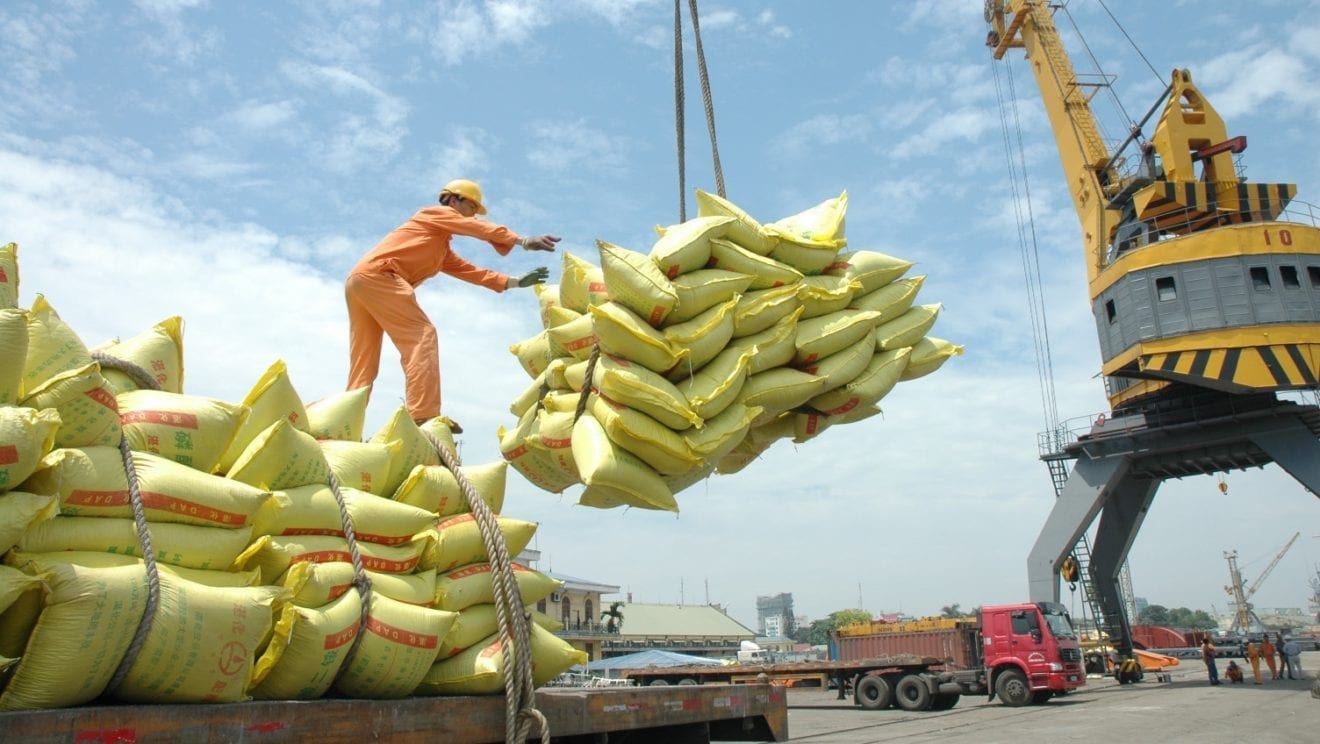
    Vietnam’s rice exports are likely to reach record volumes this year on the back of burgeoning global demand and its large output.

    Le Thanh Tung, deputy head of the Ministry of Agriculture and Rural Development’s farming department, expected global demand to exceed Vietnam’s export capabilities.

    India’s recent rice ban has caused several countries such as Indonesia to increase imports, and the Philippines is considering a cut in rice import tax from 35% to 10% to ensure supply, he said.

    “But Vietnam’s availability for exports is not too high.”

    Its paddy production is expected to increase by 1.8% from last year to 24 million tons this year, according to the ministry.

    Rice exports in the first eight months jumped by 20%year-on-year to 6 million tons.

    Nguyen Ngoc Nam, chairman of the Vietnam Food Association, said at least 1.2 million tons would be exported from now until the end of the year.

    The Philippines would remain a key market and account for around 40% of the exports, and demand from China would rise due to low production, he said.

    Around 400,000 hectares could be harvested in the final crop of the year, and they include many high-quality varieties, he added.

    Demand for Vietnamese rice has been growing in recent years.

    Vietnam has an 80% share of the Philippines rice market.

    With demand from other countries rising, its rice exports are now fetching high prices.

    Nguyen Viet Anh, CEO of Phuong Dong Food, one of the top exporters, said prices have surged from VND3,000 per kilogram in 2019 to around VND8,000 ($0.12) now.

    “Rice is an essential product, but many countries are not able to produce it and therefore prices are high,” he said, adding that India does not intend to lift its ban until next year.

    Some of Vietnam’s rice varieties are now better than Thailand’s, and so at times exporters do not have enough stocks to ship, he added.

  • Prices of Vietnam’s exported rice highest in the world

    Prices of Vietnam’s exported rice highest in the world

    Prices of Vietnam’s exported rice are still the highest in the world, with that of 5% broken rice reaching 638 USD per tonne, and 25% broken rice $623 per tonne, according to the Vietnam Food Associaion.

    Meanwhile, Thailand’s 5% broken rice is sold at $628 per tonne, and that of Pakistan at 598 USD a tonne.

    In the Mekong Delta – the largest rice granary of Vietnam, the price of paddy rice remains at an unprecedented high level in many localities, helping farmers achieve good profits.

    In July, the United Nations Food and Agriculture Organisation (FAO)’s rice price index rose to its highest level in nearly 12 years. The move was due to a spike in prices in key rice exporting countries after India imposed export restrictions.

    Recently, the Vietnamese Ministry of Industry and Trade announced the list of 210 businesses that are eligible to export rice.

    According to the ministry, in the first seven months of this year, Vietnam exported 4.83 million tonnes of rice. The country plans to export about 2.67 million tonnes in the remaining five months of the year.

  • Global rice crisis nothing like in 2008

    Global rice crisis nothing like in 2008

    After India banned rice exports, prices of the grain have shot up but are unlikely to top the US$1,000 per ton levels reached in 2008 in the current scenario.

    India prohibited the export of non-Basmati rice varieties in late July, driving up global prices.

    The export prices of Vietnam’s 5% broken rice jumped by $25 per ton.

    In some Vietnamese rice-growing areas, traders have been scrambling to buy the grain to fulfill contracts they have signed, pushing up prices steadily.

    Do Ha Nam, vice president of the Vietnam Food Association, said export prices climbed to $700 per ton on August 10, the highest since 2008.

    On August 17, following reports that India would soon lift the ban, the prices began to edge down again.

    In Vietnam, retail prices jumped by VND3,000-5,000 per kilogram in August to VND18,000-20,000 ($0.76-0.84).

    For many people, the developments are redolent of 2008.

    Vo Tong Xuan, a scientist who created many award-winning rice varieties, said in 2008 export prices reached 100-year highs of more than $1,000 a ton.

    The world faced a food shortage that year.

    The weather was unfavorable, oil prices were high, food reserves were low, and demand was rising in countries such as China and India.

    Xuan said the Vietnamese government at that time ordered exporters not to sign new contracts and capped exports for the year at 4.5 million tons.

    But, worried about the rising prices and low supply, people rushed to buy and hoard rice, but traders refused to sell, waiting for prices to climb further.

    In the event, prices skyrocketed from VND12,000 to VND20,000 per kilogram.

    Xuan said that scenario is unlikely to reoccur even though both times India, which accounts for 40% of the world’s supply, banned rice exports.

    In 2008, global rice reserves fell and demand exceeded supply, he said.

    According to the United Nations Food and Agriculture Organization, Asia’s rice stocks at that time were low, falling from 140 million tons to 60 million tons in 2007 before recovering to 105 million tons a year later.

    At least 37 countries faced a food crisis as prices suddenly increased from $550 to $1,000.

    Xuan said this year global rice stocks have decreased but not significantly.

    India banned exports on July 20, but the latest reports from that country show that rainfall has increased again since the beginning of August and is conducive for sowing the summer-autumn crop.

    Data from the Indian Ministry of Agriculture shows that, as of August 4, 28.3 million hectares had been sown, 3.4% more than a year ago.

    India has 24.6 million tons of rice and 13 million tons of paddy in reserve, three times target set by the government.

    India is therefore expected to lift the ban soon, and this would quickly bring rice prices down.

    Nam said the world market would adjust soon. In 2008 global stocks had been the lowest in 30 years, but now they are only marginally lower than last year, he said.

    Global production is forecast to increase by 2% to 520 million tons.

    Thailand and Vietnam, the world’s second and third largest exporters, are encouraging exports.

    “Supply from these two countries is abundant,” Nam said.

    In Vietnam, the area under autumn-winter rice in the Mekong Delta, Vietnam’s rice basket region, has been increased from 650,000 hectares to 700,000 ha.

    Thailand and China, having learned lessons from 2008, are well prepared this time.

    China, the world’s largest rice consumer, has recovered more than 170,000 hectares of land since 2021 for farming to move toward self-sufficiency in feeding 1.4 billion people.

    Last year, President Xi Jinping called for ensuring there are 120 million hectares of arable land across the country, a number his government considers sufficient to ensure domestic supply.

    China has urged farmers to reduce cultivation of fruits and increase production of food crops, including paddy.

    Analysts expect global rice prices to increase this year, but only to around $600-800 per ton.

    “It is very difficult to reach the $1,000 mark like in 2008,” Xuan said.

    According to Bui Chi Buu, former director of the Institute of Agricultural Science for Southern Vietnam, businesses should take advantage of the opportunity to export the grain and not hoard it.

    “If they hoard in and speculate, businesses are at risk of making losses when India lifts the ban. Rice inventories will surge while the shelf life of rice is only three to six months.”

    Experts said since domestic prices are now higher than global prices, farmers, traders and exporters need to be cautious.

    Minister of Industry and Trade Nguyen Hong Dien recently instructed relevant authorities to inspect businesses and warehouses to monitor supply of rice and prevent speculation and hoarding to keep prices in check.

    This year Vietnam has some 7.1 million hectares under the grain and expects to grow 43 million tons of paddy, equivalent to 27-28 million tons of rice.

    The country exported nearly 4.9 million tons of rice worth more than $2.6 billion in the first seven months of the year, a year-on-year increase of 31% in value.
  • Rice traders desperate, make advance payment two months before harvest

    Rice traders desperate, make advance payment two months before harvest

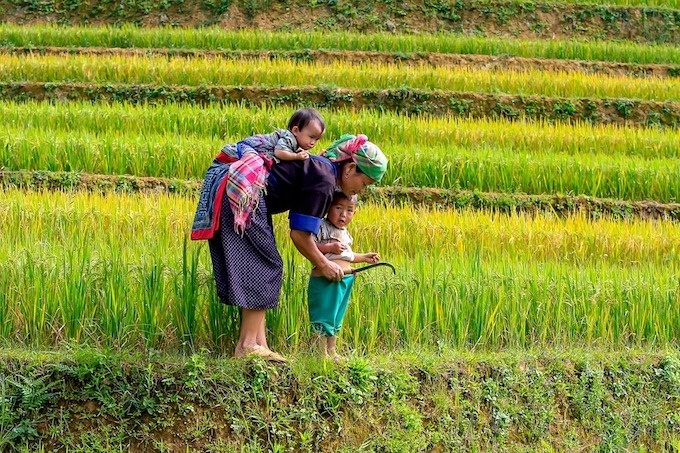
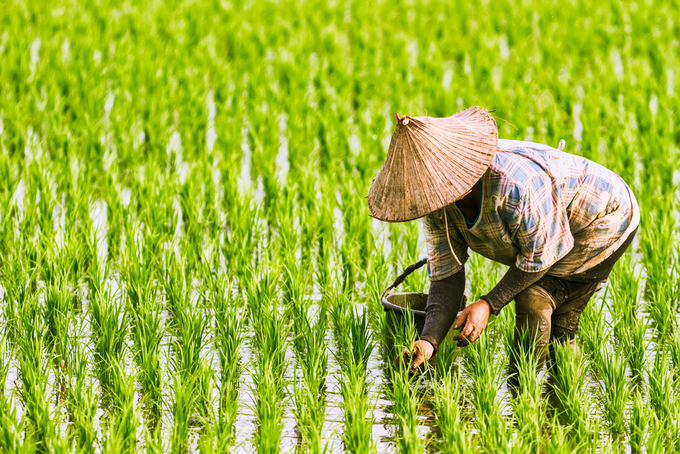
    The rice harvest in the Mekong Delta is still more than a month away, but traders are already asking to buy and even putting down deposits.

    The paddy has barely bloomed in the still green fields in Hon Dat District in Kien Giang Province, but traders have been making a beeline to them.

    On Aug. 8, three of them arrived at the 10-ha field belonging to Nguyen Van Pho and asked to buy his paddy at VND8,300 (US$0.35) per kilogram.

    But he refused since he expects a price of VND8,500 or more. “This year, traders are willing to buy paddy when it is still green,” he said. “They are willing to pay a deposit of VND5 million per hectare of paddy. This is the first time I have seen such a situation.”

    Phan Van Dong, who has worked as an intermediary between farmers and traders for more than 10 years in the province’s Giong Rieng District, said he has never seen rice prices as high as now.

    They have gone up to VND8,300 per kilogram from VND7,500 just a week ago, he said. “There are dozens of intermediaries like me and only a few hundred hectares of paddy. We are competing with each other to buy.”

    The Vietnam Food Association said foreign importers are actively seeking to buy Vietnamese rice, and willing to pay $10-20 more per ton compared to period before India imposed the ban in late July.

    India accounts for more than 40% of world rice exports, and non-basmati white and broken rice accounted for around 10 million tons of a total of 22 million tons of Indian rice exports last year, according to the U.S. Department of Agriculture. With the ban taking effect, global insiders have raised concerns about food price rises.

    In Can Tho City and Hau Giang Province too, traders are making advance payments to buy paddy though harvest is a month or two away.

    For the past 10 days, Nguyen Thanh Tam of Can Tho’s Thoi Lai district, who is growing high-quality rice on five hectares, has been pestered by traders to sell his grain at prices that have increased from VND6,200 per kilogram to VND7,500.

    The director of a rice export company in Can Tho said his company has deposited money to buy paddy grown on 30,000 hectares and expected to be harvested in the next five or six weeks.

    “To ensure we get sufficient amounts of paddy for processing for export, we have had to increase our purchase prices to VND7,500-7,800 per kilogram for normal rice and to VND8,300-8,500 for fragrant rice.”

    But he said this would mean big losses for the company since prices were lower when it had signed the export contract with a foreign partner.

    Ngoc Quang Phat Company in Can Tho said it needs 20,000 tons of rice for export, but it is difficult to buy that quantity now.

    It had signed deals with farmers to buy 50,000 tons of paddy at VND6,500 per kilogram (VND6.5 million per ton) in advance, but many are now asking it to hike the price.

    Global supply is scarce, pushing Vietnam’s export prices to record levels.

    Economist Tran Huu Hiep said the scramble occurring now is because most rice exporters cannot buy their own lands and farm the grain.

    Deputy Minister of Agriculture and Rural Development Tran Thanh Nam said the links between rice companies and cooperatives remain weak.

    The former buy 50% of their rice through traders, he said.

    He said there are 180 rice exporters in Vietnam, but only half have tied up with cooperatives to secure supply. “Businesses should step up cooperation with rice cooperatives.”

    On Aug. 6, Prime Minister Pham Minh Chinh instructed the Ministry of Agriculture and Rural Development and other ministries and local authorities to ensure this year’s target of 43 million tons of paddy, equivalent to 20 million tons of rice, is achieved.

    By early August more than 24 million tons had been harvested in the country. According to the ministry, if there are no abnormal changes in the weather, the output will be adequate to meet both domestic and export demand.

    Vietnam, which is the world’s third largest rice exporter after India and Thailand, estimates exports to be 7-7.5 million tons.

  • Vietnam food association official says no immediate plan to curb rice exports

    Vietnam food association official says no immediate plan to curb rice exports

    Vietnam has no immediate plans to restrict rice exports, a senior official of the country’s food association said on Monday, after India’s export curbs sparked worries about global supplies of the staple.

    “At the moment, Vietnamese companies are exporting rice normally,” said Nguyen Ngoc Nam, chairman of the Vietnam Food Association, which represents the country’s rice processors and exporters and works closely with the government.

    India, which accounts for 40% of world rice exports, ordered a halt to its largest export category more than a week ago to calm domestic prices, which have climbed to multi-year highs in recent weeks as erratic weather threatened production.

    Nam said prices of Vietnamese rice had soared since India’s move on July 20, adding that the harvest of the summer-autumn crop was ongoing in Vietnam, which is the world’s third largest rice exporter after India and Thailand.

    Vietnam’s 5% broken rice prices rose to $550-$575 per metric ton on Monday, traders said, their highest since 2011, from a range of $515-$525 before India’s move.

    A day after India’s export curb announcement, Vietnam’s Ministry of Industry and Trade called on the association to ensure sufficient domestic rice supplies and food security, and asked traders to balance between exports and domestic sales to stabilize domestic prices.

    Rice shipments from Vietnam in the first seven months of this year were estimated to have risen about 18.7% from a year earlier to 4.84 million tonnes, according to the government’s preliminary data. Revenue from rice exports in the period was seen up 29.6% at $2.58 billion.

    On Friday, the United Arab Emirates announced it would ban rice exports and re-exports for four months, including rice of Indian origin.

    Philippine President Ferdinand Marcos Jr. said on Saturday the country must boost its rice stocks and that he may seek a supply deal with India, worried about the potential impact of El Nino dry weather on the local harvest and about other suppliers.

    The Philippines is Vietnam’s largest rice buyer.

  • India’s rice export ban gives Vietnam golden y

    India’s rice export ban gives Vietnam golden y

    Vietnam’s rice exporters could raise prices and sign long-term contracts with buyers now that India, the world’s largest supplier, has ordered an export halt.

    Indian government on July 20 announced a ban on non-basmati white rice as retail rice prices climbed 3% in a month after heavy monsoon rains caused significant damage to crops.

    India accounts for more than 40% of world rice exports, and non-basmati white and broken rice accounted for around 10 million tons of a total of 22 million tons of Indian rice exports last year, according to the U.S. Department of Agriculture. With the ban taking effect, global insiders have raised concerns about food price rises.

    Professor Vo Tong Xuan, an economist and expert in rice farming, said given the situation, the second half of the year will offer a golden opportunity for Vietnamese rice exports.

    In the first half of the year, the average export price of Vietnamese rice increased by 11% to US$539 a ton.

    After this ban, Xuan thinks the price could be as high as $600 per ton on average and high-quality varieties that can be sold at $700 a ton.

    The professor said India’s sudden export ban will “create big impacts” on importing countries because they cannot find replacing rice shipments from countries with small supply.

    Therefore, Vietnam and Thailand will be their next destinations. He forecast that Vietnam’s export turnover in the second half of this year could increase dramatically.

    The director of a rice export company in Can Tho said that in July, the company’s rice export orders increased by 20% from the previous month and by 30% compared to the same period last year.

    “Two days after the news that India banned rice exports, many buyers have asked us to sign them long-term contracts to ensure supply, but we’re still considering the offer,” said the director.

    He added that in the first half of this year, the company’s rice export price increased by 22% over the same period last year.

    After the ban, he forecasted that export prices could increase by 30-40% compared to last year.

    The Rice Exporters Association says that rice is a staple for more than 3 billion people, and nearly 90% of the water-intensive crop is produced in Asia, where the El Nino weather pattern usually brings lower rainfall. Global prices are already hovering at their highest level in 11 years.

    According to official data, India’s rice shipments reached a record 22.2 million tons in 2022, more than the combined shipments of the world’s next four biggest exporters of the grain – Thailand, Vietnam, Pakistan and the U.S. India exports rice to more than 140 countries.

    Nguyen Duy Thuan, CEO of Loc Troi Group, agrees that India’s ban on rice exports is an opportunity for rice-exporting countries and that Vietnam can take advantage of this opportunity to act as a sustainable rice supply source for the international food market.

    However, he noted that Vietnamese rice still has many challenges to face in terms of quality and export scale.

    “In particular, farmers are yet to have access to high-quality varieties and therefore the rice yield has not reached the optimal level,” Thuan said.

    Meanwhile, their farming techniques are still limited, resulting in many fertilizers and pesticides, affecting the rice’s quality and the environment.

    In addition, the large-scale management capacity of Vietnam’s rice industry is still limited, Thuan added.

    Thuan suggested that Vietnamese rice needs to improve quality and traceability in the supply chain to gain trust from consumers and regulators.

    Professor Xuan said the government needs to take specific actions to monitor planting areas and create favorable legal corridors to support businesses.

    “At the moment, in order to secure a large rice output for export, businesses need to associate long-term cooperation with traders and farmers, and ensure benefits for them,” Xuan said.

    With import partners, businesses should ask them to sign long-term contracts to ensure stable export activities and also help farmers feel more secure in production.

    Forecasting for this year’s supply, Xuan said that Vietnam has quite favorable weather and the yield could be high. He said that Vietnam can produce nine million tons of rice this year.

    Data from the Ministry of Agriculture and Rural Development shows that rice exports in the first six months reached 4.27 million tons in volume and $2.3 billion in value, up 22.2% and 34.7%, respectively against the same period last year.

    The U.S. Department of Agriculture has raised its forecast for Vietnam’s rice exports 2023 to 7.2 million tons, up from 7.05 million tons in 2022. Vietnam will rank third in the world in rice exports this year, after India and Thailand.

  • Rice export prices reach 10-year high

    Rice export prices reach 10-year high

    The global decline of the rice supply and the impact of El Nino climate pattern have led to a sharp increase in the price of rice for export.

    Latest data from General Department of Vietnam Customs shows that in the first half of the year, rice exports reached more than 4.2 million tons and are valued at $2.26 billion, up over 21% in volume and 32% in value over the same period last year.

    The export price of rice in June reached an average of $650 per ton, up 9.4% compared to May and 20.8% higher than the same period last year.

    In the first six months of 2023, the export price of rice is estimated at $539 per ton, up more than 10% over the same period in 2022 and the highest of the past 10 years.

    According to the Ministry of Agriculture and Rural Development, the reason for the sharp increase is the decrease in supply. The emergence of El Nino has also forced many countries to increase rice purchases to stock up.

    The Philippines’ Department of Agriculture forecasts that El Nino will return and severely affect their domestic food production. Indonesia predicts that it may cause widespread drought in the country, so the July-August harvest for agricultural products may drop significantly.

    In the first five months of the year, rice exports to the main markets – Philippines and China, both grew strongly at double digits. In addition, rice exports to new markets such as Indonesia, Chile, Turkey, and Senegal recorded a surge from 1,100-16,000% over the same period last year.

    The Indian government is banning the export of all rice that is not Basmati (a popular rice in South Asia), as prices have been on the rise and they want to control inflation.

    Retail rice prices in New Delhi have increased by 15% this year, while the domestic average price has increased by 8%, according to India’s Ministry of Consumer Affairs, Food and Public Distribution.

    Vietnam Food Association and enterprises believe that if this ban is implemented, global rice prices will increase. In the near future, Vietnamese rice will not only benefit in price but also be favorable for exports.

    An enterprise based in Can Tho in Vietnam’s Mekong Delta said that export orders were abundant and the price of fragrant rice was increasing the most. This enterprise does not even have enough supply to meet the orders. It is forecast that the rice export market in the second half of the year will reach a peak value.

    To ensure domestic and export demand, the agriculture ministry has directed key rice production areas, especially the Mekong Delta, to actively cultivate and prioritize short-duration rice varieties as well as high-quality and fragrant rice varieties suitable for market demand.

    Vietnamese rice has been exported to 156 countries and territories, including many high-end rice markets.

  • Rice export prices reach 10-year high

    Rice export prices reach 10-year high

    The global decline of the rice supply and the impact of El Nino climate pattern have led to a sharp increase in the price of rice for export.

    Latest data from General Department of Vietnam Customs shows that in the first half of the year, rice exports reached more than 4.2 million tons and are valued at $2.26 billion, up over 21% in volume and 32% in value over the same period last year.

    The export price of rice in June reached an average of $650 per ton, up 9.4% compared to May and 20.8% higher than the same period last year.

    In the first six months of 2023, the export price of rice is estimated at $539 per ton, up more than 10% over the same period in 2022 and the highest of the past 10 years.

    According to the Ministry of Agriculture and Rural Development, the reason for the sharp increase is the decrease in supply. The emergence of El Nino has also forced many countries to increase rice purchases to stock up.

    The Philippines’ Department of Agriculture forecasts that El Nino will return and severely affect their domestic food production. Indonesia predicts that it may cause widespread drought in the country, so the July-August harvest for agricultural products may drop significantly.

    In the first five months of the year, rice exports to the main markets – Philippines and China, both grew strongly at double digits. In addition, rice exports to new markets such as Indonesia, Chile, Turkey, and Senegal recorded a surge from 1,100-16,000% over the same period last year.

    Bloomberg reported this week that the Indian government is banning the export of all rice that is not Basmati (a popular rice in South Asia), as prices have been on the rise and they want to control inflation.

    Retail rice prices in New Delhi have increased by 15% this year, while the domestic average price has increased by 8%, according to India’s Ministry of Consumer Affairs, Food and Public Distribution.

    Vietnam Food Association and enterprises believe that if this ban is implemented, global rice prices will increase. In the near future, Vietnamese rice will not only benefit in price but also be favorable for exports.

    An enterprise based in Can Tho in Vietnam’s Mekong Delta said that export orders were abundant and the price of fragrant rice was increasing the most. This enterprise does not even have enough supply to meet the orders. It is forecast that the rice export market in the second half of the year will reach a peak value.

    To ensure domestic and export demand, the agriculture ministry has directed key rice production areas, especially the Mekong Delta, to actively cultivate and prioritize short-duration rice varieties as well as high-quality and fragrant rice varieties suitable for market demand.

    Vietnamese rice has been exported to 156 countries and territories, including many high-end rice markets.

  • Vietnam leads rice exports to Philippines

    Vietnam leads rice exports to Philippines

    Vietnam continued to be the biggest rice provider to the Philippines in the first five months of this year with a turnover of $772.4 million, surging 31.1% year-on-year.

    During January-May, the Philippines imported 1.5 million tons of rice from Vietnam, accounting for nearly 90% of its total imported rice, according to the Asia-Africa Market Department under the Ministry of Industry and Trade, citing data from the Philippine Bureau of Statistics.

    This was also the record level of Vietnam’s rice exports to the Philippines so far.

    million dollarsRice export turnover to the PhilippinesJanuary-May period between 2019 and 2023turnover

    In the first five months, Vietnam exported 3.6 million tons of rice, with the Philippines accounting for 42.3% of the share.

    In the last six months of the year, rice exports to the Philippines are forecast to continue to increase due to the impact of climate change and the El Nino phenomenon that could severely affect domestic food production in the country of 113 million people.

    To take advantage of the opportunity to export rice to this market, businesses should closely follow market developments and policies on rice trade, the Asia-Africa Market Department said.

    Market research firm Fitch Solutions forecast that the global rice market will face the most severe shortage for 20 years in 2023. A shortfall of about 8.7 million tons is expected in the 2022-2023 crop year, the highest level since 2003-2004.

    Vietnamese agricultural experts said that rice prices will stay good in the short term due to global economic, and political uncertainties pushing up demand for food reserves.

    In addition to the Philippines, Indonesia and many countries in Asia are also increasing purchases of Vietnamese rice due to a decrease in supply.

  • Rice, fruits bright spot amid Vietnam export slump

    Rice, fruits bright spot amid Vietnam export slump

    While exports of textiles, wood products and seafood plummeted in the first five months of 2023, those of rice and fruits have risen.

    Overall exports between January and May were worth US$136.17 billion, down 11.6% year-on-year, according to the General Statistics Office.

    Seafood, wooden furniture, handicrafts, and textile exports fell by double digits. Many businesses ran out of orders.

    Fruits, rice and a few other staple products were bright spots, however. Fruit and vegetable exports grew by 29% to $1.9 billion, mainly due to increased Chinese imports, according to the Vietnam Fruit Association.

    Among the top fruit and vegetable markets, strongest growth was seen in exports to China, the U.S., the Netherlands, and Malaysia. China alone accounted for $805 million worth of products.

    Exports of processed foods such as instant and rice noodles and spices grew by 10-30%. Nguyen Anh Tuan, deputy general director of Colusa – Miliket Food Joint Stock Company, said exports, which went to 30 countries and territories, were 30% higher year-on-year.

    Shipments to key export markets such as the U.S., Japan and South Korea increased sharply, he added.

    Every year Lotus Rice exports several thousand tons of the grain to the EU market, but this year it is not “able to buy enough quality rice to sell,” its director Huynh Van Khoe said.

    “There has never been a year when we’ve seen this many rice export orders. Even though rice prices have increased, our partners still want to buy large quantities.”

    China’s reopening has greatly benefited, Nguyen Dinh Tung, general director of Vina T&T Import and Export Company, said.

    In the first four months of the year his company’s fruit exports grew by 20%, he said. He added that it has a contract to ship 1,500 containers (of 15 tons each) of durian to China.

    Dang Phuc Nguyen, general secretary of the Vietnam Fruit and Vegetable Association, said Vietnamese fruits are becoming popular because of their taste.

    Vietnamese durian, mango and dragon fruit are better priced and have higher quality than their competition from China and India, he said.

    Vietnam also has a favorable climate and better farming techniques than other countries, and grows fruits all year round unlike in other countries, where they are seasonal, he said.

    In the latter half of this year fruit and vegetable exports could spike if businesses meet the demands of the Chinese market using good agricultural practices, he said. “Fruit and vegetable exports this year could top $4 billion.”‘

    Several factors drive the export boom. China’s reopening has led to a rise in demand for food staples, the war between Russia and Ukraine has forced countries to create food reserves and drought has caused a decrease in global food supply.

    Markets such as Europe, the U.S. and the UK have increased food imports for their reserves.

    A report by the U.S. Department of Agriculture said global output in the 2022-23 rice crop is expected to reduce by 2% from last year to 503 million tons, the first annual decline since 2015-16.

    Yet businesses warned that the big picture for exports during the rest of 2023 is not very bright. The global economy is still in recession, inflation remains high and the risks of rising raw material prices still lurks.

  • Rice export prices on the rise

    Rice export prices on the rise

    Vietnam’s rice export prices grew 9.2% year on year to $532 per tonne in the first quarter of 2023, said the General Department of Vietnam Customs.

    The price increase was attributed to a surge in the proportion of high-quality rice such as fragrant, glutinous, and specialty rice.

    High-quality rice is accounting for 50% of the total export volume and sold at $600-1,000 per tonne at present.

    Experts predicted that favourable conditions will remain for rice export and prices will stay good in the short term as the share of high-quality rice is increasing and global economic and political uncertainties are boosting food stockpiling demand.

    Vietnam exported 1.79 million tonnes of rice, earning $952 million between January and March.

  • Vietnam exports 1.7 million tonnes of rice in Q1

    Vietnam exports 1.7 million tonnes of rice in Q1

    Vietnam exported 1.7 million tonnes of rice in Q1 worth over $900 million, a 19% increase in quantity and 30% rise in value over the same period last year, according to Vietnam Customs.

    According to the Ministry of Industry and Trade (MoIT), Vietnamese rice has seen some success in improvements in quality and demand over the last several years.

    The majority of exported rice came from the Mekong Delta, with the rest of the country’s rice production centres mainly serving the domestic market.

    Le Thanh Tung, deputy head of the plant cultivation department under the Ministry of Agriculture and Rural Development (MARD), said rice production this year for the Mekong Delta alone is projected to reach 24 million tonnes. Consumption for the Delta and Ho Chi Minh City, Vietnam’s most populous city, will stay around 11 million tonnes, leaving 13 million tonnes for export.

    Of which, premium-quality rice for export accounts for 3 million tonnes, specialty rice 2.1 million tonnes and regular rice 1 million tonnes.

    Vietnamese rice will likely continue to be sought after in the second quarter of the year as demand has been on the rise in major markets including the Philippines, China and Africa, said the Vietnam Food Association (VFA).

    Nguyen Ngọc Nam, President of the VFA, said Vietnamese rice has been fetching good prices on the international market despite a gloomy outlook for the global economy as countries look to stock up on food for uncertain times ahead.

    In addition, major free trade agreements including the European Union – Vietnam Free Trade Agreement (EVFTA) have seen tariffs on Vietnamese rice reduced by as much as EUR175 per tonne, giving Vietnamese premium rice an advantage in the European markets.

    As demand soars, exporters have been trying to purchase additional amounts from farmers to maximise efficiency and profit. However, many have voiced concerns over a lack of capital.

    Phan Van Chinh, Director of MoIT’s Agency for Foreign Trade, said the ministry has been working closely with exporters to find solutions to minimising logistic costs and dealing with import/export protocols in international markets.

    On the other hand, the ministry said it is to keep a close watch on the amount of rice being exported to ensure the country’s food security.

    In an earlier development, the State Bank of Vietnam (SBV) has ordered commercial banks to review and streamline the borrowing process for rice traders to help them access additional capital sources.