Retail News CRM

Tag: rice

  • Rice profits up around 15 pct

    Rice profits up around 15 pct

    Major rice producers and exporters saw their after-tax profits last year increase around 15 percent against the previous year thanks to stronger domestic and overseas sales with higher export prices.

    Loc Troi Group JSC reaped the biggest-ever revenues of over VND10.2 trillion ($443.4 million) and after-tax profits of more than VND420 billion, up 36 percent and 14 percent, respectively.

    Vietnam National Seed Group JSC (Vinaseed) made revenues of over VND1.93 trillion and after-tax profits of more than VND225 billion, posting respective year-on-year rises of 18 percent and 16 percent.

    Both net revenues and after-tax profits of Trung An Hi-tech Farming JSC increased 15 percent to VND3.12 trillion and over VND100 billion.

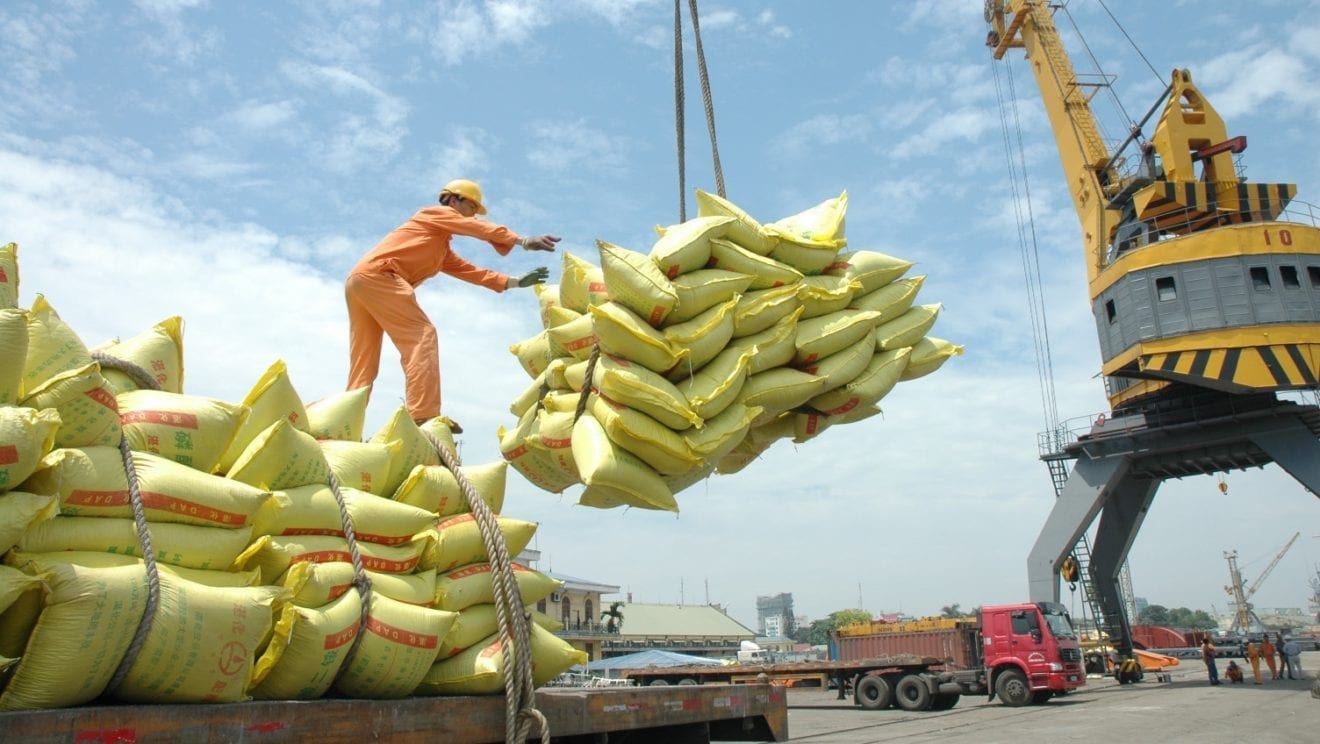
    Vietnam exported over 6.2 million tons of rice totaling nearly $3.3 billion last year, according to the General Department of Vietnam Customs.

    The average export price of Vietnamese rice rose 5.5 percent against 2020 to $526.8 per ton in 2021, according to the Ministry of Agriculture and Rural Development.

    Loc Troi exported over 80,000 tons of rice worth over VND1 trillion, quadrupling in both volume and value against 2020. Vinaseed exported 60 tons of premium fragrant rice to the U.K. for the first time.

    Domestic sales also increased last year, partly due to social distancing measures imposed to curb Covid-19. Hoa Sen Rice told VnExpress its sales surged 45 percent in 2021.

    The Vietnam Food Association predicted Vietnam, which exported 505,700 tons of rice worth $246 million in January, would export over 6 million tons of rice this year. However, a sharp increase in prices of agricultural materials, especially fertilizers, will increase input costs and lowers farmer incomes.

  • Enterprises not exporting rice regularly to lose licenses

    Enterprises not exporting rice regularly to lose licenses

    Rice exporters will have their licenses canceled if they fail to ship for a long time.

    Out of 205 businesses with export licenses, 39 have not exported the grain since December 2019.

    The Ministry of Industry and Trade said: “Many traders have no rice market or capacity to export. This along with the impact of the Covid-19 pandemic means they have not been able to export rice for nearly two years.”

    Under further changes to a decree, the ministry wants local authorities which issue rice export licenses to strengthen inspection of business conditions.

    Vietnam exported 5.7 million tons of rice worth $3 billion in the first 11 months of this year, year-on-year increases of 0.8 percent and 7.3 percent.

    The country is unlikely to achieve the export target of 6.5 million tons this year, the Vietnam Food Association said, predicting that even next year exports would only be around 6.3 million tons.

  • Alerts on Vietnam rice exports

    Alerts on Vietnam rice exports

    Vietnam’s coffee exports in the first 11 months of this year are expected to show a 4.4 percent drop from a year earlier to 1.36 million tonnes, while rice exports will likely post a 0.8 percent increase, government data released on Monday showed.

    Coffee exports are estimated to have fallen 4.4 percent in the first 11 months of this year from a year earlier to 1.36 million tonnes, equal to 22.67 million 60-kg bags, the General Statistics Office said in a report on Monday.

    Coffee export revenue for Vietnam, the world’s biggest producer of the robusta bean, will likely show a 12.6 percent increase to $2.6 billion in the 11-month period, the report said.

    The country’s coffee shipments in November are estimated at 78,000 tonnes valued at $181 million, it said.

    Rice exports in the first 11 months of this year from Vietnam were forecast to have risen 0.8 percent from a year earlier to 5.7 million tonnes.

    Revenue from rice exports in the period was expected to rise 7.3 percent to $3.04 billion.

    November rice exports from Vietnam, one of the world’s largest shippers of the grain, totaled 563,000 tonnes, worth $297 million.

    Vietnam’s Jan-Nov crude oil exports were seen falling 31.4 percent from the same period last year to an estimated 3.01 million tonnes.

    Crude oil export revenue in January to November is expected to rise 14.9 percent to $1.69 billion.

    Oil product imports in the first 11 months of the year were estimated at around nine million tonnes, down 16.6 percent from the same period last year, and the value of product imports were expected to rise 31.2 percent to $4.6 billion.

  • Uncle Ben’s reinvented under new Ben’s Original branding

    Uncle Ben’s reinvented under new Ben’s Original branding

    Mars Food Australia has revealed the new brand identity for Ben’s Original ready-to-heat rice products, following the retirement of the Uncle Ben’s brand.

    The new packaging features the same orange background and navy-blue font. The rice products are available in 28 flavors, are ready in 90 seconds, and taste the same as the old product range.

    Bill Heague, GM at Mars Food Australia, said the change marks not only a new packaging but also a memorable moment for Ben’s Original: the company has shared its new purpose, committing to investing a portion of its profits over the next five years to contribute to Australia’s disadvantaged communities.

    “This is not just a name and packaging change. We believe everyone deserves to feel welcome, heard, and have access to nutritious food,” said Heague. “That’s why we have committed to funding initiatives that help improve social inclusion and create meals, experiences, and opportunities that offer everyone a seat at the table. We are currently in discussions with a number of community groups in Australia and we look forward to announcing a new partnership early next year.”

  • Uncle Toby’s launches oat milks

    Uncle Toby’s launches oat milks

    Excuse me UNCLE TOBYS! Since when were you in the oat milk game and why didn’t you do this years ago!

    As a milk alternative gal, I am beyond excited about this. With over 125 years of ‘oats-pertise’, we already know their muesli bars are God-tier so we can only imagine how good their oat milk will be.

    UNCLE TOBYS have launched three new oat milks made from 100% Aussie oats including UNCLE TOBYS Oat Milk, Barista-Style Oat Milk and Oat & Almond Milk.

    The new range is vegan and vego and contains one-third of the recommended daily calcium and vitamins D, B12 and B2 to help you claw your way through the day.

    Nestlé Business Manager Anna Stewart said, “We’ve been producing Australia’s favourite oats for more than 100 years, so being able to take our team’s expertise and create this brand-new range of oat milks is incredibly exciting for both UNCLE TOBYS and oat milk fans.”

    “As preferences and lifestyles continue to change, we’re committed to offering Australians the highest quality dairy alternatives, starting with these three new oat milks, created to suit every taste and preference.”

    They’re available now at Coles and Independent Supermarkets for $3.80 and $4.50 for the Barista-style.

  • SunRice’s $4.5 million factory upgrade boosts rice quality

    SunRice’s $4.5 million factory upgrade boosts rice quality

    SunRice has upgraded its classic microwave pouch range, seeking to offer consumers more “fluffier, softer, and tastier” rice than before.

    The improved product is the result of a $4.5 million investment to improve its factory in Leeton to enhance product quality and reduce energy and water consumption.

    According to the company, the upgrade is part of a broader commitment to continuous improvement and offering consumers the highest quality rice possible, especially during the cooler months where rice becomes a staple in Australian households.

    “SunRice continuously reviews opportunities to improve our much-loved products, and the new production technique for our microwave pouches will impart a finer eating experience of softer, fluffier, and tastier rice for all rice lovers than we have ever provided – endorsed through consumer testing and research,” said Andrew Jeffrey, head of marketing, SunRice.

    New packaging designs have been unveiled to reflect the innovation. The brand’s standard microwave cups and SuperGrains microwave cups have been upgraded so that customers can easily identify the variants across the range.

    SunRice’s classic microwave pouch range is available in Brown Rice, Brown & Quinoa, Basmati, Long Grain, and Jasmine at Coles, Woolworths, and independent supermarkets nationwide.

  • SunRice launches cook-in flavour rice sachets

    SunRice launches cook-in flavour rice sachets

    Australian rice company SunRice has launched Flavour Your Rice, the brand’s first range of cook-in flavor rice sachets.

    The easy-to-use paste sachet adds flavor to ordinary rice by using it as a base during the cooking process, making an easy side dish or a meal on its own, said SunRice.

    Flavor Your Rice is available in three different flavors – Indian Spice, Thai Coconut, and Lemon, Chicken, and Herb.

    “Aussie consumers are increasingly looking for products that offer taste and convenience, without compromising on quality,” said Andrew Jeffrey, Head of Marketing, SunRice.

    “Flavour Your Rice is a quick and easy flavor solution bringing authentic Indian and Thai flavors to Aussie tables,”

    There are three sachets per pack and the product is sold in Woolworths and independent grocers nationwide.

  • Vietnamese rice faces competition from India in Philippines

    Vietnamese rice faces competition from India in Philippines

    The Philippines is set to import a lot of rice from India at $100 cheaper per ton than Vietnamese rice as it diversifies its supply sources.

    A report by the Agricultural Products Processing and Development Department (Agrotrade) shows that in the first five months of this year, Vietnamese rice exports reached 2.7 million tons at $1.48 billion, down 11.3 percent in volume and 5 percent in value over the same period last year.

    There’s no significant demand by foreign traders as they wait for the summer-autumn harvest season, the report said.

    On the other hand, the price of Vietnamese rice is much higher than that of India and Thailand. A ton of Vietnamese rice is $20 higher than that of Thai rice and over $100 per ton over Indian rice.

    On average, Vietnam’s rice export price in the first four months of this year reached $543 per ton, up 15.4 percent year-on-year. The Philippines is Vietnam’s largest rice-consuming market, accounting for 35.6 percent, but export to this market decreased 20.7 percent in volume and 4.9 percent in value over the same period last year. Similarly, rice exports to Indonesia also decreased sharply by 71.1 percent year on year.

    According to Agrotrade, market demand in the coming time will be high, but Vietnamese rice will face competition in the international market when the prices of Thai and Indian rice are more attractive to buyers.

    Recently, the Philippines eliminated import duties for ASEAN, non-ASEAN, and “Most Favored Nation” (MFN) nations with the goal of increasing imports of cheaper rice from India and Pakistan.

    Specifically, the Philippines has lowered import duties for MFN on rice to a single rate of 35 percent. It had previously imposed a 40 percent in-quota tariff rate and 50 percent out-of-quota tariff rate.

    On June 7, Philippines Finance Minister Carlos Dominguez announced that the country would seek more rice from countries outside Southeast Asia with the goal of diversifying supplies and keeping import prices at a reasonable price. Accordingly, India is a country with cheaper rice that can become a main supplier.

    Vietnam has been the main rice supplier to the Philippines so far. In addition, the Philippines also buys rice from Thailand and India, apart from other countries outside Southeast Asia.

    Vietnam is set to produce 43 million tons of paddy and export 6.5 million tons of rice this year, according to the Ministry of Agriculture and Rural Development.

    The nation was the world’s second-largest rice exporter last year at 6.25 million tons.

  • Vietnam might lose entry to global rice contest

    Vietnam might lose entry to global rice contest

    Vietnam might lose its right to enter the World’s Best Rice Contest because of the large number of unauthorized companies selling the ST25 variety on the market.

    U.S.-based The Rice Trader, organizer of the annual contest that started in 2009, said only the ST25 rice variants produced by the company of Ho Quang Tri, the son of the main developer of the rice, Ho Quang Cua, is allowed to use the “World’s Best Rice” title in promoting this product.

    However, many Vietnamese companies have been printing this title on their product packages without permission from The Rice Trader, which is a copyright infringement, it said in a statement.

    Should these actions persist, the organization will release the names of the infringers and take away Vietnam’s rights to participate in the contest in upcoming years, it warned.

    The ST25 variety from Vietnam won the World’s Best Rice Contest in 2019 and secured second place last year, losing first place to a jasmine fragrance variety from Thailand.

    The ST25 variety is the result of 25 years of work by Cua and his colleagues who cross-bred the premium fragrant rice, described as having a sweet taste and a hint of pineapple flavor, in the Mekong Delta province of Soc Trang.

    Other countries that have won the contest in previous years include Thailand, the U.S., and Cambodia.

  • Rice exports cross $1 bln on higher prices

    Rice exports cross $1 bln on higher prices

    Vietnam has exported $1.01 billion worth of rice in the first four months of 2021, up 1.2 percent year-on-year, thanks to higher rice prices.

    The volume of rice exports during the period dropped 11 percent year-on-year to 1.9 million tons, according to the Ministry of Industry and Trade.

    However, as the average export price rose 13.4 percent year-on-year to $534 per ton, its value topped that of last year.

    The Vietnam Food Association has forecast that the nation’s rice export value will continue to rise because of higher selling prices.

    Vietnam plans to produce 43 million tons of paddy and targets exporting 6.5 million tons of rice this year, according to the Ministry of Agriculture and Rural Development.

    The nation was the world’s second-largest rice exporter last year at 6.25 million tons.

  • Australian firm seeks patent for Vietnam rice variety

    Australian firm seeks patent for Vietnam rice variety

    An Australian firm has sought a patent for Vietnamese rice varieties ST25 and ST24.

    According to intellectual property authority, IP Australia, T&L Global Foods Supply PTY LTD on April 22 sought to register ‘Rice; Best Rice of the World’ trademarks for the two varieties.

    It is the sixth company internationally – the other five are in the U.S. – to seek to appropriate ST25.

    Both were developed in Vietnam by farmer-scientist Ho Quang Cua, with ST25 going on to win the first prize in the 2019 World’s Best Rice Contest held in the Philippines and ST24 the second prize in the 2017 contest in Macau.

    Ngan Tran, director of Maygust Trademark Attorneys in the Australian capital Canberra, said it takes three to four months to carry out checks for patent registration.

    If an application meets all the requirements, the IP agency would issue a notice accepting the trademark and disclose the information enabling anyone with an objection to file within two months, she explained.

    If there is no objection, the patent would be granted, she said.

    Of the five applications for ST25 submitted to the United States Patent and Trademark Office (USPTO), only the one by I&T Enterprise Inc. has crossed the first stage.

    The Vietnam Trade Office in the U.S. is helping a Vietnamese company fight I&T.

    The USPTO is set to publish the application by I&T on May 4, and Cua and his son’s company need to file an objection by June 4.

    Several ministries are assisting Cua’s company, which has also hired a law firm.

  • Covid-led baking craze inspires new flours from McKenzie’s Foods

    Covid-led baking craze inspires new flours from McKenzie’s Foods

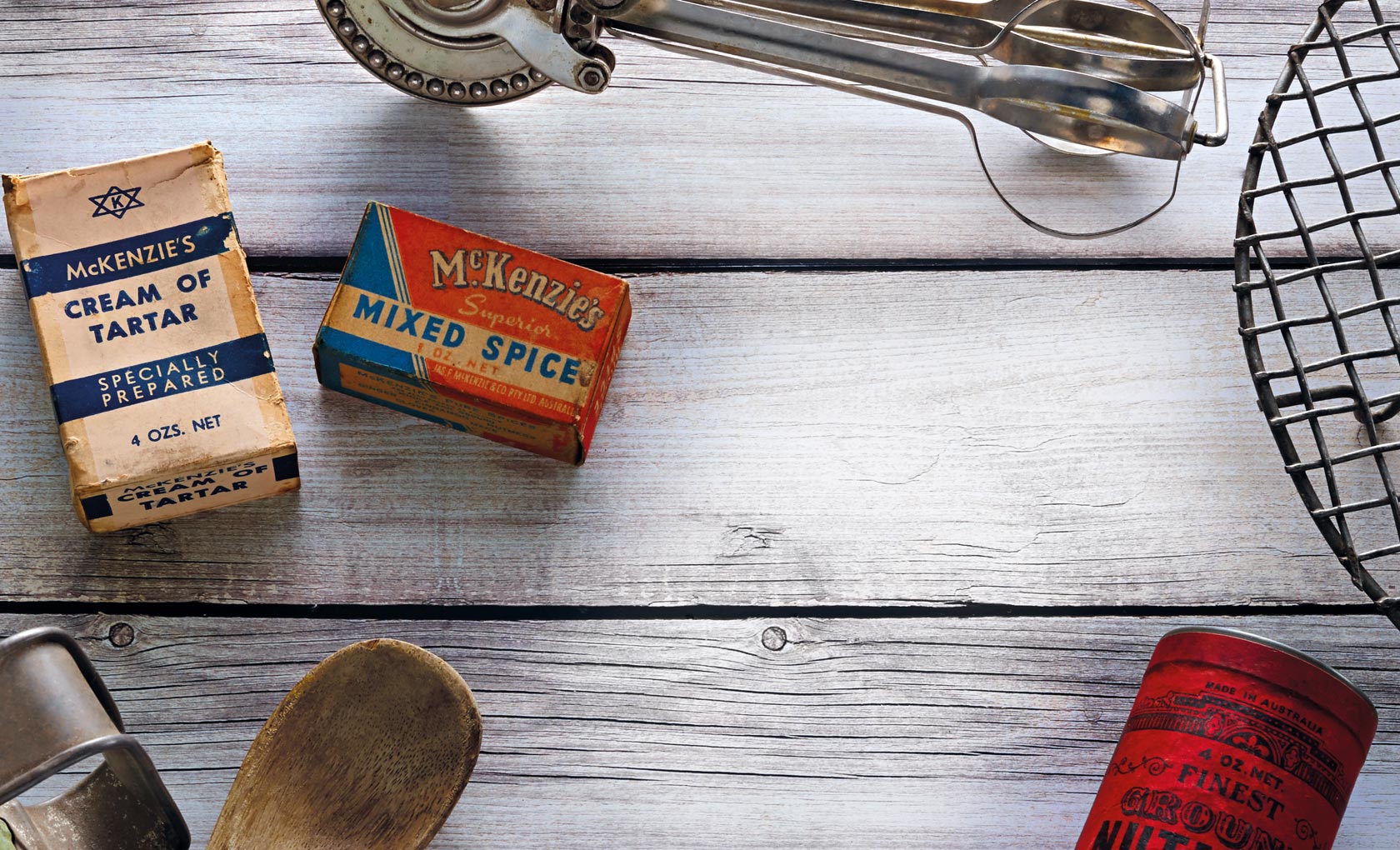
    Australian food maker McKenzie’s has met the demand of consumers after seeing more Aussies baking and cooking at home since the Covid-19 pandemic arrived. The company has expanded its single alternative flour range and unveiled a new special purpose flour range.

    “We’re proud to be able to offer such a large variety of flours to our consumers and inspire them to experiment in the kitchen and unlock the power of alternative flours,” said McKenzie’s marketing manager, Bianca Piscopo.

    The alternative blended flour range includes Bread & Pizza Flour, Cake Flour, Cookie Flour, and Pancake Flour. The Bread & Pizza Flour has plain, oat and wholemeal spelt flour for bread and pizzas. The Cake Flour blend is made with low-protein plain flour and cornflour for cakes, cupcakes, and biscuits. The Cookie Flour contains chickpea, plain and oat flour for cookies. Pancake Flour is made with plain, oat, and rice flour.

    While McKenzie’s single-source alternative flour range now has Almond Flour, Brown Rice Flour, and Yellow Pea Flour. The Yellow Pea and Almond versions are a good source of fiber and protein while the Brown Rice Flour contains whole grains.

    The Almond Flour and Brown Rice Flour are gluten-free which can be used for cakes, biscuits, and bread. The Yellow Pea Flour has an earthy flavor and is ideal for baking. They are made from Australian ingredients.

    McKenzie’s alternative and special purpose flours are sold at Woolworths.

  • Rice price surges 18 pct

    Rice price surges 18 pct

    Vietnam’s rice price in the first two months surged 18.2 percent year-on-year to $547.9 per ton, but with lower volume in most markets.

    Total volume fell 29.4 percent to over 656,000 tons, according to Vietnam Customs.

    The Philippines remained the largest importer but with volume down 28 percent year-on-year to 256,000 tons.

    Other markets that saw volumes drop by double-digits include Malaysia (–75 percent), the United Arab Emirates (–56 percent) and E.U. (–23 percent).

    China claimed second place with a 140-percent increase to 159,200 tons.

    Strong rises in volume were seen in Taiwan, up 80 percent, and France, up 47 percent.

    Vietnam’s rice exports grew by 9.3 percent last year to $3.07 billion, according to the Ministry of Industry and Trade.

  • Rice exports rise despite stockpiling amid pandemic

    Rice exports rise despite stockpiling amid pandemic

    Vietnam’s rice exports grew by 9.3 percent last year to $3.07 billion though it stockpiled the grain to ensure food security after Covid-19 broke out.

    But volumes were down 3.5 percent to 6.15 million tons since the country stopped exports for over two weeks in March and April to ensure adequate domestic supply amid the pandemic.

    The average price rose by 13.3 percent from the previous year to $499 per ton, the highest in years, the Ministry of Industry and Trade reported.

    Vietnamese farmers and exporters are focusing on quality and getting higher prices by meeting import standards in markets like the E.U., South Korea and the U.S., it said.

    Eighty-five percent of the country’s exports last year were considered to be of high quality, according to the General Statistics Office.

    In 2019, Vietnam was the world’s third-largest rice exporter behind India and Thailand with shipments of $2.81 billion. Its biggest buyer was the Philippines.

  • Vietnamese rice now more pricey than Thailand’s

    Vietnamese rice now more pricey than Thailand’s

    With the Thai baht weakening, Vietnamese rice is fetching 3 percent higher prices in global markets than varieties from Thailand.

    Vietnam’s 5-percent broken rice has been priced at $468-472 per ton since August 8, $15 more than its Thai rivals. The prices have risen by 6.8 percent since the beginning of this month.

    Vietnam was the third-largest rice exporter last year behind India and Thailand. In the first seven months of this year, it exported $1.9 billion worth of grains, up 10.9 percent year-on-year, with the Philippines being the top buyer, according to the Ministry of Agriculture and Rural Development.