Retail News CRM

Tag: rice

  • Nam Dae Mun to open its first global flagship store in Singapore

    Nam Dae Mun to open its first global flagship store in Singapore

    The world’s first Nam Dae Mun flagship store will open in Singapore on Saturday, November 30 at 313@Somerset.

    The Shanghai-born brand now has more than 300 stores across China, and is famous for the hour-long queues it attracted when it was first launched in 2016. Consumers still queue for its traditional glutinous and osmanthus rice cakes.

    Named after one of the Eight Gates in the fortress wall of Seoul in South Korea, the Korean-style rice cakes are chopped into small pieces after the dough is rolled out. The local flagship store also offers Maoshan durian glutinous mochi.

    “We are honored and excited to open the first Nam Dae Mun global flagship store in Singapore,” said Herme executive director Freya Wang, which has brought the brand to the Lion City “Besides the popular varied selection of Korean-style rice cakes, consumers here will also be able to get their first taste of Herme’s signature drinks and desserts.”

  • Indian rice prices slip as demand lags; Vietnam awaits major harvest

    Indian rice prices slip as demand lags; Vietnam awaits major harvest

    Rice export prices slipped in India as the rupee weakened and demand waned, prompting buyers to turn to other markets such as Vietnam. India’s 5 percent broken parboiled variety eased to $379-$384 per tonne this week from the $382-$387 range last week. “Demand is still weak due to higher prices,” said an exporter based in Kakinada in the southern state of Andhra Pradesh, adding that despite the fall, prevailing high rates were prompting buyers to look at other markets, such as Vietnam.

    The Indian rupee hit a month low on Thursday, increasing exporters’ margins from overseas sales and thereby prompting a reduction in prices.

    Export prices in India had shot up after the central state of Chhattisgarh, a leading rice producer, raised minimum paddy buying prices to 2,500 rupees per 100 kg from 1,750 rupees.

    In neighboring Bangladesh, an increase in domestic rates for rice could prompt the government to cut the import duty on the staple grain, traders said.

    The south Asian country, which emerged as a major importer of the grain in 2017 after floods destroyed crops, imposed a 28 percent duty in June last year to support its farmers after local production revived.

    In Vietnam, rates for 5 percent broken rice fell to $355-$360 a tonne from $370-$375 last week ahead of the country’s largest harvest, expected to begin in two weeks.

    “Indonesia’s state food procurement agency’s recent announcement that it may not import rice this year has also weighed on prices,” a Ho Chi Minh City-based source said.

    “We are negotiating a deal for around 10,000 tonnes to be delivered late February, and we are stuck at pricing. We’re asking for $360 and they are offering $345,” the trader said, adding that the shipment would be bound for Africa.”

    Another trader said China’s move to limit rice shipments from Vietnam may not be as bad as some traders initially feared.

    “It’s only the beginning of the year now and importing countries can change their import plans, especially when hit by natural disasters,” the trader said.

    In second biggest exporter Thailand, prices of the benchmark 5 percent broken variety widened to $385-$400, free on board Bangkok, from $390-$400 the previous week, mostly due to fluctuations in the value of the domestic currency.

    “Demand remains flat, but some exporters are starting to talk about possible orders from the Philippines,” a Bangkok-based trader said.

    The Thai market is likely to see additional supplies flowing in toward the end of this month, from the seasonal harvest, and this could in turn move prices, another trader in Bangkok said.

  • Vietnam eyes top 15 agriculture spot in 10 years

    Vietnam eyes top 15 agriculture spot in 10 years

    “Vietnam must strive to become a top 15 country in agriculture development in 10 years,” says PM Nguyen Xuan Phuc. “In particular, the agriculture processing sector should be in the top 10,” Phuc said at a conference held by the Ministry of Agriculture and Rural Development (MARD) on Thursday. “Vietnam must strive to become a global centre for wood processing and shrimp production,” he added.

    The PM also set a 3 percent growth target for the whole sector (agriculture, forestry and fisheries), and a $42-43 billion export target for 2019.

    Phuc asked the agriculture ministry to deploy the best measures and promote innovation to achieve targets set.

    “This is a difficult and challenging task but it must be done, a political duty, if we do not do it, our people’s lives will still remain difficult,” he emphasized.

    In order to achieve the goals, the ministry should develop good legal institutions and remove obsolete ones, the PM said.

    The ministry needs to step up efforts to restructure agricultural and rural development systems, including the creation of key national and provincial products, he added.

    It should also perform well its marketing functions, namely, forecasting, assessing supply and demand, developing new markets, and brand building for Vietnamese agricultural products like rice, shrimp and wheat, in which Vietnam is “a little slow compared to Thailand and Cambodia,” Phuc noted.

    He called for enhanced application of science and technology, hi-tech, biotech, artificial intelligence and other technological breakthroughs of Industry 4.0.

    Minister of Agriculture and Rural Development Nguyen Xuan Cuong said that the sector will maintain its good form while undertaking comprehensive and synchronous reforms.

    He said the sector still has several limitations that need to be addressed, including uneven development of different segments, limited innovation of existing processes, and inadequate managerial manpower for market regulation.

    The sector would aim to build a smart industry in 2019, foster international integration, adapt to climate change, increase value additions for products and services and ensure sustainable development through building better rural areas, he noted.

    Vietnam’s agricultural growth had reached 3.65 percent year-on-year in 2018, the highest since 2012, according to the General Statistics Office.

    Last year, the country earned $22 billion from agricultural and forestry product export, and $8.8 billion from fishery shipment, respectively increasing 10 percent and 6.3 percent over the previous year, said the office.

  • India rice rates hit more than three-month high, Chinese rules weigh on Vietnam

    India rice rates hit more than three-month high, Chinese rules weigh on Vietnam

    Rice export prices in India rose to their highest in more than three months as a key producing region hiked procurement rates for domestic paddy. Top exporter India’s 5 percent broken parboiled variety was quoted at $375-$382 per tonne this week, the highest since Sept. 7.

    The central state of Chhattisgarh, a leading rice producer, raised the minimum paddy buying price to 2,500 rupees per 100 kg, from 1,750 rupees earlier this week.

    “Importers are not ready to pay a higher price. Exports are likely to slow down in coming months,” said an exporter based at Kakinada, in the southern state of Andhra Pradesh.

    Prices of Vietnam’s 5 percent broken rice declined for the fifth straight week to $385 a tonne as activity remained muted, traders said.

    “Prices fell further because we are concerned that China’s move to impose stricter conditions on Vietnamese rice will have a long-term impact,” a trader based in Ho Chi Minh City said.

    “It’s not clear if China is buying more from Cambodia and Myanmar to compensate for the possible declining shipments from Vietnam.”

    Another trader said supplies from Vietnam will increase from late next month when the winter-spring harvest begins.

    In Thailand, benchmark 5 percent broken rice prices were quoted at $390-$391 per tonne, free on board Bangkok, versus $385-$393 a week ago, as the market is expected to remain quiet until well after the New Year period.

    “This is a reasonable level as we’re nearing the end of the year. There is not much overseas activity and we’re also in the harvesting season,” a Bangkok-based trader said.

    Meanwhile, Bangladesh, which emerged as a major importer of rice in 2017 due to stock depletion following floods, has stepped up efforts to procure more rice locally after output of the staple grain improved, a food ministry official said.

    “The response from farmers is very good and the procurement drive will be continued,” the official said.

    The country’s production for 2018/19 is expected to recover to 34.7 million tonnes, up 6.3 percent year-on-year, according to estimates from the U.S. Department of Agriculture attaché in Bangladesh.

    The South Asian country has procured more than 1.3 million tonnes of rice locally so far in the current season to build state reserves.

  • Hyundai Department Store offers higher price rice

    Hyundai Department Store offers higher price rice

    Hyundai Department Store is hoping to cash in on Korea’s growing preference for premium rice with Hyundai Rice House, its new chain rice stores. Hyundai Rice House, which opened inside four existing Hyundai Department Stores on Wednesday, offers around 20 different types of high-quality rice unfamiliar to the average rice eater, such as Youngho Jinmi and Golden Queen No. 3.

    Despite changing tastes in Korea that are seeing a growing preference for Western food and an overall decrease in demand for rice, premium rice is growing in popularity.

    Hyundai Department Store reported a 3.1 percent decrease in its rice sales growth figures through November this year compared to the previous year, but sales of premium rice such as Koshihikari and Hitomebore have increased by 15.7 percent over the same period.

    Hyundai is pulling out all the stops to satisfy Korea’s budding rice connoisseurs, and the new stores will also sell bags of rice that contain different varieties mixed together in combinations chosen by a “rice sommelier.”

    The expert, accredited by the Corporation of Rice-Cooking of Japan, will also visit stores once every month to conduct “rice taste consulting” for customers to help them find rice that best suits their tastes and nutritional needs.

    The department store is also going to stock more small bags of rice to address the increase in one or two-person households in the country.

    Hyundai will continue to increase its rice lineup next year by introducing other Korean regional specialties produced only in small quantities.

    “[We] planned Hyundai Rice House to target customers who want to eat well even for one meal as the convenience food market continues to expand with the increase of one and two-person households,” said a Hyundai Department Store official.

    Customers will have to shell out more cash for the pricey rice as the average cost is 15 to 25 percent higher than the existing rice sold at the department store.

    The specialty store is located at Hyundai Department Store’s branches in Mok-dong, western Seoul; Pangyo, Gyeonggi; Ulsan and Busan.

  • Vietnam Jan-Nov coffee exports up 23 pct, rice 4.8 pct

    Vietnam Jan-Nov coffee exports up 23 pct, rice 4.8 pct

    Vietnam’s coffee export volumes from January to November have grown 23 percent year-on-year and rice exports have risen by 4.8 percent, official data shows.

    Coffee

    Coffee exports from Vietnam will climb an estimated 23 percent between January and November from a year ago to 1.725 million tonnes, equal to 28.75 million 60-kg bags, the General Statistics Office said in a report on Thursday.

    Coffee export revenue for Vietnam, the world’s biggest producer of the robusta bean, will edge up 2.9 percent to $3.3 billion in the 11-month period, the report said.

    November coffee exports were estimated at 140,000 tonnes, worth $264 million.

    Rice

    Rice exports in January-November from Vietnam were forecast to rise 4.8 percent from a year ago to 5.7 million tonnes. Revenue from rice exports in the period was expected to grow 16.8 percent year-on-year to $2.86 billion.

    November rice exports from Vietnam, the world’s third-largest shipper of the grain, were estimated at 450,000 tonnes, worth $218 million.

    Energy

    Vietnam’s January-November crude oil exports were seen plunging 42.5 percent year-on-year to an estimated 3.6 million tonnes.

    Crude oil export revenue in the first 11 months of 2018 were expected to decline 20.4 percent to $2.1 billion.

    Oil product imports in the 11-month period were estimated at 10.7 million tonnes, falling 8.1 percent from the same period last year, while the value of product imports rose 15.4 percent to $7.3 billion.

    Vietnam’s January-to-November liquefied petroleum gas imports were seen increasing 1.5 percent from a year earlier to 1.3 million tonnes.

  • Indian rice rates gain for third week; markets eye Philippine order

    Indian rice rates gain for third week; markets eye Philippine order

    Rice export prices rose for a third straight week in India while an Philippine order did little to infuse activity in Thailand and Vietnam. India’s 5 percent broken parboiled variety was quoted around $367-$375 per tonne this week, from $363-$371 the last week. The top exporter’s rupee currency rose to its highest level in more than two months, trimming exporters’ margins.

    “Paddy rice prices have jumped in Chhattisgarh and other neighbouring states and accordingly export prices are going up,” said an exporter based in Kakinada in the southern state of Andhra Pradesh.

    In July, the government raised prices paid to local farmers for common grade paddy rice by 13 percent from a year earlier to 1,750 rupees per 100 kg for the new season crop.

    Meanwhile, neighbouring Bangladesh will procure 600,000 tons of rice at 36 taka ($0.40) per kg from local farmers in the current harvesting season to boost reserves, a food ministry official said.

    In Vietnam, rates for 5 percent broken rice fell to about $410 a ton from $415-$420 last week.

    “Though prices are lower, trade remains very quiet as domestic supplies are empty. Prices will fall further in the coming weeks, closer to the levels offered by Thailand and India,” a trader based in Ho Chi Minh City said.

    “The Tan Long Group offered 118,000 tonnes in a Philippines import tender for 500,000 tons earlier this week, but the firm hasn’t been seen buying rice from the local market, and it’s not clear where its source will be.”

    The Philippines is on a rice-buying spree this year in a bid to tame prices that surged as stocks at government warehouses nearly ran out.

    Singapore-based commodity trader Olam International offered to supply the Philippines with 210,000 tons and Vietnam’s Tan Long Group Joint Stock Co offered 118,000 tons.

    Traders said the Vietnamese market will remain quiet until early next year when supplies of the winter-spring crop become available.

    Meanwhile in Thailand, benchmark 5 percent broken rice prices were quoted at $382-$395 per ton, free on board (FOB) Bangkok, narrowed from $380-$398 last week.

    Thailand will only supply part of the Philippines deal so there has been no immediate impact yet, but there is a chance that domestic price could rise later this week because of it, a Bangkok-based rice trader said.

  • Asia rice: Indian rates up on firmer rupee; Thai harvest to shore up stocks

    Asia rice: Indian rates up on firmer rupee; Thai harvest to shore up stocks

    Rice prices in India nudged higher this week as the rupee firmed, while Thai exporters eyed fresh demand from the Philippines. India’s 5 percent broken parboiled variety was quoted around $363-$371 per tonne this week, versus $362-$369 last week.

    “As the rupee has started to appreciate, we have to adjust export prices,” said an exporter based at Kakinada in the southern state of Andhra Pradesh.

    The Indian rupee rose 0.4 percent on Thursday to its highest level in nearly 8 weeks, trimming exporters’ margins from overseas sales.

    In southern and eastern states, supplies have started to arrive from the new season crop but they are expensive due to higher fixed government buying prices, said a Mumbai-based exporter.

    India’s rice exports dropped 9.6 percent to 5.8 million tonnes between April and September from a year earlier, as leading buyer Bangladesh trimmed purchases due to a bumper local harvest, a government body said earlier this week.

    Meanwhile in Thailand, benchmark 5 percent broken rice prices were quoted at $380 – $398 per tonne, free on board (FOB) Bangkok, unchanged from last week.

    “There have been some minor deals with markets like Japan but they have had no impact on prices,” a Bangkok-based trader said.

    “Thai rice exporters are now watching the Philippines closely because their government will open the bidding process next week.”

    The Philippines’ National Food Authority has issued an international tender to import up to 500,000 tonnes of rice with offers to be opened on Nov. 20.

    “We see this as a major deal ahead of December,” another trader in Bangkok said, pointing out that during the mid-November to early-December period, the market expects an increase in supply due to the seasonal harvest.

    In Vietnam, rates for 5 percent broken rice remained in the $415-$420 a tonne range seen last week.

    “We haven’t signed any new export deals over the past month as domestic supplies are scarce,” a trader in Ho Chi Minh City said. “We wouldn’t be able to secure sufficient rice if we got any new contracts now.”

    Egypt received offers for more than 500,000 tonnes earlier this week, including 50,000 tonnes from Vietnam, the trader said, adding that they were not sure if they will bid in the Philippines’ state grains agency tender.

  • Vietnam, Thailand skip Philippines’ 203,000 T rice tender

    Vietnam, Thailand skip Philippines’ 203,000 T rice tender

    Rice exporters Thailand and Vietnam did not submit offers at a Philippines 203,000-tonne import tender, citing stricter terms. The tender by one of the world’s top rice importers was held to meet unfilled orders after a tender on Oct. 18 for 250,000 tons of rice by Manila’s state-owned National Food Authority (NFA) secured only 47,000 tons due to high offer prices.

    Thailand and Vietnam were the only government suppliers accredited for Tuesday’s re-tender. NFA officials said both submitted letters saying they would not participate due to the stricter terms set out by the Philippines food authority.

    NFA spokesman Rex Estoperez said import terms had been made more stringent to address concerns that arose from previous rice purchases, including health and safety issues, which would raise the cost for suppliers.

    “I can’t say if there will be another bidding,” Mercedes Yacapin, head of the tender panel, told reporters, adding the decision will be left to the NFA Council, which is made up of the country’s economic managers.

    President Rodrigo Duterte last month scrapped a 20-year-old government cap on rice imports to help curtail soaring prices of the Philippine diet staple by increasing supply.

    The Philippines is on a rice buying spree this year, with import approvals by the NFA hitting 2.4 million tonnes, just below the record 2.45 million tons bought in 2010 when rising global food prices stoked shortage fears.

    The NFA is set to hold another import tender for 500,000 tons of rice on Nov. 20.

  • India rice prices recover; low Thai rates dampen Vietnamese offers

    India rice prices recover; low Thai rates dampen Vietnamese offers

    Rice export prices in India recovered this week after demand improved, while rates for the Vietnamese variety eased.

    Rates for top exporter India’s 5 percent broken parboiled variety edged up by $2 per ton to $373-$377 per ton this week, from their lowest in 17 months last week.

    “Enquiries from African buyers have risen in the last few days,” said an exporter based at Kakinada in the southern state of Andhra Pradesh.

    Another exporter, based in Mumbai, said Indian rice was currently competitive due to rupee depreciation.

    The Indian rupee has lost more than 13 percent of its value so far in 2018, and plunged to a record low earlier this week, increasing exporters margins.

    Meanwhile, in neighbouring Bangladesh, rice output from the summer-sown crop ‘Boro’ hit 19.5 million tonnes, exceeding the target of 19 million tonnes, as farmers raised acreage to cash in on higher prices, data from the Bangladesh Bureau of Statistics showed.

    Last year, the country’s Boro rice crop, which accounts for more than half of the country’s typical annual rice production, fell to its lowest in seven years after floods destroyed crops.

    In Vietnam, traders offered benchmark 5 percent broken rice at $395-$405 a ton, slightly lower than last week’s $400-$405 range.

    Despite potential demand from the Philippines in the aftermath of Typhoon Mangkhut, which damaged paddy in the country, prices for the Vietnamese variety did not go up since Thai rates were lower.

    “If we increase prices further, people will just go and buy Thai rice,” a Ho Chi Minh City-based trader said.

    The south-Asian country, which has already completed the harvest of its two major crops, exported 4.5 million tons of rice in the first eight months, meeting around 70 percent of the whole-year projection of 6.5 million tons set out by the government.

    A trader estimated Vietnam’s current autumn-winter mini crop could yield around 1.8 million tons, half the volume of a major crop, with most of the rice likely to be kept for domestic consumption given the next harvest will not be until March 2019.

    In Thailand, benchmark 5 percent broken rice prices were quoted at $390-$393 per ton, free on board (FOB) Bangkok, unchanged from last week.

    While demand was flat, it would pick up in the near future due to natural disasters in the region, especially in the Philippines and Indonesia, traders said.

  • Dip in Indian rates on rupee weakness dulls Vietnam offers

    Dip in Indian rates on rupee weakness dulls Vietnam offers

    Rice export prices in India fell this week as the rupee weakened, weighing on demand for the Vietnamese variety.

    Rates for India’s 5 percent broken parboiled rice fell by $3 per tonne to $389-$393 per tonne this week.

    “Rupee depreciation is allowing us to lower prices, but at the same time competitors are also lowering their quotes,” said an exporter based at Kakinada in the southern state of Andhra Pradesh.

    The Indian currency fell to a record low against the dollar on Thursday.

    Farmers in India had planted summer-sown paddy rice on 30.78 million hectares as of Aug 10, down 2.9 percent from a year ago due to scant rainfall.

    Monsoon rains in India are likely to be below-normal levels in 2018, a private weather forecaster said earlier this month, raising concerns over farm output and economic growth in Asia’s third-biggest economy, where half the farmland lacks irrigation.

    The falling rice prices in India also weighed on the market in Vietnam, the third largest exporter, but rates for the country’s 5 percent broken variety were unchanged at $395-$400 a tonne.

    “Trade is slow as Vietnamese prices are comparatively higher, especially compared with Indian prices … Exporters have lost their African customers to Indian rivals due to that,” a Ho chi Minh City-based trader said.

    Vietnam exported 444,235 tonnes of rice in July, down 17.4 percent from June, government customs data released late last week showed. That was slightly lower than a government forecast of 450,000 tonnes.

    In Thailand, the world’s second biggest rice exporter, demand also remained soft, traders said.

    Thailand’s benchmark 5 percent broken rice price was quoted at $390-$393, free on board (FOB) Bangkok, little changed from last week’s $390-$395.

    The commerce ministry on Wednesday said Thailand had exported 6.99 million tonnes of rice worth 3.52 billion baht this year by August 15, a 2 percent increase from a year ago.

    Meanwhile, Bangladesh, which had emerged as a major importer of rice since 2017 after floods damaged its crops, continued to procure rice domestically.

    In the 2017-18 financial year that ended in June, Bangladesh imported a record 5.7 million tonnes of rice. However, imports dropped sharply after the government imposed a 28 percent tax on shipments to support its farmers following a revival in local output.

    Rice at government warehouses stood at nearly 1.3 million tonnes, data from the country’s food ministry showed.

  • Indonesia Tests Rice Farming ‘Digitalization’ Program to Boost Output

    Indonesia Tests Rice Farming ‘Digitalization’ Program to Boost Output

    The Indonesian government has launched a farming “digitization” project in West Java province, which may increase rice output by at least 20 percent, officials said on Monday (09/07).

    The project is currently being tested with thousands of farmers in nine rice-producing regencies as President Joko “Jokowi” Widodo’s administration seeks to boost domestic food production. A regency is a governmental administration region below a province.

    “The goal is to transform farming, which is still quite traditional, to be more modern and to teach farmers to be agro-entrepreneurs,” Wahyu Kuncoro, a deputy minister at the Ministry of State Enterprises said.

    Indonesia’s rice output growth has been slowing in recent years and yields have declined to 5.15 tons of unmilled rice per hectare in 2017, from 5.34 tons per hectare in 2015.

    This year, the government issued import permits for 1 million tons of rice to help control rice prices, the country’s main food staple.

    State-controlled telecommunications firm Telekomunikasi Indonesia, or Telkom, has developed a digital platform which collects farmer and farm land data which will be used to speed up the process of distribution of subsidized loans for farmers and for applications for farm insurance. Digitalization refers to using digital technologies to change the way a business functions.

    The platform will be further developed to include a marketplace application where farmers can order fertilizer and pesticides online, as well as sell their products, said David Bangun, a director at Telkom.

    The Ministry of State Enterprises has also set up offices in the nine regencies to train farmers in modern farming methods, as well as to facilitate the direct distribution of farming supplies and sales to state food procurement agency, Bulog.

    When enough data has been collected, the digital platform can also help to predict future output, David added.

    “If this model is proven beneficial for the farmers, we will apply this to other rice production centers across the country,” Kuncoro said, adding that the project may also be applicable to the cultivation of other commodities.

  • Rice exports up 27pc to $1.57bln in Jul-Apr

    Rice exports up 27pc to $1.57bln in Jul-Apr

    Rice exports rose 27 percent to $1.57 billion during the first 10 months of the current fiscal year as exporters pushed fresh cargoes to Indonesia, Kenya and other markets during the period, an industry official said on Wednesday.

    Rice exports amounted to $1.23 billion during the corresponding period last year.

    Rafique Suleman, senior vice chairman of Rice Exporters Association of Pakistan (Reap) said exports increased 15 percent to 3.22 million tons during the 10 months of the current fiscal year of 2017/18.

    Suleman said exports of non-basmati rice to Indonesia increased during the period.

    Local traders exported 50,000 tons of non-basmati rice to Indonesia during the July-April period. Kenya remained the largest buyer of Pakistani non-basmati rice, buying 323,000 tons of rice amounting to $118 million.

    China was also one of the largest importers of Pakistani non-basmati rice. “By the end of April, we exported 274,000 tons of rice valuing $100 million (to China),” Suleman said.

    He said demand for rice in the international market is increasing. The crop was good in terms of both quality and quantity this year, he added.

    Reap senior vice chairman said the country has come out of the crisis of low exports, which was observed during the last three years.

    “Value of rice export trade has been showing improvement due to the coordination of Reap office bearers with the Trade Development Authority of Pakistan and customs,” he said. “Reap members are putting in untiring efforts, and aggressive marketing to increase rice exports and to earn valuable foreign exchange.”

    The industry official said rice exporters are making investments to install modern rice processing machinery and using value-addition technology.

    Suleman said the association is sending trade delegations to various countries for rice marketing. “Last month a delegation came back after a successful visit to Iran, which is very lucrative and a potential market for basmati rice.”

    Around 100,000 tons of rice has so far been exported to the neighbouring country during the current season.

    Suleman said Government Trading Corporation of Iran has issued tenders for 20,000 tons of basmati, in which many Pakistani rice exporting companies would participate. He hoped that a handsome amount of foreign exchange would be fetched by Pakistani rice exporters.

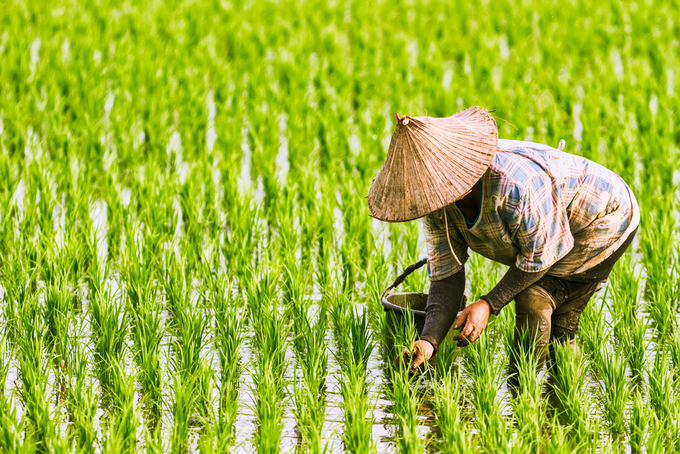
  • Vietnam expects to export 6.5 million tonnes of rice in 2018

    Vietnam expects to export 6.5 million tonnes of rice in 2018

    The Ministry of Agriculture and Rural Development expects Việt Nam to export 6.5 million tonnes of rice in 2018, Deputy Minister of Agriculture and Rural Development Hà Công Tuấn said at the ministry’s monthly meeting on Friday in Hà Nội.

    To get high export value, high-quality rice will still account for a large proportion of the total export volume, while normal rice makes up less than 20 per cent, Tuấn said.

    He also said the export prices of Vietnamese rice had increased as their quality had improved.

    The export price of Vietnamese rice rose from US$435 per tonne in 2016 to $450 per tonne in 2017 and $475 per tonne during the January-February period.

    This was achieved by restructuring efficiently the production of rice to improve its quality and value.

    At the same time, in the past two years, more local private enterprises have joined the global export market. Businesses have also invested more into the processing of rice but the percentage of processed rice is still low.

    Việt Nam is doing well to improve its rice quality, he said, suggesting the country focus on improving the brand name of its rice.

    According to the Ministry of Agriculture and Rural Development, Việt Nam shipped 861,000 tonnes of rice abroad in the first two months of this year, earning $419 million, up 17 per cent in volume and 34 per cent in value, compared with the same period last year.

    The Philippines was the biggest importer of Vietnamese rice, accounting for 26.9 per cent of the market share. It was followed by China with 23.5 per cent.

    Last year, Việt Nam earned $2.6 billion by exporting 5.8 million tonnes of rice.


  • Vietnam-Australia rice cooperation in fine shape

    Vietnam-Australia rice cooperation in fine shape

    Deputy Prime Minister Vuong Dinh Hue, during his visit to the Australia, told a meeting with Australian businesses on July 24 that Vietnam can supply all types of rice in bulk to the country.

    Vietnam’s rice exports to Australia reached 220,000 tonnes last year, an increase of 50 per cent compared to 2015 and accounting for 4.5 per cent of all trade with the country.

    Mr. Rob Gordon, CEO of Sunrice, the world’s largest rice and food processor, said that some Vietnamese enterprises have exported micronutrient rice to islands in the Pacific Ocean under orders from Sunrice.

    He also suggested the Vietnam Government permit Sunrice to expand its business in Vietnam, transfer technology, and share its experience in rice production in a closed process with Vietnamese enterprises.

    Deputy PM Hue appreciated Sunrice’s goodwill and affirmed that the Vietnamese Government would direct the Ministry of Industry and Trade and the Ministry of Agriculture and Rural Development to cooperate with the company to support Vietnamese rice producers.

    Besides rice, Australian enterprises are also keen on other sectors in Vietnam such as tourism. Vietnam is becoming a popular holiday destination for many Australians, with 50,000 expected each year in the near future.

    Vietnam is now Australia’s 15th largest trade partner, with two-way trade of over $10 billion, while Australian investment in Vietnam has boomed over recent years. In the first six months of this year, Australian investors invested over $95.7 million in 27 projects in Vietnam (both new projects and additional capital in existing projects).

    The United Nations’ Food and Agriculture Organization (FAO) predicted in June that Vietnam would be among the Top 5 countries in terms of rice volumes this year. The five are China (with more than 142 million tons), India (over 110 million tons), Indonesia, Bangladesh, and Vietnam.

    Global rice volumes are likely to increase by 0.7 per cent this year compared to last year, to more than 502 million tons, according to the Food Potential report published by the FAO, due to policies promoting production in Asia and the recovery of production in South America and Australia.

    Vietnam exported nearly 4.9 million tons of rice last year worth $2.1 billion, a decline of 25.5 per cent and 20.5 per cent, respectively, against 2015.