Retail News CRM

Tag: rice

  • Thai rice prices dip to one-year low

    Thai rice prices fell to their lowest in over a year as bidders were forced to reduce their prices in a recent auction held by Indonesia.

    Thai 5% broken rice was priced at US$550-565 per ton this week, the lowest since July 20, 2023, down from $585 quoted last week.

    A Bangkok-based trader said the market still considers Thai prices too high. However, flash floods have been hurting short-term harvest yields, so prices might improve down the road.

    Another trader said competitors weighed prices down and that Thai bidders lost out to other exporters in a recent auction held by Indonesia due to higher prices.

    There will be demand from African and European customers before October because those orders would be delivered before late December, the trader said.

    Meanwhile, Indian rice export prices extended losses this week to hit an eight-month low.

    Indian 5% broken parboiled rice was quoted at $534 per ton, the lowest since mid-January, and down from the $540 a week earlier.

    According to the Vietnam Food Association, Vietnamese 5% broken rice was offered at $567 per ton on Thursday, down from $575 a week ago.

    A trader based in Ho Chi Minh City said trading activity remains slow while demand is weak.

    Traders said the ongoing floods in northern Vietnam might have an impact on rice production, though rice for export is mostly grown in the Mekong Delta in the south.

  • Philippines rice imports up 19% in 8 months

    Philippines rice imports up 19% in 8 months

    Rice imports to the Philippines amounted to 2.8 million metric tonnes (MT) during the first 8 months of this year, 19% higher than he same period last year, data from the country’s Department of Agriculture (DA) showed.

    In its latest report, the department’s Bureau of Plant Industry (BPI) said in August alone, rice from abroad increased to 296,350.9 MT compared to 167,403 MT in July. However, it was still lower than the average monthly arrival of 400,000 MT logged in the earlier months.

    Agriculture Assistant Secretary and spokesman Arnel de Mesa said rice prices have been decreasing. Regular and well-milled rice is sold at around 45 PHP (US$0.8) per kilo and even as low as PHP42, he added.

    According to the report, Vietnam remained the Philippines’ top source of the staple during the period, shipping over 2.17 million MT or around 77% of the country’s total imports in the January-August period. It was followed by Thailand (371,390 MT), Pakistan (156,121 MT) and Myanmar (66,910 MT).

    Last year, inbound shipments of rice totaled 3.6 million MT, down 5.9% from the record-high 3.82 million MT in 2022. The DA projects rice imports for this year will not exceed last year’s volume.

  • Rice exports top $3.8B in 8 months

    Rice exports top $3.8B in 8 months

    Vietnam exported 6.16 million tons of rice worth nearly US$3.85 billion in the first eight months of this year, the Ministry of Agriculture and Rural Development (MARD) has said.

    This marked a 5.9% increase in volume and a 21.7% growth in value from the same period last year.

    According to the MARD, along with the increase in output, the average rice export price in the period also rose about 14.8%, reaching $625 per ton.

    In the domestic market, prices of many types of rice in the Mekong Delta region remained stable last week compared to the previous week.

    Specifically, prices in the Mekong Delta province of An Giang remained unchanged for popular varieties such as Dai Thom (fragrant rice) 8, OM 5451 and OM 18.

    Regular rice retails at VND15,000-16,000 (US$0.6-0.64) per kilogram, while long-grain fragrant rice is sold at about VND20,000-21,000.

  • Philippines spends $1.2B on Vietnamese rice in H1

    Philippines spends $1.2B on Vietnamese rice in H1

    Rice was the Vietnamese product with the highest export value to Philippines in the first six months of 2024, with a turnover of $1.2 billion, up 41% over the same period last year.

    According to data from the Vietnam Trade Office in the Philippines, Vietnamese rice has been leading the market in the Philippines, Vietnam’s largest rice export partner, for many years.

    In June, the Philippines reduced rice import tax from 35% to 15% until 2028, and is expected to increase import volume from 4 million to 4.5 million tons. This is deemed a great opportunity for Vietnamese rice in the second half of the year.

    However, although rice export opportunities are expanding, many businesses are still cautious due to high input prices and the impact of storms that could reduce rice supply at the end of the year.

    The Vietnam Trade Office in the Philippines recommends that businesses need to balance costs to offer competitive prices and maintain market share. At the same time, the Ministry of Industry and Trade, the Embassy and the Vietnam Trade Office will also support businesses in trade promotion activities, advertising and improving product quality to increase export value, it said.

    Last year, Vietnam exported more than 3 million tons of rice to the Philippines, down 3% compared to 2022. However, thanks to the increase in prices, export turnover reached $1.75 billion, up 17.6% compared to the previous year.

  • Vietnamese rice exporter rejects ‘price inflation’ allegation amid corruption scam in Indonesia

    Vietnamese rice exporter rejects ‘price inflation’ allegation amid corruption scam in Indonesia

    Vietnamese exporter Tan Long Group has refuted an allegation by an Indonesian civil society organization that it sold rice to that country at much higher than market prices.

    According to the Vietnam Trade Office in Indonesia, the People’s Democracy Study (SDR) recently complained to an Indonesian corruption watchdog that the government bought Vietnamese rice at “inflated prices,” which indicates corruption.

    The National Logistics Agency (Bulog) and National Food Agency are the two government entities accused of wrongdoing.

    Tan Long Group allegedly sold 100,000 tons of rice to Indonesia in May at US$538 per ton, 18% higher than market rates, according to SDR.

    SDR claimed that since Indonesia imported 2.2 million tons of rice in the first five months of this year – from various sources — the estimated loss to the country was around $180.4 million.

    Tan Long Group has rejected the allegation, with a spokesperson telling VnExpress that it has never won any bid to sell directly to Bulog.

    It did win a bid in January to export to Indonesia through a partnership with South Korean company Posco, but the price was $620 and the delivery took place in April, not May, the spokesperson added.

    Another Vietnamese rice exporter, Loc Troi Group, also rejected the allegations.

    Loc Troi won a bid in May to sell 100,000 tons to Bulog, but at $563 per ton, which was below the market rate at the time, it said.

    Exports to Indonesia remain unaffected by the allegations, it added.

    But the Vietnam Trade Office in Indonesia has warned that the allegation could affect Vietnam’s rice exports to Indonesia in the second half of the year.

    If Indonesian authorities decide to start an investigation, they would stop importing from Vietnam for some time, it added.

    Vietnamese customs data shows $444 million worth of rice has been exported to Indonesia this year, up 82.1% year-on-year.

    In volume terms, it was up 44.6% to 712,400 tons.

    Indonesia accounted for 15.4% of Vietnam’s exports, and was the second biggest buyer behind the Philippines.

    Indonesia expects to import 5.18 million tons this year, up from an earlier forecast of 3.6 million tons.

  • Rice export prices surge in H1

    Rice export prices surge in H1

    According to data from the General Department of Customs, the average rice export price increased by over 18% over the same period last year.

    The grain was sold at US$959 per ton in Brunei, $868 in the US, $857 in the Netherlands, $847 in Ukraine, $836 in Iraq, and $831 in Turkey.

    The Vietnam Trade Office in the EU said Vietnam’s specialty fragrant rice varieties such as ST25, ST24, Nang Hoa, and OM are favored in the market thanks to their standout quality, leading to their high prices there.

    In the first half, Vietnam’s rice exports reached 4.7 million tons, a rise of 10.4% year-over-year, and its export turnover reached nearly $3 billion, up 32%.

  • Philippines lowers rice import tax to 15%

    Philippines lowers rice import tax to 15%

    The Philippines, one of the world’s largest rice buyers, has announced a reduction in rice import taxes from 35% to 15%, effective from early this August through 2028.

    This can be seen as the latest action by the Philippine government to tackle inflation, especially increasing rice prices in the market so far this year.

    In the first quarter of 2024, the Philippines’ economy was relatively stable, except for the price increase of some essential consumer goods, particularly rice, which saw an increase of about 24.4%. The rice prices account for approximately 9% of the Consumer Price Index (CPI) of the Southeast Asian country.

    According to the Vietnam Trade Office in the Philippines, Vietnam’s largest buyer to date, accounting for over 80% of the total rice imported into the Philippine market.

    As of May 23, Vietnam exported 1.44 million tons of rice to the Philippines, accounting for 72.9% of the country’s total grain imports. The Philippines’ reduction of the rice import tax is said to increase opportunities for Vietnamese rice in the market.

    Latest data from the Department of Agriculture’s Bureau of Plant Industry, the Philippines’ total rice imports rose by 20.3% to 1.97 million tons in the reviewed period. The country’s total rice imports are estimated to reach about 4 million tonnes in 2024.

  • Rice exports rise 42%

    Rice exports rise 42%

    Vietnam exported 2.1 million tons of rice in the first three months, worth $1.4 billion in total, up 42% year-on-year in value.

    According to the Ministry of Agriculture and Rural Development, main buyers such as the Philippines, Indonesia, China, Ghana, Malaysia, and Singapore all posted growth.

    The Philippines and Indonesia, however, are making efforts to increase production to reduce their dependence on Vietnamese rice.

    African countries, which have long been a buyer of Vietnamese rice, are now also being supported by other countries to grow their own rice.

    The ministry therefore urged rice exporters to diversify their markets and increase their product quality to make Vietnamese rice more competitive.

    Vietnam’s 5% broken rice export price is now at $576 per ton, down 12% from the beginning of the year and lower than competitors in Thailand and Pakistan.

    Vietnam, which ranks third globally in rice exports, aims to ship $5 billion worth of rice this year, up from a record $4.7 billion last year.

  • Opportunity for Vietnam as Indonesia to import 1.6M tons more rice

    Opportunity for Vietnam as Indonesia to import 1.6M tons more rice

    Indonesia plans to increase rice imports by 1.6 million tons this year, giving Vietnamese exporters a big opportunity, the Vietnam Trade Office in that country said.

    The import licenses for the additional quota would be issued soon by its Ministry of Trade once legal procedures are completed, it said.
    It will increase the country’s rice imports to 3.6 million tons this year.

    Vietnamese exporters could capitalize on this opportunity, but would have to compete on price with many other countries, according to the head of a government agency in Dong Thap Province, one of the largest rice producers in the Mekong Delta.

    According to the official, Vietnam has advantages in terms of delivery times and quality, but its prices are high.

    “If businesses offer competitive prices, the chances of winning bids will be better.”

    The trade office advised businesses to push exports in the early months of the year since Indonesia’s main rice harvest has been delayed by two to three months due to a water shortage caused by the El Nino phenomenon.

    Indonesia imported 441,930 tons of rice in January, an 82% increase year-on-year, including 32,340 tons from Vietnam.

    Thailand accounted for 129,780 tons.

    Last month seven Vietnamese companies won a bid to export 300,000 tons of rice to Indonesia.

    Last year Indonesia was the second largest importer of Vietnamese rice, buying over 1.1 million tons or nearly nine times the volume it had imported in 2022.

  • Vietnamese durian and coffee farmers see unprecedented profits in 2023

    Vietnamese durian and coffee farmers see unprecedented profits in 2023

    The record prices of durian, coffee, and rice in 2023 brought significant profits to farmers in the Central Highlands and the Mekong Delta.

    Thoai, a garden owner in the Mekong Delta province of Can Tho, stated that durian farmers had never had a bumper harvest like last year.

    The price of this fruit remained high during the peak season, reaching up to VND140,000 (US$5.73) per kilogram at times. For the first time in over a decade, he earned a profit of several billion dong from selling durians.

    The high demand is continuing through 2024. In the days leading up to this year’s Lunar New Year holiday, which lasts from Feb. 8-14, many gardens in the Mekong Delta were busy harvesting off-season durians for export to China, where many people use durians as gifts for the holiday.

    Each five-kilogram durian could be sold for nearly VND1 million ($41), equivalent to about VND200,000 per kilogram.Not only in the Mekong Delta, but durian farmers in the Central Highlands also made a large profits last year due to the continuously peaking prices of this fruit.

    Cuong, a garden owner in the region’s Dak Lak province, reported earning VND120 billion after harvesting 40 hectares of durians.

    2023 was a bumper year for the key agricultural crops of Dak Lak Province, according to Vu Duc Con, deputy director of the Dak Lak Department of Agriculture & Rural Development.

    Specifically, thanks to good prices of durians, the province earned about VND12,000 billion after harvesting 200,000 tons.

    Another agricultural product that brought in huge revenue and helped farmers “change their lives” last year was coffee.

    Hoa, from the Central Highlands province of Kon Tum, said her family harvested seven tons of coffee beans in 2023.

    With a highest-ever selling price of VND76 million per ton, her family earned more than VND530 million last year. After deducting costs, she made a profit of over VND200 million, she said.

    Thoai, Cuong, and Hoa are not the only farmers who had a year with “never-seen-before profit.”

    “2023 was the brightest year for the export picture of the agricultural sector,” said Dang Phuc Nguyen, Secretary-General of the Vietnam Fruit and Vegetable Association.

    According to him, agriculture continued to affirm its position as a pillar of Vietnam’s economy, with the export value of agriculture, forestry, and fisheries exceeding US$53 billion.

    Some agricultural products set historic peaks, including fruits and vegetables exports, which surged 70% year-on-year, bringing in more than $5.6 billion, with durians, bananas, jackfruits, longans, and watermelons recording an increase of up to four times compared to the same period.

    Rice exports also increased by more than 36% in value.

    “Vietnamese agricultural products broke through in export turnover and price, even as the domestic and global economy declined,” said Nguyen.

    The high global demand for food, along with many fruits being officially exported to the vast market of China, helped Vietnamese agricultural products increase in value and quality, he said.

    China is also the largest import market for many Vietnamese agricultural products, at $11.5 billion last year, of which durians alone accounted for more than $2 billion.

    Besides durians, 13 other agricultural products have been officially exported to this market, such as bird’s nests and their products, sweet potatoes, dragon fruits, longans, rambutans, mangoes, jackfruits, and watermelons.

    Similarly, rice also brought a bumper harvest to farmers.

    In previous years, countries like Indonesia, Chile, Ghana bought Vietnamese rice in dribs and drabs, but increased their purchases several times over in 2023. Indonesia moved from the eighth- to the second-largest buyer of Vietnamese rice, after the Philippines last year.

    The Ministry of Agriculture & Rural Development’s 2024 forecast suggests that Vietnamese agricultural products will continue to achieve many successes since the U.S., China, and many Middle Eastern countries favor Vietnamese agricultural products.

    The impact of El Nino is expected to reduce the global food supply, presenting an opportunity for Vietnamese agricultural products like rice, durian, and coffee.

    For instance, China continued to purchase Vietnamese durians at high prices as Vietnam is the only country with off-season fruits. For rice, seven Vietnamese enterprises won bids to supply 300,000 tons of rice, accounting for 60% of the amount of rice Indonesia wants to import in early-2024, earlier this month.

    However, the export of agricultural products also poses many challenges that require solutions from authorities.

    “Agriculture is still developing sporadically, small-scale, and spontaneously in Vietnam,” said Minister of Agriculture & Rural Development Le Minh Hoan.

    “So, authorities, associations, and businesses need to engage with farmers from the beginning to provide them with enough information, so that they can adjust production.”

    Minister Hoan also mentioned that the implementation of planting area codes has only been at a promotional level currently. The ministry will make it mandatory for farmers to comply soon.

    “Everything must meet standards and regulations to avoid the situation of spontaneous agricultural development,” he said.
  • Vietnam wins bid to export 300,000 tons of rice to Indonesia

    Vietnam wins bid to export 300,000 tons of rice to Indonesia

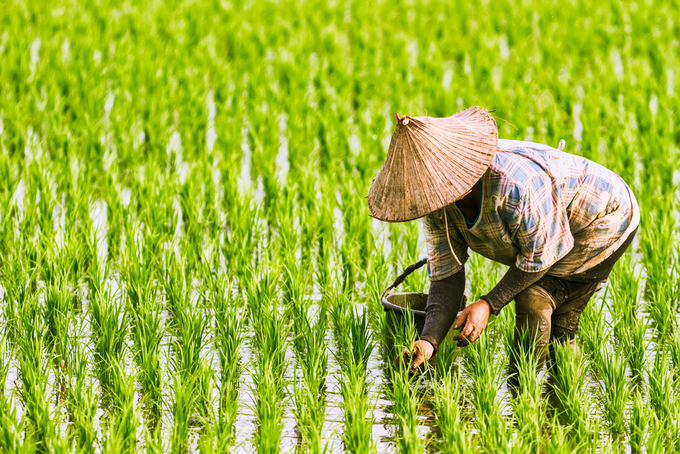
    Seven Vietnamese firms have won a bid to export 300,000 tons of rice to Indonesia, or more than half the volume that country’s plans to import in January.

    Their lowest quote was US$648 per ton, including transportation costs.

    Earlier this year Indonesia said it wanted to import 500,000 tons of rice in January to increase its food reserves.

    Last year it imported more than one million tons of Vietnamese rice, making it the second biggest customer.

    According to the Vietnam Food Association and the Thai Rice Exporters Association, the current export prices of standard 5% broken rice are $656 per ton in Thailand, $642 in Vietnam and $638 in Pakistan.

    Last year Vietnam exported eight million tons of rice to rank third in the world after India and Thailand.

  • Rice exports reach record high

    Rice exports reach record high

    Vietnam’s rice exports soared to 8.13 million tons, valued at US$4.7 billion in 2023, setting a new national record, as per the General Department of Customs.

    This marked a 14.4% increase in volume and a 35.3% rise in value from the previous year, despite challenges from the El Nino weather pattern.

    The export surge is partly attributed to India’s export ban on non-basmati white rice, which has affected global rice trade.

    India, a major player in the global rice market, contributes 40% to the worldwide rice trade. Its largest buyers include Iran, Saudi Arabia, and China.

    In 2023, several countries increased their rice imports from Vietnam as the global supply dwindled. A rice export business director from Dong Thap Province said some countries that typically imported little rice from Vietnam began placing substantial orders.

    The ongoing Indian export ban has left many countries seeking reliable rice sources, creating an optimistic outlook for Vietnam’s rice exports in 2024.

    In 2023, the Philippines was the largest importer of Vietnamese rice, purchasing 3.1 million tons, followed by Indonesia, China, and Ghana. Vietnam now is the world’s fifth-largest rice producer and third-largest exporter.

  • Vietnam cooperate on rice exports with Thailand and Philippines

    Vietnam cooperate on rice exports with Thailand and Philippines

    Vietnam has agreed with Thailand as well as the Philippines to strengthen rice export cooperation to ensure regional and global food security.

    The consensus was reached when Vietnamese Prime Minister Pham Minh Chinh met with Thai counterpart Srettha Thavisin and Filipino President Ferdinand Romualdez Marcos on the sidelines of the ASEAN-Japan Commemorative Summit on Sunday in Tokyo.

    The Vietnamese and Thai prime ministers agreed to lift the two-way trade between the two countries to US$25 billion soon, through creating more favorable conditions for importing and exporting goods, including rice.

    Thailand is currently Vietnam’s largest trading partner in ASEAN, with import-export turnovers reaching $21.5 billion last year. Meanwhile, it is the 9th largest foreign investor in Vietnam.

    Vietnam and Thailand will also implement the “Three Connections” Initiative which focuses on new areas such as digital transformation, green transformation, and the circular economy.

    The Vietnamese prime minister and the Filipino President agreed to step up rice export cooperation to ensure regional and global food security when both countries export rice to many nations, and the Philippines imports Vietnamese rice.

    Among Vietnamese rice importers, the Philippines currently imports the most. In the first nine months of this year, the Philippines imported 2.4 million tons of rice worth $1.5 billion from Vietnam.

    Data from the Ministry of Agriculture and Rural Development shows in the first 11 months, Vietnam earned $4.4 billion from exporting 7.75 million tons of rice to many countries around the world.

    The average price of Vietnamese rice was $568 per ton, surging 17% over the same period last year, sometimes reaching nearly $650 per ton.

  • Rice exports expected to hit $5B this year

    Rice exports expected to hit $5B this year

    In 2023, the rice farming area nationwide is 7.1 million ha with productivity estimated at 6.08 tonnes of unmilled rice per ha and total output at 43.1 million tonnes, up about 420,000 tonnes from last year.

    Some 7.75 million tonnes of milled rice was exported during the first 11 months of this year to bring home an estimated $4.41 billion in revenue, rising 16.2% and 36.3% year on year, respectively. Export prices averaged $568 per tonne, up 17.3%, according to the Department of Quality, Processing and Market Development under the Ministry of Agriculture and Rural Development (MARD).

    The export volume has been kept at around 6 million tonnes and increased over years, with annual value continually topping $3 billion, statistics show.

    At a workshop held in the Mekong Delta province of Hau Giang on Dec. 13, MARD Deputy Minister Tran Thanh Nam said the rice sector plays a crucial role in the agriculture of Vietnam and many other countries in the region and the world.

    Domestic and international rice markets will remain vibrant in the time ahead due to big import demand from China, Indonesia, the Philippines, the Middle East, and Africa, he forecast.

  • Rice export prices soar to new record

    Rice export prices soar to new record

    Vietnam rice export prices have reached a new peak of US$663 per ton, the highest price in the world right now, amid rising global demand.

    On Monday prices rose 2% in a single day to $663. Rice from Vietnam’s competitor Thailand has also risen 8% in the last four weeks to $625 while Pakistan’s prices have risen 9% to $600.

    Traders say that rising global demand and declining supply in Vietnam are the reasons for the price hike.

    Dinh Ngoc Tam, deputy CEO of rice exporter Co May, said that India, which used to account for 40% of the global rice market, has not shown any sign of lifting its non-basmati white rice export ban since July.

    Concerns of trade restrictions and the impact of El Nino weather have prompted countries to increase their purchase to pump up reserves, which has sent export prices skyward.

    Up to 90% of Vietnam’s rice varieties are high quality and the country has enough for both domestic needs and exports. It can ship up to 8 million tons globally this year, according to Deputy of Ministry of Agriculture and Rural Development Phung Duc Tien.

    In the first 11 months, Vietnam exported 7.75 million tons worth a total of $4.4 billion, up 36% in value. Many buyers from the Philippines, Indonesia and China are competing to buy the rice.