Tag: sales report

  • Supermarket, apparel sales not looking good in Japan

    Supermarket, apparel sales not looking good in Japan

    Japanese supermarket sales edged down 0.2 per cent in a third consecutive year of declines, according to figures released by an industrial body this week showing last year’s financial performance. The data for last year shows sluggish consumption regardless of the country’s current period of economic growth. Observers have attributed the slump to a low demand for apparel in supermarkets relative to stronger sales in food.

    Apparel sales fell 5.3 per cent, the 27th straight year of declines, influenced by the warm winter and increased competition with retailers online. Food, by comparison, saw 0.4 per cent higher sales with an uptick in prices for vegetables and sweltering summer temperatures.

    While total sales rose 0.5 per cent to ¥12.99 trillion ($118.71 billion) last year, they still fell short of the hoped-for ¥13 trillion mark for the second year in a row.

    “Spending is weak as a deflationary mindset is still deeply rooted among consumers”, said Atsushi Inoue, a senior official of the Japan Chain Store Association.

  • Apple sales plummet in Greater China

    Apple sales plummet in Greater China

    “In fact, most of our revenue shortfall to our guidance, and over 100 per cent of our year-over-year worldwide revenue decline, occurred in Greater China across iPhone, Mac and iPad,” he said.

    The Apple sales decline in China, Hong Kong and Taiwan would most likely exceed $4.3 billion, roughly equal to the company’s overall drop in revenue.

    Previously, Apple had forecast revenue of between $89 billion and $93 billion. Now it expects the figure will be closer to $84 billion, but notes final figures will not be calculated for several weeks.

    Cook said the rising tension between the US and China played a part in the declining sales, with traffic to Apple stores in the region declining as the quarter progressed. This, in turn, led to lower than expected iPhone revenue in the region, which was compounded by the stalling iPhone upgrades seen in other markets.

    “We believe there are other factors broadly impacting our iPhone performance, including consumers adapting to a world with fewer carrier subsidies, US dollar strength-related price increases, and some consumers taking advantage of significantly reduced pricing for iPhone battery replacements,” Cook explained.

    In response to these trends, the business is seeking to make it easier to trade in used iPhones at Apple stores, as well as allow payments to be made over a longer period.

    “This is not only great for the environment, it is great for the customer, as their existing phone acts as a subsidy for their new phone,” Cook said.

    Despite the slowing traffic, Apple’s other categories grew over the period, with the company’s wearables category growing by almost 50 per cent due to the popularity of Apple Watch and AirPods.

  • Gome Retail sales free falling

    Gome Retail sales free falling

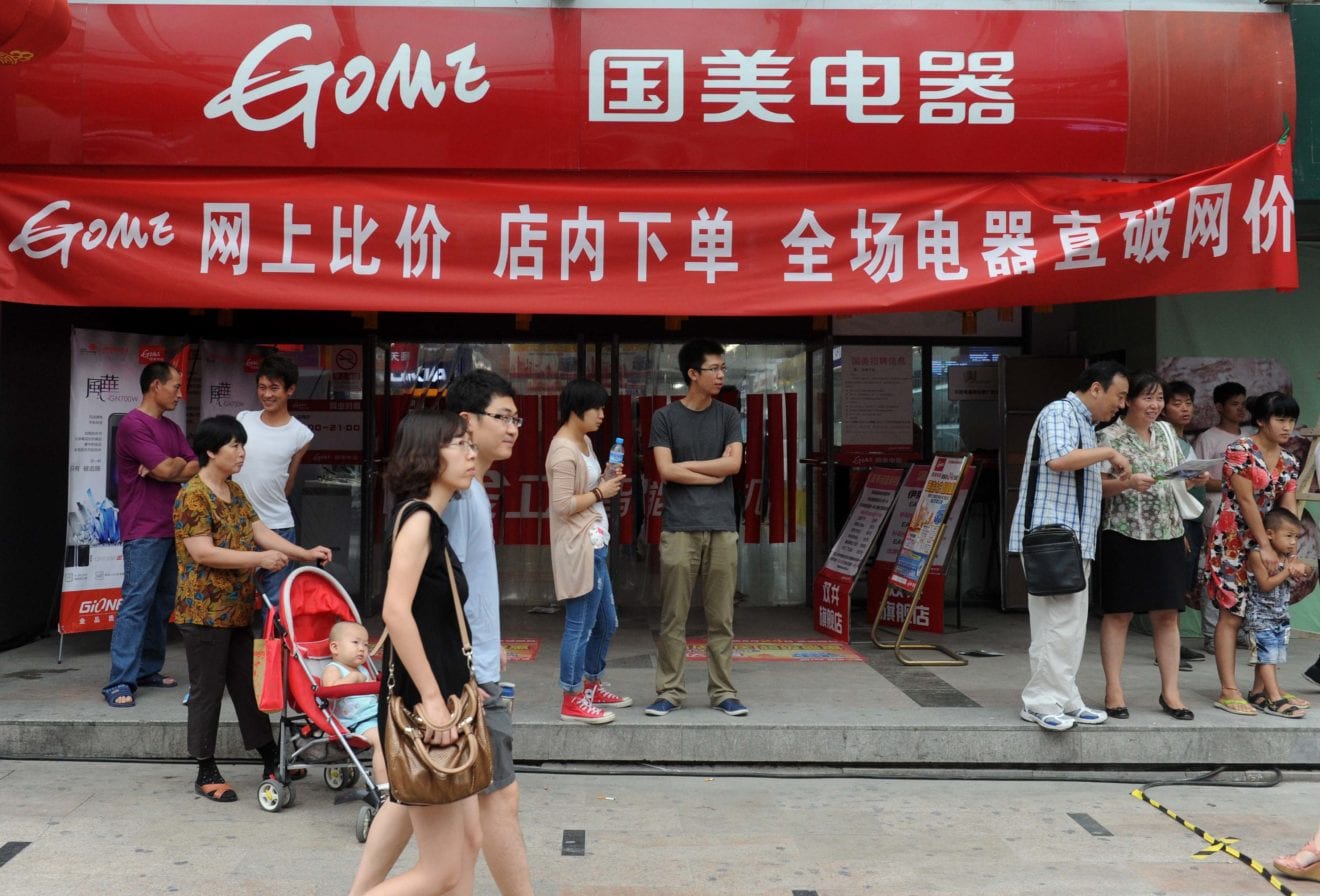
    Gome Retail has plunged US$64million into the red as its restructuring program takes its toll. The company took the unusual step of releasing third-quarter financial data, which shows group sales were down 11.2 per cent in the first nine months of the year, to $7.3 billion.

    Total gross merchandise volume (GMV) of the group for both online and offline grew by 4.83 per cent year on year, with its e-commerce business growing by 26.04 per cent.

    Gome’s consolidated gross profit margin was 18.06 per cent, up by one percentage point compared with the same time last year.

    But the loss for the period contrasted with a $31.7 million profit last year.

    Gome issued a profit warning early this month, with the actual figure turning out to be at the top end of its projected range. While yesterday’s statement did not include any commentary, the company has made considerable effort to keep shareholders aware of the scale of the task it faces and the short-term pain required to effect the restructuring plan.

    Gome Retail is integrating its online and offline business and promoting a new ‘Social + Business + Sharing’ shared retail model. As part of that strategy, the company is combining its electrical appliances, home decoration, household systems and supermarkets to create sizable “experiential stores” in tier 1 and 2 cities. The group is also optimising its platform to include the Xiaomei Net Cafe, VR Cinemas and Gome esports.

  • Abercrombie & Fitch results going uphill

    Abercrombie & Fitch results going uphill

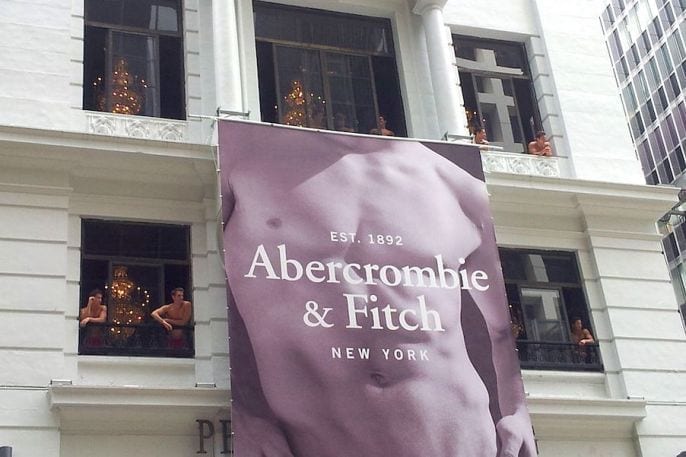
    Abercrombie & Fitch is on the right road to recovery. Third-quarter net income is up by 133 per cent year on year, supported by a 75 per cent increase in operating profit. The company has still delivered positive comparables both overall and for each of the Hollister and Abercrombie brands. And at 6 per cent growth, US comparables are still on fairly solid ground.

    While Abercrombie & Fitch’s sales growth has slowed, both overall and on a comparable basis, and total sales at the Abercrombie brand have slipped into negative territory, a calendar shift in reporting periods, currency fluctuations and some tough-to-match prior year comparable figures are mitigating factors.

    GlobalData’s consumer-tracking data continues to show a number of positive movements in consumer sentiment about both of the main brands. Over the past year, there has been a 4 percentage point increase in the number of American shoppers who say they consider Abercrombie when shopping for apparel. For Hollister, the same metric rose by just shy of 6 percentage points. The same research also reveals that among core shoppers, perceptions of quality and design at both Abercrombie and Hollister are up sharply on last year.

    The results justify the step changes that have been made to things like fabrication, detailing and styling of the product set. The range – especially at Abercrombie – is now more sophisticated, more on-trend, and better reflects what modern consumers want. There is also a cohesiveness to the assortment which stimulates multiple purchases and helps to push up average transaction values. However, as good as these things are, both brands have more to do yet in making consumers aware of the changes and getting them to take a fresh look at the brands.

    Many of the positive movements are far more pronounced in the US than they are elsewhere. In our view, the geographical difference in the pace of recovery is telling. While it is right that the company has focused its recovery efforts on its most important market, there is now a need to adapt some of the strategies and plays so that they are relevant overseas. Customer dynamics, competitive sets, and perception of the brands are all very different in markets like the UK and a degree of localisation is needed to ensure that the brands fully resonate with regional consumers. We believe management recognises this and has already taken some steps, such as opening a new-format mall-based store in the UK at Manchester’s Intu Trafford Centre.

    Overall, the recovery at Abercrombie & Fitch is still a work in progress. However, turning around a once very-troubled brand is far from easy. Progress and advancement do not all come at once; this is a step-by-step process that will build over time.

  • Luk Fook sales soar despite challenges ahead

    Luk Fook sales soar despite challenges ahead

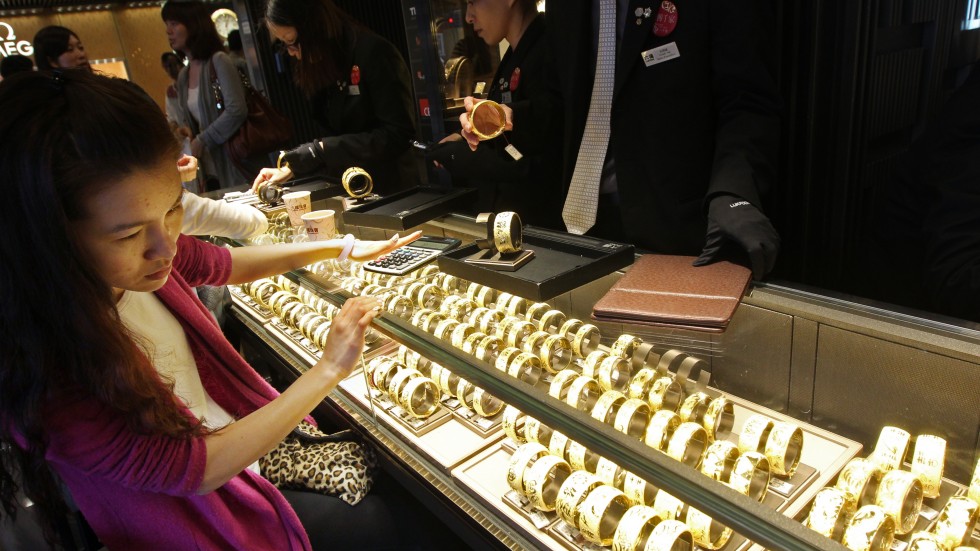
    Thanks to positive Hong Kong market sentiment and lower gold prices, Luk Fook Holdings has reported a 25.1 per cent boost in sales in the September half year. The company says sales totalled HK$7.859 billion (US$1 billion) compared with $6.283 billion in the same period last year. Profit attributable to shareholders soared 27.9 per cent to $665.4 million.

    Sales in the Hong Kong market, the company’s key source of revenue, rose 31.2 per cent as mainland Chinese visitor numbers continued to grow and retail sentiment improved.

    Sales in Macau rose 19.9 per cent.

    However the company has warned that the US-China trade war and the depreciation of the Renminbi are starting to impact on sales in the second half.

    “Same-store sales growth in the Hong Kong and Macau markets … started to see a decline since the second half of October and recorded a single-digit drop for the period from October to [the] first three weeks of November,” the company said. “In Mainland China there was a double-digit drop.

    “Therefore, the group remains prudent about its business development in the second half of the financial year. Nevertheless, with the anticipated considerable growth of the middle-class population in Mainland China, the group remains optimistic about the mid- to long-term business prospects.”

    Luk Fook said that during the coming year, it will focus on enriching its product offer, expanding its footprint in Mainland China and adopting market-oriented strategies to penetrate into the mass market, covering the middle-class, wedding couples as well as kids.

    “The group’s target for net shop addition in Mainland China for this financial year will maintain at not less than 120 shops. The group is also committed to further developing its e-commerce business and strengthening cooperation with e-commerce platforms in Mainland China.”

    Targeting younger shoppers

    In light of the enormous spending potential of young consumers on online sales platforms, the company plans to step up its efforts to promote the sales of affordable-luxury jewellery products to expand its footprint in the young consumer market.

    “By understanding customers’ spending habits, the group will adopt holistic approach to penetrate into the markets for the middle-class, wedding couples and kids. It will also continue to attract customers and encourage local consumption by visual merchandising enhancement, cross-selling boosting and VIP promotional activities, so as to improve sales and profits. Given the importance of social media in product promotion, the group will continue to showcase and promote its products on mobile applications and social media platforms such as Facebook and WeChat.”

    During the first half of the financial year, Luk Fook added a net 94 stores to its ever-growing network, including 90 in Mainland China, where is closed six self-operated stores and opened 96 licensed stores. Two company-owned stores opened in Hong Kong, one in Macau, and one in Malaysia, with a new licensed shop opening in the Philippines, However, one licensed store closed in South Korea.

    The group now boasts a global network of 1725 Lukfook shops spanning Hong Kong, Macau, Mainland China, Singapore, Malaysia, Cambodia, the Philippines and the US.

  • Malaysia projected 4.9% retail sales growth for 2018

    Malaysia projected 4.9% retail sales growth for 2018

    The Malaysia Retail Chain Association (MRCA), which expects retail sales growth to come in at 4.9% for 2018 in line with the country’s gross domestic product growth, has pointed out that some of its members face difficulties in retailing online amid the push for e-commerce.

    MRCA, in releasing its first quarterly retail sales survey for the third quarter (Q3) today, highlighted that online sales make up only 3.9% of its retail revenue.

    The sample of respondents for the survey include 10% of MRCA’s members, representing 59 brands and 2,266 stores across a variety of trade categories, including food & beverage (F&B), fashion, health & beauty, supermarket & department stores, entertainment, optical, education, home improvement and more.

    MRCA president Datuk Seri Garry Chua said the association constantly reminds members to bring their businesses online and be part of the digital ecosystem, adding that MRCA also has digital membership for players like Lazada, Lelong and 11street, which are all its members.

    “We can also work closely with them (digital players) to reinforce and increase the market share for online. We’re confident the (industry) sales from online retail is going to be double-digit growth every year as more brick and mortar retailers go online, as with many start-ups,” Chua said.

    MRCA vice-president Datuk Liew Bin said although all members have an online presence, most of its members rely on the brick and mortar model and “survive happily on brick and mortar”, whereby online sales is regarded as a bonus to them.

    “With so many years in brick and mortar, it’s difficult for our members to turn to online. This is one of the challenges that our retailers face because (the) online (wave) is coming on strongly. This should be an alert to our members, as 3.9% is still a small figure,” Liew said, adding that MRCA expects online sales to grow 5% next year.

    Individually, he said some retailers have seen a 20% growth in their online retail sales.

    MRCA projected retail sales growth to grow 6.1% year-on-year in Q4 this year as year-end school holidays and the festive season are expected to bolster consumer spending; while an increase in the number of outlets is also expected to boost sales growth.

    It said retail sales grew 5.7% year-on-year in Q3 with the tax holiday between June and August that had encouraged consumers to spend.

    In Q2, retail sales grew at a slower rate of 2.1% year-on-year, affected mainly by the general election in May, where consumers held back on spending due to economic uncertainty.

    Retail sales grew 5.7% year-on-year in Q1 due to Chinese New Year sales and promotions.

    F&B, health & beauty and other retailers reported encouraging growth rate of 5.4%, 3.1% and 21.3% year-on-year respectively. However, fashion retailers suffered a negative growth in Q2 and Q3 at -2.2% and -2.8% year-on-year respectively.

  • Walmart sales goes back on track

    Walmart sales goes back on track

    US retailer Walmart has reported a 4.7 per cent increase in operating income in the third quarter to US$4.98 billion, and a 3.4 per cent increase in year-on-year comparable sales. Walmart sales for the period reached US$124.9 billion, an increase of 1.4 per cent.

    “We have momentum in the business as we execute our plan and benefit from a favourable economic environment in the US,” Walmart president and CEO Doug McMillon said in a statement.

    “We’re accelerating innovation and using technology to shape the future of retail [and] making shopping at Walmart faster and easier.”

    The retailer saw a 43 per cent increase in online sales in the quarter, largely thanks to its investment in its e-commerce business, as well as key acquisitions, according to GlobalData Retail’s MD Neil Saunders.

    “Making online work for customers has been a priority for Walmart, but the company is also conscious that online needs to deliver in terms of profitability,” Saunders said.

    “On this front, we are impressed with the experimentation on automation and the testing of various last mile solutions for grocery. We believe that Walmart has the skill, financial muscle, and the physical infrastructure to drive profitable online growth in a way that many other retailers, especially grocery players, will struggle to achieve.”

  • Jollibee Philippines Q3 profit rises

    Jollibee Philippines Q3 profit rises

    Philippine fast-food franchise Jollibee posted an increase in profit of nearly 20 per cent in its third quarter. Backed by strong sales, the firm has posted a 19.2 per cent rise in net income attributable to shareholders to PHP6.09 billion (US$114.5 million).

    According to Jollibee’s CFO Ysmael Baysa, the company’s global sales have seen strong growth this year, including in its home base in the Philippines, partly driven by concerted efforts to expand Jollibee’s store network.

    “We look forward to the recovery of Jollibee profit margins in the Philippines next year and the significant improvement in the profit performance of our new businesses in the next one to two years,” he said.

    Beyond its own franchise, Jollibee operates the Chowking, Greenwich, Red Ribbon and Smashburger brands in various worldwide locations. It currently has 3003 stores worldwide, with more set to open in the immediate future in Malaysia and Guam.

  • Coffee Day India Q2 net profit plunges

    Coffee Day India Q2 net profit plunges

    Coffee Day Enterprises Ltd Wednesday reported a 59.78 percent fall in consolidated net profit at Rs 23.83 crore for the September quarter due to higher expenses. The company had reported a net profit of Rs 59.26 crore in the corresponding period of the previous fiscal.

    According to a report, Its total income grew to Rs 1,015.13 crore during the quarter under review, up 12.42 per cent, as against Rs 902.9 crore in the corresponding quarter of the year-ago period, Coffee Day Enterprises said in a BSE filing.

    Expenses during the quarter stood at Rs 1,014.99 crore, up 13.83 per cent, as against Rs 891.6 crore a year ago.

    The company said board of directors, at its meeting held on 14 November 2018, discussed the potential restructuring of the company’s business to segregate its coffee business and its subsidiaries from their non-coffee businesses (including integrated multi-nodal logistics, financial services, development and management of commercial space, hospitality services and investment operation).

    “No decision to undertake any restructuring has been taken by the board at this stage,” it added.

  • Tumi boosts Samsonite sales growth

    Tumi boosts Samsonite sales growth

    Rapid Tumi expansion is powering solid sales growth for Hong Kong-listed luggage specialist Samsonite International. Group sales rose 5.2 per cent in the third quarter to US$945.2 million, with sales in Asia up 7.2 per cent to $324.2 million. Global sales for the first nine months were up 10.1 per cent.

    The company says the Asian sales growth was primarily driven by the Tumi, American Tourister, Kamiliant and High Sierra brands. Tumi sales in Asia surged 27.7 per cent year-on-year, driven by expansion in key Asian markets. Kamiliant, the group’s value-conscious, entry level brand, saw net sales increase by 31.8 per cent as the brand continued to gain market share, while the High Sierra and American Tourister brands grew by 22.2 per cent and 3.6 per cent respectively.

    In Japan, sales grew 12.5 per cent in the third quarter, driven by the Tumi and Samsonite brands.

    Net sales in Hong Kong increased by 23.5 per cent, driven by increased net sales from the Tumi and American Tourister brands, however Mainland China net sales decreased by 3.2 per cent due to weak consumer sentiment amid concerns about trade relations and a decrease in business-to-business orders. Excluding business-to-business orders for both periods, net sales in China increased by 4.1 per cent.

    The Samsonite, American Tourister and Kamiliant brands drove a net sales increase of 28.6 per cent in India. Sales in South Korea decreased by 4.1 per cent due to “continued challenging domestic market conditions”.

    CEO Kyle Gendreau said the group was pleased with the third quarter results and especially its continued progress in Asia.

    Sales in Europe rose 10 per cent and in Latin America by 13.4 per cent.

    Profit attributable to shareholders during the third quarter rose by $18.9 million, or 33.3 per cent, to $75.5 million, driven by a reduction in the group’s income tax expenses. For the nine months ended September 30, profit attributable to shareholders, excluding a non-cash charge to write-off the $53.3 million of deferred financing costs, increased by $42.9 million, or 30.6 per cent.

    Gendreau said the company is excited about the opportunities ahead, despite global concerns about the US-Sino trade war and subdued consumer sentiment in many markets.

    “With consumers still showing a strong propensity for travel, our industry continues to enjoy favorable long-term growth prospects. We will continue to invest in marketing, product innovation and development of our distribution channels, including direct to consumer. We are confident that we can continue to leverage our strong, diversified portfolio of brands to expand our global presence.”

  • Hong Kong retail up in September despite massive growth slowdown

    Hong Kong retail up in September despite massive growth slowdown

    Retail sales in Hong Kong rose 1.4% year-on-year in September, signalling a considerable retail sales slowdown in the Asian economy, following a downwardly revised 7.9% increase in August. According to industry figures released on November 1, the September uptick is the smallest annual gain in Hong Kong retail sales since June 2017.

    The Census and Statistics Department (CENSTAD) attributed the slowdown to two factors, with the first being the temporary drag on inbound tourism from typhoon Mangkhut.

    Also, local consumer spending was reportedly hindered by negative sentiment, in light of the US-China trade conflicts and stock market corrections.

    Looking at the results closer by category, September food, alcoholic drinks and tobacco retail sales fell 0.8%, compared to an increase of 2.4% in August.

    Hong Kong fuel sales were down 2.9%, widening in terms of loss, compared to a 0.6% decline in the month prior.

    Hong Kong’s clothing and footwear retail sales figures fell a whopping 6.5%, compared to 3.4% in August, with growth stalling in September at department stores, up 1.1% compared to 11% in August.

    Likewise, jewellery, watches and clocks gained 5.3%, but proved to be a soft growth result, compared to the 22% lift last month.

    But not all categories in September underperformed.

    Retail sales at supermarkets swung to a 0.6% increase, compared to a decrease of 3.4%, while consumer durable goods gained 3.3% compared to 2.1% last month.

    Based on seasonally adjusted data, retail sales decreased by 3% in the third quarter, compared to the second quarter.

    Hong Kong retail sales have been on annual upward trajectory since 2005.

    For the last thirteen years, sales have gained on average 5.67%, with a high of 30.6% in February 2010.

    The lowest recorded result was an 18.5% downswing in February 2016.

  • Australia retail sales miss in September

    Australia retail sales miss in September

    Australian retail sales rose slightly in September 2018, missing industry expectations that the nation’s retail revenues would register a bigger increase for the first month of spring. Domestic retail turnover saw a 0.2 % gain in September, according to the latest Australian Bureau of Statistics (ABS) Retail Trade figures.

    While the growth remains positive, analysts were predicting a stronger result and forecast retail sales to climb 0.3%, on August’s 0.3% gain in the prior month.

    Year-on-year, September witnessed a rise of 3.67%.

    “Although September’s month-on-month figure isn’t as positive as we would have liked, we need to understand the year-on-year retail growth figure represents a better overview of the current state of Australian retail,” Russell Zimmerman, Executive Director of the Australian Retail Association said.

    “The ARA know personal tax cuts play a big role in discretionary spend, and believe a second round of personal tax cuts before the next election would certainly boost consumer confidence, and see an increase in retail sales in the new year.”

    For the month, café, restaurant and takeaway spending registered the highest growth in September, up 0.5%. This was followed by food retailing, up 0.4%, said the ABS.

    But the month of September was weighed down by lower sales across the clothing, footwear and personal accessories category, with three industries falling 1.2%. Household goods and department stores remained relatively flat from previous months.

    By state, sales were strongest in the state of Victoria and Tasmania, leading by 0.7%. New South wales fell 0.4%, while Western Australia and The Australian Capital Territory were relatively unchanged in September 2018.

    Online retail sales made up 5.6 % of total retail turnover in original terms in September 2018, an unchanged result from August, said the ABS.

    The ABS also released quarterly data that showed seasonally-adjusted retail sales rose 0.2%, a massive drop from the 1 per cent increase in the second quarter.

  • Hermes sales growth boosted by Asia

    Hermes sales growth boosted by Asia

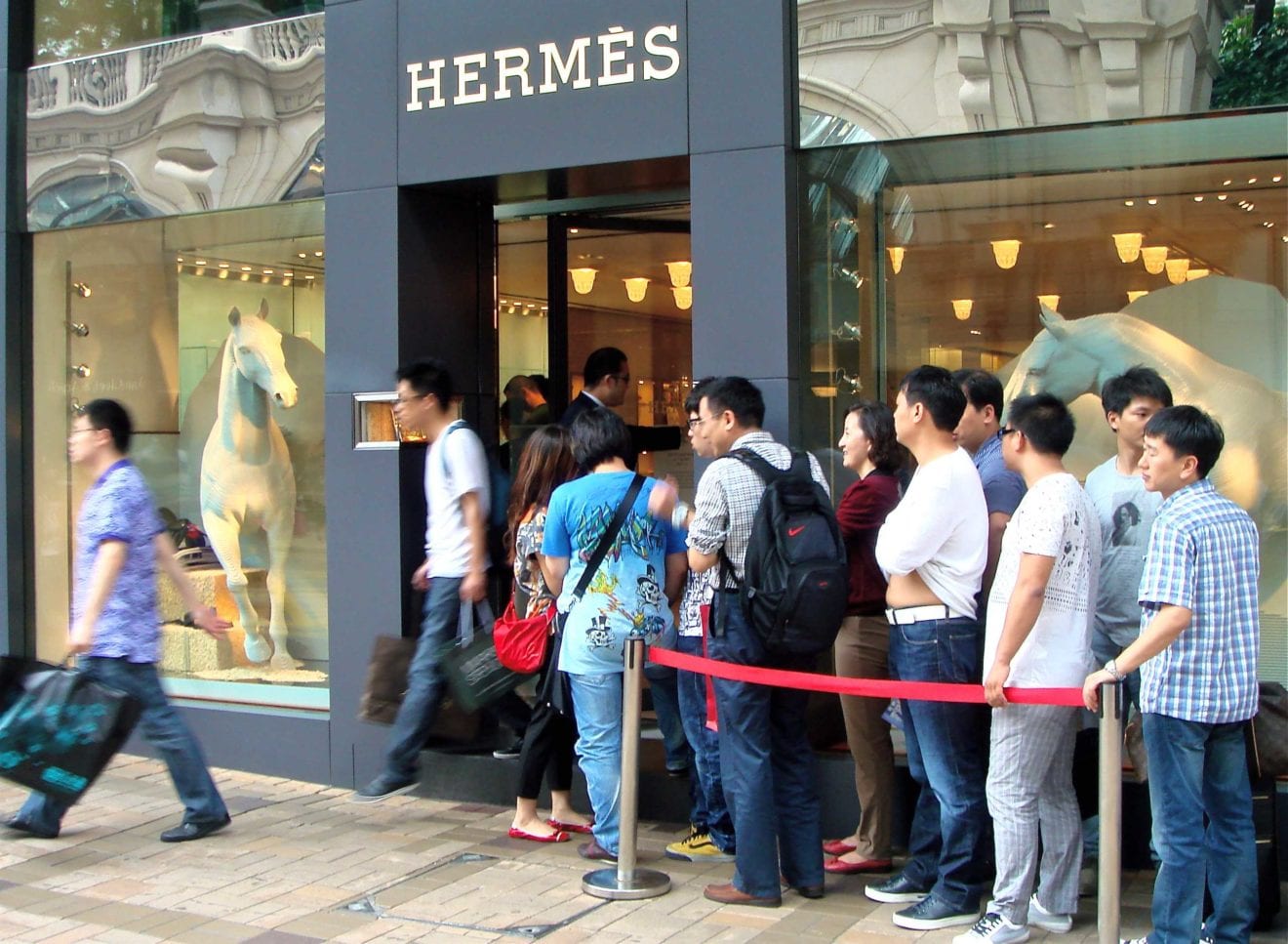
    Hermes sales surged 11 per cent in the quarter to September, with all geographical regions performing well. Asia – excluding Japan – led the way, with sales up 14 per cent. The company reported a “significant increase” in Mainland China with new stores in Xi’an (which opened in September) and Changsha (in May) along with the Landmark Prince’s store in Hong Kong in January helping underpin growth.

    A new commercial website hermes.cn, launched on October 17 and a massive duplex flagship opens tomorrow at Bangkok’s new IconSiam development. In Japan, sales rose 7 per cent.

    Group-wide revenue reached  €4.316 billion at the end of September, with sales through company-owned stores up 11 per cent as well, confirming the trend evident during the first half of the year.

    “Hermes realised a very strong growth over the first nine months of the year, in all regions,” said executive chairman Axel Dumas. “We keep our optimism for the future, but we are also thankful for the past.”

    By product category, Hermes’ ready-to-wear division achieved growth of 15 per cent, aided by the successful launch of the women’s Spring-Summer 2019 collection, presented at the Hippodrome Paris Longchamp. Demand was also high for fashion accessories and shoes.

    Growth in leather goods and saddlery reached 9 per cent, while the silk and textiles business grew by 4 per cent. Perfume sales rose by 9 per cent, watches by 8 per cent and other business lines, encompassing jewellery, Art of Living and Hermes Table Arts, by 23 per cent.

  • Pandora sales declining, relies on China

    Pandora sales declining, relies on China

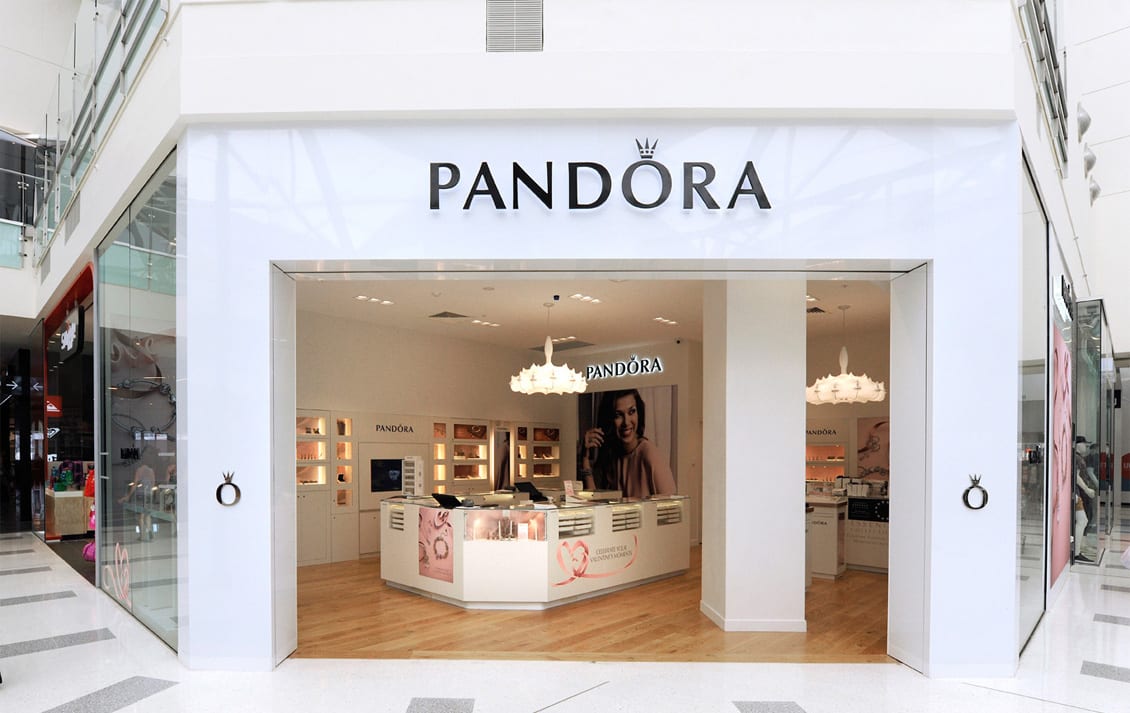
    Jewellery retailer Pandora is looking to China, India and Latin America to arrest a decline in global sales. The Danish company has unveiled an initiative that it hopes will reignite sustainable revenue growth, Programme Now, after group revenue dropped 3 per cent in the third quarter of this year.

    Under the program, Pandora will significantly reduce its franchise acquisitions and scale back new store openings. For the stores it does open, it will concentrate on growth markets, such as China, India and Latin America. It hopes the move will grow like-for-like sales, if not total sales.

    To achieve this, the business plans to enhance its marketing, personalisation, digital and e-commerce capabilities, as well as the in-store customer experience.

    Pandora also noted that part of its success moving forward lies in execution in all parts of the value chain, as well as more closely coordinating parts of the business to work in tandem, to reduce costs.

    The implementation of the program, as well as the weak third-quarter results, however, have led the company to revise its full-year earnings guidance. It has cut its annual revenue forecast from between 4 and 7 per cent to between 2 and 4 per cent, or DKK 1.2 billion to DKK 1.4 billion (US$184 million to $214 million).

    “The third quarter results were unsatisfactory and we adjust our full year guidance,” Pandora CFO Anders Boyer said.

    “We have taken the first major step in the programme today by changing our network expansion plan. We have confidence in a strong future for Pandora and will use this year and next to reset the business.”

    Pandora expects revenue and total like-for-like growth to be impacted through to 2020 by the planned reduction of mark-downs, though this is likely to cause a margin neutral result on the group level.

  • Jeju Air net profit falls 3.7% due to the high cost of oil

    Jeju Air net profit falls 3.7% due to the high cost of oil

    Jeju Air, Korea’s biggest low-cost carrier by sales, said Tuesday its third-quarter net profit fell 3.7 percent from a year earlier due to high oil prices. Net profit for the three-month period that ended on Sept. 30 reached 31 billion won ($27.6 million), compared with 32.3 billion won ($28.7 million) a year earlier, the company said in a regulatory filing.

    The budget airline said high oil prices are to blame for the decline in net profit.

    Jet fuel prices came to $87.3 per barrel in the third quarter, up 45 percent from a year earlier.

    Operating profit fell 6.5 percent to 37.7 billion won ($33.5 million) in the July-September period from 40.3 billion won ($35.8 million) a year ago. Sales were up 31.3 percent to 350 billion won ($311 million) from 266.5 billion won ($236.8 million) during the same period last year, it said.