Tag: sales report

  • Alibaba reports solid Q3 growth, increases FY guidance

    Alibaba reports solid Q3 growth, increases FY guidance

    Alibaba Group Inc. said revenues reached 83 billion yuan ($12.8 billion) in the third quarter – soaring 56% on last year – pushed on by China retail growth.

    For the three-month period ending December 31, Alibaba said China recorded the highest revenue growth, up 57%, counteracting a dull consumer confidence in the Asian nation. Annual active consumers on Alibaba’s China retail marketplaces reached 515 million, an increase of 27 million from the previous quarter, representing the largest growth in 12 quarters.

    The hometown result was helped by a strong Singles Day 2017 performance. The massive sales event clocked 168.2 billion yuan ($25.39 billion) in gross merchandising value.

    The Chinese e-commerce giant said the quarterly period was its seventh-consecutive quarter for growth.

    “We delivered another outstanding quarter and our business is performing stronger than ever,” said Daniel Zhang, Alibaba’s chief executive officer.

    Zhang went on to praise the firm’s pioneering technology in the online sphere and its intelligent move toward offline, in particular, its Hema supermarket chains.

    “It’s the direct result of our long-term, forward-looking approach to new user acquisition, new technology and creation of new user experiences. We have demonstrated what new retail looks like through innovations such as Hema and inspired a global wave of experimentation in new retail. We believe the future of retail is much more than just connecting online and off-line, our new retail strategy is a combination of creating new and transforming old.”

    Looking ahead, Alibaba said it has revised its outlook for full-year revenue growth up to 55 to 56%, from its earlier estimate of 49 to 53%

    In addition to the financial reporting, Alibaba said it would acquire a 33% in Ant Financial, its digital payment partner. The move highlights Alibaba’s new retail strategy, which includes enabling digital payments in brick-and-mortar stores.


  • F J Benjamin announces Q2 profit of S$960,000

    F J Benjamin announces Q2 profit of S$960,000

    F J Benjamin Holdings Ltd, founded in 1959, is a consumer driven leader in brand building and management listed on the Singapore Exchange since 1995.

    F J Benjamin Holdings announced Group net attributable profit of $961,000 for its second quarter ended 31 December 2017 (2QFY18), representing a significant turnaround from a loss of $7.3 million previously.

    Group revenue fell 19% to $50.5 million reflecting the absence of several loss-making brands and businesses which were terminated as part of a restructuring exercise that is now completed.

    The $12.0 million decline in revenue comprised $6.8 million of discontinued businesses and an $8.2 million reduction in shipments to the Group’s Indonesian associate company which started buying directly from some of its principals in April 2017. The decline in sales was partially offset by a $3.3 million increase in ongoing businesses.

    Group CEO Nash Benjamin said: “We are pleased to report a return to profitability after a painful restructuring exercise which is now completed. With consumer sentiment improving in Southeast Asia, management is working hard to grow our business organically whilst exploring suitable opportunities in the consumer and lifestyle segments.”

    By business segment, Group turnover from the fashion business rose 13% to $34.6 million after excluding purchases by its Indonesian associate, discontinued brands and adjusting for translation loss. Growth came from existing and new stores opened after 2QFY17. Revenue from timepiece business declined by 17% to $3.8 million.

    Gross profit margin was up seven percentage points to 46% in 2QFY18 from 39% in the previous corresponding quarter as a result of tighter inventory management and improved full price sell throughs.

    Group operating expenses fell 20% to $22.3 million following cost controls and closure of non-performing stores which yielded savings of $5.7 million. Staff costs fell 17% to $6.8 million, rental of premises declined 24% to $7.9 million while other operating expenses were down 18% to $5.9 million.

    As at 31 December 2017, inventory was reduced by six per cent to $38.2 million.
    For the quarter under review, Group generated positive cash flows of $10.3 million from operating activities. Net gearing stood at 46% at 31 December 2017 against 53% as at 30 June 2017.

    F J Benjamin has a strong footprint in South East Asia, with offices in Singapore, Indonesia and Malaysia, and manages over 20 iconic brands, operates over 250 stand-alone stores and over 1,400 points of sale in these markets.

    The Group’s international brand portfolio includes fashion, lifestyle and timepiece brands.

  • Vietnam property sales rise in January

    Vietnam property sales rise in January

    The domestic property market reported more sales in January compared to December 2017, according to the Ministry of Construction’s Housing and Property Market Management Department.

    It said that in January, Hà Nội had 1,650 transactions, an increase of 13.8 per cent and HCM City had 1,900, a rise of 8.6 per cent over December’s figures.

    In Hà Nội, many housing projects have been completed and offered with attractive trade promotion programmes. The offerings are in the high- and mid-end segments and are located in convenient places. There are many kinds of area and payment methods can be flexible, the department said.

    Some projects had many sales in January, including Season Avenue, Hà Đông; An Bình City-Bắc Từ Liêm; Sunshine Riverside Tây Hồ and Romance Plaza, Hà Đông.

    Average offered price of an apartment in January rose 0.14 per cent against the December price. Of which, the price surged 0.17 per cent for high-end apartments, 0.05 per cent for mid-end apartments and 0.56 per cent for affordable apartments.

    Price of house on land had an increase of 0.24 per cent compared with December.

    Liquidity on the HCM City property market also increased in January. High- and mid-end apartment segments reported many sales.

    Customers paid attention to apartments having one or two bedrooms and price at about VNĐ1 billion (US$44,000) per unit, but the supply was low.

    Projects reporting many transactions included New City Thủ Thiêm, District 2; Saigon Intela-Bình Chánh District; and Melosa Garden, District 9.

    Average selling price increased 0.24 per cent for apartments and 0.81 per cent for house and land.

    The price declined 0.05 per cent for high-end apartments, but rose 0.33 per cent for mid-end apartments and 0.53 per cent for affordable apartments.

    The department said that by January 20, the value of the property inventory stood at VNĐ25 trillion, a drop of 19 per cent from the previous month.

    The value of property inventory in January was VNĐ5.27 trillion in Hà Nội, VNĐ19 billion lower than the value in December.

    In HCM City, the property inventory was VNĐ4.62 trillion, a fall of VNĐ47 billion.

    According to the State Bank of Việt Nam’s report, total outstanding loans in the property sector reached VNĐ446.36 trillion in the third quarter of 2017, a quarter-on-quarter increase of 2.1 per cent.

    Resort property

    The department also had a report on development of resort property, the hot spot on the property market.

    In the report, the Ministry of Construction appraised 71 “condotel” and “officetel” projects that have been built nationwide since 2015. .

    Meanwhile, provincial and municipal authorities have given licences to develop many more projects.

    However, many difficulties have arisen over investment, construction, trading and management of operation for those projects, the department said.

    Therefore, the ministry has proposed that the Prime Minister direct ministries to solve them.


  • Likely loss in first half, Esprit Holdings to be alert

    Likely loss in first half, Esprit Holdings to be alert

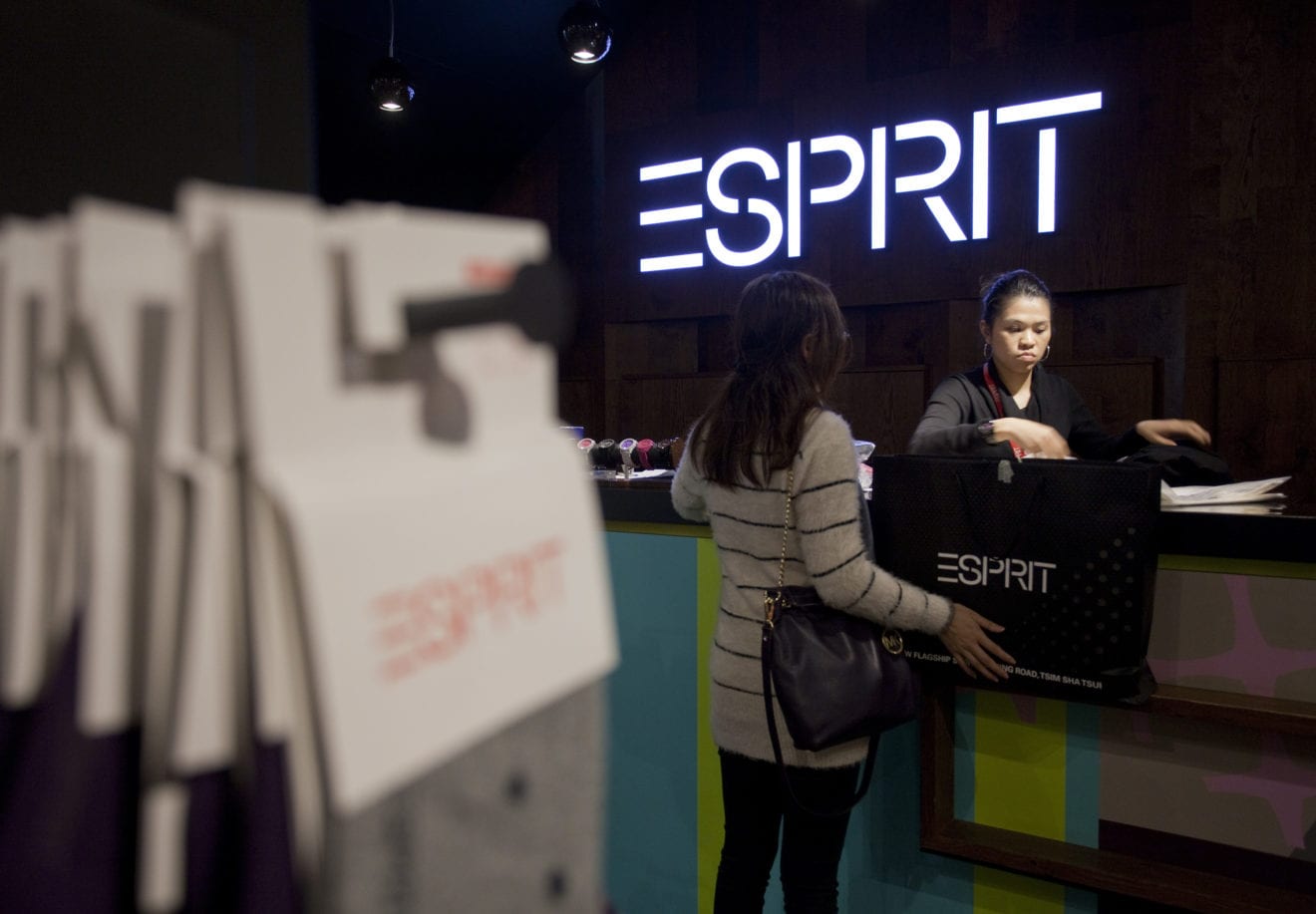
    Fashion group Esprit Holdings has issued a warning it expects a net loss for its first half, to the end of December.

    Based on a preliminary review of its unaudited consolidated management accounts, the net loss is expected to be in the range of about HK$950 million (US$121.5 million) to $980 million, compared to a net profit of $61 million in the same period a year earlier.

    Esprit attributes the anticipated loss to the combination of three major factors:

    1. Full impairment of the remaining balance of the goodwill and customer relationships in association with the group’s China business, which has had a “significant decline” in recent years, resulting in a negative impact of about $795 million before taxation.

    2. A larger-than-expected drop in group revenue in the second quarter after expecting a modest decline as a result of strategic rationalisation of its distribution footprint. The decline was exacerbated by lower sales at its brick-and-mortar stores. As a result, loss before interest and taxation (LBIT) and before the China Impairment is estimated to be in the range of $150 million to $180 million for the first half, compared to LBIT of $13 million in the same period a year earlier. While gross profit margin had slightly increased and running expenses had further reduced in the first half, it was not enough to outweigh the negative impact of the revenue decline.

    3. Net taxation expense of about $5 million in the first half in contrast to a net taxation credit of $74 million in the same period last year.

    Esprit’s company secretary, Florence Ng Wai Yin, says the board wants to reassure shareholders that the group is in the midst of fine tuning its strategic measures to establish a solid platform for long-term profitable growth. “The retail environment continues to be challenging, and because of the seasonality of the business, the performance in the second half of a financial year is usually not as good as the first half. This means the financial performance of the group in the second half remains uncertain.”

    Esprit expects to release its interim results at the end of next month.  

  • FJ Benjamin’s losses almost double

    FJ Benjamin’s losses almost double

    Clothing retailer FJ Benjamin has deepened its losses after discontinuing some brands and businesses during its second quarter.

    Its net loss virtually doubled from S$3.7 million (US$2.6 million) in the same quarter a year ago to S$7.3 million. The group says the situation was worsened by a foreign exchange loss of S$3.2 million in the latest quarter due to the strengthening of the US dollar.

    For the three months to December 31, revenue fell 11.9 per cent to S$62.5 million.

  • Retail loss for APAC retailers to peak this holiday season

    Retail loss for APAC retailers to peak this holiday season

    Retailers in the Asia-Pacific region will experience both their highest sales and shrink distributions during the holiday season, according to the 2016 Retail Holiday Season Global Forecast.

    The report boldly predicts that 32 percent of the losses of the region’s retailers will  be due to internal and external theft, with apparel, children’s toys, holiday foods, electronics and cosmetics emerging the favorites among thieves.

    Theft from internal sources (primarily via employee theft and other sales reducing activities) and external factors (primarily via shoplifting/organized retail crime), which is referred to as shrink by retailers, are also forecast to reach 28 percent of annual retail sales.

    The study, underwritten by an independent grant from Checkpoint SystemsInc., was carried out by Ernie Deyle, a retail loss prevention analyst, and provides an analytical view of business risks that major retailers face during this holiday season.

    The 13 markets covered in the report include North America, Europe and Asia, and include the US, Belgium, France, Germany, Italy, Netherlands, Portugal, Spain, UK, Australia, mainland China, Hong Kong and Japan.

    “Building holiday inventories earlier and specifically for high-risk items may lead to increased sales reduction pressures, such as markdowns and shrink throughout the fourth-quarter,” said Mark Gentle, Vice President — Merchandise Availability Solutions Asia Pacific, Checkpoint Systems.

    According to the study, Australia is expected to record the highest shrink loss for this holiday season among all the Asia-Pacific markets surveyed at 35 percent, followed by Japan (31 percent), mainland China (30 percent) and Hong Kong (30 percent). The rate is more than 30 percent higher than the first two quarters of the year.

    In the Asia-Pacific region, the cost of retail loss to shoppers in 2016, as absorbed or passed on from retailers, is expected to be $32 per person on average, of which one-third will be incurred during the holiday season. These increases in losses place an enormous burden on retailers and, ultimately, on honest consumers who pay for it in higher prices.

    “For most retailers, wholesalers and distributors, inventory — including the space to store it — is the largest single cost of doing business. While reducing inventory means lower costs, insufficient inventory leads to out of stock situations, lost sales and unhappy customers. Therefore balancing these two factors is critical to profitability and growth, particularly in omnichannel environments,” said Gentle.

    “The use of advanced data analytic tools, inventory management strategies, along with technologies such as RFID will provide retailers with enhanced visibility to track merchandise as it moves through the supply chain to distribution centers, retail backrooms, and store shelves, helping retailers reduce losses due to shrink and other causes, ultimately increasing the financial contribution of each item.”

  • Marks & Spencer plans to close all stores in Chinese mainland after profits plunged

    Marks & Spencer plans to close all stores in Chinese mainland after profits plunged

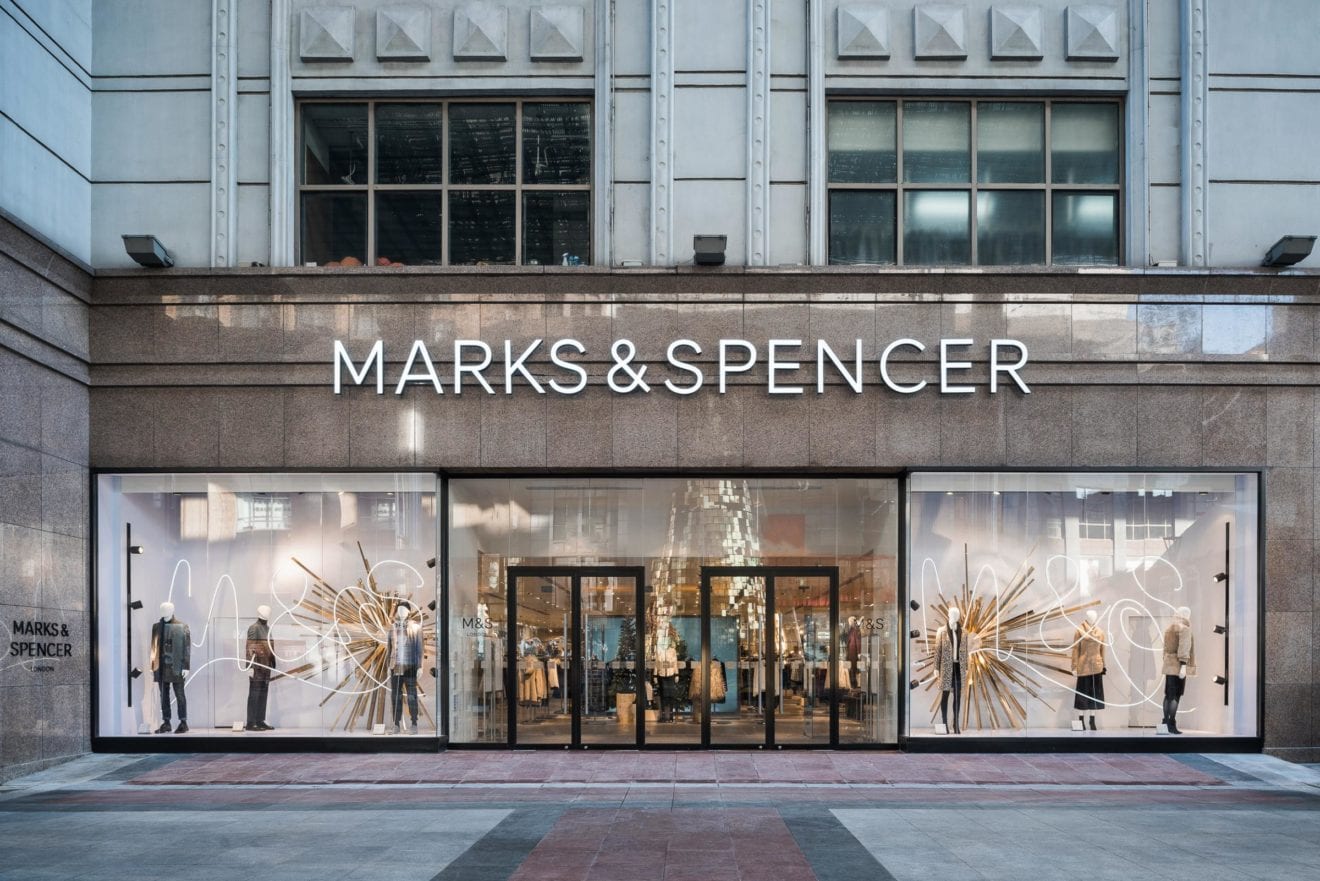
    UK retailer Marks & Spencer announced on Wednesday that it will pull out of the Chinese mainland market and close all the 10 stores amid shrinking profits, according to a statement the company sent to the Global Times on Wednesday.

    “Our review has shown that our stores in Chinese mainland continue to make losses and as result we can no longer trade with a store presence in the Chinese market,” Adam Colton, managing director of Greater China at Marks & Spencer, said in the statement.

    The company didn’t disclose sales revenues in the Chinese mainland market.

    An employee at an Marks & Spencer store in Beijing told the Global Times on Wednesday that he feels sorry about the closures because business in Beijing was quite good and there were a lot of loyal customers. He did not know when his last day of work would be. The 1,500-square Beijing flagship store at the Place shopping mall was opened in December 2015.

    Intensified competition and relatively high prices were the main reasons behind Marks & Spencer’s retreat from Chinese mainland, experts noted.

    “In Chinese mainland, the traditional UK brand did not have much appeal for Chinese consumers. For example, the prices in its food shops were a bit more expensive than even imported food stores,” Wang Xinmiao, a Beijing-based retail industry analyst, told the Global Times on Wednesday.

    In addition, the company did not have much time to cultivate brand awareness and a loyal customer base because the Chinese apparel market had already been saturated with “fast fashion” international brands, such as Zara, H&M, GAP, and Uniqlo, which marched into the Chinese mainland market much earlier than Marks & Spencer, Wang said.

    In contrast, the UK retailer has built a profitable wholly-owned business in Hong Kong in large part because it entered the market as early as 1988, the statement noted. Marks & Spencer is planning to expand its business in Hong Kong by opening more food stores in the near future.

    A customer said he came on purpose to the Beijing shop here after he has known the closure news. He has lived in UK for years and he trusts M&S, and he will shop in Hong Kong after the end of business here.

    The UK retailer has been losing ground in other international markets. In addition to its closures on the Chinese mainland, the company outlined plans to shutter 53 stores in 10 international markets, including seven in France, while pulling out of Belgium, Estonia, Hungary and Lithuania.

    In the first half of 2016, the company’s pre-tax profit plummeted 88 percent to 25.1 million pounds ($ 31.39million), down from 216 million pounds in the same period a year ago, as reported by BBC on Wednesday.

  • Loss deepens for FJ Benjamin Holdings

    Loss deepens for FJ Benjamin Holdings

    Restructuring has taken its toll on FJ Benjamin Holdings’s bottom line.

    The fashion and lifestyle brand management company has deepened its full-year net loss to S$23 million (US$16.9 million) for its latest financial year, compared to S$17 million the previous year.

    Group turnover subsided 14 per cent to S$253.6 million. Excluding the translation effects of foreign currency, the fall was 10 per cent.

    Turnover from the fashion business declined 9 per cent to S$212.5 million, while timepieces fell 13 per cent to S$51.6 million, after excluding currency translation loss.

    FJ Benjamin attributes the turnover decline to the closing of non-performing stores, discontinued businesses and the closure of its north Asian business, plus a S$10.4 million loss in converting Malaysian ringgit to Singapore dollars. These factors more than offset a slight increase in sales from franchise brands.

    Gross profit margin was 39 per cent against 41 per cent in the previous year because of increased promotional expenses.

    The group operating loss, excluding a one-time gain of S$19.6 million from the sale of mandatory convertible bonds and the sale of properties last year, was 32 per cent lower year on year at S$19.9 million.

    FJ Benjamin says it expects the trading environment to remain challenging amid uncertain economic slowdown in its key markets.

    “The restructuring that started in 2013 has been substantially completed, and associated losses are unlikely to recur,” says the group.

  • Prada falls on tough times in China

    Prada falls on tough times in China

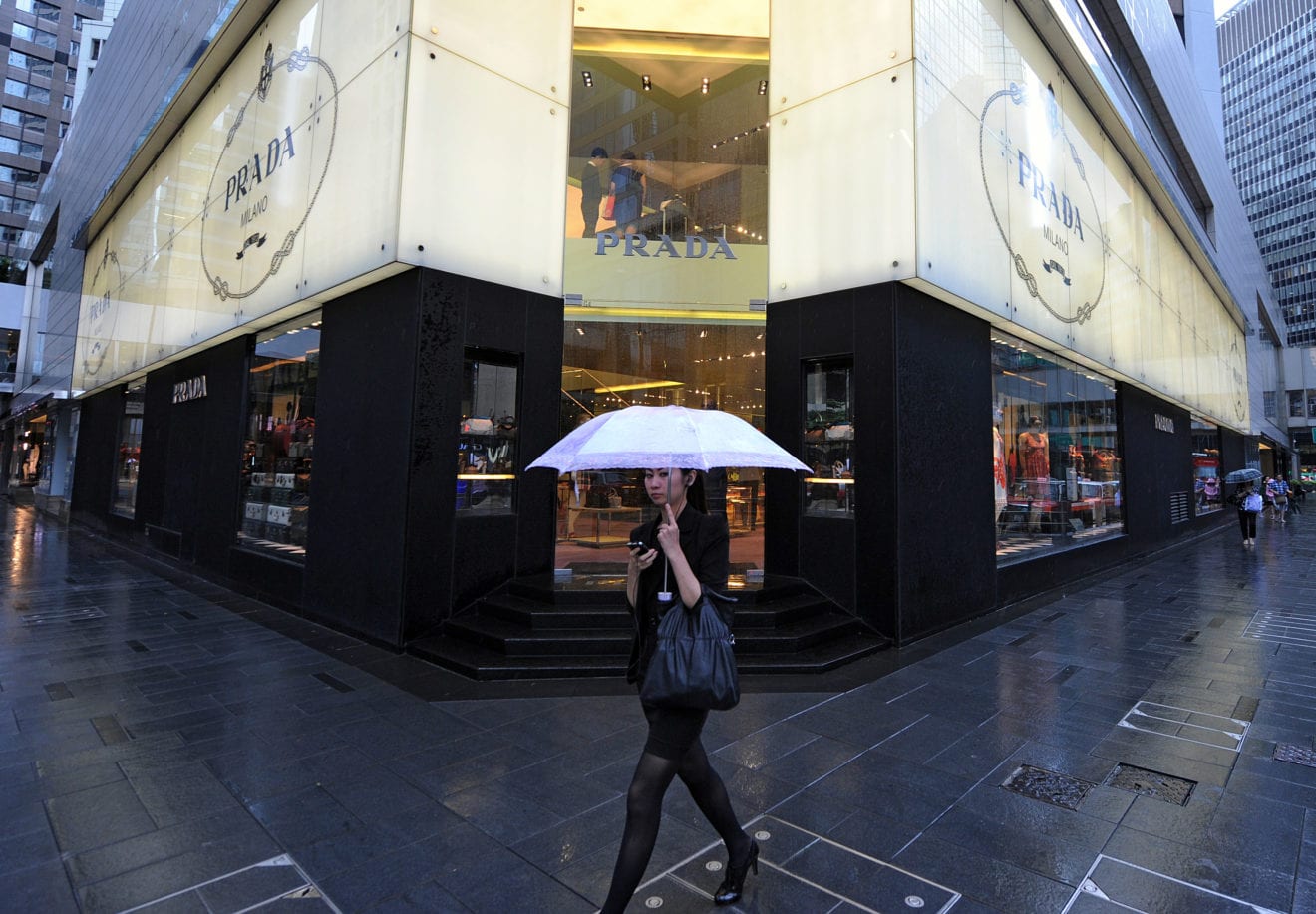
    Italian fashion brand Prada is suffering from shrinking demand in its largest market of China, with a 20%-plus drop in first-half sales dragging down overall profit to the same degree.

    The Hong Kong-listed, Milano-based company announced late Friday that net revenue dropped 15% on the year to 1.55 billion euros ($1.37 billion) for February to July. The fall was “entirely attributable to a sales decline in the retail channel as the wholesales and royalties were positive,” Prada said. Retail net sales, accounting for more than 80% of net revenue, sank 18%.

    A significant blow came in greater China as sales from directly operated stores fell 24% to 278.7 million euros. On top of lower sales at stores on the mainland, “Hong Kong and Macau continued to weigh heavily on the region’s contraction,” the company said. China’s anti-corruption campaign and economic slowdown bit into purchases of pricey items. A reduced appetite for travel by mainlanders to Hong Kong and Macau also took a toll.

    The fall in revenue was not confined to greater China. All of its geographic categories, brands and product lines suffered declining sales. By product, sales of its signature leather goods dropped 22%, “especially in the Far East,” according to the statement.

    Excluding greater China, Europe was another hard-hit region, with a 21% drop in net sales. The main reason was terrorist attacks in major cities, with the company blaming a “reduction of traveler flows, resulting mainly from the publicized tragic events.”

    But there were some silver linings in Europe as well. Russian sales saw double-digit growth in local-currency terms, and the U.K. apparently benefited from “the weak pound after the Brexit” vote. Casualties in Japan and the Middle East were relatively light, with retail sales declining just 2% and 1%.

    Net profit decreased 25% to 141 million euros even after such belt-tightening measures as cutting labor and lease costs as well as advertising and communications expenses.

    Along with launching new collections to stimulate its customers’ appetite for buying, the company is upgrading important stores while shutting down others. Eighteen new outlets were opened in the half, while 14 were closed, bringing the number of directly owned stores to 622. The company continues to refurbish strategic stores into so-called new-concept stores in such key locations as a GUM department store in Moscow facing Red Square, and the Plaza 66 complex in central Shanghai on bustling Nanjing West Road.

    Prada closed 1.6% higher here at 21.65 Hong Kong dollars on Friday, ahead of the earnings announcement. Despite seeing some gains that day, the shares have lost more than 10% since the start of the year, while the benchmark Hang Seng index has risen 4.5%.

  • Le Saunda sales slip

    Le Saunda sales slip

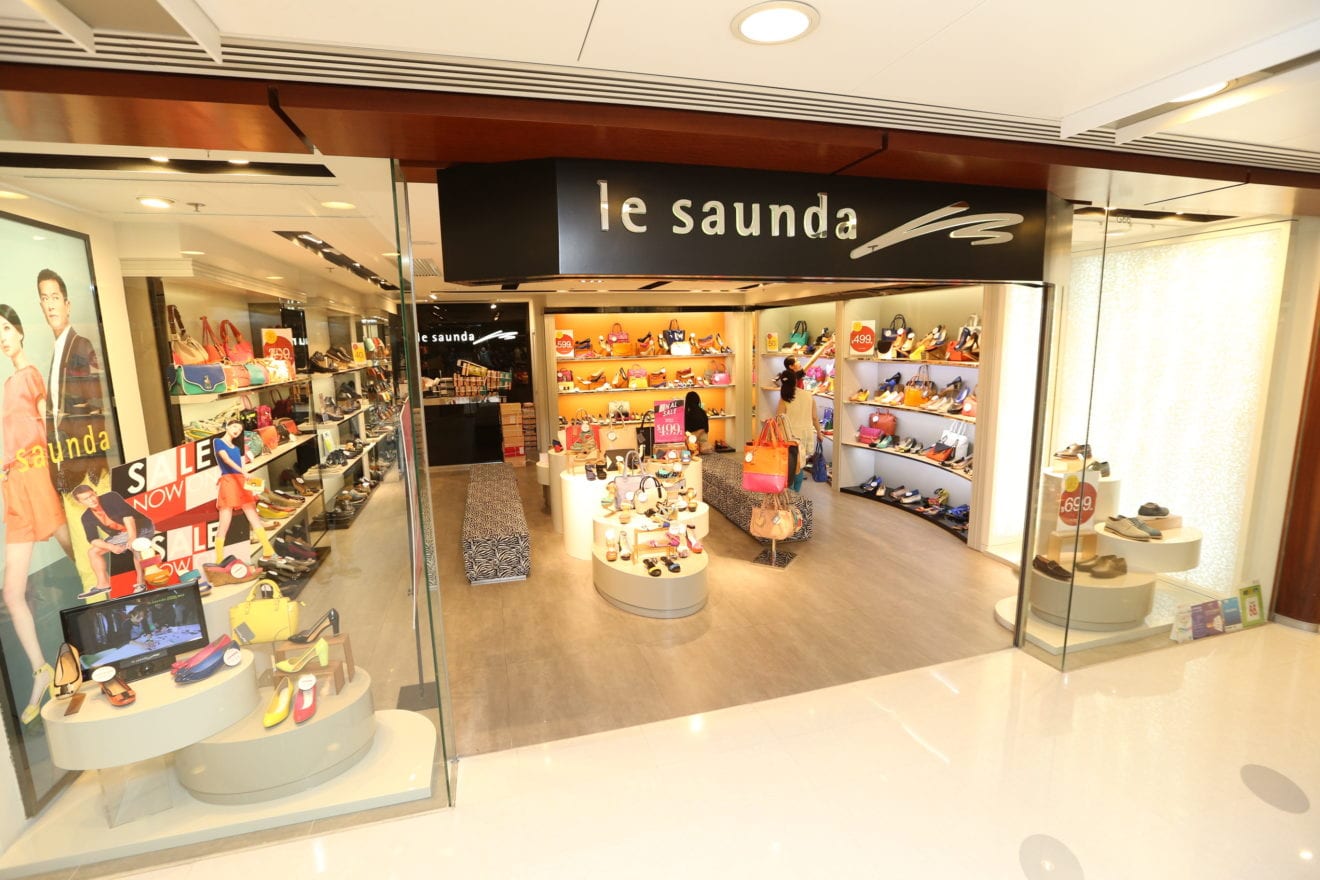
    Footwear retailer Le Saunda says same store sales in its own stores slipped eight per cent in the third quarter.

    But the company’s online turnover soared 26.7 per cent reflecting rising popularity of online shopping across Greater China.

    Total sales declined 6.1 per cent year on year.

    As at the end of November Le Saunda had 897 retail outlets in Mainland China, Hong

    Kong and Macau – 13 more than at the same time last year. These included 789 self-owned outlets in Mainland China, Hong Kong and Macau and 108 franchised outlets in Mainland China.

    Le Saunda has only released unaudited operational data for its retail business at this stage, not detailed financial data.

  • Retail sales decline for eighth straight month in October

    Retail sales decline for eighth straight month in October

    Retail sales in Hong Kong dropped for the eighth consecutive month in October amid a decline in the number of mainland tourists.

    October sales fell 3 percent year on year to HK$37.2 billion, against an estimated decline of 5 percent, the Hong Kong Economic Journal reported.

    By volume, retailed sales edged up 1.2 percent, compared with a 3 percent drop in September.

    The improvement in the city’s retail sales volume was attributed to Apple’s launch of iPhone 6s and iPhone 6s Plus, which pushed up sales of consumer goods.

    However, sales of luxury goods such as jewelries, watches and accessories continued to slump.

    Thomson Cheng, chairman of the Hong Kong Retail Management Association, expects the weak trend in retail sales to persist for the remainder of the year as more Hong Kong people travel abroad during the festive season.


  • Luk Fook profits slump 42% on weak Hong Kong, Macau sales

    Luk Fook profits slump 42% on weak Hong Kong, Macau sales

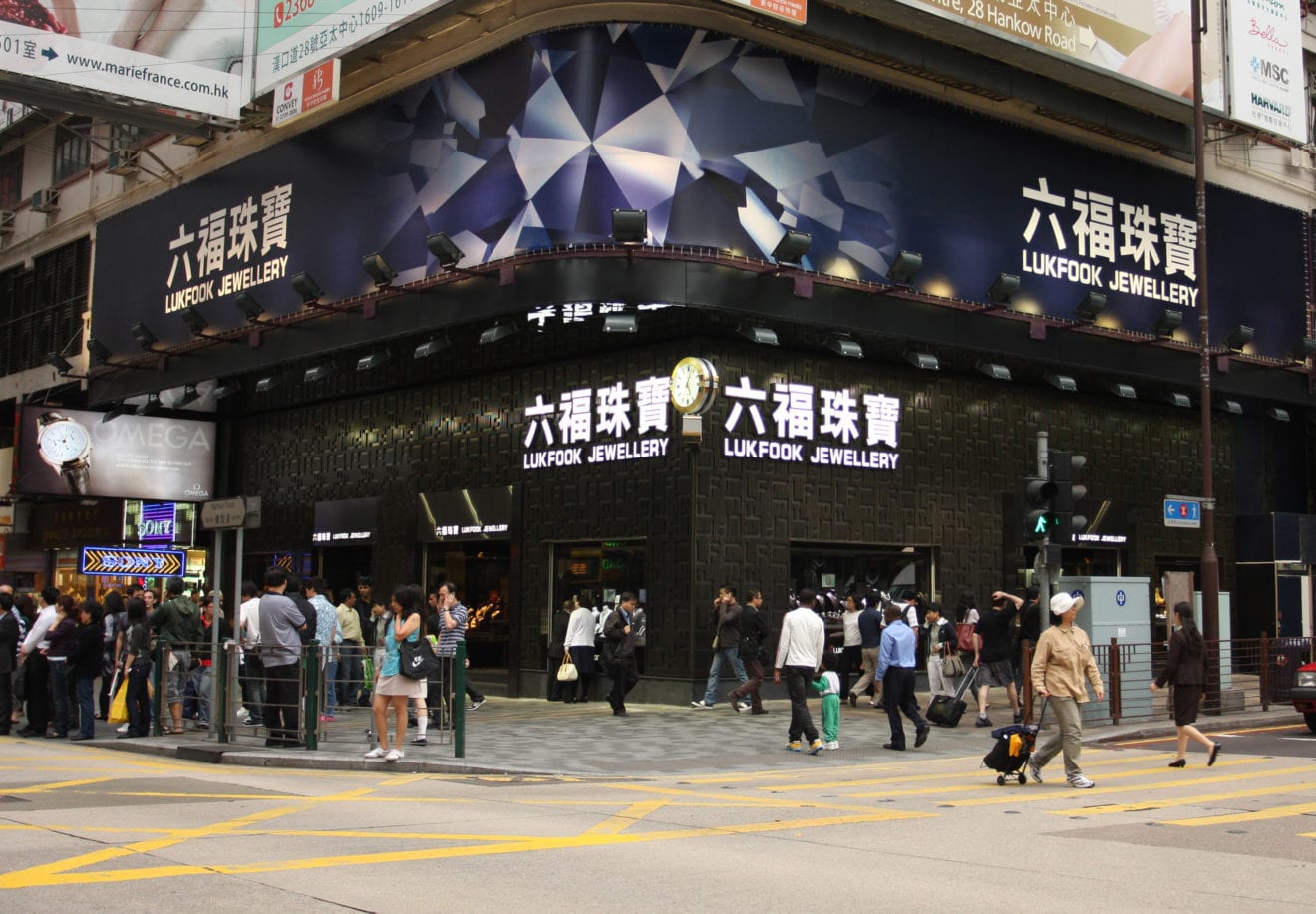
    Jeweller Luk Fook Holdings is looking to Mainland China to restore growth after a heavy drop in profits due to the Hong Kong and Macau market slump.

    Lukfook Group says its sales declined 7.7 per cent to HK$6.965 billion in the half year to September 30 and profit attributable to shareholders slumped 42.4 per cent to $463 million.

    Same store sales across the business fell 11.6 per cent, largely due to falling sales of gem‐set jewellery products in Hong Kong and Macau. Sales fell 16.2 per cent in Macau alone.

    However in Mainland China, gem-set jewellery sales rose 17.5 per cent, marking the 10th consecutive quarter of positive growth in that market.

    Wong Wai Sheung, chairman and CEO of Lukfook Group said the slowing economic growth in Mainland China, relaxed visa requirements and currency devaluation in Europe, Japan and Korea as well as a strong Hong Kong dollar against other currencies had caused Mainland tourists to switch to overseas for consumption.

    “These adversely affected the retail industry in Hong Kong and Macau and hindered the recovery of the retail business of the group.”

    Hong Kong rents also took their toll on Luk Fook profits.

    “The decrease in revenue, together with the increase in total rental expenses mainly contributed by the high rental of the loss‐making new shops in certain Hong Kong prime locations, resulted in the increase in the total operating expenses to revenue ratio to 14.6 per cent (2014:13.0%),” the company said in its filing.

    The company opened a net total of 29 Lukfook shops (including 23 licensed shops and six self‐operated shops), and four 3D‐Gold self‐operated shops established by the new joint venture (the group has 51 per cent equity) with a licensee in Mainland China. The number of shops in Hong Kong and Macau and overseas remained unchanged. As at September 30, the group had 1412 Lukfook shops globally in Mainland China, Hong Kong, Macau, Singapore, Korea, the US, Canada and Australia; and four 3D‐Gold shops operated in Mainland China.

    Mainland Chinese visitors remained the primary customer group for the Hong Kong retail business, which contributes 60 per cent of the group’s turnover.

    Wong Wai Sheung said with continuing uncertainty in the global economy, the overall operating environment will remain challenging in the short term.

    “However, in the long run, as the per capita income in Mainland China increases, the group believes that there will still be strong customer demand for jewellery products, therefore the group remains positive about the mid‐ to long‐term business prospects. The group will continue to optimise the retail network, maintain the expansion strategy of focusing on the development in the Mainland China market, and further strengthen the cooperation with eCommerce platforms to expand our distribution channels, and also offer more fashionable and affordable jewellery products which are suitable for wearing in workplace, in order to attract middle‐class consumers.”

  • Cafe concept a huge boost for Muji Singapore

    Cafe concept a huge boost for Muji Singapore

    The recently opened cafe inside the Muji Singapore store on Orchard Rd has had a huge impact on the store’s overall trading.

    In an extensive feature written by the Straits Times and published online by Asia One, which details the trend of merging dining with traditional retail offers, Muji Singapore GM Jasmine Sng has revealed the store’s sales have increased 40 per cent since the cafe began trading.

    “Customer traffic has increased. The cafe draws customers to the store and, after a meal, they usually shop at the retail section too.”

    The 122 sqm Muji cafe opened in early September as part of an expansion and renovation of the Japanese lifestyle department store in the Paragon shopping centre.

    The brand operates its Cafe&Meal dining concept in 23 stores in Japan as well as in Chengdu, Taiwan and Hong Kong.

    The Cafe&Meal concept is described as “minimalist chic” (much like a lot of Muji’ anti-brand product range) featuring simple natural wood furniture in a plain, modern backdrop fitout.

    The menu will feature Japanese deli-style foods using locally-sourced ingredients, with a broad range of desserts.

    Customer Diana Low, 35, who visits a Muji outlet at least once every two weeks, told the Straits Timesthat Cafe&Meal has created a better shopping experience at Muji.

    “It completes the lifestyle concept of Muji and makes me want to linger longer in the store and spend more,” she said.

    Muji is just one of a growing number of stores adding a food and beverage offer to their retail space to enhance dwell time, broaden their product offer and to provide an in-store experience which cannot be replicated online.

  • Bauhaus posts loss as margins squeezed

    Bauhaus posts loss as margins squeezed

    Fashion retailer Bauhaus has reported a net loss of HK$26.6 million for the first half year after sales tumbled in key markets.

    In Taiwan, where it has 95 stores and counters, stagnant retail sentiment and weak consumption presented great challenges, with same-store sales tumbling 18 per cent.

    In Mainland China, where the group has self-managed shops in Beijing, Shanghai, Guangzhou, Nanjing and Suzhou and a franchise network focusing on the second-tier cities, turnover dropped by 4.9 per cent to about $58.4 million and same store sales slipped two per cent.

    And in Hong Kong and Macau, same store sales declined by seven per cent in the first half year.The two territories account for about 73 per cent of the locally listed company’s sales through 90 stores, less than half its total network of 228.

    The group’s turnover is mostly from its major in-house labels like Salad, Tough and 80/20, and licensed brands including Superdry.

    Bauhaus opened seven new stores in  in Hong Kong and Macau in the six months to September 30 as it “continued to enrich its shop portfolio to be more attractive, efficient and competitive”.

    “However, retail performance in many sectors across the region deteriorated, possibly due to less spending from both inbound tourists and local citizens as a result of the growth slowdown in Mainland China, strong local currency and volatile finance markets. In addition, the operating costs in the region still remained high in general, particularly rentals, further cutting profit margin of the retailers.”

    Profit before tax in the two territories dropped by 57.2 per cent to about HK$24.1 million (compared with $56.3 million in the same period last year).

    Bauhaus said in its half yearly results filing that gross profit across the whole business decreased by about 11.1 per cent to $353.9 million, with gross margin declining by two percentage points to about 60.5 per cent.

    “Global economic performance was weaker than expected during the six months. The slowdown of growth in Mainland China together with the strengthening US dollar, which in turn resulted in a strong Hong Kong dollar against most Asian currencies, gradually had an obvious negative impact on inbound tourism and local retail consumption,” the company said.

    However, the group says its sales and results are greatly affected by seasonality, with the first half of the year traditionally less important than the second.

  • Guess? Inc. Beats the Retail Slump With Solid Results

    Guess? Inc. Beats the Retail Slump With Solid Results

    The retail industry has been a minefield lately, with many companies reporting tough results. Jeans specialist Guess? hasn’t been immune from the problems facing retail peers like Gap , and coming into its fiscal third-quarter financial report, Guess? investors were bracing for substantial declines in earnings and revenue. In the end, the company didn’t do nearly as badly as many had feared, and that helped to send the stock higher in relief. Let’s take a closer look at how Guess? fared and what its latest results mean for the industry going forward.

    Guess? remains under pressure but still held up well
    Fiscal third-quarter results for Guess? still had plenty of ugly numbers. Revenue fell 12% to $521 million, which was almost exactly in line with what most investors had expected to see from the jeans maker. On the bottom line, net income fell 40% to $12.4 million, but even though earnings of $0.15 per share were down substantially from year-ago levels, they were still $0.04 per share ahead of the consensus forecast among investors.

    As we’ve seen several times in recent quarters, Guess? took a hit from weak foreign currencies. The strong dollar cost the company $0.13 per share in earnings and pulled down overall revenue by about eight percentage points. Retail comparable sales including e-commerce fell 6% in dollar terms but only 2% on a constant-currency basis.

    Guess? saw considerable weakness throughout its business. The Americas retail segment suffered a 7% drop in sales, with Europe taking a 15% hit and Asia seeing sales fall 17%. Wholesale revenues in the Americas fell 12%. Even with the strong dollar, all four areas suffered declines in constant-currency terms. On the margin front, results were mixed, with operating margins improving in the Americas retail and Asia segments but falling in Europe and in the Americas wholesale business. The company continued its strategy of boosting initial mark-ups in its retail segments, but fixed costs offset some of the resulting margin gains.

    CEO Victor Herrero emphasized the positives, noting that overall results exceeded expectations and that comps in the European business were especially strong. “I am laser focused on driving the organization to raise the level of execution,” Herrero said, “as this will be a critical enabler of successful achievement of our strategies.” The CEO pointed to initiatives to boost sales and merchandising quality, build its business in Asia, and reinforce purpose and accountability within the company as having shown signs of success during the quarter.

    Can the jeans maker keep moving forward?
    Investors were also pleased with Guess?’s guidance. For the fiscal fourth quarter, the company expects revenue to fall 4% to 7%, with currency accounting for about 5.5 percentage points of the decline. Earnings of $0.53 to $0.62 per share would also be in line with what investors already expect from Guess? next quarter.

    For the full year, Guess? was more optimistic. The company narrowed its earnings guidance to the upper end of its previous range, now expecting $0.93 to $1.02 per share. Sales declines of 8.5% to 9.5% will look ugly, but they’re not inconsistent with the expectations that investors have for the company.

    What Guess? needs to execute on is its longer-term strategic plan. Investors want to see real progress for fiscal 2017, including stable revenue and rising earnings. That could prove difficult, especially in light of what rival Gap said in its recent report. Gap disappointed investors with its future guidance, including a 15% decline in earnings per share for its holiday quarter. Gap investors also expect it to have trouble rebounding in the coming fiscal year, calling for minimal sales growth and only about a 6% rise in earnings per share.

    Investors nevertheless remain optimistic about Guess?, sending the stock up more than 3% in the first hour of after-market trading following the announcement. As with most companies in the retail industry, Guess? will rely on solid holiday results in order to drive future growth in the months and years to come. If sales climb to finish the year, then Guess? could build further on its share-price gains.