Tag: sales report

  • Jumei doubles sales, but still in the red

    Jumei doubles sales, but still in the red

    Jumei International, the Chinese online retailer of beauty products, has reported a sales increases of 99.9 per cent – but it still posted a quarterly operating loss.

    In the quarter to September 30, net revenue reached RMB1.9 billion (US$305.5 million). Total net GMV increased by 35.6 per cent to RMB2.3 billion (US$358.7 million), driven primarily by a 30.8 per cent rise in the number of active customers and a significant 89.5 per cent boost in total orders.

    But gross profit as a percentage of net revenues decreased to 26.2 per cent (from 38 per cent)in the same period of 2014, primarily due to the company’s shift in strategy from beauty product marketplace sales to merchandise sales that started in September 2014, and inventory optimisation activities for Jumei Global.

    The net loss attributable to Jumei’s ordinary shareholders was RMB86.9 million (US$13.7 million), compared with net income attributable to Jumei’s ordinary shareholders of RMB120.0 million in the same period of 2014.

    Leo Chen, founder and CEO of Jumei, appeared upbeat about the results however.

    “Our third quarter net revenue growth continues to be strong… driven by Jumei Global and rapidly shifting consumption patterns in China as consumers upgrade their tastes, preferences and expectations for products. We continue to strengthen our position as a leading import cross-border eCommerce platform in China and are pleased to see both active customers and number of orders grow rapidly while maintaining a high repeat purchase rate,” he said.

    “We continue to add world renowned brands such as Shiseido and KOS to our Jumei Global platform. This is the first time these Japanese beauty groups have directly authorised a cross border eCommerce company in China to carry their merchandise. This means that going forward, new products by both brands will be launched simultaneously in Japan and on Jumei Global in addition to those already on offer in Jumei’s domestic platform. Chinese consumers will now be able to access international beauty trends at the same time they take place in the brand’s home markets.”

    In the fourth quarter of 2015, the company says it expects total net revenues to be between RMB1.83 billion and RMB1.93 billion, representing a year-over-year growth rate of 80 to 90 per cent.

  • Luk Fook latest to warn of falling profit

    Luk Fook latest to warn of falling profit

    Luk Fook has become the second major jewellery retailer this week to warn shareholders of a severe impact on its bottom line.

    In a filing with the stock exchange yesterday, Luk Fook said it anticipated a decline of about 40 per cent compared to the corresponding period last year.

    The company said the drop was primarily due to declining gem-set jewellery product revenue, a fall in the overall gross margin as a result of increased sales mix of gold products driven by the small-scale “gold rushes” and a higher rent to revenue ratio.

    Expanded losses in investments in relation to Hong Kong Resources Holdings and its subsidiary also contributed.

    Earlier this week rival jeweller Chow Tai Fook warned of a profit plunge as high as 50 per cent citing similar reasons.

  • Chow Tai Fook in profit plunge

    Chow Tai Fook in profit plunge

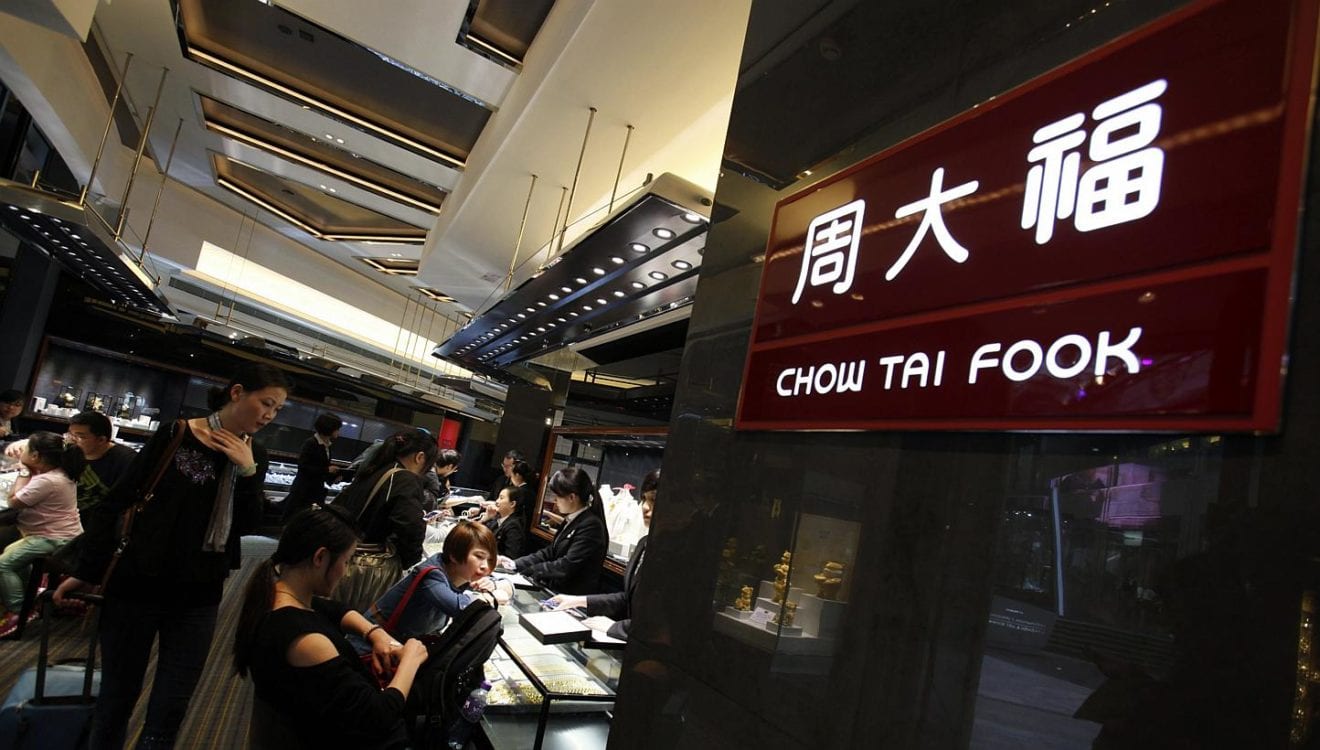
    Listed Hong Kong jeweller Chow Tai Fook has warned shareholders its first half profit is likely to be 50 per cent less than for the same period last year.

    In a statement filed with the stock exchange, the board said the decrease is mainly attributable to the year-on-year decline in revenue brought about by weak consumer sentiment in Hong Kong and Macau and a tighter gross profit margin.

    The margin was impacted by both a change in the product mix with increased sale of gold products and unrealised hedging losses on gold loans for the period contrasting with an unrealised hedging gain in the same period last year.

    “As the company is in the process of preparing the interim results of the group for the six months ended 30 September, the information contained in this announcement is only based on the preliminary review of the company’s management accounts which have not been reviewed or audited by auditors of the company.”

    The size of the decline comes as something of a surprise, given the company revealed a four per cent increase in sales in the quarter to September 30 just four weeks ago.

    Back then Chow Tai Fook described the Hong Kong and Macau retail market as “continuing lacklustre”.

  • Malaysia’s Caring Pharmacy value soars

    Malaysia’s Caring Pharmacy value soars

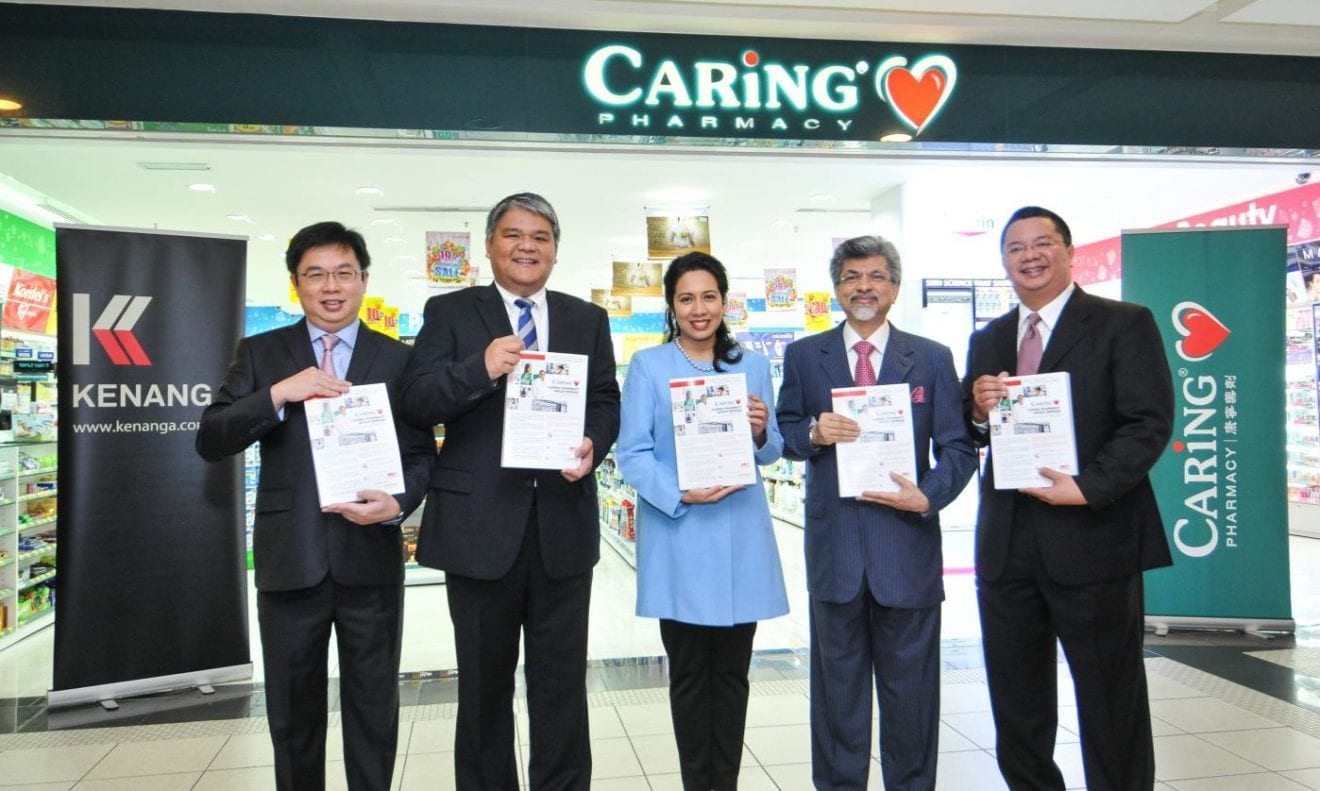
    Malaysian listed retailer Caring Pharmacy has seen its share value soar 85 per cent in just two months.

    And no one seems to know why…

    The company has 106 pharmacies across Malaysia, just two more than it had three months ago, and has projected expansion at a rate of 10 to 12 outlets next year – barely one a month.

    Even more remarkable, is that such a rise has occurred in a depressed retail climate and a decidedly sluggish business environment, at best.

    A survey released by Nielsen this week showed consumer confidence in the country has reached a 10 year low of 78 points – 11 points lower than three months ago. That seems driven by the unpopularity of the GST introduced on April 1 and a massive depreciation in the local currency – in part at least, linked to evidence of massive corruption in government leadership.

    The only theory behind Caring Pharmacy’s sudden popularity is that the chain may have been marked down unfairly in a generally bearish market, and its value is now being restored to reasonable levels.

    Year on year, the company has delivered a net profit in the latest first quarter jumping 83.94 per cent to RM1.02 million from RM 554,000 a year ago.

    One analyst urges caution” Hong Leong Investment Research (HLIR) said Caring Pharmacy could yet face further challenges ahead.

    “We feel there will be more downside risk on its expansion plans due to high competition and start-up costs,” HLIR said in a research note.

    “Also with inflationary cost pressure as well as weak consumer sentiment, we believe its profit margin will be under pressure with longer gestation period.”

  • Ralph Lauren profits tumble

    Ralph Lauren profits tumble

    US fashion label Ralph Lauren’s operating profit has tumbled almost 39 per cent year to date as it continues to restructure its operations.

    The latest quarterly numbers just released show a solid sequential improvement on the prior quarter, with the strength of the US dollar responsible for most of the headline deterioration. When reported on a constant currency basis, net revenues look more respectable, rising four per cent over the prior year.

    “Despite the fall in profits, Ralph Lauren has taken steps to help ease up its bottom line over the medium term,” comments Håkon Helgesen, retail analyst at Conlumino.

    “These include the global reorganisation into a centralised structure run by six global brand groups which, by the end of 2017, should yield an annual $100 million in terms of efficiency savings. This measure has, however, come with short term costs attached – $38 million of which were recognised during this quarter, and more of which will filter through into subsequent quarters.

    “Despite the squeeze this exerts on profits, we believe that Ralph Lauren is to be applauded for taking the long term view.”

    The global launch of Polo Sport was completed during the quarter and initial indications suggest it has been well received.

    “In our view this activewear brand gives Ralph Lauren a much more significant presence in a lucrative – and rapidly growing – part of the apparel market and will be a solid contributor to future growth,” said Helgesen.

    Geographically, although international growth was deflated by the unfavorable exchange rate, it remains in double digits when expressed in local currency terms.

    “The same cannot be said of Ralph Lauren’s home market where the company struggled to generate sales momentum. Stores in big city locations – which make up about half of the total fleet – have the legitimate excuse of reduced tourist spend, again related to the relative strength of the dollar. This has inevitably acted as a drag on growth.”

    Helgesen says despite sluggish growth and a more promotional retail environment, Ralph Lauren continues to be conservative about discounting.

    “Although this has likely cost it some sales in the US, it has helped to protect margins and, ultimately, brand equity. Again, this is an example of Ralph Lauren being confident enough to take the long term view.”

    Responsibility for the day-to-day running of the company will now fall to Stefan Larsson, who takes over as CEO from its founder Ralph Lauren this month.

    “While some have questioned Larsson’s background – he previously worked at the distinctly mass-market retailers Old Navy and H&M – this is, in our view, to ignore the skills he brings to the table. While these may not have been honed in a luxury brand environment, the operating disciplines of both fashion businesses are points of learning for Ralph Lauren as it continues its quest for efficiency.

    “In any case, Ralph Lauren – and his design prowess – will still be on hand as he takes up his new role of chairman and chief creative officer,” concluded Helgesen.

  • L’Oreal sales soar 13.2% to $20.4bn in first 9 months

    L’Oreal sales soar 13.2% to $20.4bn in first 9 months

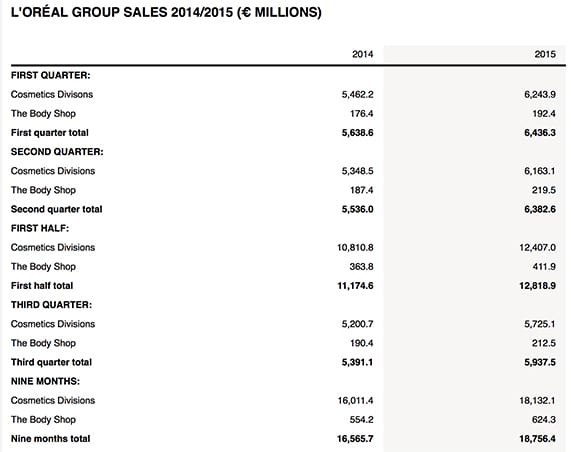
    L’Oréal has released its nine-months sales results pointing to strengthened growth in the North American Consumer Products Division; maintained growth in Western Europe; a temporary third quarter slowdown for L’Oréal Luxe in Asia; strong e-commerce sales (projected at +€1bn in 2015); a slowdown in travel retail; and ‘significant’ sales and profit growth.

    Commenting on the figures – including the top line €18.76bn ($20.4bn) in total 9-month sales – Jean-Paul Agon, Chairman and CEO of L’Oréal, said: “At the end of September, the Group’s reported growth is strong, at +13.2%, still supported by a very positive currency effect.

    “In the third quarter, the Consumer Products Division is confirming the gradual strengthening of its growth, notably through strong momentum in make-up with its three brands: Maybelline, L’Oréal Paris and NYX. The Active Cosmetics Division continues to forge ahead and the Professional Products Division keeps outperforming a lacklustre market.

    “L’Oréal Luxe experienced a temporary slowdown as a result of market turbulence over the summer in Asia, in Hong Kong and in Travel Retail. By geographic zone, North America’s growth is gradually increasing and Western Europe confirms its positive trend. In the third quarter, the New Markets have been hampered by the difficult Brazilian market, market turbulence in Asia and the taking over of agents’ contracts in the Middle East. In China, sales growth is in line with earlier quarters.”

    Loreal 9m sales 2015

    Agon, added that ‘despite a global context that is still volatile’ the company remains confident for the year as a whole. He said: “The beauty market remains dynamic. In each Division, our brands are pushing forward with successes such as Maybelline and NYX in the Consumer Products Division, Yves Saint Laurent, Kiehl’s and Urban Decay at L’Oréal Luxe, Redken in the Professional Products Division and La Roche-Posay at Active Cosmetics.

    “Finally, the acceleration of our digital transformation is making us stronger, in particular with the rapid increase (+40%) of our e-commerce sales which should significantly exceed one billion euros this year. We are confirming our ambition to outperform once again the beauty market in 2015 and to achieve significant growth in both sales and profits.”

    Looking at the first nine-months sales to September 30, the company said that on a like-for-like basis and based on a comparable structure and identical exchange rates, sales growth of the L’Oréal group would have been +3.7%. It adds that the net impact of changes in scope of consolidation was +1.2%, while growth at constant exchange rates registered +4.9%.

    The company said that currency fluctuations actually had a positive impact of +8.3% and if September-end exchange rates (€1 at $1.12) are extrapolated up to December 31, then the impact of currency fluctuations would be +6.7% for the whole of 2015.
    L'Oreal 2014 2015 sales

    Turning to the product divisions, L’Oréal said that at the end of September, the Professional Products Division posted growth of +3.2% like-for-like and +13.4% based on reported figures.

    The company said: “Hair care is the largest contributor to growth, powerfully driven by the latest innovations, such as Thérapiste by Kérastase, Pro Fiber by L’Oréal Professionnel, and Frizz Dismiss by Redken. The dynamic trend in hair colour is continuing across all brands.

    “Professional skincare with Carita is expanding rapidly in Western Europe. All the geographic Zones are growing. Eastern Europe is accelerating, while Brazil is slowing the growth rate in Latin America.”

    L’Oréal Consumer Division

    As for the Consumer Products division, the beauty giant recorded a rise of +2.3% like-for-like and +11.2% based on reported figures. The company commented that gradual improvement growth trend continues and thanks to the new momentum of Maybelline, the strong expansion of NYX, and the success of L’Oréal Paris, this division is strengthening its leadership in the make-up market.

    L’Oréal also notes that hair care is winning market share, thanks notably to L’Oréal Paris. For Garnier, the Ultimate Blends’ successful launch process has continued in many European countries. At the same time, the division is outperforming the markets in Eastern Europe, Asia, Pacific, Africa and the Middle East, while the ‘strong make-up dynamic’ is said to be accelerating the division’s growth in the US, while e-commerce is growing fast across all Zones.

    Meanwhile, L’Oréal Luxe posted growth of +5.8% like-for-like and +17.9% based on reported figures. Within the more detailed picture, Yves Saint Laurent grew strongly, driven by make-up, men’s fragrances with L’Homme and women’s fragrances with Black Opium. L’Oréal added that Giorgio Armani remained dynamic across all geographic Zones.

    The company added: “Urban Decay is accelerating worldwide with the high-profile launch of the Naked Smoky palette and is building a global beauty offering with initiatives in foundations and lipstick. Kiehl’s is launching Daily Reviving Oil Concentrate and continuing its double-digit growth.

    “Growth at Lancôme is being driven by market share gains in Europe, the success of the fragrances La vie est belle, Miracle and the newly released La Nuit Trésor; Grandiôse and Hypnôse Volume à Porter mascaras; and the acceleration of its Génifique facial skincare.”

    L’Oréal adds that despite a market that slowed in the third quarter in Asia and in Travel Retail, L’Oréal Luxe has strengthened its worldwide position with significant gains in Western Europe, in Asia, Pacific, in the Middle East and in Latin America.

    Active Cosmetics division

    The company’s Active Cosmetics division also improved its performance further with strong growth of +7.3% like-for-like and +9.7% based on reported figures. L’Oréal reported that Vichy is innovating with Neovadiol Substitutive Complex Serum, a formula that acts on skin changes linked to menopause.

    At the same time, Roche-Posay is renewing its expert franchise for oily skin with the launch of Effaclar K(+). The company adds that the brand is continuing to post double-digit growth in all geographic Zones, with ‘outstanding performances’ in France, Brazil and China. The successful international roll-out of SkinCeuticals is continuing.

    The beauty company also reported that all geographic zones continue to contribute to growth, with sales accelerating in the third quarter and new markets maintaining growth at more than 10%.

    Western Europe recorded growth of +2.1% like-for-like and +4.5% based on reported figures, with L’Oréal Luxe is continuing to act as a growth driver. Garnier is also said to be winning market share in hair care and skincare, while L’Oréal is continuing to outperform the market in Germany and the UK thanks to L’Oréal Luxe.

    In North America L’Oréal posted growth of +3.0% like-for-like and +25.4% based on reported figures. Both the Active Cosmetics and Professional Products Divisions drove growth and notably thanks to the La Roche-Posay and Redken brands.

    Kiehl’s and Urban Decay also contributed to the development of L’Oréal Luxe, while the Consumer Products Division also grew with good make-up contributions from L’Oréal Paris, Maybelline and above all NYX, which is described as ‘growing at a remarkable pace’. Meanwhile, the Body Shop recorded growth of +2.0% like-for-like and +12.6% based on reported figures.

    Commenting on other markets, the company reported a mixed picture, beginning with the Asia and Pacific territories: “At the end of September, L’Oréal posted growth of +4.4% like-for-like and +21.9% based on reported figures. Kiehl’s, Yves Saint Laurent and Giorgio Armani are contributing to the dynamism of L’Oréal Luxe, in a context of slower third-quarter growth in Hong Kong and Travel Retail Asia.

    “The Consumer Products Division is performing well in India, Australia and Thailand. In China, growth at L’Oréal Paris is accelerating, while Magic is undergoing a transitional period. The Active Cosmetics Division is growing strongly, thanks to the success of La Roche-Posay.”

    Tough Brazilian market

    By contrast, in Latin America sales grew by +5.5% like-for-like and by +4.7% based on reported figures. Excluding Brazil, sales achieved double-digit growth, thanks to L’Oréal Paris, Maybelline and Lancôme, although the company says that the Brazilian market is being held back by a very difficult economic environment and by the reform of the IPI (Tax on Industrialised Products).

    Looking at Eastern Europe, L’Oréal said that the zone posted figures of +9.5% like-for-like and -4.1% based on reported figures. The Consumer Products and Professional Products Divisions recorded double-digit growth, boosted by Russia, Turkey and Ukraine.

    As for Africa and the Middle East, sales growth amounted to +9.8% like-for-like and +28.1% based on reported figures. L’Oréal said: “The reorganisation of part of our distribution network in the Gulf States caused a temporary growth slowdown in the third quarter. The Group is strengthening its positions at a time when most markets in the Zone are seeing their growth rates decelerate.

    “Egypt and Saudi Arabia are still posting strong performances. L’Oréal Paris and Garnier are gaining market share. Yves Saint Laurent, Giorgio Armani, Kérastase and La Roche-Posay are also recording solid growth rates.”

  • Tse Sui Luen battles the downturn

    Tse Sui Luen battles the downturn

    A shift in focus away from the high end has partly buffered jeweller Tse Sui Luen from the Hong Kong luxury downturn.

    The group has released trading figures for the first half year revealing a decrease in turnover of just 3.6 per cent to HK$1.753 billion. While the decline was attributable to the slump in Hong Kong luxury retailing and the reduced spending by Mainland tourists, Tse Sui Luen defied the downward sales trend thanks to strong growth in its Mainland China franchise business.

    Nevertheless, the profit attributable to owners of the company declined by 40.2 per cent from HK$25.8 million to HK$15.5 million.

    “Due to the growth in our high-end luxury segment in China slowing down, we shifted our focus to the development of the self-consumption market and high craftsmanship gem-setting jewellery in the premium mass market,” explains chairman and CEO Annie Yau Tse.

    “Thanks to the right strategy and an expanded franchise network, we saw the same store sales growth from Mainland China was 2.3 per cent while the whole business grew by five per cent in the region.”

    Tse says the company’s sales in Malaysia grew by 14 per cent in the first half year prompting plans to open one or two more retail stores in the market during the forthcoming year.

    In Hong Kong and Macau, says Tse, the number of tourists from Mainland China dropped in the first half and their spending on luxury products and higher-priced gifts decreased. Instead of buying luxury goods, these customers turned towards more popular commodities in the mass markets.

    “As a result, the sales in Hong Kong and Macau for the period under review decreased by 19 per cent and same store sales growth was minus 20 per cent.”

    Despite the challenging market, the group opened two new stores in Hong Kong – one in Olympian City and the other in Plaza Hollywood, Diamond Hill in the first half. Another two new stores located in Tuen Mun and Wong Tai Sin were opened in October – aimed at local consumers who are end users in the self-consumption product segment.

    Tse Sui Luen says easing retail rents have resulted in a three per cent drop in the group’s rent spend for Hong Kong and Macau shops in the First Half.

    In Mainland China the group plans to increase the pace of store openings in order to better serve its customers. As of August 31, it had 169 self-operated stores and 56 franchised stores. By October 29, that had grown to 175 and 65 respectively, spread across 80 cities. The group plans more than 100 stores in Mainland China during the next two years.

    Tse believes the current market fluctuations in China and Hong Kong-Macau are “cyclical and transitory”.

    “In order to facilitate a more rapid growth of the group’s franchise sales network in Mainland China, we will continue to explore more opportunities to work with local business partners. We also expect our e-business channel to maintain its high growth rate in the second half of this year. We are cautious but confident that based on our solid foundation and the business know-how our experienced management team possessed, we will be able to mitigate the challenges of this cyclical downturn and create value for our shareholders.”

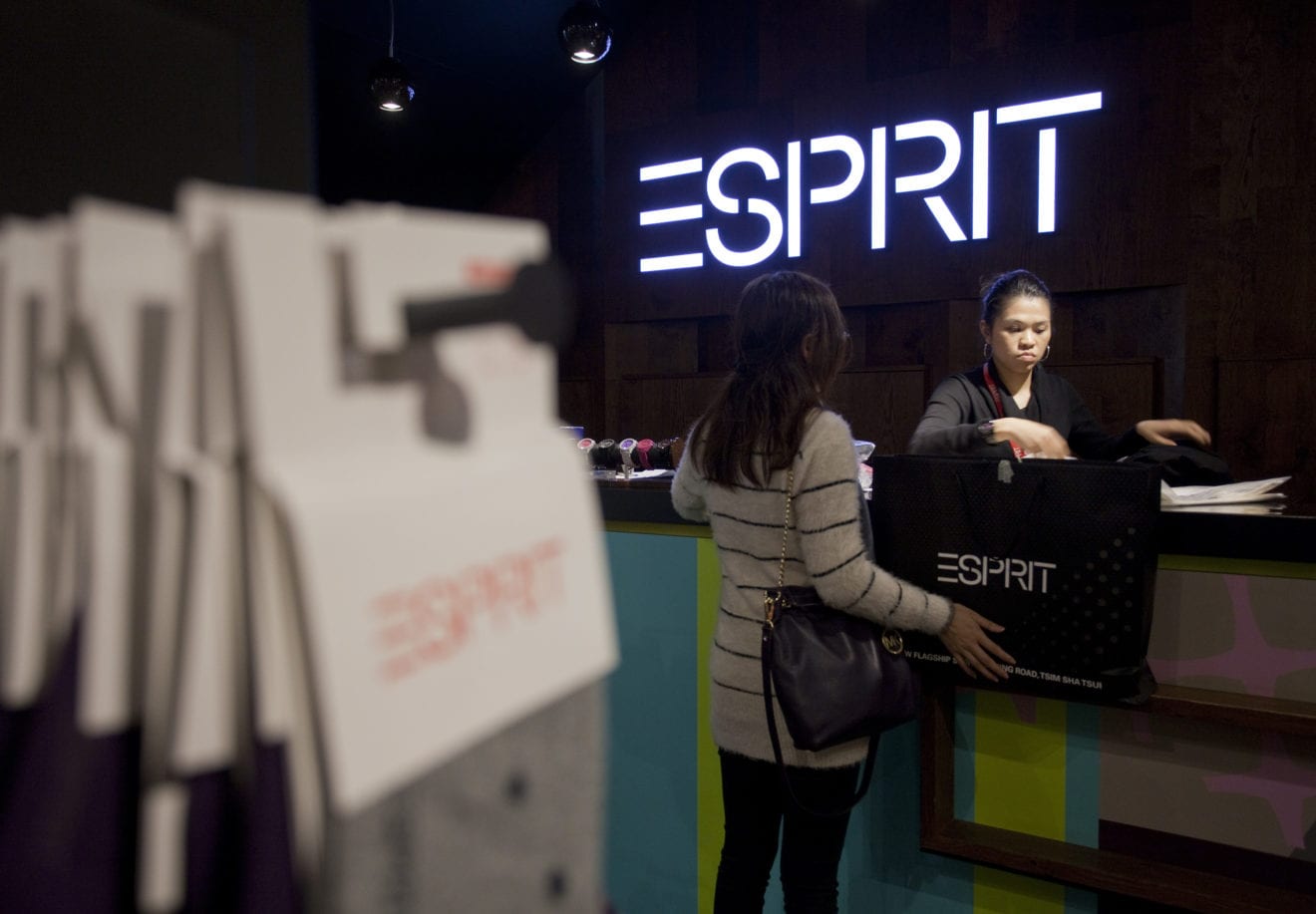
  • Esprit ‘on the right track’

    Esprit ‘on the right track’

    Hong Kong listed fashion group Esprit says its full year financial loss masked a positive phase of its turnaround program.

    Full year turnover fell 11.5 per cent (or 19.8 per cent in Hong Kong dollars) and the company posted a loss of HK$3.683 billion, largely due to impairments.

    In its profit announcement the company described the year as “exceptionally challenging” with trading affected by both internal and external factors.

    “Nevertheless, from a strategic perspective, it has been a year of significant achievement as the group completed the most vital and demanding phase of our turnaround plan. We have successfully installed the foundation enabling us to enhance our products and optimise sales performance across all channels (online, offline, retail and wholesale).

    “It is encouraging to see the first signs of a positive sales trend for our new Vertical Products’, which gives us confidence we are on the right track to restoring the competitiveness of Esprit.”

    The group blamed the sales decline on reduced store numbers (down 8.8 per cent), an unusually warm winter in Europe which impacted on Autumn/Winter sales volume and prices; declining apparel sales in Germany (the total market shrunk in nine of 12 months);  internal restructuring and unfavourable exchange rates.

    Group CFO Thomas Tang said that although the challenging market had considerable impact on Esprit’s turnover, its gross margin remained stable and savings were achieved in most cost lines of our regular operations.

    “With our priority on cash preservation over the past two years, the Group is on a sound financial footing, with a healthy balance sheet that we intend to leverage to decisively execute the strategies that shall drive top line growth in the near future.”

    Esprit is debt free.

    Tang said the last financial year was devoted to the implementation of the most demanding, yet vital, part of the group’s strategic plan: the ‘Transformation’ phase. During this phase, a vertically integrated business model (‘Vertical Model’) was introduced within Esprit to enhance the speed and efficiency of its product development and supply chain processes, and thereby significantly improving the design and value for money of its products.

    More specifically, the following have been implemented:

    • Lean supply chain management (from over 350 to below 230 suppliers).
    • Category management teams (all product divisions transformed).
    • New merchandising model (buying and merchandising fully centralised).
    • Reduction in product range (30 per cent to 40 per cent reduction of options).
    • Seasonal product calendar (from 12 monthly collections to four seasons).
    • Fast-to-market product development (two to three months lead time in the Trend Division and the fast-reaction capsules in all other divisions).
    • Stock management optimisation (pending additional stock replenishment capacity and capabilities in the central distribution center).

    “More importantly, the group has observed progressively positive developments in terms of product sales performance following the introduction in February 2015 of the Spring/Summer 2015 collections, the first ones developed under the Vertical Model: Retail turnover decline has narrowed consistently over each subsequent quarter during the year (Q1 -15.0%; Q2 -10.3%; Q3 -8.3%; Q4 -6.8%).

    Same store sales rose 4.1 per cent in the quarter to August and sales in Germany, its largest market, outperformed the market in each of the last three months.

    Retail sales of the Esprit Women divisions recorded 5.3 per cent year-on-year growth for the last three months and the Trend Division (representing 2.6 per cent of group turnover), reported full year turnover growth of 29.7 per cent.

    Esprit chairman Raymond Or said the group maintained a clear focus to execute the most complex and critical phase of its transformation in the year past, and made good progress despite a difficult operating environment.

    “The growth phase that we are now embarking upon is not without its challenges, but there is much hope and excitement across all levels of our organisation as we leverage the strong foundation that we have laid over the last two years. Every successful journey takes time, and we believe that we are nearing our final destination – which is to restore the long term competitiveness of our group.”

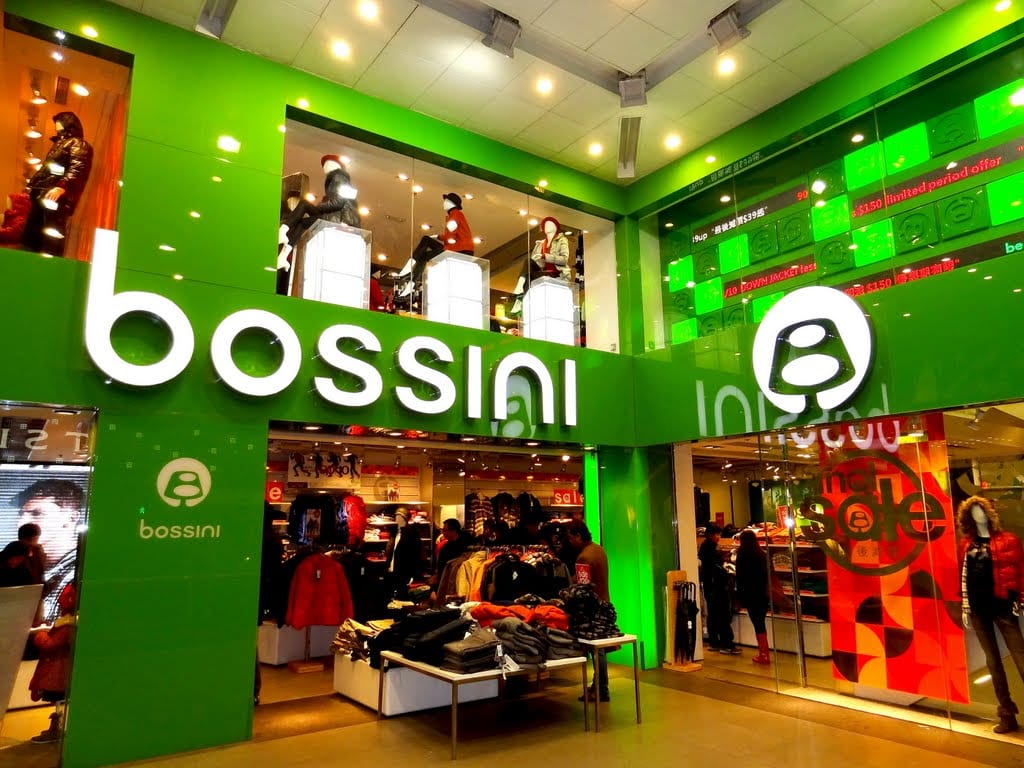
  • Bossini strong in retail storm

    Bossini strong in retail storm

    Apparel retailer Bossini has weathered Hong Kong’s retail downturn by achieving strong growth offshore.

    The Hong Kong based company has revealed its annual results in the year to June 30, reporting a mere one per cent decline in sales to HK$2.523 billion, and a three per cent decline in gross profit to HK$1.264 billion with gross margin down one per cent to 50 per cent. profit attributable to shareholders fell nine per cent.

    “During the fiscal year 2014/15, despite facing challenging retail conditions in Hong Kong and Macau, its segmental business, which includes the export franchising operations, registered record-high sales with flat same-store sales growth for the directly managed stores,” the company said.

    “The operations in mainland China, Taiwan and Singapore all experienced improvements in segment results, resulting from the continuously improving shop productivity and stringent cost control measures. Mainland China segment achieved six per cent same-store sales growth and also recorded nine consecutive quarters of positive same-store gross profit growth. Taiwan segment saw a same-store sales growth of seven per cent, representing seven consecutive quarters of positive same-store sales growth.”

    Bossini ended the year with a presence in 35 countries and regions and a store count of 938 (down 24). Of those, 257 were directly managed stores and 681 were franchised.

    One factor in the group’s improved operational efficiency was a small reduction in inventory turnover timetable from 84 days to 83.

    Looking forward, CEO Edmund Mak said the group will benefit from lower production cost if US dollar remains strong versus Renminbi.

    “Besides, it is estimated that rents will fall in certain areas in Hong Kong as retailers are generally suffering from sales downturn, which could help partially offset the group’s ongoing difficulties. The group will be proactive in taking stringent measures to control costs, including rental costs, and continue to improve shop productivity. The group aims to remain flexible and responsive to changing market conditions.”

    Mak said Bossini sees grounds for “considerable optimism” in its overseas operations.

    “Therefore, we will focus more on expanding operations outside Hong Kong and Macau, in order to achieve a more balanced portfolio. Furthermore, we will continue to expand kids’ line, particularly in Mainland China, while launch co-branded and licensing programmes of clothing and accessories via partnerships that reinforce the core brand value ‘be happy’, striving to build “bossini”’s reputation as a vibrant, valued and competitive go-to brand.”

  • China online shopping sales soar

    China online shopping sales grew a staggering 48.7 per cent during the first six months of this year, according to data from the China e-Business Research Center (CECRC).

    Online retail sales hit 1.6 trillion yuan (US$250 billion) and accounted for 11.4 per cent of total retail sales in China in the period.

    The number of online shoppers rose 19.1 per cent to 417 million, said the Hangzhou-based eCommerce trend tracker.

    Cross-border eCommerce has become a new driver of retail sales as online retailers connect domestic consumers with an increasing number of overseas brands, according to CECRC analyst Mo Daiqing

    Alibaba’s online marketplace Tmall continues to dominate China’s online business-to-consumer market, with 57.7 per cent of the market. Its rival JD.com comes in second, at 25.1 per cent, followed by a distant third by Suning.com, at 3.4 per cent.

    CECRC also said that more transactions are being made on mobile Internet as online retailers move to encourage consumers to shop with their mobile apps on smartphones and tablets.

    Robust online sales also boosted the revenue of China’s courier services by 33.2 per cent during the same period, to 120 billion yuan. CECRC estimates revenue will top 290 billion yuan for the whole year.

    China’s rural areas, Mo said, have emerged as the next source of growth for retail sales and online retailers are seeking deeper integration with offline retailers, reported Chinese press agency Xinhua.

  • China August Retail Sales: E-Commerce Remains Robust

    China August Retail Sales: E-Commerce Remains Robust

    China reported August retail sales that grew 10.8%, which beat the consensus 10.6%. Most encouraging was that online retail sales remain robust, underscoring my bullish view on Alibaba. As for offline retail, jewelry grew off a lower base so we view this of a lower quality while it appears that offline electronic retailers are taking share from online retailers, which is a negative to JD.com. We see China retail numbers to be a good read-through to companies such as BABA and JD as well as North American companies with exposure to China such as Tiffany. We reiterate my bullish view on BABA and Nike and our cautious view on JD and TIF.

    Online retail numbers remain robust for the first eight months of the year, and this is a positive indicator to Alibaba. For the first eight months, online retail sales grew 36% and accounted for 9.8% of total retail sales vs. 8% a year ago. Worth reminding investors is that China leads the world in e-commerce penetration and we expect penetration to continue to grow, driven by mobile device penetration in second and third-tier cities as well as the lack of proper retail infrastructure in those cities. We can easily envision China’s online retail penetration to reach 20% in the next 10 years driven by those two factors as well as higher mobile consumption driven by online-to-offline services that are heavily invested in by BABA, Baidu and Tencent. Looking at the individual segments, online sales of services was up a whopping 41%, as were discretionary items such as food. Apparel grew 27% and other discretionary items grew 39%. All these figures imply that August online sales alone grew 27% y/y, still solid given the near-term weakness of the Chinese economy.

    As for offline retail, jewelry grew 17% y/y vs 14% in July but it was largely due to a lower base from last year. As such, we would not be quick to jump into TIF stock until we see material improvement from the demand side. Interestingly, home appliances and electronics accelerated in the month, up 14% vs. 8% in the prior month. This could potentially be a negative to JD.com given this could imply that BABA and Suning JV may be taking share from JD in the online segment.

    In conclusion, we remain bullish on BABA while cautious on JD and TIF.

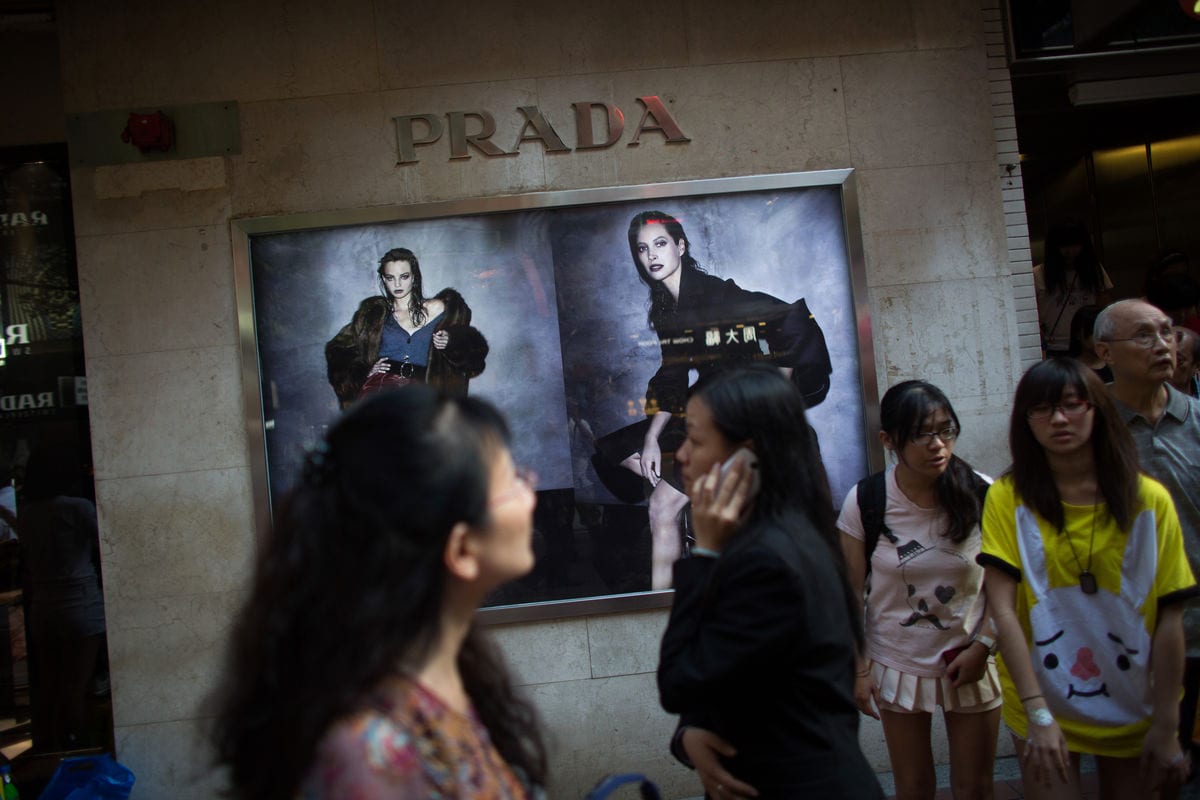
  • ‘Weak’ Hong Kong and Macau hits Prada

    ‘Weak’ Hong Kong and Macau hits Prada

    Continuing volatility in the market and the exchange rate landscape in Hong Kong, Macau and the Asia Pacific region (excluding Japan) has been blamed for Prada’s overall net profit fall of -23% to €188.6m ($212.7m) in the first half of 2015.

    Despite the big challenges in the Asia Pacific region which is Prada’s biggest market, the Milan-based fashion company first half-year revenue growth of +4.2%, thanks to more positive market performances in Europe, The Americas, The Middle East and Japan.

    Consolidated net current exchange rates on the corresponding period in 2014.

    The luxurygoods company says the increase is entirely attributable to the retail channel, as a result of its selective strategy aimed at further enhancing the of its Directly Operated Stores.

    All other regions reported good growth, although the company adds that the Asia Pacific market (excluding Japan) showed the same negative trend as it did in the first quarter of the year, offset by a positive effect.

    Patrizio Bertelli, COO said: “The luxury goods market is undergoing a period of significant change which must be met with a far-reaching, long-term strategy.

    “Our commitment remains centered on creative dynamics and the spirit of innovation, so that we can constantly increase the levels of excellence of our products.

    “In operational terms, we will continue with our thorough review of business processes in order to make them more efficient.”

    While its wholesale business declined by 13%, sales of the group’s retail network grew by 7.6% at current to €1,552.4m ($1,750.7m). The company reported that its 605 Directly Operated Stores (DOS) also benefited from a general improvement in sales performance.

    The European market grew by +12.4% thanks to a steady flow of tourists, together with a recovery in consumption by domestic customers, while the Japanese market outshone the rest of Asia with a +11.7% constant result. Sales in the Americas and the Middle East also improved considerably (both plus +15%).

    In terms of retail channel by brand, Prada recorded a 5.4% rise in sales thanks entirely to the effect, but was badly impacted by the negative economic situation in the Asian market.

    Miu Miu grew with revenues up at both current (+18.7%) and constant (+6%), enjoying a sales boost in the second quarter. The Church’s shoe business also grew by +18.6% and Car Shoe’s result was in line with the same period last year.

    EBITDA for the first half of the year was €440.1m ($496.3m) or 24.1% of net revenues, while EBIT came in at €293.2m ($330.7m) or 16.1% of consolidated net revenues.

    As mentioned, was reported down -23% at €188.6m ($212.7m) or 10.3% of consolidated net revenues.

  • Singapore retail sales stabilise

    Singapore retail sales stabilise

    Real Singapore retail sales rose 2.6 per cent in July over June and by 0.8 per cent year on year.

    That’s according to official government data after the sales of motor vehicles are removed from the figures.

    That follows falls of 3.9 per cent and three per cent in June, respectively.

    The total retail sales value in July 2015 was estimated at $3.5 billion, higher than the $3.3 billion in July 2014.

    Singapore retail chart 1509

    Year on year, sales of watches & jewellery fared the best, up 11.7 per cent. Retail sales of medical goods & toiletries, telecommunications apparatus & computers, recreational goods and department stores all rose between three and 10 per cent.

    In contrast, retail sales of petrol service stations decreased 16.4 per cent; sales of furniture & household equipment, optical goods & books, mini-marts & convenience stores, food & beverages, wearing apparel & footwear and supermarkets declined between 0.8 per cent and 5.5 per cent.

    After seasonal adjustment, month on month sales of wearing apparel & footwear, furniture & household equipment, supermarkets and petrol service stations declined between 0.7 per cent and five per cent.

    Watches & jewellery, medical goods & toiletries and recreational goods increased between 10.6 per cent and 13.4 per cent compared to June. Sales of telecommunications apparatus & computers, optical goods & books, food & beverages, mini-marts & convenience stores and department stores rose between 0.7 per cent and 8.2 per cent.

    Singapore retail chart -1509

    Meanwhile, sales of food and beverage services (seasonally adjusted) increased 3.1 per cent in July 2015 over June, but declined one per cent year on year. The total sales value of food & beverage services in July 2015 was estimated at $640 million, lower than the $647 million in July 2014.

  • Ikea’s impressive year: sales rising for furniture giant

    Ikea’s impressive year: sales rising for furniture giant

    Ikea has announced impressive growth in sales across the globe, achieving £23bn in the year at the end of August. Sales were up by 5% on the previous year in comparable sales.

    The furniture giant has 328 stores across 28 countries, and estimates that they enjoyed 771m visits in its most recent financial year.

    Ikea’s President and Chief Executive Pete Agnefjall said: “We are growing in almost all our markets and we are happy about last year’s sales development.”

    At the forefront of the company’s growth is its China market. Increased mass migration to the major cities in the world’s most populous country has created a stable and huge customer base. China is home to eight of Ikea’s ten largest stores, including two in the city of Beijing: a city of 10m people.

    “The Chinese middleclass continues developing and in pace with its growth an interest for our product rises too. We have more visitors in our department stores now and we have opened three new stores in China during the year (2015). We are going to open three new stores the next year too…”

    Russia, the Swedish retailer’s second fastest growing market, enjoys 14 ‘Mega shopping centres’: a chain of 14 complexes from St Petersburg to Novosibirsk. Russia, like China, has proved a problem for many other retailers.

    Sales in Germany and North America were also positive, and the company also enjoyed “positive progress” in Southern Europe.

    Andy Street, MD at John Lewis, announced last month that the department store chain is gunning for Ikea’s position as the UK’s largest furniture retailer, with aims to surpass the company in the next four years. Retail consultancy firm Conlumino estimates that Ikea will have 6% of the UK market for homeware, furniture and flooring sales in 2015, whilst John Lewis will have 5.8%.

    Ikea can certainly enjoy its success for now, however. Unlike its rival, John Lewis’s most recent financial report was decidedly negative.

    A more detailed financial report for Ikea will be released in December 2015.

  • China Nepstar turns from loss to profit

    China Nepstar turns from loss to profit

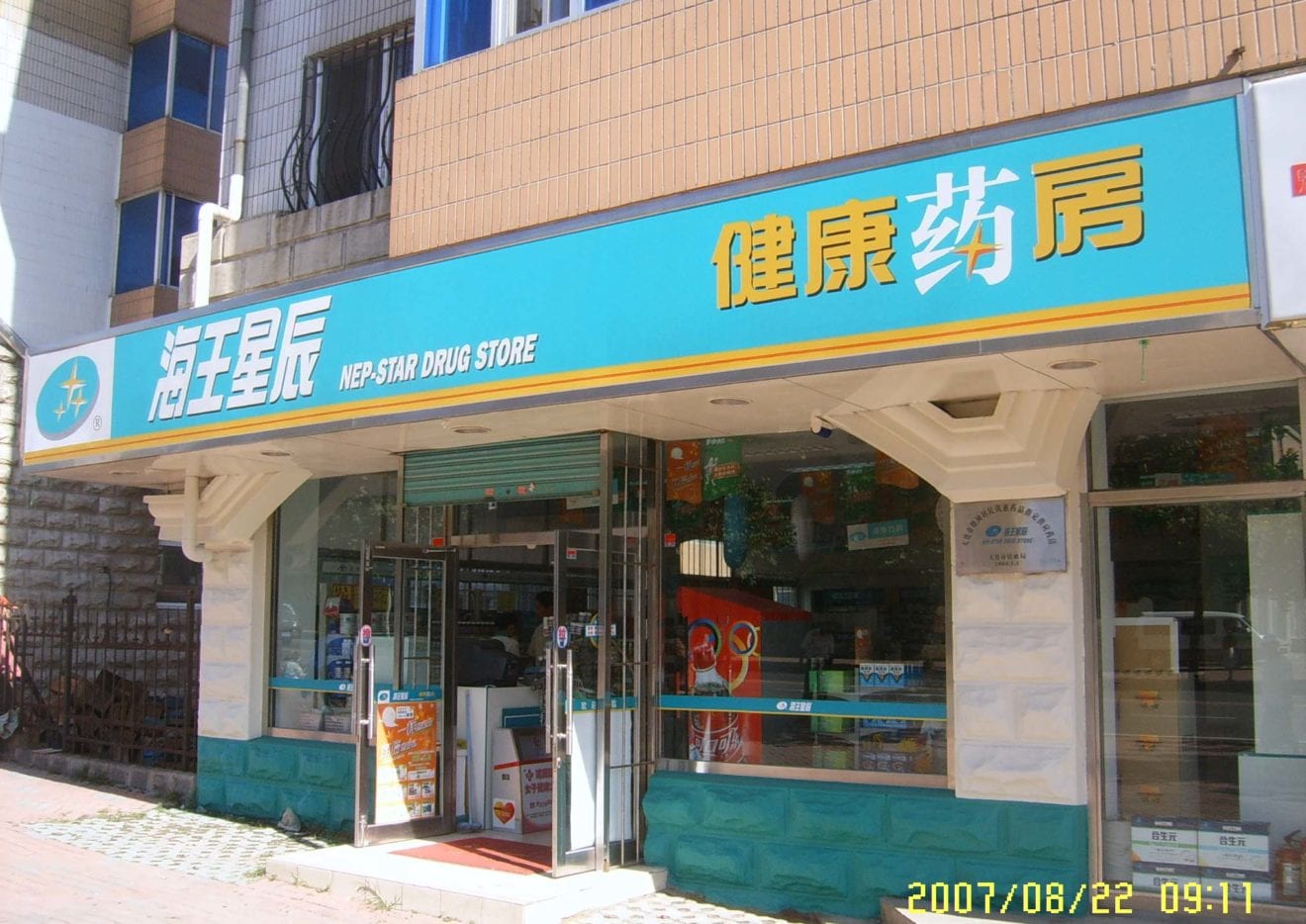
    NYSE-listed pharmaceutical retailer China Nepstar Chain Drugstore says increased staff training and promotional activity fuelled a 12.9 per cent rise in sales in the latest quarter.

    In the three months to June 30, China Nepstar achieved US$125 million in sales, with same store sale up 16.7 per cent year on year. The company reported a net income of $1.4 million compared to a net loss of $2.5 million last year.

    CEO Rebecca Zhang said the same-store-sales growth had accelerated during the quarter due to higher store traffic as a result of effective promotions on pharmaceutical products and professional store service training.

    “While we focus on productivity at the store level, we also managed to achieve better operational efficiency by reducing our general and administrative expenses and constantly optimising our store management,” she said.

    During the second quarter of 2015, the company opened 38 stores and closed 59. As of June 30, it had 1948 directly operated stores in total.

    China Nepstar had a portfolio of 2155 private label products at the end of June 30, which now account for 14.7 per cent of its revenue and 22 per cent of gross profit.

    “As we gradually achieve recovery in growth on profit, we will focus on accelerating our organic revenue growth by fine-tuning our store management system and improving our store image to customers,” Zhang said of the business’ outlook.