Retail News CRM

Tag: samsung

  • Samsung’s Lee Family Wraps Up $7.95B Inheritance Tax Payment: Paves Way for Tech Investment Boom

    Samsung’s Lee Family Wraps Up $7.95B Inheritance Tax Payment: Paves Way for Tech Investment Boom

    The family of the late Chairman of the Samsung Group, Lee Kun-hee, is nearing the completion of a sizeable inheritance tax payment. The amount, approximately 12 trillion won ($7.95 billion USD), is expected to be settled later this month.

    Final Installment

    The heirs, including the Chairman’s widow Hong Ra-hee and their children Lee Jae-yong, Lee Boo-jin, and Lee Seo-hyun, will be making the sixth and concluding payment this month. This plan was initiated in 2021 after the Chairman’s passing in 2020.

    Estate Valuation

    Lee Kun-hee’s estate was estimated to be worth around 26 trillion won, comprising stocks, real estate, and art collections. Hong Ra-hee is shouldering the most significant proportion of the tax, around 3.1 trillion won. The children follow closely behind, each paying between 2.4 to 2.9 trillion won.

    Payment Strategies

    The family members navigated the tax payment through various strategies. Hong and her daughters allegedly sold shares in key Samsung affiliates like Samsung Electronics, Samsung SDS, and Samsung C&T. Hong also entered into a trust agreement earlier this year to sell 15 million Samsung Electronics in an apparent move to cover her portion of the tax.

    In contrast, Samsung Electronics Chairman Lee Jae-yong financed his share of the tax through dividends and personal loans. This approach is perceived as an attempt to maintain his influence over the group’s ownership structure, primarily centered on Samsung C&T.

    Investment Plans

    Over the past five years, the family is estimated to have received about 4 trillion won in dividends from affiliates following Lee Kun-hee’s death, and more than 6 trillion won when considering earlier dividends.

    With the tax nearly settled, the group is predicted to channel more investment into sectors like semiconductors, artificial intelligence, and biopharmaceuticals. The completion of the inheritance tax payments is significant as it coincides with improved earnings at Samsung Electronics and the resolution of legal risks.

    Questions & Answers

    What was the total worth of Lee Kun-hee’s estate?
    The estate, which comprised stocks, real estate, and art collections, was estimated to be worth around 26 trillion won.

    How did the Lee family manage to pay off the inheritance tax?
    The family used various strategies to pay the tax. This included selling shares in key Samsung affiliates and gaining dividends. Lee Jae-yong also utilized personal loans.

    What is the expected future investment direction of the Samsung Group?
    With the tax nearly settled, the Samsung Group is expected to increase investment in sectors like semiconductors, artificial intelligence, and biopharmaceuticals.

  • Oppo Outpaces Samsung: Next Flagship Phone May Introduce Game-Changing Qi2 Magnetic Wireless Charging

    Oppo Outpaces Samsung: Next Flagship Phone May Introduce Game-Changing Qi2 Magnetic Wireless Charging

    Wireless charging continues to be a topic of contention for modern smartphone users. The feature provides the convenience of powering up your device without the need for cables. However, past experiences have proven to be less than satisfactory. This started to shift with the introduction of Apple’s MagSafe, leading to the development of Qi2. The latter is anticipated to gain more widespread acceptance in the near future.

    Potential Adoption of Qi2 by Oppo

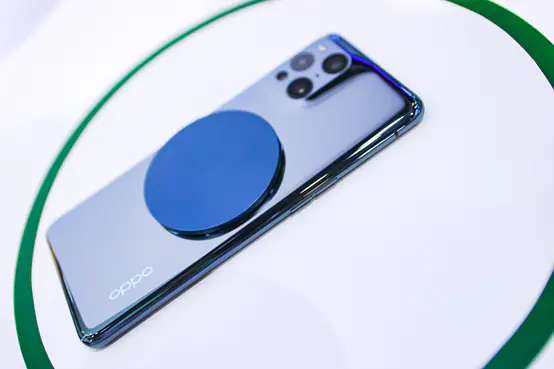
    The launch of the Oppo Find X10 series is anticipated to be months away, but initial whispers about the device have begun to circulate. Speculation suggests that the new smartphone may incorporate magnetic wireless charging. The exact features are not clear at this time, but there is a possibility that the device could support Qi2 upon its launch in the latter half of 2026.

    Assuming these rumors hold true, Oppo will be the first Chinese smartphone manufacturer to incorporate magnets into their device. This will enable the Find X10 series to be compatible with the magnetic accessories that are part of Apple’s MagSafe and Google’s Pixelsnap ecosystem. However, there is still uncertainty as to whether the devices will support the latest Qi2.2 standard.

    Missed Opportunity by Samsung

    Apple and Google are currently the only major brands that offer smartphones equipped with built-in magnets. Samsung had been rumored to include native Qi2 support in their upcoming flagship, the Galaxy S26 Ultra. Despite this, recent leaks of potential official cases for the device suggest that there will not be integrated magnets.

    Apple stands as a pioneer in terms of magnetic wireless charging, having introduced MagSafe with the iPhone 12 series. Google has followed suit, launching its Pixelsnap system with the Pixel 10 series. However, no other major brand currently supports built-in magnetic charging.

    Samsung’s Galaxy S25 series and the Galaxy Z Fold 7, Galaxy Z Flip 7, and Galaxy Z Flip 7 FE are all Qi2-Ready. This means that users can purchase a Qi2-Ready case for these devices and take advantage of the improved charging speeds provided by the magnets in the case.

    The Oppo Find X9 series, which includes the Find X9 Pro and the upcoming Find X9 Ultra, support wireless charging. However, they do not have magnets and are not Qi2-Ready. Despite this, the Find X9 Pro outperforms the wireless charging speeds of the Galaxy S25 by offering 50W wireless charging, as opposed to Samsung’s 15W.

    While Oppo is not available in the US, OnePlus, another brand under the same company, is sold stateside. If past trends hold, we may see features from the Find X series make their way to OnePlus devices. This could be a major selling point for a brand that has been struggling recently.

    Questions & Answers

    What is the expected feature of the Oppo Find X10 series?
    The Oppo Find X10 series may include magnetic wireless charging, potentially supporting Qi2.

    Which major brands currently offer smartphones with built-in magnets?
    Currently, only Apple and Google offer smartphones with built-in magnets.

    Do the Oppo Find X9 series devices support wireless charging?
    Yes, the Oppo Find X9 series devices do support wireless charging, but they do not have built-in magnets, nor are they Qi2-Ready.

  • Samsung Revamps Gaming Experience: Unveils Personalized Discovery and YouTube Integration in New Update

    Samsung Revamps Gaming Experience: Unveils Personalized Discovery and YouTube Integration in New Update

    Samsung Galaxy devices are set to experience a major enhancement to their Mobile Gaming Hub. The company is introducing a significant upgrade, which includes a more streamlined interface, personalised game suggestions, and integrated YouTube functionalities to help you uncover your next gaming addiction.

    A New Approach to Game Discovery

    Mobile game discovery, according to Samsung, has been a challenge. To address this, the company has initiated a major revamp of its Mobile Gaming Hub. The update, which will be rolled out globally to all Galaxy phones and tablets, aims to offer a more organised and personalised user experience.

    The revised interface will feature all games from the Galaxy Store in a single, consolidated library. The main highlight of the upgrade, however, lies in its personalised approach. The application will analyse your gaming habits to suggest games that align with your interests.

    An Integrated YouTube Experience

    The most noteworthy addition to the Mobile Gaming Hub is the direct integration of YouTube. Users can now view gameplays, walkthroughs, and creator content tailored to their gaming preferences directly within the hub, eliminating the need to switch between apps.

    This update is particularly significant for mobile gamers who often struggle to find quality games amidst a sea of “pay-to-win” clones. By curating content based on actual playing habits, Samsung aims to provide a more engaging user experience than Google Play or the App Store.

    Benefitting Gamers

    The updated Mobile Gaming Hub is designed for all Galaxy device owners who enjoy games, from casual puzzle players to competitive shooter enthusiasts. If the personalised recommendations function as expected, it could save gamers substantial time. The addition of video content is an attempt to keep users immersed in the platform, providing game guides and tips alongside the “Play” button.

    A Useful Gaming Launcher

    Pre-installed game launchers can often feel more like advertising billboards than useful tools. However, this update could shift that perception. The ability to view relevant YouTube guides next to the games they’re playing is a feature that could be appreciated by gamers of all levels.

    Questions & Answers

    What is the major update to the Mobile Gaming Hub on Samsung Galaxy devices?
    The update includes a streamlined interface, personalized game recommendations based on user’s play patterns, and integrated YouTube functionalities.

    Who is the updated Mobile Gaming Hub designed for?
    The update is designed for all Galaxy device owners who play games, ranging from casual puzzle players to competitive shooter fans.

    What makes the updated Mobile Gaming Hub unique?
    Its unique features include the direct integration of YouTube, allowing users to view gameplays and walkthroughs without switching apps. Additionally, the app personalizes game recommendations based on the user’s gaming habits.

  • Samsung and SKT Forge Ahead with Advanced AI-Driven 6G Tech: A New Era in Hyperconnected Telecommunications

    Samsung and SKT Forge Ahead with Advanced AI-Driven 6G Tech: A New Era in Hyperconnected Telecommunications

    Samsung Electronics and SK Telecom (SKT) have recently formalized their cooperation by signing a memorandum of understanding (MoU). The partnership will focus on the development of crucial 6G technologies, with a special focus on artificial intelligence-based radio access network (AI-RAN) technology. The primary aim of the collaboration is to develop and test key technologies for the 6G era, including AI-based channel estimation, distributed multiple-input multiple-output (MIMO) transmission, AI-RAN-based schedulers, and core network architectures.

    Leading the Collaboration

    Samsung Research and SKT’s Network Technology Office will be spearheading the collaboration. AI-based channel estimation technology aims to improve network performance by predicting and correcting signal transmission instantaneously. This allows for quick and accurate data delivery in environments where radio waves face obstructions such as buildings or walls.

    Unlike traditional setups, where a single base station handles data processing, distributed MIMO technology enables multiple base stations or antennas to collaborate in the transmission and reception of data. This innovative approach ensures reliable, ultra-high-speed communication in both urban and rural settings.

    Improving Network Quality

    AI-RAN schedulers and AI-based core networks are crucial for data transmission optimization. They efficiently dictate when, where, and how to send data, ensuring efficient resource allocation even when numerous user devices are connected. These technologies are vital for enhancing network quality and facilitating automation in a future hyperconnected society.

    Under the partnership, Samsung Research will be concentrating on the development of AI-RAN technologies, including AI-based channel estimation models, schedulers, and distributed MIMO. Meanwhile, SKT will be responsible for providing data and setting up test infrastructure based on its nationwide network operations. The companies are also making collaborative efforts as members of the AI-RAN Alliance.

    Future Prospects

    JinGuk Jeong, Executive Vice President and Head of Advanced Communications Research Center (ACRC), Samsung Research at Samsung Electronics, has expressed optimism about the joint venture with SKT. He believes that this field-focused collaboration will enable them to verify the efficacy of AI-based wireless technologies in real-world settings and secure key AI-RAN technologies at an early stage.

    Takki Yu, Vice President of SK Telecom Network Technology Office, emphasized that the fusion of AI and wireless communications will be crucial to 6G competitiveness. Through their partnership with Samsung Electronics, they plan to secure world-class AI-RAN-based 6G technologies and lead the global 6G ecosystem.

    Since 2019, when it established the Advanced Communications Research Center (ACRC), Samsung has been proactively pursuing 6G research, publishing the 6G White Paper and 6G Spectrum White Paper, which outline its vision and direction for next-generation communications.

    Questions & Answers

    What is the main focus of the collaboration between Samsung Electronics and SK Telecom?
    The collaboration aims to develop and test key technologies for the 6G era, particularly artificial intelligence-based radio access network (AI-RAN) technology.

    Who will be leading this collaboration?
    Samsung Research and SKT’s Network Technology Office will be spearheading the partnership.

    What role does AI play in the development of 6G technologies?
    Artificial Intelligence is crucial in enhancing network quality, facilitating automation, and ensuring efficient resource allocation in a future hyperconnected society.

  • Samsung Set to Shake Up Personal Finance: Barclays Partnership Brings Samsung Credit Card to Compete with Apple

    Samsung Set to Shake Up Personal Finance: Barclays Partnership Brings Samsung Credit Card to Compete with Apple

    Samsung is reportedly preparing to launch a Samsung-branded credit card in the United States, in a strategic collaboration with Barclays that will capitalize on Visa’s extensive global payment network.

    Samsung Eyes U.S. Financial Sphere

    Samsung is reportedly planning to broaden its financial services portfolio in the U.S. market. A partnership with the British banking giant, Barclays, would provide a solid foundation for both companies to further penetrate the U.S. market. For Samsung, this means fostering increased loyalty within its client base; for Barclays, it opens up opportunities for greater lending scope.

    The formal announcement of the partnership is expected by the end of the year, with Visa being selected to manage the payment network.

    If successful, the Samsung credit card is unlikely to be a singular venture. It has been suggested that the credit card could be the cornerstone of a more expansive financial product offering, potentially involving a high-yield savings account, a digital prepaid account, and even a buy-now, pay-later option.

    Samsung’s Bid to Emulate Apple’s Success

    With this move, Samsung is evidently looking to replicate Apple’s successful foray into the U.S. financial sector. Apple has already established a strong foothold in the country with the Apple Card and Apple Pay, while Samsung’s financial tools have yet to achieve similar success.

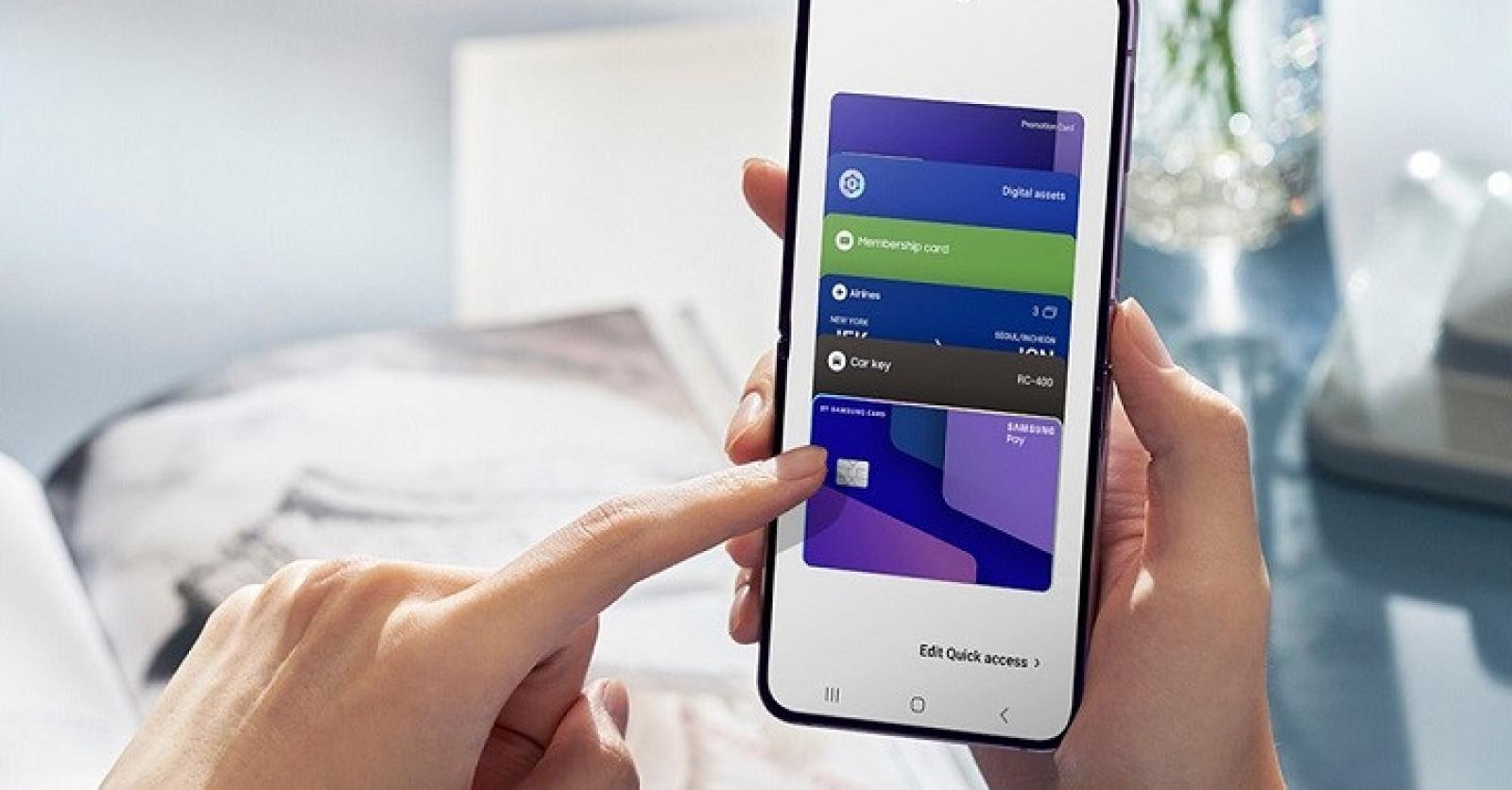
    Samsung anticipates that by launching its own credit card, it can further solidify its ecosystem through Samsung Wallet. The card could provide cashback rewards that are directly deposited into users’ Samsung accounts, offering them an easy way to finance future purchases. This setup is expected to encourage users to remain within Samsung’s ecosystem, regardless of whether they’re purchasing a new Galaxy phone, a TV, or even a smart refrigerator.

    This strategy reflects the approach taken by Apple back in 2019 when it launched the Apple Card, in cooperation with Goldman Sachs and Mastercard. The card, which offers cashback benefits and interest-free financing for Apple products, has been successful in substantial growth of Apple’s financial presence.

    Broadening Samsung’s Ecosystem

    Samsung and Apple have been longstanding competitors in the smartphone market, but as hardware advancements slow down, the focus of competition is shifting towards ecosystem services. Financial products such as the prospective credit card could enable Samsung to fortify its relationship with U.S. consumers, thereby enhancing the relevance of Samsung Wallet.

    If Samsung’s plans come to fruition, it could be a significant step into the realm of personal finance. It’s clear that the ongoing rivalry with Apple is evolving, moving from a battle over pocket space to a contest for wallet share.

    Questions & Answers

    What is Samsung’s projected strategy for the U.S. financial market?
    Samsung reportedly plans to launch a Samsung-branded credit card, in partnership with Barclays and utilizing Visa’s global payment network, with potential future offerings including a high-yield savings account and a digital prepaid account.

    What is the aim of Samsung’s credit card venture?
    Samsung hopes to enhance customer loyalty and keep users within its ecosystem by offering incentives such as cashback rewards which can be easily used for future purchases.

    How does this move reflect the changing competition between Samsung and Apple?
    As hardware development slows, competition is shifting to ecosystem services. Both companies are expanding into the financial sector, with Samsung’s credit card venture marking a new stage in its rivalry with Apple.

  • VR is dead! And even Apple and Samsung can’t save it

    VR is dead! And even Apple and Samsung can’t save it

    My Decade-Long Journey with Virtual Reality

    Nearly a decade ago, I was struck by the potential of virtual reality (VR) technology when I had my first experience with an early prototype of the HTC Vive. The dynamics of VR were expected to dominate the tech industry and influence lifestyle on a global scale. However, the present scenario seems to paint a different picture with growing rumors of Apple’s plans to transform the Vision Pro headset into a lighter, more affordable, augmented reality system. This has made me question the success trajectory of VR, a technology that was expected to revolutionize our world.

    The Limitations of Virtual Reality

    As time went on, some of the issues that initially seemed like minor growing pains have turned out to be significant drawbacks. The most persistent of these is the discomfort associated with VR headsets. The first generation HTC Vive, weighing 470 grams, proved to be quite tiresome to use after just fifteen minutes. This discomfort has only increased with the Apple Vision Pro headset, which weighs between 600 and 650 grams. This weight does not include the additional 350 grams of the battery pack that’s meant to be carried in your pocket.

    Another deterring factor is motion sickness, commonly referred to as VR sickness, characterized by symptoms such as sweating and eye strain. Although one can adjust to these physical discomforts over time, the sense of disconnect from the real world remains a significant negative factor.

    The Challenge of Affordability

    The high cost of VR technology has been a significant barrier to its widespread adoption. The Apple Vision Pro comes with a hefty price tag of $3,500, whereas the HTC Vive retails for $799. These are not price points that would encourage mass adoption of the technology. To add to this, a report from analyst firm Omdia indicated a 10% decrease in sales of consumer VR headsets in 2024.

    Developers’ Skepticism Towards VR

    Interestingly, there’s a growing skepticism towards VR even among developers. A recent study found that only 13% of developers, who do not currently work in VR, envision shifting their focus to this technology in the next 5 years. This is not a promising figure for the future of VR. The software scene also seems to lack innovative advancements that could make VR indispensable.

    The Future: Augmented Reality?

    The Samsung Galaxy XR headset, which has been leaked extensively, shows the Korean company’s attempt to mainstream the headset Apple Vision Pro couldn’t. However, the Galaxy XR does not seem to offer anything significantly different. On the other hand, Augmented Reality (AR) seems to be making its mark by offering features that are more user-friendly and essential. AR glasses enhance users’ interaction with their environment without the physical discomforts associated with VR.

    Questions & Answers

    What is one of the biggest challenges VR technology faces?
    One of the biggest challenges VR technology faces is the physical discomfort users experience when using VR headsets for extended periods. This includes motion sickness and the heavy weight of the headsets.

    How has the cost of VR technology affected its adoption?
    The high cost of VR headsets has been a significant barrier to its widespread adoption. With price points in the hundreds or even thousands of dollars, many potential users are discouraged from purchasing these devices.

    What is the outlook for VR according to developers?
    A recent study showed that only 13% of developers who do not currently work in VR can see themselves shifting focus to this technology in the next 5 years, pointing to a bleak outlook for the future of VR.

  • Samsung Challenges Apple’s Dominance: Unveils Project Moohan, Its First XR Headset

    Samsung Challenges Apple’s Dominance: Unveils Project Moohan, Its First XR Headset

    Samsung has officially entered the extended reality (XR) market with the announcement of its “Worlds Wide Open” Virtual Galaxy Event. The event, which will live-stream on October 21st at 10 p.m. ET, will reveal “Project Moohan,” the company’s first XR headset.

    A New Entrant in the XR Arena

    Samsung’s “Project Moohan” is the first device to be officially unveiled as a product of the collaboration between Samsung, Google, and Qualcomm in the XR space. The headset is built on the new Android XR platform and marks the dawn of “multi-modal AI.” The design of the product has been kept under wraps until its official reveal at the event. To create excitement among customers, Samsung is offering a $100 reservation credit on its official website.

    Why This is a Significant Development

    The XR space has been primarily dominated by Apple’s expensive Vision Pro, which is priced at $3,499. However, due to its high cost and closed ecosystem, there has been a significant gap in the market for a rival product. The Samsung-Google-Qualcomm alliance is set to fill this gap, leading to a classic Android vs. iOS competition in spatial computing. The open platform of the new product encourages developers to create a variety of apps, potentially leading to faster innovation and increased consumer choice. For those seeking an alternative to Apple’s XR vision, Samsung’s “Project Moohan” could be the ideal solution.

    The Battle for the XR Market is On

    The launch of “Project Moohan” brings a much-needed heavyweight competitor to challenge Apple in the XR space and potentially drive down prices. While Apple’s Vision Pro is a remarkable piece of technology, its high price tag makes it inaccessible for most people. The alliance between the tech giants has the potential to offer a compelling alternative that is more affordable. The hope is that “Project Moohan” will be released at a more consumer-friendly price point. If Samsung can deliver a premium experience without the high cost, it could be the device that finally brings XR into the mainstream, promoting an open ecosystem over Apple’s polished, closed one.

    Questions & Answers

    What is “Project Moohan”?
    “Project Moohan” is Samsung’s first XR headset, unveiled at the “Worlds Wide Open” Virtual Galaxy Event.

    Who is involved in the creation of “Project Moohan”?
    The headset is a product of the collaboration between Samsung, Google, and Qualcomm.

    How does “Project Moohan” compare to Apple’s Vision Pro?
    Unlike the expensive and closed ecosystem of Apple’s Vision Pro, “Project Moohan” operates on an open platform, encouraging faster innovation and increased consumer choice due to its more affordable price point.

  • Samsung Strengthens Global Audio Dominance With Strategic Acquisition Of Prominent Audiophile Brands

    Samsung Strengthens Global Audio Dominance With Strategic Acquisition Of Prominent Audiophile Brands

    Samsung, through its subsidiary Harman, has further solidified its standing in the global audio market following the acquisition of a number of prominent audiophile brands. This move builds on the Korean corporation’s already robust audio portfolio, which was boosted by an $8 billion deal to acquire Harman in 2016.

    Notable Acquisitions

    Samsung has significantly deepened its footing in the global audio industry by acquiring a host of legendary brands, including Bowers & Wilkins, Denon, Marantz, Polk, and others. These brands were acquired when Harman purchased Sound United, previously the consumer audio wing of Masimo. This move follows a significant legal payout by Masimo to Apple, amounting to $250.

    The acquisition, valued at $350 million and initially announced in May, is set to further enhance Samsung’s already impressive audio brand offerings. Prior to this deal, Samsung, via Harman, owned such popular brands as Harman Kardon, JBL, and AKG. The purchase of Sound United is referred to as a “strategic milestone” by Harman.

    Impacts on Samsung’s Products Line

    While the acquisition of Sound United is undoubtedly significant, it is unlikely to bear immediate changes in Samsung’s product line. For instance, consumers shouldn’t expect to find a Bowers & Wilkins speaker or headphones included with the Galaxy S26. Sound United will continue to function as a standalone business within Harman’s lifestyle division. The intent behind this arrangement is to allow each audio brand to maintain its distinct identity.

    Despite the preservation of individual brand identities, the newly acquired brands will have access to Harman’s resources to facilitate growth and expansion. Concurrently, Harman anticipates leveraging the expertise and talent that will be introduced via Sound United. This approach mirrors Samsung’s strategy with Harman, which operates autonomously.

    The Preference for Convenience Over High Fidelity

    While there is potential for Samsung to enhance its phone audio capabilities and dive deeper into mobile hi-fi, the overall market trend leans towards convenience. The majority of consumers prefer the comfort and ease of listening to compressed audio from streaming services via Bluetooth. This trend, which appears to have overcome the demand for high fidelity audio, is unlikely to change in the foreseeable future.

    Questions & Answers

    What brands did Samsung recently acquire?
    Samsung’s subsidiary, Harman, recently acquired several prominent audio brands, including Bowers & Wilkins, Denon, Marantz, Polk, and others through the purchase of Sound United.

    What impact will this acquisition have on Samsung’s product line?
    The acquisition is not expected to bring immediate changes to Samsung’s product line. Sound United will operate as a separate business under Harman’s lifestyle division, and each audio brand will retain its unique identity.

    What is the current trend in the audio market?
    The current trend in the audio market leans towards convenience, with most consumers preferring to listen to compressed audio from streaming services via Bluetooth. This trend seems to have overtaken the demand for high fidelity audio.

  • Samsung ‘shock’ as profits start to droop

    Samsung ‘shock’ as profits start to droop

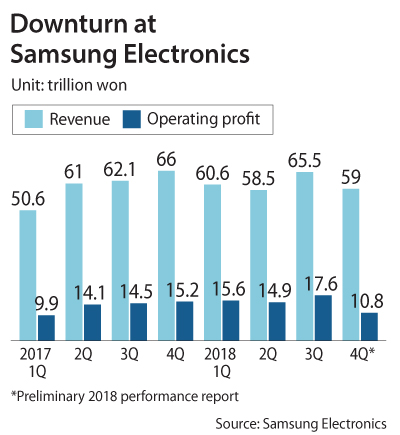
    Samsung Electronics announced sharply lower earnings for the fourth quarter, an earnings “shock” that suggested that the “supercycle” in the global semiconductor market is nearing an end. Preliminary 2018 performance numbers released Tuesday predicted the local IT giant’s operating profit between October and December of last year would be 10.8 trillion won ($9.6 billion), down 28.71 percent year on year.

    This is the lowest figure since the first quarter of 2017’s 9.9 trillion won. Between those two quarters, operating profit had consistently stayed in the 14 to 17 trillion won range.

    Revenue for last year’s fourth quarter slumped 10.58 percent year on year to 59 trillion won. Last year’s third quarter saw record quarterly highs of 65.5 trillion won in revenue and 17.6 trillion won in operating profit.

    Local analysts had expected 13.4 trillion won in operating profit for the fourth quarter and 63.2 trillion won in revenue, according to the stock information provider FnGuide.

    Samsung did not reveal performance figures for different business divisions, but the company cited “slow demand” in semiconductors as a major factor in a public announcement the same day. The IT giant has three major business divisions: chips, smartphones and home electronics.

    The results for all of 2018 showed that the company had a record high operating profit of 58.89 trillion won, a 9.77 percent jump from last year, and 243.5 trillion won in revenue, up 1.64 percent year on year.

    Before starting to slow, semiconductors were the main contributors to Samsung’s high performance over the last two years.

    In the announcement, the company added that demand from data center clients in the fourth quarter had fallen short of expectations.

    “Shipping of memory chips retreated from the third quarter, and the price decline turned out to be bigger than what we expected earlier this year,” it said.

    One reason is because companies with data centers such as Amazon, Facebook and Microsoft bought large amounts of dynamic random-access memory (DRAM) chips during the last two years, which are now piling up.

    DRAM prices started to fall after more than a year of increases – another factor that is affecting demand as companies anticipate more price cuts.

    Slow growth in smartphone sales and one-off expenses including the company’s offering of incentives to staff at the year’s end also affected the profit level.

    Worries that the semiconductor supercycle was ending have surfaced for years, but Samsung and other chipmakers have reported strong earnings – until the fourth quarter.

    December’s chip exports from Korea retreated for the first time in 27 months. The general consensus among local analysts is that Samsung’s revenue will continue to shrink in the first half of this year.

    But they have a more positive outlook for the second half.

    “Memory chip prices will bounce back in the second half of 2019,” said analyst Lee Jae-yun of Yuanta Securities. “Because the supply growth rate of major chipmakers in 2019 will be 19 percent [year on year], whereas demand growth is expected to reach 20 percent.”

  • Samsung Galaxy Tab A (2016) Makes it to Home Market in South Korea

    Samsung Galaxy Tab A (2016) Makes it to Home Market in South Korea

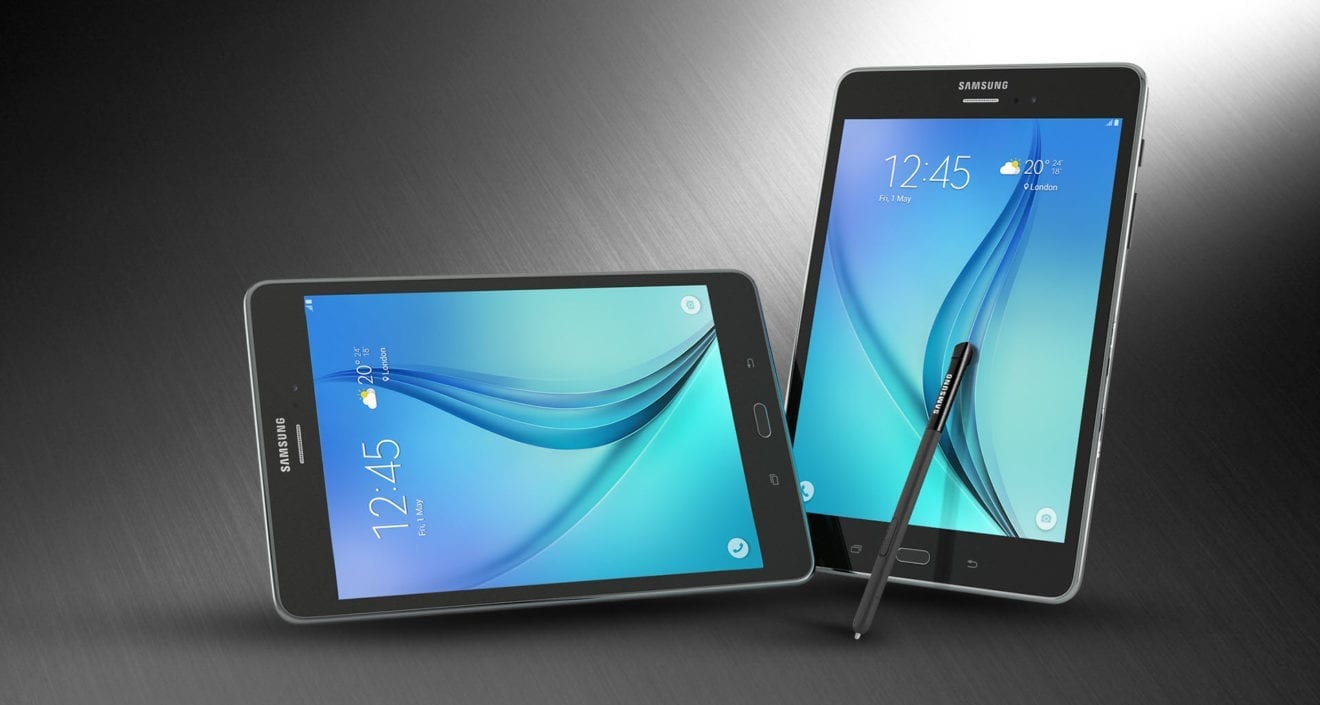
    A few days ago, the mid-range tablet of the Korean tech giant, the Samsung Galaxy Tab A (2016), officially made it to its home market in South Korea with a retail price of $430.
    While the tablet has a lot of market and sales potentials outside of South Korea, reports have it that its international release is still up in the air. Although it seems likely to happen, the Korean tech giant has not given an official word as of yet.

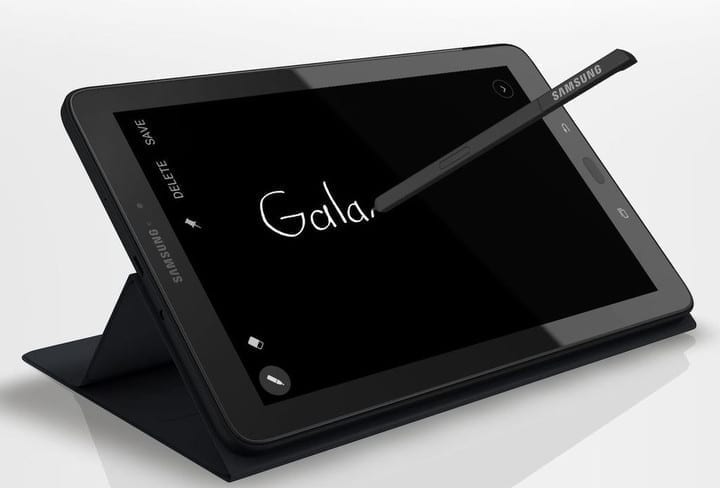
    One of the most interesting features of the Samsung Galaxy Tab A (2016) is the S Pen stylus, which previously comes only with its flagship tablets or phablets.

    The S Pen is actually what separates the new Galaxy Tab A (2016) from its predecessor models, which all came out without any stylus, reports Digital Trends.

    Samsung’s new S Pen has a thinner and more precise tip compared to its previous models. It also operates a revised menu system on the display and can be used to scribble notes on the lock screen and has various new features too.

    It also includes a translation mode, where hovering the pen over a foreign word will bring up a Google translation.

    More than commensurate to its price

    Launched in March 2016, the Samsung Galaxy Tab A (2016) tablet features a 7-inch display with a resolution of 800 pixels by 1280 pixels. For a mid-range tablet, its features are more than commensurate with its retail price.

    The Samsung Galaxy Tab A (2016) is powered by 1.3GHz quad-core and it comes with 1.5GB of RAM. The tablet packs 8GB of internal storage that can be expanded up to 200GB via a microSD card.

    As far as the cameras are concerned, the Samsung Galaxy Tab A (2016) packs a 5-megapixel primary camera on the rear and a 2-megapixel front shooter for selfies, details NDTV Gadgets.

    The Samsung Galaxy Tab A (2016) runs on Android 5.1 Lollipop out of the box and is powered by a 4000mAh nonremovable battery. It measures 186.90 x 108.80 x 8.70 (height x width x thickness) and weighs 283 grams. It is likely that it shall be readily upgradeable to Android 6.0.1 Marshmallow or the Android 7.0 Nougat.

    Connectivity options of the tablet include Wi-Fi, GPS, and Bluetooth. The various sensors on the tablet include a proximity sensor, an ambient light sensor, an accelerometer, and a gyroscope.

    A higher-end variant

    Despite its flagship features, the Samsung Galaxy Tab A (2016) is retaining its mid-range lineup category because its design and specifications, and most importantly its price, are quite similar to that of the Samsung Galaxy Tab A launched in April last year.

    There has been a report of a higher-end variant of the Samsung Galaxy Tab A (2016) which shall reportedly feature a 10.1-inch display, an Exynos 7870 processor, paired with 2GB of RAM.

    It shall also have 16GB of internal storage with an option to expand because of its microSD support.

    It shall feature an 8-megapixel rear camera, a 2-megapixel front-facing camera, a 7,300 mAh battery, and shall reportedly come laden with Android 6.0.1 Marshmallow already. Though with the official release last month of the Android 7.0 Nougat, it seems likely that the 10.1-inc version of the Samsung Galaxy Tab A (2016) shall have a free upgrade to the latest Google mobile operating system.

    samsung galaxy tab a

    It has also been said that the Samsung Galaxy Tab A (2016) shall have a widescreen ratio of 16:10, which is far better than the 4:3 ratio found on last year’s models.

    As far as the design of the device is concerned, the Samsung Galaxy Tab A (2016) looks very much like its predecessor but it will have a more rectangular shape because its display is going to be widescreen. The device shall reportedly be offered in black and white color options.

    The signature home button and capacitive buttons for back and tasks shall also be featured.

    Prior to its official roll out a few days ago, there have been reports saying that the Galaxy Tab A (2016) will come out of the market next year. The rumors are quite absurd considering the 2016 in the name of the tablet. It is likely that the 10.1-inch variant of the Samsung Galaxy Tab A (2016) and its international release shall happen before the end of the year.

    It should be worth noting that the flagship tablet line of Samsung, the Galaxy Tab S has 8-inch and 9.7-inch variants, and is quite different from the Galaxy Tab A (2016) which shall have a 10.1-inch and 7-inch models.

    However, only the 7-inch model of the Samsung Galaxy Tab A (2016) has been released to the Korean market thus far., It could be that the 10.1-inch version is meant for the international market. If the 7-inch version has a $430 price, then it is likely that the bigger variant shall come out with a higher price.

    The pricing seems more realistic now compared to reports before the official release of the 7-inch Samsung Galaxy Tab A (2016) this month indicating that the two variants of the mid-range tablet from the South Korean tech giant shall have a price range from only $190 to $240, which seems more like the prices of tablet made by manufacturers from China rather than Samsung.

  • Hanwha gets smart about solar cell production

    Hanwha gets smart about solar cell production

    Hanwha Group has been striving to make the solar business its future growth engine since it first entered the industry in 2010, and that hard work is starting to pay off. Hanwha Q Cells, the group’s solar cell producer, is now one of the largest manufacturers in the industry, but competition is getting much tougher. Even some of the more established companies in Europe and the United States are struggling due to fast-growing Chinese manufacturers, according to Hanwha. As a result, the United States imposed tariffs on solar cell and module imports earlier this year.

    In a bid to tackle fierce competition and fortify its leadership, the group invested in making its new solar cell plant smarter using wearable gadgets, big data and robots.

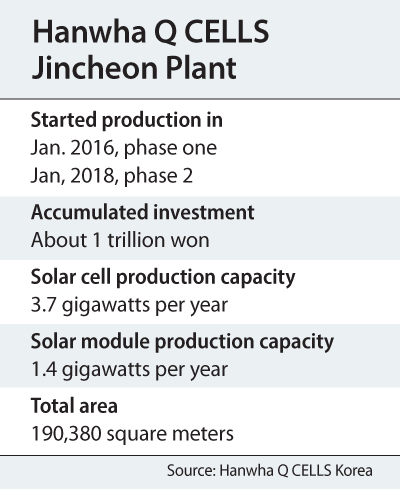
    The Jincheon 2 plant, which started mass production of solar cells and modules in January, is an addition to the original complex built in 2016. With the first and second plant combined, the Jincheon facility is the largest single solar cell production site in the world, according to Hanwha, with 3.7 gigawatt production capacity.

    When we visited the solar cell production line on the third and fourth floor of the newly-built plant on Tuesday, some workers were moving busily from machine to machine wearing what looked like a smart watch.

    “It looks like a smart watch because we took the hardware from electronics companies like Samsung,” a spokesperson from Hanwha said. “But we applied our own software so that workers receive alarms when there are problems with the machines.”

    According to the solar cell maker, the watch does not provide a detailed cause or explanation of the problems, but it makes workers respond immediately to issues by alarming them with notices categorized into four stages – S, A, B and C – depending on the severity and complexity of the problem.

    The system means that just 40 workers are required to manage 220 machines lined-up horizontally in five production lines in the 330-meter-long (1082 feet) solar cell production room, according to Hanwha.

    Another unusual scene inside the plant was a huge stack of 200 solar cells moving around over workers’ heads.

    “We call it a cassette,” said Yang Byung-ki, a manager of cell production at Hanwha Q Cells Korea, the company in charge of cell production in Korea. “This automated overhead logistics system delivers solar cells quickly and safely to the next destination.”

    The automated delivery system moves cells through the 10 stages of production.


  • Samsung announces important changes to Galaxy A series

    Samsung announces important changes to Galaxy A series

    Samsung has just announced that through a partnership with Google it will bring one of the most popular AI features to Galaxy A series devices. Samsung Galaxy S series can already activate Gemini AI through the side button, but this feature will soon expand to Galaxy A series phones.

    Thanks to the latest update, Galaxy A series users will be able to enjoy smarter AI experiences, such as launching Gemini, Google’s AI-powered assistant, by simply pressing and holding the side button.

    Samsung and Google have been working together to deliver seamless, intuitive and meaningful AI experiences, making the latest technology more accessible for more users. We’re excited that Galaxy A series users will now be able to activate Gemini faster and more naturally through a simple gesture that brings intelligent support into the flow of daily tasks.

    According to Samsung, the first Galaxy A series to enjoy the new AI feature are those phones it launched in the last two years. Below is the full list of Galaxy A series phones that have been confirmed to receive this update that will allow users to activate Gemini AI through the side button:

    Samsung Galaxy A series users will soon be able to activate Gemini from the side button | Image credit: Samsung

    It’s important to mention that the update that’s supposed to bring the new AI-oriented feature will be available only after the phones above have received their One UI 7 upgrade, which is scheduled to begin rolling out in May.

    Naturally, availability and supported features may vary by market, carrier and device model, which basically means that not everyone may get the update at the same time and not everyone’s phone might offer the same new functionality after the update.

    Three of the phones in the list will most likely be among the first to receive the new update because they were launched with One UI 7, so there’s no need to wait for that update to arrive. These phones are the Galaxy A56 5G, Galaxy A36 5G, and Galaxy A26 5G.

  • A big change is coming next month to file sharing on Samsung laptops

    A big change is coming next month to file sharing on Samsung laptops

    If you’re using a Samsung laptop and rely on Google’s Quick Share for moving files around, get ready for a change. Samsung is taking the reins for the Quick Share experience on its own Windows machines starting May 28, 2025. This move consolidates the file transfer feature under Samsung’s control for its PC and laptop users.

    One app to rule them all

    This shift means the standalone Quick Share app provided by Google will be phased out on Samsung laptops (and PCs). According to the release notes for the latest Quick Share app update from Google (version 1.0.2180.0), come May 28th next year, attempting to use the Google version on a Samsung laptop will prompt you to install Samsung’s own Quick Share application instead.

    Google has already updated its app, paving the way for this transition. The application has been renamed from “Quick Share from Google” to simply “Quick Share”, and crucially, compatibility with Samsung’s version has been added.

    Streamlining the sharing process

    This move aims to streamline the file-sharing experience for users within the Samsung ecosystem. For a while now, there have been two “Quick Share” experiences floating around: Google’s Nearby Share (which was rebranded to Quick Share early last year) and Samsung’s own Quick Share feature, which predates Google’s widespread adoption of the name. This created some confusion, especially when sharing between Samsung phones, non-Samsung Android devices, and Windows PCs.

    Google and Samsung announced plans to merge these experiences back in early 2024, aiming for a unified file-sharing solution similar to Apple’s popular AirDrop feature that works seamlessly between iPhones, iPads, and Macs. Other alternatives like Microsoft’s Phone Link also offer ways to bridge phone and PC, but Quick Share focuses specifically on rapid, direct file transfers. This upcoming change on Samsung laptops is the next logical step in that consolidation effort, ensuring Samsung users have a consistent experience managed directly by Samsung across their Galaxy phones and Galaxy Book computers.

    Handing control over to Samsung for its own laptops makes a lot of sense. It should reduce confusion and hopefully lead to a more integrated and seamless file-sharing process for people invested in Samsung’s hardware. While swapping apps might involve a quick download and potentially getting used to a slightly different interface, having a single, manufacturer-managed Quick Share application on Samsung PCs is ultimately a positive step. It moves towards a less fragmented experience when you just want to send a photo or document from your phone to your laptop quickly, simplifying a common task.

  • Samsung Foundry drops further behind TSMC after disasterous Q4

    Samsung Foundry drops further behind TSMC after disasterous Q4

    TSMC is the largest contract chip foundry in the world. Looking at its roll call of customers, you can see why it is number one. After all, the Taiwan-based foundry manufactures chips based on designs submitted by companies such as Apple, Nvidia, AMD, MediaTek, Qualcomm, and Broadcom. Data compiled by TrendForce that The Chosun Daily published says that during the fourth quarter of 2024, TSMC’s market share rose 2.4 percentage points to 67.1%.
    That means approximately two out of every three chips produced during the last three months of the year were built by TSMC. As for second-place Samsung Foundry, its market share dropped 1 full percentage point from 9.1% to 8.1% during the same quarter. Sammy’s foundry has had to deal with poor yields on its advanced chips, which this year resulted in the use of Qualcomm’s Snapdragon 8 Elite for Galaxy application processor (AP) on every Galaxy S25 series unit.
    A repeat could be in store for next year’s Galaxy S26 line unless Samsung Foundry can hike its yield on 2nm production from the current 30% before mass production of the Exynos 2600 AP begins. If there is enough of an improvement, the Exynos 2600 SoC will power the Galaxy S26 and Galaxy S26+ in all markets except for the U.S., China, and Canada.
    But we digress. The gap in market share between TSMC and Samsung Foundry increased sequentially from 55.6% in Q3 to 59% in Q4. TrendForce says that TSMC is benefiting from the AI buzz as demand for Nvidia’s GPU chips used for AI training, inference (predictions and decisions), and computing picks up. Those chips are made by TSMC.
    Also helping TSMC is the demand for high-end smartphone chips including those used to power the iPhone, and Samsung’s flagship Galaxy S and foldable Galaxy Z models. Starting this year the new Tensor G5 AP, designed by Google from the ground up, will be built by TSMC using its third-generation 3nm node (N3P) and deployed in the Pixel 10 line. That is the same node that TSMC will use to build Qualcomm’s Snapdragon 8 Elite 2 for next year’s Galaxy S26 Ultra.
    You might be wondering which foundry is in third place behind Samsung Foundry. That would be China’s largest foundry, SMIC. While the latter appears to be handling the production of Huawei’s APs, it also could be making some money building Huawei’s Ascend AI accelerators. Long-time PhoneArena readers probably are aware that thanks to U.S. sanctions, SMIC cannot purchase extreme ultraviolet lithography machines preventing SMIC from building chips using a process node more advanced than 7nm.
    TSMC generated $26.85 billion in revenue during Q4 2024, a gain of 14.1% year-over-year. Samsung Foundry’s Q4 revenue declined 1.4% to $3.26 billion.
  • South Korean firms plan to expand investment in Vietnam

    South Korean firms plan to expand investment in Vietnam

    South Korean conglomerates, including SK Group, Samsung, and LG, are expanding their investments in Vietnam, focusing on energy, high-tech manufacturing, and sustainable development.

    SK Group, the second-largest conglomerate in the country, has planned to invest in three LNG-fueled power projects in Vietnam, aiming to develop a new energy hub integrating artificial intelligence development, hydrogen, logistics, eco-friendly agriculture, and innovation in the Southeast Asian nation.

    In meetings with Party General Secretary To Lam and Prime Minister Pham Minh Chinh last week, SK Group Chairman Chey Tae Won said his firm is actively seeking opportunities to enhance support for and cooperation with Vietnam to promote long-term, sustainable economic growth.

    SK has already invested around $3.5 billion in Vietnam. However, most of the sum is indirect investment, involving equity purchases worth hundreds of millions to over a billion dollars in major companies such as Vingroup, Masan, Pharmacity, and Imexpharm.

    The Ecovance high-tech biodegradable materials plant in the northern port city of Hai Phong is the first direct investment project of SK in Vietnam. SK is investing in the project through a subsidiary at the DEEP C Industrial Park, with a total investment of $500 million. The project targets the rapidly growing global biodegradable materials market.

    Chey stated SK considers Vietnam a priority partner in its investment strategy in the coming time, adding the firm is eager to participate in Vietnam’s green transition, especially in energy and industry, thus contributing to the Southeast Asian nation’s goal of cutting emissions to net zero by 2050.

    Meanwhile, Samsung Display of South Korea has been approved to inject an additional $1.2 billion into its existing next-generation display manufacturing plant in the northern province of Bac Ninh. This investment aims to establish Vietnam as a key production hub for Samsung’s next-generation displays.

    In a recent meeting with Prime Minister Pham Minh Chinh, General Director of Samsung Vietnam Choi Joo Ho, and his successor, Na Ki Hong, stated that, in addition to its traditional investment areas, Samsung will expand its investments in Vietnam into new sectors.

    Samsung has invested over $23 billion in Vietnam, and continues to inject billions of dollars annually. With its new plans, more billion-dollar projects are likely to be added to Samsung’s investment portfolio in the Southeast Asian nation.

    Besides Samsung, LG has also been steadily increasing its investments in Vietnam. Last year, it poured billions of dollars into the LG Display project in Hai Phong. Looking ahead, LG plans to further expand its investments in the country.

    Other giants such as Hyosung, Amkor, and Hana Micron are also looking to expand their investment and business in Vietnam.

    After investing $520 million, Amkor decided to inject an additional $1.07 billion into its plant in Bac Ninh, 11 years ahead of its schedule. Recent reports indicate that Amkor’s plant is expected to triple its production capacity in the near future.

    South Korea’s registered investment in Vietnam hit $1.25 billion in January alone, much higher than the figure of $93.46 million recorded in January last year.

    South Korean investors have poured $92 billion into Vietnam, ranking first among countries and territories investing in the Southeast Asian nation, statistics showed as of January 2025.