Retail News CRM

Tag: samsung

  • Samsung Electronics’ Vietnam profits drop 11%

    Samsung Electronics’ Vietnam profits drop 11%

    Samsung Electronics’ profits in Vietnam declined by 11.4% last year to US$3.2 billion, its latest financial reports show.

    Its revenues remained almost unchanged at $56.7 billion.

    Globally, the South Korean giant saw profits surge 122% to $25.3 billion on 16% higher revenues of $220 billion.

    The four main facatories in Vietnam, Samsung Thai Nguyen, Samsung Electronics Vietnam Bac Ninh and Samsung Display Vietnam Bac Ninh in the north, and Samsung Electronics HCMC CE Complex, contributed 25% to total revenues.

    Smartphone manufacturer Samsung Thai Nguyen earned revenues of $22.9 billion, up 7.6% from 2023.

    It was the third biggest contributor to sales behind Samsung Electronics America and Samsung Semiconductor, also in the U.S.

    But its profits fell by 7.2% to $1.4 billion.

    Samsung Electronics Vietnam, another smartphone producer, posted a revenue increase of 5.7% to $14.8 billion.

    Its profit jumped 18.9% to $943 million.

    The display producer Samsung Display Vietnam saw both revenue and profit declining.

    Its revenue fell 15.7% to $14.2 billion while profit dropped by half to $583 million.

    The display unit, however, continued to invest substantially in Vietnam last year.

    In September it signed a memorandum with Bac Ninh Province for the development of a screen and electronic parts project worth $1.8 billion.

    Last month Bac Ninh authorities granted an investment certificate for the subsidiary to pump up its capital by 18% to $7.7 billion.

    For the HCMC unit, which makes TVs, profit dropped 5% to $365 million last year, while revenue rose 13.9% to $4.9 billion.

    Samsung is the biggest foreign investor in Vietnam with $23.2 billion in registered capital.

    Its executives earlier this month have affirmed its commitment to expand its investment in Vietnam, including in new sectors such as semiconductor and AI.

  • Samsung to invest in AI, semiconductors in Vietnam

    Samsung to invest in AI, semiconductors in Vietnam

    South Korean electronics giant Samsung is set to expand into new areas in Vietnam such as AI, semiconductors and digital transformation.

    CEO Choi Joo Ho told Prime Minister Pham Minh Chinh at a meeting in Hanoi on Wednesday that the largest foreign direct investor in Vietnam expects support from the government in making investments in these areas.

    Samsung has so far invested $23.2 billion in Vietnam and exported $54.4 billion worth of products last year.

    Chinh promised continued support for the company in investing in efficient and successful businesses in Vietnam.

    Samsung needs to continue to maintain its leading position by developing supporting industries, chips, semiconductors and promoting digital transformation in Vietnam, he added.

    The government targets 8% GDP growth this year and double-digit expansion in the coming years.

    To achieve the goals, it needs to improve the investment environment and foster strategic breakthroughs.

    Chinh urged Samsung to set up training centers at the National Innovation Center, increase its investment in Vietnam and support start-up and innovation activities.

    He also suggested that the company should have more Vietnamese executives and increase the number of local digital technology enterprises in its ecosystem.

  • Samsung, Vinpearl, Vinamilk among most popular recruiters in Vietnam

    Vinamilk, Vinpearl, Samsung Electronics HCMC and McDonald’s are among the most popular recruiters in Vietnam this year, according to recruitment platform CareerViet.

    The top five recruiters in the large business category are Vinamilk, Vinpearl, Samsung Electronics HCMC CE Complex, Masan Consumer and FPT IS, while the top five in the medium business category are McDonald’s, Guardian, Prep Technology, Nabati and Petrovietnam Securities Incorporated (PSI), according to a CareerViet survey on over 5,720 businesses from July 7 to October 31.

    Vinpearl is the leading recruiter in food and beverage, accommodations and tourism, while the Hoa Sen group is the leading recruiter in construction, architecture and interior design. PNJ is the leading recruiter in retail, while Bim Group is the leading recruiter in real estate.

    Popular recruiters are liked not only due to their attractive benefits, diverse working environments and incentives for personal development, but also thanks to their own brands, CareerViet said.

    The survey also revealed that while Gen X workers prioritize stability and long-term benefits, Gen Y values development and work-life balance while Gen Z focuses more on flexibility, salaries and personal development.

    83% of Gen Z workers surveyed said the main factors for them choosing their jobs are salaries and benefits, followed by working styles. They prefer workplaces that ensure holiday bonuses, have shorter working hours or offer hybrid working methods.

    “They love a job with high incomes and ensures flexibility. 90% of Gen Z workers want to be trained in new skills, including communication, problem-solving, foreign languages, management and leadership,” said Tran Lien Phuong, director of research and strategic consulting at Amco Vietnam.

    Workers’ perspectives from different generations will by a key factor for businesses to improve their HR policies, CareerViet said, adding that a workplace with different worker generations will help make it more competitive.

    “A business’s success is not only shown through its business performance, but also policies to attract, keep and develop talents,” CareerViet said.

  • Samsung to invest $1.8B more in northern Vietnam

    Samsung to invest $1.8B more in northern Vietnam

    A subsidiary of South Korean electronics giant Samsung that has operations in the northern province of Bac Ninh is set to invest another US$1.8 billion there.

    The memorandum of understanding for investment by Samsung Display Vietnam, which was signed Sunday and witnessed by Prime Minister Pham Minh Chinh, is meant for expansion.

    Samsung Display Vietnam reported profits of $283.6 million on revenues of $6.8 billion in the first half of this year.

    Samsung, the biggest foreign investor in Vietnam, has $22 billion in the country, half of it in Bac Ninh province.

    Four factories in Vietnam contributed around 30% of Samsung’s global revenue in the period.

    Bac Ninh authorities on Sunday announced approvals for $5.5 billion worth of foreign investments in various projects, including by Apple suppliers Foxconn and GoerTek.

    The government seeks to make the province a dynamic economic and cultural hub of the north linked with Hanoi.

    By 2050 Bac Ninh hopes to become among the economic leaders of Vietnam. It also aspires to become one of the top global centers for high-tech industries, research and development and smart manufacturing.

  • Samsung promises ‘strong investment’ in Vietnam in next 3 years

    Samsung promises ‘strong investment’ in Vietnam in next 3 years

    South Korean electronics giant Samsung has planned “strong investment” in Vietnam in the next three years to make the country its biggest display module producer globally, its chairman Lee Jae Yong has said.

    “Vietnam’s success is Samsung’s success”, he told Prime Minister Pham Minh Chinh in Seoul on Tuesday, adding that Samsung commits to journey with Vietnam in the long run.

    In May the chairman told PM Chinh that Samsung would invest around $1 billion in Vietnam each year.

    Chinh praised Samsung’s success in Vietnam and asked the company to diversify its supply chain in the country and make the country its strategic location for manufacturing and research.

    He added that Vietnam’s is making policy changes to attract investors in the high-tech, semiconductor and AI sectors.

    Vietnam is also making negotiations for new free trade agreements to expand its exports to the Middle East, South America and Africa, which will help distribute Samsung products to these markets.

    The PM urged Samsung to increase the localization of manufacturing and allow Vietnamese firms to participate deeper in its supply chain.

    He wants Samsung to provide high quality training of Vietnamese staff.

    Lee said that 310 Vietnamese companies are now Samsung suppliers, and the number has surged 12 times from 2014.

    Around 2,500 engineers and researchers are working at its research and development center in Hanoi, where Samsung is researching AI and 5G equipment.

    Chinh added that in the near future he hopes to see a Vietnamese executive in Samsung Vietnam’s board.

    Samsung is the biggest foreign direct investor in Vietnam with four factories in the country with a total investment of $2 billion to date.

    Over 50% of its smartphones sold globally are made in Vietnam.

    Prime Minister Pham Minh Chinh and his wife are on an official visit to South Korea from June 30 to July 3 at the invitation of South Korean Prime Minister Han Duck-soo and his spouse.

  • Samsung factories in Vietnam back in the black after losing quarter

    Samsung factories in Vietnam back in the black after losing quarter

    Samsung’s four factories in Vietnam made a combined profit of US$1.2 billion last quarter after losing $181 million in the fourth quarter of 2023. Samsung Thai Nguyen (SEVT), the Korean conglomerate’s best-performing plant in Vietnam, accounted for $707 million.

    The two plants in Bac Ninh Province, Samsung Electronics Vietnam (SEV) and Samsung Display Vietnam (SDV), contributed $300 million and $123 million. Samsung Electronics HCMC CE Complex (SEHC) was $40.7 million in the black.

    They accounted for 23% of their parent’s quarterly profit. Their revenues totaled $16.25 billion, up nearly $2 billion from the previous quarter.

    In the final quarter of 2023 SEV, SEVT and SEHC reported combined losses of nearly $221 million, with SDV being the only profitable operation.

    Last quarter Samsung achieved global revenues of 71.92 trillion won ($54 billion), up 13% year-on-year.

    It said revenues increased thanks to the sales of the Galaxy S24 smartphone series and higher semiconductor prices.

    The depreciation of the won against major currencies had a positive impact on profits, it said.

    During a meeting with Prime Minister Pham Minh Chinh last month, the company’s CFO, Park Hark Kyu, said it plans to invest a further $1 billion annually in Vietnam to add to its existing $22 billion.

    It also plans to increase its number of local suppliers and enhance training for its workforce, he said. Since 2014 the number of Vietnamese businesses involved in Samsung’s supply chain has increased 12-fold to 309 now. It is the largest foreign direct investor in Vietnam, where it currently produces over 50% of all its mobile phones.

  • Samsung plans to add $1B to Vietnam investment annually

    Samsung plans to add $1B to Vietnam investment annually

    Samsung plans to add about US$1 billion to its investment in Vietnam annually, Chief Financial Officer (CFO) of Samsung Electronics Park Hark-kyu said as he met with Prime Minister Pham Minh Chinh in Hanoi Thursday.

    PM Chinh applauded Samsung’s efforts and determination while doing business in Vietnam, calling on the firm to view Vietnam as a strategic manufacturing and export base.

    He affirmed that the Vietnamese government always attaches importance to improving the investment climate and pledges to create favourable conditions for long-term operations of foreign enterprises.

    It will continue providing optimal conditions for the projects of Samsung to operate fruitfully and develop sustainably in Vietnam in the spirit of harmonising interests and sharing risks, he said.

    Park noted Samsung has invested $22.4 billion in Vietnam so far and plans to add about $1 billion to its investment in the Southeast Asian country annually.

    Aside from research, development, manufacturing, and export of electronic and high-technology products, the group has also been investing in supporting industries and manpower training for Vietnamese companies, and helping local firms to engage in its production and supply chain, he said.

    Samsung hopes to continue developing to contribute to Vietnam’s foreign trade and economic growth, the CFO added.

    He spoke highly of Vietnam’s investment and business climate as well as the PM’s readiness to listen to and assist enterprises, adding Samsung will continue standing side by side with the country on the development path.

    Appreciating Samsung’s building of an R&D center and participation in manpower training in Vietnam, Chinh asked the group to coordinate closely to effectively run the training centers based at the National Innovation Centre (NIC), step up cooperation to turn digital technology enterprises of Vietnam into partners in its ecosystem, increase investment in and expand the R&D center, and boost assistance for startup, innovation, and manpower training in the country.

    He also welcomed Samsung’s production and business plan, calling on it to continue helping Vietnam further improve domestic companies’ capacity so that they can join in Samsung’s supply chain more effectively.

    Samsung should continue seeing Vietnam as a strategic base for manufacturing and exporting its key products to international markets, particularly when the Comprehensive and Progressive Agreement for Trans-Pacific Partnership (CPTPP), the EU – Vietnam Free Trade Agreement (EVFTA), and the Regional Comprehensive Economic Partnership (RCEP) already took effect, Chinh suggested.

  • Samsung adds more language availability within Galaxy AI

    Samsung adds more language availability within Galaxy AI

    Samsung is taking a big leap forward today in its AI ambitions. Galaxy AI, the company’s on-device intelligence engine, just got closer to overcoming language limitations across the world with a huge expansion in language support.

    This spring, Arabic, Indonesian, and Russian support will be added to the thirteen available languages. Additionally, Australian English, Cantonese, and Canadian French dialects are now supported.

    But Samsung is not stopping there as later this year the company plans to bring Romanian, Turkish, Dutch, Swedish, and both traditional Chinese and European Portuguese support as well to Galaxy AI. This is a huge step in bringing AI capabilities to everyone globally, just like TM Roh, President and Head of Mobile eXperience Business at Samung, said: “Committed to democratizing mobile AI for all, Galaxy AI’s language expansion this year will allow even more Galaxy users to communicate beyond language barriers on a scale that is completely unique to Samsung.”

    As a reminder, these are the things that Galaxy AI can do for you:

    • Live Translate: If you make phone calls to another country or to someone who speaks another language, Galaxy AI can act as your own interpreter.
    • Interpreter: In-person chats can now be a breeze, even when they take place in different languages, with split-screen translations.
    • Chat Assist: Helps you tone down work emails and write snappy social posts with grammar and tone check.
    • Note Assist and Transcript Assist: Get summaries, formats, and even translations for those long meeting notes.

    You’ll be able to add these additional languages to your Galaxy device by downloading the new language packs that can be grabbed right from the Settings app. Right now, newer devices such as the Galaxy S24 series, Galaxy S23 series, Galaxy S23 FE, Galaxy Z Flip 5, and Galaxy Tab S9 series. However, more devices will be joining the Galaxy AI family soon.

  • Samsung family members sell $2B worth of shares to pay inheritance taxes

    Samsung family members sell $2B worth of shares to pay inheritance taxes

    Family members of Samsung Electronics chairman Jay Y. Lee have sold 2.8 trillion won (US$2.12 billion) worth of shares in the company and its affiliates to pay inheritance taxes.

    The sale of about 29.8 million shares, or a 0.5% stake in Samsung Electronics, was at a discount of 1.2% to 2.0% from Samsung shares’ Wednesday closing price of 73,600 won, citing unnamed investment banking sources.

    Shares in affiliates Samsung C&T, Samsung SDS and Samsung Life Insurance were also offered simultaneously in block deals worth around 644 billion won for the same purpose, the report said.

    The shares were sold by Hong Ra-hee, the widow of late Samsung Group chairman Lee Kun-hee, and her children, including Jay Y. Lee.

    Korea’s top inheritance tax rate of 50% is considerably greater than the OECD’s typical rate of 25% and is second only to Japan’s 55%. It is therefore not uncommon for members of Korea’s chaebol families to sell company shares or secure bank loans using those shares as collateral to cover their inheritance tax obligations.

  • Samsung Wallet rolls out mobile driver’s licenses

    Samsung Wallet rolls out mobile driver’s licenses

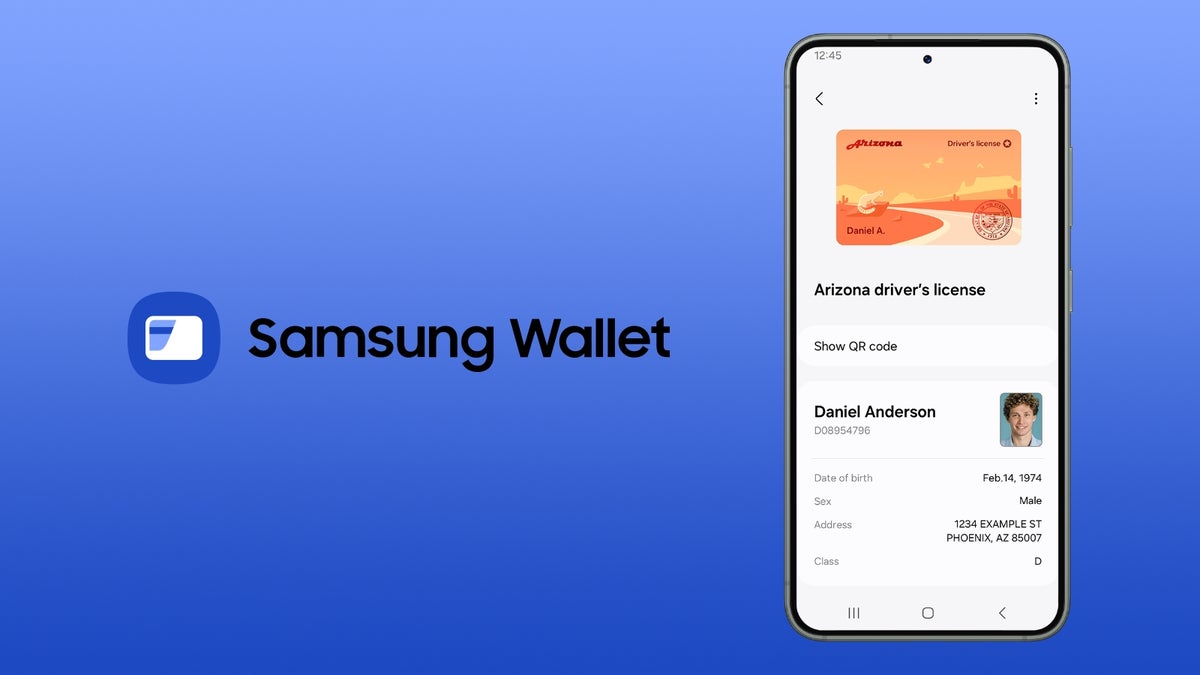
    Samsung Wallet, the app that lets users store and manage their cards, tickets, and coupons on their Samsung Galaxy smartphones, has added a new feature: mobile driver’s licenses and state IDs. The company announced back in October that it will bring this feature to Arizona and Iowa, however, other than “coming later this year,” no specific date was given for when it would exactly go live.

    Now, it looks like the wait is over as the feature is live in Arizona, according to the Arizona Department of Transportation announcement. Samsung Wallet users who are Arizona residents can now store a digital version of their physical cards on their phones and use them at places that accept digital IDs, such as TSA checkpoints at select airports.

    This feature offers more convenience and security for users, as they don’t have to carry their physical cards with them and risk losing or damaging them. The digital IDs are also encrypted and protected by fingerprint or PIN authentication, so only the authorized user can access them.

    To add a mobile driver’s license or state ID to Samsung Wallet, users just need to open the app, go to the Quick access tab, and click on the ‘+’ button. Select ‘Digital IDs’ from there, and click on the ‘Driver’s License/State ID’ option. At that point, users will need to scan the front and back of their ID card and verify their identity with a face scan.

    Samsung says the face scan is only for verification purposes and does not store any biometric data. After submitting the scan, users need to authenticate with their fingerprint or PIN to complete the process.

    This convenience isn’t just limited to air travel, though. Samsung envisions a future where digital IDs can be used for age verification, entering age-restricted establishments, and even renting a car. While Arizona is the first to experience this revolution, Samsung promises to add more states and functionalities in the near future.

  • TV prices hit record lows due to high inventory

    TV prices hit record lows due to high inventory

    The current market sees 65-inch LED TVs priced at just over VND10 million ($420), and OLED TVs dropping below VND20 million for the first time, a result of high inventory and decreased demand.

    “It’s normal for TV prices to go down year after year, especially for older models. However, the high inventory pressure and the sharp drop in demand this year has forced many chain stores to cut profits, break even or even cut losses,” said Ngoc Chung, owner of an electronics store on Nguyen Trai Street in Hanoi.

    “TV prices have hit the floor this year. We are selling them to maintain cash flows to wait for a better year in 2024,” he added.

    Many TV models, with the two most popular sizes of 55 and 65 inches, currently cost around VND10 million, 15-20% lower in previous years.

    Major dealers and manufacturers regularly offer 30-50% discounts, even for new models released in 2023.

    LG’s latest lines currently have discounts of 15-30%. Meanwhile, some OLED TV models with sizes of 43 and 50 inches released in 2021 or 2022 are currently priced at less than VND20 million.

    Previously, prices of OLED TVs had never fell to below VND30 million.

    Ha Minh Tuan, manager of an electronics warehouse specializing in online sales, said his business’ revenue this year is down 15-20% compared to last year.

    “TVs are also in a difficult situation like other consumer electronics products, but TVs are not an essential item, so users often choose not to upgrade or buy more,” Tuan said.

    Weaker demand and changing consumer needs have also made the low-cost TV segment with sizes from 32 to 43 inches vibrant again.

    In 2021, 32-inch TVs gradually disappeared when most firms stopped selling them, but this year these models are back.

    Samsung, Toshiba andXiaomi all have 32-inch TVsat selling prices of VND 4-6 million.Prices of 40- and 50-inch versions are VND1-2 million higher.

    In addition to discounts, electronics companies set lower list prices for some models.In April, the list prices of some LG’s OLED TVs were 20-30% lower than last year.

    Among TVs this year, backlit LEDs are the most popular, followed by miniLED and OLED. Newer technologies like Samsung’s microLED are still expensive.

    Regarding operating systems, only Samsung and LG use their own operating systems. Brands such as Sony, Xiaomi, TCL, Casper and Toshiba have all switched to Google TV.

  • Samsung rolls out free cloud backups for Galaxy flagships, but there is a catch

    Samsung rolls out free cloud backups for Galaxy flagships, but there is a catch

    Samsung is simplifying the challenge of finding sufficient storage for smartphone backups with its new free solution. Named Temporary Cloud Backup, this service is designed for Galaxy smartphone and tablet users, providing them with access to as much temporary storage as needed.

    Samsung’s Temporary Cloud Backup provides users with complimentary file storage in the cloud for 30 days. There is a file size restriction of 100 GB each; however, users can store an unlimited number of files through their Samsung device running One UI 6.0 or higher, which is another stipulation.

    “This upgraded switching experience based on Samsung Cloud aims to provide peace of mind to Samsung Galaxy users that precious data will not be lost, thanks to the connected power of Galaxy’s ecosystem,” said Chiyoung Seo, VP & Head of Cloud Team, Mobile eXperience Business at Samsung Electronics.

    Temporary Cloud Backup would be particularly useful for scenarios where users may fear data loss, such as when getting a smartphone repaired. Samsung has integrated Temporary Cloud Backup into Maintenance Mode, ensuring the secure backup of personal data, including files within the Secure Folder, for recovery after repairs.

    Samsung released Maintenance Mode a year ago to give its users more security. Maintenance Mode creates a separate user account for repairs, keeping your private stuff safe. To use it, just go to Battery and device-care in Settings, hit Maintenance Mode, and reboot. Your personal info, like photos and messages, stays off-limits after the restart.
    When using Temporary Cloud Backup, users should note that a notification will be sent when the 30-day storage period concludes, and files stored for the full period will be automatically deleted. The 30-day limit applies to each file individually, and the countdown starts upon file upload.

    Initially, this feature is rolling out to Galaxy S models running One UI 6.0 or higher for users in South Korea. Global availability is expected to expand gradually from this fall.

  • Samsung Internet Browser app updated with autocomplete support

    Samsung Internet Browser app updated with autocomplete support

    Samsung continues to improve its Internet Browser app with new features. After thoroughly testing them in the beta version of the app, Samsung has now released some of these features to the stable channel.

    This means that if you update to the latest version of Samsung Internet Browser, regardless of whether or not you’re enrolled in the beta program, you’ll benefit from additional functionality

    Among the most important new features included in the latest update is support of URL autocomplete in address bar, which will save you a lot of time when you want to type in an address to visit a certain website.

    Apart from that, the new version of Samsung Internet Browser also gained new support for syncing tab groups, as confirmed by the official changelog. Finally, the app now features an increased number of days of History saved, so you’ll be able to check which sites you’ve visited in the last 90 days.

    If you’re looking to upgrade to Samsung Internet Browser v23.0.0.47, your only option is the Galaxy Store for the time being. However, the latest update should pop up in the Google Play Store very soon too in case you don’t want to go the Galaxy Store route.

  • Samsung’s Latest Foldable Smartphone Range The Coolest Yet

    Samsung’s Latest Foldable Smartphone Range The Coolest Yet

    Before the smartphone boom, foldable cell phones were the pinnacle of mobile advancements. The devices had gone from clunky, brick-like objects to slick, streamlined handsets that could fit in any pocket. A lot of experts have predicted that the smartphone industry would follow the same trajectory, and it could finally be happening.

    Samsung has been leading the way with its foldable devices for some time now, and the fifth generation could be knocking on the door of mainstream adoption. These are the company’s coolest flip phones yet, and they are likely to attract countless new users.

    Samsung Finally Hitting the Right Notes With its Foldables

    Samsung first released the Galaxy Z Fold in 2019 and the Galaxy Z Flip in 2020. Since then, it has invested a lot of resources in developing these innovative smartphones. The folding concept allows for a compact device that can open and provide users with a lot more screen space. Smartphone screens have gradually increased in size over the years, with many users clearly valuing screen space. The Z Flip offers the best of both worlds in that it fits anywhere but expands to give users a great display.

    <iframe width=”560″ height=”315″ src=”https://www.youtube.com/embed/WuljKartv2U?si=D8AJ6QM4_3vEqO3o” title=”YouTube video player” frameborder=”0″ allow=”accelerometer; autoplay; clipboard-write; encrypted-media; gyroscope; picture-in-picture; web-share” allowfullscreen></iframe>

    There are various aspects of the new Z Flip that could make it a trailblazer for foldable smartphones. For instance, the Flex Window on the front now has a 3.4-inch display, harking back to the early days of smartphones and the iconic Blackberry Classic screen. Not only will this fill some older users with nostalgia, but it also acts as a convenient way of interacting with the phone in its folded state. It comes with a variety of modes that help users organize their working days, and the performance is high quality thanks to the Qualcomm Snapdragon 8 Gen 2 system-on-chip.

    A Good Time to Buy Shares in Samsung?

    With the company continuing to thrive at the top end of the smartphone market, shares in technology companies still affect the weighting of the S&P 500. People who are interested in buying can check the ES futures chart for accurate information about stock prices in the S&P 500, and by setting parameters on this, they can figure out the best times to buy and sell. While Samsung isn’t listed in the S&P 500, other phone producers are, with Apple being one of the most notable examples.

    <iframe width=”560″ height=”315″ src=”https://www.youtube.com/embed/dEphyWRPzpI?si=iq4LLTiKmThJw4AO” title=”YouTube video player” frameborder=”0″ allow=”accelerometer; autoplay; clipboard-write; encrypted-media; gyroscope; picture-in-picture; web-share” allowfullscreen></iframe>

    Experts back Samsung shares as great long and short-term holds, and now is a good time to jump on them. This is because the price recently dropped after the company reported a 96 percent drop in profit earlier this year. This was due to an oversupply of memory chips, leading to Samsung’s inventory values being slashed. This drop is likely to even out soon, though, and investors are keeping a close eye on the Korean tech giant’s reports. The general sentiment is that now is a good time to get back in and buy up shares of the company, as it is likely to bounce back over the next year.

    The era of the foldable smartphone could soon be on the horizon, with Samsung leading the way. These devices have been knocking on the door of the mainstream for some time, and they could soon become ubiquitous thanks to cool offerings like the Galaxy Z Flip 5.

  • Samsung TV Plus adds new channels

    Samsung TV Plus adds new channels

    Samsung TV Plus might become very popular among customers as streaming services continue to increase their prices once or twice per year. Samsung’s free TV service currently offers more than 2,000 channels in two dozen countries, but its biggest advantage is that it’s available on all Samsung TVs.

    Samsung has already added a bunch of new channels to its TV service this month, but the company is not done yet. Starting this week, three new channels from Blue Ant Media will be available on Samsung TV Plus.

    Homeful, HauntTV and Love Pets have been added to Samsung TV Plus in several markets. For example, Homeful is now available in the United States, Canada, Australia, New Zealand, Mexico, and Brazil.

    After being initially introduced in Canada, Australia, New Zealand, and the UK earlier this year, HauntTV is now available for Samsung TV Plus users in the United States.

    As far as Love Pets goes, the channel focusing on pets is now available to all Samsung TV Plus users in the UK, Denmark, Finland, Norway, Sweden, and the Netherlands.