Tag: satellite

  • Arirang 6 Satellite: South Korea’s High-Tech Hope Battles New Launch Setbacks

    Arirang 6 Satellite: South Korea’s High-Tech Hope Battles New Launch Setbacks

    South Korea’s multipurpose practical satellite, Arirang 6, has experienced another postponement in its launch schedule, further emphasizing the nation’s dependence on foreign launch services and the consequential lack of control over scheduling. The Korean AeroSpace Administration (KASA) has been informed of the delay by the European launch service provider Arianespace. Initially set for launch in early 2025, the launch of Arirang 6 is now slated for the third quarter of 2026 or later.

    Arirang 6: A High-Resolution Satellite

    Arirang 6, also known as KOMPSAT-6, is a high-resolution synthetic aperture radar (SAR) Earth observation satellite that can operate irrespective of weather conditions or time of day. The satellite boasts the capability to identify objects as small as 50 centimeters in both horizontal and vertical dimensions. This has led the South Korean government to invest around KRW 370 billion in the program, acknowledging its significance in national security, disaster response, and environmental monitoring.

    Despite the completion of its development several years ago, the satellite has not yet entered orbit owing to recurring delays associated with foreign launch vehicles. The latest delay is due to problems affecting Platino-1, Italy’s high-resolution SAR satellite, slated to share the launch on Arianespace’s Vega C rocket.

    European Payloads Take Priority

    As the Vega C is a European-developed launch vehicle spearheaded by the Italian Space Agency, European payloads are given priority. This means that the launch timeline of Arirang 6 remains dependent on the progress of Platino-1’s development. In the previous year, issues related to Platino-1 resulted in an earlier delay of the Korean satellite’s launch.

    Arirang 6 finished the final assembly and space environment testing in August 2022, marking the culmination of a development effort that commenced in 2012. Since then, the satellite has been stored at the Korea Aerospace Research Institute’s satellite development facility in Daejeon, awaiting a confirmed launch window.

    Multiple Disruptions

    The mission has encountered several disruptions over the past few years. Initially, South Korea planned to launch Arirang 6 from Russia in 2020, but development delays moved the schedule to the latter half of 2022. The Russia-Ukraine conflict subsequently made Russian launch options impossible, compelling Seoul to look for an alternative provider.

    In 2023, South Korea chose Arianespace’s Vega C rocket for the launch. However, another setback occurred when Vega C had a mission failure in December 2022, leading to a suspension of flights and a thorough safety review. These concerns resulted in further postponements: first to December 2024, then to the latter half of 2025, before the most recent delay pushed the timeline to 2026.

    Industry experts caution that countries without independent launch capabilities are extremely susceptible to schedule disruptions in the international launch market. Major providers like SpaceX and Arianespace prioritize domestic or strategic payloads, often leaving foreign customers vulnerable to delays beyond their control.

    Although South Korea has improved its domestic launch capabilities through the Nuri (KSLV-II) rocket program, analysts observe that the country has not yet fully incorporated its indigenous launch systems with high-value, operational satellites like Arirang 6.

    Questions & Answers

    What is Arirang 6?
    Arirang 6, also known as KOMPSAT-6, is a high-resolution synthetic aperture radar (SAR) Earth observation satellite that can operate irrespective of weather conditions or time of day.

    Why has the launch of Arirang 6 been delayed?
    The launch of Arirang 6 has been postponed due to recurring delays related to foreign launch vehicles. The most recent delay is due to problems with Italy’s high-resolution SAR satellite, Platino-1.

    What challenges is South Korea facing in its satellite launch capabilities?
    Although South Korea has improved its domestic launch capabilities, the country has not yet fully integrated its indigenous launch systems with high-value, operational satellites. This has left it vulnerable to schedule disruptions in the international launch market, as seen with the repeated delays in the Arirang 6 launch.


  • Taiwan Launches Ambitious $838M 6G Satellite Alliance, Positions as Indo-Pacific Tech Hub

    Taiwan Launches Ambitious $838M 6G Satellite Alliance, Positions as Indo-Pacific Tech Hub

    Taiwan has initiated a significant endeavour to advance next-generation communication technology through the establishment of the Taiwan NextGen Communications Alliance (TNGCA). This alliance comprises over 50 companies and is backed by a six-year national plan involving NTD 27 billion (USD 838 million).

    The Purpose of the Alliance

    The TNGCA is a newly-formed body aiming to bring together a variety of industry players, including telecom operators, satellite developers, chipmakers, system integrators, and AI technology providers. Over 30 technical experts have also become part of this initiative, according to the Taipei Computer Association (TCA).

    The alliance will be led by Chunghwa Telecom Chairman, Chien Chih-cheng. The collective’s primary focus will be to hasten the development of domestically manufactured satellite equipment and user terminals, with the objective of reducing Taiwan’s reliance on foreign suppliers. Currently, the majority of Taiwan’s satellite-related hardware is imported from the United States and South Korea.

    Structuring for Success

    To ensure coordinated advancement, the TNGCA has implemented four committees that will concentrate on policy alignment, technology development, and collaboration across sectors involving government, academia, and industry. This strategic approach is intended to unify resources across Taiwan’s entirety of the communications ecosystem, from upstream to downstream.

    According to Chien, this initiative will position Taiwan to seize significant global market opportunities. The alliance anticipates that the next-generation communications sector will generate an impressive NTD 1 trillion in production value between 2029 and 2030. This growth is expected to come as more domestically produced components achieve international standards and integrate into global supply chains.

    Initial Actions and Future Goals

    Immediately after its inception, the TNGCA embarked on its first international outreach effort. The alliance arranged one-on-one meetings between the Philippine Space Agency (PhilSA) and 10 Taiwanese companies specializing in satellite and communications technologies, with the aim of establishing potential future partnerships.

    The formation of the TNGCA signifies one of Taiwan’s most comprehensive national efforts to date to influence the evolving 6G and satellite communications industry. This move fortifies the island’s ambition to become a strategic technology hub in the Indo-Pacific region.

    Questions & Answers

    What is the Taiwan NextGen Communications Alliance (TNGCA)?
    The TNGCA is a coalition of over 50 companies established to advance next-generation communication technologies in Taiwan. The alliance includes telecom operators, satellite developers, chipmakers, system integrators, and AI technology providers.

    What are the main goals of the TNGCA?
    The TNGCA aims to reduce Taiwan’s dependence on foreign suppliers for satellite-related hardware, accelerate the development of locally made satellite equipment and user terminals, and capture global market opportunities in the next-generation communications sector.

    What are the initial actions of the TNGCA following its establishment?
    The TNGCA immediately initiated an international outreach effort after its launch. It arranged for one-on-one meetings between the Philippine Space Agency and 10 Taiwanese companies specializing in satellite and communications technologies to discuss potential future cooperation.

  • Telkomsat and Myriota Forge Alliance to Boost Satellite IoT Reach in Indonesia and Southeast Asia

    Telkomsat and Myriota Forge Alliance to Boost Satellite IoT Reach in Indonesia and Southeast Asia

    Telkomsat, an Indonesia-based telecommunications company, has entered into a memorandum of understanding with Myriota, an Australian satellite Internet of Things (IoT) provider. This strategic partnership intends to broaden the reach of satellite-supported IoT services throughout Indonesia and the wider ASEAN region. The signing ceremony took place in Jakarta, with the participation of representatives from both entities and officials from the South Australian government.

    Strengthening Satellite Solutions

    The core objective of this collaboration is to bolster Telkomsat’s satellite solutions offerings and reinforce its multi-orbit strategy. The partnership will emphasize IoT deployment in critical sectors, including maritime, oil and gas, agriculture, and environmental and disaster monitoring. These sectors require reliable, low-power connectivity for operations in remote and challenging-to-access areas.

    Introducing New Connectivity Services

    Myriota, under the terms of the agreement, will bring its multiband satellite connectivity services to Indonesia. This includes the HyperPulse 5G NTN service, which leverages Viasat’s dynamic leasing capability on its L-band network. This allows the adjustment of connectivity performance like latency and data availability according to geographic and environmental conditions. Additionally, Myriota will launch its LEO-based UltraLite service designed to provide secure, energy-efficient, and spectrum-efficient connectivity for low-power IoT applications.

    CEO of Myriota, Ben Cade believes that this partnership brings together Telkomsat’s vast regional experience and Myriota’s globally-leading satellite IoT technology. Together, they will create scalable IoT solutions that cater to the needs of Indonesia’s critical industries.

    Adding to this sentiment, South Australian Minister Joe Szakacs noted that this partnership will connect Myriota’s world-leading technology with one of the world’s fastest-growing economic regions, Southeast Asia.

    Collaboration on Future Initiatives

    Both companies have expressed plans to cooperate on market development, customer acquisition, ecosystem building, and initiatives aimed at enhancing the adoption of satellite IoT solutions across Indonesia and Southeast Asia.

    Questions & Answers

    What is the objective of the collaboration between Telkomsat and Myriota?
    The collaboration aims to expand satellite-enabled IoT services across Indonesia and the ASEAN region. It also aims to strengthen Telkomsat’s satellite solutions portfolio and support its multi-orbit strategy.

    What sectors will the partnership focus on?
    The partnership will focus on IoT deployments in key sectors including maritime, oil and gas, agriculture, and environmental and disaster monitoring.

    What new services will Myriota introduce to Indonesia?
    Myriota will introduce its multiband satellite connectivity services to Indonesia, including the HyperPulse 5G NTN service and the LEO-based UltraLite service.

  • Rakuten and Amazon Join Forces to Take on Starlink in Japan’s Satellite Market

    Rakuten and Amazon Join Forces to Take on Starlink in Japan’s Satellite Market

    Japan’s satellite communications landscape is on the brink of transformation as Rakuten Group and Amazon gear up to launch their own services, challenging the long-standing dominance of SpaceX’s Starlink. With operations expected to begin as early as next year, this competition promises to reshape the market and improve connectivity for consumers across the country.

    Starlink, spearheaded by Elon Musk’s SpaceX, has established itself as the go-to satellite service in Japan, especially through partnerships like KDDI, which allows for direct smartphone-to-satellite connections. This capability has proven invaluable in rural locations and areas prone to natural disasters, where traditional infrastructure is often lacking.

    In a significant move to diversify the market, Japan’s Ministry of Internal Affairs and Communications (MIC) has initiated work on new spectrum regulations that are set to pave the way for increased competition by 2025. This regulatory shift will create opportunities for Rakuten and Amazon to enter and thrive in the satellite communications arena.

    Rakuten’s Bold Ambitions

    Rakuten Mobile is wasting no time in making its mark, with plans to roll out its satellite service between October and December 2025. Collaborating with U.S. startup AST SpaceMobile, Rakuten’s initial offering will focus on text messaging. But that’s just the beginning—plans are afoot to expand services to include money transfers and video streaming. The company emphasizes that this initiative aims to enhance connectivity in underserved areas while providing a reliable backup during emergencies—a win-win for users reliant on stable communication.

    Amazon’s Satellite Strategy

    Not to be outdone, Amazon is preparing to launch its Project Kuiper satellite network in Japan, which aims to deploy over 3,200 satellites by 2029. This ambitious project aligns with the MIC’s plans to amend regulations after April 2025, ensuring that Amazon can compete in this burgeoning market. The retail behemoth’s foray into satellite communications underscores a broader trend of tech giants expanding their reach beyond traditional digital services.

    As Japan stands on the threshold of this new era in satellite communications, the impending rivalry between these giants has all the makings of an exciting battle for connectivity supremacy—let’s just hope consumers don’t have to wait on hold for years while they hash it out!

    Questions & Answers

    What changes can consumers expect in Japan’s satellite communications market?
    Consumers can anticipate increased competition, primarily from Rakuten and Amazon, which will enhance connectivity options, especially in rural areas and during emergencies.

    When are Rakuten and Amazon expected to launch their services?
    Rakuten plans to debut its satellite services between October and December 2025, while Amazon’s Project Kuiper is set for a rollout, targeting more than 3,200 satellites by 2029.

    How might these new services impact existing providers like Starlink?
    The entry of Rakuten and Amazon is likely to intensify competition, potentially leading to improved services and pricing options for consumers who currently rely on Starlink.

  • Revolutionary Satellite Technology Launches to Combat PM2.5 Pollution with Advanced Burn Tracking Solutions

    Revolutionary Satellite Technology Launches to Combat PM2.5 Pollution with Advanced Burn Tracking Solutions

    The Thai government, in collaboration with the Office of the Cane and Sugar Board (OCSB) and Thaicom Public Company Limited, has launched an ambitious technological initiative aimed at combating sugarcane field burning. This innovative platform leverages satellite technology, geospatial data, and artificial intelligence (AI) to monitor and track burning activities. Remarkably, it’s not just limited to sugarcane; future applications may address various agricultural pollution sources, particularly those that contribute to PM2.5 levels.

    Economic Impact of the Sugar Industry

    In 2024, the sugarcane and sugar industry made a significant dent in the Thai economy, contributing over THB 184 billion. As of mid-2025, the industry had already generated more than THB 92.5 billion, underscoring its importance. The International Sugar Organization (ISO) notes that Thailand produces 5% of the world’s sugar, making it the fifth largest producer globally and accounting for a noteworthy 9% of sugar exports.

    The Burn Tracking Platform: A Game Changer

    The newly unveiled Burn Tracking platform offers a comprehensive analytical system designed to monitor sugarcane field burning. Utilizing satellite-based space and geospatial technology, the platform provides a user-friendly dashboard that allows for quick access to data regarding burning activities. Users can monitor cultivation areas, crop yields, and forecasts for cane delivery to sugar mills. The system has a particular knack for identifying heat spots and burned areas, making the data not just accessible but also actionable.

    Government Commitment and Measurable Results

    Mr. Bainoy Suwanchatree, Secretary General of the OCSB, emphasized the government’s commitment to transforming the industry into a modern and eco-friendly sector. “A major focus has been tackling PM2.5 pollution caused by sugarcane burning during the 2024/2025 harvesting season,” he stated. To this end, the OCSB has introduced six measures aimed at reducing emissions. These include promoting advanced agricultural technology and machinery, along with supporting satellite-based research and development.

    These initiatives have yielded impressive results: fresh cane accounted for an astounding 85% of the total crushed volume, translating to 78.3 million tons, while burned cane made up a mere 15% (or 13.68 million tons). This significant drop from the previous year’s 29% reflects a concerted effort to reduce reliance on burning practices.

    Looking Ahead: Thailand’s Bio Hub Vision

    Looking forward, Mr. Suwanchatree outlined an ambitious vision to boost farmers’ incomes and support downstream industries, aiming to position Thailand as the Bio Hub of ASEAN by 2027. Strategic plans include developing bioplastics to tackle environmental issues, further decreasing sugarcane burning, and curbing carbon emissions. The OCSB will also spearhead the establishment of a national network of BioExcellent Centers to promote innovations in sugarcane farming and production efficiency — think of it as planting the seeds for a vibrant green future.

    The Role of Satellite Technology

    Mr. Patompob (Nile) Suwansiri, CEO of Thaicom Public Company Limited, remarked on the platform’s potential: “By melding space technology with satellite data and AI analysis, we’ve created a formidable tool that not only improves air quality but also helps in minimizing PM2.5 pollution.” While the platform’s immediate application is in the sugarcane sector, its capabilities can easily be adapted for use across various agricultural landscapes.

    Questions & Answers

    What is the Burn Tracking platform?
    The Burn Tracking platform is an analytical system that uses satellite technology and geospatial data to monitor and track sugarcane field burning, with plans to expand its application to other agricultural pollution sources.

    How has the Thai sugar industry performed financially in recent years?
    In 2024, the sugarcane and sugar industry contributed over THB 184 billion to the economy, with more than THB 92.5 billion generated by mid-2025.

    What measures are being taken to reduce PM2.5 emissions?
    The OCSB has implemented six key measures, including promoting advanced agricultural technology, which have resulted in a substantial reduction of PM2.5 pollution attributed to sugarcane burning.

  • THAICOM-9A Secures 50.5°E Slot

    THAICOM-9A Secures 50.5°E Slot

    The satellite arrived at its designated slot on November 22, 2024, just days before Thailand’s rights to the orbital slot were set to expire on November 27.

    The relocation forms a crucial part of Thaicom’s mission to safeguard Thailand’s claim to the orbital position. TC Space Connect Company Limited (TCSC), a Thaicom subsidiary, secured a 20-year license for the slot through the National Broadcasting and Telecommunications Commission’s (NBTC) selection process. The move underscores efforts to preserve Thailand’s orbital rights while enabling long-term satellite operations.

    Faced with time constraints that make building a new satellite unfeasible—an average process of over three years—Thaicom has collaborated with an international partner to reposition an existing in-orbit communication satellite to the 50.5 degrees east orbital slot.

    Patompob (Nile) Suwansiri, Chief Executive Officer of Thaicom, noted that this achievement would enhance Thailand’s competitive standing, open new market opportunities for Thaicom, and support the growth of the country’s space industry.

    The satellite, now named THAICOM-9A, is set to begin operations in the first quarter of 2025.

    The satellite’s service coverage spans Europe and Asia, including Thailand. Thaicom’s initial focus will be on providing satellite services to Thailand and select Asian markets, with plans to explore business opportunities in Europe, Africa, and the Middle East in the near future.

  • Vodafone and Kacific Partner for Satellite Mobile Backhaul in Papua New Guinea

    Vodafone and Kacific Partner for Satellite Mobile Backhaul in Papua New Guinea

    Kacific Broadband Satellites Group (Kacific) has partnered with Vodafone PNG to deploy the satellite operator’s mobile backhaul services, helping to greatly expand Vodafone PNG’s voice and 3G/4G data network into rural areas of Papua New Guinea.

    Vodafone PNG, based in Papua New Guinea and part of the Amalgamated Telecom Holdings (ATH) Group of companies from Fiji, successfully launched in April 2022, disrupting the nation’s telecommunications market. It is now in the process of rapidly expanding its network and customer base.

    Vodafone PNG has committed to wholesale bandwidth delivered by Kacific’s high-speed Ka-band satellite, Kacific1. The cost-effective mobile backhaul bandwidth will primarily be used for voice and data and will serve both residential and enterprise end-users.

    “Kacific and Vodafone PNG see huge potential for growth in Papua New Guinea, as well as a genuine thirst from the country’s citizens for affordable and reliable mobile and data services. Together, we aim to disrupt the market in a way that brings more choice and better connectivity to everyday people,” says Brandon Seir, chief commercial officer, Kacific.

    “There is real potential for satellite-based communication services to help Papua New Guinea increase access to communications services from 10 percent (in 2009) to 100 percent of the population – a goal of the nation’s strategic development plan, Vision 2050,” he adds.

    “In every market, we aim to be the best. With Kacific, Vodafone can provide the best coverage and increase local people’s access to reliable, high-speed voice and data services,” says Nirmal Singh, managing director, Vodafone PNG. “Kacific satellite services vastly reduce the cost and complexity of remote terminal installation, allowing Vodafone to rapidly deploy our network across the nation, including to the underserved rural areas. Together we are providing greater access on a large scale, helping increase Papua New Guinea’s basic infrastructure in order to grow and prosper.”

    Papua New Guinea is a nation of 9 million inhabitants using over 3.3 million mobile connections, amounting to a mobile penetration of 36%2. 3G coverage currently reaches around 73% of the population.

    It is the world’s third largest island country by size, with an area of over 460,000 km, with the vast majority of its population residing in rural areas. It also has one of the lowest population densities in the world, with citizens scattered between islands, coastal areas and mountainous highland terrains. These characteristics add significant costs and impediments to deploying mobile and data services via terrestrial networks. However, satellite services are well-placed to meet the challenges of the varied geography and dispersed population.

    The Kacific1 satellite provides widespread coverage in Papua New Guinea, including the main islands of New Guinea, New Britain, New Ireland and Bougainville as well as the surrounding smaller islands and waters.

    Vodafone PNG is the latest customer in the wider Pacific to benefit from Kacific’s affordable, high-speed mobile backhaul services.

  • Will Satellite Technology Be a Game-Changer in the Philippines?

    Will Satellite Technology Be a Game-Changer in the Philippines?

    The Philippines will soon have the first satellite-based internet connectivity in the country as SpaceX’s Starlink is set to be up and running by the end of this year.

    Starlink is a satellite internet constellation under Elon Musk’s SpaceX, offering satellite Internet access coverage to 40 countries, and aims to expand globally. It features speeds of up to 200 Mbps and latency as low as 20ms for residential use.In July, the company announced that Starlink Internet Services Philippines Inc. will already be available in the country, the first in Southeast Asia to be welcoming what is dubbed Starlink Technology.

    The Philippine government said they welcome this latest industry development as this will help enhance connectivity nationwide. The Department of Information and Communications Technology (DICT) secretary joined SpaceX representatives in Manila during the announcement of SpaceX’s rollout.

    The country’s ICT chief, Ivan John Uy, said that SpaceX stands by its commitment to provide satellite internet access to remote areas in the country. “The DICT is closely following the directives of President Ferdinand Marcos Jr., that is to provide digital connectivity across the many islands of the Philippines by building the country’s digital infrastructure, that will also lead to effective e-governance.”

    He added, “This will bridge the digital divide in the country especially in an archipelagic country like the Philippines where laying fiber cables or establishing cell towers in mountainous areas can be challenging.”

    According to a report by DataReportal, the Philippines’ internet penetration rate reached 68%, or about 76 million internet users.

    There are currently three major internet services providers in the Philippines, including those operated by two telecommunication giants, PLDT and Globe. But with many areas in the country still unserved or underserved, demand for internet connectivity continues to increase.

    From this year into the next, the DICT aims to speed up the deployment of internet infrastructure to connect several regions in the country. The plan also includes building cell towers and hi-throughput satellites servicing certain provinces.

    And with the introduction of satellite technology in the country, officials say that this will serve as a solution to connectivity challenges.

    Starlink is expected to connect rural and remote areas where there’s unstable or completely unavailable connectivity. Through this development, DICT said Filipinos from far-off areas can have better access to education, health services and online banking, among other digital needs.

    And to ensure that people in these geographically isolated and disadvantaged areas get to access the internet, the government also said they may start the free rollout of Starlink-powered internet hubs by the first quarter of next year.

    Moreover, satellite technology will also be ideal for those countries prone to natural disasters like the Philippines. Based on the company’s experience in 40 countries since it began operation in October 2020, SpaceX Government Affairs Senior Manager Rebecca Hunter said that Starlink’s technology has withstood “all sorts of inclement weather,” including heavy rains and cloudy weather.

    Some major natural disasters in the Philippines have affected communication access, including last year’s typhoon, which damaged telecommunications infrastructure, leaving people without internet access.

    How is Satellite Technology Changing the Local Telecom Industry

    Since SpaceX unveiled its plans to launch its services in the Philippines, several other satellite internet services providers have also followed suit.

    One of the largest telecom firms in the country, Globe, announced in April that it partnered with AST SpaceMobile Inc. to deliver the first satellite broadband service directly to standard mobile phones in the country. The company said this is part of its expansion to improve such service across the nation     .

    Its major competitor, PLDT also boasts that it has completed successful testing of high-speed broadband connectivity with Canada’s Telesat’s Phase 1 Low Earth Orbit satellite. This test allows opportunities for the telecom operator and its wireless unit, Smart, to use innovations in the satellite industry to expand      high-speed mobile and Internet services to more hard-to-reach communities.

    The Head of Technology at PLDT and Smart, Mario Tamayo, said in a statement, “This year, with our successful test with Telesat, we are a step closer to bringing satellite connectivity innovations and services to businesses and homes in the deepest rural and remote areas of the country.”

    The Smart wireless unit has also collaborated with US-based AST SpaceMobile and is scheduled to test space-based cellular broadband technology.

    The third telecom player in the Philippines, DITO Telecommunity, recently announced that it is      also planning to deploy satellite technology in a bid to expand its coverage, especially to those underserved areas.

    Local media reported that the company was already in talks with prospective satellite service operators to achieve this goal.

    Last year, internet service operator, Converge, also partnered with a foreign satellite company to provide satellite broadband connections to more than 2,000 public schools.

    A report by local media, Business World, also suggested that the local telecommunications regulator is expecting more foreign satellite broadband providers to enter the market. However, no further details were revealed.

    Earlier this year, telecommunications firm Philippine Telegraph and Telephone Corp. (PT&T) teamed up with Singapore-based next-generation broadband satellite operator Kacific Broadband Satellites Ltd.      to “offer high-speed satellite internet at a more economical cost.”

    In 2019, the Asian Development Bank signed a deal to provide a $50 million financing package to      Kacific to deliver satellite-based, low-cost, high-speed, wholesale broadband internet connections to the Philippines and other countries in Asia and the Pacific.

    As to whether or not satellite technology is a threat to existing telecom service providers in the country, PLDT Group’s President and CEO, Al Panlilio, doesn’t think so. During a stockholder’s meeting last June, he said that they welcome new technologies, including satellite, as these would enable wider reach, including to remote communities.

    SpaceX Executive Rebecca Hunter, in concurrence, said that Starlink will not compete with the country’s telecom operators, but instead will fill in the gaps particularly in the unserved and underserved areas in the country to further expand connectivity.

  • SES and AXESS Networks Partner for Smart Mining

    SES and AXESS Networks Partner for Smart Mining

    SES and AXESS Networks (AXESS), a leading provider of satellite connectivity solutions, are accelerating the digital transition of the mining industry with SES’s second-generation medium earth orbit (MEO) system O3b mPOWER. Under this multi-year, multi-million agreement, the mining sector users will be able to benefit from the cutting-edge low-latency Onshore Energy & Mining mPOWERED connectivity service.

    SES’s Onshore Energy & Mining mPOWERED service will provide the highest throughput available from a satellite system and deliver dedicated and carrier-grade networks to AXESS’ customers reliably, regardless of their remote locations. O3b mPOWER can deliver multiple gigabits per second per site, enabling AXESS’ customers to accelerate the digitalization of their operations and sites globally, boosting profitability through access to new applications and efficiency, as well as improving staff safety and welfare. SES’s second-generation MEO connectivity service also brings the cloud closer to end customers and can enable edge computing to support the use of 5G and IoT in the mining industry.

    Simon GattySaunt, Vice President of Networks Sales, Europe, at SES, said, “Transition towards smart mining is already turbocharging profits, and revolutionizing industry’s environmental and societal impact. We are proud of the success our partnership with AXESS has already had in facilitating this change, thanks to our multi-orbit GEO and MEO network, and are excited to further accelerate it with the O3b mPOWER service.”

    Guido Neumann, President AXESS EMEA, said, “This agreement builds on a long and successful relationship with SES, which has helped us to provide our customers with the best-in-class, reliable and resilient connectivity for their operations. As we are seeing a considerable uptake in demand for the carrier-grade solutions globally, but especially in the EMEA and APAC region, we are honored to play an active role in scaling the digital transition in the mining sector through introducing O3b mPOWER and the Onshore Energy & Mining mPOWERED service.”

  • Iridium Is Here for a Long Haul, Says EVP Bryan Hartin

    Iridium Is Here for a Long Haul, Says EVP Bryan Hartin

    With a cross-linked constellation of 66 satellites, Iridium’s global network connects people and things in the world’s most inaccessible locations. We spoke to Bryan Hartin, Executive Vice President, Sales and Marketing, Iridium, to know more about the company’s offerings, market competition, and growth plans.

    Growth in IoT is driving increased connectivity worldwide. Can you tell us about Iridium’s growth in the past year?In 2021, Iridium had the best subscriber growth in the company’s history, with total billable subscribers growing 17% year-over-year, driven by growth in IoT. We rely on the success of our ecosystem of partners to develop, sell, design, and market Iridium-based solutions, while we focus on what we do well. Our constellation is one of the youngest L-band networks worldwide. Presence in low earth orbit gives us the unique advantage in IoT as our satellites are closer to earth, and can hence offer solutions for devices that are a lot smaller. They are also very efficient, lighter and faster than our competition.

    In addition, we provide our ecosystem of partners with enabling technology through modules that provide Iridium-based connectivity. Our partners leverage this enabling technology for IoT products and solutions. Some of our IoT solutions are used by heavy equipment OEM companies such as Caterpillar, Komatsu, Hitachi and Doosan, for telematics mainly, and to track their assets worldwide. For some of these OEMs, more money is derived from maintenance parts sales and services, compared to sales of the equipment. Globally, we also have partners who tap on Iridium’s enabling technology to perform vessel monitoring for fishing regulations or research into climate change.

    One of the uses in IoT or personal communications is enabling technology that can fit in small devices – with personal communications as an area that is quickly gaining traction. An example of this is Garmin, which uses Iridium enabling technology in small devices to track locations and send SOS messages during an emergency.

    Another product is the Iridium Edge Solar, which offers real-time GPS tracking and local wireless sensor and communication capabilities over Bluetooth. It can be placed on a container to track its position, monitor the temperature of the container, or determine if the doors are open or shut.

    Essentially, our target is not replacing cellular technology, but complementing it so that connectivity can be maintained even outside terrestrial coverage. We are uniquely qualified to do so because of Iridium’s truly global network, comprised of 66 crosslinked satellites in space with 9 spares on-orbit and another 6 on the ground.

    Can you share with us more on Iridium’s award-winning Iridium Certus and how it is designed to match customer needs?

    To give you a background, we started as a legacy narrowband company that subsequently added broadband capabilities to our offerings. When we first developed the new network, one of our design criteria was to support broadband.

    As L-band is very reliable and resilient, we arrived at the name Iridium Certus as “Certus” is Latin for “certain” and “reliable”. Demonstrating this, our products and services can work under any weather conditions, and is in fact, more resilient than some VSAT providers.

    So we ventured into broadband products and then pivoted back to cover the gap between narrowband and broadband to support midband. Our broadband speed ranges up to 704 kilobits per second, which is on the higher end of the speed capability for the L-band. We also rely on 3 world-class value-added manufacturers (VAMs) to build the products – namely Cobham Satcom, Thales and Intellian – that sell our products to service providers, and in turn, take these products and services to all kinds of ships worldwide.

    Clearly, maritime shipping is one of the largest markets that uses Certus’ broadband products. Fishing and leisure are also big markets for us. We are also into unmanned surface vessels (USVs) – an area where we are starting to see a lot of interest. Because Iridium operates globally, we are able to provide constant connectivity to support autonomous vessels. We are also well-positioned to provide aviation safety services, primarily in cockpits, as well as land products that ensure vehicles stay connected. For instance, ministries of defense and governments use Certus land products for deployed operations.

    How do you expect satcoms to evolve in the foreseeable future?

    Currently, we are seeing a lot of new entrants in the market, which bodes well for the satellite business. However, some of these new players are focused on higher-speed services and would be competing with companies to offer residential broadband. While we see opportunities to work with some of these new entrants, we are mostly focused on staying in our lane and growing that lane a bit wider – especially in IoT.

    Moving forward, a gamechanger for the satellite industry is enabling technologies for smartphones – an emerging area that we are uniquely qualified to support. With more than 25 years of experience, we have provided consistent and meaningful growth for our shareholders and we are committed to continuing with that.

    The Asia Pacific, being a region where Iridium is doing very well, will continue to be a market where we will grow and expand into new areas. For instance, many fishing companies in Asia require reliable satellite communications. And Singapore, being a major port city, is an important market for Iridium as ships arrive from all over the world. Finally, in Asia, aviation is another important market as OEMs with facilities in the region, such as the likes of Boeing and Airbus, rely on Iridium to operate efficiently across the globe.

  • Standards drive growing opportunities for the satellites industry

    Standards drive growing opportunities for the satellites industry

    Terry Bleakley, SVP in Asia, Intelsat, discussed in an interview the importance of standards in the satellite industry and highlighted how the company is leading in this area. He also shed light on the main growth opportunities presented to Intelsat in different areas of the satellites industry.

    How are satellite operators planning to integrate their satellite capabilities with terrestrial telecoms technology? 

    Organizations have different strategies. Looking back at the history of the satellites industry, it’s been very heterogeneous and sits outside telecom networks in general. We really need to become homogeneous and fit more with the telecom network. Statistics have shown that telecommunications and paid TV spend every year about $1.6 trillion and satellite makes up around $16 billion, which is about 1%. Therefore, to become more relevant, our solutions should interact more seamlessly with standards.

    At Intelsat, we have a $2 billion unified network made of three components, namely virtualization, standards, and smart edge terminals. The virtualization is about software-defined satellites which are very flexible. The second component is standards; Intelsat is working towards open standards. The satellite industry has been heterogeneous which makes it difficult to interface and doesn’t allow you to get scale. Being part of the telecom network gives us scale.

    In this framework, we will chair the NTN segment of the 3GPP as part of the Release 17 of 5G standardization efforts, which is considered a first in the industry. Never before has a satellite operator been involved in 3G or 4G standards.

    Moreover, we’re the first satellite operator to get MEF Ethernet certification which will allow our network to interface seamlessly with the Ethernet portion of the network.

    The third part of the standards is: DIFI (digital IF). At the moment the radio signal- IF is analog and we need a standard around the digital IF.

    As the 5G standard is adopted, new markets will evolve for satellite operators, IoT, private 5G network and cellular backhaul for densification because the wave form of 5G doesn’t go as fast as transmitting more information so it needs more cell sites and edge devices. Based on some of those opportunities, a market doesn’t really exist today for satellite; it’s just starring and in 2030, it will become an 8 billion dollar market of satellite operators. There’s a driving force for us to adopt 5G and embrace it and work with the telco operators.

    How will this impact the affordability and accessibility of satellite broadband services in the future? 

    The market we see growing is cellular backhaul, cloud connectivity, and private networks. People have this strange idea that satellites are not able to do video and voice over and the first thing people want to see from our network is whether Teams works and when they see it working seamlessly, they are convinced that geo-satellite works.

    If we look outside the traditional telco, we see a lot of growth in mobility. Our FlexMaritime Networks is a managed service that we provide and that connects ships using our capacity. We connect 9,000 ships today. In addition, we acquired in-flight connectivity company GOGO commercial aviation as well this year and we’ve incorporated that into Commercial Aviation Intelsat.

    We are looking at how we can bring our relationships with the media companies to aircraft passengers and how to strengthen our opportunities in that area. We already work in the US with T-Mobile for providing a more seamless experience for the passengers when they get on an aircraft. As we build out our 5G core, and we have a 5G network on the plane, we become a roaming service provider for them.

    Will the industry see the same growth cycles back in five or 10 years ago?

    Satellites industry has gained more awareness in recent years which has allowed us to meet more MNOs and high profile executives and has given us the chance to tell our story: We’re a 5G multi-led multi-orbit satellites network. We are getting a lot of business for growing cellular backhaul.

    We also see opportunities in government-lead initiatives to connect schools, hospitals, and governments remotely. These government-funded projects aim to reduce the digital divide and found in satellites the solution to solve their issues.

    Moreover, private LTE is getting more interest in terms of extending the cloud to remote areas.

  • Satellite innovations to raise digital inclusion in Asia Pacific

    Satellite innovations to raise digital inclusion in Asia Pacific

    In the digital era, data consumption is poised to grow sharply. Yet, transmitting massive amounts of data is costly especially in locations lacking reliable terrestrial communications infrastructure. Telecom Review Asia speaks with Harsh Verma, Vice President Asia, Global Sales, SES to understand how innovations in satellite connectivity can reliably meet the demands of tomorrow’s networks.

    What are the key technology innovations that are enabling SES to provide differentiated multi-orbit services at a cloud scale?

    Globally, the number of connected devices and demand for bandwidth-intensive applications will continue to soar. Emerging markets in Asia-Pacific and Latin America are likely to witness the strongest growth for satellite capacity demand. Yet, in a heterogeneous region like the Asia-Pacific, where reliable broadband connectivity is often limited to urban centres, much of the population is still unconnected. This adversely restricts digitalisation efforts, now a national ambition for many countries, to leverage technological innovation and reap the economic benefits of a digital economy.

    With digital inclusion high on the agenda for many countries,satellite technology is key to providing connectivity to underserved areas where terrestrial infrastructure is challenging to build and maintain. As a global satellite operator, SES is leveraging its multi-orbit fleet of satellites to provide cost-effective and reliable solutions to extend terrestrial networks.

    We understand different applications require different types of satellite-based solutions. Each of our customers has their own unique requirements which means we need to be able to provide a wide range of services. Our geostationary satellites provide global coverage, allowing us to serve customers anywhere on Earth, while our medium Earth orbit constellation caters for bandwidth-intensive applications with its low latency and high throughput services focused on a particular location or region of high demand.

    As more content is being migrated to the cloud, SES has changed its managed network services portfolio to deliver private, dedicated connectivity from SES’s GEO and MEO gateways to leading cloud service providers. With our SES Cloud Direct service, we enable enterprises and governments worldwide to reach any global end-point, connect to any cloud provider, and scale services as more cloud and edge services are adopted. With the launch of our next-generation MEO constellation, O3b mPOWER, dedicated, secure and reliable cloud services over satellite will be delivered with higher performance than ever. It will be SES’s most flexible and powerful satellite ecosystem to date, stretching the reach and capabilities of telcos and MNOs to narrow the digital gap and meet critical industry needs.

    Around the world, underserved communities are falling behind while global demand for connectivity soars. Communication is a fundamental social process, and recognised as a basic human right under Article 19 of the UN’s Universal Declaration of Human Rights. The way we communicate is increasingly reliant on the internet, and O3b mPOWER will enable the communities that lack any meaningful connectivity solution to leapfrog into the cloud-enabled online world. This in turn enables their success.

    As cloud adoption continues to gain traction in the foreseeable future, how does SES expand leadership in cloud-optimised connectivity?

    SES partners with the world’s leading cloud service providers to provide one-hop, lowest latency connectivity to the cloud to power future-proof connectivity. For instance, our partnership with Microsoft facilitates seamless cloud connectivity to support access to Azure suite of cloud services and applications. We are the first Microsoft Azure ExpressRoute services partner offering Azure customers opportunities to leverage satellite-enabled managed services to connect rural, remote, or underserved areas. With the launch of O3b mPOWER, Azure will be capable of supporting greater resiliency and higher-performing, lower-latency satellite connectivity solutions to customers globally.

    In addition, SES is part of the Amazon Web Services (AWS) Direct Connect Delivery Partner program to deliver seamless global connection between any location and AWS, backed by robust service level agreements covering availability, throughput, and latency.

    These initiatives are aligned with the ecosystem’s shared vision to extend intelligent cloud network solutions to elevate industries and societies in the digital economy.

    e have also partnered with a wide range of terminal providers to ensure that O3b mPOWER is compatible with a plethora of end users in various industries. As we move towards a software-enabled satellite ecosystem, we are trying to become more flexible with the hardware that works with the system so that more customers can seamlessly integrate satellites into their network.

    How does O3b mPOWER differ from the upcoming LEO constellations and why did SES choose MEO?

    Owing to the satellites’ proximity to Earth, upcoming LEO satellite constellations promise negligible latency ideal for real-time applications. However, as these satellites operate near Earth, they cover less region of the earth and require thousands of satellites to provide seamless global coverage. Not only is this costly to install, each satellite, being smaller in size compared to MEO satellites, delivers a lower total throughout. We have also seen that LEO constellations are approximately 3/4th of the time over uninhabitated areas or low demand regions, making the business case very challenging.

    Comparatively, MEO satellites that are launched at higher altitudes provide an optimal balance between realising low latency, ultra-high throughout global coverage with just over a dozen satellites. Further flexibility on O3b mPOWER enables us to steer the beams over the hotspots or high demand regions to provide large concentrated satellite capacity focussed over a particular region.

    Harnessing the benefits of MEO satellite constellations, SES’s O3b MEO constellation offers fibre-like low latency and multiple gigabits of throughput by being closer to the earth. Through the unique O3b MEO constellation, we have been successful at delivering connectivity to urban areas in landlocked Africa and central Asia.

    Founded on the success of O3b MEO, O3b mPOWER is designed to support next-generation network services. This breakthrough provides unprecedented performance and scale, complemented by high throughput GEO satellites, enabling us to extend new, bandwidth-intensive network services and applications.

    A flexible satellite system to date, the O3b mPOWER promises greater total capacity and satellite roundtrip latency at less than 150ms – requirements that support growing demand for bandwidth. As 5G continues to build momentum, O3b mPOWER’s backhaul solutions allow MNOs to dynamically scale up network needs as desired. More importantly, O3b mPOWER is capable of covering 95% of the world’s population to power seamless connectivity in the rural, remote and suburban and create new socioeconomic values in the 5G era.

  • Jio Platforms Ltd and SES partner to deliver high-performance satellite-based broadband across India

    Jio Platforms Ltd and SES partner to deliver high-performance satellite-based broadband across India

    Jio Platforms Limited, India’s leading digital service provider, and SES, a leading global satellite-based content connectivity solutions provider, announced the formation of a joint venture – Jio Space Technology Limited – to deliver the next generation scalable and affordable broadband services in India leveraging satellite technology. JPL and SES will own 51% and 49% equity stake in the joint venture respectively. The joint venture will use multi-orbit space networks that is a combination of geostationary (GEO) and medium earth orbit (MEO) satellite constellations capable of delivering multi-gigabit links and capacity to enterprises, mobile backhaul and retail customers across the length and breadth of India and neighbouring regions.

    The joint venture will be the vehicle for providing SES’s satellite data and connectivity services in India, except for certain international aeronautical and maritime customers who may be served by SES. It will have availability of up to 100 Gbps capacity from SES and will leverage Jio’s premiere position and sales reach in India to unlock this market opportunity. As part of investment plan, the joint venture will develop extensive gateway infrastructure in India to provide services within the country. Jio, as an anchor customer of the joint venture, has entered into a multi-year capacity purchase agreement, based on certain milestones along with gateways and equipment purchase with total contract value of circa US $100 million.

    The joint venture will leverage SES-12, SES’s high-throughput GEO satellite serving India, and O3b mPOWER, SES’s next-generation MEO constellation, to extend and complement Jio’s terrestrial network, increasing access to digital services and applications. Jio will offer managed services and gateway infrastructure operations services to the joint venture.

    As Covid-19 has demonstrated, access to broadband is imperative for full participation in the new digital economy. This joint venture will be a catalyst for connecting the unconnected areas within India and the region to the full range of digital services, offering access to remote health, government services, and distance learning opportunities.

    Akash Ambani, director of Jio, said, “While we continue to expand our fibre-based connectivity and FTTH business and invest in 5G, this new joint venture with SES will further accelerate the growth of multigigabit broadband. With additional coverage and capacity offered by satellite communications services, Jio will be able to connect the remotest towns and villages, enterprises, government establishments, and consumers to the new digital India. We are excited about this new journey combining our massive reach and customer base with SES’s innovative leadership and expertise in the satellite industry.”

    Steve Collar, CEO of SES said, “This joint venture with JPL is a great example of how SES can complement even the most extensive terrestrial networks to deliver high-quality connectivity, and positively affect the lives of hundreds of millions of people. We look forward to this joint venture whereby we can play a role in promoting digital inclusion in India.”

    The joint venture also aligns with the hon’ble prime minister’s ‘Gati Shakti: National master plan for multi-modal connectivity’ initiative to provide integrated and seamless connectivity by implementing diverse infrastructure. It will also accelerate the achievement of the Connect India goals in the 2018 National Digital Communications Policy and the Digital India programme by expanding broadband connectivity to Indian citizens across Indian geography.

  • Inmarsat successfully launched new commercial communications satellite

    Inmarsat successfully launched new commercial communications satellite

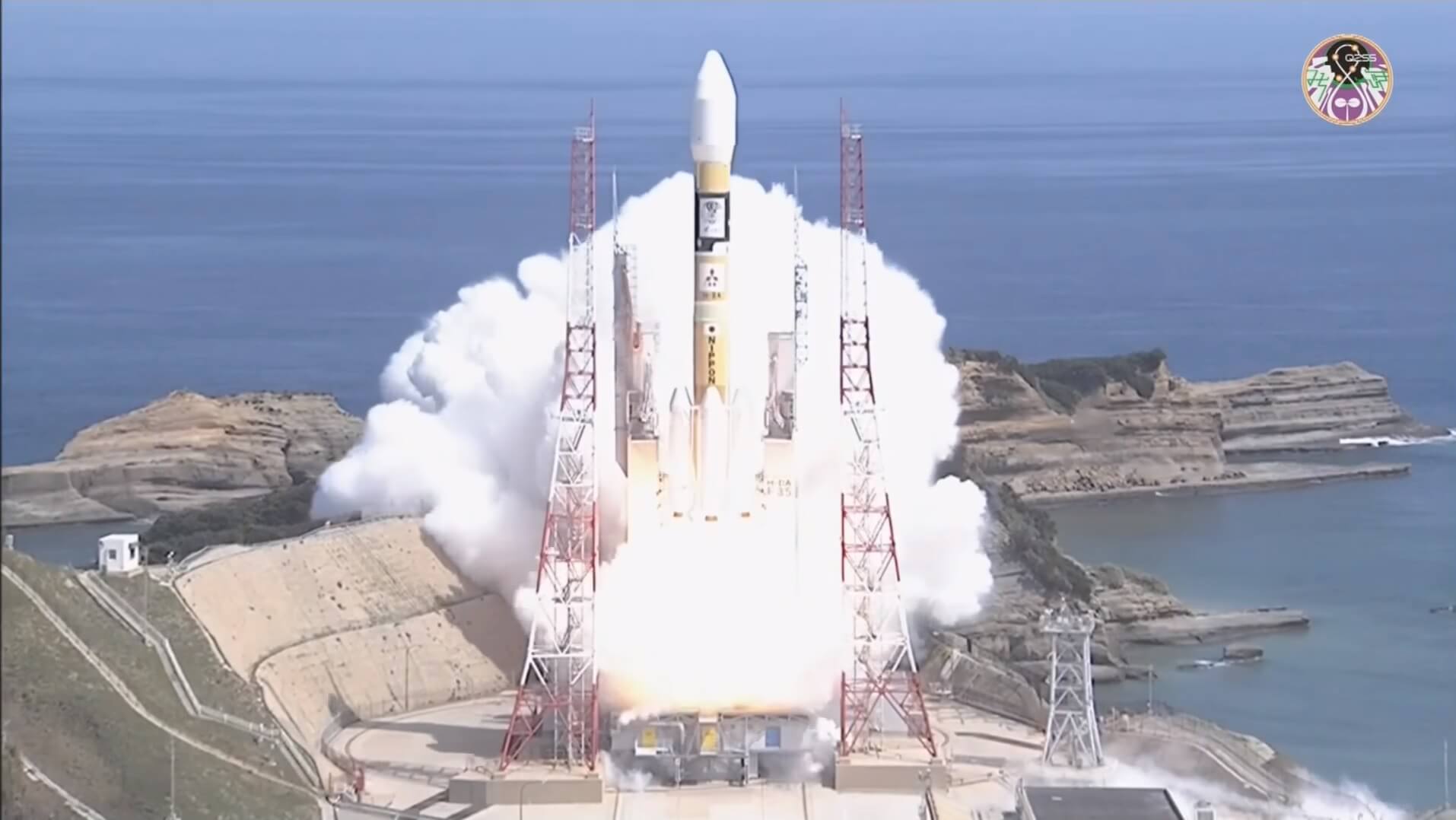
    Inmarsat has successfully launched its first Inmarsat-6 satellite, I-6 F1, by Mitsubishi Heavy Industries (MHI) from the JAXA Tanegashima Space Center in Japan.

    The Inmarsat-6s (I-6) are Inmarsat’s first-ever hybrid L- and Ka-band satellites, incorporating increased capacity and new technological advances for ELERA’s transformational L-band services alongside additional Global Xpress (GX) high-speed broadband capacity. Adding to an existing global fleet of 14 geostationary satellites they extend Inmarsat’s commitment to mission-critical services while enabling a new generation of pioneering technologies to connect and sustain the world.

    This launch is the first of seven planned for Inmarsat by 2024 in the company’s fully-funded technology roadmap. Launch success was confirmed by MHI at 15:59 UK time on 22 December following satellite separation from the H-IIA launch vehicle, with successful signal acquisition soon afterward.

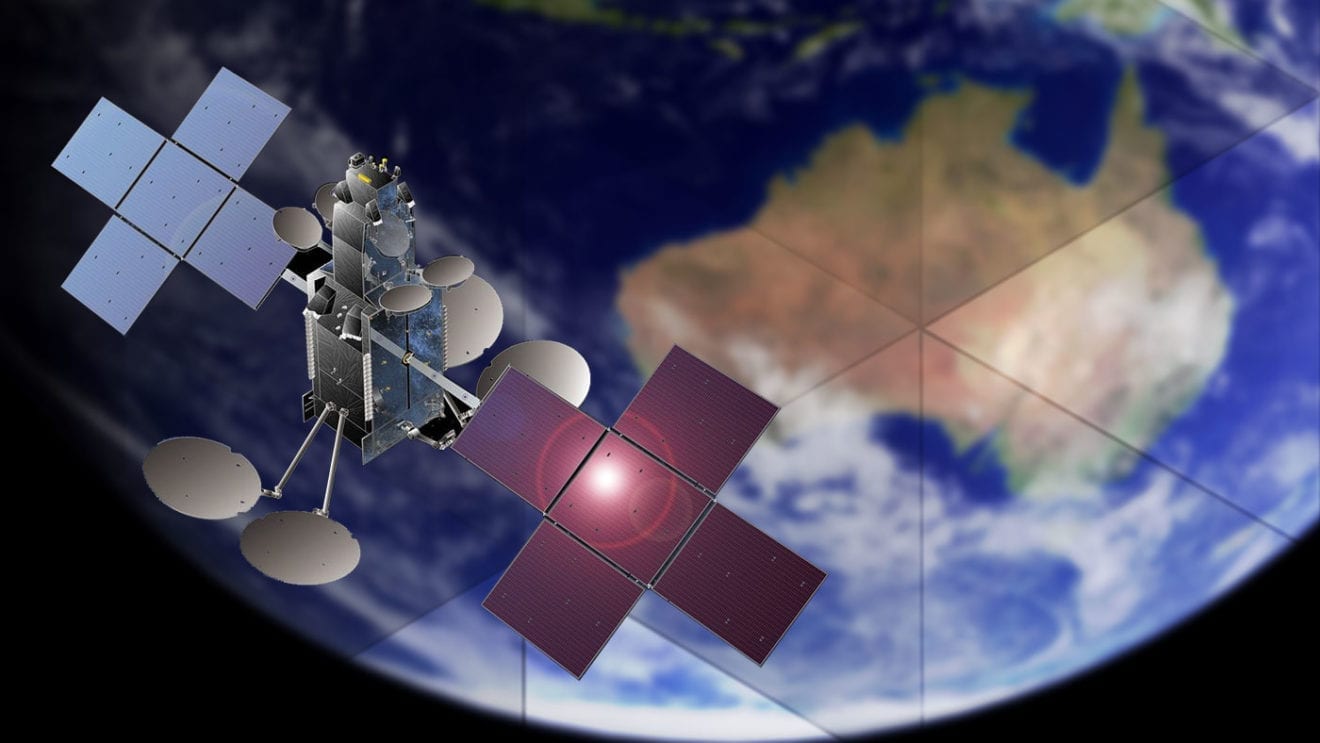
    The most sophisticated commercial communications satellite ever launched, I-6 F1 is comparable in size to a London double-decker bus, with a deployed solar arrays ‘wingspan’ similar to a Boeing 767 and a 9 meter wide L-band reflector that will be deployed over the coming days. The satellite will then be raised to geostationary orbit (GEO) approximately 36,000km (~22,500 miles) above the Earth via its all-electric propulsion system and then undergo a thorough and extensive testing program. I-6 F1 will enter service in 2023. Ground stations in Western Australia will support I-6 F1.

    Rajeev Suri, CEO of Inmarsat, said, “This launch marks Inmarsat’s newest technological leap forward as we maintain our strong commercial momentum and sector leadership. It gives me great pleasure and pride to confirm the successful launch of I-6 F1. This satellite extends our world-leading mobile satellite communications services for our customers and partners, especially in the Indo Pacific region. My warmest thanks and congratulations go to the Inmarsat team that delivered flawlessly on this project as well as our launch provider Mitsubishi Heavy Industries and our satellite manufacturing partner Airbus Defence and Space.”

    The I-6 satellites demonstrate Inmarsat’s ongoing investment and commitment to its global leadership in L-band satellite services to 2040 and beyond for the benefit of mobility customers worldwide. They deliver an enhanced platform for those looking to embrace the next wave of world-changing technologies that ELERA enables, including the rapidly growing Industrial Internet of Things (Industrial IoT) satellite connectivity market segment, by providing dramatically increased network capacity and resilience.

    These new capabilities from the I-6s mean greater capacity and coverage, greater speeds and a greater portfolio of innovative connectivity solutions for ELERA and Global Xpress (GX) networks. The I-6 satellites, like all Inmarsat ELERA and GX spacecraft, are backward-compatible with existing terminals, ensuring that current and future customers will continue to benefit from new advances.

    The I-6s also substantially increase the effective capacity of the network available to ELERA customers with double the beams, 50% more spectrum per beam and double the power of the I-4s, matching customer demand as and where it is needed. They also add further depth in Inmarsat’s global coverage for even greater assurance to customers of the redundancy and resilience of Inmarsat’s L-band network.

  • TRAI releases consultation paper on satellite gateway

    TRAI releases consultation paper on satellite gateway

    Telecom Regulatory Authority of India (TRAI) has extended an invitation to industry stakeholders to gather inputs on a framework for satellite gateways in India. This will facilitate the launch of satellite communication services in India.

    Prior to this, the Department of Telecommunications (DoT) has requested TRAI to furnish recommendations on licensing framework for establishing a satellite gateway. DoT has requested TRAI to address existing limitations in satellite gateway operations as there is no provision regarding the use of gateway by service providers established by a satellite constellation operator.

    The regulator is called to look into factors and make recommendations on entry fee, license fee, bank guarantee, NOCC charges, and other issues which may concern LEO, MEO and HTS systems.

    TRAI has since released a consultation paper to garner inputs by 13 December.