Retail News CRM

Tag: satellite

  • Telkom Indonesia to launch third satellite this month

    Telkom Indonesia to launch third satellite this month

    Telkom Indonesia plans to launch a third satellite in less than two weeks as part of efforts to reduce its dependence on foreign satellites.

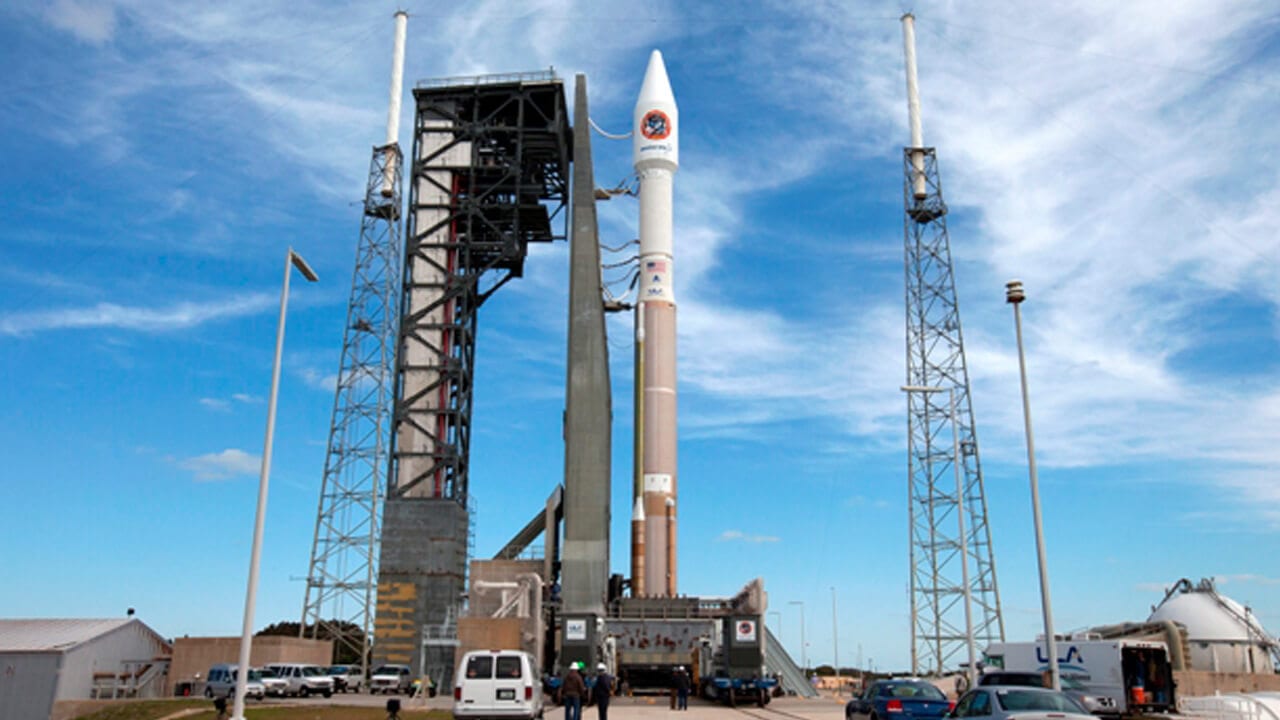
    The state-owned operator will launch the Telkom 3S from the Guiana Space Center on February 14. The satellite was constructed by Thales Alenia Space and will be launched abord Arianespace Europe’s Ariane 5 rocket.

    Once operational the Telkom 3S will carry 24 C band, 8 extended C band and 10 Ku band transponders. The satellite will substitute for the Telkom 3, which failed to reach orbit in 2012, and will take the orbital slot of the current Telkom 2.

    In turn the Telkom 2 will be moved to another orbit, and is expected to remain operational until 2021.

    The Telkom 1 and Telkom 2 satellites have a combined 140 transponders, but according to the report, Telkom said at least 300 transponders are needed to serve the operator’s consumer and business customers. The new Telkom 3S will cut down on the satellite capacity the company needs to source from foreign satellites.

  • NTU Singapore launches seventh satellite

    NTU Singapore launches seventh satellite

    Nanyang Technological University, Singapore (NTU Singapore) has launched its seventh satellite, the AOBA VELOX-III, into space from the International Space Station (ISS) on 16 January.

    It is the first Singapore satellite to be launched from the ISS, the 110-meter habitable human-made satellite that orbits the Earth. Unlike the conventional way of launching a satellite directly into space from a rocket, the two-kilogram VELOX-III was shot into orbit around the earth using a special launcher by a Japanese astronaut at the ISS.

    The AOBA VELOX-III is a joint project between NTU and Japan’s Kyushu Institute of Technology (Kyutech), one of Japan’s leading universities for satellite research and engineering. It is now orbiting 400 kilometers above Earth and will be conducting several tests, including the made-in-NTU micro-propulsion system, a new wireless communication system developed by Kyutech and experiments to evaluate the durability of commercial off-the-shelf microprocessors in space.

    “The successful deployment of the AOBA VELOX-III is a testament to the strong satellite engineering expertise at NTU. Building up the local satellite talent pool and developing disruptive technologies like the micro-thruster in the AOBA VELOX-III is important for Singapore’s budding space industry,” said Lim Wee Seng, director of the NTU Satellite Research Center.

    He said the NTU will now be developing its second joint satellite with Kyutech, which could lead to small and maneuverable satellites being used as space probes in future.

    Professor Mengu Cho, Director of Kyutech’s Laboratory of Spacecraft Environment Interaction Engineering, said the launch of AOBA VELOX-III is the tangible result of research collaboration between Kyutech and NTU for the past three years. AOBA VELOX-III is an important milestone in the Japan-Singapore inter-university space exploration.

    “We are looking forward to another joint satellite that is under development and scheduled to be launched in 2018. The long-term goal of the Kyutech-NTU joint space program is to do a lunar mission using the technologies demonstrated by these two satellites.”

    Professor Yoon Soon Fatt, Chair of NTU’s School of Electrical and Electronic Engineering, said conducting real satellite missions are key to training local talents for Singapore’s future satellite industry.

    “Satellite technology is a field that requires strong expertise across several disciplines, from power systems and batteries to integrated circuits and wireless communications,” he said.

    “The actual designing, building and operating real satellites in space gives a huge boost to the learning journey of our students and is an unparalleled experience for those seeking careers in the space industry.“

    Lim added that these space experiments by AOBA VELOX-III will enhance the university’s satellite building capabilities, paving the way for the next generation of nanosatellites that are more advanced and reliable.

  • Australia’s second NBN satellite targets remote areas

    Australia’s second NBN satellite targets remote areas

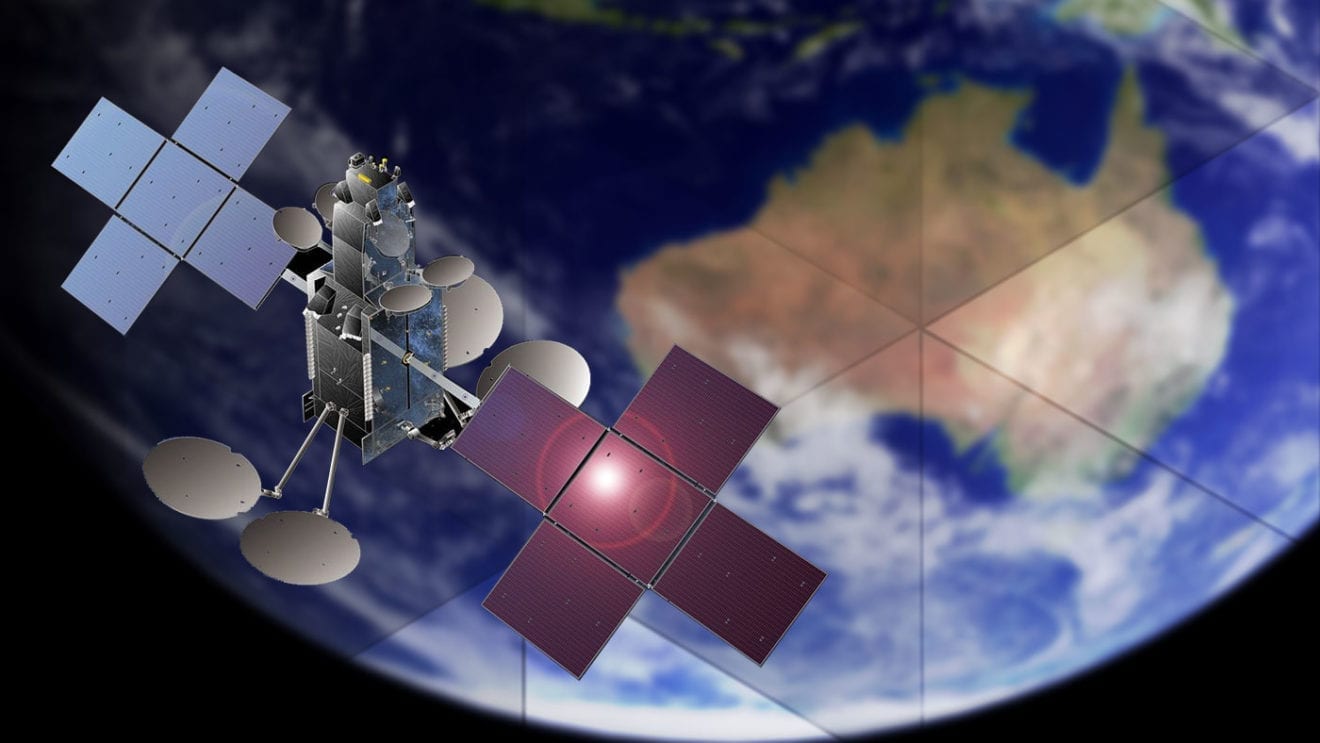
    Last week’s successful launch into orbit of the second broadband satellite of Australia’s national broadband network, Sky Muster II, is expected to provide fast broadband services for rural and remote areas in the country.

    An estimated 400,000 Australian homes and businesses are set to benefit.

    “This service is already helping to improve healthcare outcomes by connecting remote patients to city specialists, delivering access to a new world of educational opportunities for kids in the bush and increasing productivity for local small businesses,” said nbn’s CEO Bill Morrow.

    “We are ensuring that no Australian is left behind by providing access to fast broadband for those who need it the most,” he added.

    Minister for Communications Mitch Fifield and Minister for Regional Communications Fiona Nash welcomed the launch, saying it will help bridge the digital divide between the cities and the country.

    The Australian government has invested $2 billion in two purpose-built broadband satellites and a network of ground stations that make up the Sky Muster service. The first satellite, Sky Muster, was launched in October last year.

    “Services went live in April this year and already, almost 31,000 homes and businesses are experiencing the benefits of nbn’s world-class satellite broadband,” Fifield said.

    The satellites are expected to revolutionize many services that rural Australians rely on, such as distance education for students in remote areas, and will be a game changer for rural business and agriculture.

    “As a farmer from rural NSW myself, I know how crucial fast and reliable broadband is for rural, regional and remote Australia,” Minister Nash said.

    The satellites offer download speeds of up to 25 Mbps and upload speeds of up to 5 Mbps. With a total capacity of 135 Gbps, the new satellites are a vast leap forward from the 4 Gbps of capacity provided by the previous government’s interim satellite service.

  • LeoSat pre-signs first customer for LEO network

    LeoSat pre-signs first customer for LEO network

    Low-earth-orbit satellite network operator startup LeoSat Enterprises has signed up its first customer – a globally operating financial trading company.

    LeoSat is building a constellation of up to 108 low-earth-orbit communications satellites that aim to provide fiber-like speeds with lower latency than traditional satellite and terrestrial networks.

    The financial trading company customer plans to take advantage of this low latency to improve its automated algorithmic trading efficiency.

    LeoSat can offer an average round trip latency of less than 93ms from London to Tokyo and under 119ms from Singapore to London, by using optical inter-satellite links to create fiber-like symmetry at Gigabit speeds.

    Data is also encrypted and secured from end-to-end across the network, with no terrestrial touch points to expose the data.

    “We are excited to be in a position to announce our first customer almost four years ahead of the commercial launch of our system and while doing so, also venture into a market sector where traditional satellite systems have never had any suitable product offering,” LeoSat chief commercial officer Ronald van der Breggen said.

    “In addition to it being proof of our claim to be a game changer in the satellite communication industry, we take this customer contract as a very strong endorsement of our plans to offer global, low-latency, high-throughput satellite capacity, using a Low Earth Orbit constellation.”

    He said the company has already seen a high level of interest from the finance, enterprise, government and energy sectors ahead of the planned launch.

  • VNPT launches mobile satellite services

    VNPT launches mobile satellite services

    Vietnamese military-run operator VNPT has launched mobile satellite services via subsidiary VinaPhone.

    The operator has signed an agreement with Thuraya to expand its coverage to 100% of Vietnam’s territory – as well as two thirds of the world – by utilizing the Thuraya network.

    Thuraya will provide its land and maritime handsets for the services, which will allow postpaid customers to make voice calls send SMS and use GPS.

    Services will be offered for consumers and government agencies as well as enterprise customers, particularly those in the mining, fishey, transport, construction and tourism industries.

    In the initial launch phase VNPT will introduce Thuraya’s XT-Lite satellite handsets and the SF2500 maritime communication system. The latter product supports voice capabilities, crew calling, GPS tracking, geo-fencing and SMS services..

    “The launch of mobile satellite services confirms our dedication to the primary mission of VNPT, consolidating technology to serve the needs of society,” a VNPT representative commented.

    “The mobile satellite service marks a significant step for the VNPT VinaPhone mobile network, allowing it to cover all of Vietnam, thereby eliminating communication black spots.”

    VNPT’s Vinaphone was the first mobile network to cover all provinces and cities across Vietnam in 1999, and to cover all districts in 2006.

  • Myanmar taps Intelsat for satellite backhaul

    Myanmar taps Intelsat for satellite backhaul

    Myanmar’s Ministry of Transport and Communications has arranged to use two Intelsat satellites to improve wireless broadband connectivity for the nation and expand broadband access for businesses.

    The multi-year, multi-transponder agreement will allow the government to significantly enhance its own network and help mobile operators achieve their 2G and 3G deployment goals, the parties said in a statement.

    This will hasten the expansion of high-speed wireless broadband connectivity for businesses and communities nationwide.

    Under the agreement, the ministry will use C-band satellite services over the Intelsat 902 craft for VSAT network and cellular backhaul services, and move to the higher-power services on the recently-announced Intelsat 39 satellite by 2018.

    “Over the past few years, Myanmar has made significant strides in expanding access to faster and more reliable broadband connectivity throughout the country,” the ministry’s permanent secretary Khin Maung Thet said.

    “With the help of Intelsat’s Globalized Network, we will leverage their satellite solutions to extend 2G and 3G communications services beyond urban centers and ensure that all of our citizens have access to higher bandwidth, superior quality and more affordable mobile broadband connectivity.”

    Intelsat CEO Stephen Spengler added that the satellite services “will help enrich the lives of the communities [the government] serves by improving medical and educational access, providing a lifeline during times of crisis and enabling Myanmar to foster strong relationships within and outside of the country.”

  • Philippines’ first microsatellite lifts off

    Philippines’ first microsatellite lifts off

    The Philippines’ first microsatellite, Diwata-1, was launched into space last week from the National Aeronautics and Space Administration in Camp Canaveral, Florida.

    Department of Science and Technology (DOST) Secretary Mario G. Montejo said that Diwata-1’s launch into space would enable the government to generate real-time data that will help the country improve its disaster response mechanisms.

    “The satellite will also aid the rest of the country in terms of agriculture and tourism, with the satellite giving data that will help farmers decide what crops to plant and where, while also capturing the country’s natural wonders,” Montejo said.

    A 50-kg imaging satellite,Diwata-1 was assembled by nine young Filipino engineers stationed in Tohoku and Hokkaido University over the last 14 months. IT has four specialized cameras for imaging weather patterns, agricultural productivity, and land and water resources.

    Diwata-1 is expected to be in orbit for approximately 20 months, taking images twice daily. And while it is still in orbit, its sister Diwata-2 will be launched late 2017 or early 2018.

    Diwatas 1 and 2, and the ground station called the Philippine Earth Data Resources Observation (PEDRO) are part of a three-year, 40.82-million peso ($18.1 million) microsat program.

    In 2014, the Philippine government through the DOST embarked on a research program to develop the necessary local expertise in space technology and allied emerging fields in science and engineering.

    The flagship project of this program is the PhilMicrosat Program handled by several departments at the University of the Philippines and DOST’s Advanced Science and Technology Institute. The program also has two partner universities in Japan where the Diwata engineers are taking their higher studies.

    Along with the microsatellite development is the installation of the satellite ground receiving station in Subic, Zambales that is tasked to receive DIiwata-1 imagery, including other images from selected commercial satellites.

    Another space-related facility under construction is the UP Diliman Microsatellite Research and Instructional facility which will be the hub of training for future space technology research and development activities.