Tag: Security

  • VietinBank Securities expects surge in profits

    VietinBank Securities expects surge in profits

    VietinBank Securities targets pre-tax profits of VND180 billion ($7.8 million) this year, up 20 percent from 2020, as the stock market continues to rise.

    The company secured a $30-million loan from a consortium of four Taiwanese banks in March and another $60 million from Korea’s Woori Bank and Taiwan’s Fubon Bank and Cathay United Bank a month later.

    It is its highest profit target since 2017, with CEO Tran Phuc Vinh explaining that the low deposit interest rates which are diverting funds into the stock market, and the increasing number of new investors are the factors for the optimism.

    The loans provide it with funds for margin financing and investing in corporate bonds and certificates of deposit, Vinh said.

    It reported a 20 percent rise in revenues to VND610 billion last year and an 8 percent increase in pre-tax profits to VND151 billion.

    Vietnam’s benchmark VN-Index has risen 10.5 percent from the end of last year to 1,219.75 points Tuesday. Brokerage FPT Securities forecast that VN-Index could hit 1,351-1,400 points this year.

    The stock market saw nearly 258,000 new trading accounts opened in the first quarter, accounting for 65 percent of the figure recorded in 2020 as a whole, according to the Vietnam Securities Depository (VSD).

    This took the total number of accounts to nearly 3.02 million as of last month, equivalent to 2.8 percent of Vietnam’s population.

  • IronNet Cybersecurity adds new integrations to Collective Defense Platform

    IronNet Cybersecurity adds new integrations to Collective Defense Platform

    IronNet Cybersecurity, the leader in network detection and response and collective defense, announced new integrations with leading cloud, endpoint, and firewall platforms. These integrations enhance and expand the benefits of IronNet’s Collective Defense Platform for security operations teams.

    New capabilities in this release include integrations with:

    • Amazon Web Services (AWS): Adding new IronNet sensors that enable customers to leverage IronNet’s Collective Defense Platform to secure their AWS deployments.
    • Crowdstrike Falcon EDR: Enabling security analysts to seamlessly investigate threats detected by IronNet from the network to the host, and to contain compromised hosts.
    • Palo Alto Networks Strata Next-Generation Firewalls Native Response: Enabling security teams to generate firewall responses and stop threats detected by IronNet.
    • ZScaler Nanolog Streaming Service (NSS) Analysis: Enabling IronNet customers to apply IronNet’s IronDefenseⓇ NDR behavioral detection to HTTP/HTTPS logs.
    • Microsoft Office 365: Adding IronDefense behavioral detection of malicious login attacks targeting Microsoft’s productivity SaaS suite.

    In addition to these integrations, the new release includes:

    • New User & Entity Behavior Analytics (UEBA) to detect identity- and authentication-focused attack techniques.
    • Improved lateral movement and port-scanning detection.

    “The ability to correlate cloud, network, endpoint, and other security telemetry data into a richer, more complete picture of a risk-based event helps organizations more effectively evaluate and mitigate a threat. And that is the real value that network intelligence and threat analytics solutions like IronNet offer,” said Christopher Kissel, Research Director, Security & Trust Products, IDC. “IronNet’s additional capability to share information anonymously across a community of peers and enable security analysts to collaborate on threats is a noticeable differentiator in light of the rise of nation-state level cyber-attacks.”

    This expansion of IronNet’s capabilities continues the company’s momentum of growth in both technology and partnerships. David Lathrop, Vice President of the Utility Strategic Business Unit with Unlimited Technology, Inc., said, “IronNet’s latest release is exactly the kind of ecosystem support that helps us provide the unique, comprehensive cyber solutions we offer through the Enterprise Security Program Review.” Unlimited Technology is a founding partner, along with IronNet, DirectDefense, and Exero, of the ESPR, announced in January.

    “Empowering security teams and maximizing the effectiveness of their security investments against cyber threats targeting their enterprise, industry, or region is core to our Collective Defense mission,” said Don Closser, IronNet’s Chief Product Officer. “Together with our security ecosystem partners, IronNet can offer our customers a true, defense-in-depth approach that helps them reduce time to detection and scale up their ability to respond to cyber threats. This is especially important as factors like digital transformation and expanding supply chains are increasing the threat landscape exponentially.”

  • Trend Micro Announces World’s First Cloud-Native File Storage Security

    Trend Micro Announces World’s First Cloud-Native File Storage Security

    Trend Micro, the leader in cloud security, today announced the world’s first cloud-native, fully serverless file storage security tool for organizations building applications in the cloud. Trend Micro Cloud One – File Storage Security is designed to mitigate threats across the cloud environment and support strict compliance requirements.

    The explosion of cloud-based file and object storage presents a new attack vector for threat actors to target with malicious files. Cloud One – File Storage Security provides automated anti-malware scanning to keep information safe and ease compliance needs.

    “Global organizations are increasingly looking to public cloud providers to drive IT agility, cost savings and business growth. But while the provider deals with security of the cloud, the customer is responsible for everything inside their cloud environment,” said Mark Nunnikhoven, vice president of cloud research for Trend Micro. “This is a highly scalable, automated scanning tool that’s fast to deploy with no added infrastructure, allowing organizations to confidently store cloud files and data associated with their cloud applications.”

    Backed by Trend Micro’s 30+ years of cybersecurity experience and industry leading threat intelligence, the tool blocks known bad files, and looks for hidden or changing malware variants.

    The scanner itself is a lightweight, cloud-native serverless function that’s designed for minimal operational overhead. This architecture enables fast, seamless deployment and flexible integration with organizations’ existing custom workflows for added value.

    The tool supports various compliance requirements that call for anti-malware scanning of cloud files while maintaining data sovereignty.

    Trend Micro Cloud One – File Storage Security is available now for AWS S3, with support for Microsoft Azure Blob storage and Google Cloud Storage coming soon.

    Using Trend Micro’s Cloud One platform, teams can implement a range of security services and compliance checks without hindering agile cloud development and deployment. This single cloud-native security seamlessly complements and integrates with existing AWS, Microsoft® Azure™, VMware®, and Google Cloud™ toolsets.

  • Bkav exports security cameras to US

    Bkav exports security cameras to US

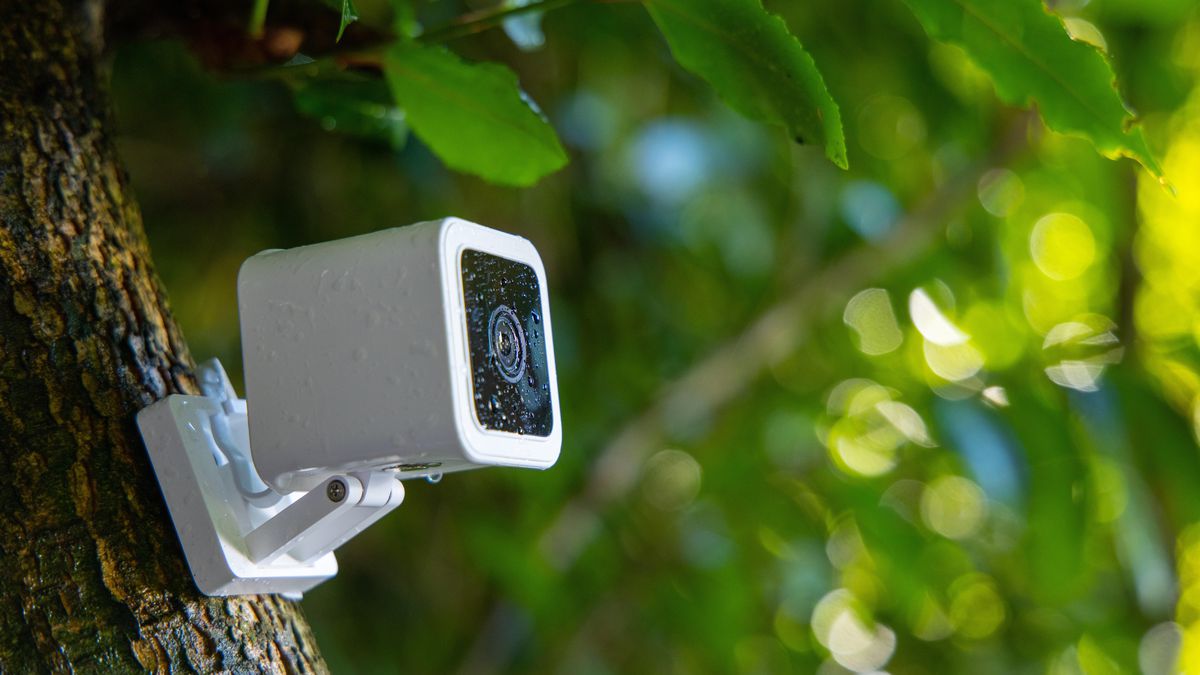
    Cybersecurity firm Bkav has exported its first batch of security cameras to the U.S., furthering its ambition to become a top-five camera manufacturer worldwide.

    Its AI View security cameras will be installed at the headquarters of technology giant Qualcomm Incorporated in California, Bkav said in a statement.

    “From here, we have the foundation to further develop in this market, aiming at becoming a Top 5 camera manufacturer in the world,” said Tommy Le, Bkav Vice President of Business Development in the U.S.

    The Bkav cameras are capable of recognizing faces, doing headcounts, measuring social distancing, determining whether someone is wearing a face mask or not, finding a parking spot, detecting fires, and unauthorized intrusions.

    The company says its cameras are priced around 20 percent lower than similar products of famous European manufacturers.

    Bkav is currently working on a series of camera projects in India, Mexico, Malaysia, and Vietnam.

    Another batch of AI View cameras are set to be installed in a large park in the U.S. by the end of the year, the company said.

  • Google adds new “high visibility” security alerts

    Google adds new “high visibility” security alerts

    Google published a blog on Wednesday explaining how the company plans on using a new process to alert Google Account subscribers when a serious security issue pops up. Back in 2015, Android alerts were used to notify people when they had a security issue with their Google Account. This notification would appear if someone’s account was, for example, hacked. With the new notifications, Google saw a 20-fold increase in the number of users who responded to them within an hour of their receipt compared to those who received word of a security issue via email.

    Soon, Google says that it will release a new security alert that will surface on whichever Google app that the user has open and it will help him address a problem. These new alerts cannot be spoofed so if one shows up on a Google app, the user can be sure that it is genuine. This feature will be rolling out on a limited basis over the next few weeks with a broader distribution expected to begin early in 2021.

    Google also announced today that it has added a new Guest mode for Google Assistant. With Guest mode, you can use a simple voice command to save your Assistant interactions somewhere else instead of on your device. You can also turn off Guest mode at any time to get the full personalized version of Google Assistant back again. You can also use your voice to delete what you just said to Google Assistant. And the latter will now instantly answer more questions about privacy and security.

    Google says, “To make it easier to control your privacy, you’ll soon be able to directly edit your Location History data in Timeline by adding or editing places you’ve visited with just a few taps, and because Search is the starting point for so many questions, starting today we’ll display your personal security and privacy settings when you ask things like “Is my Google Account secure?”

    Google claims to block over 100 million phishing attempts a day; the Google Play Project scans over 100 million apps daily looking for malware and other problems.

  • Assa Abloy plans 500 Yale Smart Shop franchise stores across Asia

    Assa Abloy plans 500 Yale Smart Shop franchise stores across Asia

    Locks and security-solutions company Assa Abloy plans to expand its Yale Smart Shop franchise network to 500 stores across Asia after a successful pilot in Toa Payoh, Singapore.

    The company has launched a franchise program for Yale Smart Shop with a new store in Tiong Bahru, Singapore.

    The store-in-store retail concept includes modular display cases which are geared for rapid deployment in new stores, the company said in a statement. The e-commerce platform fully supports a scalable yet sustainable business model to translate offline experiences into online purchases.

    To ensure a consistent brand experience and smooth launch and operations at new locations, all franchisees will receive a Yale Smart Shop playbook, a store operator starter kit, and comprehensive training at the pilot store in Singapore.

    “During the first few months, franchisees will receive all the support they need to build awareness in their neighborhood and local area,” said Patrick Ng, GM at Assa Abloy Singapore.

    “We are very encouraged by the record-breaking results recorded at the pilot store in Singapore and look forward to significantly growing the Yale brand and e-commerce sales across the Asia-Pacific region over the next two years,” he added.

    Adding to the eight Yale Smart Shops across five countries already operational in Asia Pacific, Assa Abloy plans to open 100 stores this year and add 400 stores by the end of next year.

  • Google brings iPhone support for an important security feature

    Google brings iPhone support for an important security feature

    In the age of digital security, two-factor authentication, or 2FA, is one of the most important lines of defense against a wide array of cybersecurity issues. Recently, Google released an update to let iPhone users take advantage of this tech a lot more easily.

    Need a refresher on what 2FA is? Basically, it’s a security system that requires two different authentication mechanisms to bypass, which are often based on something you know or have, such as a password or security key. Over decades, this technology has been integrated neatly into our lives, as the PIN code on your ATM card, perhaps, or, more recently, as those ubiquitous codes texted to you whenever you do basically anything.

    Several years ago, Google announced a new way of using 2FA, where your phone can act as its own security key, or one of the two factors you need to unlock your account. You might have run into this system if you’ve recently tried to reset your Gmail password from your computer—you were probably able to reset it just by interacting with a notification on your phone. The system is super simple, easy to use, fast, and secure.

  • Qualcomm unveils world’s biggest fingerprint sensor for smartphones

    Qualcomm unveils world’s biggest fingerprint sensor for smartphones

    Qualcomm was the first company to introduce an under-display ultrasonic fingerprint scanner, the 3D Sonic Sensor, the same piece of technology that’s now embedded under Samsung Galaxy S10’s stunning display.

    Fast forward one year and the US company announced an upgrade to its last year ultrasonic fingerprint scanner, the 3D Sonic Max, which promises to accurately scan a fingerprint in three dimensions.

    Unlike the first iteration that only allows users to scan one fingerprint, the 3D Sonic Max lets you scan two fingerprints at the same time. 3D Sonic Max, the latest version of Qualcomm’s ultrasonic fingerprint sensor offers a recognition area that is 17x larger than the previous generation, allowing for increased security via simultaneous two-finger authentication, increased speed and ease of use.

    This makes the 3D Sonic Max the world’s largest fingerprint sensor and also the first in the world to enable two-finger authentication. On top of that, 3D Sonic Max promises to deliver 1::1,000,000 rather than 1::50,000, which should prevent fingerprint spoofing and inaccurate results. Qualcomm also claims that its new fingerprint sensor is faster than the previous generation, but doesn’t say by how much.

    We have yet to learn which handset makers will implement Qualcomm’s new fingerprint sensor into their phones, but it looks like Samsung might be one of its clients.

  • Trend Micro Named a Leader in Endpoint Security

    Trend Micro Named a Leader in Endpoint Security

    Trend Micro, a global leader in cybersecurity solutions, today announced that it was cited as a leader with the second-highest score in the current offering category in The Forrester Wave™: Endpoint Security Suites, Q3 2019 report.

    In reference to Trend Micro, Forrester remarked that: “[Their] endpoint security offerings span the full gamut of threat prevention and detection, with market-leading capabilities in both categories. Extensive services are also offered, including MDR services for network, endpoints, messaging, cloud workloads, and servers.”

    Trend Micro received the highest possible score for Corporate Vision and Focus (a criterion under the Strategy category), which Trend Micro believes is a recognition of its stable leadership, innovative technology and high-quality product management and development.

    “The bullseye for cyber threats is corporate endpoints, making security solutions in this area a crucial component of any enterprise risk management strategy,” said Wendy Moore, vice president of product marketing for Trend Micro. “That’s why we’re delighted to be recognized as a leader in endpoint security. We believe it’s proof that Trend Micro has the strategy, the resources and the range of market-leading capabilities to suit any organization.”

    Modern technology can transform endpoint security. With the future of endpoint security in mind, Trend Micro has enhanced its proposition with the release of Apex One, the evolution of its advanced endpoint security offering. Apex One offers a comprehensive blend of cross-generational threat defense capabilities from a single, easy-to manage agent — available as SaaS or on-premises.

    Although critically important, the endpoint is just one piece of the cybersecurity puzzle. That’s why Trend Micro offers these security capabilities as part of a Connected Threat Defense strategy, which ensures each IT layer shares intelligence to enhance visibility and real-time threat protection and response.

    In the report, Forrester pointed out that, “Its Connected Threat Defense architecture provides integrated threat intelligence and control over an extensive portfolio of email, endpoint, network, cloud, and security products aimed at enterprise buyers.”

    “Trend is well-positioned for large or small organizations looking for a complete endpoint security suite, especially those with complex deployment requirements,” it concluded.

  • WhatsApp close to adding fingerprint locking feature to Android app

    WhatsApp close to adding fingerprint locking feature to Android app

    WhatsApp is quietly testing new ways to make its mobile app more secure. The latest addition to the Android app could be the fingerprint locking feature, which is now being tested in the beta channel.

    WhatsApp has been working on the fingerprint locking feature for quite a few months now, but the new function is not yet ready for prime time. Previously known as Authentication or Screen Lock, the new feature can be enabled from the Settings menu under the Account / Privacy tabs.

    Keep in mind though that you will still be able to reply to messages directly from notifications, as well as answer WhatsApp calls since the app will only ask you for authentication when you want to open WhatsApp.

    Fingerprint lock will also allow users to choose when they must authenticate to use the app, but they can also choose when exactly WhatsApp will automatically lock after use: immediately, after 1 minute, after 30 minutes.

    For the time being, the new feature is available only in WhatsApp for Android beta, although you need version 2.19.221 or newer to find it in the Settings menu. If everything goes well during tests, Fingerprint Lock might be deployed to all Android users in the next couple of weeks.

  • ZTE opens first cybersecurity lab in China

    ZTE opens first cybersecurity lab in China

    ZTE has launched the first in a series of planned dedicated cybersecurity labs aimed at reassuring customers of the security of its solutions, and developing end-to-end security products and services.

    The new lab in Nanjing, China will help ZTE provide customers with end-to-end security products and services.

    It also aims to help ZTE increase transparency and enhance trust with all third parties, including customers and global regulators, in light of the national security concerns that are prompting several countries to ban the use of equipment from Chinese vendors in 5G rollouts.

    The lab will provide security assessment and audit services such as source code review on ZTE products including 4G and 5G solutions.

    It will also offer security design audit, procedural document review, black box testing and penetration testing services, and facilitate research and development collaborations with other industry stakeholders and academia.

    Moving forward, the company plans to collaborate with major security organizations to jointly conduct security assessment, certification, training and consulting.

    Following the establishment of the Nanjing lab, ZTE plans to also launch cybersecurity labs in Italy and Belgium respectively in the near future as it builds out a global network.

    “The security lab is an open and cooperative platform for the industry,”  ZTE CSO Zhong Hong said during a speech at the opening of the new lab.

    “ZTE plans to gradually achieve the cybersecurity goals through three steps: first, meeting the requirements of cybersecurity laws, regulations and industry standards as well as certification schemes; second, conducting an open dialogue to enhance transparency and establishing cooperation with customers as well as regulatory agencies; and third, sustaining the open cooperation mechanism to contribute to cybersecurity standardization.”

  • Amazon’s Alexa Guard Arrived to Guard your Home

    Amazon’s Alexa Guard Arrived to Guard your Home

    Even though music streaming remains the primary use case for Amazon and Google’s insanely popular smart speakers, it goes without saying Alexa and Google Assistant can do many other cool, innovative, and practical things simply by listening to your voice. The Echo lineup arguably maintains its superiority in the living room, hiding plenty of neat smart home tricks up its sleeve, the latest of which is specifically designed to keep an eye on things while you’re away.

    Formally unveiled way back in September and made available by invitation only a couple of months after that, the very ingenious Alexa Guard feature is now rolling out more widely in the US at last. All you have to do to activate this functionality is remember to say “Alexa, I’m leaving” every single time you exit the premises of your house and want your digital assistant to keep its virtual ear to the ground.

    After setting Guard to “away mode” with the aforementioned magic phrase, your Echo device will stay alert and send notifications to your phone if it detects the sound of smoke alarms, carbon monoxide alarms, or glass breaking. Obviously, you shouldn’t panic as soon as you get a “smart alert”, and instead try to determine if the danger detected by Alexa is actual cause for concern by listening to a 10-second audio recording from your house or even “drop in” on your Echo remotely to check exactly what its microphone is picking up.

    By no means a replacement for a real security system, Alexa Guard can enhance the capabilities of popular setups from Ring and ADT, while also working in tandem with connected smart lights to discourage burglary attempts. Most importantly, the feature naturally doesn’t cost a thing. The latest version of the mobile Alexa app lets you enable it from the “Settings” menu, where you’ll find a Guard-dedicated subsection containing simple step-by-step setup instructions.

  • Spectrum cash grabs could hinder 5G’s potential

    Spectrum cash grabs could hinder 5G’s potential

    Poorly designed 5G spectrum auctions could seriously hamper the potential of the 5G era before it even begins in earnest, the GSMA has warned.

    A new Auction Best Practice by the industry body highlights some key concerns from recent 4G and 5G spectrum allocations, including a trend towards governments artificially inflating spectrum prices.

    This could have the effect of limiting subsequent network investment, thus harming consumers and delaying the potential of 5G from materializing.

    The GSMA has also outlined policy recommendations for governments including ensuring that the top priority for spectrum auctions is supporting affordable, quality mobile services for consumers.

    According to the regulator, spectrum auctions are not always suitable and should not be the only award process considered.

    Where an auction model is used, the auction design should not create unnecessary risk and uncertainty for bidders and should include adequate lot sizes with flexible packages of the spectrum.

    GSMA Intelligence estimates that the socio-economic impact of 5G will be $2.2 trillion over the next 15 years. But these benefits will depend on a favorable regulatory and policy environment for 5G.

    “Auctions can and do fail when poorly designed. We’re seeing a worrying trend of badly run spectrum awards that could seriously impact the potential of 5G before we get started. It’s time for policymakers to work more closely with stakeholders to enable more timely, fair and effective awards,” GSMA head of spectrum Brett Tarnutzer said.

    “This is a crucial time in the development of 5G. Spectrum is an essential to fuel for mobile networks and its ineffective use will only lead to bad consequences for consumers. The most important objective of awarding frequencies should not be about making the most money, but rather about ensuring consumers benefit from the best mobile connectivity.”

  • WhatsApp is now rolling out a renewed privacy feature

    WhatsApp is now rolling out a renewed privacy feature

    Groups are a vital part of WhatsApp, although as the Facebook-owned messaging platform has grown in popularity so has the number of unwanted group chats. But today, after testing them for a while on iOS, WhatsApp is rolling out new privacy settings which should help control this.

    Until now, group admins could add any WhatsApp user to a group without needing their consent – the only requirement being that the user is a contact in the admin’s phone. As part of this latest rollout, though, WhatsApp users will now be able to choose which people can add them to groups.

    In order to access the new feature, users need to simply head over to the Settings menu within WhatsApp and tap Accounts. Then a quick tap on Privacy and later Groups will present users with the choice of three options: ‘Everyone,’ ‘My Contacts,’ or ‘Nobody.’ Each one is pretty self-explanatory with ‘Nobody’ meaning users will have to approve every single group with ‘Everyone’ allows users to leave their group invitations completely open, as they are today.

    WhatsApp’s latest privacy feature will begin rollout out today to a select number of users before expanding globally across the coming weeks.

  • Google continues to improve the security and privacy

    Google continues to improve the security and privacy

    Google today released its annual security and privacy report, looking back at 2018. In the report, Google says that it has a three thronged approach to Android security. It uses layered security that all work together to protect the operating system and apps. Transparency creates openness and trust, says Google. Taking a shot at the walled gardens of iOS, the report states “closed platforms lead to distrust and a dangerous false sense of security through obscurity.” The third part of Android security is called Backed by Google and means that Android is backed by world-class professionals in computer science and security who bring expertise in AI, cloud security, identity management and more.

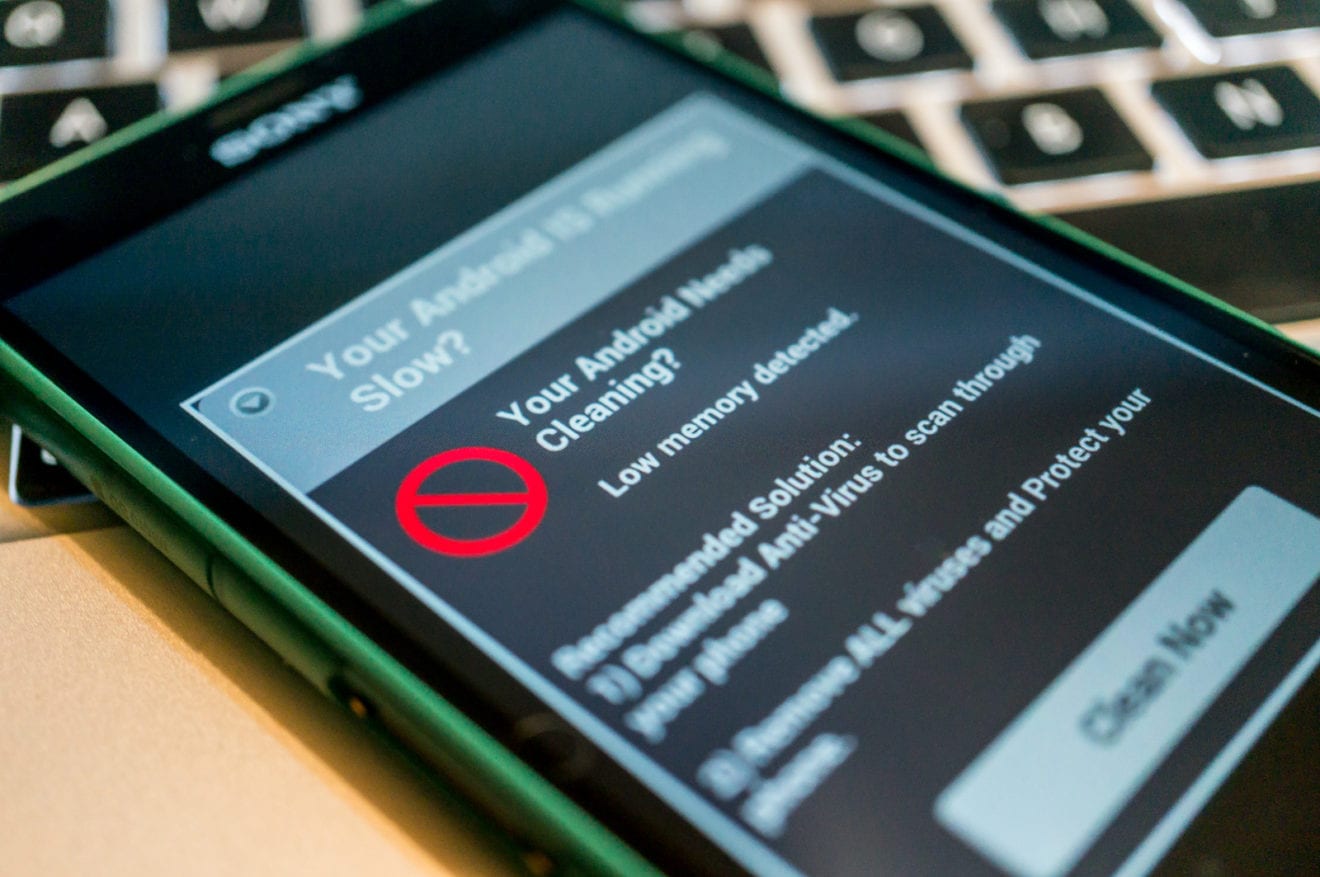
    Android’s native defense system, called Google Play Protect, scans all apps on a device looking for Potentially Harmful Applications (PHAs). Google says that last year, only 0.08% of Android devices that exclusively use the Google Play Store to install apps were affected by PHAs. Android devices that sideloaded apps from outside of the Google Play Store were affected by PHAs more than eight times as often, or at a rate of .68% But even those phones with sideloaded apps installed saw 15% fewer issues with malware than seen in 2017. In 2018, Google says that .45% of all devices running Google Play Protect had installed a PHA compared to .56% the year before. That represents a 20% decline year-over-year, which Google calls an “improvement to the health of the Android ecosystem.”

    In the five largest Android markets, Google saw PHAs installed at a lower rate year-over-year in three of them (India, Indonesia, Brazil), while one market was flat (Russia) and one had an increase (U.S.). In the biggest market for Android, India, PHA installation declined 35% as .65% of all Android devices in the country had a PHA installed. Many of these apps were pre-loaded through the supply chain, and were on affected phones right out of the box. In the U.S., the number of Android devices with a PHA installed rose 25% from 0.4% to 0.5%. Most of the malware in the states was malware that ran hidden advertising in the background. This “click fraud” enables those behind these PHAs to collect advertising revenue illegally. Click fraud wasn’t considered a PHA by Google before last year.

    The inclusion of Click Fraud as a PHA led to the doubling of the PHA install rate from Google Play to 0.04% in 2018 from 0.02% in 2017. Remove this category from the data and the number of PHAs installed from the Google Play Store actually declined 31% year-over-year. And Google Play Protect also blocked 1.6 billion PHA installations from being completed last year outside of the Google Play Store.

    As each new build of Android is released, Google improves the security features for its open-source operating system. Last year, .65% of devices running Android 5 Lollipop had a PHA installed compared to .55% for devices powered by Android 6 Marshmallow and .29% for devices using Android 7 Nougat. Phones and tablets running the last two builds, Android 8 Oreo and Android 9 Pie, had PHAs installed on only .19% and .18% of devices, respectively.Every day, Google Play Protect scans 50 billion apps on over 2 billion devices. The feature is now enabled by default on all new Android phones. Last year Google also added notifications that warn Android users when they are installing an app outside of the Google Play Store, and when they are about to install a harmful app. In 2018, Google also started automatically disabling apps that created issues with privacy or had deceptive behavior or content.

    Google also improved its Find My Device feature last year by adding indoor maps so that lost handsets could be found in large buildings like an airport. A work profile can now be used to register for Find My Device, and if a user locks his device remotely, he is prompted to perform a security update.

    Also helping to reduce security issues is Google’s monthly security update program. Working with Android manufacturers, SoC suppliers and carriers, Google has been increasing the number of devices that receive regular security updates. In fact, during the fourth quarter of last year, 84% more devices received a security update compared to the same quarter the previous year. And as of December, 95% of active Pixel 3 and Pixel 3 XL models were running a security update no older than 90 days.As Android turned 10 last year, Google continued to make strides in its efforts to improve Android security and privacy. As long as it can stay ahead of the malicious actors looking to trick users into installing apps that play hidden ads, or steal personal data, the Android ecosystem should get safer every year.