Tag: Security

  • SK Telecom using quantum cryptography for 5G security

    SK Telecom using quantum cryptography for 5G security

    South Korean mobile carrier SK Telecom said it will use quantum cryptography technology to ensure security of its 5G mobile networks.

    The mobile carrier said Monday it has completed applying Quantum Random Number Generator (QRNG) technology of ID Quantique (IDQ), to its 5G subscriber authentication center. The move is designed to prevent hacking and ensure quantum-safe security.

    “The subscriber authentication process is the first and essential step in verifying a mobile device user before he/she is granted access to any voice and video data service, SMS, etc,” SK Telecom said in a statement.

    “Security in this process is crucial since the leakage of authentication key value can lead to serious crimes such as eavesdropping and hacking.”

    In February 2018, SK Telecom invested $65 million into IDQ to accelerate development of quantum technologies for the IoT and telecoms markets.

    SKT plans to expand the use of QRNG in its long-term evolution (LTE) networks in April.

    The mobile carrier will also strengthen security further by applying IDQ’s quantum key distribution (QKD) technology to its 5G and LTE networks between Seoul and Daejeon – the area which has highest mobile data traffic in the country- next month.

    QKD provides cryptographic security based on the laws of quantum mechanics. It enables two parties to produce a shared random secret key known only to them, which can then be used to encrypt and decrypt messages, the mobile carrier noted.

    “As security emerges as one of the most important issues in the 5G era, SK Telecom is determined to provide the most secure 5G network and focus on expanding the ecosystem by developing quantum cryptography technologies,” SK Telecom CTO Park Jin-hyo said.

    SKT will further enhance the safety and security of its mobile networks by expanding the application of quantum cryptography technologies by stages, Park added.


  • Kathmandu suffers a data breach, customers potentially exposed

    Kathmandu suffers a data breach, customers potentially exposed

    An unidentified third-party has breached Kathmandu’s website and potentially accessed customers’ personal information and payment details, the outdoor retailer revealed on Wednesday.

    The business was alerted to the breach, which took place between January 8 and February 12, 2019, through bank fraud monitoring.

    A Kathmandu spokesperson told that the business is currently investigating how many customers are affected by the breach, but that it remains an ongoing process.

    “Whilst the independent forensic investigation is ongoing, we are notifying customers and relevant authorities as soon as practicable,” Kathmandu chief executive Xavier Simonet said.

    “As a company, Kathmandu takes the privacy of customer data extremely seriously and we unreservedly apologise to any customers who many have been impacted.”

    The business has enlisted the help of external IT and cyber security experts to assist in investigating the circumstances, and to confirm which customers have been impacted.

    While the financial impact of the incident is still unclear, the dual-listed retailer saw its stock price fall to $2.31 per share after the announcement, though rebounded to $2.37 by the end of trade.

  • Incheon Airport to add AI to security systems

    Incheon Airport to add AI to security systems

    Never mind airport security, artificial intelligence (AI) may also be rooting through your luggage in the near future at Incheon International Airport. Incheon International Airport Corporation said Wednesday it will incorporate AI into its security systems in a bid to improve accuracy in screening passenger luggage for prohibited items.

    The airport has already started working on the project to develop an AI-based X-ray screening system to be tested in the second half of next year.

    Instead of the existing system that relies on X-ray scanning, manual image checking by security officers and a final physical check, artificial intelligence will crosscheck the X-ray scan and the analysis will be available to officers along with the X-ray image.

    The first-stage AI scan is expected to complement and improve the accuracy of the security check as an officer will continue to be responsible for the final call to physically inspect luggage.

    The airport said it will apply deep-learning technology on over 600,000 pieces of footage of around 20 prohibited items and 20,000 commercially sold liquid products to develop an algorithm for imagery interpretation and improve the AI’s screening accuracy.

    The development project is expected to take two years overall, with a proof-of-concept system to take 10 months to develop.

    “By preemptively incorporating AI technology into security, [we] will strengthen airline security and plan to provide a safer and more convenient environment for passengers,” said Chung Il-young, CEO of Incheon International Airport Corporation.

    This will be the country’s first large-scale practical application of the technology, according to the airport.

    It is part of broader efforts to introduce a “Smart Security System” with the Ministry of Land, Infrastructure and Transport.

    The airport is also planning to introduce a tunnel security search system, the first of its kind, which will allow passengers to simply go through security checks by walking through a tunnel.

    The airport screened around 60 million pieces of luggage last year through the conventional X-ray system and found 3 million prohibited items such as firearms and swords.

  • Vietnam aviation faces safety rating challenge

    Vietnam aviation faces safety rating challenge

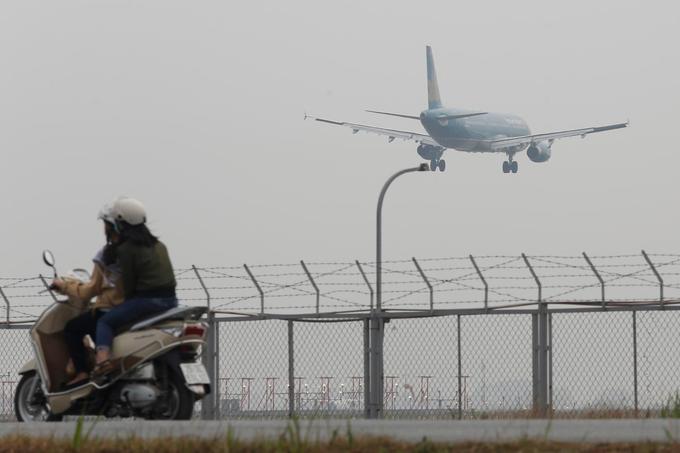
    Vietnam might find it difficult to maintain its aviation safety rating due to a lack of qualified personnel, experts caution. The U.S. Federal Aviation Administration (FAA) Friday gave Vietnam a Category 1 safety rating, allowing local airlines to operate direct flights to the U.S. “Acquiring this rating is hard, keeping it is going to be even harder,” Dinh Viet Thang, head of the Civil Aviation Authority of Vietnam (CAAV) said.

    He said that the CAAV currently has only 30 aviation safety officers, meeting only 30 percent of the demand. They hire the rest from other airlines.

    The U.S. Federal Aviation Administration (FAA) has required that the CAAV has enough aviation safety officers on its own in upcoming years so that it doesn’t need to hire people from outside, and CAAV plans to meet this goal by 2025.

    However, training these officers is costly, with an individual bill costing over VND5 billion ($216,000).

    One of the biggest hiring difficulties is that aviation safety officers are attracted by the higher salaries offered by airlines compared to state-owned companies, Thang said.

    An aviation safety officer at CAAV earns only VND10 million ($432) a month, while local airlines pay them about VND300 million ($12,960).

    “The government gives us VND20-30 billion ($864,000-1.29 million) each year to hire aviation safety officers and VND10 billion ($432,000) to train new ones, but we really need more investment from the government to develop this team,” he noted.

    Another challenge is meeting FAA safety requirements as they conduct unannounced safety examinations. If Vietnam doesn’t meet these requirements, FAA will downgrade the rating to Category 2, meaning no direct flight to the U.S. is allowed.

    This has happened before in Thailand, Indonesia, Philippines and most recently India, he said.

    Local airlines, including state-owned Vietnam Airlines, budget airline Vietjet and new private airline Bamboo Airways, have previously expressed interest in operating direct flights to the U.S.

    Vietnam’s aviation industry has been growing rapidly in recent years. There were 12.5 million air passengers last year, up 14.4 percent from 2017.

    The number of flights in the country grew by 16 percent on average between 2010 and 2017, according to official data.

  • KT Telecop warns people to secure homes for Seollal

    KT Telecop warns people to secure homes for Seollal

    KT Telecop, the security arm under mobile carrier KT, has warned people to be careful leaving their homes empty over the Lunar New Year period. On Tuesday, KT Telecop said most incidents occur during the first day of the holiday period, according to three years of big data it has collected during the Lunar New Year and Chuseok holidays.

    Theft is the most commonly reported issue, accounting for 59 percent of incidents, followed by property damage at 24 percent and fire at 17 percent.

    A spokesperson from KT said travelling families should keep a tight watch on their front doors and windows before leaving the house to prevent crime.

    For those intending to leave the house empty for a long time, KT suggests keeping some lights on at all times so it appears occupied.

  • Vietnam says Facebook violated cybersecurity law

    Vietnam says Facebook violated cybersecurity law

    Vietnam says Facebook has violated its new cybersecurity law by allowing users to post anti-government comments on the platform. “Facebook had reportedly not responded to a request to remove fanpages provoking activities against the state,” the official said, citing the Ministry of Information and Communication. In a statement, a Facebook spokeswoman said: “We have a clear process for governments to report illegal content to us, and we review all these requests against our terms of service and local law.”

    She did not elaborate. The ministry said Facebook also allowed personal accounts to upload posts containing “slanderous” content, anti-government sentiment and defamation of individuals and organizations, the agency added.

    “This content had been found to seriously violate Vietnam’s Law on cybersecurity” and government regulations on the management, provision and use of internet services, it quoted the ministry as saying.

    Facebook had refused to provide information on “fraudulent accounts” to Vietnamese security agencies, the agency said in Wednesday’s report.

    The information ministry is also considering taxing Facebook for advertising revenue from the platform.

    The report cited a market research company as saying $235 million was spent on advertising on Facebook in Vietnam in 2018, but that Facebook was ignoring its tax obligations there.

    In November, Vietnam said it wanted half of social media users on domestic social networks by 2020 and plans to prevent “toxic information” on Facebook and Google.

  • Sarment Holdings, Blackberry join to deliver security for luxury customer

    Sarment Holdings, Blackberry join to deliver security for luxury customer

    Sarment Holding Limited is pleased to announce that it is partnering with BlackBerry to co-develop KEYYES CHAT, a highly-encrypted messaging application to provide identity and overall data security management for Sarment’s rapidly growing ultra-high, and high-net worth user base. The development of KEYYES CHAT will be in conjunction with a series of other security-focused applications which are anticipated to be launched starting in 2019.

    The KEYYES CHAT application has been developed with the BlackBerry Spark Communications Services SDK, which provides end-to-end encrypted chat, voice, video and data transfer functionality. It includes FIPS-validated, app-level, AES 256-bit encryption to ensure data is always protected on a device, across the mobile network and into the enterprise infrastructure.

    “Working in collaboration with BlackBerry was an obvious choice for Sarment, given they have long been regarded as a global leader in secured data and communications. Integrating this technology into Sarment’s digital ecosystem KEYYES is one of the steps we are taking to continue to provide our communities with useful tools they can trust. We started with bookings, purchases, deliveries and now we are adding communication to solve the issue of privacy and data security for our growing user-base. By leveraging BlackBerry’s Spark Communications Services SDK communication technology, KEYYES CHAT users can feel confident that their data and privacy are certifiably secured,” said Will Beattie, Chief Technology Officer of Sarment Group.

    In 2018, Sarment launched a unique offering which has quickly garnered the attention of the luxury industry by migrating its network of consumers and luxury brand partners into a unique digital ecosystem named KEYYES. ​KEYYES works as a curator, service provider and experience planner. Users discover expert insights, purchase curated goods and make bookings at featured lifestyle venues like restaurants, bars, art galleries, spas, wellness retreats, fashion houses, private clubs, automotive showrooms and designer’s workshops. KEYYES is currently available in 5 cities in Asia and the Company is targeting to be in over 20 additional cities worldwide in the next 3 years.

    KEYYES CHAT will be integrated in KEYYES App but will also be available to the general public in a lighter format with the same level of end-to-end encrypted security. It will give users the possibility to discover and be informed about KEYYES world if they are not yet a member.

    “We are extremely excited to be working with BlackBerry to address the cyber security and overall privacy of our users, and look forward to growing the breadth of our technology and specific application portfolio together in the coming months and years,” said Quentin Chiarugi, CEO of Sarment Group. “Sarment plans to migrate all its employees’ communications and its partners using KEYYES CHAT as the only communication tool when the application is launched. We want to showcase to our corporate partners how valuable KEYYES can be for their own employees and their customers.”

    “As more and more of our private lives are shared and conducted online, the need for secure communications is critical,” said ​Alex Thurber, SVP and GM of Mobility Solutions, BlackBerry. “KEYYES delivers a useful service for high-net worth individuals, whose data may be of value to those with malicious intent, and being able to trust in the integrity of the chat system will be a primary decision-making factor for them in considering the service. With the BlackBerry Spark Communications SDK, KEYYES CHAT will allow seamless communication between members, partners and employees while protecting the privacy and security of its users.”

  • Visa Thailand to strengthen security in payment

    Visa Thailand to strengthen security in payment

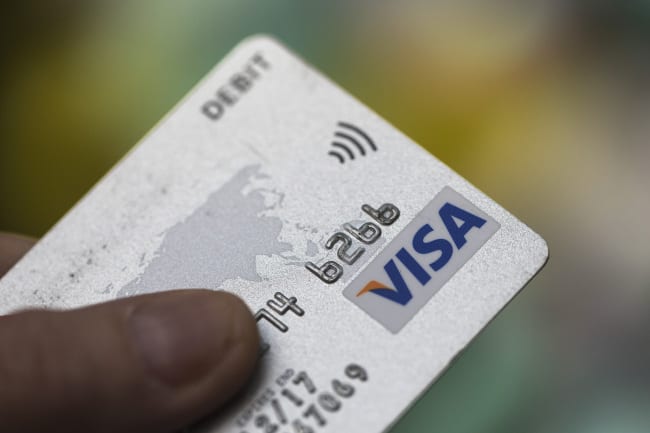
    Visa, the world’s leader in digital payments, has today launched its Future of Security Roadmap for Thailand, outlining a robust approach for strengthening payments security in the country over the next 3 years. Visa’s Roadmap focuses on a number of key initiatives which will enable security to evolve at the same pace as the technologies changing the way we pay. These security initiatives include:

    • Devalue data by removing the sensitive data from the ecosystem and making stolen account details useless.
    • Protect data by implementing safeguards to protect personal data as well as account details.
    • Harness data by identifying potential fraud before it occurs and increase confidence in approving good transactions.
    • Empower everyone, including accountholders, 3rd party providers and merchants, to play an active role in securing payments.

    Suripong Tantiyanon, Country Manager, Visa Thailand said: “We are proud to be launching our Thailand Future of Security Roadmap. Securing the commerce ecosystem is our highest priority and one we view as a shared responsibility between payment networks, consumers, banks, and the government. Technology has enabled new innovative ways to pay and be paid, but it has also brought unique risks. To stay ahead of fraud, we need to work together and give security the same attention and investment as we do the innovations driving new commerce experiences.”

    The release of Visa’s Roadmap comes at a time of rapid change for payments in Thailand with innovations such as mobile payments set to enhance the payment experience for consumers. According to Visa’s Consumer Payment Attitudes Study, security remains a key consideration for consumers across Southeast Asia with two-thirds (67 percent) concerned about the safety of their personal information when using their mobile phone to make payments.

    When asked specifically about what their top three concerns were when using their mobile phones to make payments, consumers in Thailand said losing my phone or having my phone stolen, my phone getting hacked or someone intercepting my data, and malware or viruses being installed on my phone.

    Visa works with industry stakeholders including financial institutions, merchants, policy makers, law enforcement and accountholders to secure payments. The Visa Future of Security Roadmap is the product of comprehensive consultations and collaboration, making it an authoritative document on Thailand payments security.

    Visa is delivering roadmaps around the world to ensure the security of the global commerce ecosystem, as well as working with Thai industry bodies to align security initiatives.


  • Surge in Hong Kong Cybercrime

    Surge in Hong Kong Cybercrime

    Hong Kong has experienced a surge in fraudulent banking websites this year. In August alone, there were 15 reports of such incidents, compared with only two cases of fake websites or phishing attempts in the same month a year ago, according to the Hong Kong Monetary Authority (HKMA). In September, seven incidents were reported, up from one a year ago.

    And the trend seems to continue, with eight cases reported in October so far. Customers of DBS, Hongkong and Shanghai Banking Corporation, as well as Dah Sing have been among the targets of the criminals. With the rise of financial technology firms and mobile banking apps, experts predict that novice mobile banking users will become prime targets.

    Digital Banks Attract Attackers

    While the use of digital banking tools is spreading quickly, the technology is also attracting the attention of cybercriminals, said cybersecurity specialist Securelist in a report earlier this year. «We are sure that the world of cybercrime will see increasing attacks against this type of banks and their customers,» Securelist said in its report. 

    Fraudsters have long tried to trick users to visit fake bank website via e-mail messages pretending to be from the bank. On these fake websites, they try to trick account holders into revealing their access credentials. On mobile devices, the connection with the bank is typically via an application, rather than a website.

    Tricks Of Criminals

    Banks’ usage of chat applications increases the possibility that criminals could try impersonating the bank in social media chats and try to trick users into downloading and installing an «updated» version of the bank’s app. In reality, such an app would be malicious and could help attackers steal credentials from the phone.

    «Other social engineering scams have emerged which try and trick the genuine user into revealing the authentication code for their chat app and hence lose control of the account. Even if this is only temporary, it may allow enough time for a fraud to be perpetrated,» Jackson said in an interview.

    Attacks Focused On Smaller Vendors

    Experts predicts there could be more attacks on fintechs or payment providers going forward. This is due to lower investments into cybersecurity versus traditional banks, and criminals’ evolving technological skills.

    «Large financial organizations invest considerable resources in cybersecurity, thus the penetration of their infrastructure is not an easy task. However, a threat vector that is likely to be actively used by cybercriminals in the coming year is attacks on software vendors supplying financial organizations,» Securelist said. Most of these vendors have a lower level of protection compared with the financial organizations themselves.

    Attacks Via Software

    For the coming year, the cybersecurity experts expect criminals to stage attacks via software for the finance business, including such for ATMs and PoS terminals. «A few months ago we registered the first attempts of this kind, when attackers embedded a malicious module into a firmware installation file, and placed it on the official website of one of the American ATM software vendors,» Securelist wrote.

    Based on a 2017 study by Accenture, the financial services industry posted annual costs of nearly $18.3 million per firm from cyber attacks.

  • CSA, partners launch call for innovation on security threats

    CSA, partners launch call for innovation on security threats

    The  Cyber Security Agency of Singapore (CSA) and partner TNB Ventures have launched a Cybersecurity Industry Call for Innovation inviting industry providers to develop solutions for specific cybersecurity challenges. The initiative is being conducted in collaboration with five participating organizations – Ascendas-Singbridge Group, PacificLight Power, Singapore LNG Corporation (SLNG), SMRT Corporation (SMRT) and Singapore Press Holdings (SPH). The Call for Innovation consolidates and articulates the cybersecurity needs of these organizations into challenge statements that industry solution providers are invited to address through innovative solutions.

    There are two categories of challenge statements. The first category is “Advanced Protection and Detection” to help end-users avoid, defend against, and detect cyber attacks. This includes intelligent solutions that are able to detect intrusions into Operational Technology (OT) systems.

    The second category is “Advanced Security Operations” to help end-users reduce their vulnerabilities through better management of their systems. This includes solutions to increase the efficiency of patch management processes and management of Internet-of-Things (IoT) and Cloud systems.

    The submission period for the Call closes on 18 December 2018. Solution providers whose proposals are shortlisted will be invited to discuss their proposals in greater depth with the participating organizations for potential co-innovation, adoption and test-bedding.

    Selected solutions that fulfill the eligibility criteria may also be awarded with POC funding of up to S$500,000 ($363,000) under CSA’s Co-innovation and Development Proof-of-Concept Scheme.

    Teo Chin Hock, Deputy Chief Executive (Development), CSA said: “The cyber threat landscape is evolving rapidly. To build our cyber defenses and at the same time grow the industry, innovation is important. We are glad to have our partners on-board our first Cybersecurity Industry Call for Innovation. We hope to help them strengthen their cyber resilience, and at the same time, provide opportunities for solution providers to catalyze cutting-edge solutions here for commercial adoption.”

  • Facebook, Google okay with Vietnam’s cybersecurity law

    Facebook, Google okay with Vietnam’s cybersecurity law

    Representatives of tech giants raised no objections and said they would modify their strategies according to the new law, claims senior official.

    Facebook and Google found Vietnam’s cybersecurity law “appropriate” and did not object to it, a senior Public Security Ministry official said Friday.

    Vietnam’s cybersecurity law, which was approved by a majority vote in the National Assembly on Tuesday, requires foreign businesses like Facebook and Google to store Vietnamese users’ data within the nation’s territory and provide it authorities upon receipt of written requests.

    As the law was being drafted, lawmakers had reached out to Google and Facebook to discuss its provisions, said Lieutenant-general Hoang Phuoc Thuan, director of the ministry’s Cybersecurity Department.

    “They said that this law was appropriate and that they will research to modify their companies’ strategies accordingly,” Thuan told.

    Authorities will only ask businesses to provide users’ data when there are signs of violations of the law, Thuan said.

    “Providing customers’ data to security authorities is not a violation of privacy,” he added.

    Facebook Vietnam and Google were not immediately available for comment.

    The cybersecurity law, which has been discussed by Vietnamese legislators since October last year, had raised concerns of MPs and experts that the country would end up violating its international commitments.

    Thuan dismissed these concerns. “I have met with and listened to diplomats and they all affirmed that there are exceptions in every country.”

    He affirmed that the law doesn’t affect freedom of speech; it actually protects the rightful benefits of individuals and organizations on networks.

    The new cybersecurity law, which will take effect in 2019, bans internet users from organizing, encouraging or training other people for anti-state purposes.

    They are not allowed to distort history, negate the nation’s revolutionary achievements, undermine national solidarity, offend religions and discriminate on the basis of gender and race.

    The law also prohibits the spreading of incorrect information which causes confusion among people, hurts socio-economic activity, creates difficulties for authorities and those performing their duty, and violates the legal rights and benefits of other organizations and individuals.

  • BlackBerry to secure operations centers for G7 Summit

    BlackBerry to secure operations centers for G7 Summit

    BlackBerry is collaborating with the government of Canada to modernize their operations centers during international ministerial meetings and the 2018 G7 Summit.

    Using BlackBerry AtHoc, a crisis communication platform that includes AtHoc Alert for mass notification and AtHoc Collect for field reports, the operations centers are able to efficiently mobilize and secure the flow of critical information by delivering updates to targeted lists of recipients in real-time.

    “We are honored that the government of Canada has chosen BlackBerry to support their operations,” BlackBerry AtHoc SVP and GM Sanjay Saini said.

    “Whether in times of crisis or during a high-profile event like the G7 Summit, reliable and secure communications are crucial. BlackBerry AtHoc technology enables real-time information exchange across organizations, their people and devices, providing them with the necessary details to make informed and safety-critical decisions.”

    Additionally, BlackBerry is one of the companies that has been selected to demonstrate its innovative solutions at the 2018 G7 Innovation Showcase.

    Many G7 government departments and agencies, including the Parliament of Canada, US Department of Homeland Security, US Department of Defense and New Zealand Parliamentary Service, use BlackBerry security software.

  • Uber CEO says company failed to disclose massive breach in 2016

    Uber CEO says company failed to disclose massive breach in 2016

    Uber Technologies Inc failed to disclose a massive breach last year that exposed the data of some 57 million users of the ride-sharing service, the company’s new chief executive officer said on Tuesday.

    Discovery of the company’s handling of the incident led to the departure of two employees who led Uber’s response to the incident, said Dara Khosrowshahi, who was named CEO in August following the departure of founder Travis Kalanick.

    Khosrowshahi said he had only recently learned of the matter himself.

    The company’s admission that it failed to disclose the breach comes as Uber seeks to recover from a series of crises that culminated in the Kalanick’s ouster in June.

    “None of this should have happened, and I will not make excuses for it,” Khosrowshahi said in a blog post.

    According to the company’s account, two individuals downloaded data from a web-based server at another company that provided Uber with cloud-computing services.

    The data contained names, email addresses and mobile phone numbers of some 57 million Uber users around the world. The hackers also downloaded names and driver’s license numbers of some 600,000 of the company’s U.S. drivers, Khosrowshahi said in a blog post.

    Bloomberg News reported that Uber’s chief security officer Joe Sullivan and a deputy had been ousted from the company this week because of their role in the handling of the incident. The company paid hackers $100,000 to delete the stolen data, according to Bloomberg.

    Though such payoffs are rarely discussed in public, U.S. Federal Bureau of Investigation officials and private security companies have told Reuters in the past year that an increasing number of companies have made payments to criminal hackers who have turned to extortion.

    None have previously come to light that aimed to suppress breaches that would have required public disclosure, such as those involving protected personal information.

    Sullivan did not immediately return messages seeking comment.

    Sullivan, formerly the top security official at Facebook Inc , is a former federal prosecutor and one of the most admired security executives in Silicon Valley.

    Kalanick learned of the breach a month after it took place, in November 2016, as the company was in negotiations with the U.S. Federal Trade Commission over the handling of consumer data, according to Bloomberg.

    Uber representatives did not respond when asked to comment on the Bloomberg report.

    Khosrowshahi said he had hired Matt Olsen, former general counsel of the U.S. National Security Agency, to help him figure out how to best guide and structure the company’s security teams and processes.

    “While I can’t erase the past, I can commit on behalf of every Uber employee that we will learn from our mistakes,” he said. “We are changing the way we do business, putting integrity at the core of every decision we make and working hard to earn the trust of our customers.”

  • Maritime industry experts to discuss cyber security

    Maritime industry experts to discuss cyber security

    IT protection and cyber security will take center stage at the biennial Seatrade Offshore Marine and Workboats Middle East (SOMWME) exhibition and conference, taking place at the Abu Dhabi National Exhibition Centre (ADNEC) from 25 – 27 September 2017.

    The focus on IT systems at sea follows the recent global WannaCry attack, which shut down computers used by Spanish ISP Telefonica, FedEX and the UK’s National Health Service, among others, affecting some 200,000 computers in 150 countries. This was followed later in May with the British Airways outage, which saw hundreds of flights cancelled over a holiday weekend and £500 million wiped of parent company IAG’s value.

    Peter Broadhurst, Senior Vice President Safety & Security Services, Inmarsat, the mobile satellite company, will deliver the keynote presentation in the Knowledge Theatre, “Cyber Security: Protecting the Industry”, assessing the new risk factors of an increasingly connected shipping industry and how industry players can protect themselves against cyber security threats.

    “Hacking, ransomware and system outages have long been a concern for the shipping industry, particularly with the advent of the Internet of Things (IoT) and the connected ship. These risks are heightened due to the significant growth in networks of physical objects accessed through the internet,” said Broadhurst.

    According to a 2016 global analysis report by the Ponemon Institute, which surveyed data collected from 383 companies in 12 countries, the average total cost of a data breach stands at US$4 million, a figure that has increased 29% since 2013. The average cost per lost or stolen record is $158, with a 15% average price increase since 2013. In total, the number of security incidents reported in 2015 stood 63% higher than in 2014.

    Emma Howell, Group Marketing Manager, Seatrade portfolio commented, “Over recent weeks and months, we have seen huge organisations crippled by ransomware attacks and IT meltdowns – compromising systems and costing some businesses many millions of dollars. The need for the shipping industry to tackle this growing menace head-on is greater than ever before and we look forward to welcoming decision makers and industry leaders to debate these important issues.”

    However, compounding the issue, insurance providers are yet to close all of the gaps in their policies, leaving shipping companies at even greater risk and facing huge financial losses.

    “Most insurance policies have Cyberattack exclusion clauses, for property damage and business interruption and this exposes shipping companies and ship owners to huge risks. We have seen some response from the insurance industry but until comprehensive products are rolled out the responsibility of backing up systems, protecting data and ensuring a network is robust and secure, very much remains with the shipping company and ship owner,” added Howell.

  • Juniper Networks unveils Cloud-Grade Networking

    Juniper Networks unveils Cloud-Grade Networking

    Juniper Networks has launched a new Cloud-Grade Networking portfolio to help operators and enterprises more rapidly build and deploy cloud networks.

    Cloud-Grade Networking introduces a new set of principles for the way applications and services are designed and delivered, utilizing telemetry, automation and machine learning capabilities.

    The paradigm comprises four principles –  a platform-first approach, disaggregation, the concept of a self-driving network and software-defined security.

    As part of the platform-first approach, Juniper Networks has introduced a new Junos Node Slicing service model to enable operators to  run multiple services or instances on the same router but use a separate administrative design for each.

    A new Universal Chassis is meanwhile designed to disaggregate the network so operators can standardise all routing and switching deployments across data center and the WAN in a unified platform.

    Juniper Networks said these new approaches can reduce the operational complexity of managing end-users’ application needs by up to 60% and reduce platform qualification requirements by up to 50%.

    The company has also introduced two new professional services offerings to advance the concept of the self-driving network, which combines telemetry, workflow automation, DevOps, and machine learning in a single infrastructure.

    “The demand for cloud-based services continues to create disruption, resulting in complexity for operators and enterprises that need to pivot quickly. In order to establish a foundation to innovate across IT layers, organizations need to rethink the network,” Juniper Networks VP of marketing Paul Obsitnik said.

    “This is the next wave of cloud transformation, and Juniper is delivering it with Cloud-Grade Networking. We have been on this journey for a number of years and we believe Cloud-Grade Networking encapsulates the key tenets that organizations need to follow in order to reimagine how networks ultimately enable them to drive business success.”