Tag: Security

  • Palo Alto sets up VC fund for security applications

    Palo Alto sets up VC fund for security applications

    Palo Alto Networks is forming a $20-million security venture fund to provide early stage investments to fuel development of security applications for the Palo Alto Networks Next-Generation Security Platform.

    The fund will be aimed at seed-, early- and growth-stage security companies with a cloud-based application approach.

    These companies can accelerate their routes to market for their respective technology by developing cloud-based applications built upon the Palo Alto Networks platform and the new Palo Alto Networks Application Framework, easily engaging the tens of thousands of Palo Alto Networks customer deployments.

    The fund expects to collaborate with Greylock Partners and Sequoia Capital to identify and evaluate innovative security applications for potential co-investment.

    By providing capital, the fund aims to enable entrepreneurs and security vendors to focus on developing high-value functionality for customers, instead of developing the infrastructure and data stores necessary to effectively deliver their applications and establish a foothold in the market.

    The investments in entrepreneurial security companies are designed to accelerate the development of new security applications for the Palo Alto Networks platform.

    Such applications will help customer organizations more easily access, evaluate, and adopt new advanced security capabilities and activate cloud-delivered security applications from different providers as their security needs change.

    “This new fund represents an essential part of our mission to help organizations prevent cyber breaches by inspiring and accelerating a groundswell of security innovation in a model that can be easily accessed and deployed by customer organizations,” Palo Alto Networks.SVP for business and corporate development Chad Kinzelberg said.


  • China’s cybersecurity law poses major challenges

    China’s cybersecurity law poses major challenges

    The controversial new Cybersecurity Law which came into force at the start of the month in China brings significant change and some uncertainty for companies, but is to be expected in a rapidly evolving environment of new technologies and big data, acording to digital forensics and eDiscovery specialist KrolLDiscovery.

    “Mirroring what is happening all around the world, the Chinese government is becoming more involved with data protection and strengthening enforcement,”  KrolLDiscovery country manager for Shanghai Han Lai said.

    “Up until now, its rules have not been clearly defined or regularly enforced, but this new law is looking to change that, and companies need to be fully up to speed with its requirements, especially network operators managing data.”

    The majority of the new law’s provisions apply to “Critical Information Infrastructure Operators” (CIIO) possessing data critical to China’s security. Industries predominantly targeted in this new definition include financial, transportation, healthcare, utilities and telecommunications.

    The most significant, and controversial, change is that Chinese citizens’ “personal information” and “important data” must now be stored on servers within China. Any companies claiming an exception that is “truly necessary” must undergo a security assessment before information can be released.

    “This will affect the majority of foreign companies that operate in China, in particular those which use their global infrastructure and IT resources to operate their business in China, as the original data collected, including business data and customer data within China will typically be stored directly in the data centres or servers physically located overseas,” Lai said.

    “For example many global companies are still using email servers located outside China for their China operations. Companies need to start thinking and planning ahead to restructure their infrastructure to be in line with the new law.”

    In addition, the new law reinforces the requirement for network operators to obtain their clients’ consent before collecting and disclosing personal information, including the reason for the disclosure, and take measures to ensure the security of personal information.

    “This tightening is commensurate with other developed markets, but will take a while to get used to in China where data on individuals is collected on a mass scale for sales and marketing purposes without proper consent, and probably without awareness of what the risks might be,” remarked Lai.

    From now on, all network providers must also pass a “network security examination.” This includes specific requirements that network operators must follow when purchasing new network systems.

    What is not clear yet, as the law is currently untested, is what the consequences will be of noncompliance, but they are expected to be more severe than in the past, and more rigorously enforced. Cancellation of a business license was one penalty in the previous regulations.

    “The new regulations require CIIO’s to establish violation reporting mechanisms, suggesting that the government is taking the new law very seriously,” noted Lai.

    Lai added, “Companies need to ensure that an appropriate framework is established for collecting and using data, demonstrating that any data collected has a proper purpose and that its use can be explained in detail. Companies should also ensure appropriate security and protection measures are in place to safeguard the data as well as incident response procedures for responding and reporting any breach.”

  • Security issues challenge the digital future

    Security issues challenge the digital future

    A panel discussion at CommunicAsia2017 titled “Diversifying Your Business Model Through Creative Partnerships” veered straight into the critical subject of security at the outset.

    Juniper Networks’ CTO Kireeti Kompella declared that security issues will “only going to get worse unless we do something about them.”

    Failure to develop effective security solutions will hold back the development of the upcoming 5G digital landscape before next generation networks can begin to deliver new services through creative collaboration, he said.

    “We all know about SDN (Software Defined Networks), but I talk about the Self-Driving Network or the Self-Defending Network,” said Kompella, describing a network in which security was embedded and automatic.

    He said the sheer scale of the IoT means that human intervention cannot effectively counter the growing number of security threats and intrusions.

    “Humans are going to lose if you don’t have Artificial Intelligence on your side,” he said.

    Beyond security, Ericsson’s Magnus Ewerbring, CTO, Asia-Pacific, named “integrity” in addition to security as one of the key issues for the industry in the IoT era. By this he means issues around trust, privacy, fraud and data protection.

    “IoT will be both consumer and industrial, and security is important, but integrity will also be key,” he said, adding that “traditional operators enjoy integrity, trust and faith” from their customers.

    The panel, comprising representatives from carriers, vendors, and analysts, then wrestled with ongoing challenges to the traditional carriers’ business models.

    Whether they are providers of “dumb pipe or smart pipe,” and while internet giants like Facebook are highly dependent on them, Facebook and other OTT players were not significant sources of revenue for carriers.

    Rohit Talwar, futurist speaker, Fast Future, told the conference that many carriers “like to find a reason not to innovate” and were too focused on “boxes.”

    “Facebook and Google don’t want boxes,” he said. “They want the people who create intellectual property. They are selling people who create IP.”

    Helen Wong, director of network product technology & strategy for Asia Pacific, Verizon, countered by saying that the new technologies of virtualization and cloud-based services-by their very nature-meant that carriers are finding partnerships which were “beyond boxes and vendors.”

    Mike van den Bergh, CMO, PCCW Global, said his company actively collaborates with new players in areas from tap-and-go payments to smart housing.

    “They all deliver revenue to us,” he said. “Everything in the cloud is part of wider partnerships to deliver next generation services.”

  • BYOD security a key focus for Hong Kong CIO’s

    BYOD security a key focus for Hong Kong CIO’s

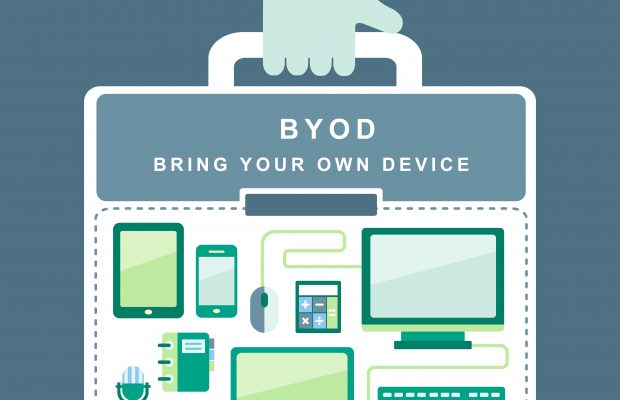
    One in three Hong Kong CIOs believe that a lack of employee knowledge and skills around data security is the most significant security risk their organization will face in the next five years, according to Robert Half Hong Kong.

    A survey commissioned by the specialist recruitment consultancy finds that Hong Kong CIOs are stepping up the fight against the security risks posed by the widespread adoption of bring-your-own-device (BYOD) practices.

    With nearly three in four (74%) local CIOs allowing employees to access corporate data on their personal devices, the security risks of BYOD have become a top priority.

    Nearly all (99%) CIOs are taking steps to protect their company from potential data breaches in light of the threat posed by BYOD, the research shows.

    In addition, 57% have deployed mobile device management technologies to enforce enhanced protection on employee mobile devices, 56% require workers to sign an acceptable use policy 51% are providing training to their staff on maintaining security with using their mobile devices and 45% are using authentication software.

    The growing focus on security is meanwhile generating an increased demand for IT security specialists with the niche skills needed to protect companies against data security risks.

    But 98% of Hong Kong CIOs report finding it challenging to source skilled technology professionals, with 23% stating that professionals with mobile security skills are in top demand.

    “With such a highly mobile and device driven workforce in Hong Kong, it is no surprise that companies see potential in boosting productivity and engagement by offering BYOD options,” Robert Half Hong Kong managing director Adam Johnston said.

    “However, these practices pose a significant cyber-security threat and demand that corporate networks and data are protected, that mobile device management strategies are put in place, and that security policies are developed.”

  • Sonus, Palo Alto develop mobile security architecture

    Sonus, Palo Alto develop mobile security architecture

    Sonus Networks and Palo Alto Networks have jointly announced a new security architecture designed to mitigate the impacts of rogue LTE endpoint devices and erroneous IP traffic crossing 4G-LTE mobile networks.

    The Sonus security architecture includes existing Sonus Session Border Controller (SBC) elements, providing the Interconnection Border Control Function and Proxy-Call Session Control Function (IBCF and P-CSCF), as well as the Palo Alto Networks Next-Generation Platform to move security to the network edge, lowering mobile networks costs and customer churn.

    The joint architecture allows operators to implement new policies that block unauthorized traffic on EPC networks, increase security, reduce network congestion and associated costs and enhance the user experience of operators’ mobile subscribers by providing protection from mobile malware.

    Operators can now leverage their Sonus P-CSCF and IBCF deployments to detect and mitigate anomalous IP communications traffic from rogue endpoints, as well as obtain complete visibility and threat prevention capabilities provided by the Palo Alto Networks Next-Generation Platform.

    With this security architecture in place, operators can reduce capital costs by limiting the over-provisioning of networks while implementing a more effective overall security posture in conjunction with growing IP Communications services, such as VoLTE and VoWiFi.

    Additionally, operators can deter theft of service and ensure greater network availability and quality of experience for mobile subscribers by preventing targeted network attacks and blocking malware targeting mobile devices.

    “The Sonus and Palo Alto Networks architecture brings together the unique capabilities offered by each company to deliver a best-in-class security solution for mobile operators that unifies LTE data and VoLTE security policy and enforcement,” said Kevin Riley, Sonus CTO and senior vice president, Engineering.

    “Establishing a secure mobile network for the Internet of Things will be a key differentiator for mobile operators and their customers in the coming years  We are looking forward to working with Palo Alto Networks to continue this momentum as we get ahead of identity and security issues and redefine this evolving landscape together.”

  • India,Indonesia to enhance ties in cyber security,intelligence

    India,Indonesia to enhance ties in cyber security,intelligence

    India and Indonesia today decided to enhance cooperation in cyber security and intelligence sharing.

    This was decided at a meeting between Minister of State for Home Kiren Rijiju and visiting Indonesian Minister for Security Gen Wiranto here.

    “The bilateral meeting with Indonesian Minister for Security and Coordination was very fruitful. The meeting focused on cyber security and intelligence sharing,” Rijiju said.

    The delegation level meeting was attended by senior officials of Ministry of Home Affairs and Indonesian Ministry of Security and Coordination.

  • SmarTone developing AI-powered mobile security

    SmarTone developing AI-powered mobile security

    SmarTone plans to soon launch its innovative anti-cyberattack software, ST Protect, to enterprises in Hong Kong in anticipation of growing security threats targeted at smartphones.

    “One of the interesting trends last year is that we started to see ransomware going through mobile,” said Zuk Avraham, founder and chairman of Zimperium, which specializes in providing mobile security solutions.

    The US-based company has invented the world’s first on-device artificial intelligence (AI) and machine learning behavioral engine, which enables ST Protect to detect in real time known and unknown attacks on smartphones.

    SmarTone is rolling out the enterprise version of ST Protect eight months after it introduced the service, which is delivered via an app, to its subscribers’ iOS and Android device.

    Using AI for mobile security

    Based on data collected over the last six months since the launch of ST Protect, the AI and machine-learning engine has been successful in detecting 100% of known and unknown mobile threats, according to SmarTone CTO Stephen Chau.

    “The AI engine learns very quickly. By understanding the behavior of the OS platform, they have the knowledge to predict and understand when there is something is going on here that it shouldn’t. The beauty of ST Protect with the solution from Zimperium is that it is able to detect zero-day attacks. And while it is good that we can detect the known problems, it is even more important to actually detect that something bad will happen and we are still able to protect ourselves,” Chau said.

    In order to use AI to secure the mobile platform, Zimperium had to invent a new approach.

    “We had to because the traditional approach used with the PC does work on mobile. In the PC, you can see that attack and you can see the traffic. We cannot do that on mobile because the app sandboxing is very strong and there are permission separations,” Avraham said.

    He explained: “Let us say, I am drinking water and I am raising my glass. The traditional approach is that you use your eyes to see that I am raising my glass. On mobile, we cannot see because we do not have the permission to sniff packets, etc. So what we are doing is instead of looking at the glass, we measure the vibes of the table, and then we can tell you this table as moved and the temperature has changed because it is hot water. Then we can tell based on these behavioral data what happens here.

  • Security is key for mobile wallet adoption in Thailand

    Security is key for mobile wallet adoption in Thailand

    Whether paying with contactless cards or mobile wallets, Thais prioritize security over convenience and are more likely to use contactless payment methods when they know strong security measures are in place, according to a recent study conducted by Visa.

    The Visa Mobile Wallet and Contactless Study found that the majority of Thais (82 percent) believe security is more important than convenience when it comes to mobile and contactless payments.[1] With accelerated growth in financial technology (FinTech), public and private sectors are grappling with ways to increase consumer confidence in electronic payments, particularly when it comes to transactions carried out on mobile devices.

    The average Thai spends around 160 minutes a day on their mobile devices.[2] By the end of 2016, it is estimated that around 20 million people will own smartphones in Thailand, a figure expected to rise to 24.8 million by 2019.[3] Although internet access and mobile device ownership among Thais are on the rise, uptake of mobile financial services has been gradual, partly due to Thai consumers being unaware of advancements in cyber security, and technology. 

    Suripong Tantiyanon, Visa Country Manager, Thailand said: “Based on our study, the more secure the mobile payment experience is, the more willing Thai consumers will be to use it. We’re confident this cautious yet optimistic attitude, coupled with Visa’s multilayered approach to security, will drive the uptake of mobile transactions in Thailand.” 

    The Visa study, independently conducted by YouGov on behalf of Visa, examines Thais’ attitudes towards mobile and contactless payments alongside those of other Southeast Asian markets, namely Singapore and Malaysia. It finds that the three biggest fears in mobile wallet security are hacking of mobile phone (73 percent), theft of mobile phone (65 percent) and getting charged for unintended purchases (63 percent). 

    “Among the respondents, only 39 percent said they would consider using third-party mobile wallets. But within this particular group of potential adopters 74 percent are already aware of how encrypted tokens eliminate the risk of personal data theft,” added Mr. Suripong.

    Visa Token Service (VTS) ensures mobile and contactless payments are secure as well as convenient. VTS replaces cardholder information, such as account numbers and expiration dates, with a unique digital identifier (a “token”) that can be used for payment, via a user’s mobile wallet, without exposing the cardholders’ more sensitive account information.

    Tokenization hides consumers’ confidential account information during digital transactions, making digital payments more secure. According to the study, approximately 55 percent of Thais are familiar with VTS, with awareness highest among those that are also familiar with mobile wallet technology.

    Just under half of Thais (46 percent) believe paying with a mobile device is as safe as with physical cards; a figure likely to increase in the future, as people become more familiar with advancements in Visa’s mobile payment systems. 

    Three in five Thais (61 percent) believe that one day they will no longer need to carry a card or cash and will instead be able to use their mobile wallets for everyday spending.

    “Once Thais become familiar with innovative security measures, such as encrypted tokens, they are much more likely to use mobile and contactless payments more regularly,” said Mr. Suripong.

  • Hitachi shows off finger vein authentication

    Hitachi shows off finger vein authentication

    Hitachi has developed a finger vein authentication system that does not require specialized hardware, using an ordinary smartphone camera with software processing to validate the identity of a user.

    This is the first time that such a solution has been demonstrated, Hitachi said, and the implication is that it can be used to easily the identity of returning customers for online shopping.

    The finger vein authentication system was among a host of other innovations demonstrated on the exhibition show floor of the company’s Social Innovation Forum 2016 held this week in Tokyo, Japan.

    The company aims to introduce its new finger vein authentication system for online shopping and financial transactions within a few years.

    At the moment, the system entails the use of an authentication app that takes a photo to read the vein patterns and compares it with pre-registered data. Several fingers are authenticated for greater security and higher accuracy, and by leveraging on the color recognition technology to detect the finger veins quicker, the process takes around one second.

    This makes it faster than the traditional user-ID and password systems, which forces users to remember a password. Moreover, the use of vein patterns is also considered as more secure as they are more difficult to forge or spoof compared to other biometric methods such as fingerprint, facial recognition or voiceprint.

    This is because finger veins hardly change, and are also unlikely to be counterfeit, according to company officials. This makes them perfect for integration into even lower-end smartphones without dedicated fingerprint scanners.

  • Beware the Internet of Unpatchable Things: Akamai

    Beware the Internet of Unpatchable Things: Akamai

    A recent spate of attacks involving attackers using IoT devices to remotely generate attack traffic by using a 12-year old vulnerability in OpenSSH have been discovered by researchers at Akamai Technologies.

    Akamai notes that the research and subsequent advisory do not introduce a new type of vulnerability or attack technique, but rather a continued weakness in many default configurations of Internet-connected devices. These devices are now actively being exploited in mass-scale attack campaigns against Akamai customers.

    The Threat Research Team said it has observed incidents of what it has called SSHowDowN Proxy attacks originating from the following types of devices:

    • CCTV, NVR, DVR devices (video surveillance)
    • Satellite antenna equipment
    • Networking devices (e.g. Routers, Hotspots, WiMax, Cable and ADSL modems, etc.)
    • Internet connected NAS devices (Network Attached Storage)

    Compromized devices are being used for mounting attacks against a multitude of internet targets and internet-facing services, such as HTTP, SMTP and Network Scanning. It is also being used to launch attacks against internal networks that host these connected devices.

    Once malicious users access the web administration console, they have been able to compromise the device’s data and, in some cases, fully take over the machine.

    “We’re entering a very interesting time when it comes to DDoS and other web attacks; ‘The Internet of Unpatchable Things’ so to speak,” explained Ory Segal, senior director for threat research at Akamai.

    “New devices are being shipped from the factory not only with this vulnerability exposed, but also without any effective way to fix it. We’ve been hearing for years that it was theoretically possible for IoT devices to attack. That, unfortunately, has now become the reality.”

  • MasterCard deploys biometric verification

    MasterCard deploys biometric verification

    Mastercard has deployed Identity Check Mobile in Europe, a new payment technology application that uses biometrics like fingerprints or facial recognition to verify a cardholder’s identity.

    The technology is now being introduced across 12 markets in Europe including the UK, Germany Austria, Belgium, Czech Republic, Denmark, Finland, Hungary, the Netherlands, Norway, Spain, and Sweden.

    Aimed at simplifying online shopping, the deployment follows a series of successful trials in the Netherlands, the US, and Canada. The technology will be rolled out across the world in phases in 2017.

    The move comes after trials and research discovered European consumers prefer biometric payments to current systems that rely on passwords.

    While existing identity verification methods typically take shoppers away from a retailer’s website or mobile app, where they are often required to remember and enter a password, Mastercard Identity Check Mobile eliminates the need for cardholders to recall passwords, dramatically speeding up the digital checkout experience while also improving security. Instead, cardholders can verify their identities by using the fingerprint scanner on their smartphone or via facial recognition technology by taking a “selfie” photo.

    “We are relentlessly focused on making the online payment experience near frictionless, without making any compromises on safety and security,” said Ajay Bhalla, president of Enterprise Risk & Security, Mastercard.

    “This is a significant milestone in the evolution of payments. Shopping in person has been revolutionized thanks to advances like contactless cards, mobile payments and wearables, and now we are making Identity Check Mobile a reality for online shopping in Europe, and soon, the world.”

  • Governement expects food self-sufficiency in 2018

    Governement expects food self-sufficiency in 2018

    Food self-sufficiency is expected to be realized in 2018, and there will be no imports in 2016, Vice President Jusuf Kalla asserted.

    “Food-sufficiency is expected to be realized within three years for which the efforts have started a year ago,” Kalla said here Friday.

    In order to reach the target several steps have been implemented, including improvement of irrigation methods, and seedling and fertilizer preparation, he added.

    Food security and resilience have been an issue for Indonesia for some time now. It was once a major rice exporter in Asia but is now relying quite heavily on rice imports to meet peoples staple food requirements.

    Food security is also an important social objective.

    Therefore, relying on food markets outside the country in order to meet the needs of Indonesias growing population is critical.

  • Pupuk Indonesia intensifies research to strengthen food security

    Pupuk Indonesia intensifies research to strengthen food security

    State-owned fertilizer producer Pupuk Indonesia is intensifying agriculture research through its subsidiary, Pupuk Indonesia Pangan, in its effort to strengthen national food security.

    Pupuk Indonesia investment director Gusrizal said his office had contributed to food security through its research and development programs nationwide since 2013.

    “We have conducted research programs in Kapuas [Central Kalimantan], Ketapang [West Kalimantan] and Merauke [Papua],” Gusrizal said in a statement on Monday.

    He further said Pupuk Indonesia had prepared Rp 30 billion (US$2.3 million) to conduct research on upstream product development and fertilizing, land cultivation and for marketing programs conducted under the assistance of agriculture experts from various institutions this year.

    “The research has helped farmers increase their harvest yields for the last three years,” Gusrizal claimed.

    He further said the company would focus on researching downstream products, such as ammonia and urea fertilizers.

  • Huawei unveils newest security solution for SDN

    Huawei unveils newest security solution for SDN

    Huawei has unveiled its latest SDN security solution which promises to “guarantees the security of enterprise tenants’ applications hosted on the cloud”.

    Based on the core component Agile Controller, the solution virtualizes hardware security devices and offers a variety of services for online subscription.

    The automated security deployment capability also greatly improves cloud service protection efficiency.

    While more and more enterprises are using cloud services to reduce costs and improve flexibility, enterprises seldom consider security before this change. As storage, computing, and network resources all become virtualized, manual configuration and adjustment of security resources can no longer adapt to quick service development in a flexible and cost effective way.

    Moreover, cloud-based service deployment eliminates network security boundaries. Virtual networks, especially the virtual machine (VM) layer, urgently need effective security protection.

    As common threats have evolved to advanced persistent threats (APTs) that can hide for a longer period of time and are more difficult to detect, traditional APT defense methods also need to adapt to software-defined network (SDN)environments.

    “As more services are migrating to the cloud, the boundary of security threats becomes blurred,” said Liu Lizhu, GM of Huawei Enterprise Network Product Line’s Security Gateway Domain.

    “Data center services are facing more severe security risks after SDN technology is used, as such no companies, regions, or organizations are free from such risks. Huawei Software-defined Security Solution will guarantee innovative, scalable, and efficient cloud services for tenants and help enterprises accelerate business transformation and upgrade.”

  • Banks, NBTC agree on 5 step m-banking security plan

    Banks, NBTC agree on 5 step m-banking security plan

    The National Broadcasting and Telecommunications Commission hosted a meeting with representatives from the Bank of Thailand, the Thai Bankers Association and the Telecommunications Association of Thailand.

    The participants have agreed on a five-step plan to tighten KYC rules to increase confidence in eBanking and mobile banking in the run up to the launch of Thailand’s Promptpay national mobile payments system.

    1. The NBTC, BOT, TCT and mobile operators will create a set of KYC rules. The NBTC will order telcos to follow them strictly and will evaluate compliance with the new rules.
    2. Banks and mobile operators will launch an awareness campaign for people to tell their banks when their mobile phone or SIM is lost.
    3. If it can be proven that the customer has told their bank that their SIM has been lost, they will not be held responsible for monetary losses.
    4. A system will be set up for banks to be notified automatically when new SIMs are issued. Until such a system is in place, banks will give telcos a watchlist of telephone numbers that are linked to Internet banking, mobile banking or Promptpay accounts for their special attention.
    5. Issuing new SIM cards for accounts linked to bank accounts can only be done in person by the account holder and not via proxy.

    Meanwhile, NBTC Secretary General Takorn Tantasit has banned the import of all Galaxy Note 7 phones due to their exploding batteries. Phones from affected batches are immediately banned from being imported and the import of new note 7 batches can only resume once Samsung provides the NBTC with satisfactory electrical and safety test results.