Tag: Shinsegae

  • Shinsegae Chairman Elevates to CEO Role, Spearheading Growth for E-Mart & Property Division

    Shinsegae Chairman Elevates to CEO Role, Spearheading Growth for E-Mart & Property Division

    Shinsegae Group’s chairman, Chung Yong-jin, is set to expand his role within the organization, assuming CEO positions at both E-mart and Shinsegae Property. This move by the South Korean retail heavyweight signals an aggressive push for growth in its primary sectors.

    Shifting Responsibility and Strategy

    Chung’s dual appointment marks a significant shift within the group, with the chairman now directly overseeing the operations of the nation’s largest retailer and its property development subsidiary. This decision comes at a crucial time when the company, faced with a challenging retail environment, is actively seeking new avenues for expansion. The decision underscores Chung’s resolve to shoulder a larger part of the company’s overall direction and performance.

    Chung appreciates the market’s expectations for clear accountability in the company’s management. As the newly appointed CEO, he is prepared to submit to the evaluation of the board of directors and shareholders.

    In his capacity at E-Mart, Chung will directly oversee the retailer’s operations and future growth strategies. The company believes this change mirrors his dedication to tackling current business hurdles and boosting shareholder value.

    Leadership Changes and Future Plans

    In his role at Shinsegae Property, Chung will supervise the group’s major development projects and support plans to secure locations for a proposed AI data centre that was announced earlier this year.

    This management shakeup follows a recent controversy at Starbucks Korea, where E-Mart is the majority shareholder. Since this incident, the retailer has committed to organizational reforms to bolster governance and operational supervision.

    Shinsegae Property executive Lee Hyung-cheon has been named as co-CEO and will continue to oversee the company’s regular operations and development activities. Shin Dong-woo has been nominated as the new CEO for Starbucks Korea. Shinsegae has stated that he will focus on reinforcing internal controls, enhancing operational systems, and restoring trust among clients and partners.

    Questions & Answers

    What new roles is Chung Yong-jin assuming at Shinsegae Group?
    Chung Yong-jin is taking on the dual roles of CEO at both E-mart and Shinsegae Property.

    What implications does this dual appointment have for the company?
    This move signals a significant shift in Shinsegae Group’s strategy, with Chung Yong-jin assuming more responsibility for the company’s overall performance and direction. It also demonstrates a commitment to tackling current business challenges and enhancing shareholder value.

    How will the roles be distributed among the leadership after these changes?
    Chung Yong-jin will oversee operations and future growth strategies at E-Mart and major development projects at Shinsegae Property. Lee Hyung-cheon will continue to oversee day-to-day operations and development activities at Shinsegae Property as co-CEO. Shin Dong-woo will focus on internal controls, operational systems and regaining trust as the CEO of Starbucks Korea.
  • Shinsegae-Alibaba Alliance: A New Chapter in South Korean E-commerce Landscape

    Shinsegae-Alibaba Alliance: A New Chapter in South Korean E-commerce Landscape

    The commencement of a new joint venture between South Korea’s Shinsegae Group and China’s Alibaba International has been viewed by many as an indication of impending transformation in the country’s e-commerce market.

    The New Venture: Grand Opus Holdings

    Recently, the joint venture, Grand Opus Holdings, finalized its board structure. Shinsegae’s chairman, Chung Yong-jin, will take on the role of board chair. The board will also include four other directors, three of whom are representatives of Alibaba-affiliated entities. This board composition brings to light the significant influence of the Chinese group within the partnership.

    Retail industry experts consider this joint venture as Alibaba’s most direct expansion into South Korea’s domestic market. They believe that Shinsegae’s local brand power will be used as a conduit for this expansion. There are concerns that the introduction of highly affordable Chinese goods, which have been a driving force in the global e-commerce market, will exacerbate price competition and put additional pressure on local manufacturers.

    The Expansion of Chinese Commerce Platforms

    Chinese commerce platforms are steadily growing within the market. Based on data from WiseApp Retail, AliExpress and Temu have the second and third highest number of monthly active users nationwide. They have surpassed 11th Street and are closing in on the market leader, Coupang. Furthermore, Jingdong, another Chinese commerce platform, is gearing up to start logistics operations in Korea, implying yet another possible market entrant.

    In a bid to maintain its leading position, Coupang is planning new investments. Its founder, Bom Kim, has acknowledged Korea as a resilient market with high potential, assuring the introduction of more products, an expanded marketplace, and improved automation in logistics. Coupang also unveiled plans to invest 3 trillion won (about 2 billion USD) in the upcoming year to enhance domestic infrastructure.

    Intensifying Competition and Public Concerns

    Another major competitor in the market, Naver, announced its shift towards an e-commerce-focused strategy earlier this year. The company launched its new open marketplace application, Naver Plus Store, in March and teamed up with fresh-food delivery company Kurly to launch the ‘Kurly N Mart’ service in September.

    The escalating competition has raised concerns about Shinsegae’s collaboration with Alibaba. Some marketing specialists cautioned that a leading Korean retail conglomerate partnering with a Chinese e-commerce behemoth may lead to consumer backlash. Public perceptions of Chinese platforms have been tarnished by issues related to counterfeit goods, safety hazards, and inferior quality products.

    A recent survey conducted in Seoul to evaluate “consumer trust” in major online platforms ranked Shinsegae’s SSG.com at the top and AliExpress at the bottom. Consumer advocates have also warned of potential personal data risks, particularly in relation to overseas data access.

    In a recent Gmarket media event, executives tried to allay these concerns. Kim Jung-woo, head of the company’s PX division, stressed that customer information is exclusively managed by Gmarket and that AI training data is kept in a separate cloud system.

    Looking Ahead

    As the Shinsegae–Alibaba venture officially commences, industry analysts foresee Korea’s e-commerce market, which is already one of the world’s most competitive, to experience further disruption. This upheaval is expected to be instigated by global players seeking to penetrate the market and domestic giants striving to retain their territory.

    Questions & Answers

    What is the new joint venture between South Korea’s Shinsegae Group and China’s Alibaba International?
    The new joint venture, named Grand Opus Holdings, is expected to reshape South Korea’s e-commerce market.

    How is Alibaba planning to expand into South Korea’s market?
    Industry experts believe Alibaba will utilize Shinsegae’s domestic brand power as a bridge to penetrate the South Korean e-commerce market.

    What are some concerns about the partnership between Shinsegae and Alibaba?
    Some people worry that this partnership might lead to consumer backlash due to issues associated with Chinese platforms, such as counterfeit goods, safety hazards, and inferior quality products. Additionally, there are concerns related to the potential risks of personal data, especially regarding overseas data access.

  • Shinsegae Duty Free to Exit Incheon Airport’s DF2 Zone Amid Rising Losses: A Strategic Shift or an Economic Warning?

    Shinsegae Duty Free to Exit Incheon Airport’s DF2 Zone Amid Rising Losses: A Strategic Shift or an Economic Warning?

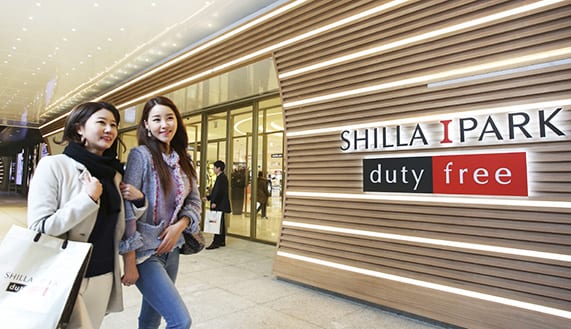
    Shinsegae Inc, a major retail conglomerate in South Korea, announced on Thursday that it plans to shut down its duty-free business unit in Incheon International Airport’s DF2 zone. This decision has been prompted by growing losses.

    Motivation Behind the Decision

    As South Korea’s second-largest department store chain, Shinsegae has resolved to enhance the operational efficiency of its duty-free business by confronting escalating losses head-on. The company intends to cease operations within the DF2 zone, which houses cosmetics, perfumes, liquor, and tobacco offerings, by April 27, 2026.

    However, Shinsegae DF Inc’s duty-free outlets in the airport’s DF4 zone will continue business as usual.

    Challenging Market Conditions

    A representative from Shinsegae cited a myriad of adverse and unpredictable circumstances plaguing the duty-free market, such as high exchange rates, economic downturn, and diminished spending among primary consumers. The company had previously sought rent modifications from the Incheon International Airport Corp (IIAC), but the airport authority denied these requests.

    Future Business Focus

    With the impending shutdown of its DF2 zone outlet, Shinsegae DF plans to concentrate on its continuing operations in the airport’s DF4 zone and its city center store in Myeongdong, central Seoul.

    Just last month, Hotel Shilla Co relinquished its DF1 zone license to the airport due to mounting losses. The IIAC is predicted to initiate a new bidding process for the DF1 zone license previously held by Shilla Duty Free later this year.

    Questions & Answers

    Why is Shinsegae closing its duty-free business in the DF2 zone?
    Shinsegae is closing its duty-free operations in the DF2 zone due to escalating losses and a desire to improve overall operational efficiency.

    What areas does the DF2 zone cover?
    The DF2 zone houses a variety of products, including cosmetics, perfumes, liquor, and tobacco.

    What will be the future focus of Shinsegae DF?
    Following the closure of its DF2 zone outlet, Shinsegae DF will focus on its remaining operations in the airport’s DF4 zone and its downtown store in Myeongdong.

  • Shinsegae And Metro Unveil Unique Korean Fashion Collaboration In Singapore

    Shinsegae And Metro Unveil Unique Korean Fashion Collaboration In Singapore

    South Korean fashion giant, Shinsegae, is set to make its entrance into the Singaporean market through a unique collaboration with Metro. This partnership will entail the launch of a pop-up store at Paragon, scheduled to run from September 25 until October 5.

    Introducing Six Korean Brands

    The pop-up shop aims to unveil six Korean lifestyle and fashion brands to Singapore’s fashion-forward audience. The brands include Studio Tomboy, Man on the Boon, Jaju, Voice of Voices, Rawrow, and Vidivici. Following the pop-up, these collections will continue to be available at Metro Paragon until the end of October. In this way, shoppers will have ample time to explore and shop from Shinsegae’s expertly curated portfolio.

    Collaborative Design Partnership

    The collaboration will also bring forth a unique amalgamation of design elements from both Singapore and Korea. This will be achieved through a design partnership between Singapore’s Phunk Studio and Korea’s Studio Tomboy. The design inspiration will borrow heavily from Peranakan florals, Korea’s hibiscus, the durian fruit, and the yin-yang symbol.

    Transition to a Fashion-centric Retail Model

    According to Erwin Wuysang-Oei, the CEO of Metro Singapore, this partnership signifies Metro’s strategic transformation from a traditional department store to a more fashion-focused retail model. He expressed that this collaboration with Shinsegae International marks a critical milestone in Metro’s evolution and brings a new model for international retail collaboration. The partnership not only brings Korean fashion to Singapore but also celebrates both cultures while setting new benchmarks for fashion retail in Southeast Asia.

    Questions & Answers

    What is the timeline of Shinsegae’s pop-up in Singapore?
    The pop-up is scheduled to run from September 25 until October 5.

    Which Korean brands will be introduced by Shinsegae in Singapore?
    The brands include Studio Tomboy, Man on the Boon, Jaju, Voice of Voices, Rawrow, and Vidivici.

    What does this partnership signify for Metro?
    According to the CEO of Metro Singapore, this partnership signifies a shift from being a traditional department store to adopting a more fashion-focused retail model.

  • Shilla Duty Free To Cease Operations At Incheon Airport Amid Financial Struggles

    Shilla Duty Free To Cease Operations At Incheon Airport Amid Financial Struggles

    Shilla Duty Free has declared its intention to halt operations at its DF1 duty-free store at Incheon International Airport in March. This follows the store’s excessive losses and the concession’s business value falling below its liquidation value.

    Financial Impact of the Decision

    The DF1 concession recorded a revenue of KRW$429.2 billion (US$312 million) in the past fiscal year, contributing 10.9 per cent to Shilla’s overall sales.

    The company commented on the changing climate of the duty-free market, since inking the contract for the duty-free store at Incheon International Airport in 2023. It noted the rapid shifts in consumer behavior and diminished buying power. The company has approached the Incheon International Airport Corporation to adjust the rent, but the request was turned down.

    This resolution was approved by the board on September 18 and was revealed in a Korea Exchange filing.

    Company’s Future Outlook

    Shilla anticipates a short-term drop in sales as a consequence of the exit. However, the company maintains an optimistic outlook for a more robust financial performance in the medium to long term.

    The company stated, “We believe it is crucial to enhance our financial structure and increase corporate and shareholder value.” Despite the ongoing challenges in the duty-free industry, the company pledged to maximize efforts to boost profitability.

    Other Changes in the Duty Free Landscape

    In addition to Shilla, Shinsegae Duty Free has also relinquished its business rights at Incheon. Both retailers had sought to reduce their rent by up to 40 per cent on their perfume, cosmetics, liquor, and tobacco concessions at Terminals 1 and 2. However, the Incheon International Airport Corporation (IIAC) declined these requests, asserting that rental terms were established in the original bids and could not be altered beyond the stipulations outlined by law.

    Questions & Answers

    Why is Shilla Duty Free suspending its operations at Incheon International Airport?

    Shilla Duty Free has cited “excessive losses” and a business value now lower than its liquidation value as reasons for its decision to suspend operations.

    What impact will this decision have on Shilla Duty Free’s sales?

    While the company expects a temporary dip in sales due to the closure, it foresees a stronger overall financial performance over the medium to long term.

    Have other duty-free stores at Incheon International Airport made similar moves?

    Yes, aside from Shilla, Shinsegae Duty Free has also given up its business rights at Incheon. Both companies unsuccessfully attempted to negotiate a reduction in rent.

  • Shinsegae And Alibaba Join Forces: A New Contender Challenges Coupang And Naver’s Dominance

    Shinsegae And Alibaba Join Forces: A New Contender Challenges Coupang And Naver’s Dominance

    The antitrust regulator of South Korea has provisionally approved a joint venture between Shinsegae Group’s Gmarket and Alibaba’s AliExpress Korea. This approval paves the way for a new contender to challenge the market, which has been historically dominated by Coupang and Naver.

    Partnership Dynamics

    This collaboration is organized as a balanced joint company under Grand Opus Holding. It merges Gmarket and AliExpress Korea into a unified business model, which can be described as “two families under one roof.” However, it ensures the operational independence of both entities.

    The Korea Fair Trade Commission (KFTC) imposed safeguards that mandate the strict separation of domestic consumer data. It also prohibits the sharing of overseas direct-purchase information between the platforms.

    The collaboration has been presented as both a defensive strategy and a growth plan. Gmarket’s CEO, Jung Hyung-kwon, has called the strategic alliance with AliExpress a necessary step to secure market leadership. He promises to complement Gmarket’s reliable platform with Alibaba’s extensive product range.

    Implications of the Joint Venture

    The joint venture grants 600,000 Gmarket and Auction sellers access to Alibaba’s worldwide e-commerce network, which spans over 200 countries. Concurrently, Chinese-made products from AliExpress are expected to establish a more robust presence in Korea, supported by Shinsegae’s logistics proficiency.

    Analysts speculate that this deal could potentially restore Gmarket’s financial health after a series of losses, while helping AliExpress shed its reputation for counterfeit and low-quality goods.

    The partnership comes as the online retail sector in Korea is experiencing a three-way competition. While Coupang continues to lead with 34.2 million monthly active users, the combined reach of AliExpress, Gmarket, and Auction now exceeds 18 million, surpassing Naver’s 4.3 million.

    Market Conditions and Future Projections

    This competitiveness takes place amid market volatility. Early market leaders such as Interpark and 11st have dwindled, while the growth during the pandemic solidified Coupang and Naver’s duopoly. Recently, Chinese companies like AliExpress and Temu have disrupted the market with extremely affordable goods, leading to the downfall of several smaller Korean platforms.

    With the alliance between Shinsegae and Alibaba now formed, analysts foresee an escalation in price competition, especially with an anticipated increase in Chinese-made consumer goods being sold through Gmarket. However, concerns persist about whether the increased scale will result in profitability, given the limited brand loyalty on both sides.

    Meanwhile, Coupang is focusing on expanding its nationwide rocket delivery, and Naver is enhancing its fresh food delivery through its new alliance with Kurly. Some industry insiders speculate that Shinsegae’s SSG.com may eventually integrate its fresh food operations into the partnership to close the competitive gap.

    The joint venture has also sparked some controversy, with critics warning of the risk of Korean consumer data exposure to China, despite regulatory safeguards.

    Regardless, for Shinsegae, this venture represents a daring gamble: challenging two entrenched giants by combining its retail expertise with Alibaba’s global scale. The lingering question is whether the alliance can offer both local trust and international reach, without igniting a destructive price war.

    Questions & Answers

    What is the structure of the joint venture between Gmarket and AliExpress Korea?
    The partnership is structured as a balanced joint company under Grand Opus Holding, merging Gmarket and AliExpress Korea into a unified but operationally independent business model.

    What benefits does the joint venture offer?
    The joint venture provides 600,000 Gmarket and Auction sellers access to Alibaba’s global e-commerce network, which spans over 200 countries. It also allows for a stronger presence of Chinese-made products in Korea.

    What are the potential risks and criticisms associated with the joint venture?
    Critics warn of the risk of Korean consumer data exposure to China, despite regulatory safeguards. Furthermore, analysts question whether the increased scale will result in profitability, given the limited brand loyalty on both sides.

  • Shinsegae Duty Free Unveils Stunning Renovation of 11th Floor at Myeongdong Flagship Store

    Shinsegae Duty Free Unveils Stunning Renovation of 11th Floor at Myeongdong Flagship Store

    Shinsegae Duty Free has unveiled a revitalized 11th floor at its flagship Myeongdong store, highlighting South Korea’s vibrant culture and its appeal to global travelers. This extensive renovation has culminated in an impressive collection of over 100 carefully selected brands spanning food, fashion, liquor, K-pop, and character merchandise.

    A Culinary Adventure: The Taste of Shinsegae

    At the heart of the floor lies the “Taste of Shinsegae,” a new zone devoted to showcasing the best of Korean snacks, desserts, health supplements, and regional delicacies. It’s a culinary adventure that promises more than just shopping; it’s a flavor festival!

    Shoppers can explore four distinct sections: the Dessert Zone, where trendy treats like ‘Bricksand’ financier cookies and vegan ‘Grains Cookie’ take center stage; the Pop-Up Zone, which highlights the latest buzz-worthy brands from areas like Hongdae and Seongsu including Mannadang yakgwa and Super Matcha goodies; the Food Market Zone, brimming with favorites like Samcheongdong Egg Rolls and Bibigo meals; and the Wellness Zone, featuring esteemed supplements from brands like Red Ginseng and GNC. Enthusiasts of fine spirits will find excitement in the liquor section, with rare whiskeys and engaging tasting events.

    Fashion Forward with Exclusive Offerings

    The fashion segment has not been overlooked, introducing unique boutiques from renowned labels such as GUESS and Mmlg, alongside streetwear from National Geographic and Acme de la vie, expanding on the impressive array available on the 9th floor.

    Interactive Experiences at the Space of BTS

    Notably, the ‘Space of BTS’ has relocated to the 11th floor and has been upgraded with fresh merchandise and interactive experiences celebrating the solo endeavors of each member. A dedicated gift zone features popular Korean character brands like Kakao Friends and Zanmang Loopy, making it a delightful stop for fans and gift-seekers alike.

    Shinsegae reports a remarkable 40% surge in food category sales during the first half of 2025, a trend attributed to growing international interest in Korean cultural products and a resurgence in global travel. It seems that the world can’t get enough of Korean flavors and fashion!

    Questions & Answers

    What notable new feature is included in Shinsegae’s revamped 11th floor?
    The standout feature is the “Taste of Shinsegae,” which focuses on Korean snacks, desserts, health supplements, and regional specialties.

    How has the food category sales performed for Shinsegae in 2025?
    Shinsegae has reported a significant 40% increase in food category sales, driven by heightened global interest in Korean products and a recovery in international travel.

    What unique shopping experiences can visitors expect on the 11th floor?
    Visitors can enjoy various curated sections including trendy desserts, rotating pop-up brands, a comprehensive wellness zone, and an upgraded ‘Space of BTS’ featuring interactive content.

  • Shinsegae and Lotte to compete in wine and whisky market

    Shinsegae and Lotte to compete in wine and whisky market

    South Korea’s top two retailers — Shinsegae Group and Lotte Group — are going beyond retail to jump into the whisky and wine markets, which have been seeing rapid growth since the onset of the COVID-19 pandemic.

    Lotte Chilsung Beverage Co. announced in a report released early this year that it will expand its production of whisky, recruiting employees and signing contracts with whisky experts from Scotland to set up a whisky brewery.

    The company reportedly plans to build a brewery on one of the parcels of land that it currently owns. Construction is expected to begin next year at the earliest.

    Shinsegae L&B Ltd. also plans to put a start to the whisky business as it is now recruiting experienced employees, with a goal of setting up breweries of its own.

    Both companies are expected to compete in the wine market as well. Shinsegae Group purchased 299.6 billion won (US$243 million) of real estate in relation to the Shafer Vineyard in the U.S. last February.

    Its subsidiary, Shinsegae L&B, plans to take the offensive by expanding the number of its Wine and More stores and introducing new series of wines including those from the Shafer Vineyard.

    Lotte Chilsung Beverage continues to broaden its presence in the wine market by importing and selling a wider variety of wines, generating 83.2 billion won in wine sales last year, up by 34.4 percent from the previous year.

    The company reportedly received acquisition proposals from a number of winery companies interested in selling their products.

  • South Korean retail firms Lotte and Shinsegae bid for EBay Korea

    South Korean retail firms Lotte and Shinsegae bid for EBay Korea

    South Korean retailers Lotte Shopping and Shinsegae Group entered separate binding bids for eBay’s South Korean business, the retailers’ spokesmen said on Monday.

    eBay Korea – South Korea’s third-largest e-commerce firm with a 12.8% market share in 2020, according to Euromonitor – is on sale for what eBay hopes could be up to 5 trillion won ($4.5 billion), analysts said.

    The retailers’ spokesmen declined to comment on the terms of their bids. An eBay Korea spokeswoman also declined to comment.

    Local retail giants Lotte and Shinsegae have struggled to catch up to leading competitors like South Korea’s No. 1 e-commerce firm Coupang in the fast-growing online shopping sector, especially after the onset of COVID-19.

    South Korea’s online shopping transactions were worth 161 trillion won in 2020, accounting for a record 27.2% of total retail transactions, up from 21.4% in 2019.

  • Shinsegae seeks to buy Starbucks US’ stake in Korean business

    Shinsegae seeks to buy Starbucks US’ stake in Korean business

    South Korea’s retail giant Shinsegae is reviewing ways to double its stake in Starbucks Korea from 50% to 100%, according to an industry source on Mar. 19. Shinsegae’s affiliate E-mart currently owns 50% of Starbucks Korea, while Starbucks Corporation headquartered in the US owns the other 50%.

    If the deal is successful, Starbucks Korea would become a wholly owned subsidiary of E-mart, which will receive double the dividends from the company. Starbucks Korea paid out annual dividends of 30 billion won ($26.6 million) each to E-mart and Starbucks Corporation last year.

    “While we are having thorough reviews on the topic internally, nothing has yet been confirmed,” said a Shinsegae spokesman.

    Starbucks Korea will still have to pay royalties at the current rate of 5% to Starbucks headquarters even if E-mart owns a 100% stake in the company.

    South Korea’s retail and franchise industry has been speculating for years regarding Starbucks Korea’s next steps.

    Many had projected that Starbucks headquarters would want to purchase E-mart’s shares to operate independently, as it did in China and Japan in the last five years.

    In case of a successful deal between Shinsegae and Starbucks Corporation, South Korea will mark the first country in Asia where Starbucks is 100%-owned by a local operator.

    Starbucks Korea was established as a 50:50 joint venture between E-mart and Starbucks Corporation in 1997, opened its first branch in 1999 and expanded to 1,503 branches as of December last year.

    Starbucks Korea’s revenue now exceeds 10% of Starbucks’ total revenue generated globally, but its operating margin falls behind the global average.

    Starbucks currently holds the highest coffee franchise market share in Korea, surpassing 1 trillion won ($885 million) revenue in 2016 and maintaining more than 20% year-over-year growth rates from 2017 to 2019, at 26%, 20.5% and 22.8%, respectively.

    Last year, Starbucks Korea generated 1.92 trillion won ($1.7 billion) in revenue, just 80 billion short of 2 trillion won ($1.77 billion).

  • SK Telecom, Shinsegae Group among bidders for eBay’s Korean business

    SK Telecom, Shinsegae Group among bidders for eBay’s Korean business

    South Korea’s SK Telecom, retailer Shinsegae Group and private equity firm MBK Partners were among those that entered non-binding, preliminary bids for the sale of eBay Inc’s South Korean business, the telecom company, and two sources with knowledge of the matter said on Tuesday.

    EBay Korea operates open market e-commerce platforms Gmarket, Auction and G9, and was South Korea’s third-largest e-commerce firm in 2020 with 12.8% market share, according to Euromonitor.

    The sources declined to be identified as not authorized to talk to the media. MBK Partners, Shinsegae Group, and eBay Korea declined to comment.

    Seoul-based analysts said that eBay hopes to fetch up to 5 trillion won (S4.42 billion) with the sale.

    However, they said the actual sale price may be lower, due to its recent drop in market share compared to rivals such as Korea’s No. 1 e-commerce firm Coupang, and disadvantages of the unit’s traditional “open market” form of e-commerce which simply connects sellers with buyers.

    EBay Korea’s market share has been overtaken in recent years by Coupang, which directly handles inventory, differentiated itself with speedy delivery and raised around $4.6 billion in a blockbuster New York listing earlier this month, as well as Naver Corp, which operates South Korea’s dominant online search portal.

    EBay Korea’s 2020 revenue was estimated to be about 1.3 trillion won, with a 5.3% on-year increase in transactions, compared to a 19% growth in South Korean e-commerce market, KTB Investment & Securities analyst Kim Jin-woo said.

  • Shinsegae, Taubman Asia open Starfield Anseong

    Shinsegae, Taubman Asia open Starfield Anseong

    The new Starfield Anseong, the second joint venture between Taubman Asia and Shinsegae Property, opened today in Anseong, Gyeonggi Province, South Korea. The one million square foot, modern shopping, entertainment, and dining destination is Taubman Asia’s fourth successful development project. It will serve as the primary mall for Anseong, one of the fastest-growing areas of South Korea. This press release features multimedia.

    The new Starfield Anseong mall in Anseong, Gyeonggi Province, South Korea Starfield Anseong is nearly 100 percent leased, with over 90 percent of tenants open, and is expected to be fully occupied by year-end. The mall is anchored by Shinsegae Factory Store, E-Mart, Toy Kingdom, and successful entertainment concepts, including Aquafield, Sports Monster, and Megabox, an upscale cinema. Starfield Anseong also offers 280 of the most in-demand fashion, dining, and entertainment concepts. In response to the global pandemic, the mall has implemented a wide variety of enhanced safety protocols in accordance with legal requirements.

    “Starfield Anseong represents the best of the collective expertise of Shinsegae Property and Taubman Asia,” said Paul Wright, president, Taubman Asia. “We are pleased to offer this impressive assortment of retail, dining, and entertainment experiences to customers in Gyeonggi.” “Starfield Anseong will serve customers in the southern region of Gyeonggi and will meet the high expectations of the local residents following the successful opening of Starfield Hanam and Starfield Goyang,” said Young-rok Lim, president, Shinsegae Property.

    “With a high priority on customer safety, we are certain our customers will experience a true shopping theme park previously unseen anywhere in the region. Starfield Anseong’s diverse offerings such as children’s education, entertainment, and food and beverage facilities, which have proven popular in other Starfield facilities, have been strengthened and together with other popular brands making their regional debuts, are all gathered in one place.” Shopping & Dining Starfield Anseong’s wide variety of prominent international brands includes Zara, Nike, Uniqlo, H&M, Vans, COS, Guess, Adidas, BMW, Patagonia, Camper, Polo Ralph Lauren, Lacoste, West Elm, and Under Armour.

    Popular national brands such as SPAO, Genesis, Beanpole, Studio Tomboy, Jaju, Casamia, Wonder Place, and Hanssem are also featured. Approximately 100 of the mall’s brands are the first store of the kind in this region of Greater Seoul. The mall has dedicated 113,000 square feet to dining options, including Gourmet Street’s eight restaurants and the Eatopia food court featuring 21 unique food kiosks, optional outdoor seating, and views of the neighborhood park. City Market, anchored by No Brand Supermarket, offers 15 additional casual dining options, a deli, and nine specialty food concepts that include a wine shop, a butcher, and a bakery.

    Other dining destinations include Sanghaeru, Tokkijung, Lobster Bar, No Brand Burger, and Mansukjang. Entertainment & Experiences Starfield Anseong offers many entertainment options and experiences, including a 48,000 square foot Megabox cinema with seven screens, a 28,000 square foot Sports Monster sportsplex with everything from rock climbing to basketball, and a 98,000 square foot Aquafield indoor/outdoor water park and spa. Concepts focused on children’s entertainment includes Champion 1250X and Sang Sang Sketch Play.

  • Shinsegae profit all but evaporates as the virus outbreak hits sales

    Shinsegae profit all but evaporates as the virus outbreak hits sales

    Shinsegae, one of South Korea’s largest retail groups, has reported its net profit fell 99.8 percent year on year as the Covid-19 crisis effectively shut down the nation’s tourism industry and caused local consumers to stay home.

    The conglomerate, whose subsidiaries include E-mart big-box stores, convenience stores, homewares, fashion, beauty and a duty-free retail division, reported a March quarter net income of 1.6 billion won (US$1.3 million) on sales of 1.2 trillion won ($976 million).

    With a ban on inbound visitors from Mainland China during part of the period, Shinsegae’s duty-free business was hardest hit by Covid-19. Sales fell 30.5 percent to 488.9 billion won ($398 million) and the division lost 32.4 billion won ($26.4 million). Sales through airport duty-free outlets slumped by 40 percent and of downtown duty-free stores by 21 percent year on year.

    The E-mart business, which is also listed and releases its own financial results, had earlier reported an operating profit of 48.4 billion won ($39.4 million) in the March quarter, reversing a loss of 100 million won ($81,000) in the preceding three months. The company said its sales had benefited from consumers moving online and increased grocery demand while people cooked or ate at home instead of dining out.

    Sales of 5.2 trillion won ($4.2 billion) were up 13.6 percent year on year.

    Shinsegae’s department-store business saw sales fall 11.7 percent. The company’s furniture and homewares chain Casamia saw sales rise 23.8 percent due to network expansion, but additional costs contributed to a more than doubling of its loss to 2.7 billion won ($2.2 million).

    Sales at fashion and cosmetics group Shinsegae International fell 11.6 percent, but the division turned an operating profit of 12 billion won ($9.8 million).

  • Shinsegae cedes claim to BTS brand after legal stoush

    Shinsegae cedes claim to BTS brand after legal stoush

    South Korean department store franchise Shinsegae has relinquished its claims to the K-pop boy band BTS brand name following a threat of legal action by the band’s representatives.

    “We renounce all trademark rights related to BTS,” read a statement from the firm released this week. “Shinsegae supports the activity of BTS, which leads the Korean wave.”

    The band has struggled to claim ownership of the brand name since 2013 when it was discovered to have already been registered by Shinhan Corporation as part of a “Back to School” campaign. Shinsegae purchased the brand in 2018 for use in its various product ranges, including apparel.

    Shinsegae’s trademark application for the BTS brand was rejected by the South Korean state patent office after the band’s management Big Hit Entertainment filed an objection on grounds of absurdity, given the band’s global popularity. Shinsegae initially appealed the decision.

  • Shinsegae department store sets sales record as foreigners splurge in Gangnam

    Shinsegae department store sets sales record as foreigners splurge in Gangnam

    Shinsegae Department Store, one of South Korea’s leading retailers, said Tuesday that its outlet in Gangnam, an affluent area in southern Seoul, reported 2 trillion won (US$1.7 billion) in accumulated sales last year.

    It marks the first time for a single-department store branch to achieve the 2 trillion won milestone, the company said.

    Lotte Department Store, another leading player, earlier said its branch in Myeongdong in downtown Seoul generated 1.8 trillion won in sales last year.

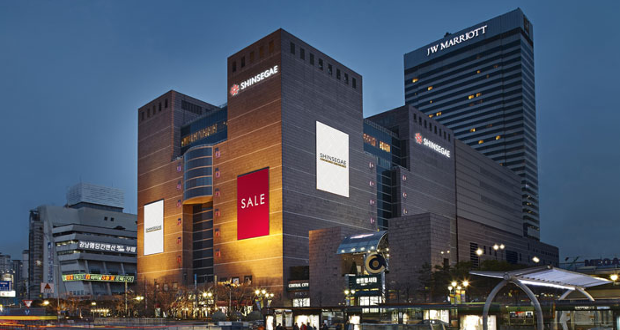
    Shinsegae attributed its stellar performance to increased visits by foreign shoppers as its Gangnam outlet is adjacent to a number of five-star hotels, including the JW Marriott Gangnam.

    Most of the top-buying foreign shoppers were from China, Taiwan and Russia, the company said.

    The store also underwent major remodeling in 2016, in a move to provide a better luxurious in-store shopping experience by organizing items based on themes rather than brands.

    The country’s three major players — Lotte, Hyundai and Shinsegae — account for about 80 percent of the sector’s sales in the country.