Tag: shopee

  • As Shoppers Move Online, Brand Turn To Shopee For Ecommerce

    As Shoppers Move Online, Brand Turn To Shopee For Ecommerce

    Shopee, the leading eCommerce platform in Southeast Asia and Taiwan, is partnering with major brands to offer consumers more variety and convenience. The brand partnerships will span across various categories, including health & beauty, baby care, home appliances and electronics. Over 100 major brands currently have Official Stores on Shopee, and more than 10 new Official Stores from brands including 3M, Kotex and Reckitt Benckiser will go live this June.

    Zhou Junjie, Country Head of Shopee Singapore, said: “We are thrilled to have such a wide range of brands on board as Official Stores. Given the growth of online shopping in Singapore, it is more crucial than ever for brands to adopt an omnichannel strategy. However, setting up an eCommerce platform can be complex and expensive. Shopee aims to help these brands grow their online presence by bridging the gap with the necessary payments infrastructure, access to a large base of active shoppers, and integrated delivery and logistics functions.”

    A survey conducted by Shopee in May 2017 indicated that 86 per cent of sellers enter into partnerships with Shopee with the intention to boost revenue, and 69 per cent do so to tap on Shopee’s extensive user base. Ninety-three per cent of Shopee sellers agreed that the partnership has been beneficial for their business.

    For sellers who operate both online and offline, 79 per cent identified online platforms such as Shopee as their fastest growing channel. Additionally, sellers who place a bigger focus on eCommerce tend to reap better business growth. Twenty-eight per cent of omnichannel businesses who conduct most of their business online saw a 150 per cent uplift in sales, while only 10 per cent of omnichannel businesses who operate mostly on offline channels saw the same increase.

    Maybelline, a leading cosmetics company, became an official store on Shopee in May 2017.Abigail She, Senior Key Account Manager of Maybelline said, “We will be able to reach out to a larger base of new and existing Maybelline customers online by tapping on Shopee’s user base. We have observed that a growing number of shoppers now prefer to shop online given the wide assortment of products. Shopee is one of the key platforms that we identified and we look forward to working together and building a more robust online presence.”

    Mr Chow Phee Chat, Director, Marketing Communications and Corporate Affairs, Nestlé Singapore, said: “The convenience of doorstep delivery is rising in popularity among shoppers in Singapore. Online portals which provide a wide variety of trusted brands cater to the hectic lifestyles of Singaporeans who may not have the time to visit a physical store but want to ensure that the purchases they make online are safe, authentic and delivered quickly.”

    As part of the collaboration, Maybelline and Nestlé will also offer exclusive promotions and deals on Shopee during this year’s Great Singapore Sale (GSS), as part of Shopee’s Great Shopee Sale campaign which runs from 9 June 2017 to 13 August 2017. Maybelline will host a 30 per cent storewide discount on Shopee, offering attractive discounts on everything from concealers to their popular Color Sensational Loaded Bold lipstick range. Nestlé will also be running storewide sales on Shopee during this period.

    Shopee was officially launched in November 2015. As of May 2017, it has achieved over 40 Million downloads and an annualised Gross Merchandise Value (GMV) of over US$3 Billion across its seven markets – Singapore, Malaysia, Thailand, Taiwan, Indonesia, Vietnam and the Philippines.

  • Shopee charts rapid growth

    Shopee charts rapid growth

    Southeast Asian pure-play mCommerce operator Shopee says it has reached US$1.8 billion in annualised GMV just a year after its launch.

    App-based Shopee operates in Singapore, the Philippines, Malaysia, Indonesia, Thailand, Vietnam and and Taiwan.

    The Garena-backed company says it has achieved a month-on-month growth of 43 per cent, with 25 million downloads of its mobile app to date and 65 million product listings.

    “2016 has been great for us,” said CEO Chris Feng. “As we look forward to 2017, we expect to maintain the strong double-digit growth that we’ve experienced in the past year. We will also continue to focus our efforts on optimising the product, improving the end-to-end user experience and in empowering entrepreneurs to expand and grow their online businesses.”

    As part of Shopee’s focus on the customer experience, the company released the Consumer Behaviour Report 2016 that revealed region-wide insights around shopping patterns on the mobile app.

    “These insights have outlined a clear roadmap for consumer engagement – enabling the platform to introduce offerings such as integrated local logistics, Shopee guarantee and social-led features such as the Live Chat and hashtag functions. Shopee has also been bringing together aspiring entrepreneurs over the year, empowering them to be more effective sellers through initiatives such as Shopee University and campus initiatives such as the Shopee X NUS mCommerce Challenge,” the company said in a statement.

    The report highlighted that more than 50% of Shopee’s users access the app daily, with an average engagement period of more than 20 minutes per session. Shopee engages its customers by holding interactive contests and games for customers to win prizes, and also offers innovative social-led features such as the Live Chat and hashtag functions for users to stay ahead of trends.

  • Report predicts $25b in eCommerce revenues

    Report predicts $25b in eCommerce revenues

    Southeast Asia eCommerce revenues are projected to exceed US$25 billion by 2020, according to new research by growth partnership company Frost & Sullivan.

    Despite acquisitions, market exits and many online retailers struggling to achieve profitability, the market earned $11 billion last year, says the report, from its Telecommunications and Digital Services program, Analysis of the Southeast Asian E-commerce Market. The study examines market trends and opportunities in six key Southeast Asian markets – Indonesia, Malaysia, the Philippines, Singapore, Thailand and Vietnam.

    Key findings include continuing rapid growth as the industry evolves.

    Total revenues from business-to-consumer (B2C) eCommerce in the six markets will increase at a compound annual growth rate of 17.7 per cent.

    Malaysia and Thailand were the largest eCommerce markets in the region last year, generating revenues of $2.3 billion and $2.1 billion respectively. But by 2020, both these markets are expected to be eclipsed by such emerging economies as Indonesia and Vietnam.

    “Despite being relatively young, the eCommerce market in Southeast Asia is developing quickly, thanks to an astounding rate of digital adoption,” says Frost & Sullivan Asia-Pacific lead consultant for eCommerce and digital transformation, Cris Duy Tran.

    “However, companies pursuing an Amazon-style B2C mass-market business model are struggling to turn a profit, and there have been several mergers and acquisitions and market exits,” he says.

    “With fewer players in the market, eCommerce players are beginning to compete beyond price points and logistics, and are moving into new areas such as Online-to-Offline (O2O) eCommerce and loyalty programs.”

    Although the mass-marketing approach has not worked so far in Southeast Asia, he says there are many exciting opportunities in specialized eCommerce and peer-to-peer (P2P) eCommerce. Services such as Carousell, Shopee and Tokopedia are aggressively pursuing a “mobile first” strategy, and Frost & Sullivan expects to see more sector-specific services in areas such as travel, food delivery and luxury goods.

    Challenges

    While the opportunities for growth are immense, says the report, the eCommerce market in Southeast Asia is not without challenges.

    Several key factors that inhibit growth have been identified, including low credit-card ownership – less than 7 per cent of the population in all Southeast Asian markets except for Malaysia and Singapore. In some countries, more than half of the population does not have a bank account, making payment the biggest challenge for eCommerce companies.

    Logistics is another issue hampering eCommerce growth, especially in areas with complex geographies such as Indonesia and the Philippines. However, recent investments by regional logistics players such as aCommerce and SingPost have strengthened eCommerce logistics infrastructure in these markets.

    China’s rapid expansion in eCommerce is providing further impetus for online retail growth in Southeast Asia, says the report.

    “The eCommerce revenue in China represented 12.1 per cent of all retail sales last year, surpassing the US, Europe and Japan,” says Tran. “Given the massive adoption of eCommerce in China, Southeast Asia is set to follow a similar upward trajectory, even though eCommerce now represents less than 2.5 per cent of all retail sales.”

    With more mergers and acquisitions likely during the forecast period, more exciting market developments can be expected in the near future, says Tran.

  • Shopee Holds Young Entrepreneur Program

    Shopee Holds Young Entrepreneur Program

    Singapore-based marketplace company, Shopee, has been holding Young Entrepreneur Program. The program–which has been started from March 2016–is carried out to find Indonesia’s new young business talents.

    “Some 230 students have been participating in the program,” said Chris Feng Shopee’s CEO on Wednesday in Indonesia Convention Exhibition, BSD, Tangerang.

    The student only event has been participated by 89 universities from 19 cities in Indonesia. It has been held by Shopee to encourage more youth to get involved in business or to become entrepreneurs.

    According to Chris, when starting a business young entrepreneurs are faced with three challenges, namely business knowledge, technology and capital. To face the challenges, Shopee is determined to help them by establishing Campus Competition and Shopee University.

    Shopee provides photography and digital marketing classes to enhance business knowledge. Whereas to tackle capital issue, Shopee is holding a competition with a commitment value of Rp100 billion.

    The Rp100 billion fund is used for investment of trainings and capital aid. It will also be used to help young entrepreneurs to develop online businesses.

    “We have selected three candidates to win a prize of capital aid,” Chirs said. The three candidates will be judged and the winner will be announced end of April.

  • Rakuten quits Thailand

    Rakuten quits Thailand

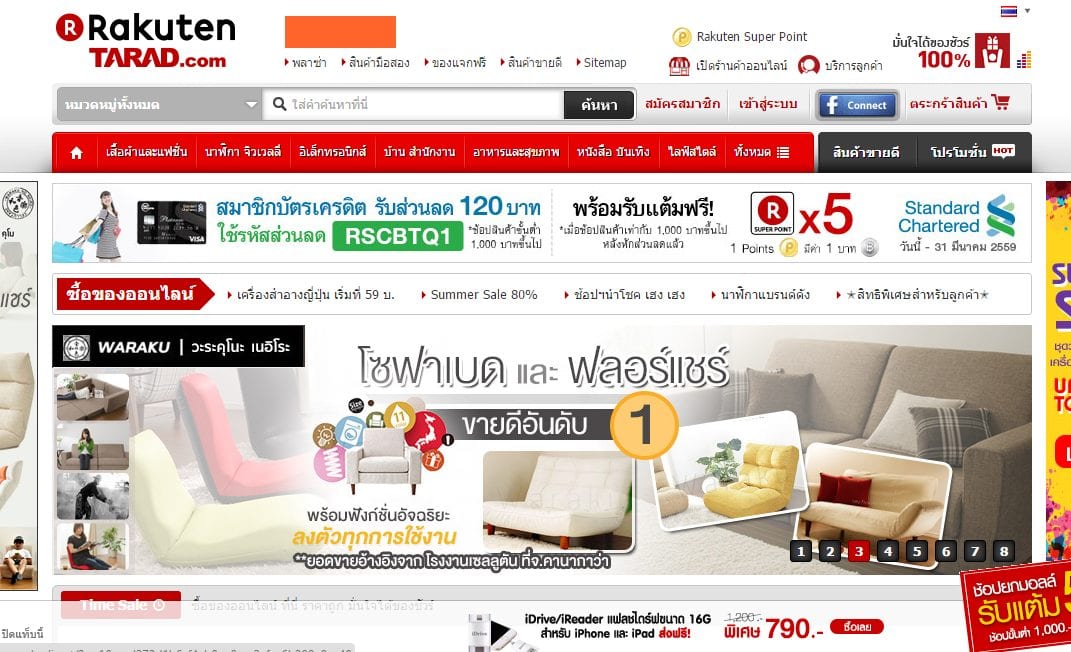
    Japanese eCommerce giant Rakuten is negotiating to sell its stake in Thailand’s largest eCommerce company Tarad.com to an undisclosed Thai company.

    Rakuten Tarad.com founder and MD Pawoot Pongvitayapanu has told the Bangkok Post the deal is expected to be sealed within a few days. Rakuten has a 67 per cent stake in Tarad.com since acquiring it in 2009 for US$35 million, and Pongvitayapanu holds the balance.
    Rakuten’s move follows a strategic overhaul of its business in Southeast Asia, Deal Street Asiareports. It had previously focused on business-to-business and business-to-consumer models, but now plans a shift to consumer-to-consumer (C2C) by launching a mobile app, Rakuma.
    Shopee, which already has a foothold in Thailand, is one of the main competitors for C2C apps in the region, along with Carousell.
    Tarad.com had an accumulated loss of 117 million baht ($3.2 million) in 2013, rising from losses of 35 million baht in 2010 and 5.6 million baht in 2009. Pongvitayapanu says business will continue business as usual as it prepares to implement a strategic shift following the new shareholding structure.
    Rakuten earlier announced it is shutting down its eCommerce marketplaces in Indonesia, Malaysia and Singapore from March 1, laying off about 150 employees. It plans to focus on eCommerce in Japan, where it is a market leader. It will also keep a presence in east Asia, Taiwan and the US.

  • C2C marketplace Shopee officially launches in

    C2C marketplace Shopee officially launches in

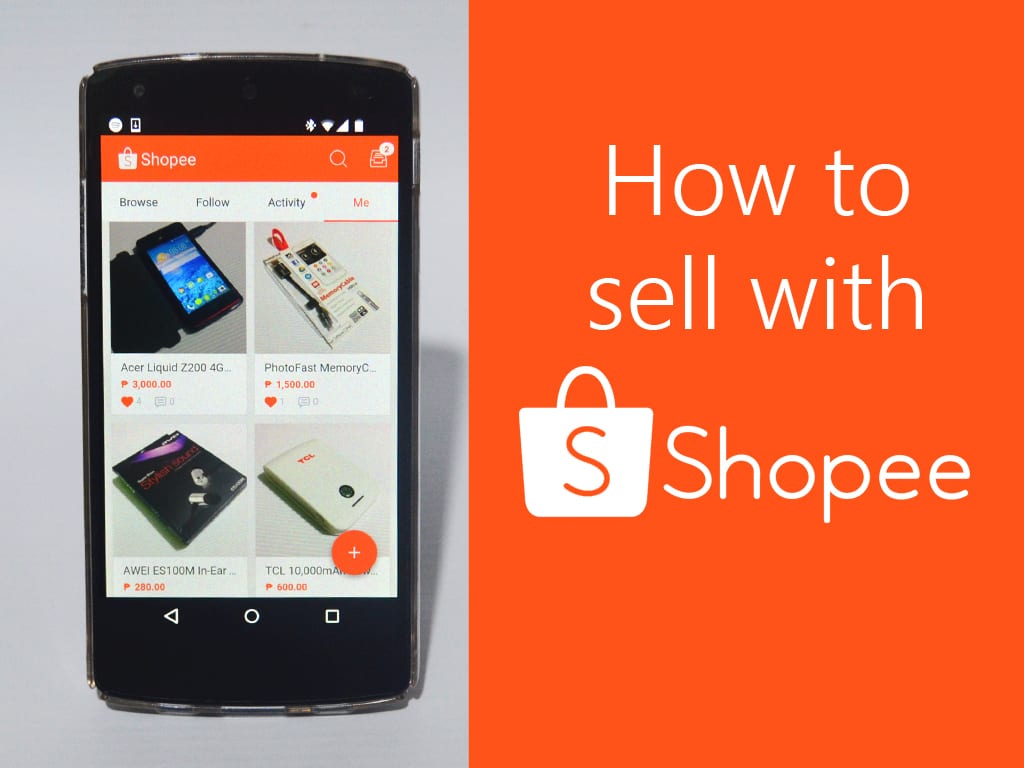
    Southeast Asia’s latest mobile consumer-to-consumer (C2C) marketplace, Shopee, has officially launched in Indonesia, offering users an easy-to-use mobile application to browse, shop and sell.

    The platform was soft-launched in June 2015 in countries including Indonesia, Singapore, Malaysia, Thailand, Vietnam, Philippines and Taiwan.

    According to Shopee CEO Chris Feng, the platform is equipped with a secure payment method, an integrated logistics fee calculation and social-led features to create a more secure, fun and fuss-free online shopping and selling experience.

    According to a 2015 fourth-quarter report from Southeast Asia Digital Landscape, Indonesia has already reached 79 million active social media users. Furthermore, almost 65 percent of Indonesians use social media to buy and sell things.

    “Shopee is eager to take part in supporting Indonesia’s growth in global retail e-commerce by bringing a shopping experience that is able to integrate social media and online shopping functions to maximize social interaction between sellers and buyers,” Chris explained.

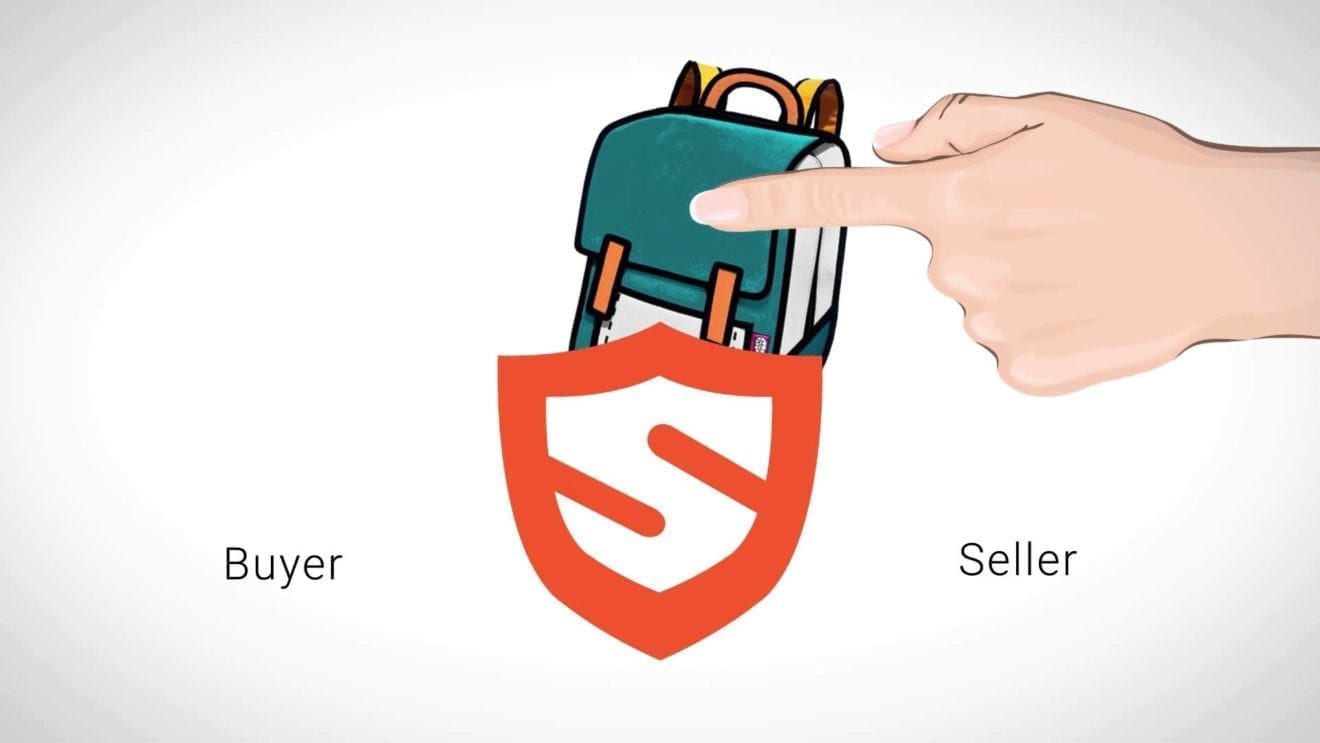
    Various application features have been introduced including the “Shopee Guarantee”, which ensures users that there will be a full refund if purchased products are not received in the agreed condition.

    “The feature that I like the most from Shopee is the live chat, because it allows me to chat directly with buyers,” said Inez, the owner of Theodora Mardjuki online shop. “I like the Instagram importer feature that makes it easier for me to upload pictures of products that I want to sell on Shopee,” said another online seller, Stephanie Winarto.

    Since it was first launched, the application has been downloaded more than one million times and ranks first in Google Play’s Shopping category in Indonesia. Shopee is now available for download for free on the Apple App Store and Google Play in Singapore, Malaysia, Indonesia, Thailand, Vietnam, the Philippines and Taiwan.