Tag: Shopping

  • Alibaba develops new technology to help the blind shop online

    Alibaba develops new technology to help the blind shop online

    E-commerce giant Alibaba has developed new technology to make it possible for blind and partially sighted people to shop online, according to an article on Alibaba’s news site Alizila. Alibaba plans to launch Smart Touch, an affordable silicone sheet that goes on top of smartphone screens, later this year. The plastic film includes three mini buttons on each side that sensory-enabled. Pressing on each one will trigger a different command, such as “go back”, “return to homepage” and “confirm”.

    Depending on the app, the buttons can lead to different destinations, such as “My Shopping Cart,” “Tmall Global,” and “Tmall Supermarket” in the Taobao app.

    Smart Touch is a joint effort of Alibaba’s Damo Academy and China’s Tsinghua University to improve the smartphone experience for the blind.

    The technology also has an “ear touch” feature, which gives blind and visually impaired users a simple way to listen to text clearly and privately in public, without the need for headphones. It senses when the users is holding the phone to their ear and automatically routes the sound output from the loudspeaker to the earpiece speaker.

    In October last year, Alibaba added Optical Character Recognition (OCR) technology to the pages of its online marketplace Taobao, an artificial intelligence-driven feature that reads text written on images.

    Before adopting OCR, Taobao’s 300,000 daily active users who are blind or have reduced vision would have used screen-reading software that simply announced “image” as it scanned the page. By early December, OCR was being used to read close to 100 million images per day, Alizila reported.

    “Images are becoming ever more important in the shopping experience,” said Wang Yongpan, algorithm specialist who led the OCR upgrade.

    “A typical product page on the site contains about 40 images, and most product specifications and descriptions are often found within images, rather than typed out in plain text.”

    Yongpan said that while Alibaba has been using OCR for many years in various capacities, the technology’s accuracy in reading images has grown exponentially due to advances in machine learning.

    According to Taobao president Jiang Fan, making the platform more inclusive, user-friendly and a home for creativity is part of its larger strategy.

    “If I had to do one thing this year, that would be to make Taobao simpler and bring [us] back to our original purpose,” he said.

    “Alibaba is famously known by its motto, ‘To make it easy to do business anywhere’.”

    The OCR launch was driven by Alibaba’s “Barrier-Free Lab”, which started with a handful of employees in 2011 and has since grown to hundreds of volunteers, ranging from programmers to user-experience designers.

    Now, similar tools can be seen across Alibaba’s ecosystem, expanding from Taobao to B2C e-commerce site Tmall, payments affiliate Alipay, online delivery platform Ele.me, enterprise chat app Dingtalk, navigation firm Amap, music streaming app Xiami and internet browser UC Web, from desktop to mobile.
  • Lotte Mart’s distribution fees scrutinized

    Lotte Mart’s distribution fees scrutinized

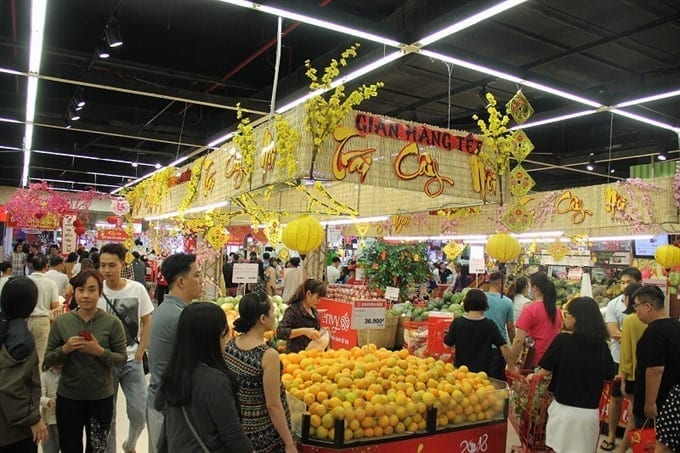
    Korea’s antitrust body is examining the practice of retailers unfairly shifting distribution costs to their suppliers. The Fair Trade Commission (FTC) has started evaluation proceedings against Lotte Mart for transferring this burden and charging an onward transportation fee after a product has been delivered. The regulator could fine the retailer 400 billion won ($353.92 million) if it is found to have violated the law. It has the authority to prosecute and punish companies that contravene the Fair Trade Act and other statutes related to anti-competitive practices.

    The FTC’s Distribution Division, which monitors the activities of retailers, submitted an evaluation report, equivalent to a prosecutor’s indictment, to the commission early last month. The document outlined Lotte Mart’s infractions over five years.

    Lotte Mart has until early February to respond.

    This will be the first time the FTC has taken action against a company for shifting distribution costs to suppliers. Lotte Mart’s practice of transferring the costs, commonly known as post-distribution costs, is widespread.

    The action comes amid FTC Chairman Kim Sang-jo’s drive to root out unfair practices in the retail industry.

    Lotte Mart’s shifting of post-distribution cost to suppliers is likely to have far-reaching implications in the industry as the practice is common.

    “When signing a contract, there are requests to supply products at a price three to five percent lower than the actual price to account for the post-distribution costs,” explained Mr. Lee, who operates a company that supplies to retail stores. “It’s not just Lotte. It is common for large retail stores such as Emart, Homeplus, department stores, convenience stores and even e-commerce companies, such as Coupang.”

    The 400 billion won fine, if charged, would be an unprecedented amount. If other companies are fined, the total sum could rise to the trillions.

    “Unlike sales promotion fees, distribution costs have to be paid,” said Mr. Kim, the president of a large food company. “We struggled as it’s impossible to know the exact figure, but the FTC took on this matter for the first time.”

    From the FTC’s perspective, large retail stores use distribution centers for their own benefit, and it is unfair to force suppliers to take on costs incurred after products are delivered to the centers.

    “Suppliers that just want to deliver to distribution centers are forced to deliver to branches,” explained a senior FTC official. “If the final delivery destination is a branch store, the supplier should be able to manage their products as they want at the distribution center, but that is not the case.”

    “From a common-sense perspective, distribution costs apply only until the delivery location, not costs after the delivery,” the official added.

    Other experts disagree with the FTC’s assessment.

    “If the retailer and supplier haven’t agreed on the location of the delivery, the supplier burdening the delivery cost abides by civil law,” said Lee Ho-young, a law professor who specializes antitrust law at Hanyang University.

    Lotte is going all out on its defense, hiring Kim & Chang’s fair-trade team to represent it.

    “In the past, when there weren’t distribution centers, suppliers used to be burdened with the distribution costs,” said a Lotte Mart official. “Post-distribution costs are paid after distribution centers were established.”

    The FTC is looking into other cases.

    “The retail business cannot work if post-distribution costs are shifted to retailers,” said an executive at a large retail company who is in charge of fair trade matters.

    The FTC could make a final decision as early as March.

  • Supermarket, apparel sales not looking good in Japan

    Supermarket, apparel sales not looking good in Japan

    Japanese supermarket sales edged down 0.2 per cent in a third consecutive year of declines, according to figures released by an industrial body this week showing last year’s financial performance. The data for last year shows sluggish consumption regardless of the country’s current period of economic growth. Observers have attributed the slump to a low demand for apparel in supermarkets relative to stronger sales in food.

    Apparel sales fell 5.3 per cent, the 27th straight year of declines, influenced by the warm winter and increased competition with retailers online. Food, by comparison, saw 0.4 per cent higher sales with an uptick in prices for vegetables and sweltering summer temperatures.

    While total sales rose 0.5 per cent to ¥12.99 trillion ($118.71 billion) last year, they still fell short of the hoped-for ¥13 trillion mark for the second year in a row.

    “Spending is weak as a deflationary mindset is still deeply rooted among consumers”, said Atsushi Inoue, a senior official of the Japan Chain Store Association.

  • Tourists devote a quarter of budget to shopping

    Tourists devote a quarter of budget to shopping

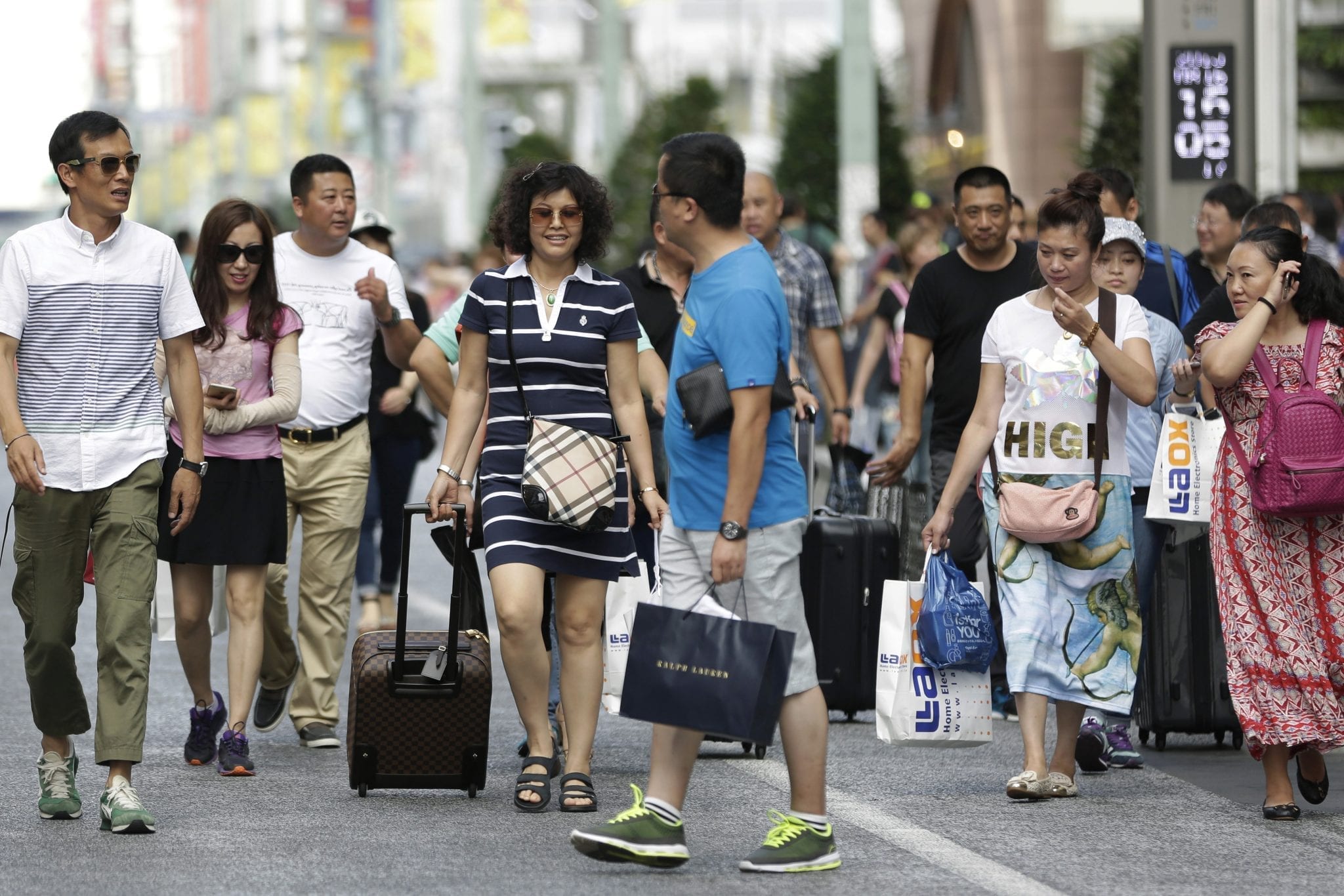
    Retail shopping continues to be the largest expense for tourists from China, according to a survey from Nielsen and Alipay, accounting for almost a quarter of total spend. The 2018 trends of Chinese mobile payment in outbound tourism survey revealed that retail spending took up 24.6 per cent of Chinese tourists average spend, followed by accommodation, dining and tourist attractions.

    Interestingly, the report found that Chinese millennials are no longer the single most dominant user of mobile payments.

    “In 2017, 55 per cent of Chinese tourists born between 1960-1979 used mobile payments while travelling overseas – significantly lower than the proportion of millennial tourists,” the report reads.

    “In 2018, the usage rate rose to 68 per cent, almost equalling their younger peers.”

    Average budget for the typical Chinese tourist increased 15 per cent to AU$9,382 over the year, and a familiarity with mobile payments drove increased spend, with 56 per cent of surveyed merchants claiming improved sales after adopting mobile payment system Alipay.

    However, a study by Coresight research in October 2018 found that, while Chinese tourists were travelling more often they were spending around 18 per cent less in the retail environment – a figure driven by a recorded 24 per cent decline in average shopping trip spend.

  • Reebonz to use blockchain technology to assure authenticity

    Reebonz to use blockchain technology to assure authenticity

    Southeast Asian online luxury marketplace Reebonz is exploring blockchain technology as part of its strategy to demonstrate the provenance of products. Complementing the firm’s existing in-house team of ateliers who specialise in authenticating leather products, timepieces, gemstones and jewellery, Reebonz intends to incorporate all transactions on a blockchain to ensure the comprehensive traceability of all products sold within its ecosystem. The firm’s goal is to enable buyers to verify the authenticity of products on their own and stamp out losses and distrust generated by the global exchange of counterfeits.

    By establishing end-to-end traceability, customers will also be able sell their items back to Reebonz, which would allow the company to easily identify a customer’s purchase.

    “The Reebonz leadership team is extraordinary and has already developed a cutting-edge technology and platform”, said Tim Draper, senior advisor of Draper Oakwood Technology Acquisition and founding partner of Draper Associates.

    “The authentication of pre-owned luxury items using the blockchain is just one of many high impact innovations Reebonz is pioneering to improve the luxury shopping experience for customers across Asia Pacific.”

    “While we started as an online platform that helps consumers access affordable luxury, we have evolved into an ecosystem that connects buyers and sellers through the widest range of luxury,” added Reebonz CEO and co-founder Samuel Lim.

    “Identifying gaps and opportunities in the luxury e-commerce landscape and spearheading strategies that present innovative ways of redefining luxury consumption has made us a leader in this industry. As we continue to build out a thriving community of buyers, sellers and international boutiques, it will become critical for the industry to evolve, and for us to become a leading innovator of authenticity solutions. We are excited to use the blockchain technology to solve one of the key global issues that impacts our industry.”

  • Myntra India taps 9,000 kirana stores to boost last-mile delivery

    Myntra India taps 9,000 kirana stores to boost last-mile delivery

    Flipkart-owned ecommerce platform Myntra that saw 80 percent revenue fall in FY2018 has doubled down on last-mile delivery, tapping into over 9,000 kirana stores across 50 cities to fast deliver packages. Today, nearly 60 percent of all Myntra’s product pick-ups and deliveries happen through its ‘Kirana Delivery Programme’ — helping the company reduce delivery costs, the company said on Tuesday.

    “Myntra’s ‘Kirana Delivery Programme’ is a successful model introduced by the company to accelerate order delivery in the most efficient way possible, while ensuring we provide a good partnership opportunity to our kirana partners,” a company spokesperson said.

    “We will continue to innovate, expand and hope to register more kirana partners in the future as well,” the spokesperson added.

    The ‘Kirana Delivery Programme’ is an ingenious model introduced by the company to accelerate order delivery, while creating a platform for kirana stores to have an additional source of income.

    “A mutually beneficial model, it has helped Myntra achieve greater consumer satisfaction and is enhancing the standard of living of the owners of several ‘mom & pop’ stores across the country,” said the company.

    Several tailors and beauty parlour owners, among others, have also signed up with Myntra for the programme.

    The online fashion retailer narrowed its consolidated losses to Rs 178.7 crore for 2017-18, compared with a loss of Rs 655.8 crore in the previous fiscal.

    According to business intelligence platform Tofler, the company saw its income growing nearly threefold to Rs 427.4 crore in 2017-18 as against Rs 155.6 crore in the previous financial year.

    Ananth Narayanan, Chief Executive of e-tail portals Myntra and Jabong, stepped down from the post on January 14 “to pursue external opportunities”.

    The 11-year-old Flipkart Group, owned by US retail giant Walmart, includes e-tail sites Flipkart, Myntra, Jabong and digital payment platform PhonePe.

    In May last year, Walmart bought a 77 percent equity stake in the company for a whopping US$ 16 billion.

  • The Palace Museum in Beijing promotes beauty products

    The Palace Museum in Beijing promotes beauty products

    For 500 years the Forbidden City in central Beijing was the seat of power in imperial China. Today it is home to the Palace Museum, a tourist magnet that houses some of the country’s most treasured cultural relics from the Ming and Qing dynasties. But this shrine to the past is rapidly becoming a very modern fashion phenomenon thanks to a new range of beauty products that have proved a massive hit with young Chinese women.

    Online buyers snapped up more than 100,000 lipsticks developed by the Palace Museum within four days of their launch earlier this month, helping to turn the historic landmark into a trendy consumer brand.

    What captured their hearts was the lipstick’s elegant packaging inspired by the national treasures on display in the museum – the lipstick tube bears patterns such as royal embroideries, antique furniture and fairy cranes – heavenly birds symbolising longevity.

    Lizzy Wong, a 24-year-old from the southern metropolis of Guangzhou, is one of millions of loyal new fans of the Palace Museum.

    “I bought them mainly for the beautiful cases. Their functionality doesn’t really matter to me,” Wong said. “We girls just can’t resist the charm of pretty designs.”

    For several years, the former imperial palace has attracted something of a cult following by developing and selling its own original products, from Chinese-style paper tapes to modern essentials like phone cases, with designs or branding inspired by the past.

    Before cosmetics, the Palace Museum found success with products which usually added a humorous twist to the serious traditional culture.

    Veronica Wang, associate partner at OC&C Strategy Consultants, which specialises in consumer goods, said the Palace Museum has turned itself into something more than a brand.

    “Young consumers are seeking things that are different and new. The Forbidden City captured this need,” Wang said.

    The success of the make-up range hasn’t been without challenges. The museum has two online outlets, the Palace Museum Cultural and Creative Store – which is accessed via WeChat and the Palace Museum’s Taobao store, and this has caused some confusion.

    The Palace Museum’s brand management was chaotic and would benefit from marketing and brand professionals, said Shaun Rein, the managing director of China Market Research Group.

    “When you think of The Metropolitan Museum of Art (in New York), you know that the quality will be pretty good and authentic. But when it comes to the Forbidden City, we really don’t know what the position is,” he added.

    Analysts also worry about whether the Palace Museum can replicate its past successes in the future.

    “The sustainability of this success will depend on their products and capability to continually innovate,” said Wang.

  • India’s Reliance to take on Walmart and Amazon online

    India’s Reliance to take on Walmart and Amazon online

    South Asia’s richest man Mukesh Ambani is establishing an e-commerce platform to compete with Walmart and Amazon in India. The Reliance Industries chairman will roll out services in Gujarat before extending them nationwide. “Jio and Reliance Retail will launch a unique new commerce platform to empower and enrich our 1.2 million small retailers and shopkeepers in Gujarat,” said Ambani.

    Reliance introduced the 4G Jio network in September 2016, a market disruptor with its free voice calls and cheap data plans. Its move into e-commerce will aggravate an already cut-throat battle between market leader Flipkart, owned by Walmart, and Amazon’s services in the territory.

  • Trends that coming in 2019 e-commerce

    Trends that coming in 2019 e-commerce

    Led by transformation in sales channels and customer demand, consumer trends for 2019 will center on subscription e-commerce, faster delivery, and eco-packaging, according to market experts. Subscription e-commerce, a field of business that involves curating products and delivering them on a regular basis, has been gaining popularity because it meets needs for tailored services, value, and convenience. From clean, neatly ironed business shirts to craft beers, you can get almost anything through a subscription service — now, even a car.

    Earlier this month, Hyundai Motor’s Genesis introduced a car subscription program that offers subscribers a choice of four Genesis vehicles for 1.49 million won (US$1,330) per month.

    “Our target group is drivers who want to experience a different variety of vehicle without having to worry about car management. The ultimate goal of our subscription program is to satisfy consumer needs amid shifting mobility trends,” Hyundai Motor said.

    According to industry data, subscriber-based businesses are undergoing an explosive expansion, having grown from 241 trillion won in 2000 to 470 trillion won in 2015, globally. Industry experts expect that number to surpass 594 trillion won by 2020.

    McKinsey & Company said in its “State of Fashion 2019” report that the subscription trend goes hand in hand with users’ desire for experiences, as they are more willing to spend money for a service that delivers tangible benefits along with personalized offerings.

    Meanwhile, over the past year, delivery has gotten faster for merchandise purchased via websites and apps. With services like Coupang’s Rocket Delivery, expecting one’s purchase to arrive the next day has become the new norm.

    Cutting down even further on delivery times will be a major sticking point for e-commerce businesses looking to stay afloat, market insiders said, with businesses now competing to ensure overnight deliveries, particularly of fresh food items.

    Overnight delivery is usually available only in Seoul and some parts of Gyeonggi Province and Incheon for now. Experts estimate that the market value of the industry will have reached 400 billion won this year.

    Lotte Mart currently plans to test-operate a 30-minute delivery service in the first quarter of the new year. Since September, it has offered a delivery service that moves products from its stores within three hours after purchase at an offline store.

    E-commerce company Coupang also plans to make a concerted effort to expand the overnight and even same-day delivery of fresh food products in 2019.

    “Our latest paid membership service, Rocket Wow club, which guarantees next-morning delivery for signed-up members, had already garnered almost 1 million members just two months after the service’s launch. We plan to expand the service to cover all customers across the country in the new year,” a Coupang representative said.

    The environmental packaging boom is set to continue well into 2019 as well. While plastic is not inherently bad, the way it is thrown away is problematic. As a result, an increasing number of consumers are rethinking their plastic use in an effort to cut waste.

    With environmental packaging campaigns spreading worldwide, manufacturers have been challenged to innovate their packaging methods.

    Since September, Starbucks Korea has replaced plastic straws with paper straws at some 100 of its stores in Seoul, Busan and Jeju, in an effort to reduce waste and protect the environment. All its paper straws are coated with soybean oil to make them more durable, the company said.

    The coffee franchise plans to eliminate single-use plastic straws from its 28,000 stores worldwide by 2020. Angel-in-us Coffee, the cafe chain operated by South Korean retail giant Lotte, also introduced special lids for cold drinks in an effort to reduce plastic use.

    “The throwaway culture is rapidly being challenged by increasing consumer awareness of the perils of plastic waste. A dramatic change in attitudes has occurred, forcing brands to rethink how they make better use of plastic in what they offer to consumers, who increasingly demand brands reduce, reuse and recycle plastic waste to better protect them and their world,” said Matthew Crabbe, a director of Trends APAC, in Global Consumer Trend report by Mintel.

  • The rise of men’s cosmetics

    The rise of men’s cosmetics

    Chanel is launching a make-up line entirely for men Boy de Chanel collection in 2019, and other brands might follow. Just as Gabrielle ‘Coco’ Chanel rocked the boat by flouting gender dressing rules in order to marry style and comfort in the early 20th century, the iconic fashion house is stirring the waters once again with a male make-up line.

    Striving to rewrite the rules and break free of gender codes, Boy de Chanel will boast three products to add to the luxurious French cosmetics collection in 2019.

    Almost a century after the European empire launched a make-up line for women, Chanel’s first cosmetic collection for men will see the products encapsulate the brand’s classical elegance through its midnight blue and white packaging, highlighting only the essential products.

    Touted as being a name that captures the essence of masculinity, the foundation, lip balm and eyebrow pencil are aimed at boosting confidence and erasing imperfections through a long-lasting formula that creates natural results.

    Chanel says its first make-up line for men “reaffirms the ever-changing codes of an unchanging vision” because beauty is not a matter of gender, it is a matter of style.

    You can expect the SPF 25 foundation Le Teint to have an “undetectable result” as it is described as being invisible to the eye and touch while offering a second skin with natural correction and high protection. It will protect skin from aging while allowing it to breathe through an airy micro-mesh leaving it shine-free.

    Promising to keep lips supple for eight hours, the moisturising lip balm is packed with jojoba oil and shea butter that leave a “featherweight effect”.

    Offering to boost self-confidence in one stroke, the Boy de Chanel eyebrow pencil defines and fills out the brow line with the spiral brush and tapered twist tip.

    Drawing inspiration from the female world of style to craft the timeless products, Chanel strives for inclusivity with “no absolutely feminine or masculine prerequisites” to empower cosmetic fans to be whomever they desire.

  • Flipkart secures more funding to face competition

    Flipkart secures more funding to face competition

    Indian e-commerce firm Flipkart has received US$201 million funding for its wholesale business from its Singapore-incorporated parent. The investment comes during a period of intensifying competition between the firm and its Amazon-backed competitor in a market estimated to be worth $18 billion. It signals a prioritising of sales growth by the retailer since its acquisition by Walmart.

    A report last year indicated that Flipkart has seen a more than 80-per-cent increase in transactions in recent months, prompting the company to expand into new business lines such as furniture and groceries over the next three years.

    Separate reports show that Amazon also looks to invest significant funds into the market in order to challenge Flipkart’s present lead in the territory.

  • App-store spending to surpass US$120 billion this year

    App-store spending to surpass US$120 billion this year

    App-store spending by consumers is expected to surpass more than US$120 billion this year according to global mobile data and analytics provider App Annie. The firm’s annual The State of Mobile 2019 report found consumers downloaded 194 billion apps last year, spending $101 billion in app stores and averaging three hours per day on mobile.

    Time spent in-app grew 50 per cent over the past two years, with downloads up 35 per cent over the same period. Mobile consumed 62 per cent of global digital-ad spend last year, up from 50 per cent in 2017. Sixty per cent more apps will monetise through in-app advertising this year.

    The report also found that 10 minutes of every hour spent consuming media this year will be spent streaming video on mobile – and Generation Z consumers spend 20 per cent more time in apps than the rest of the population.

    “Mobile is no longer an add-on channel – it is the engine fueling digital transformation,” said App Annie CEO Theodore Krantz.

    The report looks at macrotrends, app rankings, and a number of industries including mobile marketing, shopping and retail, travel, gaming, social networking, media and entertainment, banking and fintech, video streaming, dating and more.

    The firm’s global marketing and insights EVP Danielle Levitas said consumers spending on apps globally last year was larger than the global live and recorded music industry and double the size of the global sneaker market.

    “Mobile experiences are so central to how we live, work and play and with consumers spending three hours a day on mobile, it’s clear how vital this platform is for all businesses in 2019 and beyond.”

  • Korea Grand Sale gears up for kick off

    Korea Grand Sale gears up for kick off

    Korean tourism authorities were set on January 14 for the official opening of the Korea Grand Sale, an annual event for foreign shoppers with events, promotions and sales across the country. This year’s event, jointly hosted by the Ministry of Culture, Sports and Tourism and the Visit Korea Committee, will be held from January 17 until February 28.

    The theme of this year is “Travel, Taste, Touch,” and will offer benefits of varying degrees from 51,497 businesses. According to the ministry, around 850 enterprises will hold sales, including discounts of up to 97 percent on flights to Korea from airlines including Air Seoul.

    Up to 25 percent discount will be provided at eateries at the top-notch hotels across the country.

    According to a survey on what foreigners did while visiting Korea conducted by the ministry, 72.5 percent of all foreign visitors in 2017 said shopping, while 58.2 percent said eating and tourism.

    A tourism program featuring restaurants with over 50 years of history — including “Cheongjinok,” “Ureok,” “Hadongkwan,” “Joseonok” and “Yeolchajib” will be held with Korean celebrity chefs as guides. Other packages include Korean food and temple food for foriengers, and ski packages.

    For those who need assistance, a welcome center will be open throughout the festival period at Cheonggye Plaza in Jongno-gu, Seoul from 12 p.m. to 8 p.m. Tour guides will circulate popular tourist areas like Hongdae or Dongdaemun, accompanied by interpretation services.

    A welcome booth for foreigners will operate at Incheon International Airport and Gimpo International Airport from February 1-8, to coincide with the Chinese and Korean Lunar New Year holidays.

    At the welcome center, Korea Tour Card will be given free to the first 50 visitors every day. The 10,000th visitor will receive a coupon for a stay at a local hotel.

  • Poh Kong Malaysia to open three more stores

    Poh Kong Malaysia to open three more stores

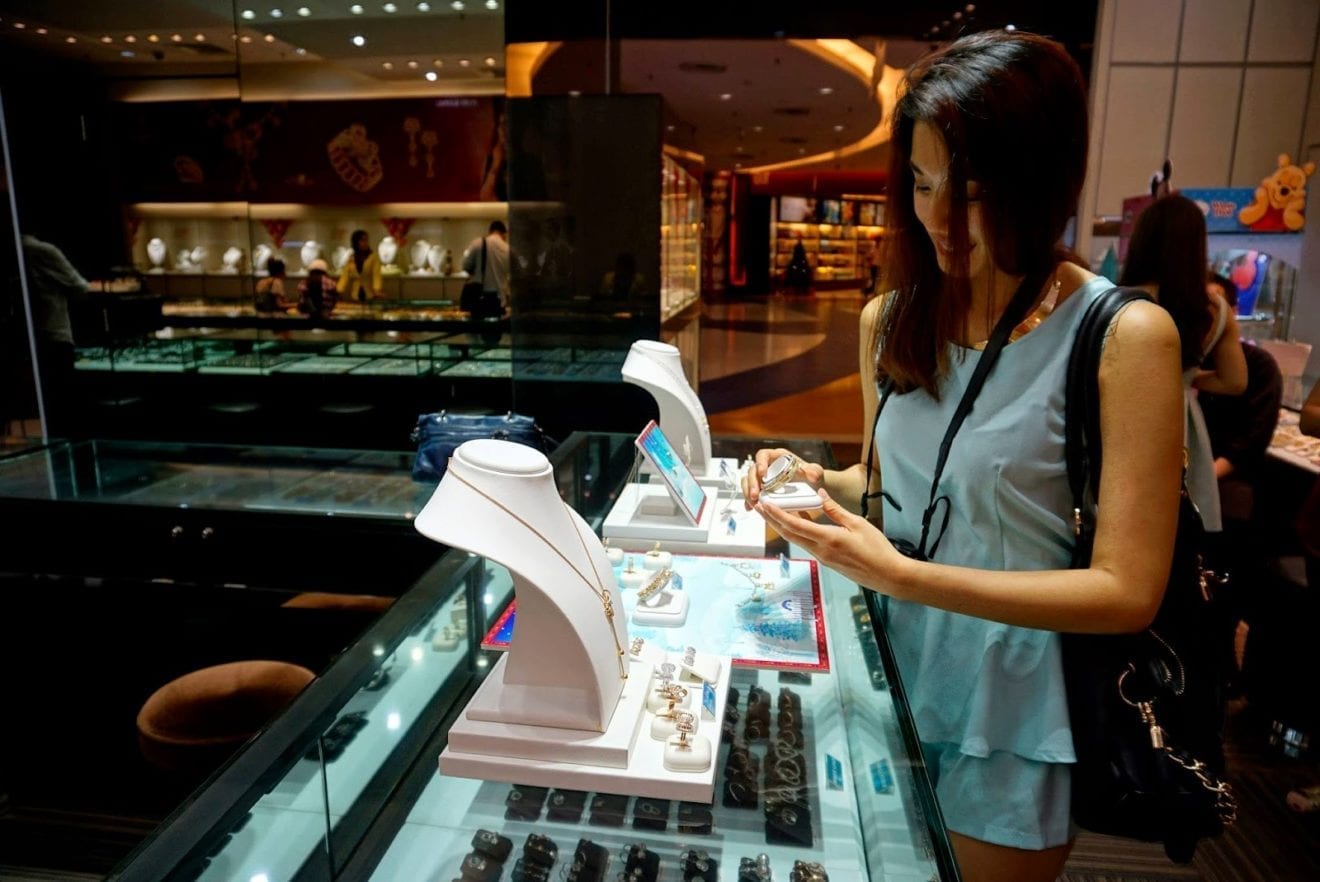
    Malaysian jeweller Poh Kong plans to open three more stores this year, boosting its profit. The improved profit is also likely to be driven by  higher gold prices, tipped by some to range from US$1300–$1400 per ounce later this year. The firm’s new stores will open in IOI Mall Puchong, Aeon Nilai and South Key Mall in Johor, taking its network to 95 outlets nationwide.

    “We are aware of the US-China trade war, as well as the anticipation of the US interest rate hikes and currency fluctuations that alter consumer sentiments that could lead to market uncertainty,” said MD Eddie Choon Yee Seiong. “Yet, we are optimistic to maintain or do better in 2019 as compared to the previous financial year.”

    Indicators of upward movement for the company include the improving economy and the strength of the Malaysian ringgit against the American dollar.

    While burgeoning demand saw the firm’s performance improved during the last financial year, fluctuations in gold prices and a weaker ringgit saw a steep drop in actual profits at 20.75 per cent lower than the previous year.

    “We reckon gold will benefit from the ongoing concerns looming around the US-China trade war concerns, as investors may find the precious metal a safe haven,” said Choon.

  • Vietnam’s millionaire population growth among world’s fastest

    Vietnam’s millionaire population growth among world’s fastest

    Vietnam ranks fourth among the world’s top 10 countries with the fastest millionaire population growth, a new report says. The country’s High Net Worth (HNW) population is set to grow by 10.1 percent each year in the 2018-2023 period, says wealth research firm Wealth-X. This growth rate is only lower than Nigeria at 16.3 percent, Egypt, 12.5 percent and Bangladesh, 11.4 percent, says the report, which covered over 540,000 HNW individuals in the world.

    The report defines HNW population as those with a net worth between $1 million and $30 million. The world’s HNW population grew by 1.9 percent last year from 2017 to 22.4 million people with a combined wealth of $61.3 trillion.

    About 25 percent of the world’s HNW population were located in Asia last year, and their total wealth was $15.48 trillion.

    Although the region’s GDP went up 8 percent last year, its stock markets plunged by more than 11 percent, partly explaining why Asia’s HNW population and total wealth remained virtually unchanged from last year, the report said.

    It also said that the top 10 countries accounted for over 75.2 percent of the global HNW population and 73.8 percent of total HNW wealth last year.

    U.S. topped the list with over 8.6 million people, following by China with 1.8 million, Japan, 1.6 million and Germany over 1 million.

    In another report published last September, Wealth-X said that the number of ultra wealthy population, those with a net worth of over $30 million, has increased by 12.7 percent in Vietnam from 2012 to 2017, making it the third fastest growing country in the world in this category.