Tag: Shopping

  • Sarment Holdings, Blackberry join to deliver security for luxury customer

    Sarment Holdings, Blackberry join to deliver security for luxury customer

    Sarment Holding Limited is pleased to announce that it is partnering with BlackBerry to co-develop KEYYES CHAT, a highly-encrypted messaging application to provide identity and overall data security management for Sarment’s rapidly growing ultra-high, and high-net worth user base. The development of KEYYES CHAT will be in conjunction with a series of other security-focused applications which are anticipated to be launched starting in 2019.

    The KEYYES CHAT application has been developed with the BlackBerry Spark Communications Services SDK, which provides end-to-end encrypted chat, voice, video and data transfer functionality. It includes FIPS-validated, app-level, AES 256-bit encryption to ensure data is always protected on a device, across the mobile network and into the enterprise infrastructure.

    “Working in collaboration with BlackBerry was an obvious choice for Sarment, given they have long been regarded as a global leader in secured data and communications. Integrating this technology into Sarment’s digital ecosystem KEYYES is one of the steps we are taking to continue to provide our communities with useful tools they can trust. We started with bookings, purchases, deliveries and now we are adding communication to solve the issue of privacy and data security for our growing user-base. By leveraging BlackBerry’s Spark Communications Services SDK communication technology, KEYYES CHAT users can feel confident that their data and privacy are certifiably secured,” said Will Beattie, Chief Technology Officer of Sarment Group.

    In 2018, Sarment launched a unique offering which has quickly garnered the attention of the luxury industry by migrating its network of consumers and luxury brand partners into a unique digital ecosystem named KEYYES. ​KEYYES works as a curator, service provider and experience planner. Users discover expert insights, purchase curated goods and make bookings at featured lifestyle venues like restaurants, bars, art galleries, spas, wellness retreats, fashion houses, private clubs, automotive showrooms and designer’s workshops. KEYYES is currently available in 5 cities in Asia and the Company is targeting to be in over 20 additional cities worldwide in the next 3 years.

    KEYYES CHAT will be integrated in KEYYES App but will also be available to the general public in a lighter format with the same level of end-to-end encrypted security. It will give users the possibility to discover and be informed about KEYYES world if they are not yet a member.

    “We are extremely excited to be working with BlackBerry to address the cyber security and overall privacy of our users, and look forward to growing the breadth of our technology and specific application portfolio together in the coming months and years,” said Quentin Chiarugi, CEO of Sarment Group. “Sarment plans to migrate all its employees’ communications and its partners using KEYYES CHAT as the only communication tool when the application is launched. We want to showcase to our corporate partners how valuable KEYYES can be for their own employees and their customers.”

    “As more and more of our private lives are shared and conducted online, the need for secure communications is critical,” said ​Alex Thurber, SVP and GM of Mobility Solutions, BlackBerry. “KEYYES delivers a useful service for high-net worth individuals, whose data may be of value to those with malicious intent, and being able to trust in the integrity of the chat system will be a primary decision-making factor for them in considering the service. With the BlackBerry Spark Communications SDK, KEYYES CHAT will allow seamless communication between members, partners and employees while protecting the privacy and security of its users.”

  • Amazon Kicks Off the New Year with Head Start on Chinese New Year Festivities

    Amazon Kicks Off the New Year with Head Start on Chinese New Year Festivities

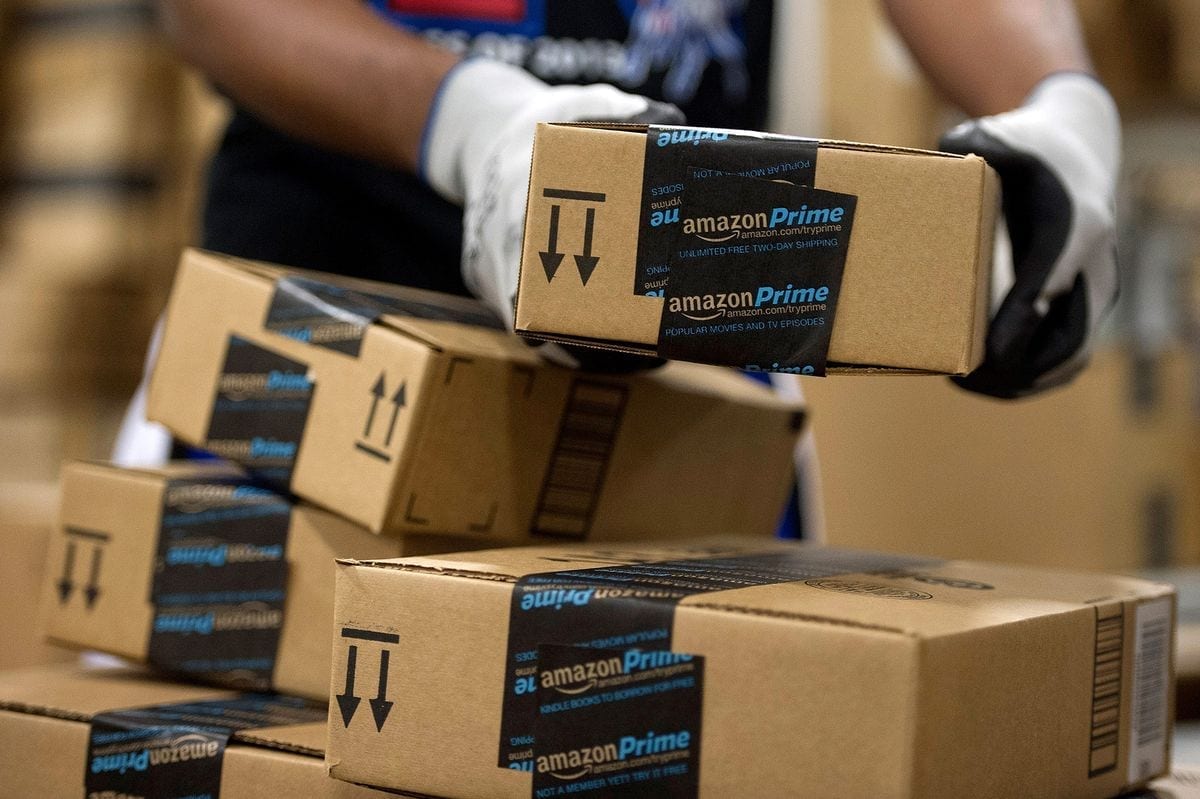
    Amazon announced the kick-off of the Chinese New Year season for Amazon Prime members in Singapore, offering new expanded local selection and great deals and free samplings to help usher in the Year of the Pig with ease. Amazon Prime Now will offer customers a one-stop shop for everything Chinese New Year related — from eight-pack red packets to traditional pineapple tarts and barbequed pork slices (bak kwa).  Anyone in Singapore can join Amazon Prime for S$2.99 a month or start a 30-day free trial at www.amazon.com.sg and download the Prime Now App.

    “We’re excited to jump into the Chinese New Year season, helping Prime members in Singapore get ready for the Year of the Pig with our expanded selection of popular holiday goodies–abalone, traditional pineapple tarts and handmade BBQ pork slice,” said Kourosh Kaghazian, Country Manager, Amazon Singapore. “From cleaning supplies to groceries, we’ve got Prime members covered this new year with the convenience of tens of thousands of items, including a variety of local favorites, and ultra-fast two-hour delivery right to their door.”

    New this season, Amazon is offering some must-have Chinese New Year goodies, including:

    • Kele: Traditional Pineapple Tarts and other festive cookies
    • Kim Joo Guan: Traditional Handmade BBQ Pork Slice
    • Crystal Jade: Almond Puff Cookies and Bo Lo Pineapple Tarts
    • New Moon: Abalone

    Amazon has also expanded its Reunion and steamboat selection for customers in time for their holiday dinner preparations with frozen and fresh sliced meats, noodles and tofu and a wide variety of fresh and frozen seafood, including pomfret, grouper, threadfin, scallops, crabmeat, mussels, squid as well as seasonal fresh vegetables and fruits.

    Amazon has also created specially curated selections according to Chinese New Year themes, such as Readying the House, Spring Cleaning and Organization, Stocking Up on Groceries, Shop Fresh Food/Reunion and Last-Minute Shopping. Prime members will be able to take advantage of the free two-hour delivery on orders of S$40 or more, especially helpful for heavy and bulky items like soft drinks. In addition, Prime members will also be able to shop millions of items on the international selection via the Prime Now App with free delivery in 7-9 business days on orders of S$60 or more.

    Prime Now will offer delivery from 10:00 a.m. to 6:00 p.m. on 4 February, Chinese New Year Eve as well as both public holidays 5 February and 6 February. Leading up to Chinese New Year, Amazon Prime Now will offer regular delivery from 10:00 a.m. to 10:00 p.m.

    Prime members in Singapore have access to millions of items via the Prime Now App. Amazon Prime in Singapore is currently available for S$2.99 per month. Prime membership benefits in Singapore include:

    • Free Two-Hour Delivery on Tens of Thousands of Items: Ultra-fast delivery on tens of thousands of items with free two-hour delivery on orders over S$40, between 10am and 10pm daily.  Items range from groceries to electronics, including a variety of new brands added to Prime Now since the launch such as Yakult, Dell, Tefal, Sambucol, Bausch & Lomb and Pinkfong, as well as new categories including fresh flowers, organic fruits and international foods.
    • Free International Shipping on more than 7 Million of Items: Unlimited free shipping in 7 to 9 business days on orders over S$60 from International Selection via the Prime Now App on more than 7 million international products shipped directly to you from Amazon US. Products include a wide selection of top brands such as Leap Frog, Calvin Klein, Rubbermaid, Zojirushi, BCB Generation, The Children’s Space, Pet Safe, Rebecca Minkoff, and Melissa and Doug.
    • Amazon Prime Video: Prime members can stream or download popular and award-winning Prime Original series like The Grand Tour, Golden Globe and Emmy award winner The Marvelous Mrs. Maisel, Tom Clancy’s Jack Ryan starring John Krasinski, Homecoming starring Julia Roberts, and many more. Prime members can watch anytime, anywhere via the Prime Video App on Android and iOS phones and tablets, smart TVs, game consoles or online at www.primevideo.com.
    • Twitch Prime: Prime members enjoy a selection of free games every month, free in-game loot for the world’s most popular games, a free broadcaster subscription every 30 days, exclusive chat emotes, and more at https://www.twitch.tv.
  • Domestic, foreign e-commerce players should be treated alike: CUTS India

    Domestic, foreign e-commerce players should be treated alike: CUTS India

    The Government needs to create a level-playing field for both domestic and foreign e-commerce platforms through a comprehensive e-commerce policy, said Pradeep S. Mehta, Secretary General, CUTS International on Sunday. He noted that the current norms for the segment are applicable to foreign online retailers and this might create a discriminatory environment towards the domestic players.

    “The Government may not be wrong in its clarificatory policy on Foreign Direct Investment (FDI) in e-commerce, as it was a case of backdoor entry in multi-brand retail trade. But vital issues remain to be resolved to promote healthy economic democracy”, said Pradeep S Mehta, Secretary General, CUTS International.

    “However, the issue of creating a level-playing field between domestic and foreign players in retail sector is yet to be resolved, for which a comprehensive National E-Commerce Policy is need of the hour”, he said.

    The Department of Industrial Policy and Promotion (DIPP) recently had said that 100 percent FDI is permitted in the market place model of e-commerce and not in the inventory-based model or the multi-brand retail segment.

    The Commerce Ministry in December revised the FDI policy for e-commerce players whereby it barred online retail firms such as Amazon and Flipkart from selling products of companies in which they have stakes. It also prohibited e-tailers from mandating any company to sell its products exclusively on its platform only.

    Mehta said: “The new guidelines are stricter for e-commerce companies with FDI providing marketplace, but there are no such restrictions for companies without FDI.”

    He also observed that there is no need for a separate regulator for the e-commerce segment.

    “India does not need a separate regulator for e-commerce, which would be yet another parking place for retired babus who are generalists and turn into controllers.

    Most of the malpractices adopted by e-commerce platforms, for instance, discrimination among its vendors, deep discounts etc, can be dealt by the Competition Commission of India. If need be, the Competition Act, 2002 can be tweaked for which the process is going on,” he said.

    The Consumer Protection Bill, 2018, which is likely to be passed soon by the Rajya Sabha, also has specific provisions on e-commerce, he added.

  • Hong Kong November retail sales almost stagnant

    Hong Kong November retail sales almost stagnant

    The growth of Hong Kong retail sales in November slowed to a crawl according to Census and Statistics Department figures just released. After a 6 per cent year-on-year increase in October, the value of sales in November rose just 1.4 per cent to an estimated HK$39.2 billion. That is well below the 9.7 per cent year-to-date rise for the first 11 months of the year.

    And after netting out the effect of price changes over the same period, Hong Kong retail sales in November rose by just 1.2 per cent year on year.

    A spokesman for the C&SD said the “generally moderated growth in retail sales in recent months” reflected more cautious consumption sentiment in the face of various external uncertainties such as the US-Mainland trade tensions and volatilities in the global financial markets.

    “Looking forward, while the favourable local job and income conditions and continued expansion in inbound tourism should still provide some support to the retail sector in the near term, consumer sentiment could be affected by weaker asset prices and the external uncertainties.”

    The overall figure was affected by soft sales of the key jewellery and watches category, down by 3.9 per cent, and of electronics, down by 4.9 per cent. Clothing sales fell by 3.6 per cent.

    Countering those falls were department store turnover, up 3.9 per cent; medicines and cosmetics up 10.1 per cent; food, alcoholic drinks and tobacco up 1.9 per cent; and other consumer goods, not elsewhere classified by 14.3 per cent. Optical store sales rose by 5.4 per cent and books and stationery by 6. 2 per cent.

    Quarter on quarter, Hong Kong retail sales receded during the three months to November by 2.7 per cent, compared with the preceding three months, with the volume of sales (after factoring in inflation) falling 1.8 per cent.

    For the first 11 months of last year, the volume of retail sales increased by 8.4 per cent.

  • Pooey Puitton toy purse makers file lawsuit against Louis Vuitton

    Pooey Puitton toy purse makers file lawsuit against Louis Vuitton

    Toy company MGA Entertainment has preemptively sued Louis Vuitton in an attempt to prevent the fashion house from taking actions that might impact sales of its slime-filled children’s purse Pooey Puitton. Filed 28 December 2018 in Los Angeles federal court, the lawsuit aims to prevent any potential claims of trademark infringement that Louis Vuitton might have against the plastic, poop-shaped purse.

    Instead, it asserts that the product is a “protected parody” of Louis Vuitton’s luxury handbags.

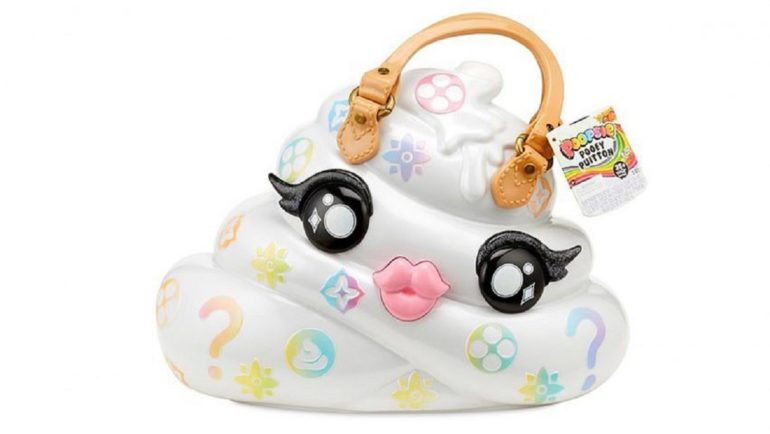
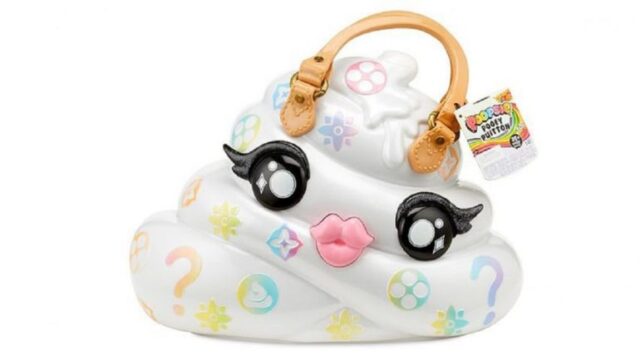
    The Pooey Puitton plastic purse takes the shape of a poop emoji with a handle and sparkly eyes. It is printed with a colourful, printed monogram, similar to the floral trademark pattern found on Louis Vuitton products, particularly the Spring/Summer 2003 collaboration with Japanese artist Takashi Murakami.

    Intended as a children’s toy, the purse is designed to store “unicorn poop”, a glittery toy slime.

    The children’s toy manufacturer launched the lawsuit in response to a claim that Pooey Puitton’s name and image violates the fashion label’s intellectual property rights.

    But MGA Entertainment asserted that “no reasonable consumer would mistake the Pooey product for a Louis Vuitton handbag”, citing the difference in material, price, marketing and stockists.

    According to the toy giant, the product is actually a parody of the luxury fashion brand, “designed to mock, criticise, and make fun of the wealth and celebrity” associated with Louis Vuitton products.

    “The use of the Pooey name and Pooey product in association with a product line of magical unicorn poop is intended to criticise or comment upon the rich and famous, the Louis Vuitton name, the ‘LV’ marks, and on their conspicuous consumption,” the statement reads.

    The interlocking “L” and “V” floral monogram pattern was designed by Louis Vuitton’s son, Georges Vuitton, in 1896.

    This is not the first time that MGA Entertainment has found itself in legal battles. The brand was famously sued by Barbie-manufacturer Mattel for allegedly stealing the idea behind its Bratz doll franchise.

    Elsewhere, Virgil Abloh – who was appointed artistic director of menswear for Louis Vuitton in March 2018 – unveiled his polychromatic menswear collection for the brand during Paris fashion week.

  • JD stores open in Beijing and Mongolia

    JD stores open in Beijing and Mongolia

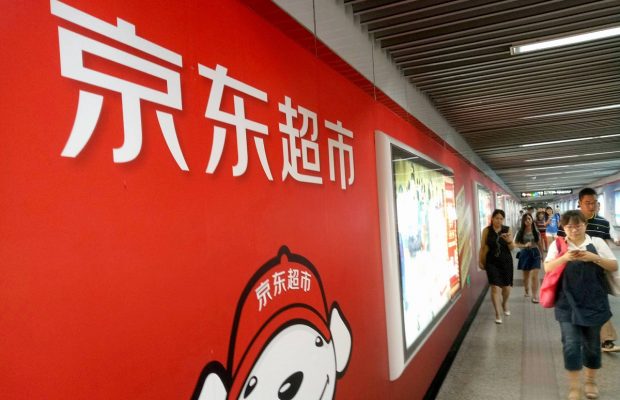
    Chinese online retail giant JD has opened two new innovative stores at Beijing Capital International Airport (BCIA) and Hohhot East Railway Station in Inner Mongolia. In a move to further expand the firm’s “boundaryless retail” strategy, the JD travel retail stores use the e-commerce company’s latest retail technology in order to make it easier and more enjoyable for travellers to purchase on the go. The openings add airports and railway stations to JD’s offline retail offerings, which already include convenience stores, supermarkets, and partnerships with hotels.

    Located in the departure lounge of Terminal 3 at BCIA for the next three months, JD’s pop-up store will offer popular travel items such as daily necessities, clothing, mobile accessories, beauty products, and bags and suitcases. The store uses JD’s smart store technology to understand how customers interact with products as well as which products to offer them. The integrated JD Zu Chongzhi platform can analyse customer behaviour and traffic flow, such as generating heat maps, in order to assist with product selection and inventory management, ensuring smooth store operations.

    “[Stocked] with items popular among travellers, the new shop will not only offer the products they want to buy most on their journeys – it will also allow them to personally experience what shopping of the future will be like, brought to them by China’s largest and most innovative retailer,” a spokesperson for BCIA said.

    The 100sqm unmanned Hohhot East Railway Station JD travel retail store opened in partnership with China Railway Express. It also makes the most of JD’s technological capabilities, with features such as facial-recognition payment and smart vending machines. Later, the store will make use of a Mini Program in WeChat so that customers can choose to buy on the spot and take their purchases with them, or shop online and have them delivered to a convenient location.

    JD Logistics and China Railway Express have been cooperating in logistics transportation since 2014, and have worked together to help facilitate the JD Luxury Express “white glove” delivery service as well as fresh food delivery via high-speed rail.

    “Many of our customers enjoy shopping while traveling and we’re determined to make sure they benefit from the convenience of JD wherever they are,” JD’s GM of social e-commerce and retail innovation, Bing Zhang, said.

    The new JD travel retail stores in Beijing and Inner Mongolia will provide them with a truly seamless experience that is unrivalled anywhere”.

  • E-Land’s owners step down from management

    E-Land’s owners step down from management

    Owner family members of fashion conglomerate E-Land Group stepped down from management on Thursday, handing over the helm to younger executives internally promoted to leadership roles. The move comes in an effort to rejuvenate its governance structure to strengthen the role of the board of directors of each affiliate and enhance their autonomy when it comes to making business decisions.

    Founder Park Sung-su, 65, will step down from the day-to-day management of the group while remaining chairman. He will focus on nurturing next-generation leaders and developing new businesses instead of being directly involved in the management of subsidiaries.

    “In the past, our chairman made a lot of important decisions across the group, but since late 2016, we’ve been making preparations to give more autonomy to affiliates and develop their capacity to make business decisions on their own,” said an E-Land spokesman.

    Park’s younger sister Park Sung-kyung, 62, also stepped down from her position as vice chairwoman of the group. Having worked at E-Land for more than 12 years, Park has led the group when it comes to external affairs in the last few years. She also managed E-Land’s global operations, including in China.

    Stepping aside from management, Park Sung-kyung will chair the board of directors of the E-Land Welfare Foundation, which pursues charity activities inside the group.

    To fill the void, two vice chairmen were appointed. Former E-Land Retail CEO Choi Jong-rang has been promoted to vice chairman of the retail subsidiary, which operates NewCore department stores as well as popular shoe brand Shoopen. Kim Il-kyu has also been newly appointed as vice chairman of E-Land World, which manages the group’s key clothing brands.

    E-Land also promoted a handful of top executives in their 30s and 40s to head up their respective business divisions.

    Choi Wan-sik was promoted to CEO of E-Land World’s fashion division. Choi previously gained recognition for his performance as the director of Spao.

    At E-Land Park, which manages the group’s resorts and restaurant chains, 35-year-old Kim Wan-sik took over the reins as the subsidiary’s head of restaurants, which includes buffet franchises Ashley and Pizza Mall.

  • Indian shop fit industry poised for sustainable growth in 2019

    Indian shop fit industry poised for sustainable growth in 2019

    The Indian retail sector is growing faster than ever before and is one of the fastest growing in the world. According to a Deloitte Report, the Indian retail industry is expected to grow to US $1.1 trillion by 2020, registering a CAGR of 8.79 percent between 2000 and 2020. This growth can be attributed to the growing young population of the country, rise in disposable income, change in lifestyle and most importantly, digitization and connectivity.

    Though brands are investing heavily in online retail, traditional retail continues to be their core focus and hence, demand for shop fit designers and manufacturers only continues to grow.

    Changing retail landscape and role of retail shop fitting

    2018 was a redefining period for Indian retail industry. From huge investments by international players to M&A, downsizing of physical stores from traditional players to investing in physical stores by ecommerce players, the retail industry witnessed significant changes.

    As the debate around relevance and profitability of brick-and-mortar stores continues, retailers continue to invest in physical stores and thrive to provide the best shopping experience for customers. The traditional, one-size-fits-all store formats are slowly decreasing and brands are now continuously working towards exploring creative concepts to rejuvenate the look and feel of the store to stay relevant and attract their respective consumer targets.

    Every brand has a different approach in designing retail outlets and so are their shop fit requirements. For example, a sportswear brand store will have a spacious interiors, relaxed furniture for seating, minimum product placement on shelves to create clutter free picking up of products and eye-catching digital display of celebrated sports personalities on the walls to influence customer’s shopping. Whereas, a clothing brand store for infants and children has shop fittings and fixtures of lower height making it easy for kids to select what they want and have popular animated characters all over the store. This is where the expertise of shop fitters come into the picture. Shop fitters play a very important role in building successful retail brands by planning, designing and manufacturing shop fit and fixtures that reflect a brand’s ethos. They closely work with the brands to execute their designs and ideas for Visual Merchandising.

    Growth opportunities for shop fit industry

    A study by JLL suggests that the country is expected to see the highest mall supply in the next three years (2018 – 2020) touching 19.4 million square feet. Due to the radical shifts in the consumption pattern of new-age consumers, brands see tremendous untapped potential in small towns and cities (Tier II and III) they will expand their footprints in these geographies and continue to invest in physical stores.

    Brands continue to focus on integrating online and off-line shopping and the concept of ‘Experiential shopping centers’ will gain importance. Physical stores will double as fulfillment centers to help process online orders. Like in other markets, the concept of BOPIS, i.e. “Buy Online, Pickup In-Store”, which gives customer the flexibility to shop (order) online and visit the nearest store to try the product and collect it may become popular among people. As customer shopping experience, engagement and purpose of the physical store becomes more crucial, brands will regularly invest in store design, interiors, shop fits and new concepts in order to differentiate themselves from competitors. A good fit-out raises a brand’s profile, efficacy and creates a positive perception about the brand. Hence, there is a growth opportunity for shop fitting industry.

    Adding to this, the trend of solo entrepreneurs entering the market and small scale traditional retailers who wish to revamp their business rely on professional shop fitters for retail store design, floor planning, shop fits, etc. which will also give a boost to the shop fit industry.

    Conclusion:

    As organized retail industry continues to grow in the country, it possesses a great opportunity for the shop fit industry. Decisions by brands to downsize the store formats may hurt the shop fit industry’s business and profitability, but there will definitely be significant growth as more brands are now looking to establish their offline presence and also increase their physical presence across markets. In addition to this, with the new rules regarding single brand retail ownership, many new foreign brands will look to enter the Indian market.

    Being an allied industry of the retail sector, the shop fit industry grows hand-in-hand with the retail industry. As brands continue to invest in visual merchandising and store design, they rely on experienced and quality focused shop-fit manufacturers to partner with them. The role of shop fitters cannot be understated in helping the retail brands build their identity, differentiate them from competitors and attract footfall in the store by their innovative designs and store concepts. Shop fitting is an important investment for retail brands and when done right can translate to improved business and performance. Overall, the outlook for the shop fit industry is positive.

  • How technology will play a big role in retail in 2019

    How technology will play a big role in retail in 2019

    Technology has penetrated in every sphere of our lives. We live, love, eat and sleep on #technology now. Each year, we see technology moving deeper and deeper into our existence. It’s good and bad – both. Good because it helps us in doing more in less time and efforts. Bad because interweaving of tech in our lives has left us dependent, vulnerable and very anxious. Let’s see what 2019 has in store for us – specifically 5 technology leaps to look out for in retail.

    Omnichannelisation – The technology approach to seamlessly tie all sales channels in a see-anywhere-buy-anywhere way in picking up steam with mainstream brands and retailers. Omni channel technology is also being used as a strategic advantage by multichannel stores and small brands/retailers to scale their operations while centralizing the inventory. The main advantage is higher brand loyalty due to “all touch point” approach – and much lower active inventory requirements. In 2019, we expect omni channel to penetrate deeper into all spheres of retail through simplification and customization of omni-tech.

    Cashier-Less Shopping – Yes, it all started with #Amazon GO, a proprietary technology that eliminates the need of checkout registers and cashiers. Customers can activate a geo-sensed resident app (Amazon GO app), walk in, pick up what they need and walk out – and all transaction happens in the backdrop through something what Amazon calls “Just Walk Out” (JWO) Technology. Ease of use, time savings and low cost operations are at the core of this technology. In 2019, you’ll see Amazon and a few other technology providers opening more of these JWO stores worldwide.

    Virtual Retail Experience – According to #emarketer report, two thirds of US customers were interested in using Virtual retail experience – where you could get near-real brand and store experiences using head mounted or holographic hardware. 2019 could see a surge in virtual-reality based retail experiences. The upside? No (or very low) rentals and really easy reconfiguration of virtual stores.

    Hyper-Local Retail – Hyperlocal retail refers to the technology where consumers can find and buy products near to them using an app that runs on geolocation. A catalog of products from local stores is uploaded on the app and the customers can discover and buy products from nearby stores. It’s a great cusp between purely online and purely offline retail experience. This is very useful for daily needs products, appliances and electronics. It’s awesome for the retailer since it allows for expansion of product-discovery while minimizing store footfall. Overall, a win-win for retailer and consumer. In 2019, watch out for companies like #nearbuy and #zopper making it big in India.

    AI-based Consumer Insight – Artificial intelligence and machine learning is growing leaps and bounds in almost every segment. Retail is no exception. In 2019, AI and ML is expected to grow manifold in terms of demand forecasting, inventory planning, customer service bots, natural language based customer engagement and customer’s next purchase (and time) prediction. Though it may sound a bit nerdy, but the more data flows through the AP engines, the more powerful they get at predicting consumer behavior; and provide more powerful strategic advantages to the brands and store. Watch out! If you have that weird feeling that your phone purchase was somehow orchestrated – but cannot put a finger on anything concrete, you may have been Artificially Driven into that purchase!

  • Amazon sees ‘record breaking’ holiday season

    Amazon sees ‘record breaking’ holiday season

    Global online marketplace Amazon has announced a record-breaking holiday season, with customers shopping en-masse across both the Christmas and Boxing Day sales events on the storefront. “This season was our best yet… we are thrilled that in the U.S. alone, more than one billion items shipped for free this holiday with Prime,” Amazon chief executive of worldwide consumer Jeff Wilke said.

    While the online store didn’t provide sales figures, Australian purchases saw a love of gaming push sales of the Nintendo Switch and New 3DS XL consoles dominate the holiday period, as well as Sandisk memory cards and various video games compatible with the systems themselves.

    Fashion brands Birkenstocks, Bonds, Champion, Nike, Tommy Hilfiger and Puma were also noted as being “particularly popular” through the period.

    “We were delighted to see so many Australian consumers shopping across all categories on Amazon.com.au in the run up to Christmas [and] during our Boxing Day Sale Event,” Amazon Australia country manager Rocco Braeuniger said.

    “Our first year in Australia saw us increase selection five-fold to over 100 million products and introduce many new products and services for customers to enjoy, [and] we look forward to bringing much more to Australian consumers in 2019.”

    In the lead up to the event, research from PayPal noted that it expected a quarter of Australian shoppers to head online on Boxing Day, with 70 per cent of those surveyed stating that online shopping is less stressful.

    “Australians are looking for the best deals, not the stress that’s traditionally associated with heading out to the shops for the Boxing Day sales,” PayPal shopping expert Liz Lefort said.

    “Increasingly those deals, or better deals can be found online, and Aussie shoppers are taking heed of that.”

  • Korea e-commerce hits high of 10.62 trillion won in November

    Korea e-commerce hits high of 10.62 trillion won in November

    The total value of online shopping in Korea reached a record high in November, government data showed Wednesday, in the latest sign that a growing number of Koreans are using computers or mobile devices to buy things ranging from clothes to electronic goods. Total online transactions reached 10.62 trillion won ($9.5 billion) in November, up 22.1 percent from a year earlier, according to the data compiled by Statistics Korea.

    The reading marked the highest amount since January 2001 when the statistics office started collecting data on online shopping.

    Sales of electronic goods and computers rose 22.7 percent on year to 1.68 trillion won, and demand for clothes jumped 10.4 percent to 1.45 trillion won in November, while online sales of food and beverages surged 32.3 percent to 911.4 billion won.

    Purchases made through smartphones, tablets and other mobile gadgets soared 28 percent on year to a record 6.59 trillion won, accounting for 62.1 percent of all online sales in November.

    Korea is one of the most wired countries in the world, with one of the highest smartphone penetration rates.

    The number of smartphones in Korea came to 50.5 million as of October, compared with 48.3 million a year earlier, according to separate government data.

  • 2.5 million buyers shop during Myntra, Jabong special sale

    2.5 million buyers shop during Myntra, Jabong special sale

    About 2.5 million shoppers ordered eight million products during four days of Myntra and Jabong’s special sale from December 22 to 25, a company statement said on Wednesday. “The ninth edition of End of Reason Sale concluded with Myntra and Jabong recording a massive surge in sale and traffic,” city-based Flipkart-owned Myntra said in a statement here. As a result of the sale, the fashion portals saw a 700 per cent surge in sales and 120 per cent increase in online traffic over normal business days, it added.

    American retail giant Walmart-owned leading e-commerce player Flipkart Group includes online fashion portals Myntra and Jabong.

    The Flipkart arms, however, did not disclose the combined value of goods sold in those four days.

    “Sports goods were the highest selling category with a total of eight lakh pairs of shoes sold across the country during the sale,” the statement added.

    The shopping carnival also saw 7.2 lakh new customers ordering through the portals.

    The two portals together sold 1,200 products per minute during the four-day sale.

  • New E-Comm Rules: Flipkart India for broad market-driven framework

    New E-Comm Rules: Flipkart India for broad market-driven framework

    India’s largest online marketplace Flipkart has requested New Delhi that a broad, market-driven framework for the e-commerce industry be put in place after consultations with the relevant stakeholders. The request came a day after the federal government announced changes in the foreign direct investment (FDI) policy for the sector. On Wednesday, New Delhi took a series of measures to tighten the norms for e-commerce companies, such as Flipkart and Amazon, barring them from selling products of the entities in which they have a stake. The altered norms also restrict them from mandating any seller to sell products exclusively on their respective platforms.

    Flipkart said that the e-commerce ecosystem has created thousands of jobs apart from fostering innovations in MSME manufacturing, supply chain, warehousing, packaging, and digital payments.

    “Government policy changes will have long-term implications for the evolution of the promising sector and the whole ecosystem. It is important that a broad, market-driven framework through the right consultative process be put in place in order to drive the industry forward,” the Bengaluru-based online retail giant said in a statement.

    Flipkart was acquired by the US retail giant Walmart for $16 billion earlier this year in what was the country’s largest acquisition and the world’s biggest purchase of an ecommerce company.

    Amazon’s India unit said that the company was still evaluating the policy changes. The new policy aims to restrict any kind of control on inventory by an e-commerce marketplace entity, thus impacting Flipkart and Amazon as they have structured their group companies in a way that would help retain control on pricing and inventory.

    “For Amazon and Flipkart, this policy change brings massive challenges. They have to not only make changes into the business model and structure of how they are selling goods, but this will also affect the profitability due to limitations on private label products,” said Satish Meena, senior forecast analyst at Forrester Research.

    “Apart from this, the planned investment in the offline channel is going to be recalibrated after this change. All these will have an impact on how they scale up the business in India,” Meena added.

  • Supermarket retailer Big C opens 147th hypermarket

    Supermarket retailer Big C opens 147th hypermarket

    Supermarket retailer Big C has launched its 147th hypermarket at Nakhon Si Thammarat. Big C Supercenter CEO Aswin Techajareonvikul said Big C’s business has continued to expand this year. “We are recruiting new employees to drive our promising business providing the best shopping experience to our customers. “In Nakhon Si Thammarat, we are offering the new shop-in-shop concept serving the variety of customers. We also focus on home appliance and electronic products responding to trend and consumers’ interests in electronics and IT products.”

    The new centre will employ more than 1000 workers and joins the firm’s network of hypermarkets, 60 markets, 671 Mini Big Cs, and 138 Pure Pharmacies, as well as e-commerce channel Big C Shopping.

  • Thailand’s Supersports stores rebranded as fashion shops

    Thailand’s Supersports stores rebranded as fashion shops

    Thailand’s CRC Sports has rebranded its Supersports business as a sports fashion store in a move targeting millennials. Last month’s rebranding modernises the business’s image and transforms the performance store model into the fashion world. The logo has also been revised with green motifs to suggest environmental awareness.

    Three Supersports stores have already been updated with the new look, including the CentralWorld location, with 50 stores scheduled to follow early next year.

    President Tony Morton said: “Our new motto is ‘The new Supersports, where Sport is fashion’, in response to the trend of millennials being fashion-conscious, cool, healthy and cheerful.”

    The firm will also expand its online sales efforts in the coming year, with the total market size for sporting goods in Thailand expected to be worth THB30 billion (US$916.3 million) by the end of this year.

    Supersports drew in THB300 million ($9.163 million) in online sales last year – 3.5 per cent of Supersports’ THB8.5 billion ($259.78 million) total revenue – and expects online sales to reach THB500 million ($15.28 million) next year.