Tag: Shopping

  • Chow Tai Fook Jewellery Group, WeChat signed agreement deal

    Chow Tai Fook Jewellery Group, WeChat signed agreement deal

    Chow Tai Fook Jewellery Group has signed a memorandum of understanding with Chinese online platform Tencent to allow jewellery purchases using WeChat Pay. In a move to promote “seamless cross-border intelligent consumption”, the agreement allows Hong Kong WeChat users to use the platform’s digital payment solution to make purchases at specified Chow Tai Fook jewellery stores in Mainland China.

    The group is planning steps to activate WeChat Pay HK within more Chow Tai Fook Jewellery stores in the Greater Bay Area, as well as other cities throughout Mainland China. It is also seeking to extend the payment agreement to its other brands.

    “Striving for innovations and breakthroughs, we are committed to providing seamless and exceptional consumer experience through a wide range of innovative projects,” said Chow Tai Fook executive director Bobby Liu. “The introduction of advanced technology has made the convenience in offering cross-border consumption, online payments and an integrated online-to-offline shopping experience available to customers from Hong Kong.”

    Tencent Financial Technology VP Royal Chen said the collaboration with Chow Tai Fook Jewellery Group will fully make use of the available mobile payment technology.

    “Tencent Technology will vigorously promote cross-border financial cooperation. Leveraging financial and technological advancements, we aim to build a truly integrated service platform for those living in both Hong Kong and Mainland China.”

    Tencent Fin-Tech and Chow Tai Fook will also jointly explore and research proposals for ID verification in order to ease the flow of capital and manpower resources across the border.

  • Australian shopping app Booodl goes bankrupt

    Australian shopping app Booodl goes bankrupt

    Australian retail app Booodl has said goodbye officially in December, announcing it has started liquidating its assets to pay off creditors just before Christmas. Backed by media mogul James Packer and Westfield mall owner Scentre Group, Booodl first withdrew from the market last year, with the app – which connects shoppers to retailers in their immediate vicinity – filing as insolvent with the Australian corporate regulator.

    The company reported having AU$80,606 worth of assets and owed creditors $70,456, according to the recent filing.

    With creditors to be paid in full, company shareholders will not receive a return, said founder George Freney.

    “There is always a huge risk associated with technology ventures, and the unfortunate reality is that many fail,” Freney said.

    Founded by Freney in 2014, the $8 million start-up was conceived as a social media platform to play against photo pinning app, Pinterest, where users would curate personal profiles portraying their favourite things.

    Then, in 2015, Booodl evolved into a mobile shopping app, sourcing and directing shoppers to shops that they sought via the platform. In the same year, Scentre Group became a major shareholder, investing $2.85 million in Booodl to fund the research and development required to build its web and mobile platform. In particular, it funded the technology used to help consumers locate physical retail stores and in-turn see retail businesses be more easily discovered by shoppers.

    By August 2017, retail heavyweight Scentre group was using the app and website for its Westfield mall chains across Australia and New Zealand, effectively rolling out the app to 35 malls.

    “This latest milestone is validation of the role Booodl’s technology plays in the retail ecosystem. The platform now boasts $86.7 billion of shopping centre assets and is utilised by more than 150 Australian shopping centres to increase in-store visits,” Freney said, at the time of the Scentre Group news.

    Prior to this, Booodl had inked deals with shopping centre owners SCA Property Group, ISPT Super Property and QIC.

  • Palm Angels flagship opened in Causeway Bay

    Palm Angels flagship opened in Causeway Bay

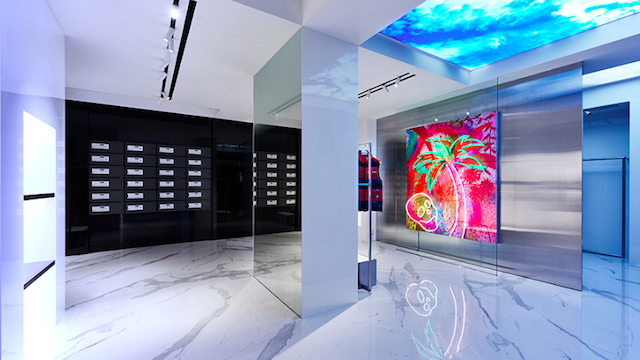
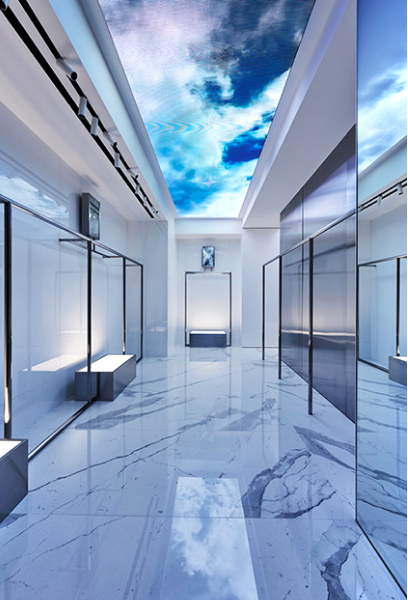
    Palm Angels Hong Kong has opened its first flagship store, selecting a site in Patterson Street, Causeway Bay. The interior of the store was designed by Palm Angels founder and creative director, Italian Francesco Ragazzi, in partnership with Studio April. From the outside, the store draws the attention of passersby with its minimalist facade, bright LED signage and white lacquered glass panels.

    The interior design was inspired by a white cube gallery and clothing is displayed throughout the store more like pieces of art. The floors are made from polished marble and steel furniture stands out against white walls.

    The Palm Hong Kong flagship also features paintings and neon artwork created by Canadian artist Thrush Holmes.

    In June, Palm Angels Hong Kong opened a pop-up store in partnership with global fashion group HBX to introduce the exclusive Palm Island capsule collection and gauge interest in the brand among Hongkongers.

  • 2Bme launches new store in Acropolis Mall India

    2Bme launches new store in Acropolis Mall India

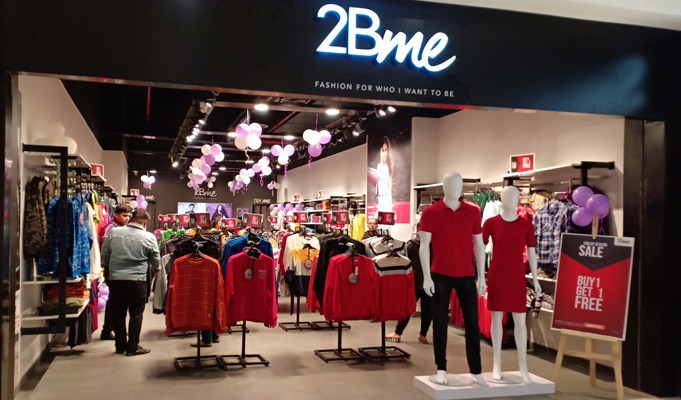
    2Bme, the private label apparel line from RP-Sanjiv GoenkaGroup, recently launched their second exclusive brand outlet at Acropolis Mall, Kolkata. The 2000 sq. ft. store on 2nd floor at Acropolis Mall, Kolkata is the latest addition to the retail network of 2Bme after the launch of the first EBO in Quest Mall last year.

    The store showcases an exclusive western casual clothing line from 2Bme embodying the brand’s vision of providing ‘contemporary fashion for your every day needs’.

    On the occasion of the store expansion, a 2Bme spokesperson said, “We will look at opening 10-12 EBOs of 2Bme in prime malls of Kolkata, Delhi-NCR and Hyderabad. Recently we also signed on Ranbir Kapoor and Shraddha Kapoor as brand ambassadors and this  is helping us create an exclusive entity for our brand.”

    Store Design, TG & Future Plans

    With a minimalist yet chic design, the EBO has a contemporary
    look and feel giving a comfortable shopping experience each time a customer walks in.

    Targeted at the age group of 22-35, the brand has everyday casual wear in a very affordable price range between Rs. 499 – Rs. 1,999. The store offers a huge collection of western clothing line including – tops, graphic t-shirts, dresses, trousers, denims, shorts, joggers, and light weight sweaters for both men and women.

    “2Bme has around 15,000 styles and we have sold more than 3 million pieces so far. The brand has already crossed the mark of
    Rs 100 crore within one-and-a-half-years of its launch and it is likely to garner a turnover of Rs 300 crore in next three-four years,” the spokesperson said.

    At a later stage 2Bme will be also made available through large format MBO’s and e-commerce platforms.

  • Value fashion retailer in India launches 200th store

    Value fashion retailer in India launches 200th store

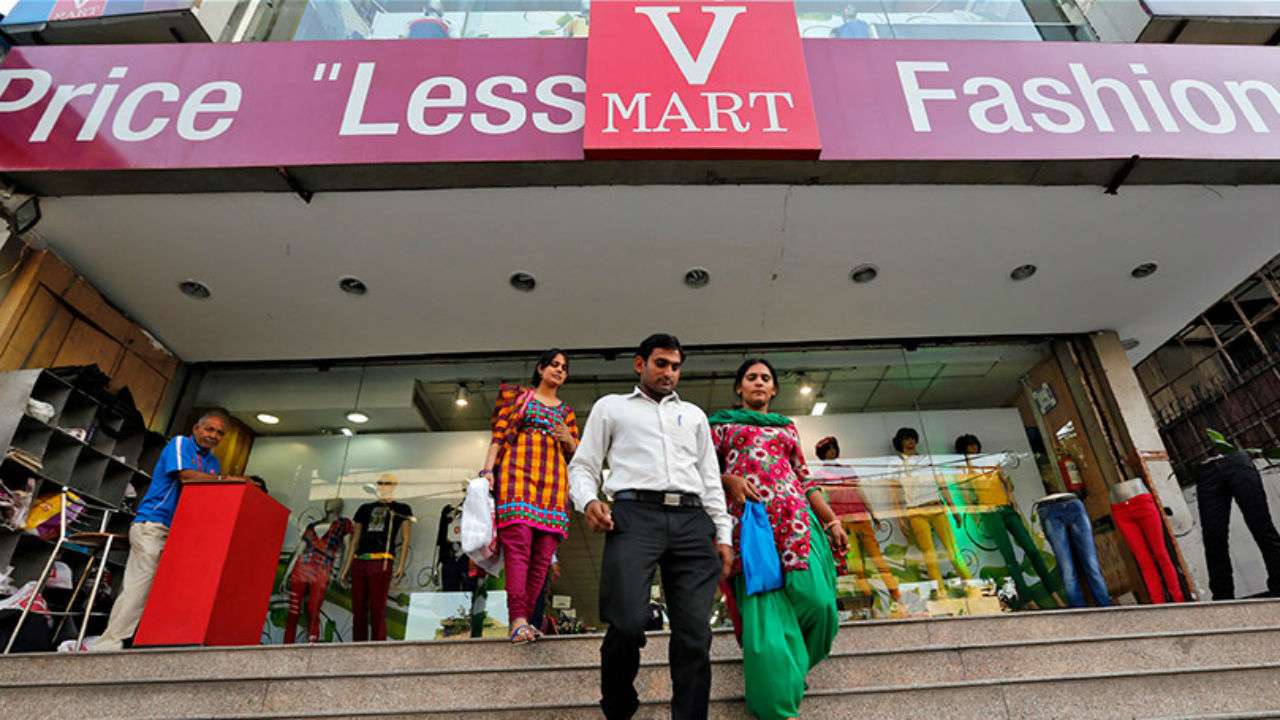
    V-Mart, the world’s best performing department store chain in 2018 as per data compiled by Bloomberg, launched its 200th store in Mughalsarai, Uttar Pradesh. With this landmark achievement, the company has opened a total of 29 new stores in the current fiscal year so far.

    Earlier this month, the company launched its 198 th and 199 th store, both also in UP, at Kannauj and Naubasta near Kanpur, respectively.

    Marking the significance of this milestone for the company, Lalit Agarwal, CMD of V-Mart said, “We remain focused on strong execution, riding on the back of our proven cluster-based expansion model. The 200th store is a key milestone for V-Mart, more so, because we have added the last 100 stores in
    three years, while we took twelve years for the first 100. This demonstrates accelerated customer demand and V-Mart’s ability to translate that into all-round value creation.”

    With the 200th store launch coming just ahead of Christmas and New Year, V-Mart has planned a grand celebration campaign at select locations, starting with Kannauj and Mughalsarai, to bolster the festive spirit among its customers. At both the locations, the company is organizing a ‘Mela’ in large open fairgrounds, inviting the general public to enjoy an eclectic mix of food, fun and entertainment.

    The event in Kannauj, organized with complete support from the local administration, received tens of thousands of attendees enjoying music, folk performances, choreographed shows, fun rides, and delectable street food.

    Snehal Shah, SVP, Projects and Marketing, said, “V-Mart has always endeavored to createlasting value and moments of happiness for its customers. These celebrations are a small way of saying thanks to our customers who have made this milestone possible.”

  • Trussardi Acquired by Quattro R

    Trussardi Acquired by Quattro R

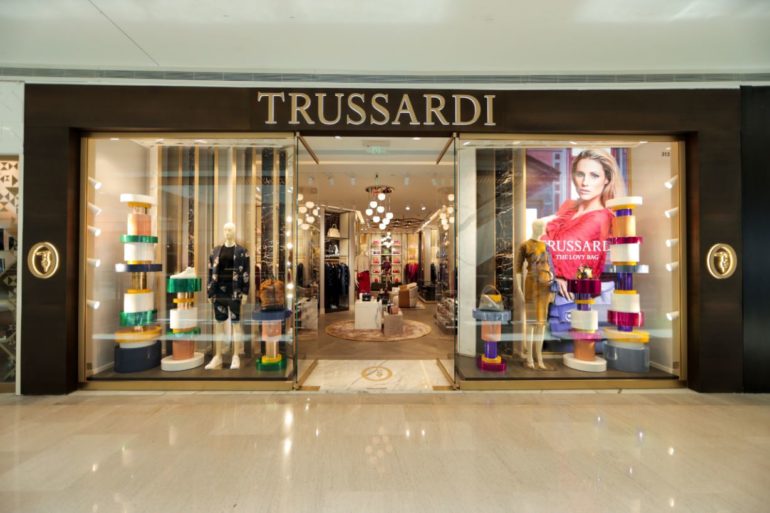
    Trussardi, the family-owned Italian luxury brand specialising in leather goods, has been acquired by private equity firm Quattro R, local media reports. BoF has not yet been able to independently confirm the report. According to Italian news site Pambianco, Quattro R will take an 80 percent stake in Trussardi for at least 50 million euros (around $57.1 million). Trussardi has not responded to BoF’s request for comment, and Quattro R has declined to comment on the matter.

    The deal will see ownership of Trussardi pass from its founding family — who has controlled it for four generations — for the first time in 107 years. Quattro R, which was established in 2015, specialises in turning around Italian companies in financial difficulty, and is backed by the likes of Italy’s state lender Cassa Depositi e Prestiti (CDP) and pension fund Cassa Forense.

    If Quattro R has indeed sealed the deal, it will mark the fund’s first investment in the fashion sector, though its chairman Andrea Morante — being the chairman of Italian shoemaker Sergio Rossi — is no stranger to the industry.

    According to Pambianco, Trussardi’s chief executive Tomaso Trussardi will hold the remaining 20 percent stake in the company. Tomaso’s sister Gaia Trussardi will no longer be a shareholder of the company, while shares belonging to Tomaso’s mother Maria Luisa Gavazzeni will be diluted. Meanwhile, managing director Massimo Dell’Acqua will be leaving his post, and the new management team will be announced when the deal closes in March.

    The brand has been experiencing difficulties for years, with acquisition rumours not far behind. In 2015, Trussardi received a 51.5 million euros (around $58.8 million) loan from six local banks and stipulated a capital increase of 5 million euros (around $5.7 million), soon followed by the shuttering of the house’s diffusion line Tru Trussardi. In April, Trussardi was hit by the unexpected resignation of Gaia Trussardi from her role as creative director.

    Trussardi operates 177 boutiques and over 1,500 points of sale in 47 countries worldwide. If the reports of a sale are confirmed, Trussardi will diverge from the surge of Italian heritage brands passing to foreign hands in recent months — from American Michael Kors’ acquisition of Versace in September, to the Hong Kong-based Sitoy Group’s taking the reins at A. Testoni in November.

  • Chinese QR payments booming

    Chinese QR payments booming

    Nuwemaru Street in Yeon-dong, Jeju City, was known as Baojian street until it was renamed in April. The street had been called Baojian from 2011 when the Chinese pharmaceutical company of the same name sent 12,000 employees to the southern tourist island as a reward.

    Despite the sharp drop of visitors since 2017 – when tensions between the two countries peaked with the deployment of a U.S. missile defense system – it still looks very much like Chinese territory today, with many store signs in Chinese.

    Upon closer examination of the shopfronts, Chinese QR codes are also evident.

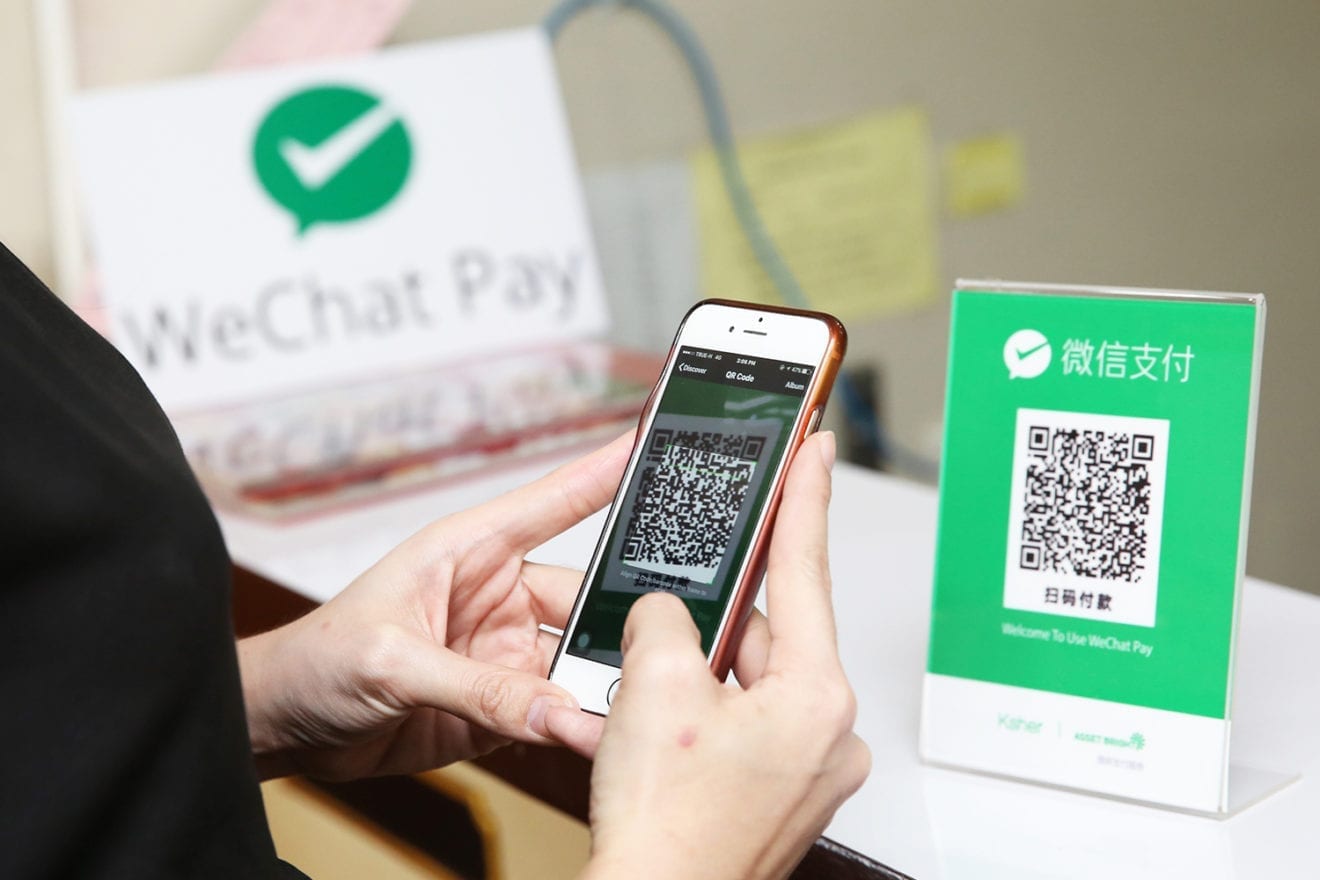
    The QR codes for Chinese mobile payment services have gained popularity on the Korean tourist island over the last couple of years. Even a restaurant selling seollongtang – Korean beef-broth soup – in the middle of the street has a QR code for Chinese mobile payments.

    “Half the Chinese visitors use Alipay or WeChat pay,” said a store clerk of one of the cosmetic stores on the street.

    Currently 1,000 stores on Jeju accept Chinese QR mobile payments. The Jeju government said it was promoting the use of Chinese mobile payments in hopes of attracting more Chinese tourists.

    On Dec. 10, it signed a memorandum of understanding with the China’s Tencent, which operates WeChat, to attract more Chinese visitors to the island.

    One part of the agreement calls for tourism promotions on the WeChat platform, including discount events, while a blog will be run to introduce the island to potential visitors from China.

    The Jeju government and the tech company also agreed to share information on the consumption patterns of Chinese tourists who made payments through WeChat pay.

    Seven top officials from Tencent attended the signing ceremony, including company vice president Zhang Ying. During the ceremony, Zhang said that the only thing he carried with him when coming to Korea was his smartphone, demonstrating that he didn’t need cash or a credit card as long as he had WeChat Pay.

    “Once WeChat Pay is available at traditional markets in Jeju, it will be a great help in promoting traditional Korean culture and goods to Chinese tourists,” said Yoon Chang-ho, head of tourism and marketing at the Jeju government.

    According to convenience store CU, in the first half of 2018 87.2 percent of Chinese tourists used mobile payments when making electronic purchases at CU outlets in Korea. Only 12.8 percent used credit cards. In 2016, 65 percent used credit cards.

    Many institutions are accepting Chinese QR code mobile payments.

    Starting in September, Hanyang University will accept tuition fees via WeChat Pay. The program is being developed with Shinhan Bank. Roughly 900 or so convenience stores and restaurants at train stations in Korea have started accepting WeChat payments.

    One of the reasons Korean businesses are willing to accept mobile phone payment systems is because people tend to spend more when using them. When they buy something by simply waving their phone, they feel as though they are spending less.

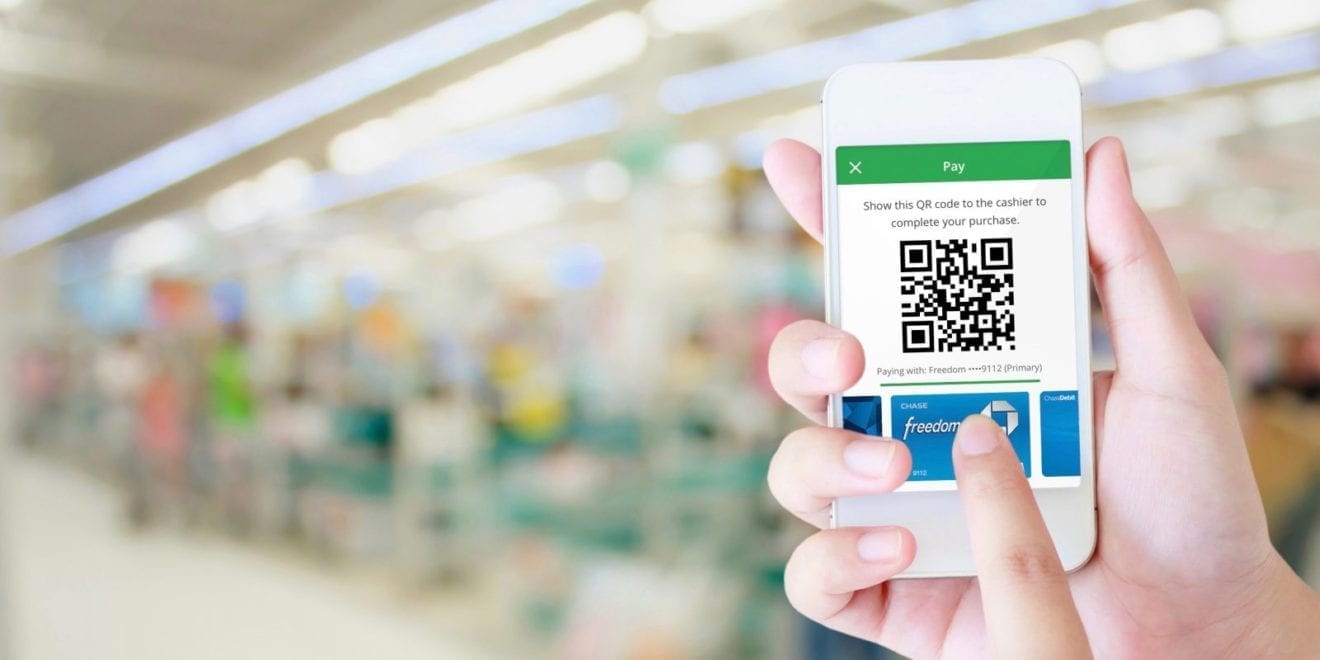
    To make a payment, a customer places the store’s QR code – similar to a bar code – in front of their phone camera for 10 to 20 seconds.

    Chinese QR code mobile payment systems are not only used in Asian countries, such as Korea, Vietnam and Thailand. They are also being used in other places visited by Chinese tourists, such as the United States and Europe. These payment systems are even accepted at Amsterdam Airport Schiphol in the Netherlands.

    Roughly 78 percent of Chinese are said to use these payment systems, while only 21 percent use either credit cards or cash.

    While visiting a small restaurant in China late last year, President Moon Jae-in was surprised at the convenience of QR-code payments.

    One reason the QR-code payment system has rapidly grown in China is the country’s lack of a telecommunication infrastructure needed for credit-card processing. The QR code system doesn’t require a credit card terminal, which makes it cost effective and convenient.

    Although WeChat Pay joined the game late compared to Alibaba, it currently has 40 percent of the Chinese mobile-payment market, while Alipay has 54 percent. WeChat may overtake Alipay because of the popularity of its mobile messenger.

    Not all commercial districts in Korea accept the Chinese mobile payment systems. One such place is Myeong-dong, which attracts huge numbers of Chinese tourists. The street vendors in Myeong-dong only accept cash.

    Some critics question the growth of the Chinese payment systems. One concern is that since the networks are Chinese, it may be hard to track down the payment records, and that could lead to tax evasion.

    A person who has been installing Chinese mobile payment systems for years said this is not true as the payments made in Korean stores are deposited in local accounts, and the Korean stores have to report the payments to the Korean financial authorities.

    Loopholes do exist. If a Chinese company decides to open a branch and use a payment terminal from China, it would bypass the local institutions, making it difficult for Korean authorities to keep track of the payments.

    Because of such problems, the Vietnamese government in June banned the use of Alipay and WeChat Pay. It found that some money spent domestically by tourists did not go through local financial institutions.

    In 2016, the tax evasion question became an issue in Thailand as well. The Thai government at the time found that Chinese businesses were evading taxes through mobile payment systems. Several travel agencies were penalized.

    Some cases have been reported in Korea. In 2016, a plastic surgeon in Nonhyeon-dong, Gangnam, only accepted cash or credit cards from his Chinese patients, and the credit cards were processed using a Chinese terminal. More than 70 percent of the revenue was from Chinese patients. The hospital was found to have evaded more than 10 billion won ($8.9 million) in taxes.

    Overseas customers also present a problem. According to Korea Custom Service, more foreigners are buying goods directly from Korean online shopping malls. In 2013, 67,000 purchases were made in this way, but that figure has surged to more than 7 million.

    Chinese customers were the top purchasers and were especially big on Korean cosmetics. Last year about 2 trillion won worth of Korean cosmetics were purchased directly online by foreign buyers. That’s 10 times the 203.5 billion won worth of cosmetics purchased directly online in 2014.

    With the growing popularity of direct purchases, many online shopping malls have started accepting mobile payment systems. Since 2015, Alipay has been supporting Korean SME exporters in terms of payments and logistics.

    This could result in Korean exporters evading taxes.

    “There is major tax evasion going on with the significant increase of foreigners buying Korean goods directly online thanks to the Korean Wave,” said Lee Hye-hoon, then ruling Saenuri Party lawmaker, during the National Assembly’s audit on the Korean National Tax Service in October 2016. “We need to take action.”

  • LOTS to cheer for the Cash & Carry business in India

    LOTS to cheer for the Cash & Carry business in India

    LOTS Wholesale Solutions recently unveiled its second Cash & Carry wholesale distribution centre in India at Akshardham in East Delhi. The launch of LOTS’ second store follows closely on the heels of its first store three months ago. Inaugurated by Amitabh Kant, CEO, NITI Aayog, this is second of the fifteen distribution centres that the firm is aiming to open in India over the next three years.

    The newly launched store will cater to over 45,000 registered business customers, which include hotels, restaurants, and caterers (HoReCa), kirana stores, corporates, MSMEs and institutions such as government agencies, educational institutes, and hospitals.

    Spread over an area of more than 53,000 sq. ft., the newly opened store has all the facilities including automatic system orders forre-stocking, predicting the demand as per customer’s behaviour, and designated goods receiving and dispatching, live bakery, among many more. Other notable features are transparent pricing, round-the-year promotions, consistent product availability, customized last mile delivery and credit facilities, all of which are tailored to satisfy the needs of its registered members.

    “We had promised to open two wholesale distribution centres in India in 2018. Today, that promise has been fulfilled. From our first store, we have exceeded the expectations we had set for ourselves. We have been getting very good response and we are getting 600-1500 walk-in customers daily. We decided to open our second store in Akshardham in view of the unfulfilled potential of the area in terms of wholesale buying options. The facility is all set to cater to the requirements of our members in east Delhi and nearby catchment areas. Through this store, the business customers of LOTS Wholesale Solutions will have a wide range of more than 5,000 food and no-food products to select from. Besides, they will also benefit from customized delivery solutions, competitive pricing and personalized service through our business development associates,” Tanit Chearavanont, Managing Director, LOTS Wholesale Solutions, said commenting on the launch of the new store. With its expanding footprint in Delhi-NCR, LOTS Wholesale Solutions will generate 5,000 direct and indirect jobs over the next five years.

    The launch ceremony was presided over by the chief guest Amitabh Kant, CEO, NITI Aayog. Also present at the launch ceremony was Chutintorn Gongsakdi, Thailand’s Ambassador to India and LOTS’ global and Indian leadership team. “I congratulate LOTS Wholesale Solutions on opening its second store in Delhi-NCR. The Retail sector in India is poised for higher growth as we are growing at 8.2 percent. We have jumped 65 spot and moved up substantially in the ease of doing business. India is the only country to have repealed 1,300 regulatory laws as part of our efforts towards creating a better business environment. Indian FDI has grown 62 percent whereas globally the numbers have shrunk by 16 percent.

    This is a unique story for Indian retail and the government is pushing for greater financial inclusion and working closely with other stakeholders. Such enabling regulatory norms and liberalised FDI policy should make it easier for global companies like LOTS to invest in India and on mutually benefiting terms. We will act as a facilitator and assure them of all the support they need to excel and deliver on the demands and expectations of their customers,” said Kant.

    In recent years, India has emerged as one of the top destinations for FDI. The inflow of FDI into India has gone up significantly with receipts flowing in from across the world, which has given India access to the latest technology, best practices, and global innovations. The arrival of multinational companies like CP Wholesale Solutions in India, which has chosen a 100 percent FDI route to establish its operations in India, further vindicates the popularity of Brand India in the world. With India’s retail sector projected to grow to USD 1.3 trillion by 2020, the country is the land of opportunities for potential investors and companies looking to start operations here.

    There has been an overall growth of the Indian economy, which has increased the purchasing power of the people in rural areas opening development opportunities for the companies to expand their presence. This offers a huge potential for Cash & Carry players to target B2B customers – like kirana stores and catering to the rural audience. Also, the implementation of GST has created a favourable environment for companies like LOTS that aim to establish and expand operations across India. It rubs off positively on supply chain efficiency, uniform assortment of goods and in supporting the end consumers. Cash & Carry, also known as wholesale trade, is fast emerging in India, where Lots Wholesale competes with players such as Walmart, Metro Cash and Carry and Reliance Cash and Carry, a unit of Reliance Industries Ltd. According to Ambassador Chutintorn Gongsakdi, after the arrival of LOTS in India, business interest in the country has picked up substantially and many more companies from

    Thailand have begun making enquiries about starting operations in India. “As the Thai Ambassador to India, I have set an ongoing goal for India and Thailand to strengthen our economic relations. One target I had was to have at least two new businesses to come and start business in India during my term in office,” said the Ambassador. He remarked in a lighter vein that his task in India has already been accomplished within one and half years of taking up office. “With the registration ofCP Group’s LOTS Wholesale Solutions Pvt. Ltd. and SCG International Pvt. Ltd., I have already succeeded in meeting my target. I can go home but I have reset my target to bring in two new Thai companies per year.”

    Expressing his satisfaction and pleasure at India’s participation in Thailand’s eastern economic corridor, he observed: “Speaking on this occasion, I already know that two new businesses are in the process of registering their business in India. So things are very vibrant. I have witnessed all the hard work done by Tanit and his team with respect to LOTS’ first store. I would like to sincerely congratulate the LOTS team on the opening of the second store. To witness a Thai MNC such as CPGroup, known for great corporate governance and values, grow their business in India gives us great satisfaction and pride. India is a dynamic country with a great future and it is a moment of pride for the Royal Thailand government and myself that Thai companies are keen to play a contributory role in India’s economy.”

    Pointing out that the opening of the LOTS’ second store reflects the ongoing rise of Thai businesses in India and is proof of T ai investment successfully flowing into India, Ambassador Chutintorn Gongsakdi said: “LOTS and CP Group’s success will, in turn, have a halo effect on other companies in the CP Group and other Thai businesses wanting to enter India. As ambassador, I am pleased to see the full potential of Indo-Thai economic relations being developed through the engagement of CP Group and other Th ai MNCs and SMEs and also vice versa from the Indian side.We have now around 28 Thai companies in India and the 28 will soon be thirty and more. The trend is good and The Royal Thai embassy has been receiving many expressions of interest in doing business with Thailand from the Indian side as well. I will use my office as a business matching venue to put this act together. Thanks to the eff orts of Amitabh Kant, Niti Ayog, and others in team India, the government in India has been very successful in reforming the economy and making it friendly to investors. Th is is the right time for Th ai businesses to secure their place in India’s future. And this message is not only for Th ais but other ASEAN and other nationalities as well. It’s not too late to be in India and startnow but in another five years it will almost be too late. Thailand is ranked 26 in the ease of doing business and we also off er a very friendly setting for foreign investors wishing to set up operations in our country.”

    The Indian government, on its part, is actively favouring open-door policies in investment and trade. The government is pushing for financial inclusion and working closely with ministries like Commerce, DIPP and Food Processing to bring relief to farmers by doubling their income through better yield. “It is our vision to make India an ideal place for large format business groups to set up shop and contribute to the growing demands of our growing nation. I am impressed that LOTS with its values of “local love” and principles of 3Cs – country,community and company – is not just about profit making but also about focusing on contributing to the society in equal measure. My compliments to LOTS Wholesale Solutions for opening two wholesale stores within a span of three months,” Kant said.

    In India, LOTS is committed to invest over Rs 1,000 crore in the first five years and its plan of opening 15 wholesale distribution centres across northern India has already started taking shape. Within a span of one year of signing the Memorandum of Understanding (MoU) with the Ministry of Food Processing Industries, the company – CP Wholesale India Private Limited – was incorporated, LOTS brand was launched and two stores have started operations already. It plans to open a third one in Noida by the end of this financial year. Because of the real estate challenges in the country, the company has decided to open 25,000-50,000 sq. ft. stores inside the cities instead of outskirts. “If we build centres out of the city, it is very difficult for the people to travel. Th at is the reason why we continue to focus on building stores where the catchment is,” said Tanit.

    The company, which invests on average Rs. 60-70 crore in one centre, is also looking at opening stores in Lucknow, Kanpur, Varanasi, Jalandhar, and Kolkata. For the next 2-3 years, the company will continue to add more stores in north India as a part of its expansion plans and intends to have a national footprint in 10 years time. Besides, the company also plans to adopt the omni-channel system for integrating online sales channel with its brick and mortar stores and is also exploring the idea of having dark stores/fulfilment centre in India.

    “With regulatory changes like GST, demonetization, RERA and the Make in India policy bringing about a higher organization on the Indian retail scene, there is no time like the present for retailers from across the world to venture into the country and invest. Our parent company Siam Makro has defi nitive expansion plans in the ASEAN region and owing to a positive regulatory environment, India is the first on our list. We see a lot of potential and the right type of investing and retailing environment in the country, which is why we were ready to take the lead here,” said Sameer Singh, Director – Operations, Business Development and Expansion, LOTS Wholesale Solutions.

    He added that LOTS follows a cluster approach. The brand sets up stores basis the supplier/ customer base so that it can provide them with a hassle-free experience and build a robust supply chain and make the delivery process faster. “Our parent company Siam Makro has evolved into several separate store formats and we are bringing all these formats and this knowledge to India, ready to explore both large or small sizes and even multilevel sizes. We can look at different sizes, which could help us at different levels. It gives us that excitement to be part of the catchment itself, otherwise we might be stuck on a certain format,” explains Singh.

    This catchment-specific approach is extended to the daily needs and grocery sections of the product range of LOTS as well. All efforts are made to source fresh produce from local farming community, which helps farmers earn better while reducing wastage during transportation and storage.

    According to Singh, LOTS offers solutions to member companies, which help them undertake a path of sustainable growth. Our product selection is based on detailed research that is specific to the region as well as the community. A critical element is to provide support to the home-grown brands – an essential component of our region-specific business strategy. Therefore, apart from engaging with international brands, we are working very closely with Indian brands and local farmers.”

    Taking pride in working with the local community and giving back to society, LOTS has joined hands with farmers in Bhatinda to help them adopt progressive farming methodology. In addition to that, the company is committed to sourcing fresh produce from the local farming communities, share know-how and packaging and storage so that farmers can reduce wastage during transportation and storage and increase their income. The company hopes that its efforts will help to develop the agricultural sector in India.

    At the same time, LOTS is focused on customers’ needs and satisfaction. The company brings specially curated assortments, categorised into food and beverages, kitchenware, household appliances, home decor, furniture, bedding, textiles, stationery and office supplies, electronic products and others; making LOTS Wholesale Solutions a complete one-stop shop. Th e company also offers a varied set of benefits to its members, including a wide range of product selection at its stores, based on detailed research specifically catered to the catchment area and market demand. Th e company, which currently has a customer base of around one lakh members,will also offer its support to home-grown brands and local suppliers and is looking to turn profitable in the next five years.

    “We place our customers at the core of our business and aim to provide a hassle-free shopping experience, making LOTS Wholesale Solutions a one stop shop for all their business needs. We aim at sourcing our products from not only top international brands but also Indian brands as well. Additionally, we believe in supporting the local community so that they flourish without support,” emphasised Tanit Chearavanont.
  • ‘E-commerce share in India’s FMCG retail sales triples in 2 years’

    ‘E-commerce share in India’s FMCG retail sales triples in 2 years’

    Growing consumer trust and confidence in online buying has helped e-commerce platforms expand their share in India’s total FMCG retail sales by as much as three times, according to market researcher Nielsen. This has led to online purchase of a broader range of categories, with a particularly interesting upswing seen in fresh and packaged groceries, Nielsen said in a report.

    It further stated that global online grocery purchasing is up 15 percent in the last two years, leading to an estimated US$ 70 billion additional sales in online FMCG.

    The 2018 Nielsen Connected Commerce Report said e-commerce categories — travel (69 percent), fashion (66 percent), and IT and Mobile (63 percent) continue to account for the largest proportion of online transactions in the country.

    Interestingly, categories posting the most significant growth in e-commerce channel included packaged grocery (where 40 per cent of respondents said they made a purchase), fresh groceries, and baby and children products.

    “From tracking the e-commerce evolution in pioneering countries like South Korea where online sales now account for a staggering 20 percent of the total FMCG sector, we know that consumers follow a certain pattern of online shopping behaviour,” Sameer Shukla, Executive Director (Retail Measurement Services), Nielsen South Asia said.

    Travel, fashion and IT/ Mobile products are typical categories for first-time online shoppers and as their familiarisation, comfort and trust levels increase, their category repertoire expands into areas like beauty, personal care and baby products, he added.

    “… and then moves even wider afield to packaged and fresh grocery categories, and this is evidenced in the significant jump we’ve seen in online purchasing within grocery and food delivery in recent years,” he said.

    The report also revealed that consumers are more open to purchase packaged and fresh groceries online when they are offered certain purchasing options and quality assurances.

    About 60 percent of consumers pointed towards the need to offer and improve hassle-free refund, replacement experience as well as free cost delivery, which if offered, would boost their confidence to buy online with higher frequency.

  • Hanwha Galleria Timeworld to sell luxury stuffs

    Hanwha Galleria Timeworld to sell luxury stuffs

    Department store operator Hanwha Galleria Timeworld is opening its second Galleria Luxury Hall next year. In benchmarking its first main store in southeastern Seoul, the owners are seeking to draw luxury French and Italian brands to trade alongside fine dining F&B operators. The store’s facade will undergo renovations with the aim of becoming a landmark building.

    A statement from Hanwha Galleria claimed the Timeworld branch is seen as the top department store in the area since its acquisition in 2000. Within the past decade, the firm has seen 7 per cent annual growth on average in sales.

  • Louis Vuitton personalisation service launches in Asia

    Louis Vuitton personalisation service launches in Asia

    Luxury retailer Louis Vuitton is offering a personalisation service for a selection of men’s ready-to-wear items in a limited number of global stores. The My LV World Tour Louis Vuitton personalisation service offers clients the opportunity to customise their purchases with a variety of patches and embroideries inspired by vintage travel labels and varsity lettering of the kind Gaston-Louis Vuitton used to adorn his own luggage. The service was previously limited to leather goods.

    The patch themes include world-famous cities and heritage LV graphics, some of which will be available seasonally as limited-edition items.

    The Louis Vuitton personalisation service is available in only eight Asian stores: Hong Kong’s Canton Road and Pacific Place; Shanghai’s Plaza 66; Beijing’s Shin Kong; Japan’s Omotesando and Shinsaibashi; Singapore’s Marina Bay Sands and Seoul’s Shinsegae Main.

  • Berluti showcases its signature styles in Mumbai

    Berluti showcases its signature styles in Mumbai

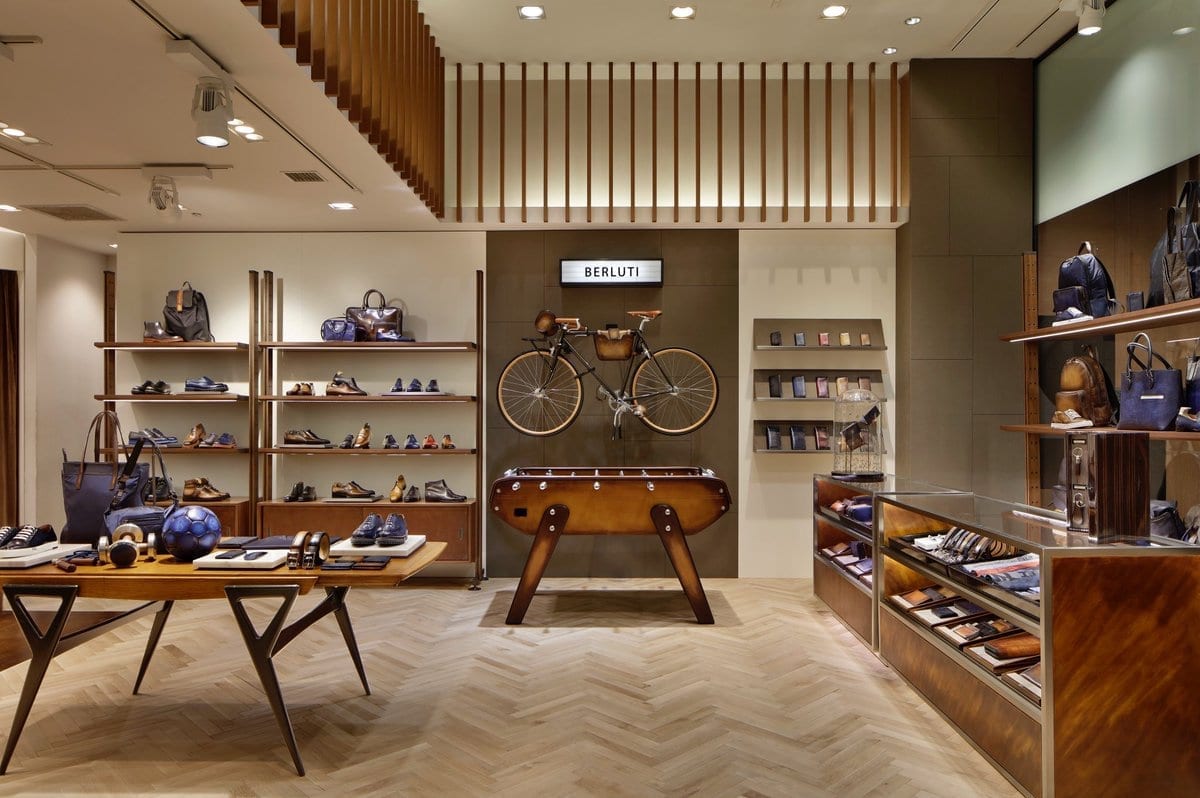
    One of the world’s most iconic luxury footwear brands, Berluti, hosted an exclusive evening to showcase new styles to guests and present their signature technique of footwear tattoo artistry by Elena Lodiat Soho House, Juhu. Firmly grounded in bespoke know-how, Berluti took its technical skills and creative flair a notch higher by transforming the rules of style with tattooing.

    The rare tattoo designs based on four themes: a classic bestiary of Insects & Animals, the signs of the Zodiac and the Chinese horoscope, vintage designs with Eagles, and the subtle art of Calligraphy can now be perfected on Berluti’s original and globally renowned Venezia leather. The noblest of all leathers, only Venezia leather sustains the creative audacity of Olga Berluti’s vision of art.

    The design is crafted to meet the modern-day sensibilities of contemporary dandy men. Fire-breathing dragons, fantastic beasts, regal eagles, all the mythical creatures and several other esoteric designs can now be realized on the emblematic Berluti Venezia leather from shoes and handbags to belts and other small leather goods.

    With this exclusive service, Berluti brings an even more bespoke look to an already-unique shoe.

    Talking about the event, the only female shoemaker in the world Olga Berluti said, ‘’I always wanted to grace leather shoes with the markings of the skin; scars, gashes, branding, piercings. We have already mastered the color technique on the leather from bronze and brown to red and copper, and the dark blue of the Tuaregs. Only one thing was missing, the most obvious and most difficult: tattoos. I tried to tattoo shoes using every possible process, but the designs faded, the colors were lost beneath the patinas, and the tattoos had no “life” in them. However, my technique has evolved over the years and today I am using the exact same methods as tattoo artists, along with inks that work well with leather. I hope Berluti loyalists from across the world admire this new art.”

    An exclusive Indian distribution partner of iconic global brands Bequest Group, Managing Director, Gaganmeet Singh said, “Luxury is all about a bespoke experience and personalization and creating tattoos on leather is an artisanal process. We are glad to have showcased this unique technique of tattooing on the Berluti Venezia leather to our patrons in India. The activity was insightful and interactive at the same time that gave a chance to the luxury connoisseurs to get involved in the nuances of tattoo making on leather at this unique Berluti event.”

    Berluti currently has a store in New Delhi at DLF Emporio Mall and is scouting for a property in Mumbai to open its store.

  • Acne Studios Opens First Store in Beijing

    Acne Studios Opens First Store in Beijing

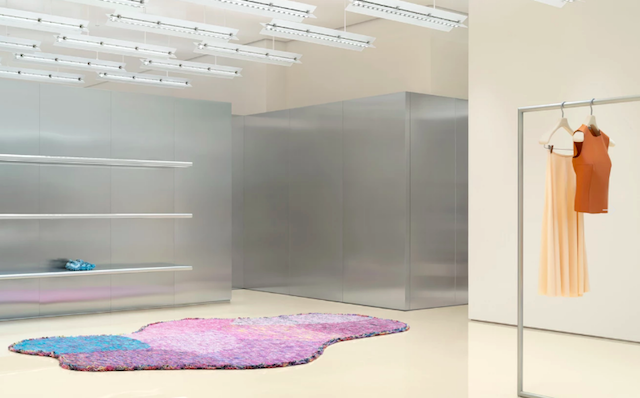
    Acne Studios China has opened its third store, in Beijing. The Swedish luxury fashion brand launched in China two years ago, offering its eclectic mix of minimalist ready-to-wear fashion and denim. The new store’s interior features straight lines with glass, high-gloss white walls and contrasting stainless steel railing and shelves. A large display created by British designer Max Lamb stands in the centre of the store, painted in the label’s trademark shade of pink. It’s matched with purple rugs created by Lamb which contrast with the stark white interior.

    Acne Studios creative director Jonny Johansson said it had been a long-held dream to open a store in Beijing. “It is also my hope that this store will bring us the opportunity to create many special projects in the future.” Lines exclusive to Acne Studio China will be sold at the new boutique to mark its opening.

    The store is located in Taikoo Li North Village on Sanlitun Road.

  • Lancome opened sensorial pop-up store in HaitangBay

    Lancome opened sensorial pop-up store in HaitangBay

    With over 170 beauty awards to its name, Mainland China’s leading beauty brand, Lancôme, celebrated its top selling serum, Advanced Génifique, by launching a multi-sensorial pop-up at China Duty Free Group’s (CDFG) Sanya International Duty Free Shopping Complex at Haitang Bay. Renowned actress and LANCÔME local ambassador for China, Zhou Dongyu, actors, Zhai TianLin and Yin Zheng, and over 12 beauty influencers joined hands to embark on an exclusive journey of experiencing the 1+1 dual skincare benefits of the Advanced Génifique and Advanced Génifique Sensitive. The pop-up is an opportunity to address the robust growth driven by Chinese travellers within a booming beauty market that continues to accelerate in Asia Pacific.

    Located at one of Asia’s leading downtown duty-free destinations, the pop-up in sophisticated hues of blue and white brought in the spirit and taste of French elegance to Sanya. Beauty influencers and travelers experienced Lancôme’s top-rated serum through various sensory, with features such as a photo booth, interactive games and an impactful outdoor lighting installation. The pop-up ran from November 2 to 29.

    “To celebrate the abiding success of the Lancôme brand and its iconic Advanced Génifique serum, we are happy to partner with CDFG in Sanya, Haitang Bay, to launch this pop-up with the presence of our local ambassador for China, Zhou Dongyu. As we remain optimistic of our growth in Travel Retail APAC, we are excited to reach out to the Chinese travelers in their home country to experience Advanced Génifique in an all-immersive retail experience pop-up,” said Tao Zhang, General Manager of Lancôme Travel Retail Asia Pacific.

    “We are pleased to partner with a leading international beauty giant like Lancôme to showcase their iconic Advanced Génifique serum at this specially designed pop-up. CDFG Sanya International Duty Free Shopping Complex hosts millions of travelers per year, and our core focus revolves around the idea of creating and delivering meaningful and memorable experiences for them. This partnership with Lancôme has made this possible, bringing an engaging shopping experience, elevated for our travelers.” said Xie Zhi Yong, Deputy General Manager of CDFG Sanya Downtown Duty Free Store Co., Ltd.

    Celebrating the momentous occasion and enduring success of the brand’s iconic serum, the pop-up was themed around the Advanced Génifique, which is heading into its ten year anniversary in 2019. With more than 170 beauty awards to its name, the powerful youth activating serum remains as one of the best-selling serums in the country.

    Primed as Asia’s leading downtown duty-free destination for international, luxury cosmetics as well as the gateway for the brand to tap into the thriving travel retail market, CDFG Sanya International Duty Free Shopping Complex was specially selected to play host to Lancôme’s Advanced Génifique’s pop-up. The duty-free shopping complex houses one of the top POS for Lancôme worldwide, and will remain a key strategic focus for the brand’s travel retail business across APAC.

    Billed as the top holiday destination for affluent mainland Chinese, Sanya saw KOLs from around China descend upon its shores to embark on a ‘Advanced Génifique’ journey to reveal their skin’s glow and deepen their understanding of Lancôme’s well-loved Advanced Génifique and Advanced Génifique Sensitive serums through a beautiful holiday experience with the brand. Invited KOLs whose Advanced Génifique journey at Sanya enabled them to better understand the benefits of the brand’s powerful youthactivating serum, share their knowledge, and advocate Advanced Génifique across their platforms.


  • PM for Men by Pomelo is launched

    PM for Men by Pomelo is launched

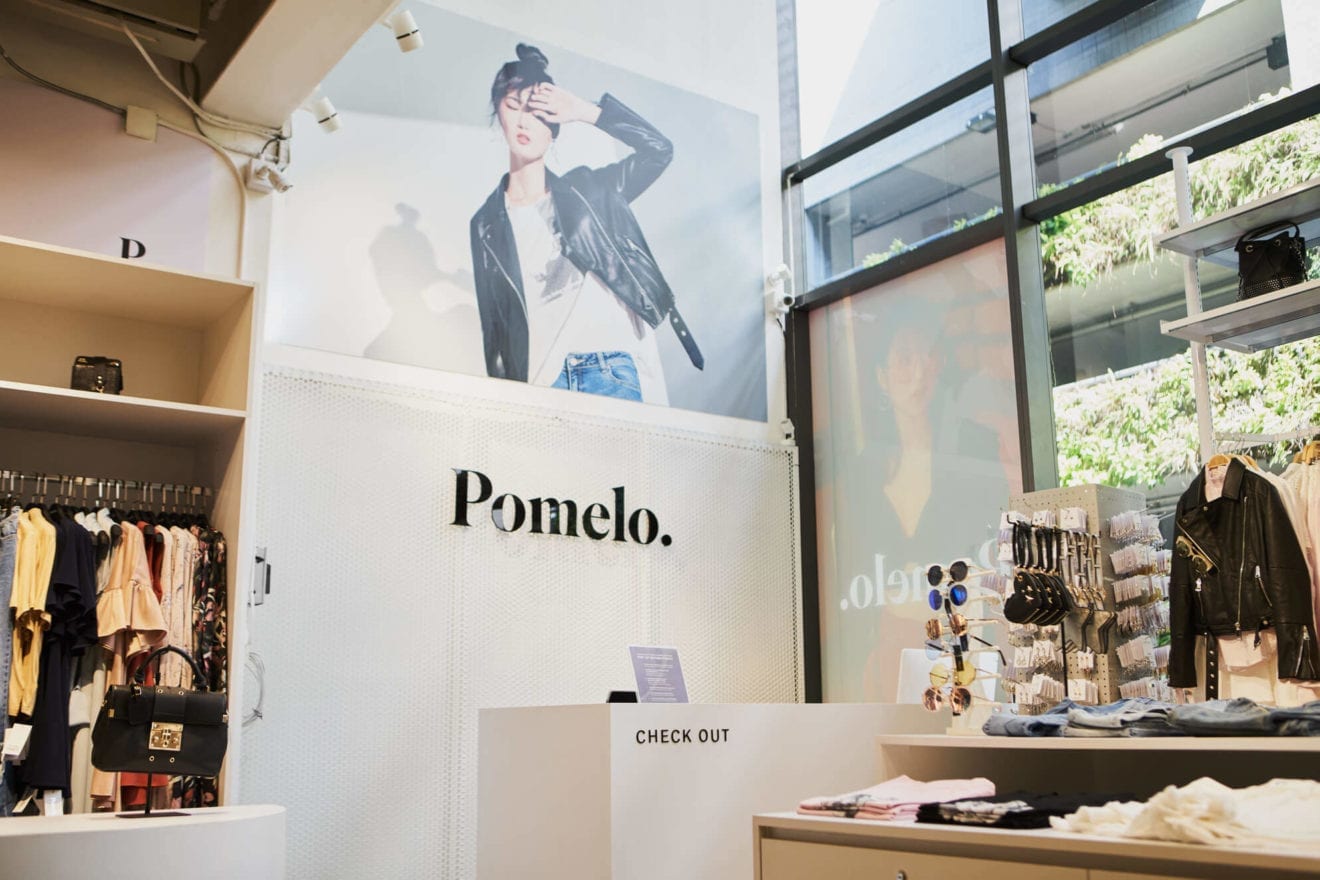
    JD.com-backed fashion brand, Pomelo Fashion, is launching a menswear label called Pomelo Man (PM.). The label will be making its debut in Thailand, launching exclusively on the App available on both iOS and Android. PM aims to offer a new shopping experience to the modern man, transitioning from the online to offline world, on-the-go seamlessly.

    Customers can now walk into a PM location, get measured by the store crew and never have to bother about sizing while shopping on the App again. Addressing one of the biggest drawbacks of online shopping – sizing, the brand aims to innovatively take it out of the equation altogether. Through technology, PM helps customers find what they call their unique ‘Perfect Fit’. With key items like t-shirts, chino pants, hoodies, and accessories, the brand will become a one-stop shop for every man’s daily fashion needs. PM takes it up a notch by providing all men with a ‘Man Lounge’ complete with free Wi-Fi, USB charging stations, and video games, all of which can be enjoyed by customers and everyone else alike.

    Opening its pop up store to customers at Siam Square One on December 20th, 2018, PM will offer affordable, yet premium clothing ranging from 390 THB to 1,590 THB. For customers that download and register on the App – the brand will be giving away free t-shirts in their ‘perfect size’. The first collection consists of wardrobe essentials such as t-shirts, pants, outerwear, and accessories in expansive size options, available at the stores for a fitting and to be purchased on the Pomelo App. Going further, PM would roll out monthly drops composed of not only everyday essentials, but eventually branching out to polos, shirts, and a mix of both formal and informal styles.

    David Jou, Pomelo’s CEO, commented: “With PM we wanted to re-imagine men’s fashion. We wanted something classic, yet fresh and contemporary, combined with the latest technology to create an effortless shopping experience.”

    He added, “PM has no sizes. It’s built for the urban gentleman who is always on the go and seamlessly traverses between the digital and physical. We wanted to start with a focused and approachable collection that will grow over time as the brand itself grows. The PM app is at the center of the experience.”