Tag: Shopping

  • Inditex suffers from late coming winter

    Inditex suffers from late coming winter

    Zara owner Inditex has posted slow like-for-like sales growth due to the unusually warm autumn and adverse currency moves. Inditex, which also owns upmarket label Massimo Dutti and teen label Bershka, posted a 3 per cent rise in like-for-like sales in the six months to the end of November after an “extraordinarily warm September”. Sales bounced back somewhat to 5 per cent in October and November.

    The fashion giant reported an increase in earnings before interest and tax of €3.07 billion from the previous corresponding period.

    In the first nine months of the year, the world’s largest fashion retailer reported a 3 per cent increase in sales to €18.4 billion and a 4 per cent rise in net profits to €2.4 billion.

    According to Inditex, the company didn’t have to cut clothing prices from September like its rivals, which resulted in margin growth of 108 basis points during the third quarter.

    The clothing retailer maintained sales and margin guidance for the rest of the year.

    Pablo Isla, Inditex chair and CEO, said the group’s strong business model, which continues to deliver solid structural growth in all markets, and its constant focus on developing the integrated store and online platform through continued enhancement of technology and systems, have contributed to its performance.

    The company announced last September that all products from all its brands will be made available online by 2020, including in markets where it does not have any stores.

    Isla had said that Inditex wants to make all fashion collections available to all customers wherever they are in the world.

    “Even in those markets which do not currently have our bricks-and-mortar stores,” Isla added.

    Other than Zara, Massimo Dutti and Bershka, Inditex also sells the brands Pull & Bear, Stradivarius, Oysho and Uterque across its network of almost 7500 physical shops. It operates online in 49 markets.
  • Moncler open store in Changi Airport

    Moncler open store in Changi Airport

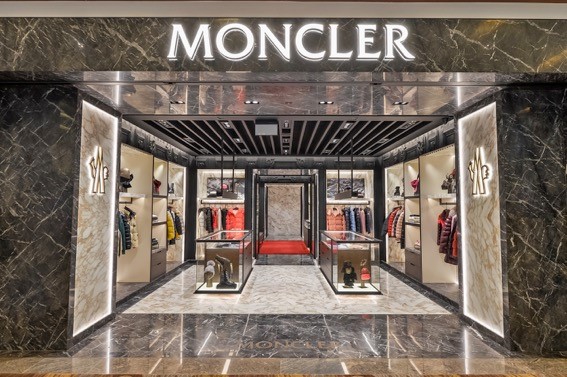
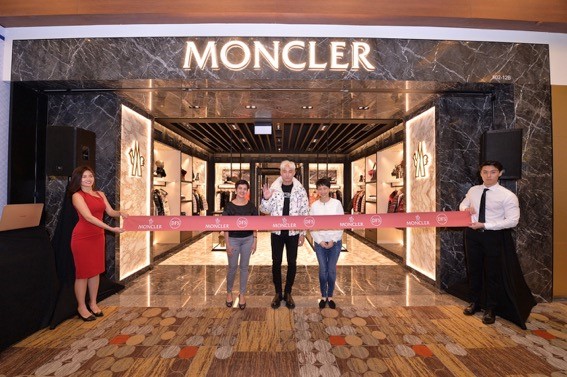
    DFS Group, the world’s leading luxury travel retailer, is pleased to introduce global luxury brand Moncler at Changi Airport Terminal 1. The opening of the new Moncler boutique adds an important presence within the DFS Group’s luxury fashion offerings that are housed within a world-class travel retail destination.

    The new Moncler boutique represents a new milestone that reflects the DFS Group’s focus on experiential shopping. It also complements the DFS Group’s impressive luxury retail line-up at Changi Airport, which is home to a prominent stable of premium fashion offerings. The latest collaboration with the fashion-forward and iconic outerwear leader underlines DFS Group’s commitment to deliver the finest product offerings and exclusive experiences to fashion-conscious shoppers.

    The new boutique reflects Moncler’s haute montagne aesthetic and vision, at the same time keeping in tune with the maison’s roots and heritage. Boasting a floor area that measures around 110 square metres, the clever layout maximises the use of space while the addition of select materials adds a contemporary feel. A unique effect has been achieved with the marble flooring, which alternates herringbone white Calacatta Vagli with black Gricio Carnico, while sleek glass cases with black varnished wood complete the look. The boutique hosts the Moncler men’s, women’s and accessory collections.

    “We are very honoured to welcome a distinguished and respected heritage brand such as Moncler into our portfolio of fashion and watch brands. As part of the strategy to up the ante of the retail experience for our global travellers when they visit DFS Changi, Moncler has been carefully curated to offer a wide selection from their latest collection for savvy travellers.” Wilcy Wong, DFS Group Managing Director Singapore and Indonesia, shares.

    Teo Chew Hoon, Group Senior Vice President of Airside Concessions from Changi Airport Group adds, “We are pleased to open the first Moncler boutique with our valued partner DFS Group to offer passengers an exceptional shopping experience with fashion offerings from luxury to high street designs across a range of price points.”

    The boutique was officially opened on 14th December with a grand opening ceremony. The festivities featured a ribbon cutting ceremony officiated by renowned local actor Desmond Tan with Wilcy Wong, DFS Group Managing Director Singapore and Indonesia and Chandra Mahtani, Changi Airport Group Vice-President of Terminal 5 Planning. Hosted by Constance Lau, the ribbon cutting ceremony and lion dancers kick-started the celebrations for esteemed guests, who were treated to a live nitrogen cocktail performance and styling tips by Celebrity fashion stylist and personality, Glenn Goh.

  • Shopee wraps up a record-breaking 2018 on 12.12 Birthday Sale

    Shopee wraps up a record-breaking 2018 on 12.12 Birthday Sale

    Shopee, the leading e-commerce platform in Southeast Asia and Taiwan, wraps up a record-breaking year with its highly successful Shopee 12.12 Birthday Sale. On 12 December, Shopee saw ​over 12 million orders across the region, surpassing all past records including the recent Shopee 11.11 Big Sale.

    Supported by ​more than 450,000 brands and merchants​​, Shopee recorded ​48million visits as users shopped ​60 million deals across all categories, and the highest number of items sold in 1 minute was ​73,519​​. Shopee’s highly popular in-app game Shopee Shake was played 46 million times​​ throughout the campaign.

    In Singapore, Beauty & Personal Care, Home & Living and Mobile & Gadgets were the top three most popular categories. Leading brands including Laneige, Kao and JBL emerged as favourites amongst users.

    Zhou Junjie, Chief Commercial Officer, Shopee​​, said, “Shopee 12.12 Birthday Sale marks another significant milestone as Shopee celebrate a year of exponential growth. Following the success of Shopee 11.11 Big Sale in November and Shopee 9.9 Super Shopping Day in September, it has been an exciting and fulfilling quarter as past records are surpassed and set new benchmarks to reach next year.

    Since launching in 2015, Shopee has seen tremendous growth across its seven markets, achieving over 195 million downloads across Southeast Asia and Taiwan.

  • Party supplies sales surge in South Korea

    Party supplies sales surge in South Korea

    Demand for party supplies from South Korean retailers is soaring as a growing number of people prefer to host end-of-year celebrations at home instead of going out. According to E-Mart, wine and cake sales at six stores in Daegu last month soared 18.9 per cent and 16.1 per cent, respectively, year on year.

    Frozen foods sales jumped 16.3 per cent compared to last year.

    More South Koreans are choosing to cook at home using a variety of home meal products, as so-called ‘meokbang’ (eating shows) and ‘cookbang’ (cooking shows) are sweeping the country.

    Lotte Department Store’s Sangin Branch in Daegu also saw its kitchenware sales increase by more than 70 per cent compared to last year.

    Suppliers are coming up with various promotions to capture the attention of end-of-year party throwers.

    Lotte Department Store’s Daegu Branch is offering discounts of up to 60 per cent on dinnerware and is showcasing a variety of props to help decorate the perfect party.

    Lotte Department Store’s Sangin Branch is also holding a promotion event for Christmas-themed tableware.

  • Asia is leading the global digital retail market

    Asia is leading the global digital retail market

    Retail executives looking to understand the future of retail should take a close look at Asia, where retail is booming as Asia is leading in terms of retail growth. The growth rates are twice the rate of the rest of the world, and e-retail growing at three times the rate.

    Asia is followed by Europe and the US, with China, Korea, and India at the forefront.

    In 2017, China’s online retail penetration was 20 per cent and its CAGR (13-17) was 33 per cent. In comparison, the US achieved an online retail penetration rate of 12 per cent in 2017 and a CAGR (13-17) of only 11 percent. Most dramatic is India, which had a CAGR (13-17) of 53 percent, highlighting the rapid growth seen in the market.

    Market conditions have allowed for swifter digital penetration than any other region worldwide and have led to the creation of ecosystems for retailer and consumer ease, revealed Bain & Company’s latest Asia retail report.

    According to the report, retail ecosystems comprise vast communities of consumers, retailers and partners that are rapidly reshaping the retail landscape. Alibaba and Tencentlead the best-known Asian ecosystems; however this phenomenon is not limited to China.

    Ecosystems deliver a very sticky consumer proposition by combining services like e-commerce, chat, streaming, gaming or payments in a single platform or app, which is becoming almost universally adopted by shoppers, according to the report.

    A large customer base is incredibly attractive to retailers as a channel to a critical mass of customers. But more importantly, the ecosystem also provides retailers with access to hard-to-replicate capabilities, such as last mile fulfillment, data analytics and cloud services, through their platforms. Increasingly, these ecosystems are deploying their capabilities into bricks and mortar retailers as well as online, meaning they can exert significant influence over the retail sector.

    “What we are seeing is the emergence of scale open retail ecosystem platforms across the Asia Pacific region, that offer retailers a compelling alternative to building and scaling their own capabilities,” said report author Melanie Sanders, Bain & Company partner. “The scale of these ecosystems means that we are seeing a battle emerge between ecosystem platforms in key markets, with the potential for a winner-takes-all situation.

    However, the extent and pace of ecosystem development will not be uniform across geographic markets. The report has outlined ten market factors, which has explained why ecosystems have developed so rapidly for some Asian countries, including social factors such as urban density and age structure through to retail market conditions such as the scale/maturity of physical retailers in the country.

    “The emergence of retail ecosystems is raising a new set of choices for retailers about how to participate in this new retail landscape. The emergence of these ecosystems presents huge opportunities for those playing to win in these markets, but at the same time has the potential to completely change the rules of the game and may mean a loss of control,” the report said.

    “Retailers face a confronting set of choices around how to respond the rise of retail ecosystems. At the heart of the decision will be whether the retailer has the capabilities, capital and customer franchise to compete against an ecosystem,” said Jonathan Cheng, report author and principal at Bain & Company.

    As digitisation of the retail sector continues to expand in Asian and global markets, ecosystems will continue to evolve based on the needs of both the consumers and retailers, the report added.

  • October Singapore retail sales static

    October Singapore retail sales static

    October Singapore retail sales inched up by 0.5 per cent year on year, after excluding motor vehicle sales from the data.

    Month-on-month they fell by 2.1 per cent, reaching S$3.7 billion (US$2.69 billion).

    Online retail sales breached the 5 per cent threshold of total retail sales at 5.3 per cent for October.

    By category, sales by petrol stations soared the most, up 11.4 per cent year on year, however when the effects of price changes was removed from the data, the increase was a more moderate 1.5 per cent.

    Sales of medical goods and toiletries rose 3.4 per cent on the back of cosmetics, with furniture and homewares up 1.5 per cent.

    In contrast, sales in department stores and supermarkets decreased 3.6 per cent and 2.9 per cent respectively. Retailers of optical goods and books and recreational goods declined by 1.9 per cent and 1.8 per cent.

    Sales of food and beverage services rose 1.1 per cent, with food caterers recording a 5.6 per cent increase in turnover, other eating places (such as cafes) improving by 3.8 per cent, and fast-food outlets by 3.2 per cent.

    Restaurant turnover, however, was down 3 per cent.

  • JD.com and Intel launch new research lab for smart retail

    JD.com and Intel launch new research lab for smart retail

    Chinese online retail platform JD has launched a joint lab with Intel that will explore the use of IoT in smart retail solutions. The Digitised Retail Joint Lab will develop next-generation vending machines, media and advertising solutions, and technologies to be used in the stores of the future, based on Intel architecture.

    Scientists at the new lab have so far integrated Intel’s technologies with JD’s computer vision algorithms to analyse customer traffic and in-store purchasing habits, working on solutions designed to help store owners provide a more personalised and convenient experience to their customers.

    Zhi Weng, VP of JD and head of JD Big Data Platform said: “This lab will combine our collective strengths to develop cutting-edge solutions to bring the precision of online shopping to offline players. We look forward to expanding our cooperation with Intel to deliver a best-in-class, personalised shopping experience wherever consumers shop.”

    Wei Chen, VP of Intel & GM of Intel IOTG China added: “As China’s most influential retailer and a leader in data-driven offline retail innovation, JD is an important partner for us to continue to develop a wide range of use cases for our latest technology developments. We are happy to take our partnership to the next level.”

    The new lab adds to JD’s “Retail as a Service” conceptual framework in a bid to share its technology and infrastructure with other retailers and industries. Other efforts include a suite of technology upgrades for brick-and-mortar store owners, including smart shelving, smart price tags, checkout solutions, and more.

  • Pezzo Pizza debuts in Brunei

    Pezzo Pizza debuts in Brunei

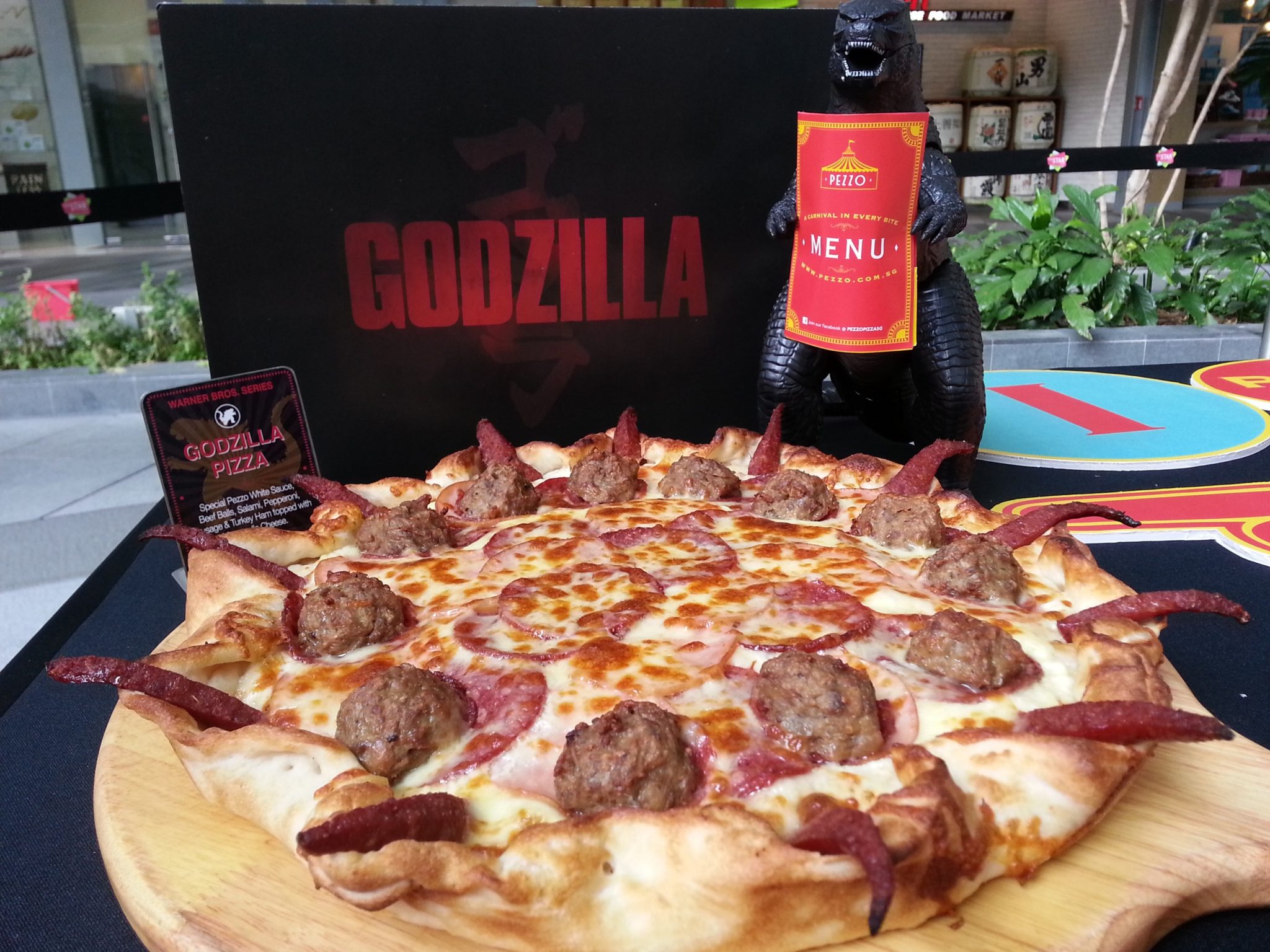
    International pizza franchise Pezzo has launched in Brunei Darussalam. The brand, operating under Satami Group of Companies, features a “Grab & Go” kiosk serving pizza by the slice for immediate purchase, and a “mix and match” pizza purchase option, whereby customers can collate their own pizza out of 12 different flavours. The brand stakes its reputation on generous toppings with shredded mozzarella cheese.

    Pezzo, best-known for its circus-themed design, is exclusively using ingredients certified under the Brunei Halal procedure in the store.

    In May of this year, Pezzo launched in Cambodia. The company now boasts more than 120 kiosk outlets, mainly in China, Indonesia, Malaysia, Myanmar, Philippines, Singapore and Thailand.

  • Li-Ning X EDG Joint Apparel Anounced

    Li-Ning X EDG Joint Apparel Anounced

    Chinese sports apparel brand Li-Ning has released a collaboration with esports organisation Edward Gaming (EDG). The Li-Ning X EDG apparel line, which includes hoodies, jackets, tracksuits, and shoes, is now selling at its retail location in Shanghai’s Daning shopping complex.

    Li-Ning has become one of China’s largest sportswear brands, having signed multiple sponsorship deals with international-league athletes. EDG is best known for its League of Legends team, which competed in the world gaming championship earlier this year. It closed a funding round of close to RMB100 million (US$15.7 million) last May.

  • South Koreans spending more on Chinese online stores

    South Koreans spending more on Chinese online stores

    South Koreans are spending more at Chinese online stores, according to credit-card spending data. Purchase records from November 1-26, compiled by the big data centre at Shinhan Card, showed a 9.8 per cent increase from last year in the value of goods bought from overseas internet sites. The number of transactions was up 16.6 per cent year on year.

    Chinese online stores outperformed rivals from other countries. AliExpress took 9.5 per cent of the purchases, up from 6 per cent in 2016 and 6.1 per cent last year. It ranked second after Amazon’s 16.3 per cent.

    Taobao, another Chinese Internet shopping site, grew from 2.3 per cent in 2016 to 3.3 per cent last year and to 4.4 per cent this year, raising it to the third most-used overseas online marketplace. Alibaba made it to the top 10 for the first time this year with 1 per cent.

    The shift is stark when comparing the purchases during Black Friday in the US and Singles Day in China. This year, overseas shopping during Singles Day rose 35 per cent. Black Friday purchases stopped at a 9 per cent gain.

    Data showed 70.8 per cent of purchases during Singles’ Day were for goods priced up to 50,000 won (US$44.32). Shoppers in their 30s and 40s remained the biggest clients, but the number of those in their 20s increased 1.9 percentage points from last year.

  • Steve Madden has launched in Malaysia

    Steve Madden has launched in Malaysia

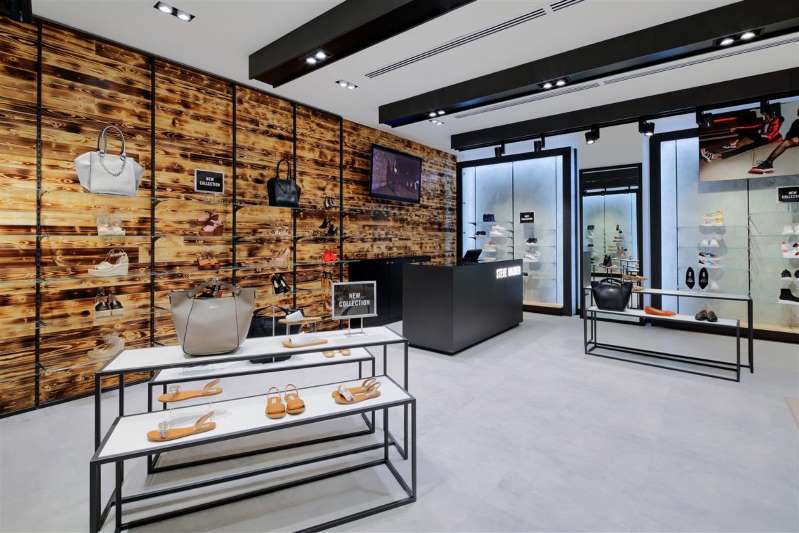
    American footwear brand Steve Madden has opened its first store in Malaysia. The new location at Mid Valley Megamall in Kuala Lumpur is the second Steve Madden store launched by the brand’s retail partner Valiram after the first opening in Takashi­maya Singapore.

    A statement from the brand that describes the new store’s aesthetic as “distilled urban” reads: “Making use of several materials, the intention is to stage the stars – shoes and accessories – in a way that allows each of them to tell their style story.”

    Featured in store is the brand’s Holiday 2018 collection for women, as well as its signature rock-n-roll-inspired shoes and leather goods.

  • ShoppRe online portal targets Indians living abroad

    ShoppRe online portal targets Indians living abroad

    International shipping and consolidation company ShoppRe.com is setting up in Dubai with a series of marketing campaigns. The shopping portal optimises cross-border e-commerce from India, acting as a bridge between people living abroad and Indian shopping sites such as Flipkart and Myntra.

    According to the site’s founders, most Indian sellers do not offer international shipping and several Indian websites do not accept international card payments.

    ShoppRe’s brand ambassadors, actress Priyamani and her husband Mustufa Raj, kick-started the official launch in Dubai by releasing the new ad campaign.

    “I can totally relate to people who have just shifted abroad and badly miss shopping from India. ShoppRe makes it possible to have your favorite Indian goods delivered right to your doorsteps,” said Priyamani.

    The firm’s major investor V A Hassan said: “I have been in Dubai for more than four decades. I have seen the huge demand for Indian products like fashion, food, etc, which are popular everywhere, but not easily accessible or are extremely overpriced”.

    ShoppRe was founded in October 2016 and has fulfilled orders worth INR 40 million (US$565,200) for more than 15,000 customers, including both Indian and non-Indian consumers. It has shipped products to more than 80 countries.

  • Kering leads the way to gender diversity

    Kering leads the way to gender diversity

    French luxury goods giant Kering has received a prize for its high level of female representation on its board. The company has made gender equality one of its corporate priority and has, this week, been chosen to receive the “Most Feminine Board of Directors” award.

    Handed out by the European Women on Boards along with Ethics & Boards, Kering was selected among the 200 largest companies of the Stoxx Europe 600 index based on the percentage of women on the boards as well as the presence of women serving as chief executive officer or chair of the executive board.

    The company, which owns a range of high-end labels including Saint Laurent, Bottega Veneta and Pomellato, launched a leadership and diversity program in 2010 with the aim of increasing access for women to leadership positions.

    Kering has also committed to reaching gender parity and pay equality at all levels by 2025.

    French companies are leading the way on gender diversity and Kering is a great model setting an example for the rest of the world to follow.

    Indeed, more than half of the group’s managers are women while they constitute 64% percent of the board and 33% of its executive committee.

    François-Henri Pinault, Kering’s CEO, also announced that the company would be doubling the budget of the Kering Foundation, aimed at tackling violence against women.

    Kering is also partnering with Michelle Obama for the French leg of her blockbuster tour for her memoir titled “Becoming.”

  • Alibaba to open e-commerce hub in Belgium

    Alibaba to open e-commerce hub in Belgium

    Alibaba Group Holding Ltd has signed an agreement with the Belgium government to launch an e-commerce trade hub, which will include investments in logistics infrastructure. The project is part of Alibaba’s Electronic World Trade Platform (eWTP), and Belgium is the first European country to join the project following similar agreements in Malaysia and Rwanda.

    Alibaba’s logistics arm, Cainiao, will lease a 220,000 square meter logistics port at Belgium’s Liege airport as part of the deal and invest an initial 75 million euros ($85 million) in the project set to begin operations in 2021, it said.

    “We strongly believe that under the eWTP, we will open up the huge potential for European businesses to reap the benefits of global cross-border trade, especially into the China market,” Alibaba CEO Daniel Zhang said in a statement.

    Alibaba’s eWTP is designed to help countries reduce trade barriers for e-commerce trade, including lowering or eliminating tariffs and speeding up customs clearance.

    The company has previously said the project is designed to “compliment” the World Trade Organization (WTO).

    Alibaba is expanding the project to Europe amid wider trade tensions, which have forced the firm to back down from efforts to tap U.S. sellers.

    Recently, Alibaba Chairman Jack Ma said previous plans to create a million jobs in the United States had been put on ice due to trade tensions, according to Chinese state media.

  • What is Amazon’s Japan bestseller fashion?

    What is Amazon’s Japan bestseller fashion?

    Amazon Japan has revealed its most popular items sold on the online retailer’s platform in the last twelve months, with basics and sportswear taking the top spot in both fashion and accessories, and footwear categories. According to the ‘Amazon Ranking Grand Prize 2018’, the United Athle 5.6 Ounce High Quality T-shirt took first place in the clothing and accessories category. In a classic design, the affordable fashion item was followed in popularity by the brand’s crew neck t-shirt, which came in second place.

    Looking at the top 20 apparel brands, Champion gained five spots in the report, while in the womenswear section, casual tops by And It_ sat high in the rankings.

    Asics’ running shoes won both first and second place in footwear, while Anello’s poly-canvas mini bag proved popular in the bag category.

    In watches, Casio’s G-Shock shock-resistant smart-watch continued to gain popularity, with the Casio brand featuring 11 times in the Amazon Japan top 20. In the jewellery ranking, products by Tiffany & Co. gained in popularity too, said the report.

    The “Amazon Ranking Grand Prize 2018” ranked the U.S. e-commerce giant site’s most popular products by category for the period beginning in November 13, 2017, and ending on October 31, 2018.

    In the last twelve months, retail expenditure has continued to grow in Japan.

    In September, the archipelago nation recorded its 11th consecutive month of retail revenue growth, with sales up 2.1% on the same period last year, according to data by the Japanese trade ministry.

    Specifically, online shopping is at the forefront of this drive with the Japanese love for online shopping helped by the trend to online shop using mobile phones.

    In the latest Criteo survey, mobile devices accounted for 55% of all EC transactions in Japan, up 4 points on the year.

    Transactions through smartphones increased 9%, and tablets 3%, but purchases by PC were down 9%, said the report.