Tag: Singapore

  • World AI Leaders from Dell Technologies, Rolls-Royce and Kryon, among others, discuss AI Strategies in Singapore

    World AI Leaders from Dell Technologies, Rolls-Royce and Kryon, among others, discuss AI Strategies in Singapore

    Given its infrastructure capacity, education system and investor-friendly laws, Singapore has all the right ingredients to nurture a robust AI ecosystem that could be the cornerstone for the small island’s economic upswing. According to a recent report by Accenture, AI could add up to US$215 billion in gross value across 11 industries in Singapore by 2035. With the Singapore government’s vehement efforts to foster initiatives in the AI space, the nation was the ideal location to host the 9th edition of the global World AI Show series that had hit the ground running for the second time in Singapore on 24 July 2019. The show was organised by international business events and consulting firm, Trescon.

    “Singapore is one of the top locations for AI and Robotics investments. Our mission was to fuel Singapore’s AI startup ecosystem by bringing in some of the world’s best AI innovators, solution providers, startups and investors to foster business opportunities for the Singapore government as well as regional and international companies”, said Mohammed Saleem, CEO of Trescon.

    300+ top industry leaders from the AI community came together to share their insights on how AI is transcending as a core enabling technology that can power multiple sectors.

    Top speakers for the event included Dr Terence Hung, Chief of Future Intelligence Technologies, Rolls-Royce Singapore Pte Ltd; Sutowo Wong, Director, Analytics & Information Management Division, Data Analytics Group, Ministry of Health; Dragana Beara, Portfolio Messaging Director, Asia Pacific and Japan, Dell Technologies; Prof Nadia Magnenat Thalmann, Director (IMI), NTU, Singapore and Founder & Director, Miralab of University of Geneva, Switzerland and Guido Jouret, Chief Digital Officer of ABB among other top speakers.

    In her keynote speech, Dragana Beara quoted, “Most of the AI development right now is done to create collaborative AI to augment us and give us an ability to leverage our humanity. Everything tedious, difficult or that we are not good at, like computing or getting insights from huge data sets is something we are going to outsource to the AI system.”

    The show also featured a workshop session from Warren Ledingham from Kryon who took the audience through a technical deep-dive session on ‘How to Save 80% of Your Automation Implementation Time’, and an almost human-like Robot interaction between Professor Nadia Magnenat Thalmann and her female humanoid social robot Nadine, that can remember past conversations.

    The global pitch competition for startups in the future-tech space, Startup Grand Slam, was the highlight of the show. Opu Labs, Inc, a digital solutions provider for skin health analysis won the Startup Grand Slam pitch competition and Trsts as runner-up.

    World AI Show – Singapore 2019 was sponsored by Lead Partner, Dell Technologies Platinum Partner, Kanerika; Workshop Partner, Kryon; Gold Partner, Darktrace, Silver Partner, DDN Storage; Badge Partner, QualityKiosk Technologies, Premier Bronze Partner, ADVANCE.AI

     

  • Positive outlook for Singapore retail leasing sector

    Positive outlook for Singapore retail leasing sector

    Ongoing investment-sale activity for malls suggests a positive outlook for the Singapore retail leasing sector, reports Edmund Tie & Company – especially for properties well connected to public transport and offering experiential and activity-based retail options.

    In a report Q2 2019 Real Estate Times for the Singapore market, the property company projects islandwide rental growth will be mixed, ranging from a 2 per cent decline to a 2 per cent increase this year. The low supply pipeline from next year onwards is likely to provide some underlying support to occupancy rates and rental levels.

    Investment market 

    For the second consecutive quarter, investment transaction value (of properties valued above S$100 million) jumped more than 52 per cent quarter on quarter with two transactions totalling $961 million. The largest sale was Chinatown Point for $520 million to a foreign institutional investor.

    The net supply of space fell by about 78 per cent as fewer projects were completed. As such, islandwide occupancy declined slightly by 0.4 percentage points to 90.1 per cent in the first quarter, however, the opening of Funan mall with 325,000sqft net lettable area – with 95 per cent of space pre-leased – is not expected to significantly impact occupancy rates in the second quarter.

    Rental rates 

    Singapore retail leasing rates across the different market segments remained largely flat, as occupancy rates remained high for malls located in prime positions. Upper-storey retail in the Orchard Road/Scotts Road area likely fell slightly due to weakened tourist spending, while the prime malls in the suburban areas continue to attract major brand retailers and new-to-market brands.

    The net demand and supply for retail spaces in suburban areas slowed in the first quarter, with the occupancy rate down marginally.  Prime-located malls with easy transportation access and a diverse and well-managed tenant mix continued to perform relatively well.

    New openings included Cafe Amazon outlets at Jewel Changi and Jurong Point Shopping Centre, and Xing Fu Tang (a Taiwanese bubble tea chain) opened a permanent store at Century Square in the second quarter.

    New space supply pipeline 

    From the third quarter of this year through to 2022, some 1.1 million sqft of retail space is expected to come onstream, with the majority of that to be completed in the second half of this year. The largest will be the Paya Lebar Quarter mall of about 313,000sqft.

    The average annual pipeline of known projects from next year through to 2022 is less than 150,000sqft, which is substantially below the three- and five-year average.

  • Lenovo Experience Store opens in Singapore

    Lenovo Experience Store opens in Singapore

    Lenovo has opened an Experience Store opens at Singapore’s Funan mall, offering an online-to-offline experience.

    The 4500sqft store has dedicated areas for product showcases, workshops and pop-up events.

    “The opening of our new flagship store, together with the launch of the four new devices, embodies our Intelligent Transformation strategy to bring a new experience to our customers in Singapore,” said Eddie Ang, Lenovo Singapore’s country GM.

    “We hope this Lenovo Experience Store will be a platform, where we can continue to build meaningful relationships with our customers and provide them with new and engaging ways to experience our brand.”

    Smart Retail is applied by using solutions to track footfall analytics and optimization. The data captured can map areas frequented by customers and calculate the average amount of time spent at each. This can help in planning the positioning of store employees to provide assistance.

    In-store cameras and product webcams that capture facial expressions will help in understanding customer preferences and their reactions to the various products. Analyzing the data can also showcase demographic trends among customers and assist stores to push targeted content that is relevant.

    Self-service kiosks will be available in-store to drive automation and free up employees to provide personalized services, where required.

    Products are also tagged with radio-frequency identification tags, supplying store employees with inventory information right at their fingertips through their hand-held tablets.

  • Positive outlook for Singapore retail leasing sector

    Positive outlook for Singapore retail leasing sector

    Ongoing investment-sale activity for malls suggests a positive outlook for the Singapore retail leasing sector, reports Edmund Tie & Company – especially for properties well connected to public transport and offering experiential and activity-based retail options.

    In a report Q2 2019 Real Estate Times for the Singapore market, the property company projects islandwide rental growth will be mixed, ranging from a 2 per cent decline to a 2 per cent increase this year. The low supply pipeline from next year onwards is likely to provide some underlying support to occupancy rates and rental levels.

    Investment market 

    For the second consecutive quarter, investment transaction value (of properties valued above S$100 million) jumped more than 52 per cent quarter on quarter with two transactions totalling $961 million. The largest sale was Chinatown Point for $520 million to a foreign institutional investor.

    The net supply of space fell by about 78 per cent as fewer projects were completed. As such, islandwide occupancy declined slightly by 0.4 percentage points to 90.1 per cent in the first quarter, however, the opening of Funan mall with 325,000sqft net lettable area – with 95 per cent of space pre-leased – is not expected to significantly impact occupancy rates in the second quarter.

    Rental rates 

    Singapore retail leasing rates across the different market segments remained largely flat, as occupancy rates remained high for malls located in prime positions. Upper-storey retail in the Orchard Road/Scotts Road area likely fell slightly due to weakened tourist spending, while the prime malls in the suburban areas continue to attract major brand retailers and new-to-market brands.

    The net demand and supply for retail spaces in suburban areas slowed in the first quarter, with the occupancy rate down marginally.  Prime-located malls with easy transportation access and a diverse and well-managed tenant mix continued to perform relatively well.

    New openings included Cafe Amazon outlets at Jewel Changi and Jurong Point Shopping Centre, and Xing Fu Tang (a Taiwanese bubble tea chain) opened a permanent store at Century Square in the second quarter.

    New space supply pipeline 

    From the third quarter of this year through to 2022, some 1.1 million sqft of retail space is expected to come onstream, with the majority of that to be completed in the second half of this year. The largest will be the Paya Lebar Quarter mall of about 313,000sqft.

    The average annual pipeline of known projects from next year through to 2022 is less than 150,000sqft, which is substantially below the three- and five-year average.

  • India’s Ferns N Petals launches in Singapore

    India’s Ferns N Petals launches in Singapore

    Indian flower-and-gift retailer Ferns N Petals has launched in Singapore, planning to offer gift deliveries for special occasions.

    The company hopes Singapore will provide it with an opportunity to grow awareness and increase its customer base across Southeast Asia.

    Customers can place orders from the website already, with a mobile app to be launched soon.

    “Expansion is the ultimate aim of a business and for us at Ferns N Petals. The vision is to expand across Southeast Asia and the Middle East,” said Pawan Gadia, CEO, retail & online at Ferns N Petals.

    “After making our venture profitable in the UAE, we are now eyeing the Southeast-Asian market, starting with Singapore.”

    With 25 years of experience, Ferns N Petal has more than 330 retail outlets across India and the UAE.

  • Our Toy Stories carnival opens at Harbour City

    Our Toy Stories carnival opens at Harbour City

    Hong Kong’s largest shopping mall Harbour City is joining forces with Disney to celebrate the release of Disney and Pixar’s Toy Story 4.

    Until August 4, Harbour City will present a Toy Story-themed carnival with different games and challenges at Ocean Terminal Forecourt next to Star Ferry Pier and Ocean Terminal Deck.

    Fans can experience fun and immersive activities throughout the mall, including exhibits, kids’ workshops, a Toy Story 4 merchandise and dessert pop-up stores and a Summer Splash Photo Fun hotspot presented by Hong Kong Disneyland.

  • Vive Cake Boutique Embraces Summer with Loveable Summer Drinks

    Vive Cake Boutique Embraces Summer with Loveable Summer Drinks

    Celebrated patisserie, Vive Cake Boutique, welcomes the summer season with the introduction of a whimsical and creative line of summer drinks and artistic sweet treats from 15 July to 30 September.

    “We are delighted to launch this refreshing summer menu of drinks and cakes embracing the playful colours, flavours, and vibe of the sunny season,” shares Founder, Ms Vivien Lau. “Our guests are invited to delve into VIVE’s summer wonderland through their senses.”

    Inspired by the look-feel of classic summer, VIVE’s line of summer cakes embody the lighthearted emblems of the season. Flamingo Floatie (HK$55), a pink treat designed to emulate a flamingo-style floater, is made with vanilla sponge, jasmine jelly, and oolong chocolate mousse; light yet satisfying flavours.

    The heat of summer is depicted in the cute Mini-Cone (HK$58), a mini version of VIVE’s signature uni-cone cake, featuring an upside-down “ice-cream” cone which appears to have perfectly “fallen” on the plate.  Easy on the eyes with its pink scoop of ice cream and golden-coloured cone, the cake is made with vanilla sponge, mango compote and yuzu mousse.

    Ice pop fans will love Limesicle (HK$55), a vanilla sponge cake with lime jelly filling coated in yogurt mousse,  and pink coloured white chocolate glaze, with sprinkles, emulating a “drip”.

    For something truly unique, the insta-worthy Coco-Aloha (HK$58) is unbeatable. Presented as a “coconut shell” drink with a small golden straw, the vanilla sponge cake with pineapple filling and coconut mousse looks real enough to drink.

    Guests are also invited to enjoy VIVE’s twist on a “slushie” with Pineapple Slushie (HK$65), a refreshing pineapple drink, featuring chunks of pineapple, presented in a classy whisky tumbler. The citrusy drink is topped off with a sprig of mint, lending it a sophisticated mocktail feel.

    For a fun, playful, and Instagrammable drink, diners may opt for VIVE’s Watermelon Mojito (HK$68). Made with fresh watermelon, mint, and lime, the cooling beverage is presented with a wedge of watermelon on a popsicle stick.

    Add a little bit of sparkle to one’s day with Grapefruit and Lime Soda(HK$65), a zesty, bubbly summer drink made from grapefruit puree, lime, andsoda water.

    Vive Cake Boutique has proved a roaring success story since being launched with online orders in 2014 by founder and creative director Vivien Lau, who discovered her passion and talent by chance, making her first cake for a friend’s birthday.

    Her signature ‘handmade with love’, cupcakes, macarons, cookies, confectioneries and tailor-made cakes for weddings and special occasions, are all made from scratch with less sugar and finest ingredients sourced from all over the world.

    VIVE’s widespread acclaim includes Time Out’s listing among the “crème de la crème of Hong Kong’s bespoke dessert makers” – with a massive celebrity and socialite following including Aaron Kwok, Charlene Choi, Gillian Chung, Niki Chow, Sharon Chan, Miki Yeung, Ella Koon, Myolie Wu and more.

  • MPH Bookstore may quit Singapore

    MPH Bookstore may quit Singapore

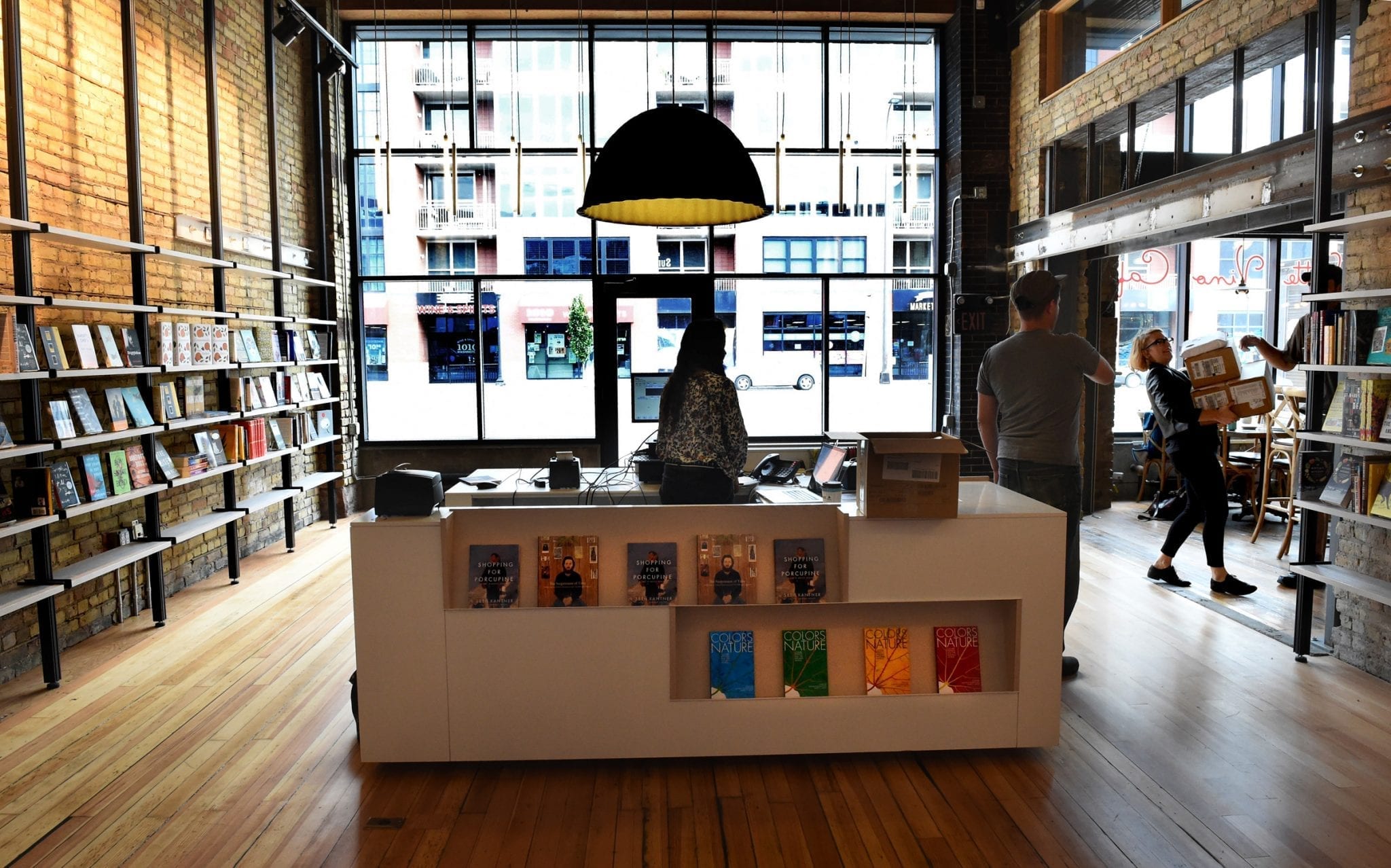
    Malaysia’s MPH Bookstore may exit Singapore, closing its last outlet by September.

    The chain announced its plan to close Raffles City and Parkway Parade outlets on July 28 and September 1 respectively. But the company signalled it is open to replacing the two outlets with a single store if it can find the right location at the right rent.

    MPH is closing the stores due to high rental costs and intense competition from online booksellers.

    As a result, the chain has plans to “restructure and streamline its resources for new business plans”.

    “Most of these online retailers give between 15- and 25-per-cent discount. Another unfair advantage is they don’t have to charge GST,” MPH Bookstores area manager Ismail Osman said in April.

    He also revealed that sales at MPH had declined by 40 per cent over the last 10 years.

    MPH Singapore’s first flagship on Stamford Road closed in 2003, after nearly 100 years, due to declining sales.

    MPH’s closure news came one month after other bookstore chains such as Popular and Japan’s Books Kinokuniya also closed their outlets after more than 30 years trading.

  • Singapore retail sales slip again

    Singapore retail sales slip again

    Singapore retail sales slipped 1 per cent year on year in May, after motor vehicles were excluded from the data. The month-on-month decline was the same.

    Statistics Singapore estimated total retail sales in May (including motor vehicles) at $3.7 billion, with online retail sales accounting for 5.3 per cent of that figure.

    Year-on-year, furniture and household equipment was the category showing the greatest decline –  7.5 per cent – while sales of computer and telecommunications equipment, of optical goods and books, and by department stores, fell by between 4.7 per cent and 7 per cent.

    Categories to improve in May included watches and jewellery, up by 4.1 per cent, partly due to higher demand for gold jewellery during the Akshaya Tritiya festival.

    Sales of food and beverage services grew by 2 per cent year on year to n estimated $849 million.

    Turnover of restaurants, other eating places (such as cafes) and fast-food outlets increased by between 1.8 per cent and 2.7 per cent in May.

    In contrast, sales by food caterers decreased by 1.2 per cent.

  • Precision marketing set to surge in Apac

    Precision marketing set to surge in Apac

    Asia Pacific is poised for growth in data-driven marketing (“precision marketing”) given the increasing base of 2 billion online users and expected rise of advertising budgets in the next five to 10 years.

    The conclusions arise from the latest report by research company Nielsen, A Digital Giant Awakens, which surveyed marketing leaders across Asia-Pacific markets on their next-level strategy and implementation road-map, revealing investments in precision marketing are likely to increase in the next year from 14 per cent of marketing budgets to about one-fifth of spends (19 per cent) going beyond social, search and mobile toward newer applications.

    In the next six months the top three platforms where advertisers across the Asia Pacific region will be allocating their marketing spends are Facebook/Instagram (60 per cent), Google/Youtube (43 per cent) and mobile (42 per cent). Meanwhile, investments in advanced applications are increasingly gaining pace, particularly for data-science/modelling (36 per cent), high-quality third party data (32 per cent) and analytics to measure ROI (28 per cent).

    The survey, conducted across top leading advertisers in the region, found precision marketing is enabling advertisers to understand consumers’ purchase journeys, personalised communications and consumer profiling.

    Key factors accelerating the progress of precision marketing include better quality and reliability of data, clear demonstration of ROI for advertisers and further education to stay ahead in the game.

    “With advancements in technology and popularity of digital media there is tremendous headroom for growth in precision marketing across Asia Pacific,” said Nielsen’s MD media North Asia Ranjeet Laungani. “Precision marketing is capable of driving marketing applications out of predictive analytics and forecasting results and it is strongly recommended for advertisers to consider in their repertoire of new-age tools.”

    The report spotlights Data Management Platforms (DMPs) as pivotal technology enablers for advertisers to successfully implement precision marketing in their overall strategy. Such platforms manage and unify multiple streams of disparate consumer data and assist in consumer profiling and targeted messaging, thereby limiting spends on media waste.

    The challenge for advertisers remains to show quick wins during early stages of DMP engagement.

    Data science and analytic prowess are top attribute advertisers in Asia Pacific look for while evaluating a data management platform.

    “Currently the space is under-invested, however, broadening expert ecosystems, presence of higher quality datasets, and presenting more success stories will drive up confidence and adoption in the industry,” added Laungani.

    “The void in awareness and education can be filled by agencies, media owners and advertisers by maintaining an eye on the long-term and short-term potential of precision marketing.”

  • Courts opens first IoT store at Funan mall, Singapore

    Courts opens first IoT store at Funan mall, Singapore

    Courts Singapore has opened its first Internet of Things store at Funan mall.

    The 12,000sqft store houses Google’s first experience zone in Asia and another from Samsung.

    Consumers can try Google’s entire range of products in Singapore, from smartphones to the recently launched Nest Hub smart display, which is similar to a smart speaker but with a screen.

    Ben Tan, Courts Singapore country CEO, shared with The Straits Times that 80 per cent of the products on sale are compatible with smart-home platforms such as the one anchored by Google Assistant, Google’s artificial intelligence-powered voice-assistant software.

    “The number of smart products available here that work with Google Assistant has increased by 200 per cent this year on year,” Tan said.

    At the Samsung experiential zone at the Courts Singapore Funan mall store, consumers can try out an integrated smart home.

    They can open a door using a digital lock, see notifications from a security camera on a smart Samsung television and issue voice commands to smart home appliances such as washing machines and fridges.

    According to Tan, Courts will offer more services to go along with smart home, such as setting up the devices and educating users on how to control their smart gadgets.

  • Moda Operandi launches Store in China

    Moda Operandi launches Store in China

    Fashion-discovery platform Moda Operandi has appointed Ming Yang as the firm’s new MD for China.

    While Moda Operandi has served the Chinese customer for years, Ming’s appointment represents Moda’s official entry into the region. She will build a strategy, operations, marketing, and personal styling programs from Shanghai.

    “Ming’s experience successfully shaping major US and UK-based retail brands to fit the needs of the Chinese luxury consumer is unparalleled,” said CEO of Moda Operandi Ganesh Srivats. “At Moda, we’re committed to becoming part of the local fabric in China, building our China operation from the ground-up, and ultimately being the pre-eminent luxury fashion platform for Chinese consumers. Ming has just the experience to get us there.”

    Ming will be Moda Operandi’s first employee in China, growing the company’s Shanghai team and overseeing all of Moda Operandi’s business strategy and operations in Mainland China.

  • Mr Jeff plans more outlet in Singapore and Philippines

    Mr Jeff plans more outlet in Singapore and Philippines

    Spanish on-demand laundry startup Mr Jeff plans Singapore and the Philippines expansion. The company aims to open more than 75 franchises in the Philippines, and 30 in Singapore by the end of this year.

    A Mr Jeff app allows users to book laundry services on-demand and through a subscription model. By using the app, website, or the company’s physical store network, customers can choose the exact location, time and day for their laundry to be collected and delivered. A driver visits the user’s home or office, collects the garments and delivers them back later, cleaned and ironed.

    According to Mr Jeff’s research, laundry services are popular among the younger generation, and considered by 78 per cent as the most-disliked domestic chore.

    “With our digital approach and our subscriptions plans, we intend to change the traditional function of the dry cleaning sector,” said Luis Eduardo Quintero, of Mr Jeff Philippines.

    “Singapore and the Philippines are two of the countries in which maximum revenue is expected.”

    Founded in 2015, Mr Jeff is currently operating 370 laundry points in more than 10 countries, mostly in Central and Southern America.

  • Emma dessert opens in Singapore

    Emma dessert opens in Singapore

    Japan’s Emma dessert has opened its first overseas outlet, at Singapore’s Plaza Singapura.

    Located on basement level 2 of the shopping mall, the outlet offers two exclusive products to Singapore – the Boba Taco Softie, and Charcoal Cheese-flavoured Soft Serve – along with its original menu.

    Signature items include Soft Serve with Okinawa Brown Sugar Bubble in Wafer Shell, Soft Serve in Cup with Okinawa Brown Sugar Bubble, Soft Serve in Charcoal Cone.

    Emma opened its first shop in Japan in May 2018, and now has seven outlets in Japan.

  • Apple Singapore to open in Jewel Changi

    Apple Singapore to open in Jewel Changi

    Apple Singapore is set to open its second store – at Jewel Changi on July 13.

    No other information, including the size of the store, was released. However, the company revealed that visitors can expect some brand new programming developed exclusively for the Jewel store, including a Magic of Jewel Changi Airport Photo Walk.

    This pathway will be around 500 meters and will allow attendees to explore Jewel’s attractions, such as its modern architecture, indoor gardens and its 40m waterfall.

    Attendees will learn how to take photos or videos of these attractions using an iPhone or iPad.

    A third Apple Singapore store will open at Marina Bay Sands, most likely late this year.