Tag: singpost

  • Singapore Post Ramps Up China E-commerce Push

    Singapore Post Ramps Up China E-commerce Push

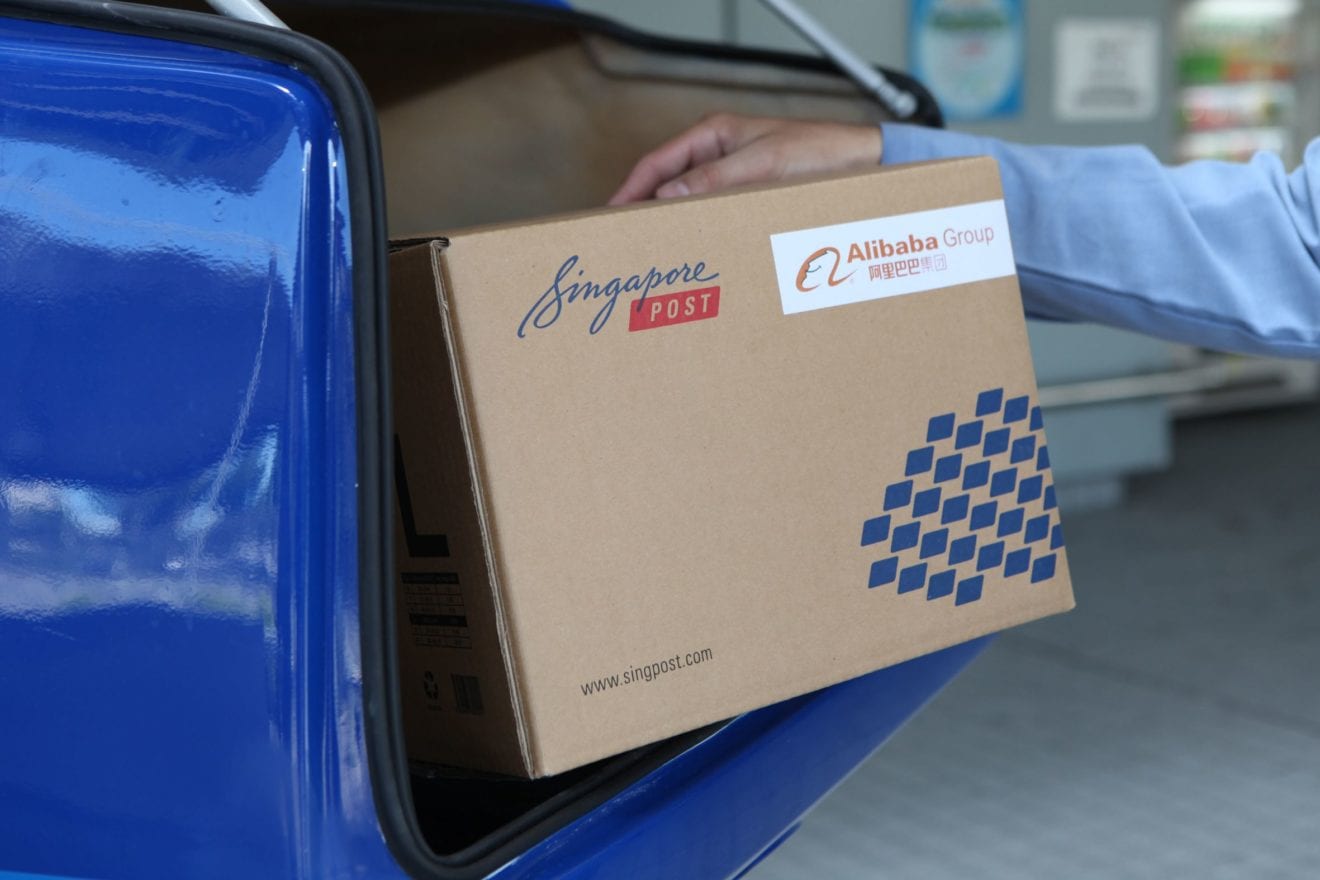
    Despite signs of a slowdown of imports into China, Singapore Post (SingPost) remains bullish on the prospects for e-commerce flows into Asia’s largest economy. The postal agency has upped its stake in Shenzhen-based e-commerce provider 4PX Information Technology.

    SingPost forked out US$25.6 million to acquire an additional 17.91% position in 4PX, one of China’s top e-commerce cross-border players, whose scope of services ranges from forwarding, express delivery and warehousing to software and consulting services for e-commerce vendors. The postal operator now holds a 36% stake in the Chinese firm.

    4PX runs warehouses in China, Australia, UK, Germany and the US, employing north of 2,600 staff. The company has over 20,000 customers in more than 50 locations in China and globally.

    “The additional investment in 4PX, with its extensive logistics capabilities in warehousing, express delivery and freight forwarding, is a key part of SingPost’s strategy to strengthen our integrated end-to-end e-commerce logistics solutions and to leverage on the rapid growth in China’s e-commerce activities,” said Goh Hui Ling, deputy CEO (international mail) of SingPost.

    With general cargo growth in the doldrums, logistics providers are keen on developing a footprint in e-commerce, which promises rich pickings and robust growth momentum. According to one estimate, global B2C volume is expected to reach US$2.26 trillion a year by 2020, with an annual growth rate of 15 to 20%.

    International carriers are particularly gung-ho on China, citing Chinese consumers’ rising cravings for international brands. Anselm Eggert, head of e-commerce at Lufthansa Cargo, stated that they are showing strong interest in European brands, especially health and beauty products.

    Freighter leasing firm Airborne Global Solutions invested US$16 million last September for a 25% stake in the nascent United Star Express, a new Chinese freighter operator that is expected to take to the skies halfway through this year. Its partners in the venture are Chinese Boeing 737 operator Okay Airways, a developer and an investment company, and Vipshop, the third-largest e-tailer in China, according to AGS president Rich Corrado.

    Postal agencies are pushing aggressively into this arena, their eagerness intensified by a need to make up for the ongoing shrinkage of their traditional letter mail business. With their delivery networks they have a strong advantage over competitors in the critical final-mile segment in their home markets, but they are also increasingly targeting international flows to other markets.

    Japan Post established its own website in China last autumn to offer Japanese merchandise to Chinese consumers. Orders are consolidated and moved by ocean vessel to Shanghai for overland distribution.

    China Post has been in hot pursuit of e-commerce business, which is reflected in the rapid growth of China Postal Airlines. According to one source, China Southern Airlines’ decision last year to bring two parked 747-400 freighters back into service was prompted by the Chinese postal agency.

    To develop its traffic from the postal agencies of Hong Kong and China, Cathay Pacific has implemented barcode scanning of mail at its stations in China and in Hong Kong. This enables the electronic transmission of departure, transit and arrival information. In a second phase, the airline is looking to integrate various IT interfaces – from booking to space management and mail warehouse transit management – to establish real-time data flow, said Mark Sutch, the airline’s general manager of cargo sales and marketing.

    For now many airlines view postal business as the biggest inroad into B2C e-commerce, but this will likely change. Eggert envisages greater involvement from carriers down the road. At this point Lufthansa is studying the market in order to be able to develop more targeted options later on.

    “I think in the future we will go beyond mail. I think the industry needs to think how to work together with partners,” Eggert said. This will require closer alignment, including some degree of IT integration. In light of the fact that the air cargo industry does not have a stellar track record in developing joint solutions, this will be a challenging avenue for operators to pursue, he added.

  • SingPost GD Express sale to boost eCommerce

    SingPost GD Express sale to boost eCommerce

    Singapore Post (SingPost) has sold off part of its stake in GD Express (GDEX) for S$78.4 million (US$55.88 million) and will use the proceeds to drive global growth for its eCommerce logistics.

    This is a net gain of S$64 million – about five times return on the initial investment.

    Yamato Asia, a wholly owned subsidiary of Japanese transportation and forwarding group Yamato Holdings, has bought the 137,418,000 shares.

    Proceeds from the SingPost GD Express sale will be reinvested into its eCommerce services and networks in the US, Europe, China and the rest of Asia Pacific, in line with the group’s strategy to continue strengthening its integrated end-to-end eCommerce logistics, including front-end web management, warehousing and fulfilment, last-mile delivery and international freight-forwarding.
    SingPost deputy group CEO Mervyn Lim says the group is gearing up “on an accelerated path” to becoming a global leader in end-to-end eCommerce logistics.

    “This deal gave us a good return on our investment and also boosted our available resources to drive SingPost’s eCommerce logistics growth as it pivots into the US with the recent investments inTradeGlobal and Jagged Peak.”
    With interlinked systems with GDEX, the group will continue to reap business synergies with the added uplift Yamato brings to GDEX.

    “Collaborations and partnerships are vital to SingPost as we connect the dots in building a global eCommerce logistics ecosystem,” says Lim. “We continue to work with strategic partners in Malaysia and the rest of Southeast Asia while leveraging the Quantium Solutions commercial network, as well as those of our associated companies, to reinforce the ecosystem we are building.”

    SingPost now holds a 11.2 per cent strategic stake in GDEX and retains its board seat.

  • Online sellers turn Southeast Asia retail industry upside down

    Online sellers turn Southeast Asia retail industry upside down

    Here’s how bad it is in Southeast Asia’s retail industry for sellers. 

    They are paying more to borrow money to keep their business going than consumers do to keep buying from them.

    Courts Asia Ltd., which offers shoppers zero percent long-term credit on higher-end products, has seen its Singapore dollar bond yields rise 28 basis points to 4.34 percent in the past six months and is trying to refinance the note ahead of its May repayment, Bloomberg reports.

    The yield on US currency bonds of Parkson Retail Group Ltd., part of a Malaysian retailer which operates across Southeast Asia, has soared 320 basis points to 10.21 percent.

    Sagging global growth and rising household debt is knocking consumer demand across Southeast Asia, with Indonesian phone seller PT Trikomsel Oke in November becoming the first company to default on Singapore dollar bonds since 2009.

    Retailers that borrowed to finance growth are also losing ground to online market places like Alibaba Group Holding Ltd.

    The median debt load of the region’s retailers rose to 1.75 times operating profit in latest filings compared with 1.3 at the end of fiscal 2014.

    “I have been very careful about some local currency corporate bonds,” said Singapore-based Desmond Soon, co-head of investment management for Asia at Western Asset Management Co., which had US$446 billion under management at Sept. 30 and held Courts Asia bonds as of Nov. 30.

    “Bricks and mortar retailers do have an issue,” Soon said.

    Retail store sales in Singapore dropped for a third month in November, falling 2 percent from a year earlier, Department of Statistics data show.

    Meanwhile, online transactions in the region are growing.

    Singapore Post Ltd.’s domestic e-commerce orders in Southeast Asia and Australia rose 384 percent in the 12 months through November, according to a company presentation.

    Courts Asia, which sells goods from electronics to home furniture in Singapore, Malaysia and Indonesia, began meeting investors last week ahead of its scheduled S$125 million (US$87.1 million) repayment of notes in May. It’s looking to raise funds to help refinance and repay the bond, Courts’s Singapore-based spokeswoman Tammy Teo said.


  • SingPost fuses e-commerce businesses to form global commerce enabler

    SingPost fuses e-commerce businesses to form global commerce enabler

    It plans to further widen its US logistics footprint.

    The Postman is putting its eCommerce business on laser focus as it integrates its logistics limbs TradeGlobal and Jagged Peak to further expand its eCommerce logistics footprint in the US, the largest retail market in the world.

    According to a press release by Singapore Post, the resulting product from the integration would be SP Commerce, a global commerce enabler for brands and retailers.

    SingPost says SP Commerce is a pioneering project in omni-channel enablement for global brands and retailers, and will provide customers easy access to eCommerce markets around the world.

    “The solutions that SP Commerce offer include end-to-end services spanning webstore development and operations, global fulfilment, omni-channel order management, cross-border commerce, performance marketing, and customer care services,” SingPost said.

    Additionally, SingPost said it now provides end-to-end eCommerce logistics solutions to more than 100 mono-brands including Adidas and Calvin Klein.


  • SingPost’s Q2 profit up 38.5% at S$53.4 million

    SingPost’s Q2 profit up 38.5% at S$53.4 million

    Postal services firm Singapore Post (SingPost) yesterday reported a 38.5 per cent surge in net profit for its fiscal second quarter, boosted by divestment gains and continued growth in its logistics and e-commerce businesses.

    Net profit amounted to S$53.4 million for the three months ended Sept 30, up from S$38.6 million in the corresponding period a year earlier, SingPost said. Revenue increased 19.4 per cent year-on-year to S$263.2 million.

    The nation’s postman said revenue from its traditional mail business dropped by 5.6 per cent year-on-year to S$116.5 million, following the divestment of DataPost. Excluding the impact of the divestment, mail revenue remained stable, said SingPost.

    Logistics revenue rose by 43.3 per cent to S$156.1 million on the back of growing contributions from e-commerce activities and the inclusion of new subsidiaries. Revenue from the retail and e-commerce segment was 7.1 per cent higher at S$23.9 million.

    SingPost chief executive Wolfgang Baier said the company will continue its push into the two areas of logistics and e-commerce to drive growth. “Mail volumes are coming down domestically and regionally, and we look at other fronts to compensate,” he said.

    Last week, SingPost unveiled plans to develop, by mid-2017, a S$150 million e-commerce retail mall, a Singapore first that will combine bricks-and-mortar shops and online shopping.

    Other key developments in recent months included Alibaba buying an additional 5 per cent stake in SingPost for S$187.1 million to raise its shareholding to 14.5 per cent. The Chinese e-commerce giant also announced it would invest up to S$92 million for a 34 per cent stake in Quantium Solutions International, a SingPost subsidiary that provides e-commerce logistics in the Asia-Pacific region.

    In September, SingPost used a drone to deliver a packet containing a letter and a T-shirt from Lorong Halus to Pulau Ubin in about five minutes.

    It said the trial marked the first time a postal service in the world had successfully used an unmanned aerial vehicle for “point-to-point recipient-authenticated mail delivery”.

    In October, SingPost entered into conditional agreements to acquire majority stakes in logistics provider Jagged Peak and end-to-end e-commerce firm TradeGlobal Holdings for about S$22.5 million and S$236 million, respectively. “As SingPost continues its transformation to build a strong second wing in the e-commerce logistics space, the focus in the coming months will be on post-merger integration and extracting synergies from its new acquisitions,” the group said.

    SingPost shares fell 0.3 per cent to close at S$1.89 yesterday ahead of the results announcement. Angela Teng

  • SingPost to build $150 mil mall offering e-commerce logistics solutions

    SingPost to build $150 mil mall offering e-commerce logistics solutions

    Singapore Post will build a $150 million shopping mall that offers a “complete suite” of e-commerce logistics solutions, the first of its kind in Singapore.

    The new retail mall at Singapore Post Centre (SPC) will boast 269,097.8 sf of retail space and it will be located next to the Paya Lebar MRT station.

    Construction works have commenced today with a target completion in around mid-2017. It includes upgrading amenities and facade for the adjoining office building.

    The postal and e-commerce logistics provider says this development is aimed at creating opportunities for businesses in the changing retail landscape and catering to the evolving needs of consumers.

    It will offer greater convenience, choices and experiences to consumers by providing online e-merchants and offline brick-and-mortar shops all under one roof, SingPost says.

    It adds that online shopping through e-merchants will include in-shop online ordering and flexibility in delivery and pickup timings.

    SingPost ended lower at $1.90 on Tuesday.

  • Shopping mall with e-commerce logistics services to rise in Singapore

    Shopping mall with e-commerce logistics services to rise in Singapore

    Construction is now underway for Singapore’s first shopping mall that offers e-commerce logistics solutions as well.

    Scheduled to be completed in mid-2017, the new retail mall will be located at the prent open concourse in front of the SPC, located next to Paya Lebar MRT station.

    The project’s developer, Singapore Post Limited (SingPost), said it will have 25,000 square meters of retail space and will be built at a cost of S$150 million ($107 million), which includes upgrading amenities and façade for the adjoining office building.

    “The redevelopment of the retail mall at SPC is part of our efforts to extract maximum value from our property portfolio and support our accelerated transformation from Singapore mail to global eCommerce logistics,” said Lim Ho Kee, Chairman of SingPost, in a news release.

    As a mall that combines both online and offline shopping, SingPost said shoppers could browse in-store, purchase the product and arrange for delivery of the product directly to the home. They could then continue shopping, watch a movie or have a meal at the mall without having to carry bulky shopping bags. The retailer, on the other hand, could save on storage space in the store as fulfilment would be done at the backend of the warehouse.

    Dr. Wolfgang Baier, Group Chief Executive Officer of SingPost, said the unique and disruptive concept – converging online and offline – was thought of to allow customers to experience both worlds.

    “This is an important shift in mindsets as well as the retail and e-commerce landscapes. The convergence of online and offline will bring exponential benefits to consumers and businesses – therefore we view this as ‘O²’ (O-squared) instead of O2O (Online-to-Offline). The SPC’s O² retail concept puts consumers at the heart of this evolution, allowing them to have greater retail options and more convenience,” he said.

    The new retail mall at SPC will consist of four above-ground levels and one basement, an eight-hall cineplex, SingPost’s flagship post office, retail shops, as well as food and beverage outlets. The mall will also come equipped with three levels of underground car park.

    Under the Urban Redevelopment Authority masterplan 2008, the area around the Paya Lebar MRT station will be developed into a suburban commercial node, while retaining its cultural identity. The new retail mall at SPC will reinforce the plan and add more buzz into the area by introducing the new O² retail experience. It will also  be a smart mall in a Smart Nation, using technology and innovation to support smart living environments while helping businesses to grow.

  • SingPost takes control of US eCommerce co

    SingPost takes control of US eCommerce co

    SingPost, Singapore’s national postal service, is continuing to build its international portfolio of eCommerce businesses, now adding US-based Jagged Peak to the lineup.

    The company says the purchase continues its “aspirations of building an end-to-end eCommerce logistics network and technology platform”.

    Wholly owned subsidiary, SP Jagged Peak LLC, has entered into an agreement to acquire a 71.1 per cent equity stake in Jagged Peak, a US eCommerce logistics enabler for high-velocity consumer products for US$15.8 million (or approximately S$22.5 million).

    SingPost says it intends to invest in Jagged Peak’s eCommerce logistics infrastructure, processes and technology to help customers maximise their business potential globally. The company says the investment will open the way for its customers to grow not only across Asia Pacific but into the US and beyond seamlessly with one eCommerce logistics solution provider.

    Lim Ho Kee, SingPost chairman, said: “As SingPost pioneers and leads eCommerce logistics in Asia Pacific, we are casting our eyes beyond the region. Jagged Peak can enable end-to-end fulfilment of eCommerce orders across the US.

    “SingPost is excited about this capability. This transaction is also part of our strategy to focus our resources on strengthening our geographical reach and the technology we employ as an eCommerce logistics company.”

    Dr Wolfgang Baier, group CEO, added:  “This acquisition will ‘connect the dots’ and make our eCommerce logistics network global. The acquisition of Jagged Peak allows us to use their state-of-the-art eCommerce omni-channel technology to enable brands and retailers not only to leverage their warehouse facilities in over 20 locations in the US but expand these services into our Asia Pacific warehouse network.

    “It’s a win-win for existing and future customers. We have planted the seeds with this investment of what will be SingPost’s global multi-channel B2B4C eCommerce logistics platform.”

    Jagged Peak reported revenues of approximately US$61.7 million (or approximately S$83.5 million) for the fiscal year ended December 2014.

  • SingPost invests in Hong Kong ventures

    SingPost invests in Hong Kong ventures

    SingPost has revealed investments in two Hong Kong companies as it continues its aggregation of interests in eCommerce and logistics businesses in the broader Asian region.

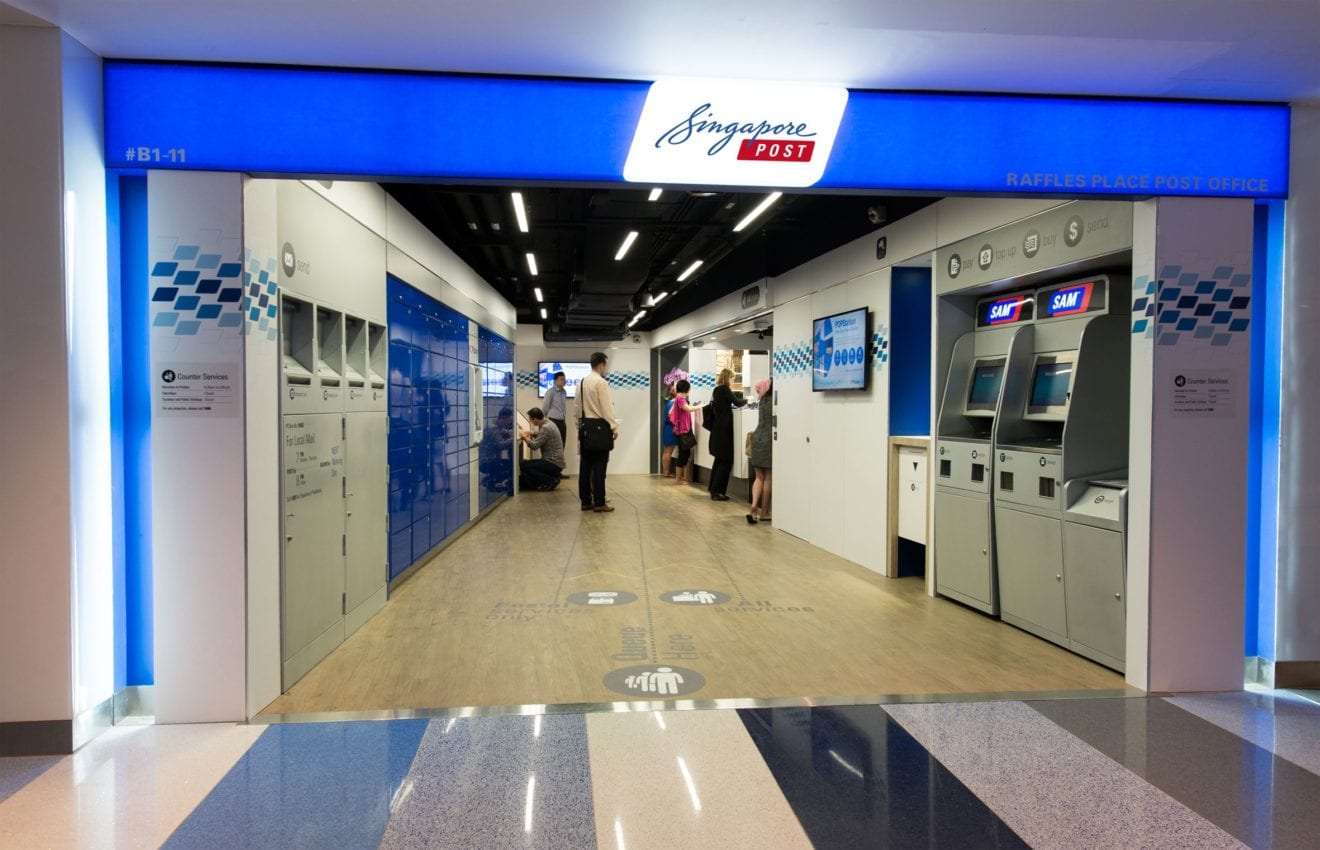
    SingPost subsidiary Quantium Solutions Holdings has spent HK$8 million (about $1.5 million) acquiring 1 million new shares in E Link Station, representing about 50 per cent of the business. Founded last May, E Link Station is creating “a rapidly expanding network of self-collection parcel service points”, a concept with similarities to SingPost’s POPStations across the island state.

    “ELink… is an extension of how we approach parcel deliveries elsewhere in many parts of the world – that is, we give customers flexibility through multiple channels that include locker storage and redemption centres,” explained Dr Wolfgang Baier, group CEO of SingPost.

    The second, larger deal sees SingPost take a 33 per cent stake in Morning Express & Logistics for HK$39.6 million (S$7.2 million). ME provides logistics, documents and parcel delivery services in Hong Kong. The Singaporean company has an option to take a further 33 per cent stake for the same amount if certain terms and conditions are fulfilled.

    “Morning Express gives us a strong last-mile and parcels capability in Hong Kong and extends our eCommerce value chain there, adding on to our warehousing, freight forwarding and front-end eCommerce,” said Baier.

    “As a company, Morning Express has 28 years in the logistics business and they are led by a professional management whose thinking is remarkably similar to ours.”

    Baier said Hong Kong, as a gateway to China, is a priority market for SingPost and a node in its pan-Asian network through which it serves its customers and partners.

    SingPost is 14.51 per cent owned by Chinese eCommerce giant Alibaba Group.

  • SingPost flourishes on eCommerce focus

    SingPost flourishes on eCommerce focus

    A firm focus on serving the booming eCommerce market has helped Singapore’s national postal service achieve a record first quarter profit.

    SingPost on Wednesday says in made S$46.6 million net profit in the first three months as its eCommerce strategy paid dividends. Its performance comes in an era when postal services internationally are struggling to break even and remain relevant as traditional mail volumes fall.

    Like every other mail service provider, traditional mail volumes declined in the quarter – by 1.6 per cent – but a modest increase in postal charges offset declining traditional postage income. However revenue from logistics, which includes SingPost’s eCommerce logistics business, soared 43.6 per cent to S$140.1 million – $15 million more than postage revenue.

    The company also achieved a one-off gain from divestments.

  • Alibaba boosts stake in SingPost

    Alibaba boosts stake in SingPost

    Alibaba Group has agreed to take a larger stake in Singapore Post and invest in a subsidiary of the publicly traded post office to strengthen their joint development of eCommerce logistics services in the Asia Pacific region.

    The deal, announced today, calls for Alibaba Group to buy an additional five per cent of SingPost shares for $138.6 million, increasing its ownership position in the mail and parcel carrier to 14.51 per cent. Alibaba will also invest $67.85 million in SingPost’s Quantium Solutions International (QSI), which runs a logistics and fulfilment network in more than 10 Asia Pacific countries.

    Alibaba, China’s largest eCommerce company, has been aggressively courting businesses outside the mainland in order to promote cross-border e-commerce, working with companies such as SingPost to reduce some of the barriers to efficient worldwide delivery of small parcels ordered online-impediments such as relatively high shipping costs, lengthy delivery times and complications in getting orders through customs.

    Cross-border online shopping – consumers buying products directly from overseas retailers via the Web – will see compound annual growth of 27 perc ent over the next five years, double the rate of worldwide B2C shopping as a whole, according to a recent report from Accenture and AliResearch, Alibaba’s research arm.  While Alibaba Group currently makes less than five per cent of its revenue outside of China, Jack Ma, the company’s executive chairman, said his goal is for overseas eCommerce to eventually make up half of company revenue.

    Alibaba and SingPost began collaborating last year when Alibaba, through an investment vehicle, acquired an initial stake in SingPost. The deal announced today deepens their relationship, the companies said, with Alibaba taking a 34 per cent stake in QSI, while SingPost will hold 66 per cent.

    Under the agreement, QSI, which offers eCommerce logistics and warehousing across Asia Pacific, will be reorganised as a joint venture between SingPost and Alibaba Group. In addition, QSI will also become a platform for both parties to increase collaboration, with QSI providing eCommerce warehousing, last-mile delivery and other end-to-end eCommerce solutions. Alibaba and SingPost also entered into a joint strategic business development framework to further improve efficiency and integration between the companies, according to a press release.

    Alibaba “started as our customer and then last year became our shareholder and business partner,” said SingPost group executive officer Wolfgang Baier.

    “We are now taking the next step by building a regional e-commerce logistics platform and infrastructure for e-commerce players across Asia Pacific, based on Quantium Solutions.”

    Confronted with dwindling revenue in the digital era, national mail carriers such as SingPost have been increasingly trying to adapt by expanding services into the high-growth e-commerce arena.

    “The pace of transformation at SingPost has been accelerating steadily,” said SingPost chairman Lim Ho Kee. “As a postal service provider, we are on a burning platform, facing a global decline in mail revenue with trends like e-substitution and lifestyle changes.”

    Lim called the partnership with Alibaba “a win-win situation for both of us because we share similar goals and have a natural fit between our operations across Asia”.

    Alibaba Group CEO Daniel Zhang said his company and SingPost have in the past year “devised a series of customized logistics solutions in various markets. With these new initiatives, we hope to further drive synergies to help global brands and merchants with convenient access to China and at the same time help Chinese businesses sell and ship easily around the world.”

    The investment agreement, which must be approved by SingPost shareholders and regulators, calls for Alibaba Group to purchase 107,553,907 existing shares in SingPost, which trades on the Singapore’s stock exchange. Upon completion of the deal, Alibaba’s deemed interest on a fully diluted basis in SingPost will rise from 10.23 percent to 14.51 percent.

  • Singapore’s postal service reinvents itself for the digital age

    Singapore’s postal service reinvents itself for the digital age

    When a German lingerie model needed to promote bras on-line in Malaysia, it turned to Singapore’s almost 200-year-old nationwide postal service.

    Singapore Publish constructed an internet site, developed a advertising technique and now delivers packages for the corporate, Triumph Worldwide. The customer support group even solutions questions on sizing.

    As postage stamps give solution to keyboard clicks, SingPost is redefining the position of the letter service, by making a one-stop store for retailers’ e-commerce wants in Asia.

    In South Korea, SingPost helps to promote Levi’s denims. In Singapore, it’s stocking Toshiba laptops. In Malaysia, it’s delivering Adidas sneakers.

    With conventional mail providers in decline, publish workplaces around the globe are scrambling to reinvent themselves for the digital age.

    “Sitting on that burning platform, we appeared round and stated, ‘The place might we develop?’” stated Wolfgang Baier, the chief government of SingPost.

    Japan Submit is shopping for the most important personal package deal and freight supply firm in Australia, Toll Holdings, in a bid to create a rival to UPSand FedEx. America Postal Service, which misplaced $5.5 billion final yr, is offering Sunday deliveries for Amazon. Australia Publish is working with the Chinese language Web big Alibaba to assist native companies join with shoppers in China.

    “There are a minimum of two enterprise developments unfolding earlier than us. One is the dying of mail,” stated Frank Lavin, chief government of the e-commerce consultancy Export Now. “The second is that this growth in e-commerce.”

    SingPost’s makeover is among the many most formidable. In addition to its common postal duties, it provides a basket of providers for corporations, together with web site improvement, on-line advertising, customer support and, in fact, package deal supply. Following the Amazon mannequin, it’s constructing a community of 24 warehouses in 12 nations to stockpile items for corporations. The e-commerce group is staffed with former Silicon Valley executives.

  • SingPost POPStation: a worldwide eCommerce mannequin

    SingPost POPStation: a worldwide eCommerce mannequin

    SingPost’s intelligent embracement of the web buying revolution is a case research different nationwide postal providers all over the world ought to take discover of.

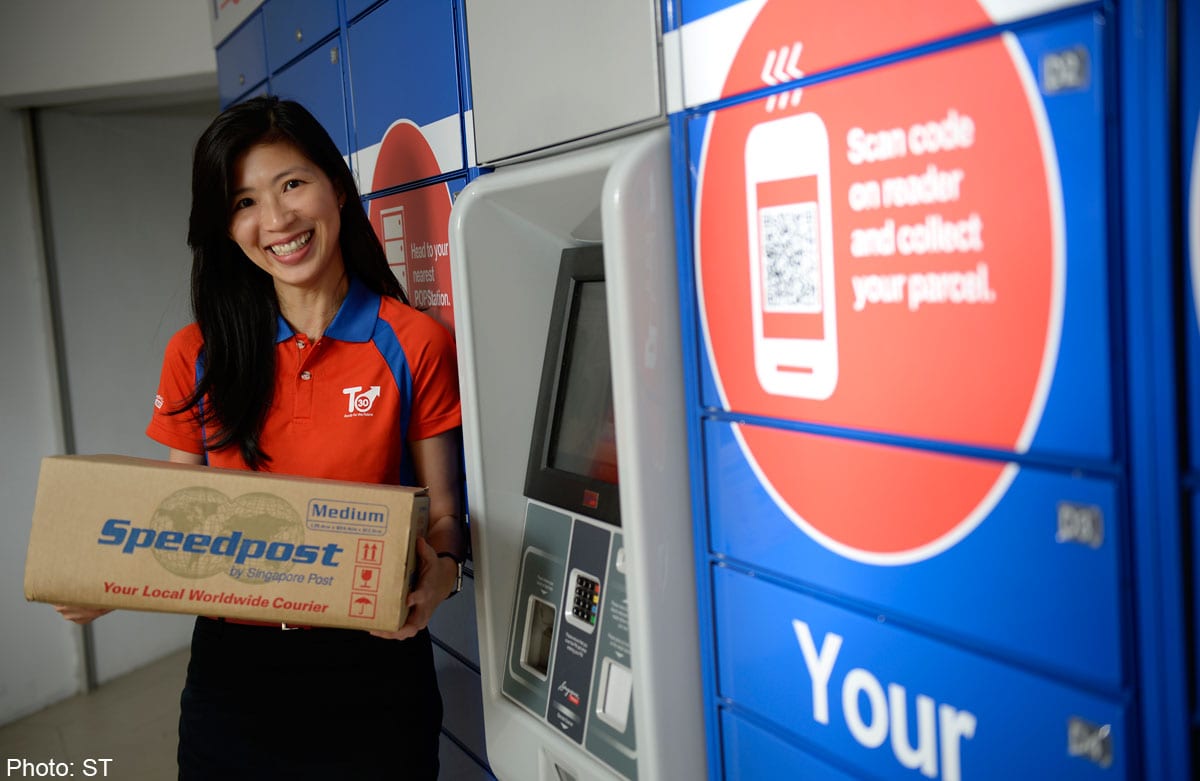
    Final week, SingPost opened its 100th POPStation – a parcel supply and assortment service which has minimize the supply time of on-line purchases by as a lot as a day, boosted comfort for patrons and distributors alike – and decreased its personal operational overheads and logistical challenges on the similar time.

    The SingPost POPStation is a supply and assortment community system which now offers a receiving level for patrons with a mean distance of not more than 2.5 km from any resident within the metropolis state.

    Primarily, POPStation is a locker supply service which does away with the necessity for patrons to should be obtainable at one place to obtain their deliveries, and for postal employees to traverse the town making private deliveries. It’s tailor made to the web retailing business, as a result of it standardises supply techniques and provides each distributors and SingPost the economies of scale of creating a lot of deliveries to a single level.

    Buyers can have their gadgets delivered to automated sensible lockers in any one of many 100 POPStations, all of that are accessible 24-seven. In addition to receiving gadgets, shoppers could make returns simply onsite as properly. Clients obtain their supply notifications and a PIN for his or her safe locker by way of smartphone.

    “POPStation is nicely fitted to city cities like Singapore because it lets the parcels do the ready, catering to busy way of life of Singaporeans on this digital age,” explains SingPost senior VP of Singapore Parcel, Lim Ann Nee, in a press release.

  • Singpost to target Indonesia eCommerce

    Singpost to target Indonesia eCommerce

    Trikomsel, one of Indonesia’s largest mobile device retailers, and SingPost, one of Asia’s biggest logistics providers for eCommerce, have announced a partnership to take advantage of the growing opportunities of eCommerce in Indonesia.

    The name – and even the exact nature – of the joint venture is still a mystery. However, the two firms are certain that they will create a company that acts as a partner for local brands and merchants in the eCommerce space. The project will combine Trikomsel’s distribution channels in Indonesia and SingPost’s expertise in logistics and eCommerce on a regional basis. In a statement, the firms say that the goal is to provide a complete eCommerce shopping experience, although they did not share any details of their plan.

    Trikomsel will take a majority stake of 67 per cent ownership in the joint venture and SingPost, through wholly owned subsidiaries such as SP eCommerce, will take the remaining 33 per cent. Similar to aCommerce, SP eCommerce provides a variety of solutions for eCommerce businesses including the use of technology, operations management, warehousing, delivery, payment and parcel collection, digital marketing, and post-sales support.

    “With the expertise, technology, and powerful resources owned by both parties, we are optimistic that this cooperation will be able to meet expectations and provide innovative services to our customers throughout Indonesia,” says Sugiono Wiyono, president director at Trikomsel.

    SingPost Group CEO Wolfgang Baier, says that he too is optimistic, as Indonesia is soon expected to become the world’s third-largest consuming nation.

    “As a regional company that encourages the growth of eCommerce, it is important for us to find a good business partner in emerging markets,” says Baier. “Trikomsel has extensive access and retail distribution throughout the nation. Trikomsel will also be able to utilise our expertise in logistics and eCommerce.”