Retail News CRM

Tag: Singtel

  • Singtel, Inmarsat join forces on maritime cyber security

    Singtel, Inmarsat join forces on maritime cyber security

    SingTel has forged a strategic alliance with Inmarsat to jointly offer cyber security tools for the global maritime industry.

    Under the partnership, Trustwave, the cyber security arm of Singtel, will provide its Unified Threat Management (UTM) managed solution, to be integrated with Inmarsat hardware onboard ships, to protect data reduce cyber risk for maritime companies.

    Singtel said the UTM service offers a suite of cyber security defenses, such as advance firewall, anti-virus, intrusion prevention and web-filtering.

    Singtel and Inmarsat plan to launch the new maritime cyber security service in the second half of 2016, the companies said a joint statement.

    The new service will be delivered through FleetXpress, the highly anticipated high-speed broadband communication service Inmarsat launched in March for maritime and offshore operators.

    Andrew Lim, managing director of business group at SingTel’s Enterprise Group, said the partnership with Inmarsat is important for the company as it marks the first phase in rolling out Singtel cyber security services for Inmarsat.

    “As maritime systems become more digital, it is imperative for the industry to protect data onboard ships against all forms of cyber attacks. Our partnership with Inmarsat will provide maritime companies with a cyber security solution to meet rapidly evolving cyber threats, globally,” the executive said.

    Gary Gagnon, Inmarsat’s senior vice president of global cyber security, said the partnership with Singtel supports the company’s commitment to the market and elevates the benchmark for maritime cyber security.

    “The landscape of shipping is changing. As we move from traditional shipping into the ship intelligence era, the threat of cyber attacks have never been more real,” commented Ronald Spithout, president of Inmarsat Maritime.

    “Risks from malicious attacks and unlawful access to a ship’s intelligence, its system infrastructure and networks cannot be ignored, and the shipping industry needs to take action.”

    The Singtel-Inmarsat collaboration comes a day after Inmarsat announced it will use its new Global Xpress satellite fleet to provide in-flight connectivity services for the airline industry.

  • Singapore telcos hit the road with transit NFC pay service

    Singapore telcos hit the road with transit NFC pay service

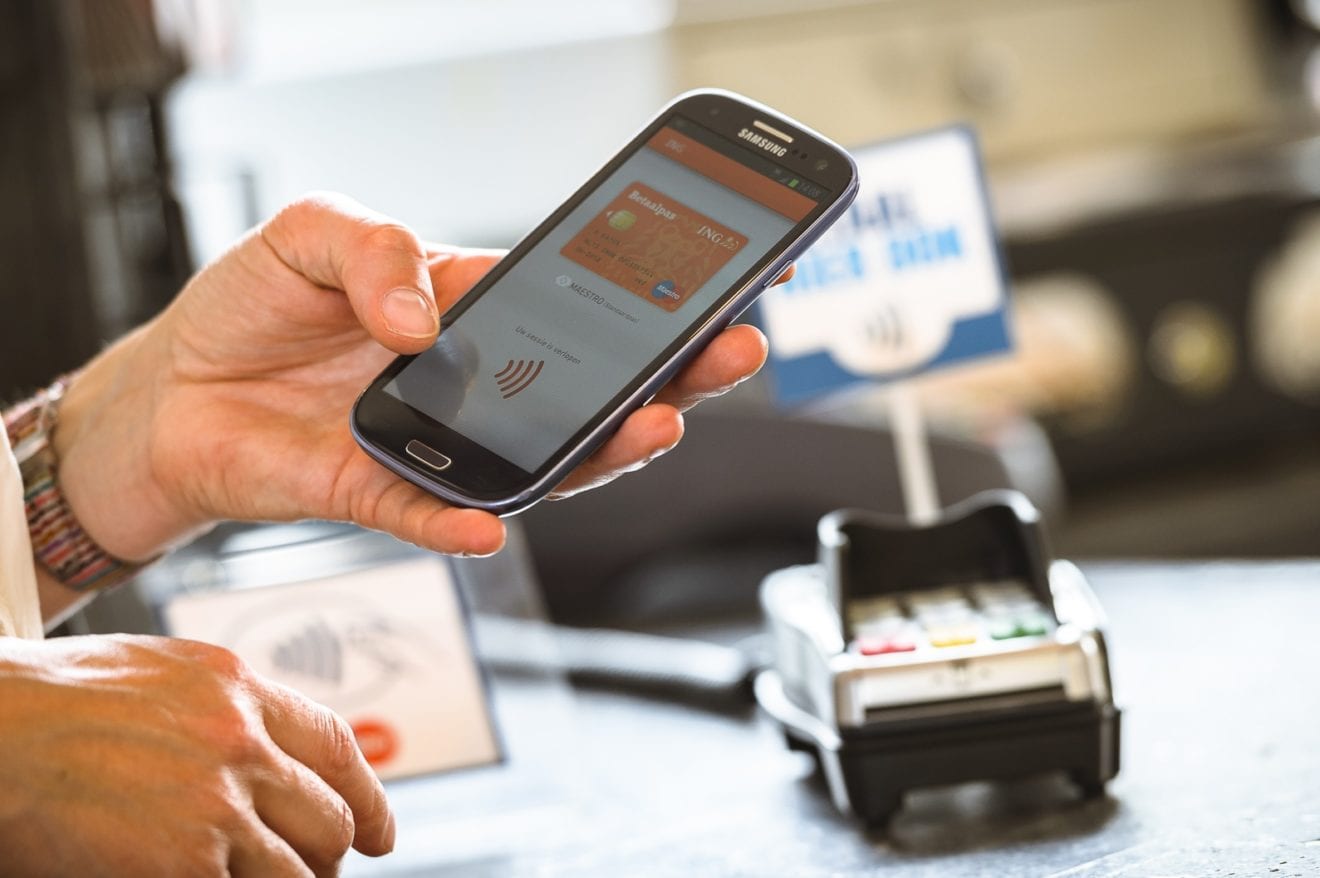
    Singapore’s three telcos have unveiled plans to offer NFC-enabled service for the country’s public transport network, enabling mobile users to pay for their fares using their smartphones.

    All three operators issued statements today, alongside a separate release from industry regulator Land Transport Authority (LTA), which announced the completion of a joint pilot conducted between the telcos and local public transport operators, as well as payment service provider EZ-Link. The latter’s contactless payment card currently is used by public transport commuters and as a payment option at more than 30,000 locations, including convenience stores, fast food outlets, retail stores, and taxis.

    Available today, M1’s service would be the first to allow its subscribers to swop their SIM cards for NFC-enabled chips that they could then use on buses and trains island-wide. They could do so at any of the telco’s retail outlets, but would need to have compatible devices for the NFC payment to work, including Samsung Galaxy Note Edge 4G+ and Sony Xperia Z. The Apple iPhone was not on the current list of approved devices.

    The NFC SIM cards are embedded with EZ-Link purse, which supports specifications under Singapore’s own standard Contactless e-Purse Application (CePAS). Upon activating the new SIM cards, mobile users would be able to top up or check the balance of their credit stored in the purse, as well as use their device to pay for other services that support ez-link payments.

    Singtel said sale of its transit NFC SIM cards would start in late-April, when subscriber would be able to purchase the chips from its retail stores. A S$5 registration fee for these SIM cards would be waived for a limited time, the operator said.

    M1 said its transit SIM card would cost S$37.45, with a service activation fee of S$9.10 that also would be waived until April 30.

    StarHub said its NFC transit chips would go on sale at its retail outlets from April 2 and would be priced at S$37.45 for a new SIM, or S$26.75 for a SIM replacement. It added that the “NFC ez-link purse fee” of S$5 would be waived “until further notice”.

    The telco’s head of business strategy Yeong Mun-Ling said: “This development is a step in the right direction towards stimulating digital commerce growth in Singapore. Our world is becoming increasingly digital and we are looking forward to meeting the needs of our mobile customers, who want to do more with their smartphones.”

    M1 CMO P. Subramaniam also noted: “Transit is the ‘killer phone app’ Singapore consumers have been looking forward to and we are pleased to be the first to offer customers the convenience of making payment with the one device that is always with them, their phone.”

  • Telstra, Singtel agree to build Perth-Singapore cable

    Telstra, Singtel agree to build Perth-Singapore cable

    Singtel, Australia’s Telstra and SubPartners have jointly entered an agreement to build a new subsea cable linking Australia and Singapore.

    The new APX-West cable will run between Perth on the west coast of Australia to Singapore. The two fiber pair cable will have a minimum design capacity of 10Tbps.

    Construction of the 4,500km cable is expected to commence at the end of July and scheduled for completion in 2018.

    APX-West will serve as an alternative to the SEA-ME-WE 3, the current data bridge between Signapore and Perth, and will help expand data connectivity and capacity between Singapore and Australia.

    “The APX-West cable will be a new data superhighway to expand data connectivity and capacity between Singapore and Australia, providing network redundancy and the lowest latency from Australia to Southeast Asia, the Middle East and Europe,” Singtel group enterprise VP for carrier services Ooi Seng Keat said.

    “With these capabilities, the Singtel Group, including Optus, can meet customers’ growing data requirements for bandwidth-intensive applications such as unified communications, enterprise data exchange, internet TV and online gaming.”

    Telstra is Australia’s largest operator by revenue, and Singtel operates Optus, Telstra’s main rival.

  • SingTel suspends mobile app after user detail leak

    SingTel suspends mobile app after user detail leak

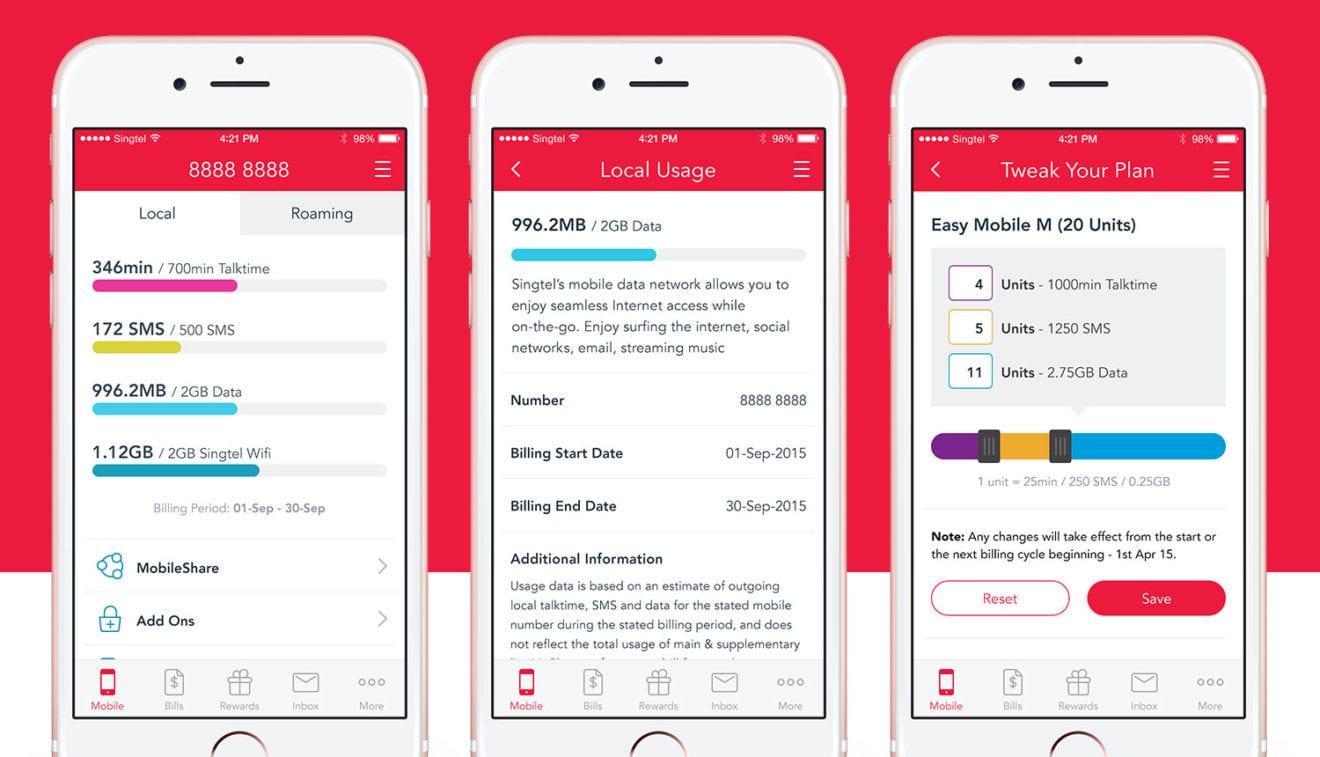
    SingTel was forced to temporarily suspend the functions of its mobile app after a software glitch resulted in users viewing the personal information of another account.

    Customers logging into the My Singtel app were able to view and the personal details of a different customer, and to modify the data field under account information to add their own messages.

    Multiple users reported encountering this glitch over social media, with a number expressing concerns that their account details had been compromised.

    SingTel suspended access to the app, commenting in a statement that the glitch exposing the customer information only affected one account.

    The statement added that SingTel is still trying to get in touch with with the customer to apologize or explain.

    As of Midday yesterday most functions of the app had been restored, but not the bills, rewards and e-appointment features.

    The company insisted that this is an isolated incident and ensured customers that their account security had not been compromised.

  • Inside SingTel Singapore

    Inside SingTel Singapore

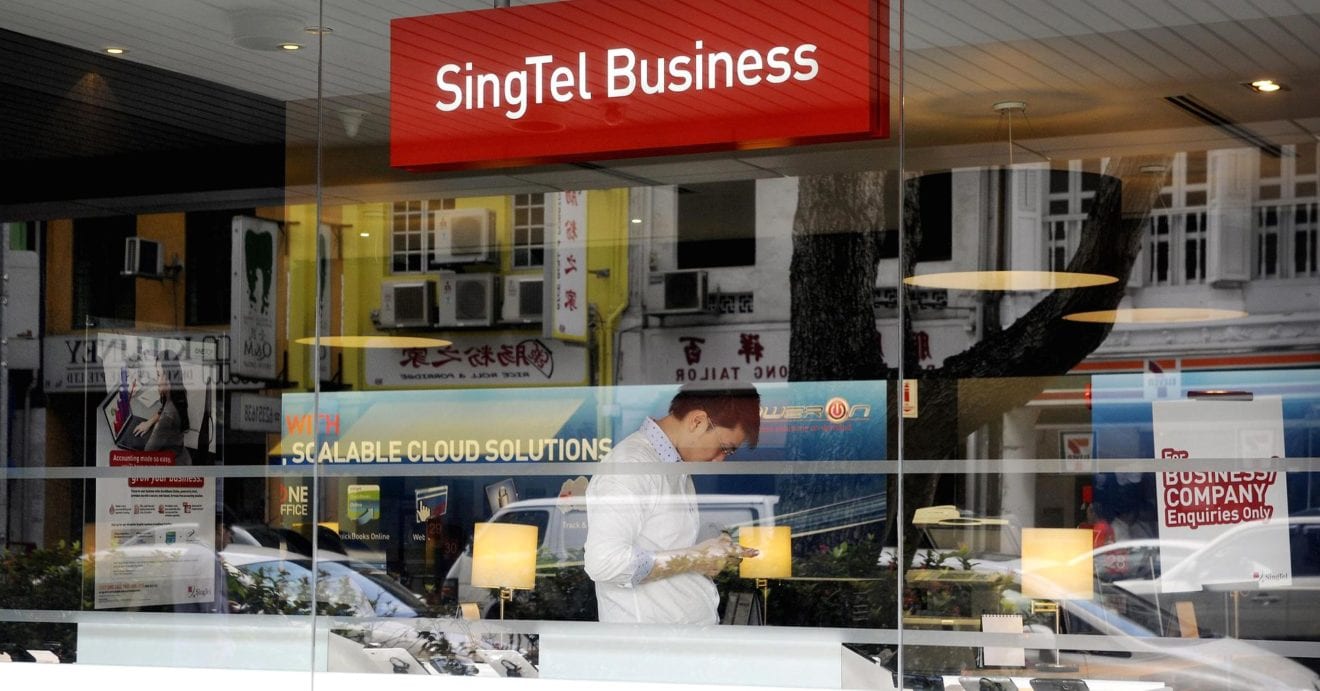
    SingTel Singapore has repositioned itself as a ‘human services brand’ by putting the customer at the core of its retail store design rationale.

    The latest generation store rendition was created by Sydney­-based design agency Public Design Group. Co-­founder and director of retail strategy and business development, Jason Pollard, says the agency is focused on ensuring that SingTel’s store design strategy supports the market opportunity and the business opportunity – with particular focus on recognising the rapid technological change driving the telecommunications sector and business model.

    “It’s not about device sale, the plans or the data,” he explained. “That’s only one-­third of the total revenue that’s going to be made in the future; the other two­ thirds is called the Internet of Things or information and communications technology.”

    Singtel store 2

    Since launching the partnership with SingTel Singapore, Public Design Group has implemented the new design across four additional SingTel stores, with the telco embracing the concept of ‘brand experience’ as opposed to ‘branded space’.

    Pollard explains that taking lifestyle propositions and fully enabling them across a variety of devices with different services represents the fundamental design ethos of the store.

    The approach to designing the store represents a departure from that of other telecommunications retail stores, which often emulate the streamlined devices and technology.

    “We’re not celebrating devices anymore, we’re celebrating what they can do,” said Pollard.

    Singtel store 6

    Customer ­centric design

    The store’s entrance features a digital portal showpiece, identified by Public Design Group as a gateway into the new market of information and communications technology solutions. The portal’s purpose is to emphasise SingTel’s shift in brand focus from product to people. “SingTel as a brand no longer wants to be perceived as a technology organisation,” Pollard said.

    Singtel store

    “They want to be perceived as a service brand, which is mirrored in providing the very latest greatest lifestyle solutions for their customers.”

    Singaporean retailers have widely adopted an electronic queuing system, as part of dealing with high volumes of traffic. Public Design Group saw an opportunity for personalising the customer experience and collaborated with digital agency, Texture, in Singapore to develop a bar code system, which allows waiting customers to explore the store instead of standing in a queue.

    Singtel store 1

    The ‘Q ticket’ is imbued with a barcode that can be scanned on any of the hundreds of micro screens around the store. Each screen is associated with a product or accessory, providing detail and price. Once scanned, the detail is stored in a virtual shopping basket, which is viewed by the store assistant prior to them meeting the customer.

    “That barcode allows you build a virtual shopping basket of things that interest you, so that by the time you go to meet the service staff and do whatever you want to do, you can hand them your virtual shopping basket,” explained Pollard. “Immediately that opens conversations relevant to the customer and empowers the staff to be more relevant to their customer.”

    Singtel store 5

    A customer service lounge, featuring leather wing back chairs, is designed with the purpose of creating an environment that encourages more consultative conversations. Placing the service proposition in the front window of the store as opposed to the back of the store emphasises SingTel’s focus on providing a premium customer experience.

    “One of the key factors of having to deal with a Telco is addressing how well they are going to look after me when it all goes wrong, so that service lounge is a key part of winning market share and making a statement in the market place,” Pollard said. “At SingTel, we’re looking after our customers – even if they’re not buying, we’re solving problems.”

    Singtel store 3

    Pull over push

    As part of the new ‘pull’ sales strategy for SingTel, promotional material in the store is significantly reduced, with statistics showing high value transactions typically come from conversations rather than communications.

    Similarly, new social trends and customer behaviours were studied to showcase lifestyle themed propositions on gesture­ controlled displays.

    Gesture control for the large format screens within the store was employed to allow customers to scroll through the various ‘integrated technology’ stories in the same way as they would on a tablet.

    Singtel store 7

    “People don’t like touching big technology because it’s hot, expensive and it puts them in the spotlight,” argued Pollard.

    “SingTel has put the customer first,” said Pollard. “We have developed a customer centric store and that’s why it’s such a great experience.”
  • Singtel taps third-party developers for new apps

    Singtel taps third-party developers for new apps

    A Singtel strategy to pick up ideas from independent developers across the region has resulted in affiliates of the telco adopting new revenue-boosting apps and technologies.

    The initiative seems to have helped boost revenue at some of these affiliates while also bolstering Singtel’s role as an incubator of new technology.

    Globe in the Philippines and Telkomsel in Indonesia have lifted turnover in their mobile segments, thanks, in part, to new apps devised by third-party software developers. This came about after Filippino customers downloaded an app called Epic Life, a mobile adventure game, while the photo app Jepret Story proved popular in Indonesia.

    Both apps were developed by outside software firms, which then worked with the telcos to fine-tune the final products.

    Mr Mark Chong, Singtel’s chief executive international, said the telco’s different business units share product ideas among themselves.

    “Our thinking was to shorten the product development cycle. So we decided to combine our own products with apps from external sources to present a more holistic suite of products and services.”

    Singtel’s challenge was to select new content that its customers would find useful, so it held app competitions in different countries for local software developers. This resulted in fresh apps customers in those countries could relate to.

    Take Jepret Story, which won the app challenge in Indonesia. It struck a chord with mobile customers because Indonesians are big social media users. An eMarketer report this year said 63 million people in Indonesia will access Facebook via mobile phones.

    A new round in the process is under way.

    Singtel affiliates will have a chance to work with the 14 apps featured in the Singtel-Samsung mobile app challenge held last Tuesday in Jakarta. The apps cover sectors such as lifestyle, on-demand economy, smart living and health .

    Chief judge Edgar Hardless from Singtel said the affiliates can check out the apps to see if they are suitable for their own markets.

    Among other things, the affiliates must ensure that the apps work seamlessly on their mobile networks and that they would be able to scale up so that millions of customers can use the service.

    Mr Hardless, who is also chief executive of Innov8, Singtel’s venture unit, said investing in start-ups has allowed the telco to innovate as well.

    Since it began in 2010, Innov8 has invested in nearly 40 start-ups here and around the world, giving it an insight into the latest emerging technologies and business solutions.

    “Through these activities, there’re start-ups that we can refer to our business units, leading to commercial arrangements,” he added.

    One of Innov8’s portfolio companies is Jasper Wireless, which has been used by Singtel here and by Optus, its Australian subsidiary.

    Jasper helps companies rapidly and cost-effectively manage and monetise Internet of Things services such as security and analytics.

  • Pay by watch in Singapore NFC trial

    Pay by watch in Singapore NFC trial

    Sony, Singtel and the Land Transport Authority have teamed up in a Singapore NFC technology trial allowing commuters to ‘pay by watch’ on public transport.

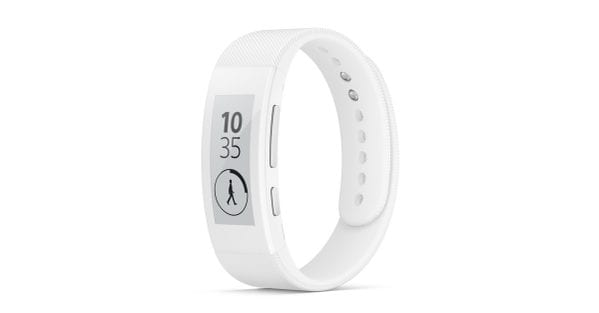
    Commuters wearing Sony SG50 SmartBands with Near Field Communication (NFC) technology will be able to make mobile payments on public transport in the future if the trial goes to plan.

    The trial involves EZ-Link, NETS and TransitLink – and the LTA says it’s part of an on-going effort to leverage technology to bring greater convenience to commuters through new, innovative and convenient ways to pay for travel.

    In addition to public transit, some 200 commuters in the trial will be able to use their SG50 SmartBand at a myriad of retail and merchant outlets including food and beverage outlets and libraries. They can also track their daily activities and sleep quality, and synchronise the measurements into their smartphones via Bluetooth for visual tracking and display.

    LTA CEO Chew Men Leong said the combination of wearable technology that enables faster, easier and more convenient transit transactions, with mobile retail payment services and lifestyle/wellness tracking, is an exciting development for commuters.

    “Insights provided by the trial will help LTA assess the performance of fare transactions using the smart band and gather feedback in assessing the potential use of wearable technology in public transit.”

    Some 200 commuters will participate in the trial which ends on February 29 next year. During the trial, participants will wear the Sony SG50 SmartBand encoded with a digital CEPAS card designed for fast, convenient and reliable contactless payments on public transit.

    The participants will only need to hold up their wrists to the fare card reader on buses and at MRT/LRT stations to pay for their journeys, making the travel experience faster and more convenient. To top-up the stored value in the band, participants simply need to place the band on the card reader of a top-up device, just as they would a transit card. For greater convenience, they can also opt to register for automatic top-up services.

    For greater mobility, participants can establish a Bluetooth connection with the Singtel mWallet app to check their band’s stored value balance and transactions while on the move. In future, the wearable may also be topped up through the app, at a later stage.